Life & Style

Handmade Christmas gifts 2025 by Indian artisans


Last year was all about handcrafted wooden Christmas trees and decor, and this year we take a little detour to focus on the hands making all things clay and macrame. The 2025 festive edit features homegrown artists from across the country crafting everything from hand-painted ornaments, intricate floral wreaths, Christmas-themed resin journals, and handmade cards for that personal touch to your gifting.  

Creations at Curiocity By Lidwin

Creations at Curiocity By Lidwin
| Photo Credit:
Special Arrangement

Angels in clay @ Curiocity By Lidwin

What started off as a brief career pause for Lidwin Mascarenhas soon turned into a full-fledged journey into the world of arts. A Physics graduate, she ventured into 3D animation soon after college and spent over a decade teaching 3D animation and computer graphics. “I was immersed in that world until life nudged me in an unexpected direction in 2016. I had to quit my job to be at home with my children and this opened the door to a new chapter,” says Mumbai-based Lidwin who started crafting papier-mâché sculptures before moving on to clay and launching her own studio in 2018. Today, she crafts expressive animal forms and human sculptures influenced by animation. This Christmas, Lidwin has introduced a new product, the table top angel bell, and also has acorn ornaments, hand painted snowman plates, a Santa Claus ornament, and Frosty the snowman, among others.

Upwards of ₹350. Details on curiocitybylidwin.com/

Ammu Chacko’s red bow angels made in clay

Ammu Chacko’s red bow angels made in clay
| Photo Credit:
Special Arrangement

Red bow angels @ Little Flower 

Ammu Chacko says she has loved art and craft since she was a child. “Christmas cards, church decorations, and the feel of the paper have always caught my fancy,” says the Fashion Design graduate. Ammu started off with small Christmas décor pieces and put up stalls at St. Theresa’s College in Kochi, and soon launched her brand with Christmas hampers she made for her husband’s office. “Little Flower grew steadily and via word of mouth,” says Ammu, whose current festive edit comprises red bow angels made in clay, a Nativity set on a wooden tripod, glittery nativity magnets, hair clips with artificial berries, floral wreaths, and centre piece flower arrangements. 

Upwards of ₹350. littleflower_ammuchacko on Instagram

Hand-painted tree hanging ornaments at The Gypsy Crafter

Hand-painted tree hanging ornaments at The Gypsy Crafter
| Photo Credit:
Special Arrangement

Superhero Christmas @ The Gypsy Crafter

An ex-management consultant-turned-crafter, Nitya Murthy found solace in art when dealing with some difficult parenting years. A mother to two toddlers, Nitya began with DIY experiments to craft crib mobiles, embroidered apparel for her children and soon, this turned into a label that she launched in 2022. “I am a craft entrepreneur who creates hand-painted home decor, face masks, jewellery inspired by South Indian kolam designs, Madhubani and Mughal motifs, embroidered apparel, and more,” shares Chennai-based Nitya. For Christmas, her catalogue includes hand-painted tree hanging ornaments, wall buntings, keychains and fridge magnets. “I am also crafting Christmas-themed earrings and hair accessories. Think colourful snowflakes, Olaf and Elsa from Frozen, the gingerbread man, and more. For children, there is a paint-it-yourself Christmas sock kit (500) that includes a sock, colours, and a brush.”

Upwards of ₹200. @thegypsycrafter on Instagram 
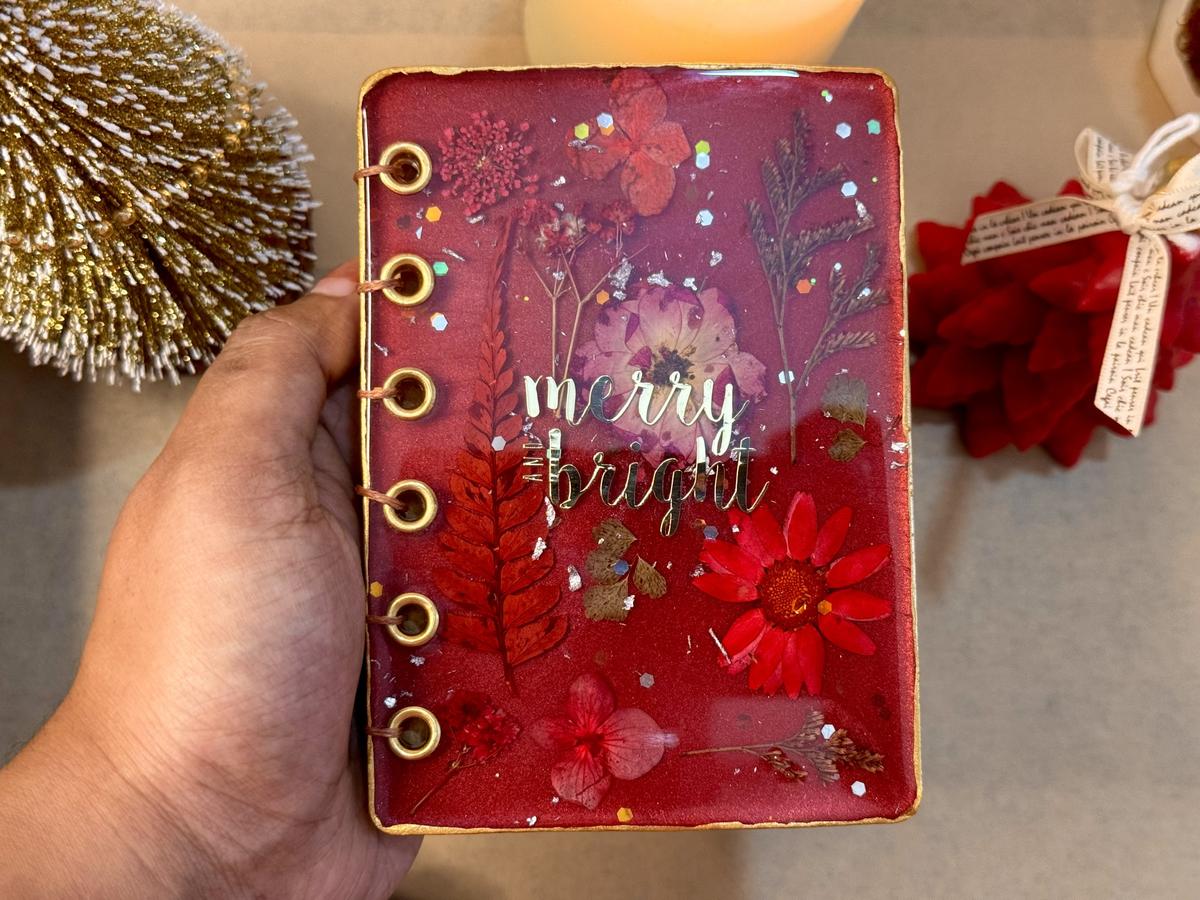
The resin journal at Kaivela

The resin journal at Kaivela
| Photo Credit:
Special Arrangement

Christmas journals @ Kaivela

While Afrin Jahangeer launched art brand Kaivela in 2018, the seed was sown much earlier when she was a little girl indulging in all things art. “The brand took shape when I was studying at NIFT Kannur and a cousin wanted to buy a card from me. I made that card, and then another, and then my professor from college ordered one too. Slowly, in my hostel corner, Kaivela began with handmade cards and journals,” says the Kerala-based artist. During lockdown, Afrin turned to the garden and began experimenting with flowers and resin, and crafted bookmarks, journals that she started shipping across India. For Christmas, look up her signature custom handmade tree ornaments, table decor pieces, a Christmas-themed journal, a village house, and more. 

Upwards of ₹249. @k.a.i.v.e.l.a on Instagram

An ornament at The Thread Way

An ornament at The Thread Way
| Photo Credit:
Special Arrangement

Embroidered ornaments @ The Thread Way

A hobby-turned-brand founded by Nisreen Rupawala, the venture took root from her self-taught crochet and hand embroidery days. “I have a background in design and photography, and started crafting products as a hobby. My husband, Ebrahim, with his analytical skills, soon joined to handle the business side, turning their passion into a full-time venture,” she says of the Mumbai-based brand, adding that each product is handcrafted by women across India. While they started off with crochet flowers, the brand now designs everything from bouquets, keychains, and other utility products. The festive range includes Christmas tree ornaments, hair accessories, Secret Santa hampers, plushies, etc. 

Upwards of ₹65 on thethreadway.in

Ornaments at Knott Me

Ornaments at Knott Me
| Photo Credit:
Special Arrangement

Macrame ornaments @ Knott Me

Handcrafted macrame and jute creations are popular at this Kolkata-based brand founded by artist Minu Poddar. It launched three-and-a-half years ago with the intention of creating gifting and home décor products that blend artistry with functionality. This year, Minu says the catalogue comprises macrame keychains, buntings, wall hangings, snowflake-themed accessories, rugs, table mats, coasters, and cushion covers. “Alongside our festive collection, we’re also introducing a line of functional home products such as sofa organisers, magazine stands, and macrame baskets,” adds Minu.

Upwards of ₹80. @knott__me on Instagram

Published – December 08, 2025 11:01 am IST


Source link

The making of neurodivergent artists


The drip paint mug can walk straight into any upscale showroom that sells art-based utilitarian items, and plonk itself in the display. It would not be stopped at the door. It would make a great corporate gift. The design of paint frozen in an act of dripping underlines such meticulous calculation and skill that it can be the subject of a design lecture at a fine arts college. This artist had designed this mug exclusively for The Indian Twist which makes a variety of items that solemnise a marriage between artistic and utilitarian value. And there is a factor adding greater value to it. The artist is Rupak Munje. A name readily recognised, Rupak is a poster boy for art by the neurodivergent, art that can share display space with art of the highest water from the neurotypical. While in the business of making and selling these products, The Indian Twist is simultaneously in the process of making Rupaks. It supports art by the neurodivergent.

The dripping paint mug designed by Rupak Munje for The Indian Twist.

The dripping paint mug designed by Rupak Munje for The Indian Twist.
| Photo Credit:
SPECIAL ARRANGEMENT

The Chennai-based company (@theindiantwist) sells online thereby surmounting the geographical barrier to commerce .Here is a quick run of their product line — a variety of bags, cushion covers, coffee mugs, beer mugs, coasters, notebooks, artisanal fabric gift envelopes, calendars mini photo albums, aprons, fridge magnets, paper weights, wine bags and so on. There is a quirkiness to how these everyday things are designed.

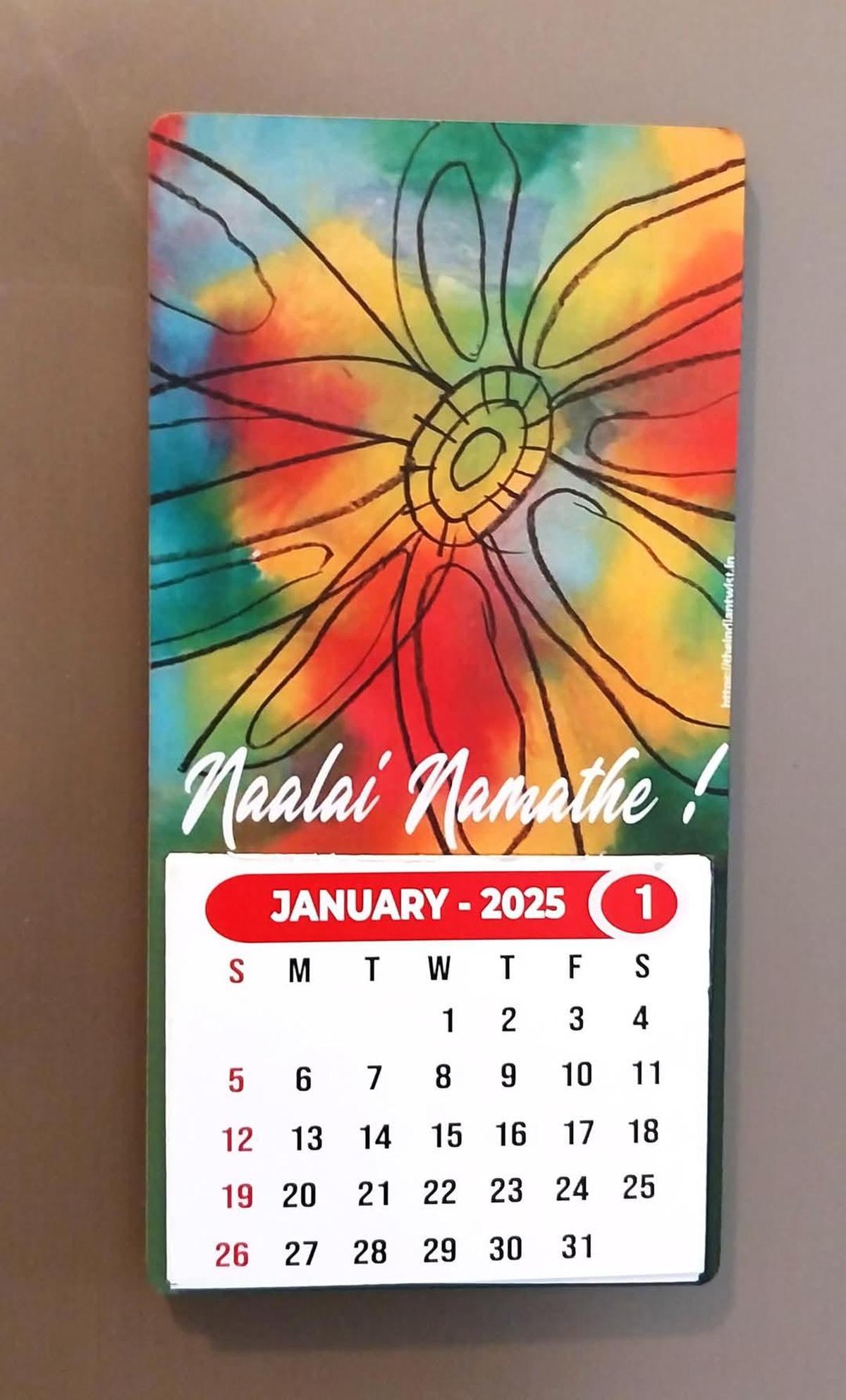
Artwork by a neurodivergent artist on a calendar designed by The Indian Twist.

Artwork by a neurodivergent artist on a calendar designed by The Indian Twist.
| Photo Credit:
SPECIAL ARRANGEMENT

The design team at The Indian Twist works on the spontaneous artworks by children and young adults from A Brush With Art (@abwa_chennai) and CanBridge Academy (thecanbridgeacademy), “kneading” them into its products, thereby transforming these artworks into a state of saleability. CanBridge Academy provides life skill training to young adults with autism. And ABWA promotes “expression of natural art in children with special needs”. 

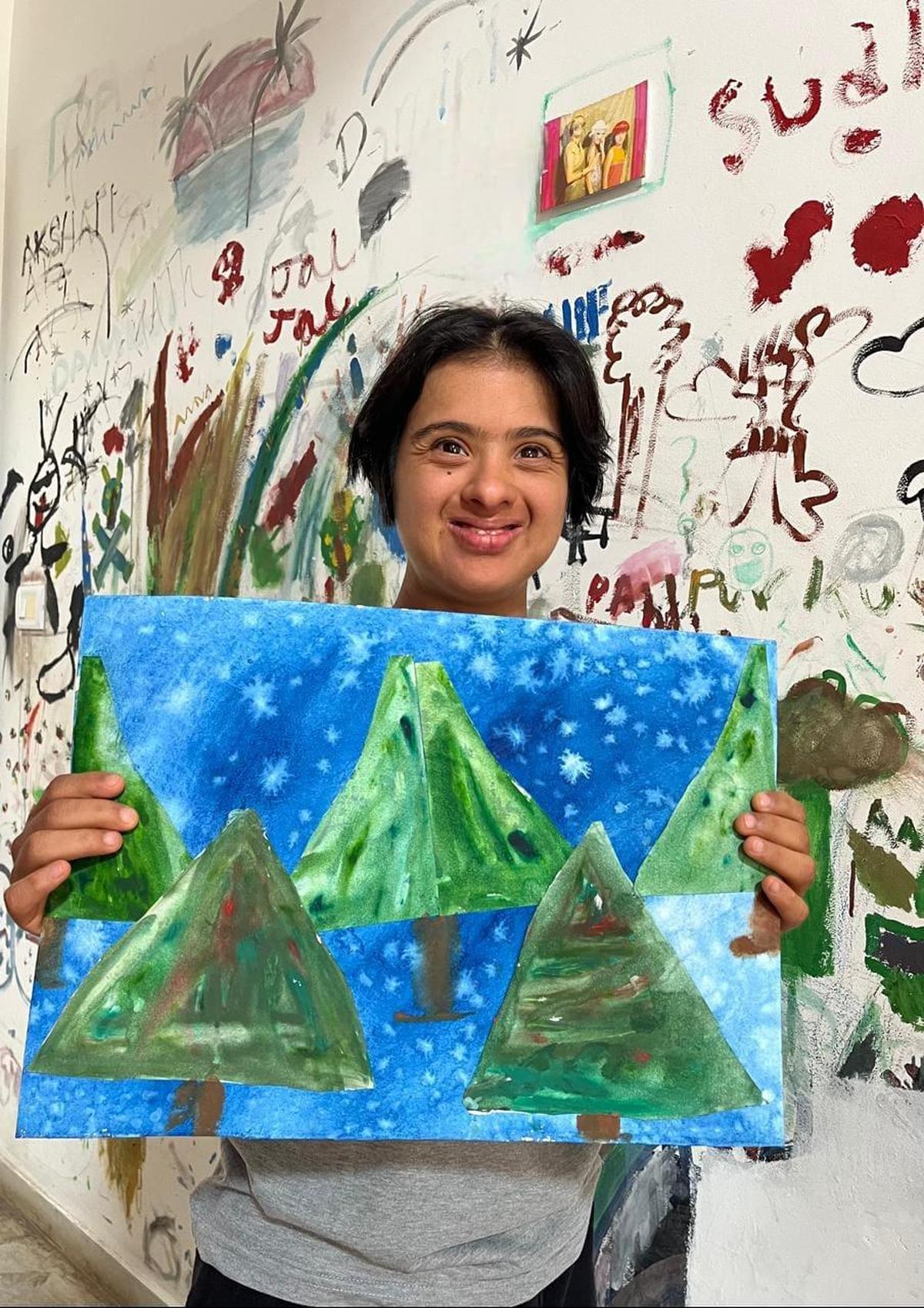
Damini at A Brush With Art.

Damini at A Brush With Art.
| Photo Credit:
SPECIAL ARRANGEMENT

At The Indian Twist, the production process also supports women in shelter homes who stitch bags, earning income and gaining confidence. The residents of The Banyan (India) have a hand in some of the products designed by The Indian Twist. 

Shuba Kuila, founder of The Indian Twist, notes that the final product does not obfuscate the artist’s authentic expression. For Shuba, a part of this creative work is the creation of joy. The fulfilment derives partly from the children’s delight that is evident when they spot their creations on display at events, pressing them to their chests with pride.

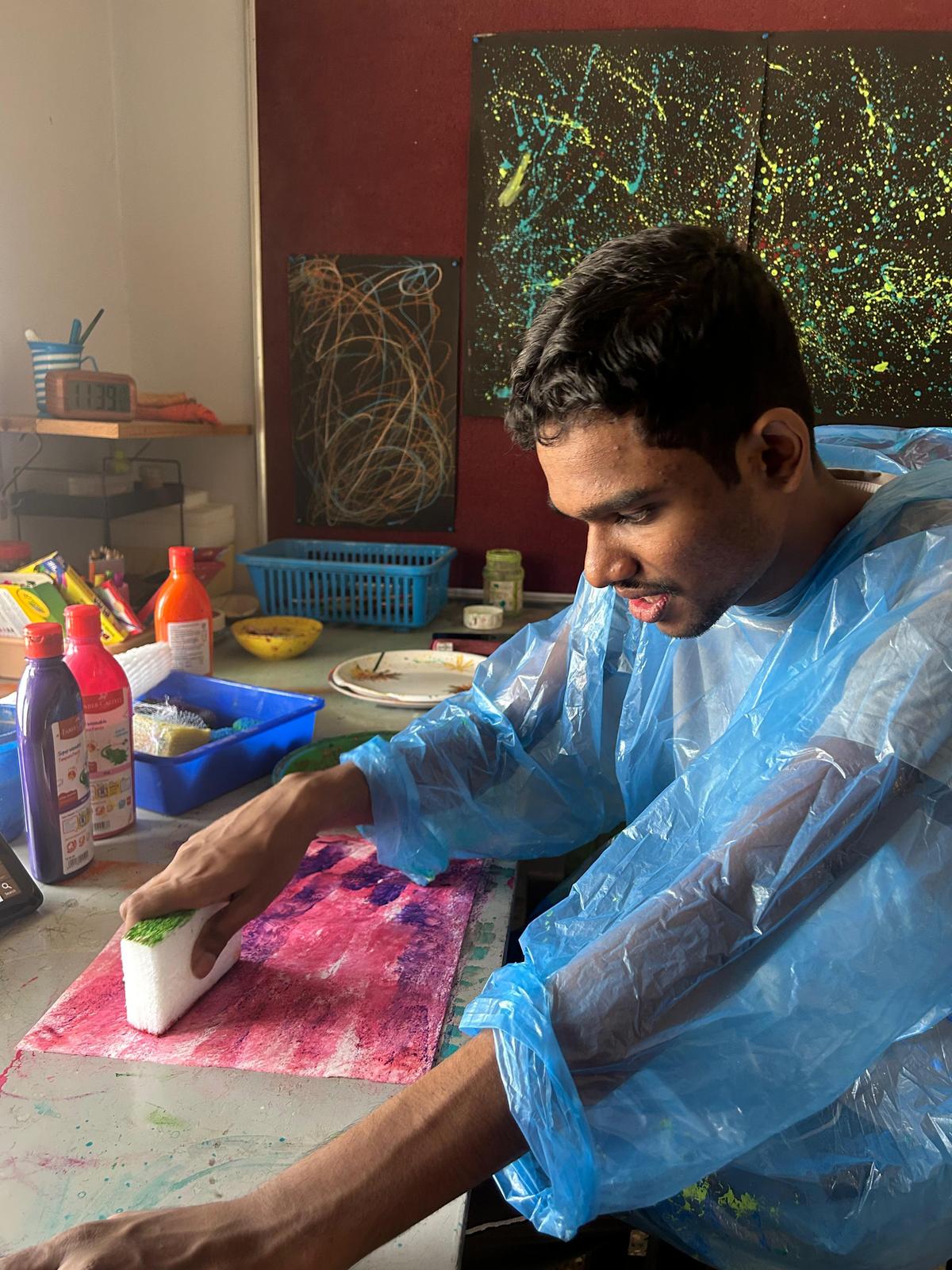
At CanBridge Academy.

At CanBridge Academy.
| Photo Credit:
SPECIAL ARRANGEMENT

Shuba observes that The Indian Twist’s approach emphasises merit over charity, ensuring that neurodivergent artists are valued for their creativity and aesthetic contribution, not their circumstances.

Here is a peek into how these artists are made at the organisations associated with The Indian twist. 

Mala Chinnappa, mother of a neurodivergent adult and a long time facilitator at A Brush With Art, begins “When a child first comes in, we begin with dry mediums like crayons. Fluid mediums can overstimulate. We simply watch them. They realise this is not a class. They are free to do what they want.”

A bag from The Indian Twist which promotes art by the neurodivergent.

A bag from The Indian Twist which promotes art by the neurodivergent.
| Photo Credit:
SPECIAL ARRANGEMENT

The art sessions are structured around agency. One child draws buses with architectural precision but omits the driver every time. “Human beings disrupt his grid,” she explains. “So he edits them out.” Another covers sheets with a single colour until the page becomes an uninterrupted field. Some cut paper with near mathematical accuracy. Others tear it rhythmically, almost as a form of sensory release. These are data points about how each child processes the world. Over months, she observes measurable changes. Sitting tolerance expands from ten minutes to over forty. Colour choices shift from impulsive to deliberate. Compositions gain structure. Impulsivity reduces. Confidence becomes observable rather than assumed.

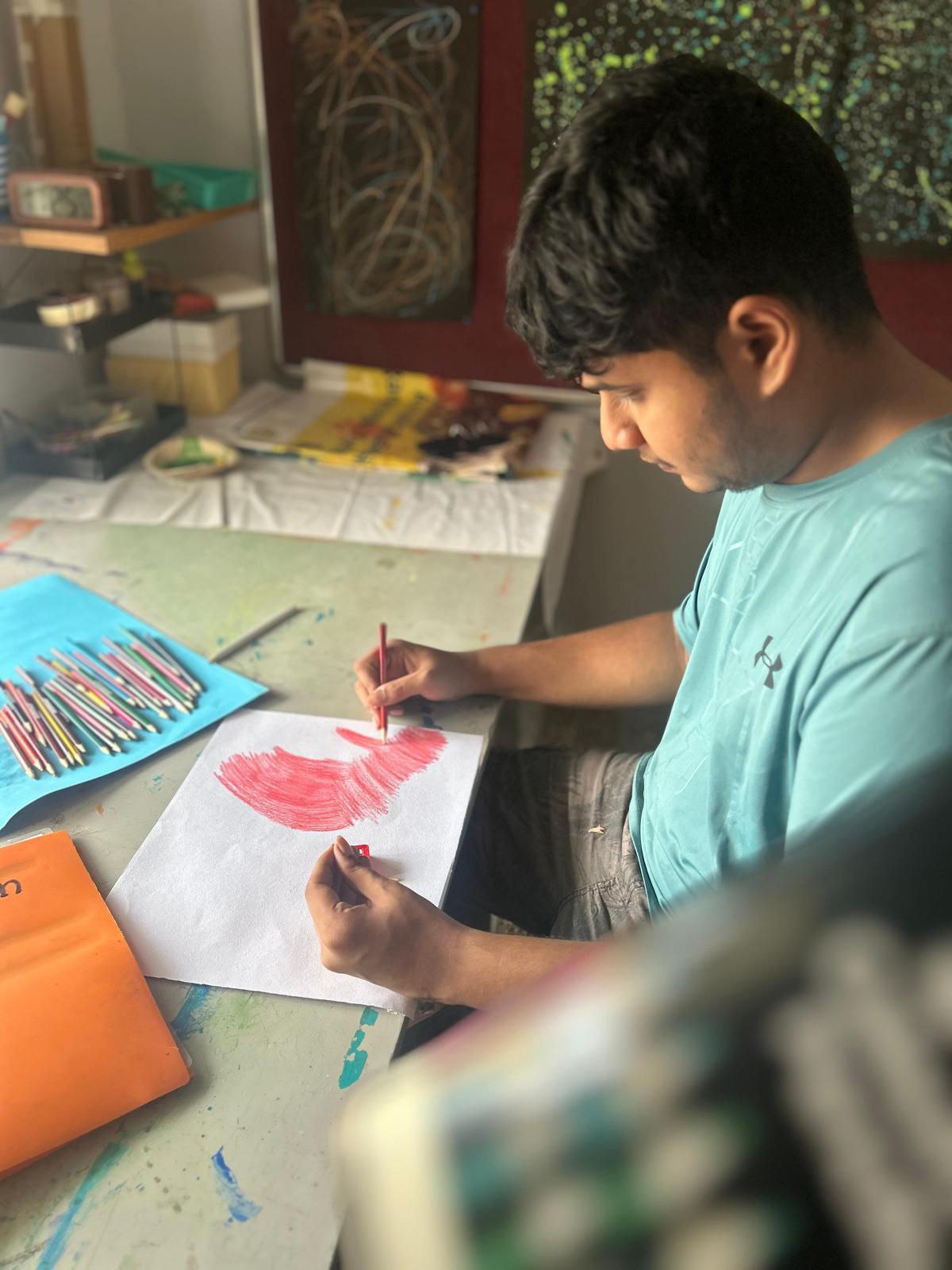
At CanBridge Academy.

At CanBridge Academy.
| Photo Credit:
SPECIAL ARRANGEMENT

At The CanBridge Academy, co-founder Kavitha Krishnamoorthy has worked with hundreds of neurodivergent individuals across ages. Patterns, she says, are often their preferred language. Visual patterns, musical rhythms, repetitive motions are not signs of monotony but anchors for regulation. “Even finger painting becomes movement,” she explains. “Sweeps, arcs, repetitions. Their body leads the art, not the other way around.”

She cautions against reading emotions through colour choices, an interpretation common in neurotypical frameworks but inaccurate here. Emotional communication is frequently physical rather than symbolic. A child who arrives distressed may pound clay until his system stabilises. A young adult plays a xylophone with rapid beats when excited and slow, spaced notes when low. Emotion is expressed through speed, pressure, repetition, and bodily rhythm.

A fridge magnet designed by The Indian Twist which supports art by the neurodivergent.

A fridge magnet designed by The Indian Twist which supports art by the neurodivergent.
| Photo Credit:
SPECIAL ARRANGEMENT

Contrary to stereotypes, attention is rarely the concern. What disrupts focus is not the child but the instruction. “They focus intensely,” she says. “The problem begins only when adults impose structure or when the task becomes monotonous.” 

Across weeks and months, the changes are consistent. Restlessness diminishes. Emotional regulation improves. Trust widens. Independence builds. Over time, a recognisable artistic identity emerges, not shaped by imitation but by sensory accuracy.

Published – December 06, 2025 08:28 am IST


Source link

The rise of the secure workspace


Every modern workspace is now a data fortress in disguise. On an ordinary weekday morning, employees swipe into biometric gates, log into cloud dashboards, and send thousands of data transactions across networks without a second thought — constantly engaging in data-heavy exchanges. Yet behind this seamless flow lies an invisible architecture: sensors, algorithms, firewalls, and security protocols working tirelessly in the background. What was once simply an office is now seen as a live, intelligent ecosystem, one that must defend itself as effectively as it empowers its people.

This evolution didn’t happen by chance. As cyberattacks escalate in complexity, hybrid work deepens digital exposure, and businesses embrace cloud-based operations, the modern workspace has acquired a new identity: a safe data haven. No longer judged only on design, amenities, or location, today’s workspace is evaluated for its ability to protect data, anticipate threats, and inspire employee confidence. Security is no longer a layer; it has become the architecture of custom-built offices.

First filter

In the past three years, organisations have witnessed a dramatic expansion of their risk landscape. India alone faced over 2.04 million cyber security incidents last year, reflecting how deeply exposed businesses have become as digital dependency grows. Employees now connect from different devices, transfer large volumes of proprietary information, and collaborate through cloud tools. Every login, file transfer, or sensor interaction becomes a potential vulnerability.

Simultaneously, threat actors have shifted their tactics. Attacks now target IP-rich proprietary environments, access control systems, video feeds, and IoT devices embedded within smart buildings. Therefore, workspaces have become central to enterprise risk management, not peripheral to it.

This rising complexity has restated where global firms choose to build their capability centres, and India is at the forefront of that shift. The country is rapidly becoming a preferred destination for GCCs because its flexible workspaces are increasingly meeting or exceeding global benchmarks for digital and physical security.

Today’s flexible workspaces across Tier 1 metros offer far more than convenience — they provide highly comprehensive network architecture designed for sensitive workloads, supported by tiered access-control systems, AI-enabled surveillance, and advanced business continuity infrastructure. Integrated digital solutions enable global teams to collaborate seamlessly, while robust compliance frameworks ensure alignment with stringent international data protection norms.

For GCCs managing core engineering, AI model training, financial analytics, payments infrastructure, or cybersecurity operations, India’s secure workspaces delivers the trifecta of performance, protection, and scalability.

Organisations have moved from checklist-based assessments to a more holistic, systems-oriented evaluation of workspaces’ safety. Their decision-making spans two interconnected dimensions that must work in concert. Physical security capabilities encompass perimeter protection, intelligent access systems, biometric gates, emergency response planning, and surveillance powered by analytics. The goal is to ensure controlled access, rapid incident response, and continuity of on-ground safety.

Digital security architecture examines the workspace’s IT backbone: encrypted networks, built-in firewalls, secure server rooms, SD-WAN solutions, endpoint protection, and real-time monitoring. Here, digital security isn’t an add-on—it is embedded into the building’s core design.

The truly future-ready facilities are those where physical and digital environments merge, where a motion sensor, a swipe card, a network login, and an operational dashboard all feed into a single real-time risk intelligence system.

New age of flexible workspaces

Today’s intelligent workspaces are built on technologies that sense, anticipate, and respond. These innovations create continuous learning environments that evolve with emerging threats.

AI-based anomaly detection tools continuously analyse user behaviour, network traffic, and movement patterns. When they detect irregularities such as unusual logins, abnormal data transfers, or unexpected physical access, they trigger instant alerts or isolate suspicious activity.

IoT sensors embedded within the workspace act as digital sentinels, monitoring environmental changes, detecting unauthorised access, tracking occupancy patterns, and interfacing with building systems to maintain a safe, regulated ecosystem. These devices create comprehensive situational awareness across the entire workspace.

Edge computing processes sensitive data at or near the source rather than sending it to distant servers. This drastically reduces latency and ensures millisecond-level threat detection and response, particularly in high-density flexible workspaces.

Digital twins create virtual replicas of the workspace that helps operators simulate potential threats, stress-test systems, and identify vulnerabilities before they can be exploited. It enables predictive maintenance, early-warning alerts, and intelligent decision-making.

For developers, operators, and occupiers alike, safe data havens unlock multi-layered value. They ensure business continuity through uninterrupted, protected operations, while transparent, tech-enabled security layers build strong tenant confidence. Within these risk-free digital ecosystems, productivity naturally rises, leading to long-term retention as both employees and employers trust the environment they work in. Ultimately, such spaces strengthen an organisation’s reputation, positioning it as a secure, future-ready workplace.

As digital dependency deepens, workspaces ought to transform from passive real estate assets into active, intelligent defenders of organisational value, offering security, certainty and resilience. Flexible workspaces that invest in comprehensive security infrastructure enjoy reduced vacancy rates, premium rental yields, and stable tenant relationships that create long-term portfolio value.

In the era of cyber-physical convergence, the future belongs to workspaces that function as safe data havens, fortified, flexible, and fundamentally designed for the challenges of tomorrow.

The writer is president and co-founder of Table Space.


Source link

Affordable housing: the missing pillar in India’s urban growth


Zayd Noaman

Affordable housing lies at the heart of India’s urban growth story. For the world’s most populous nation, it is not just a social obligation but a powerful catalyst for jobs, investment and large-scale urban development.

As India’s major cities, including Bengaluru, continue to draw talent from across the country, access to affordable housing has become a key factor in shaping both quality of life and economic vitality. In this context, the affordable housing sector, despite its challenges, presents an unparalleled opportunity for nation-builders to drive innovation, foster collaboration and promote inclusive growth.

Rising costs but strong fundamentals

Over the past five years, rapid urban expansion in India’s prime housing markets has elevated land and construction costs to record levels, influencing investment patterns in the affordable housing segment. Between 2011 and 2024, less than 8% of total residential investment — around $1.9 billion — was directed toward affordable housing, even as construction costs rose by nearly 40% and labour expenses increased by about 150% since 2019.

At the current benchmark price of ₹45 lakh, the government-defined threshold for affordable housing under the Pradhan Mantri Awas Yojana, it has become increasingly challenging for developers to undertake new projects in major urban markets. The withdrawal of Section 80-IBA in 2022, which earlier provided full tax relief on profits from such projects, has added further pressure on viability.

Yet, the demand for affordable housing remains strong. This growing need presents a vital opportunity for policymakers, financiers and developers to work together on innovative solutions that can make this essential segment both sustainable and scalable.

Industry estimates indicate that India could face a shortfall of over 31 million affordable homes by 2030. Addressing this significant gap presents a powerful opportunity to drive balanced and inclusive national growth. The practical, collaborative, and forward-looking measures outlined below can help unlock this potential and create lasting, scalable solutions for the housing sector.

Since over 75% of India’s affordable housing demand is concentrated in just 10 States, including Karnataka, policymakers and developers here must collaborate closely to address unique local challenges, whether land availability, regulatory bottlenecks or financing gaps. Collaborative models between the public and private sectors can unlock serviced land for housing development. Strategic land allocation enhances project viability and attracts credible developers. This approach ensures that affordable housing projects are both sustainable and market-driven.

Improving infrastructure along city peripheries like better roads, metro links and utilities reduces travel time, unlocks developable land and lowers construction costs. This expansion of serviced land makes affordable housing projects more viable while encouraging balanced, sustainable urban growth.

Rise of nuclear families

Near Bengaluru, for instance, locations such as Kanakapura, Tumkur and Hoskote are rapidly gaining traction. Better connectivity via new highways and metro links combined with lower construction costs and a rising prevalence of nuclear families are driving demand in these corridors.

Re-evaluating the current ₹45 lakh threshold for affordable housing and introducing targeted incentives can stimulate new supply across key urban centres. Tailored benefits that reflect regional cost dynamics can help developers deliver more projects within reach of low- and middle-income buyers.

Streamlining regulatory processes through fast-track, single-window clearances, enhanced Floor Area Ratio allowances and rationalized development charges can significantly reduce project costs and timelines. A simplified approval framework creates a more predictable and investor-friendly environment.

Establishing a dedicated affordable housing fund can bring together banks and development finance institutions to provide long-term, low-cost capital. Such a mechanism would strengthen the financial ecosystem for affordable housing and ensure steady progress toward inclusive urban growth.

Reintroducing tax reliefs for principal and interest payments under the New Tax Regime can boost homebuyer confidence and stimulate end-user demand. Targeted support for first-time buyers can transform aspirations into ownership, creating a stronger base for social and economic mobility.

A powerful driver of growth, affordable housing creates jobs, strengthens local economies and supports city-scale infrastructure. Every home built generates opportunity across industries, encouraging investment and long-term development.

Through thoughtful policy, close collaboration between government and developers and innovative financing, India can deliver quality homes at scale while maintaining developer viability.

With liberal land-use policies, broader financing options for low- and middle-income groups and urban planning that promotes mixed-income communities, the dream of home ownership can become a reality for millions.

The writer is president, CREDAI Bengaluru.

Published – December 05, 2025 06:17 pm IST


Source link

Modern luxury living in India: the branded clubhouse revolution


Madhusudhan G

India’s homebuying landscape is evolving rapidly. Families are moving beyond standard amenities, seeking homes that not only ease daily pressures but also elevate the overall quality of life. Today’s buyers are increasingly asking how a residence can support long commutes, demanding routines, personal growth, and family well-being. In this context, the clubhouse has shifted from being a peripheral add-on to the core of a lifestyle ecosystem, offering recreation, wellness, learning, and social connection.

Developers are reimagining community infrastructure through a global lens, drawing inspiration from international models that prioritise purposeful, experience-led living over ornamental flourishes. Luxury is no longer defined solely by design or finishes; it is measured by global-level lifestyle experiences that allow aspirational families to live, learn, and thrive everyday.

At the forefront of this shift are branded clubhouses — premium and professionally managed community spaces that carry the identity, design philosophy — or partnership of world-class names from hospitality, sports, wellness, or lifestyle. These spaces bring globally benchmarked service, curated programming, and experience quality into everyday living, setting a new standard for modern residential communities.

Evolving expectations

Affluent homebuyers are now prioritising experiences that offer autonomy, continuity, and lasting value over short-lived indulgences. They seek homes that meaningfully reduce daily friction. Longer work hours, children’s packed schedules, and elder care responsibilities have heightened the need for living environments that simplify logistics. Growing traffic congestion and extended commutes have made families rethink the time spent travelling for sports, wellness, or enrichment. Access to high-quality, well-equipped facilities within the community is no longer optional — it has become essential.

Beyond convenience, these buyers are driven by a pursuit of elevated lifestyle experiences: spaces that enrich daily routines, promote mindful living, and bring global standards of comfort and engagement into everyday life.

Shaped by international exposure, affluent buyers increasingly seek communities that support well-being without external dependencies, foster active participation, and elevate modern residential living.

How developers are responding

Developers are rethinking their strategies to align with these evolving expectations. The traditional formula of offering standard amenities is no longer sufficient.

High-end, professionally managed branded facilities embedded within residential projects are now a necessity. To deliver on these expectations, developers are partnering with internationally renowned institutions and professionals across sports, wellness, fitness, and recreation. These collaborations ensure structured, credible, curriculum-driven programming rather than fragmented offerings.

Professional operators bring operational discipline, safety protocols, and service excellence, creating community spaces that function seamlessly and consistently. The modern branded clubhouse transforms structured activity into a central feature of community life. Olympic-standard pools, performance-oriented fitness modules, and specialised yoga routines mirror the order and reliability of dedicated training centres. Music and dance studios offer professional guidance, fostering regular and structured participation.

Residents who once travelled far or even sent children abroad for global-standard training can now access the same quality within their own community. Clubhouses become self-contained hubs where children refine skills, adults and elderly people maintain wellness routines, and neighbours connect through shared experiences. By providing world-class academies and training facilities right at one’s doorstep, this integration streamlines time and effort while fostering a vibrant sense of community.

In this context, branded clubhouses are emerging as a defining feature of future-ready urban living. They are no longer peripheral luxuries but essential elements of communities that integrate convenience, wellness, recreation, and education. By combining operational excellence with global standards of design and programming, branded clubhouses enable modern Indian families to enjoy world-class lifestyle experiences within their own homes, bridging the gap between aspiration and daily living.

The era of residential living defined solely by architecture or amenities is over. Today, luxury extends beyond the home itself, encompassing experiences that enrich everyday life and nurture well-being. Branded clubhouses, with their curated programmes, professional management, and global benchmarks, are central to this transformation.

They signal a new benchmark for modern Indian residential living — one where homes are not just places to live but ecosystems that enable families to learn, grow, connect, and thrive.

The writer is CMD at Sumadhura group.

Published – December 05, 2025 06:09 pm IST


Source link

Kanika Goyal launches first KGL Store at The Dhan Mill in Delhi


That businesses need to prioritise customer-centric designs for their products and also spaces to enhance user experience is not a new concept in the world of design. But do all create a space relevant to their brand and stimulate a feeling of appreciation?

At The Dhan Mill (TDM), Delhi’s luxurious hub for design and culture in upmarket Chhatarpur, brands have the aesthetic freedom to highlight their stories of individuality and functionality and control the look of their stores in distinctive design language.

A view of the store.

A view of the store.

Kanika Goyal, founder and creative director of the neo-luxury apparel line, KGL, is one of the latest address holders at TDM. “Stores need to reflect the brand’s conceptual ethos, and the interiors should complement the products on display. Everything revolves around how you make the customer feel inside your store,” she says.

After a decade in the fashion industry, Goyal felt it was time to launch her first standalone store as an immersive extension of her pret line, which blurs boundaries between streetwear and luxury and is known for its playful paradoxes in terms of colour, texture, feel, and look.

Kanika Goyal

Kanika Goyal

“I am a Chandigarh girl totally influenced by Swiss-French architects Le Corbusier and his cousin Pierre Jeanneret; their work was grounded in minimalism and simplicity while designing and constructing the city in post-Partition India,” she says to underline how design-driven she’s been to consciously bring alive her brand’s identity.

Inspired from brutalist architecture and surreal art

To understand the creation of the KGL store, it is important to understand the thought-provoking label launched in 2014 and its inspiration from psychology and metaphor, brutalist architecture and surreal art. Recognised for intelligent use of colour and texture, humour and introspection in her structured designs and fluid flows, Goyal has showcased at New York and London Fashion Weeks and collaborated with Disney over the years.

As a couture designer, she believes customer experience in the luxury sector is not limited to purchase of a product alone. “It goes far beyond because a lasting impression is critical to brand loyalty,” she says.

A view of the store.

A view of the store.

Goyal envisioned her store in TDM as a space to encapsulate KGL’s evolution, philosophy, and vision. Her approach was to combine functionality with aesthetics, focusing on the comfort of familiarity of her regular customers and accessibility for the new.

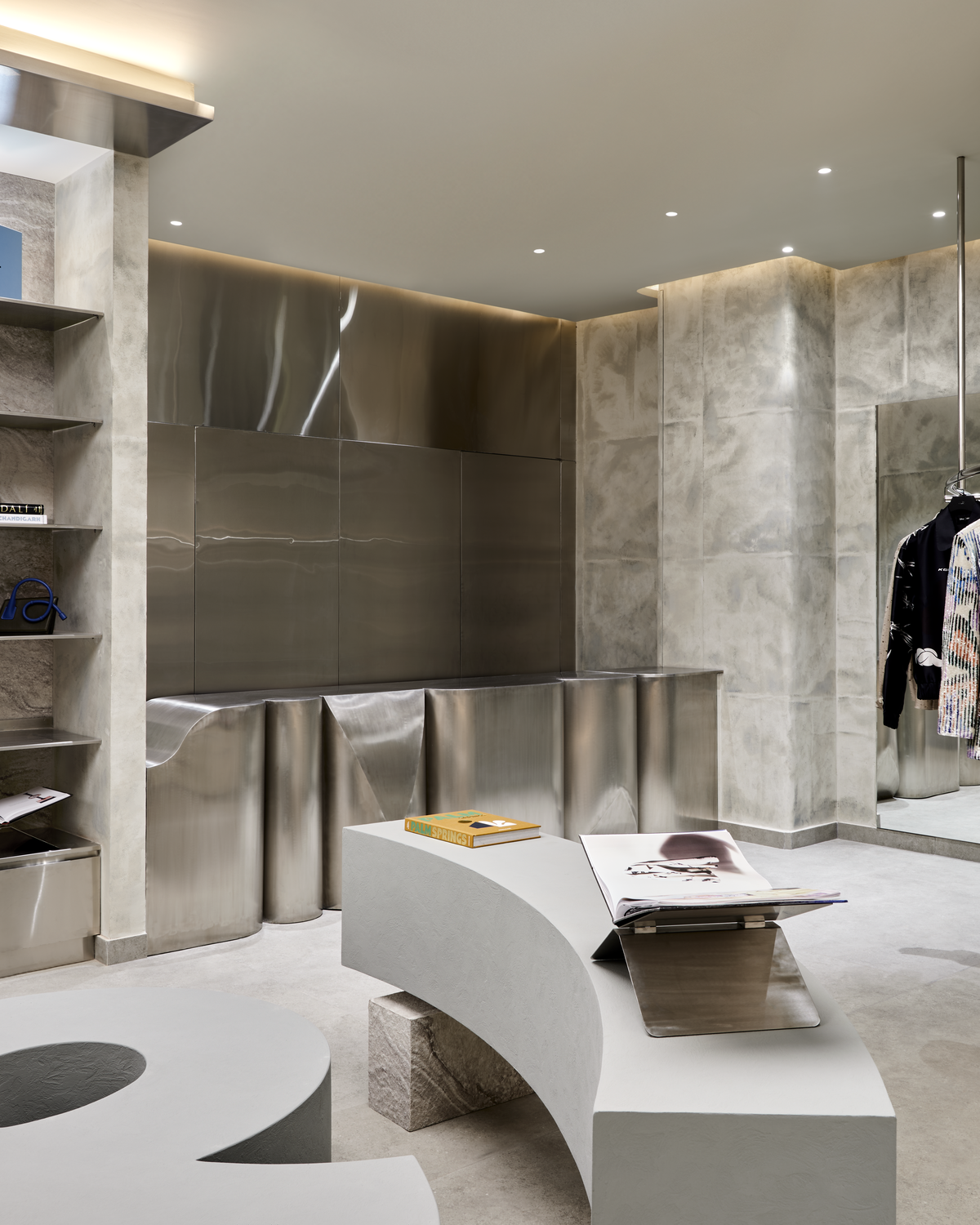
The use of the very unusual palette of grey with warm concrete tones for the entire 1,000 sq. ft. store, she says, is her Boho influence of growing up in Chandigarh, the dream city of India’s first Prime Minister Nehru, who wanted it to be unfettered from traditions of the past and embrace modernism to represent the country’s future agenda.

A view of the store.

A view of the store.

Chandigarh makes you understand Le Corbusier’s design of a modern city centred around major concerns such as comfort, rational living, work activity, mobility of the people and care for the body and mind. Corbusier implemented urban principles with multi-layered systems, residential sectors, landscaping, tree-planting, and pedestrian walkways. The way Chandigarh symbolises modernity is peculiar, feels Goyal.

Most landmark buildings in the city remain soaked in beige-grey and define the city’s social, economic and cultural identity in unconventional patterns dominated by fluid lines and arches determined by design.

Zen-like expression

Goyal chose to adhere to this concept of efficient space, shape, light and colour so that her store could serve its function without the clutter of unnecessary ornamentation. There is no excessive bling when you step inside the KGL store; the space blends what looks like raw concrete with angular lines, floor-to-ceiling mirror and custom fixtures.

A view of the store.

A view of the store.

A Zen-like stillness rushes in and helps to shift the focus to the brand telling its story and connecting with the customer.

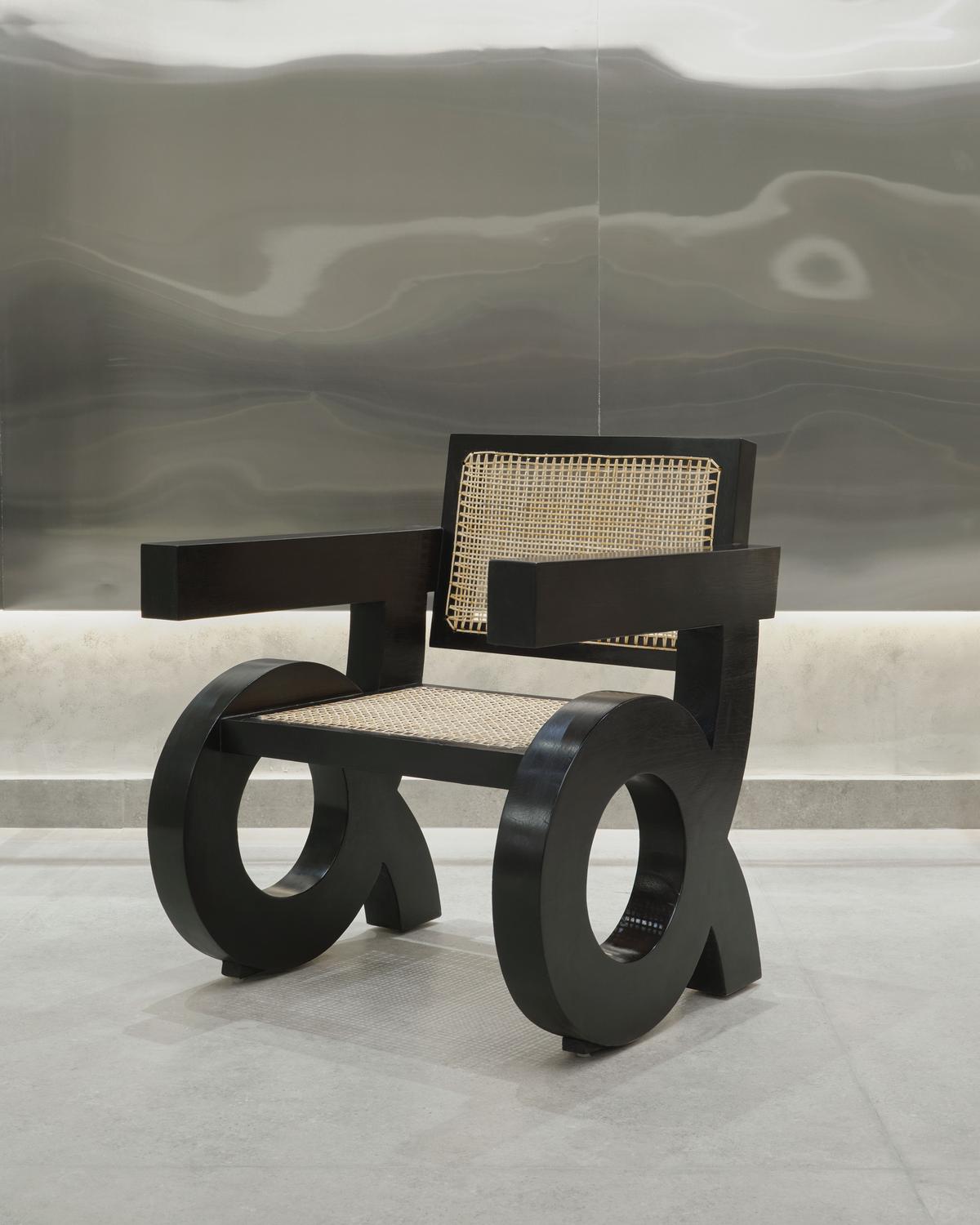
“Designing it has been an emotional journey for me; I have tried to make every detail count,” says Goyal. The famous ‘Chandigarh Chair’ by Pierre Jeanneret, placed at the mouth of the store, has the letter ‘k’ crafted in Gurmukhi below the two arms to give it more strength and support. The elegance of the utilitarian piece of beauty, the ergonomic design with a mesh back and seating establishes the Chandigarh connection.

A view of the store.

A view of the store.

The skylight panel lending length and brightness to the store, the custom stainless-steel cash console, the door handles, and the brooches on staff uniforms are part of our design story, says Goyal.

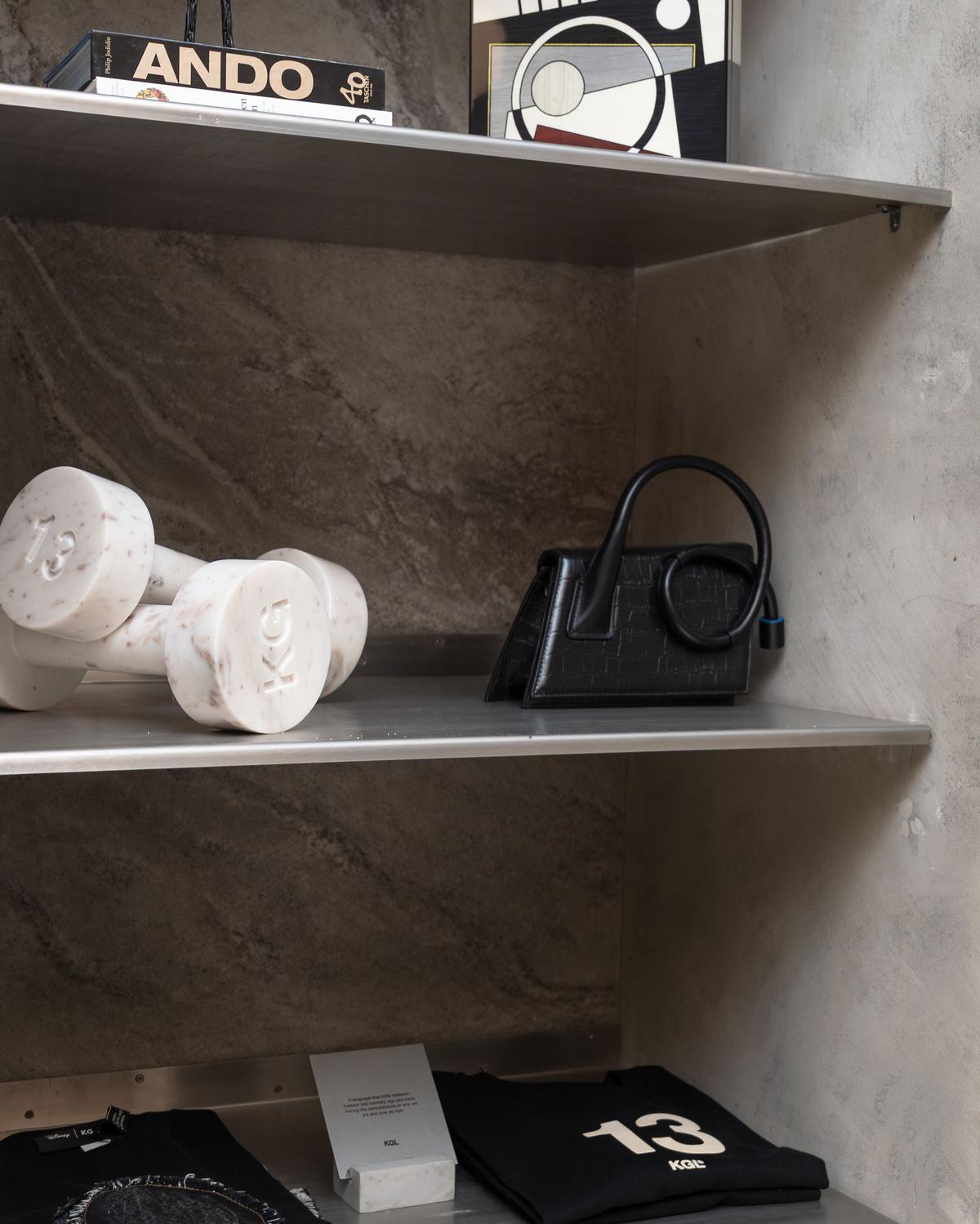
There is a curated nook, the ‘brand library’, where on display are objects that connect fashion and culture. It compels you to pause and look at one of Dali’s surreal paintings, Ando’s sculpture, a black mini Keekee bag, T-shirts from Goyal’s diffusion line and art books.

Noticeable is the pair of dumbbells with ‘13’ etched on it. “I find beauty in duality. Read it in Hindi as ‘tera’, which means it’s all yours,” says Goyal.

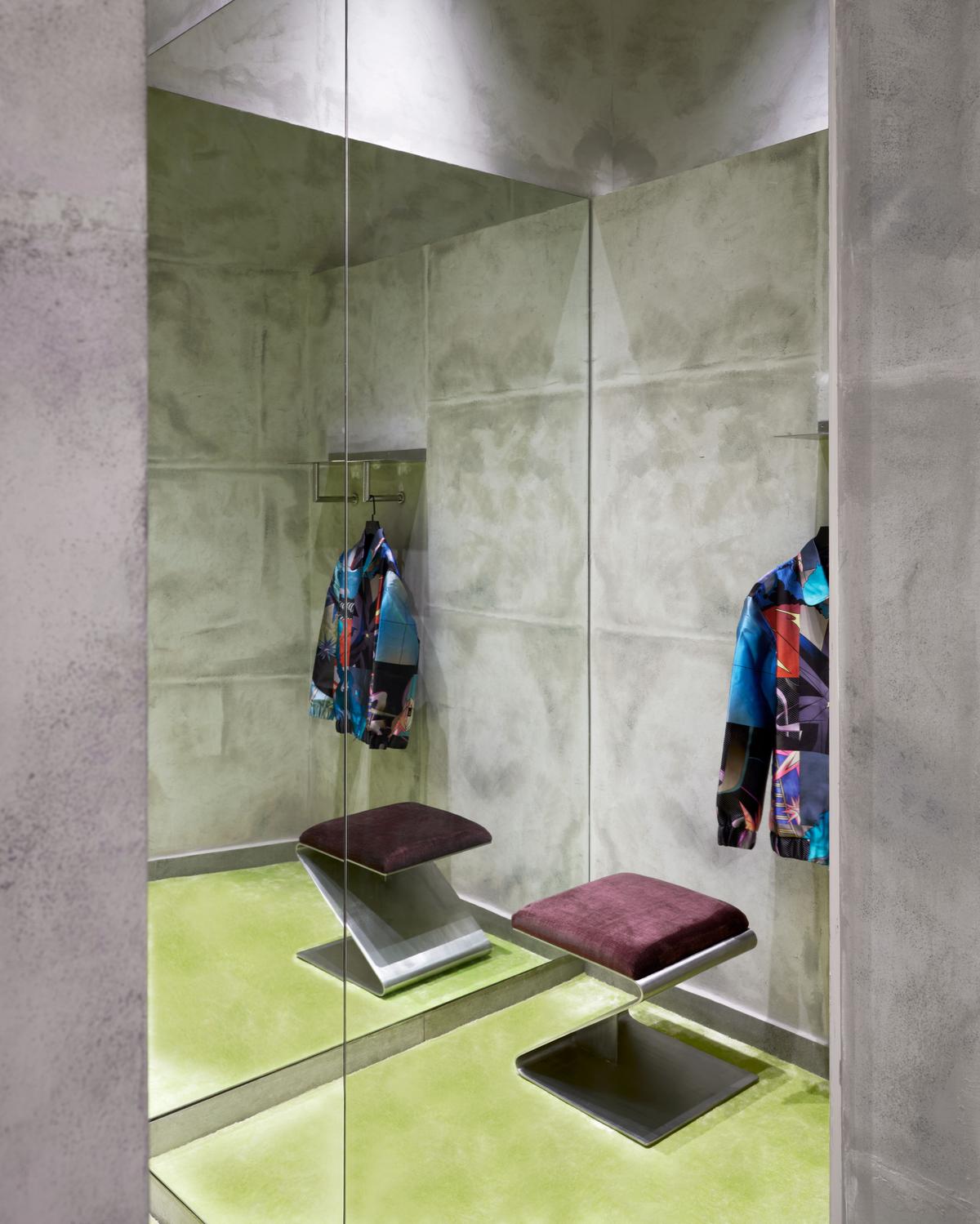
In the cement-finish grey store, the only patch of colour is in the trial room — green floor and a deep plum chair, she has deliberately used “to introduce a cool and weird element of playfulness”.

Goyal has purposefully kept the store design minimal. “It makes the space look less busy and my garments, with lot of fun embellishments, maximise the impact,” she says.

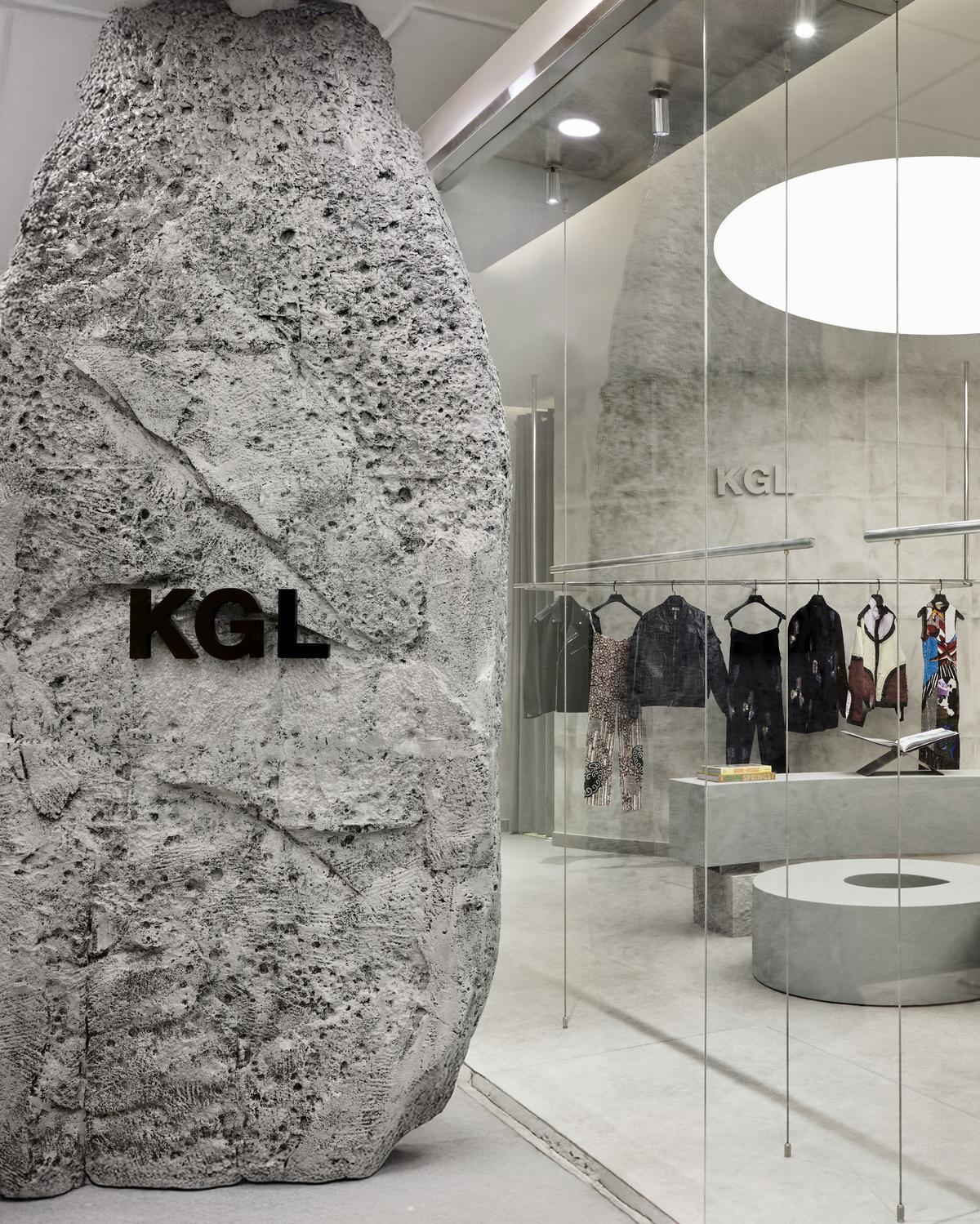
The visual drama inside is matched with an eye-catching fabricated rock placed outside the store. Grey in colour, it measures more than 15 feet in height and gives a rugged look with a spiritual vibe. The magnitude it exudes is like the brand’s, says Goyal, who studied space design at NIFT and apparel design at Parson’s New York.

After 16 illustrious apprenticeships at Prada, Marchesa, Adidas and Bibhu Mohapatra, she dived into exquisite garments with a subversive design language embodying youthful and free-spirit.

KGL at Dhan Mill marks her milestone, combining creativity and strategy for a tangible narrative. Kanika hopes the audience will appreciate and engage here. “It is to slow down and unravel methodically because the brand experience needs to live beyond the product,” she says.

KGL is at Alley 3, The Dhan Mill, 287-288, 100 Feet Road, Pocket D, Chhatarpur.


Source link

Why flooring is the new design focus in homes


Often referred to as the foundation of design, flooring today is more than just a surface. While it is the first surface you feel when you step into a space, it is a key architectural element that dictates spatial rhythm, visual quotient and even the acoustic texture of a space.

“It sets the mood, defines the style, and anchors the identity of a space. From natural stone to patterned tiles and seamless micro cement, flooring choices shape how interiors flow and feel. With open plans, sustainable materials, and evolving lifestyles, flooring has become a statement of both design sensibility and long-term value,” says Manisha Gandhi, founder, Studio MG. Given that it is a long-term investment and not something that is changed often, flooring must strike a balance between practicality, aesthetics, and durability.

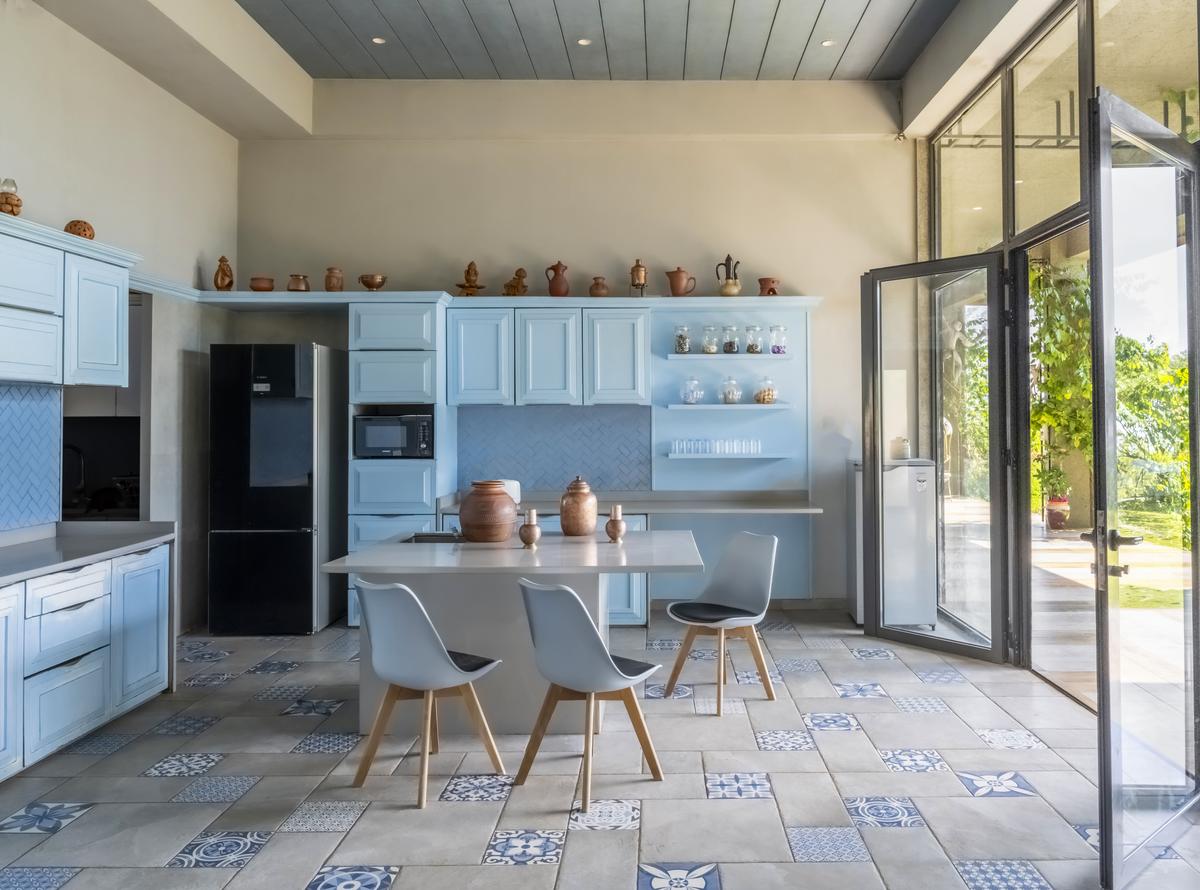
Grey tiles with blue patterned insets bring a touch of Moroccan charm to the kitchen, balancing utility with visual rhythm.

Grey tiles with blue patterned insets bring a touch of Moroccan charm to the kitchen, balancing utility with visual rhythm.

When designing the flooring for a home, the key considerations include the type of space, its intended usage, the local weather conditions, and the overall aesthetics. “For me, flooring decisions stem from context, character, and comfort. First, context — the site’s climate, usage patterns, and sunlight. Then, character — the mood of the space and the material palette. Lastly, comfort — the tactile quality and ease of maintenance,” says Pooja Bihani, founder and principal architect, Spaces & Design. It is also important to consider aspects like durability, sustainability and lighting impact. Flooring today is all about blending aesthetics with practicality. “One of the biggest trends is the shift towards natural materials, earthy tones and textures: think warm woods, raw stone and neutral palettes.

There is also a strong preference for seamless and large-format flooring, which creates a clean, expansive look, especially in open-plan spaces. Materials like engineered wood, porcelain tiles, and luxury vinyl planks are very popular — not just for their aesthetics, but also for their durability and ease of maintenance.

The flooring composition acts as a visual plane of calm guiding movement while anchoring the furniture layout.

The flooring composition acts as a visual plane of calm guiding movement while anchoring the furniture layout.

“In bathrooms, textured tiles and matte finishes are in demand for both safety and style,” says Sunil Jasani, principal designer and co-founder of Fine Lines Designers.

Lesson on nature and history

Materials that echo nature, history, and artisanal provenance are in demand. “Textured tiles that mimic raw stone or aged wood are favoured for their evocative patina. Moroccan-inspired encaustic tiles are being deployed with architectural intent. Terrazzo, once utilitarian, is enjoying a renaissance as a surface of artistic expression. Eco-conscious materials like bamboo, cork and recycled aggregates are in vogue too. What binds these trends is a shift toward emotional materiality; floors that tell stories, age with grace, and anchor a space with soul,” says Shimona Bhansali, founder and principal designer, DesignHex.

Here is a look at six projects where the flooring is a highlight.

A poetic terrain

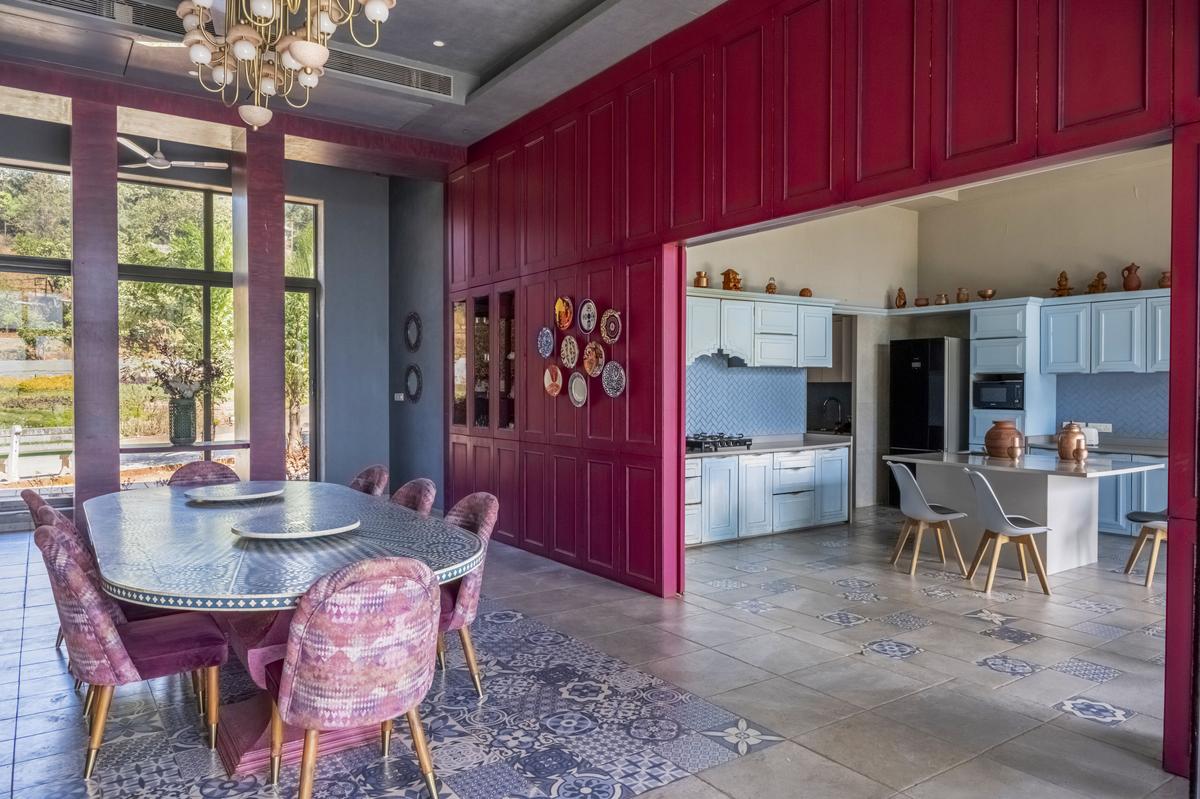
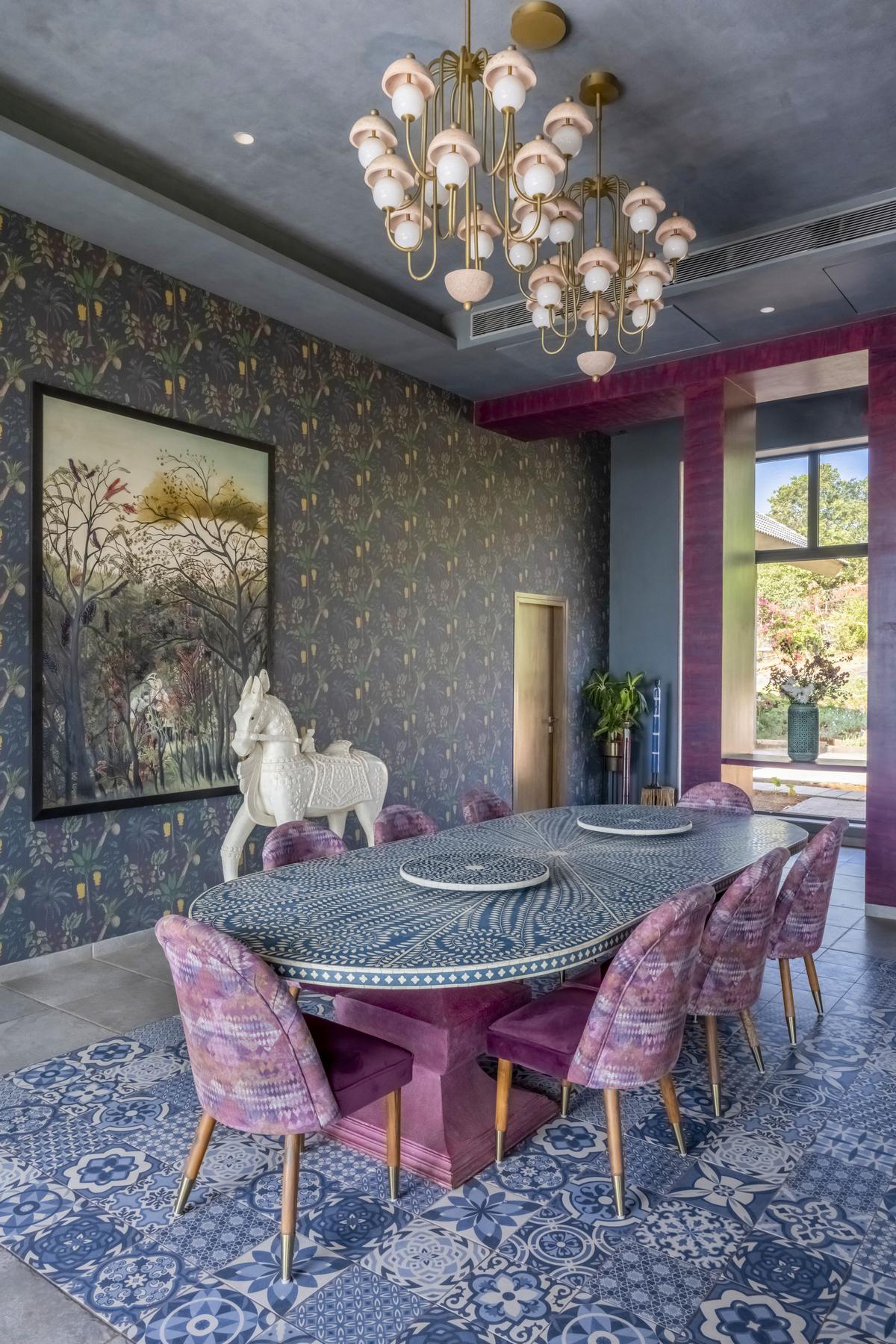
As one moves through the dining area the insets provide a subtle but deliberate spatial punctuation.

As one moves through the dining area the insets provide a subtle but deliberate spatial punctuation.

Shimona Bhansali, DesignHex, Kolkata

The Mumbai-based practice, established by Bhansali, is dedicated to crafting spaces that transcend mere aesthetics to embody deeper meaning and purpose. The dining area in this home in Maharashtra has been designed using grey tiles reminiscent of traditional Kota stone and is both visually compelling and extraordinarily functional.

Shimona Bhansali

Shimona Bhansali

“This is a winning combination where utility seamlessly blends aesthetics. The space required a surface that could endure movement, hosting and the occasional spill, without compromising on beauty. The finishing is elevated through a soft matte texture that adds both depth and durability. Interspersed within this surface are curated insets of patterned blue tiles, evocative of Moroccan motifs. The patterned blue tiles have been laid together to form a showstopping centre piece in the formal dining space. These accents animate the flooring with cultural richness and rhythmic variation, creating a grounded yet poetic terrain beneath the act of gathering,” adds Bhansali.

One of a kind

The dance of surealism project.

The dance of surealism project.
| Photo Credit:
Rohit Ganguly

Kirti Dodeja, Delhi NCR and Mumbai

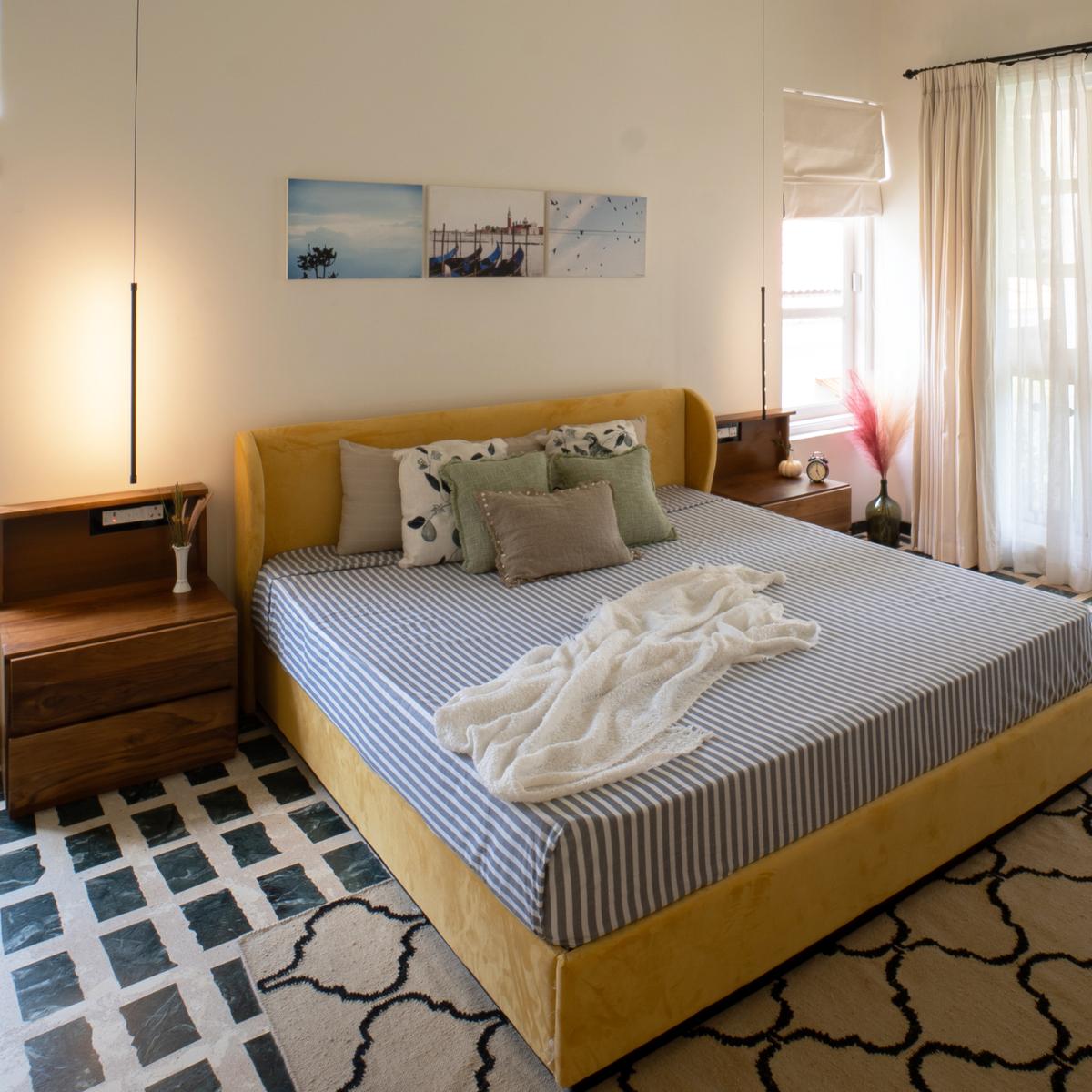
A design practice based in Delhi NCR and Mumbai, Kirti Dodeja specialises in interior design, product design and spatial branding. The master bedroom flooring in this home in Goa uses a unique combination of terrazzo and Udaipur green marble, which has been laid using a unique technique. “I call it the paper-tear-flooring for its uneven paper-tear-like edges, which is very hard to achieve in a hard material like marble. The flooring achieves the illusion of paper hand-torn edges in stone. By partially cutting marble slabs to half their thickness before hammering, the slabs broke along guided paths — creating irregular, feathered edges instead of clean cuts. These controlled ‘torn’ marble strips were then hand-laid within terrazzo and polished to merge the textures into a seamless yet organic surface,” says Kirti Dodeja, founding designer and interior architect of her eponymous design studio. Each stone was carefully hand-cut and hammered to get the paper-tear edge effect.

Kirti Dodeja

Kirti Dodeja

It was then laid by hand, almost equidistant from each other and then the terrazzo mixture was poured. “We had to be very cautious about the white chips to white cement ratio; just enough chips to bind the mixture together, but not too much to take away from the beauty of the paper-torn edge of the green marble. In the end, it was all polished on-site evenly to bring the two materials into one smooth level of seamless flooring,” adds Dodeja.

Vintage pov

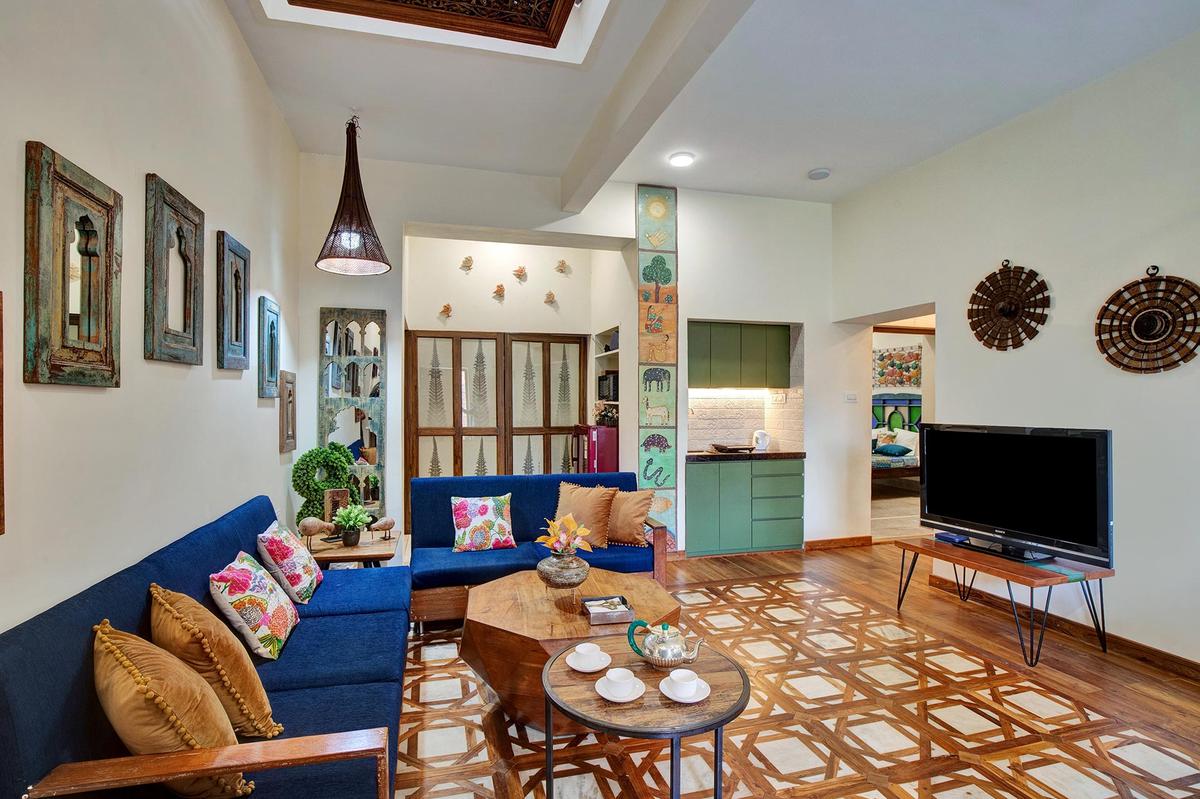
Madan Villa by THC. A checkered pattern adds a unique character to the overall space.

Madan Villa by THC. A checkered pattern adds a unique character to the overall space.
| Photo Credit:
Amit Sharma

Priyank Gupta, Traditional Handicrafts Centre (THC)

Recycled teak flooring brings nostalgia to a 40-year-old family home where the living room features an intricate repeat pattern of marble and wood. “Principal Designer Vrinda Agarwal chose this combination, which balances durability with style, given the high movement in this space. The natural expansion and contraction of wood is minimised when paired with marble, ensuring stability. Since the guesthouse is in Jodhpur, where temperatures remain high most of the year, this combination also helps keep the living area cool,” says Priyank Gupta, partner, THC.

Priyank Gupta

Priyank Gupta

Additionally, the bold contrast of white marble against wood adds a distinctive character to the space. It is key to note that the recycled teak flooring is sourced from old mills and ships and has been polished with natural dyes and water-based finishes. Paired with marble, it revives a timeless Indian aesthetic in a cosy, nostalgic space.

Masterclass in harmony

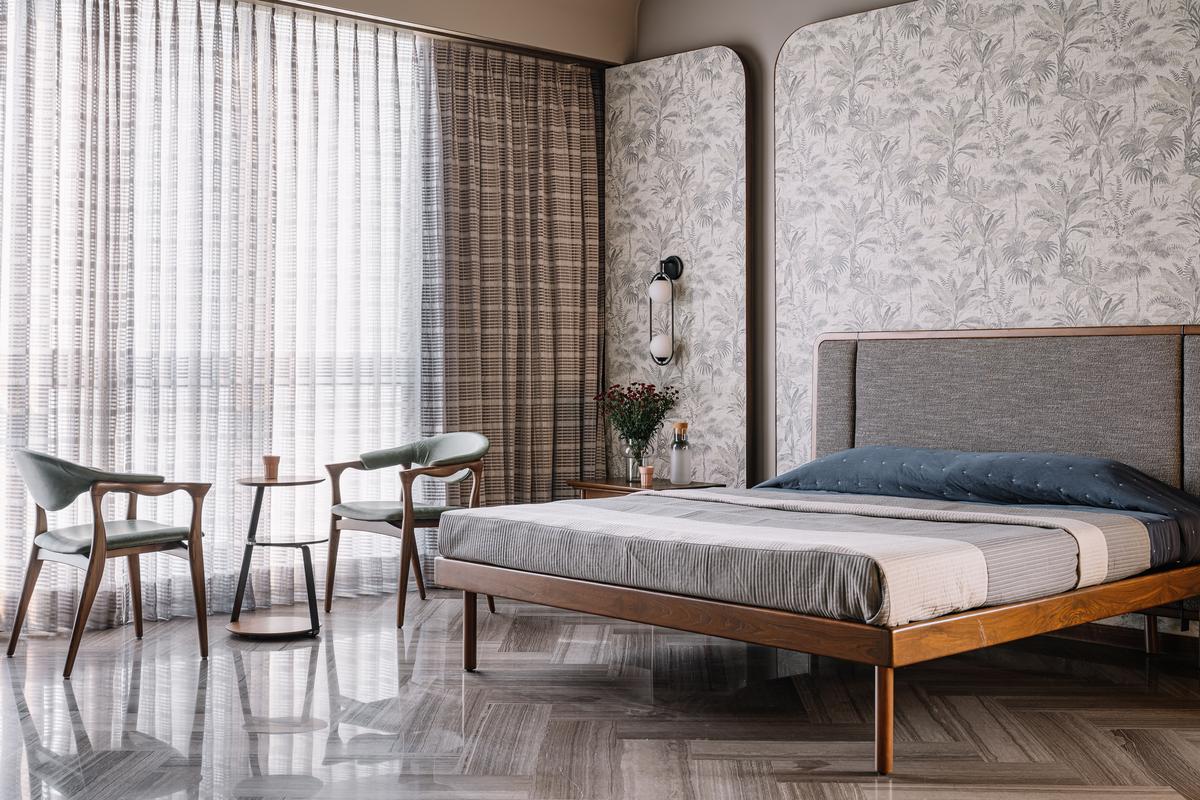
The master bedroom has tobacco brown marble laid in the typical herring bone pattern, with  resemblance to wood.

The master bedroom has tobacco brown marble laid in the typical herring bone pattern, with resemblance to wood.
| Photo Credit:
Ishita Sitwala

Pooja Bihani, Spaces & Design, Kolkata

The award-winning design studio founded by Pooja Bihani in 2006 creates bespoke spaces. The flooring in this Kolkata home, called Walnut house, is a masterclass in harmony and cohesiveness. Tobacco-brown marble was chosen as a primary floor material due to its connection with the colour walnut itself. “This is an interesting variant not only because of its unusual colour but the fact that the grains resonate with wood. All rooms had this flooring but in different patterns,” says Bihani.

Pooja Bihani

Pooja Bihani

The master bedroom has this marble laid in a herringbone pattern, giving it a warm finish that mimics wood. In the kids’ room, it has been laid in a large checkered pattern, whereas in the other two bedrooms, it is laid as large slabs. While each space has its own character, the colour sync remains a constant. “The common areas have muted beige marble, but the long passage and the entrance lobby are characterised by geometrical inlays overlaid with the same tobacco brown, grey and black marble. The entire flooring palette was curated to harmonise with the custom-made walnut furniture and our client’s vision of quiet luxury,” adds Bihani.

Neutral hues

Statement bathroom flooring.

Statement bathroom flooring.
| Photo Credit:
Yadnyesh Joshi

Sunil Jasani, Fine Lines Designers

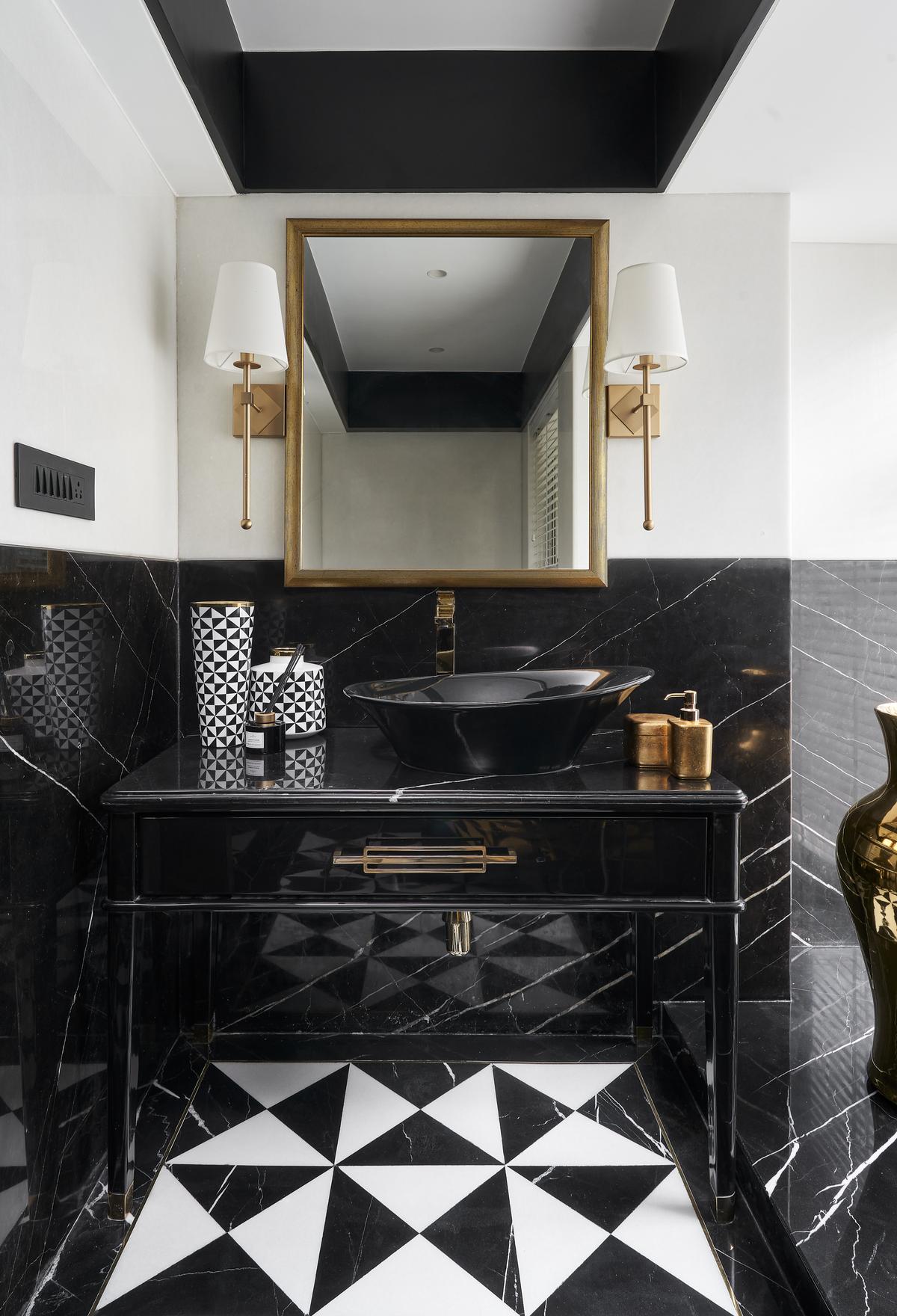
Flooring plays a crucial role in making this bathroom space in a Mumbai home feel larger and visually striking. The floors feature a seamless blend of polished marble with a crisp, modern aesthetic. The use of rich tones and textured surfaces throughout creates a sophisticated foundation, while the neutral hues allow the accents and features to stand out.

Sunil Jasani

Sunil Jasani

“Gold accents were introduced sparingly but powerfully — on lighting fixtures and decorative details. These golden touches add an element of awe and richness, serving as the perfect counterpoint to the sleek, minimalist surfaces. The gold is never overwhelming but adds a sense of elegant grandeur that is unmistakable,” says Jasani, principal designer & co-founder of Fine Lines Designers. The lighting design is a key feature of this space. Hanging lights with gold accents adds an air of sophistication and warmth, casting a soft, inviting glow that enhances the luxury feel.

Rustic Indian aesthetic

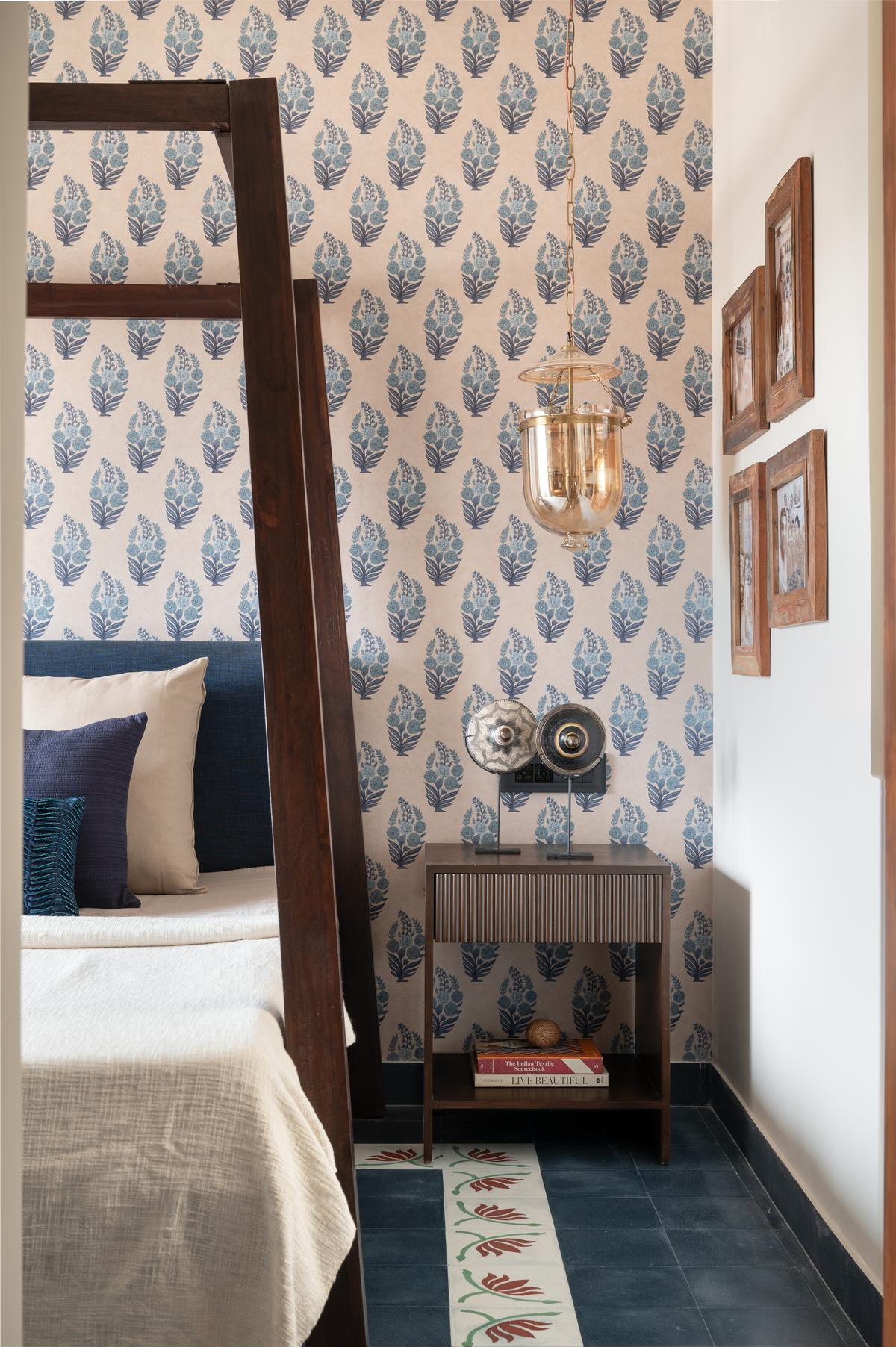
Bedroom featuring a four-poster bed set against a striking Sabyasachi wallpaper, with handcrafted floral inlay flooring that adds an elegant layer of detail to the space.

Bedroom featuring a four-poster bed set against a striking Sabyasachi wallpaper, with handcrafted floral inlay flooring that adds an elegant layer of detail to the space.
| Photo Credit:
NAYAN SONI

Studio MG, Bengaluru

The flooring in this 1,200-square-foot Bengaluru apartment was conceived as a key design element to complement the home’s rustic Indian aesthetic. Given the compact size of the apartment, the flooring needed to create a sense of continuity while also introducing character and detail. The approach was to keep the palette earthy and grounded, using flooring as a backdrop to enhance warmth while reflecting traditional Indian influences.

Manisha Gandhi

Manisha Gandhi

“The floors of the living and dining areas were finished in distressed blue pigmented micro cement, which was chosen for its seamless quality and raw texture. This created a contemporary yet earthy base that amplifies the rustic mood of the home. The lack of joints lends a feeling of openness, making the space feel larger and more fluid. A striking element in the design is the use of large-format cement tiles edged with a traditional Indian lotus border tile, which brings a handcrafted, artisanal touch and adds a layer of ornamentation that feels both nostalgic and fresh,” says Manisha Gandhi of Studio MG. In bedrooms and smaller spaces, the flooring transitions subtly, ensuring a cohesive flow while maintaining the rustic vocabulary of the design.

Dos
Choose flooring based on room function — what works in a living room will not necessarily suit a bathroom
Seal natural materials like stone, marble, and terrazzo to prevent stains and water absorption
Consider anti-skid finishes for bathrooms, kitchens, and outdoor decks
Follow the manufacturer’s cleaning guidelines to extend the life of your flooring
Consider flooring as a long-term investment, balance initial costs with durability, upkeep, and resale value

Don’ts
Don’t compromise on quality in high-traffic or moisture-prone areas
 Don’t overlook installation: even the best material fails if laid poorly, invest in skilled workmanship
Don’t ignore climate: in humid/tropical regions, solid wood can warp; engineered wood or tiles with a wood finish are better alternatives
Don’t overlook acoustics: Hard flooring everywhere can cause echo; balance it with rugs or textured finishes.

The Bengaluru-based freelance writer is passionate about all things design, travel, food, art and culture.


Source link

Usher in the season with these eco-friendly Christmas decorations


Christmas decor from GreenKraft

Christmas decor from GreenKraft
| Photo Credit: Special Arrangement

There is no denying that while tinsel and thermocol look pretty, the planet could do with a little less of them all around. We look at a few home decor products that would also make for great gifting options this season:

Recycle, refresh

Christmas decor from Abira

Christmas decor from Abira
| Photo Credit:
Special Arrangement

Meaning brave in Hindi, Abira founded by Priyanka Khandelwal, works with women in the urban slum areas of Bengaluru and Pune. “All our Christmas decorations are made by them and for most this is their first job. The fabrics we use are sourced from garment cutting units. Whenever any garment is manufactured, about 15% of fabric is wasted, and that is what we utilise across our collections.”

Priyanka says since these scraps are donations from bigger brands they are able to create more pieces in every style. “The wood we use is actually medium-density fiberboard (MDF) created out of compressed wood and sawdust, and are discards which we pick from interior designs firms.”

Check out whebyabira.com for details

Twines that bind

Christmas decor from GreenKraft

Christmas decor from GreenKraft
| Photo Credit:
Special Arrangement

Though they have been operational since 2012, Greenkraft introduced a line of Christmas collectibles last year when they launched their e-commerce website. The firm which began marketing bamboo products, now also crafts items out of banana fibre.

Sangita Banerjee, senior lead merchandiser, says the basic structure of their products evolves from the composition of mats created from slivers of bamboo reed. “Our in-house designers work on the R&D for our festive collections and how to make them relatable for each season. We employ rural women to assemble our products — bamboo ones are from Karnataka and the banana fibre ones from the Tamil Nadu region. There aren’t too many job opportunities in these regions for women, so for most of them, this is an additional source of income.”

Details on greenkraft.co.in

Waste not, wreath knot

Christmas decor from Diya Innovations

Christmas decor from Diya Innovations
| Photo Credit:
Special Arrangement

Among the many cutesy items on Diya Innovations’ site, is a bushy, green wreath that would not only look lovely on its own, but also lends itself to pretty much any theme you might have this Christmas. Founder of Diya Innovations, Suman John says, “It all began a few years back, when over a lakh of pamphlets left over after a political rally were dumped at our door step. My Head of Production had designed a wreath using little bits of paper that were folded into fans; they were then strung with wire to hold the structure together.”

“Though it might seem monotonous, for those with autism or intellectual disability, repetitive motion is soothing and getting them to complete a task within a certain period of time, gives them a sense of purpose. We’ve been making these for a few years now, and it has been a popular product.”

This year, Diya has introduced cloth ornaments that double as room fresheners. “We had leftover scraps of cloth from the bags that we make, so we hand-printed them with candy stripes and stuffed them with potpourri, turning them into little tree ornaments. Similarly, the new addition of Santa faces sporting dashing moustaches are made from recycled pine wood.”

Check out @diyainnovations2013 on Instagram
Little lights

Christmas decor from Hand Art Treasures

Christmas decor from Hand Art Treasures
| Photo Credit:
Special Arrangement

One Christmas when Tahmina Yacoob found herself with time on her hands, she cut up and folded some Auroville paper lying around into a kitschy lampshade of sorts. “Everyone who visited us that season loved the play of light and wanted something similar. That was how I started making these by the end of 2016,” says Tahmina.

“Initially, I started with the handmade paper I had at home. I love their texture and had picked up quite a lot over the years,” she adds.

Though the original design remains the same, Tahmina says she alternates colourful handmade paper with plain ones. She sources these from a local paper-cutter, using what remains after wedding invites and office stationery have been cut to size. “The textures are what I am on the lookout for.”

Three years ago, Tahmina began employing a group of women from Whitefield who wanted to augment their income. “I do the cutwork and the flowers, they help me assemble the lights on each piece.”

@handarttreasures on Instagram features Tahmina’s Christmas collection


Source link

In Kolkata, the Ganges comes alive to a luxury dining experience aboard a passenger cruise anchored in the heart of the river


It is that soft-shouldered time of year in Kolkata, when the rains have gathered their hems and departed, leaving the sun diffused and forgiving. Making our way through the tree-lined avenues of Fairley Place, we arrive at BBD Bagh Railway Crossing. Beyond the railway tracks lies the ferry ghat, a narrow ledge between departure and return. The river gleams in the waning orange of dusk, alongside the Howrah Bridge rises like the city’s steely guardian. 

As we wait, a ferry moors at the ghat. We step aboard. On setting sail, the city recedes. 

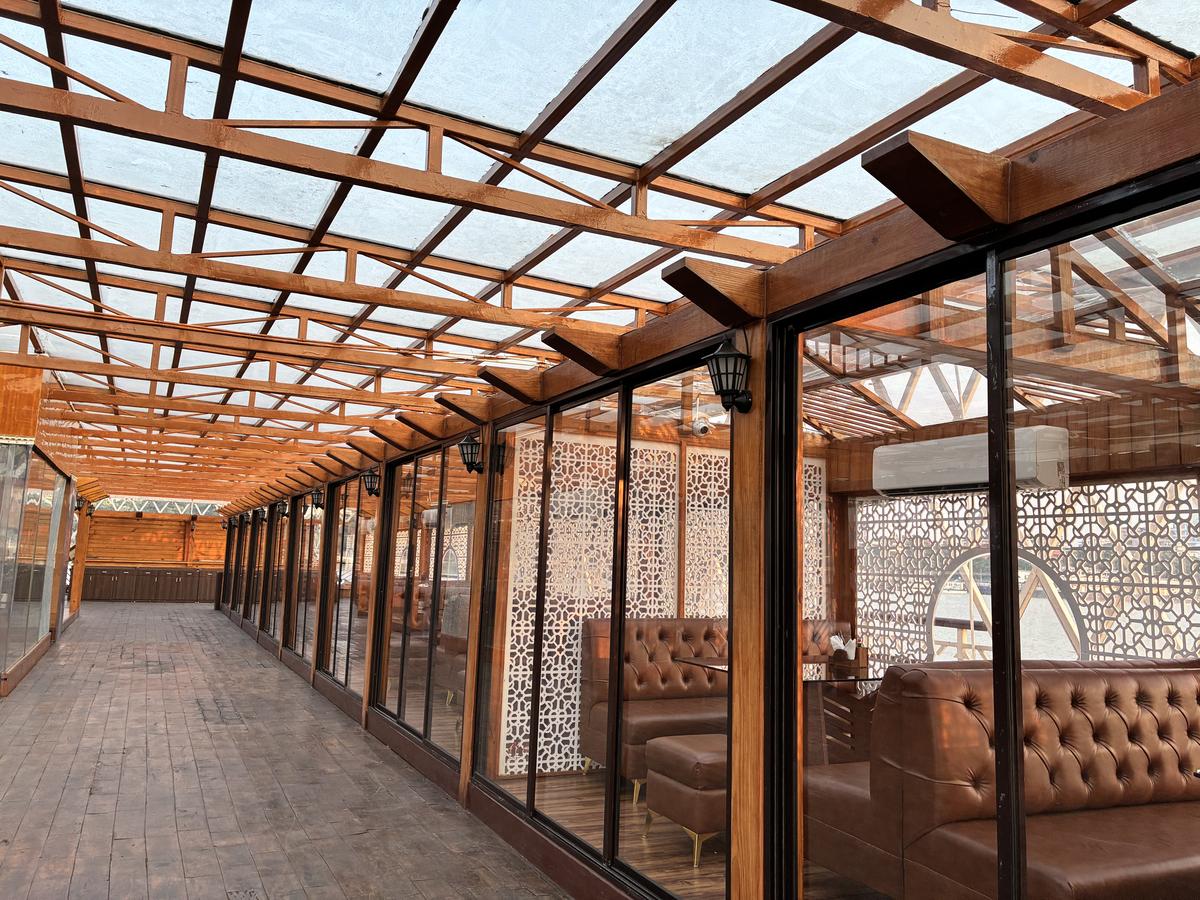
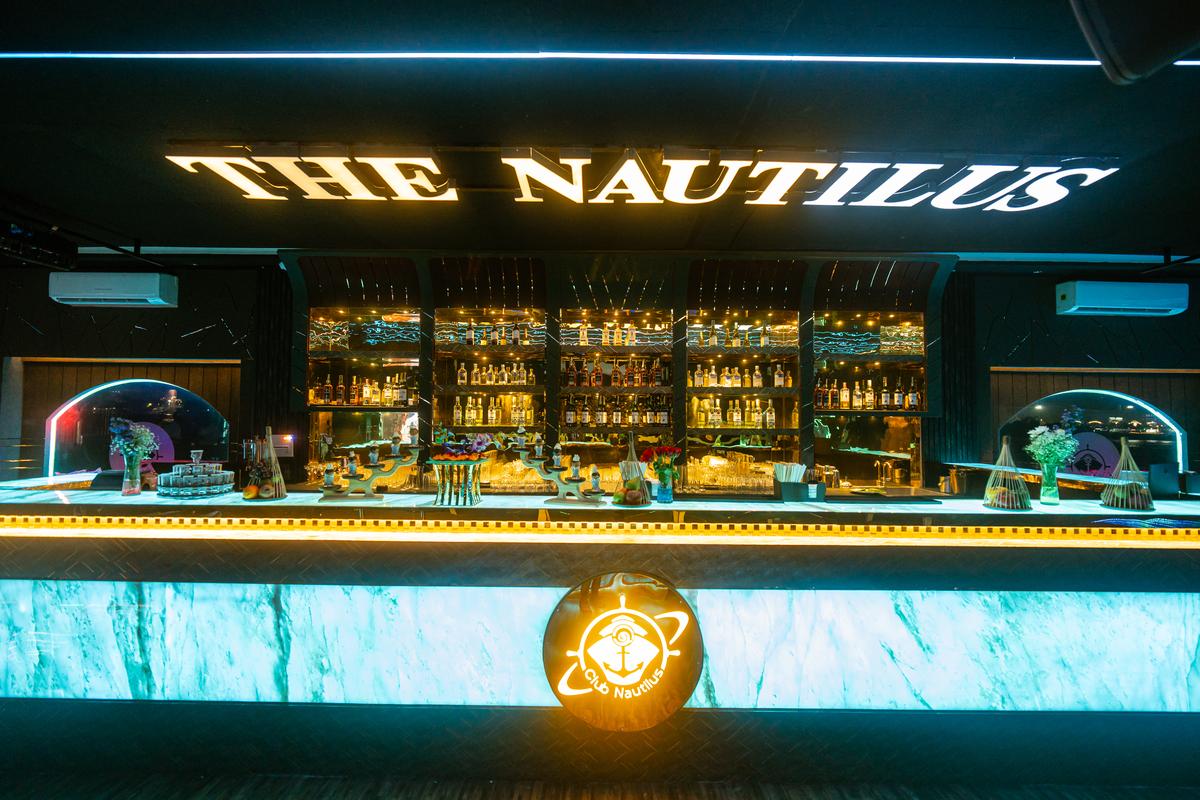
Out in the heart of the Ganges, the real marvel awaits  — Nautilus, a two storeyed passenger cruise, 70 by 13 feet wide, 24,000 square feet long, with its anchor deep in the unseen bed of the river. Supported by the turning of the tides and currents, it turns almost imperceptibly, a full 360 degrees. Through its glass belly and the open deck on the second floor, the city scatters itself on the far edges of the river. Lying before us, the length and breadth of the SBI headquarters, the giant radar resembling a football on top of the New Secretariat, the white dome of the GPO, Eastern Railway Headquarters, and the Howrah Bridge with countless cars traversing it every second.

Nautilus is Ayan Banerjee’s brainchild. Ayan, a marine captain, understands the world of shipping and navigation like the back of his palm. Telling us about the idea behind the project, he explains, “In Kolkata everybody likes to party. All over India, if anything is on a boat, you have to book the whole boat or go somewhere where ticketing is happening. I wanted to find a way for people to come to the water and enjoy the water. I could have done it anywhere in India but I wanted to do something for my city. I would have made more money in Goa. But since I like to party, I want other guys to be able to party and enjoy the ambience of the Ganges. Nowhere in India do they have this concept.” 

He adds, “The ship used to be a banquet vessel. I have listed it. We didn’t touch the structure. Everything you see here — all my employees put their heads together and gave ideas for the interior decor, ” says Ayan. 

Explaining the name, he says, “Nautilus has two meanings. In Jules Verne’s novel 20,000 Leagues Under the Sea, Captain Nemo’s imaginary ship is called Nautilus. Secondly, the Nautilus shell is claimed to have a golden ratio, which makes it the most beautiful in the world.”

Recalling his experience at sea, the captain recalls, “The biggest vessel I’ve navigated is five times this size of Nautilus which is merely 72 metres long. The entire vessel runs on diesel, including the electrical connections which power the bar, nightclub and upper deck. This has been my dream project for my city.”

Inside Nautilus

Inside Nautilus
| Photo Credit:
SPECIAL ARRANGEMENT

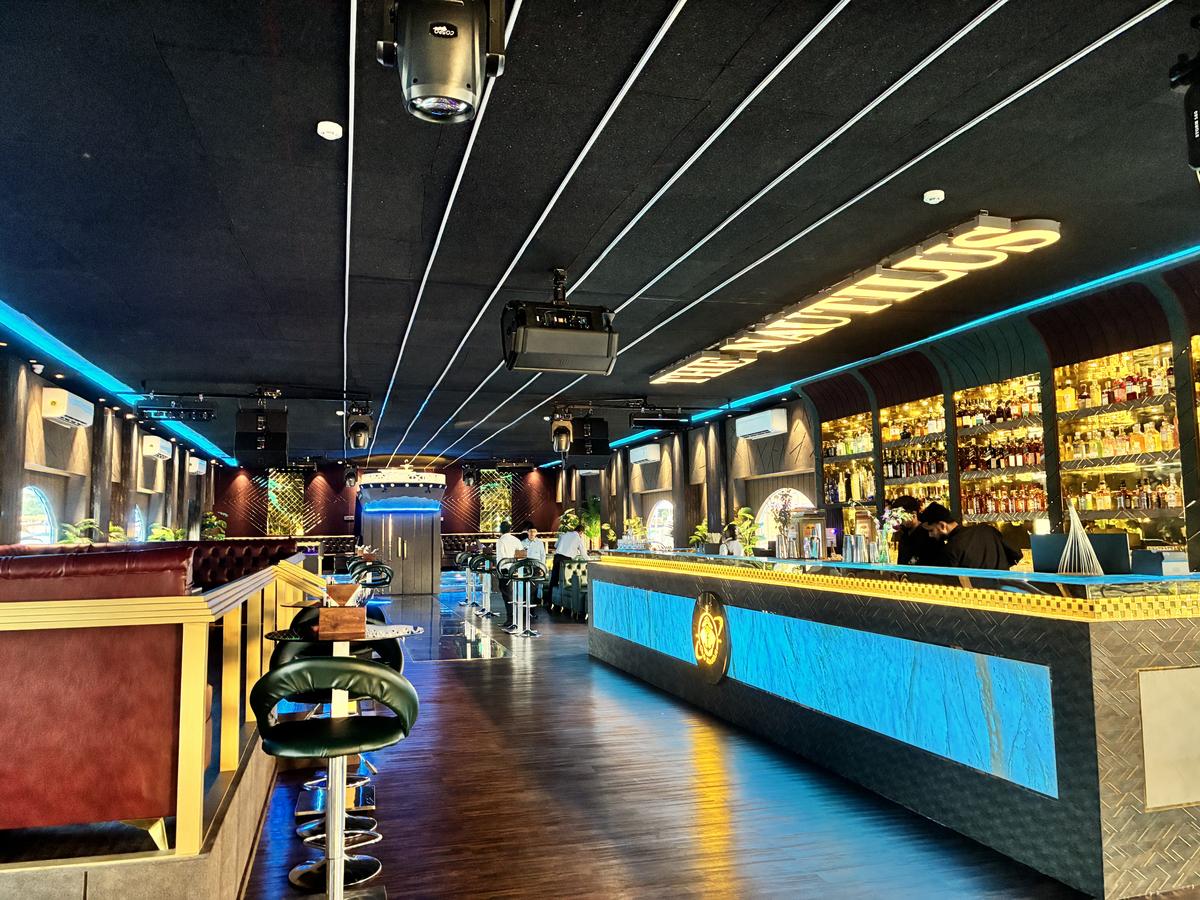
Nautilus was inaugurated during Durga Puja on September 26, 2025. The one of a kind concept features a nightclub and hookah bar on the first floor, while the upper deck offers a cabana style seating arrangement alongside a larger open air lounge.

In the near future, the owner plans to introduce live seafood counters “like you would see in Singapore,” he says where guests can pick their fish, crab, or lobster, and have it prepared fresh at the counter.

Nautilus bar

Nautilus bar
| Photo Credit:
SPECIAL ARRANGEMENT

Food and beverage

The bar and food menu spans Indian, Continental, Chinese, Italian, and fusion dishes. From Don Julio shots to GH Mumm for celebrations, the customary Martini, margarita, gimlet, and an array of liqueurs, the offerings are neither ostentatious nor basic but manage to straddle both. The menu includes Kolkata favourites such as lobster, river fresh bhetki in fish kalia or daab chingri, mahi mahi in kasundi (mustard), along with pizza, pasta, Thai curries to baked roshogolla, Japanese cheesecake, and darsaan for dessert and a lot more. While the food and beverage menu does not experiment, the dishes are comfortingly familiar and tailored to suit Kolkata’s eclectic palate — indulgent and without pretence.

The menu has options like Thai curry, lobster, and pizza.

The menu has options like Thai curry, lobster, and pizza.
| Photo Credit:
SPECIAL ARRANGEMENT

On special occasions like Bhai Phonta, Deepavali, or Durga Puja, curated thalis priced between ₹1,300–₹1,500 are prepared by the chef on board.

When asked about the safety of guests returning by ferry after alcohol consumption, Ayan assures that measures are being put in place. “The ferry that carries guests to and from the vessel will soon be covered with a net, and several bouncers will be stationed on board,” he says. The ferry, he adds, is exclusively reserved for patrons of Nautilus.

In a city where nostalgia often outweighs novelty, Nautilus offers a slice of innovation that does not estrange itself from heritage. It brings Kolkata’s relationship with its river full circle: once the artery of trade and empire, the Ganges now becomes a stage for leisure, light, and belonging.

Located at BBD Bagh Kolkata, Fairley Place 1, the price for two is approximately between 1,800 – 2,000. No cover charges. For reservations call +91 9147762462

Published – December 05, 2025 05:10 pm IST


Source link

Dating fatigue is shaping a new kind of modern romance in India


I was sitting with a friend recently — one of those late-evening, chai catch-ups — when she said something that stayed with me. “I think I’d rather be alone than be someone’s emotional admin again,” she sighed, stirring her cup like it had personally offended her. It was one of those remarks that sinks quietly into your chest. And the more I thought about it, the more I realised I had heard variations of the same sentiment from several people in the past month. Different stories, different cities, but the same soft exhaustion: dating has started to feel like a second shift.

Of course, this is not a strictly men-are-the-problem narrative, because that would not be true. I have met men who are more emotionally articulate, responsible, and domestically competent than some of the women I know. I have also met women who prefer outsourcing every logistical and emotional task to the men they date. As a friend put it last week, “It’s not a gender problem anymore — it’s an adulthood problem. Some people grow up. Some outsource it.” That line has been playing on loop in my head.

Emotional deadlifting

And since we are being honest, I am not writing this from a place of detached superiority. I have had a full Florence Nightingale era myself — the phase where I believed I could love men into becoming their better selves. I was the pillow, the therapist, the cheerleader, the emotional laundromat. None of this was asked of me. I simply arrived pre-conditioned for the job, offering five-star care at relationships that barely met the hygiene standards of an OYO. I seemed to attract damaged men like I was running a discount on emotional availability. Beautiful, complicated men with heartbreak stitched into their bones. Men who adored being held but struggled to hold back; who loved being understood but rarely understood in return.

Somewhere in this pattern, a quiet realisation crept up on me: I was not getting the same softness, care, or instinctive emotional generosity that I was pouring in. So I shifted my philosophy of dating. At the moment, I am on something of a hiatus — spiritually and socially — and it feels good. I want a fuss-free relationship with men, something light and breathable. I want to date around, have a small rotation, a neat little Rolodex of five men I enjoy speaking to and seeing when I please. After years of emotional deadlifting, I believe I have earned the right to prioritise ease.

This sense of gentle recalibration is not unique to me. Many women — and a fair number of men — are quietly rethinking their emotional capacity. I know men who are exhausted from being the only ones planning, initiating, regulating, and holding. Women who say their former partners left every emotional responsibility to them, right down to deciding when to have the hard conversations. One of them told me, half amused, half exhausted, “I don’t want to date someone whose idea of emotional availability is sending ‘u up?’ at 11 pm.” Meanwhile, some women are pushing back against the dynamic they watched their mothers and grandmothers inhabit — the unacknowledged, endless caretaking that swallowed their identities.

Layers of complexity

Queer relationships are not exempted from these patterns either. Many gay men go through what psychologists call “delayed adolescence” (I would know!), especially if they came out later in life or grew up suppressing core parts of themselves. This often results in one partner becoming the executive-functioning headquarters of the relationship while the other dances between charm and avoidance. A friend said recently, “I can date a man who’s complicated. I just can’t date a man who’s avoidant and complicated,” and every queer person in the room nodded like they had lived that line personally.

The generational layer is perhaps the most revealing. I once asked my mother if marriage ever felt fulfilling for her, or if it was always work. She told me they were taught to be the anchor, always. Even on days when she did not want to show up, guilt dragged her into performance. When my father was emotionally absent or simply unavailable, she absorbed the slack without complaint. She admitted there were days she wanted to scream at the weight of mothering a grown man along with children, but she swallowed that frustration because she did not want us to ever feel like burdens. “I had to pick up the slack where your father failed,” she said quietly, “That was just the expectation.”

And maybe that is what so many of us are resisting — not men, not relationships, but that template. That inherited blueprint of silent sacrifice.

So here we are, all of us — straight, queer, men, women — trying to choose ease over effort, reciprocity over resentment, peace over depletion. People aren’t walking away from relationships out of cynicism. They are walking towards something softer: friendships that feel nourishing, homes that feel calm, connections that do not demand emotional heavy lifting.

In the end, it is not a war between men and women. It is a quiet rebellion against depletion. And finally, gratefully, peace is beginning to win.

A fortnightly guide to love in the age of bare minimum

Published – December 05, 2025 05:08 pm IST


Source link