Life & Style

APD’s Horticulture Department organises multiple edits of Bloom and Plant Carnival


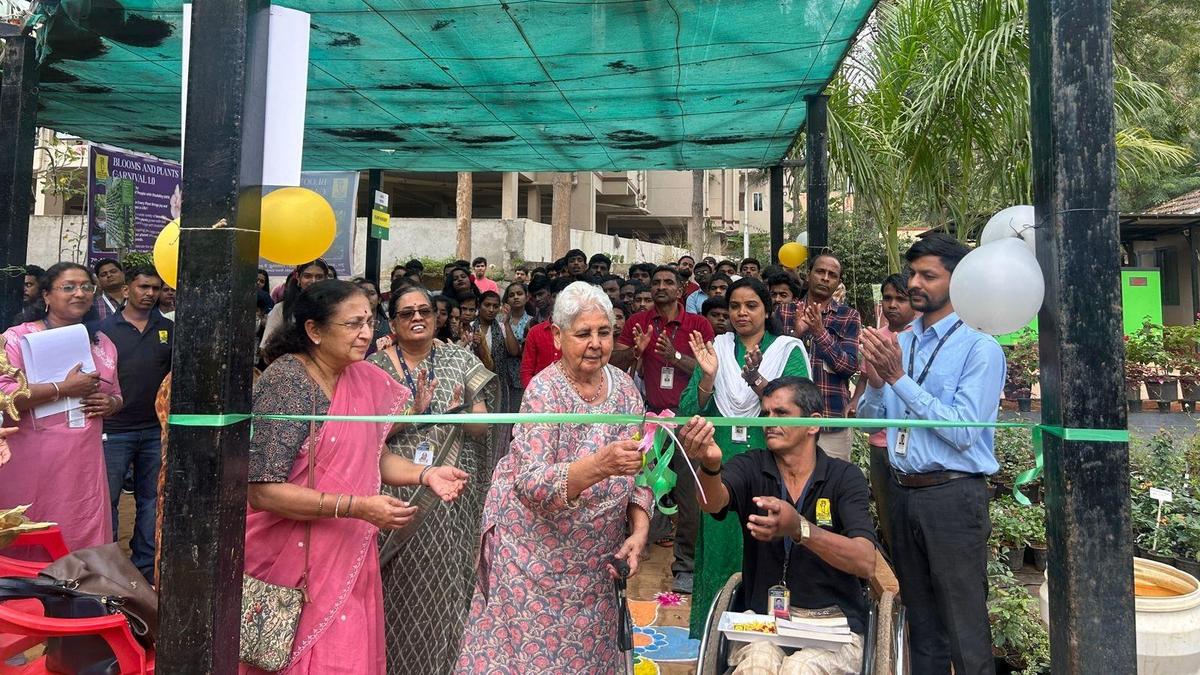
Inauguration of APD's Bloom and Plant Carnival 

Inauguration of APD’s Bloom and Plant Carnival 
| Photo Credit: Special Arrangement

The Bloom and Plant Carnival curated by the Association Of People with Disabilities (APD) was recently held at the NS Hema Horticulture Training Centre, Kyalsanahalli campus, in Bengaluru.  

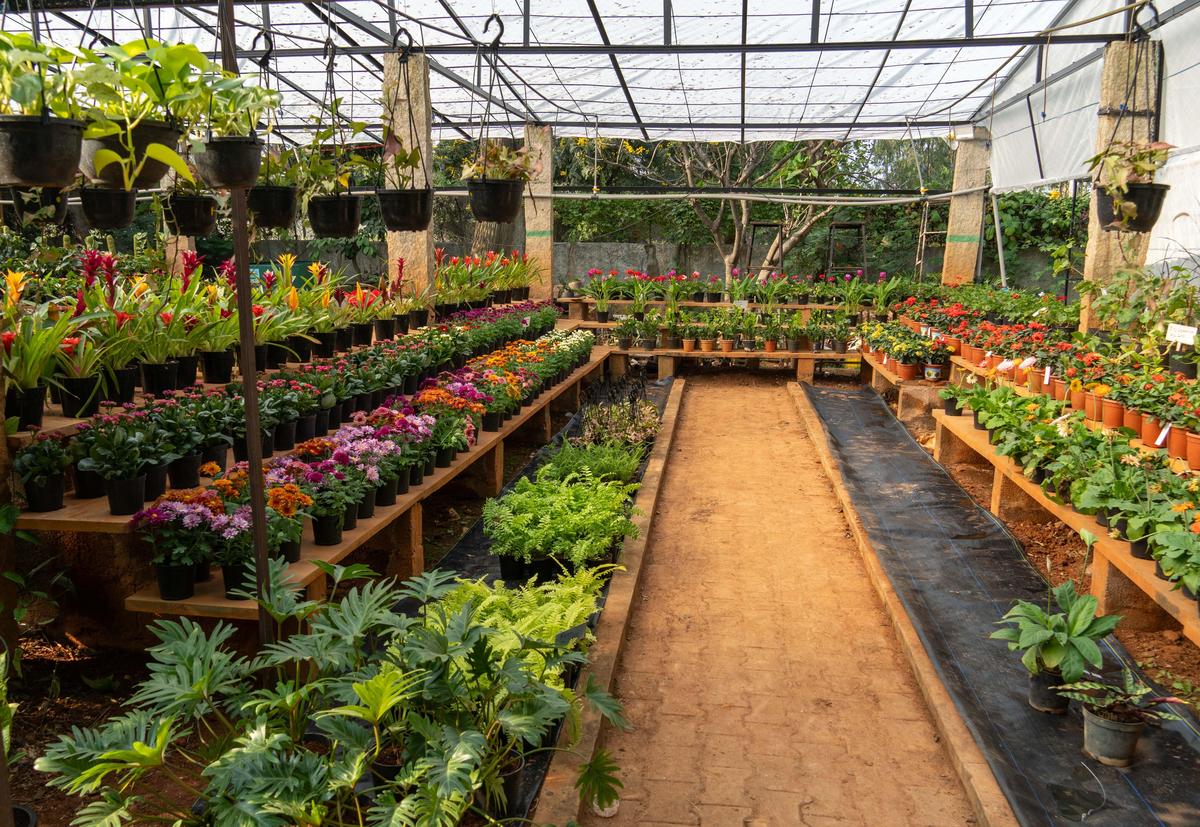
The goal of this event was to promote sustainability, water conservation and environmental health through horticulture. A variety of ornamental and exotic plants such as orchids, anthuriums and peace lilies as well as saplings of herbal and medicinal plants like chives, basil, lemongrass and tulsi, were on display.

APD was started by NS Hema, founder of the horticulture training centre, to rehabilitate people with disabilities. Inflicted with polio herself, Hema’s determination to create a space for this community, lead to the establishment of this institute in 1959.

At APD, people with disabilities are trained over a period of three months with free accommodation and an on-site caretaker, after which they are gainfully employed, not only at the horticulture centre, but also in corporate spaces that include retail outlets, BPOs, and other platforms.

Lakshman Reddy, a trainer with APD for the last 19 years, used to work as an electrician in Kolar, until he lost the use of his legs following an accident at work. “I arrived in Bengaluru with the help of social services in 2006. Hema not only provided me with the necessary training, but also ensured I appeared for and passed my SSLC exams.”

At APD's Bloom and Plant Carnival 

At APD’s Bloom and Plant Carnival 
| Photo Credit:
Special Arrangement

According to Lakshman, in the initial years, the training centre operated from the garage of Hema’s home in Malleshwaram and had only two students. Today, over 60 beneficiaries are undergoing training at APD.

Sandeep P, horticulture manager at the Kyalsanahalli campus, says the site was used as a garbage dump until APD purchased it. The institution also offers rehabilitation therapy, integrating individuals into society through employment opportunities and by providing a healing space working amidst nature. 

APD’s Bloom and Plant Festival will resume from December 12-20 at their Jeevan Bhima Nagar campus, and will be followed by a Christmas-themed festival from December 23-28 at their Lingarajapuram campus. 

Exhibits and events starting from February 2026 have already been chalked out and details are available on their social media.


Source link

This Changed My Life | Actor Rohini reflects on grief, optimism, and her zeal for acting


The film that changed everything: Rohini’s journey from classroom dreams to cinema
| Video Credit:
The Hindu

Actor Rohini who has acted in several Tamil, Telugu, and Malayalam films is nothing short of prolific. She was most recently in the Tamil film Dude but has also acted in the epic Baahubali.

Audiences who have watched the likes of Magalir Mattum and Marubadiyum, will be unable to forget her performance. Limiting her introduction to just being an ‘actor’ would be unfair though. For years now, she has written scripts, performed on theatre stages, penned lyrics for popular songs, and has lent her voice to several actresses. You can also catch her at a protest or two, particularly on issues concerning gender, standing up for what is right.

In this edition of This Changed My Life, she speaks about how her mother’s death impacted her life. Having gotten past a difficult childhood where acting was not a choice but an imposition, Rohini speaks of finding her dramatic flair, her philosophy that revolves around happiness, and her escape from cinema’s imposing male gaze. As a connoisseur of world cinema, she also recommends films and books that she goes back. What keeps her going? She answers in this edition of This Changed My Life. 


Source link

Aneeth Arora introduces Péro’s new craft-led home furnishing line


Home is usually a place, sometimes a feeling and in the case of Péro, almost a person. At the recent AD show in Mumbai, the beloved Delhi label unveiled its debut home line with a wink and a runway that drifted somewhere between gossamer dreamscape and gentle mischief.

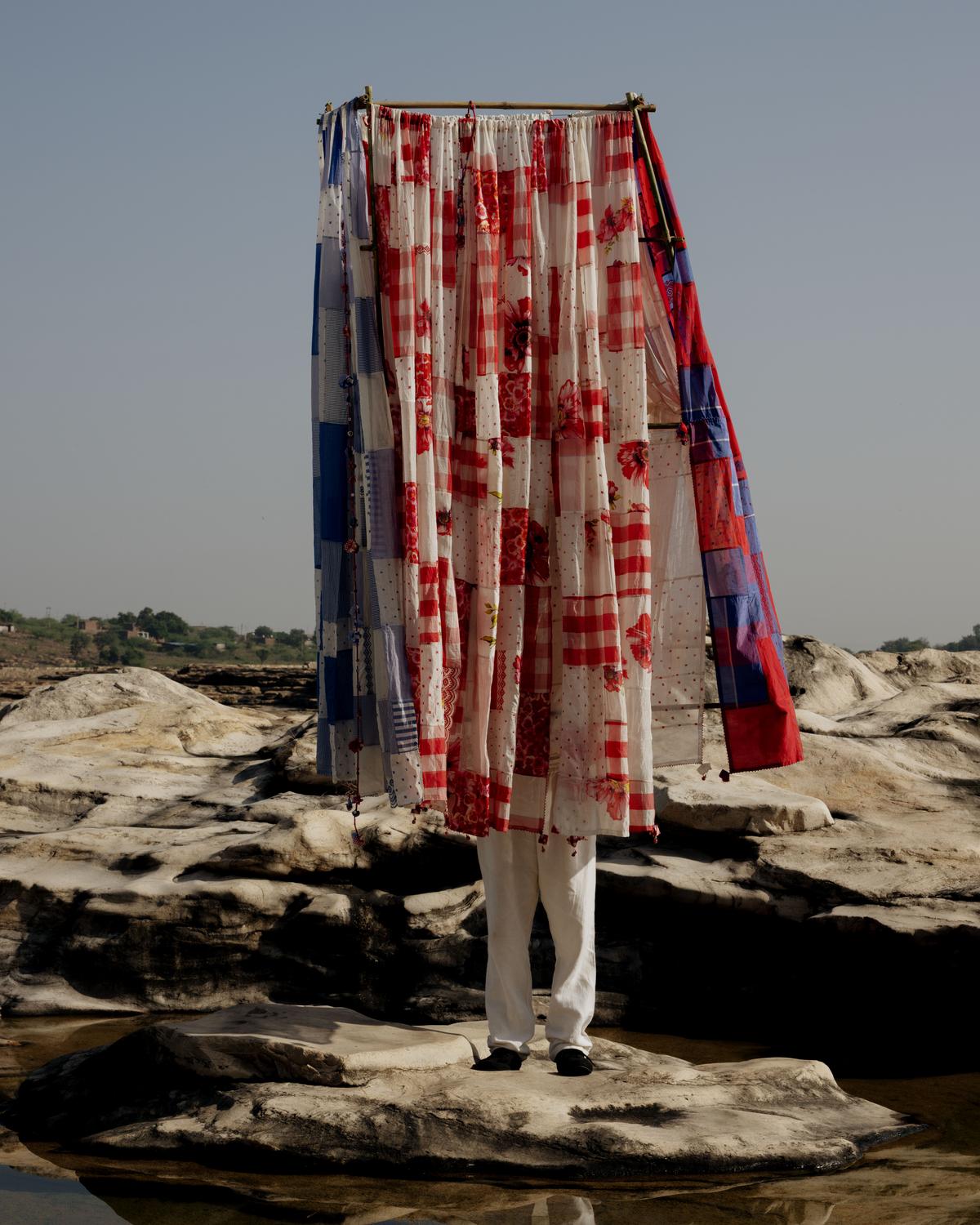
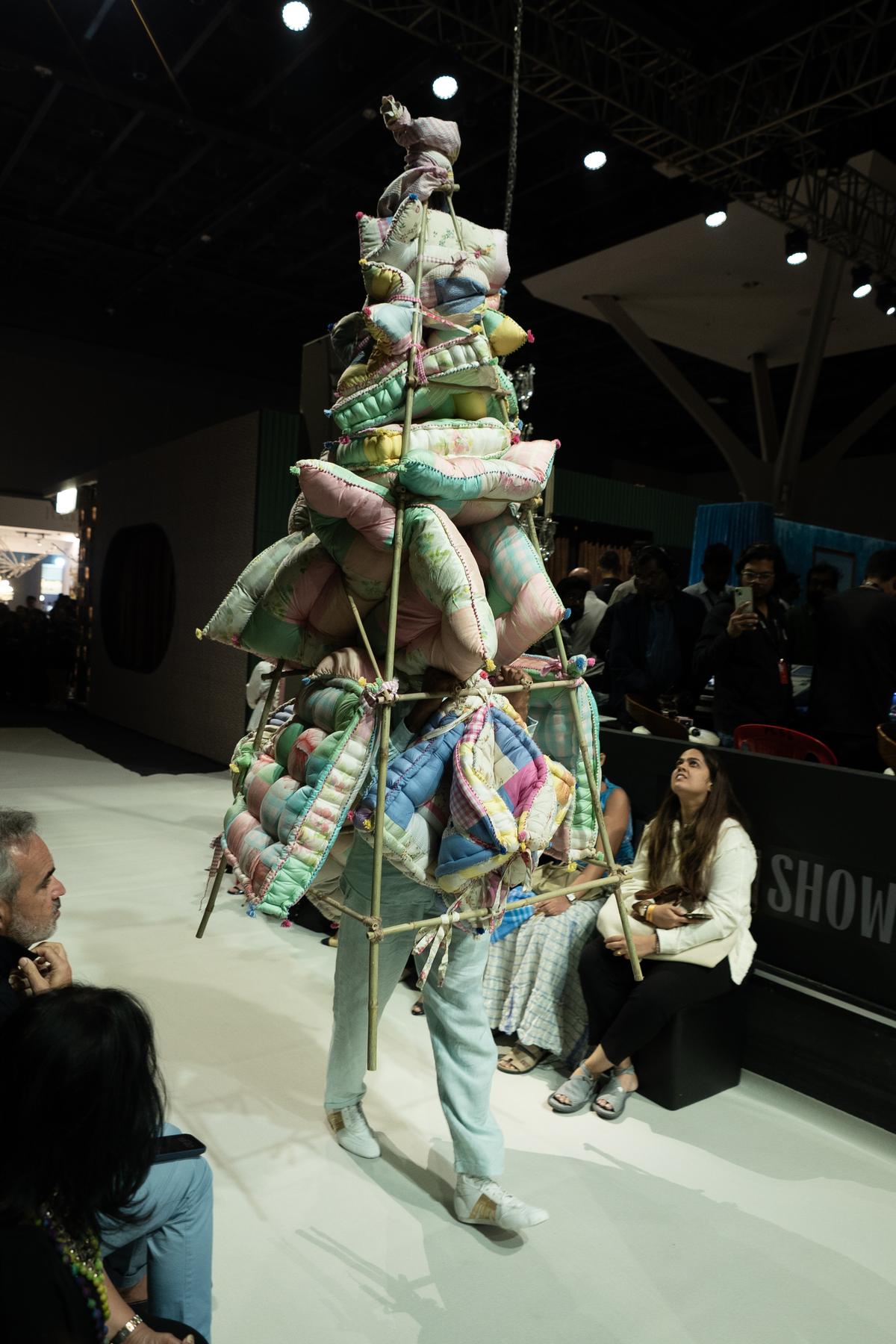
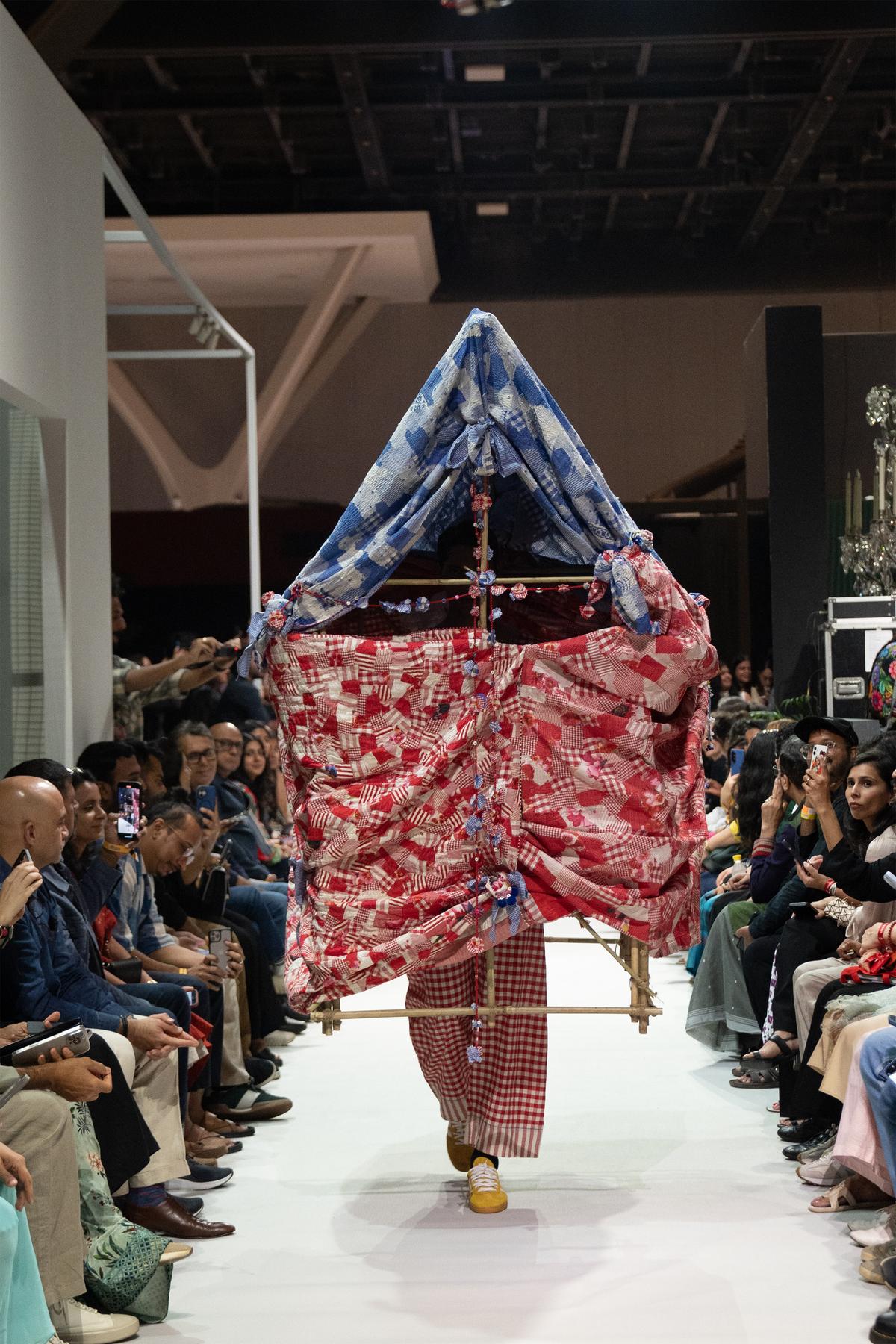
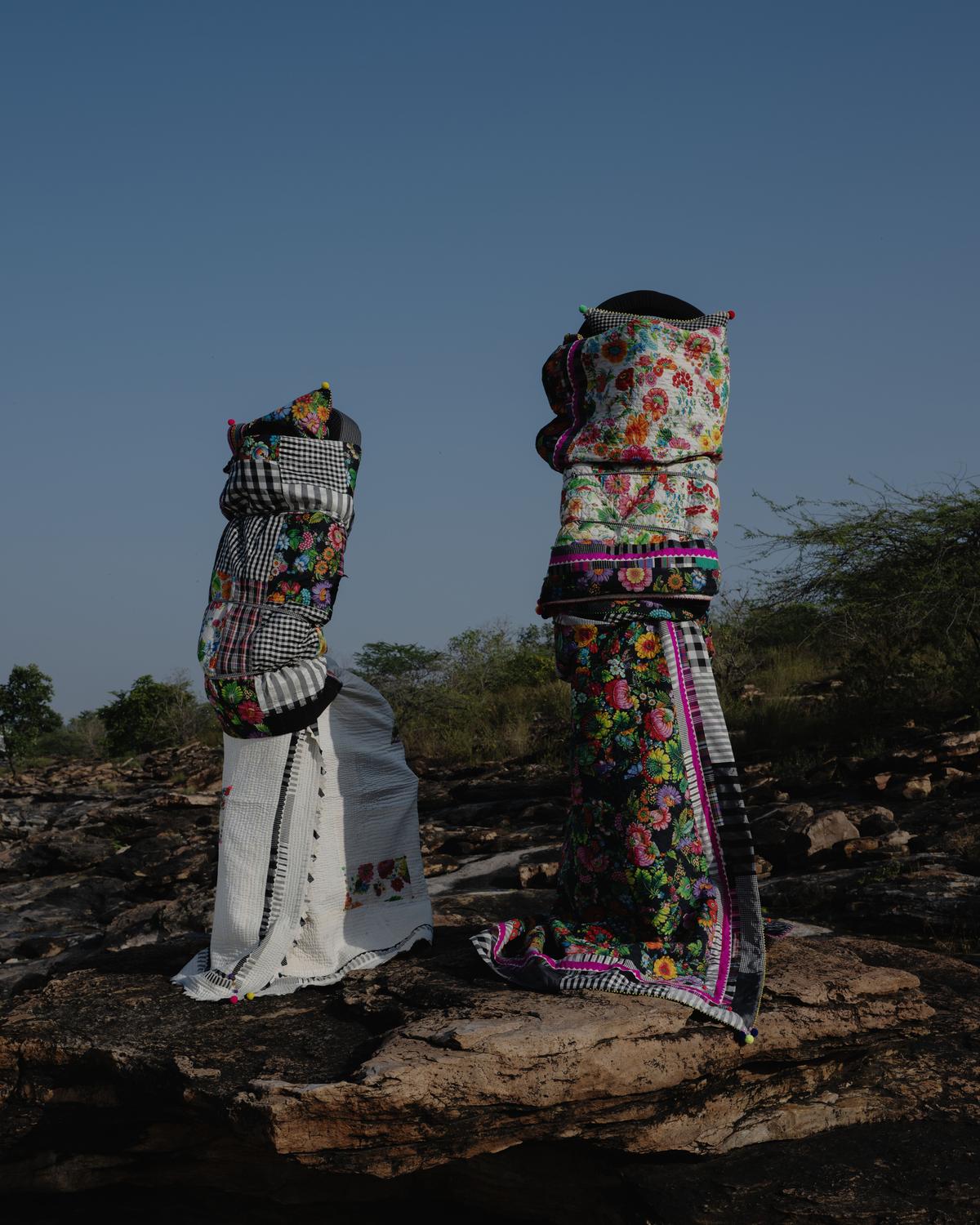
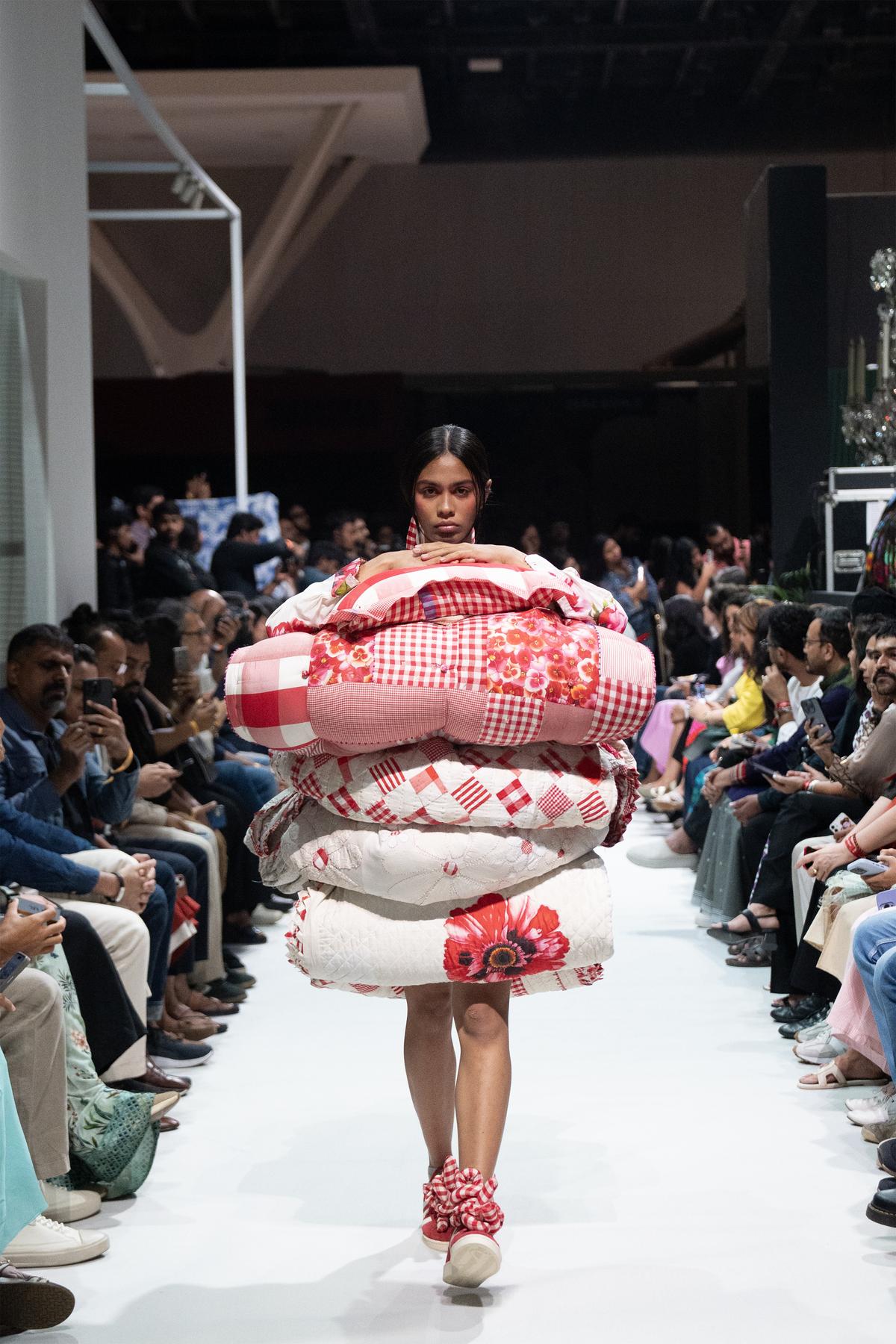
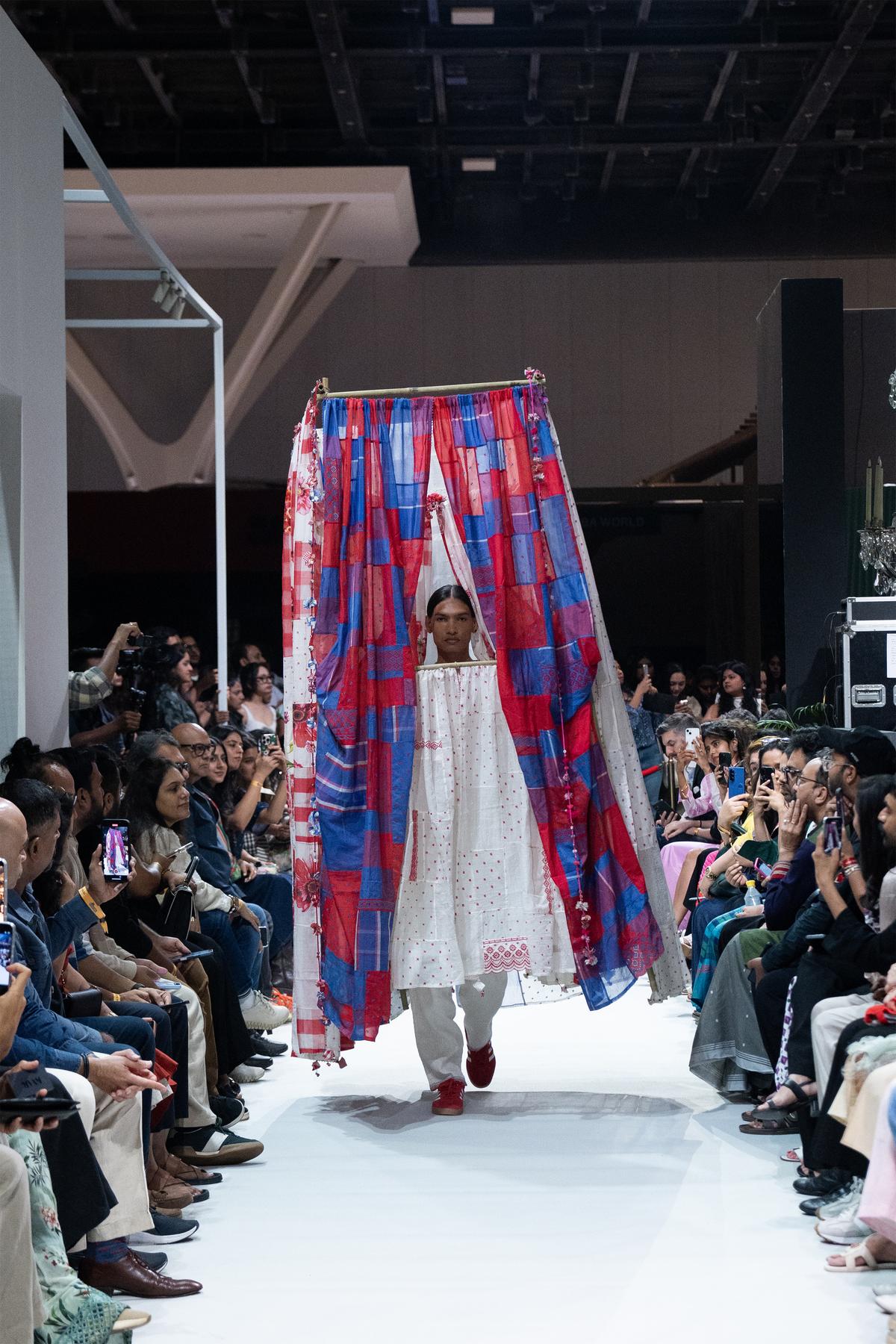
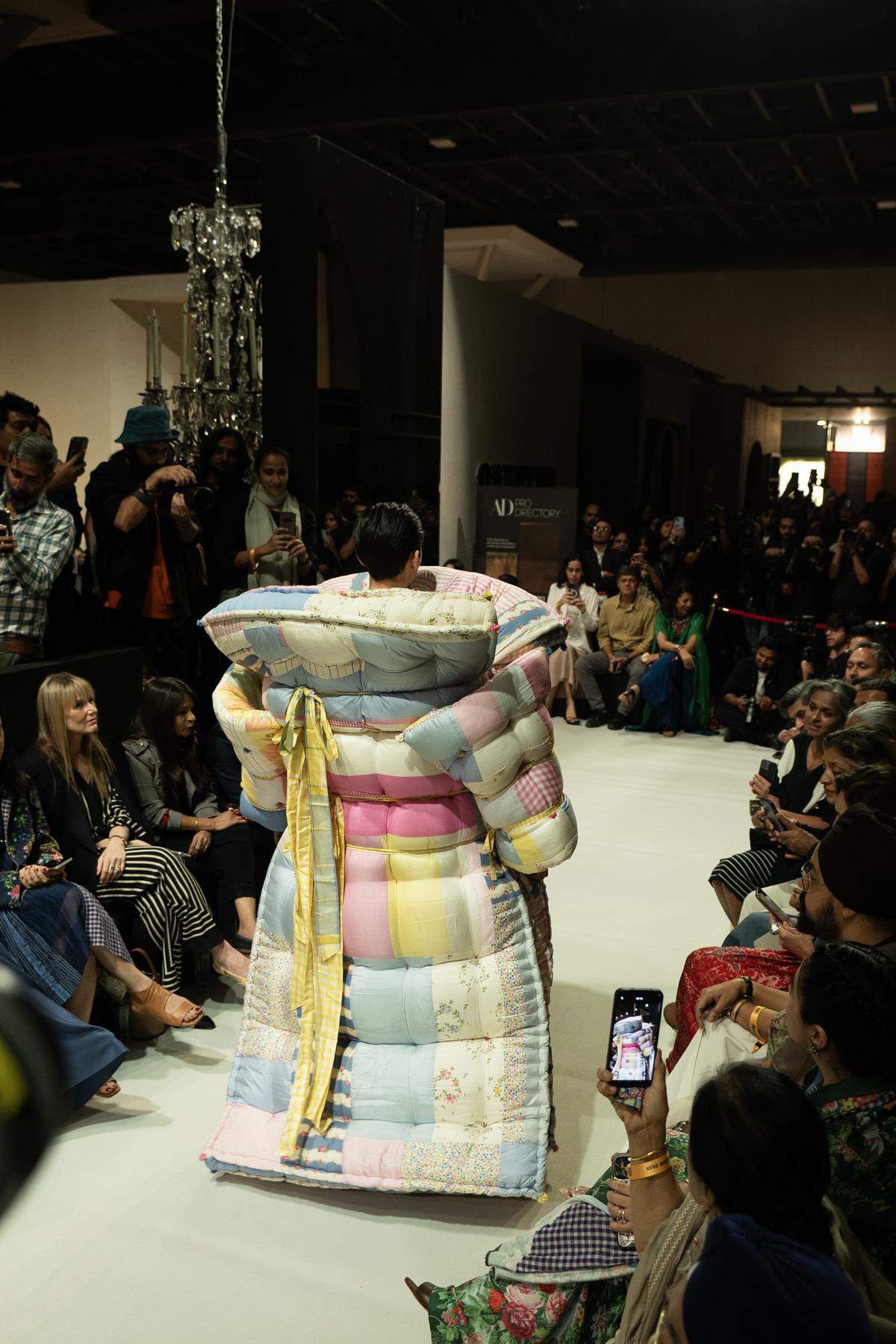
Aneeth Arora, the elusive creative force behind the brand, staged a presentation that turned bedding into theatre. Models glided out wrapped in mattresses and quilts, their silhouettes pitched between surreal tableaux and DIY architecture.

Aneeth Arora

Aneeth Arora

Styled by Nikhil D., they morphed into tents, compact condos and self-seated sofas. The team even strapped pillows into makeshift backpacks while guiding a handful of editors to our seats.

The specifics

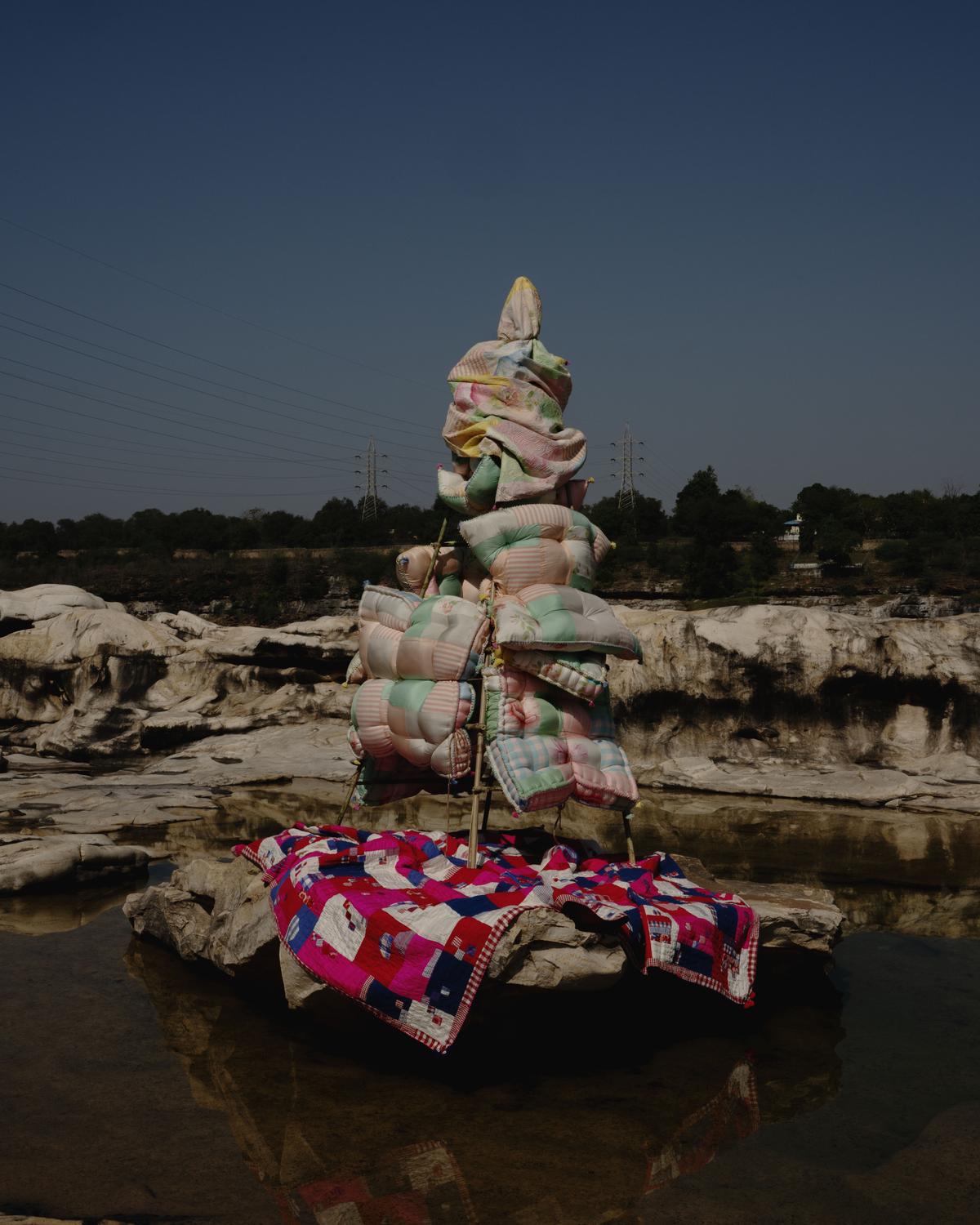
The collection originates from Péro’s archival textiles and is divided into four parts: Eat, Sleep, Clean, and Live. Longtime loyalists will recognise the delicate French embroidery, micro needlepoint roses, gossamer chanderi, lace and the softest cottons in pastel tones. While the showcase focused on curtains, mattresses, quilts and pillows, towels, robes, and perhaps even lingerie are expected to follow. The line will launch exclusively at Nilaya Anthology in Mumbai.

The collection originates from Péro’s archival textiles and is divided into four parts: Eat, Sleep, Clean, and Live

The collection originates from Péro’s archival textiles and is divided into four parts: Eat, Sleep, Clean, and Live

This debut has been hiding in plain sight. “If one asks how long it has been under development, I would say 16 years because we were making these textiles from the beginning.” After the pandemic, the team sifted through 8 to 10 early seasons to build the home ranges. In fashion, Arora explains, if a client sees the continuation of a print or technique, they consider it old. “But that’s not the case at home, we seek the familiar.” Bringing back crowd favourites from her archives felt logical, even overdue. However, each piece is a one-off, the archival textiles are limited and the ideas many.

Longtime loyalists will recognise the delicate French embroidery, micro needlepoint roses, gossamer chanderi, lace and the softest cottons in pastel tones.

Longtime loyalists will recognise the delicate French embroidery, micro needlepoint roses, gossamer chanderi, lace and the softest cottons in pastel tones.

The design language, Arora says, “is inspired by what we see locally”. From overloaded rickshaws in Old Delhi to stacked bundles on Mumbai streets, Péro has always stretched everyday poetry into clothing.

 While the showcase focused on curtains, mattresses, quilts and pillows, towels, robes, and perhaps even lingerie are expected to follow.

While the showcase focused on curtains, mattresses, quilts and pillows, towels, robes, and perhaps even lingerie are expected to follow.

Arora herself stayed behind the curtain. Known to avoid taking a bow (Margiela is a big reference), she has almost no recent photographs in circulation, and the brand quietly removed her name from its title a few years ago. “Everything I do is inspired by crafts,” she says over the phone two days before the launch. “In craft clusters, a piece rarely belongs to one person. I look at Péro as a collective.” The philosophy may be personal but it is also pragmatic. As Indian labels mature, questions of legacy, signature and continuity beyond the founder gain weight. While we celebrate designers who now more than ever before have been appearing at global fashion weeks, Péro has been a steady fixture at international trade shows for 16 years. “From the very beginning, Péro was created for a global audience,” says Arora. Today the brand is present in 350 stores across 30 countries and internally supports more than 300 families. “To the families that rely on Péro, I owe the commercial success and continuation of the brand.”

 The line will launch exclusively at Nilaya Anthology in Mumbai.

The line will launch exclusively at Nilaya Anthology in Mumbai.

By stepping away from the spotlight, the label has built a loyal audience protected from personality cults and trend whiplash. “The first five years, we were introducing the international audience to our crafts and techniques, this is jamdani, this is bandhani. Now they arrive with other buyers and rattle off craft names with ease.”

By stepping away from the spotlight, the label has built a loyal audience protected from personality cults and trend whiplash.

By stepping away from the spotlight, the label has built a loyal audience protected from personality cults and trend whiplash.

Lessons learnt

There have been lessons, too. “When we did ajrakh, we stuck to the most traditional colours and motifs, even for our international offerings. Despite its absolute original rendition, it was received as ethnic, and we had to reconfigure how we use craft.” At some point, Arora hopes to experiment with dabkamukaish or gota, crafts from her Rajasthani lineage, but only in a way that feels true to the language the brand has built.

Arora spends more time at Péro’s Patparganj studio than at home.

Arora spends more time at Péro’s Patparganj studio than at home.

Arora spends more time at Péro’s Patparganj studio than at home. Does she have a bed in the office then? “I do not! We’re not from Delhi and lead quite nomadic lives. The home is work in progress too.”

At some point, Arora hopes to experiment with dabka, mukaish or gota, crafts from her Rajasthani lineage, but only in a way that feels true to the language the brand has built.

At some point, Arora hopes to experiment with dabkamukaish or gota, crafts from her Rajasthani lineage, but only in a way that feels true to the language the brand has built.

She laughs off the idea that Péro home pieces have already found their way into her space. Instead, she and her partner collect home textiles from craft clusters or vintage dealers, small anchors that make each new house (they’ve changed four in the last few years) feel a little more like home.

Arora and her partner collect home textiles from craft clusters or vintage dealers, small anchors that make each new house (they’ve changed four in the last few years) feel a little more like home.

Arora and her partner collect home textiles from craft clusters or vintage dealers, small anchors that make each new house (they’ve changed four in the last few years) feel a little more like home.

Ask Arora where she feels most at home and the answer loops back to the beginning, craft. “I am always at peace in any craft cluster,” she says. “Seeing something being made, even if it is not for Péro, is meditative. Whether it is glass being blown in Murano or lace being made in Burano down a quiet lane, anywhere I can experience culture with craft, that is where I feel at home.”

Péro has always dressed the world softly, now it invites the world to live that way too.

Péro has always dressed the world softly, now it invites the world to live that way too.

In a way, the home line completes a circle, the brand returning to the textiles that built it. Péro has always dressed the world softly, now it invites the world to live that way too.

Péro’s home line is available at the studio by appointment, or via email at perobyaneetharora@gmail.com, with prices starting at ₹10,000.

The writer is a Mumbai-based fashion stylist.

Published – November 28, 2025 10:50 pm IST


Source link

Qatar Foundation opens Lawh Wa Qalam: MF Husain Museum, world’s largest on the famous artist


The life of artist Maqbool Fida Husain is one that traces the great happenings on the Indian subcontinent for more than half a century. The year India was born, Husain, with a host of other famous artists in Bombay, such as FN Souza and SH Raza, founded the Progressive Artists Group that steered the direction of Indian art into a modernist era.

Husain died at 95, his nearly 40,000 artworks inspired by the rich heritage and culture of his mother country, long after he left its shores to find new homes and citizenship abroad. His works ranged from oil paintings, watercolours, lithographs, serigraphs, sculptures, and installations to poems in Urdu, Hindi and English, and films such as the 1967 Golden Bear-winner, Through the Eyes of a Painter. 

As a tribute to the man who chose their country to explore his final artistic chapter, the Qatar Foundation (QF) in Qatar launched the Lawh Wa Qalam: MF Husain Museum on November 28. The foundation is a non-profit organisation founded in 1995 and supports sustainable human, social, and economic development through initiatives focussed on education, science and research, and community development. 

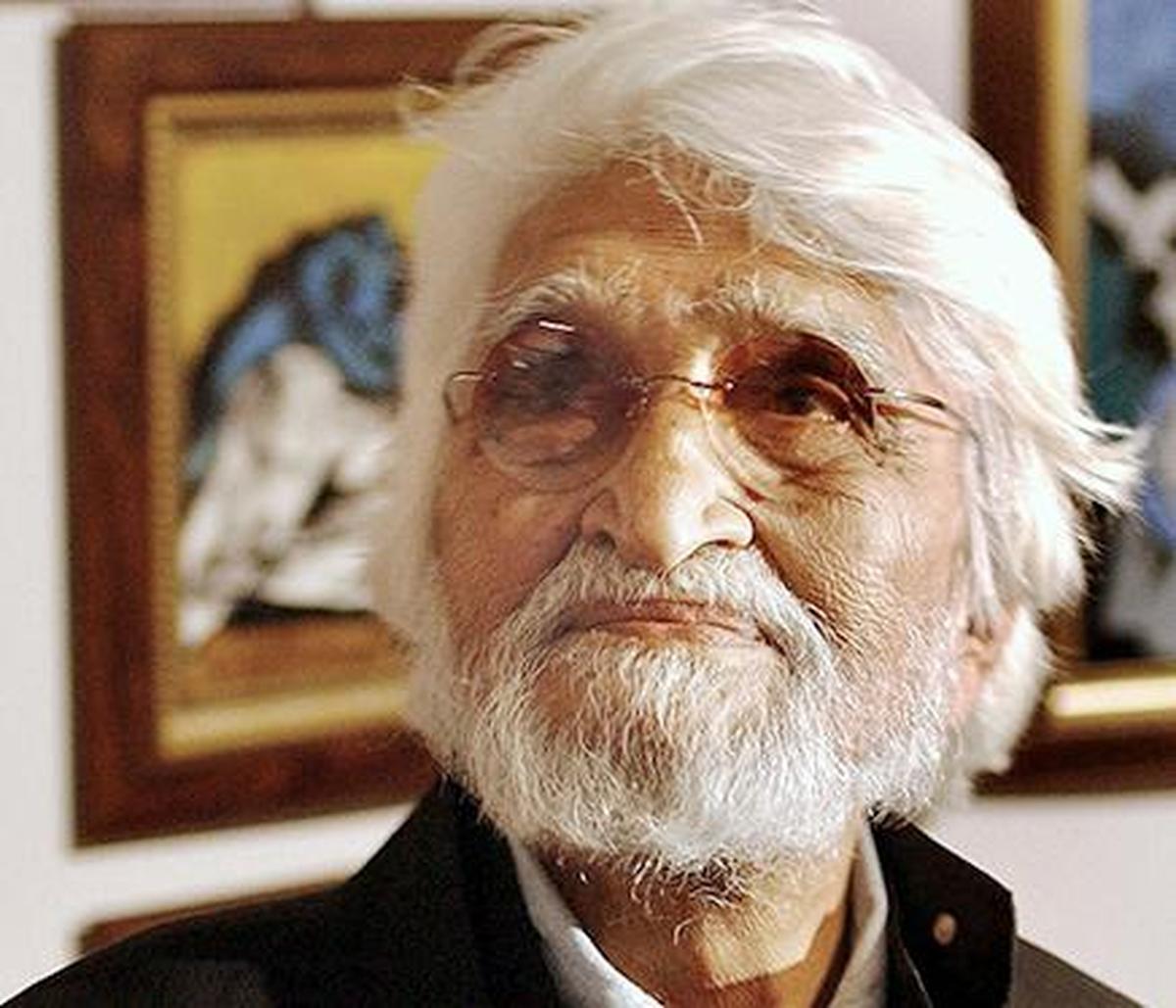
Maqbool Fida in 2004 at the National Art Gallery in Mumbai

Maqbool Fida in 2004 at the National Art Gallery in Mumbai
| Photo Credit:
AFP

Husain considered himself a global nomad — his works are found in galleries and private collections across the world, and often sold for phenomenal prices, but he came from obscure beginnings. He drifted in and out of his father’s life, having lost his mother young, and although he did study at Bombay’s famed Sir JJ School of Art, it was as a designer of toys and a cinema hoarding painter that he began his artistic life. 

With the characteristic colours and strokes that defined his style, Husain, bearded and barefoot, held India close to his craft and explored its post-colonial transition, diversity, politics, cinema, popular lore, religions and mythological narratives on serialised life-size canvases, often in front of an audience. He was nominated to the Rajya Sabha and received two Padma awards, but some of his works drew the ire of right-wingers; it led to his self-exile and Qatari citizenship in 2010. 

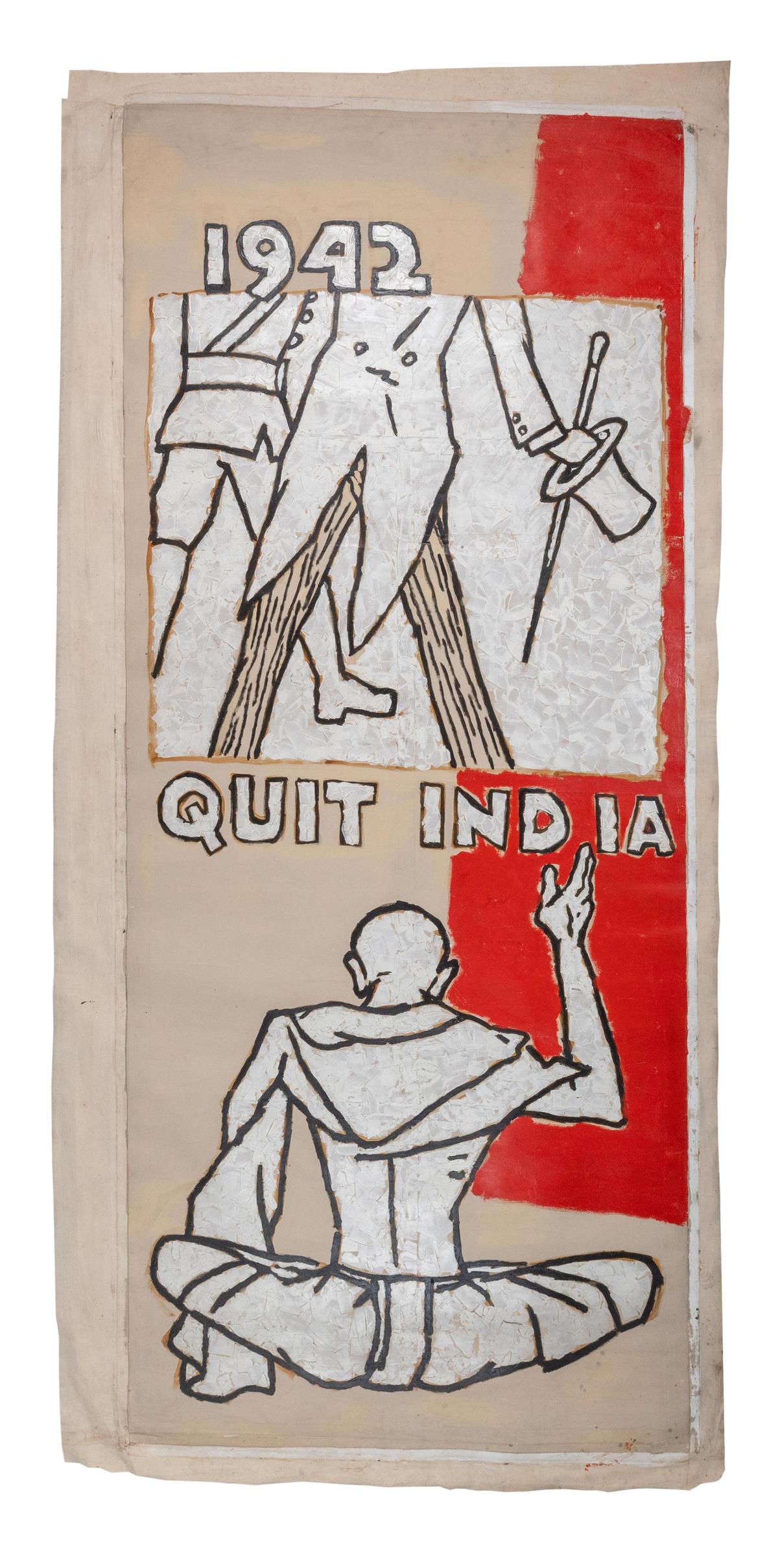
MF Husain’s Quit India Movement

MF Husain’s Quit India Movement
| Photo Credit:
Qatar Foundation

Noof Mohammed, the museum’s curator and project manager, says, “Husain first visited Qatar in 1984 and exhibited alongside Qatari artist Yousef Ahmad. His 2007 visitduring the inauguration of the Museum of Islamic Art in Doha marked the beginning of a deep cultural connection with the country. Several of his commissioned works, including Cross-Cultural Dialogue and The Last Supper in Red Desert were featured. This not only introduced Husain’s art to audiences in Qatar but also laid the foundation for his enduring relationship with the nation. His time in the country was marked by prolific creativity, as he produced a significant body of work commissioned by Qatar’s cultural institutions.” 

Curator Noof Mohammad

Curator Noof Mohammad
| Photo Credit:
Qatar Foundation

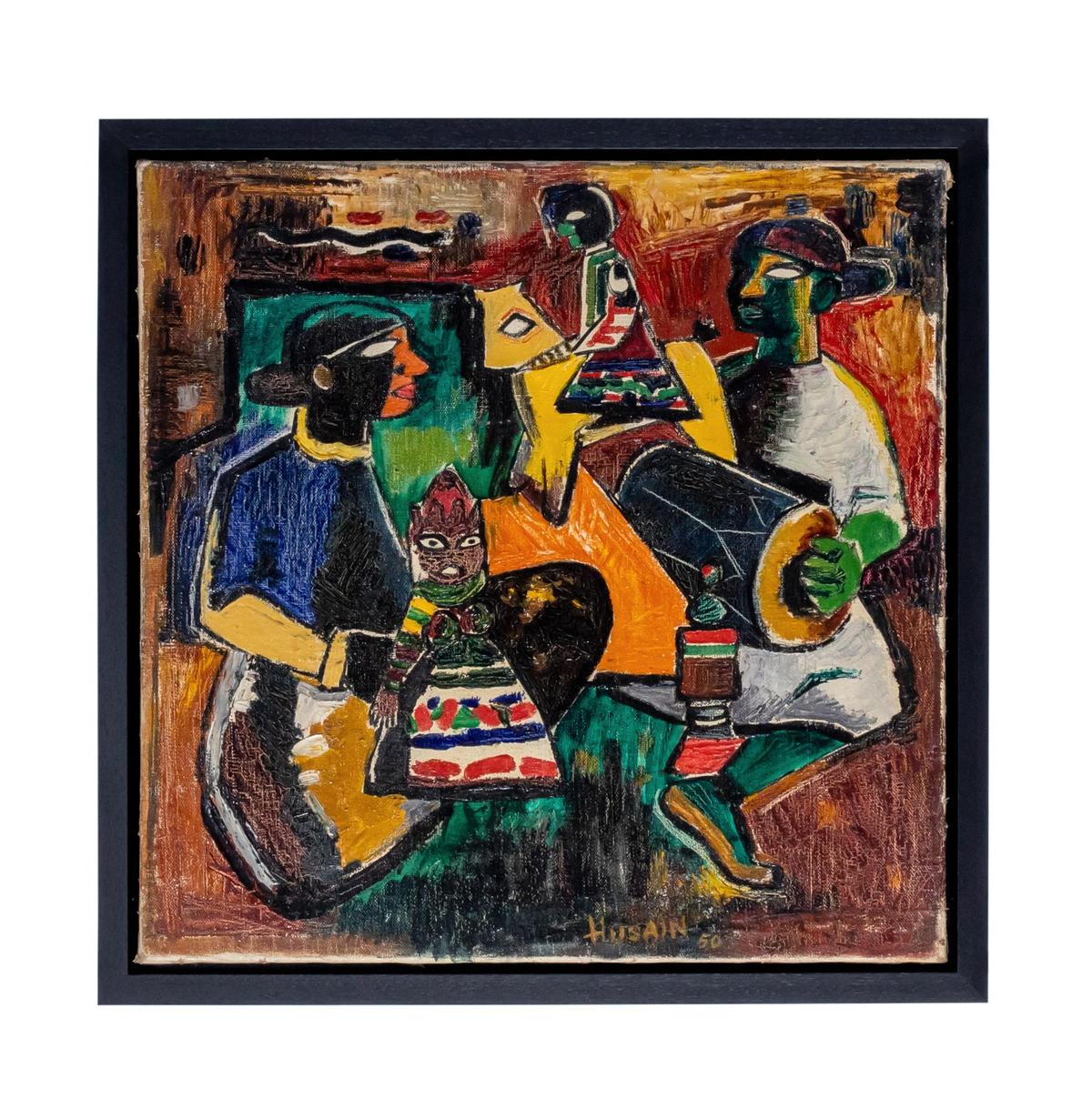
The 3,000 square metre museum located in Education City, Doha, will be the world’s first and largest, dedicated to tracing Husain’s artistic journey from the 1950s — the earliest work here is Dolls Wedding — until his death in 2011. It will have on display 147 works — paintings, films, tapestry, photography, poetry and installations, some presented through multimedia storytelling. A series of paintings commissioned by Sheikha Moza Bint Nasser, chairperson, QF, and inspired by the Arab civilisation, will also be on display. 

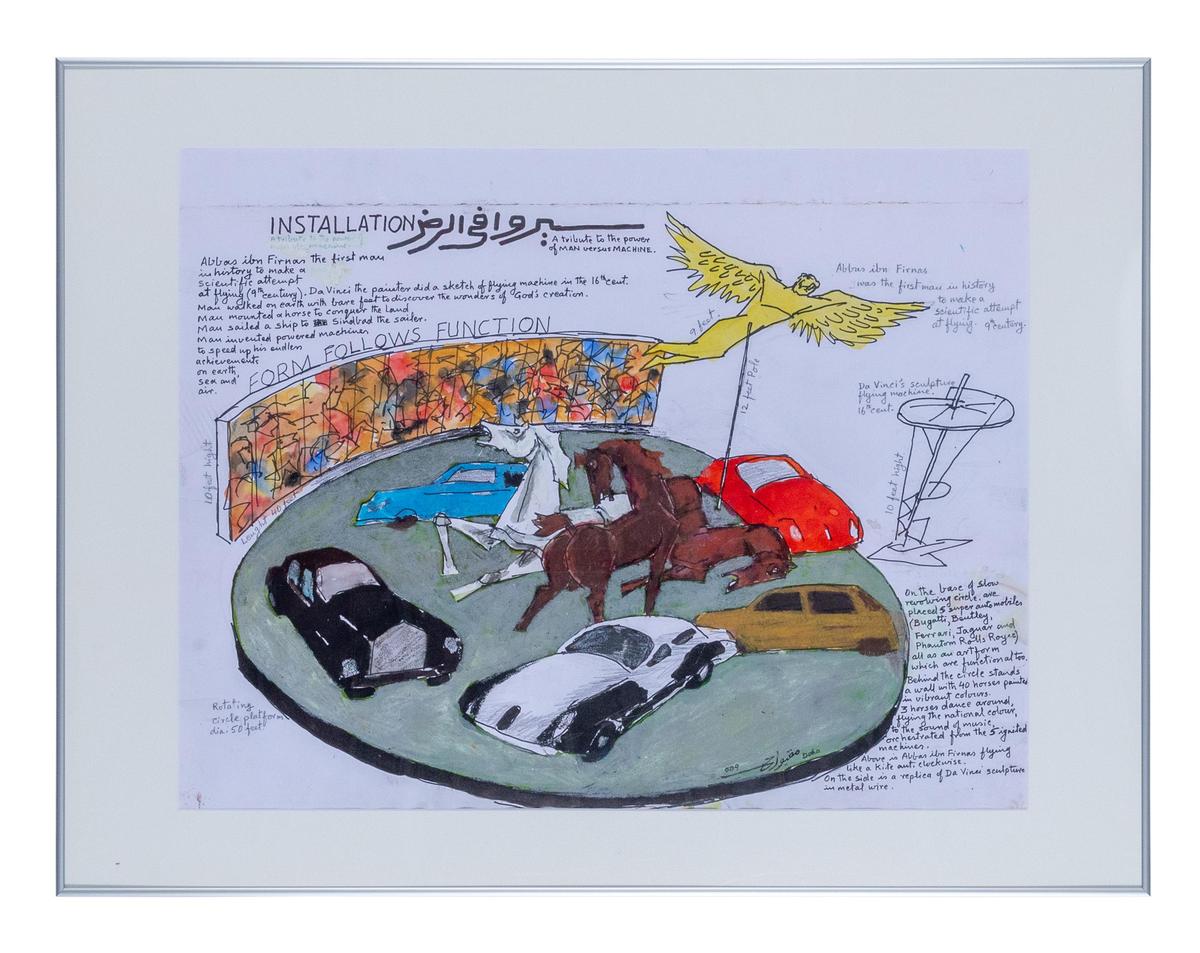
Husain’s Seero fe al ardh

Husain’s Seero fe al ardh
| Photo Credit:
Qatar Foundation

The museum will also encompass Husain’s final monumental kinetic installation — Seero fe al ardh, conceived in 2009 for QF — that unites a horse mosaic, sculptures of Abbas Ibn Firnas and Da Vinci’s flying machine, coloured glass horses, and vintage cars to celebrate humanity’s progress on earth.

“The museum delivers a 360-degree immersive and interactive experience, inviting audiences for free, schools and colleges to step inside the artist’s mind and explore the influences that shaped his expansive body of work,” says Noof, adding that the works have been sourced from QF’s collection. “Husain wrote Urdu poetry, and we’re hoping to include poetry readings as part of our outreach programmes. His poetry will also be available in the museum’s library.”

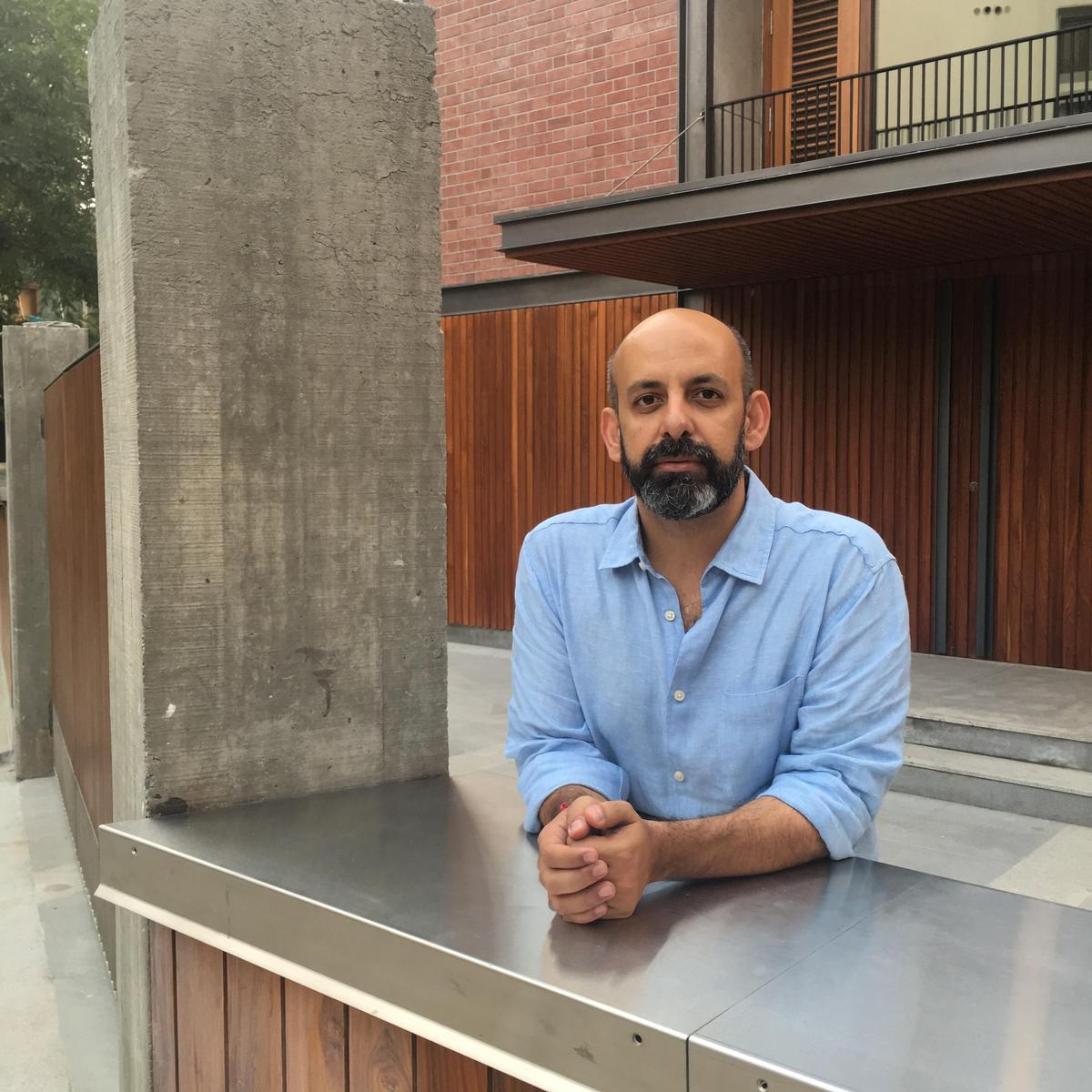
Architect Martand Khosla

Architect Martand Khosla
| Photo Credit:
Dolly Singh

Husain’s works have not lost their India connect yet — the museum has been designed by Delhi-based Romi Khosla Design Studios helmed by Martand Khosla, a graduate of the Architectural Association School of Architecture, London. “We brought in my learnings at the school that boasts numerous Pritzker Architecture Prize awardees, the studio now in its 25th year, my experience as a teacher at Centre for Environmental Planning and Technology, and the numerous projects we have worked on, residential, institutional and commercial, to the table while designing for the museum,” says Martand.

“We were invited to make a proposal for a museum of this scale and the whole process took three-and-a-half years. We worked alongside a local architectural firm appointed by the client. Qatar has good guidelines for sustainable building.It was a challenge building in a place of extreme temperature where it’s 50 degrees on the outside but, on the inside, you have to maintain a cooler temperature, for both humans and the artworks,” says Martand, adding how the outside has glazed tiles to ward off the heat. 

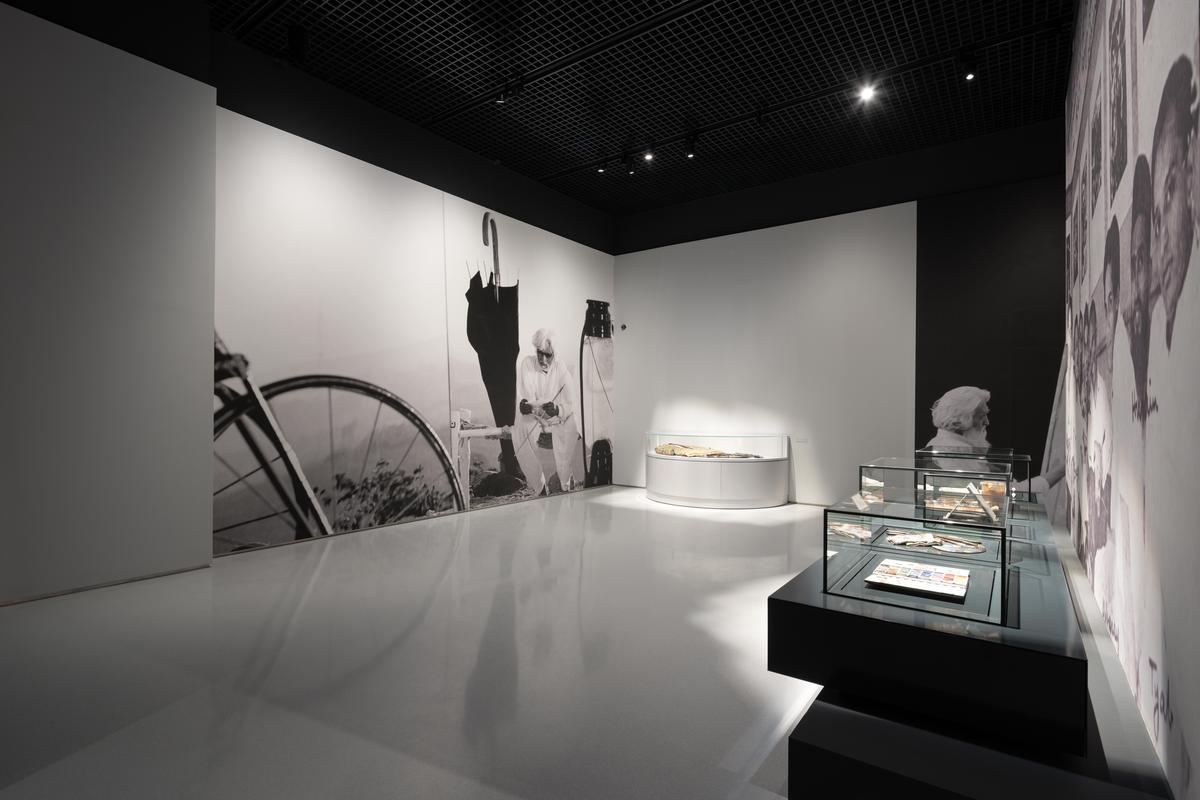
Inside the museum

Inside the museum
| Photo Credit:
DANY EID

Another challenge was the control of natural light. “There are some areas that have controlled lighting but also spillage from natural light which we had to work around,” he says. “When you enter it’s through a cave-like structure before walking into the main concourse bathed in light and glazed tiles. There is some percolation of natural light onto the lower galleries, but on the upper ones it’s completely closed off, which then allows for the correct frequency of light on some artworks that are quite old.” 

Designing also meant working with the museography team which had control over how the narrative flowed. “It was finally about: have we managed to tell the story of Husain well?”

Husain’s Dolls Wedding

Husain’s Dolls Wedding
| Photo Credit:
Qatar Foundation

Beyond the main galleries are the administrative offices, research and conference rooms, a cafeteria, and a restoration studio. A small museum shop sells Husain prints and memorabilia — a scene that instantly recalls Cinema Ghar in Hyderabad, where he once autographed a postcard of his Pieta for me.

Published – November 28, 2025 10:00 pm IST


Source link

How India’s landscape architects reframe nature


“No one has been able to capture the breadth of what a landscape architect does,” says Aniket Bhagwat, an Ahmedabad-based landscape practitioner. From the stepwells of Chand Baori, where water collects in a magnificent setting, to the immersive experience of a ‘Terminal in the Garden’ at Kempegowda International Airport T2, landscape architecture has never been only about nature. It’s about reframing the context between the built and unbuilt — earth, water, sky, light, sun, and moon — to nurture and renew relationships between humans and nature. Whether it’s about creating a jungle experience or carving out green spaces, the landscape architect’s role is vast and complex.

While the previous generation was working at a time when the field was barely understood, the current generation has the charge to bring contextual relationships in completely innovative ways, beyond beautiful. Today’s landscape architects are increasingly conscious of raising awareness among urban city dwellers, who have become increasingly distant from nature, by applying the principles of biodiversity and permaculture, creating pollinator-friendly habitats, and cultivating medicinal herbs and food plants.

An aerial view of Oberoi Vindyavilas, Bandavgarh.

An aerial view of Oberoi Vindyavilas, Bandavgarh.

With the huge amounts of waste being generated, reusing debris and rejuvenating soil have become paramount. Bhagwat of premier studio Prabhakar Bhagwat lauds the commitment of the new generation, many of whom he has taught. “A whole bunch of the current gen are passionate, focused, and calm; they are in no hurry to go anywhere, pouring their heart into it, and doing one landscape at a time.”

The meaning of sustainable landscapes is rooted in practical concerns. At BIC, VSLA navigated a nala (stormwater drain) to recreate an ecological corridor, enabling biological filtration and improved stormwater quality. Connections between landscape and water, food and healthy soil, gardens and medicine, ‘oxygen’ parks and fresh air, terminals and spiritual contemplation, and native versus exotic species have regenerated a fresh incentive to landscaping.

Image of skywalk.

Image of skywalk.
| Photo Credit:
Oracles

We look at five leading studios that create interventions between the urban landscape and nature. Their projects incorporate skywalks, planted ledges, parks with green tunnels, dedicated township parks with ponds and streams, rooftop gardens, jungle-scapes, and ruinscapes.

Behind the medicinal garden

Varna Shashidhar, VSLA, Bengaluru

Byg Brewski landscape by VSLA.

Byg Brewski landscape by VSLA.

Established in 2013, VSLA, a multiple award-winning firm (ISOLA, IIA, HUDCO), was recognised by Wallpaper this year alongside international landscape architects. Founder Varna Shashidhar, a Geoffrey Bawa enthusiast, had apprenticed with Sri Lankan architect C. Anjalendran, working out of his famed verandah office. The immersion into cultural landscapes and contextual design (including Anjalendran’s SOS Children’s Villages) rooted Shashidhar in an appreciation of culture and in integrating with the environment. “In India and South Asia, our experience of landscape goes beyond the sensorial.It’s never about the distance between the person and the landscape.” For Shashidhar, this means preserving sacred groves, ecosystems and biodiversity, and conserving lakes and wetlands. It also extends to the resourceful reuse of materials, including demolition debris such as laterite blocks, which she used as paving in her Parra Retreat project in Goa. Her core mission has been to stay contextual by engaging with nature through rituals, play and daily life.

For Shashidhar, landscape architecture means preserving sacred groves, ecosystems and biodiversity, and conserving lakes and wetlands.

At Neev Academy in Bellandur, she created temporary water landscapes for children, allowing them to observe micro-ecosystems with their own flora and fauna. For an entrepreneur couple in Bengaluru, she designed an oushadi, or medicinal garden. Navigating narrow spaces and minimal soil depths in pre-built urban environments, Shashidhar focuses on creating shared spaces where families can spend time in activities with nature. Her ‘pandemic garden’ for a multi-generational family includes an intensive green roof with 12 inches of soil, where herbs, vegetables and flowering plants are grown. For her, landscape, biodiversity and putting food on the table are all interconnected.

Varna Shashidhar.

Varna Shashidhar.
| Photo Credit:
M. Vivek

BYG Brewski Hennur, designed by Soumitra Ghosh of Mathew Ghosh across 65,000 sq ft, presented a raw challenge. “Everything was on a slab, hard concrete, no connection to earth. The Hennur neighbourhood is busy, loud and dense. How do you create an almost oasis-like condition in such conditions?” Shashidhar’s solution was to select fast-growing species, mostly medicinal herbs, smartly sourced within 20 km to create prolific greenery that merges with the ruinscape. Herbs can be freshly plucked for drinks.

Of ponds and rewilding

Sujata Kohli, IPDM Services (India) Pvt. Ltd, New Delhi

Tent area at Oberoi Vindhyavilas, Bandhavgarh.

Tent area at Oberoi Vindhyavilas, Bandhavgarh.

In 1989, when Sujata Kohli started her practice, landscape design was hardly mainstream terminology. A stroke of luck landed her a project doing master planning and landscaping for the British High Commission. “Andrew Slater from the foreign office was very clear they wanted a landscape architect,” says Kohli. There was no looking back.

The benchmark project led her into the coveted circle of diplomatic missions, from New Zealand and Japan to America. Thirteen embassies in her first six years gave her a vast palette and deep understanding of cultural nuances.

To meet the rapid build pace required by IT firms, the company used a combination of slow and fast-growing plants. Nurseries too evolved with the IT boom, growing trees in gunny sacks that could be replanted.

In 1993, Kohli entered hospitality, winning a competition for one of Hyatt Hotels’ refurbishment projects. Then she got called to do a 25-acre landscape for an IT firm in Siruseri, Chennai.

Sujata Kohli

Sujata Kohli

“I’ve learnt mostly on-site. Working with live entities is fascinating,” enthuses Kohli, who accompanied her clients even for the land purchase. In the southern landscape, different from the north, black cotton soil posed drainage problems, so the entire surface drainage was taken to a created water pond, disposing of only the overflow. The water from the pond also helped in irrigating the ground. 

To meet the rapid build pace required by IT firms, they used a combination of slow and fast-growing plants. Nurseries too evolved with the IT boom, growing trees in gunny sacks that could be replanted.

Entrance water feature at Oberoi Vindhyavilas, Bandhavgarh.

Entrance water feature at Oberoi Vindhyavilas, Bandhavgarh.

Her recent landscaping was for Vindhyavilas Oberoi, a jungle resort in Bandhavgarh, Madhya Pradesh. Featured in Time magazine as one of the must-visit places of 2025, the 25-acre property has 19 luxury tents and an infinity pool next to the lake with a natural, wild feel around the gym and spa. “A lot of the work was rewilding, water management and site drainage, making it a functional yet organic solution. In landscapes, there are no boundaries,” concludes Kohli.

Apolitical spaces

Prabhakar B. Bhagwat, Ahmedabad & Mumbai

An overhead view of Palava city.

An overhead view of Palava city.

“No one has been able to capture the breadth of what a landscape architect does,” says Aniket Bhagwat, the third-generation landscape practitioner in the family. His father, Prabhakar Bhagwat, is acknowledged as the first qualified landscape architect of India. Prabhakar Bhagwat entered its 50th year in 2023, a pioneering force behind the landscape profession’s evolution in India.

Sindhu bhavan in Ahmedabad.

Sindhu bhavan in Ahmedabad.

From their landmark rejuvenation of the timba basalt quarry into a dense forest across hundreds of acres in Gujarat to their committed research at Landscape Environment Advancement Foundation (LEAF), the 50-person studio, with offices in Ahmedabad and Mumbai, has influenced a sweeping range of interventions. “The amount of change India has seen in these past decades is huge. There is just so much work — offices, housing colonies, homes, IT offices,” says Bhagwat’s firm is designing buildings, parks and public spaces for the smart city of Palava in Dombivli, Maharashtra, planned across 4,500 acres.

Aniket Bhagwat.

Aniket Bhagwat.

For this ardent architect, who queries deeply as to how landscape can bring meaning, gardens and landscapes emerge as repositories of culture, history, sociology and governance: plant and soil meet art and philosophy, memory and nostalgia. “Gardens lead to an understanding of where we are as a people,” he says. “Landscapes offer apolitical spaces of soliloquy to reflect on what we are doing in life — this can be very powerful.”

One of the projects include the landmark rejuvenation that involves transforming the timba basalt quarry into a dense forest spanning hundreds of acres in Gujarat.

Bhagwat steered the Pratiti Initiative with ‘The Parks People’, which includes LEAF, UNM Foundation and like-minded designers, to redesign parks. It began with his belief, ‘Great societies are built by the idea of real patronage’. Between Ahmedabad and Surat, 15 parks have come up over 8 years, through the public-private partnership between the UN Mehta Foundation and the Ahmedabad Municipal Corporation. “These parks are not just funded but maintained for life by UN Mehta, which is very rare,” points out Bhagwat.

Zen expression

Ravi and Varsha Gavandi, Pune

Raised walkway in Nanded city.

Raised walkway in Nanded city.

Since beginning their practice in Pune in 1990, Ravi and Varsha Gavandi have believed in creating context-specific landscapes, connecting the natural landscape of the site to the lifestyle and aspirations of its people. Sensitive to landscape typologies around Pune, they adopted a functional-aesthetic perspective. “For instance, we used Woodfordia fruticosa in hedge rows, which attracts birds with its tubular red-coloured flowers,” says Varsha.

Ravi Gavandi

Ravi Gavandi

Magarpatta township was a turning point in their career in 1999. With the IT boom, new demands arose. In 2003, their first corporate project for Zensar Technologies led to a fresh direction with the client’s ask for a zen expression: simplicity, clean lines and integrated site services. The minimalist designs, which merged Indian and international ethos with holistic site development, set a new trend.

In Nanded City, Pune, with liana and climbers lending a unique character to existing dense vegetation, the park is a separate entity where the township residents can connect with nature.

Varsha says, “In 2009, another layer got added — ecological landscaping. Instead of designing on the site, we started designing with the site.” The first phase of seven acres of Stream Park, conceived around 2009, was completed by 2012 at Nanded City, Pune. It had the design objective to enhance, reinforce and heal the natural landscape.

Varsha Gavandi

Varsha Gavandi

The park boundary was decided based on various surveys and ecological assessments. The naturalistic setting incorporates nature-based solutions for cleaning water. Existing land use was incorporated in the proposal, such as a flower farm at the entrance, and the old walking trails used by farm folk. The entrance along an axis terminates in the stream, which is revealed only later in the journey.

Lotus pond and landscaping.

Lotus pond and landscaping.

With liana (long-stemmed woody vine) and climbers lending a unique character to existing dense vegetation, the park is a separate entity where the township residents can connect with nature.

Gardens in the sky

Suneet Mohindru, Oracles – Landscape Architecture, Planning and Design, New Delhi

New terminal 1.

New terminal 1.

In 1997, Suneet Mohindru started his practice, Oracles — a name that implies envisioning the future. His core philosophy is grounded in capturing ethos to create narratives of place. Creating a sense of scale and positioning the experience is key. The Taj Mahal’s dome at 240 feet compares with a 20-storey-high present-day building, but it appears smaller. “We look up at a building, but we immerse in the landscape, touching and even trampling on it! When we enter a property, thoughtful landscape design unravels in layers, one after another, inviting exploration,” says Mohindru.

Suneet Mohindru

Suneet Mohindru

Out of roughly 360 entries, Oracles recently won the Outstanding Award for its ‘Skywalks’ project at DLF Cyber City, Gurugram, at the IFLA Asia Pacific Region Congress 2025. The elevated skyways connect buildings across a 16-lane high-speed arterial road — otherwise impossible to cross. With DLF’s brief of “let’s do prototypical bridges”, Oracles proposed three optional concepts — based on the metaphors of waves, connectivity and youth — and all three were selected, resulting in three unique skywalks. Focused on urban greening and mobility, these ‘gardens in the sky’ are a wholly enjoyable experience for walking, social interactions and relaxing.

At DLF Cyber City, Gurugram, the elevated skyways connect buildings across a 16-lane high-speed arterial road — otherwise impossible to cross.

Mohindru’s 2023 landscape design for Delhi Airport’s Terminal 1 was shaped by the challenge of limited outdoor space. The concept drew from the city’s geography, framed by the natural boundaries of the Ridge and the Yamuna — a setting that makes ‘Dilli’ the ‘Dil of Hindustan’.

The skywalk corridor.

The skywalk corridor.

Transcending its traditional bounds, the landscapes were devised in and out of the terminal building, wherever nature could claim its lost space, using the flow of water through narrow ledges, creating ‘forests’ around columns, and intermittent boulders and rocks. Mist over elevated lakes and diyas in the waterways complete the ephemeral experience at the terminal.

Word origin
Landscape — views of landforms in the distance — was also a word borrowed by 17th century Dutch painters to describe their new genre of art focused on natural scenery. The Dutch word landschap relates to ‘shape of the land’ as also the English root ‘sceppan’ means ‘to shape’.

Tracking history
Historically in India, architecture has celebrated scenic vistas by framing — be it through the window arches at the Udaipur palace, the pavilions at Hampi or the five-storey stepwell of Rudabai Vav — playing with the grand sense of scale.

The writer is a brand strategist with a background in design from SAIC and NID.


Source link

Rediscovering lost flavours: Restaurateurs from Ladakh preserve culinary heritage in a changing world


Succulent, mildly spiced chunks of lamb, nestled in sweet ghee-washed long grain rice arrive in gold bowls. This is Yarkhandi pulao, stark white and studded with meat and whole spices. It travelled along the Silk Route, and is one of Chinese nobility’s most luscious gifts to Ladakh. As local legend goes, tradesmen once dabbed ghee on their lips like balm since true wealth was measured by how much of it dripped from your elbows after two bites.

How many generations does it take to forget this opulent dish?

Stanzin Tsephel, founder, Stonehedge Ladakh, says “just one”.

Yarkhandi pulao from Namza dining

Yarkhandi pulao from Namza dining
| Photo Credit:
Special Arrangement

During our walk along Leh market, this hotelier who is a passionate advocate for Ladakhi culture, stops to point at a number of shops and cafes that have mushroomed in the last decade. “You will find momos, noodles, dal chawal, and chilli chicken here. Is this the food of Ladakh? I’d argue otherwise,” he says.

One of globalisation’s greatest casualties is authenticity; its collateral damage, culture. Since the 2000s, as tourism began thriving in Ladakh and development entered the conversation including better roadways, sewage systems, and high-altitude passes that now function year-round, two important ingredients central to India’s diet became readily available at the union territory: rice and fresh vegetables. Rice and its supply through the Public Distribution System (PDS) scheme has immensely aided the average Ladakhi in the way of cooking quicker meals. In the process though, an entire cuisine seems to have gone missing.

“This wasn’t the case before,” says Padma Yangchan whose venture Namza Dining brings traditional Ladakhi food to the fine diners of the world. She remembers purchasing a kilo of tomatoes at an alarmingly high rate of ₹400 when she was a young girl. “Earlier, families would dehydrate and store herbs foraged according to the season, particularly summers, and save them during the winters when it was hard to grow food and harder to commute across the Union Territory. We’d do the same for tubers — carrots, turnips, potatoes, and the likes,” she says.

While both Padma and Stanzin are thrilled about development as it paves way for increased tourism — a sector that they depend on for their livelihood — a casualty is the meals that they grew up eating.

It is why an important movement in Ladakh has sprung up, one where chefs, hoteliers, and cooking enthusiasts from the region, are combing through phone books, and traversing this region’s expansive mountains and valleys, to speak to grandmothers, uncles, neighbours and strangers, to preserve recipes that once soothed several generations.

Here, buckwheat, barley, wild garlic, chives, nettles and capers, rule the roost. In a country where measurements cease to exist and are assessed by the handful, documenting the food and presenting them in cutlery palpable to an audience that perceives this culture foreign, has been nothing short of an adventure. It is one that every single one of them is intent on taking up.

Around the fire

“Each of Ladakh’s seven divisions has its own cuisine, distinguished entirely by each tribe. What is staple in Sham Valley is entirely different from Turtuk, where I am from. We are from the other side of the mighty Karakoram range, part of the Greater Gilgit Baltistan belt [stretching all the way from Afghanistan to China],” says Rashidullah Khan, the founder of Virsa Baltistan, a boutique property along one of India’s last village before the Pakistan border.

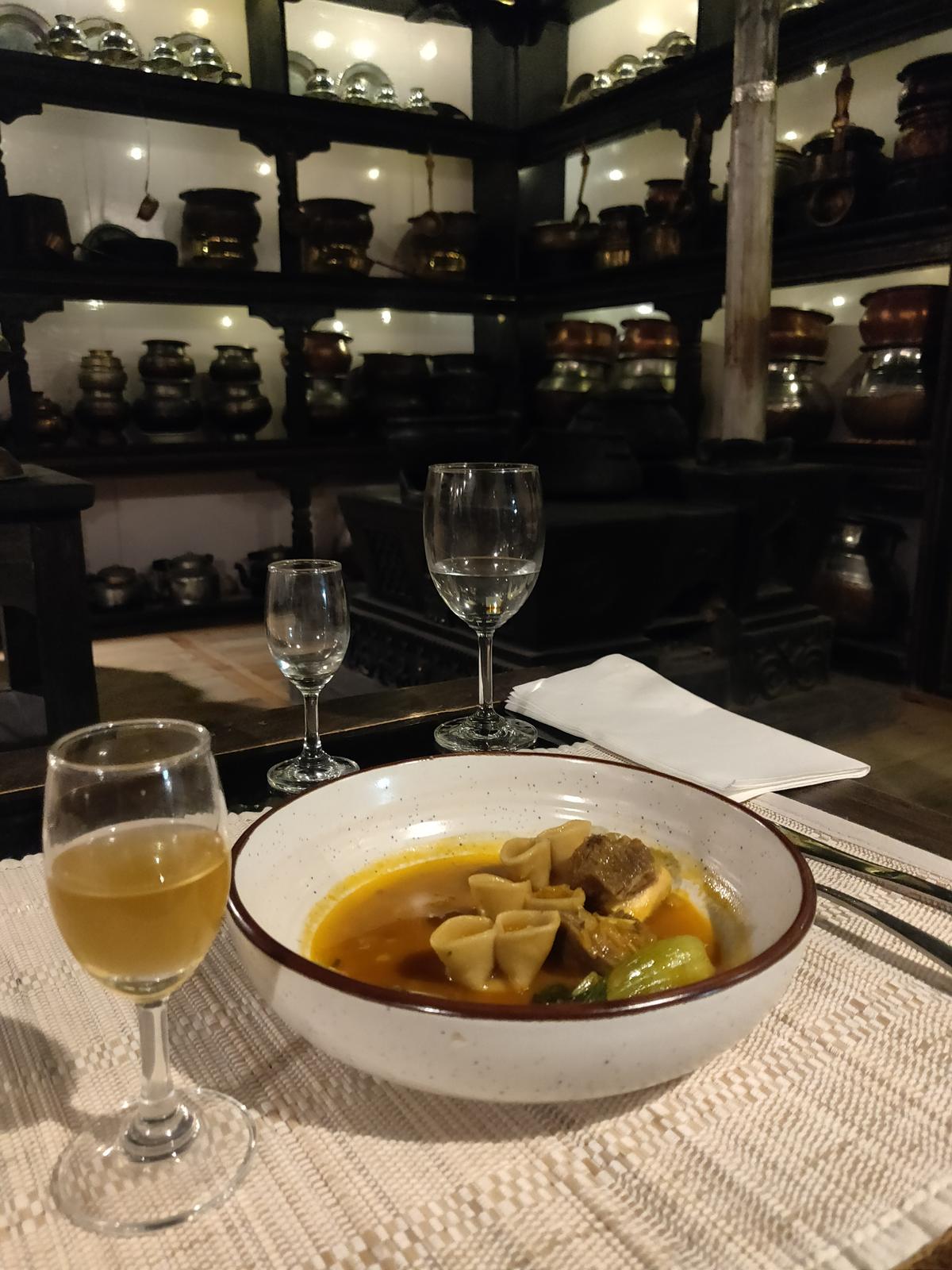
A local pasta in a broth of vegetables and meat at The Heritage Kitchen

A local pasta in a broth of vegetables and meat at The Heritage Kitchen
| Photo Credit:
Special Arrangement

After having spent years in Japan and Bengaluru, Rashid came back home to Turtuk, intent on showing people the bounty that his village had to offer — people and fresh produce. At his property, where The Balti Farm is located, women from Turtuk who cook meals at home, make a course-based meal full of fresh fruits and vegetables at the hotel for an authentic Balti experience. These include salads, hand-rolled noodle soups with chuffa (a dry cottage cheese), buckwheat pancakes, and praku, a pasta made with a creamy walnut sauce. The meal usually ends with a fruit-based dessert.

If you are lucky enough, during apricot or apple season, pick them off trees for a post-meal snack. Since Turtuk became part of India only in 1971 post the Indo-Pak war, women of the village remain custodians of a cuisine that goes beyond war and long-geographical boundaries. “I call my relatives, many of whom live across the border, for some recipes too,” he adds.

Much of Chef Jigmet Mingyur’s cooking is influenced by the time he spent cooking at Kathmandu’s Zhichen Bairo Ling monastery, where he was a monk for two decades.

“In the monastery I learnt that the produce must shine,” he says. This ascetic who gave up his robes to become a chef, forages for herbs in mountains and hills near his restaurant Tsam Khang in Leh. Having come from the village Khemi, in the sand dune-laden Nubra Valley, (only 30 kilometres from the Siachin Glacier), the Ladakhi chef is an expert at making the tedious churpi, or cheese made from Yak milk. During winters, Jigmet does two things: speak to family about other old recipes, and travel to different parts of India for a pop-up.

“Ladakhi food is medicinal. It was created to heal during the cold and fill our stomachs during days when the next meal was six hours away. It is why you find the likes of nettle, and capers in our cuisine. When I travel to other cities for popups, my boxes are full of dehydrated fruits, vegetables and herbs. There is something about the air and water in the mountains. Even our turnips are delightfully sweet,” he says.

Women from Turtuk preparing meals for Virsa Baltistan’s The Balti Farm

Women from Turtuk preparing meals for Virsa Baltistan’s The Balti Farm
| Photo Credit:
Special Arrangement

Chef Nilza Wangmo agrees. Having come from Sham Valley in Ladakh, Nilza is used to premium meat from yak and lamb, dehydrated over a fire and stored for difficult winters.

Her eponymous restaurant located in Alchi, the village she grew up in and it serves delectable soups, and meat-based fare. “I learnt most of my recipes after having assisted my mother and grandmother in the kitchen. Serving yak is banned now but the process of curing and dehydrating meat is quite the task. Now we serve mutton and lamb. You should try the Ladakhi mok-mok [a version similar to the momo] and paba, a doughy multi-grain bread served with thangthur, a yoghurt made from the shoots of capers. We interestingly discard the caper itself,” she says, speaking from Japan where she is hosting a Ladakhi popup.

Stanzin Tsephel, who runs The Heritage Kitchen in Nubra Valley invites us to his family home where the kitchen is the centre of the house. “We saved this home from demolition and we now realise that very few homes have Ladakhi architecture. How times have changed,” he says, as we slurp on noodles made of barley with pieces of peas and potatoes. Stanzin says that both he and his wife have been seeking out family recipes as many people in Hunder, where his property is located, are related to each other. “It is full of trial and errors though. Nobody uses measurements in India,” he says, chuckling and lamenting at once.

Namza’s Padma states that the measurements are hardly a concern when documentation is lax in remote places like Zanskar valley, home of the snow leopards. “But that is where the most interesting meals exist. During one of my visits, I learnt of the gyuma that is interesting, made with minced mutton and also blood. We serve one without the blood at Namza because where do we go looking for blood? It will be too barbaric, no?” she says.

Her favourite story is how she snagged the recipe for Yarkhandi pulao, now on every Ladakhi chef’s menu list. “My neighbour used to make this pulao at home and he would call it the Hor pulao. Hor or Horpa refers to the community originating from Yarkhand, while also referring to the region. Imagine going to a fine dining space and asking for this dish,” she says, cackling. Then adds, “The food from this region has always been exceptional. Our aim is to take it to several parts of the globe. For now though, we want it to fill every Ladakhi’s plate too.”


Source link

Hanumankind, Diplo, Dot and three insane days at Motoverse 2025


Hanumankind leading a convoy through Goa. Diplo dropping bhangra-EDM at Vagator Hilltop. Dot and the Syllables bringing indie energy to a packed crowd. Three days inside Motoverse 2025 felt like stepping into a live-action music video, with bikes, gigs, food, gear drops and a community that knows how to show up.

This video feature goes inside everything: the festival chaos, the Hunter 350 rides across Goa, new Royal Enfield gear launches, the Comic Helmet, the Motowave X2 Bluetooth unit, the Motoverse Collection, dyno runs, Maut Ka Kuan, Moto Polo, and nightlife that collided with IFFI.

And somewhere between the ride-outs and the gigs, a former long-distance rider found himself falling in love with motorcycling all over again.


Source link

Inside juSTa Kashi Parampara: This 80-year-old Varanasi ancestral home is a cultural and wellness retreat today


A dance recital at the courtyard of juSTa Kashi Parampara

A dance recital at the courtyard of juSTa Kashi Parampara
| Photo Credit: Srinivasa Ramanujam

When in Rome, do as the Romans do. When in Varanasi, do as the Gods do.

At this historic city, which brings to life many history and spiritual lessons, you can now stay in ancestral homes to soak in the quintessential Banaras experience.

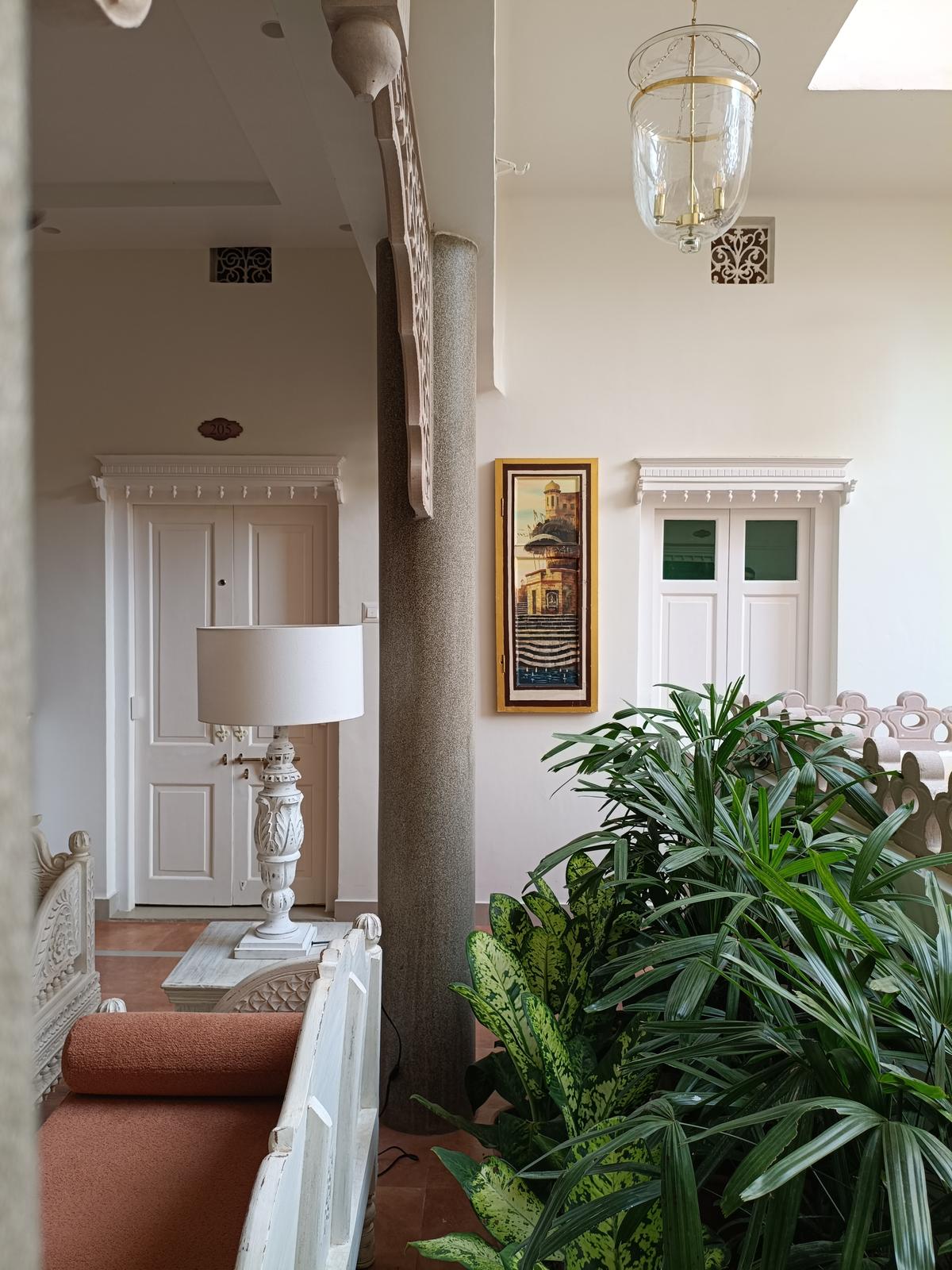
What strikes you as you walk in to juSTa Kashi Parampara, located just 800 metres from the iconic Assi Ghat, is not just the handcrafted wooden pillars evoking a sense of strolling into a haveli, the sandstone jaali work and the artwork that adorns its corridors, but also the central courtyard – a standard feature in most traditional Indian homes.

At Kashi Parampara, this courtyard not only provides an abundance of natural light but also serves as a stage for art and culture. It was also once a free clinic – since the property was bought more than 80 years ago by the grandfather of the current owner, Manish Dwivedi. “As he was an eminent doctor, he used to run a free clinic for the neighbourhood. My grandmother, a disciple of Girija Devi and a member of the Banaras Gharana, filled the home – and this courtyard – with bhaitaks (an intimate, small audience performance) and held many conversations on art, culture and music. In fact, we used to have several students of music and scholars stay at this residence, and spend hours discussing culture and music,” recalls Manish.

Today, the same 80-year-old ancestral home has been converted into a hotel, welcomes guests from across the country and abroad with a traditional aarthi welcome – a pujari reciting mantras – that prepare you to soak into true Banaras spirit.

A view of the interiors of juSTa Kashi Parampara

A view of the interiors of juSTa Kashi Parampara
| Photo Credit:
Srinivasa Ramanujam

Evenings here are complete with flute and dance recitals, which also help you unwind and relax if you have had a busy chaotic outing at Varanasi or indulged in a wholesome Banarasi thali. A lot of the artwork is from local artisans, while other furniture and artefacts are the handiwork of artisans from Rajasthan and UP – put together and coordinated by Deepali Dwivedi, a designer herself. She adds, “We tried not wasting too much from the original home and repurposed it for the current property. The idea was to give it the look of a heritage home and not a modern house.”

juSTa Kashi Parampara is located near Assi Ghat in Varanasi. Rooms are Rs 20,000 plus taxes inclusive of breakfast.


Source link

Bets gone, game on | Why gaming in India is looking up


It’s August, and I’m standing in the colossal halls of Gamescom in Cologne. The largest event for computer and video games, spanning over 2,30,000 sq.m., it’s where the global standard for AAA (high budget, high profile games) quality is set. Ask the 3,57,000 visitors that turned up from over 120 countries this year.

It is a dynamic ecosystem: a space where communities unite in incredible expo stands (over 1,500 exhibitors in 2025), small and large merchandisers showcase their wares, and a massive business section buzzes with gaming companies striking deals. Children and adults game, browse and buy new launches — reveals include first-person shooter game Call of Duty: Black Ops 7, action adventure Hollow Knight: Silksong, and role-playing game Black Myth: Zhong Kui — even as cosplay artists add to the fun.

Witnessing this global benchmark gets me thinking: we in India have the talent, the industry, and now, with GamingCon Bharat, the makings of a great expo. We have great studios with superb plans, and State governments such as Maharashtra investing in gaming. It’s time the country caught the world’s attention. And our success hinges on getting the next strategic steps right. One of the biggest steps has already been taken in August: the ban of real money gaming (RMG).

Expanding the ecosystem

India has good gaming shows, but none has been consumer-focused festivals. So, last year, GamingCon Bharat stepped in to fill the gap. “It is more than a convention; it is the physical home for India’s fast-rising gaming ecosystem. Over two days, we got close to 6,000 visitors,” says Vikas Vij, managing director of IDEX Events and the founder of GamingCon Bharat. “As India’s developers, creators, studios, and investors scale up, the event aims to be the stage that shows the world what the future of gaming from the country looks like.”

GamingCon Bharat 2024

GamingCon Bharat 2024

This year, they hope to double visitor numbers. There will be a strong international presence too, including French game company Ubisoft (which has developed game franchises such as Assassin’s Creed and Far Cry), American PC brand CyberPower, and South Korean game publisher Krafton. “Besides big Indian companies such as Reliance Games, Nazara and the like, there’s a lot happening at the grassroots level. To support them, we are providing a platform for 15 indie companies — giving Indian gamers an opportunity to see what else is happening in the country,” says Vij.

GamingCon Bharat 2025 will be held at the Bombay Exhibition Centre on November 29-30.

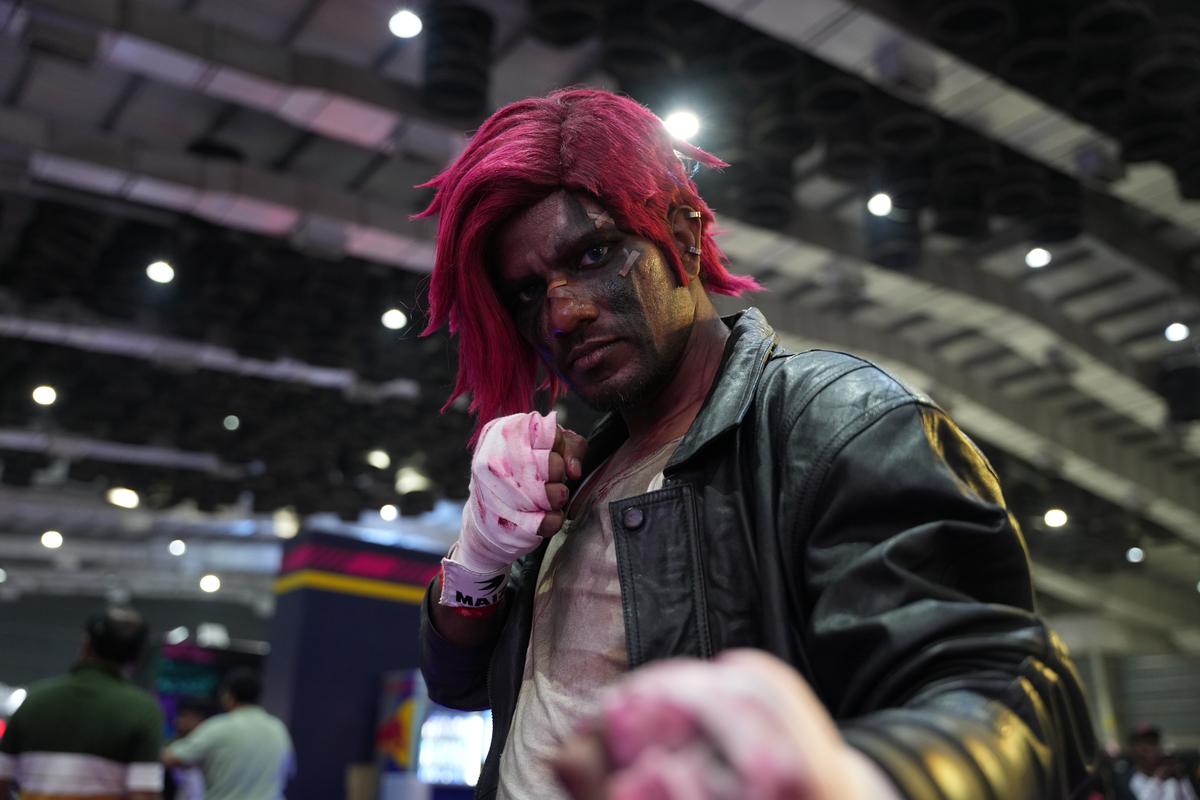
A cosplayer at GamingCon Bharat

A cosplayer at GamingCon Bharat

Tech-tonic shift from wagers to worlds

Gaming is not a new arrival in India; it dates back to the Atari era of the 70s, with its arcade games and home consoles, and the ‘999-in-1’ cartridges that circulated through neighbourhoods like currency in the 90s. With the arrival of RMG, however, almost a decade ago, that concept of gameplay got mixed up with gambling.

This new industry was quick to camouflage itself using the skill-based adjectives often reserved for gaming. It quickly overtook the narrative, and with its deep pockets and hefty investments, choked investments to the gaming industry (investors chasing easy, short-term RMG returns ignored studios creating original intellectual property).

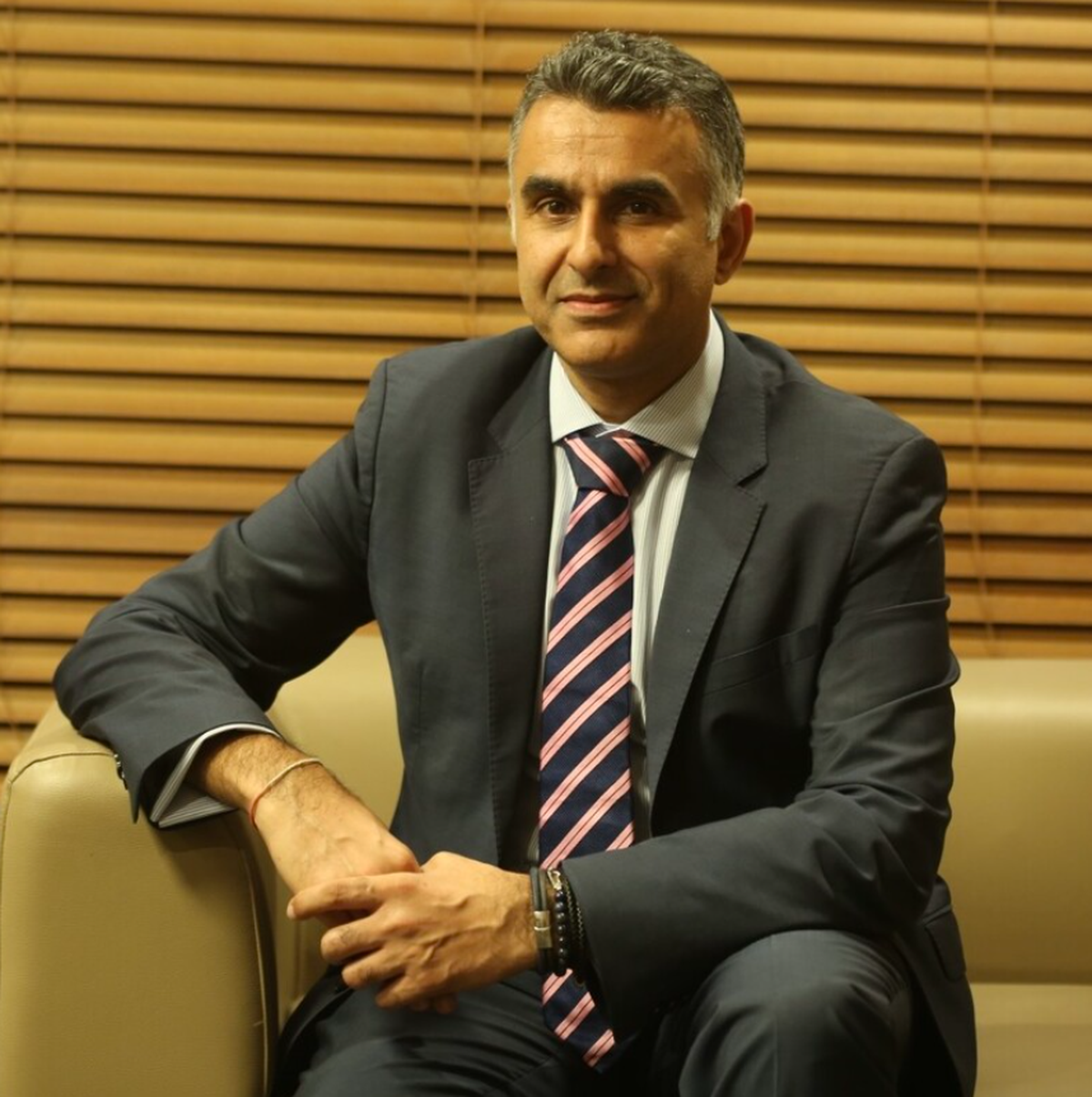
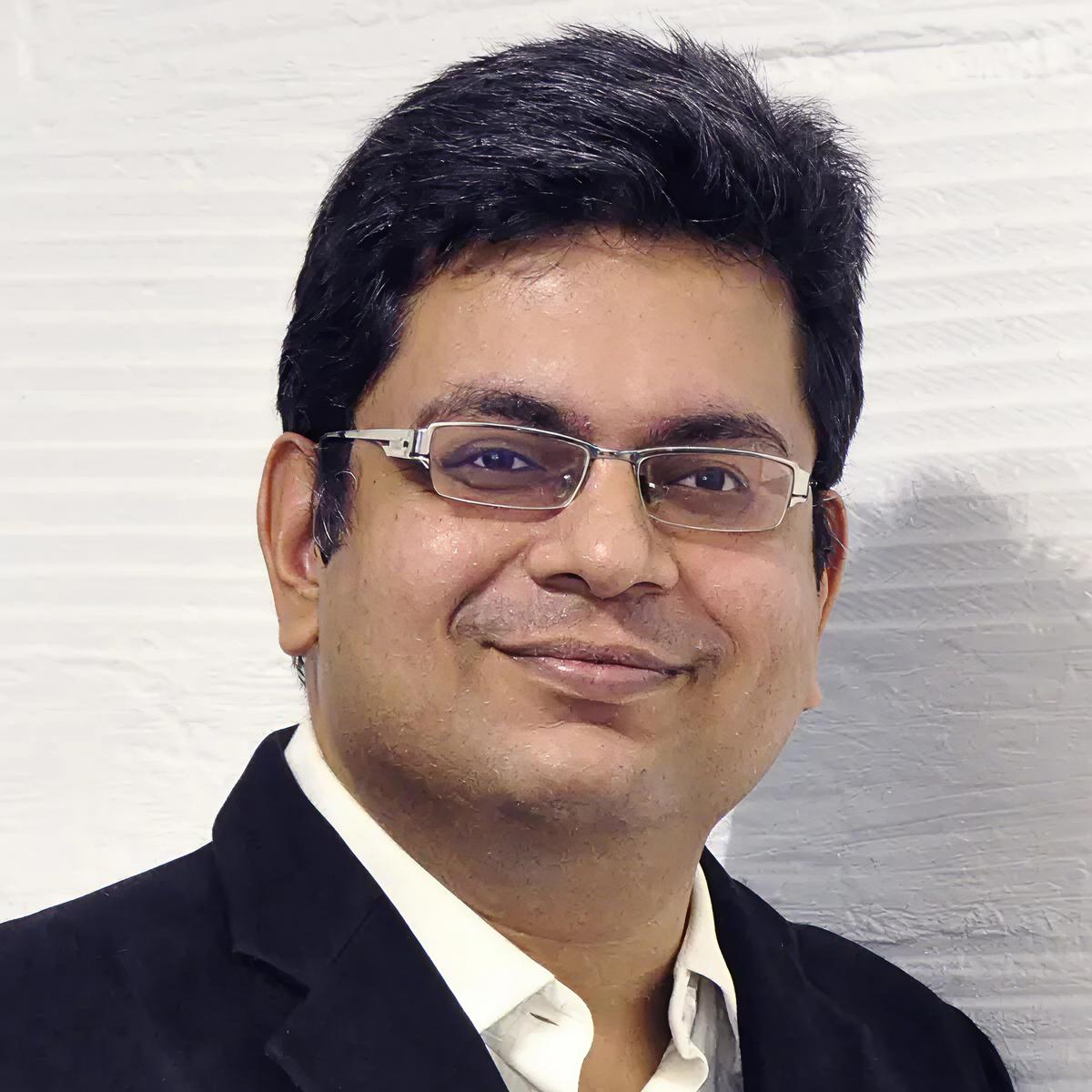
Vikas Vij, founder of GamingCon Bharat

Vikas Vij, founder of GamingCon Bharat

The problem was not co-existence; it was cannibalisation. It starved the creative sector by commanding 80% of all gaming venture capital (VC) funding and siphoning the best engineering talent. More critically, the RMG model created severe regulatory chaos and, as confirmed by reports on the ground, dragged thousands of users into debt and addiction.

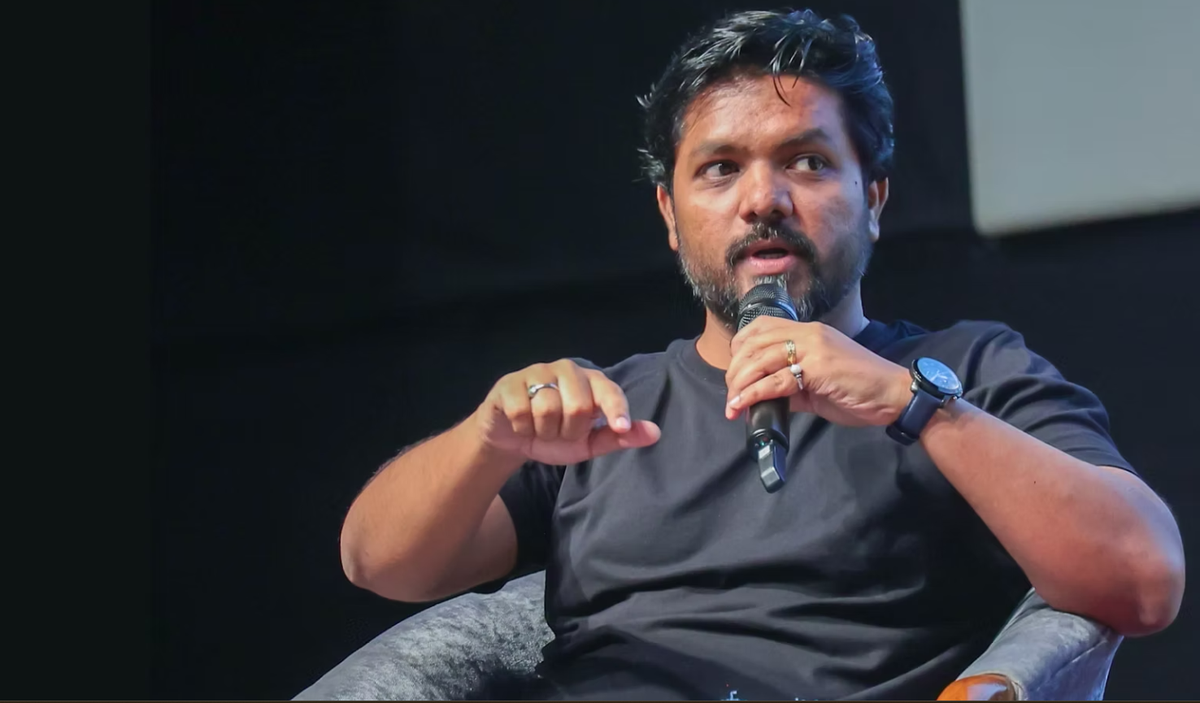
Now, there is a reset. With the Promotion and Regulation of Online Gaming Act, 2025, coming into force three months ago, it has effectively pulled the plug on online casinos. “I strongly support the RMG ban,” says Vishal Gondal, co-founder of nCore Games, a Bengaluru-based mobile games and interactive entertainment company. He is unequivocal about the necessity of this shift and states, “Real-money gaming was just gambling disguised as gaming. Now that it’s out of the way, India finally has the clarity to build a real gaming industry, driven by game developers, storytellers, and studios, and not betting apps.”

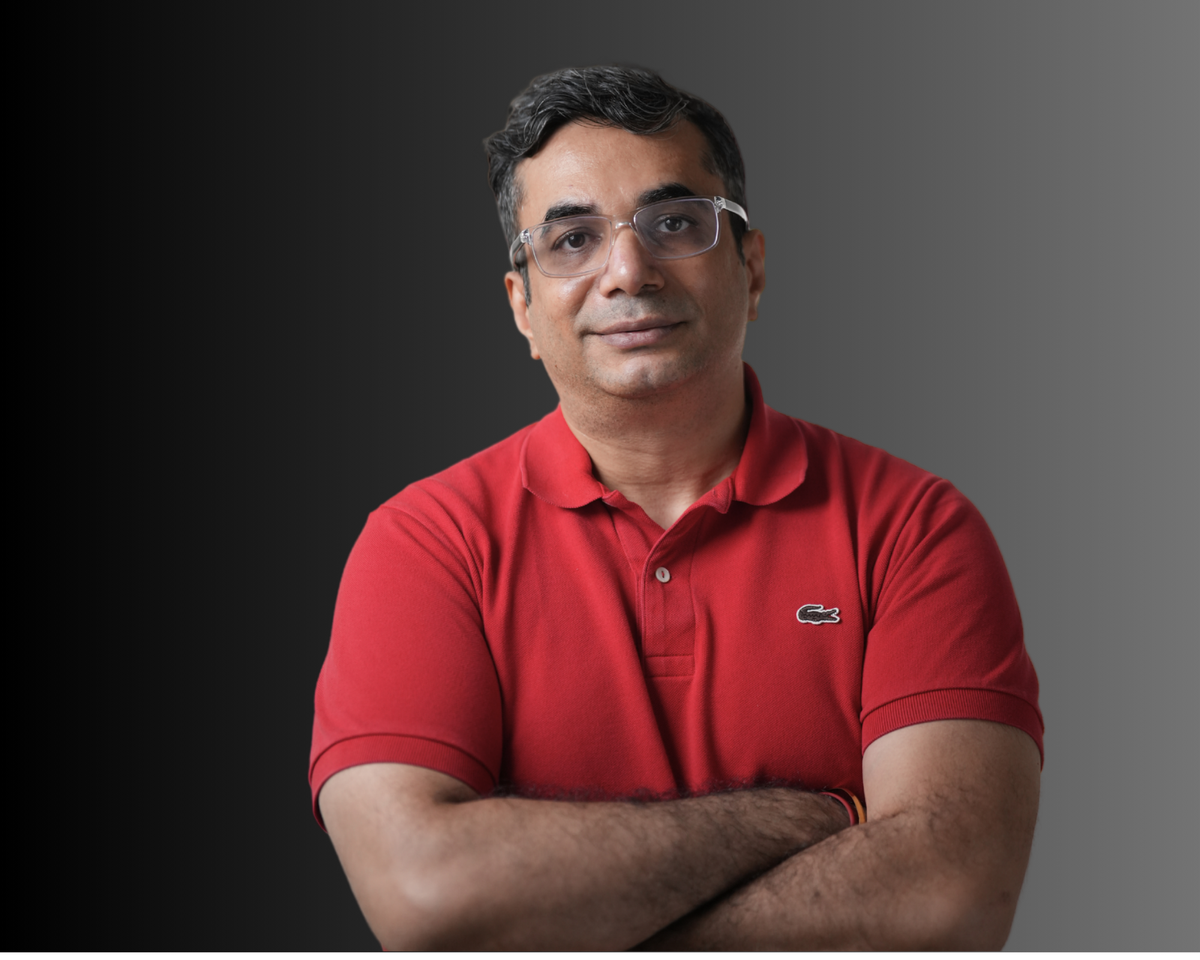
 Vishal Gondal, co-founder of nCore Games

 Vishal Gondal, co-founder of nCore Games

Redefining real gaming

According to the India Gaming Report 2025, the country is home to 591 million gamers, 89.92% of whom are mobile gamers, with shooters being the most popular genre. That’s set to grow to about 900 million by 2029. Interestingly, the Indian gaming sphere is not just a boys club — 44% are women, driving growth not just in casual puzzles but in narrative-driven adventures and competitive shooters.

But where Indians are distinct is in how they choose their games. “The average Indian gamer is very value conscious and wouldn’t spend money on a game purely out of curiosity,” says Gagan Gupta, co-founder of Mumbai-based gaming agency DTR and a lifelong gamer himself. “While free-to-play games like Valorant have seen success in the market, games like Grand Theft Auto 5 have seen a massive success here despite its price, purely because of the value it brings with its huge scope.”

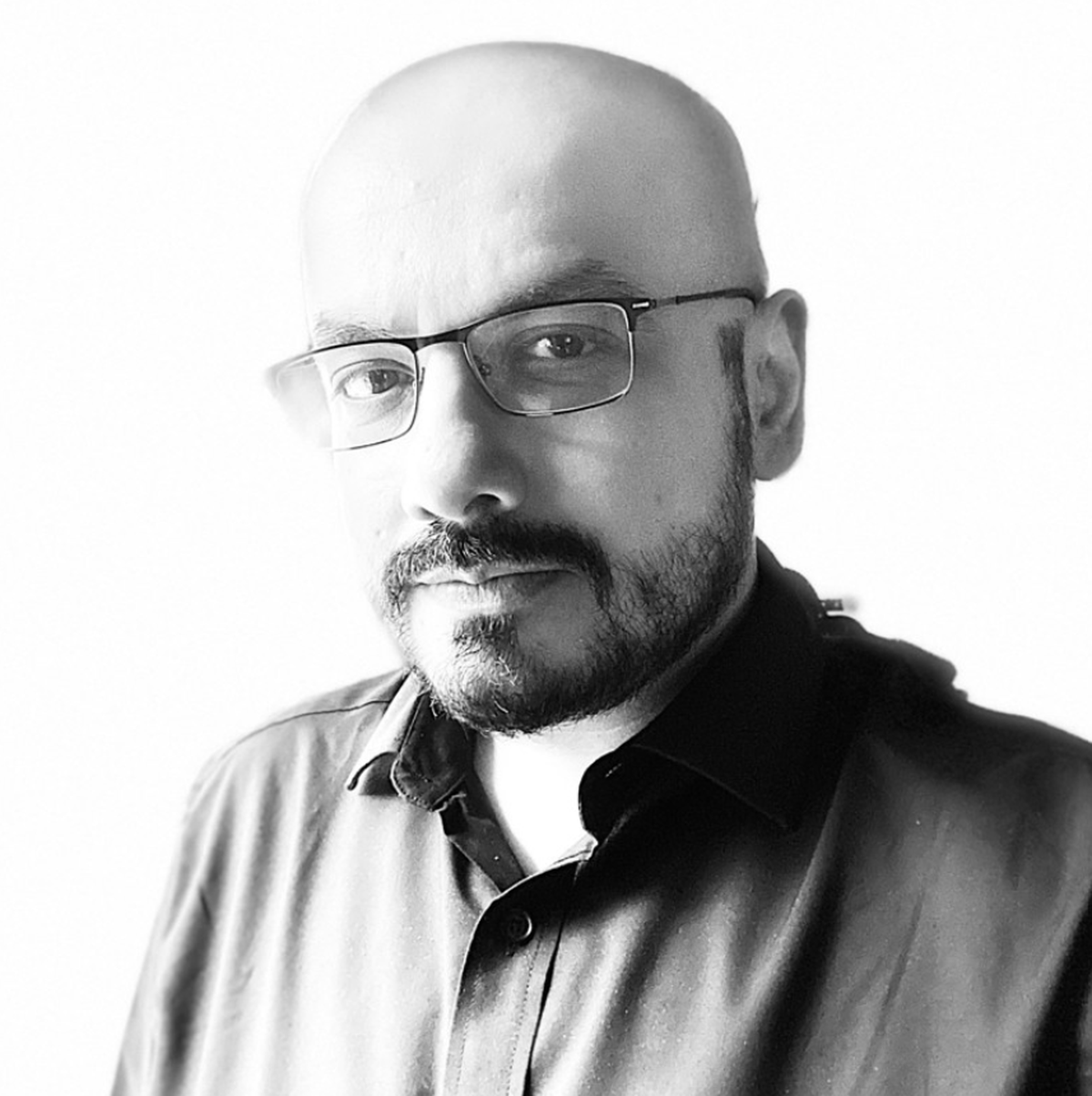
Gagan Gupta of gaming agency DTR

Gagan Gupta of gaming agency DTR

So, for an Indian studio to succeed, they need to have quality that rivals or is better than what locals are used to, while keeping the price point right. At present, many gamers feel that indie creations lack gameplay. Reddit forums have rants on Indian games being bland and boring. Subreddit discussions range from ‘Why India can’t make an AAA game?’ to why these passionate ‘Indian GTA game developers should learn from people who are actually passionate about their craft’.

While there have been successes in the form of games such as Raji: An Indian Epic that has found fans in the country and across borders, the numbers aren’t too large. So, why haven’t there been more homegrown successes? The two biggest factors are technology and the fact that the studios are divided — building their own tech stacks with fragmented approaches, when standardisation is key. It is only now that game creation tools have become more democratised, with software such as Unreal and Unity freely available.

Raji: An Indian Epic

Raji: An Indian Epic

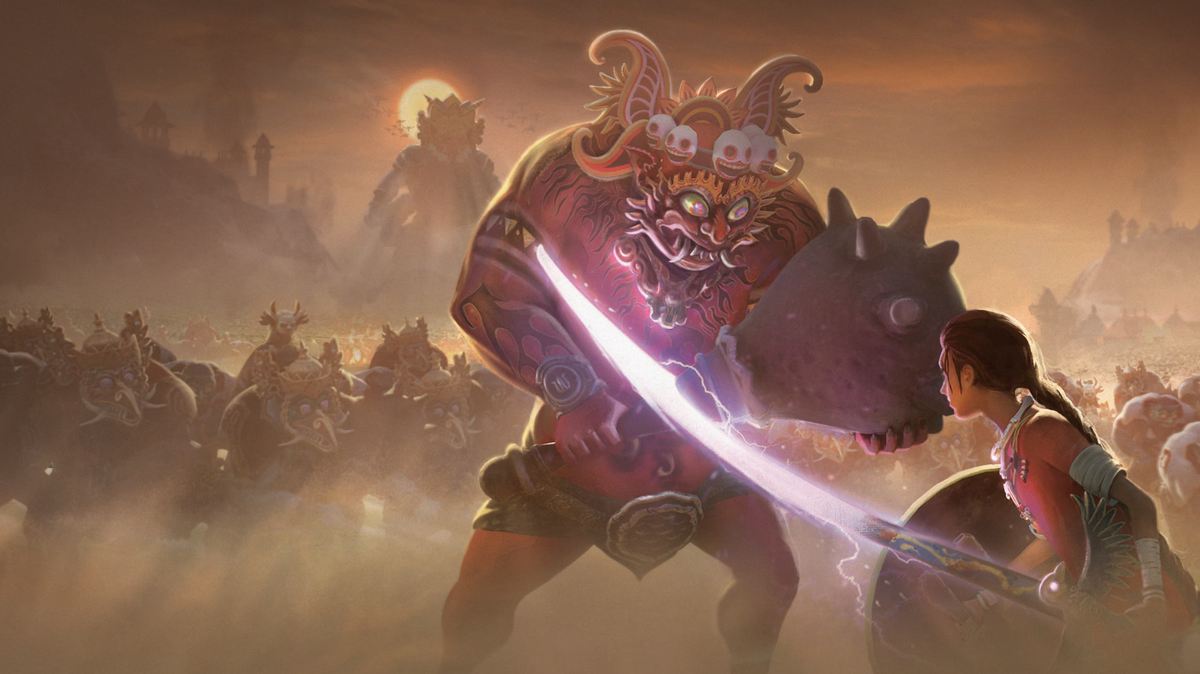
“Here is a country with one of the world’s youngest populations, hundreds of millions of gamers, a huge tech-savvy talent pool, and a civilisational heritage that is both epic in scale and remarkably under-represented in premium games. India
stands out.”Nicolas GranatinoExecutive chairman of Tara Gaming

The newly formed Indian Game Publishers & Developers Association (IGPDA), which came into being in September, is a strong step in the right direction. Established as a unifying force, it counts tech company Nazara, nCore Games, Reliance, and six others as founding members. It is structured to bring primary players — think game developers, studios, publishers, and platforms — and partners, such as tech providers, training institutions, and investors together to collaborate on game development. “The IGPDA is designed to be India’s [first] collective voice in gaming,” explains Ninad Chhaya, senior vice president of corporate development at Reliance Games. “A unified platform that uplifts studios, promotes and protects IP [intellectual property] creation, and showcases India’s growing influence on the global gaming stage.”

Ninad Chhaya of Reliance Games

Ninad Chhaya of Reliance Games

Untapped potential in worldbuilding

The IGPDA’s immediate challenge may be to meet global quality standards, but the bigger mandate is to amplify India’s rich cultural heritage. The way Europe uses medieval history, or China and Japan use their mythology, India must define its own unique IPs to transcend our borders.

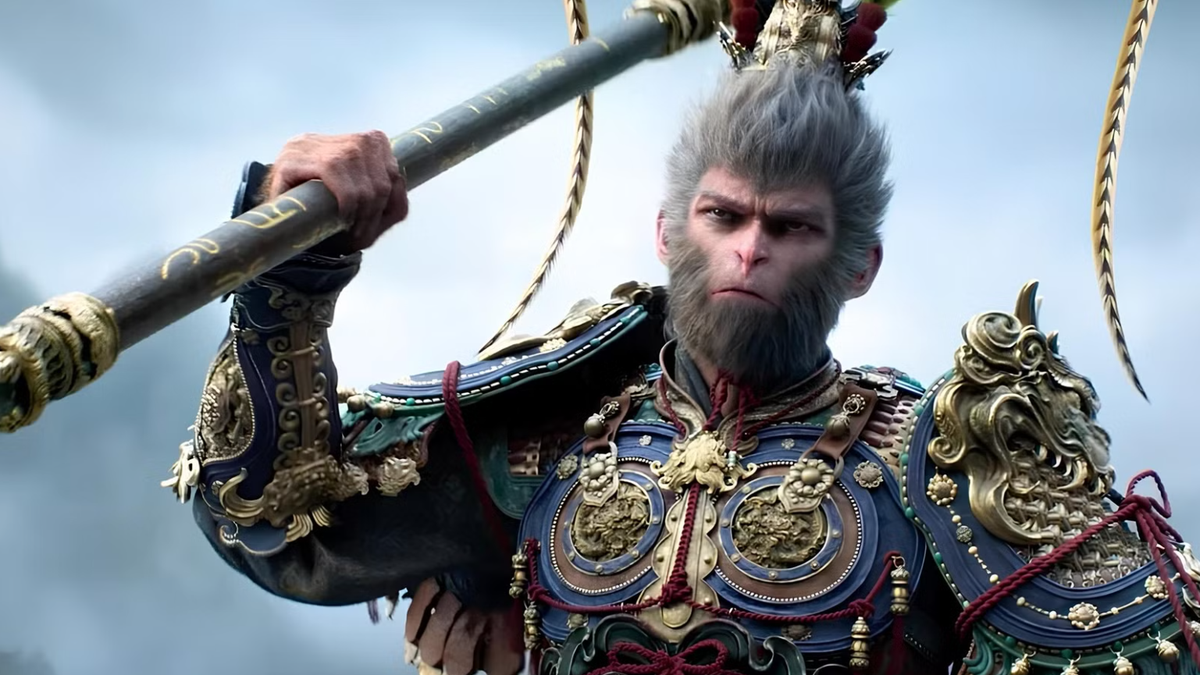
Across every gaming community, there’s one comment that’s constant: “When will India get its own Black Myth Wukong [the 2024 action role-play game’s story is based on the Chinese classical novel Journey to the West]?” Over the last decade, China has been getting its gaming industry off the ground, and Black Myth Wukong was one of the biggest global successes for two reasons. It blended core Chinese mythology with pulse-pounding gameplay mechanics. This is the Indian gamers’ high bar of success, and the aim of all gaming studios today.

Black Myth Wukong

Black Myth Wukong

The dream isn’t impossible. “India stands out. Here is a country with one of the world’s youngest populations, hundreds of millions of gamers, a huge tech-savvy talent pool, and a civilisational heritage that is both epic in scale and remarkably under-represented in premium games,” says Nicolas Granatino, executive chairman of Tara Gaming, a one-year-old game developing studio that has Amitabh Bachchan as a co-founder. It is currently making Age of Bhaarat, an action-adventure that features Bachchan’s voice that the creators believe will be the country’s first AAA game. “From a storyteller’s standpoint, India is a treasure chest. The RamayanaMahabharata, classical literature, regional folk traditions — these are not just myths but vast narrative universes filled with complex characters, moral dilemmas, and big ideas about duty, love, war, and the nature of reality,” he adds.

Nicolas Granatino, executive chairman of Tara Gaming

Nicolas Granatino, executive chairman of Tara Gaming

The global success of role-playing game The WitcherBlack Myth Wukong and American action adventure God of War proves the formula — rich mythology combined with excellent gameplay — wins. But India’s stories must translate into interactive set pieces and tight gameplay loops. This juggling act of uniting worldbuilding with clear narrative mechanics is what Indian studios must master to reach the world.

There’s curiosity now from new creators and first-timers such as Sapna Bhavnani. The Mumbai-based filmmaker and founder of Wench Film Festival, India’s first sci-fi/horror/fantasy fest, is looking at creating her own game. “I feel in India we are mediocre when it comes to our aesthetic. Also, nobody wants to spend the time developing something,” says Bhavnani, who is planning to base her game on Zombiecon, a zombie walk and pub crawl that she hosts in the city. “In the fantasy genre, we automatically go to mythology, to Ramayana and Mahabharata. We need a game that can cut through international boundaries where horror, sci-fi and fantasy are the genres that are ruling the roost.” She has identified a Mumbai-based developer for her game, but first she says she will spend time worldbuilding and developing her characters. “We have to develop something that even someone in the western market can understand.”

“I feel in India we are mediocre when it comes to our aesthetic. Also, nobody wants to spend the time developing something. We need a game that can cut through international boundaries where horror, sci-fi and fantasy are the genres that are ruling the roost.”Sapna BhavnaniFilmmaker and founder of Zombiecon

Sapna Bhavnani

Sapna Bhavnani

Building the foundation

Given the concentration of game studios in Mumbai and Pune, the region has emerged as the industry’s centre of gravity. “Mumbai already has everything a global gaming hub needs — be it creative DNA, film culture, art schools, tech talent and a generation that grew up on games,” says Vaibhav Chavan, founder of underDOGS, who’s building Mukti, a first-person narrative adventure game with support from Sony Playstation to bring awareness on human trafficking. “What it needs now is focus and policy support, funding, and overall nurturing of the ecosystem.”

Vaibhav Chavan, founder of underDOGS

Vaibhav Chavan, founder of underDOGS

The Maharashtra government listened, and is backing the industry, in collaboration with the IGPDA, with a ₹3,000 crore gaming war chest. Together, they will work to attract gaming companies to Mumbai through policy support. Now, it is up to the studios to focus this resource on creating genuine, scalable wealth, and the government to ensure the infrastructure — accelerators, AVGC (Animation, Visual Effects, Gaming, and Comics) hubs — is built to pull talent away from the RMG husks and into stable, long-term creative roles. This will help in growing the gig economy, opening up more jobs for tech, acting, motion capture and voice roles across demographics and regional languages.

A few other States have their own plans in place. Tamil Nadu is readying to launch its AVGC XR (Animation, Visual Effects, Gaming, Comics, and Extended Reality) policy. “Gaming is very unique in that it has high creativity, relatively low employment, and high margins. So, you have to be really thoughtful about how you go about incentivising it,” says Palanivel Thiaga Rajan, Minister for Information Technology and Digital Services of Tamil Nadu.

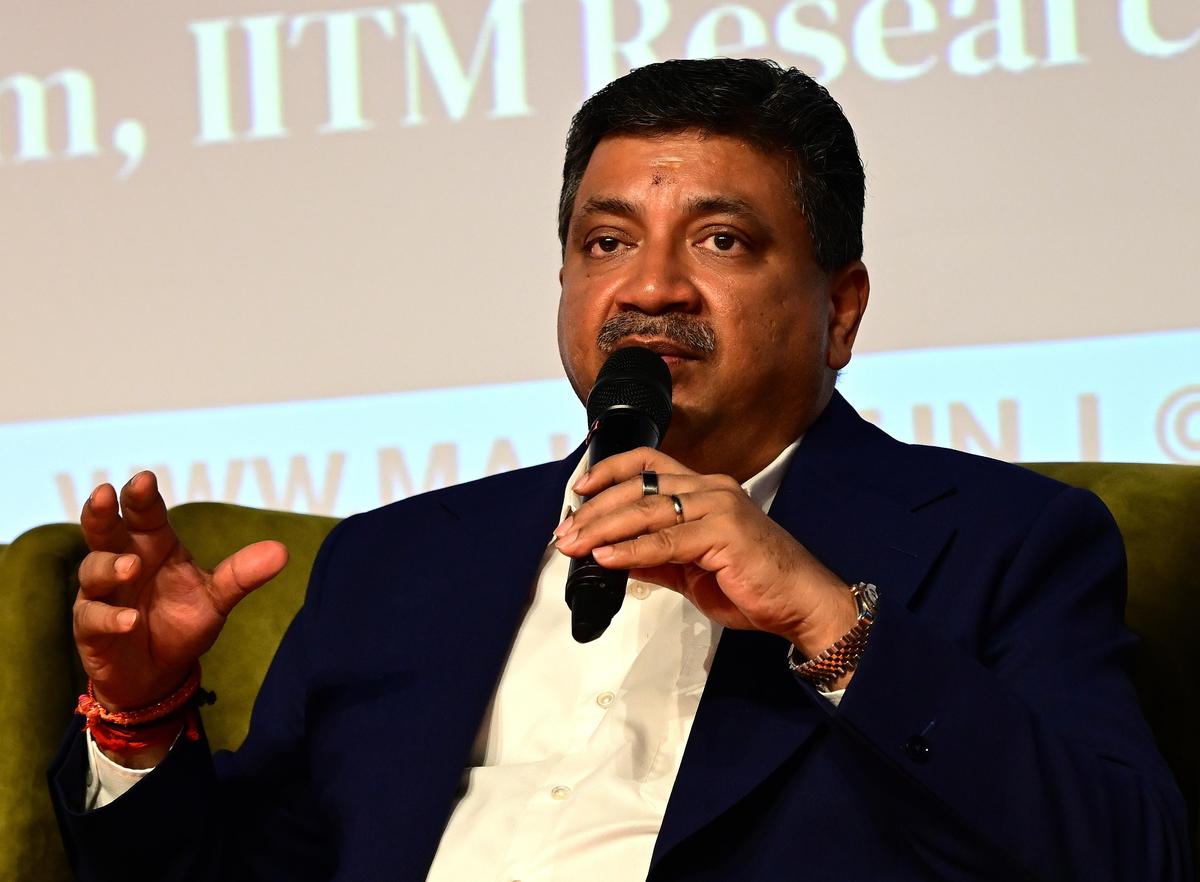
Palanivel Thiaga Rajan says Tamil Nadu is readying to launch its AVGC XR policy

Palanivel Thiaga Rajan says Tamil Nadu is readying to launch its AVGC XR policy
| Photo Credit:
Velankanni Raj B.

The policy, which is in its final stages, is built on four pillars: education and skilling, infrastructure development, improving ease of doing business, and financial incentives. “It is very nuanced, because from day one it was developed through interaction with the industry sector — both individual companies and the Game Developer Association of India,” says Rajan, adding that they are encouraging clusters of developers, which will “facilitate participation and make accessibility easier”. Getting big gaming companies such as Nintendo to enter India through Tamil Nadu is on the agenda, too.

Need for a gaming convention

Every industry needs a town square for the community and businesses to convene. Just as Comic Con spotlights comic books and pop culture, a serious gaming industry demands a dedicated convention. While Japan has the Tokyo Game Show and Europe has Gamescom, India now has GamingCon Bharat. “With GamingCon Bharat, we are creating a landmark event that unites India’s entire gaming community, from young players and indie developers to major studios, publishers, and investors,” asserts Vij, the founder.

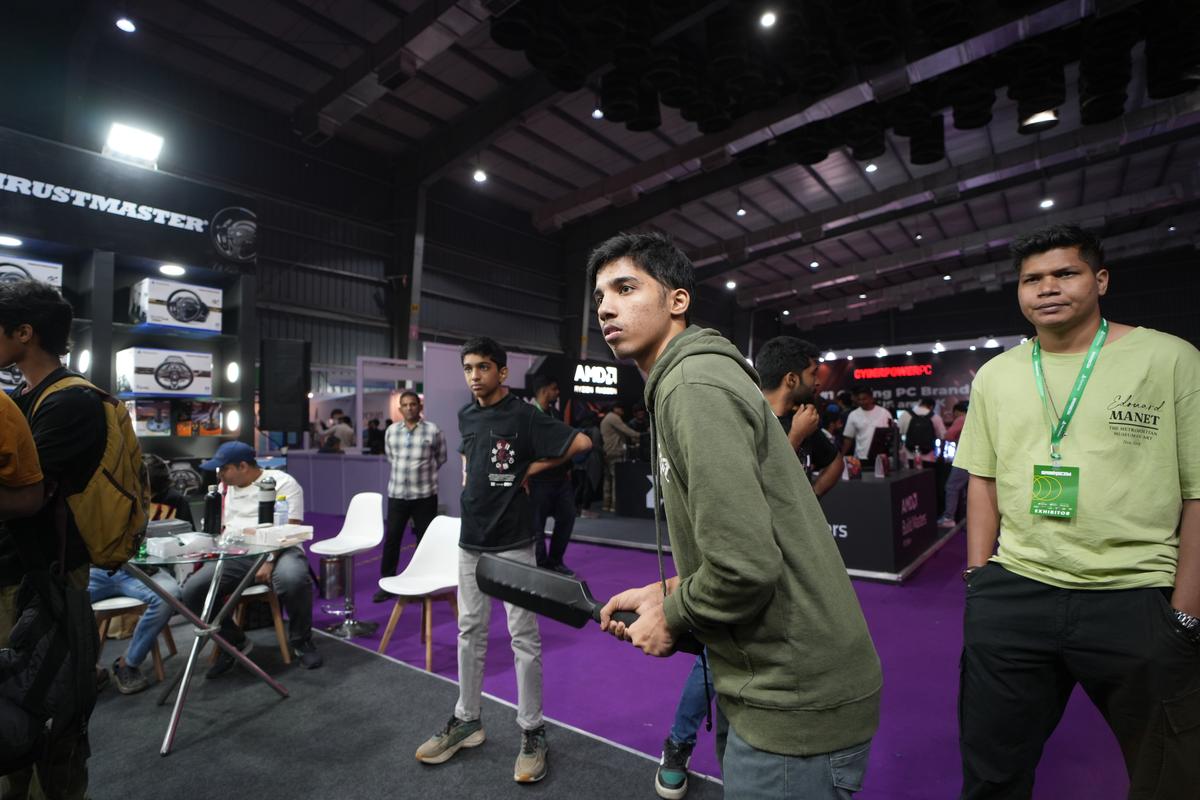
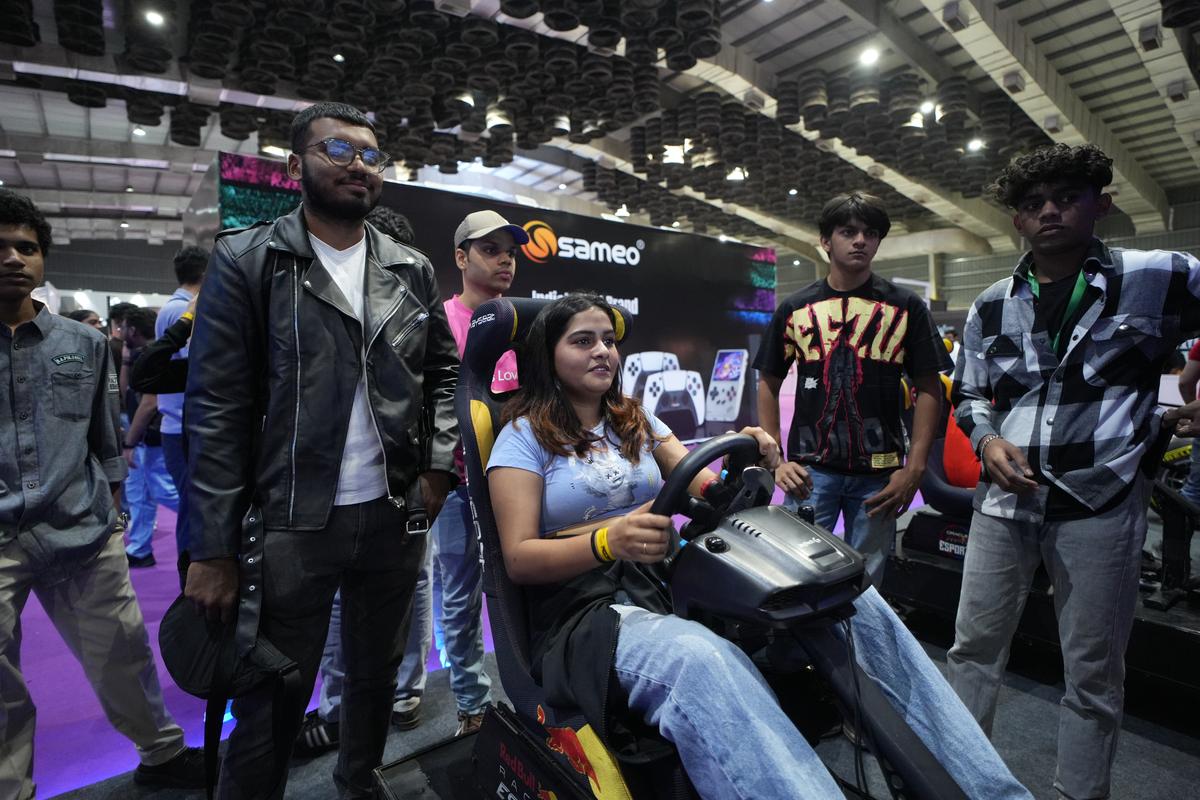
At GamingCon Bharat 2024

At GamingCon Bharat 2024

Gaming expos are more than just screens and controllers; they are the industry’s megaphones. They create a platform for gaming companies and independent studios to debut their new games, and serve as a B2B nexus where studios can find investors, tools and services, as well as connect with the gaming business community. These events also fuel the “merch economy” — artists and creators selling custom apparel, action figures, and art. And it’s a haven for cosplayers who, in turn, transform the event into an immersive experience. “GamingCon Bharat provides a national stage for talent, aids in the discovery of new esports players, and gives regional creators the visibility that was missing a few years ago,” says Medha Srivastava, a concept and game artist. Srivastava cosplayed as Aloy from Horizon Zero Dawn at the last edition.

Medha Srivastava as Aloy from Horizon Zero Dawn 

Medha Srivastava as Aloy from Horizon Zero Dawn 

We are on the cusp of change. The tools are on the table: the policy, the capital, and a unified IGPDA voice. The industry has got a new lease of life. The challenge now belongs to the creators and the consumers.

(With inputs from Surya Praphulla Kumar)

The designer and lifelong gaming enthusiast spends most evenings in co-op mode with his daughter.

Source link

Indian cacao farmers with craft chocolate ambitions


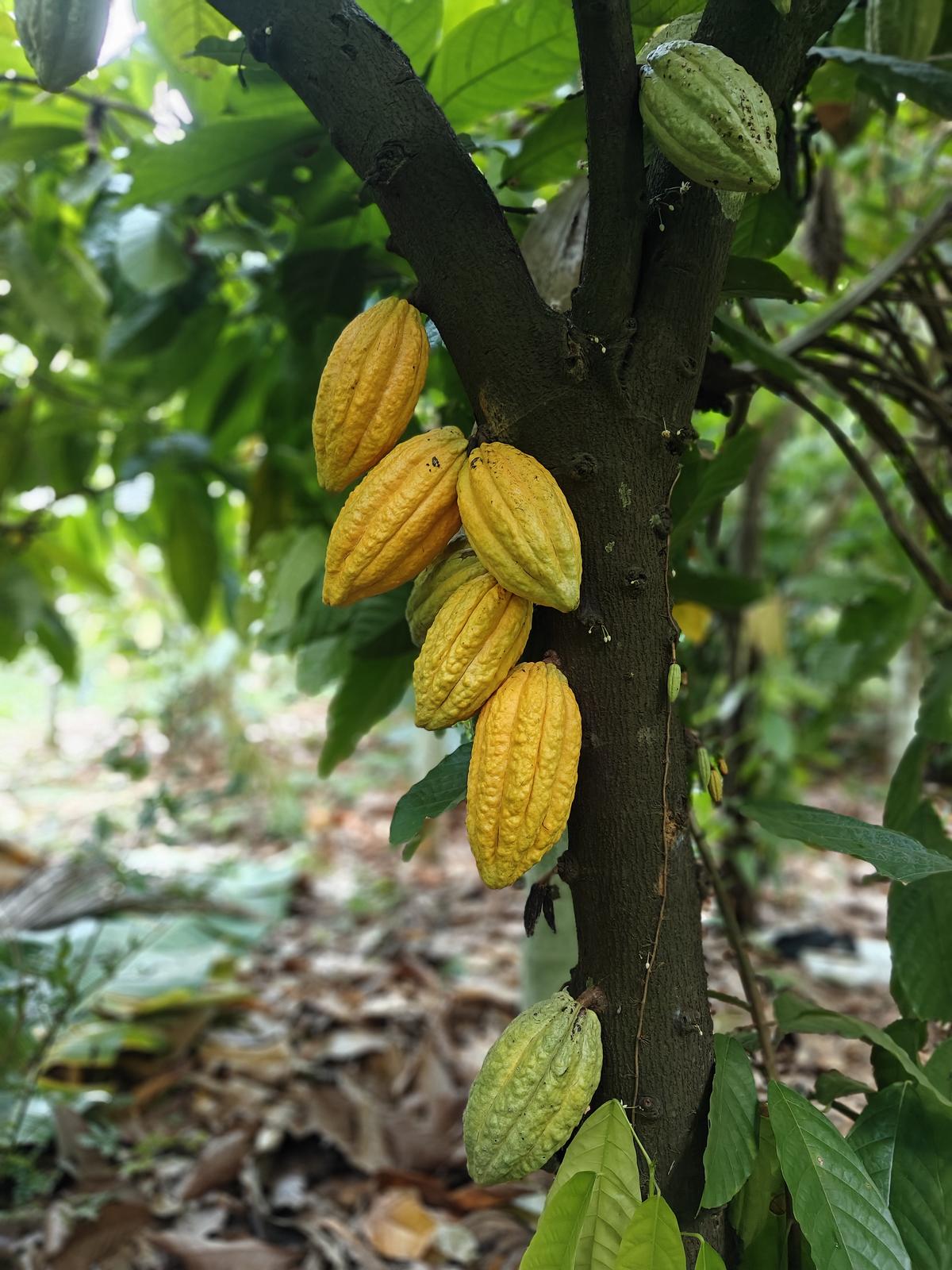
Opening the windows of the tree house on Varanashi Organic Farms was a soothing balm. Looking out into treetops spearing the cotton-candy sky at this 100-acre family farm in Adyanadka, a village in Dakshina Kannada District, our city bones were lulled into finding their forest feet.

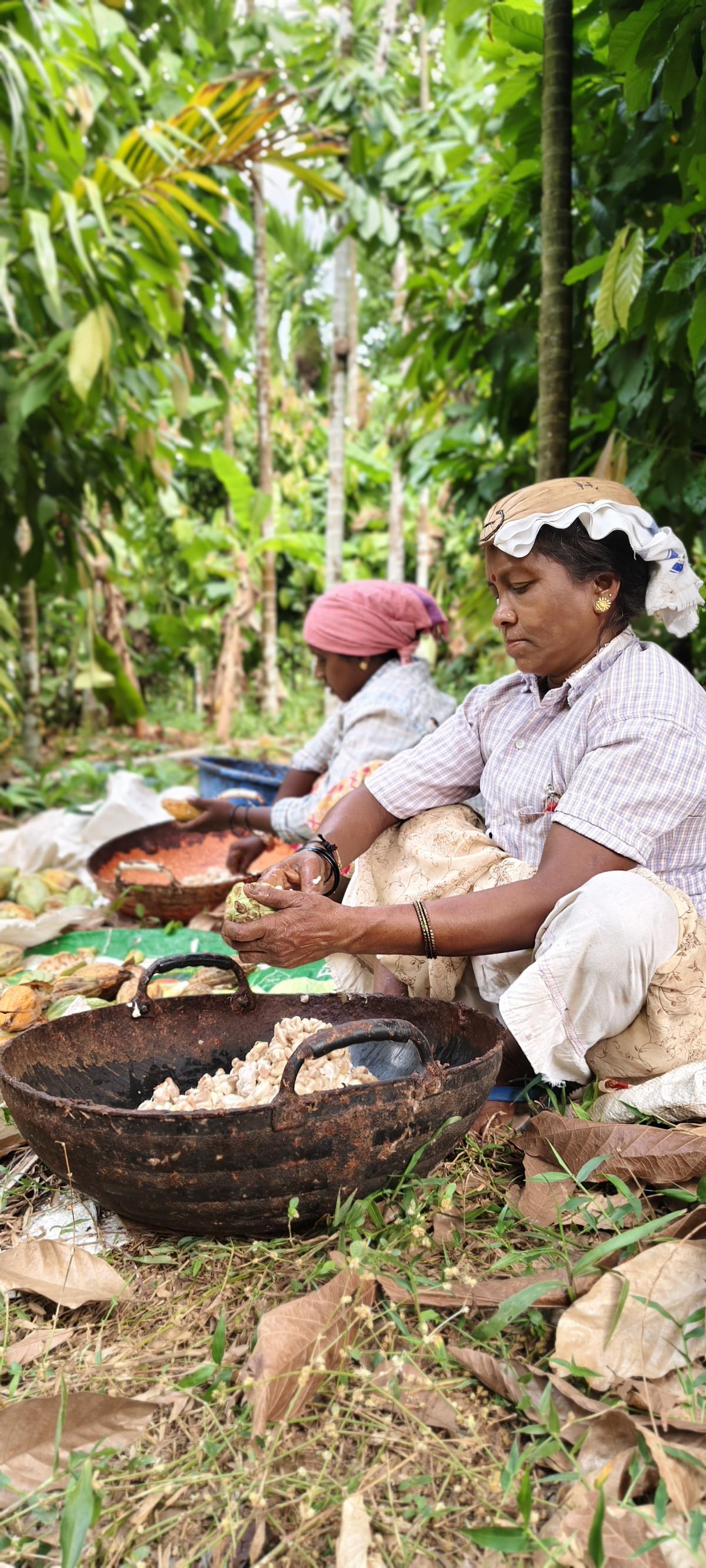
For the next three days, we immersed ourselves in the Cacao Residency hosted by the cacao-growing farm along with Goya, a food media company, and the Indian Cacao & Craft Chocolate Festival, a five-year-old initiative that brings together the stakeholders in India’s cacao and craft chocolate ecosystem. We learnt about the evolution in farming methods and processing techniques, witnessed the making of a craft bar, and tasted a selection of small-batch chocolates.

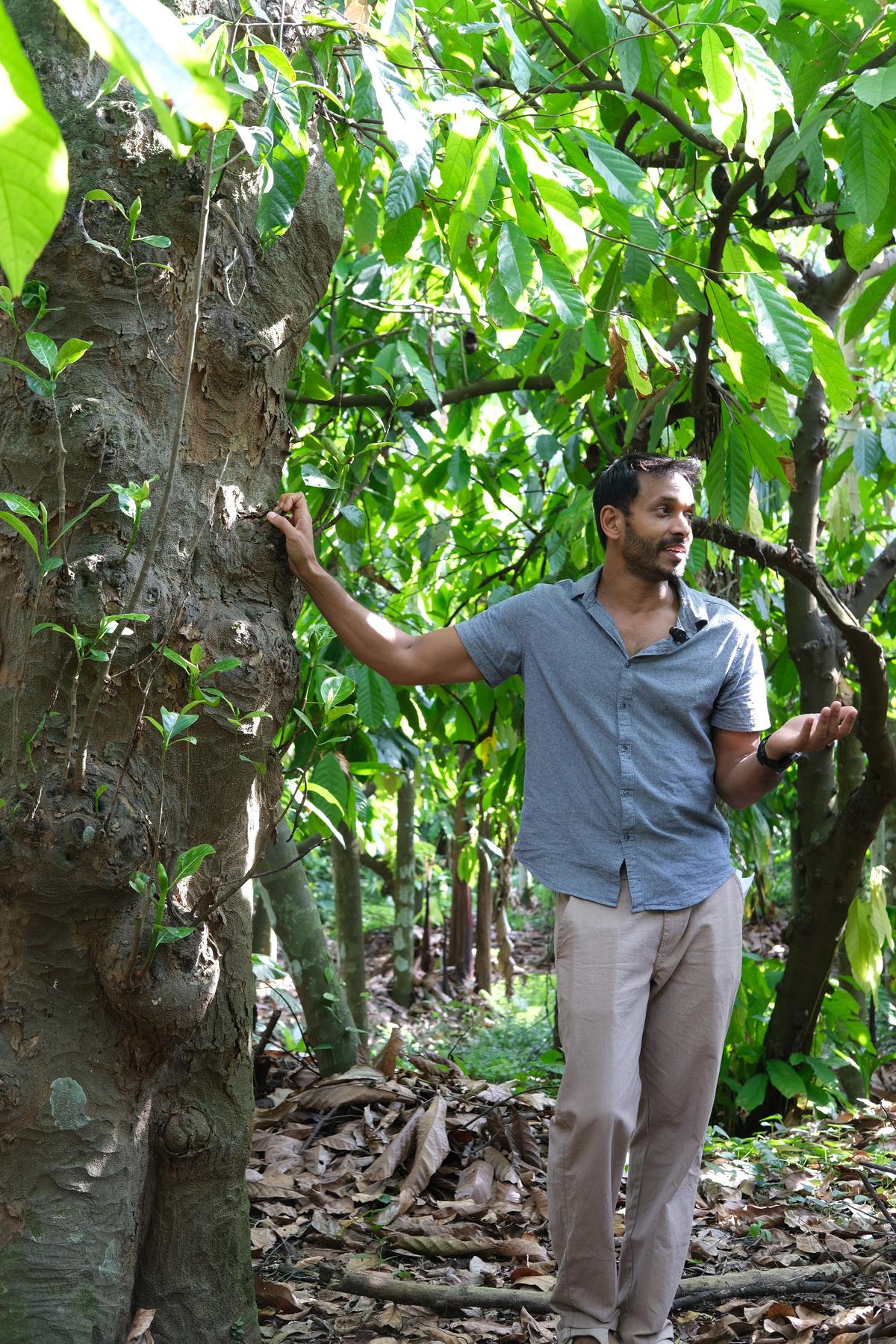
At a time when headlines are being overtaken by news of rising cocoa prices, and social media is warning consumers to check the label for ‘chocolate flavouring’ — an attempt by brands to find cheaper ways to keep their products on shelves — it was interesting to walk up to the oldest cacao trees in South India. Partha Varanashi, the ninth-generation farmer of this over-200-year-old property, shares how these 65-year-old trees were brought as saplings to the farm by his late grandfather Varanashi Subraya Bhat.

Numerous strains of cacao from South America and other cacao-growing countries were tried and tested for their viability and yield at the Central Plantation Crops Research Institute before settling on two hybrids. From Bhat, these saplings were distributed to other farms in the region, “and within the next five years, they were producing over 50 tonnes of cacao [sold to Cadbury]”, says Varanashi.

Partha Varanashi at Varanashi Organic Farms

Partha Varanashi at Varanashi Organic Farms

In the mid-80s, however, “when Cadbury lowballed farmers on the price for cacao”, Bhat’s other founding venture, the farmers’ cooperative Central Arecanut and Cacao Marketing and Co-operative Society (CAMPCO), added another first. They decided to start their own production in Puttur. “It was then the biggest chocolate factory in South Asia,” Varanashi explains, adding that it boosted chocolate consumption in the South.

Not an ordinary chocolate bar

Today, things are very different. Craft chocolate is on the rise across the country, and in just the last three to four years, around 20 bean-to-bar makers have come up across India, states Ketaki Churi, chocolatier and co-founder of the Indian Cacao & Craft Chocolate Festival. “Most of the small-batch, craft chocolate brands emerging, especially in South India, are from cacao growers themselves,” she says. The upcoming chocolate festival has 15 craft brands attending — a mix of big players such as Manam and Mason & Co. and small-batch.

Ketaki Churi, co-founder of the Indian Cacao & Craft Chocolate Festival

Ketaki Churi, co-founder of the Indian Cacao & Craft Chocolate Festival
| Photo Credit:
Raj Pratim Kashyap

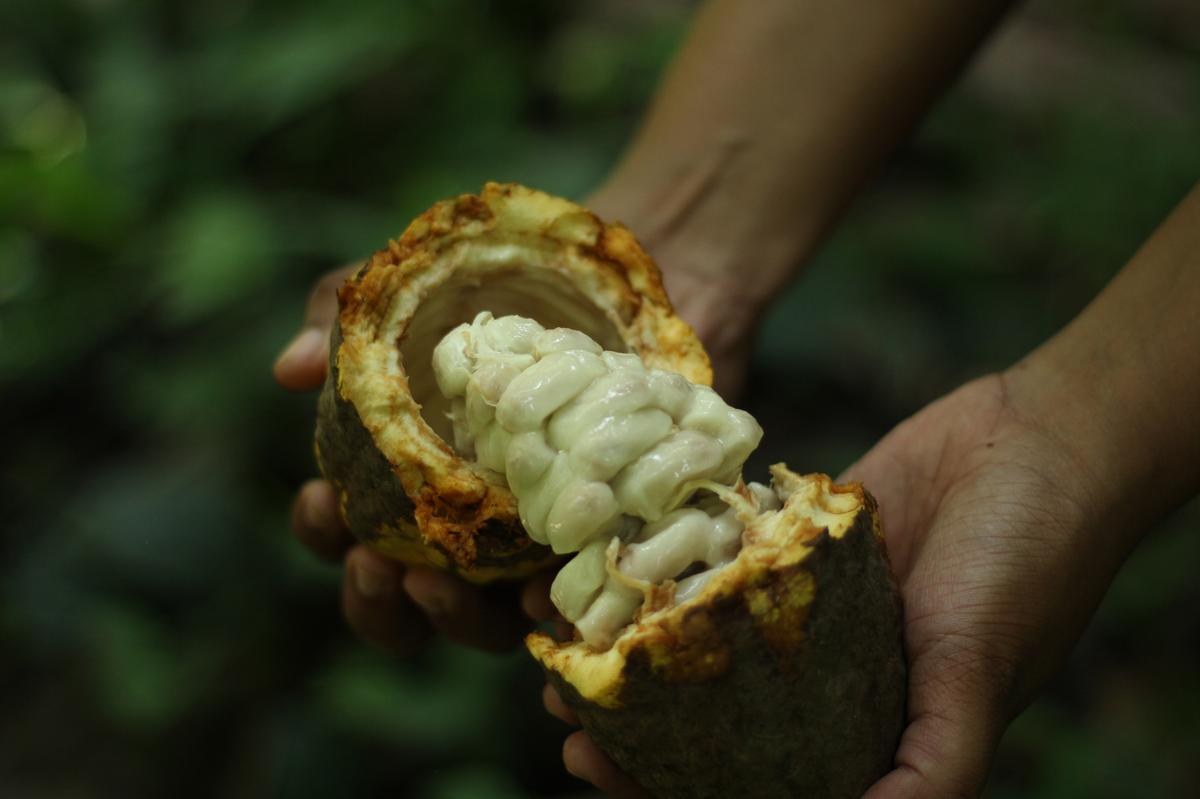
While there are universally-applicable theories to arriving at a wrapped chocolate bar, Churi argues that craft chocolate stands apart because of its attention to the littlest details. “Like, I could decide to turn the cacao beans more often, let the fermentation run for more days, or dry and roast for longer, play with temperature in the service of achieving a certain taste. But in truth, one only understands the profile of the bean once you’ve made chocolate from it,” she says. “These aren’t the kinds of parameters that large-scale, commercial chocolate brands care about.” She is speaking from first-hand knowledge — of making Terra, the in-house tree-to-bar craft brand from Varanashi Organic Farms.

Terra craft chocolate

Terra craft chocolate
| Photo Credit:
Keshava Darbhe

Only taste matters

The south of India has several regions where weather conditions are suitable for growing cacao. But despite farms in Kerala, Karnataka, Andhra Pradesh and Tamil Nadu, India accounts for only 1% of the world’s cocoa bean production, says Churi.

Indian cacao growers can only supply a quarter of the beans needed by the country’s chocolate market

Indian cacao growers can only supply a quarter of the beans needed by the country’s chocolate market

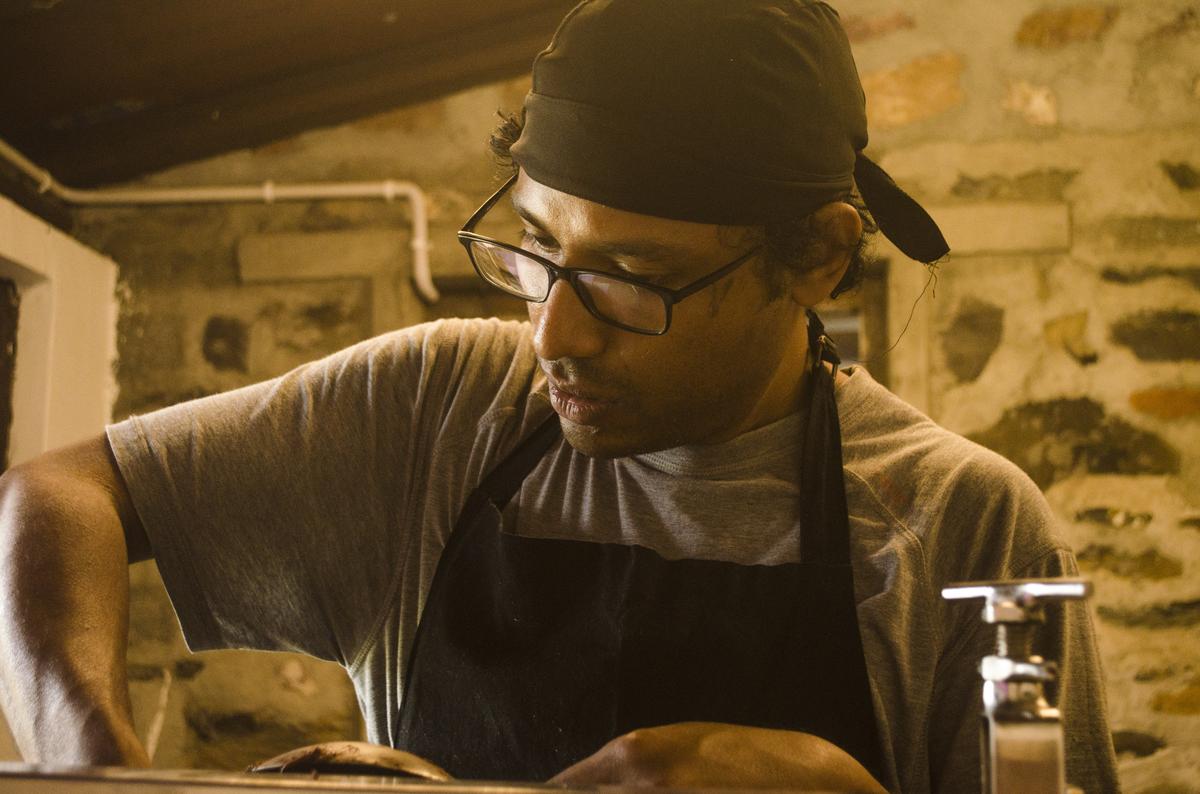
A reputation for inferior quality and poor handling of harvested beans have also plagued the Indian cacao story. But now newer hybrid varieties and better training are ushering in change. Sai Nair is an engineer turned chocolatier and the name behind Oona, a two-year-old bean-to-bar brand based in Uttarakhand. According to him, if cacao is grown properly, ripened correctly, mindfully fermented, dried with care, and roasted with attention, then it is going to taste good. Nair, who sources his cacao from three farms in Kerala, adds, “We can keep saying chocolate from Latin America or the Ivory Coast is better, but all of it boils down to marketing.” He reasons that “taste is the only thing that matters” and if it fulfils this requirement, then it is good.

Sai Nair of Oona

Sai Nair of Oona

Nair points to our relationship with mangoes to attempt to pin down our budding romance with Indian cacao. “We have over a thousand varieties of mangoes in India; they are grown in different parts of the country in varied climates, resulting in fruits with an assortment of flavour profiles,” he says. “While people around the world might harp on Alphonso, I’m sure most of us have had a mango that tastes better.” Similarly, Nair urges us “to try Indian cacao beans from different farms and craft chocolate from several makers to find a taste that suits you”.

Oona chocolate

Oona chocolate

Today, farmers and chocolate makers are nudging each other into bettering each others’ crafts. The word ‘terroir’ is being thrown around in the service of creating legitimacy for Indian cacao. While Nair agrees that cacao beans from two neighbouring farms will taste different because of their farming practices (such as multi-cropping), he adds that it is “the interventions of the farmer during the processing” that creates the tasting notes of a bean.

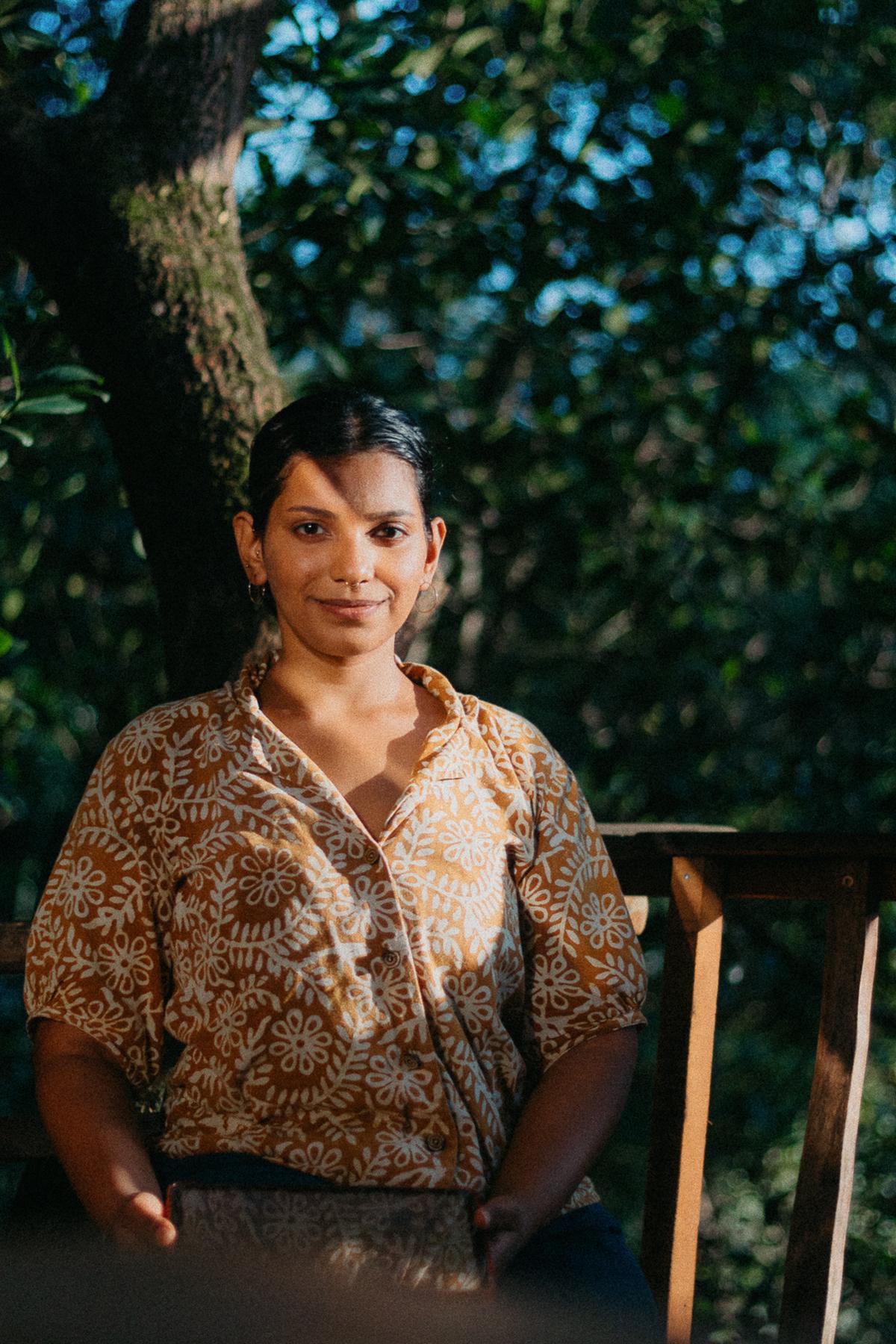
“Farmers are making changes to the growing and processing of cacao [such as removing astringency from beans] as a means to test the value of the crop,” says P.S. Balasubrahmanya, a cacao farmer in Bettampady in Dakshina Kannada District, and co-founder of Anuttama Chocolate. “Five years ago, Indian cacao sold in the wholesale marketplace for around ₹200 a kilo. But the few farmers who sold to craft chocolatiers priced their beans at ₹450 a kilo [because they sorted good beans].” Today, the price has doubled with “cacao beans for craft chocolate going up to ₹1,500 for a kilo” depending on the farm (with better farming practices). If a farmer wants to get greater bang for his cocoa beans, then he has had to learn, adapt and implement newer techniques.

P.S. Balasubrahmanya of Anuttama Chocolate

P.S. Balasubrahmanya of Anuttama Chocolate

Anuttama chocolate bars

Anuttama chocolate bars

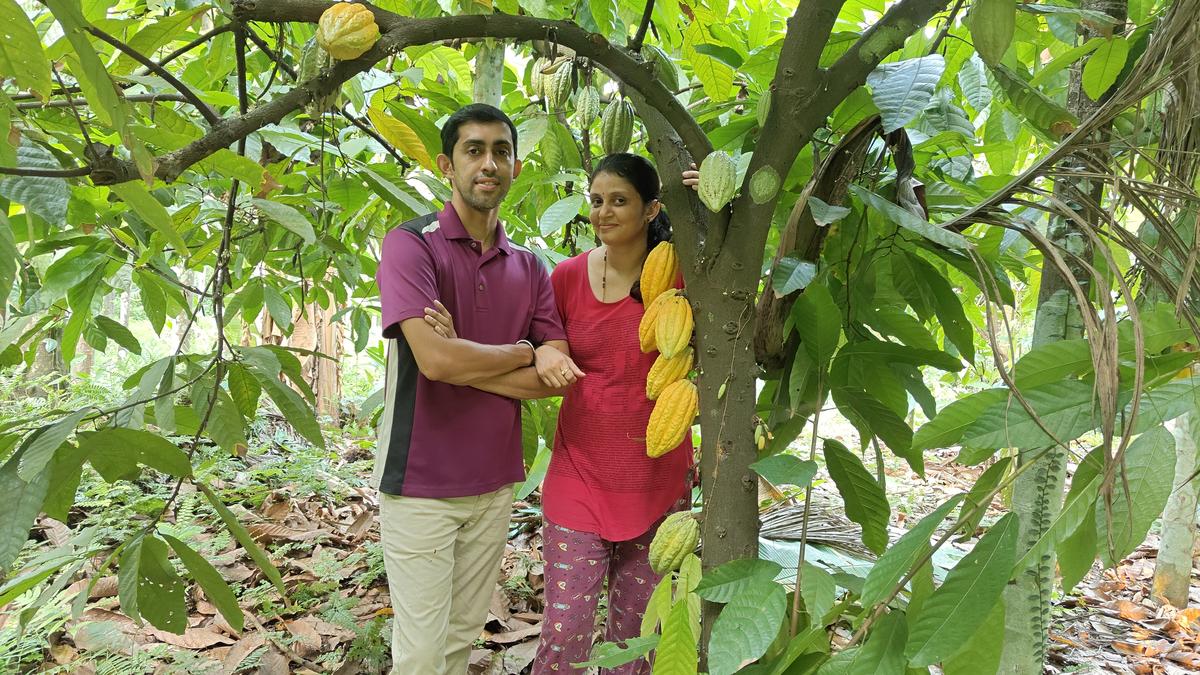
Kuruvilla Louis, an auditor turned cacao farmer from Kuruvinakunnel Tharavadu Farms in Pala, Kerala, tells me that he recently bought “a small melanger [stone grinder], which can grind four kilos of beans at a time”. The purchase helps him “test our own beans” and learn what processing techniques produce better outcomes instead of waiting “for feedback from the chocolatiers we supply to”. He is also experimenting with the processing of the bean and fermentation. He has been using fruit pulp such as passion fruit and nutmeg, and small-batch craft chocolatiers are willing to try these them. He also sees the melanger as early steps to making “tree-to-bar craft chocolates at our own farm”.

International nod

Bigger, older craft chocolate brands such as Mason & Co, Manam, Naviluna, and Paul and Mike have been slowly making their mark on the international stage — winning awards and finding new markets. Kochi-based Paul and Mike, one of India’s early craft chocolate brands, won the country’s first gold at the 2024 International Chocolate Awards in Romania for their milk chocolate-coated salted capers. They’ve previously won a silver for their 64% dark Sichuan pepper and orange peel vegan chocolate. Manam is another strong contender. Besides winning awards at the Academy of Chocolate Awards UK 2024, the Hyderabad-based craft chocolate brand even earned a place on Time magazine’s World’s Greatest Places 2024.

Raising the bar

Such on-ground mediations by cacao farmers and chocolate makers have begun to pay off. “Everyone is curious, knowledge is being generously shared through channels like chocolate-focused workshops and festivals, and even equipment is accessible in terms of pricing and availability — so there’s a strong craft chocolate ecosystem being formed,” says Anisha Oommen, co-founder of Goya.

Balasubrahmanya sees the coming five years as being exciting for the Indian craft chocolate industry. “Shifts in the market don’t happen overnight, but every year there seems to be an increment in Indian chocolate brands. And cacao growers are increasing too,” he says, speaking from anecdotal evidence, where he has noticed “a lot more farmers in Dakshina Kannada returning to growing cacao after cutting down their trees around five years ago because of low pricing and the lack of a market”.

The Indian Cacao & Craft Chocolate Festival runs Dec. 5-7, at Sabh, Shivaji Nagar, Bengaluru. Details: craftchocolateindia.com

The writer and poet is based in Bengaluru.


Source link