Life & Style

The Nilgiris Earth Festival 2025: From December 18 to 21


“When you sit with an organic farmer in the Nilgiris, understand the labour behind each ingredient, and then taste a dish created by a celebrated chef from the country, something shifts internally,” says Ramya Reddy, founding donor and festival director of The Nilgiris Earth Festival (TNEF) 2025. The TNEF returns for its fourth edition from December 18 to 21 in the heart of the Nilgiri Biosphere Reserve across Udhagamandalam, Coonoor, and Kotagiri with over a dozen experiences rooted in food, culture, and ecology.
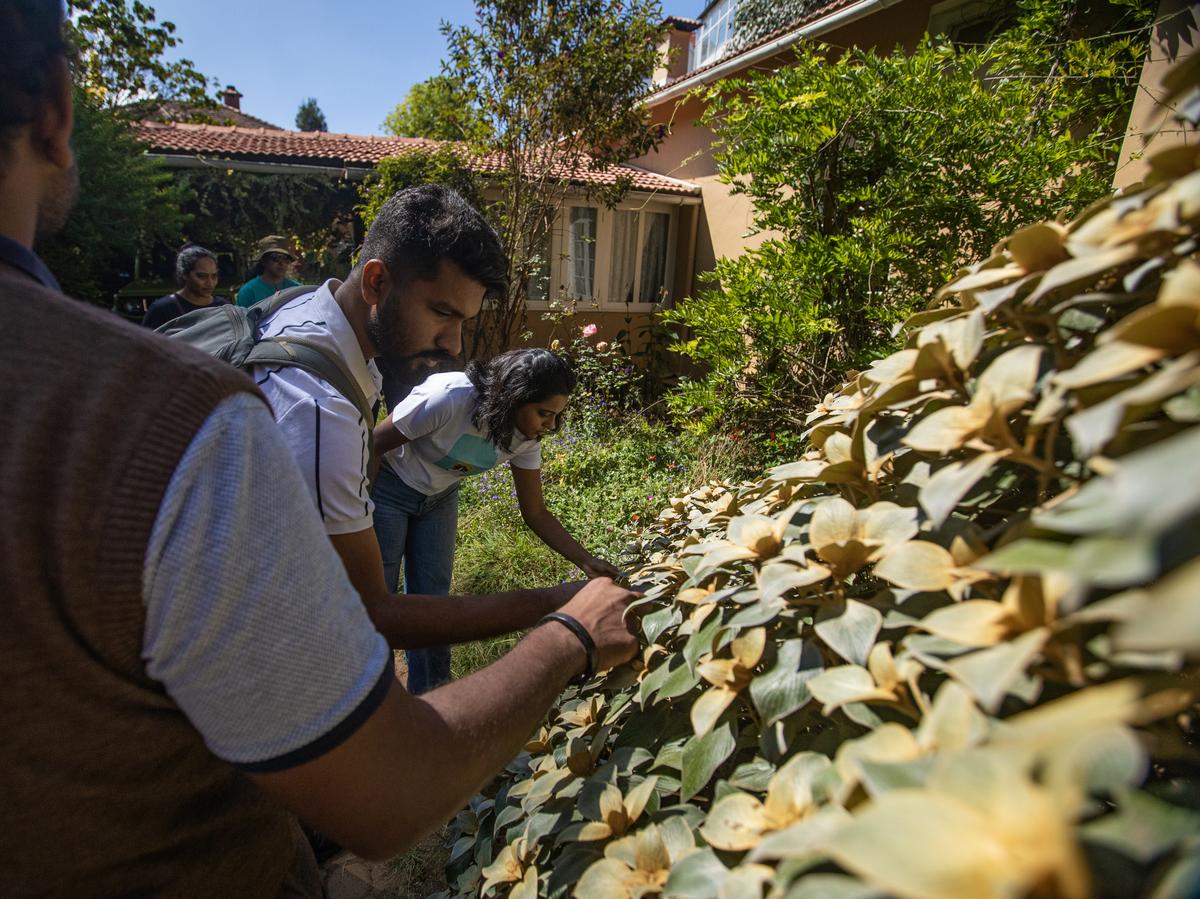
A guided tour of native native shola-grassland species of the Nilgiri Plateau is part of the festival

A guided tour of native native shola-grassland species of the Nilgiri Plateau is part of the festival
| Photo Credit:
Special Arrangement

The Chef’s Table, Bengal to Nilgiris, will partner with Sienna Calcutta, one of India’s most celebrated restaurants, whose team, led by chef Avinandan Kundu, will craft a meal that brings Bengal’s culinary artistry into dialogue with the Nilgiris produce. “A huge highlight this year is Sienna Calcutta. It’s a once-in-a-lifetime experience for our guests,” adds Ramya. Each course draws on produce from local farmers and cooperatives, including TOHFA (The Nilgiris Organic Horticulture Farmers’ Association), a weekly market for organic produce of small farmers in the Nilgiris, and Aadhimalai, a collective of local indigenous producers.

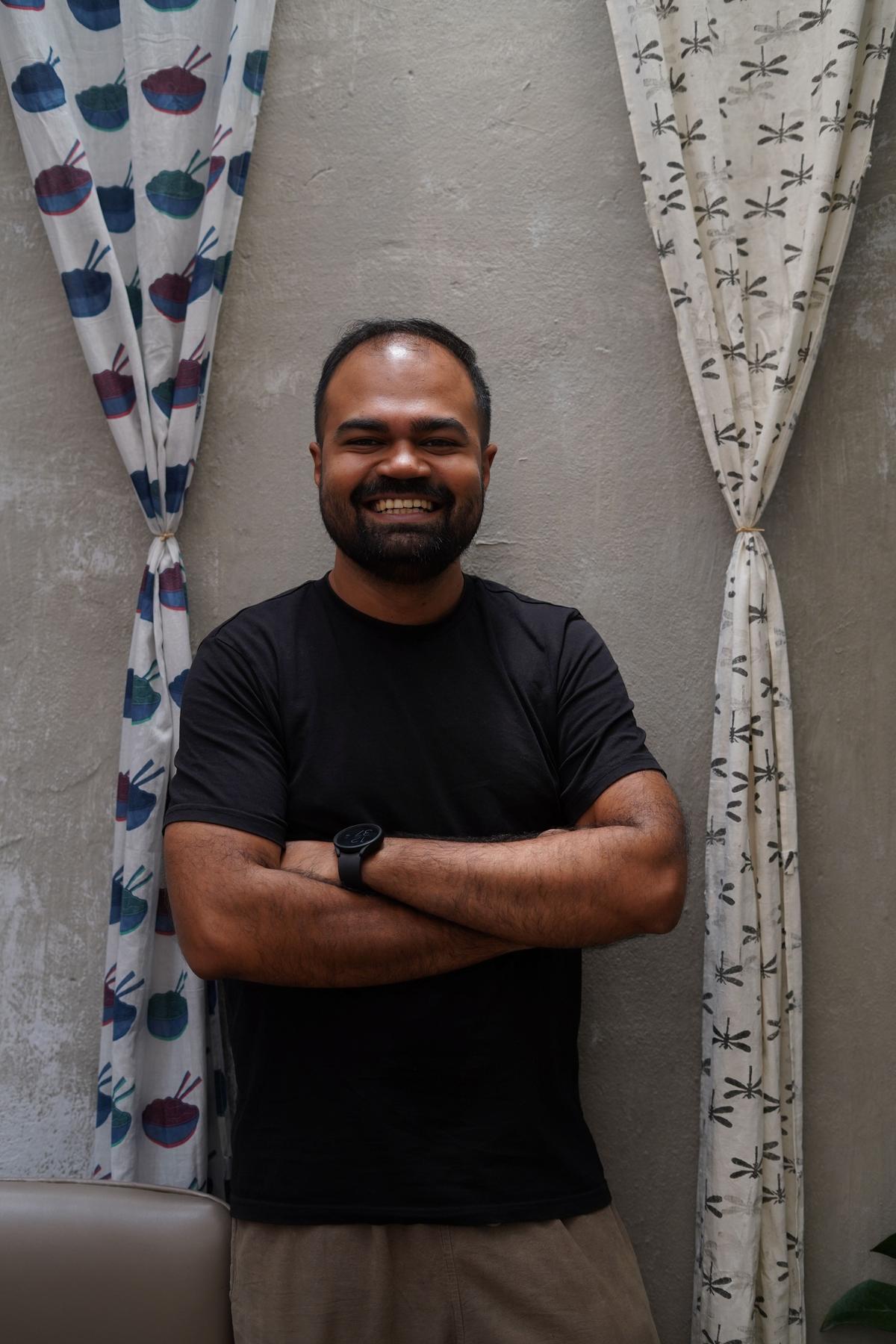
Chef Avinandan Kundu

Chef Avinandan Kundu
| Photo Credit:
Special Arrangement

Since 2022, the festival has brought together thought leaders, writers, artists, chefs, farmers, ecologists, residents, indigenous communities, well-wishers, and travellers to talk about shared stewardship. Writer and educator Afshan Mariam from Sky Islands will lead Edible Memories, a sensory workshop on food as a living archive of migration and belonging. Archaeologist Suresh Sethuraman, in collaboration with Vanavarayar Foundation, will present Stories in Stone, a guided walk tracing Ooty’s layered heritage. Suresh Belliraj and the women of his family will host Ammana Hittu: From a Badaga Mother’s Kitchen at Odae, Aravenu, a Badaga kitchen gathering that celebrates community and cuisine.

Soft shell crab

Soft shell crab
| Photo Credit:
Special Arrangement

Ecologist Vasanth Bosco opens his nursery-garden for guided tours where visitors will step into a sanctuary where more than 150 native shola-grassland species of the Nilgiri Plateau, plants once nearly erased from much of the landscape, are being tenderly grown back into existence. “Our ecology walks are immersive. When you walk into a native grass nursery and hear directly from an ecologist, the connection becomes real,” explains Ramya adding that all the events are intentionally small-format with very gentle footprints, many can’t even hold 15 people. “This is not a scale-driven festival. It’s a sensitive region, so we keep experiences intimate and meaningful. We also want to raise awareness about conscious travel, another reason everything is small and controlled.” The Heritage Table, Food and Fun Fete co-created by Inside43, will bring together settler cuisines, storytelling, and local music. There will also be a Ginko Solstice Walk, a haiku-led landscape walk with poet Shobhana Kumar at Cairn Hill, Udhagamandalam.

Listening to the Forest (curated especially for donors and friends of TNEF) is a guided immersion by Rohan Mathias, associate producer of Nilgiris: A Shared Wilderness, which combines nature walks, a film conversation, night listening in the jungle, and a morning birding session, all of which are crucial reflections on eco-conscious travel. At Tranquilitea, fourth-generation planter Sandeep Subramani will host an estate visit and a tasting of organic, high-grown, fine Nilgiri teas, followed by a short session in making hand-rolled tea and a special tea menu.

One of the sessions is on tasting of organic, high-grown, fine Nilgiri teas

One of the sessions is on tasting of organic, high-grown, fine Nilgiri teas
| Photo Credit:
Special Arrangement

This year, they have expanded the ecology segment significantly and The Habba 2025 at the Keystone Foundation, Kotagiri, a full, vibrant day of indigenous food, music, and conversation has grown bigger. “We are also hosting the official screening of Wild Tamil Nadu, directed by Kalyan Varma, a celebrated, Emmy award-nominated filmmaker followed by a conversation with Supriya Sahu IAS, Guest of Honour, Principal Secretary (Environment, Climate Change and Forests), Government of Tamil Nadu, and Kalyan Varma.” Supriya Sahu will present the TNEF Award 2025 honourin grassroots leadership in conservation, and culture in the Nilgiris. Guest speakers will be Madhu Chandan of Organic Mandya and Divya Mudappa and TR Shankar Raman of Nature Conservation Foundation, who will share grounded perspectives on conservation and sustainable food systems.
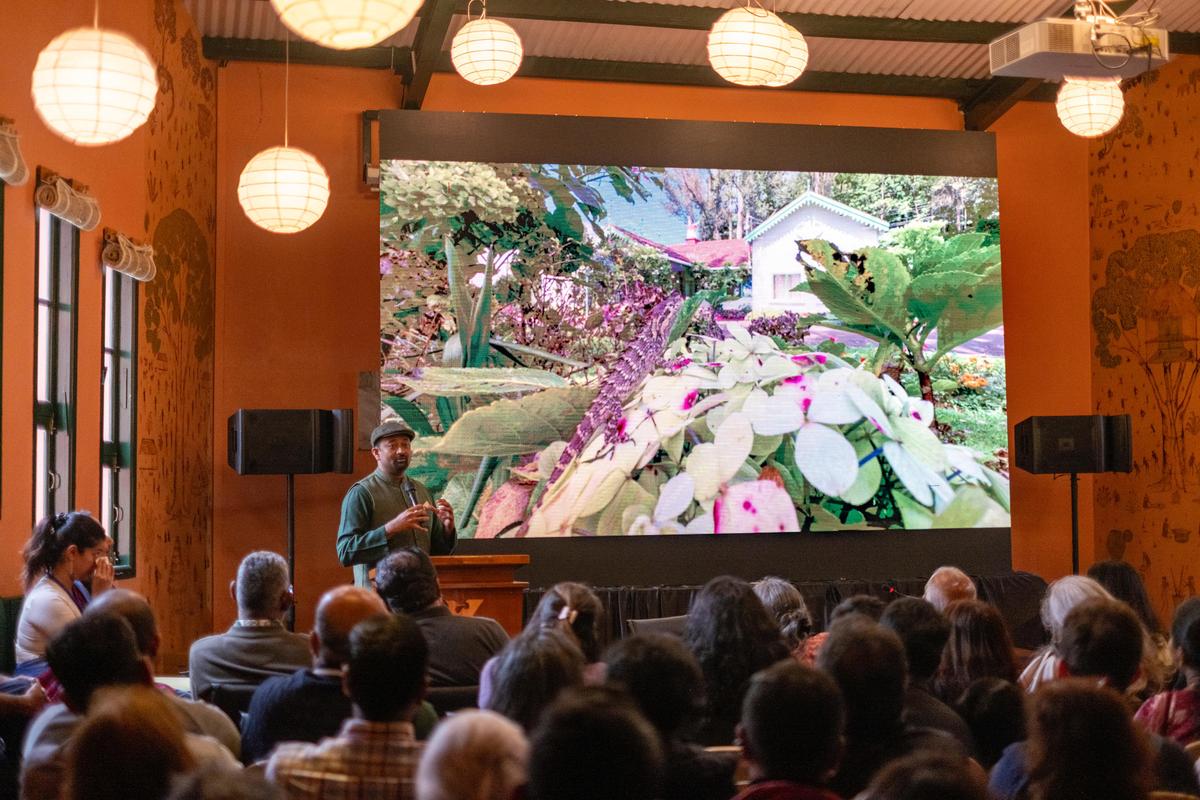
From one of the previous sessions at the Habba

From one of the previous sessions at the Habba
| Photo Credit:
Special Arrangement

At the Habba, over 15 communities from across the Nilgiri Biosphere Reserve will share their foods and crafts, with a free indigenous lunch open to all. Says Ramya, “The festival is a conduit. We want people to come, experience the place deeply, and then support the ongoing conservation projects. It is more than a gathering, a bridge that connects the Nilgiris with the sensitive projects under the Nilgiris Forever movement, with donors and supporters who care deeply about this landscape. The larger goal is bringing stewardship to the Nilgiris.”

From December 18 to 21 at locations across Udhagamandalam, Coonoor, and Kotagiri. To register, visit tnef.thenilgirisfoundation.org/

Published – November 28, 2025 11:54 am IST


Source link

Column by Saba Mahjoor | When Phuphee made room to breathe


On a warm afternoon, we were sitting in Phuphee’s kitchen toasting makkai (corn) to make soatt (ground corn). Phuphee would make large batches of makkai saott around late August when the last of the corn is harvested. We were chatting, when someone ran in shouting. It was a lady from the village and she begged Phuphee to come straight away as someone’s noashe (daughter-in-law) had been possessed by a jinn.

Phuphee grabbed her keep (top part of the Kashmiri burqa) and the three of us ran into the village where everyone was gathered around Dar Sahab’s house. Even from a distance we could see the youngest daughter-in-law looking wild, her hair flying around her. She kept screaming at her mother-in-law who looked visibly scared.

As soon as the mother-in-law saw Phuphee, she started weeping and asking her to cure the girl of the jinn. The daughter-in-law, whose name was Shama, continued screaming, repeating the same thing over and over again: ‘Baeti ches insaan [I am also human].’

Phuphee went over to Shama and held her hands in her own until she started to calm down. Phuphee then took off her keep and wrapped it around Shama and led her into the house. She asked the mother-in-law to make a cup of nun chai with a dollop of ghee. From her pocket, she handed her a small packet with makkai soatt and instructed her to put it in the tea. Phuphee and Shama went upstairs and an hour later, Phuphee emerged on her own.

‘She is sleeping now. Do not disturb her. Let her rest,’ Phuphee instructed them.

She took the mother-in-law into the kitchen. Ten minutes later she came out, and we left. As we walked back home, I asked Phuphee what had happened to Shama.

She motioned for us to sit under a chinar tree. She took a couple of cigarettes from her pheran pocket and lit them. After she had smoked for a couple of minutes, she said, ‘Shama has a very serious illness. She has to have treatment for a long time. The treatment is long and difficult, and the cure isn’t guaranteed. She is unable to do anything at home now. She cannot look after the house or the children or even herself for that matter.’

Phuphee went quiet and smoked her cigarettes. It seemed like she was trying to solve something in her mind. When she had finished, we got up and went home. Once she got back, she asked one of the helpers to bring us nun chai and soatt. I asked her if she had given the mother-in-law a taaveez for Shama. She smiled as she mixed spoonfuls of soatt into the nun chai for me.

‘When I mix the soatt with the tea, it seems to disappear, but it is still there. It is the same with words,’ she said.

Phuphee explained that Shama’s mother-in-law had two sons. Both were married. Shama was the eldest daughter-in-law. When the younger son got married, his wife had become very unwell for a number of years. Though she had recovered and lived a normal life, she was constantly reminded of the time when she had been riddled with illnesses. Now, Shama had become unwell. And it had transpired that the mother-in-law went around telling everyone about how ‘goednyeth aes laktyis sakhti, waen che baedyis [first the youngest son had a difficult life and now the eldest]’.

Someone in the village had relayed this information to Shama. Upon hearing these words, Shama had felt a fire take hold of her heart. What had particularly angered her was that her mother-in-law had made no comments about how awful it was for Shama to be in this situation. Shama had asked Phuphee, ‘Why when I am the one who is ill, is my discomfort secondary to everyone else’s? How has it become about the discomfort of others?’

‘What did you say?’ I asked Phuphee.

‘I said nothing. Shama already knows the answers,’ Phuphee replied.

I sat there wondering what she already knew.

‘But did you give them a taaveez?’ I asked impatiently.

Phuphee sighed.

‘Yes I did, but it was not for Shama. I told her the jinn had not possessed Shama. It had possessed her [mother-in-law] and the only way to kill it was through abstinence of speech. She must limit what she says to the absolute minimum and she must never speak more than two words in front of Shama because that would especially strengthen the jinn,’ Phuphee said.

She then got up, gave me a kiss on my forehead, and said, ‘Never, forget this. There is a special place in hell for women who deprive other women of their autonomy. Men make the shackles, but it is often other women who throw away the key.’ And she walked out to grind the rest of the corn.

I sat there, overwhelmed. Many years later, I understood why she had shut the mother-in-law’s mouth. It was an act that seemed insignificant, but it gave Shama a little space. In a world designed by men and propagated by many women, a world where women have no ownership over anything, not even their pain or discomfort in illness, Phuphee had managed to lift the mother-in-law’s foot off Shama’s neck long enough for her to breathe.

Saba Mahjoor, a Kashmiri living in England, spends her scant free time contemplating life’s vagaries.

Published – November 28, 2025 11:48 am IST


Source link

Batman and the Baavali: A documentary that showcases the nocturnal world of Bengaluru’s many bats


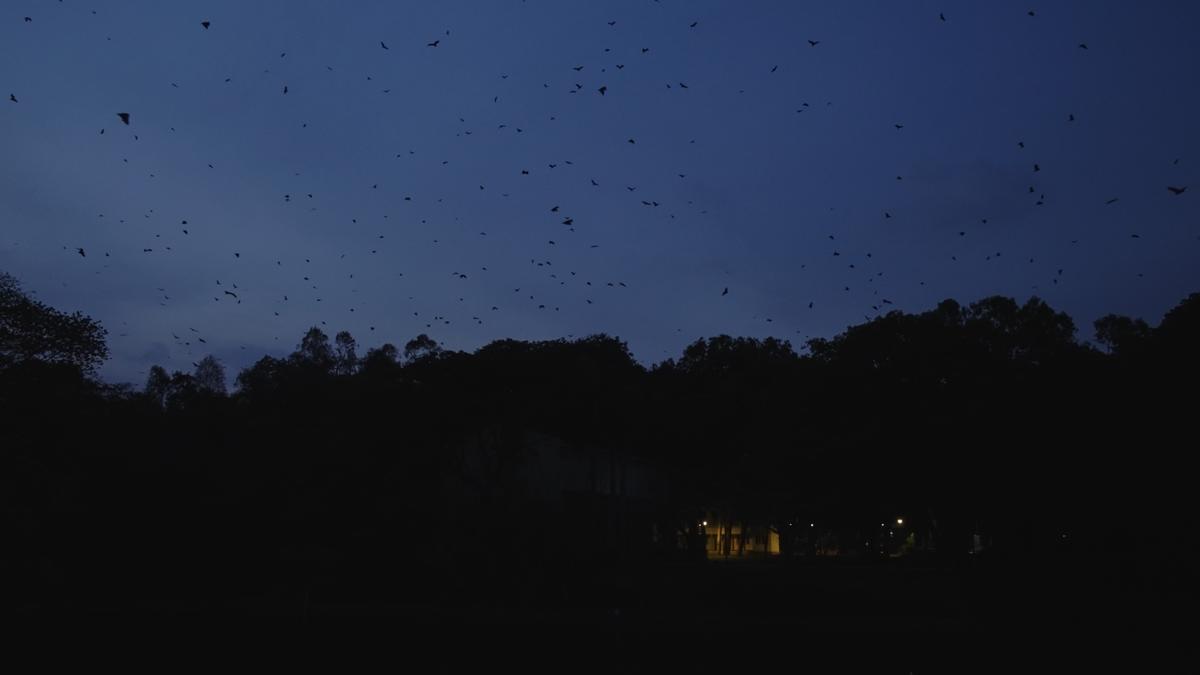
Late evening at Bengaluru’s Sankey Tank is a spectacular visual experience, dusk-kissed skies turning the lake’s water molten while the park’s other regulars — amblers, brisk walkers, couples in love, runners, cormorants, ducks and red slider turtles (pets-turned-invaders) — slowly recede into the darkness. It is also when flying foxes, who have been roosting on the trees bordering this man-made lake, named after the man who built it in 1882 to meet the city’s water supply needs, wake up. 

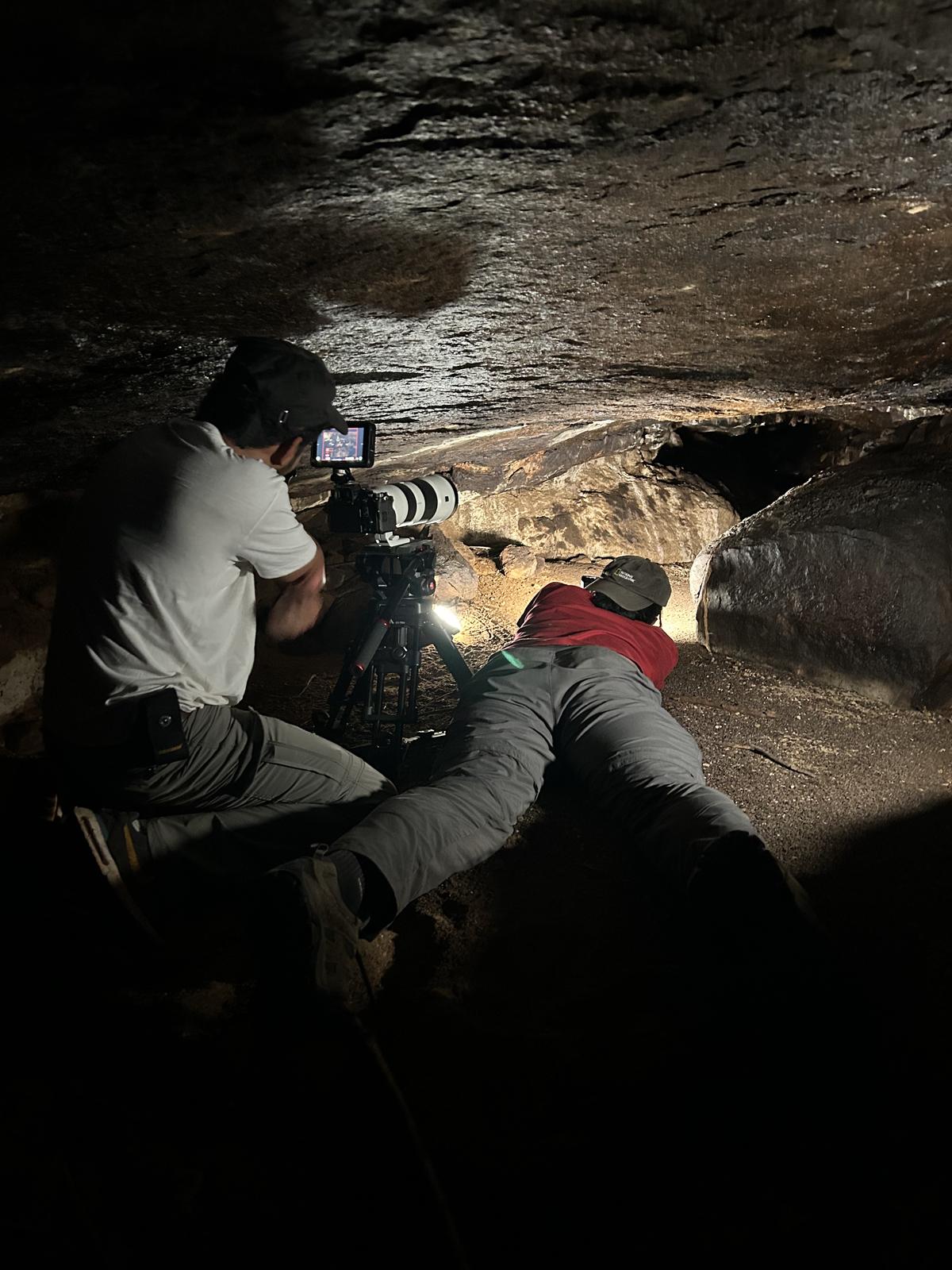
Roundglass Sustain’s recently-released film Batman and the Baavali, a documentary that showcases the nocturnal world of bats with bat conservationist Rohit Chakravarty, captures this stunning moment: swathes of these fruit bats flying across the park at dusk, silhouetted against the darkening skies, some even dipping down to skim the surface of the lake to hydrate themselves.

“They go down to the water…make a splash with their chest…head off to the nearest tree…and drink water from the wet fur,” explains Rohit, in the film. “And all of this is happening bang in the middle of a city.”

Rohit, whose work with bats often take him to remote, far-flung places, says spotting these flying foxes in the heart of the city was one of his most satisfying moments. “While I would have expected bats to be there, I didn’t go looking for them,” he says, pointing out that almost every city in India has bats, but we simply do not notice them. “Bats are in places where you would least expect them, and there are many such places in Bengaluru.” 

Making the film

Bats are often found in the heart of our cities

Bats are often found in the heart of our cities
| Photo Credit:
Roundglass Sustain

Batman and the Baavali, whose soundtrack has been created by sound artist Nikhil Narendra with bat echolocation calls, introduces viewers to some of these places. These include the canopies of the many Singapore Cherry trees that dot the city, an abandoned building, the IISc campus and even the Parsi Tower of Silence.

The film follows Rohit, bat-detector in hand, trawling through the city, looking for and identifying bats in the various nooks and crannies as well as amidst the tree cover. Dheeraj Aithal who co-directed this film with Pradeep Hegde, says,“ We were quite sure we wanted it to be a journey because both Pradeep and I were curious about where these bats went.”

They would often see bats flying out in the evening or flying in at dawn, but never really knew where they roosted, so “that was something on our minds, and we thought that through this journey, we might get the answer to this question.” 

According to Samreen Farooqui, the head of films at Roundglass Sustain, the genesis of the film stretches back several years. “We started Roundglass Sustain five or six years ago with the mindset that the wild is far away. But slowly we realised that the wild was right here; you just have to open your eyes to see it.”

This, in turn, led to a series of films, set in different cities in India, focussing on how urban centres too support diverse plants and animals. When she wanted to do a series on the urban wildlife of Bengaluru, in 2022 or so, she reached out to Pradeep and Dheeraj, and they “started to brainstorm on what we can bring in, when it comes to Bengaluru.”

Bats, she says, came up early in that conversation. “I live very close to the Bellandur lake, and there is a reserve forest there,” says Samreen, who would often see the bats roosting there in the evenings. “So they were anyway on my mind.” And, so, when Pradeep and Dheeraj got involved and proposed this idea of following Rohit as he tried to find bats in Bengaluru, “the project took wings,” she says. 

Bats and the city

Bats at Sankey Tank

Bats at Sankey Tank
| Photo Credit:
Roundglass Sustain

Bats, of which there are around 1,500 species worldwide, are the second most common group of mammals after rodents and the only one capable of true flight. Around 135 of them live in India alone, “with something like 10-15 species in Bengaluru,” says Rohit.

Though humans have coexisted with bats for hundreds of thousands of years there is often a negative perception about them. Not only does folklore and literature often associate bats with death and darkness, but now, humans fear them more because they are known to serve as natural reservoirs of many viruses. 

However, bats also offer vital ecosystem services:  “They feed on a lot of insects; even a small bat of about 5 grams can eat up to 25% of its body-weight, something like a 1,000 mosquito-sized insects a night,” he says.

Given that they are some of the few animals that prey on mosquitoes and there are so many bats all around us, it adds up to a lot of insects. Moreover, bats are among the most prolific dispersers of seeds and “in a forested environment, they are one of the major pollinators,” says Rohit, who believes that the best way to conserve bats is simply to leave them alone.

Pradeep hopes that the film succeeds in giving out “the right information about bats, given that there is so much misinformation about them,” he says, pointing out that people simply do not know enough about bats. “Ever since college, I’ve heard people speak of bats flying over roofs or across the cityscape in the evening, but they did not always know what they were,” he says. Many people imagined them to be birds, instead of the flying mammals that they are, “so we thought that this was an important story to tell.”  

Filming these bats took longer than they expected, “because we underestimated the number of permits we needed from different departments, given that we were shooting in places like Sankey Tank and Bugle Rock,” says Pradeep.

However, the process also made them realise something important: “A lot of places where these bats roost are mostly government properties, essentially places which have not changed much,” notes Dheeraj.

It is the presence of these untouched pockets, as well as the deep concern that many people have in protecting the city’s environment, which allow urban fauna like bats or lorises to thrive in Bengaluru, believes Samreen. “For me, it was an affirmation that Bengaluru has a great civil society that cares about its environment, and I’m happy that we are documenting it, in whatever small way possible,” she says. 


Source link

‘Hip-Hop is about owning your identity’ : MC Couper


Rapper MC Couper’s new track ‘Dayumm’ is about identity—a spirited celebration of the self. “I am confident about who I am now and the track is a reflection of that,” he says. ‘Dayumm’, which dropped three weeks ago, has a playful vibe with funky kuthu beats backing Couper’s characteristic flow. “I usually let the song do its thing, but here, a lot of thought has gone into the video, as well,” he says.

The video was shot at his apartment and features him “in his space”, being himself and gaming. “In this day and age, your visual game has to be top notch. I try to keep the visual aspect of my videos more in sync with who I am,” he says.

Though much of his writing now is spontaneous, he does go into self-imposed writing camps, something he used to do in his initial years. These camps are when he experiments with linguistic texture and lyricism. ‘Dayumm’ was born out of one such camp, says Couper. “It came together in a matter of hours. The ‘ratatata’ in the song is the pen going off,” he explains.

Couper like to detail his verses; keeping it real, reflecting on life, identity, social realities and personal choices. Powerful lyrics don’t always have to stem from a place of anger, he says. “Most of us (rappers) start out angry. The stress, the frustration… and hip-hop is a powerful tool for self expression,” says Couper, “but I think I have moved on from there. For me, it has been about personal growth. I am comfortable in my skin. Now, my art is often about the people that I really love in my life. Hip-hop is a locally-rooted art form. It is about owning your identity.” 

MC Couper

MC Couper
| Photo Credit:
Special Arrangement

Couper was among the earliest artistes to break into the hip-hop scene in Kerala with his 2019 debut release ‘Nerchapaattu’,which was more of an experiment, says Couper. He built his repertoire, word by word. Fast, powerpacked verses that made people take note. Always inclined to languages, Couper was more fluent in English. ‘Nerchapaattu’ was spontaneous and it made him realise he was as felicitous with Malayalam.

He was inspired by American rappers Eminem, Mac Miller and J Cole. “Artistes such as Mac Miller and J Cole taught me that one can rap about feelings, create emotionally resonant verses. That was a turning point in my writing,” says Couper.

He soon created his own space in Kerala’s nascent hip-hop scene. ‘Ayyayyo’, a track featuring him, with Thirumali, Hanumankind and Parimal Shais in 2023, broke the internet and everyone was talking about the “Malabar boys from the south side.” 

The tryst with films helped. Having written and performed for Aavesham, Romancham, Purusha Pretham, Naradan, Nadikar – he co-wrote ‘Mathapithakkale’ from Aavesham and sang it too, along with Malayali Monkeys and sang ‘Thalatherichavar’ in Romancham along with Zia Ul Haq, both of which became instant hits. “That is the thing about films. It opens up an entire world,” says Couper.

MC Couper

MC Couper
| Photo Credit:
Special Arrangement

He was in the eye of a controversy recently when a few people from the crowd gathered for a show in Kannur, started hurling abuses at the performing artistes. Couper reacted and videos of the incident went viral. “We did not expect this kind of intolerance. A junior artiste was performing and it really shook him. Hip-hop is a community thing. You need to stand up for your people and that was what I did,” he says.

“Every gig is a challenge; you are in a very vulnerable space while on the stage. Over the years, I have gained confidence. At the end of the day, it is about connecting with people,” says Couper.

He has an entire list of tracks coming up — ‘Chaappa Kurishu’ with producer Akash Shravan, ‘Mannira’ with songwriter and producer Loozmathai, ‘Atta‘ with music producer Hrishi. So, when does he take a break? “Life and work coincide. I don’t really take a break, except to play Xbox,” he says. 

Published – November 27, 2025 10:50 pm IST


Source link

As Christmas countdown begins, here’s your ultimate guide to Advent calendars in India


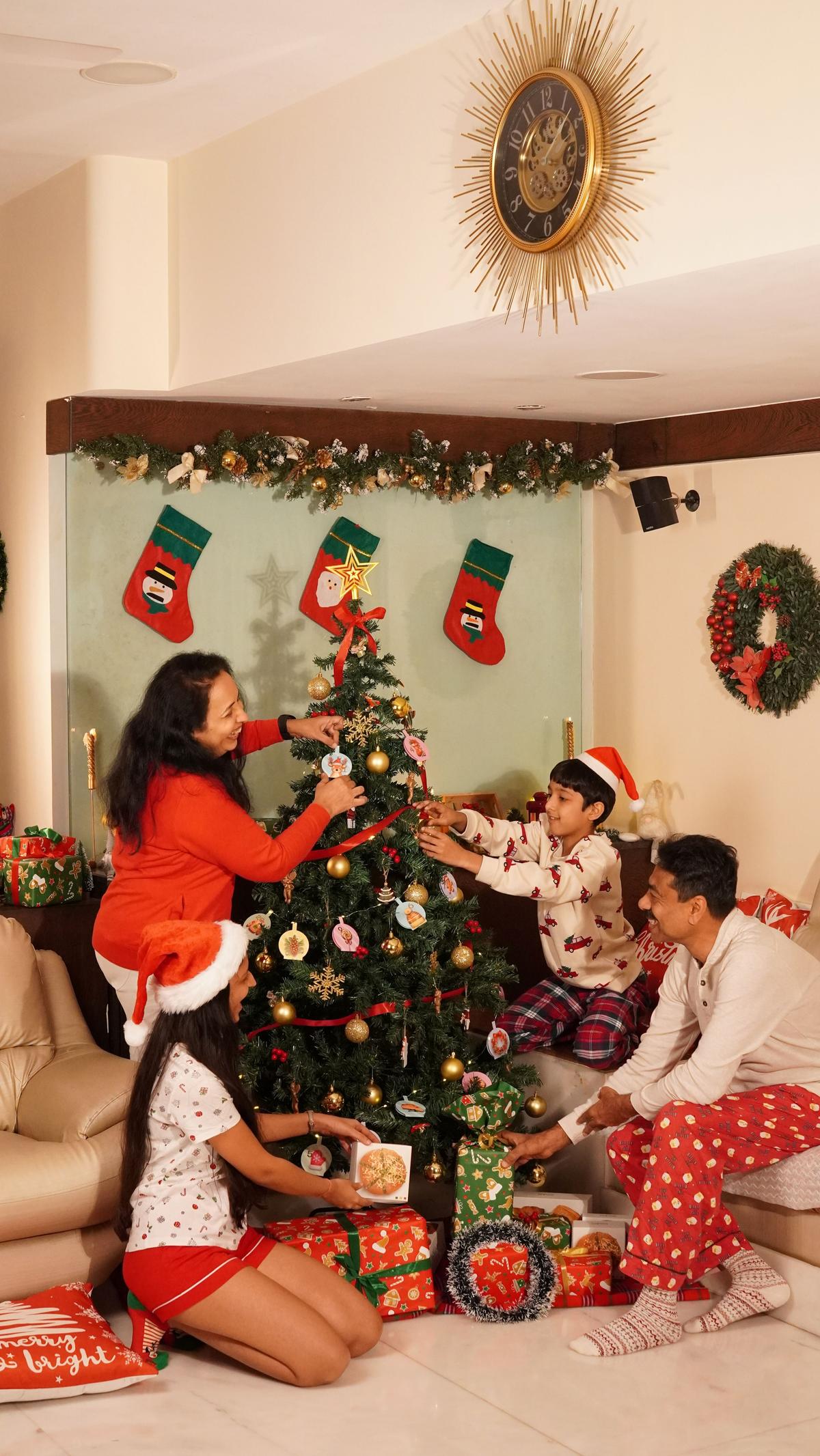
Intended to beguile your curiosity every single day till Christmas Eve, the 24-day Advent calendar — dated from December 1 to December 24 — sets the festive momentum for Christmas gifts, treats and the season’s tidings. Advent calendars feature 24 compartments that are accented by as many flaps or doors that contain surprises ranging from gifts, toys, candies, chocolate or even a message or verse from the Bible.

Though the calendar has its roots in Christian traditions, it took a secular route in the 19th Century. From a reference in Encyclopaedia Britannica, the first commercially printed calendars appeared sometime in the early 20th Century and German publisher Gerhard Lang in 1920s added small doors that opened to pictures in the calendar; “other publishers later included Bible verses”, the source states. It would be nearly impossible to trace the time and place of this European custom’s foray in India, but they have been steadily picking up steam for nearly a decade now.

Here are a few Advent calendars, served with nuggets of history, which will make your countdown to Christmas merrier that ever.

Love in 24 bites

Sivako chocolate bar

Sivako chocolate bar
| Photo Credit:
Special arrangement

Did you know that chocolate became part of Advent calendars in 1950s?

But what if a whole chocolate bar was divided in 24 sections, comprising one flavour for each day? Chef Eureka Araujo from Mumbai has created the Sivako chocolate bar that can be savoured over 24 days with 24 bites. “I first learnt about the Advent calendar tradition when I travelled to Vienna one winter. In every window, from small bakeries to grand stores, were little boxes numbered 1 to 24, each holding a tiny surprise.”

Sivako chocolate bar

Sivako chocolate bar
| Photo Credit:
Special arrangement

She calls the Sivako chocolate bar a labour of love, packed with Valrhona dark chocolate. Its 12 flavours range from coffee bean and gingerbread to pistachio kunafa and cinnamon and cherry.

It is priced ₹1,500 on sivako.in

Fudgy holidays

Chocolate brand Jakobi Chocolatier started planning the Advent calendar well before the holiday season of 2025, with pre-booking announcement made in November. It curated the 2025 calendar by crafting 24 unique chocolates. The flavours include Marblz milk fudge, milk kunafa, mahro – the white mango truffle, and Dolcezza.

Advent calendar by Jakobi Chocolatier

Advent calendar by Jakobi Chocolatier
| Photo Credit:
Special arrangement

“The idea behind the recent launch is to celebrate 24 days of chocolate joy leading up to Christmas, offering handcrafted chocolates to make every day special with a festive, joyful experience,” says the brand’s founder Jacob Joy.

Advent calendar by Jakobi Chocolatier

Advent calendar by Jakobi Chocolatier
| Photo Credit:
Special arrangement

The starting price of the Advent Calendar 2025 is ₹2,500, effectively a 10% discount is available on jakobi.in.

Spreading cheer

Chennai-based Cheers Chocolates has been curating Advent Calendar for two years now, but this year the brand has come up with an innovative box of chocolates with a variety of flavours. “Drawing inspiration from iconic advent calendars across Switzerland, London, Paris and New York, the team blended global traditions with Cheers’ own artisanal identity. Inside, 24 individually numbered doors reveal a curated flavour, starting with classic dark pralines and nutty giandujas and Kunafa Chocolate,” says the brand’s founder SSS Keshav Krishna.

Advent Calendar by Cheers Chocolates

Advent Calendar by Cheers Chocolates
| Photo Credit:
Special arrangement

The starting price of the Cheers Chocolates Advent Calendar 2025 is ₹790 and is available on www.cheerschocolates.com and Chocolate Experience Center, Chennai.

Baked with love

Mumbai’s Mag St. Bread Co.’s calendar this year offers freshly baked goods as well as gifts at your doorstep.

Advent Calendar by Mag St. Bread Co.

Advent Calendar by Mag St. Bread Co.
| Photo Credit:
Special arrangement

Gauri Devidayal, co-founder, Food Matters Group, explains: “This year, each day’s surprise is tucked behind a pastel-hued illustrated tag, strung together on fairy lights to form a warm, glowing garland-chain, which can be wrapped around a Christmas tree, hung over a doorway or a work desk”. The bakes are curated by chef Shannen Alexandra (head baker at Mag St. Bread Co.).

Advent Calendar by Mag St. Bread Co.

Advent Calendar by Mag St. Bread Co.
| Photo Credit:
Special arrangement

The 26-tag decorative garland offers a range of festive treats like speculaas croissants, pistachio madeleines and plum bake, paired with thoughtful merchandise such as a snow globe, tote bag and DIY gingerbread cookie kit.

Priced at ₹7,500 + GST, the Advent Calendar (egg and eggless) will be available for order on www.foodmatters.in with daily deliveries across Mumbai, beginning December 1.

Treasure box

Nestasia started working on the Advent calendar well before Christmas in 2024. “We wanted to create something in-house that brought together our unique finds in a fresh way. The response was so encouraging that we’re continuing it for 2025 as well,” says the brand’s founder Aditi Murarka Agrawal.

Advent calendar by Nestasia

Advent calendar by Nestasia
| Photo Credit:
Special arrangement

The idea came from the classic ‘The 12 Days of Christmas’. “Curating the calendar felt like a very natural extension of what we already love doing. The design team picked pieces across different categories like decor, lifestyle, accessories, and so on, so the surprises feel useful and delightful long after Christmas is over.

Advent calendar by Nestasia

Advent calendar by Nestasia
| Photo Credit:
Special arrangement

For 2025, the Advent calendar starts at ₹4,695 and comprises crown candle holder, mini espresso shot glass cup, evil eye pendant wall hanging set and more.

Published – November 27, 2025 08:02 pm IST


Source link

An anti black friday sale by Assam’s Woolah, will grow a forest


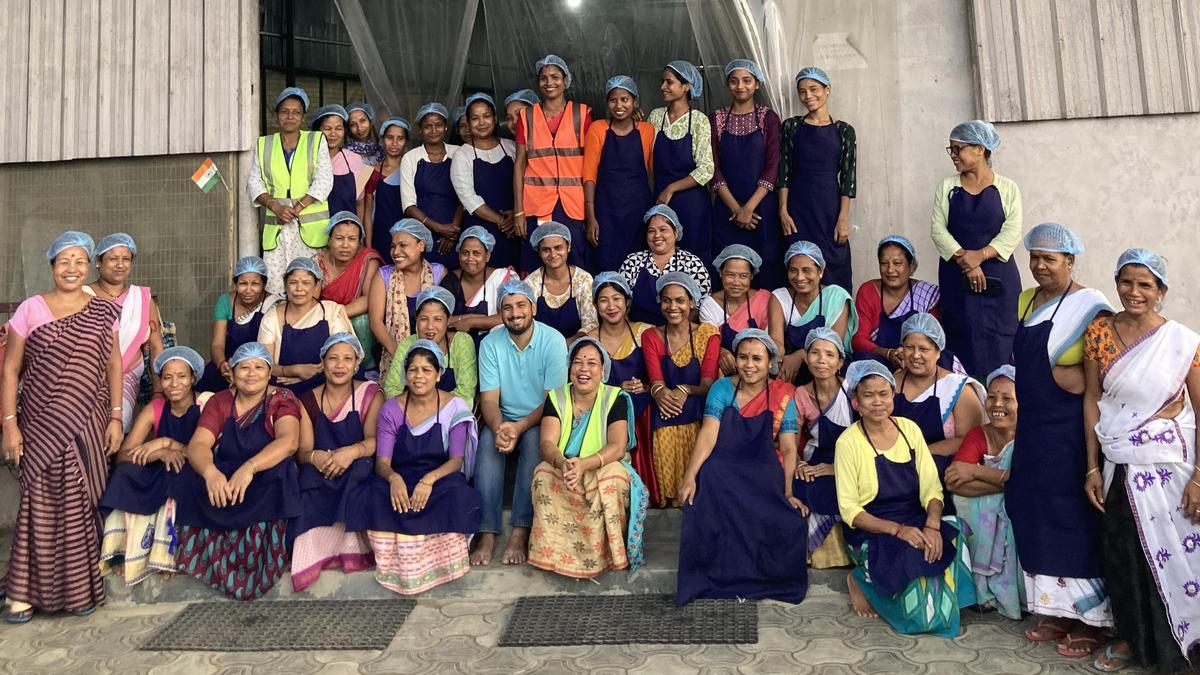
The Woolah workforce

The Woolah workforce
| Photo Credit: Special Arrangement

While leading brands across the world are sending buyers into a tizzy with Black Friday discounts, Woolah, an organic ‘bagless’ dip tea brand from Assam, is doing the opposite. It will remove all discounts and reinstate full MRP on November 28, Black Friday. 

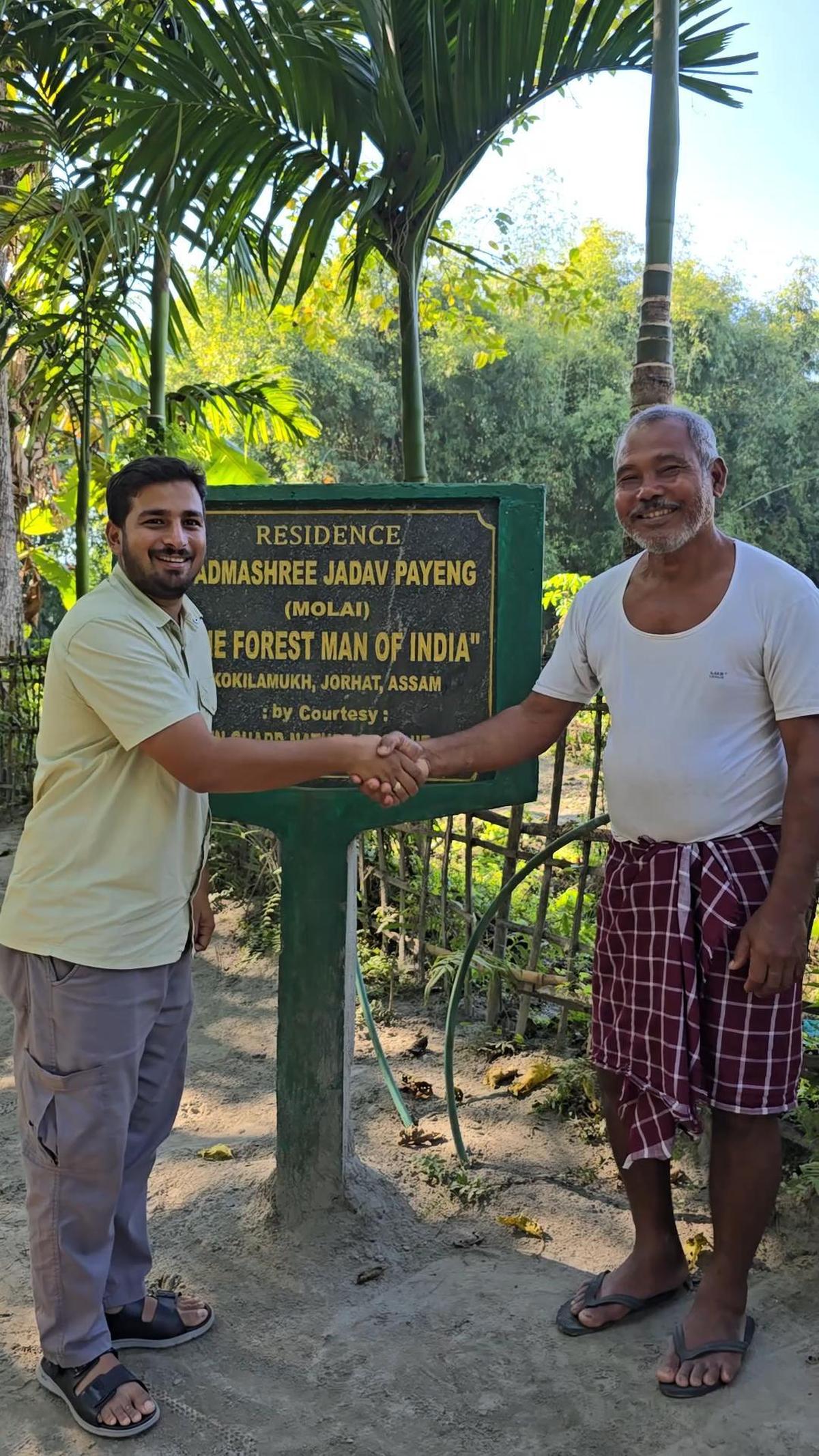
The revenue from this Anti-Black Friday Sale – For the Planet will be used to plant 10,000 trees with the help of ‘Forest Man of India’, Jadav Payeng.

In a year-long campaign, Woolah will support the plantation drive, led by Jadav, at a newly formed sandbar near Molai, the forest created by Jadav at Majuli, an island in the Brahmaputra river.

Upamanyu Borkakoty, the founder of Woolah with environmentalist Jadav Payeng

Upamanyu Borkakoty, the founder of Woolah with environmentalist Jadav Payeng
| Photo Credit:
Special Arrangement

“We, as a brand, are led by a purpose, with sustainability at its core. And as our consumer base is growing, we wanted to walk the talk. This is one way of giving back to the planet,” says Upamanyu Borkakoty, Founder of Woolah. 

“Black Friday has become a global campaign for thoughtless consumption. Woolah was built on the belief that consumption should nourish, not harm. Increasing prices this Black Friday is not about revenue; it is about responsibility. Instead of contributing to a cycle that ends in landfills, we want this day to end in a forest. If this campaign makes even a handful of people pause, rethink and buy consciously, then it is already doing its job,” he adds.

The brand had increased prices on Black Friday in 2023 and 2024 as well, but this year, it decided to collaborate with Jadav for a sustained project. 

So what is the hype around Black Friday? An annual shopping event that follows Thanksgiving in the US, Black Friday became an international event as US-based retailers expanded business the world over. It is a much-awaited time of the year for consumers, often leading to compulsive purchasing. 

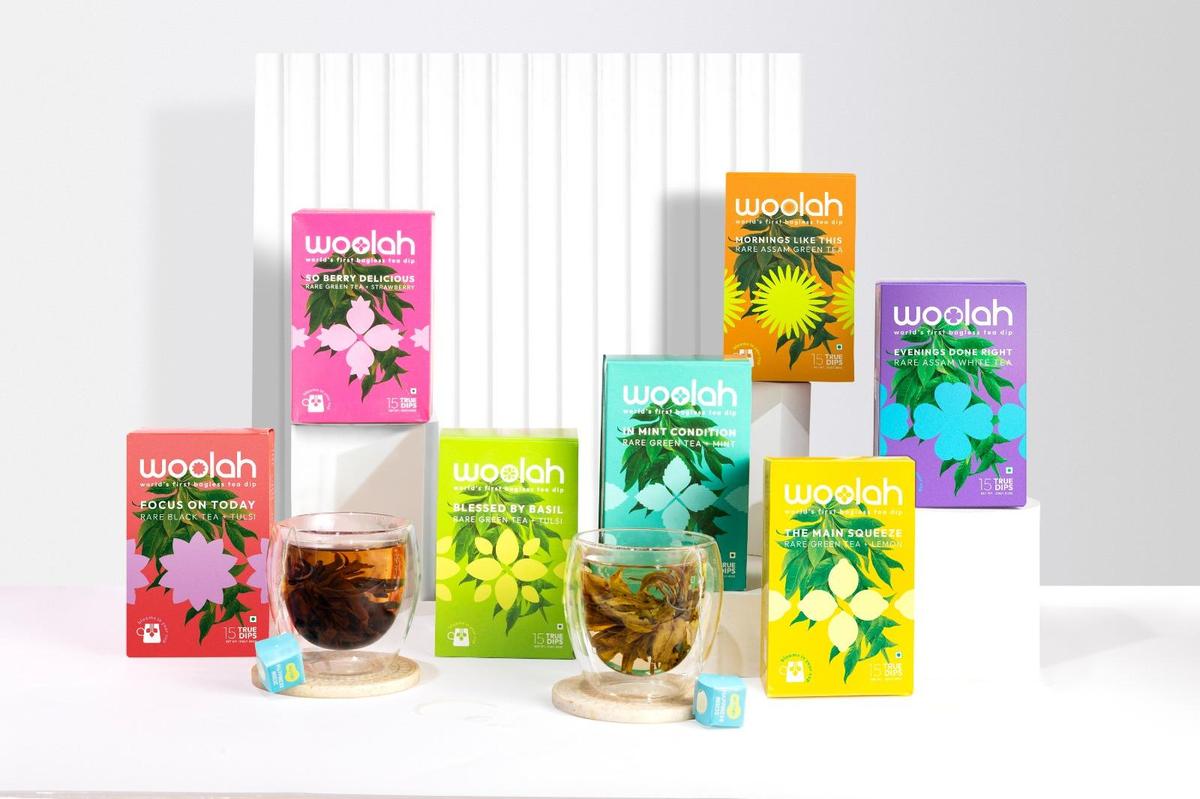
Woolah tea

Woolah tea
| Photo Credit:
Special Arrangement

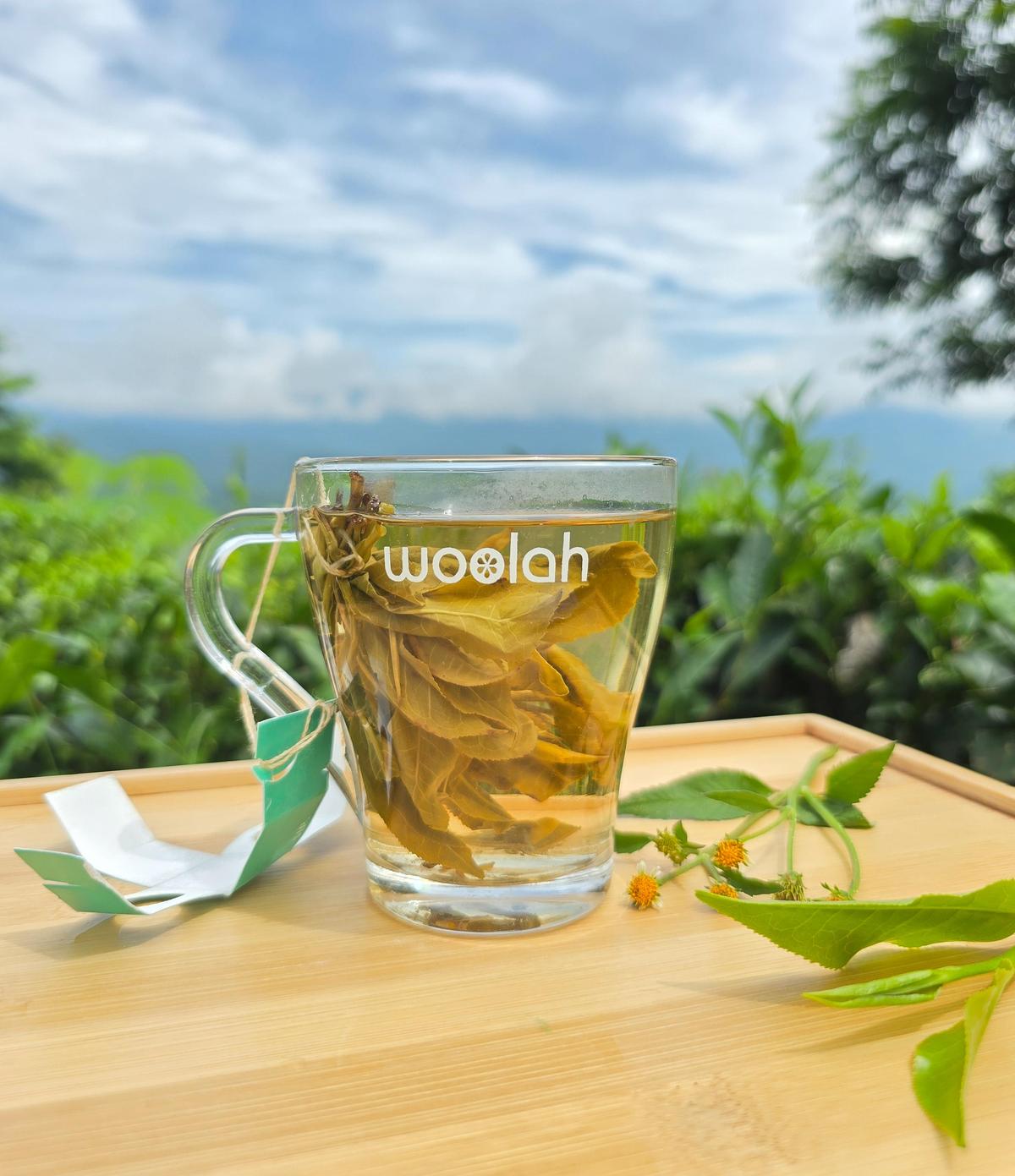
Woolah has long been an advocate of mindful consumption. The patented world’s first bagless tea dips were born out of the idea of eliminating plastic tea bags that release billions of microplastics. The dip brews like a tea bag, but contains the top two leaves and a bud of whole-leaf tea. It does not contain glue, paper fibres, nylon mesh, or microplastics.

“We have launched a movement to bring small tea growers into the organic fold. Assam has about 2.5 lakh small tea growers and many of them are willing to try organic methods. We are tying up with the Assam Agricultural University to train farmers on organic practices,” says Upamanyu.

Woolah tea

Woolah tea
| Photo Credit:
Special Arrangement

Today, over 200 rural women are part of Woolah’s processing ecosystem, from plucking to rolling to hand-tying the signature two-leaf-one-bud format.

In 2026, the brand is expanding to the UAE and the US. Says Upamanyu, “We are trying to change the way tea brands are percieved and while doing so, we are healing the planet.”


Source link

Brij Sone Bagh: A sustainable luxury forest retreat in Bandhavgarh


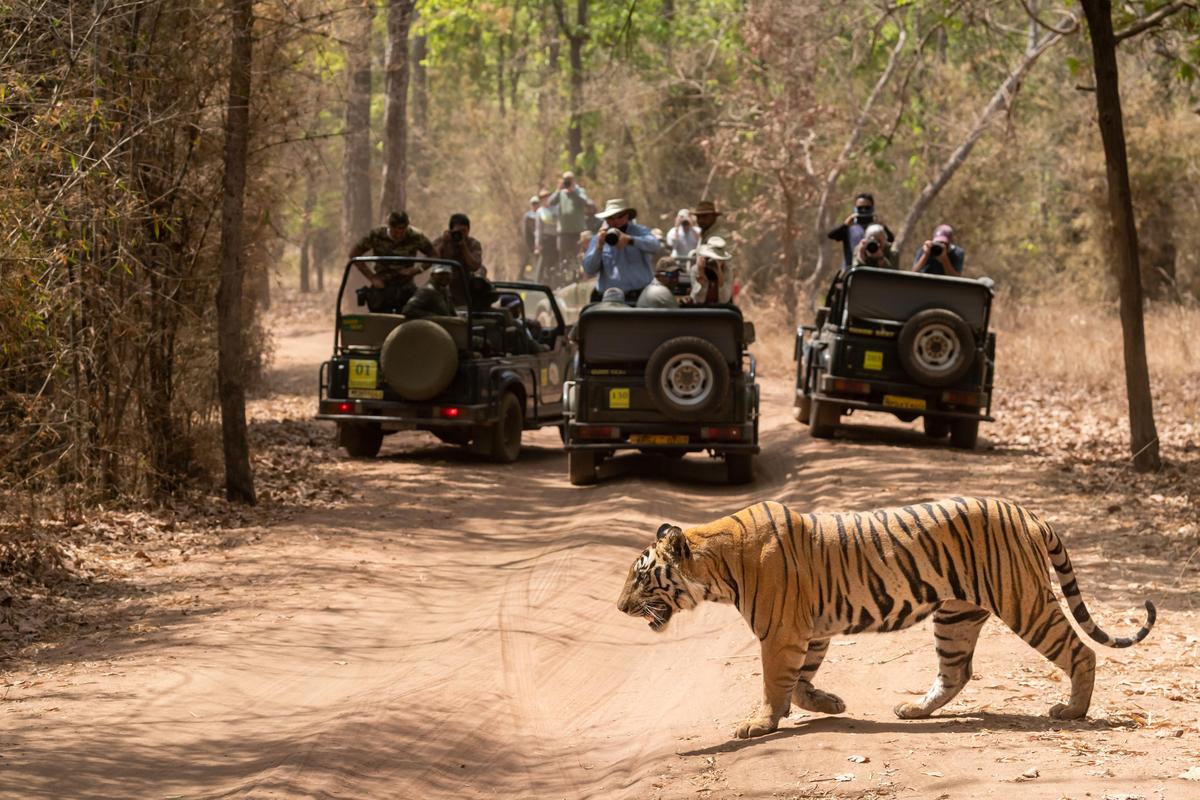
The sounds of the forest deepen; the rustle of bamboo, the rhythmic call of drongos and somewhere ahead, the faint alarm call of a spotted deer. A few turns later, as we round a bend, a tiger appears, reclining beneath a sal tree, its striped flank rising and falling in slow rhythm. For a moment, all sound stills. The forest holds its breath.

I am on a safari at Bandhavgarh, with Guljar Singh, who has been exploring these forests for years. “The forest changes with every rain,” he says as we drive past patches of grassland and sal thickets, the sunlight sifting through layers of green. Bandhavgarh’s core area spans 720 square kilometres, with an additional 816 in the buffer.

We spot the Indian pitta, resplendent in turquoise and orange, hopping across a fallen branch. Jungle owlets blink from their perch and a giant wood spider hangs between two trees, its web glinting like glass. Overhead, a small group of vultures circle lazily in widening spirals. The Tala zone, guide Guljar Singh explains, has become one of Bandhavgarh’s few remaining strongholds for these endangered birds.

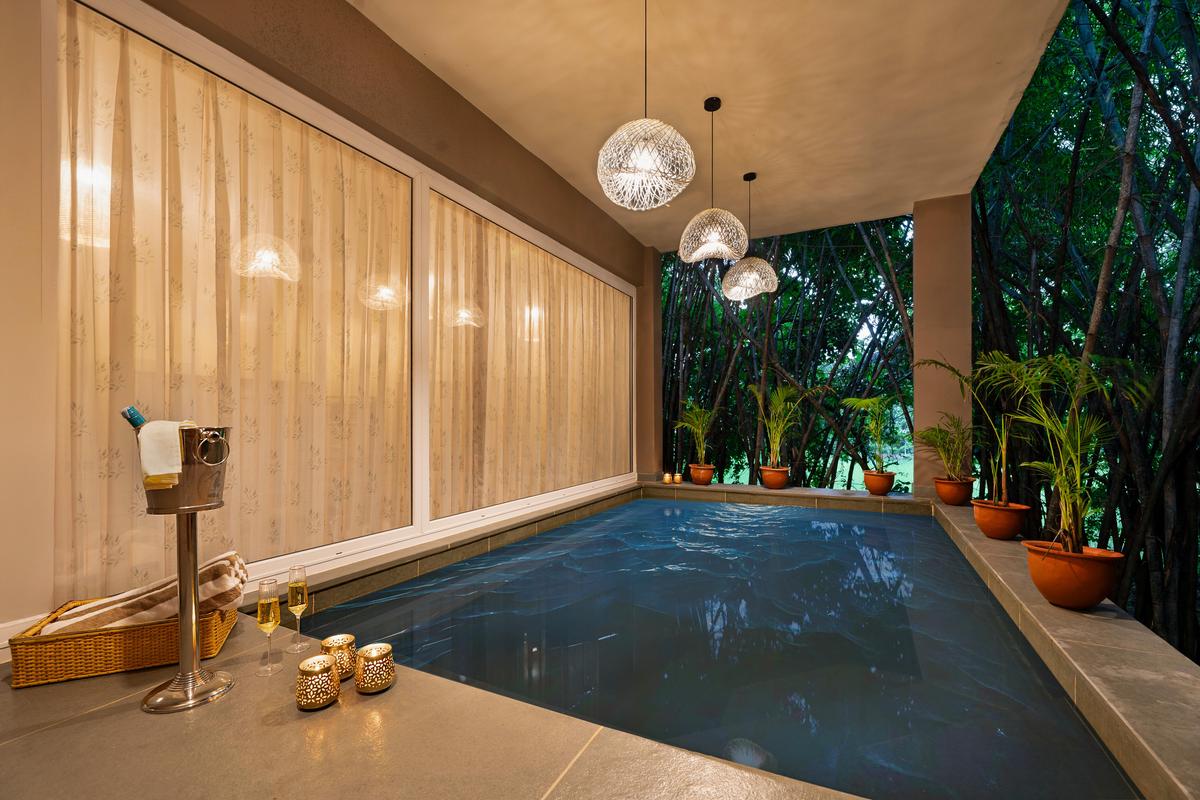
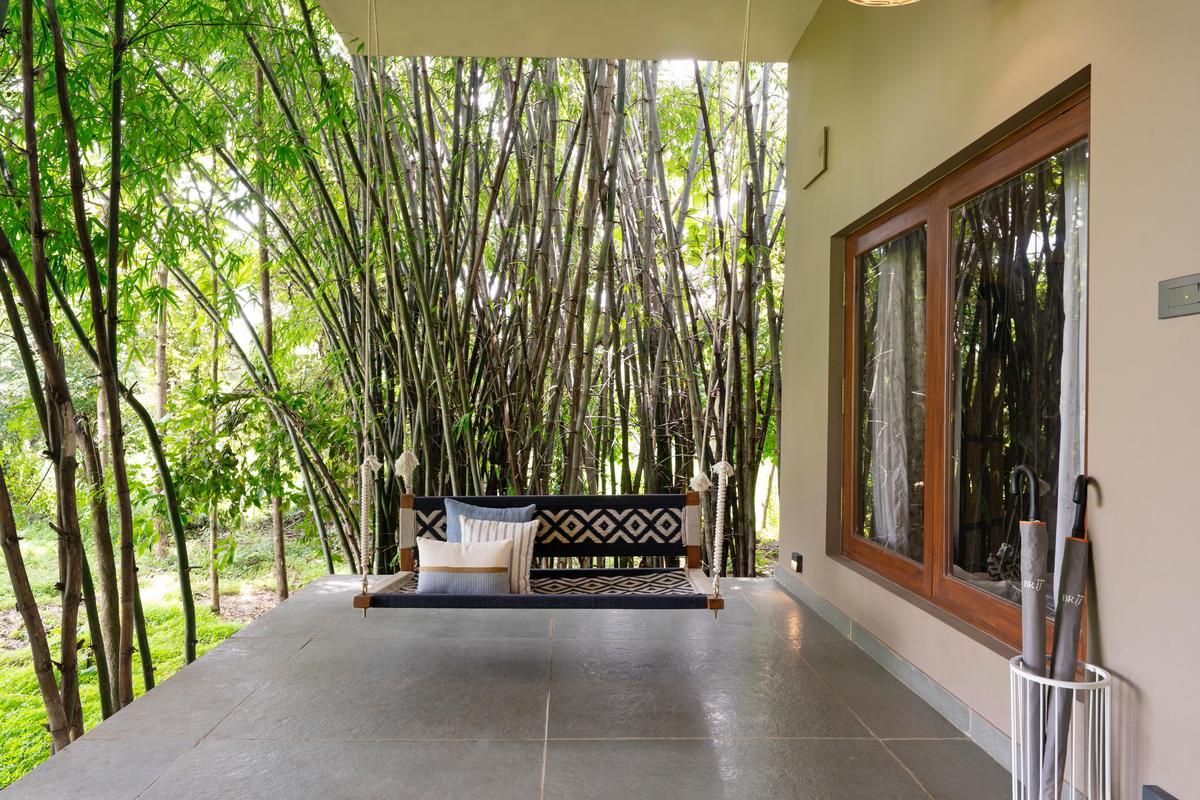
A view of the swimming pool at the villa at the Brij Sone Bagh Resort in Bandhavgarh in Madhya Pradesh.

A view of the swimming pool at the villa at the Brij Sone Bagh Resort in Bandhavgarh in Madhya Pradesh.
| Photo Credit:
Special Arrangement

The tiger may be the highlight of the trip, but there is plenty to keep me engaged for the rest of my stay at Brij Sone Bagh, the newest retreat by Brij Hotels. Chiefly, the peace. The first thing I notice when I arrive, after driving four hours from Madhya Pradesh’s Jabalpur airport, is the layered sounds of the forest. Cicadas, a distant call of an owl and the rustle of leaves stirred by wind.

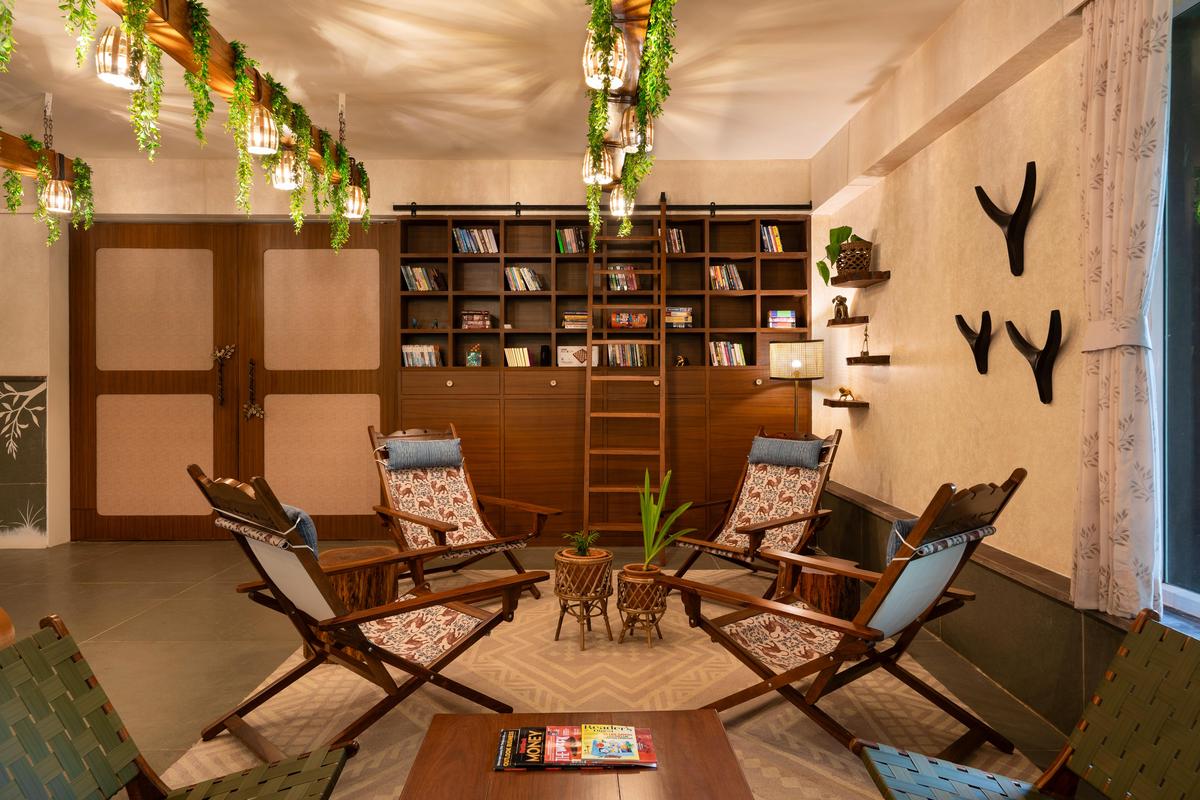
“This retreat sits within a natural forest of 32 acres,” says Arvind Bhende, regional development head of Brij Hotels, over glasses of cold, spiced buttermilk. Designed by architect Deepika Sethi of Atelier15, Brij Sone Bagh’s five villas, made of local stone and timber, rest quietly amid old sal and bamboo trees. Pathways curve naturally around the terrain, and gardens merge seamlessly with the forest. “We wanted the design to defer to the land rather than dominate it,” Sethi says.

A view of Brij Sone Bagh Resort in Bandhavgarh in Madhya Pradesh.

A view of Brij Sone Bagh Resort in Bandhavgarh in Madhya Pradesh.
| Photo Credit:
SPECIAL ARRANGEMENT

My villa, named Vanar after the langur, features a mix of cane and antique-style wooden furniture, handwoven cottons and textured walls. Small touches reveal the region’s artistic soul: dokra metalwork pieces from neighbouring Chhattisgarh rest on the bedroom walls.

A view of Brij Sone Bagh Resort in Bandhavgarh in Madhya Pradesh.

A view of Brij Sone Bagh Resort in Bandhavgarh in Madhya Pradesh.
| Photo Credit:
SPECIAL ARRANGEMENT

I dine beneath an old jamun tree. The cool air carrys the scent of damp soil. A local villager, dressed in traditional attire to honour the serpent god, plays the flute as chef Dharmender Kumar – or Dharma as he is fondly called – tends to an open barbecue nearby. He slowly turns the chicken marinated earlier in the day with turmeric, ginger, garlic and a blend of foraged forest herbs. The aroma of smoke, spice and mahua blooms mingles with the night air.

Bamboo fish

Bamboo fish
| Photo Credit:
SPECIAL ARRANGEMENT

Dharma also invites me into his kitchen for what he calls a “farm to kadhai” session. He has brought fresh produce from the local market – amla, bunches of coriander and green chillies. With measured ease, he shows me how to prepare amla pickle and a sharp, green chutney, adjusting the flavours by instinct rather than recipe. The chicken we marinate together – wrapped in banana leaves and slow-cooked in bamboo—appears later that evening for dinner, tender and fragrant, tasting of smoke, herbs and rain-washed soil.

Zero-kilometre philosophy

“Almost everything you eat here,” Dharma tells me, “comes from within a few kilometres. That is our zero-kilometre kitchen.” This “zero-kilometre philosophy” lies at the core of Brij Sone Bagh’s ethos. Vegetables come from neighbouring farms, milk from local dairy farmers and grains such as kodo millets and lentils from nearby villages. Even the spices and mahua-based recipes have been sourced through local women’s cooperatives. This approach cuts down food miles, sustains rural livelihoods and gives guests a taste of regional cuisine.

Sustainability initiatives

The retreat’s sustainability extends beyond food. Saahas, an NGO known for its circular waste management, handles dry waste collection and conducts monthly neighbourhood clean-ups along the approach road. Less than five percent of collected waste reaches landfills; the rest is recycled or composted. Organic waste is processed in an on-site goshala, where manure from cattle is used for the soil of the kitchen garden. Water needs are met by the perennial Charan Ganga river that flows nearby.

Jungle safari

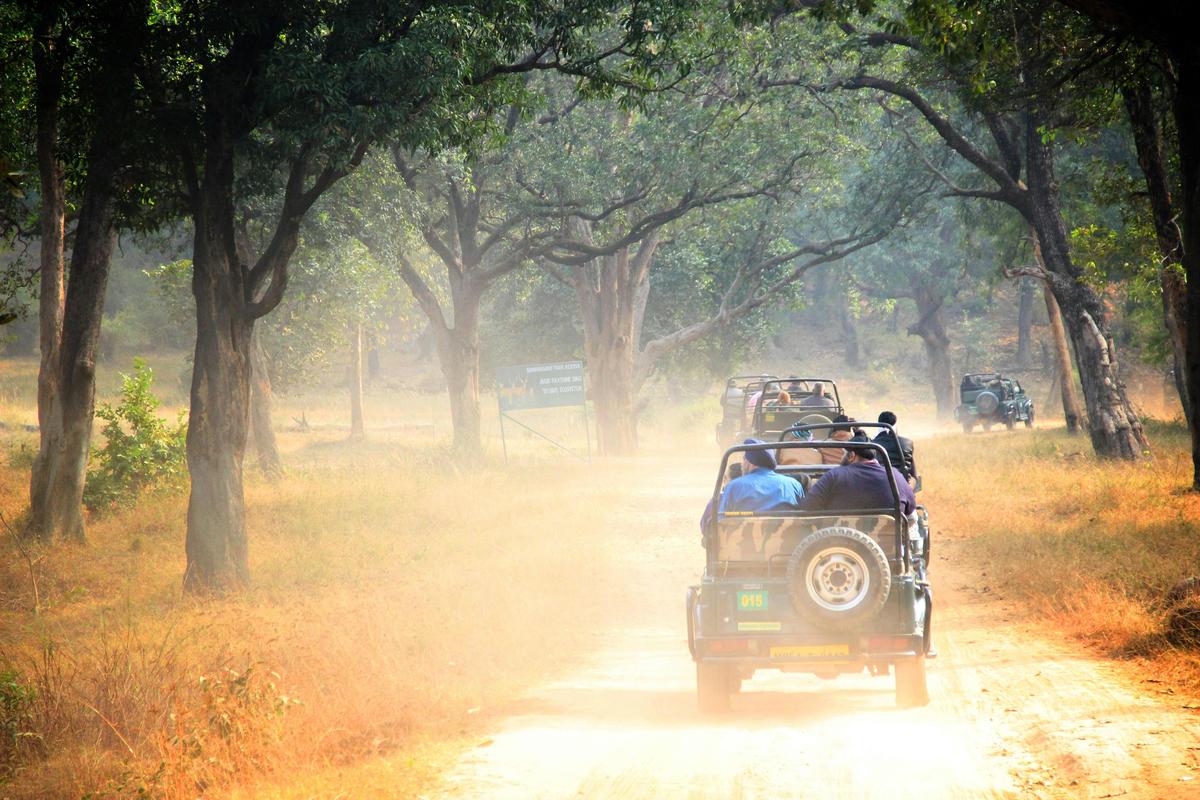
Gypsies during morning safari in Bandhavgarh.

Gypsies during morning safari in Bandhavgarh.
| Photo Credit:
SPECIAL ARRANGEMENT

A tiger crosses the road in front the the gypsies

A tiger crosses the road in front the the gypsies
| Photo Credit:
Getty Images

Gypsies going for morning safari in Bandhavgarh in Madhya Pradesh.

Gypsies going for morning safari in Bandhavgarh in Madhya Pradesh.
| Photo Credit:
SPECIAL ARRANGEMENT

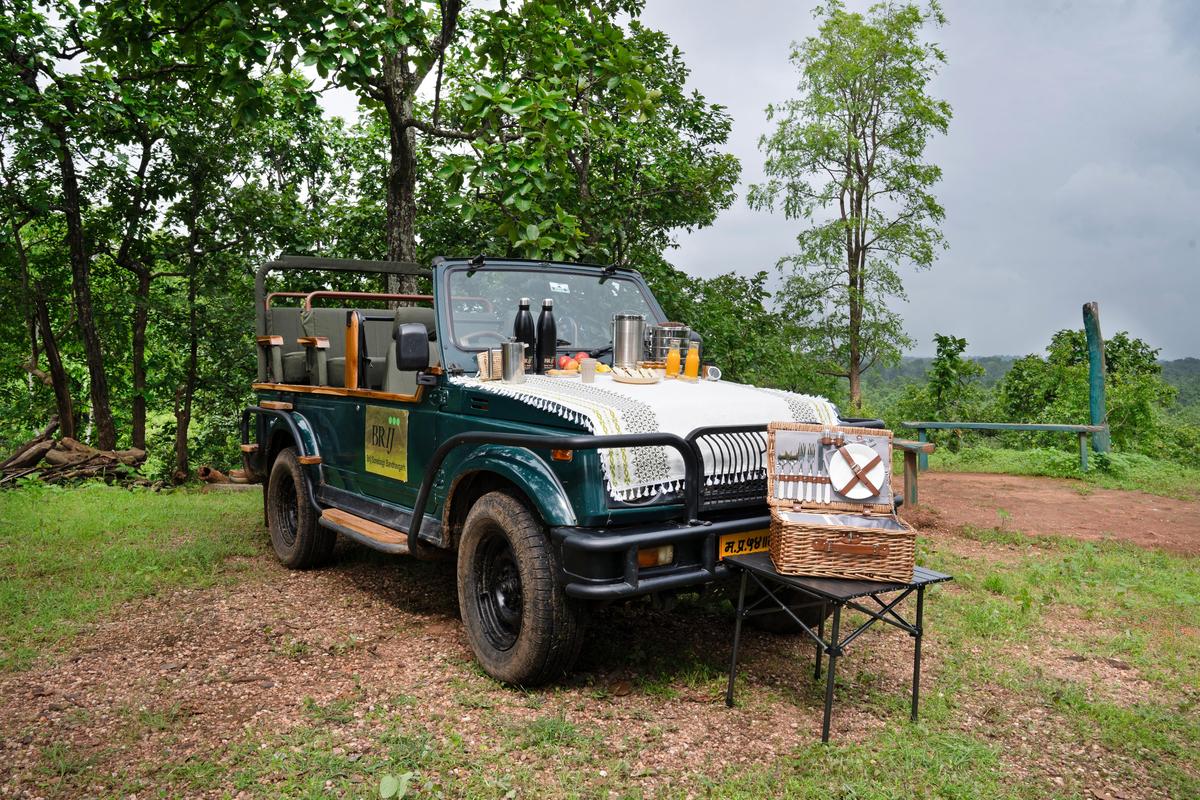
Back to the safari, we pause for breakfast at a designated forest clearing, where chef Dharma and the nature guides lay out warm parathas, fresh fruit and chilled watermelon juice on the hood of our jeep.

Before leaving the Tala zone, we make a brief stop at Sheshshaiya, one of Bandhavgarh’s most remarkable archaeological sites. Located deep within the forest at the base of a moss-covered hill, this ancient sandstone statue of Lord Vishnu reclining on the seven-hooded serpent, Sheshnag, is believed to date back to the 10th century AD. The sculpture is protected by the Archaeological Survey of India and remains a symbol of the region’s layered history.

That evening, I walk to a nearby village where only three families continue the local craft of bamboo weaving. “There used to be more of us,” says Karishma Basoi, deftly splitting a bamboo strip. “Now, only a few make tourist crafts.” Her fingers move with a memory that predates the resort, the tiger reserve, even tourism itself.

The writer was at Brij Sone Bagh in Bandhavgarh on invitation by Brij Hotels.

Published – November 27, 2025 11:10 am IST


Source link

Waking up in Varanasi: Beyond the ghats, explore wrestling arenas, street chaat, and local legends


Varanasi is awake.

Even before the morning sun’s rays hit Varanasi’s ghats, the Ganga Aarthi begins. Replete with chanting of hymns, this aarthi, an everyday ritual, is an offering to the magnificent river.

On its banks, a rare quiet envelopes Assi Ghat. Someone is chanting ‘Om’. A few yards away, someone else is offering a surya namaskar to the rising sun. This quaint ghat gets its name from the legend of Devi Durga throwing down her sword (‘asi’ in Sanskrit) after slaying demon-brothers Shumbh-Nishumbh, thus creating a river named Asi; it is considered among the most sacred in this town.

These still mornings offer Varanasi’s finest moments. You can gaze at the calm Ganga, or watch industrious boatmen. Or, like actor Dhanush in the romantic Bollywood film Raanjhana, parts of which were shot here, wander through these colourful, chaotic streets.

The early morning aarthi at Varanasi

The early morning aarthi at Varanasi
| Photo Credit:
Srinivasa Ramanujam

“There’s a local myth that these neighbourhoods were all part of a big forest, and hence “van ras” lent its name to the place,” says Pulkit Gupta, who runs Banaras Lanes, which curates walking tours and experiences, “For many, this is the place for spirituality, education and finding the right method of leading life.”

The narrow gullies here have a thousand stories to tell, each echoing with myth and history. They prompted celebrated writer Mark Twain to describe the town as, “older than history, older than tradition, older even than legend and looks twice as old as all of them put together.”

Varanasi – also known as Banaras or Kashi – has 84 ghats right now, with four built in recent times by the government. About 80 were built by different rulers, most from the Maratha empire. Explains Pulkit, “Every king wanted the ghat that they possessed to have a certain style of architecture that resembled what prevailed in their kingdoms. They would come here once in every year to perform certain rituals, and when they left, a few people would be left behind as caretakers.” Thus there are families that have lived in the ghats for many generations.

This also explains the many festivals that are celebrated throughout the year in Varanasi. As Pulkit says, “In the 365 days of a year, there are 366 festivals here.”

Street food at Varanasi

Street food at Varanasi
| Photo Credit:
Srinivasa Ramanujam

Spiritual awakening

To get a heady dose of celebration, look no further than the famous Kasi Viswanath, the city’s spiritual pulse that finds a mention in many sacred books, including the Skanda Purana. Destroyed and rebuilt over centuries, it remains the place Kasi is most famously associated with.

We visit at around 10.30 pm, as the temple gears up for shayan aarthi, an almost-informal good night gesture to the gods. Organised by local residents and not yet on things-to-do-in-Varanasi travel lists, the shayan aarthi is an audio visual experience. Hundreds of devotees chant a set of hymns in unison, almost like a choir. And the most beautiful aspect is none of these hymns are written, according to Abhisek Mishra, a Varanasi-based pandit, “While there are set hymns for other pujas in the temple, the recitation during the shayan aarthi has been composed and devised by the local residents. Over the years, it has been passed on through younger devotees.” Indeed there are many of them, as they cry ‘Hara Hara Mahadev’, looking upwards and with both their hands raised in devotion and gratitude.

Tulsi Ghat Akhada at Varanasi

Tulsi Ghat Akhada at Varanasi
| Photo Credit:
Srinivasa Ramanujam

Fight club

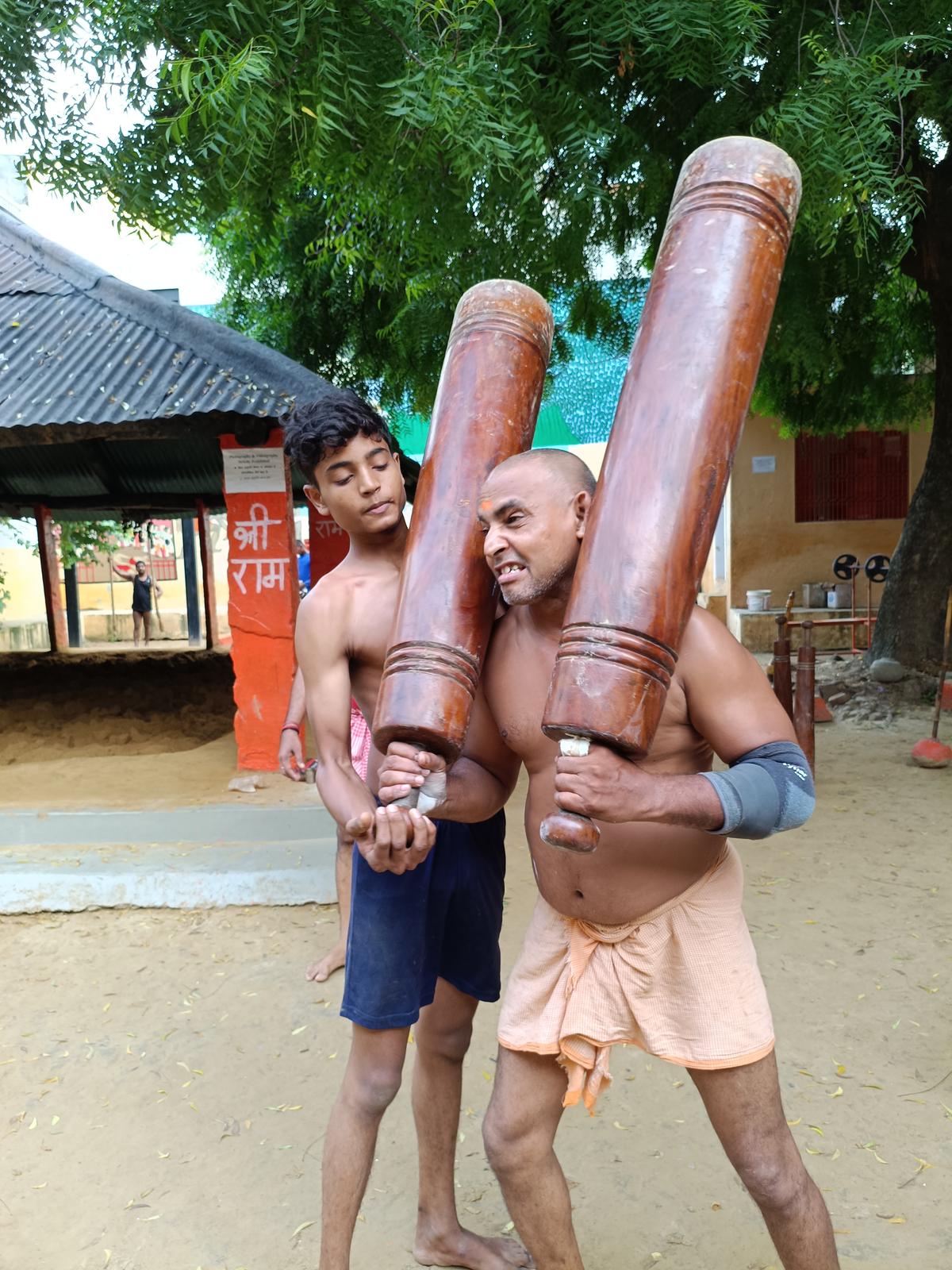
As thousands work on their souls in Varanasi, there’s also work happening on the body on the banks of the Ganges. At the Tulsi Ghat Akhada, a traditional Indian-style gym established in the 16th century and one of the oldest functioning akhadas, young men train under experienced fighters learning martial arts and mud wrestling.

When we visit we watch a young student place a mudgar – or the wooden club, usually used to build strength and endurance – on Sharma G shoulders. “Traditionally, this akhada, which was functional even during the time of celebrated poet Tulsidas in the 16th century, used to train warriors and prepare young men for protection of pilgrimage routes,” he reveals, after lifting the 25-kg mudgar more than 25 times, an act that draws awe and praise among his fellow trainers.

Today, many young boys and girls come here to strength training and learn gusthi for local tournaments. While its mud pits sees several friendly bouts daily, the dands and baithaks that practitioners indulge in every day help in keeping up stamina. A custodian of traditional indigenous forms of physical training and the traditional guru-sishya method of education, the Tulsi Ghat Akhada is a reminder of Varanasi’s physical culture, which held as much value as its spirituality.

‘Chachi ki Dukhaan’ at Varanasi

‘Chachi ki Dukhaan’ at Varanasi
| Photo Credit:
Srinivasa Ramanujam

Food for thought

The Varanasi of today also offers rich heritage experiences to travellers. Many properties have sprung up near the ghats, like the recently-opened juSTa Kashi Parampara, a 80-year-old ancestral home, which offers experiences such as a traditional aarthi welcome, daily live musical performances and boat rides in the Ganges.

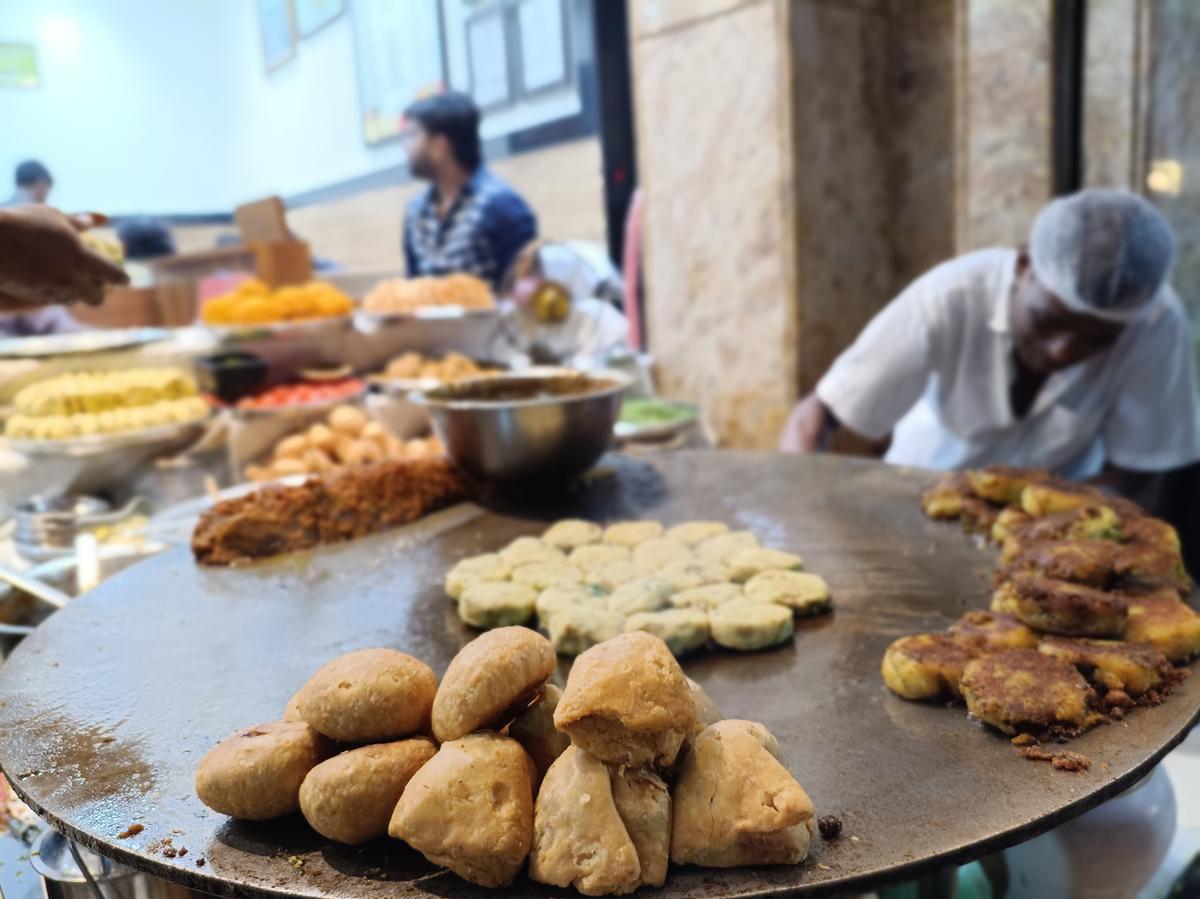
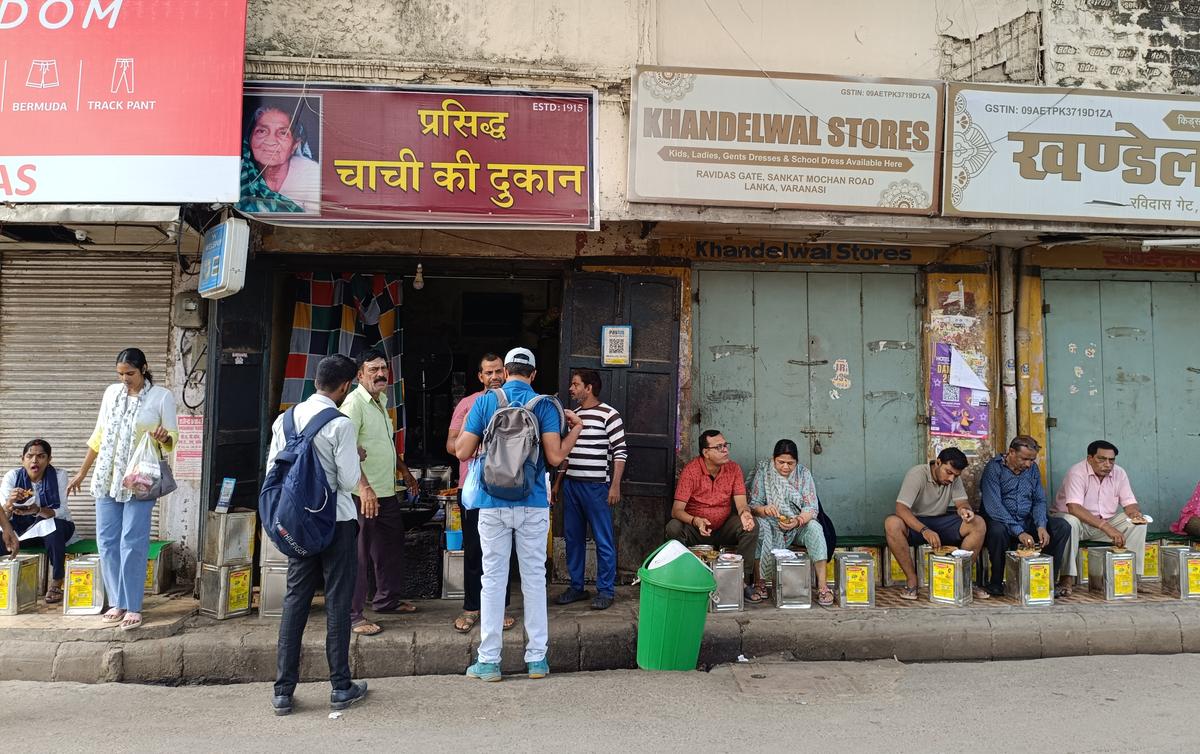
We try tangy samosa chaat – freshly fried and crushed with chole – at the popular Vishwanath Chaat Bhandar. For breakfast, we head to the ‘Chachi Ki Dukhaan’, a street-style eatery established in 1915. Sitting on oil tins that double up as seats, we sample the classic Banarasi breakfast trinity: kachoris, sabzi and jalebi. “The story goes that an old lady – fondly called ‘chachi’ by the locals – used to run this place and kept cussing passersby. Over time, it rose in popularity because of its street-style seating and tangy taste. It is even today called ‘Chachi Ki Dukhaan’,” reveals Pulkit. Glass of fresh lassi from the hallowed Pehalwan Lassi, long favoured by local wrestlers for nourishment after hours of intense training, follow.

Lassi and kachoris done, we head out to explore the busy streets, replete with constant honking and activity. For, Varanasi is awake.

(The writer was in Banaras at the invitation of jüSTa Kashi Parampara)

Published – November 27, 2025 09:50 am IST


Source link

A Hundred Hands celebrates 15th edition with motif themed showcase


Artwork made with recycled and hand painted paper incorporating Indian motifs and patterns. 

Artwork made with recycled and hand painted paper incorporating Indian motifs and patterns. 
| Photo Credit: Special Arrangement

The Festival of Handmade is back in the city, happily timed for the season when every one is on the look out for the perfect gift. The organisers, A Hundred Hands, are showcasing the beauty and versatility of Indian motifs for their 15th edition.

According to Mala Dhawan, co-founder of A Hundred Hands (AHH), every motif exhibits a singularity depending on the artisan’s place of origin. “For instance, the paisley motif of Kashmir is quite different from the one seen in South India. The tribal art motifs of Orissa and Chhattisgarh, though nature-based, are also geometric by design. These are a few of the interesting things visitors can look out for.”

“The artisans have also designed a few new motifs for the bazaar and we encourage them to talk about the significance of these patterns in their work,” she adds.

From the 15th edition of Festival of Handmade

From the 15th edition of Festival of Handmade
| Photo Credit:
Special Arrangement

With each edition, the organisers have introduced something new and this year is no exception. Aside from the stalls buzzing with handicrafts, this year too, will see events unfolding over five days and includes a talk on the significance of various Indian motifs by expert Chandra Jain. “Chandra is a revivalist and an expert on textiles. She will be speaking about the significance of certain motifs, specifically the Benarasi motif,” says Mala.

The AHH fashion show too, has a twist thrown in. “So many people aspire to be models, so this year, if they pick up an outfit at the festival, designer Prasad Bidapa will help them style it, and they can walk the ramp with him,” she adds.

For those who are not sure if their choices and tastes are in sync, especially since the range is quite wide and could be overwhelming, a personal shopping assistant or style guide will be available to help with colours and styles. “You can also bounce ideas and suggestions off the stylist if you don’t want her personally accompanying you while you’re shopping.”

From the 15th edition of Festival of Handmade

From the 15th edition of Festival of Handmade
| Photo Credit:
Special Arrangement

According to Mala, Crafty Meets, the Bengaluru-based community, is inviting works of art and craft to be part of their installation at the venue. “Anyone can bring some of their works and add to the community art project; they could also learn the basics of crochet with them.”

Apart from a huge collection of Christmas ornaments and decor, this year visitors can book their entry tickets via BookMyShow.

Festival of Handmade by A Hundred Hands is at Jayamahal Palace Hotel till November 30. Schedule of events and workshops on social media. Entry fee ₹100 available at the venue and BookMyShow


Source link

The winning shoes from the World Championships of Shoemaking arrive at the Bridlen store in Chennai


Ken Kataoka’s shoe that received the second prize.

Ken Kataoka’s shoe that received the second prize.
| Photo Credit: SPECIAL ARRANGEMENT

A shoe may be worn every day, chosen for style, or picked for comfort. But what truly makes a shoe worthy of the World Championships of Shoemaking? It is far more than its overall aesthetic — it lies in the precision of its micro-stitches, the fineness of its cuts, and, most importantly, the quality of its leather.

The recently held World Championships of Shoemaking showcased exactly that. The top three shoes were selected by an international jury and unveiled at the London Super Trunk Show 2025. After travelling all over the world at acclaimed bespoke stores, the shoes have finally arrived at the Bridlen store in Chennai, where they will be held on display till December 7.

The annual event, started in 2018 by Shoegazing (a website run by Swedish journalist Jesper Ingevaldsson who is an authority on men’s classic shoes) and The Shoe Snob (run by former shoemaker Justin FitzPatrick) in collaboration with blogger Kirby Allison and the Master Shoemakers book project. This year’s focus was a cap toe double monk strap model, with two straps made of the same piece of leather that covers the facing, attached to two buckles. 

This year’s first prize went to Louis Lampertsdörfer from Munich, Germany. What makes his shoe stand out is a thin sole with the stitching done at an impressive 30 stitches per inch. The second prize went to Ken Kataoka, a Japanese maker based in Tokyo. The third prize went to Ken Hishinuma from Yamanashi prefecture, Japan. Even for a seasoned shoemaker, securing a spot is not an easy feat.

The overall criteria involve — degree of difficulty, execution, and design or aesthetics.

The overall criteria involve — degree of difficulty, execution, and design or aesthetics.
| Photo Credit:
SPECIAL ARRANGEMENT

According to Shoegazing, some of this year’s key requirements were a ‘leather sole, dark brown sole and heel edges, and a natural coloured bottom.’ The overall criteria involve — degree of difficulty, execution, and design or aesthetics. 

Aaffan Mohamed K, owner of Bridlen, which was also one of the title sponsors of the championship, says, “These shoes are typically not designed to be worn, but they are more designed to show craft. The idea is to preserve the craft of shoe-making because it is a dying craft.” 

By projecting the shoes in India, Affan wants to bring back some of these crafts in his own company. “Like any production process, this process is what we call industrial simplification. Originally, soles were built layer by layer, but with new technology, it became possible to make the entire sole separately and simply attach it to the bottom — it’s faster, more efficient, and offers better value to the customer.”

“I want to take that back, the old school way of shoe making, and see how we can reverse engineer this process. So, we can reintroduce it to factory-made shoes, in an attempt to revive the craft” he further adds.

The 2025 World Championships of Shoemaking shoes will be on display at the Bridlen Labo, 21 Venugopal Avenue, Chetpet, till December 7, from 10.30am to 6.30pm.


Source link