Life & Style

Khatija Rahman brings a unique choral ensemble to Chennai along with Kalyani Nair at Garden of Echoes


Khatija Nair

Khatija Nair
| Photo Credit: SPECIAL ARRANGEMENT

There are concerts, and then there are experiences—spaces that transport you to a different realm through music. Music composer and singer Khatija Rahman’s upcoming show, The Garden of Echoes, belongs unmistakably to the latter. At Chennai’s iconic Museum Theatre, this intimate concert will gather voices, memories, and melodies into one immersive experience. 

The name ‘Garden of Echoes’, came from a deeply personal moment for Khatija while performing at her late grandmother’s birthday celebrations, held at a place called Peace Garden.  

“When I say echoes, there’s going to be a lot of voices; not just of me, but of many elements involved—there is a string quartet, a brass trio, there’s my band, and then there’s a conductor. We are a large ensemble, and I wanted that name to embody what we speak.”

The Garden of Echoes is held together by its collaborators. The concert features The Sunshine Orchestra’s String Quartet, a brass trio, the Indian Choral Ensemble directed by singer Kalyani Nair and co-directed by Karthik Manickavasakam, and Khatija’s full band. With over two decades in the industry, Kalyani’s sensibilities lend the performance its signature warmth and depth. “Her arrangements are so soulful. It captures the sound I have always dreamt of.” 

The set list spans Khatija’s musical journey which include playback hits, reimagined versions of her compositions, and select covers rearranged in ways she has never attempted before. “The idea is to connect with people. For me, I keep asking these questions—if I come to the show, will I be happy? Or is it value for money? These questions push my team and I to give our best.”

For Khatija, a little chant is what she describes as her “pre-performance ritual.” “I ask God to help me connect with the audience, because I still struggle with a fear of the stage, and I’m slowly working my way through it.” 

Behind the scenes, Khatija is also building something different; her own creative ecosystem. Rather than leaning on the legacy of her father, A. R. Rahman, she is forging her own path . “My father has helped me so much; he has always been there, but now it’s my time to learn, unlearn, fail, and try everything on my own terms.”

Khatija’s band features a dynamic mix of musicians: guitarist Chris Jason, keyboardist Bhuvanesh Narayanan, bassist Laxman Arvind, drummer Guberan, and flautist Nikhil Ram.  They are joined by the voices of The Indian Choral Ensemble’s choristers—Aparna Harikumar, Sushmita Narasimhan, Nayansee Sharma, Ananya Bhat, Shridhar Ramesh, Manikandan Chembai, Neeraj MSG and Cyril Simon. The Sunshine Orchestra String Quartet features Vignesh U, Nandhini Anbazhagan, Ebinezer Gnanraj and Deepa S, along with a brass trio comprising Pavithra E, Mohammed Naveeth and Nandhakumar, headed by Lisa Sarasini.

Kathija may seem quiet to the audience, but she has a different roar on stage. For that, a viewing of her performance is essential.

The Garden of Echoes will be held on December 5 at the Museum Theatre, Egmore, from 7pm onwards. Ticket on bookmyshow.com


Source link

Street Fighter to Valorant: Why Tamil Nadu Is Betting Big on Esports


In 2008, 18-year-old Mumbai-based gamer Reuben Pereira made a sizeable dent in the history of esports in India by winning a silver medal at the World Cyber Games for soccer video game franchise FIFA in Germany.

Seventeen years later, in August 2025, 25-year-old Street Fighter 6 player Dharun S won the gold medal at the Chief Minister’s Trophy Games in Chennai, bringing attention to not just the future of esports, but also the momentum building up in Tamil Nadu’s gaming circles. 

An Indian boy plays an online game PUBG on his mobile phone

An Indian boy plays an online game PUBG on his mobile phone
| Photo Credit:
AP Photo/ Mahesh Kumar A

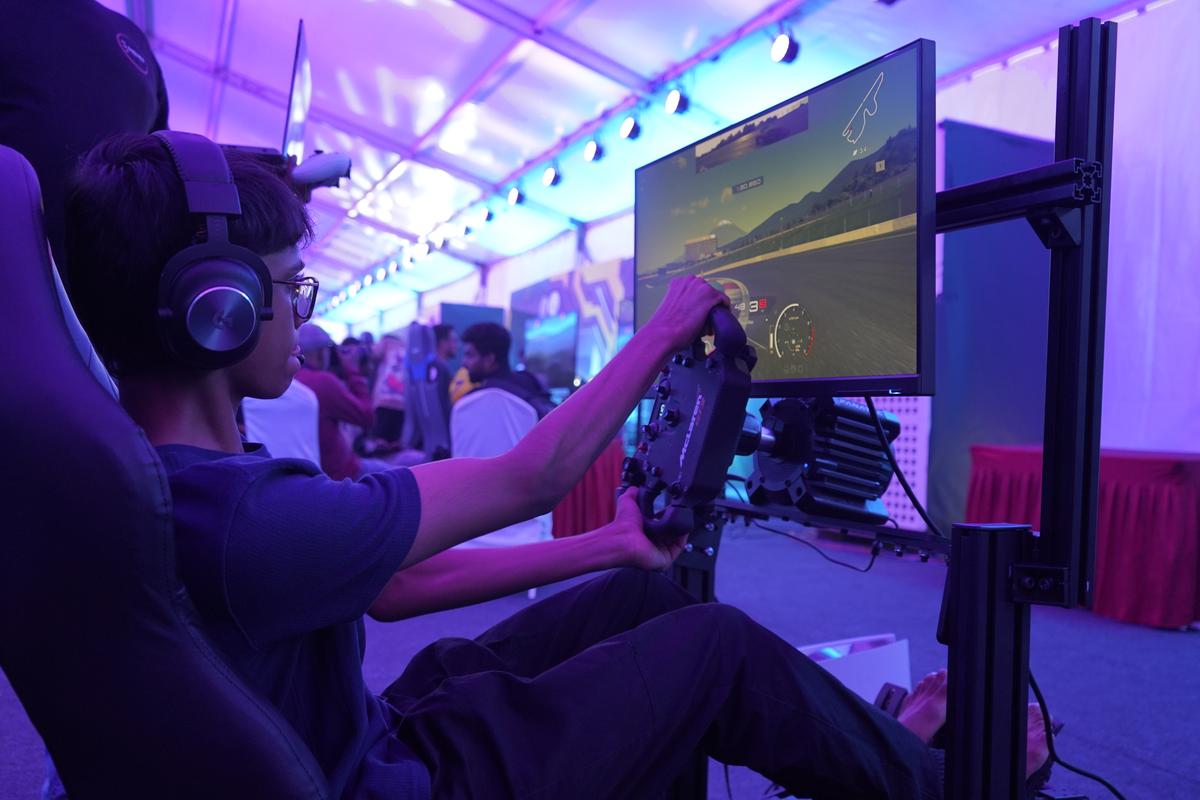
What is striking today, Reuben says, is not just the structure but the sheer volume of players entering the arena. Where once Chennai’s competitive scene could fit inside a single gaming café, qualifiers today fill entire halls. The shift is is the result of accessible games, affordable devices, and tournaments that make competitors feel like they belong. 

“Tamil Nadu players have become serious now. People are grinding, learning matchups, and asking for sparring partners. The scene has changed. Earlier, it felt like only a handful of us cared. Now, the competition is tougher,” says Dharun, who has been playing in tournaments for the last couple of years. 

A player playing a mobile game

A player playing a mobile game
| Photo Credit:
Special Arrangement

The Chief Minister’s Trophy Games, organised by the Sports Development Authority of Tamil Nadu (SDAT), was Dharun’s big break. This statewide multi-sport event brings together athletes from different backgrounds. In 2025, the Trophy Games made history by officially including esports as a medal event, making Tamil Nadu the first Indian State to do so. The competition spanned six gaming titles, including Street Fighter 6, EA FC, Valorant, BGMI, Pokémon Unite, and e-Chess, with a ₹1 lakh prize for individual gold medal winners. 

Praveen Rathinam, pesident, Tamil Nadu Esports Association (TESA), says the CM’s Trophy has done something few Government-backed events manage — it signalled legitimacy. “When the State puts its weight behind an event, parents start paying attention,” he says. “We suddenly have teenagers telling their families they’re ‘training’ for something real.”

Scenes from Chief Minister’s Trophy Games in Chennai

Scenes from Chief Minister’s Trophy Games in Chennai
| Photo Credit:
Special Arrangement

But legitimacy is only step one. Praveen explains that Tamil Nadu’s esports structure, though young, is finally starting to take shape, from clearer tournament standards and player verification to slowly growing community networks. The challenge, he adds, is consistency. “If we are talking medals and global rankings, then we need sustained support. More tournaments, regulated formats, and a pipeline that starts at the school level,” he says. “The talent is here; it just needs a proper ecosystem.”

For Dharun, that “ecosystem” Praveen talks about is not abstract. It began with a Discord server. “I didn’t even know Chennai had a Street Fighter server. Once I joined, everything changed. Suddenly, there were people to spar with, people sharing tech, actual competition,” he said. That virtual room became his training ground. 

The long game

This shift on the ground is something veteran gamer Reuben Pereira has been waiting nearly two decades to witness. Back in 2008, when he won silver at the World Cyber Games, esports in India was little more than a scattered network of private tournaments. “There was no structure, no system, nothing official. You just showed up wherever there was a café hosting something,” he says. Watching Tamil Nadu now formally recognise esports feels like a full-circle moment. “If something like this existed in my time, I would’ve travelled all over India for it. This is the ecosystem we dreamed of but didn’t have.”

This boom is not hype — it is talent finally getting visibility. EA FC players have gone from isolated grinders to being part of a recognisable circuit with club-backed tournaments. “When EISL came in, things shifted — formats, analysts, prize pools. It felt professional,” says Navin Haridoss, who won gold at the CM’s Trophy Games for EA FC.

Boys playing video games

Boys playing video games
| Photo Credit:
Special Arrangement

What has changed most, he points out, is confidence. “You have school kids, college kids, working guys… all playing in the same room. That never happened before.”

A decade ago, local tournaments felt casual — players arrived to hang out first and compete second. Now, he says, the room feels charged. “People come in with a plan. They’ve studied matchups, they’ve done their drills,” he says. He has watched teenagers track frame data, organise district-level scrims (practice matches), and build small coaching circles — behaviours that used to belong only to international players. The irony, he points out, is that player skill is accelerating faster than the support structures around them.

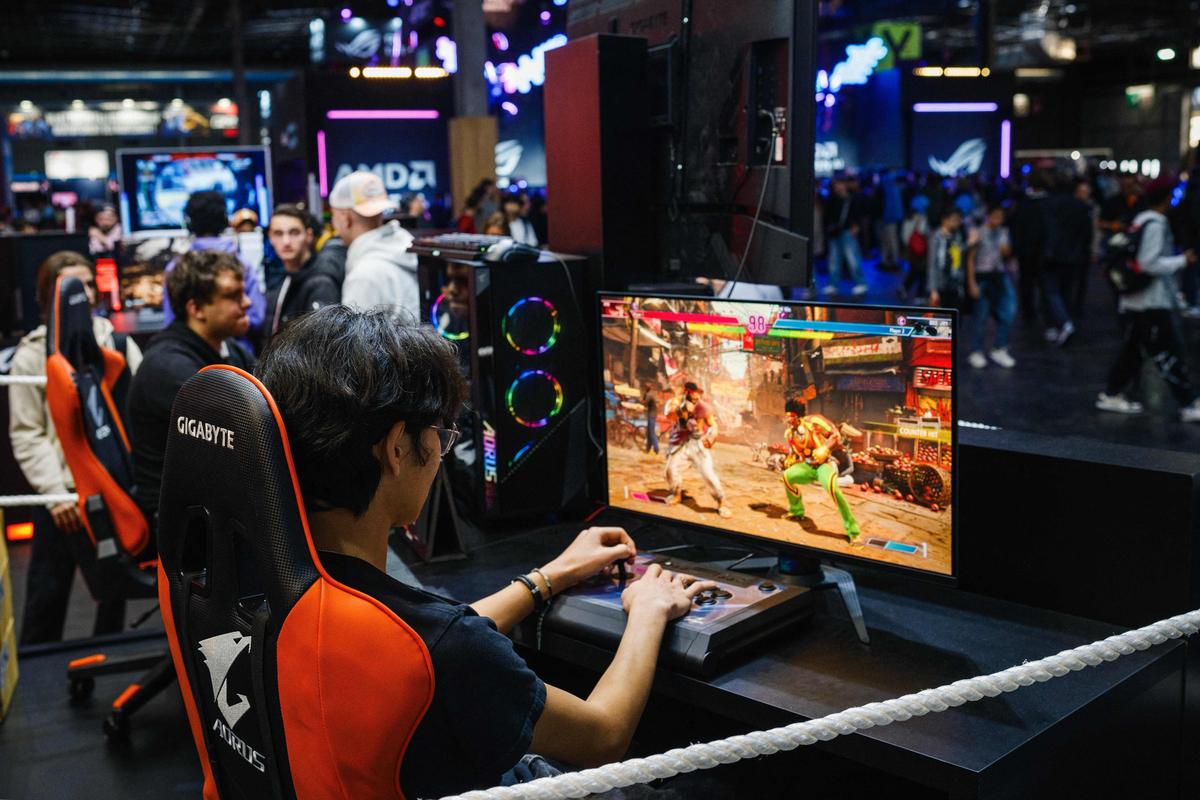
A visitor plays the 'Street Fighter 6' video game developed and published by Capcom during the Paris Games Week fair in Paris, on October 23, 2024.

A visitor plays the “Street Fighter 6” video game developed and published by Capcom during the Paris Games Week fair in Paris, on October 23, 2024.
| Photo Credit:
Photo by Dimitar DILKOFF / AFP

“The grind is there,” says Navin. “The hunger is there. What’s missing is a calendar that keeps them battle-ready all year, not just for one Government event.”

Mind the gap

Across Street Fighter, EA FC, Valorant and BGMI, women players remain a tiny minority. “I walk in expecting to be the only woman in he room, and most of the time, I’m right,” says Phebe, a 25-year-old casual gamer from Chennai. She does not enter tournaments anymore, but she has watched enough streams and local events to recognise the pattern: women are not absent, they are edged out by the atmosphere. “It’s not the games, it’s the space around them,” she says. What she wants is simple — organisers who enforce behaviour, communities that do not tolerate casual misogyny, and a scene where women do not need a separate qualifier to feel welcome.

Published – November 26, 2025 04:43 pm IST


Source link

Tata Sierra returns to rewrite the mid-size SUV order


Few nameplates in India command the kind of nostalgic admiration the Tata Sierra enjoys. When it arrived in 1991, it did not merely expand Tata’s lineup—it became a cultural marker. Its distinctive silhouette and unconventional design made it an object of aspiration at a time when the Indian automotive market was still finding its footing. Now, more than three decades later and after a 23-year hiatus, the Sierra returns in a completely reimagined avatar. Launched in Mumbai, the all-new Sierra stands as Tata Motors’ boldest attempt yet to elevate the mid-size SUV segment and challenge the status quo.

From thievery first glance, it is evident that Tata is not aiming to blend in The new Sierra is positioned as a statement—an SUV created to stand out, push boundaries and offer buyers a richer, more expressive experience than the safe, predictable options that have long dominated the segment.

Legacy re-imagined

The modern Sierra retains the soul of the original while reinventing itself for a new generation. Where the first model was celebrated for its distinctive stance and individuality, the new Sierra builds on those traits with a contemporary, award-winning design that has already garnered global recognition. Upright posture, squared-off geometry, and sculpted surfaces give it a powerful visual signature, blending nostalgia with a premium, forward-looking aesthetic.

Equipped with Level 2+ ADAS and proven crashworthiness, the Sierra prioritises occupant protection without compromise

Equipped with Level 2+ ADAS and proven crashworthiness, the Sierra prioritises occupant protection without compromise
| Photo Credit:
Special Arrangement

What truly defines this new avatar, however, is the intent behind it. Tata Motors has shaped the Sierra for an increasingly discerning Indian buyer—one who values identity and emotional connection just as much as practicality. The new Sierra is not designed merely to bring a legacy nameplate back to market; it is meant to evolve what the Sierra once symbolised and reinterpret it for modern aspirations.

Design reinvented

Tata’s designers were tasked with the delicate balance of honouring the Sierra’s legacy without being stylistically bound by it. The outcome is a sophisticated, modern interpretation that respects the lineage but embraces contemporary sensibilities. The signature wraparound glass effect remains, now executed through cleaner surfaces, a sleeker B-pillar treatment and a more aerodynamic silhouette. Strong shoulders, a stately stance and bold proportions give the Sierra instant presence on the road.

Lighting plays a central role in the SUV’s identity. Seamless Light Saber LED DRLs span the width of the vehicle, mirrored at the rear with a connected tail-lamp arrangement that features animated welcome and exit sequences. Adaptive Bi-LED booster headlamps extend their throw at higher speeds, enhancing safety and visibility. Completing the SUV’s commanding aesthetic are massive R19 alloy wheels—the largest in the segment—lending it a planted, confident stance.

The Sierra’s redesigned exterior (new look) feels rich and expressive, firmly placing the SUV confidently in the premium space. It has matured, much like the buyers who once admired the original and now seek something equally distinctive.

The living space

Step inside, and the Sierra continues to push boundaries. Dominating the cabin is the Horizon View triple-screen setup—an expansive digital interface that merges the driver display, primary infotainment screen, and a dedicated 12-inch passenger screen into a cohesive, immersive layout. Paired with a 12-speaker JBL Black audio system and the integrated SonicShaft soundbar, the cabin transforms into a cinematic space. With built-in OTT apps, gaming functionality, and Tata’s Arcade Suite offering more than 30 digital experiences, the Sierra becomes more than a means of transportation—it becomes a rolling entertainment lounge.

The Horizon View triple-screen setup, JBL Black audio system, and Tata Arcade Suite turn the cabin into a rolling entertainment lounge

The Horizon View triple-screen setup, JBL Black audio system, and Tata Arcade Suite turn the cabin into a rolling entertainment lounge
| Photo Credit:
Special Arrangement

Material quality takes a clear step up. Soft-touch, natural-toned surfaces, floating console elements, and a layered design approach give the cabin a premium, handcrafted feel. Personalisation features such as MeSpace—allowing individual profiles for climate control and seat memory—and extendable thigh support further enhance comfort.

Where the Sierra truly sets itself apart is in interior space. Its long 2730 mm wheelbase delivers best-in-segment couple distance, excellent shoulder room in both rows, and the widest second-row gangway in the class. The 622-litre boot makes it one of the most capable mid-size SUVs for families and long road trips. The PanoraMax sunroof, the largest in the segment, accentuates the openness and floods the cabin with natural light.

Performance powertrains

The Sierra’s powertrain options are designed to suit a wide range of buyers. The lineup starts with the 1.5-litre Revotron naturally aspirated petrol engine, designed for smooth city performance and everyday practicality. For those who want more muscle, Tata offers the new 1.5-litre Hyperion Turbo GDi engine—an advanced direct-injection unit producing 160 PS and 255 Nm of torque. Its strong mid-range performance promises confident highway cruising and responsive overtakes without sacrificing drivability.

The diesel option comes in the form of the 1.5-litre Kryojet C-Rail turbo-diesel, producing 118 PS and a healthy 280 Nm in its automatic variant. This engine is positioned as the strongest torquing diesel in the segment, making it well-suited for long-distance highway users and those who prefer a relaxed yet effortless driving character.

All three engines are underpinned by Tata’s new A.R.G.O.S platform—engineered for multi-energy compatibility, dynamic rigidity and even AWD readiness. With multiple drive and terrain modes, the Sierra expands its adaptability, making it more versatile than many of its mid-size competitors.

Safety for real-world India

Safety has always been a Tata stronghold, and the Sierra advances that reputation significantly. The SUV is equipped with Level 2+ ADAS technology, offering 22 advanced assistance features that include autonomous emergency braking, adaptive cruise functionality, lane-keeping aids, blind-spot alerts, and more, placing it among the most advanced in its segment.

With a 2730 mm wheelbase, PanoraMax sunroof, and thoughtfully crafted interiors, the Sierra redefines comfort for families.

With a 2730 mm wheelbase, PanoraMax sunroof, and thoughtfully crafted interiors, the Sierra redefines comfort for families.
| Photo Credit:
Special Arrangement

The real highlight, however, is Tata’s decision to demonstrate the Sierra’s crashworthiness through a high-intensity, real-world head-on collision test. At 50 km/h with a 50% offset—conditions more severe than typical NCAP tests—the Sierra maintained its cabin integrity, protected all occupants including child passengers in CRS seats, and ensured full post-crash access through automatic door unlocking and unobstructed extrication. The SUVs structural rigidity and precisely tuned restraint systems underscore Tata’s commitment to not just meeting safety norms, but exceeding them under real Indian driving conditions.

The Hyundai Creta factor

For nearly a decade, the Hyundai Creta has held an unchallenged position as India’s leading mid-size SUV, ith each new competitor seemingly reinforcing its dominance. The arrival of the Sierra, however, feels different. This is not simply another new entrant trying to grab a share of the market—it is a product crafted to disrupt the established order.

The Sierra’s design makes an immediate statement: bold, distinctive, and far more characterful than the Creta’s cautious styling language. Where the Creta relies on brand confidence and long-established reliability, the Sierra leans heavily into emotional pull—nostalgia, identity, and the pride of owning a nameplate with real heritage.

Then there is the spacious cabin and Tata’s reputation for space optimisation, which already gives the Sierra an edge for families seeking comfort beyond the rear seat. Match that with modern powertrain, refined transmission options, and a suite of convenience features expected in this segment, and Tata has crafted a product that aligns almost perfectly with the expectations of today’s Indian buyers.

The Sierra’s greatest advantage, however, may lie beyond the spec sheet. While Hyundai has built the Creta on rational appeal—features, efficiency, wide dealership reach—the Sierra connects on a more emotional level. For many buyers, especially those who grew up seeing the original Sierra as a status symbol, the new version awakens something deeper. It does not just offer value—it offers identity.

Is it too early to call the Creta dethroned? Absolutely. The Creta has not survived this long by accident. But for the first time in years, the Sierra has a challenger that does not just match its numbers—it strikes at its narrative.

A new chapter begins

The return of Sierra marks a pivotal moment for Tata Motors. It reflects the brand’s growing confidence, its design maturity, and its readiness to lead rather than follow. More importantly, it mirrors the evolution of the Indian buyer—someone who now seeks individuality, substance, and emotional satisfaction from their vehicle, not just functionality.

The all-new Sierra is far more than a product revival. It is a reminder that cars can stir nostalgia while delivering modernity; that legacy can be honoured without being trapped by it; and that a beloved nameplate can evolve into something even more desirable.

The price begins at ₹11.49 lakh, placing the Sierra directly against the mid-size SUV kingpin. How the battle unfolds will be fascinating to watch—but one thing is certain: the segment has officially been shaken.

Prices start at ₹11.49 lakh

Motorscribes, in association with The Hindu, brings you the latest in cars and bikes. Follow them on Instagram on @motorscribes



Source link

Former Indian diplomat Nirupama Rao reflects on music as the last form of diplomacy


I am 74 now, and I say the number quietly, letting it rest in my mouth like a stone softened by years of water. Seventy-four. There was a time when I imagined age would arrive like a clearing, a soft field, a place of rest. Instead it has come like a long corridor lined with doors, some open, many closed, a few still trembling on their hinges.

When I was young, I believed in rooms: summit rooms, negotiation rooms, rooms where the future was discussed in careful, calculated tones. We thought we were shaping history. Perhaps we were only borrowing it for an hour. I have since learned that history is not a table at which we sit. It is a tide that moves around us, regardless of our gestures.

I have sat across men who spoke of war as if it were weather. Predictable. Inevitable. A low-pressure system moving in. I have watched, from behind glass too thick to open, the slow collapse of promises. There are days when it feels as though I have escorted more silences than solutions. And yet, I am still here, still listening.

Sync and symphony
The South Asian Symphony Foundation’s events include:

November 28, Bengaluru: Symphony Lecture by Prof. Katherine Schofield; @Bangalore International Centre (BIC); 6.30pm. Register on the BIC website

November 29, Bengaluru: Beethoven’s Ninth Symphony, Raj Kapoor Centenary Tribute; @Prestige Centre for Performing Arts; 7pm; Tickets on BookMyShow.in

November 30, Chennai: South Asian Symphony Orchestra; @MS Subbulakshmi Auditorium, Asian College of Journalism; 7pm; Register on sasf.in/chennai

What astonishes me is not the noise of the world. That has always existed. What astonishes me is how easily we forget the art of hearing. Diplomacy was never about eloquence. It was about breath, the pause before the sentence, the space between injury and response. We called it restraint. We should have called it wisdom.

And then there was music. Never as ornament, never as decoration, but as refuge. Music was the language I trusted when words began to rot. A symphony orchestra, to me, has never been a luxury of civilisation. It has been its last defence. The violins leaning into uncertainty. The oboe holding a thin, trembling line of truth. The timpani speaking only when it absolutely must. Each musician alone is vulnerable. Together they become architecture.

I think often of Beethoven now. A man sealed into silence by his own body, and yet he wrote joy. Not as denial, but as defiance. When he allowed the human voice to break into the symphony, he was not decorating sound. He was confessing it. We suffer. We endure. We belong. And that dangerous line still unsettles the world: Alle Menschen werden Brüder. All men become brothers. Not a suggestion, but a demand.

I think, too, of Gandhi, especially in quieter hours. He understood counterpoint before I ever knew the word. Strength that did not shout. Power that did not wound. Silence that was not weakness. They called him frail. They were frightened by him.

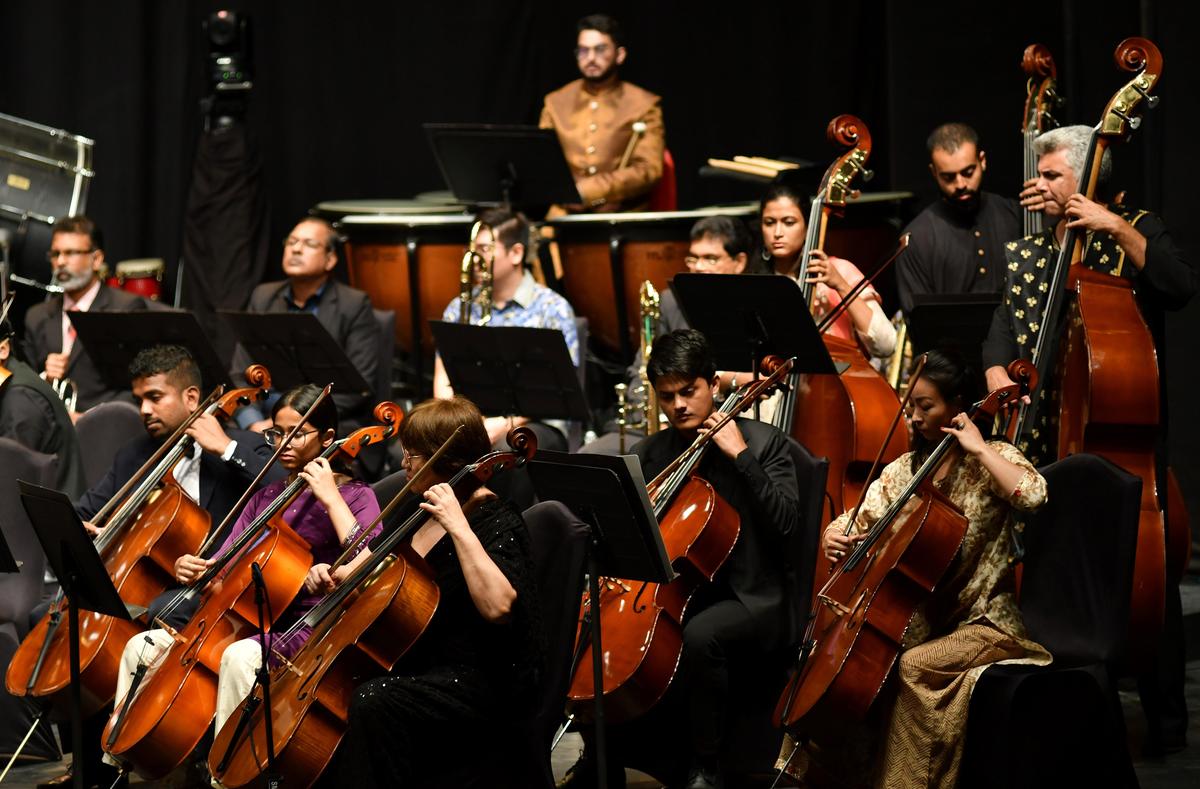
 The South Asian Symphony Orchestra at a previous recital in Chennai.

The South Asian Symphony Orchestra at a previous recital in Chennai.
| Photo Credit:
VELANKANNI RAJ

The young are angry now. They have every right to be. The world they have inherited is cracked in places that cannot be easily repaired. Sometimes they look at people like me as if we have failed them. On some nights, I agree.

But there are still small acts of resistance left to us. Musicians from lands that do not speak to each other in daylight sit side by side. They tune. They carry each other through difficult passages. There are no flags. No speeches. Just breath. That may be the most honest diplomacy that still survives.

I have no illusions. I know treaties can break. I know institutions decay. I know words lose their shine. But music still knows how to build a world inside silence.

I move more slowly now. I sleep more lightly. I forget names. I remember feelings. And I know this much with certainty: civilisations do not die from noise. They die when they stop listening.

If I have any work left, it is not to persuade, not to perform, not to impress. It is simply to keep a small space open, however fragile, where another voice may enter without fear. Where harmony is not an accident, but a choice.

That is the last diplomacy I believe in. And perhaps, in the end, that is enough.

The writer is a former Indian Foreign Secretary and the founder of the South Asian Symphony Foundation (SASF). She is based out of Bengaluru

Published – November 26, 2025 11:50 am IST


Source link

Photojournalist Gireesh Gopinathan’s solo exhibition captures the big picture through fragments


“The exhibition is a retelling of where I have been and what I have been through and who I have been with.” That is how Gireesh Gopinathan frames his solo photo exhibition, Panoramas But Not Quite, which begins on November 28 at College of Fine Arts Thiruvananthapuram.

This veteran photojournalist from Thiruvananthapuram is a trained painter, a photographer and a documentarian — three roles that he tapped into at the start of this project.

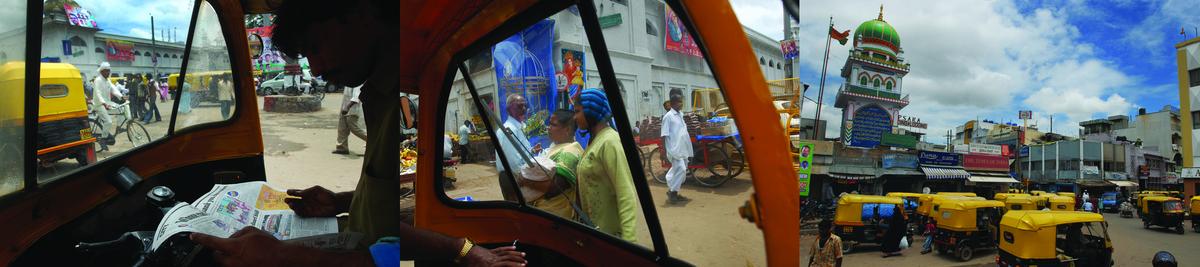
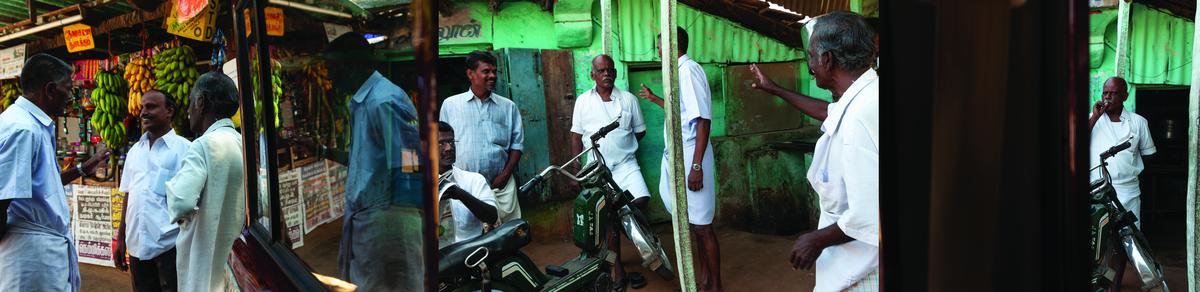
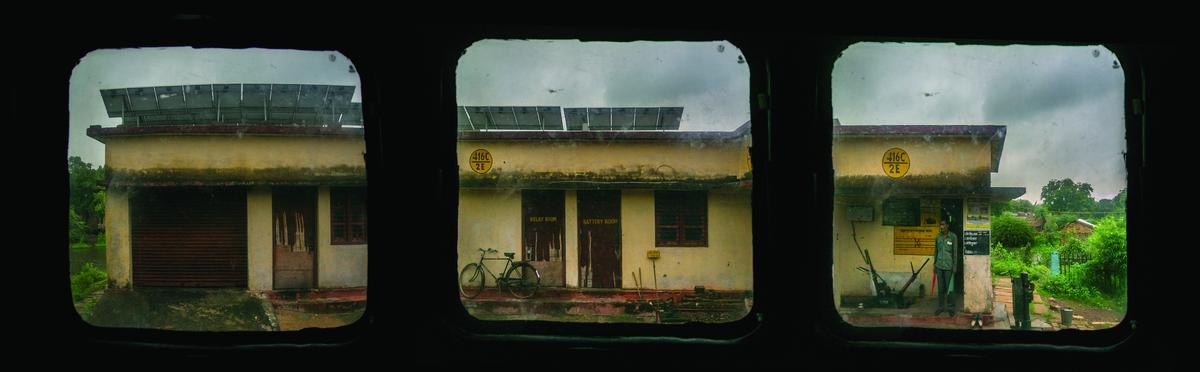
The showcase is a collection of extended compositions, including diptych (with two panels) and triptych (with three panels) montages captured over the past three decades, which shaped Gireesh’s identity as a storyteller and documentarian.

Today’s Headlines by Gireesh Gopinathan

Today’s Headlines by Gireesh Gopinathan
| Photo Credit:
Gireesh Gopinathan

Each installation brings together a series of photographs, capturing the same subjects from varied perspectives. The images seamlessly blend with one another, creating the illusion that the pictures were taken at the same instance. Gireesh shot the photographs across India and Sri Lanka during his days as a photojournalist.

“We spend hours waiting at different spots during our assignment. And often, we are unable to bring together all elements surrounding a subject into a single, wide-angled frame — therefore, losing the subject’s essence. As a solution, you shoot more, from different angles, and when we stitch these images together, it gains a new meaning,” says Gireesh, who thought of the exhibition in 2010, compiling images for the project since.

The show features 40 works captured on film and digital media. The photographic installations are inspired by the techniques of the American visual media artist, Man Ray.

“Two of the first works in the collection, Puffs & Politics and Still, Edge of Fear, were taken in 2005. It is set in Cuddalore and Nagapattinam in Tamil Nadu respectively, after the 2004 Tsunami, which wreaked havoc on the state’s coastal line,” says Gireesh.

Puffs & Politics by Gireesh Gopinathan

Puffs & Politics by Gireesh Gopinathan
| Photo Credit:
Gireesh Gopinathan

The photographer says this medium enabled him to approach his regular assignments differently. “Instead of limiting myself to just the aesthetics of the photos, I searched for a reason to tell that story. Whilst the artist in me was keen about how the lights, colours, shadows and subjects worked, the documentarian in me was determined to stay true to the reality of events without controlling the settings too much.”

Gireesh places a special emphasis on the mundane through his works, aiming to achieve a sense of universality — be it the pictures set in the infuriating Bengaluru traffic or the multiple panels portraying children jumping into an overflowing Narmada river in the hopes of finding coins from the riverbed. “I am not talking about places, I am talking about life,” he says.

Pilgrim and heritage travel in Madhya Pradesh by Gireesh Gopinathan

Pilgrim and heritage travel in Madhya Pradesh by Gireesh Gopinathan
| Photo Credit:
Gireesh Gopinathan

The show also displays photographs from Thiruvananthapuram where Gireesh spent his student life. Another installation displays a poignant sequence showing migrant labourers returning to their villages from Delhi during the pandemic.

“I began processing the images in 2019 and organised an online show in 2020 with 20 works, which was well-received globally. That was when I realised the potential of this photo series. In 2023, I began working on releasing the Panoramas But Not Quite photomontage book, which was launched by the Kerala Governor Rajendra Arlekar before the exhibition.”

Bygone Days by Gireesh Gopinathan

Bygone Days by Gireesh Gopinathan
| Photo Credit:
Gireesh Gopinathan

“The biggest challenge was identifying images which had the potential to be conjoint in this manner. Initially, people couldn’t understand my idea. Only when they see the product are they convinced about what I have tried to convey with my work.”

About the future of this project, the photographer says, “These works are about observing, constantly searching for something fresh from the same subjects, whether they can say something new. With time, I hope to explore something with a singular subject across locations.”

Panoramas But Not Quite will be on at College of Fine Arts, Thiruvananthapuram from November 28 to December 5.

Published – November 26, 2025 11:30 am IST


Source link

Three days inside Motoverse 2025


At Motoverse 2025

At Motoverse 2025
| Photo Credit: ASHIKTHOMAS

I knew what waited for me the moment I landed in Goa last week. Something straight out of Mad Max: Fury Road. Engines snarling, dust hanging in the AQI like prophecy, men and machines moving with purpose — the purpose being the love of motorcycling, where the journey is the destination.

I was walking back into a world I had sworn I had left behind. A past love calling. Ironic, considering I have done my fair share of long-haul cross-country biking. Chennai to Mumbai via Bengaluru and Goa — 1,800 kilometres of breeze, highways and clean air. Then the return trip a few years later, again over a week, because I had to take the motorcycle back and my stress-related backaches disappeared magically.

Bikers at the event

Bikers at the event

And then the big one. Rajasthan during Demonetisation. Udaipur to Jaipur to Pokhran to Jaisalmer and back to Udaipur in three days — 1,600 kilometres riding along potholes and trenches, enough trauma to make me promise myself I would never swing a leg over a motorcycle again.

Yet here I was, walking out of the North Goa airport, excited like it was my first time. Three days for the love of all things motorcycling. The Motoverse (November 21-23).

On arrival, the folks at Royal Enfield handed me the key to a Hunter 350 the night before — 11 litres in the tank to explore Goa during the Motoverse. The perfect Goa bike. Whether I was dodging potholes or slicing through them, the suspension took most of the brunt. Compact, nimble, easy to flick through traffic. I was all set.

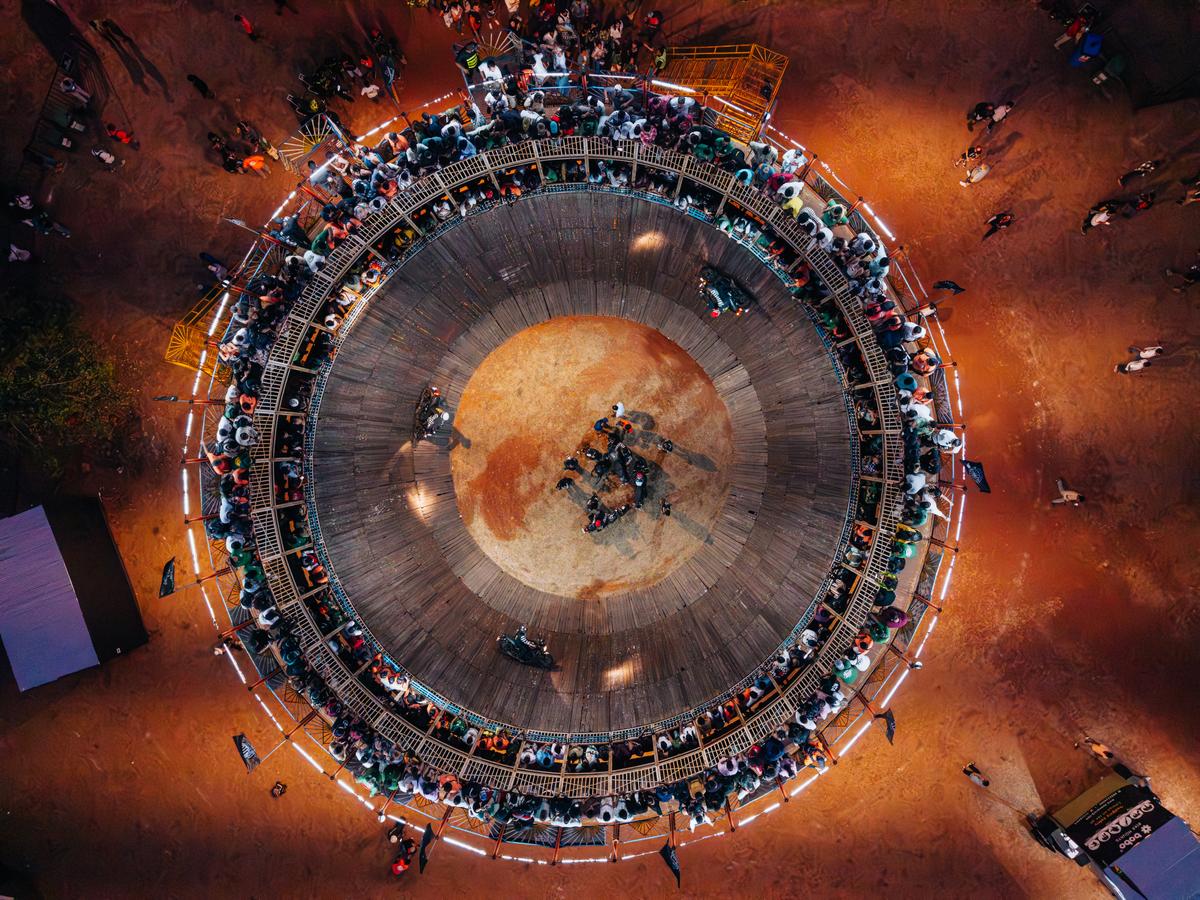
A drone shot of the event

A drone shot of the event

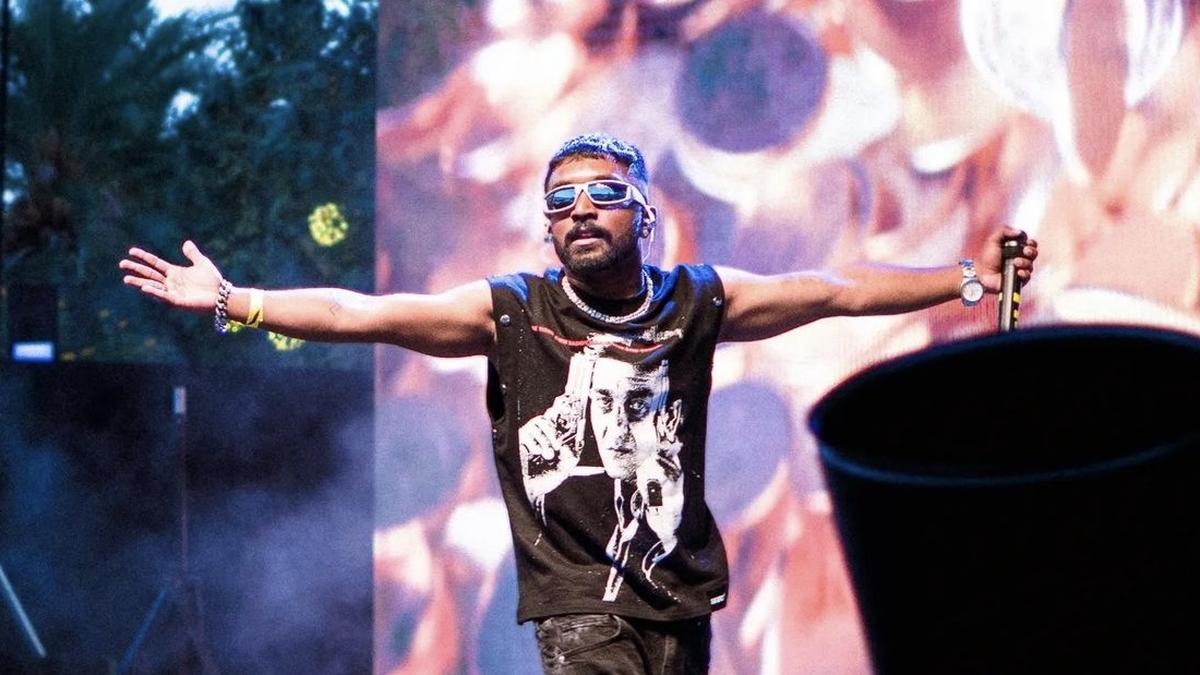
Hanumankind at Vagator

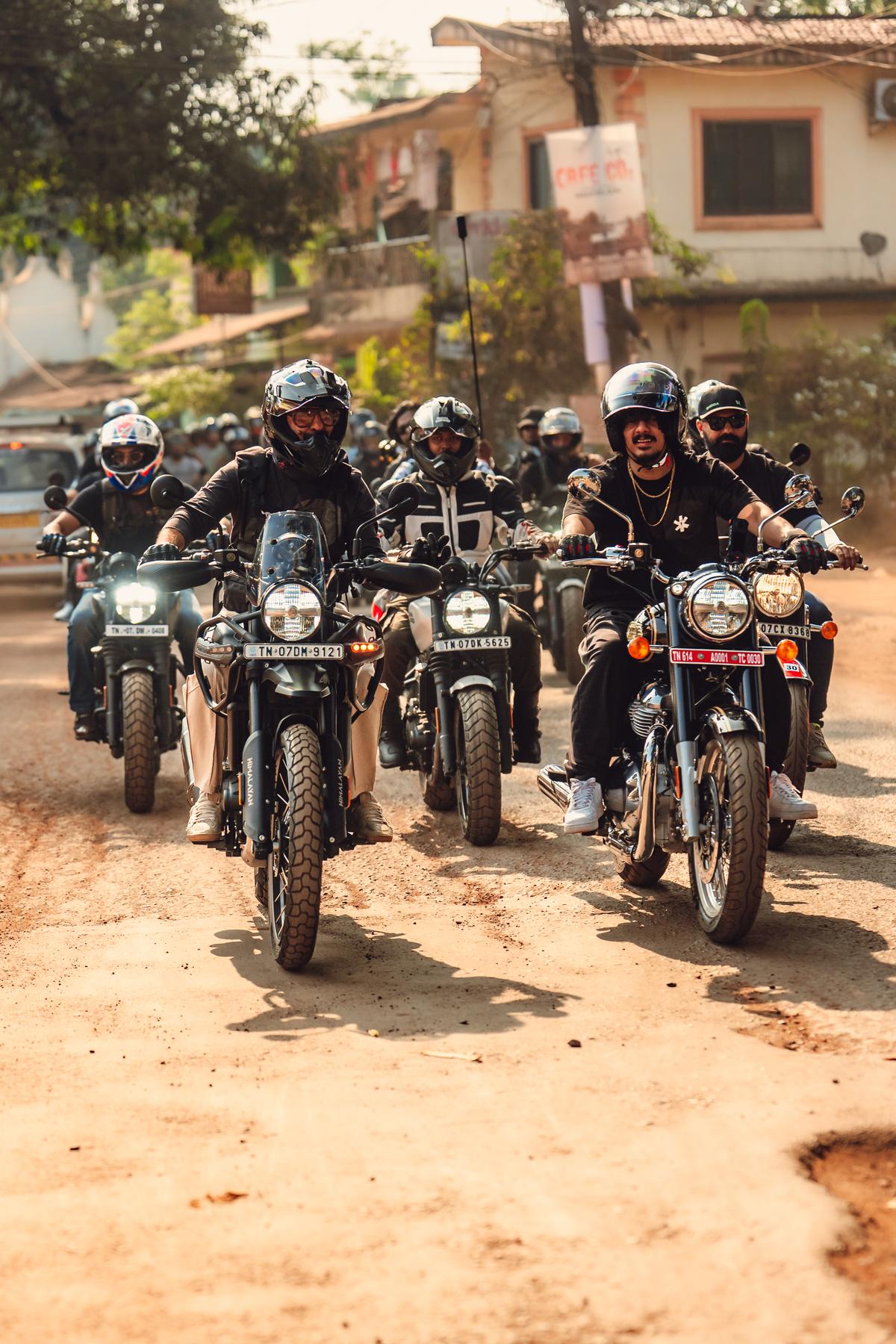
It is not every day you see rapper Hanumankind gloving up like a prizefighter before mounting a bike. From Garage Café, he led a pack of riders up to Vagator Hilltop, the venue for what would become three days of controlled chaos. Helmets gleaming, machines revving, a convoy worthy of a George Miller storyboard. Even Siddharth Lal, Royal Enfield’s chief, rolled in with the swagger of a man who bleeds motor oil.

Hundreds of riders took over Goa’s roads as locals stopped to film the spectacle. For a moment, we weren’t on NH66 or a sleepy Goan lane — we were in our own cinematic universe. A pilgrimage. A shared beat.

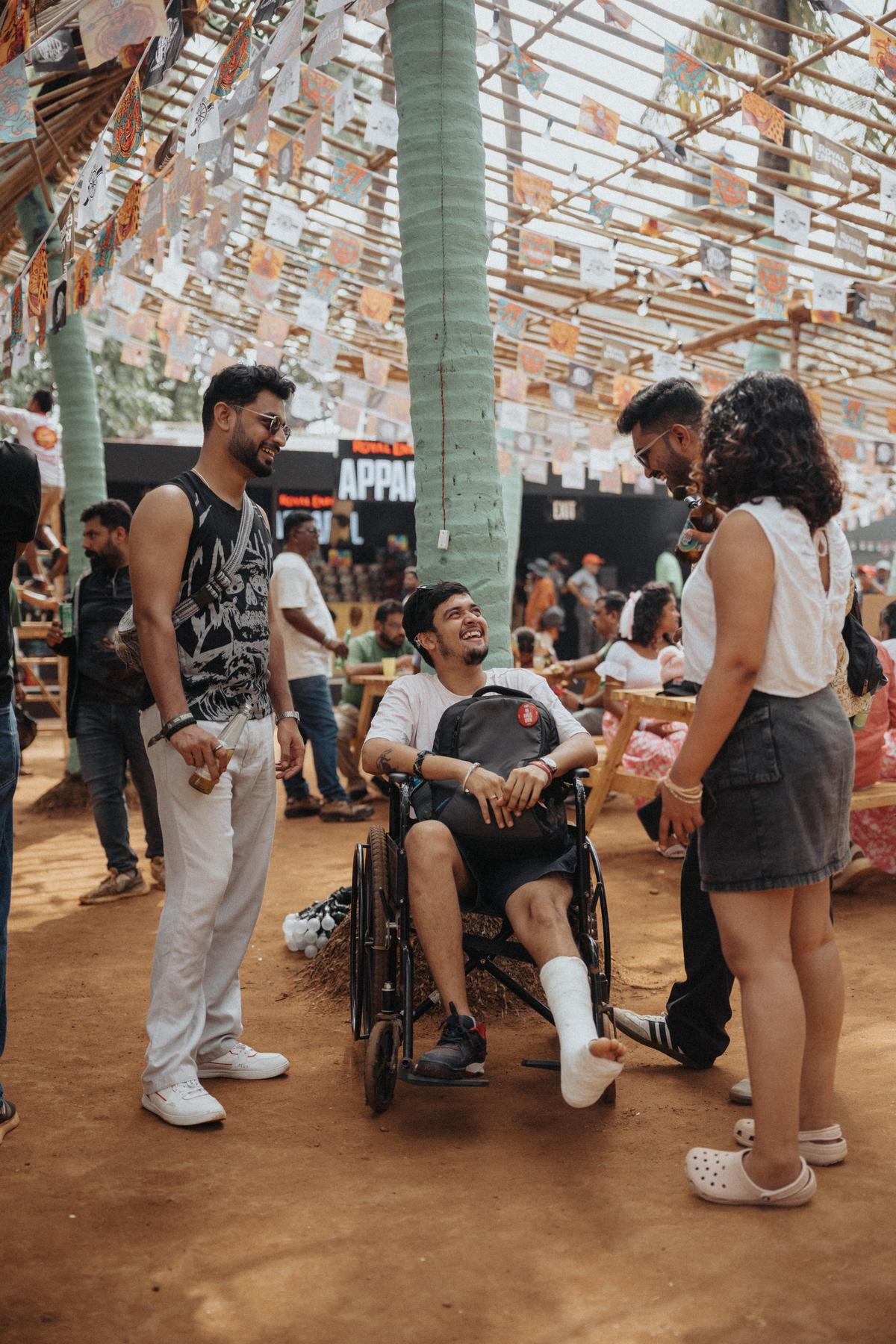
Attendees at The Motoverse

Attendees at The Motoverse

Vagator Hilltop had morphed into a giant carnival — a moto mela, a biker’s Comic-Con or Disneyland. Stalls everywhere. Vintage jackets, touring gear, bizarre accessories, food counters that smelled like every Goan kitchen I have ever loved. Mozzarella sandwiches from Artjuna. The perfect Hot Head pizza at Como Agua Pizzeria. Plenty to eat and drink for foodies.

At the heart of the Hilltop, riders defied physics at the Maut Ka Kuan, racing motorcycles around a wooden well as if gravity was optional.

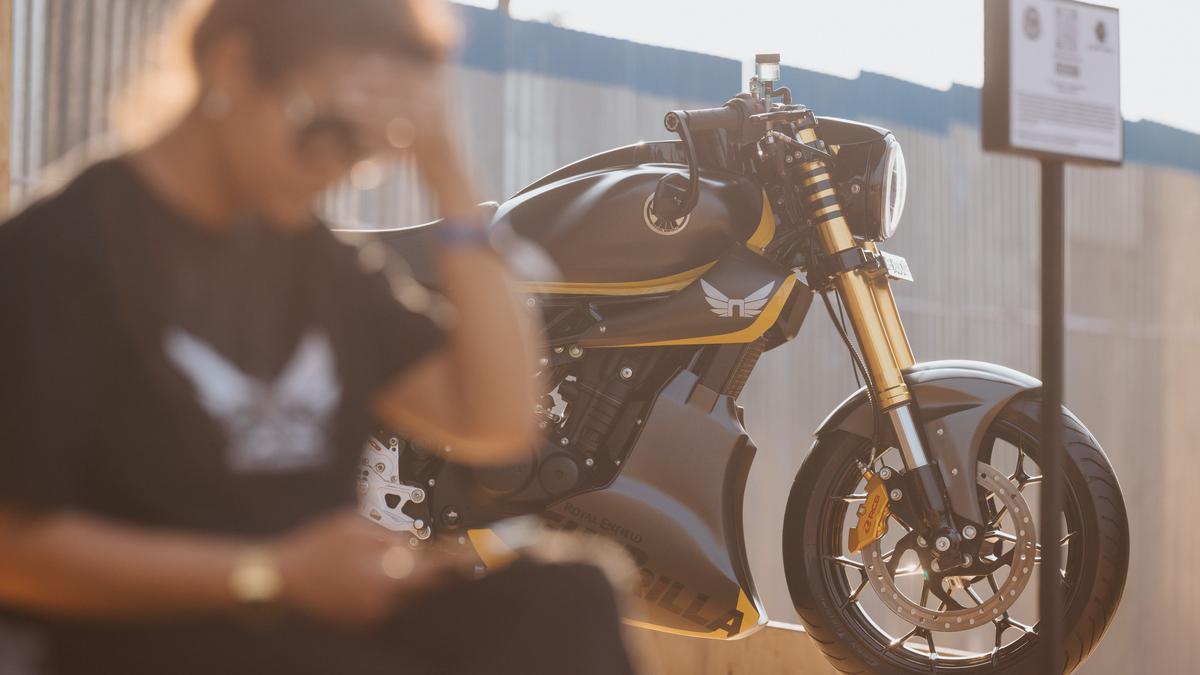
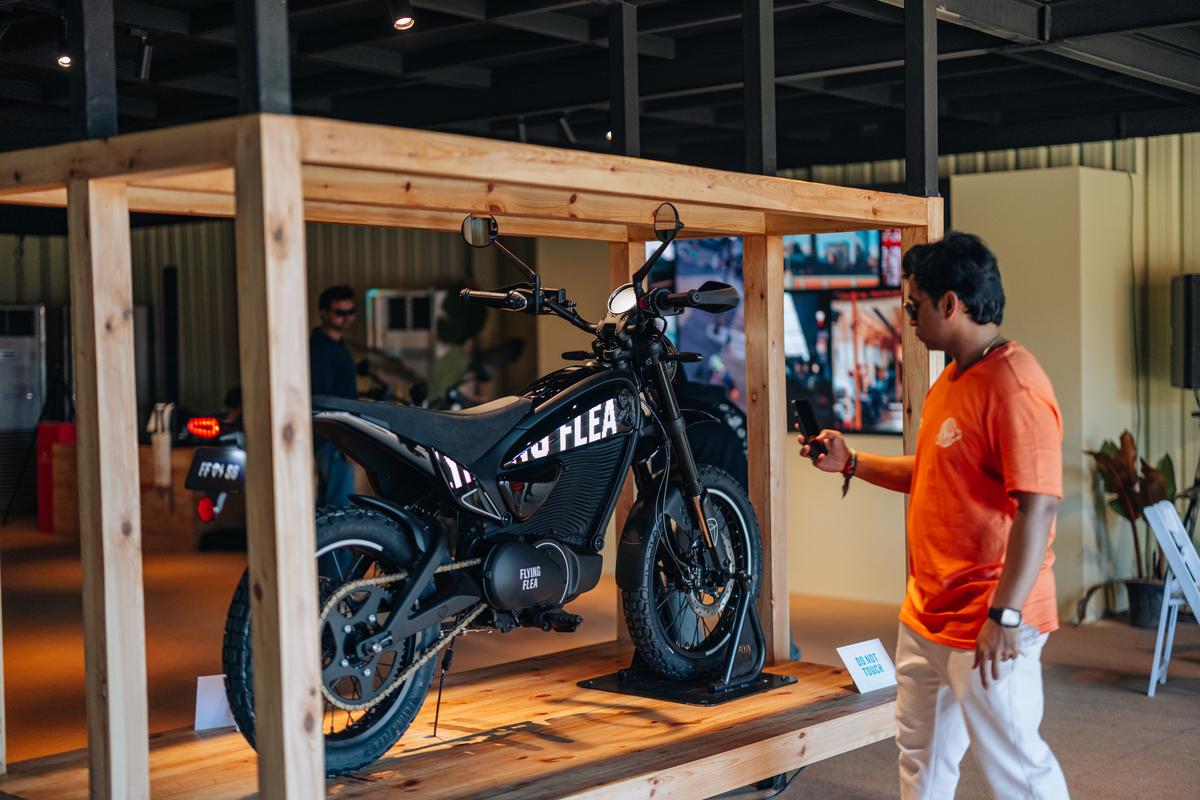
The big showcases drew their own crowds. New Royal Enfield motorcycles gleamed under spotlights. The new apparel lines — the graphic-forward Comic Helmet, the upgraded Motowave X2 Bluetooth unit, the exclusive Motoverse Collection — were laid out for riders to poke, prod and test. I rode out sporting Vallon Moto Aviators to explore my favourite haunts before returning to base for the gigs.

Day one ended with Hanumankind revealing he was getting back on stage after surgery, though he had been advised rest. He wanted to take it easy, but this was an offer too good to refuse. The crowd of thousands made it worth his while as he kept the momentum going with a high-energy act, sweating so much he took his shirt off. Thaikkudam Bridge had just warmed the crowd up earlier.

A bike on display

A bike on display
| Photo Credit:
ASHIKTHOMAS

Every evening, artists performed on different stages. On day two, I caught Dot and the Syllables, who charmed indie fans with her jazzy vocals after a ten-minute fashion show with models showing off the apparel range. After a bit of Aman Negi, I walked over to the main stage to catch DJ Diplo, who had the crowds vibing to bhangra beats and EDM.

Enroute Panaji

A trip to Goa is incomplete without a visit to Panaji, where the International Film Festival of India (IFFI) happens at the same time. So at the end of day two, I biked my way 22 kilometres to hang with my filmmaker friend Q, who threw a party at Praca Prazeres to celebrate the distribution deal of his new film Deshlai (Zewel). Fellow filmmakers Vishal Bhardwaj and Kiran Rao dropped by to wish him luck.

On the final day, after watching Moto Polo where a local Bengaluru team beat a pro-level international team, a friend and I decided to ride all the way north to Morjim to check out the hippie scene. We found it replaced by mainstream candlelit dinner shacks charging ₹1,500 per person for an inside table and ₹2,000 for a table by the beach. We rode back to Chapora to chill by the bustling dive scene around Darlings after getting a bite at Boiler Maker, rated one of the top 50 bars in Asia.

A snapshot from The Motoverse.

A snapshot from The Motoverse.

Just before returning the bike the next day on reserve — four litres — after 140 kilometres, I had a moment to myself. Lunch by the sea at Purple Martini in Anjuna. Somewhere between the new scale model displays and the roar of dyno tests, I realised how much I had missed motorcycling. I was home again.

The writer was in Goa on invitation of Royal Enfield


Source link

Bengaluru-based Tamil rapper Killa K on music, representation, and his hit single Nalla Pulla


Rapper Killa K

Rapper Killa K
| Photo Credit: Special Arrangement

“I will be on the cover of Vogue one day.” Killa K, the Bengaluru-based rapper has big ambitions not only for his music, but also for fashion that is an integral role of his persona.

In preparation for his directorial debut of his music video for ‘Nalla Pulla’, the teaser for this track was posted around mid-September on his social media page. The artiste says he looks forward to being behind the camera for the first time, charting out the creative visuals, aesthetics and narrative. 

In a sit-down interview with The Hindu, the rapper speaks about his journey that began with his first single, ‘Va Voi’,which went viral in 2021. He believes his music resonates with the spirit of Bengaluru’s streets. The artiste has created a niche for himself with his authentic energy and funky style.

Home boy

Killa K, who was christened Kevin Lourd, talks about his life growing up in Sultanpalya surrounded by friends and family, whom he considers his greatest assets. “They inspire me,” says the artiste who credits ‘Va Voi’ to his childhood friend Sohan Gowda.

Rapper Killa K

Rapper Killa K
| Photo Credit:
Special Arrangement

Initially, he was clueless about creating music; the song was recorded using a sock and a phone with a blanket over his head. Sohan not only shot the video, but also edited it and began a YouTube channel for Kevin. 

“My parents had no idea I was shooting the video. My friends brought over some of their clothes, and I had a few of my own. It was not fashionable at all, but that is how the music video was made.”  

As a child, he recalls being exposed to two different worlds. His education at St Joseph’s School showed him a world of luxurious homes and branded clothes. The other was his home in Sultanpalya, where his friends would play football barefoot after a hard day’s work in construction sites. He says the first pointed him in the direction he wanted to go, and the second taught him the value of hard work.

The music videos for Killa’s songs incorporate an unfiltered aesthetic of Bengaluru — one that is bold, vibrant and realistic in its beauty. The houses may be huddled together and the streets chaotic but his people are rich; with a wealth rooted in culture, warmth and character, says the artiste. 

Like minds

Talking about ‘Podu Mike’, his collaboration with Singaporean Tamil rapper Yung Raja in 2024, Killa says it was a dance track made for the streets, a celebration of two different cultures of Tamil coming together.

 Rapper Killa K

Rapper Killa K
| Photo Credit:
Anagha Maareesha

The language used was the Bengaluru dialect of Tamil with a mix of street slang, thapang beats, and the sound of the Parai drums. Killa says it is a form of spoken Tamil that is a mixture of different languages, including Urdu and Kannada, and represents the diverse culture of the city. 

 “My language is what made me today. I’m not cool, Tamil is cool. I am just showcasing that.”  

For fans who wonder what is next, Killa says one can expect an absolute revolution. Inspired by the different eras of Eminem whose music he grew up listening to, Killa who wants his fans to connect with his music on a personal level, promises that “something different, fresh and extraordinary” will drop soon.    


Source link

Movement Festival of Kerala debuts in Kochi with a showcase of contemporary dance performances from India and abroad


When the curtains go up on the first edition of the four-day international contemporary dance festival, Movement Festival of Kerala (MFOK), on November 27, at the Kerala Fine Arts Hall, it would be the fruition of a dream for dancers/choreographers Sreejith P, Paris Laxmi and Abhilash VS to create a space for contemporary dance in Kerala. One where contemporary dance is understood as a practice and not merely a show of athleticism and physical flexibility that it is perceived as. 

And at the core of MFOK is BOHO, a community of contemporary dancers the three dancers created. The three have been collaborators since 2021 when Sreejith called Laxmi to discuss this idea, of a community and a possible collaboration for it. That resulted in BOHO. Abhilash is also a dancer and one of Sreejith’s students. 

Nerpala

Nerpala
| Photo Credit:
SPECIAL ARRANGEMENT

Although Laxmi has made her name as an Indian classical dancer, she is trained in jazz, ballet and flamenco, which she teaches in Kochi. A platform like BOHO was an opportunity she had been wanting. “It arrived when I was desperately looking for other avenues to explore dance. If I had not found them [Sreejith and Abhilash], I would have done something myself,” says Laxmi laughing. Earlier this year, in February, Laxmi’s Maatr Art Foundation hosted a dance festival that showcased various dance forms including Indian classical. 

Festival schedule

As part of MFOK’s outreach activities, artists from India and abroad have been conducting workshops before the performance festival, since November 17. These will conclude on November 26. The facilitators are Sarah Ellsworth from New Zealand, Abhilash Ningappa from Bengaluru and Shiraz Dagan from Israel. The performance festival will begin on November 27, with a performance, Reflet, by French company Compagnie Xuan Le at the Kerala Fine Arts Hall, presented in association with French Institute of India and Alliance Francaise.

The performances from November 28 to November 30 will be held at JTPac, Tripunithura.

November 28: Jaga Illa by Vishwakiran Nambi and C-Tactile by Shruti Datar (7pm; 8.15pm)

November 29: To-Mould by Somya and Sarah, Pinnal by Dakshina, Mol by Myan Dance Company (6pm, 7.15pm, 8.45pm)

November 30: Nerpala by Dileep Chilanka and Jwala by Mythili Prakash (6pm, 8pm)

Tickets on indiaeve.com

Sreejith had been thinking of a community like BOHO for several years. A veteran choreographer, he speaks of providing opportunities to young dancers that he never had when he was young and starting his journey in dance.

“Space, time and opportunities were the things that I did not get, but I wanted to change that. I want youngsters and those interested to get the exposure and chances I did not have in the 1980s-90s,” says Sreejith, best known for his recent choreography for the Malayalam film Moonwalk. It was something that always came up in his conversations with fellow performers — dancers and choreographers. Abhilash was one such person. 

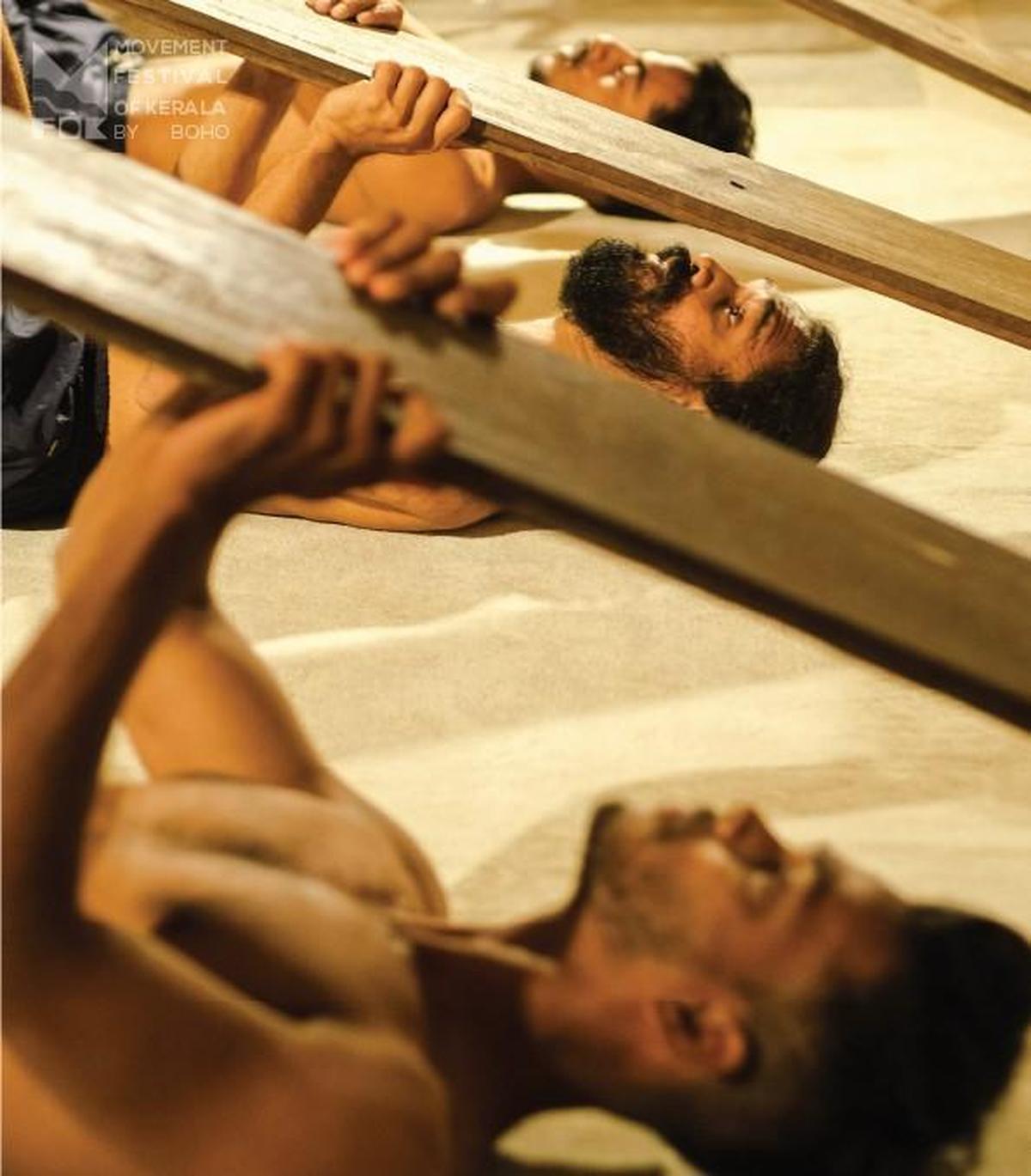
Jaga Illa

Jaga Illa
| Photo Credit:
SPECIAL ARRANGEMENT

“I started thinking differently about dance. And that thought process made me think of conceptual choreography when it comes to contemporary dance. That is, our choreography and practice be such that we speak of contemporary issues through dance. Give it the quality of a theatre production, of physical theatre, for instance,” says Sreejith, also known as Sreejith Dazzler and has trained at Attakalari, Bengaluru. He has a dance studio, Dazzlers in Kochi. 

BOHO became a reality post-COVID; its work includes conducting workshops and seminars besides stage productions.  “It is a space for artists: writers, choreographers, art directors, actors… you name it. It is intended as a created space for them,” adds Abhilash. Earlier, learning contemporary dance meant having to travel to Bengaluru, Goa or Mumbai, he adds. BOHO has been able to get choreographers to Kochi, providing dancers in the State, access to some of the best in the field.  

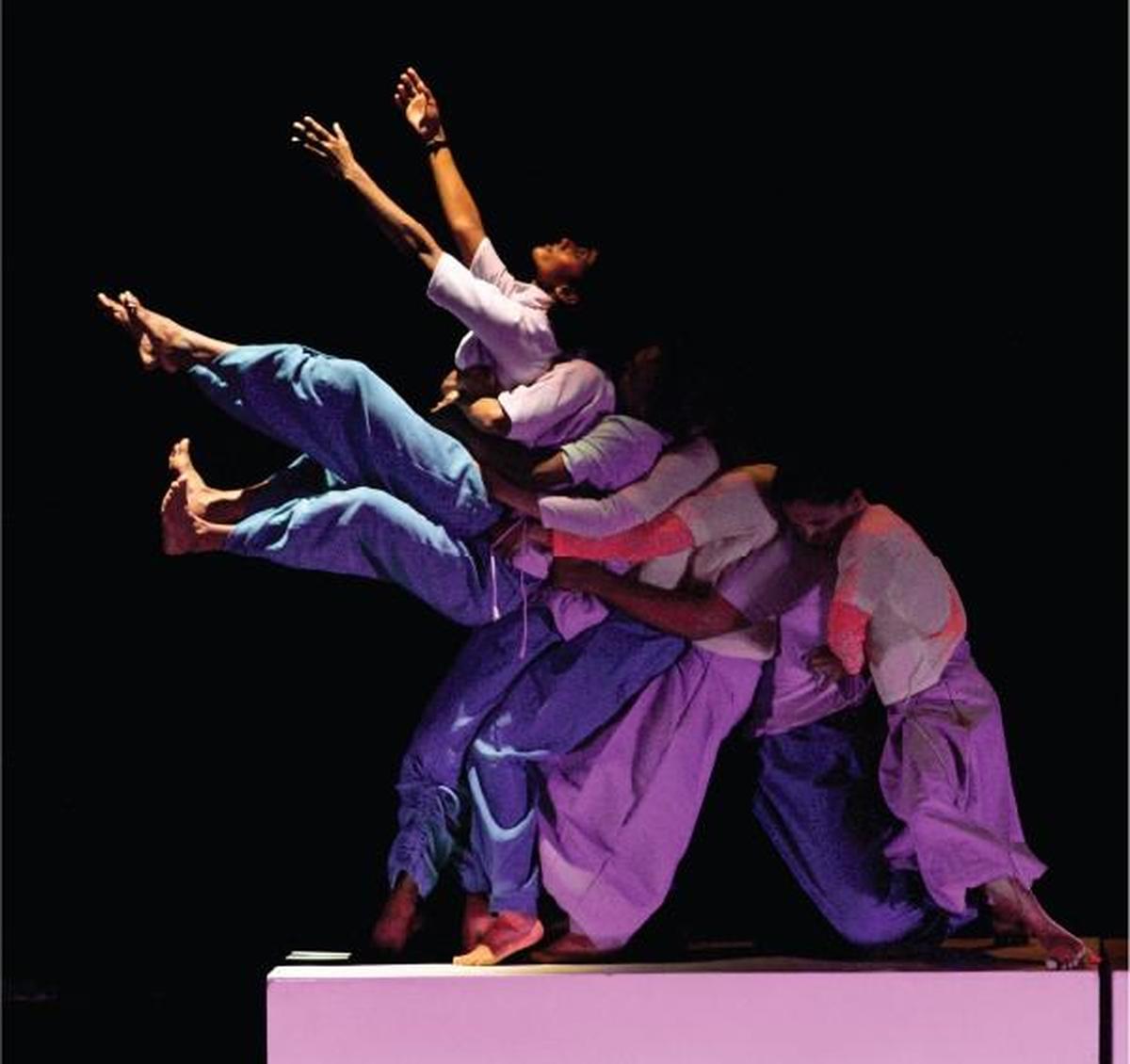
C-Tactile

C-Tactile
| Photo Credit:
SPECIAL ARRANGEMENT

As of now they do not have a physical space and BOHO is being ‘hosted’ by Aal Studio at Valanjamabalam. It is a dream that they hope to realise but as a residency in order for visiting artists. So far it has facilitated 60-odd contemporary dance workshops with choreographers from India and abroad.

Although BOHO has not hosted a festival before, it has put up two productions: Transcendance, Laxmi’s first with the community, staged in 2022, and ‘The Hope Song’ by AR Rahman as part of Aadujeevitham promotions in 2024.

MFOK is their first such attempt, on this scale, with which they hope to familiarise the audience with contemporary dance as a serious practice, like any other classical dance form. 

Drawing an analogy with the classical dance forms, Sreejith says, “Take Kathakali, for instance. One’s learning and familiarity with it makes for heightened appreciation…it is like that with contemporary dance. And that experience is gained by watching performances. We are trying to create awareness about it or educate.” 

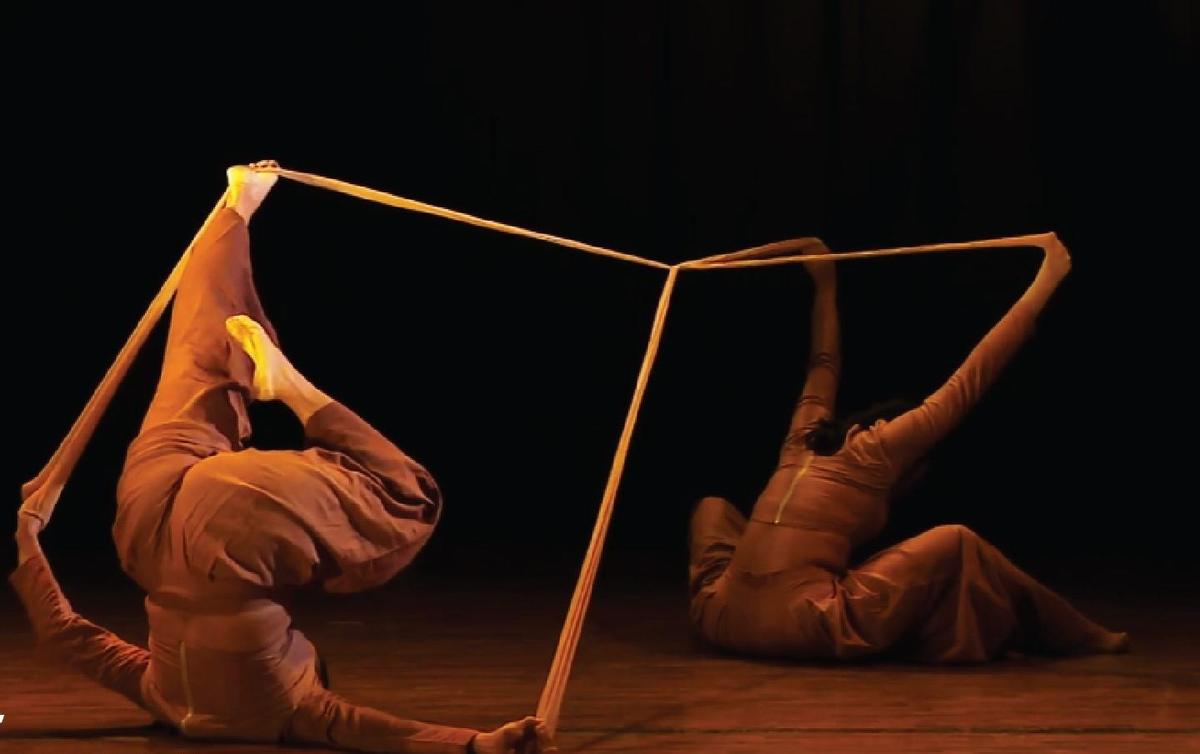
Pinnal

Pinnal
| Photo Credit:
SPECIAL ARRANGEMENT

It is not just the aspect of performance, “We want a shift in the perception of dance where the audience plays a more active or rather interactive role,” adds Abhilash. He speaks of audiences at dance performances elsewhere questioning the dancers, wanting to know more about either the performance or the thought process behind a dancer’s take, “As dancers we cannot perform in a vacuum, audience feedback makes the dancer think, find relevant answers…” 

They have experimented with presenting a choreography differently during workshops and subsequent performances. One of those was having the performers move among the audience, making them a part of the show.  They even had the performers sit among the audience. These are early days, but they are opitimistic.  

The trio speaks of a serious approach to the form as opposed to what passes off as contemporary dance performed to Bollywood music. “It is possibly the influence of reality shows and television, which is unavoidable these days. We want dance to be thought provoking, ” says Sreejith. “There is a lot more to contemporary dance than the moves…” 

Laxmi adds, “There are different styles of it. Research, an understanding of the culture and background are important. That elevates the experience!” 

Movement Festival of Kerala is from November 27 to November 30, at Fine Arts Hall and JTPac; tickets on indiaeve.com  

Published – November 25, 2025 04:29 pm IST


Source link

When music builds bridges – The Hindu


 The South Asian Symphony Orchestra at a previous recital in Chennai

The South Asian Symphony Orchestra at a previous recital in Chennai
| Photo Credit: VELANKANNI RAJ

“Music is our way of building bridges,” says former Indian Foreign Secretary Nirupama Rao, the founder of the South Asian Symphony Foundation (SASF) and its orchestra, “established with the foundational goal of using music as a universal language to overcome global division, conflict, and rising nationalism.”

The organisation, which launched its orchestra in 2019, uniting musicians from various South Asian nations and the diaspora to foster cooperation, connectivity, and mutual understanding through cultural and citizen diplomacy, will be organising two events in the city this weekend.

On Friday, November 28, SASF will present a lecture, ‘Strings Across The Ocean’ by Katherine Schofield, a professor of South Asian music and history and the head of the Department of Music at King’s College London.

According to the event announcement, this talk follows that long, intertwined history through the journeys of stringed instruments: objects that silently carried culture across empires, oceans, and eras, reflecting on cultural entanglement, the circulation of musical ideas, and the power of sound to bridge distance.

“From the short-necked lute of ancient Gandhara that travelled west to become the medieval European lute, to the Italian violin that arrived on colonial ships in the 16th century before being transformed into a beloved Carnatic instrument, the movement of strings reveals centuries of exchange. Today’s global sitar and electric guitar continue that story of evolution and mutual influence,” it states.

The talk will be followed by a recital by the South Asian Symphony Orchestra (SASO) on November 29, featuring around 120 musicians from across South Asia, the South Asian diaspora in the United States and Europe, as well as choirs from Bengaluru and Chennai.

Nirupama says that she is especially moved by “who sits in the orchestra. You have musicians from different parts of South Asia, different languages, training, even life stories — but once they start playing, those differences don’t disappear, they become strengths. It’s a very real picture of coexistence.”

Led by SASO’s resident conductor Alvin Arumugam, the orchestra will perform an eclectic variety of music, including arrangements of a Carnatic Nottuswara, timeless melodies from Raj Kapoor’s films, choral and vocal music, with German, French, Italian and English arias, with the centrepiece of the concert being the powerful Symphony No. 9, by Ludwig van Beethoven, which “feels like it was written for what we’re trying to do,” says Nirupama, pointing out that it is about human solidarity and shared joy. “That’s exactly the spirit of SASF. When we perform it in Bengaluru, it isn’t just a musical choice; it’s a statement about the world we want to imagine.”

In her opinion, both the talk and the concert are tied to the foundation’s larger purpose: the lecture focusing on how cultures have always influenced each other through music, while the concerts depict that idea in real life, “with musicians from different countries sitting side by side and creating something together. That’s really the heart of why the Foundation exists.”

‘Strings Across The Ocean’ will be held at the Bangalore International Centre, Domlur, on November 28, starting at 6.30 pm, while the South Asian Symphony Orchestra (SASO) will perform at the Prestige Centre for Performing Arts, Konanakunte, on November 29 from 7 pm.


Source link

Bengaluru Studio Potters Market 2025 returns with 34 first-time artists


This is the season of joy and what better way to bring it in than getting your shopping list ready. If all things handmade catch your fancy, the upcoming Bengaluru Studio Potters Market is where you should head. This year marks the event’s fourth edition that is all set to showcase the creations of 34 artists from across India.

Kshitija Mitter, who launched Bengaluru Studio Potters Market with Nalini Dharan in 2016, says 2025 marks a significant evolution for the event. All the artists are showcasing their work for the first time at the annual event and the diversity of work is wider and richer featuring senior wood-firing artists, potters transforming their ceramic ware into painted canvases, etc.”

Art by Namrata

Art by Namrata
| Photo Credit:
Special Arrangement

From quirky miniatures and Christmas ornaments to ceramic decor and pet portraits, the market brings a unique mix of artists. Kshitija says a conscious decision is made every year to spotlight terracotta “It is a tradition we consciously encourage as terracotta practices are increasingly threatened by rapid urbanisation.” 

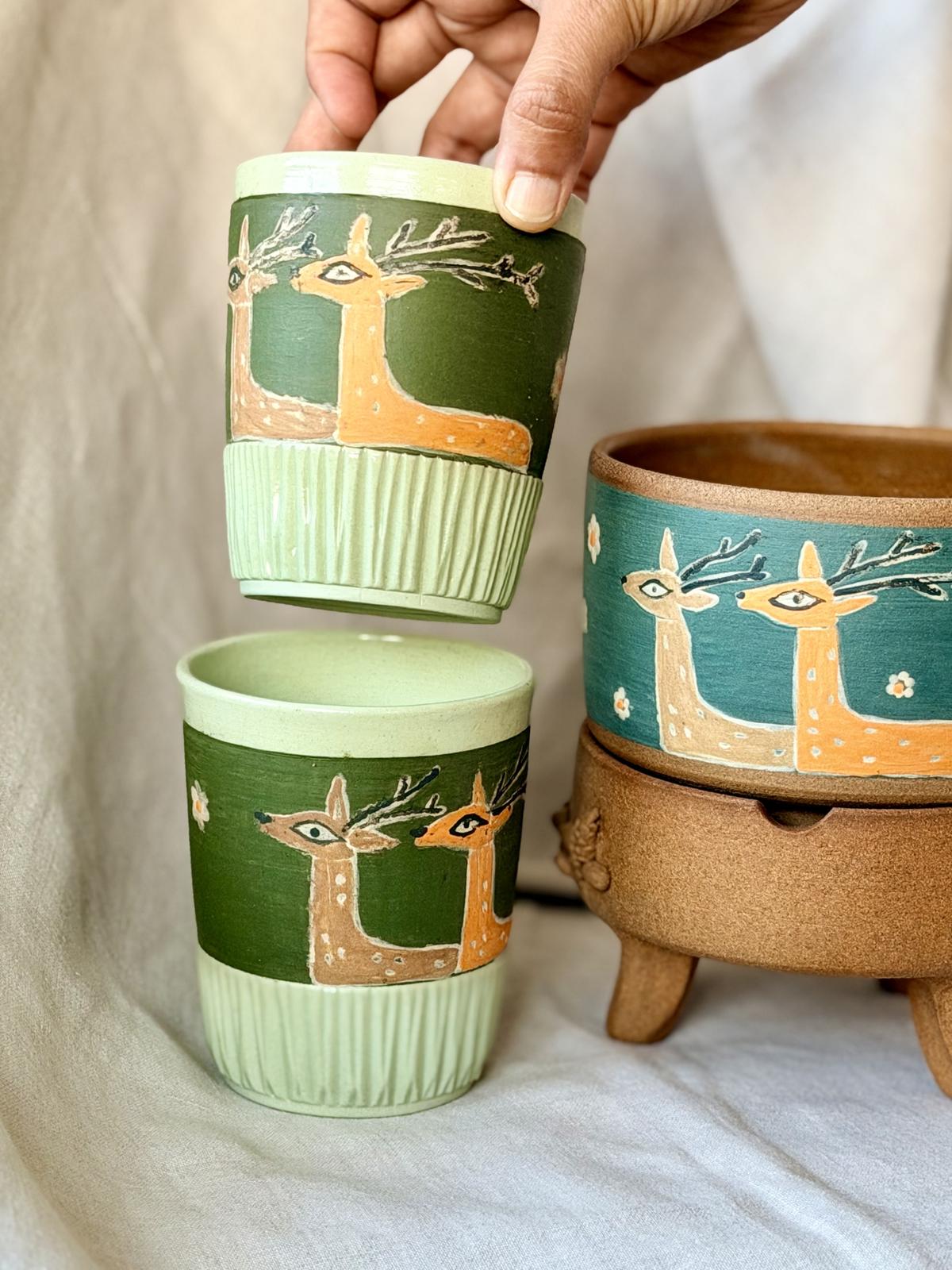
Artist Medha Bhave talks about how her journey with clay started six years ago, but her fascination with the medium dates back to her college days. “Clay is a canvas for me to express myself and my love for flora and fauna, wildlife, and the art of origami,” says the 48-year-old artist from Thane. The artist combines traditional wildlife imagery with an imagined vibrant and unconventional reinterpretation.

At the event, Medha will showcase mugs, platters, jewellery, and ceramic sculptures inspired by origami folds. “For the latter, decorated with bright colour motifs and accented with a fold, these elements add a cheerful, whimsical touch to any shelf or desk.”

A creation by Medha Bhave

A creation by Medha Bhave
| Photo Credit:
Special Arrangement

This year, visitors can also attend two curated ceramic shows, a first for the event. These exhibitions feature Bengaluru artists such as G. Reghu, Ullaskar De, Amrita Dhawan, among others. “Through the market and these new exhibitions, our intention is to continue building a strong, interconnected ceramic community in Bengaluru, and to offer a meaningful platform where artists across generations and styles can come together, showcase their work, and be celebrated,” adds Kshitija. 

Dewakar Chandran

Dewakar Chandran
| Photo Credit:
Special Arrangement

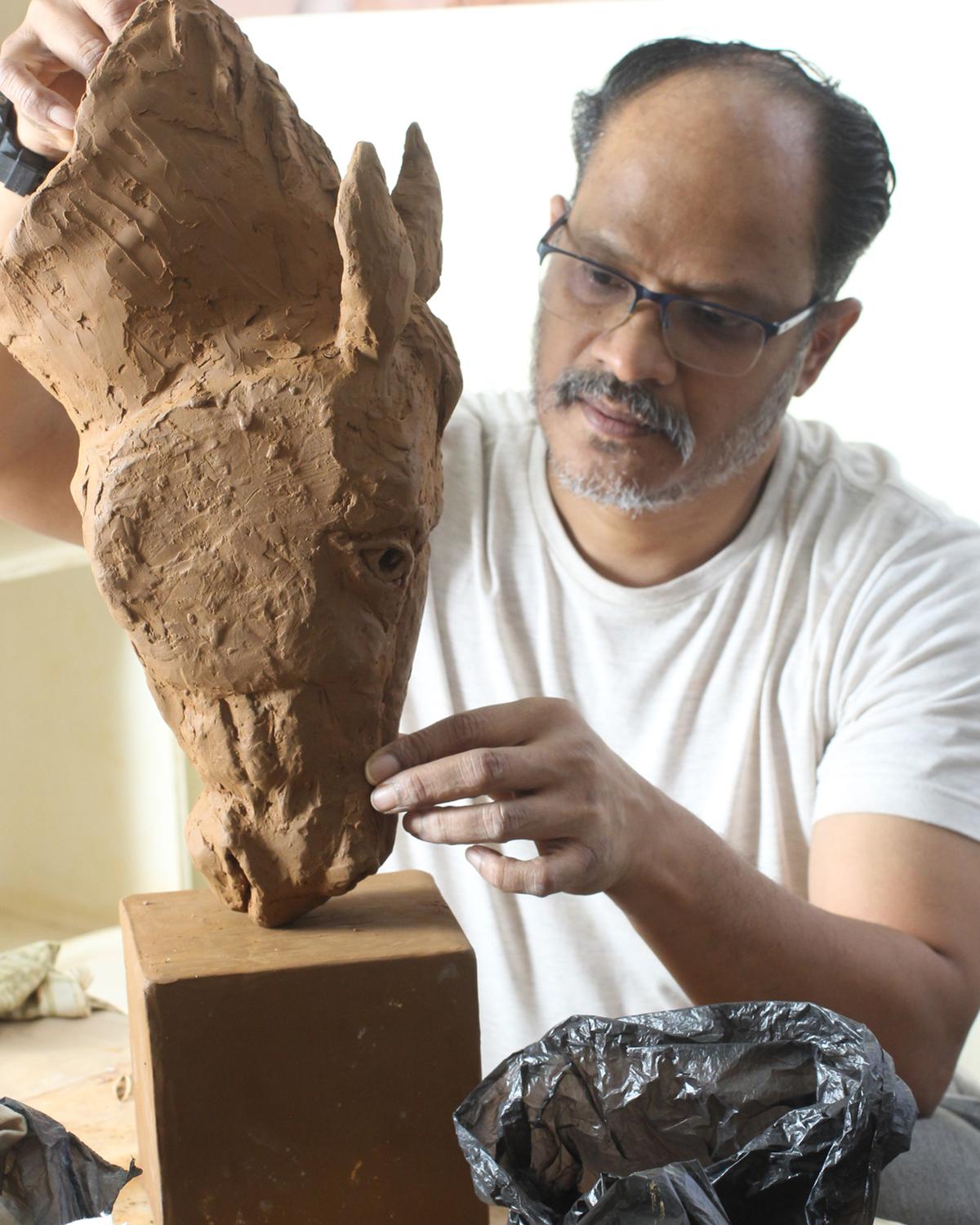
Third Eye Artistree is a deeply personal exploration of the human and animal form by Chennai-based Dewakar Chandran. The founder of Life and Art Academy, the sculptor, potter and ceramic artist says his creations are rooted in his “long-standing interest in surrealism and anatomy; the collection highlights the power and grace of subjects like horses, bulls, bears, and the human torso — each sculpture crafted to evoke movement, presence, and emotional depth.”

Ceramics by Gauri Oak

Ceramics by Gauri Oak
| Photo Credit:
Special Arrangement

Bengaluru-based ceramic artist Gauri Oak brings Tānā Bānā, a collection that interprets India’s Ikat handlooms through contemporary ceramic form. “The name Tānā Bānā refers to warp and weft and is an Urdu phrase often used in poetry to describe the structure underlying both fabric and storytelling,” says the artist of the range rooted in childhood memories.

“It draws from my early years spent watching my mother choose and wear her saris with effortless grace. This shaped my fascination with textiles long before I understood its influence,” says Gauri who will bring textile-inspired surfaces on functional ceramics.

Art by Meghna Amonkar

Art by Meghna Amonkar
| Photo Credit:
Special Arrangement

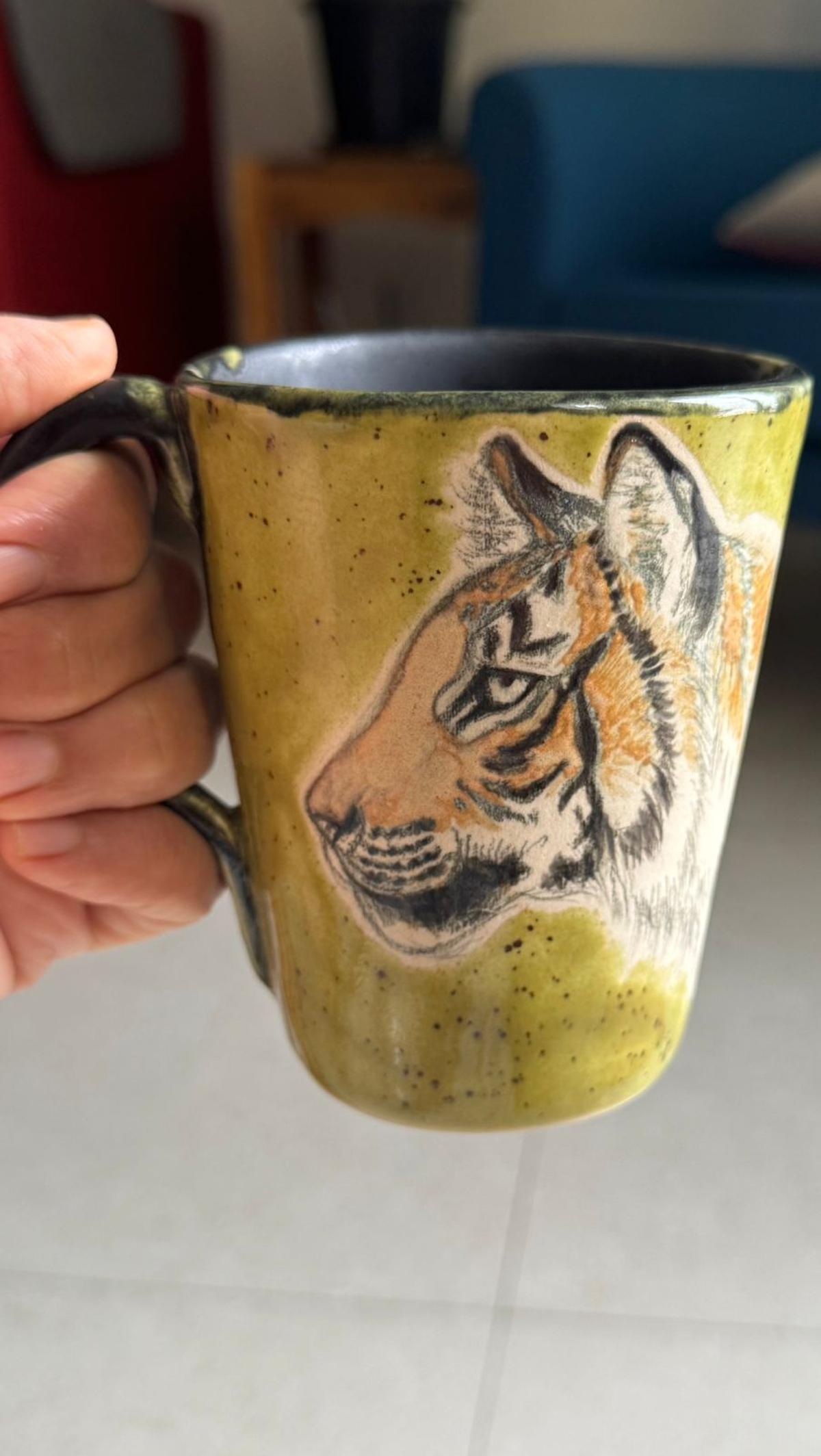
Drawing inspiration from the furries around her, Meghna Amonkar specialises in pet portraits set in ceramics. “Ceramics is a very temperamental medium that teaches you to slow down and respect the forces of Nature that play a big part in how each piece turns out. It requires a mindful handling of the clay body at every stage and it can be unforgiving if you try to rush it at any point,” says the Mumbai-based artist who does not have formal training in sculpting.

“When sculpting different animals I can actually feel and understand why their bodies are shaped the way they are. There is so much physics at play and each piece teaches you something new.” Meghna will be bringing pet figurines, mugs, plates, and more.

Creations by Meenakshi Varma

Creations by Meenakshi Varma
| Photo Credit:
Special Arrangement

Playing up vibrant colours and Indian motifs rooted in Nature, Meenakshi Varma specialises in working with materials such as glass and wood. “At the moment, I am creating custom ceramic decor, handpainted pieces, and 3D floral art,” says the Bengaluru-based artist who also runs a pottery studio, Oriri, where she sells her art online and takes personalised pottery sessions.

Kshitija is also seeing an increasing number of senior artists joining the event this year. “It’s an exciting trend. Many of them value the direct connection with audiences: the conversations, the reactions, the energy of a community event. Bengaluru has also grown into a studio-pottery hub, and the city’s awareness and love for handmade work is among the strongest in the country, and that naturally draws senior artists to be part of the market,” she concludes.

December 5-7 at Karnataka Chitrakala Parishath from 10.30 am to 7 pm

Published – November 25, 2025 03:20 pm IST


Source link