Life & Style

Fifth edition of the Green Literature Festival to be held in Bengaluru


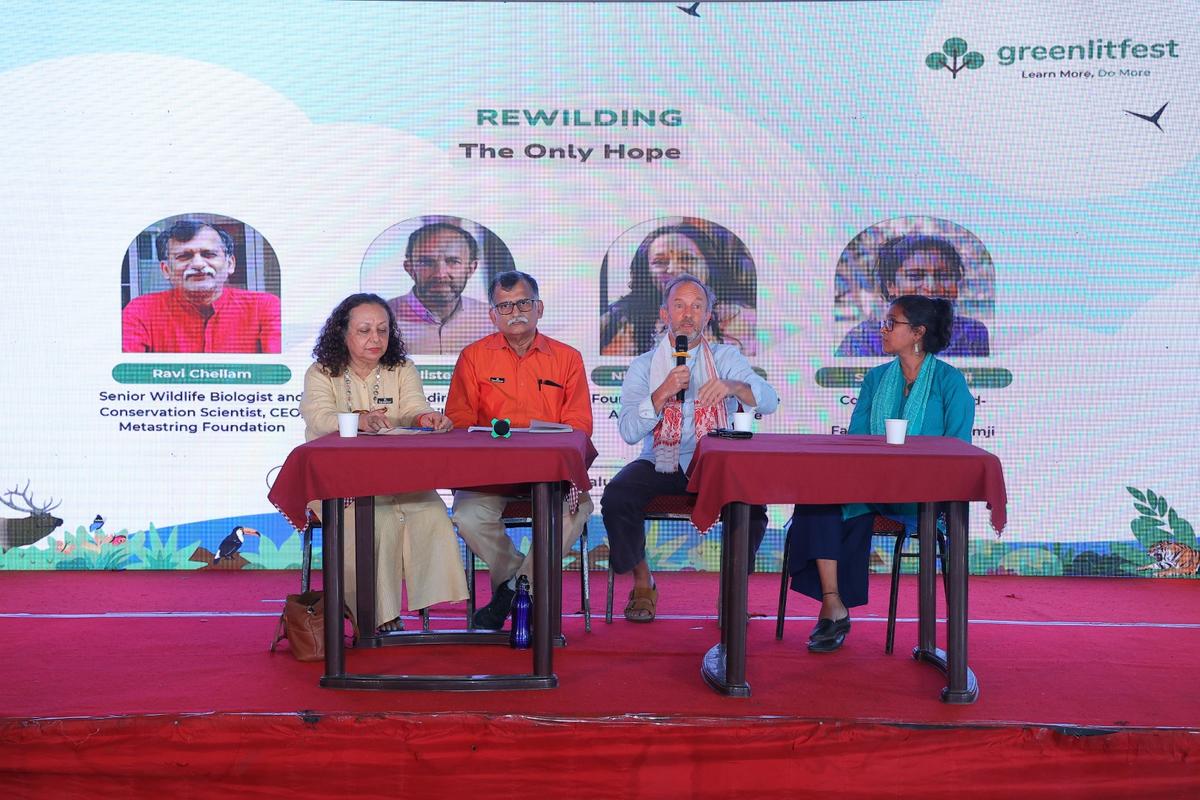
The fifth edition of the Green Literature Festival (GLF), the country’s only literary festival dedicated to environmental literature, will be held in Bengaluru on November 29 at the Century Club, Cubbon Park, from 10 am to 7 pm.

“When it comes to green literature, we are the only ones,” says Benedict Paramanand, GLF’s founder, adding that while other literature festivals may have a couple of sessions dedicated to the environment, GLF is unique because it focuses exclusively on this genre.

“We try to touch on every aspect of environmental literature, not just the usual, popular themes of wildlife and conservation. There is much more to climate change and environmentalism.”

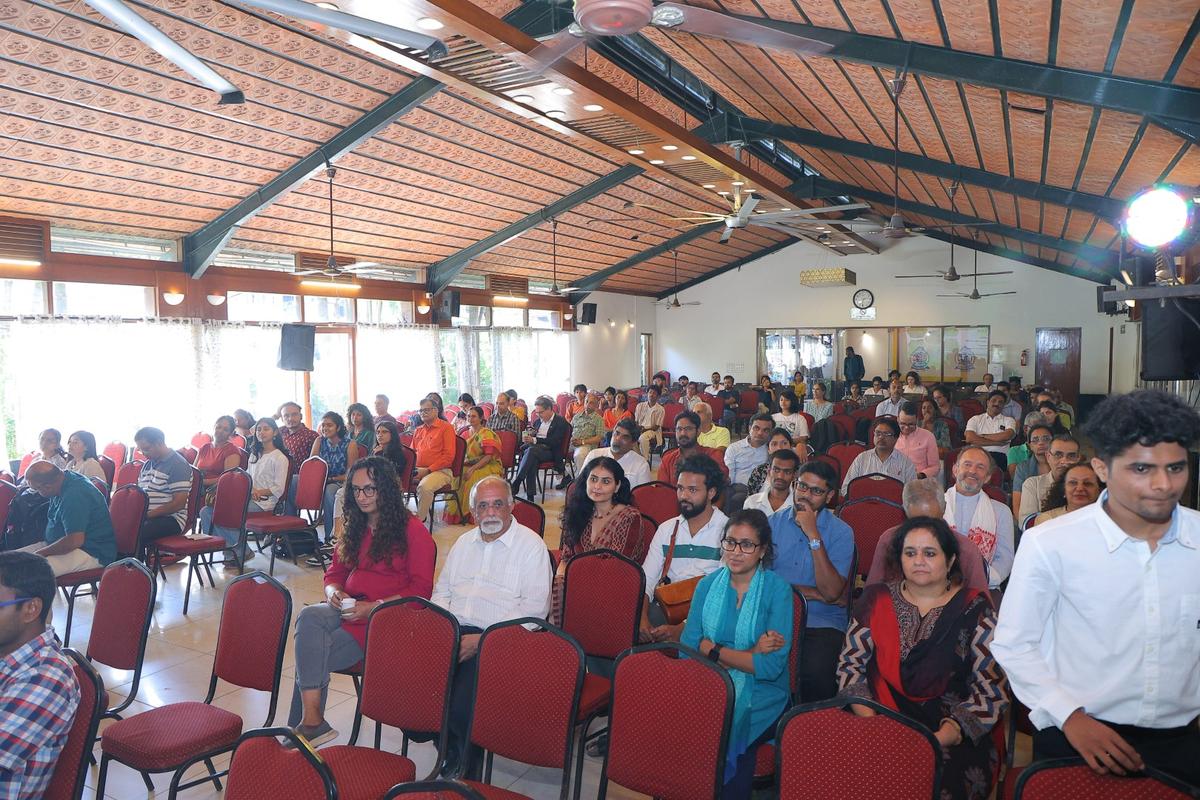
At a previous edition of the festival

At a previous edition of the festival
| Photo Credit:
Special Arrangement

Some of the sessions this year include an address by writer Sujatha Padmanabhan on her experiences in Ladakh, a conversation between journalists Priti David, Arathi Menon and Chintan Girish Modi on environmental journalism, a presentation by Pankaj Sekhsaria, the author of Island on Edge: The Great Nicobar Crisis and a panel discussion on eco-fiction.

Other key highlights include talks on AI and the environment, on how cartoons can serve as a handshake between ecology, conservation, and the lay reader by Swaroop Madhavan and Rohan Chakravarty, respectively, as well as a panel discussion on reimagining Bengaluru as a greener city.

In addition to events at the main venue, Wadiyar Hall, there will be a Children’s Green Literature Festival and a Green Business Literature Festival at the other venues in the club. “We wanted to make the scope of conversations bigger and broader,” explains Benedict. Additionally, “we wanted to make some of the verticals we have introduced wider and deeper.”

At a previous edition of the festival

At a previous edition of the festival
| Photo Credit:
Special Arrangement

For instance, while GLF has always had one or two sessions on green business, this year, “we have three hours or separate independent content for that,” he says, delving into the reason behind this development.

According to him, since climate change is so closely connected to business, it is essential to examine how businesses evolve and become more responsible. “We wanted to drive that home by having multiple sessions on this particular theme,” says Benedict, who is also looking forward to the interactive experiences that will be part of the larger festival, “workshops and quests and things like that, because we don’t want people to keep speaking.”

The festival will end with the GLF Grand Evening at Sampige Village in the club, comprising a green poetry session, several green book launches, and finally the GLF Honour Book Awards 2025.

“They are one-of-a-kind awards…are well-respected, and people look forward to participating in them,” says Benedict, pointing out that awards will be given under multiple categories: Children, Adult Fiction/Non-fiction, and Green Business.

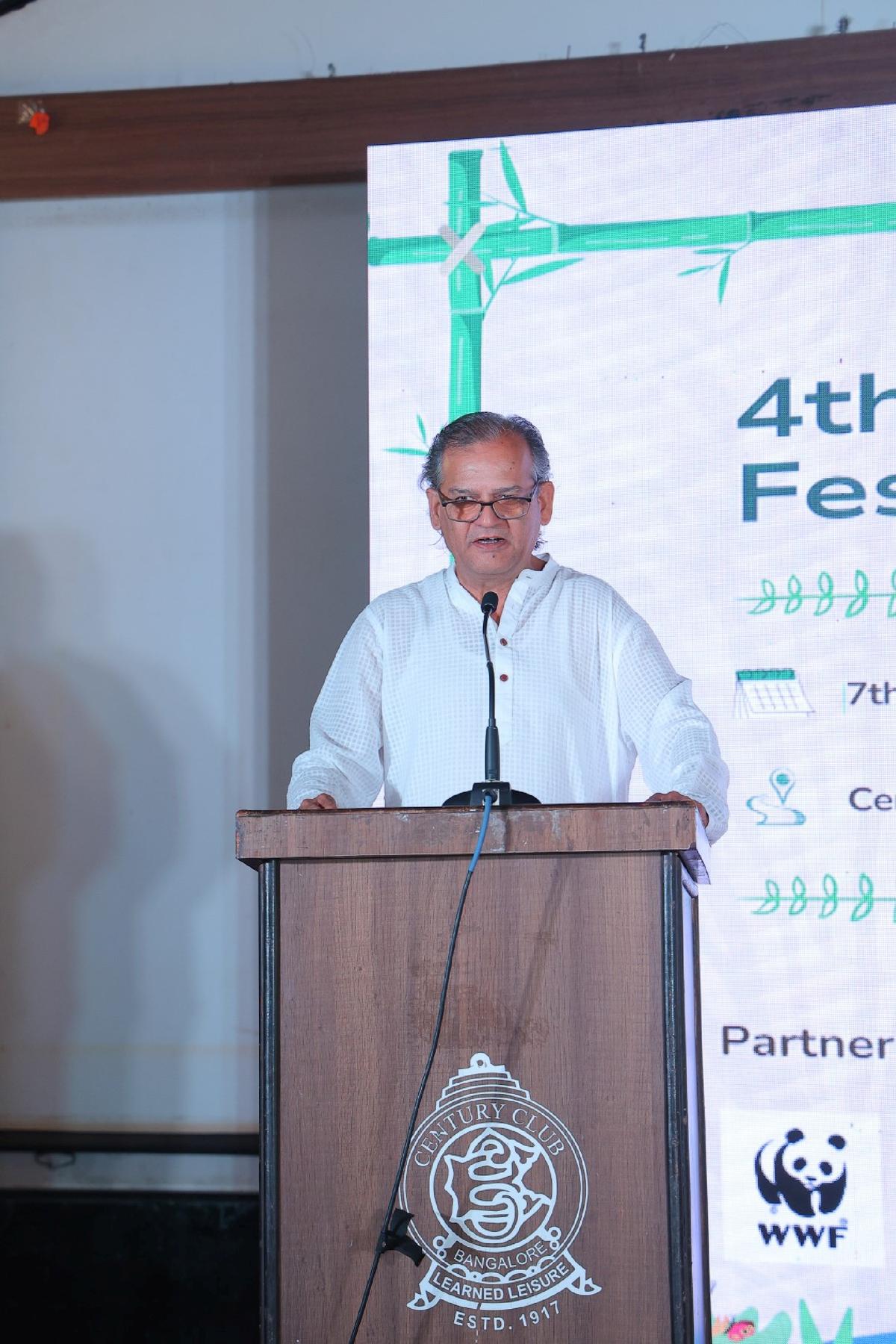
Benedict Paramanand, GLF’s founder

Benedict Paramanand, GLF’s founder
| Photo Credit:
Special Arrangement

While the conversation around the environment has strengthened considerably in the last few years, thanks to “schools and colleges emphasising it… original documentaries and good films coming out that make this segment engaging…and, of course, social media,” there is still a long way to go. The GLF is playing its part in the realm of literature by ensuring that literature gets its own platform. “The written word is one of the most powerful influences on behaviour and policy, and we want to drive this as much as possible.”

GLF will be held at the Century Club, Cubbon Park, on November 29 from 10 am to 7 pm. To know more, log in to greenlitfest.com.

Published – November 25, 2025 05:01 am IST


Source link

Aarthi R.R. captures the mood of a raga on canvas and offers them as her tribute to the artistes.


Aarthi with her painting depicting the rare kriti of Dikshitar.

Aarthi with her painting depicting the rare kriti of Dikshitar.
| Photo Credit: Special Arrangement

Rasikas have long cherished Carnatic music as a living tradition. While most just enjoy listening, Aarthi R.R. transforms sound into visuals. As Chennai gears up for the Margazhi Season, Aarthi is all set to visit various concert halls with her sketchbook, brush and mini paint box.

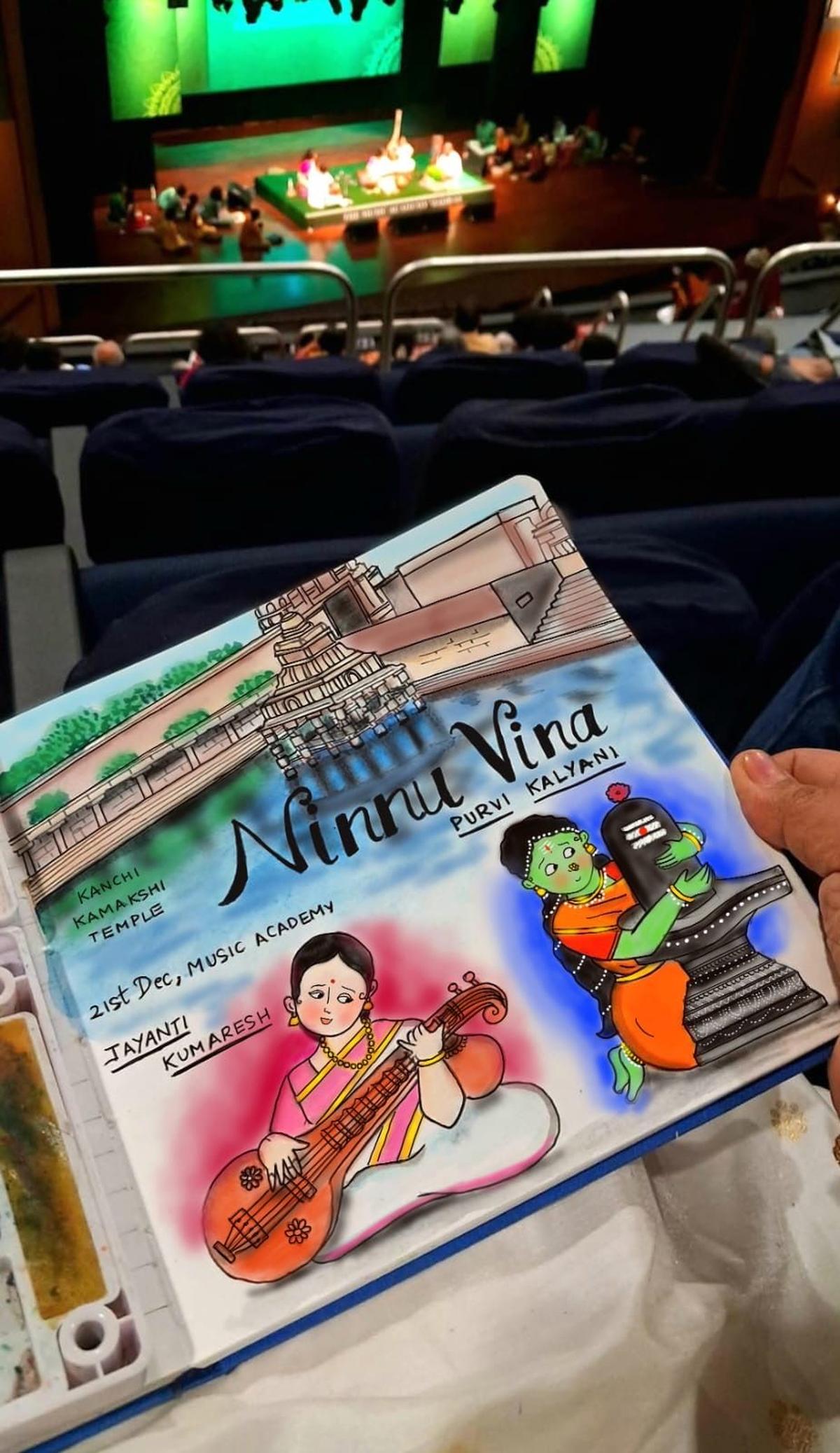
The painting of Parvathy during a veena concert held at the Music Academy.

The painting of Parvathy during a veena concert held at the Music Academy.
| Photo Credit:
Special Arrangement

It was interesting to watch Aarthi paint as vainika Jayanthi Kumaresh played Syama Sastri’s ‘Ninnu vina’ kriti, at her Music Academy concert last year. She captured the nuances of music through colours. Soon what emerged was the painting of Parvati embracing the lingam at the Kamakshi temple in Kanchipuram.

Aarthi describes the process as meditative and creative. When asked how she manages to complete the painting before a concert ends, she says, “Initially it was challenging. Although illustrating on the iPad would be easy, watercolour is my favourite medium. Digital references of the deities on my phone and constant reading about temples come in handy.”

Aarthi’s painting depicting Oothukkadu Venkata Kavi’s kriti ‘Manruladum paraman’ .

Aarthi’s painting depicting Oothukkadu Venkata Kavi’s kriti ‘Manruladum paraman’ .
| Photo Credit:
Special Arrangement

Painting of K.S. Vishnudev’s concert held at the recent Bharat Sangeet Utsav recently.

Painting of K.S. Vishnudev’s concert held at the recent Bharat Sangeet Utsav recently.
| Photo Credit:
Special Arrangement

Aarthi usually gifts the paintings to artistes at the end of their concerts. Vocalists Sanjay Subrahmanyan, Ranjani and Gayatri, Sandeep Narayan, Trichur Brothers, Sikkil Gurucharan, Anahita and Apoorva, Sunil Gargyan, vainika Ramana Balachandhran are among those who have received her works. Says Aarthi, “A memorable moment for me was when Jayanthi ma’am held up my painting at the Zakir Hussain tribute concert and showed it to the audience from the stage.”

Aarti’s painting during the rendition of a Swati Tirunal’s composition.

Aarti’s painting during the rendition of a Swati Tirunal’s composition.
| Photo Credit:
Special Arrangement

Having created over 50 concert-illustrations last Margazhi, Aarthi wants her art to evolve naturally. “Sometimes I just want to enjoy the music without the pressure of painting. However, seeing the years of sadhana that the artistes have invested in creating such soulful experiences, I feel the artworks are my humble tribute to them,” says Aarthi.


Source link

Discover the best Christmas treats by homegrown brands that travel well


If you like sticking to tradition and gift family and friends in your city traditional Christmas treats, why should loved ones in other cities be left behind? This year, the classic cake and pies can travel with you and spread cheer. From nut bars and gingerbread mug holders to a Tipsy cake and a fruit variant with caramel, we bring you a selection of travelling treats for the season.

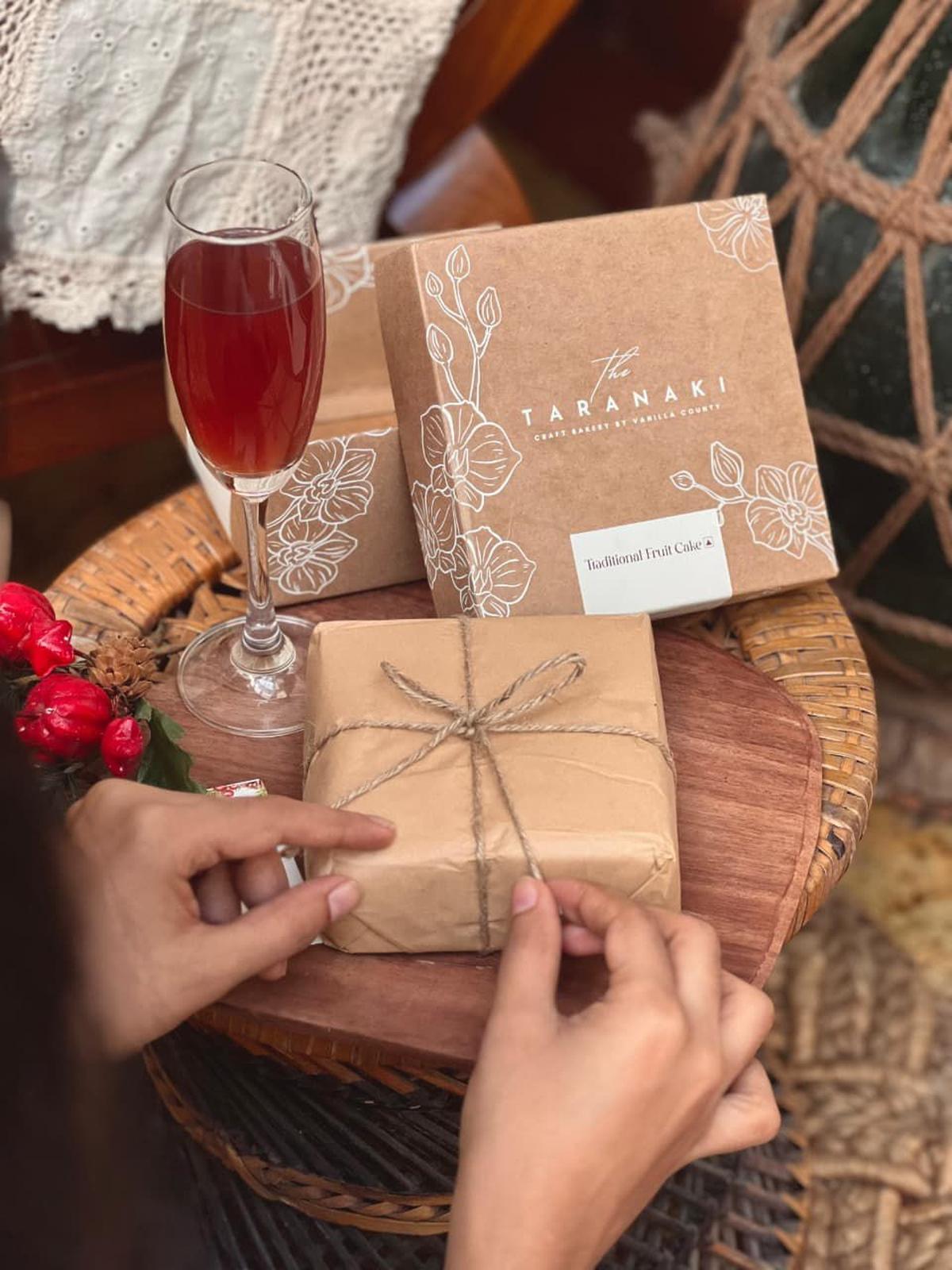
Planters Fruit Cake at Taranaki Bakery

Planters Fruit Cake at Taranaki Bakery
| Photo Credit:
Special Arrangement

Planters Fruit Cake @ Taranaki Bakery, Kerala

At Mathew Vallikappen’s bakery at his estate in Vagamon, Christmas is the season that brings with it the aroma of spices and vanilla. “The name Taranaki, meaning ‘Luck to the Mountains’, originates from my time in New Zealand, where the lush landscapes and artisanal craftsmanship inspired me to pursue my passion for baking,” says Mathew who did his culinary training in the island country. He is especially proud of the Planters Fruit Cake (₹1,300 for 650 gms), a recipe passed down through five generations and a tradition that began in the early 1900s.

Jam at Taranaki Bakery

Jam at Taranaki Bakery
| Photo Credit:
Special Arrangement

Blending British baking influences with Kerala’s rich produce of fruits soaked in Old Monk rum, spices, cashews, and vanilla grown on his estate, their family’s unique recipe also includes caramel sauce and pineapple. Alongside a chocolate plum cake (₹1,400 for 650 gms) that draws from European techniques, other offerings include shortbread cookies (₹350 for 200 gms), choco-chip cookies (₹350 for 200 gms), almond cranberry granola (₹450), cocoa date granola (₹550) and banana, pineapple spreads (₹450 each).

To order, call 6282673682 or visit vanillacounty.in

Gingerbread aunties at The Hill Station Co.

Gingerbread aunties at The Hill Station Co.
| Photo Credit:
Special Arrangement

Gingerbread aunties @ The Hill Station Co., Bengaluru

Before Vaidika Wadhera founded The Hill Station Co. in 2020, she was a “globe-trotting chef”. After stints at The Oberoi Udaivilas, Gaa in Bangkok, and Kinara in Dubai, she launched her brand in New Delhi and then brought it to Bengaluru in March 2025 with one simple idea: to make food that feels like a gift. “We’re a bakery that loves to have fun with flavour, with a razor-sharp focus on keeping everything genuinely delicious,” she says.

Hot chocolate bombs at The Hill Station Co.

Hot chocolate bombs at The Hill Station Co.
| Photo Credit:
Special Arrangement

Her Christmas menu is vegetarian and features gingerbread aunties (₹165 each), sari-clad cookies that are a playful spin on the classic gingerbread man. “We also make tiny gingerbread houses (₹190 each) that perch on the rim of your mug, edible baubles for your Christmas tree (₹500 for a set of three), and mulled wine cake pops (₹400 for four) that pair well with our hot chocolate bombs.” There are also cinnamon apple pies (₹3,200 for a 12-inch pie), a Christmas fruit cake (upwards of ₹700), yule millionaire brownies (₹225 each), a mini panettone (₹165 each), and a Christmas focaccia (₹450).

@thehillstation.co on Instagram

Cakes at Global Theeni, Mysuru

Cakes at Global Theeni, Mysuru
| Photo Credit:
Special Arrangement

Kalkals and chivda @ Global Theeni, Mysuru

Smitha Kuttayya has been baking wholesome cakes and other sweet treats for the last 25 years, and recently made the shift from Chennai to her hometown, Mysuru. Her Christmas menu this year includes a royal plum cake (₹2,500 a kilo, and with vegan, gluten-free versions also available), and a range of brownies including Boston brownies, cheese brownies, etc (₹1,000 for half a kilo). “This year I will be working out of a new kitchen and that gives me equal parts of fear and excitement. The Christmas goodies, especially the cake, are very sensitive to the atmosphere and this time for the first time in forever I did a trial run. I also have a range of chocolate bombs this year,” says Smitha, who also has pinwheel cookies, shortbread cookies, gingerbread men, gingerbread cookies, kalkals, nutty chivda (all at ₹300 for 150 gms), and mince pies (₹300 for four) on her menu. All products can be shipped pan-India, and custom hampers are also available. 

@global.theeni on Instagram, or call 9444385425/9176190210

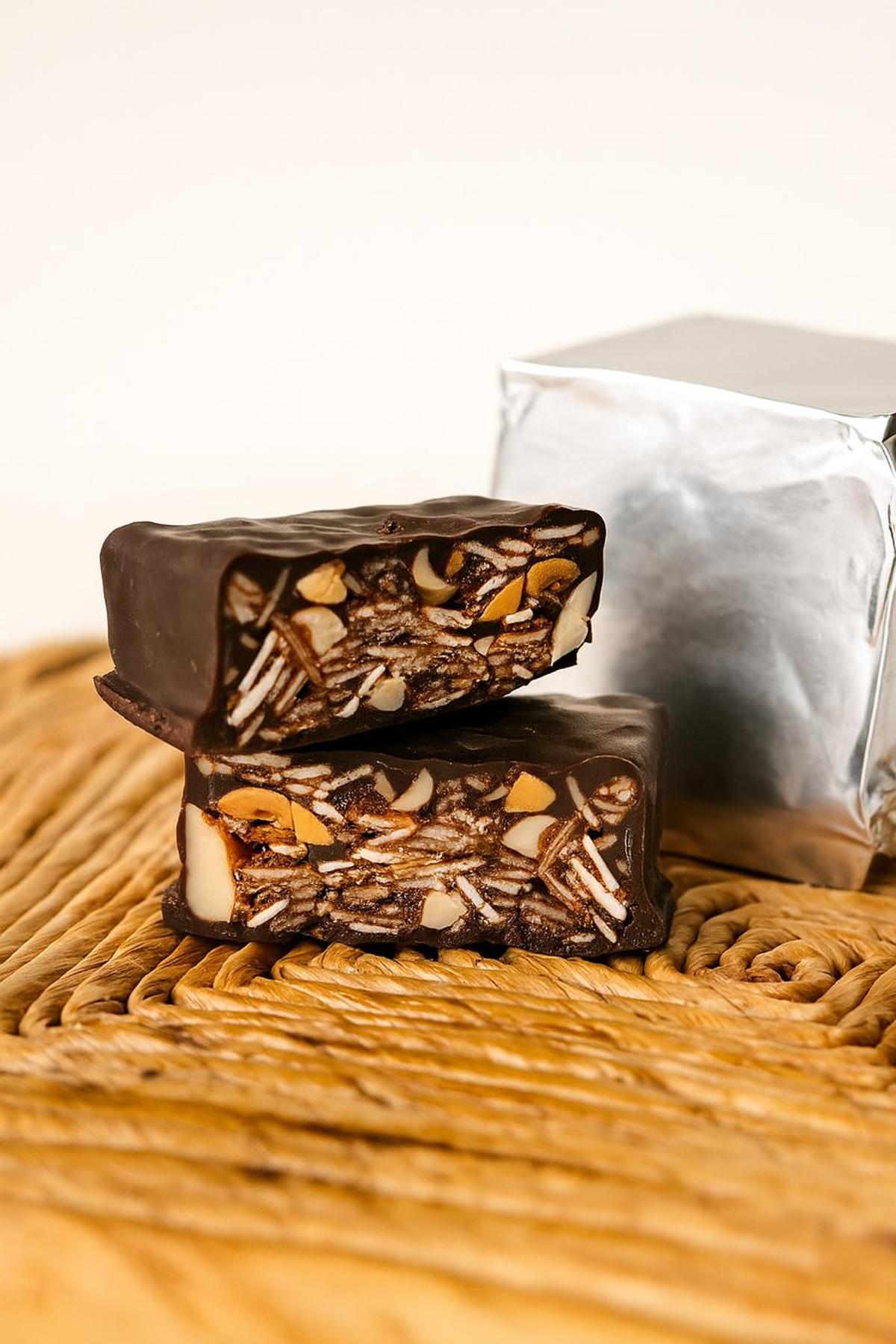
Cholo-nola at The Huda Bar

Cholo-nola at The Huda Bar
| Photo Credit:
Special Arrangement

Nut Jobs @ The Huda Bar, Bengaluru

At this women-owned and run business, promoting healthy, conscious eating has been at the forefront since they launched in 2014 with an energy bar. The product range has expanded since to include granolas, raw honeys, teas, nut butters, and more. “We’re a sustainably-run business and our food is handmade in our Bengaluru kitchen. Most of our ingredients are locally sourced from Indian producers,” says co-founder Pratibha Panth. This festive season, new launches include crackle bites (peanut butter rice crispies at ₹450 for 120 gms), choco-nola minis (chocolate coated mini bars at ₹500 for six), anytime crunch (a savoury trail mix at ₹500 for 250 gms), and Christmas hampers that can all be shipped pan-India. “We also make a range of fresh produce such as hummus, garlic toum, mustard, pesto, and a nut seed bread sold only in Bengaluru,” she says, adding that all products are packed in either 100% recyclable or reusable packaging. 

Details on thehudabar.com

A cake at House of Sapor

A cake at House of Sapor
| Photo Credit:
Special Arrangement

English Christmas Cake @ House of Sapor, Bengaluru

Launched in November 2020 by Ashwini Gowra and her daughter Raksha, this cloud kitchen has been popular at birthday parties and events in the city. “During the pandemic, we started making birthday cakes for our neighbours, and people in the neighbourhood, and slowly, through word of mouth, it grew. Today, we run a cloud kitchen and also supply to cafés and restaurants across the city,” shares Ashwini.

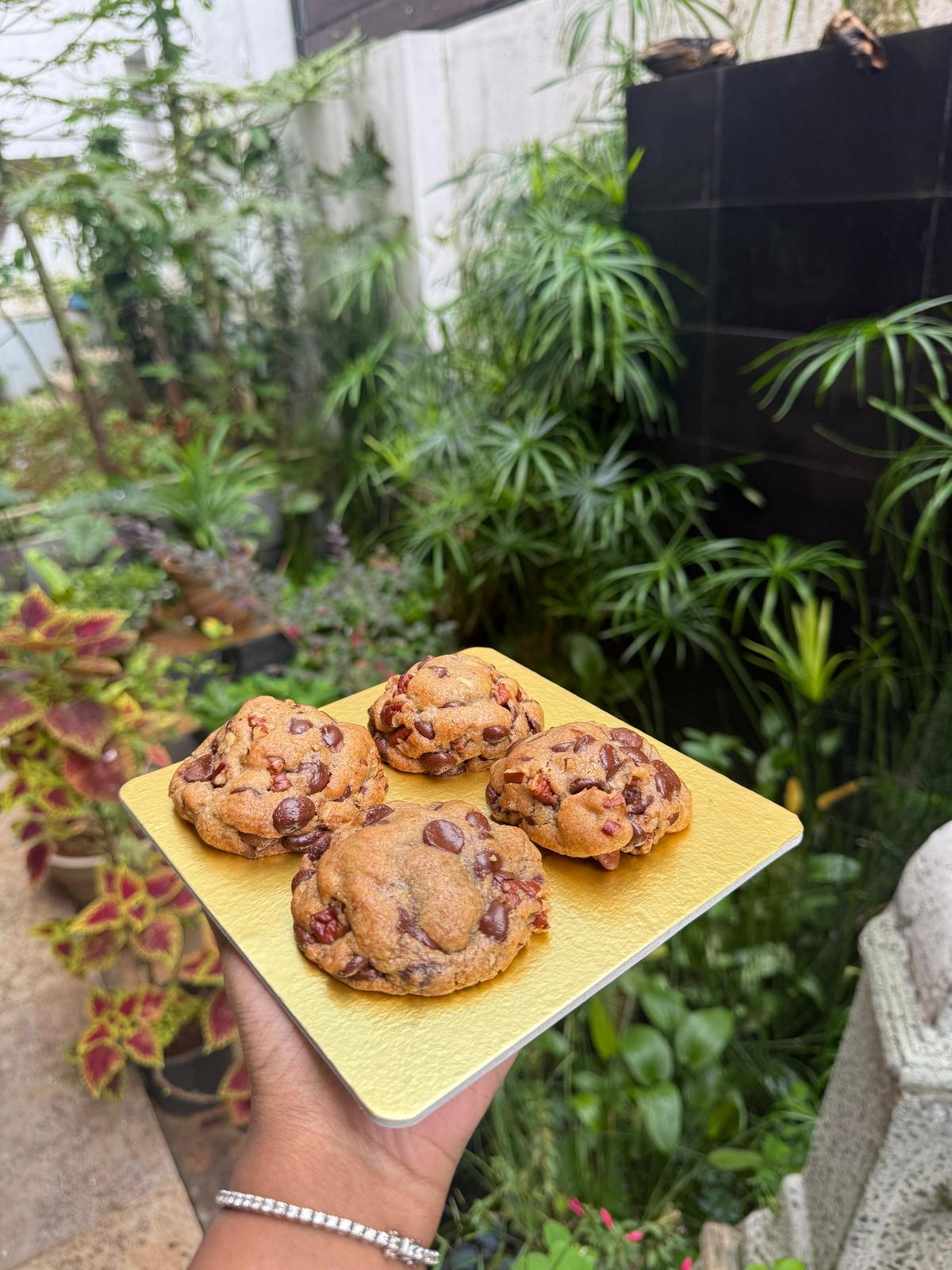
Chocolate chip cookies at House of Sapor

Chocolate chip cookies at House of Sapor
| Photo Credit:
Special Arrangement

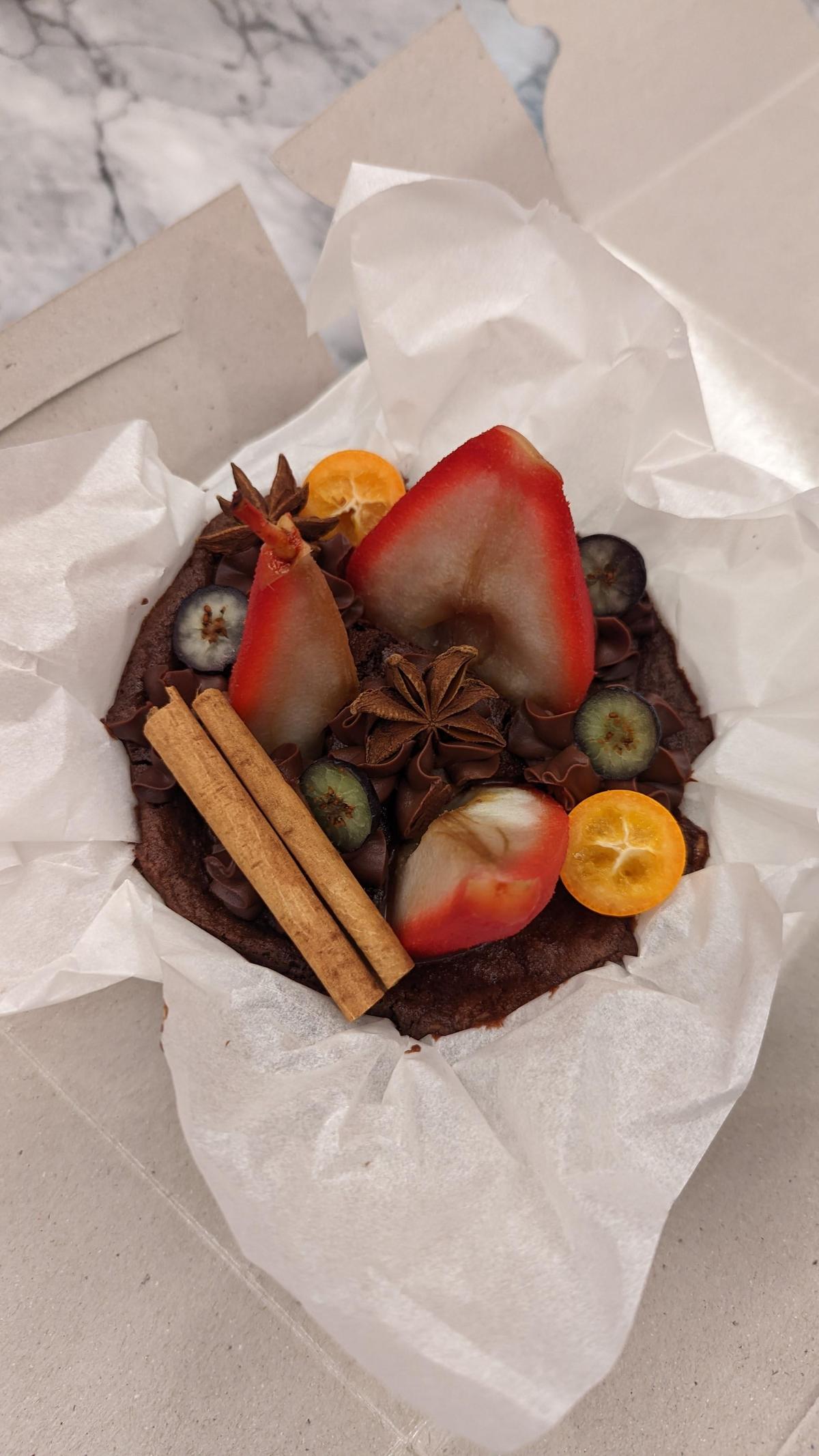
The festive menu this year includes the English Christmas cake (₹750 for a loaf) with raisins, currants, and candied orange, that is aged and soaked in brandy, and pecan-double chocolate cookies (₹1,000 for a pack of six). While these can be shipped pan-India, the moelleux au chocolat (₹1,800 for 650 gms), a molten chocolate cake served with wine-poached pears, and the trifle pudding (upwards of ₹475) are available only in Bengaluru. 

@houseofsapor on Instagram, or call 9845350671, 9880773371

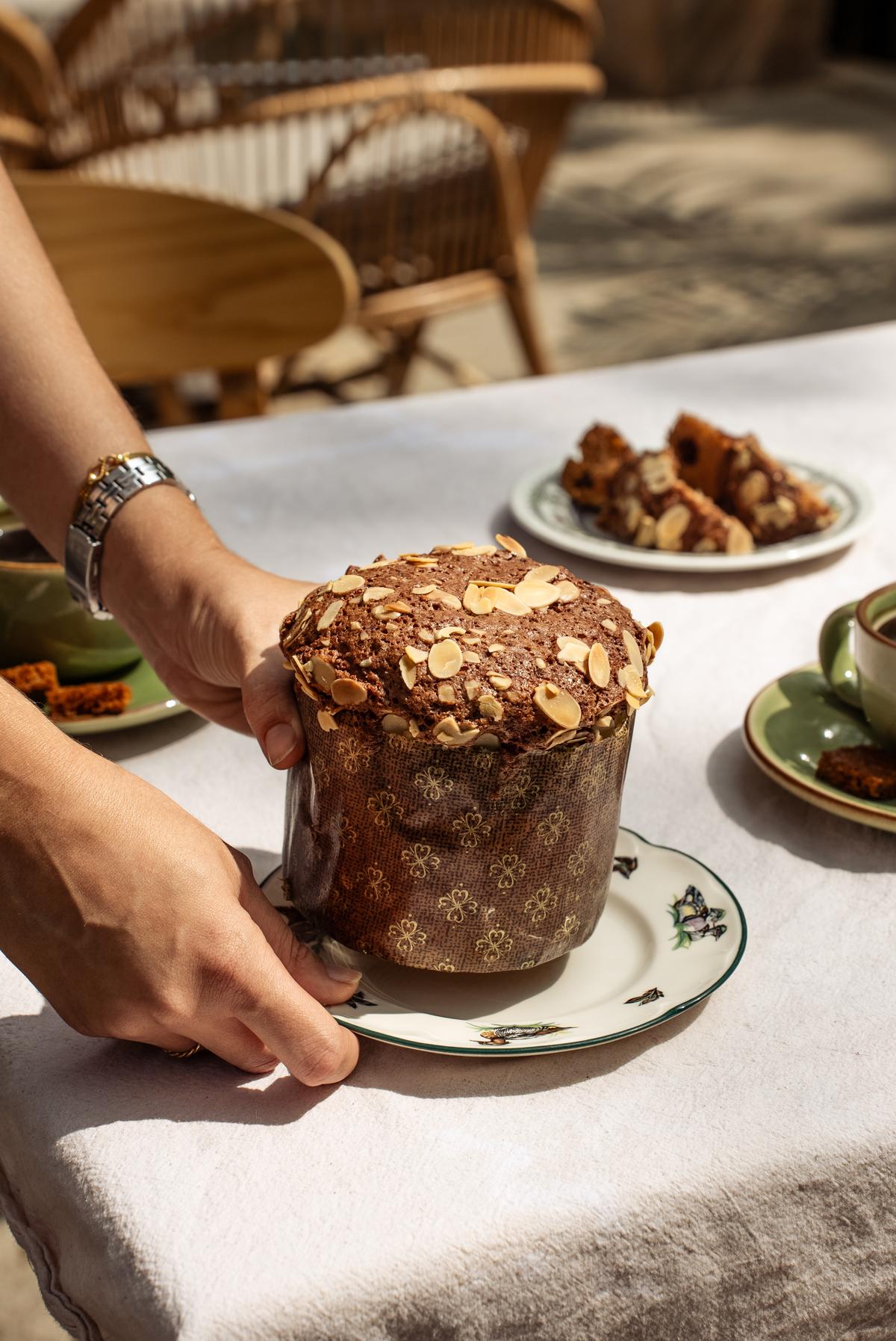
Sapa Bakery’s panettone

Sapa Bakery’s panettone
| Photo Credit:
Special Arrangement

Stollen and more @ Sapa Bakery, Mysuru

Dina Weber is back with her trademark stollen (₹2300+ taxes), a rich, fruit-filled German Christmas bread. “Its flavours deepen and mellow as the days go by, making it the perfect indulgence for breakfasts, afternoon gatherings, and festive celebrations,” says Dina, who is also launching a classic vanilla panettone (₹1,400+ taxes), and gingerbread cookies as well. “The latter, called Elisen Lebkuchen, is our take on the classic German treat, featuring a blend of in-house spices and honey, topped with a bright, lemony glaze.” The stollen and panettone can be shipped pan-India, and the cookies are available only at the outlet in Mysuru. 

@sapabakery on Instagram

Mexican hot chocolate cookies at Over The Top

Mexican hot chocolate cookies at Over The Top
| Photo Credit:
Special Arrangement

Spiced granola @ Over The Top, New Delhi

A brand born out of founder Tanaya Sharma’s health struggles in 2021, it aims at making indulgent desserts healthy and easy on the body. “Living with endometriosis, PCOS, insulin resistance and pre-diabetic conditions made it difficult for me to find treats that were both delicious and genuinely good for the body. What began in my kitchen as a necessity soon became a purpose: to make nourishment joyful,” says Tanaya who launched the brand with chef-partner Ravi Shukla. Their winter menu for 2026 has festive granola with warm spices, and toasted nuts (₹750 for 250 gms), seasonal brittle (₹500 for 250 gms), spreads (₹450 for 200 gms) with flavours such as apple mince pie, strawberry vanilla bean preserve, strawberry black pepper preserve, and a cookie and berry nut butter. Also available are dog biscuits (₹250 for 100 gms). While these can be shipped across India, for Delhi-NCR residents there are also cookies and cheesecakes. 

@ott_thegoodstuff on Instagram

A cake at Almond Butter Cakes

A cake at Almond Butter Cakes
| Photo Credit:
Special Arrangement

Tipsy Cake @ Almond Butter Cakes, Mumbai

At this homegrown bakery in Maximum City, husband-wife duo Bhavya Srinivasan and Luth have been baking a storm, quite literally. The duo launched the brand in 2020 that specialise in gluten-free almond flour cakes and cookies. “Inspired by our passion for travelling and adventures, our cakes became a part of our high altitude treks and biking escapades. Soon, we received messages from fellow travellers, and that is how our baking journey began,” says Bhavya, of their creations made with almond flour, organic jaggery, dates, and premium chocolates.

Cookies at Almond Butter Cakes

Cookies at Almond Butter Cakes
| Photo Credit:
Special Arrangement

The Christmas season brings the Tipsy Cake (upwards of ₹2,800 for 500 gms) on their menu that is rich with spiced rum, soaked raisins, and almonds. Other bestsellers (upwards of ₹2,000 for 500 gms) on their menu include the fudge cake, butter cake, coffee date walnut cake, orange almond cake, apple cinnamon cake, and monster cookies (upwards of ₹1,200 for two), that can all be shipped across India and overseas.

@almondbuttercakes on Instagram


Source link

Royal Enfield Bullet 650: A new chapter for an unbroken legend


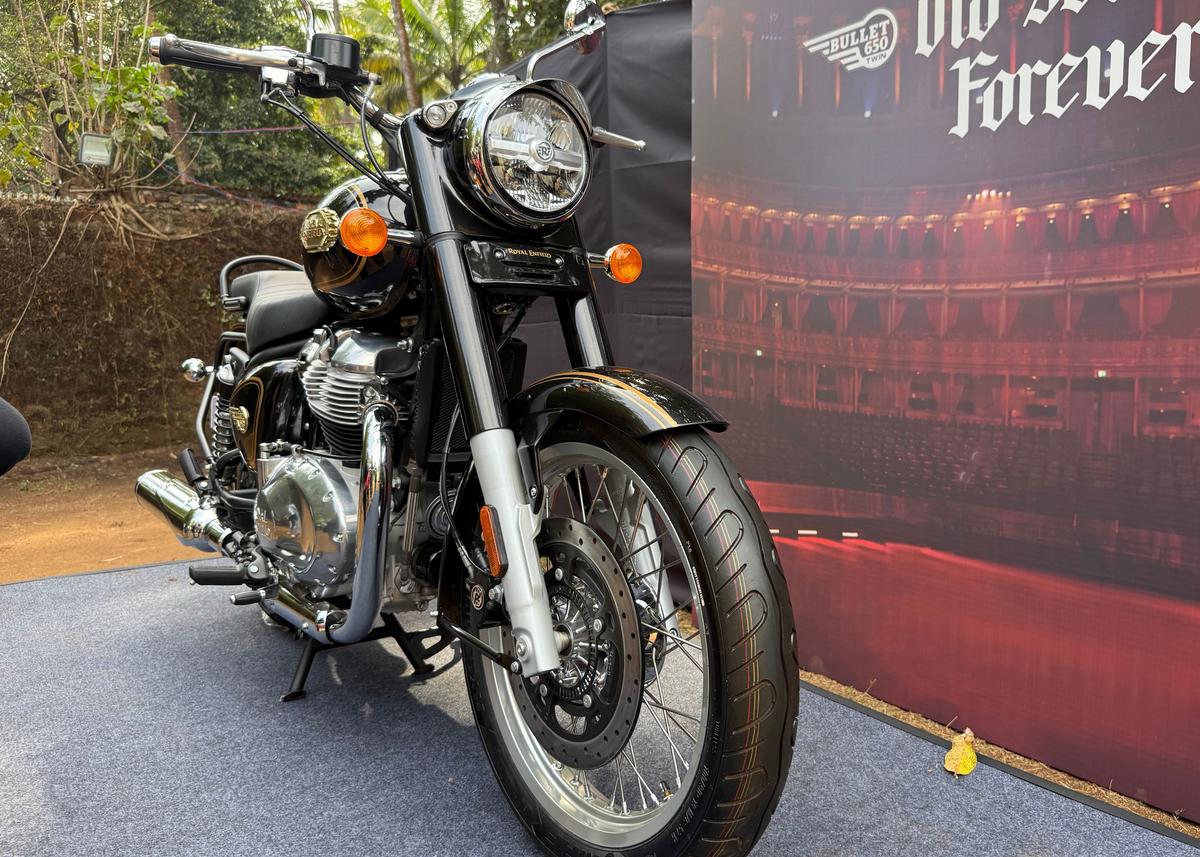
The arrival of the Bullet 650 marks a rare moment in motorcycling: a pivot without reinvention, a leap forward without abandoning the familiar silhouette generations have grown up with. The Bullet is not just another retro-themed motorcycle; it holds the distinction of being the longest-running production motorcycle in existence, with a lineage that stretches unbroken all the way back to 1932. Few machines in the world can claim such uninterrupted lineage, and even fewer can evolve without losing the essence that made them historic in the first place.

Its first public outing in India at Motoverse 2025 sparked understandable excitement, yet, the motorcycle itself stays rooted in the design language that has defined the Bullet for more than nine decades. Royal Enfield’s intention is unmistakable: this is not a reinvention—it is a respectful continuation of a motorcycle whose identity has become timeless through restraint and relevance rather than constant reinvention.

At first glance, the motorcycle feels instantly familiar. The long, uninterrupted tank line, the upright stance, the weighty metal construction, and the visual simplicity all reaffirm its lineage. But take a moment to observe and the evolution reveals itself. The 650 twin nestles within a steel spine frame, giving the motorcycle a more planted, muscular profile. The casquette headlamp housing returns, now with an LED setup, supported by the nostalgic “tiger-eye” pilot lamps that anchor the front end. The wider bench seat, the taller handlebar, and the mature stance make the motorcycle feel more regal—almost as if the Bullet has finally grown into the image it has projected for generations.

The Bullet 650’s familiar stance is elevated by subtle design updates, from the casquette headlamp to the wider bench seat.

The Bullet 650’s familiar stance is elevated by subtle design updates, from the casquette headlamp to the wider bench seat.
| Photo Credit:
Special Arrangement

The most significant change sits beneath the tank. The iconic thump of the single-cylinder Bullet, once a soundtrack of Indian roads, steps aside for the brand’s 647.95cc parallel-twin engine. The familiar beat is gone, and there is no pretending otherwise, but what arrives in its place is a deeper, smoother note that brings its own charm. And with 34.6 kW at 7250 rpm and 52.3 Nm at 5650 rpm, the engine delivers a level of performance that past Bullets simply never attempted. The power arrives steadily, the twin-cylinder character makes long-distance cruising effortless, and the refinement opens up a new dimension to what a Bullet can be.

The six-speed gearbox, paired with a light slip-assist clutch, makes the riding experience more fluid in city and highway conditions alike. This is a motorcycle that invites calm, measured riding, just like every Bullet before it, but with enough reserve to make overtakes and high-speed stretches far more composed than the older singles ever allowed.

The chassis reinforces this updated character. A steel tubular spine frame underpins the motorcycle, with a 43 mm telescopic fork offering 120 mm of travel at the front and twin shocks with 90 mm of travel at the rear. This set up is not engineered for aggressive sport riding; they are tuned for comfort, stability, and predictability—attributes that have always defined the Bullet’s loyal following.

A steel spine frame, 43 mm fork and twin shocks give the Bullet 650 the planted, composed ride it has long been known for.

A steel spine frame, 43 mm fork and twin shocks give the Bullet 650 the planted, composed ride it has long been known for.
| Photo Credit:
Special Arrangement

The wheels, follow the familiar formula: a 19-inch front and 18-inch rear setup. With 100/90 and 140/70 section tyres respectively, the motorcycle retains the classic stance while ensuring contemporary levels of grip and assurance. Braking comes via a 320 mm front disc and a 300 mm rear disc, paired with dual-channel ABS for confident stopping power.

Dimensionally, the Bullet 650 makes its presence known. At 2318 mm long with a 1475 mm wheelbase, it has the stature of a proper big-capacity retro motorcycle. The 800 mm seat height and 154 mm ground clearance strike a practical balance, while the 243 kilogram kerb weight contributes to the Bullet’s characteristically planted feel on the road.

In the cockpit, a large analogue speedometer sits alongside a compact LCD panel offering essential information—fuel, trip, gear position, and service data, without disturbing the old-world charm. A USB-C port adds practicality without compromising aesthetics. Available in Cannon Black and Battleship Blue with a catalogue of factory accessories, the Bullet 650 remains a motorcycle riders can mould to their personality — just as they have done for generations.

The new Bullet 650 retains its classic silhouette, even as modern engineering reshapes what lies beneath the tank.

The new Bullet 650 retains its classic silhouette, even as modern engineering reshapes what lies beneath the tank.
| Photo Credit:
Special Arrangement

In the end, the Bullet 650 goes far beyond displacement or power outputs. It represents the continuation of a story that began in the early 1930s and never paused. It is proof that a motorcycle can modernise without losing its soul. The thump may be gone, but in its place arrives a more capable, refined, and long-legged machine — one that carries forward the legacy of the world’s longest-running production motorcycle with dignity, confidence, and a brand-new heartbeat.

Expected Price: 2.5-2.8 lakh (ex-showroom)

Motorscribes, in association with The Hindu, brings you the latest in cars and bikes. Follow them on Instagram on @motorscribes

Published – November 24, 2025 02:01 pm IST


Source link

Jacob Collier’s Djesse Vol. 4 tour is coming to India: What to expect


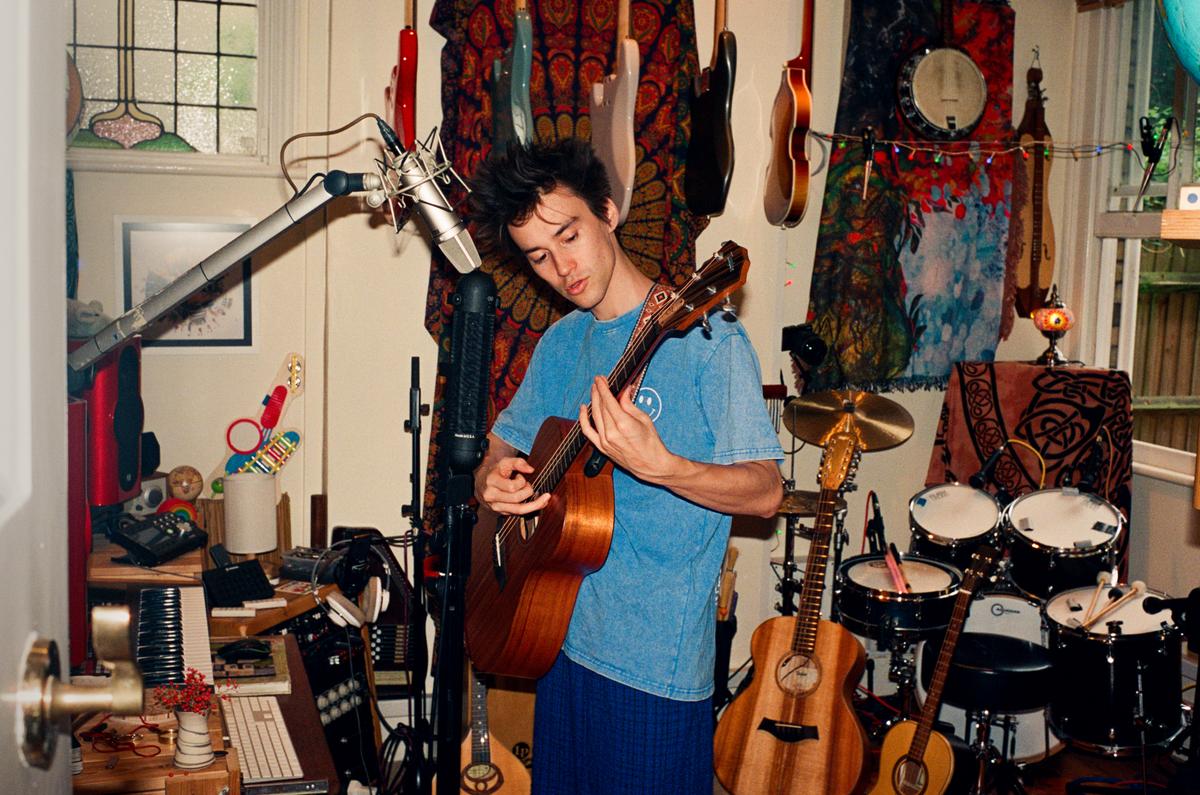
“I started right here, in my little room in London where I grew up,” says the 31-year-old British singer-songwriter Jacob Collier. “I never really had big dreams as a child of being a big music celebrity or anything like that.”

If you know Jacob, you would know the room — the shelves stacked with instruments, the warm fairy lights, and the quiet chaos that has birthed one of the most fascinating musical experiments of our time. On a late Friday evening in Chennai, I find myself on a video call with him in that very space, ahead of the Djesse Vol. 4 India tour. Before the interview begins, the tabla on his shelf catches my eye. Jacob proudly swivels his camera, giving me a closer look. 

The performer’s walk to fame took off in 2013 at a time when YouTube was still a space of creative self-expression. He first captured global attention with his split-screen covers, densely layered vocal harmonies and arrangements that felt more like theatrical feats than mere songs.

His multi-tracked rendition of Stevie Wonder’s ‘Don’t You Worry ’Bout a Thing’ in 2013 on YouTube did not just go viral; it caught the eye of American record producer and composer Quincy Jones, setting off a trajectory that would see him collaborate with the likes of Joni Mitchell, SZA, Bon Iver, Coldplay, Shawn Mendes, John Mayer, and many more. “I really concentrated on making things that I found beautiful. That was my whole goal,” he says.

Jacob is the first British artist to have won a Grammy for each of his first five albums.

Jacob is the first British artist to have won a Grammy for each of his first five albums.
| Photo Credit:
SPECIAL ARRANGEMENT

“The more I tried to make beautiful stuff, the more I met interesting people, and that slowly expanded my sense of what was possible. I’ve always had an unusual attitude toward the idea of impossible — I’ve done quite a few things that hadn’t been done before, whether that means turning an audience into a choir, designing new instruments, touring as a one-man band, or whatever it happens to be,” he adds.

In 2016, Jacob took home his first Grammy for his debut album ‘In My Room’. Since then, he has held the record of being the first British artist to have won a Grammy for each of his first five albums.

Jacob’s harmonic imagination shows up everywhere in his tracks; his a cappella cover of the famous song ‘Moon River’ is a classic example. The multi-layered vocal arrangement features thousands of vocal tracks, including thousands of his own and contributions from numerous musical friends and fans. Same with ‘Bleak Midwinter’, which featuresa multi-tracked vocal arrangement of the timeless Christmas carol, released in 2016. The arrangement is noted for its complex harmonies, use of microtones, and dense textural layers. He states, “One thing that might set my sense of harmony apart is that I’m genuinely comfortable with dissonance. I love chords that are really spicy or vividly colourful. There’s so much beauty in those sounds, but for me, it’s less about the notes themselves and more about the attitude you bring to them.”

Jacob says “one the most beautiful things about the last few years is that I’ve actually been able to travel all over the world, meet musicians, and ask them questions and as a lifelong student of life and music, it’s a real thrill to listen to these incredible musicians and then meet them in person — and realise just how much we all have in common. At the end, we are all struggling after the same things.”

Volume four to me was like a love letter to human life and the music of the world, says Jacob.

Volume four to me was like a love letter to human life and the music of the world, says Jacob.
| Photo Credit:
SPECIAL ARRANGEMENT

Jacob is heading back to India, this time as part of his sprawling Djesse Vol. 4 world tour. Released on February 29 2024, it marks the grand finale of Jacob’s audacious four-part musical odyssey. From John Legend and Tori Kelly to Shawn Mendes, Stormzy, Brandi Carlile, and Lizzy McAlpine, the project is a musical universe in itself that Jacob has spent years building. Each track becomes a meeting point where pop, gospel, classical, folk and global traditions collide.

“Volume four to me was like a love letter to human life and the music of the world. As someone who loves so many different types of music, I wanted to pay homage to all these different forms.” For the album, Collier brought together more than 100,000 people from all walks of life — not just audience members but artists from every continent.

The project also features collaborators such as Anoushka Shankar alongside Varijashree Venugopal, as well as Camilo from Colombia, Aespa from South Korea, the Metropole Orkest from Netherlands, and gospel legend Kirk Franklin from the United States. “The kind of principles that power it are the same as the ones that powered my room. Within my room, I often like to layer my own voice on top of itself. So you’d have like five or six or 10 or 20 different Jacob’s singing different notes in chords, and that was how I created harmony.”

Beginning his India tour in Bengaluru, I can already sense the glint of excitement in his eyes. “I’ve always thought of India as one of the most legendary places for music. It’s so many things I care about, whether it is the rhythm and its incredible depth, the microtonal tunings, or even the spiritual dimensions of music. It’s such an amazing thing that I’m able to visit now, and to be able to learn first-hand from the greatness that comes from that beautiful place.”

Having watched him grow from a YouTube prodigy into a global phenomenon, I asked Jacob what guidance he had offer young musicians finding their footing — he admits there is no rulebook. “The truth is, no one really knows what’s going on, and no one knows what the ‘next best move’ should be. So the only real answer is to stay open and to be completely fearless about what you love.”

Djesse Vol. 4 India tour will begin in Bengaluru on November 28, then Mumbai on November 31, and finally Delhi NCR on December 2. Tickets at skillboxes.com

Published – November 24, 2025 12:53 pm IST


Source link

What are cookies (on the internet)?


When you visit a website, a small pop-up appears before you explore it fully, asking you to “Accept all” or “Deny.” These are internet cookies often explained in tiny bits of texts we don’t bother to read.

In today’s digital world, where so much of our information exists online, it’s important to understand what happens when you accept or decline these cookies.

The concept

Internet cookies are tiny text files that store bits of data when you visit a website. They help the site remember who you are and what you like, such as your computer details, username, login info, language preference, or items in your shopping cart.

When you visit a website, its server creates a small piece of data called a cookie. This cookie carries a unique ID that belongs only to you and your computer. So, when you come back later, the website reads that ID, recalls what you did before, and adjusts your experience — like keeping your login active or showing items you left in your cart.

This helps websites offer a smoother and more personalised experience the next time you visit.

Why do we need them

Imagine visiting your favourite online game or store, and every time, you have to log in again or lose your progress. Cookies prevent that! They make your web experience smoother and faster by remembering your choices. They also help websites understand what users like, so they can improve features, show relevant content, or offer better recommendations the next time you visit.

Photo: Getty Images

Photo: Getty Images
| Photo Credit:
MirageC

Are they safe?

Most cookies are harmless, but it’s important to understand that they track your activity online in order to show you more relevant advertisements. That’s why websites ask for your permission to use them. As long as you’re visiting trusted websites and managing your cookie settings wisely, cookies are generally safe to use.

Enabling or removing

Now that you know what a cookie on the internet does, it’s up to you if you want to give access to it or not as its not all cookies are necessary — some are optional. You can manage your cookie settings anytime from your browser’s privacy or security section.

If you disable or remove cookies, your information is cleared, which helps protect your privacy. But the next time you visit a site, you may have to log in again or re-enter details.

It’s a good habit to clean up cookies once in a while to keep your data safe. For extra privacy, some people also use tools like a VPN (virtual private network) that hides their real location online.

Quick facts

The first internet cookie was invented in 1994 by Lou Montulli at Netscape to help websites remember users’ preferences.

The word cookie came from the term “magic cookie,” a computer science phrase for a tiny piece of data shared between programs.


Source link

How do airbags work? – The Hindu


Representative image.

Representative image.
| Photo Credit: File photo The Hindu

Testing. Testing. The auto mechanics are hard at work making sure the air-filled balloon-looking pillow-like bags work and deploy properly in this sleek and brand new car. Look at the dashboard and see how firmly the system is incorporated. But wait a minute, how does it know when to pop out and how can we make sure it doesn’t harm us? Turn on your thought wheels.

Safely, safety

Airbags have one aim – to protect those inside the car. It is a restraint system which acts to intercept. When a vehicle is met with a sudden impact, the people inside the car tend to move in a direction opposite to that of the forces of collision. This means there is high risk of critical injuries to occur. With airbags, the movement opposite to the forces is restricted and thus, the people inside the car remain relatively safe with lesser injuries. A seatbelt, also a restraint system, works with airbags to protect those inside the car.

Crash protector chemistry

Car companies want to offer best protection with the airbags they provide in their cars. To ensure this, the airbag mechanism goes through a series of simulations and tests for different types of impact conditions. Afterall, crashes aren’t all a single type. For this the bag is prepped thoroughly.

Airbags have one aim - to protect those inside the car. 

Airbags have one aim – to protect those inside the car. 
| Photo Credit:
Getty Images/iStockphoto

Airbags are made of strong nylon fabric which does not allow the gas with which it is filled to leak out. It is not normal air around us that’s inside the bag. There is a special chemistry for it. The key chemical involved is Sodium Azide (NaN3). Once the bag is made, they are kept folded at places in the car’s dash.

Chemical Reaction
2 NaN₂ > 2 Na + 3 N₂

Here you go, way too fast

As crashes happen suddenly, airbags cannot waste even a millisecond. Once the sensors in the bag detect a crash, the airbag has to be inflated quickly before damage is done. Once the crash is sensed, electric signals are sent to the igniter which triggers an exothermic reaction where sodium azide decomposes to produce nitrogen gas. This gas fills up the airbag. Since the sensors need a bit of time to do the detecting, the inflation has to be even quicker. Typically the full process takes about 25 to 30 milliseconds (0.025 to 0.03 seconds!)

Then, in about 50 milliseconds, the person inside the car comes into contact with the airbag. The airbag intervenes and absorbs the sudden forward movement reducing injuries and damage.

Things to note

Airbags are fantastic when there is space between the bag and the person. If the person is too close to where the airbag is, the immediate inflation can cause grave harm. This is why it’s advised that airbags should be used in conjunction with seatbelts. Make sure your seat is a good distance away. For children, care must be taken to ensure that they are properly buckled up for the ride. It is advised that children should be placed in the back seat. Ensure that the airbags aren’t defective. 


Source link

India’s warehousing transformation gets a global edge


istock

istock
| Photo Credit: istock

The global warehousing industry is at an inflexion point. Sustainability, automation, robotics, and data-driven intelligence are no longer optional — they are fast becoming the backbone of resilient supply chains. India, with its unprecedented growth in manufacturing, 3PL, and e-commerce, is uniquely positioned not only to adopt these global trends but also to adapt and redefine them for the world.

India’s e-commerce revolution, for instance, is rewriting the rules of last-mile delivery and urban warehousing. While global players deploy advanced robotics, Indian operators are innovating with modular, cost-sensitive automation that fits local realities. This blend of cutting-edge technology with pragmatic solutions demonstrates a key truth: India is not merely a recipient of global best practices but an active contributor to the evolution of modern logistics.

The numbers reinforce this trajectory. In just the first half of 2025, leasing activity across the top eight cities crossed 32 million square feet — a staggering 42% year-on-year jump, as Knight Frank reports. Cities such as Mumbai and Chennai are emerging as powerhouses of demand, with third-party logistics alone driving nearly a third of the activity. This reflects a decisive shift towards Grade A warehouses, stronger compliance, and sophisticated supply chains that are future-ready.

Yet, growth at this scale is not without its challenges. Land acquisition hurdles, high capital intensity for advanced automation, and the need for workforce upskilling are real bottlenecks. Mid-size players, in particular, risk being left behind unless the ecosystem embraces collaborative solutions and robust public-private partnerships. If India’s warehousing story is to remain inclusive and sustainable, we must bridge this as we continue to grow.

That being said, the opportunities for India are showing no signs of slowing down. In just five years, the sector is set to more than double in value, powered by swelling foreign investment and the rise of urban warehousing and micro-fulfilment centres that support India’s e-commerce juggernaut. More importantly, the industry’s future will be defined by how well it balances global aspirations with local realities — whether in adopting AI-driven analytics, building green-certified facilities, or ensuring operational models remain financially viable across scales.

And here is what sets India apart. The country’s warehousing segment will not be a carbon copy of global systems; it will be a hybrid one, harmonising global innovation with indigenous ingenuity. By aligning with national initiatives such as Atmanirbhar Bharat and Make in India, and Prime Minister Narendra Modi’s vision, while simultaneously benchmarking against global best practices, India can solidify its role as both a logistics hub and warehousing bellwether for the world.

The next chapter of India’s warehousing journey is not about catching up — it is about setting new standards.

The writer is managing director of International Project Management, Panattoni.


Source link

Sonam Kapoor dons Ukhrul-based East, by Easternlight Zimik. Meet the designer behind the brand


(Left) Sonam Kapoor and (right) Easternlight Zimik and a model dons his collections

(Left) Sonam Kapoor and (right) Easternlight Zimik and a model dons his collections
| Photo Credit: Special Arrangement

For Manipur-based designer Easternlight Zimik, the week has been a significant one. Actor Sonam Kapoor donned a kashan or traditional North-East wraparound-inspired set from his label, East for a dinner she hosted at her residence. Sharing photos of the actor in his creation, which puts craft from the Tangkhul Naga community in the spotlight, the designer called the day a ‘truly remarkable’ one. 

At Ukhrul in Manipur, Easternlight, a NIFT Delhi graduate, launched his brand nearly two years ago following stints of working with Indian designers including Gaurav Gupta and Manish Arora. 

“I am from the North-east and most of the time, we are not represented properly, and our stories are not shared. Even in fashion, this is true. For me, identity is very important and this is one of the reasons I started my brand, which champions the traditional weaving skills of the artisans here,” he says. 

Models wear East by Easternlight Zimik

Models wear East by Easternlight Zimik
| Photo Credit:
Special Arrangement

East’s collections spotlight the traditional North-east wraparound or kashan, as well as shawls and stoles, which champions backstrap or loin loom weaving. “This is very time consuming and multiple weavers work on a single garment. I work with a team of 10 weavers and what I currently incorporate in East’s garments is my take on this traditional weave,” Easternlight says. 

From his new Patrons collection, Sonam wore the Akha set comprising a wrap-style top tied at the back and worn over a black shirt, with a kashan skirt in maroon and black. Much like his four previous collections, the Patrons collection is deeply personal to Easternlight, and holds a special significance as well. “This collection is a tribute of sorts, to people who inspire me, and who have been instrumental in my journey so far,” he says. Earlier this month, the Patrons collection debuted at the Seoul Fashion Week. 

Sonam Kapoor wears the Akha set from the Patrons collection

Sonam Kapoor wears the Akha set from the Patrons collection
| Photo Credit:
Special Arrangement

While the focus is on taking Tangkhul craft to a wider audience and empowering artisans in Ukhrul, Easternlight also speaks about how they work on making these garments relevant and practical for a wider market. 

“From small details like attaching darts, belts or even pockets, these practicalities are encouraged especially among the younger generation. While my customer base is across all ages, the younger generation in particular has been very welcoming. For instance, they wear the kashan to office, or even when they travel and style it with shirts, t-shirts and sneakers,” he says. 

Easternlight has now been flooded with queries since the brand’s big fashion moment with Sonam. “I am overwhelmed, but also happy with all the enquiries we have been getting not just from my customer base here in the North-east, but from across the country,” he says.

 With every new collection, the designer says he understands fashion more and to him, it is all about identity. “It is always going to be about who you are. This was my starting point, and will continue to be what East champions,” he says. 

East by Easternlight Ziimik is available on eastdesignstudio.com


Source link

Why Gen Z is getting their news from podcasts


‘If you want real news, switch off the TV.” Journalist Faye D’Souza may have said this in her cameo in Call Me Bae (Ananya Panday’s show), but as it turns out, Generation Z was already in agreement.

Globally, these digital natives have been gravitating to podcasts for their news diet, loving the medium’s intimate and genuine nature. Aditi Srivastava, 24, a software engineer in Bengaluru, is one such listener. “My go-tos are geopolitics and narrative-driven shows. I love content that combines depth, storytelling, and meaningful perspectives — from Smita Prakash’s ANI Podcast for geopolitics, and the Desi Crime podcast for true crime narratives, to [Humans of Bombay’s] Realign – The Podcast for deep-dive personal stories,” she says. “Podcasts work for me as they blend smoothly into my day without demanding additional time. If I am writing an email, travelling to the office, doing household chores, running an errand, or doing something that doesn’t require my attention, I usually hop on to a podcast parallelly.”

India ranks third globally in podcast consumption, and with 63% of Gen Z using social media for news, according to a 2023 study by American firm Morning Consult, many news outlets are exploring podcasting. “Some of the good international news podcasts are the ones by bigger media houses like Global News Podcast by BBC World Service, Today Explained by Vox Media, and The Daily by The New York Times,” says Mae Mariyam Thomas, founder and CEO of Maed in India, a podcast production company and consultancy. “Each of these shows is reported by stalwart journalists who can get to the heart of an issue, pick up on the need-to-know news stories of the day and give you trustworthy information on the subject.”

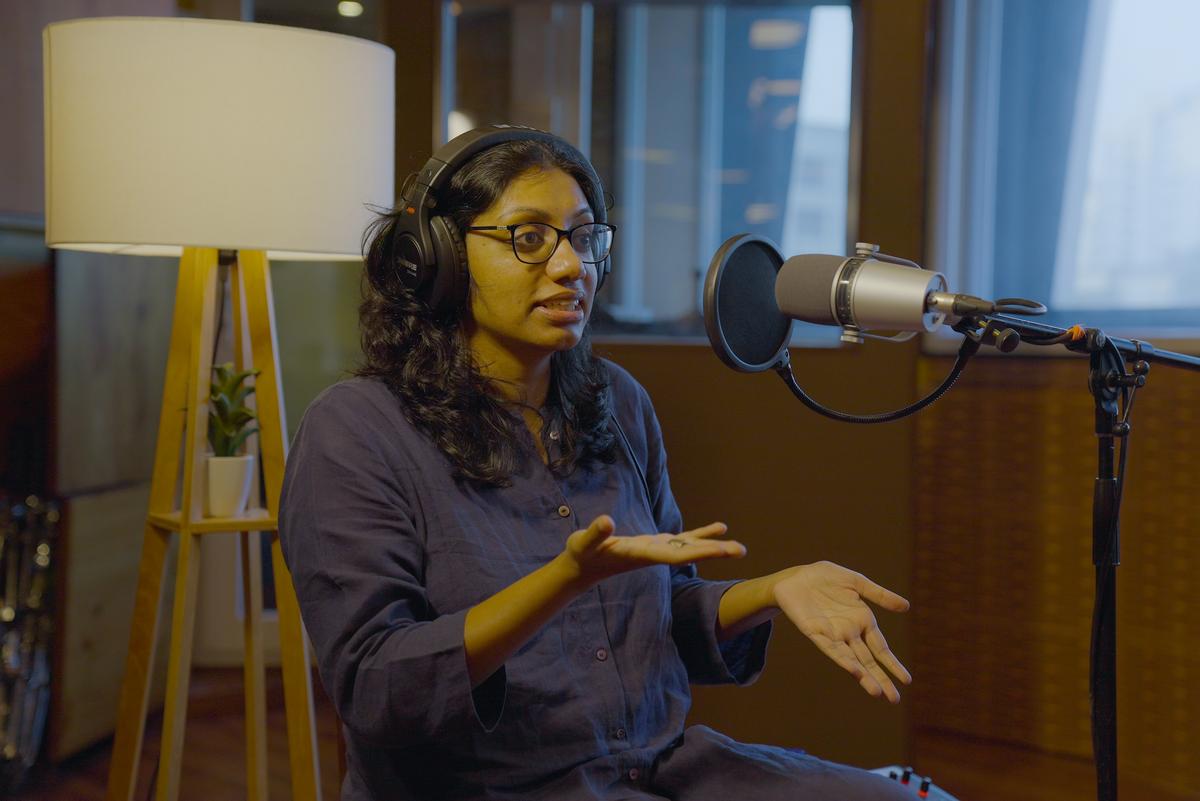
To Mae Mariyam ThomasCEO of Maed in India, the most important aspect of a news podcast is that it needs to be accessible in terms of providing context

To Mae Mariyam ThomasCEO of Maed in India, the most important aspect of a news podcast is that it needs to be accessible in terms of providing context

Curating diverse opinions

At a time when absolute objectivity is a myth, Gen Z is seeking diverse outlooks. “Ours is an informed yet polarised generation,” says Sahil Chugh, 23, an analyst based in Manchester, U.K. “It is important to engage with other people’s opinions. Podcasts offer a platform to listen to others’ perspectives and enough time to understand the reasoning behind their viewpoint.” Bengaluru-based Shreya Mahajan, 23, is of a similar bent of mind. “Forming a well-informed point of view is one of the primary reasons for me to engage with news podcasts. It does not mean mimicking the podcaster’s POV, but deciding for myself whether I agree with their train of thought or not,” states the analyst.

For others, podcasts are a reprieve from the loud and often biased reporting that’s seen in the mainstream — and an effective and enjoyable way to consume information. “Unlike the overwhelming barrage of traditional TV news, podcasts allow me to digest content at my own pace, and create a sense of intimacy and relatability that traditional news lacks,” shares Meghna Rai, 22, an engineer based in Mumbai.

Ideal length

“For us, primary consumption happens during ‘peak commute’ hours, which are essentially 8.30 a.m. to 11 a.m., and in the evening, from 5 p.m. to 8 p.m.,” says Bhuvanesh R., who produces Zerodha’s podcast The Daily Brief. What the ideal length of a podcast is remains debatable. Thomas feels it depends on “the kind of stories they’re covering and how they’re covering it. Usually, the sweet spot for a daily show would be about 20 minutes”. But for Abhinav Sinha, a 22-year-old Bengaluru-based consultant, time doesn’t matter. “I don’t have to listen to a podcast from timestamp zero to the end,” he says. “I often skip to the part I am interested in or pause it to resume later.” Mahajan echoes this sentiment. “I usually listen to podcasts while commuting or going about my daily routine. I wouldn’t say there’s an ideal length for me.”

Abhinav Sinha doesn’t listen to a podcast from timestamp zero to the end

Abhinav Sinha doesn’t listen to a podcast from timestamp zero to the end

A slow shift

Podcasts offer various styles of storytelling, from interviews and monologues to roundtables or panels. “Media houses are looking at podcasts as a new form of media. I don’t think there is a particular style that works better. The most important aspect of a news [podcast] is that it needs to be accessible in terms of providing context, narrated in a way and pace that one can absorb and be clear in its communication,” says Thomas of Maed in India. “I’m a huge fan of podcasts where in-house experts and journalists talk about subjects of national and global interest. I feel like I get the chance to actually hear the journalists speaking to me, articulating their knowledge of a subject they know so well. It’s not the same when you’re reading a newspaper.”

While podcasting is definitely seeping into journalism, with many legacy newspapers and news organisations starting multiple podcasts, the shift is still slow. “[One] must understand that there is a section of people who have never heard a podcast. So, traditional media outlets will gravitate towards podcasting when a cumulative global audience is absorbed into the podcasting world,” shares Karishma Mehta, founder and CEO of Humans of Bombay and the host of Realign – The Podcast.

Karishma Mehta, founder and CEO of Humans of Bombay, hosts Realign – The Podcast

Karishma Mehta, founder and CEO of Humans of Bombay, hosts Realign – The Podcast

Audio versus video

In March 2025, a survey by podcast hosting platform Transistor found that 76% of Gen Z podcast listeners globally primarily consumed audio-only content. As vodcasts picked up, however, trends started to change overnight. In August, a second survey unsurprisingly showed the visually-forward demographic turning from Spotify (down from 56% in March to 35% in August) to YouTube (46%).

According to podcasters, the video format, which has users from all demographics now, has its advantages. “For anyone starting fresh, video podcasts seem more sensible, especially if you don’t have an established community,” says Lodha of Having Said That. “I think audio podcasts are cool, but they only work if you have a large audience already. Since YouTube is the biggest distribution network and the second largest search engine in the world, video-based podcasts will have a better reach for someone starting new.” Today, many podcasters film their interviews, panels, and storytelling-driven shows, blurring the line between watching and listening to the news.

Where’s the money?

Given its recency (only 12% of the population engages with podcasts right now, states a 2024 report by UNPAC Research), the scope of monetisation of podcasts is still limited in India. “Podcasting is [still] a curiosity at this point — both for people who are making and consuming it,” says Bhuvanesh, who produces brokerage platform Zerodha’s podcast The Daily Brief. “But for niche advertisers, like D2C brands or startups with focused products, it makes sense to operate in the podcasting space for ads. It’ll change as the media matures and the listener base expands.”

Aditya Lodha, co-host of Having Said That on Spotify

Aditya Lodha, co-host of Having Said That on Spotify

Podcast monetisation in India is largely ad-driven, reflecting the country’s preference for free, ad-supported digital content, states market research firm Astute Analytica. Host-read ads, brand mentions, and short sponsor spots feel natural to listeners accustomed to similar formats on TV and streaming. Syndicating a podcast to YouTube can yield an additional source of revenue. This includes advertising revenue, channel membership revenue, and YouTube Premium revenue (wherein one gets a portion of the subscription fee).

“Six months in, I was out of money. But then someone from Pursue, an alcoholic beverage brand, and Blue Tokai, a popular Indian speciality coffee brand, approached us. And both brands have been our sponsors,” says Aditya Lodha, founder and co-host of Having Said That on Spotify, describing the monetisation journey of his show. “Obviously, with journalism, it’s a bit more tricky because you are treading on harsher waters. But, I think all companies are getting on the wave because they realise that podcasts offer a depth that no other medium can.”

The independent writer is based in Bengaluru

Published – November 22, 2025 06:08 am IST


Source link