Life & Style

Inside India’s podcast generation – The Hindu


Earlier this month, while chatting with Vir Das about his new memoir, The Outsider, he told me his agents had nudged him to write the book. In part, because it “felt like a natural career progression” for a mainstream stand-up comic. Most publicists today would concur that celebrities would benefit from a diverse range of offerings, from books to streaming shows. Now, you can add podcasts to that list.

Chances are that every celebrity you follow has made podcast appearances, or have their own shows. Such as Bollywood actor Ananya Panday with her So Positive podcast, or entrepreneur Nikhil Kamath, or chef Ranveer Brar, or indeed Prime Minister Narendra Modi, who made his podcasting debut earlier this year. The recent Bihar election saw Prashant Kishore, Tejashwi Yadav and Chirag Paswan doing a round of podcast appearances in the lead-up to the polls.

With its relaxed, casual vibe and freewheeling conversations, podcasts are still a relatively young medium; they have been around for just over two decades. In India, it took off in a big way during the pandemic, when the movie and live concert businesses pressed pause. Folks stuck indoors became devoted listeners to whatever took their fancy: history, self-improvement, true crime, pop psychology, politics, or good old-fashioned comedy. Genres that are still extremely popular with Indian listeners.

An industry in flux

India ranks third globally in podcast consumption (after China and the U.S., according to PwC’s 2020-24 report). In 2020, the country had over 57 million monthly listeners, while current estimates place that number above 100 million — with the industry’s total worth being projected to reach $2.6 billion by 2030.

The money people have, of course, taken notice — upscaling their investment, and carving out a new space almost, especially in terms of promotions and marketing. Though precise advertising revenue figures are hard to come by, the increasing number of ads in podcasts are a clear indicator of their success. Sponsorships and other routes of revenue are also opening up. “While new creators will take time to make money, for those with the right mix of content and reach, there is money to be made,” says Aditya Kuber, Vice President of Dentsu Podcast Network. “Host fees can start anywhere from ₹30,000 an episode and go up to ₹2 lakh or more. Even independent podcasters, if they control their costs, have a better opportunity to monetise their shows now. There are a lot of folks who are making meaningful money, ranging from ₹50,000 onwards.”

For those with the right mix of content and reach, there is money to be made in podcasts, says Aditya Kuber

For those with the right mix of content and reach, there is money to be made in podcasts, says Aditya Kuber

An abundance of free content and low subscription prices are significant factors behind India’s podcast boom, as is the recent upswing in Indian-language podcasts. A visually-forward young demographic is also driving the biggest shift of 2025: podcasts giving way to vodcasts.

No longer just for the ears, podcasters now come with film crews in tow. In February, YouTube announced that it had 1 billion monthly users watching its podcast content. (The platform has upped features for podcasters too, from having them sign up for their ads service to providing more robust analytics, and using the algorithm to recommend podcasts to users.) Since then, Spotify, ousted from its first place, is aggressively trying to catch up. Top podcasts such as The Joe Rogan Experience and The Mel Robbins Podcast are now publishing in video.

“Vodcasts are the norm,” says Kuber. “India is a video-heavy country. YouTube is so deeply embedded in the consumption pattern that if I said there’s a new podcast, people will ask what’s your YouTube channel?” The video platform’s reach makes discovery easier too, and their monetisation model is well established.

Who is listening?

While listenership cuts across demographics, it skews more towards the young. “Gen Z is a large audience. I’d say up to 35 years of age is a larger cohort,” says Kuber. “Then there’s a secondary cohort, from 35 to 45-50 years of age. And a much smaller one beyond that who seek out very specific information, whether it is wellness or finance.”

The story today

“When we started in 2018, it was a nascent scene,” remembers film critic Aditya Shrikrishna, who co-hosts The Other Banana podcast, a venue for in-depth conversations about Indian cinema, especially Tamil films. “Podcasting was niche not just in terms of who was doing it, as the big guys hadn’t yet caught on to the medium, but also the listeners. Also, podcasting was still very audio-focused in those days. Nowadays most of the big podcasters will have videos, by default.”
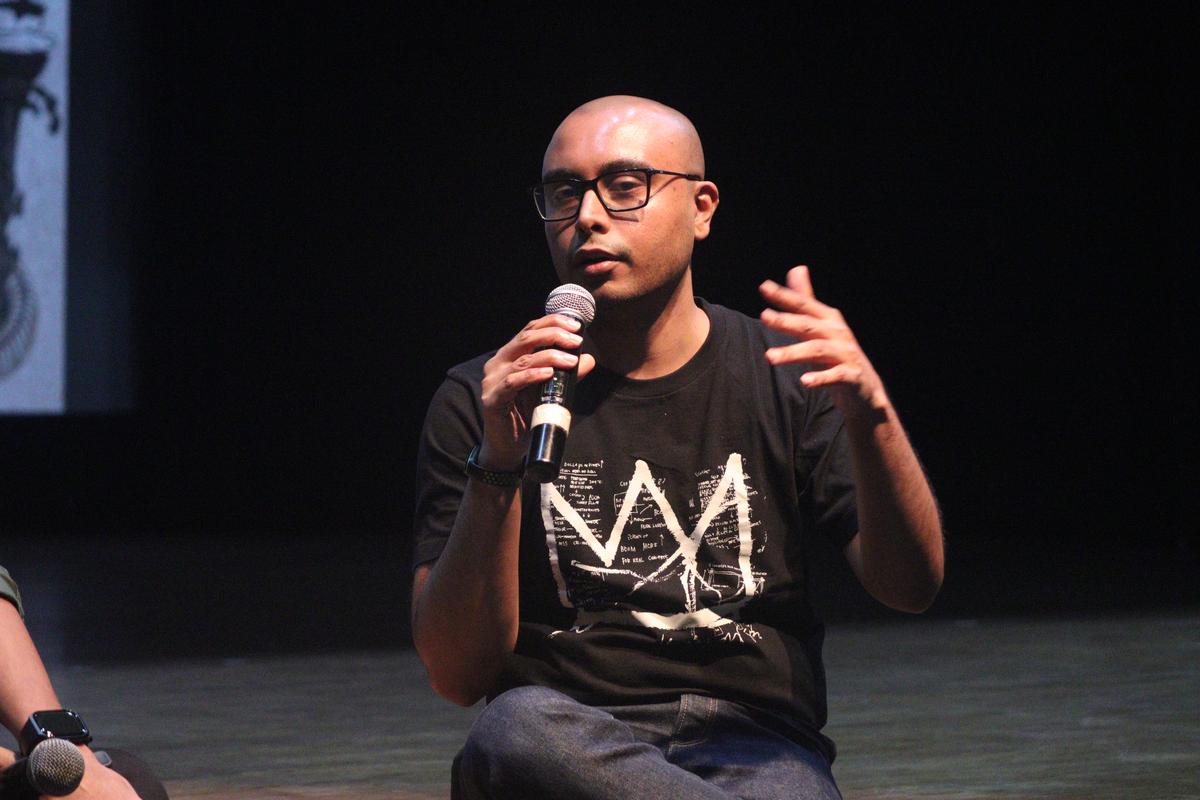
Nowadays most of the big podcasters will have videos, by default: Aditya Shrikrishna

Nowadays most of the big podcasters will have videos, by default: Aditya Shrikrishna

In the last few years, “podcasts have grown and diversified”, says Dhruvank Vaidya, Head of Music and Podcasts at Spotify India. “While it’s true that Bollywood celebrities like Ananya Panday, Sonali Bendre and Soha Ali Khan have all started podcasting, creators from across fields have grown in popularity, too. Raj Shamani [Figuring Out], and Aishwarya Singh and Aryaan Misra [Desi Crime], for instance, have gained a steady and loyal base on Spotify. The beauty of long-form conversations is that there is space to build a loyal base of followers in different areas of interest.”
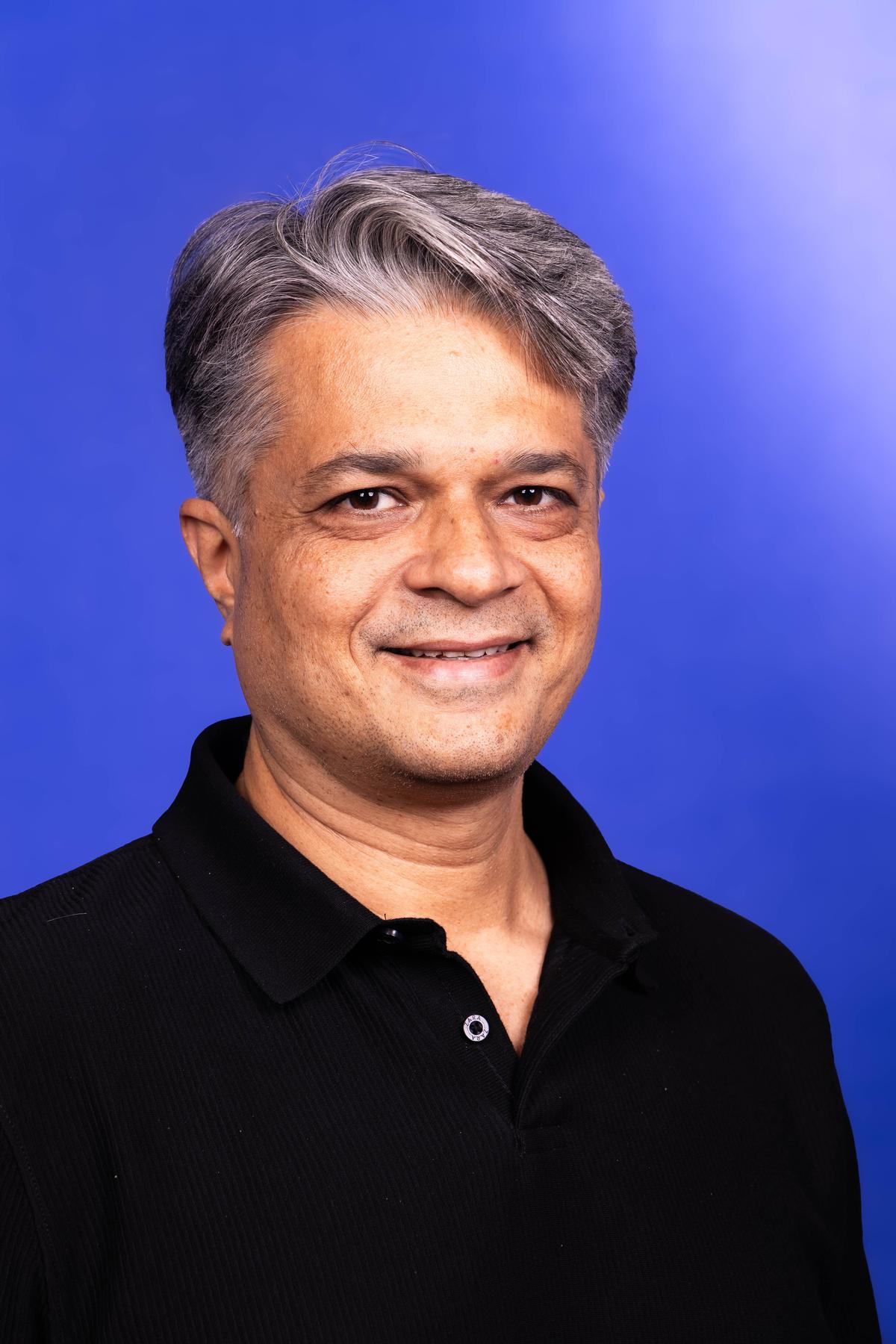
Podcasts have grown and diversified, says Dhruvank Vaidya of Spotify India

Podcasts have grown and diversified, says Dhruvank Vaidya of Spotify India

That last line by Vaidya is significant since it speaks to two key ways in which the podcasting industry has matured in India: long-form content and devoted fan followings. People have shown their appetite for longer, detailed conversations. Ranveer Allahbadia’s interview with former cricketer Yuvraj Singh a couple of years ago was over 150 minutes long. Episodes of Nikhil Kamath’s WTF Is podcast are often over 100 minutes.

“Podcasts formats keep evolving. At first, we were only on Spotify and Apple Podcasts. Now, with vodcasts, we have switched over to YouTube, too. But what irks me is the pressure to follow trends. When Kiran [Manral] and I started ‘Not My Aunty’, it was very conversation based. As much as our audience enjoys our chatter now, there is a demand for interview-based podcasts because that’s what is getting consumed more. But this ranking gives us confidence that what we’re doing is working overall.”Shunali ShroffPodcaster, whose show was ranked #73 on Goodpods’ global ranking

Shunali Shroff

Shunali Shroff

Tripwire of recency bias

Compared to a few years ago, podcasters like Shrikrishna are finding a more clearly-defined market now, thanks to a mixture of online metrics that help them keep track of which episodes and issues are garnering more eyeballs, and the increased social media presence of Indian consumers. The Other Banana has an ongoing series on the filmmaker Bala’s filmography, for example — the focus on individual directors was validated after Shrikrishna and his co-hosts found that the series had returning, steady audiences.

But, with a greater market comes recency bias (prioritising new information) and a certain amount of emphasis on ‘trending’ topics. “I think the strategy has changed, for multiple reasons. When we started doing podcasts, we didn’t really have an idea of who the target audience was, what worked, et cetera. We could have really left-field topics for our episodes,” says Shrikrishna. “Now, there is a definite market for podcasts, so we try to discuss more recent films. At the same time, widespread access to streaming means more audiences can easily view the movies we are talking about on the podcast, new or old.”

Going regional

With a greater number of podcasts in Indian languages, the penetration into B and C-centres is increasing. According to Sawlani of Audible, “Among non-Hindi languages, Tamil-language podcasts have shown the most growth in terms of number of listeners these last few years.” Kuber of Dentsu echoes this. “There’s a lot of supply and early pickup in Tamil podcasts. The second language that has taken to podcasting strongly is Marathi, followed by Bengali and Gujarati.”

A new form of celebrity

This new digital era has spawned a new class of celebrity — the ‘Internet famous’ person, a demographic that includes podcasters and YouTubers. “Today, the definition of ‘celebrity’ has undergone a transformation,” said Vaidya. “Raj Shamani is India’s biggest podcaster and Bollywood stars across the board feature on his podcast, especially when they have films to promote. Desi Crime is not only a world-class podcast, but when they [the hosts] published their book based on the podcast, it went straight to No.1 [on Amazon]. Another hugely popular one is the Tamil podcast, Schumy Vanna Kaviyangal Bodcast [a fun take on a variety of topics], which is one of the biggest in the country, by consumption.”

Vaidya points to the professionalism of these creators as the defining factor for their success, which speaks to the overall professionalisation of the podcasting space as well. Consistency and quality are the key. “All the three podcasts I mentioned have been churning out episodes every week, sometimes multiple times a week, for four to five years. That’s no accident. Their episodes are also well researched, they pay attention to detail and don’t take their audience for granted. This shows in the quality of the episodes. As a result, audiences don’t just stick, they become fans.”

“There’s a lot of movement happening on the branded content side of things over the last year or so. A lot of brands have started using podcasting as a medium in two primary routes: thought leadership on the corporate side and in the internal communications space. For brands, there is also the sponsorship route that makes it easier to enter this space. The other route, of course, which most people are aware of, is the creator-led content.” Aditya KuberVP, Dentsu Podcast Network

Looking at 2026

After the initial explosion of podcasts post the pandemic, the Indian podcasting industry has quietly recalibrated. As we enter 2026, expect podcasts to continue their cautious expansion, and for podcasting conversations to become even more ‘mainstream’.

According to Shailesh Sawlani, Country Manager (India), Audible, “The early wave of podcasting in India was marked by an explosion of creative experimentation, a time when new voices and ideas were finding their place in a fresh and exciting medium. What we’re seeing now is a natural evolution of that phase. There’s been a move towards more purposeful, quality-driven storytelling. Listeners today are seeking depth, authenticity, immersion, and craft in the stories they choose to listen to. That shift has encouraged creators and services alike to focus on thoughtful curation and formats rather than volume alone.”

Now there’s a move towards more purposeful, quality-driven storytelling, says Shailesh Sawlani of Audible

Now there’s a move towards more purposeful, quality-driven storytelling, says Shailesh Sawlani of Audible
| Photo Credit:

And, of course, expect more vodcasts. Despite audiophiles being sceptical about this new form, it’s here to stay. And with even streaming platforms getting set to make the change — Netflix is joining the bandwagon, developing exclusive shows and licensing existing hits in 2026, according to Bloomberg — we can stay tuned for so much more in the new year.

The writer is working on his first book of non-fiction.


Source link

How a Tiruppur apparel unit became a model for net-zero industrial design


When U.S. President Donald Trump announced a 50% tariff on Indian textile exports on August 27, 2025, Tiruppur — India’s knitwear nerve centre — was momentarily stunned. However, the disruption also pushed many in the industry to rethink resilience, innovation, and the very foundations of how they operate.

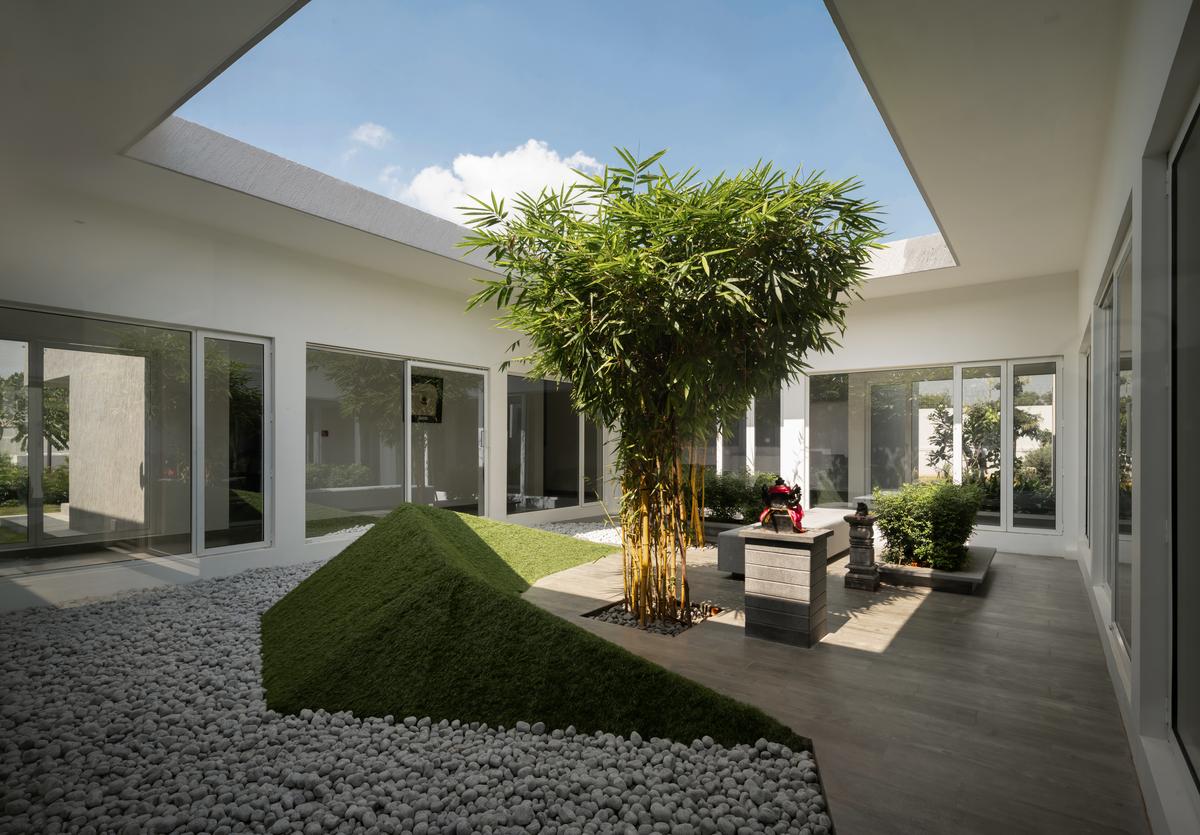
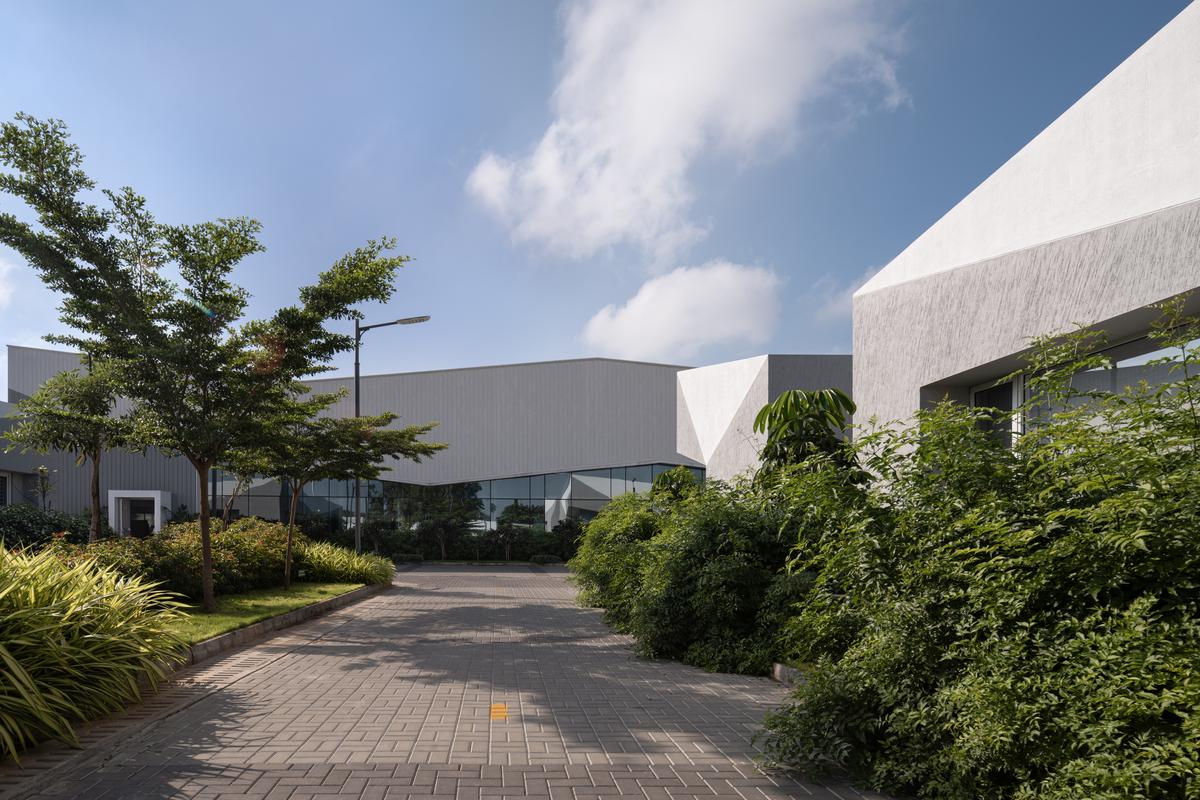
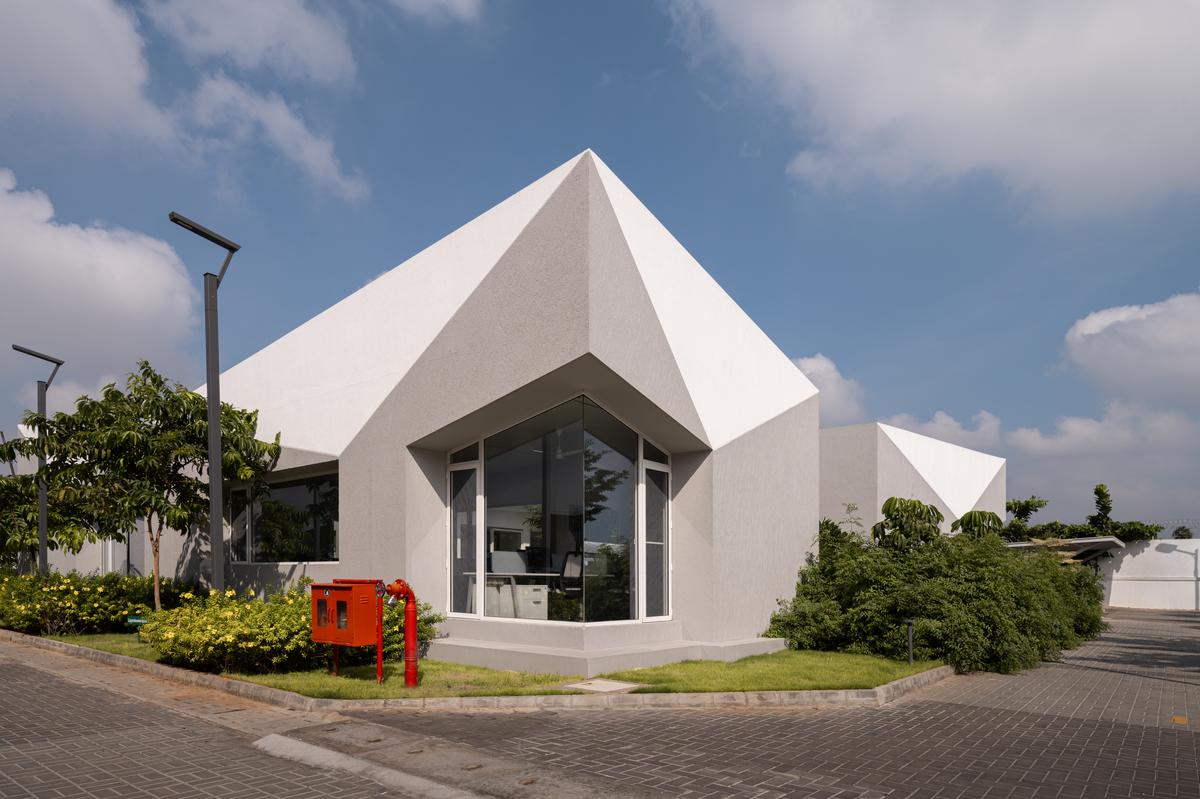
One striking example stands right in the heart of Tiruppur. A dynamic glass facade that plays on optical illusion turns heads for its minimal yet striking design as one enters the garment manufacturing facility of SAGS Apparels in Tiruppur.

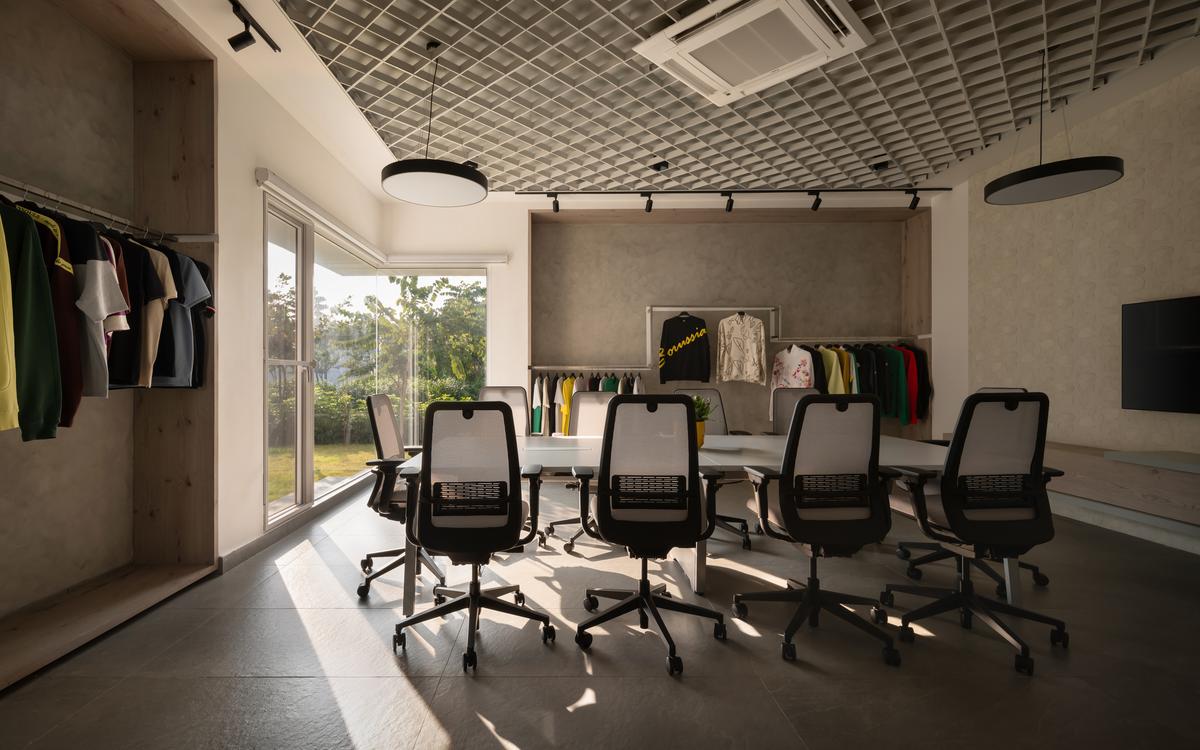
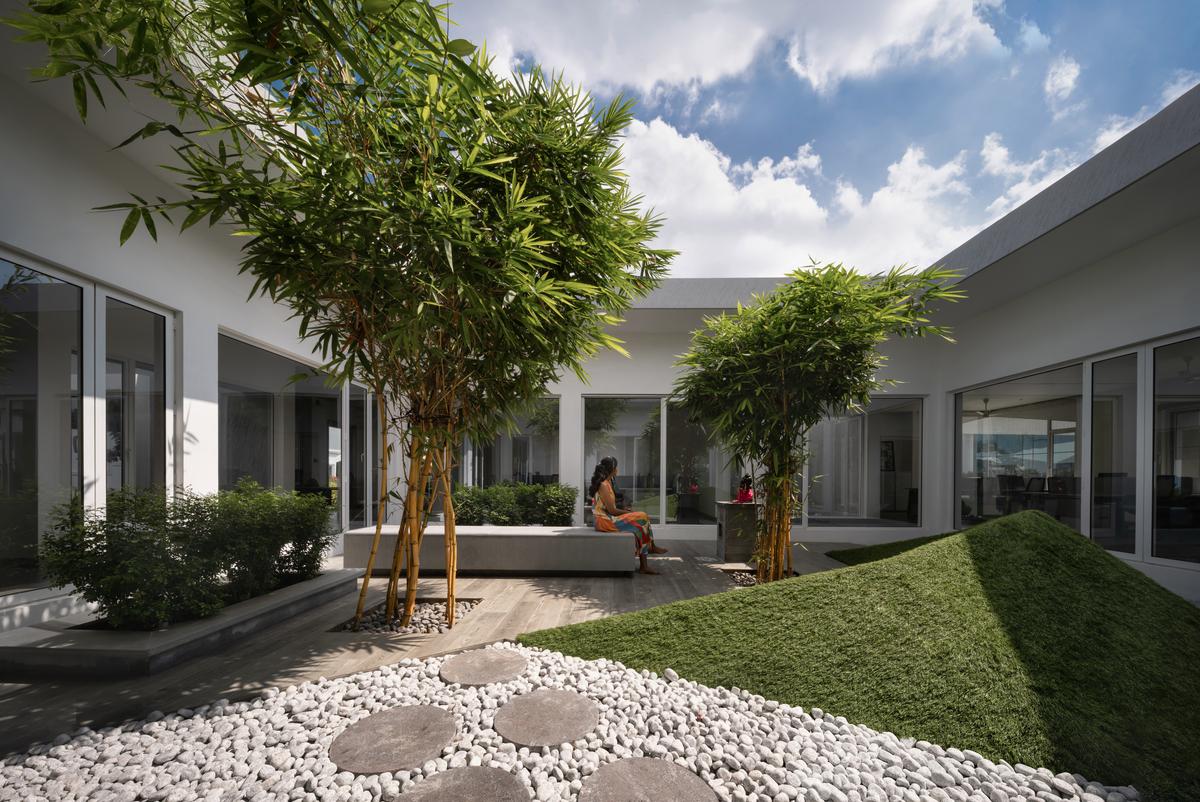
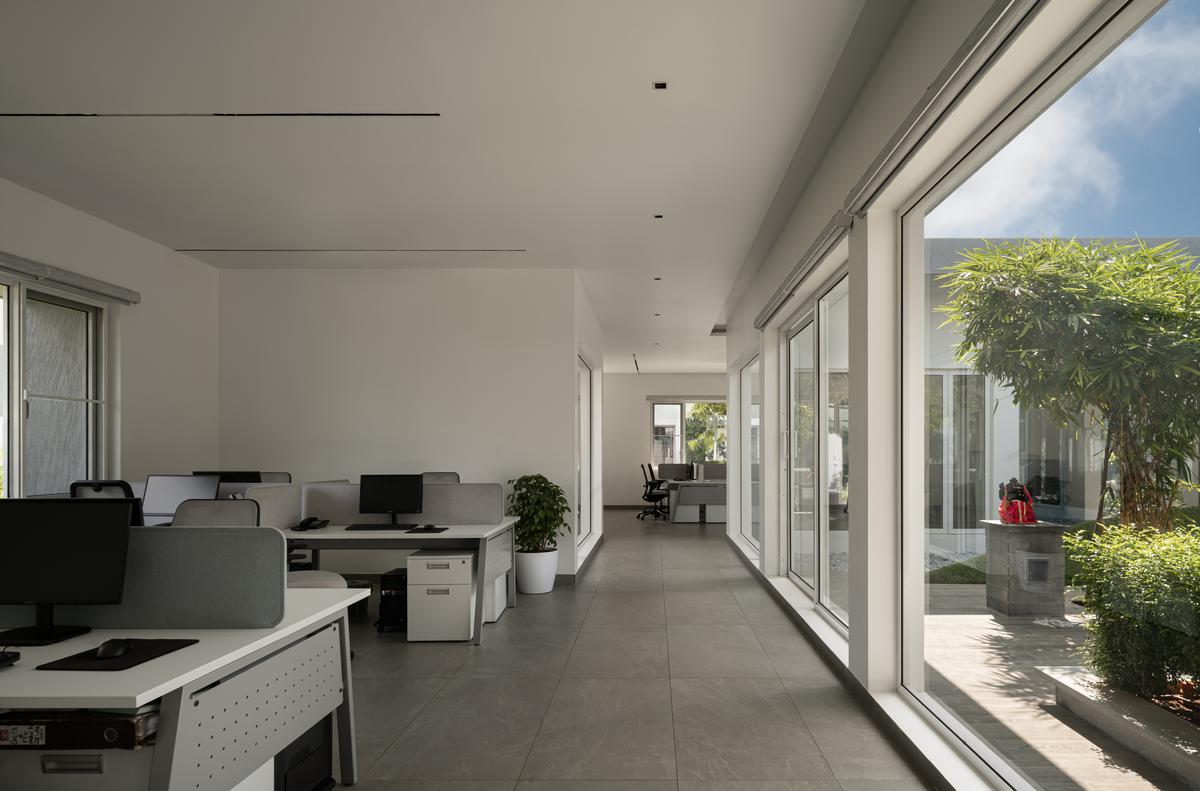
On a built-up area of 52,900 sq.ft., with one-third of the land devoted to landscaping, this industrial building buzzing with over 400 staff has earmarked spaces for greenery, and boasts naturally-lit workspaces, and energy-efficient air-cooling systems that ensure comfort even in peak summers.

A view of the facility.

A view of the facility.
| Photo Credit:
JUSTIN SEBASTIAN

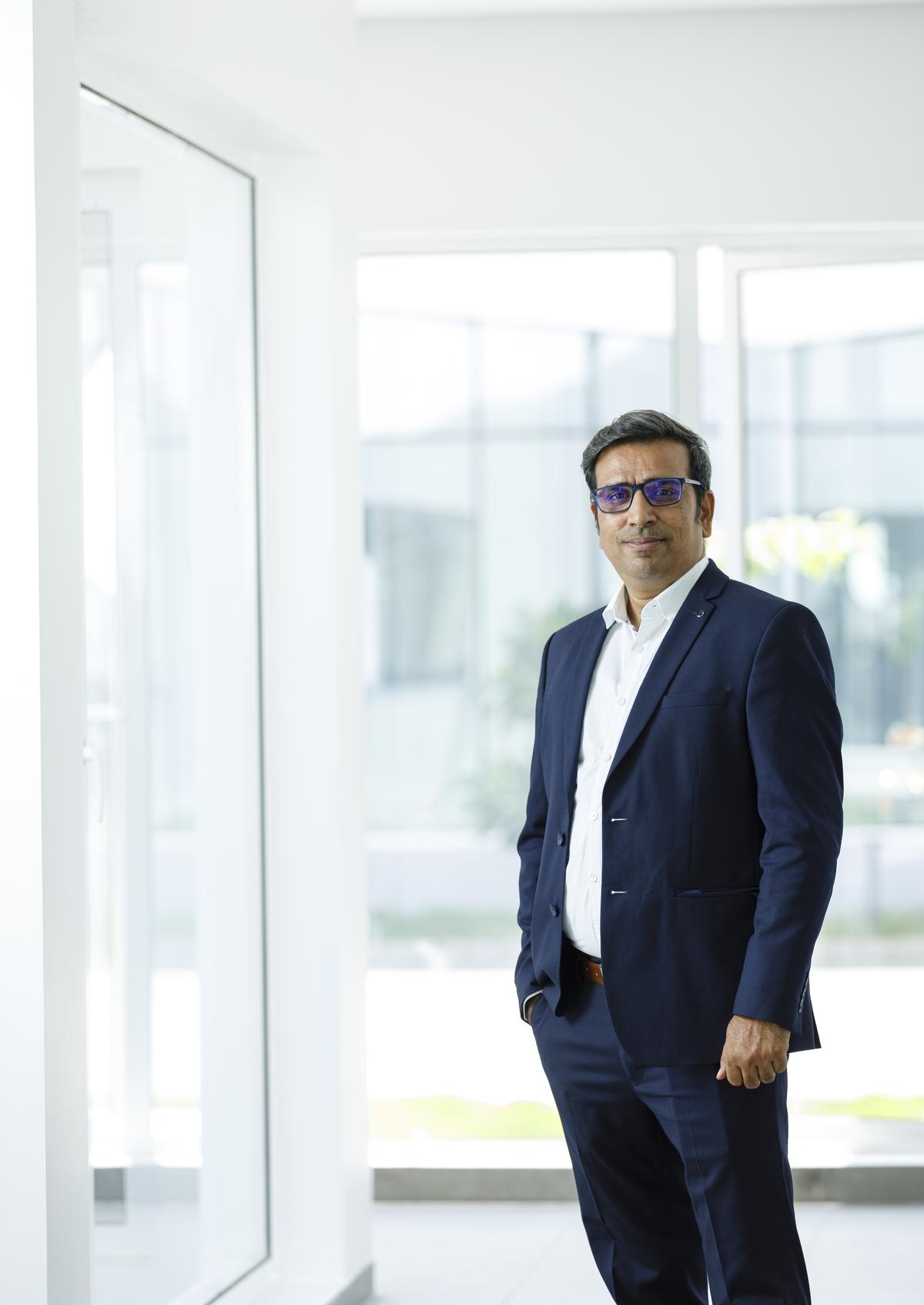
“How to reduce environmental footprint at every step was the first question that popped up,” says architect Arun Prasad Prakashan of Coimbatore-based Arun & Associates. His building design for SAGS Apparels, called Samya, Sanskrit word for balance, harmony, and proportion, marks a paradigm shift in industrial architecture. While it was designed to meet LEED Platinum standards in sustainability (the highest level of green building rating awarded by the U.S. Green Building Council), including net-zero in energy and water usage, comfort and health of the occupants have also been prioritised.

Arun Prasad Prakashan of Coimbatore-based Arun & Associates.

Arun Prasad Prakashan of Coimbatore-based Arun & Associates.

Smart facade controls

“All the glass windows at the office open to canopied trees in the courtyard or the garden, bringing in a sense of calm. There is no air-conditioning. We have adopted an evaporative cooling system that keeps the factory six degrees cooler than outside,” explains Prakashan, adding that the smart facade controls energy and light flow. Right from the orientation stage, the team focused on design that helps cut down heat and energy usage wherever possible. For example, the roof uses Tata Borescope sheets with a high Solar Reflectance Index (SRI) to minimise temperature.

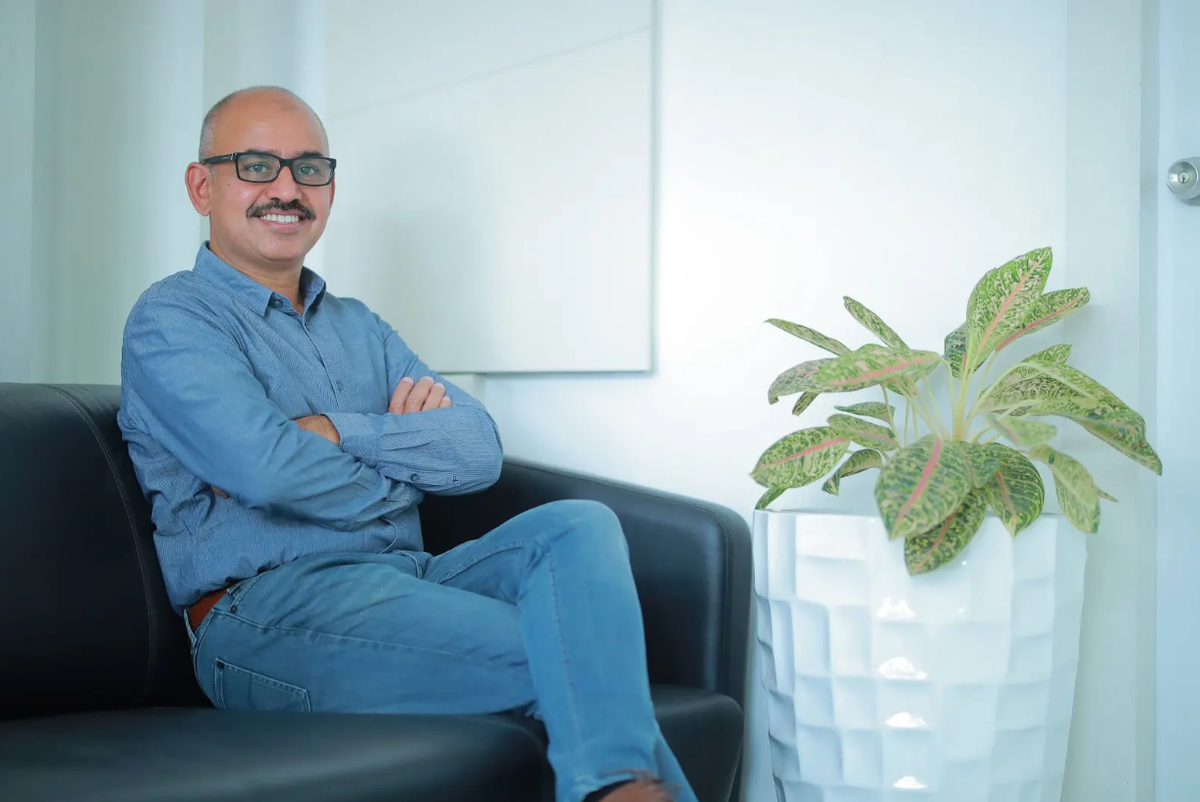
Ganesh Anantharaman, managing partner and CEO of SAGS Apparels. 

Ganesh Anantharaman, managing partner and CEO of SAGS Apparels. 

“We wanted our garments, be it the T-shirts, hoodies or jackets, to have ‘life’ and stand for something meaningful,” says Ganesh Anantharaman, managing partner and CEO of SAGS Apparels. 

“We produce sustainable garments with 100% organic and fair trade cotton. We started out with just 30 people. Today, we have employed 450 people and export to premium clients across Germany, from Bundesliga football clubs to gas stations and automotive brands like Mercedes-Benz. We won the German Sustainable Award in 2020 for our achievements. We wanted our building to be iconic, dynamic and an inspiration for other MSMEs in the region to achieve high standards in sustainability,” Anantharaman explains.

A view of the facility.

A view of the facility.
| Photo Credit:
JUSTIN SEBASTIAN

The factory is solar-powered with a 250-KW solar photovoltaic (PV) system, which is 35% more than its actual energy requirement. Rainwater is harvested in a 5-lakh litre underground tank, and the storage is used to meet the water requirements for three months. The rest of the stormwater is diverted into an intelligent borewell recharge system.

“Our objective from day one has been to cut down carbon emissions. Our garment manufacturing facility has achieved net zero in energy, water, waste, and carbon. The amount of energy consumed is equal to the amount of renewable energy created on-site from renewable sources, the solar panels. Same with water,” says Anantha- raman.

A view of the facility.

A view of the facility.
| Photo Credit:
JUSTIN SEBASTIAN

He added that they minimise water use while tapping into alternative sources like rainwater or treated wastewater to meet requirements. 

According to Prabhavathi Paramedian, senior partner at Chennai-based Conserve Consultants Private Limited, the sustainability consultants for the project, documenting carbon footprint reduction in green buildings involves meticulous tracking at every stage of the construction. “From the materials chosen and the energy consumed during building to how the structure operates over time, everything counts. It’s all part of a larger goal of fostering sustainability, and it ensures that the project stays true to its carbon reduction objectives,” she adds.

A view of the facility.

A view of the facility.
| Photo Credit:
JUSTIN SEBASTIAN

Minimal noise pollution

The project followed green standards at every stage of construction and took over a year to complete. “We had to follow the green discipline. We excavated the rich topsoil and stockpiled it in a designated area on-site. Then, we spread it over again after the construction for landscaping. We cannot send debris and waste in any form to the landfill. 

We also ensured that the noise pollution was minimal during the construction,” says Prakashan.

A view of the facility.

A view of the facility.
| Photo Credit:
JUSTIN SEBASTIAN

However, procuring materials within a radius of 300 km was challenging. All the products, from paints and glass to aluminium and furniture, are green certified. The roofs also feature aluminium cladding integrated with glazing to regulate heat. “We have used a lot of pre-engineered steel structures. And, performance glass that lets in light but blocks heat. We minimised east and west openings to block harsh sunlight. Each zone, from transportation to packaging, is carefully planned to support smooth operations and communication,” explains Prakashan. While landscaping uses native, drought-tolerant species to reduce water needs, the office furniture was chosen from brands like Steelcase, which predominantly uses recycled materials and sustainable innovations.

“Our objective from day one has been to cut down carbon emissions. Our garment manufacturing facility has achieved net zero in energy, water, waste, and carbon”Ganesh AnantharamanManaging partner and CEO, SAGS Apparels

Prakashan points out that sustainability is the way forward for Indian companies. “Statistics say that California alone consumes energy which is equal to our entire country’s consumption. There won’t be enough resources left in the world unless we make judicious choices. Manufacturing units using clean energy attract international buyers in a big way. Soon, buildings will have to comply with mandatory green energy codes to keep energy consumption in check.”
A view of the facility.

A view of the facility.
| Photo Credit:
JUSTIN SEBASTIAN

Anantharaman adds that with stringent European Union norms, including a possible ‘carbon tax’, sustainable operations become inevitable. “An effective use of the Internet of Things (IoT) also helps. For the landscape, we have an automated irrigation system with smart sensors. We have employed a ‘sustainable executive’ whose job is to keep track of water and energy usage in every block. Being an environmentally friendly operation gives us an edge. We have shown that even as an MSME, it is possible to build a factory that’s truly future-ready. Many exporters in the region are rethinking their approach. It is about doing what is right — for the people who work with us and the planet.”

Published – November 21, 2025 07:43 pm IST


Source link

Mughal moodboard for modern homes


A décor style that is classic and elegant, Mughal-inspired interiors are commonly seen in not just heritage hotels but also in new-age restaurants and bars. Whether it is the domed ceilings and mirrored walls of The Oberoi Amarvilas in Agra or the hand-painted frescoes, carved couches and arched doorways of the Samode Haveli in Jaipur, designers are using this aesthetic for its timeless appeal.

The floral details bloom softly against the muted base, turning the floor into a field of quiet ornament.

The floral details bloom softly against the muted base, turning the floor into a field of quiet ornament.
| Photo Credit:
Raghav Bhatia

Sarita Handa

Sarita Handa

Think regal décor and it is almost synonymous with ornate arches, intricate ceiling patterns, floral motifs and vibrant geometrics. This aesthetic largely inspired by Mughal royalty, is characterised by exquisite designs and an intriguing vibe which includes plush materials, nature-inspired motifs and rich colour palettes. Seamlessly blending this style into a more contemporary setting are fine-dining restaurants like Begam in Noida and boutique hotels like Villa Palladio in Jaipur where ambient lighting, jewel tones and silk drapes accentuate elements like grandiose chandeliers, iconic flower motifs and signature jharokhas. The recently opened Grand Mercure Agra and Wyndham Grand Udaipur are other hotels incorporating Mughal inspired motifs albeit with a contemporary flair.

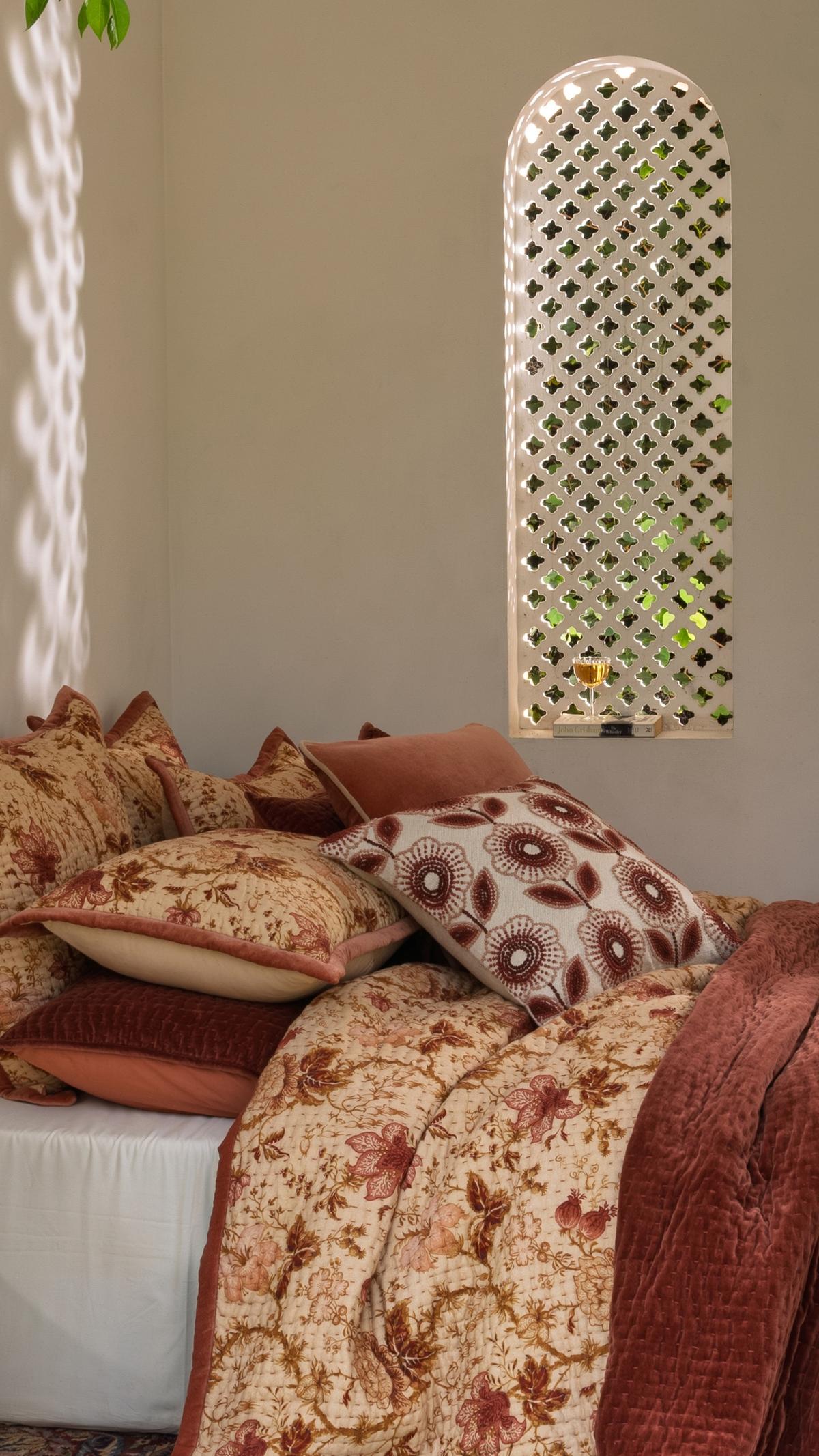
Floral accents on cushions and fabrics add layers of texture and comfort.

Floral accents on cushions and fabrics add layers of texture and comfort.
| Photo Credit:
Beyond Designs

But did you know that you can pull off this ethereal look even at home? With inputs from several industry experts, here is the lowdown on how you can do it.

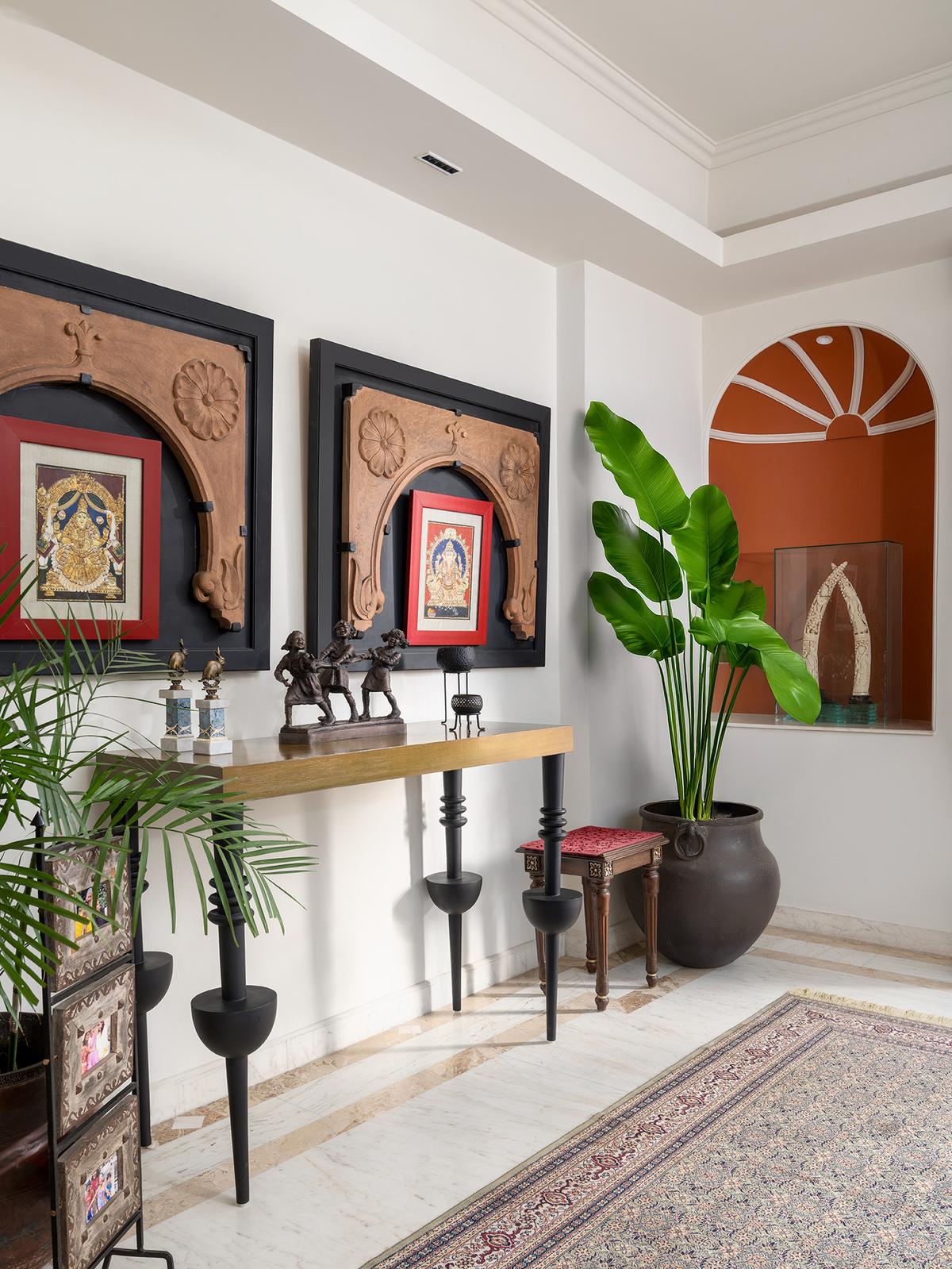
In the foyer, heirloom frames adorned with floral carvings meet a Mughal-inspired arch niche, adding an elegant prelude to the home’s classical narrative.

In the foyer, heirloom frames adorned with floral carvings meet a Mughal-inspired arch niche, adding an elegant prelude to the home’s classical narrative.
| Photo Credit:
Deepak Aggarwal

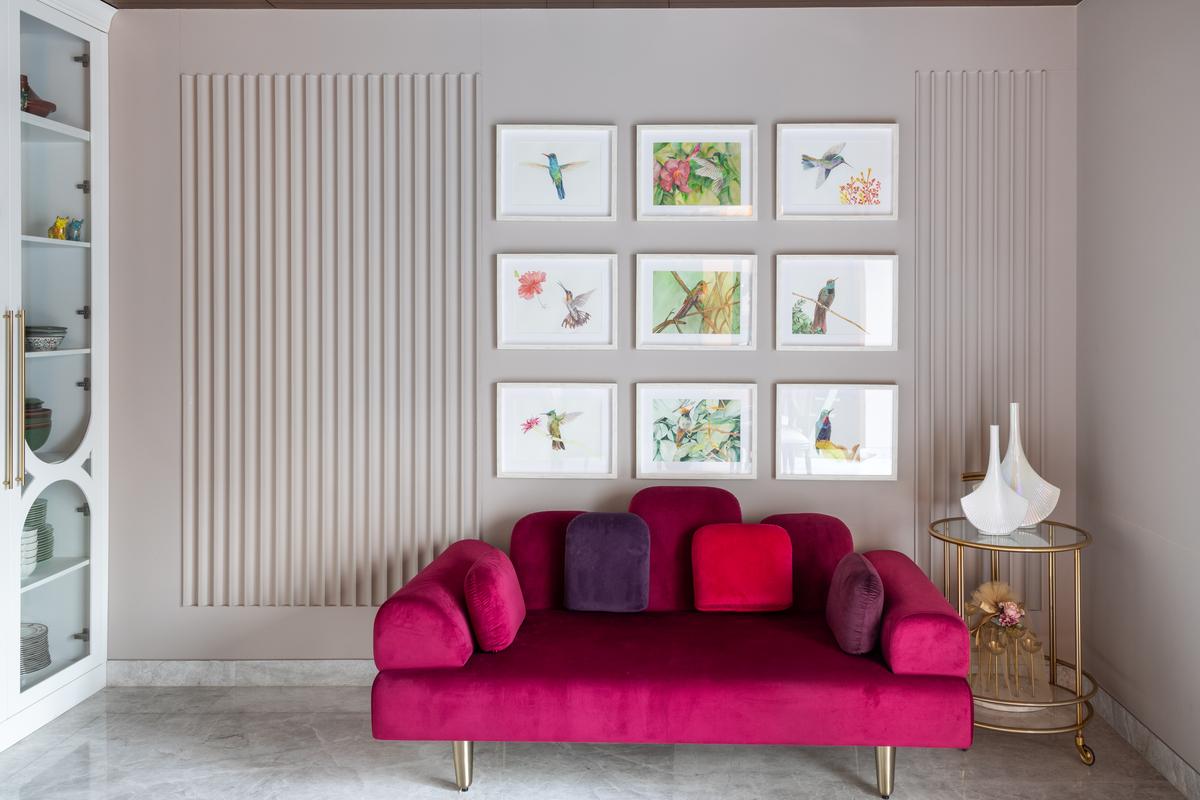
Creating delicate stories in living areas with watercolour illustrations of flora and fauna.

Creating delicate stories in living areas with watercolour illustrations of flora and fauna.
| Photo Credit:
Ravi Varma

Rooted in heritage and nostalgia

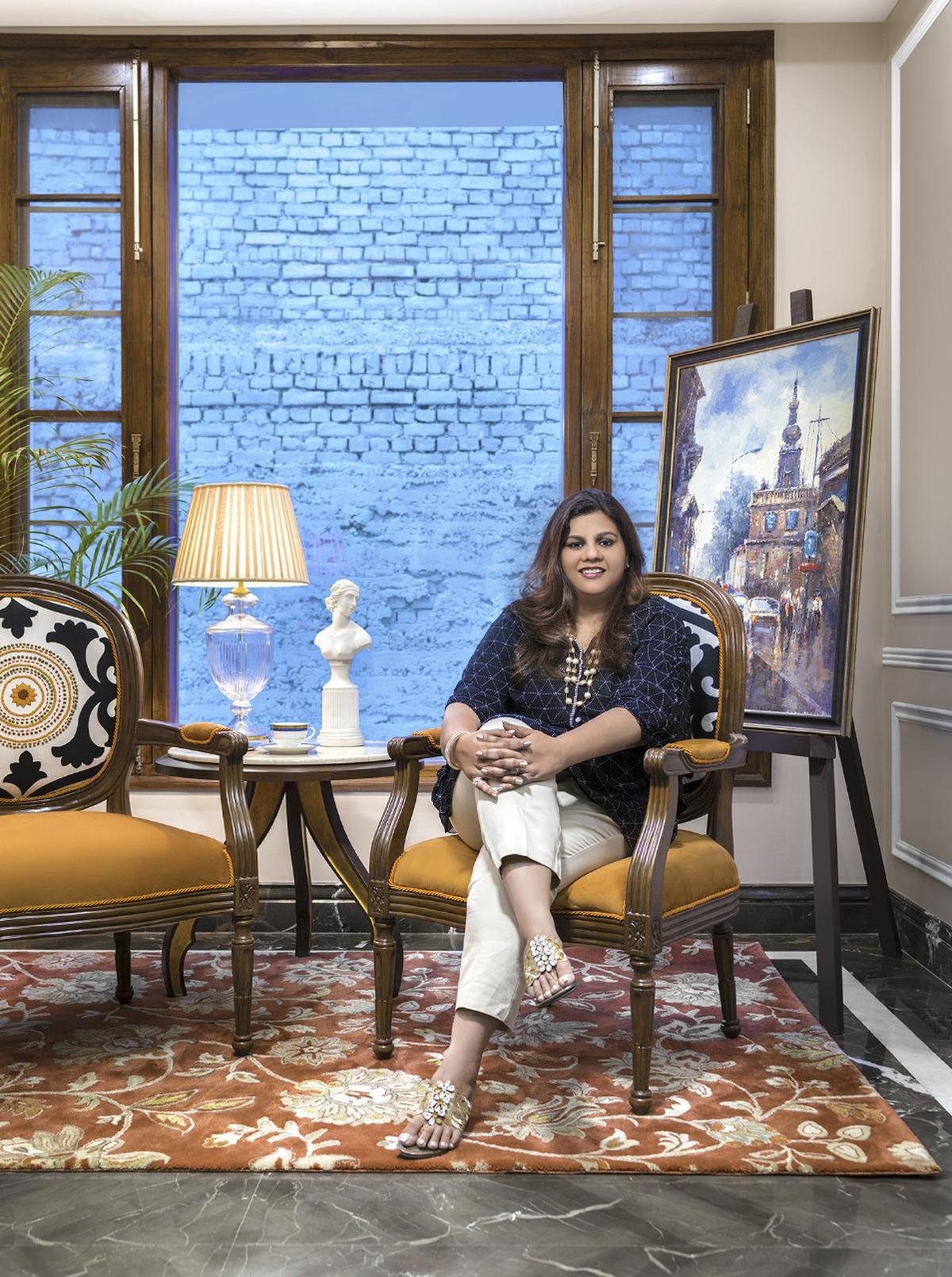
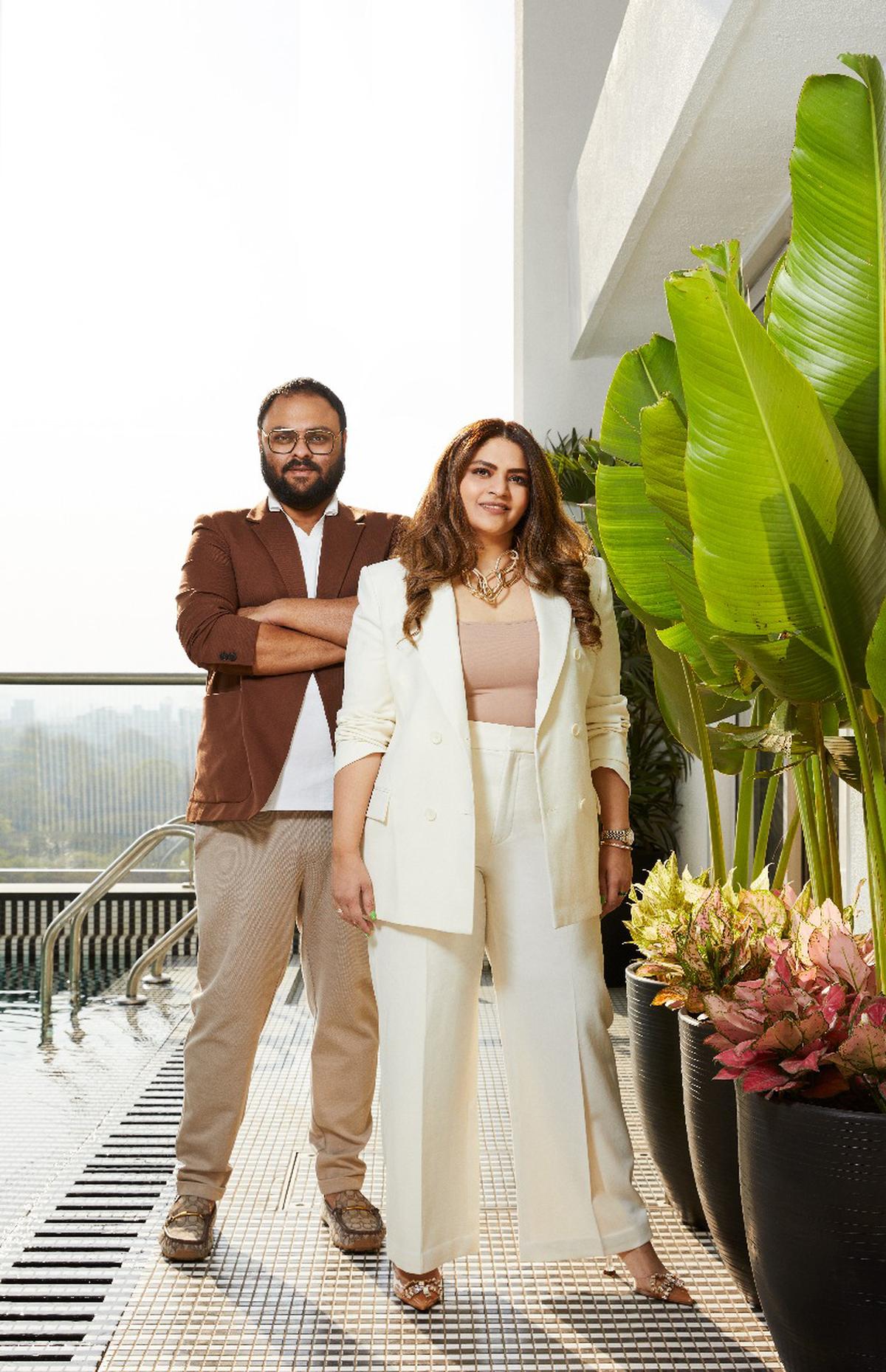
Mughal-inspired designs which include florals and geometrics carry a timeless elegance that add depth and character to interiors. They are deeply rooted in Indian art and culture, and have been a recurring element in fashion and interior design for centuries. “Many homeowners today are drawn to them not just for their aesthetic appeal but for the stories and cultural resonance they bring to a space. Whether subtly layered in upholstery, wall treatments, or decorative accents, these patterns create a dialogue between heritage and modern-day living. In our experience, they are particularly integrated in spaces meant to feel intimate and curated, as they allow every corner to tell a story while maintaining a refined, luxurious feel,” says Neha Gupta, co-founder, design principal, Beyond Designs.

Manisha Gandhi.

Manisha Gandhi.

Mita Mehta

Mita Mehta

“Floral patterns have a quality of timelessness to them. They are soft, versatile, and instantly lift a space — which is why they remain a favourite in my work, whether it’s a modern apartment or a classic home. Geometric motifs, on the other hand, bring in a sense of heritage and depth — a little nod to architectural grandeur. I love the way these two elements balance each other; florals bring nature’s elegance while geometric patterns anchor spaces with structure and history,” says Akash Mehta, principal designer, Poonam Akash (formerly known as AMPM Designs).

Adorned with vintage botanical prints for an elegant, timeless touch.

Adorned with vintage botanical prints for an elegant, timeless touch.
| Photo Credit:
Tanuj Ahuja

Mughal style florals and geometrics are not just decorative; they are architectural in spirit, with repeating motifs which create a sense of order, rhythm and balance in a space. Since these motifs have a strong presence, they work beautifully in rooms where you want to establish character. “We recommend using these patterns in areas meant for hosting and interaction, such as living rooms, dining areas, or entrance foyers. For a more intimate expression, powder rooms and bedrooms look great in these patterns when approached with subtlety, either through soft furnishings or a single statement wall,” says Pooja Gupta, principal designer, I Design Studios.

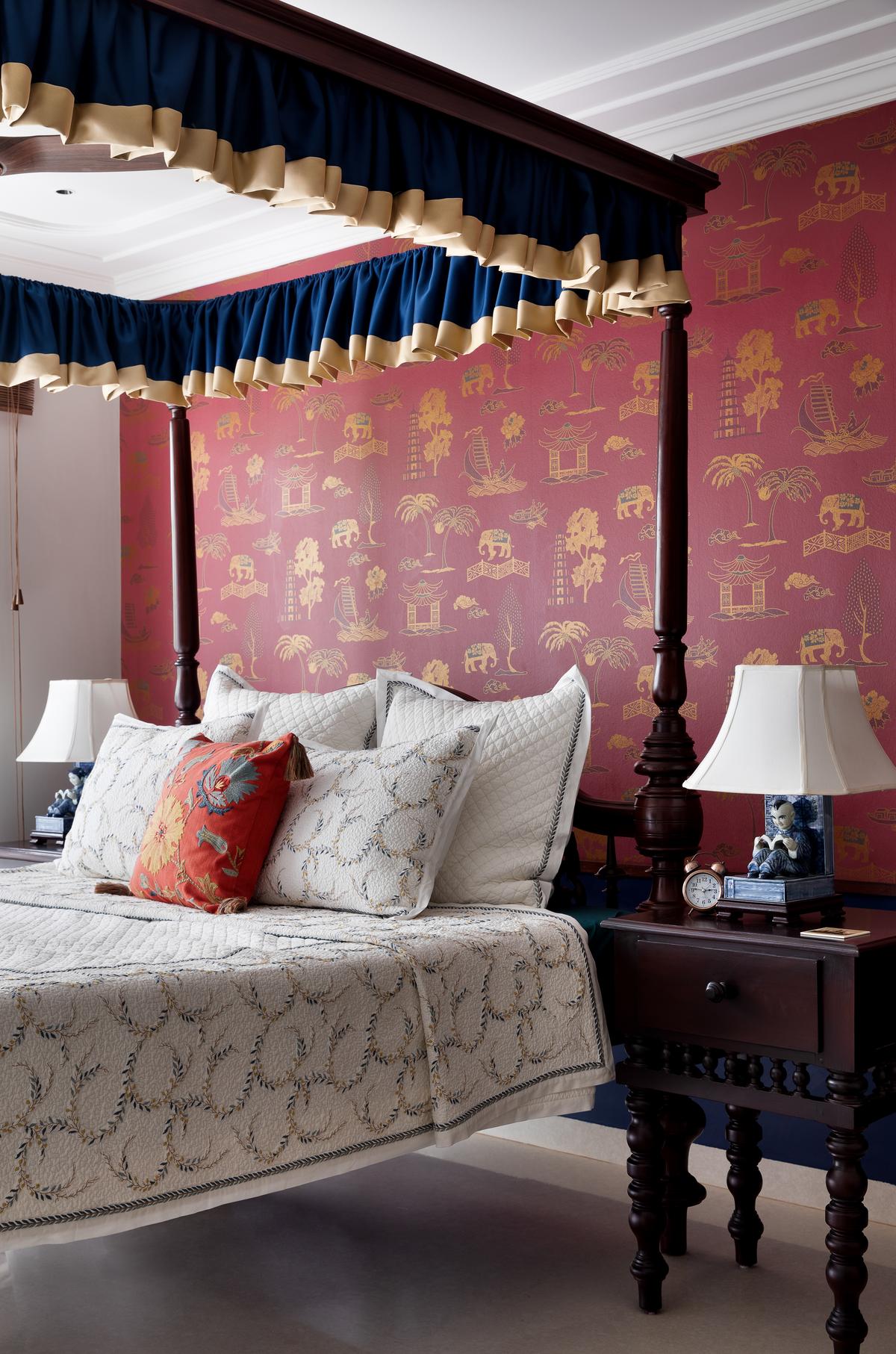
Traditional florals and Mughal-inspired motifs play out on a vibrant red wall, framing the stately four-poster bed.

Traditional florals and Mughal-inspired motifs play out on a vibrant red wall, framing the stately four-poster bed.
| Photo Credit:
Phosart Studio

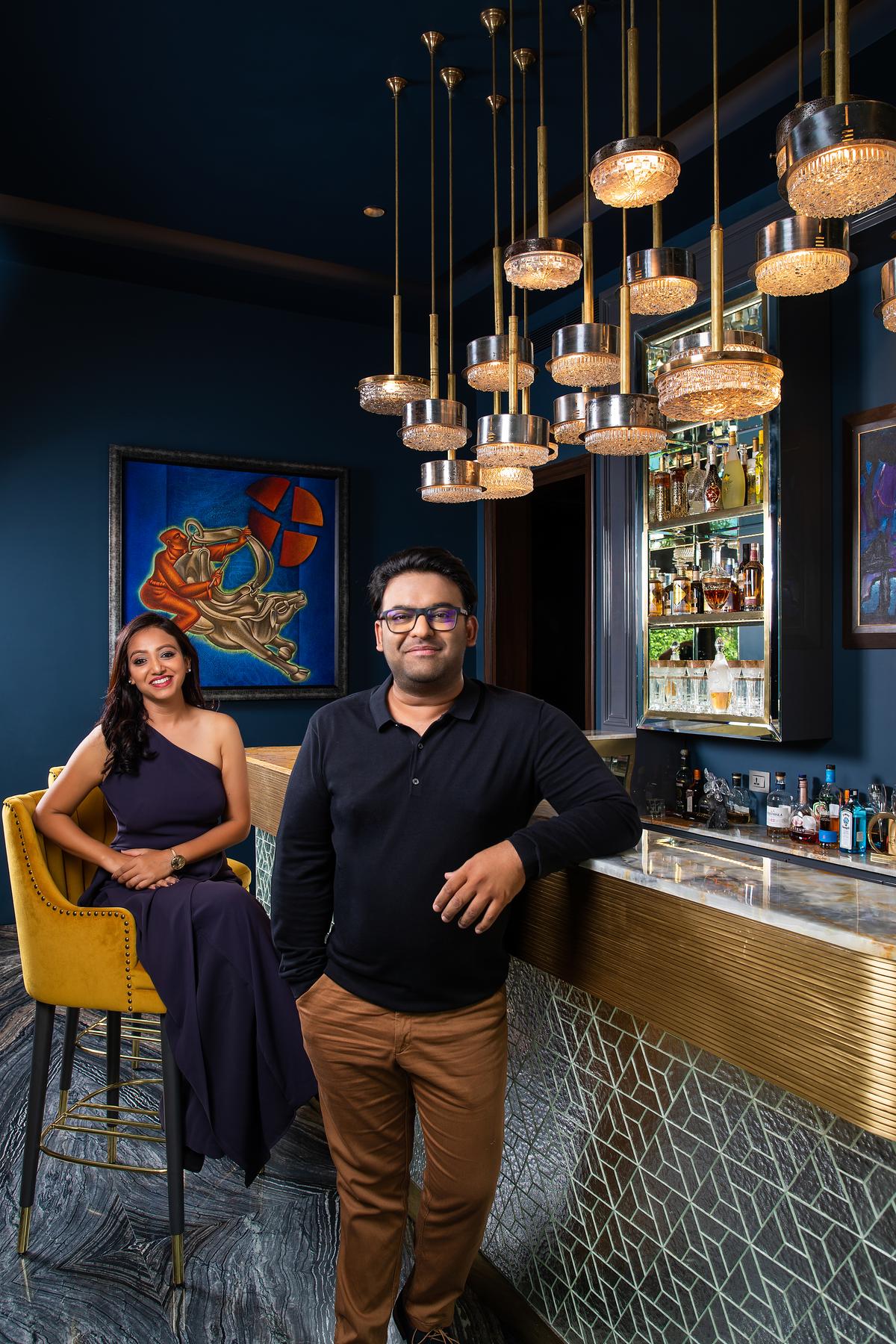
Neha Gupta and Sachin Gupta

Neha Gupta and Sachin Gupta

These geometric patterns also shine in foyers, prayer rooms, partitions and accent furniture, bringing heritage and a touch of grandeur to the home. “While florals add freshness without overwhelming a space, geometric patterns shine in architectural details — like jaali screens, inlay furniture, or an accent wall. A mix of soft florals and bold geometry keeps interiors balanced and timeless,” says Manisha Gandhi, principal designer, Studio MG.

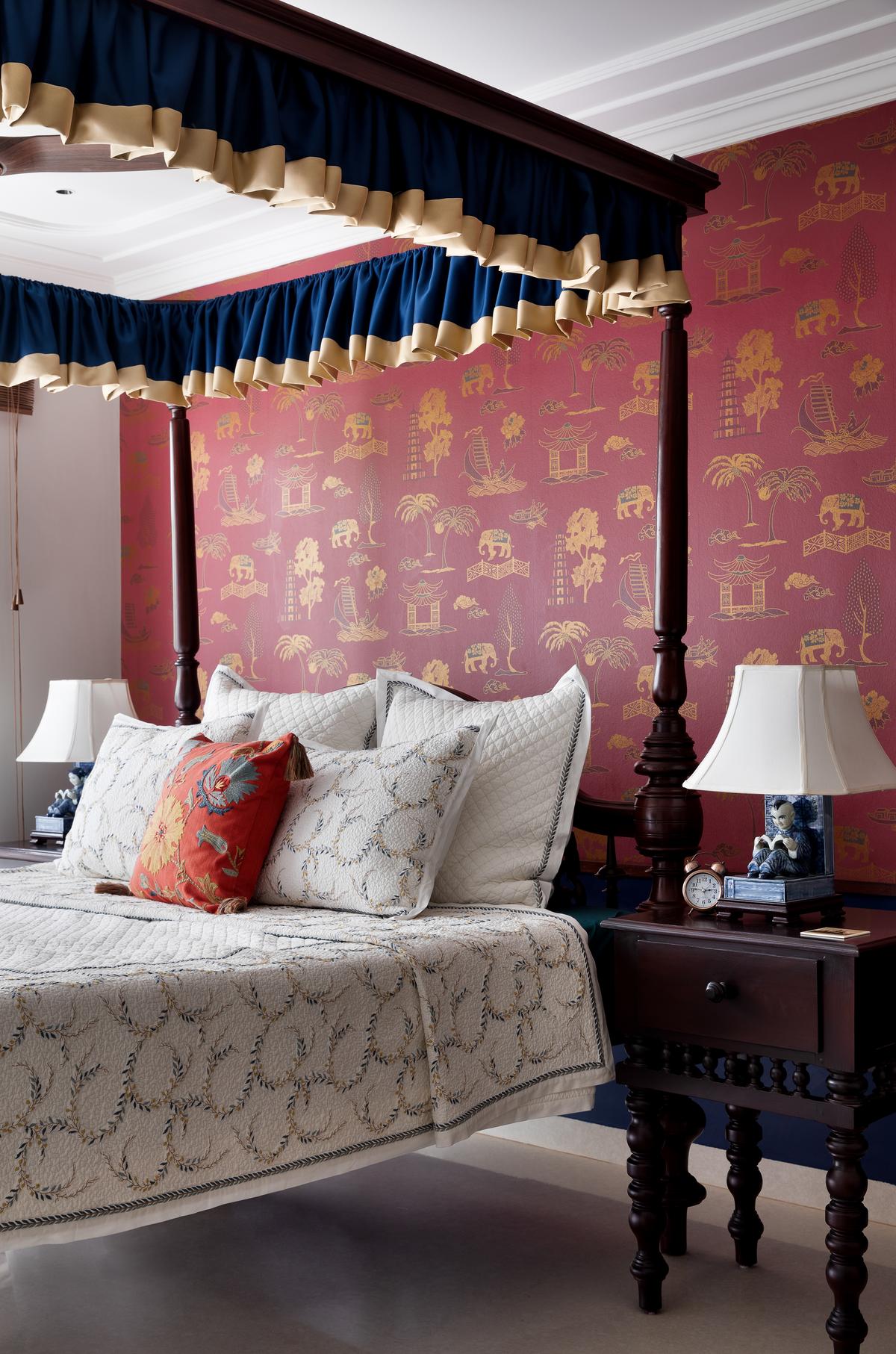
Traditional florals and Mughal-inspired motifs play out on a vibrant red wall, framing the stately four-poster bed.

Traditional florals and Mughal-inspired motifs play out on a vibrant red wall, framing the stately four-poster bed.
| Photo Credit:
Phosart Studio

“We often recommend them for transitional or quiet spaces such as entrance foyers, corridors, vestibules and powder rooms. In bedrooms, they lend themselves well to headboards, ceiling borders or wardrobe shutters. Bathrooms are another ideal space, especially for incorporating patterned floor tiles, dado walls or even carved vanity units. We have also used such motifs in media rooms and studies, where they add a sense of atmosphere and stillness. In each case, it is important to adapt the pattern to suit the scale and function of the space,” says Mita Mehta, interior stylist-curator & founder, Mita Mehta Studios.

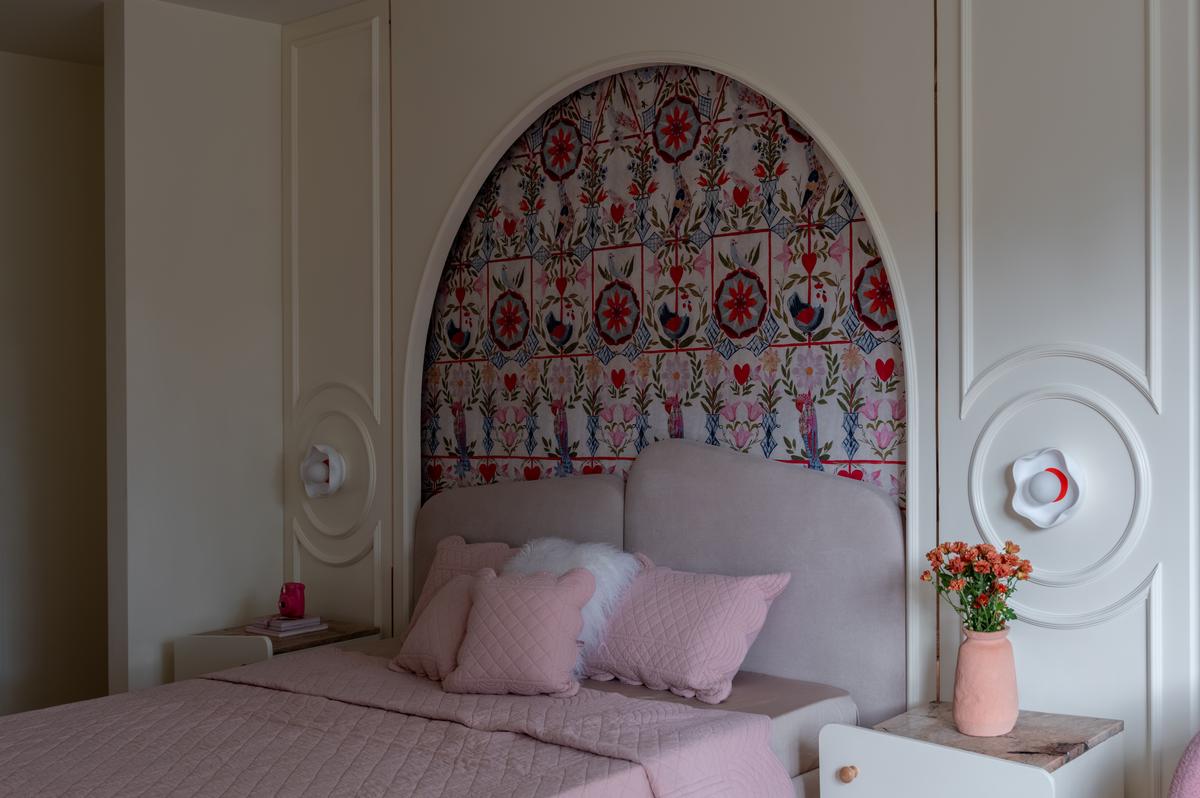
A floral arch becomes the focal point of the bedroom, infusing the space with softness and layered elegance.

A floral arch becomes the focal point of the bedroom, infusing the space with softness and layered elegance.
| Photo Credit:
Kuber Shah

Soft furnishings, wallpaper, tiles and more

Both florals and geometrics can be seamlessly interwoven throughout various spaces in a home. Dining areas can be elevated with floral tablecloths and geometric-patterned place mats, making meals feel extra special. Entryways and hallways become more welcoming with floral runners or Mughal-patterned artwork, setting an elegant tone right from the word go. Even bathrooms can be refreshed with floral shower curtains or geometric tiles,” says Prarthana Dev, advocacy and business development, Sarita Handa.

Pooja Gupta.

Pooja Gupta.

“For walls, consider wallpaper or even stencilled paint, which can turn a feature wall into a bold statement. Pairing these prints with solids helps create visual balance and prevents the space from feeling cluttered. For a contemporary look, use patterned upholstery on a statement chair or settee, or introduce pattern through accessories like rugs and lampshades. The key is to let one or two pieces take centrestage, and anchor them with solid colours or quieter designs elsewhere,” adds Dev.

Poonam and Akash Mehta

Poonam and Akash Mehta

“A rug with a floral or geometric design can anchor a room, set its mood, and tie together the surrounding elements with ease. Since rugs are tactile and movable, they offer flexibility as you can experiment with scale, colour, and placement to suit different interior styles. More than just decoration, they create a layered foundation that brings warmth, softness, and character into everyday living,” says Saina Takkar, cofounder, Ardhi Looms.

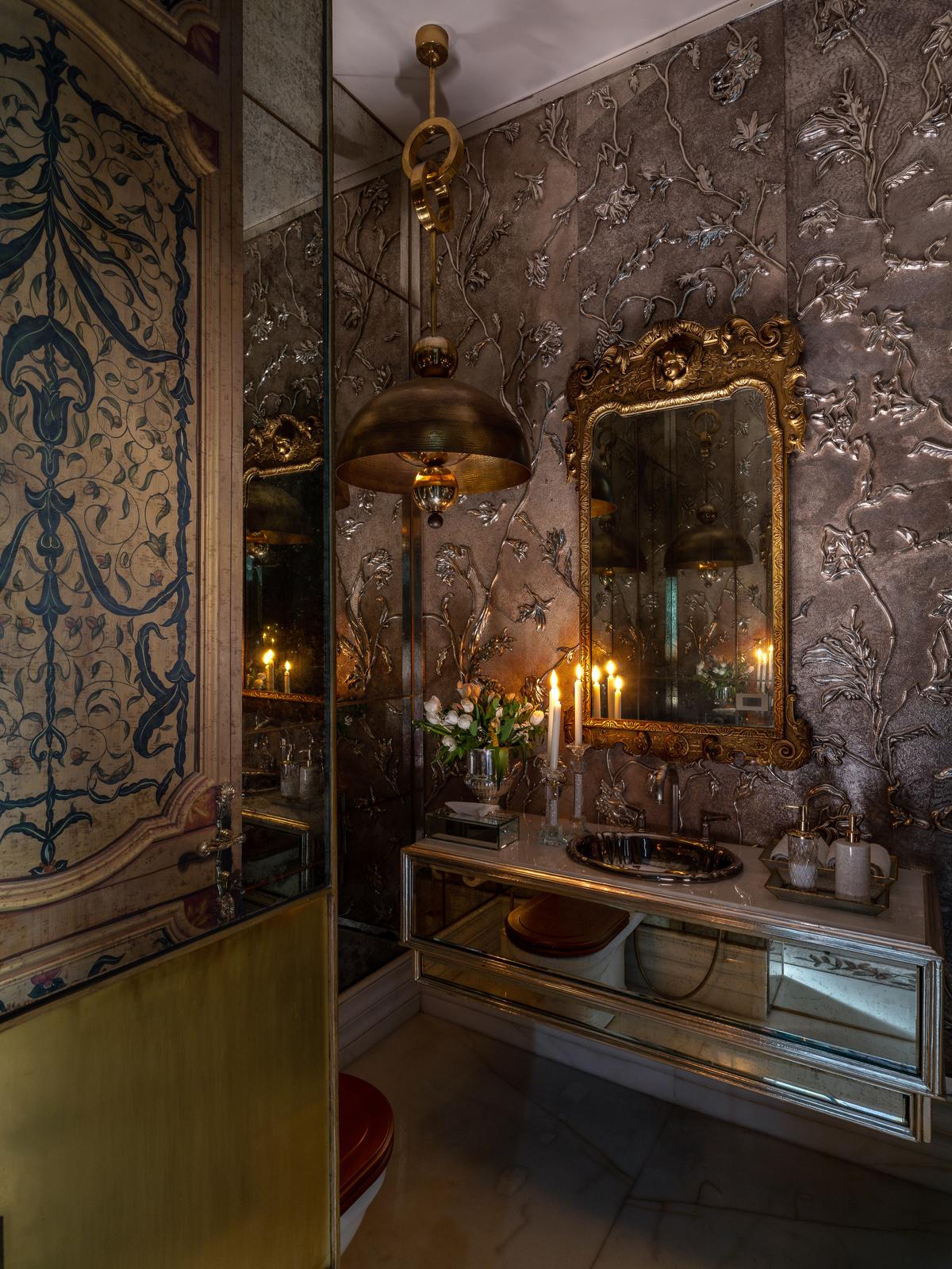
Intricate floral wall textures and gilded accents bring a sense of timeless elegance to this powder room.

Intricate floral wall textures and gilded accents bring a sense of timeless elegance to this powder room.
| Photo Credit:
Beyond Designs

Balance and layering

When styling with these motifs, balance and layering are key. For example, if your sofa has floral upholstery, keep cushions solid or textured for balance; or use jaali screens or geometric rugs as standout elements, and let the rest of the décor stay minimal. Combine different fabric textures such as linen, raw silk and cotton to add depth.

Saina Takkar

Saina Takkar

Nature-inspired tones such as dusty rose, sage green, muted indigo, and ochre complement the organic curves of floral motifs. For geometric patterns, palettes using ivory, charcoal, terracotta, jade and soft gold work well. “Pair rich jewel tones like deep emerald, sapphire or ruby with muted neutrals so that the patterns are highlighted. Metallic accents such as gold, bronze, or antique silver can highlight geometric designs or floral details, adding depth and a celebratory touch. Accessories such as ornate candle holders, sculptural vases, or patterned trays complement the motifs and create cohesion,” says Sachin Gupta, co-founder and design principal, Beyond Designs.

Kanika Takkar

Kanika Takkar

Bold patterns need solids and neutrals around them to breathe. “Scale matters too as oversized motifs in a small space can feel overwhelming, while fine details in a large room can get lost. Do not layer too many competing patterns in one zone; let each design have its spotlight. I also like using them in unexpected places like ceilings, alcoves, or even stair risers, where they feel like hidden treasures rather than loud statements,” says Poonam.

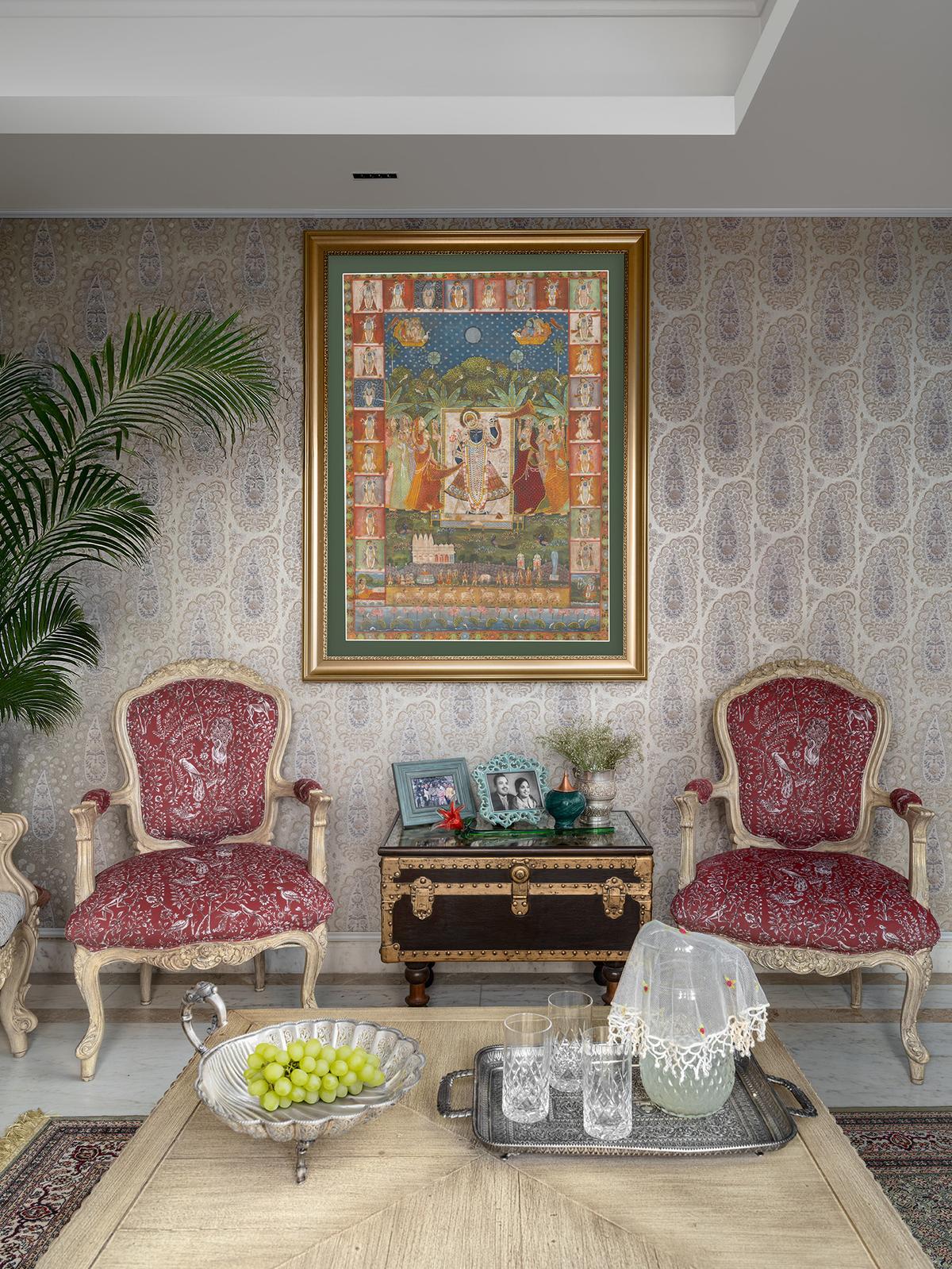
Paisley-patterned wallpaper and block-printed upholstery bring floral and Mughal-inspired motifs into this intimate seating corner.

Paisley-patterned wallpaper and block-printed upholstery bring floral and Mughal-inspired motifs into this intimate seating corner.
| Photo Credit:
Deepak Aggarwal

In case of rugs, it is recommended to keep the surrounding elements more restrained so that the design can take centre stage. “Furniture with clean lines or in solid tones complements these motifs well. In case of a big space, a large central pattern often feels more elegant and intentional than scattering smaller motifs everywhere. Brass or bronze objects echo their historic charm, while contemporary glass or wooden pieces can balance the look. Fresh flowers or foliage always heighten the story of floral rugs, almost blurring the line between what is woven and what is alive,” says Kanika Takkar, Cofounder, Ardhi Looms.

Indo-Persian charm
Mughal florals are distinct in the way they merge realism with stylisation. They often depict single, symmetrical flowers — most commonly the lotus, narcissus, tulip, poppy and cypress — arranged in repetitive patterns. These motifs originally appeared in miniature paintings, pietra dura inlay at monuments like the Taj Mahal, embroidered textiles and carved stone jaalis. In contemporary homes, these florals show up on upholstery, wallpapers, ceramic tiles and table linen, lending an instantly recognisable Indo-Persian charm.
Jaalis and stars
Mughal geometric patterns draw from Persian and Islamic design traditions, emphasising symmetry and repetition. Lattice-style jaalis, octagons, hexagons, interlocking stars and complex tessellations were historically carved in stone or painted on ceilings. Today, these motifs translate beautifully into screens, wardrobe shutters, floor tiles, carved headboards and even cane or wooden furniture, adding structure and rhythm to a space.
Preserving history

Several craft studios continue to preserve Mughal techniques in contemporary formats.

Pietra dura artisans in Agra recreate the marble inlay associated with the Taj Mahal, now adapted for tabletops, trays and consoles.
 Rajasthan-based fresco and miniature painting studios produce hand-painted walls, ceilings and panels in traditional Mughal floral styles.
Jaipur block-printing ateliers like those in Sanganer and Bagru specialise in Mughal-inspired florals for curtains, cushions, quilts and table linen.


Source link

Steel and warm metals define Hyderabad’s Noho


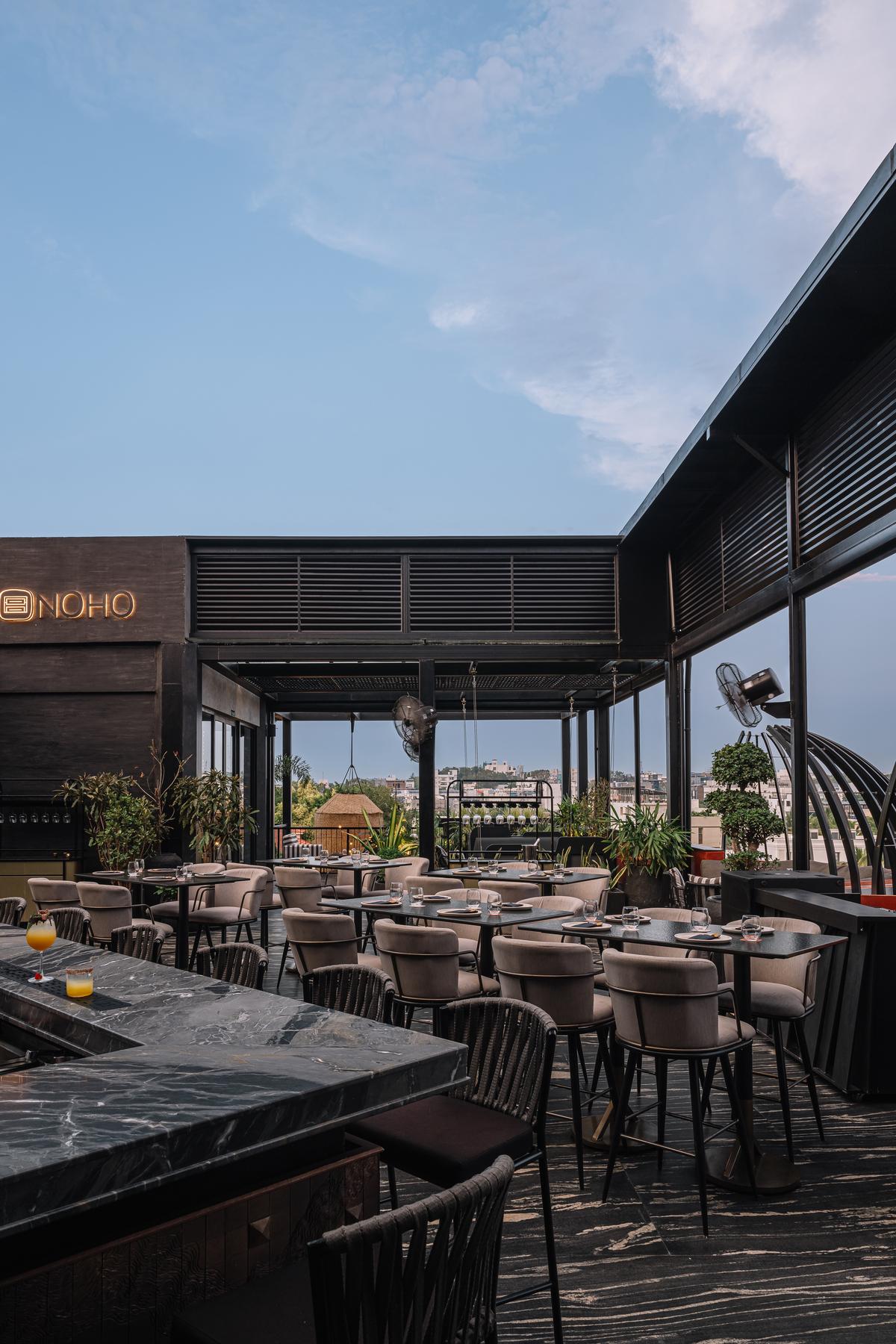
Bold red punctuated by metal, dotted with abacus tiles. Does it scream Asian eatery or modern décor that could fit any aesthetically designed interior? A unique homage to mixed-metal interiors and an inventively designed interactive layout are some of the reasons Noho Progressive Asian House, Hyderabad, made the ‘Standalone-Shortlist’ at the Restaurant and Bar Design Awards 2025 (which was announced on October 27 in Dubai).

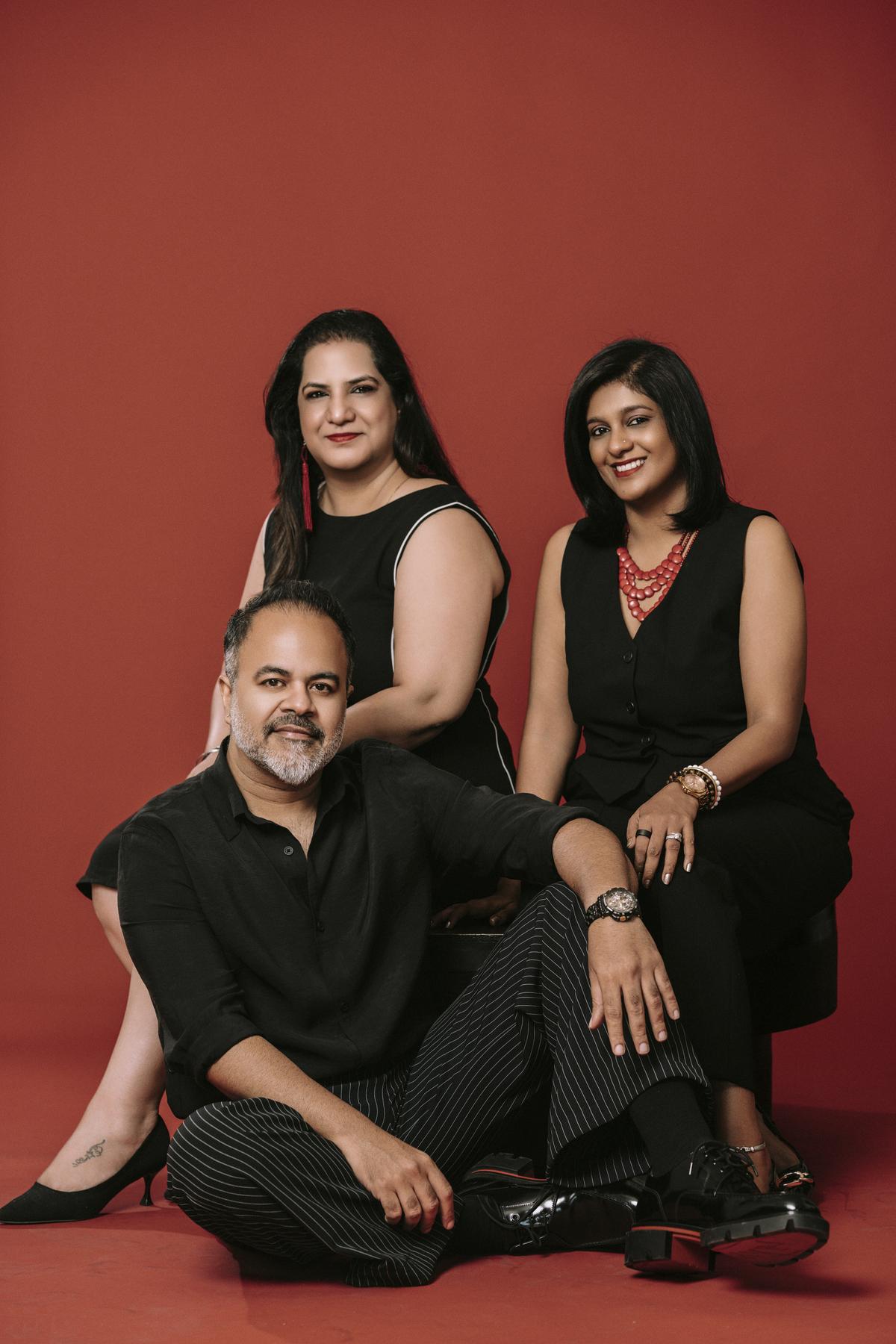
Sukhritaa Deepak Menda,  Ameet Mirpuri and Kshitja Kanwar.

Sukhritaa Deepak Menda, Ameet Mirpuri and Kshitja Kanwar.

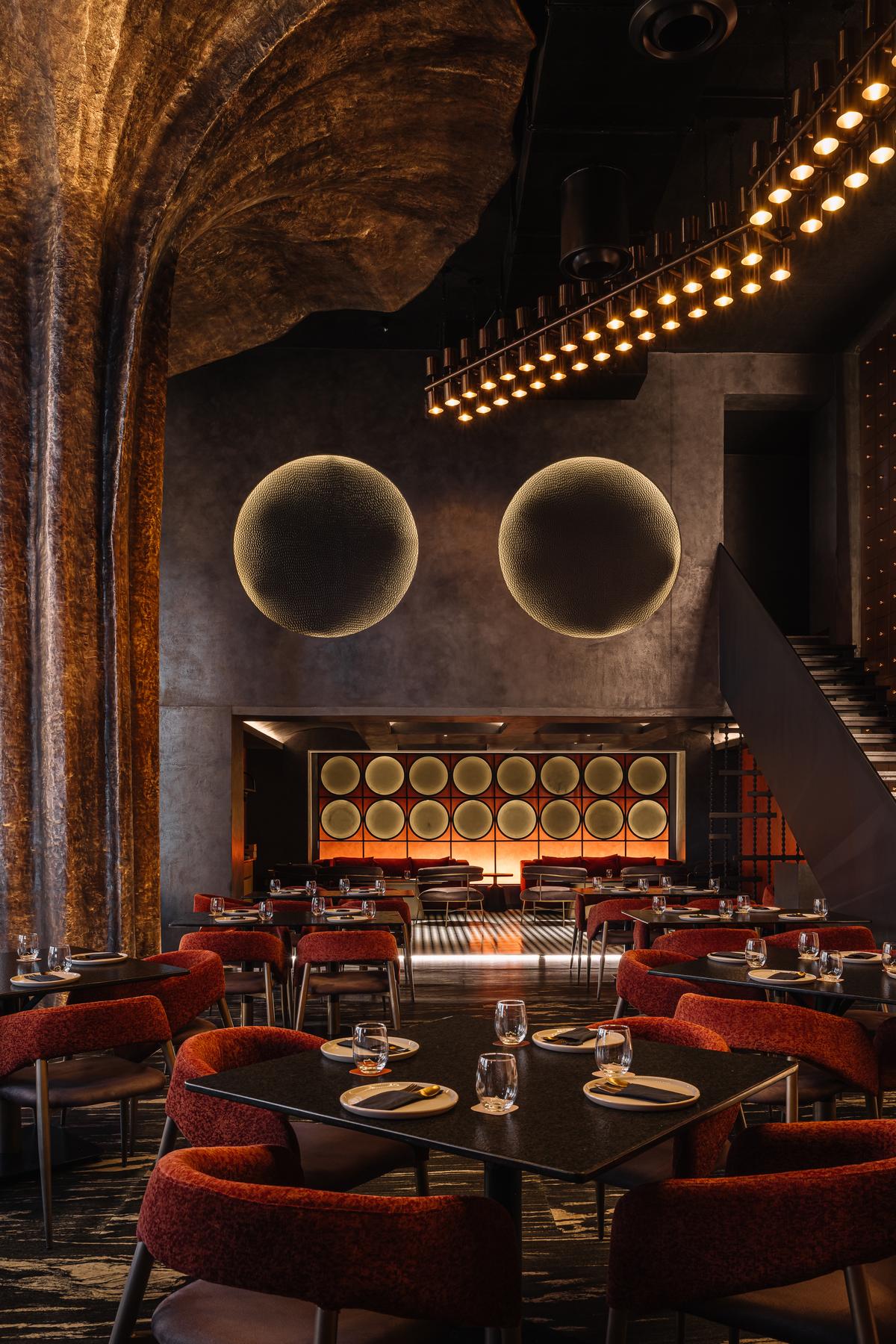
Specialising in Pan-Asian cuisine, Noho takes its design seriously. The Jubilee Hills eatery, ensconced in shades of scarlet replete with dragon motifs and mathematical tilework, distinguishes itself from other restaurant interiors, with its bold use of colour, metallurgy and station design.

Navigating Noho

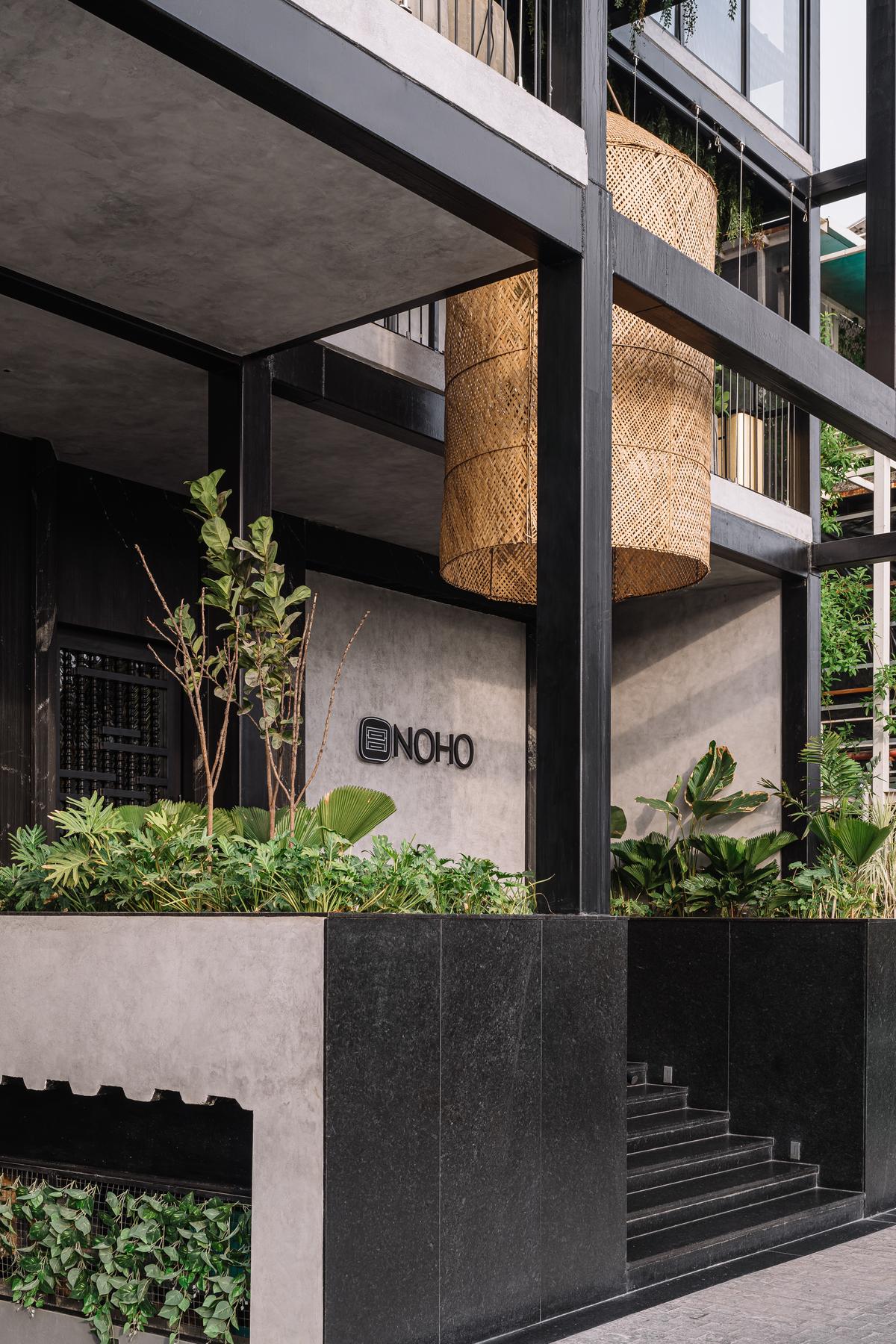
The Jubilee Hills building has a metal façade, softened by lush greenery, so the space is inviting, not imposing. Founder Aman Chainani and Shreya Anand chose ‘NOHO’ as an acronym that embodies novelty, opulence, hand-crafted, and one-of-a-kind cuisine.

A view of Hyderabad’ Noho.

A view of Hyderabad’ Noho.

For the design team, the restaurant space had to be “elemental and lasting”. Says Ameet Mirpuri, principal designer of Visakhapatnam-based Ameet Mirpuri Design Studio, “Metal became the natural choice because of what it stands for — strength, adaptability, and a certain timelessness. Just like the restaurant itself, metal can take on countless forms without losing its character. We wanted Noho to echo that resilience and versatility.”

A view of Hyderabad’ Noho.

A view of Hyderabad’ Noho.

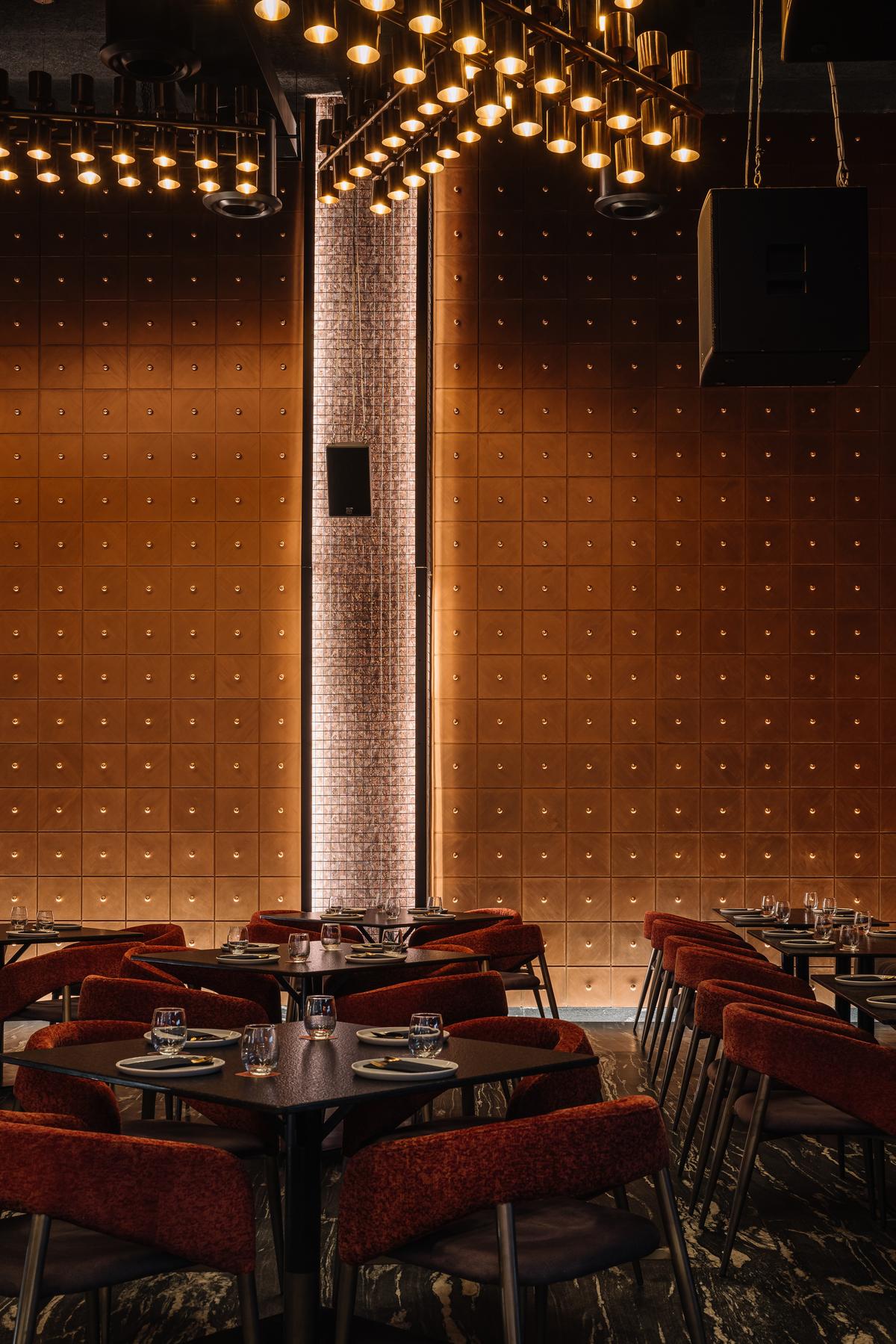
Within the restaurant, each metal plays a role — brass lends warmth, copper offers a playful glow, while iron grounds the space and steel adds edge. An abacus tile wall is a nod to Asian design. “It’s part screen, part sculpture — something that invites people to look closer and keeps the space feeling alive,” states Mirpuri. From bold chandelier beams to cascading lights over the black chrome bar fronts, every detail is designed to entice and intrigue. “We wanted it intimate, sophisticated, and endlessly revisit-worthy,” says Mirpuri.

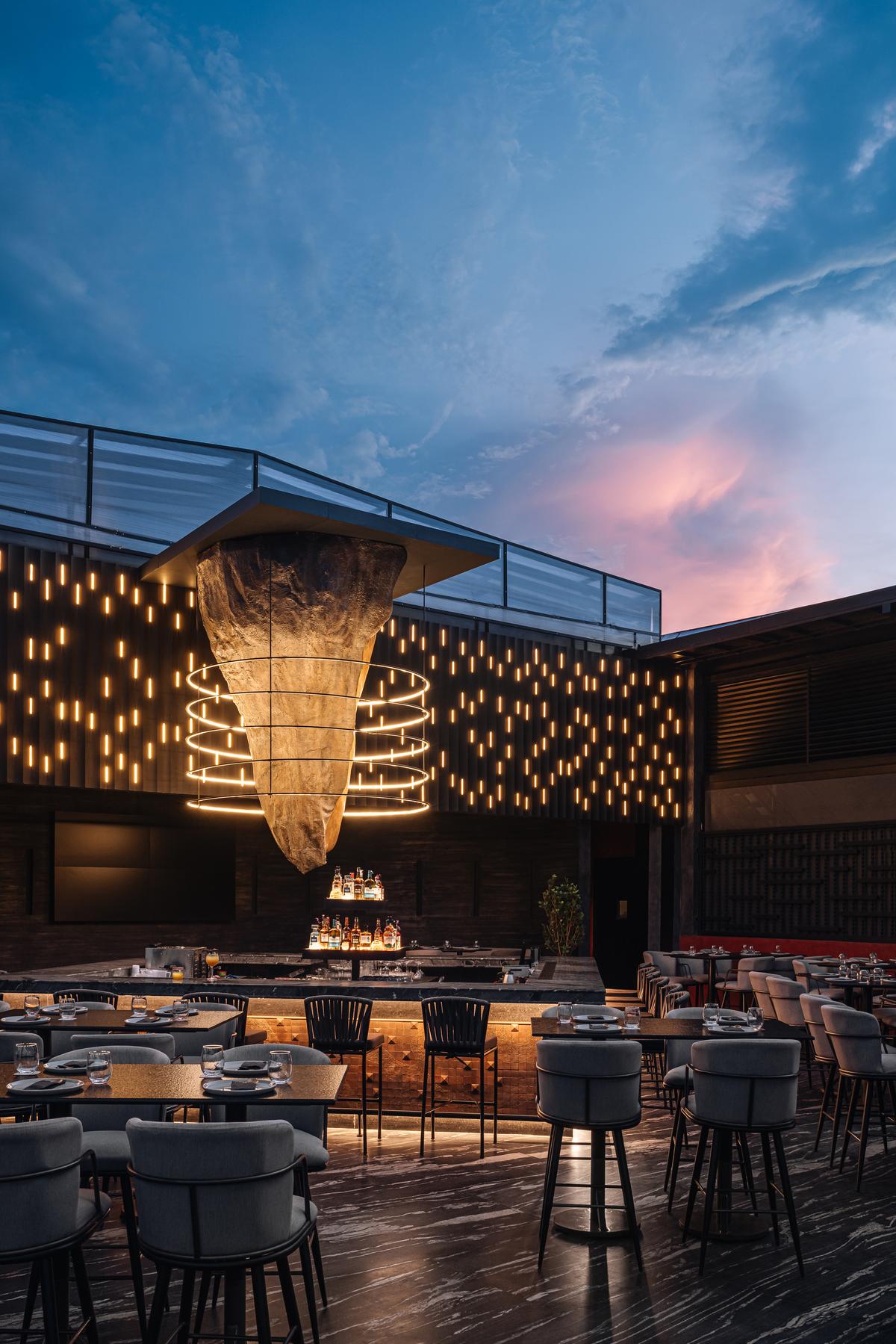
Three circular stations anchor the main floor: the central bar flanked by a sushi bar on one side and a teppanyaki grill on the other, allowing diners to explore the space at their own pace, while offering a view of the interactive stations from across the room. The terrace bar echoes the one inside, with its metallic-ceramic frontage and a stalactite-like boulder, frozen mid-formation and illuminated from within.

A view of Hyderabad’ Noho.

A view of Hyderabad’ Noho.

“The circular stations were about creating flow, not chasing trends. Layering guest and staff areas came from that same thinking: keep the experience seamless for the guest, while giving staff clear, efficient zones behind the scenes. It’s intimacy without compromise,” says the designer. The flooring offers a contrast to the metallic elements, with a streaked black surface offering an ink wash painting to tread on.

A view of Hyderabad’ Noho.

A view of Hyderabad’ Noho.

Designing for revisits

Noho’s guests come for the bold design and inventive menu, but stay for its string of live counters — sushi, teppanyaki, and a rooftop robata grill. The design plays with the senses, as you scan the ruby-hued interiors, you’re drawn in by the aroma of a 95 dish-strong Chinese, Japanese, Korean and Indonesian menu, with the sizzle of Korean stone bowls, the delicate trays of sushi, and smoky tones of robatayaki, filling the interiors. Andre Acacio Camara, lead designer at Bengaluru-based Studio Camarada, which has designed over a dozen bars, restaurants and coffee shops, says, Instagram-worthy interiors work only for the first visit. You need to set a unique language to bring diners back just for the design. “You don’t want to be bored by aesthetics. When designing with open stations, izakaya style or for tea ceremonies, the design is largely cuisine-driven, where you’re seated around a space. In chef-driven Japanese or Korean restaurants, the chef takes centre stage and provides a unique gastronimical outing. With Gen-Z diners looking for experiences over just a meal, and millennials with dual income and no kids, this immense disposable income is now spent on dining experiences a fair bit. Overall, the quality of spaces and interiors is much superior these days, to engage with this audience.”

A view of Hyderabad’ Noho.

A view of Hyderabad’ Noho.

User experience

Noho is designed to offer drama. But it shines because its lighting, metallic accents, high ceilings and tactile motifs interact with each other rather than distract diners. “It all comes down to balance. You need intimacy without crowding, drama without gimmicks, and materials that can age with grace. The way a surface feels under your hand, the way a bar catches the light, the way a live counter draws people in. When those pieces click, the design stops being just décor and starts becoming part of the memory people take home,” Mirpuri concludes.

Dining trends
Urban Indians now dine out around five times a month. This is expected to increase to 7 to 8 times a month.
Restaurant formats like fine dining have surged 105% recently.
Luxury dining has risen nearly 120% as consumers with higher disposable incomes seek elevated experiences.

The freelance writer is based in Chennai.

Published – November 21, 2025 05:26 pm IST


Source link

Why Michelin thinks India has only 36 hotels worth a Key


The insufferable among us are ecstatic. 

The Michelin Key, the hotel counterpart to the snooty Michelin Star, has finally arrived in the country. Sure, Michelin doesn’t yet deem us worthy of its restaurant guide even if Latvia is on it, but the one-year-old hotel guide is some consolation, perhaps a precursor to India’s long-overdue inclusion in the influential food book. 

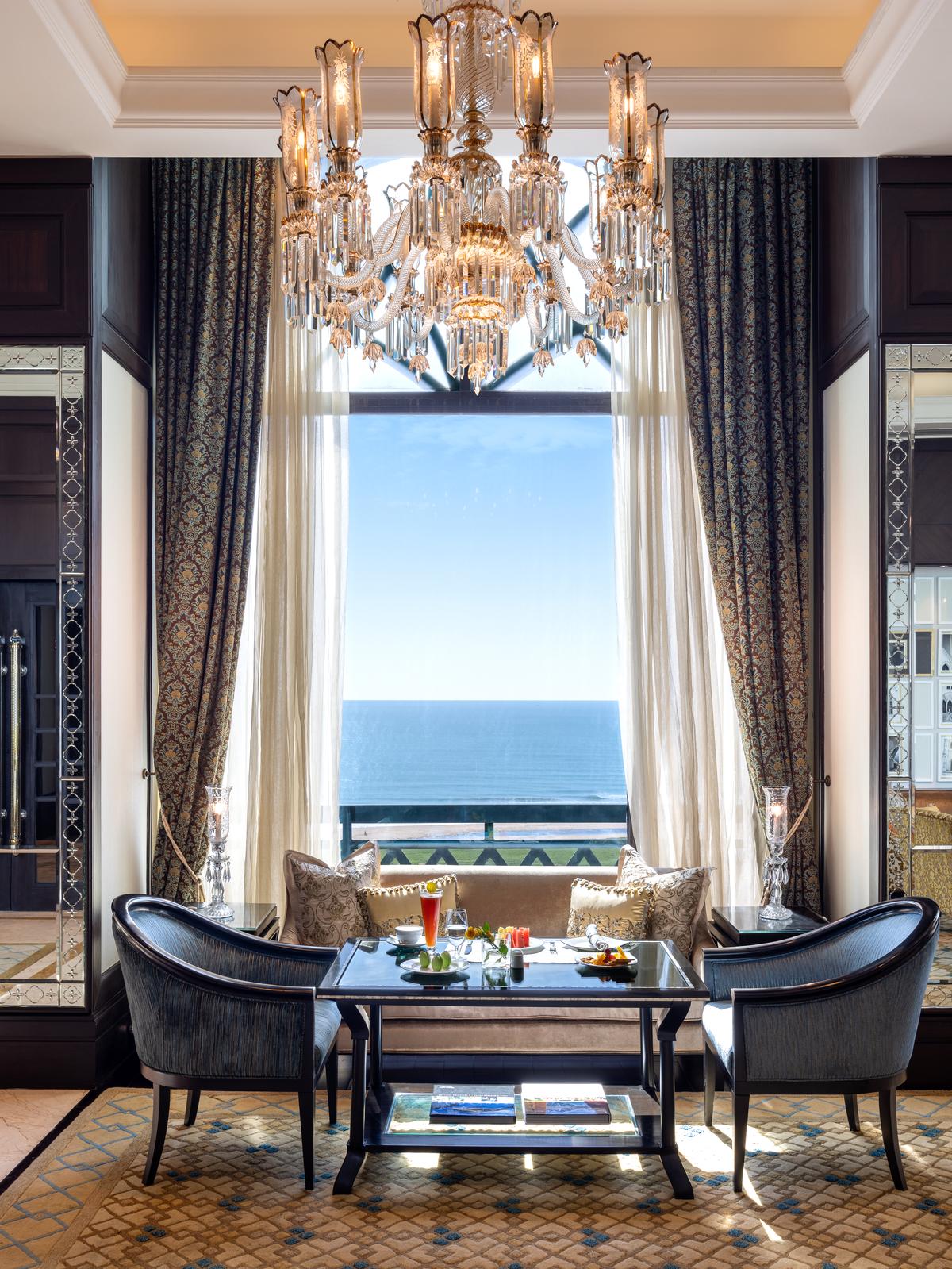
The Leela Palace is one of the 36 Indian properties — and the only one in Chennai — recognised with keys. Across the country, two hotels — the Taj Faluknama Palace in Hyderabad and the Taj Lake Palace in Udaipur — snagged three keys, 12 received two keys, and 22 were each awarded a key. 

Now, I have a few misgivings about the brand that is The Leela. My parents think the dense drapes, bejewelled chairs you can’t sit in, and the expensive smells make for a hospitality haven. I, on the other hand, do not know what to make of all the maximalist glory.

Food at The Johri, Jaipur

Food at The Johri, Jaipur
| Photo Credit:
Special Arrangement

But The Leela Palace remains my preferred hotel in Chennai. It may not have the biggest rooms (those studios at Taj Wellington are massive) or the history (Taj Connemara, or at least its earliest iteration, is touted as the oldest luxury hotel in Chennai) or restaurants that perpetually feature on best-in-India lists (Avartana — the culinary gem that deserves every rhapsodising sobriquet heaped on it — is located in the ITC Grand Chola, and Southern Spice is at the Taj Coromandel). The Leela does have great views of a sea I have never seen blue.

And then there are the butlers.  These super-competent relics, appropriately liveried in three-piece suits in Chennai’s humidity, hurl the hotel way past its competitors. Sure, the restaurants here may not have yet made any big lists, but they deserve patronage. I once partook of the weekend brunch at China XO and quite enjoyed the offerings. The Chennai Jamavar is almost as good as the one-starred London Jamavar, which is among my favourite Indian restaurants in the world. I’d say the Michelin recognition is well deserved. 

Drinks at The Leela Palace, Chennai

Drinks at The Leela Palace, Chennai
| Photo Credit:
Special Arrangement

If the Chennai Leela received one key, Michelin conferred two keys each on Delhi’s Leela and Imperial.  I can get behind both hotels. There’s very little lacking in them, and if The Corinthia in London deserves two keys, so do these properties. But I don’t find the Delhi Oberoi anywhere on the list. Which is where I start questioning the legitimacy of the guide. I can think of no other Indian city hotel that ticks the right boxes — beauty, service, food, history — as overwhelmingly as the Delhi Oberoi does.  How then does the Michelin deem the Taj Palace, dated on its best days, in Delhi worthy of a key but overlook The Oberoi? These are questions that keep me up at night.

The beauty of lists is in the discourse they trigger. The exclusion of certain establishments is as much a source of debate fodder as the presence of others. How, the pretentious of the world wonder, did Eleven Madison Park in New York retain its three stars even when it briefly went vegan? Why was it that for a very long time, all of the US had only one Michelin-starred Indian restaurant in Semma while London alone had seven? Why is there such little overlap between The New York Times’ list of the best restaurants and The World’s 50 Best?

The Leela Palace, Chennai

The Leela Palace, Chennai
| Photo Credit:
Special Arrangement

One could argue that the Michelin guide deserves no more or less thought than all other lists. But including just 36 establishments in India, which everyone knows has hundreds of the best hotels in the world, when London alone has 44 hotels with keys, is downright egregious. It feels … lazy. There’s not one Postcard property in the guide.  There are too few Oberoi hotels. I have seen lesser St Regises and Four Seasons properties recognised abroad than those in Mumbai and Bengaluru.  

What might the reasons be? Could it be that the hotel guide, nascent and still finding its footing, did a half-baked job? Or is our posh hospitality lacking? Is the constant kowtowing a turn-off for Michelin? I am aware that our earnestness doesn’t always translate to efficiency, and I do know a few Westerners who are bothered by the constant lingering of waiters at LOT (my abbreviation for The Leela, Oberoi, Taj triumvirate).

While on a semi-walking holiday in Cornwall and Devon this summer, we stayed at Idle Rocks in St Mawes and Lympstone Manor in Exmouth, both independent hotels inundated with flattering reviews. Unbeknownst to us, both the properties had just received one and two Michelin keys respectively. These hotels, especially Lympstone Manor, were gorgeous even if the well-meaning service was sometimes lacking, and I do not grudge their inclusion in the guide. What I question is why the Michelin inspectors deem such few Indian properties to be in the same league as these hotels. That infuriates me. 

The Leela Palace, Chennai

The Leela Palace, Chennai
| Photo Credit:
Special Arrangement

It’s a start, you say. This should be the cause for jubilation, you add. But I find it hard to jump in glee at a Western tyre company throwing leather scraps my country’s way. Sure, I’ll celebrate all these hotels. I am especially thrilled that five- and 10-room properties like The Johri in Jaipur and The Kumaon in the western Himalayan foothills got their due (I haven’t stayed at either but was impressed with a party at The Johri, where I ate some of the best vegetarian food in the world).

That still doesn’t make the disparity between the 317 Key hotels in America and only about a tenth of that in India any less ridiculous. 

Published – November 21, 2025 05:03 pm IST


Source link

How technology is rewriting India’s land story


For generations, land has been India’s most enduring and sentimental investment, symbolising stability, legacy, and wealth creation. Yet, for many buyers, the path to that promise has been uneven, be it due to unclear titles, scattered records, opaque processes or inflated valuations and unreliable intermediaries that have kept confidence low. But what’s changing today is how it’s being perceived. Land is increasingly being viewed as a serious investment asset driven by better technology, greater transparency, and enhanced convenience and security for buyers.

Recent market readings echo this shift in trend: Colliers India (Q3 2025) reports $1.3 billion in institutional flows, up 11% year-on-year, with domestic investors forming about 60% of the total. Industry projections also suggest real estate could account for 14%–20% of India’s GDP by 2047, a potential $10 trillion growth lever.

As digital processes simplify discovery, verification, and ownership, investors are looking beyond vertical development to the clarity and control that land offers. Once seen primarily as an emotional pursuit, land is now emerging as a structured, technology-enabled asset class that promises both trust and long-term value.

Shift in ground

India has been quietly building the skeleton for a more trustworthy land market, making records searchable, registration predictable, and boundaries visible. These reforms allow buyers to see the past of a land parcel, track the present of a transaction, and trust the future of a neighbourhood.

At the core lies the Digital India Land Records Modernisation Programme (DILRMP). As of December 2023, over 95% of India’s more than six lakh villages had computerised records, and two-thirds of the cadastral maps were digitised. Each parcel has been now assigned a 14-digit Land Parcel Identification Number (Bhu-Aadhaar) linking it to geo-coordinates and serving as a permanent “licence plate”.

Oversight improved with the launch of MIS 4.0 in October 2024, which offers real-time tracking of digitisation progress.

The National Generic Document Registration System (NGDRS) enables buyers to complete e-KYC, calculate stamp duty, book slots, and receive certified deeds online, while automating updates to records instantly. Developers now issue time-stamped digital disclosure packs and use escrow-linked digital payments that release funds only after verification.

Technology is also revolutionising due diligence. Platforms like ISRO’s Bhuvan NextGen overlay cadastral maps with flood or corridor data. PropTech startups integrate this with legal and encroachment data, giving banks and buyers real-time risk scores. AI-driven pricing engines benchmark comparable sales across micro-markets, improving valuation accuracy.

As per the Liases Foras Ayodhya Report 2025, land prices within four km of the Ram Mandir have risen by about 400% since 2020, reaching ₹12,600-₹15,500 per sq. ft., while circle rates rose 200% in key zones. Similar developments are occurring in Shirdi and Ujjain as a result of digitalised government records and connectivity. Transparent digital planning and equitable acquisition are creating new growth corridors in Maharashtra, as demonstrated by the proposed Nagpur-Goa Shaktipeeth Expressway (₹80,000 crore total, ₹20,000 crore for land).

The next frontier

As India’s land ecosystem becomes digitally traceable, the next frontier lies in tokenisation — the conversion of physical land ownership into secure, fractional digital tokens. Tokenisation, which is based on Web 3.0 and blockchain technology, combines the liquidity of financial markets with the potential for real estate appreciation to allow for greater retail participation in an asset class that was previously restricted. Tokenisation can transform land from a static, illiquid holding into a democratised and trusted digital asset, marking the logical next step in India’s land-tech evolution.

The convergence of policy digitisation, PropTech innovation, and institutional capital is transforming land from an emotional aspiration into an efficient, secure asset. India’s land market is evolving from legacy-led to technology-led, from fragmented to formalised. As the ecosystem matures, the winners will be those who see land not merely as an asset, but as an opportunity to build transparency, governance, and digital empowerment into the nation’s growth story. The map is finally replacing the maze, and with it comes the promise of a more inclusive, efficient, and future-ready India.

The writer is CEO, The House of Abhinandan Lodha.

Published – November 21, 2025 04:43 pm IST


Source link

Rohan Pariyar’s Renaissance-inspired Kolkata showcase brings the women of the Medici dynasty to life


The 16-foot Angel of Victory atop Kolkata’s Victoria Memorial, a wind vane and lightning arrester, turns with the might of the breeze. But on November 17, she seemed to swivel with intention. As if summoning the winds of Renaissance Florence, the angel presided over an evening where Italian art, music, and dance drifted seamlessly into contemporary Indian aesthetics in the Eastern Quadrangle of the Victoria Memorial Hall in Kolkata.

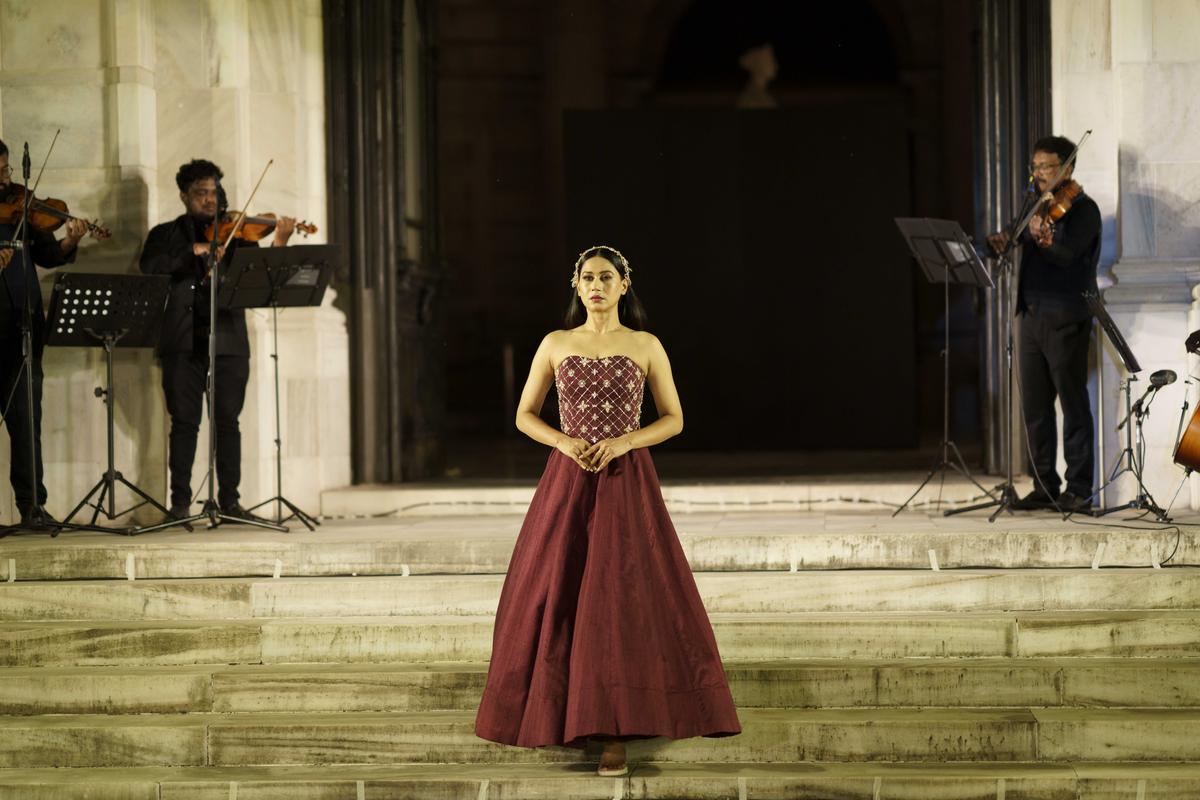
In collaboration with the Consulate General of Italy and the Ministry of Culture, Government of India, the evening brought to the fore designer Rohan Pariyar’s interpretations of 15th and 16th-Century aesthetics from the Italian Renaissance, with a particular nod to the couture worn by the women of Florence’s influential Medici family. Titled “I Medici”, the 45-minute showcase presented 35 ensembles, each crafted in Rohan’s Kolkata atelier and meticulously embroidered with over 2,000 hours of zardozi and cutdana work by a design team from the city.

Rohan explains, “The 35 handcrafted ensembles pay homage to the influential women of the Medici dynasty — Lucrezia, Contessina, Clarice, Caterina, Bianca, Maria and others. The garments trace a woman’s life: from marriage and early adulthood to old age, and even to the rituals of death. Botticelli and Da Vinci’s paintings have also inspired me deeply. ”

The show was a nod to the couture worn by the women of Florence’s influential Medici family.

The show was a nod to the couture worn by the women of Florence’s influential Medici family.
| Photo Credit:
SPECIAL ARRANGEMENT

Directed by Rohan himself, and Kuntanil Das, choreographed by Pinky Kenworthy and Sudarshan Chakraborty, and styled by Abhijit Chanda, the performance used the Quadrangle’s archways and colonnades as its primary set. Members of the Calcutta School of Music’s string orchestra played compositions by iconic Italian composers Arcangelo Corelli, Domenico Scarlatti and Antonio Vivaldi. As the music wafted through the air, Sapphire Dance Company’s performance created a dialogue between sound and structure.

But the evening ultimately belonged to its setting. Victoria Memorial’s Indo-Saracenic architecture, its soaring dome, chhatris, arches, long colonnades, intricate jali work, Italian statues and Gothic-inspired porticos were emblematic of the night’s intent: a seamless blend of Indian and European aesthetics — Italian in particular. The staging allowed the monument to hold the narrative, with the clothing giving textural accents.

Pieces on display at Burdwan palace.

Pieces on display at Burdwan palace.
| Photo Credit:
SPECIAL ARRANGEMENT

After the performance, guests were ushered into Burdwan Palace in Alipore for a Renaissance-themed reception curated by Taj Bengal in association with Gormei, a culinary curation platform known for creating gastronomic experiences by collaborating with chefs and restaurants. The menu drew from Bartolomeo Scappi’s L’Opera (1570), recognised as the first illustrated cookbook from the Renaissance era.  

Under the yellow lights of Belgian chandeliers and framed by the palace’s tall French windows, Rohan’s creations stood on display like artefacts from the past.

A fashion photo exhibition by ANSA, Italy’s national news agency lined the rooms, and live Italian music filled the corners.

The food menu also featured traditional Italian desserts.

The food menu also featured traditional Italian desserts.
| Photo Credit:
SPECIAL ARRANGEMENT

Guests moved through live counters where chefs prepared hot plates of gnocchi and handmade pasta. Glasses of white and red wine from the bar were paired with sweet marzipan morsels, chicken cacciatore, rosemary prawns, pumpkin and spinach tarts, saffron parmesan arrancini and herb-crusted fish. Dessert was a spread of Gelo d’Arancia—a soft orange pudding and the classic zuppa inglese — sponge cake topped with creamy custard and Italian liquor. The menu carried forward the Renaissance inspired flavours of the evening.

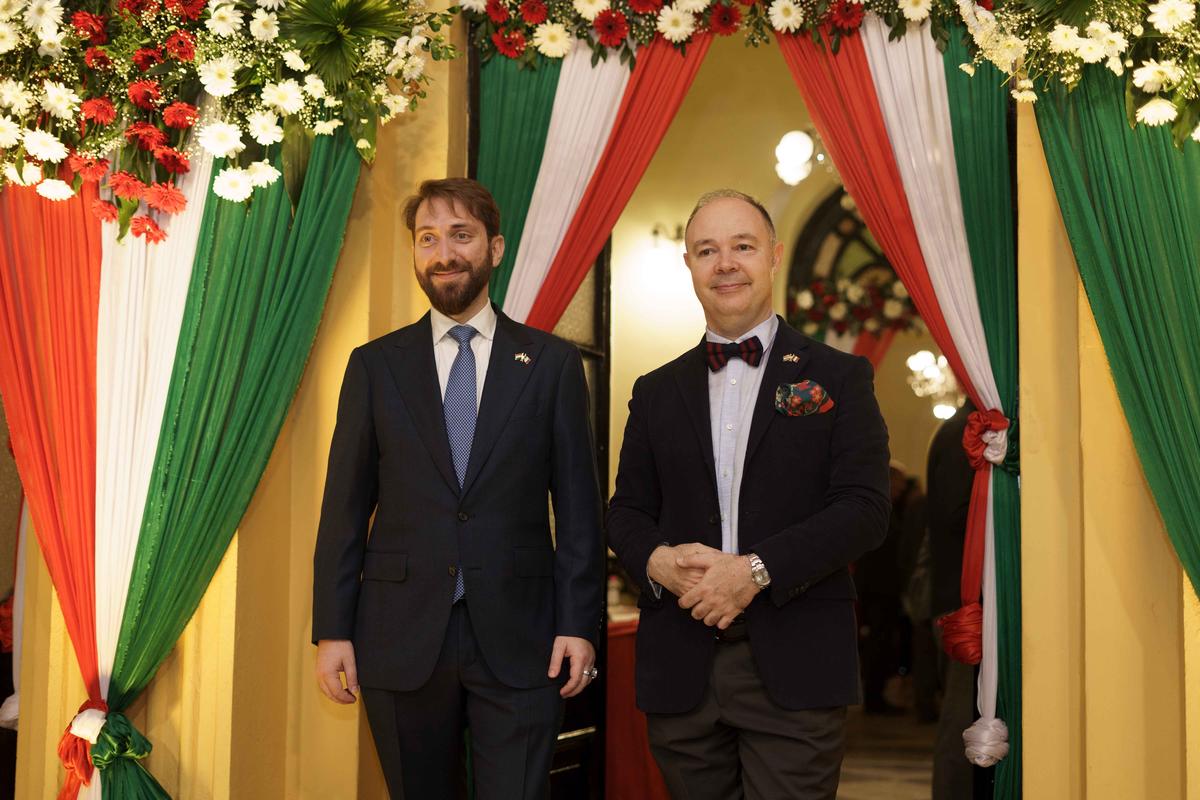
Italian Consul General Riccardo Dalla Costa in Kolkata with Diplomat Daniel Panfilo.

Italian Consul General Riccardo Dalla Costa in Kolkata with Diplomat Daniel Panfilo.
| Photo Credit:
SPECIAL ARRANGEMENT

The night, however, was as much about diplomacy as it was about design. Italian Consul General Riccardo Dalla Costa said that the event upheld Italy’s artistic and cultural renaissance, which has defined the shared legacy of India and Italy. 

Be it the compelling glow of soft gold on Victoria’s Makrana marbles or the ballroom between the stucco columns of the Burdwan Palace, the designs shimmered in the timeless afterglow of a civilisation’s dream that had for one evening slipped into the dreamscape of the City of Joy.

Published – November 21, 2025 03:42 pm IST


Source link

The many worlds of Aparna Sen


The book cover

The book cover

Movie lovers will remember her as the playful young girl rummaging under the bed to look for her pet squirrel who has chosen the right moment to slip out and gatecrash a nuptial negotiation. She finds Chorki in a matter of moments and darts out, leaving an already nervous family that has laid out a charm offensive for a prospective groom in a state of befuddlement.

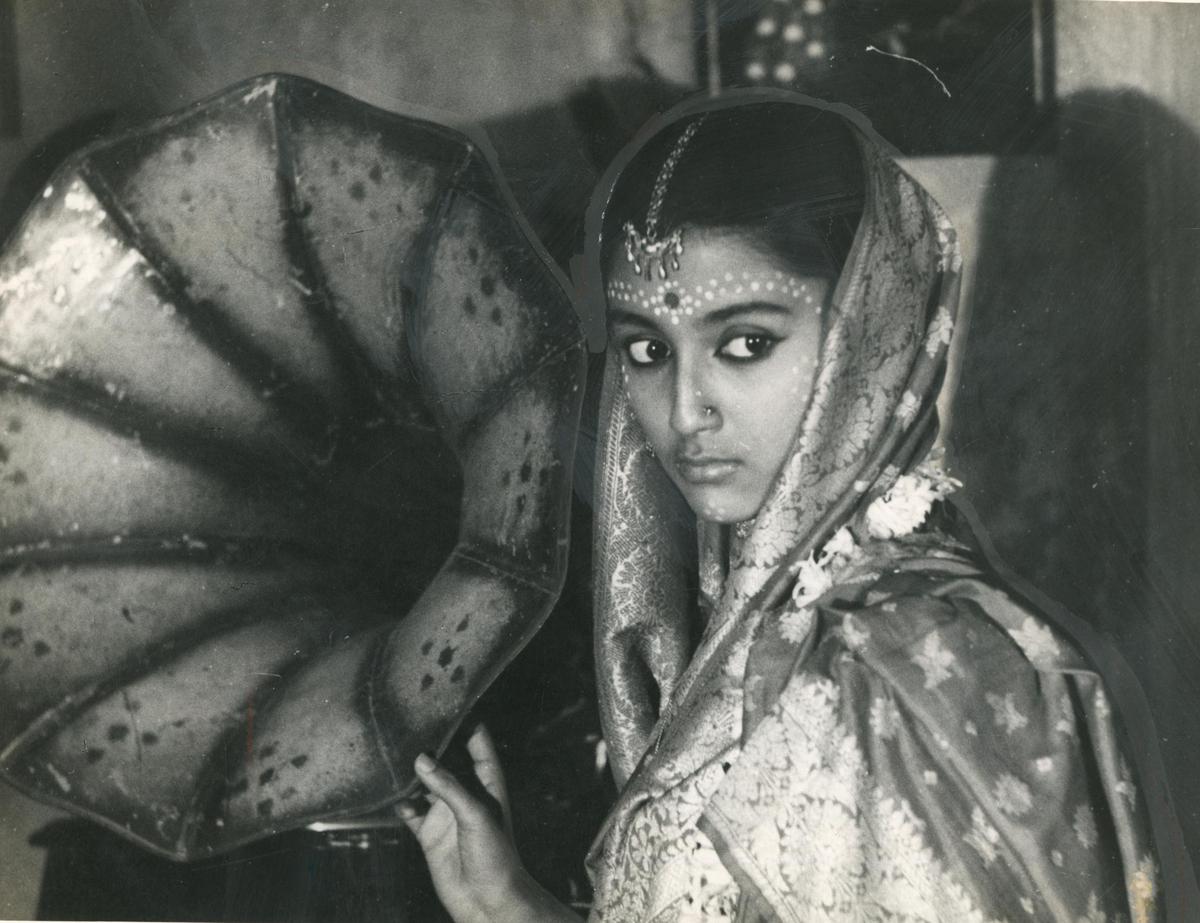
Aparna Das Gupta in 'Samapti', directed by Satyajit Ray, the third chapter in the triptych Teen Kanya in 1961.

Aparna Das Gupta in “Samapti”, directed by Satyajit Ray, the third chapter in the triptych Teen Kanya in 1961.
| Photo Credit:
The Hindu Archives

It is one of several comedic moments in Samapti (Conclusion), part of Satyajit Ray’s triptych of Tagore short stories — Teen Kanya (Three Daughters). Aparna Sen, was only 14 when she played Mrinmoyee in the short film that pivots humour in the institution of marriage in familiar social settings. The year was 1961.

From playing the heroine in popular Bengali films to holding her own with stalwarts such as Ray and Mrinal Sen, Aparna is one of the legends of Bengali cinema. In between, there’s been theatre, both serious (with Utpal Dutt, no less) and mainstream, activism and a nearly two-decade stint as Editor of Sananda, a trailblazing women’s magazine. The next major shift was writing short stories. One modelled on her school principal wrote itself into a screenplay. Nurtured over two years, it was a labour of love that had to be made into a film.

Jennifer Kendal in a still from 36 Chowringhee Lane

Jennifer Kendal in a still from 36 Chowringhee Lane
| Photo Credit:
SPECIAL ARRANGEMENT

36 Chowringhee Lane was born, placing itself in the central Calcutta neighbourhood to allude to the protagonist’s Anglo-Indian roots but brilliantly suffixing a fictional lane to its title. The film was released in 1981, and Chowringhee Lane was so earnestly imagined that it has etched itself into the multi-cultural landscape of the city. A stellar debut, 36 Chowringhee Lane will remain one of Indian cinema’s most enduring portrayals of the individual, her solitude and parched existence universalised with honesty and empathy.


Aparna has so far directed 16 feature films, including such landmarks as Paroma, Yugant, Paromitar Ek Din, Mr & Mrs Iyer, 15 Park Avenue, Goynar Baksho, Ghawre Bairey Aaj and, recently, The Rapist. She has been able to widen her lens on life with each outing, placing her women in unchartered territory within relationships and politics, allowing them agency and voice. Three National Awards have come her way in addition to the NETPAC Jury Award at the Locarno Film Festival.

Auteur by instinct, Aparna makes sure her films bear her imprint, because she believes her directorial offerings and not her screen idol status define her legacy.

At 80, Aparna still sparkles. “I don’t feel my age and people say I don’t look my age. So, I am really not bothered,” she says in filmmaker Suman Ghosh’s commemorative book The Worlds of Aparna (Simon & Schuster India), which records his conversations with her, daughter Konkona Sensharma, husband Kalyan Roy, film friends Anjan Dutt, Goutam Ghose and Shabana Azmi, and author/cultural commentator Samik Bandopadhyay.

The book cover of Aparna Sen: A Life in Cinema

The book cover of Aparna Sen: A Life in Cinema
| Photo Credit:
SPECIAL ARRANGEMENT

Another timely book, Aparna Sen: A Life in Cinema (Rupa) by Devapriya Sanyal, undertakes a deep dive into her filmography, especially with regard to her female characters. These are women who may start off emotionally vulnerable but by the end of their on-screen journey almost always claim agency for themselves. Read together, these books offer a cogent analysis of Aparna Sen the filmmaker, placing her within the framework of contemporary Indian directors. They shine a light on the person she is: funny, at times irreverent, and offer intimate accounts of her formative years in Calcutta and Santiniketan.

Aparna grew up amid books, music, poetry and films, courtesy her parents Chidananda and Supriya Dasgupta. Their home was a crucible of the arts with poets, writers and cultural icons visiting often. It was but natural for her to imbibe a sense of aesthetics closely associated with the Bengal of the time. Her father and Ray were friends, and together founded the Calcutta Film Society, making them pioneers of the film society movement in India. There were regular film screenings at home (the works of Ingmar Bergman, Sergei Eisenstein, and more).

The first Bengali film she was “allowed” to see was Ray’s Pather Panchali, Dasgupta Senior being quite clear that his children needn’t be exposed to the formulaic offerings of commercial cinema so early in life. Yet, she spent around 20 years in that very milieu as an actor.

Aparna is a keen photographer, and a good one at that (the Henri Cartier-Bresson books at home helped), which explains her instinctive understanding of light and camera angles. “Now, we’ll have to take her seriously,” commented Ray when she showed him her black-and-whites. Sadly though, there’ll never be an exhibition of her stills as she has lost most of the negatives (“I am not much of an archivist”).

The director during the shoot of Mr. & Mrs. Aiyer

The director during the shoot of Mr. & Mrs. Aiyer
| Photo Credit:
PARTH SANYAL

Who did she go to with the completed script of 36 Chowringhee Lane? Ray, of course. He liked it. It’s all heart, he said, and put her on to Shashi Kapoor. But, how did Aparna read her script to the Kapoors in Bombay? When did he agree to produce the film? Why did he double Aparna’s directorial fees?

Suman Ghosh’s book is delightfully revelatory. Beginning with the pastel-shades of Ms. Violet Stoneham’s loneliness, Aparna’s ever-widening world view gets reflected in the sheer range of her stories and characters. Meenakshi Iyer rediscovers her humanity while encountering a riotous mob during a bus journey (Mr and Mrs Iyer, 2002), homemaker Paroma (1985) is able to take responsibility for herself, choosing to return after a torrid affair, as Devapriya explains, “to continue to search for her own identity”; Deepak and Anashua find their marriage crumbling (Yugant, 1995), their downslide finding metaphoric resonance in the way environmental recklessness destroys planet earth – the Gulf War, and oil spill were Aparna’s inspirations; a mother-in-law bonds with her daughter-in-law (Paromitar Ek Din, 2000), their friendship helping each other navigate relationships in a patriarchal family. As for Meethi, disturbed on account of a mental health condition, she ultimately takes charge and simply disappears (15 Park Avenue, 2005), a stunning on-screen resolution that left theatre audiences transfixed long after the end credits had rolled.

A still from the film The rapist

A still from the film The rapist

“It’s my worldview that you must soak up life like a sponge,” believes Aparna, “then, every experience becomes your resource material that you, perhaps, someday may go on to use.” She has lived by that credo, unafraid about where it might lead her. Consider Ghawre Bairey Aaj (2019). For this modernist retelling of Tagore’s Home and the World, Aparna drew from contemporary reality to arm Bimala, the female protagonist, like she had never been imagined, to reflect the filmmaker’s vehement rejection of the politics of hate sweeping the world today.

Where exactly does Aparna feature among India’s filmmakers? For Shabana Azmi, she’s among the finest we have. “She grew up in a very syncretic atmosphere… and it hurts her as an Indian to redefine that,” she explains. Anjan Dutt believes youngsters will come to regard her films as important a document as her cinematic predecessors. Most of all, critic Samik Bandopadhyay emphasises, Aparna stands out as she is among the very few filmmakers who remain political. “…Aparna has dared. And her politics lies there… in daring to do what few others are doing.”


Source link

Suman Kumar on ‘The Family Man’ S3: Why the show’s tone changed and what comes next


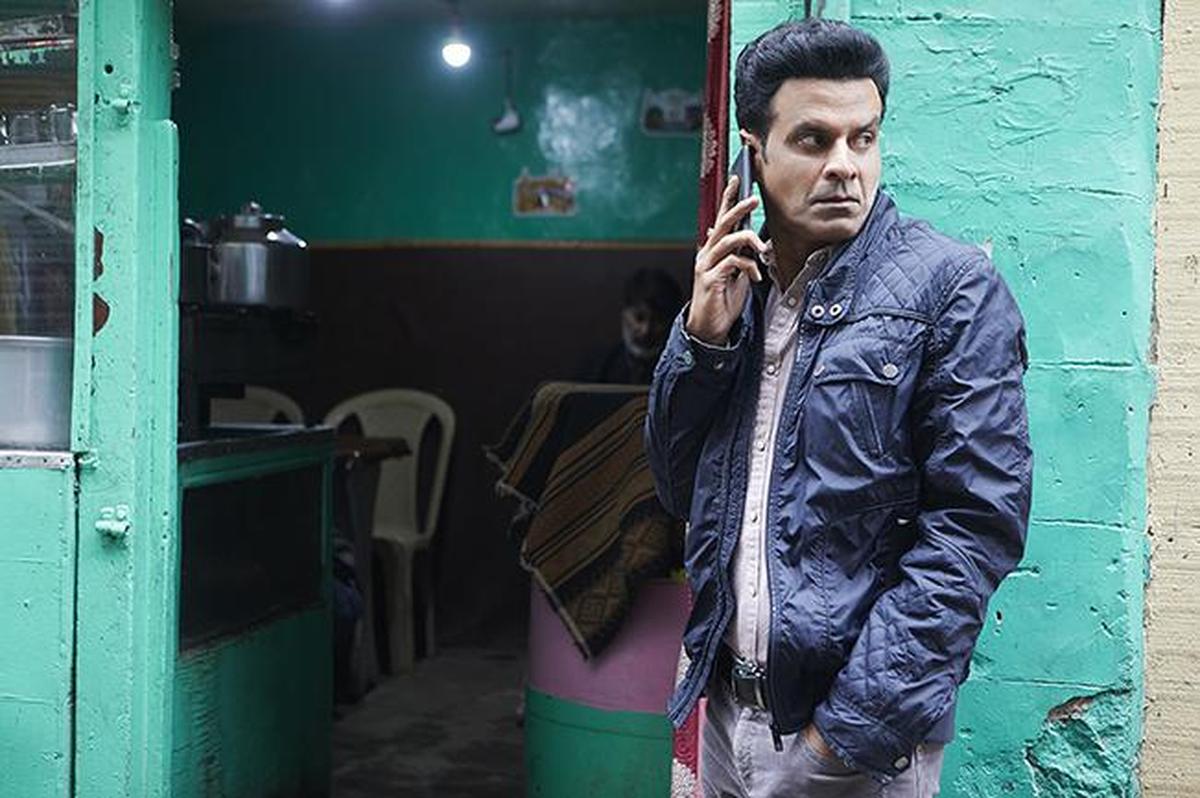
(Left to right) Raj Nidimoru, Suman Kumar, Manoj Bajpayee and Krishna DK

(Left to right) Raj Nidimoru, Suman Kumar, Manoj Bajpayee and Krishna DK
| Photo Credit: SPECIAL ARRANGEMENT

“Until five months back, I was telling DK (of Raj and DK, the creators of The Family Man) that people will like it,” writer and director Suman Kumar recalls, a day before the show is out. But now, anxiety is kicking in.

“Can we not do the writers’ room today?” he asked DK. DK calls him to check what happened.

“What do you mean what happened? The show is dropping. I’m nervous,” he admits.

Suman Kumar, who has written the much-acclaimed and loved show from the first season, turned director this season along with Tusshar Seyth (a long-term associate of Raj and DK who has also worked on the show since Season 1) and also hired two screenplay writers — Nikhil Gonsalves and this writer — to divide the load.

A still from The Family Man

A still from The Family Man
| Photo Credit:
Special Arrangement

“It just makes it quicker. The story beats, tone and treatment are already fleshed out in the Bible and you guys have already seen the show, so you kind of know,” Suman explains the decision.

I try to get him to open up about that season cliffhanger with a “What have you done?” — the question most likely on people’s minds. He laughs. He has anticipated this moment for a while.

Did he always know this was going to happen? “I always knew that in one of the seasons, he will go rogue and instead of high-end technology he will have to rely on human intelligence,” he says.

Not that he had always planned it season-wise, but Suman believes it is probably a four-season show. “It’s not official, but it will be good to have a Season 4. When I write, internally we always discuss what happens next season.”

 A still from Farzi

A still from Farzi
| Photo Credit:
SPECIAL ARRANGEMENT

Is he worried about spoilers in the age of social media? “It’s the nature of the beast. There are shows that drop one episode a week, like Slow Horses, and there’s The Family Man or Farzi, where we drop all episodes together and people watch it all in one go and decide to tweet. We can only expect that fans don’t ruin it for others and have a self-imposed moratorium.”

Three weeks, he considers, before settling for ten days, maybe.

“These days people text on the phone even while watching the movie, I find it abhorrent,” says Suman, adding that it is impossible to regulate spoilers today.

The writing room for this season generates 10 drafts of each episode — the first few drafts by screenwriters are rewritten by the room and the showrunners, and finally there is a production docket with additional details that need to be in frame.

“Of course, the last draft is the editing. A screenplay is not just a literary pursuit. It’s a technical document that informs the whole team what is happening. As someone said, it’s an invitation for a performance.”

One of his favourite moments this year, he says, was writing the father-daughter scene in the later episodes. Being a director, he also got to shoot the scene too.

Does he find writing for his solo projects  different from collaborative writing with Raj and DK? “It’s always a collaborative process whether you like it or not,” says Suman.

Even for Raghu Thatha, he says he had taken the help of local writers, and he is used to working with writers on different projects. For Farzi, he teams up with Raj, DK and Sita Menon. And then there’s Sumit Arora, who does dialogues. “Even my Hindi has gotten better in the last few years,” he laughs.

Coming up next for him is Farzi Season 2. The writers’ room is buzzing again.

Sudhish Kamath wrote the screenplay for episodes 3 and 4 of The Family Man Season 3. The show is airing on Prime Video.


Source link

Kochi Muziris Biennale 2025: A behind the scenes look at the work by the production team


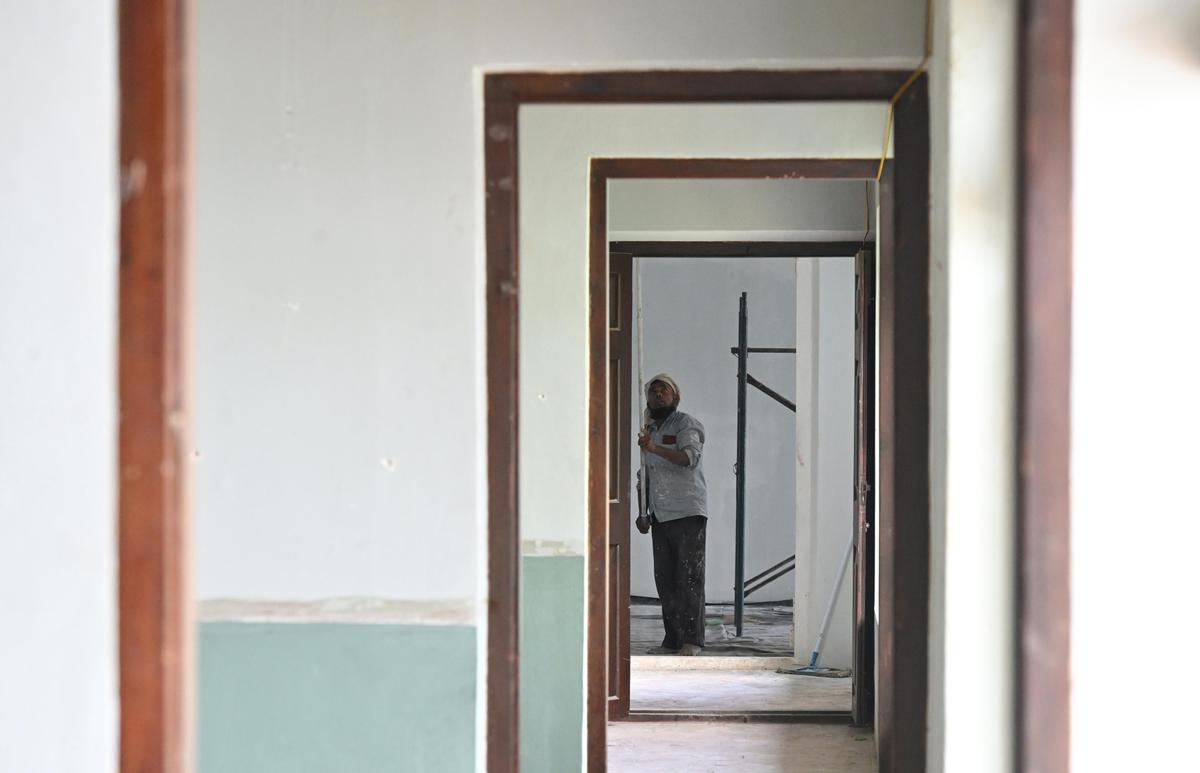
The dusty, blue doors of KVJ Warehouse in Mattancherry open into a cool, dark, many-pillared space beyond which is a high-ceilinged warehouse. The coolness inside, accompanied by some dankness, is a welcome change from the heat outside on Bazaar Road. This is one of the venues of the Kochi Muziris Biennale, which opens on December 12. Two workers are busy scraping off old paint on the warehouse walls. Light streams in through glass panes on the ventilations, some stained glass and others by dirt and time. Perched on their ledges are a couple of pigeons; a pair of doors on the side are open.

“One of the artists, the Belgium-based visual artist and tapestry-maker, Otobong Nkanga intends to set up a garden installation here,” says Amu Josephina Mohan, the production manager on the Biennale production team, which is led by Shyam Patel.

For Amu, who has a Masters in Museology and is a curator, this is a full circle moment. She was 16 when she came to the first edition of the Kochi Muziris Biennale in 2012, she remembers it as being “life changing. I had not seen art in such a space before. The Biennale caused a shift in my perception of art and led to my work in art.” 

Work is on in full earnest at all the Biennale venues. Aspinwall House will be missed (due to a change of ownership). The adjacent Coir Godown and the Director’s Bungalow are the production team’s base. A pile of waste — wood, paper, dried leaves, among other things are being burnt outside. Inside the building, there are snaking cables and wires, paints, tapes and scales besides other kinds of construction paraphernalia, and two kittens who seem to be overseeing the work. 

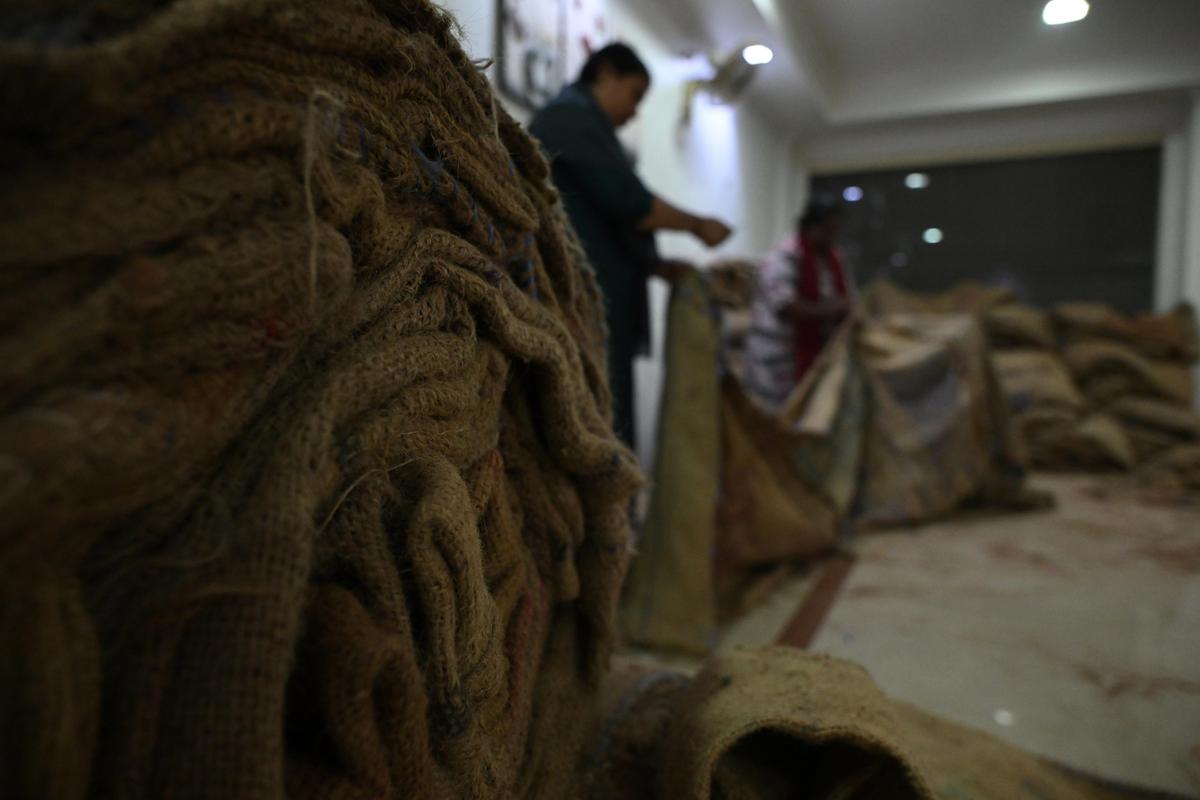
Kudumbashree members sewing jute sacks at SMS Hall in Mattancherry

Kudumbashree members sewing jute sacks at SMS Hall in Mattancherry
| Photo Credit:
THULASI KAKKAT

“We’re on fire!” is how Amu describes the pace of work. “Local carpenters, electricians, painters, masons, gardeners, sign board makers, Kudumbashree members… everybody is involved,” she says. One spots the curator, Nikhil Chopra and his team busily hopping from one venue to the next checking the progress of work and giving feedback.

The production team of 14 ‘co-producers’ as the core members are called, has been working, almost continuously with little rest as the D-day draws close. The process of putting together the team was completed in August. Helping them is a group of volunteers from across the country. There are eight site-in charges in the team who are assigned sites, which they would be responsible for.  

The works of 66 artists from across the globe will be showcased across 22 venues in and around Fort Kochi, Willingdon Island (a first) and Durbar Hall in Ernakulam. 

Work underway at the Director’s Bungalow adjacent to Aspinwall House in Fort Kochi

Work underway at the Director’s Bungalow adjacent to Aspinwall House in Fort Kochi
| Photo Credit:
THULASI KAKKAT

Seeing a few of the venues, one comprehends the scale of the work that putting up a show like this demands. Especially when some of the venues like KVJ Warehouse or Anand Warehouse are run down. 

“We don’t want to change these places drastically or take away their inherent character. We want to use the structures as they are, while retaining the environment and make what exists work,” says Abna C Azad, an architect and a post-graduate in regional planning, who is a production assistant on the team.  

“Although we are assigned our respective sites, we [the team] work in tandem so that work progresses smoothly everywhere,” adds Abna, who hails from Cherthala.

The term for the team’s work is ‘venue preparation’, of which conservation and restoration are a part. The decision about whose work to display where is taken based on the artist’s work, and the suitability of the space, in conjunction with the artist. “The artists visited the sites with Nikhil earlier this year and zeroed in on spaces closest to their practice,” says Amu.

Arjun Nair, Amu Josephina, Abna Azad, from production team and Divyesh Undaviya from curatorial team of Kochi Muziris Biennale

Arjun Nair, Amu Josephina, Abna Azad, from production team and Divyesh Undaviya from curatorial team of Kochi Muziris Biennale
| Photo Credit:
THULASI KAKKAT

Anand Warehouse, also in Mattancherry, is in a similar state of disuse. Though the warehouses are rectangular structures, the architecture has differences. Anand Warehouse has parallel, elongated high ceilinged spaces, inside one are rows of chairs in various states of being broken, which one mistakes to be part of some sort of installation. Abna informs that the chairs were found across the sites and were stored here to be repaired, if needed. “A part of this space will become a ‘parliament’. It will look very different once the work is here,” she says, referring to Ghanaian artist Ibrahim Mahama’s work. Most of these spaces will showcase more than one artist’s works.  

Across the road, at SMS Hall three women are busy sewing jute sacks together. The women, part of a local Kudumbashree unit, have been roped in to do this. These pieced-together jute sacks will form a part of an installation which is likely to be put up there. The hall is modern, air-conditioned and cool: a world apart from KVJ Warehouse and Anand Warehouse. 

One can’t help but wonder about the impact of the muggy weather on the artworks. That’s when Abna says, there is more to venue preparation than getting the space physically ready, the temperature for instance is a factor. 

Seated from left (first row) Arjun Nair, Pranav PJ, Akshay Dev, and Deepak Johnny; (middle row, from right) Ashad PS, Neeraj Bhavansingh, Abna C Azad, Jinsha PK, and Fatimath Safna K; (top row from left) Isha Siraj , Amu Josephina Mohan, Sharanya Haridas, Anantha Krishnan and Aysha Manna from the production team of the Kochi Muziris Biennale 2025

Seated from left (first row) Arjun Nair, Pranav PJ, Akshay Dev, and Deepak Johnny; (middle row, from right) Ashad PS, Neeraj Bhavansingh, Abna C Azad, Jinsha PK, and Fatimath Safna K; (top row from left) Isha Siraj , Amu Josephina Mohan, Sharanya Haridas, Anantha Krishnan and Aysha Manna from the production team of the Kochi Muziris Biennale 2025
| Photo Credit:
SPECIAL ARRANGEMENT

Says Akshay Dev, an art conservator and a member of the production team, “The temperature, humidity, the relative humidity…the fluctuation have all to be factored in when getting a venue ready. These factors are specific to each medium. My job is to create the ‘ideal condition’ for the artworks in order to keep them intact by creating buffer zones between the artwork and the wall. Then there are artworks like Otobong Nkanga’s work which would self-sustain.” 

He knows what each artist’s work will be and the conditions it would require. Live reading of temperature is done to decide how to intervene to create the ‘ideal condition’. The intervention could be a dehumidifier or industrial level exhausts or air-conditioning. 

With barely three weeks to go, the pace of work has gained speed. Six artists are already in town working on their artworks, each assisted by a volunteer. 

It is fascinating to listen to this young team talk about how these seemingly lifeless, forgotten warehouses and godowns will transform, Cinderella-like, and come alive as art galleries worthy of world class art. 

The Kochi Muziris Biennale opens on December 12, 2025 and will run for three months till April, 2026


Source link