Life & Style

Mayo College in Ajmer turns 150 years old. Is this India’s best boarding school?


It is post-dinner time in Mayo College, Ajmer, and we are here in November: the time of balding trees, retreating bees — a winter with a mind of its own. If you enter the school from the main gate, you will hear the faint hum of clarinets, punctuated by the bugle. If you are lucky, the winds, blowing from the Aravallis, will carry stray tunes from a cymbal that has been hit too hard. 
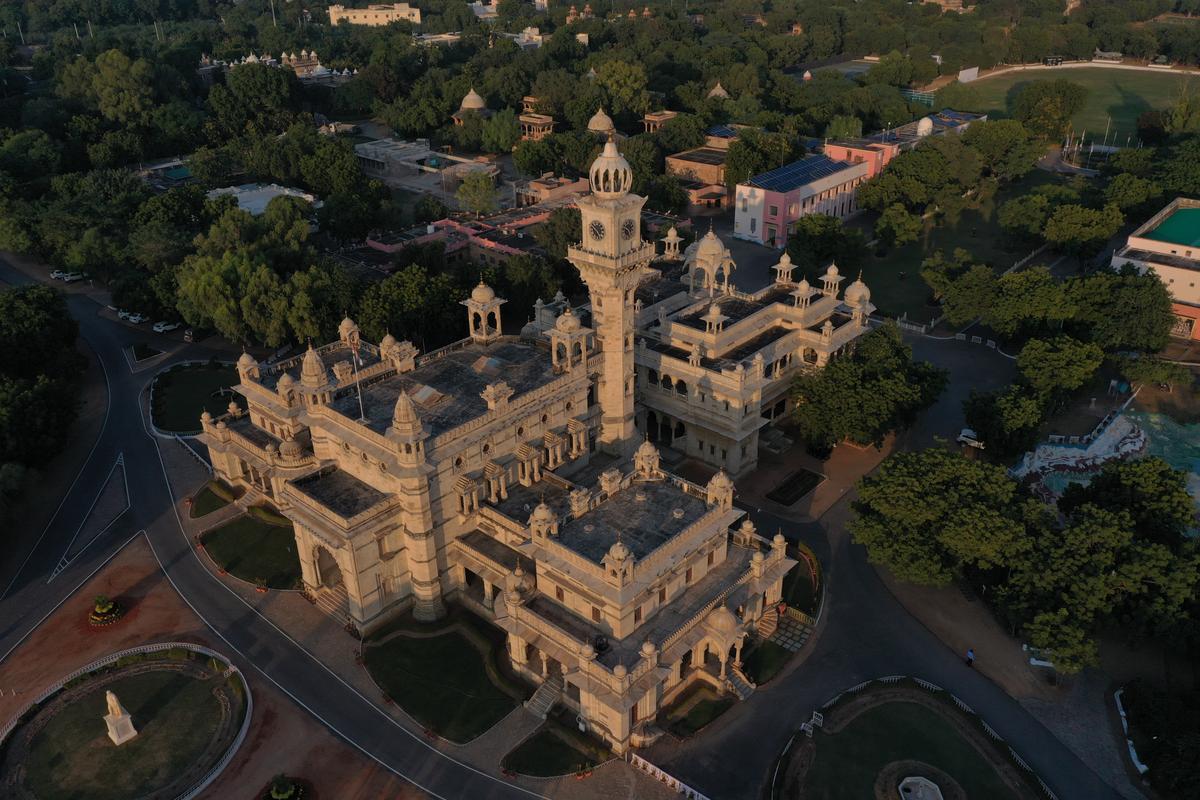
Aerial shot of Mayo College in Ajmer

Aerial shot of Mayo College in Ajmer
| Photo Credit:
Special arrangement

It is only when you are truly inside — past the domineering statue of Lord Mayo, past the pigeons and cuckoos sleeping in the eaves, beyond the Mughal garden, moving along the classrooms — that you reach the source of the sound at the Music School. The campus stretches further than the eye can see, almost 200 acres, depending on how you measure it. If it were daytime, you would have peacocks cutting your path, dancing on the rooftops in the evenings.
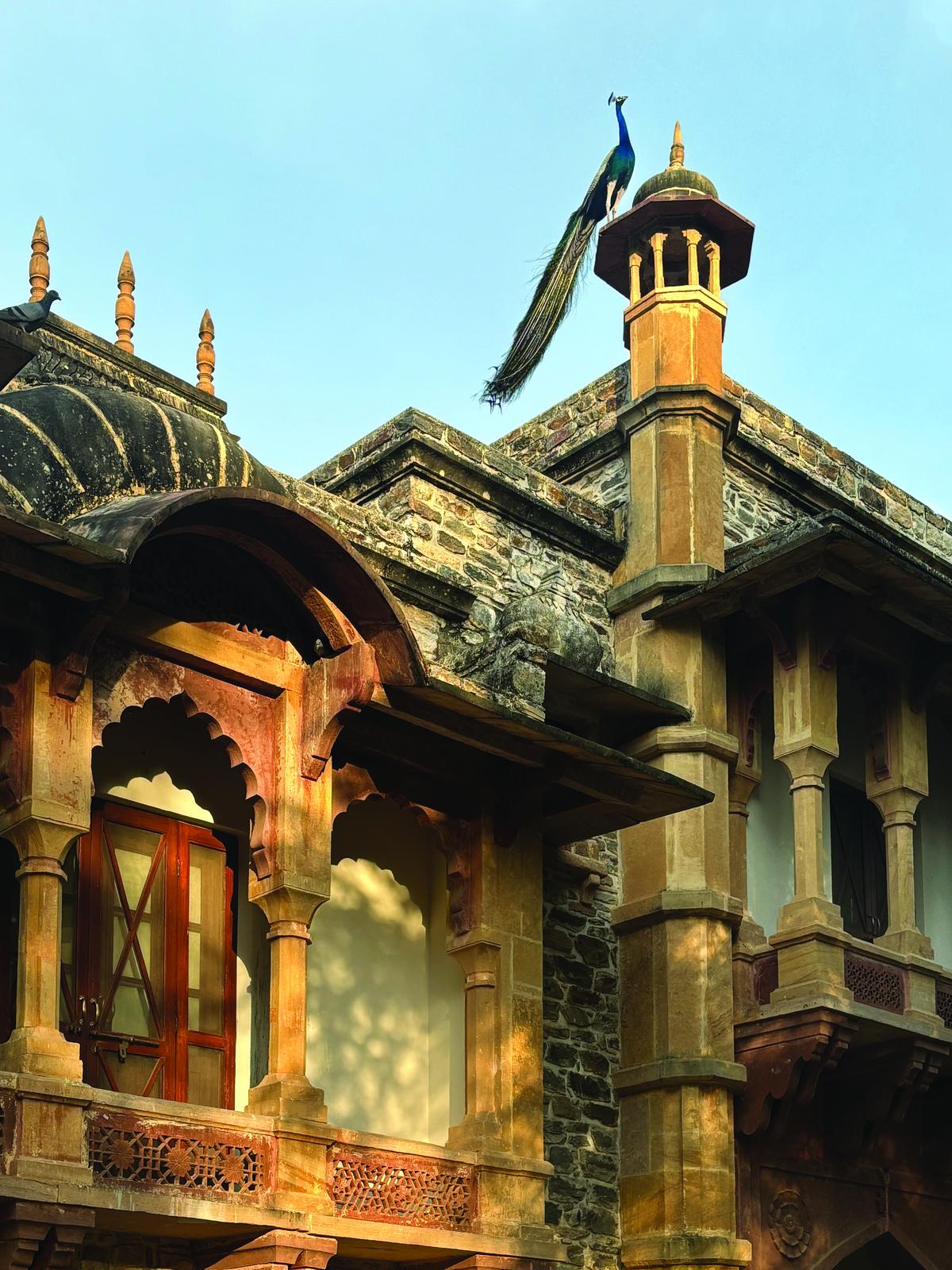
At Mayo, you would have peacocks cutting your path, dancing on the rooftops in the evenings

At Mayo, you would have peacocks cutting your path, dancing on the rooftops in the evenings
| Photo Credit:
Special arrangement

“The first time I visited Mayo to drop by a sibling, and saw the grand, main building perched on top of a slope, it struck me as an intimidating figure,” says Rudra Shreeram, from the batch of 2008, who now leads DCM Shriram, a business conglomerate. “I simply wondered: How can this be a school? In December 2002, when my father’s batch had come back for their silver jubilee reunion, I attended the prize giving ceremony. To witness its grandeur, everyone in the safas, all the colours: it set a clear picture in my young mind that this is where I was destined to go.” 

The classrooms at Mayo College

The classrooms at Mayo College
| Photo Credit:
Special arrangement

We are less than a week away from the same annual prize giving ceremony that awed Rudra. At night, the silence is broken by endless, exhaustive preparations — the 500-member student music band, other boys rehearsing Peter Shaffer’s iconic play The Royal Hunt of the Sun, the polo team practising for their match against Harvard. This year, the stakes are high. It is the institution’s 150th anniversary, to be held from November 27 to 29. In the past, chief guests for the ceremony have ranged from Dr Rajendra Prasad and Indira Gandhi to Peter Ustinov and LK Advani. This year, it will be Nandan Nilekani, co-founder, Infosys.
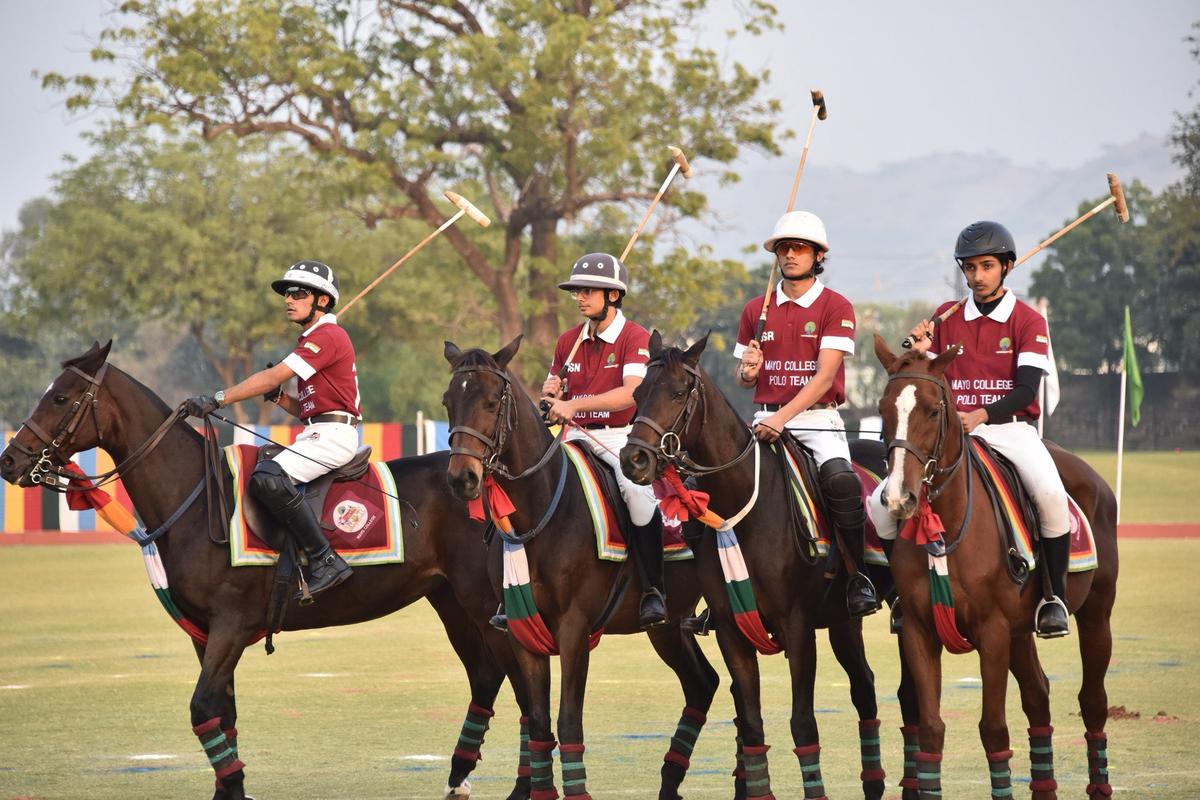
The polo team of Mayo College practising for its match against Harvard

The polo team of Mayo College practising for its match against Harvard
| Photo Credit:
Special arrangement

How does an institution survive for more than a century without losing its values? It is a question that is all the more important in the context of an educational institution. As the chairman of the board and president of the Old Boys’ Society, Colonel Bhawani Singh puts it: “Over the years, we have been having more and more women in the faculty, nearly more than 50%. For the first time in history, we have our first woman vice-principal, Priyanka Bhattacharya. Of course, there are many more examples, but it’s these conscious choices that uphold an institution.”
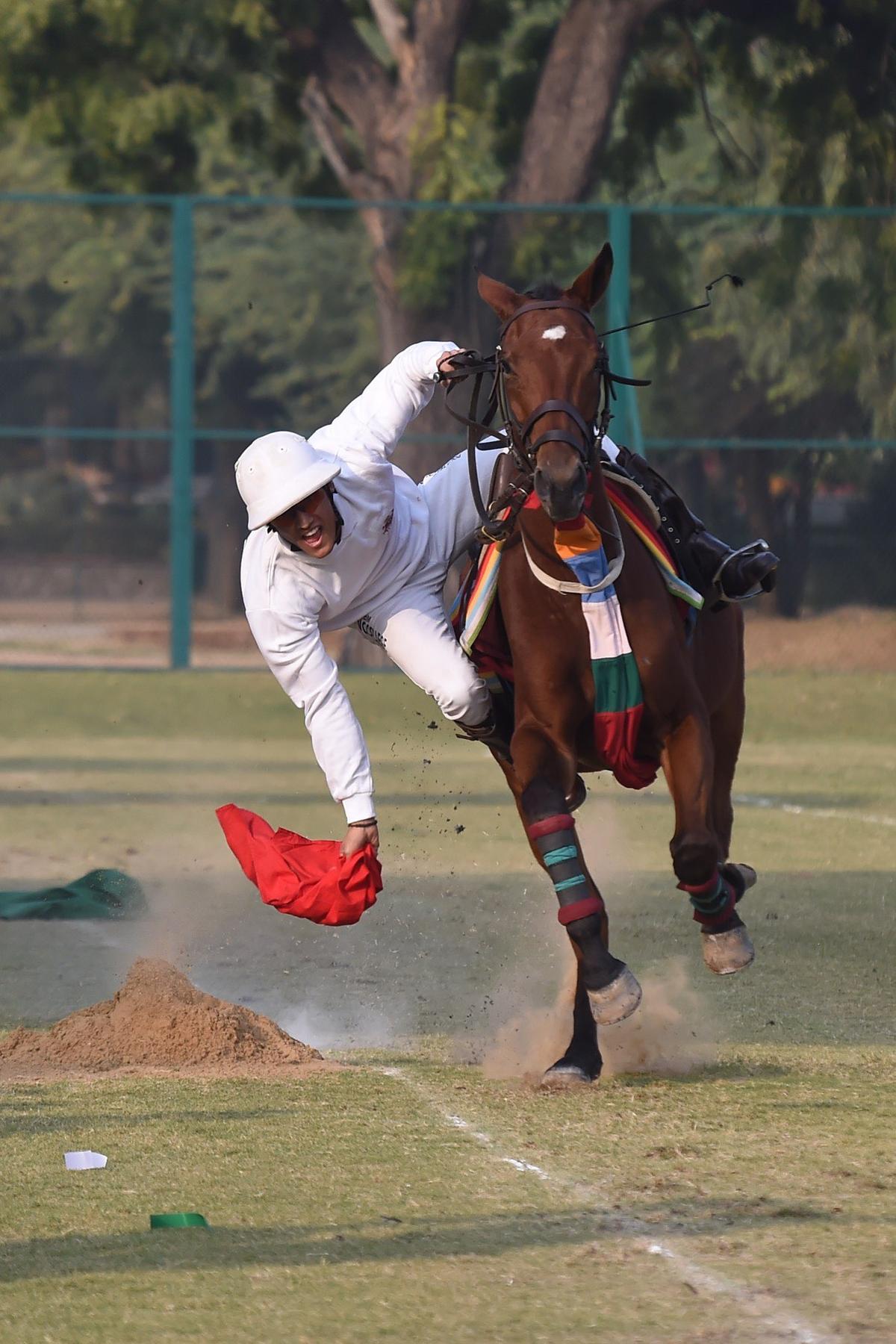
The polo team of Mayo College practising for its match against Harvard

The polo team of Mayo College practising for its match against Harvard
| Photo Credit:
Special arrangement

I joined Mayo College less than three months ago as a teacher and witnessed this very negotiation between the past and present, the slow dance of honouring legacy without stretching so far backwards that the future goes out of sight. The other day, a seventh grader on his way to a temple ceremony in a yellow safa ran up to me to tell me how much he loved William Golding’s The Lord of the Flies. “It’s so figurative, sir,” he said, out of breath with all the running. “How does Mr Golding say so many things without really saying much? Is the book an example of figurative writing? Or, better still, just good writing?” 
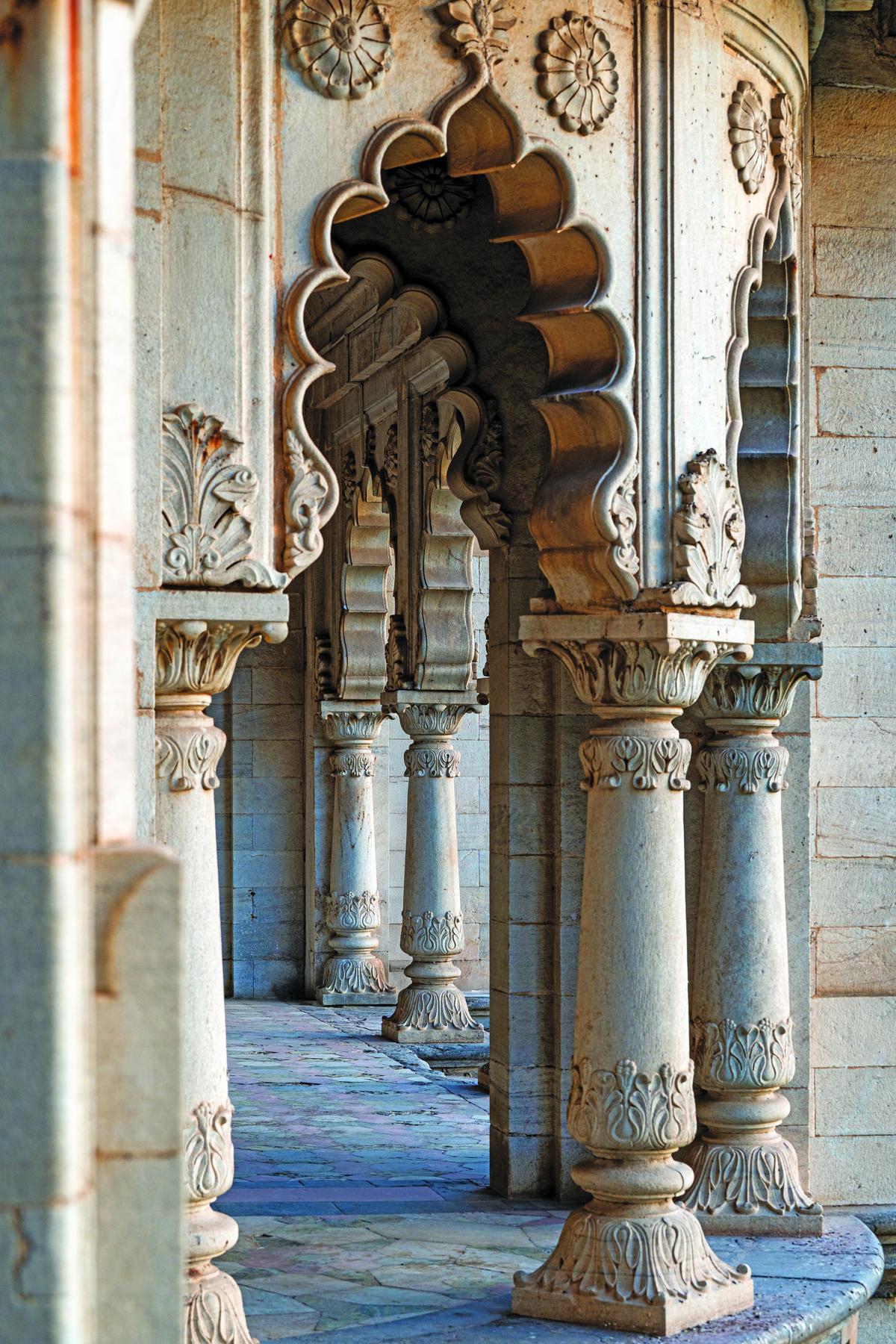
A portion of the old building dating back to 1875

A portion of the old building dating back to 1875
| Photo Credit:
Special arrangement

A little boy, dressed traditionally, trying to make sense of Golding’s layered prose that cauterises our myths of goodness, our faith in rules, and the quiet violence we pretend not to see: That, to me, is the essence of Mayo College in the New World Order. The principal, Saurav Sinha, who took the reins only recently, is conscious of being sensitive to it. “While being summoned to the principal’s office is still a scary thought to the students, at the same time, you may notice me sharing a laugh with the boys, often teasing them too. That is a change from not only 30 years ago but even five years ago,” he says.
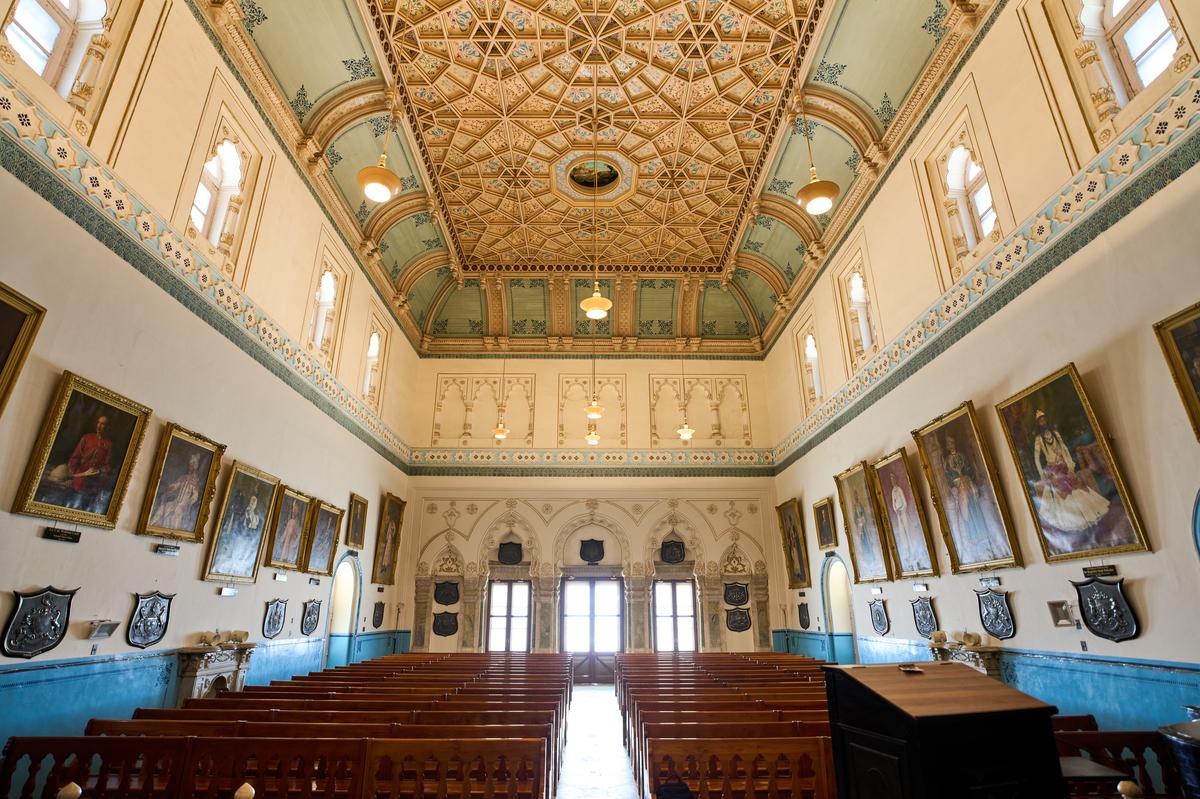
Assembly hall at Mayo College

Assembly hall at Mayo College
| Photo Credit:
Special arrangement

The other day, a group of around 10 boys from the board classes were walking on the campus after their study preparation. Most of the other students had gone home, but these students remained because they had a single paper left. They just knocked on Sinha’s door, a mansion built in 1910, festooned with dahlias and climbing ivy. “I gave them some cold coffee, and we ended up playing PlayStation for a while. Of course, most of them beat me in football, and they were very happy about it. But that’s the point — the role has changed from a dictator to a father figure. You know you can’t cross a certain line with him, but there can be no doubt about the affection, either.”

A common home

More than half a century ago, Jaswant Singh, who graduated from Mayo College in 1985 and now leads a manufacturing business, remembers when the principal of the school, passed away in the middle of his tenure in 1982. The vice principal took over briefly, and a new principal was appointed much later. “Things never stopped; the school was never affected. The same held during COVID times as well. There was no room to slack,” he says.
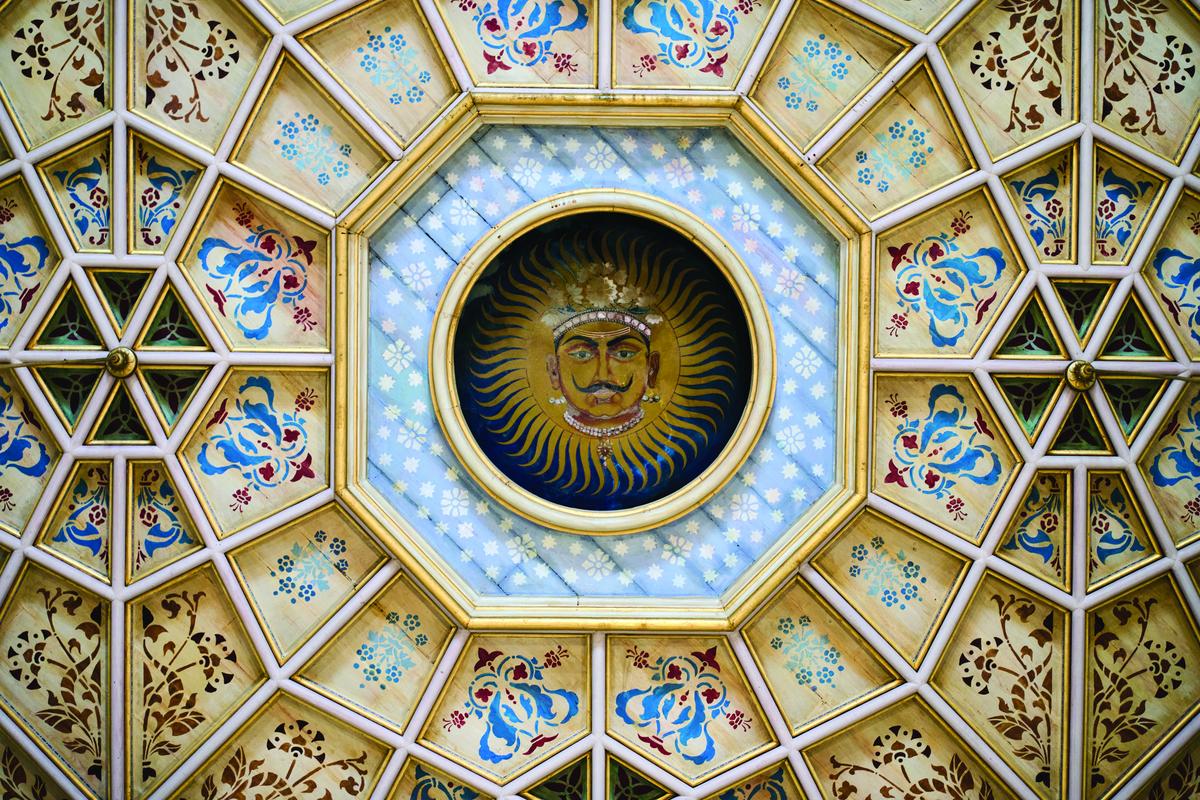
Ceiling of the assembly hall

Ceiling of the assembly hall
| Photo Credit:
Special arrangement

Through the alumni network Old Boys, like Jaswant and Rudra, continue to be associated: funding new projects, rallying support for ambitious buildings on the campus, coming together for a social cause, and advocating for the school where it matters. Now, as a businessman, Singh still notices the way those Mayo years help him navigate the real world: Resilience, self-independence, but also not being so independent that one loses the sense of community.

“We had these cycling trips that would last three days, doing everything on your own, cooking your food, cycling to the next stop and then cycling some 70 kilometres back to Ajmer. I can never forget that trip. I remember getting a sore back because none of us had ever cycled for that long. The bonds I created with the four other friends on that trip are still alive,” he recounts. Only three days back, he had a long video call with one of them from the United States — catching up about life, what they missed about that time. 
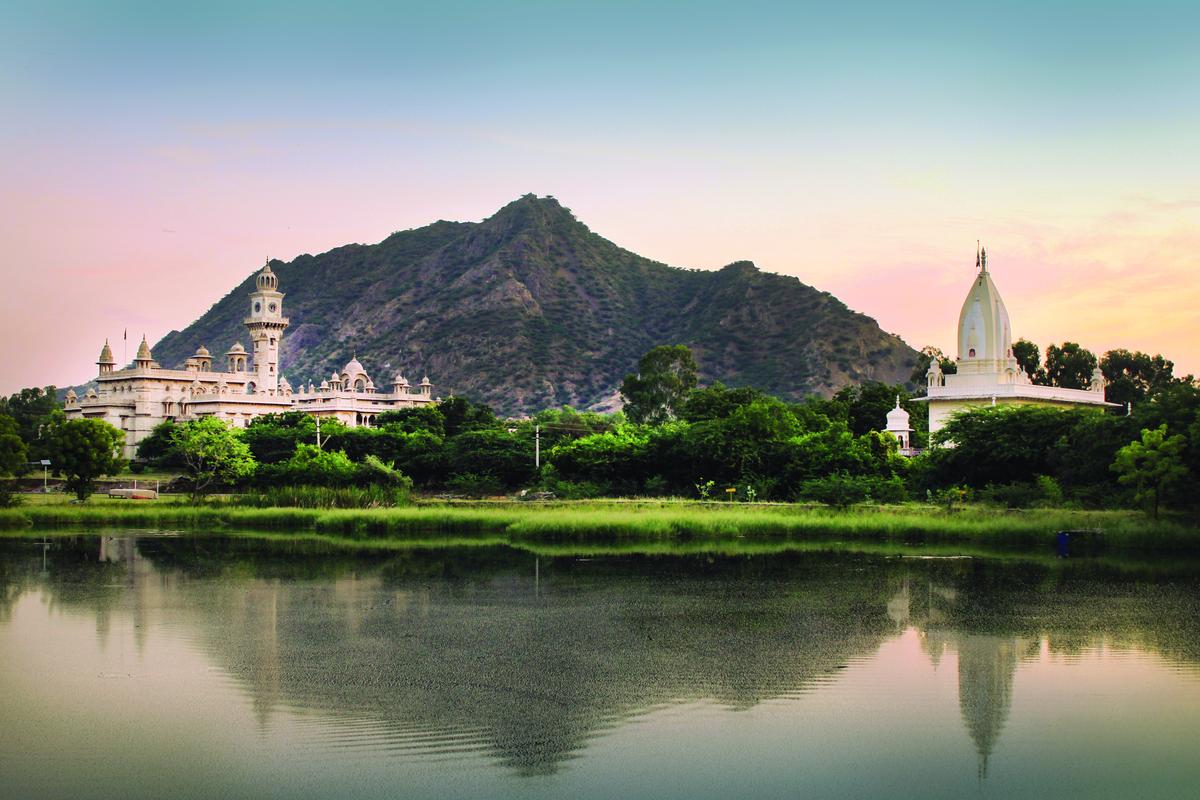
Mayo College has educated princes and kings, Olympians and filmmakers, politicians and actors

Mayo College has educated princes and kings, Olympians and filmmakers, politicians and actors
| Photo Credit:
Special arrangement

Education, then, was never limited to the classroom. It is this sense of home, of always learning and forming friendships that were not transactional or superficial but one that held your hands through all the crests or troughs of life, that is the bedrock of the Mayo experience. It is the same sentiment that Col. Singh felt when he travelled across the country and the world this year, when different batches of Mayo held events celebrating the 150th anniversary. “As clichéd as it sounds, family is how I’d describe Mayo. It is moving the way people connect and how familial the bonds are between former staff members. On graduation day, parents tell me how their sons were weeping, and they were weeping with them because a nine-year journey came to an end.” 

What keeps a school standing for 150 years, then? While ceremony and nostalgia anchor us, give the students and staff a warm superstructure, it all boils down to care. The people who care enough to go the extra mile, do the work when no one’s looking, the students who analyse themselves critically. Mayo endures because its past is held lightly, its present questioned often, and its students trusted with real responsibility. 

The celebrations ahead

A Harvard–Mayo College polo match will headline sports prize giving, with two games planned, one against current students and one against alumni, at Mayo’s Polo Pavilion

A Paresh Maity painting will lead the art auction, with all proceeds earmarked for the school

Sonu Nigam will perform a 90-minute concert, expected to draw an audience of about 6,000 people

The senior school play, The Royal Hunt of the Sun, will be staged with Saif Ali Khan and Kareena Kapoor attending as guests of honour

A Vintage Car Rally will feature 25 Old Boys’ cars doing daily rounds of the campus, complemented by a heritage fashion show by Ritwik Khanna’s Rkive City using archival school textiles.



Source link

Mayo College in Ajmer turns 150 years old. Is this India’s best boarding school?


It is post-dinner time in Mayo College, Ajmer, and we are here in November: the time of balding trees, retreating bees — a winter with a mind of its own. If you enter the school from the main gate, you will hear the faint hum of clarinets, punctuated by the bugle. If you are lucky, the winds, blowing from the Aravallis, will carry stray tunes from a cymbal that has been hit too hard. 

Aerial shot of Mayo College in Ajmer

Aerial shot of Mayo College in Ajmer
| Photo Credit:
Special arrangement

It is only when you are truly inside — past the domineering statue of Lord Mayo, past the pigeons and cuckoos sleeping in the eaves, beyond the Mughal garden, moving along the classrooms — that you reach the source of the sound at the Music School. The campus stretches further than the eye can see, almost 200 acres, depending on how you measure it. If it were daytime, you would have peacocks cutting your path, dancing on the rooftops in the evenings.

At Mayo, you would have peacocks cutting your path, dancing on the rooftops in the evenings

At Mayo, you would have peacocks cutting your path, dancing on the rooftops in the evenings
| Photo Credit:
Special arrangement

“The first time I visited Mayo to drop by a sibling, and saw the grand, main building perched on top of a slope, it struck me as an intimidating figure,” says Rudra Shreeram, from the batch of 2008, who now leads DCM Shriram, a business conglomerate. “I simply wondered: How can this be a school? In December 2002, when my father’s batch had come back for their silver jubilee reunion, I attended the prize giving ceremony. To witness its grandeur, everyone in the safas, all the colours: it set a clear picture in my young mind that this is where I was destined to go.” 

The classrooms at Mayo College

The classrooms at Mayo College
| Photo Credit:
Special arrangement

We are less than a week away from the same annual prize giving ceremony that awed Rudra. At night, the silence is broken by endless, exhaustive preparations — the 500-member student music band, other boys rehearsing Peter Shaffer’s iconic play The Royal Hunt of the Sun, the polo team practising for their match against Harvard. This year, the stakes are high. It is the institution’s 150th anniversary, to be held from November 27 to 29. In the past, chief guests for the ceremony have ranged from Dr Rajendra Prasad and Indira Gandhi to Peter Ustinov and LK Advani. This year, it will be Nandan Nilekani, co-founder, Infosys.

The polo team of Mayo College practising for its match against Harvard

The polo team of Mayo College practising for its match against Harvard
| Photo Credit:
Special arrangement

How does an institution survive for more than a century without losing its values? It is a question that is all the more important in the context of an educational institution. As the chairman of the board and president of the Old Boys’ Society, Colonel Bhawani Singh puts it: “Over the years, we have been having more and more women in the faculty, nearly more than 50%. For the first time in history, we have our first woman vice-principal, Priyanka Bhattacharya. Of course, there are many more examples, but it’s these conscious choices that uphold an institution.”

The polo team of Mayo College practising for its match against Harvard

The polo team of Mayo College practising for its match against Harvard
| Photo Credit:
Special arrangement

I joined Mayo College less than three months ago as a teacher and witnessed this very negotiation between the past and present, the slow dance of honouring legacy without stretching so far backwards that the future goes out of sight. The other day, a seventh grader on his way to a temple ceremony in a yellow safa ran up to me to tell me how much he loved William Golding’s The Lord of the Flies. “It’s so figurative, sir,” he said, out of breath with all the running. “How does Mr Golding say so many things without really saying much? Is the book an example of figurative writing? Or, better still, just good writing?” 

A portion of the old building dating back to 1875

A portion of the old building dating back to 1875
| Photo Credit:
Special arrangement

A little boy, dressed traditionally, trying to make sense of Golding’s layered prose that cauterises our myths of goodness, our faith in rules, and the quiet violence we pretend not to see: That, to me, is the essence of Mayo College in the New World Order. The principal, Saurav Sinha, who took the reins only recently, is conscious of being sensitive to it. “While being summoned to the principal’s office is still a scary thought to the students, at the same time, you may notice me sharing a laugh with the boys, often teasing them too. That is a change from not only 30 years ago but even five years ago,” he says.

Assembly hall at Mayo College

Assembly hall at Mayo College
| Photo Credit:
Special arrangement

The other day, a group of around 10 boys from the board classes were walking on the campus after their study preparation. Most of the other students had gone home, but these students remained because they had a single paper left. They just knocked on Sinha’s door, a mansion built in 1910, festooned with dahlias and climbing ivy. “I gave them some cold coffee, and we ended up playing PlayStation for a while. Of course, most of them beat me in football, and they were very happy about it. But that’s the point — the role has changed from a dictator to a father figure. You know you can’t cross a certain line with him, but there can be no doubt about the affection, either.”

A common home

More than half a century ago, Jaswant Singh, who graduated from Mayo College in 1985 and now leads a manufacturing business, remembers when the principal of the school, passed away in the middle of his tenure in 1982. The vice principal took over briefly, and a new principal was appointed much later. “Things never stopped; the school was never affected. The same held during COVID times as well. There was no room to slack,” he says.

Ceiling of the assembly hall

Ceiling of the assembly hall
| Photo Credit:
Special arrangement

Through the alumni network Old Boys, like Jaswant and Rudra, continue to be associated: funding new projects, rallying support for ambitious buildings on the campus, coming together for a social cause, and advocating for the school where it matters. Now, as a businessman, Singh still notices the way those Mayo years help him navigate the real world: Resilience, self-independence, but also not being so independent that one loses the sense of community.

“We had these cycling trips that would last three days, doing everything on your own, cooking your food, cycling to the next stop and then cycling some 70 kilometres back to Ajmer. I can never forget that trip. I remember getting a sore back because none of us had ever cycled for that long. The bonds I created with the four other friends on that trip are still alive,” he recounts. Only three days back, he had a long video call with one of them from the United States — catching up about life, what they missed about that time. 

Mayo College has educated princes and kings, Olympians and filmmakers, politicians and actors

Mayo College has educated princes and kings, Olympians and filmmakers, politicians and actors
| Photo Credit:
Special arrangement

Education, then, was never limited to the classroom. It is this sense of home, of always learning and forming friendships that were not transactional or superficial but one that held your hands through all the crests or troughs of life, that is the bedrock of the Mayo experience. It is the same sentiment that Col. Singh felt when he travelled across the country and the world this year, when different batches of Mayo held events celebrating the 150th anniversary. “As clichéd as it sounds, family is how I’d describe Mayo. It is moving the way people connect and how familial the bonds are between former staff members. On graduation day, parents tell me how their sons were weeping, and they were weeping with them because a nine-year journey came to an end.” 

What keeps a school standing for 150 years, then? While ceremony and nostalgia anchor us, give the students and staff a warm superstructure, it all boils down to care. The people who care enough to go the extra mile, do the work when no one’s looking, the students who analyse themselves critically. Mayo endures because its past is held lightly, its present questioned often, and its students trusted with real responsibility. 

The celebrations ahead

A Harvard–Mayo College polo match will headline sports prize giving, with two games planned, one against current students and one against alumni, at Mayo’s Polo Pavilion

A Paresh Maity painting will lead the art auction, with all proceeds earmarked for the school

Sonu Nigam will perform a 90-minute concert, expected to draw an audience of about 6,000 people

The senior school play, The Royal Hunt of the Sun, will be staged with Saif Ali Khan and Kareena Kapoor attending as guests of honour

A Vintage Car Rally will feature 25 Old Boys’ cars doing daily rounds of the campus, complemented by a heritage fashion show by Ritwik Khanna’s Rkive City using archival school textiles.



Source link

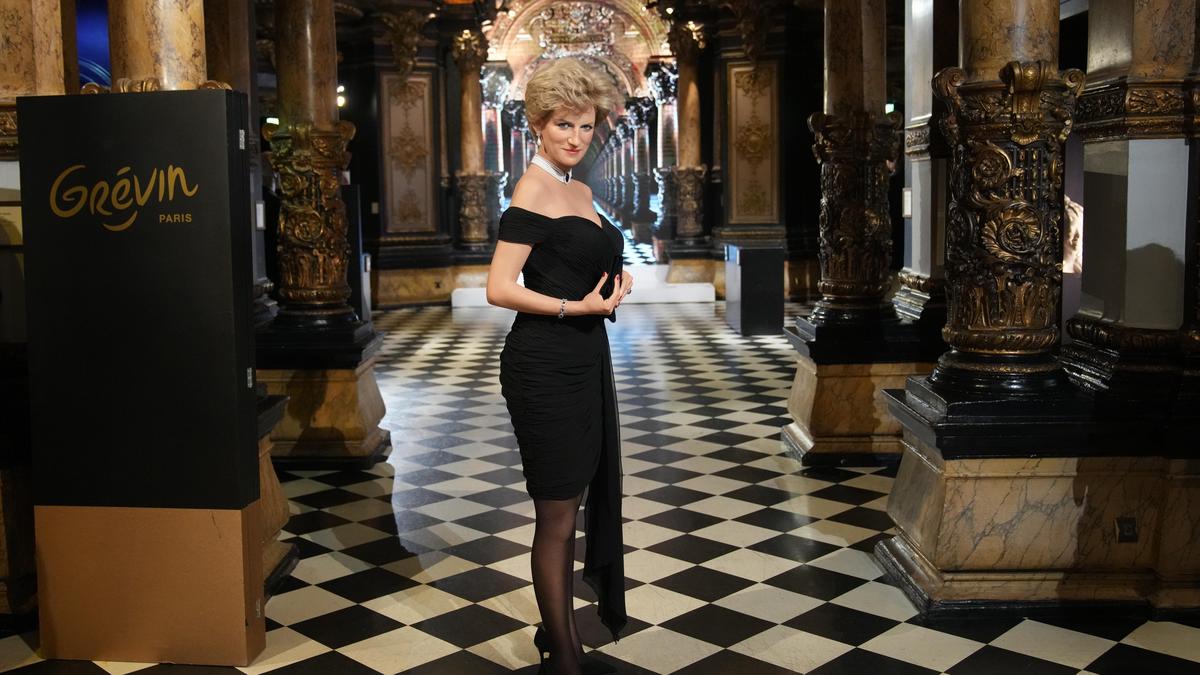
Paris wax museum unveils new Diana figure in ‘revenge dress’


The life-size wax figure of Lady Diana is presented at Grevin Museum in Paris, France, on Nov. 20, 2025.

The life-size wax figure of Lady Diana is presented at Grevin Museum in Paris, France, on Nov. 20, 2025.
| Photo Credit: AP

A wax museum in Paris on Thursday unveiled a new figure of the late Princess Diana depicted in a black dress that has come to be known as her “revenge dress,” decades after her tragic death in the city.

The Grevin Museum, one of Europe’s oldest wax museums, dressed the life-size figure of the late Princess of Wales in the black, off-the-shoulder, figure-hugging cocktail dress Diana wore to a Serpentine Gallery event in London in 1994. It was the same night that King Charles III — at the time Prince Charles — acknowledged on television that he had been unfaithful with Camilla Parker Bowles.
For Paris, the tribute carried extra weight. Diana died in a car crash in a tunnel by the Seine River in 1997, and the city still draws admirers who leave flowers and notes at informal memorials.

Diana’s relationship with Dodi Al Fayed and the crash that killed them immortalised Diana’s connection with Paris.

Museum officials told The Associated Press that the Grevin director ordered the likeness after being underwhelmed by its counterpart during a visit to Madame Tussauds wax museum in London a couple of years ago. They noted that the unveiling came on the 30th anniversary of an explosive interview that Diana gave to BBC “Panorama,” which observers say dented the standing of the monarchy and the Queen.

Some observers noted how the museum’s newest royal guest was positioned far from wax likenesses of her ex-husband and former mother-in-law.

High heels, a pearl choker at her neck and a small handbag clasped in both hands completed the sculpture. Tabloids later dubbed the outfit the “revenge dress,” and the museum leaned into that symbolism.

French novelist Christine Orban, who wrote “Mademoiselle Spencer,” a novel imagined from Diana’s point of view, said the figure was overdue.

She called the black dress a turning point in Diana’s story.

“The dress is very significant of her liberation because in the royal family, black is only worn for funerals, and then such a sexy dress for a Princess of Wales, well, that’s not common either,” she said. “So she decides to wear her high heels and Louboutins. And to go to the Serpentine Gallery to make an impression, to get photographed.” Grevin, founded in the 19th century, has long packed its ornate halls with political leaders, artists, pop-culture figures — and, yes, British royals. Diana is the latest in a steady stream of star wattage additions the museum uses to refresh the collection and boost visitors at the site that has attracted some 700,000 annual visitors in recent years.

News of the unveiling filtered through Paris, even before most people had a chance to visit.

“It brought back that night in the tunnel, even though I was a kid then,” said Julien Martin, 38. “Paris never completely let go of Diana, so it made sense that a big wax museum finally did this.” “I wasn’t even alive but for my generation, she seems like the first modern princess — glamorous, but also vulnerable,” said 24-year-old student Lina Ben Amar. “If tourists come to see celebrities in wax, she is one of the first they will look for.” Diana will be in good company. Curators set her beside another prominent royal who died in Paris — albeit centuries earlier: Marie-Antoinette.


Source link

Paris wax museum unveils new Diana figure in ‘revenge dress’


The life-size wax figure of Lady Diana is presented at Grevin Museum in Paris, France, on Nov. 20, 2025.

The life-size wax figure of Lady Diana is presented at Grevin Museum in Paris, France, on Nov. 20, 2025.
| Photo Credit: AP

A wax museum in Paris on Thursday unveiled a new figure of the late Princess Diana depicted in a black dress that has come to be known as her “revenge dress,” decades after her tragic death in the city.

The Grevin Museum, one of Europe’s oldest wax museums, dressed the life-size figure of the late Princess of Wales in the black, off-the-shoulder, figure-hugging cocktail dress Diana wore to a Serpentine Gallery event in London in 1994. It was the same night that King Charles III — at the time Prince Charles — acknowledged on television that he had been unfaithful with Camilla Parker Bowles.

For Paris, the tribute carried extra weight. Diana died in a car crash in a tunnel by the Seine River in 1997, and the city still draws admirers who leave flowers and notes at informal memorials.

Diana’s relationship with Dodi Al Fayed and the crash that killed them immortalised Diana’s connection with Paris.

Museum officials told The Associated Press that the Grevin director ordered the likeness after being underwhelmed by its counterpart during a visit to Madame Tussauds wax museum in London a couple of years ago. They noted that the unveiling came on the 30th anniversary of an explosive interview that Diana gave to BBC “Panorama,” which observers say dented the standing of the monarchy and the Queen.

Some observers noted how the museum’s newest royal guest was positioned far from wax likenesses of her ex-husband and former mother-in-law.

High heels, a pearl choker at her neck and a small handbag clasped in both hands completed the sculpture. Tabloids later dubbed the outfit the “revenge dress,” and the museum leaned into that symbolism.

French novelist Christine Orban, who wrote “Mademoiselle Spencer,” a novel imagined from Diana’s point of view, said the figure was overdue.

She called the black dress a turning point in Diana’s story.

“The dress is very significant of her liberation because in the royal family, black is only worn for funerals, and then such a sexy dress for a Princess of Wales, well, that’s not common either,” she said. “So she decides to wear her high heels and Louboutins. And to go to the Serpentine Gallery to make an impression, to get photographed.” Grevin, founded in the 19th century, has long packed its ornate halls with political leaders, artists, pop-culture figures — and, yes, British royals. Diana is the latest in a steady stream of star wattage additions the museum uses to refresh the collection and boost visitors at the site that has attracted some 700,000 annual visitors in recent years.

News of the unveiling filtered through Paris, even before most people had a chance to visit.

“It brought back that night in the tunnel, even though I was a kid then,” said Julien Martin, 38. “Paris never completely let go of Diana, so it made sense that a big wax museum finally did this.” “I wasn’t even alive but for my generation, she seems like the first modern princess — glamorous, but also vulnerable,” said 24-year-old student Lina Ben Amar. “If tourists come to see celebrities in wax, she is one of the first they will look for.” Diana will be in good company. Curators set her beside another prominent royal who died in Paris — albeit centuries earlier: Marie-Antoinette.


Source link

Aerial adventure: Paramotoring activities begin in Visakhapatnam


Paramotoring activities in Visakhapatnam.

Paramotoring activities in Visakhapatnam.
| Photo Credit: KR Deepak

At sunrise, Rushikonda feels as if it is holding its breath. I am strapped into the paramotor harness, the sand still cool beneath my feet, when the wing catches the first clean gust. The engine steadies, the beach slips backward and in a few seconds I am gliding above the water as the coastline shimmers below me. The view feels immediate and unreal at the same time, as if the day is unfolding all at once from 400 feet above the sea.

Vihang Adventures, in association with Andhra Pradesh Tourism Development Corporation (APTDC), is offering this experience every day through its paramotoring operations at Rushikonda and Sagarnagar beachfront.

The activity was formally introduced on November 15 in the presence of APTDC Chairman N Balaji. Since then, the early morning and late evening rides have already become sought-after slots, largely because these flights allow passengers to watch sunlight shift across the coastline while paramotoring steadily at about 400 to 500 feet above sea level. The rides cover an aerial radius of approximately five to six kilometres for riders to see long, unbroken stretches of the beach, rocky hillocks and the gradual turn of the sea towards the harbour.

According to Surya Teja, the lead pilot and one of the driving forces behind the project, the team currently manages around 30 flights a day, with a plan to increase capacity in the coming days. He explains that the long-term goal is to reach a 100 rides per day. “We are also preparing to introduce Jeep parasailing and jet skiing so that visitors may plan entire adventure itineraries,” says Surya.

A paramotor landing on the beach in the backdrop of the sunset in Visakhapatnam.

A paramotor landing on the beach in the backdrop of the sunset in Visakhapatnam.
| Photo Credit:
KR Deepak

While the organisation has brought powered paragliding to the city earlier for short durations, the current programme is a sustained activity, designed to run as a permanent feature. The team includes two trained pilots operating two powered paragliders and seven ground personnel who handle equipment checks, weather assessment and passenger support.

The paramotor units used at Rushikonda and Sagarnagar incorporate Power2Fly and Fly Products designs, paired with Rotax aircraft engines. The two-seater configuration includes full-body harnesses, which are monitored and cross-checked by the ground crew before every flight. Surya describes the ride as comfortable and steady. “This was my first ride on a paramotor. It felt secure and comfortable up there. In fact, the entire experience is comparable to settling into a well-supported chair that lifts gradually from the earth,” says Ch Chaitanya, who experienced his first ride at Rushikonda last weekend.

Power ride
The powered paragliders go up to a maximum height of 400 feet in a tandem ride.
Venue: Rushikonda and Sagarnagar
Any one in the age group of 10 to 70 years can enjoy the ride.
Price: ₹2,500 (per ride)
Time: 6am to 10am and 2.30pm till sunset

A dedicated safety officer is stationed on the beach throughout the day. He monitors wind behaviour, cloud activity and any sign of shifting conditions. The rides are halted when the wind speed exceeds 15 knots or when there are indications of rain or cyclonic weather patterns. Passengers receive a short briefing prior to take-off, during which they are told how to hold the harness, where to place their feet and how to signal the pilot if they experience discomfort or wish to cut the flight short.

Paramotoring in Rushikonda in Visakhapatnam.

Paramotoring in Rushikonda in Visakhapatnam.
| Photo Credit:
SPECIAL ARRANGEMENT

Vihang Adventures has handled aerial activity during the Araku Chali Festival, the Flamingo Festival in Sullurupeta, the Masula Beach Festival in Machilipatnam, the Bharuva Beach Festival in Srikakulam and Vijayawada Utsavalu during the Dasara period. They are also presently running paramotoring units at Ramapuram Beach and Gandikota.

Paramotoring activities in Visakhapatnam.

Paramotoring activities in Visakhapatnam.
| Photo Credit:
SPECIAL ARRANGEMENT

The organisation’s scope is not limited to leisure. Their staff has supported NDRF teams, State disaster units and defence authorities by providing aerial assistance during emergencies and specialised operations.

During the recently concluded CII Partnership Summit, Vihang Adventures signed a memorandum of understanding with the Andhra Pradesh State government for a heli-tourism project valued at ₹25 crore. The service is expected to connect Visakhapatnam and Araku Valley through air shuttle services.


Source link

‘Marie Antoinette Style’ at the V&A revisits the French queen’s opulent legacy


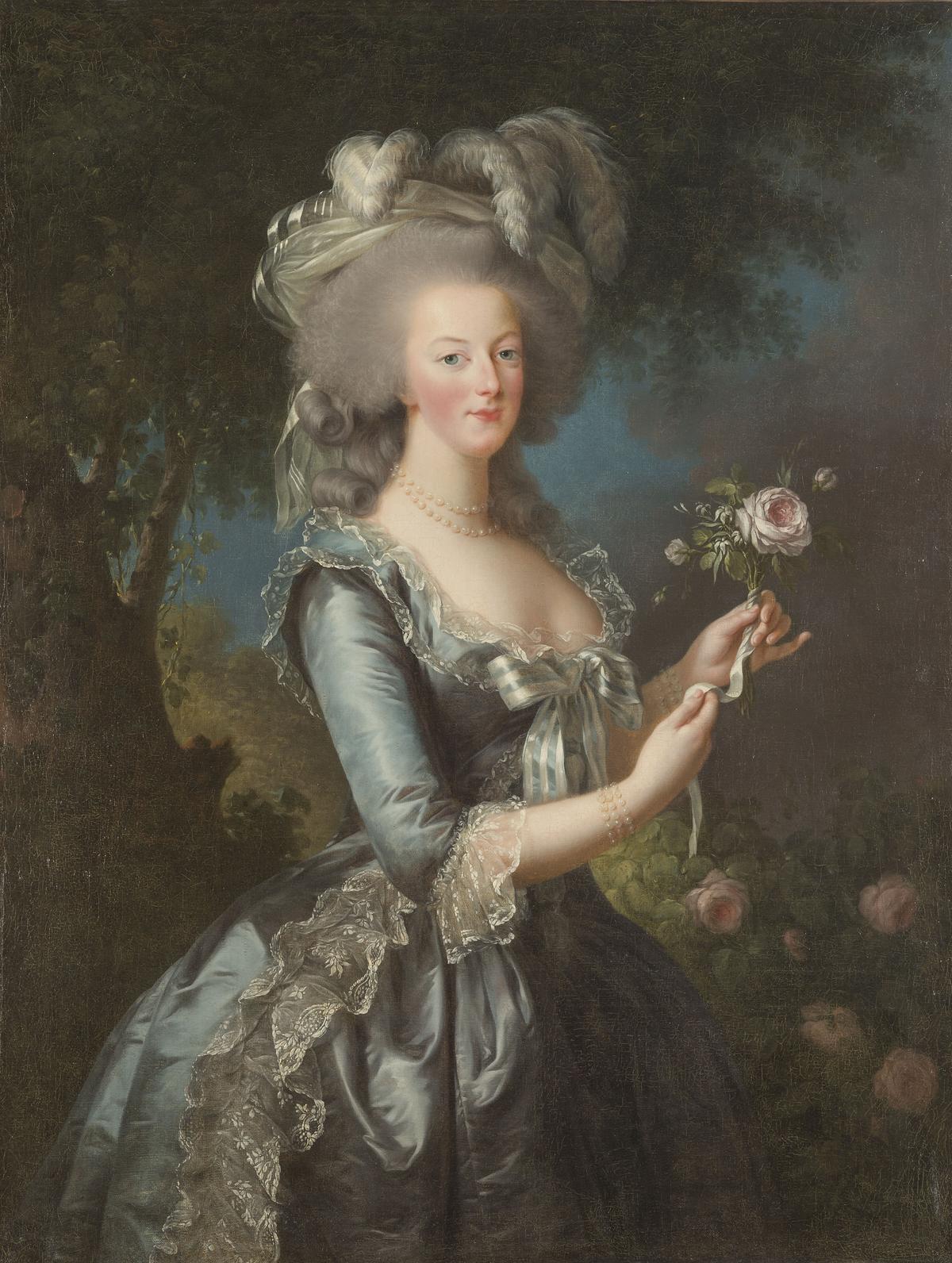
“The most fashionable, scrutinised and controversial queen in history”, as curator Sarah Grant calls Marie Antoinette of France, now has a show at the Victoria and Albert (V&A) Museum. You may remember Tiktoks and Instagram reels from a few weeks ago of guests sporting white wigs and powdered faces, dripping with jewels and carrying painted hand fans at the London museum. Yes, it’s fun, but more than showcasing excess, Marie Antoinette Style, the first major U.K. survey devoted to the 18th century French queen, endeavours, through over 250 objects spanning dress, jewellery, scent, interiors and film, to explain how style became crown, shield and trap all at once.

Portrait de Marie-Antoinette à la rose by French painter Élisabeth-Louise Vigée Le Brun

Portrait de Marie-Antoinette à la rose by French painter Élisabeth-Louise Vigée Le Brun
| Photo Credit:
Courtesy Château de Versailles, Dist. Grand Palais RMN Christophe Fouin

From the moment you enter Galleries 38 and 39, the tone is set: this is an immersive experience, a walk through a queen’s identity. The first section outlines Antoinette’s arrival in France as a 14-year-old Austrian archduchess in 1770, her marriage to Louis XVI, and her gradual rise as an arbiter of taste in the French court. Grant notes that while Antoinette “is still seen as a by-word for excess and frivolity, it is a trope based on mythology”. The exhibition’s aim is to reposition her not as a caricature, but as a woman who shaped the culture of her age and whose style continues to reverberate.

Marie Antoinette Style at the V&A

Marie Antoinette Style at the V&A
| Photo Credit:
Peter Kelleher

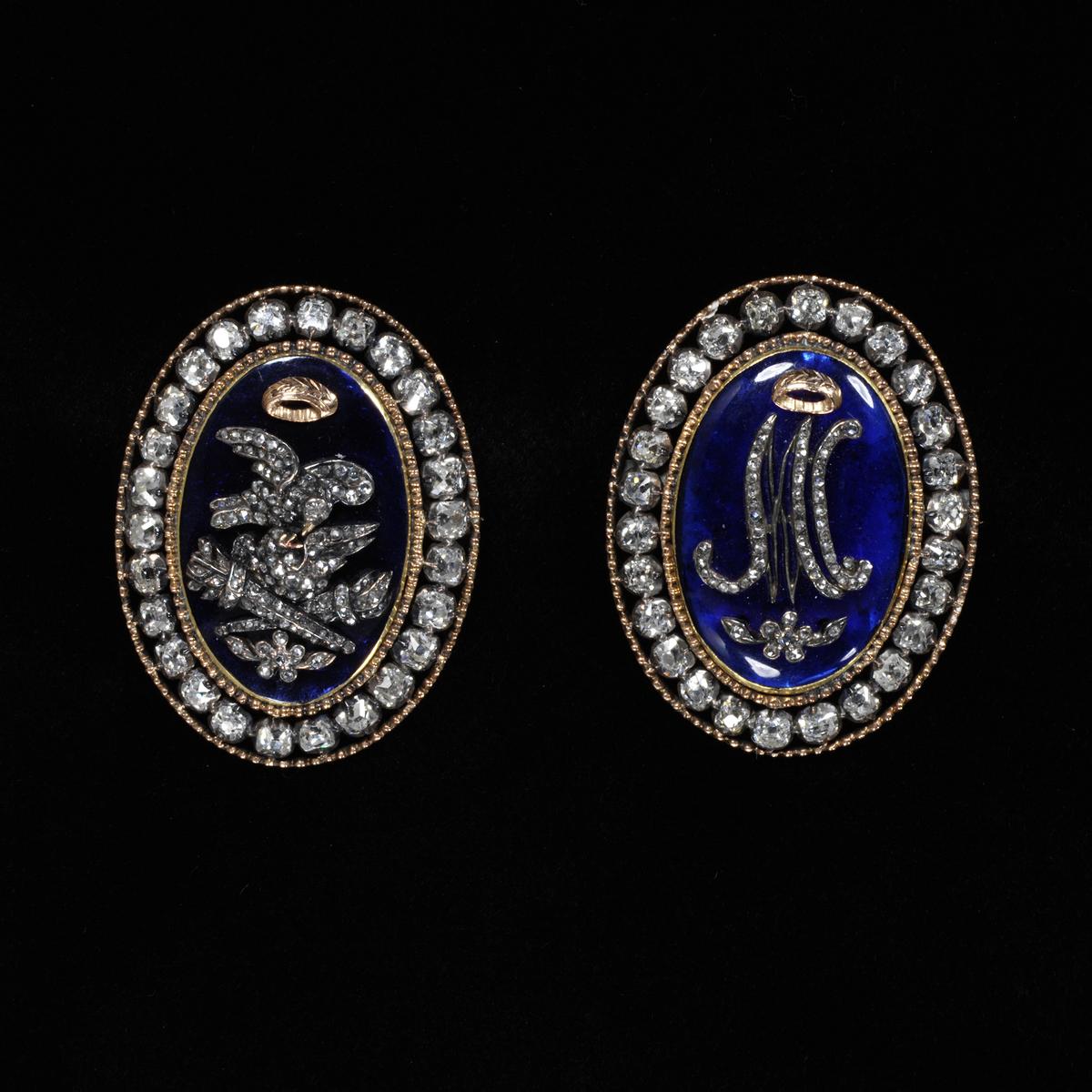
A pair of braided bracelet clasps; gold with brilliant-cut diamonds with central plaques of blue paste, one with the initials of Marie Antoinette, and the other with turtle doves and hymeneal torches. (Paris, 1770)

A pair of braided bracelet clasps; gold with brilliant-cut diamonds with central plaques of blue paste, one with the initials of Marie Antoinette, and the other with turtle doves and hymeneal torches. (Paris, 1770)
| Photo Credit:
Dominic Naish

“Marie Antoinette is someone who has never gone away as a famous figure,” explains Patricia Mears, deputy director of The Museum at New York’s Fashion Institute of Technology. From the time she crossed that border into France, she became almost an inanimate object, subject to abuse. “People made fun of her colouring, because she was blonde — but not really blonde-blonde, more of a strawberry or redhead. They looked down on her Germanic culture and background. It was extraordinary how they bashed her terribly. And ironically, she surfaced and rose above that, through this idealised environment that she created,” she explains.

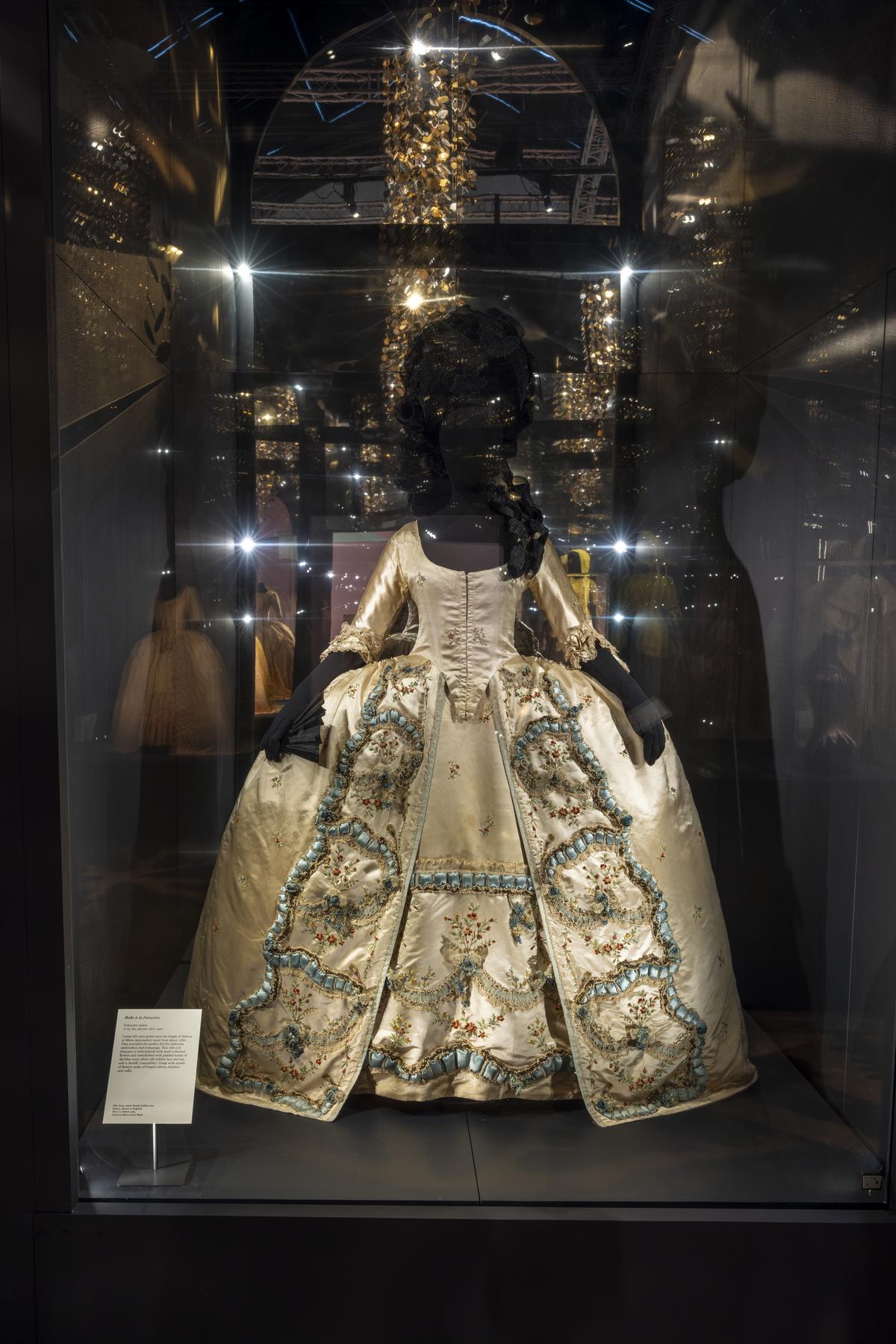
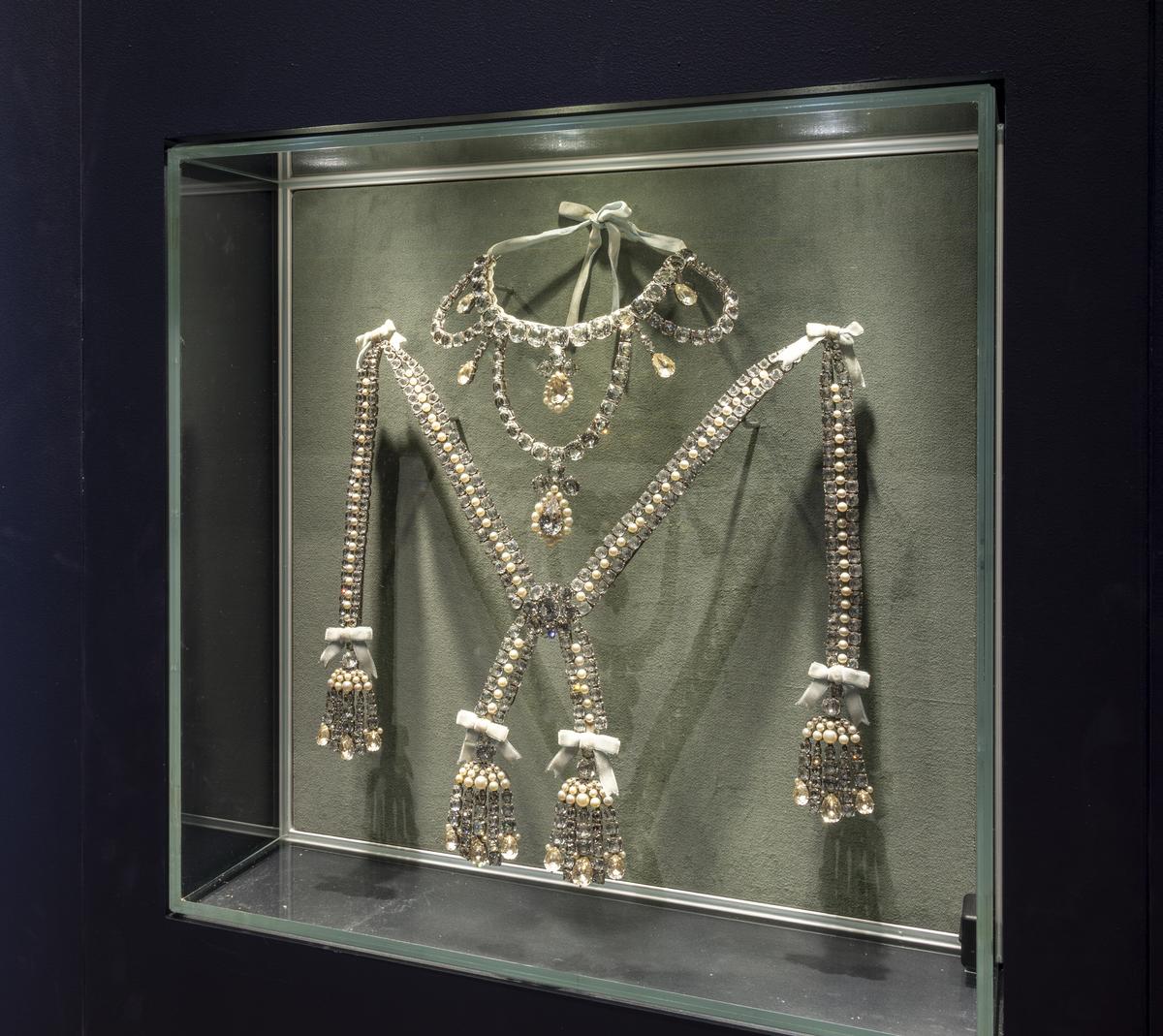
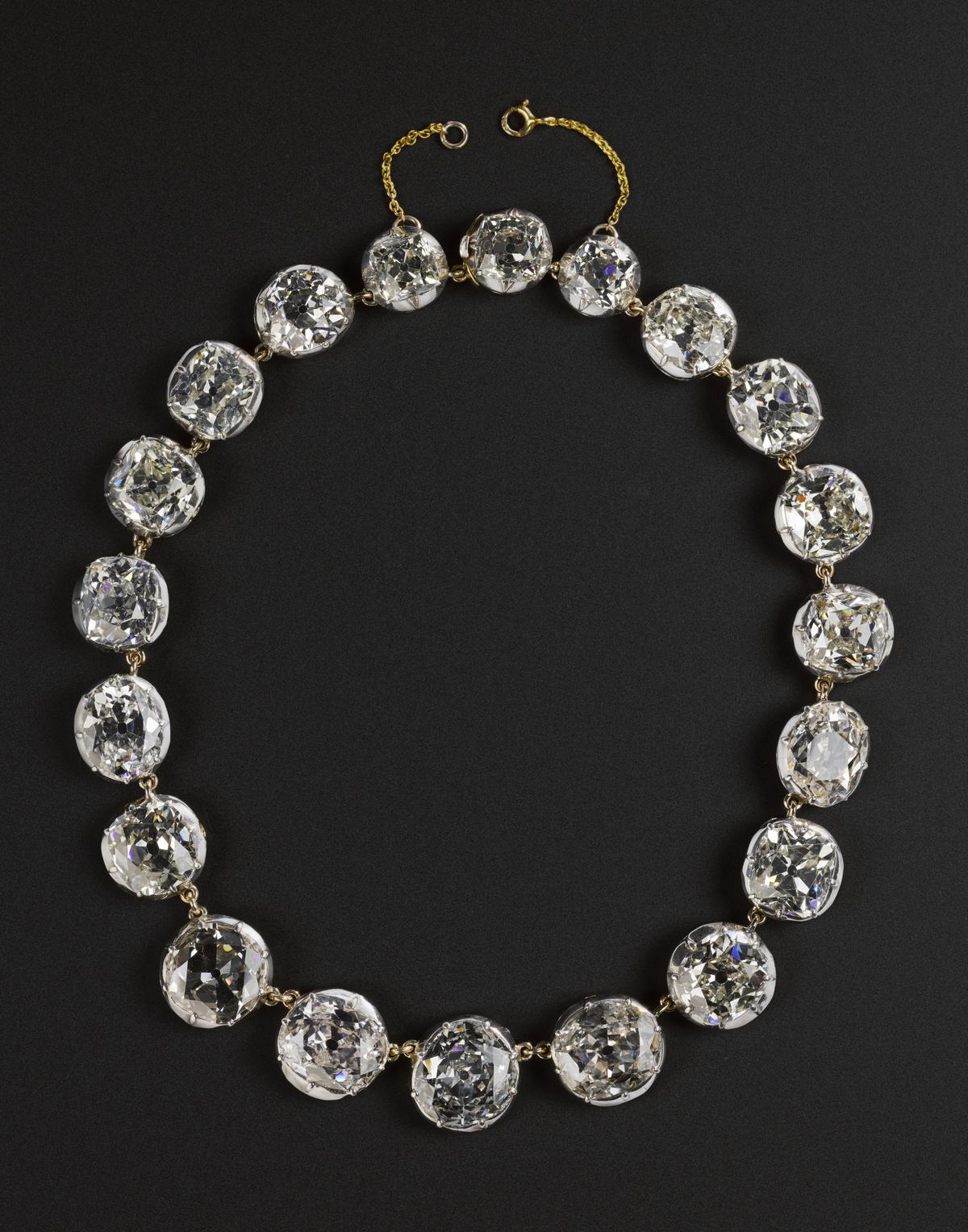
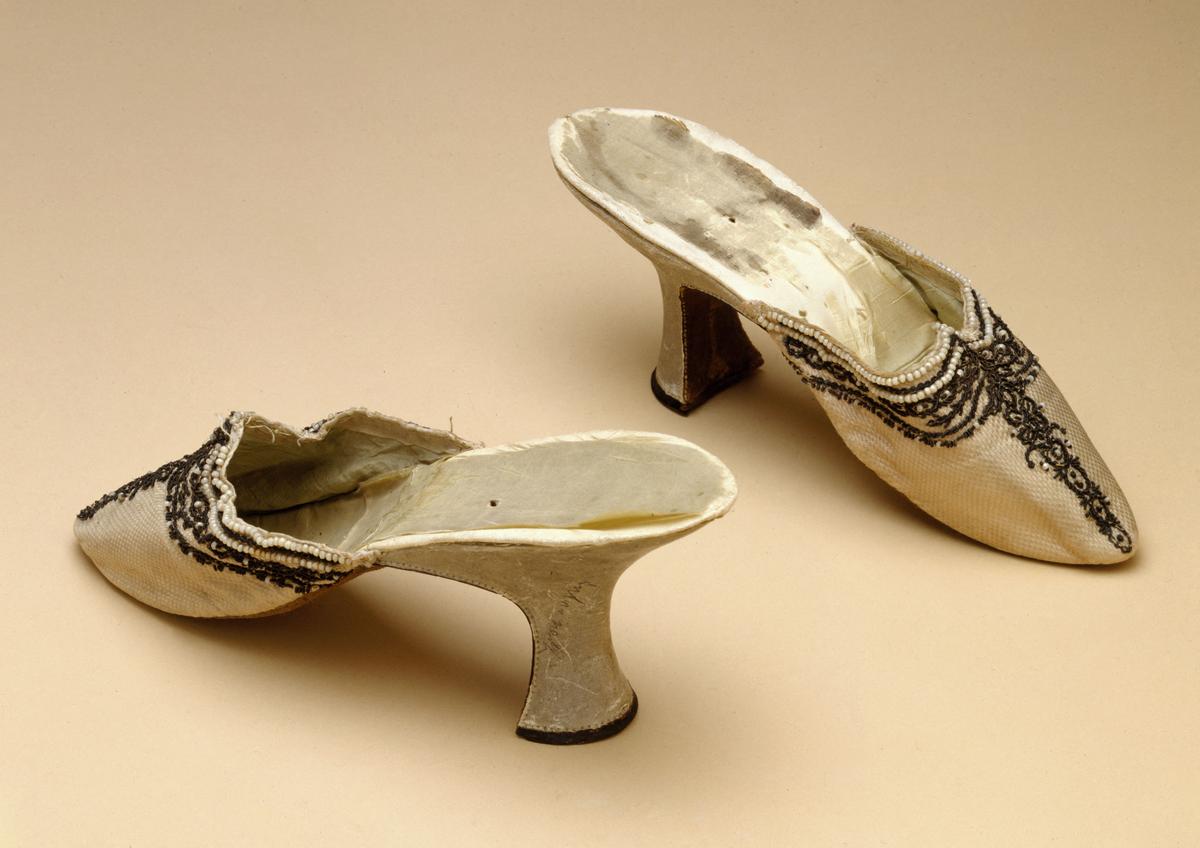
It’s this environment that has found a stronghold throughout culture today, and is at the heart of the exhibition. The display of garments and accessories is sumptuous. Visitors encounter court dresses of silk and brocade, a slipper of beaded pink silk, fragments of original textiles that survived the passage of war and revolution. In a high-profile loan from the Château de Versailles sits a rivière of diamonds once linked to the infamous Affair of the Diamond Necklace (when swindlers tricked a cardinal to obtain the necklace under the pretence of finding favour with the queen).

A replica of the necklace from the Affair of the Diamond Necklace

A replica of the necklace from the Affair of the Diamond Necklace
| Photo Credit:
Peter Kelleher

The Sutherland Diamonds, also linked to the Affair of the Diamond Necklace

The Sutherland Diamonds, also linked to the Affair of the Diamond Necklace
| Photo Credit:
Kira Zumkley

V&A’s royal four

The narrative of the objects at the exhibition is structured chronologically in four acts, traversing Antoinette’s early embrace of luxury; her reinvention in the 1780s amid the fashion of Anglomania (an excessive interest in all things English) and pastoral fantasy; the dawn of the French revolution; and finally her legacy in the centuries that followed.

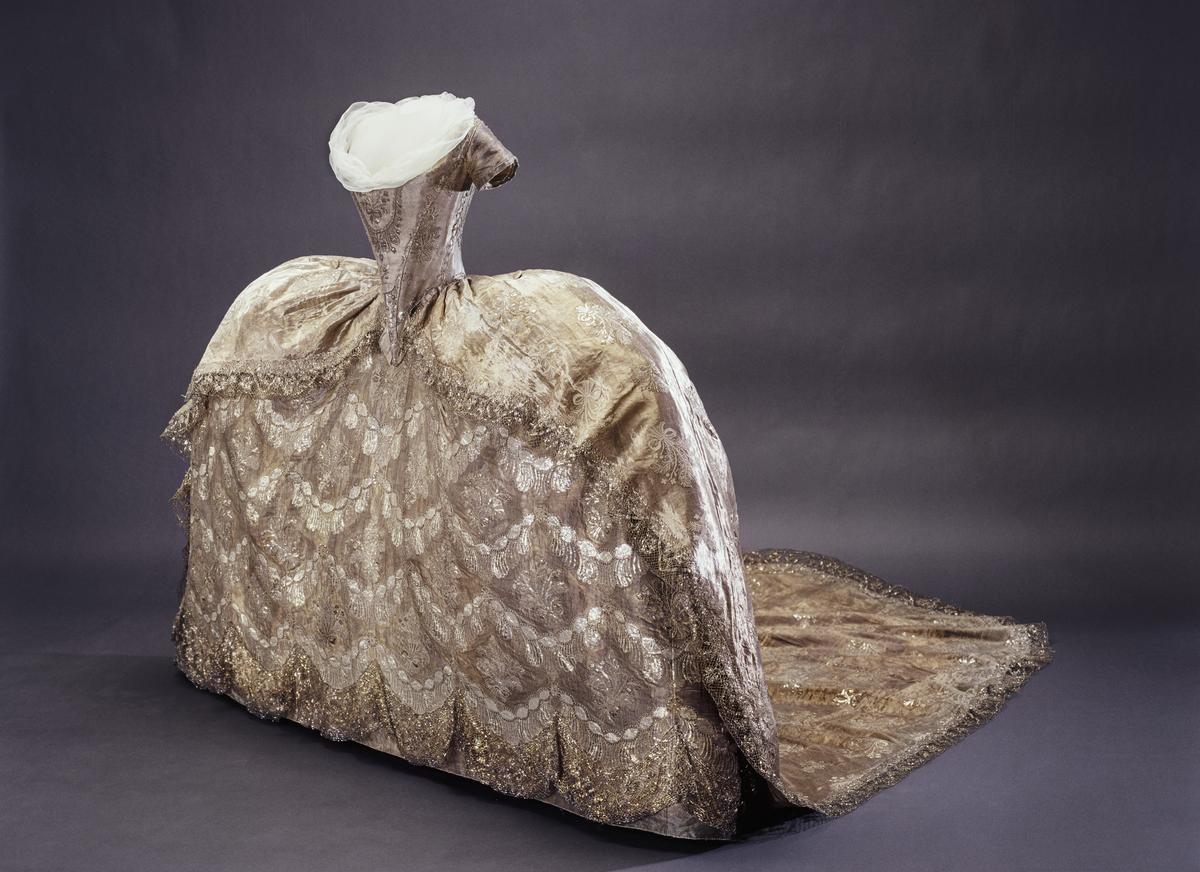
The wedding gown of Duchess Hedvig Elisabeth Charlotta (later Queen of Sweden)

The wedding gown of Duchess Hedvig Elisabeth Charlotta (later Queen of Sweden)
| Photo Credit:
Courtesy Göran Schmidt Livrustkammaren, SHM

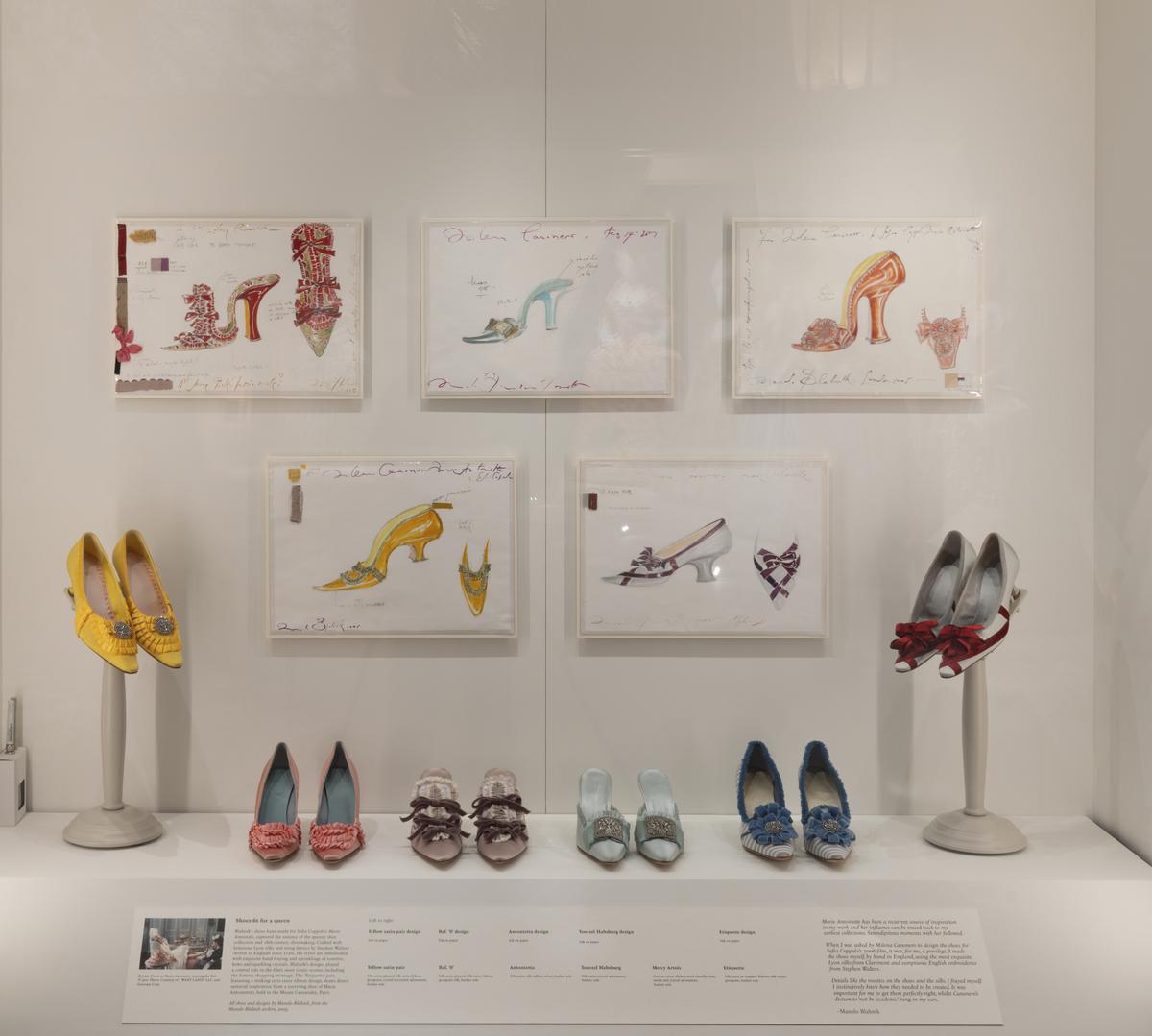
Manolo Blahnik’s sketches and custom shoes created for Sofia Coppola’s film Marie Antoinette.

Manolo Blahnik’s sketches and custom shoes created for Sofia Coppola’s film Marie Antoinette.
| Photo Credit:
Peter Kelleher

Scent lessons from Antoinette

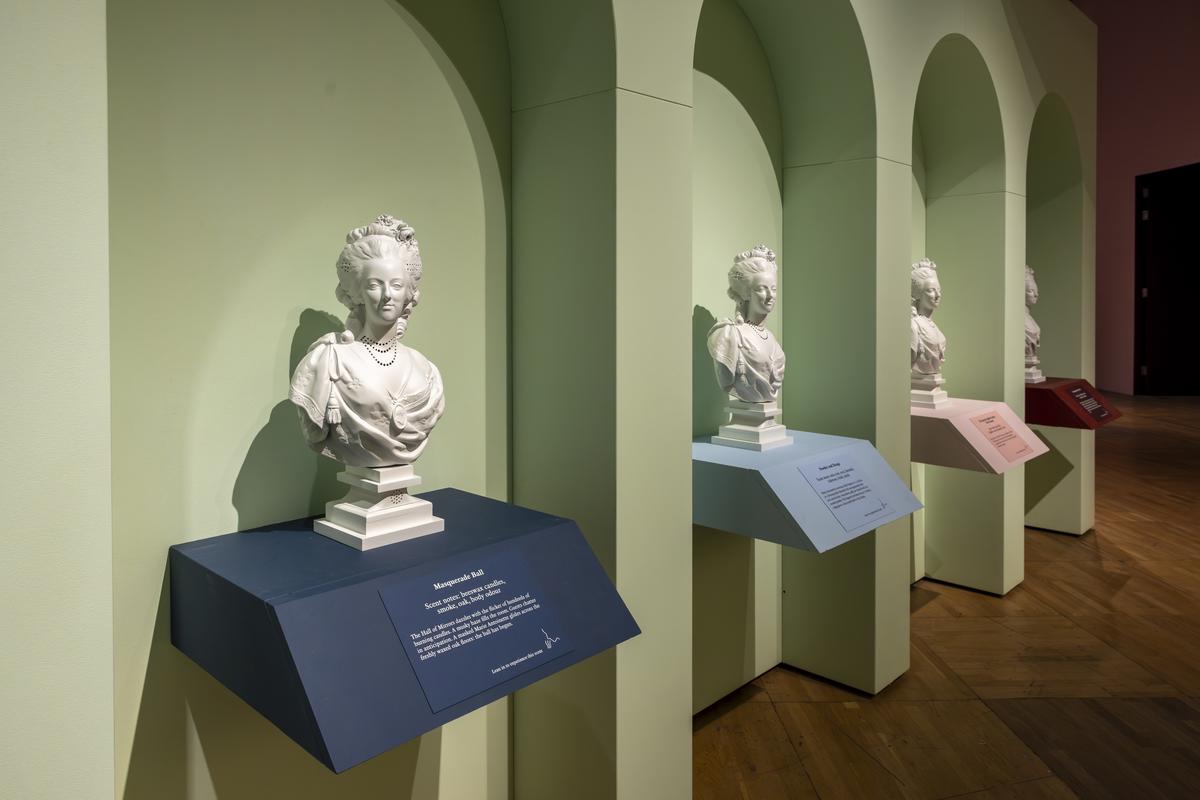
In the middle section of the exhibition comes one of its most striking interventions: fragrance. As Grant explains: “From the very beginning, scent was hugely important to Antoinette. Her interiors were scented and all her fashion accessories.” The museum commissioned four distinct olfactory installations: the first evokes youthful floral triumphs; the second, the powdered salons of Versailles; the third, the pastoral gardens of the Petit Trianon; and the final one, the stark, damp cell of the Conciergerie where she awaited execution. This sensory dimension underscores that among Antoinette’s many tools was the embodied self: not simply how one looked but how one was experienced.

The four distinct scents that draw you into Antoinette’s world

The four distinct scents that draw you into Antoinette’s world
| Photo Credit:
Peter Kelleher

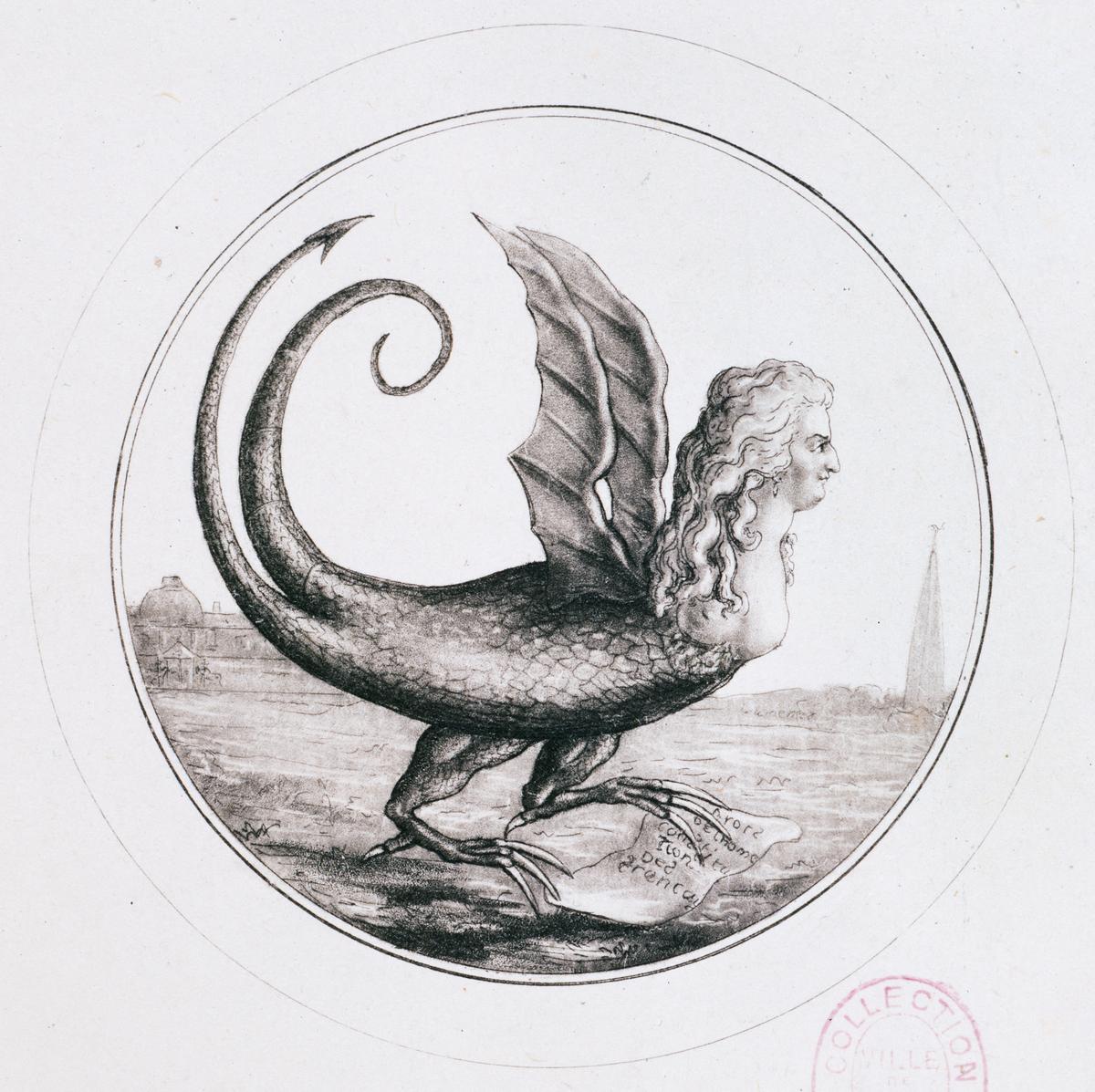
That self-fashioning was central to her survival in a hostile court. Mears reminds us that Antoinette was “the subject of a lot of negative propaganda”. The show displays caricatures that depict her as a milkmaid dancing as France starves, and yet, “she asserted herself where she could… using what she could”. Dressing, decorating, patronising luxury trades — all these became strategies of visibility and influence in a world where formal power was denied to her.

A 1791 caricature showing Marie Antoinette as a harpy tearing up the Constitution

A 1791 caricature showing Marie Antoinette as a harpy tearing up the Constitution
| Photo Credit:
Courtesy CC0 Paris Musées, Musée Carnavalet – Histoire de Paris

Pastel palettes and soft power

From that point, the exhibition widens the lens. In a court defined by hierarchy and surveillance, Antoinette mastered not only what she wore but the environments she occupied. Interiors were used as infrastructure to showcase a kind of soft power, says Grant. “Her role was one of soft power, supporting the French luxury trades and industries. She was incredibly active and influential when one considers the restrictive conventions within which she had to operate.”

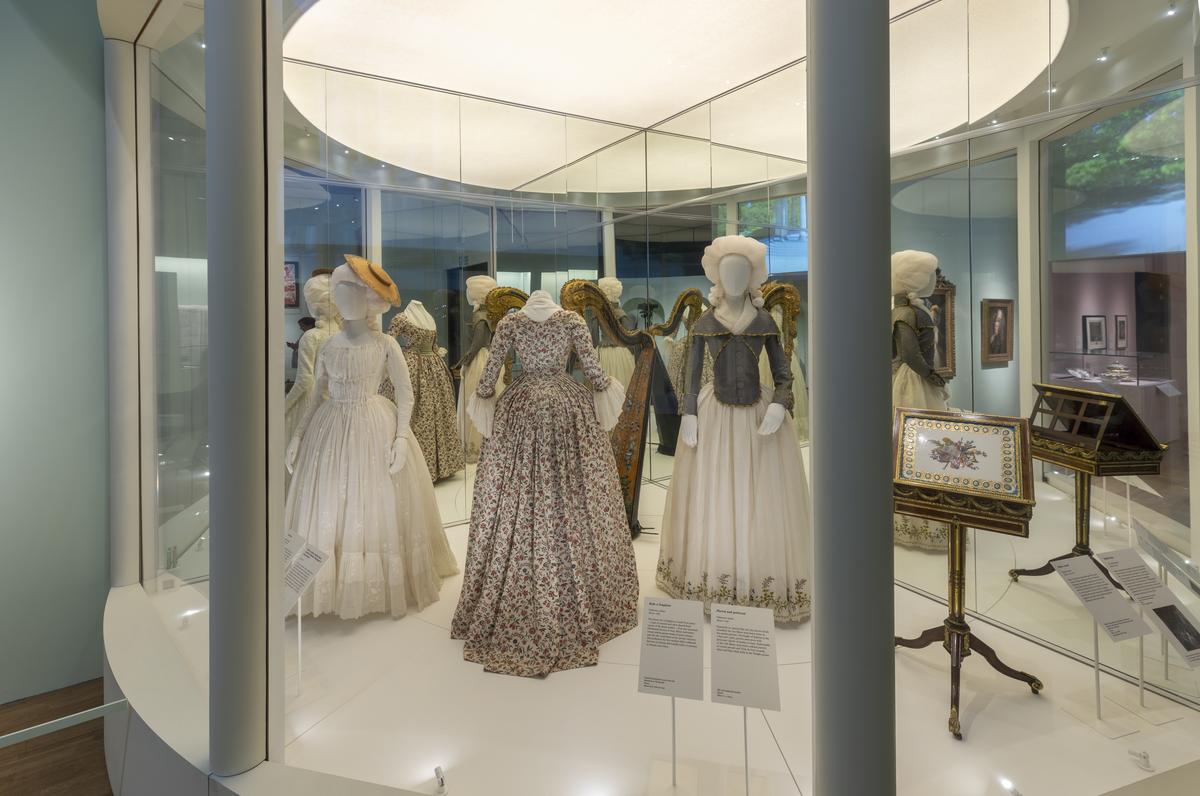
The exhibition draws out how this ideology of soft power manifested in colour, silhouette and material. Pastel palettes softened the visual temperature of rooms once dominated by red and gold; diaphanous white muslins and imported Indian cottons signalled a desire for naturalism and freedom of movement; florals and ribbons celebrated a gently theatrical femininity. Mears notes that these were “softer, closer to nature” and that Christian Dior’s favourite couture grey was rooted in the 18th-century tones of Antoinette’s interiors.

Marie Antoinette Style

Marie Antoinette Style
| Photo Credit:
Peter Kelleher

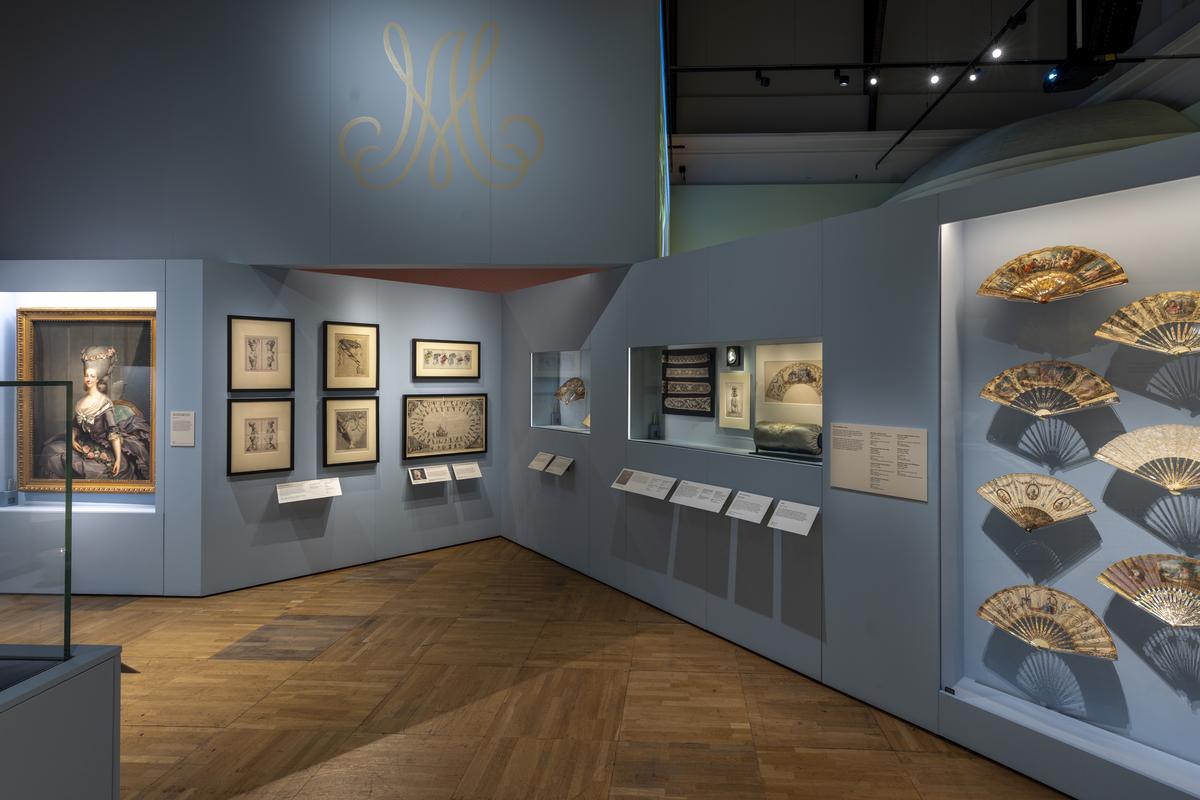
Marie Antoinette’s hairstyles and fans

Marie Antoinette’s hairstyles and fans
| Photo Credit:
Peter Kelleher

Power of objects

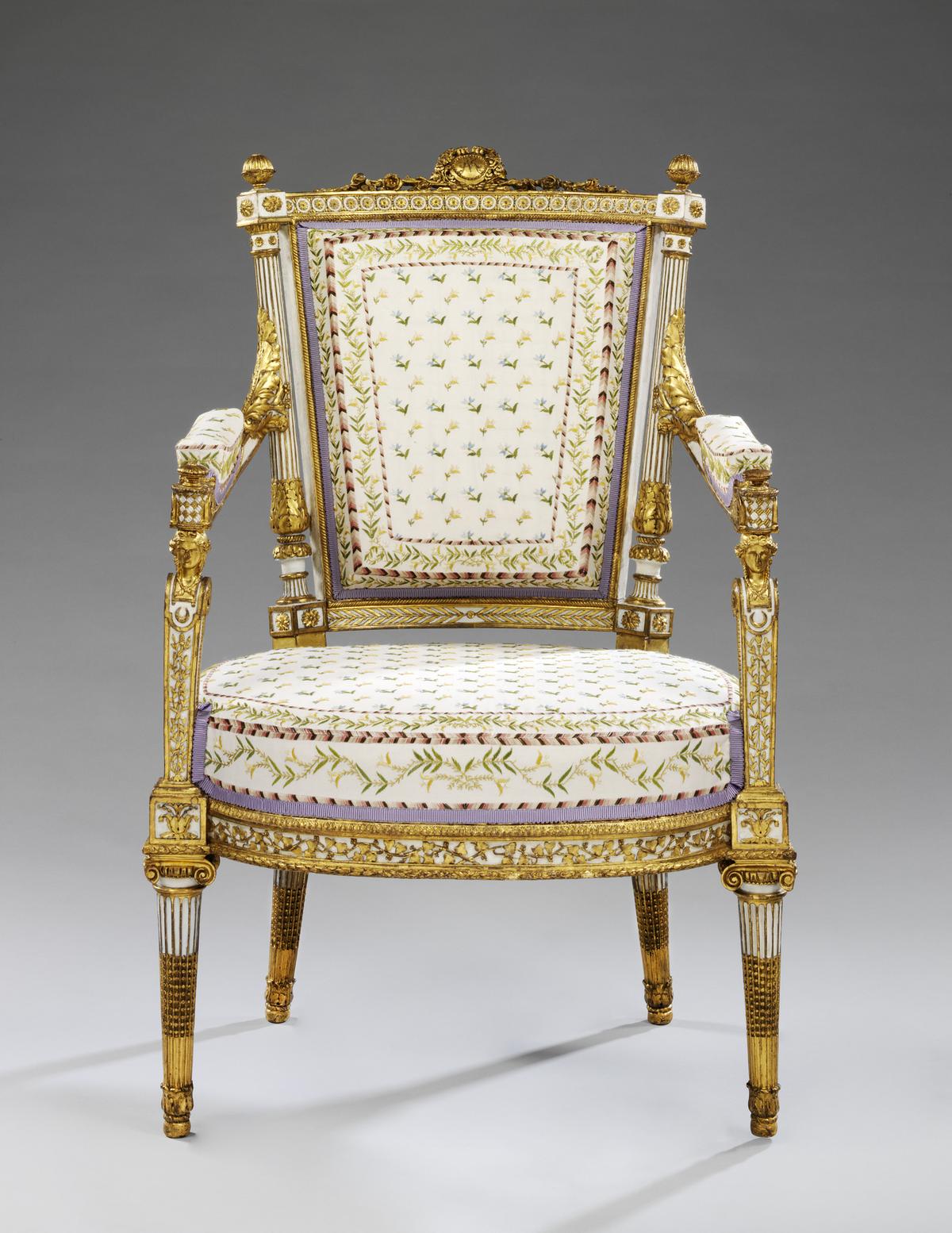
Antoinette had a stronghold on interiors, including cutlery, chairs, a whole gamut of experience — as seen in the exhibition, from room to room. There is a reason modern interiors continue to borrow from this “ceaseless century”, Mears says. It was under Antoinette’s patronage that the body became central to craft. For instance, the perfect chair, the side table to lay down your things. Comfort became a central, and radical, point of view in Antoinette’s world. However, objects outlast upheaval, but they can also attract it. The recent high-profile heist of historic jewels at the Louvre — French treasures once linked to monarchy now lifted in a cinematic raid — shows our polarised relationship with the excesses of the past.

Marie-Antoinette’s armchair of carved walnut, with the monogram MA in the cresting (Paris, late 1780s)

Marie-Antoinette’s armchair of carved walnut, with the monogram MA in the cresting (Paris, late 1780s)
| Photo Credit:
Jaron James

A chameleon queen

In the exhibition’s portraits, as visitors meander through its rooms, Antoinette’s chameleonic capability becomes a quiet revelation. She is never one thing for long. As Mears puts it, her power lay in “being able to transform oneself in multiple ways”. You see her dazzling in jewels to “outshine” court rivals; next, in a tailored riding habit derived from menswear; and then in a pastoral chemise, “dressing up as a little milkmaid” in her escape theatre at the Petit Trianon (for entertainment away from the main palace). All were roles deployed with precision.

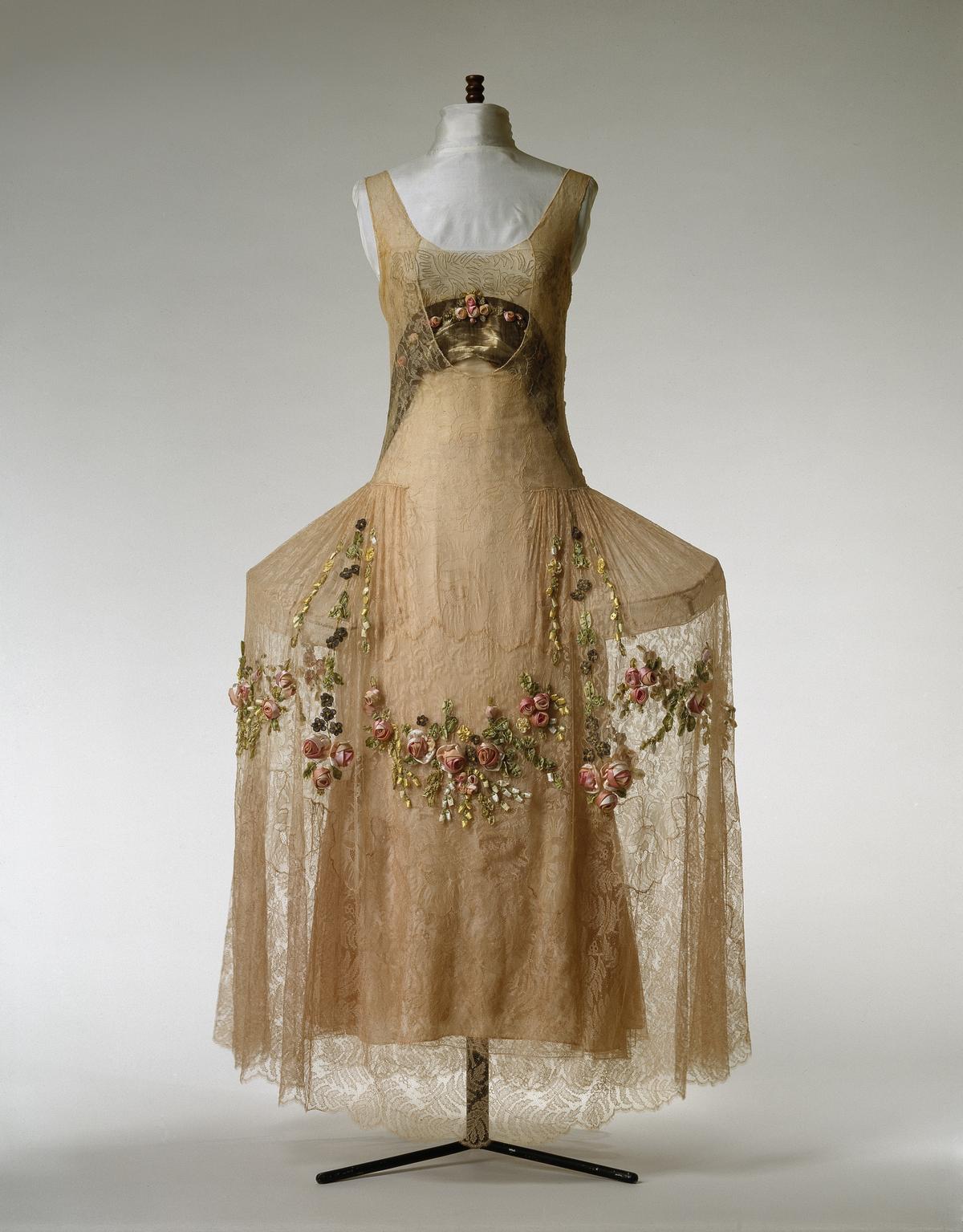
Boué Soeurs (Sylvie and Jeanne Boué) robe de style

Boué Soeurs (Sylvie and Jeanne Boué) robe de style
| Photo Credit:
Courtesy Designmuseum Denmark

Antoinette’s beaded silk slippers

Antoinette’s beaded silk slippers
| Photo Credit:
Courtesy Musée Carnavalet / Roger-Viollet

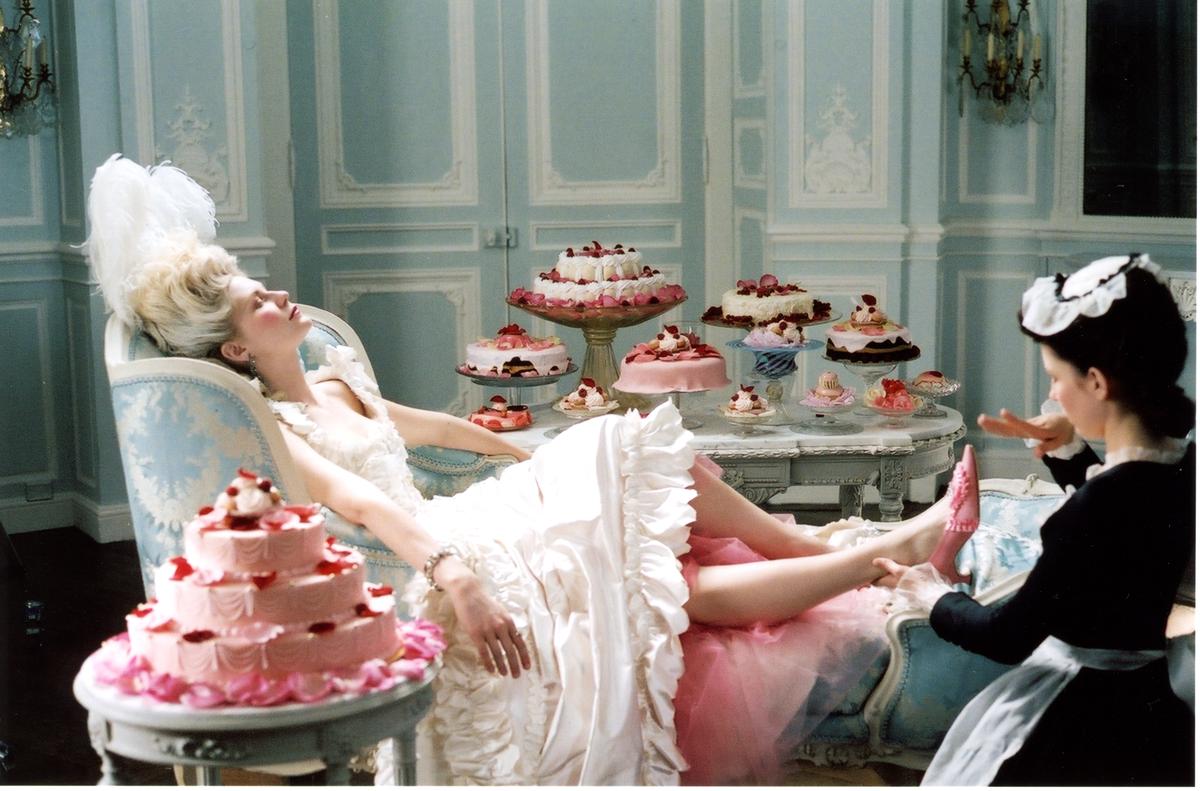
Interestingly, today, that visual vocabulary continues to seduce. Filmmaker Sofia Coppola showcased the extent of the Marie Antoinette aesthetic in an eponymous modern-day cult film starring Kirsten Dunst as the French queen in 2006. There were Manolo Blahnik shoes, ‘let them eat cake’ moments, silks and chiffons.

Kirsten Dunst in a film still from Sofia Coppola’s Marie Antoinette

Kirsten Dunst in a film still from Sofia Coppola’s Marie Antoinette
| Photo Credit:
courtesy of I WANT CANDY LLC. and Zoetrope Corp

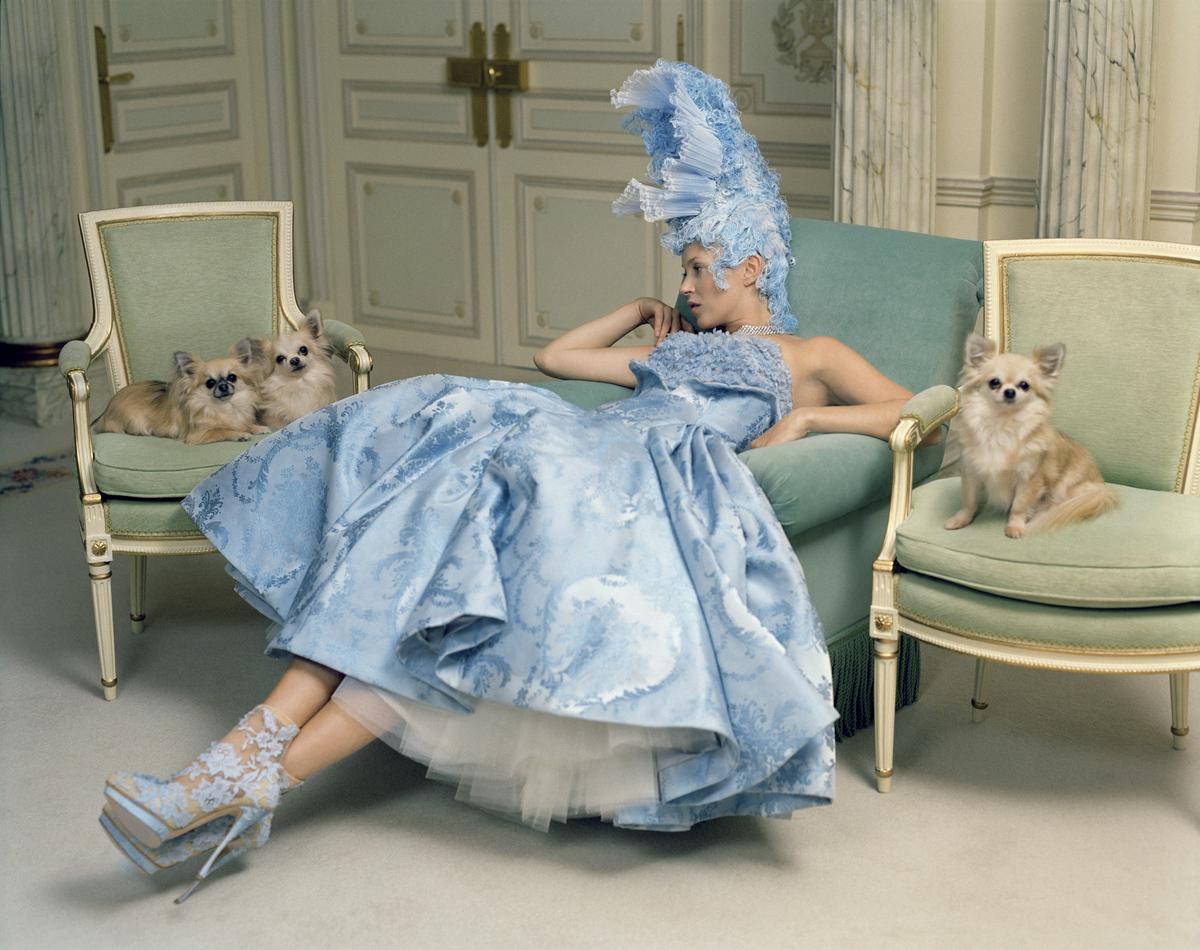
Kate Moss in an Antoinette-inspired creation by Sarah Burton for McQueen

Kate Moss in an Antoinette-inspired creation by Sarah Burton for McQueen

Grant lists the revived fascination across fashion and culture for Antoinette’s aesthetic, which can be summed up as sweet, feminine, close-to-nature. Throughout fashion history, that look has been appreciated and accentuated — from Valentino couture, to Vivienne Westwood brides dressed in panniers, and even Miley Cyrus channelling Versailles on stage. “Her legacy is so strong and her influence is so broad that it adapts itself to the current climate,” she explains.

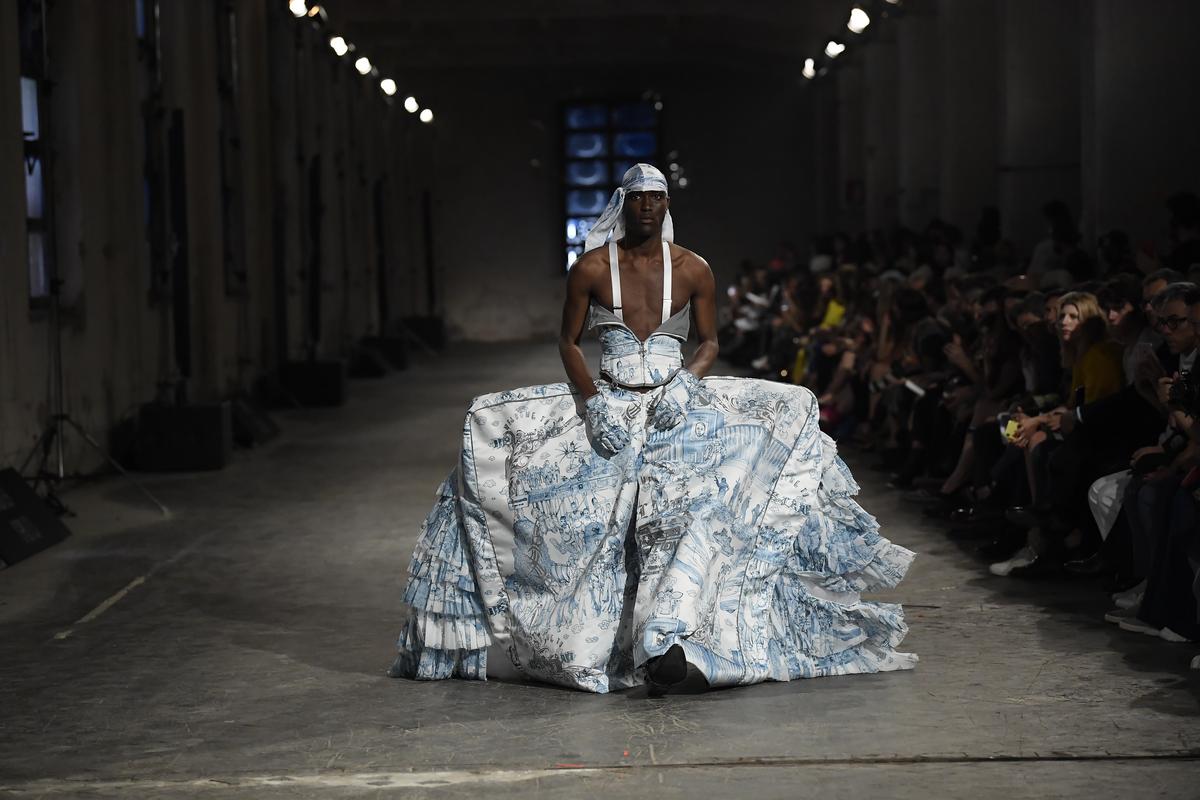
An outfit from Andrea Grossi’s ‘Welcome to DeusLand’ collection

An outfit from Andrea Grossi’s ‘Welcome to DeusLand’ collection
| Photo Credit:
Courtesy Andrea Grossi

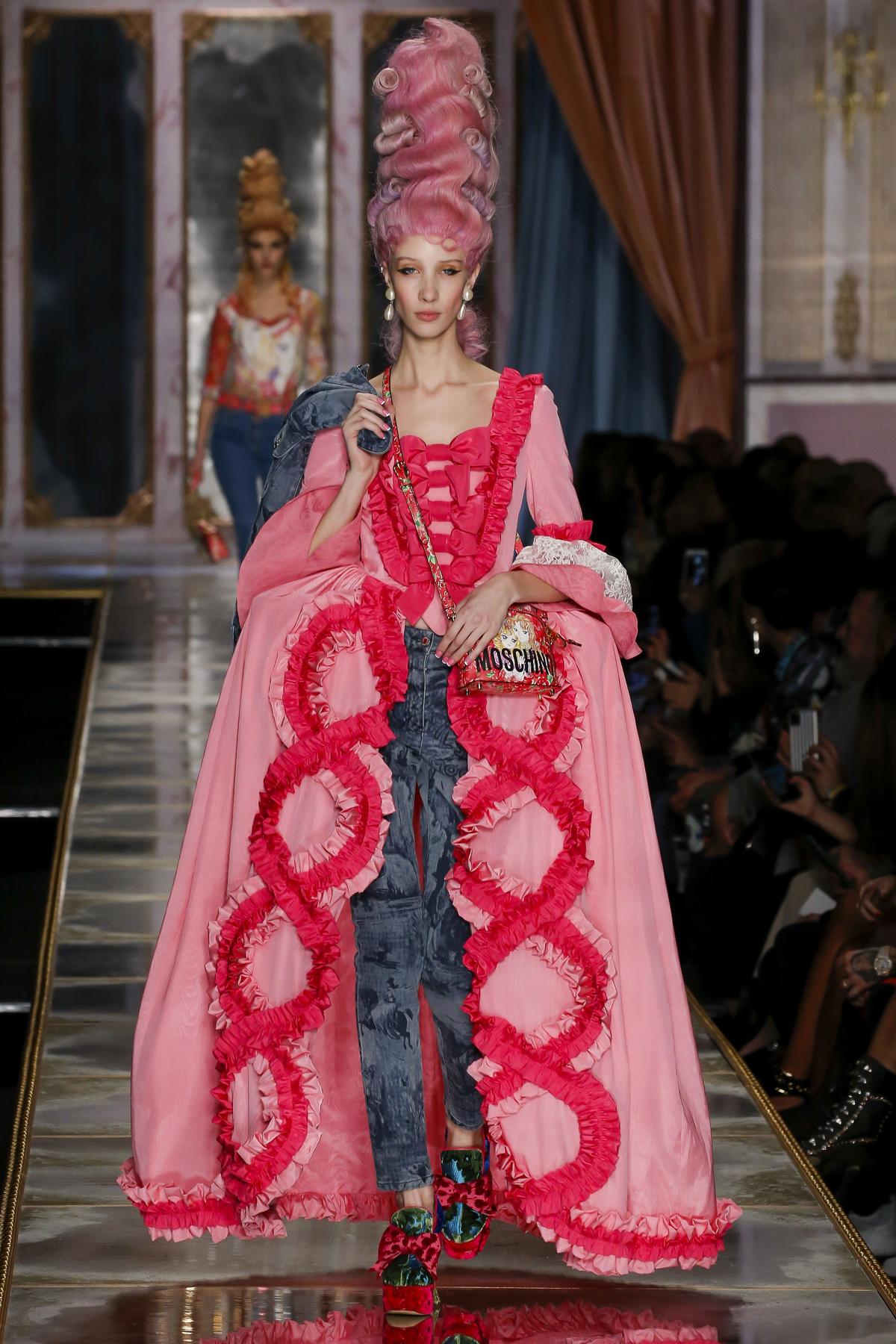
Moschino autumn/winter 2020 at the Milan Fashion Week

Moschino autumn/winter 2020 at the Milan Fashion Week
| Photo Credit:
Courtesy Pixel Formula, SIPA

Building of taste

Antoinette used culture to reach people of influence. She was “by some distance the most musical French queen in history”, collaborating with composers Mozart and Gluck; she cultivated a refined and distinctive aesthetic that fused nature with stagecraft in theatres. These were her diplomatic tools: the building of taste, the elevation of artisanship, the shaping of how modern Europe would come to understand pleasure, beauty and the domestic sphere.

Out of step with today?

But if bows, corsetry and satin feel wildly out of step with a world in crisis — as seen across the latest Paris Fashion Week’s extravagant silhouettes courtesy Saint Laurent and more — Mears offers some context. She says that when style loses direction and becomes cacophonous (think social media hype or sameness), people look to eras of refinement. “People who are looking for true beauty, refined aesthetics, go back to a period that did it that way,” she says. In doing so, ultra-femininity becomes not regression, but “self-power… as a way to fight back”. Flounce, fluff, softer palettes become a kind of purity of taste.

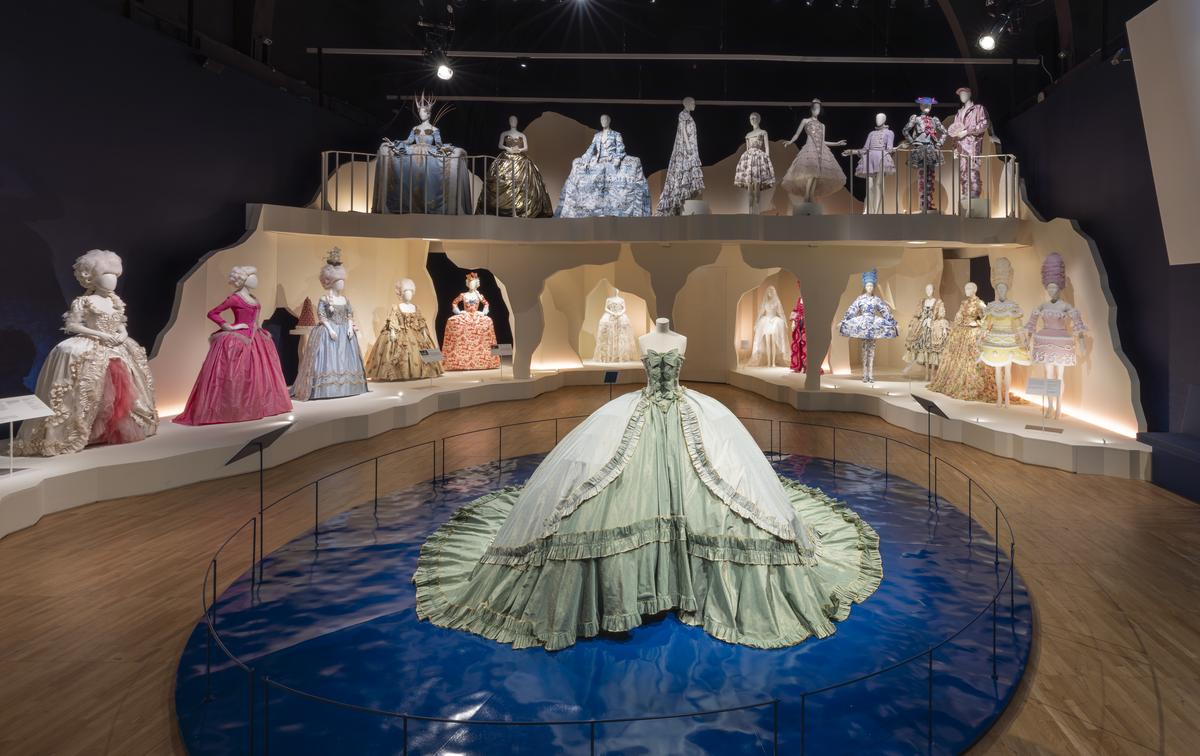
The exhibition’s final room filled with contemporary fashion inspired by Marie Antoinette

The exhibition’s final room filled with contemporary fashion inspired by Marie Antoinette
| Photo Credit:
Peter Kelleher

As you reach the end of the show, while there is the dress she wore to her execution, it doesn’t conclude with the guillotine. One emerges understanding that Antoinette’s visual language has never been erased, only continually reinterpreted. Ballet’s romantic revival, cottage-core fantasy, the return of bows and bijoux in luxury fashion — all sit within a lineage she helped ignite. And it was interesting getting to know “Madame Déficit” in a new light.

Marie Antoinette Style’ is at the V&A till March 22, 2026.

The writer is an independent journalist based in London, writing on fashion, luxury and lifestyle.


Source link

An older classic car from Chennai takes on the Himalayas and stays the course


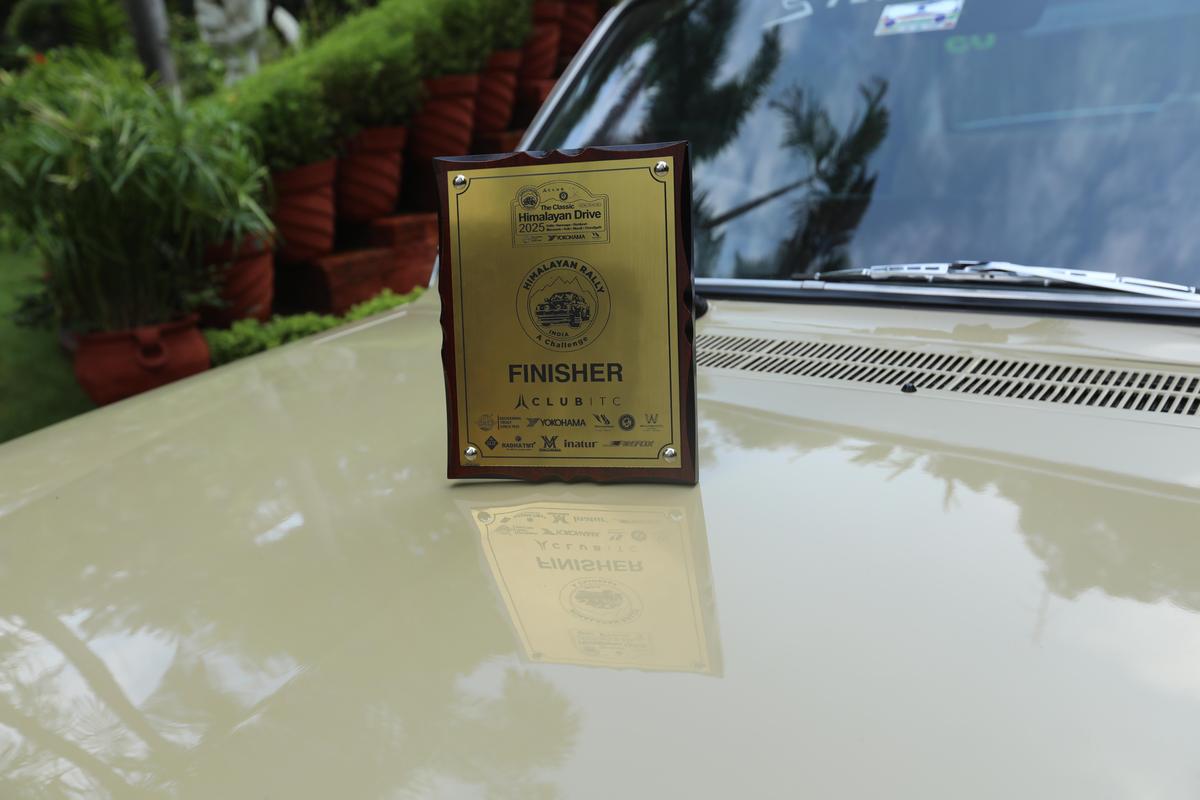
What remains barely out of one’s grasp is more eye-catching than what is in hand. Here is a “classic” flavour to this universal truth. Ranjit Pratap holds a coveted finisher’s plaque from the Classic Himalayan Drive 2025, but would not have any more of it.

Do not get this wrong. This is not the existential emptiness that sometimes shadows achievement; not the bottomless pit of despondency lying right below the summit. Ever since the plaque made it to the gallery wall at his home in Chennai, Ranjit has grown a couple of feet taller, and there is an evident spring to his step. He defines the experience of rolling through the Himalayas as fulfilling and Team Firefox’s conduct of the event (November 1-10) as impeccable, particularly the massive resources ploughed in to cushion the edges. And in this state of elation, Ranjit has taken a calculated decision not to reprise the effort that begot him this enriching experience and recognition. Because “it is too tough on the system”.

During the Classic Himalayan Drive 2025.

During the Classic Himalayan Drive 2025.
| Photo Credit:
Special Arrangement

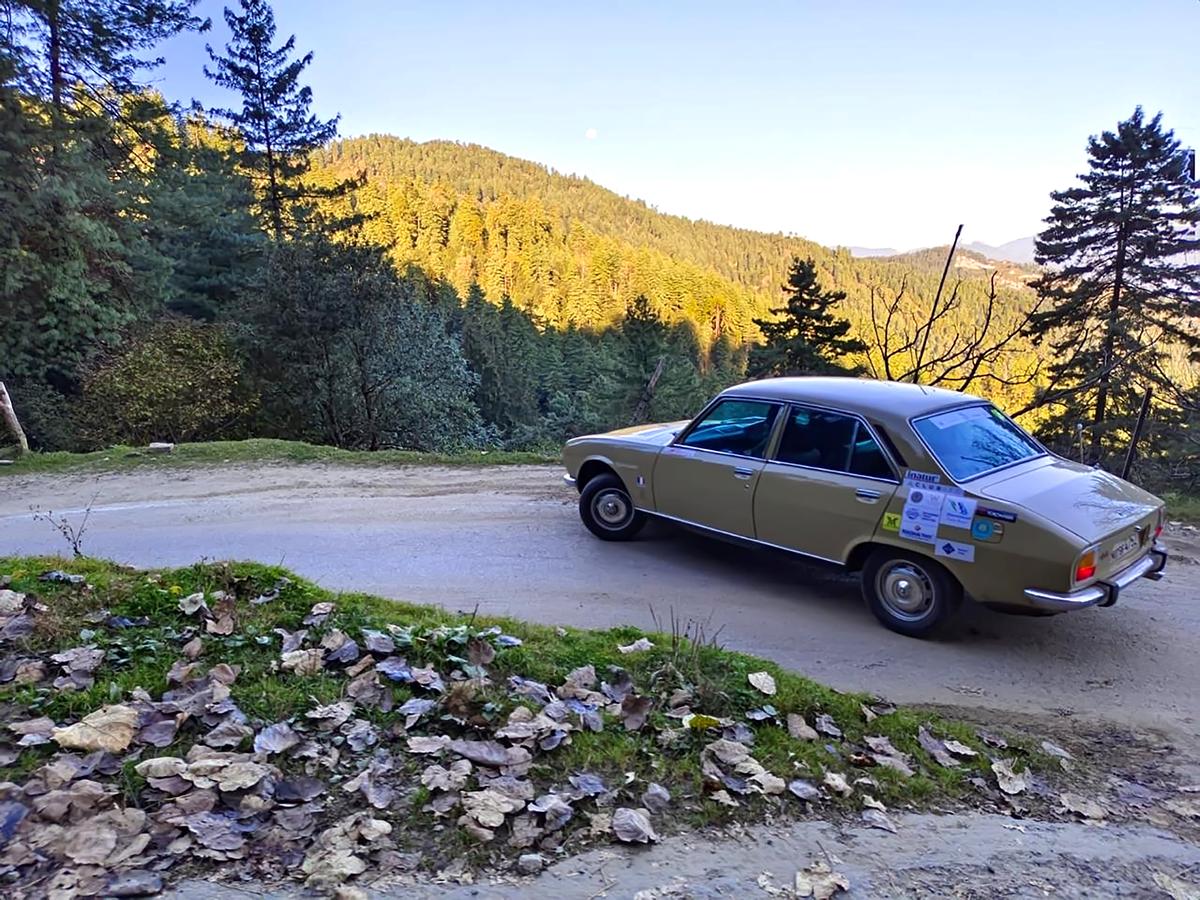
Ranjit (CMD of Rayala Corporation and founder of Historical Car Association of India) is referring not entirely to his body and mind, but to the wheels that carried him through this ten-day adventure. He headed into the Drive with a 1977 Peugeot 504 (diesel). That is par from the course. The Classic Himalayan Drive, which has five editions to its name, is designed exclusively for classic and neo-classic cars with their birth years ranging from 1958 to 2002. 

The route for this edition was Noida-Ramnagar-Corbett National Park-Rishikesh-Theog- Jalori Pass-Rohtang Pass via Atal Tunnel and Koksar-Manali-Chandigarh. 

The finisher plaque from the Classic Himalayan Drive given to Ranjit Pratap and Uma Ranjit.

The finisher plaque from the Classic Himalayan Drive given to Ranjit Pratap and Uma Ranjit.
| Photo Credit:
PRINCE FREDERICK

The Classic Himalayan Drive runs on nostalgia the route seeking to recreate the ones followed by the iconic Himalayan rally of the 1980s, but removing the ragged edges. But the drive happens in a real estate of a kind where danger can be minimised, not wiped off the map. The drive is non-competitive and every finisher is a winner. However, participants compete against steep inclines, hairpin bends, roads washed by rains, and narrow roads caressing boulders. And ironically, they are pitted against their own machines, particularly those at the wheels of older classics.

During the Classic Himalayan  Drive.

During the Classic Himalayan Drive.
| Photo Credit:
Special Arrangement

Ranjit’s driveway resembles a shopping complex’s parking lot boasting a wide collection of classic cars. On the face of it, he had a job on his hands deciding on the machine that would go with him and his wife Uma Ranjit (as navigator) to the Himalayas. In the end, the four-speed, 2.3-litre (diesel) 1977 Peugeot 504 seemed like a great choice. 

He did not have second thoughts about the decision until Day 7 of the Drive when he found himself staring up at the Jalori Pass, with the braking capacity of his car reduced to 20%. At that point, he had a wistful longing for his 2000 Prado, which was well within the 1958-2002 cut-off. 

A “group picture” of vehicles that took part in the Classic Himalayan Drive 2025.

A “group picture” of vehicles that took part in the Classic Himalayan Drive 2025.
| Photo Credit:
Special Arrangement

A majority of the participants — particularly those from other shores including the United Kingdom, France, Kenya, Malaysia and Singapore — had gone in for younger classics better suited for the unhelpful conditions. There was also a clutch of contemporary four-wheel drives as an add-on. The Indian contingent included half-a-dozen older classics, out of which only two (Ranjit’s 1977 Peugeot 504 and Kolkata-based Prithivi Raj Tagore’s 1959 Mercedes-Benz 180 Ponton) made it to the finish.

In its time, Peugeot 504 was hailed as an all-season car. Post-Himalayan Drive, when this writer saw this darker-beige-coloured car smugly lazing about in Ranjit’s driveway, ready for a photoshoot, he knew why straightaway. With a linear-look, far from bulbous and strung tightly together, somewhat Chippiparai-like — or whippet-like, for western sensibilities — this machine would have made winsome first impressions at dates and board meetings. According to collective automotive memory, it had the staying power to be a reliable ally in field work. “All over Africa, the Peugeot 504 was used as an everyday vehicle as it could withstand bad roads. Peugeot had an assembly facility in Kenya,” remarks Ranjit. The pickup version of the Peugeot 504 was said to be a trusty ”farmhand”.

However, on the Drive, the limitations of his Peugeot 504 could not be swept under the snow. It was still a rear-wheel-drive machine thrust into a business better left to four-wheel drives. Ranjit explains: “Being a rear wheel drive, this car has an edge over front-wheel drives on slightly challenging inclines. But it could easily meet its Waterloo in roads that are snow-washed; even the introduction of an aftermarket limited slip differential would not improve its performance significantly in such an environment.”

Ranjit recalls that at Jalori Pass, he tackled a scary incline that lasted seven kilometres by reducing his option to just the first gear, keeping the engine humming, careful enough not to slave-drive it lest it fumed at him, overheating and squatting down in an act of non-cooperation. And the slope on the decline was scarier still, as the car was braking at 20% percent of its braking capacity due to a failed brake booster. 

On the hair-raising drive up and down Jalori Pass, Ranjit had a taste of the “hedge” around the nearly 40 participants put in by Team Firefox — “six Deputy Clerks of the Course with of course, the Clerk of the Course, Sudev Brar; two sweeps, one of them being Brar himself; and a full-fledged team of mechanics and a good number of recovery flatbeds and ambulances”.

Ranjit elaborates: “Every day, we had to cover between 200 to 250 kilometres, and overall, we had clocked around 2,000 kilometres; looking back, it seems like a miracle that we made it across this distance and survived treacherous road conditions, including a lot of washed-out patches and those hit by past landslides. It was possible because of Rajan Syal’s team taking care of the minutest details, not to mention the 1980s nostalgia that egged us on.”

Published – November 20, 2025 01:01 pm IST


Source link

Hanif Kureshi’s unseen 42 | ‘Sabr, Ghar, Suroor’ exhibition at XXL in New Delhi


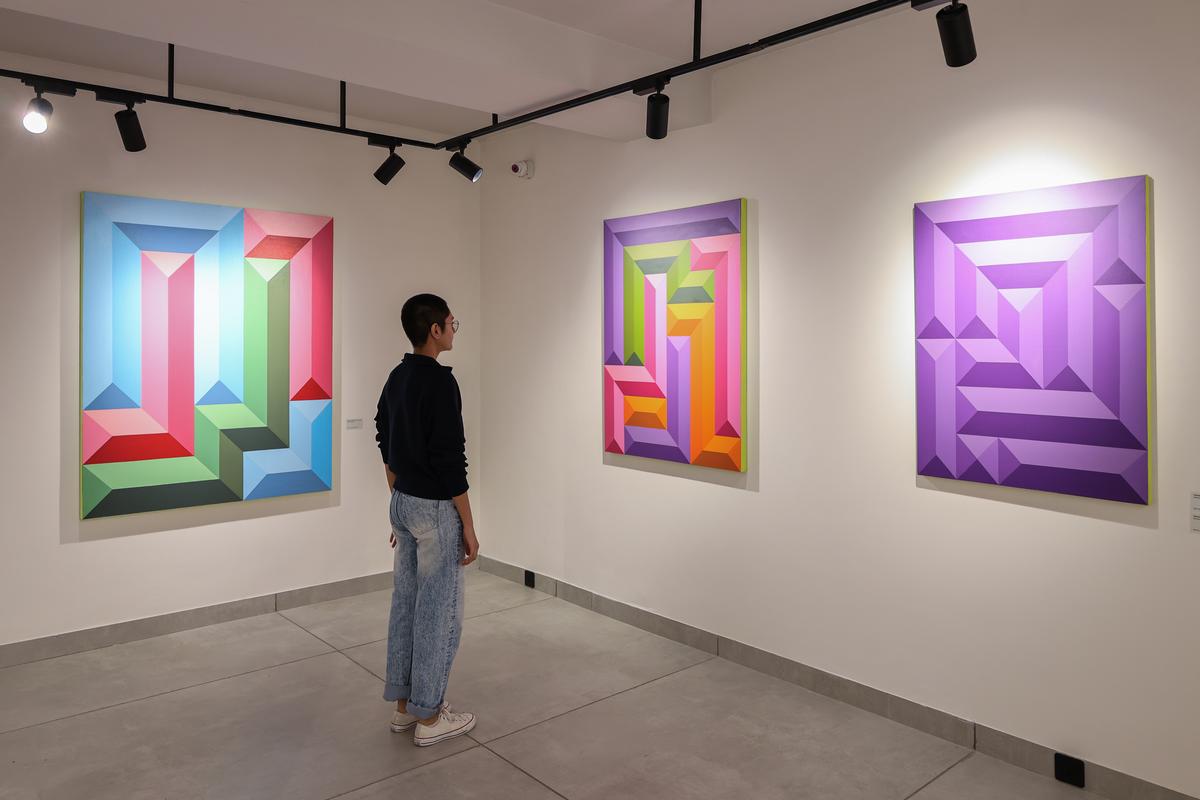
In Delhi’s Defence Colony, a neighbourhood now humming with more than a dozen galleries, XXL is the newest arrival. Dedicated to what it calls “urban contemporary art,” and to artists who think and create on an extra-extra-large scale, both in medium and ambition, the gallery’s debut show feels at once monumental and intimate.

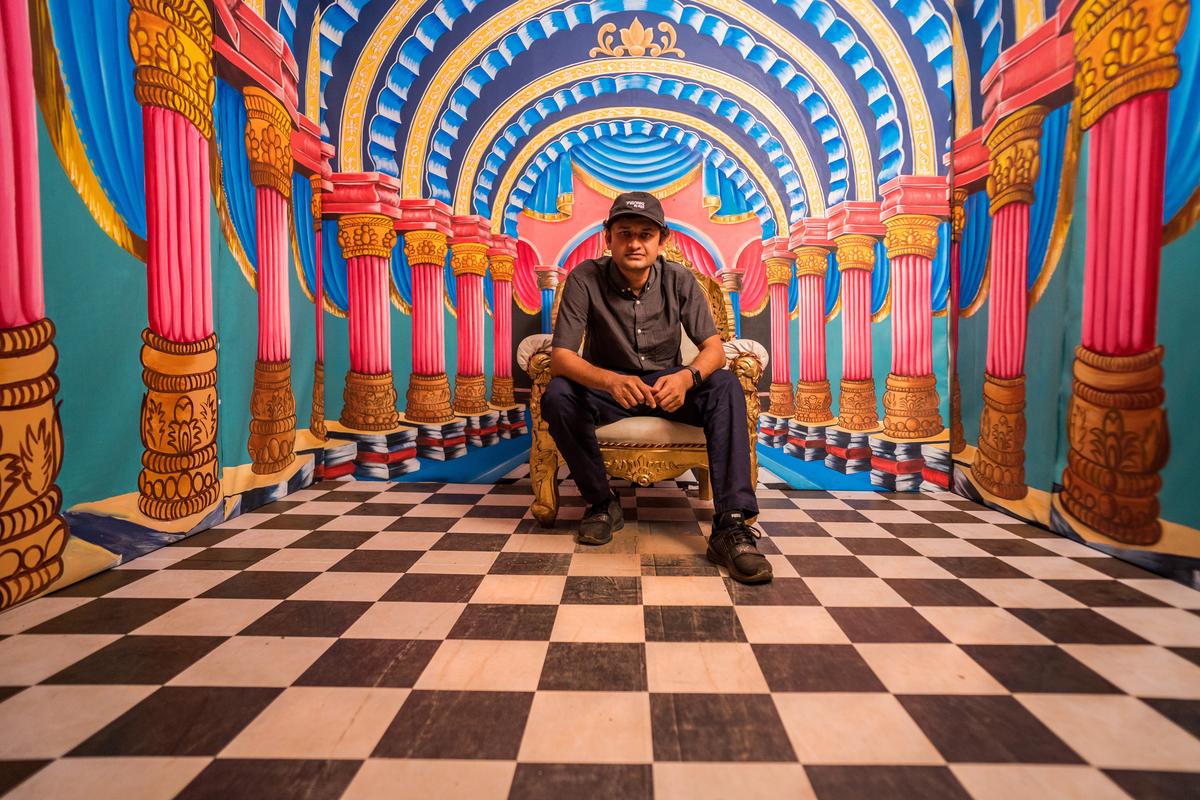
Sabr, Ghar, Suroor is a posthumous tribute to its founder, Hanif Kureshi — the street artist known as Daku, and the force behind both St+art India Foundation and Gallery XXL — who helped turn India’s walls into open-air museums. Kureshi died last year of lung cancer, just as he was beginning to paint for himself again.

Hanif Kureshi was the force behind St+art India Foundation and Gallery XXL

Hanif Kureshi was the force behind St+art India Foundation and Gallery XXL
| Photo Credit:
Pranav Gohil

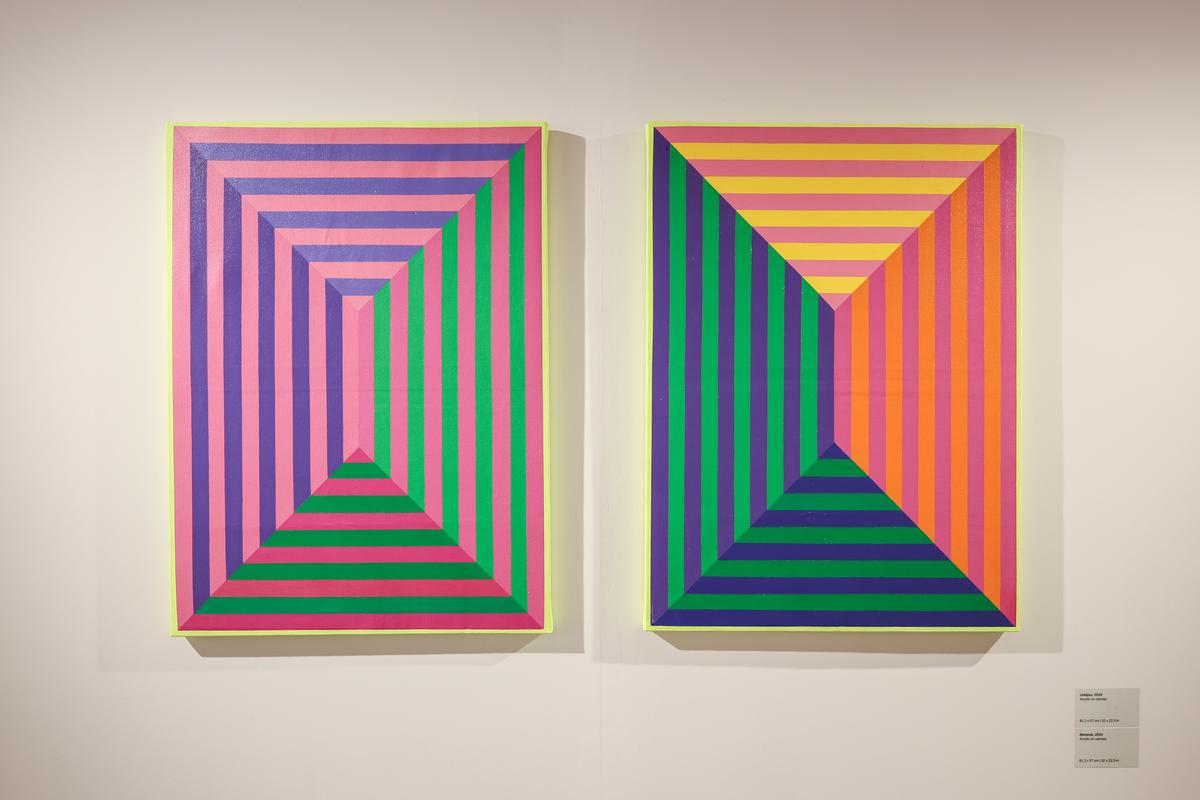
The show brings together 42 never-before-seen works inspired by Kureshi’s lifelong love for Indian sign painting, typography, and the visual language of the street: paintings and sculptures made in his Goa studio, where he moved during the pandemic with his partner, hoping to give their son the small-town childhood he once knew in Palitana, Gujarat. These are quieter, more intimate pieces: abstracted studies of letters and light, the bones of a language stripped bare.

Hanif Kureshi’s Ghar (2024, UV print on ACP)

Hanif Kureshi’s Ghar (2024, UV print on ACP)
| Photo Credit:
Sohil Belim

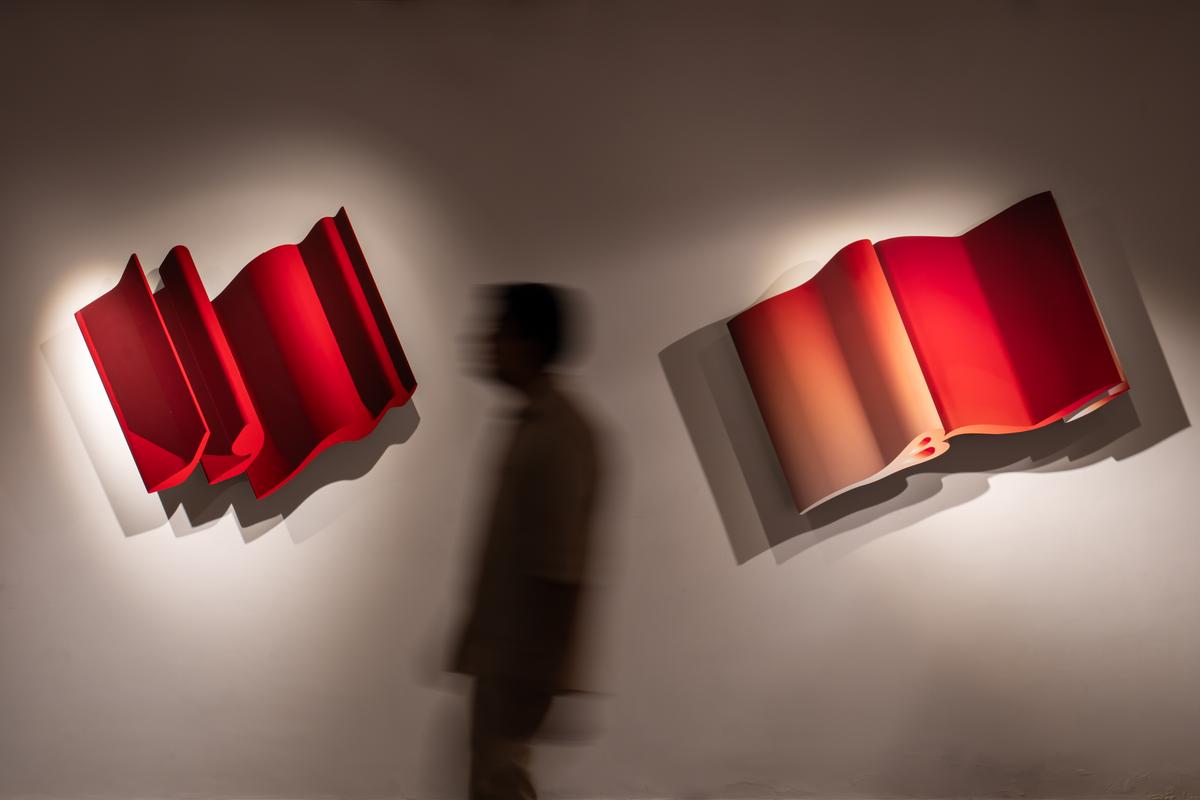
Untitled (2024, enamel on MS sheet)

Untitled (2024, enamel on MS sheet)
| Photo Credit:
Zahra

“Hanif’s fascination with letters began at 14, painting metal plates in the workshop of Saleem, a local sign painter in Palitana,” says Giulia Ambrogi, co-founder of St+art India and Gallery XXL, now based in Brazil, who co-curated the exhibition with Sarah Malik in Delhi. “Those early experiences laid the foundation for his deep relationship with typography.” When Kureshi realised the art form was fading, he started The Handpainted Type Project, inviting sign painters from across the country to write every letter and number, A to Z, 1 to 9, which he later digitised and remixed.

Sabr, Ghar, Suroor at XXL

Sabr, Ghar, Suroor at XXL
| Photo Credit:
Zahra

Of lines and letterforms

Inside Gallery XXL’s 1,500 sq.ft. space, The Painter Kureshi series hangs like meditations on form itself: type without function, letters freed of meaning. Neons, lines, and shadows recall reflective stickers and fading shopfronts. Several paintings are titled after cities he wandered through, such as Mandawa, Banaras, Modhera, Udaipur — places that linger in pigment more than in picture.

Painter Kureshi series hangs like meditations on form itself

Painter Kureshi series hangs like meditations on form itself
| Photo Credit:
Courtesy of the estate of Hanif Kureshi and Gallery XXL

Painter Kureshi series’ neons, lines, and shadows recall reflective stickers and fading shopfronts

Painter Kureshi series’ neons, lines, and shadows recall reflective stickers and fading shopfronts
| Photo Credit:
Zahra

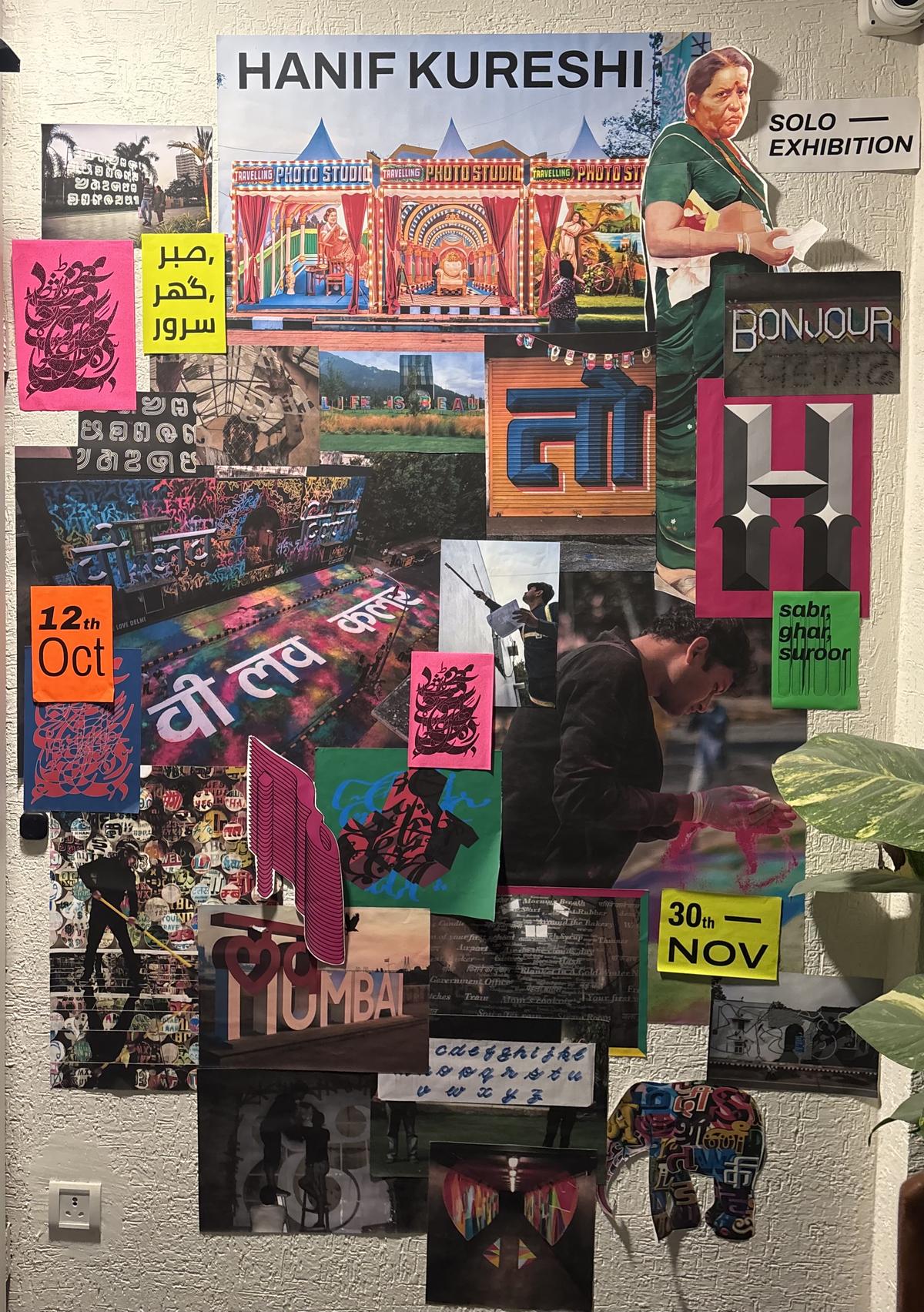
Language, too, became material, specifically Urdu, a language he couldn’t speak but felt drawn to all his life, for its graceful shapes and flowing lettering. In a series of aluminium wall sculptures, Kureshi reimagines the words sabr (patience), ghar (home), and suroor (joy) as forms. “Hanif wore multiple hats as artist, designer, teacher, and mentor to so many. He was always moving, creating, experimenting,” says Malik. “That was his sabr, his perseverance. He built a ghar, a home for artists wherever he went, and that’s what brought him suroor. The words fit beautifully with who he was, so we named the show after them.”

A collage at Sabr, Ghar, Suroor

A collage at Sabr, Ghar, Suroor
| Photo Credit:
Gallery XXL

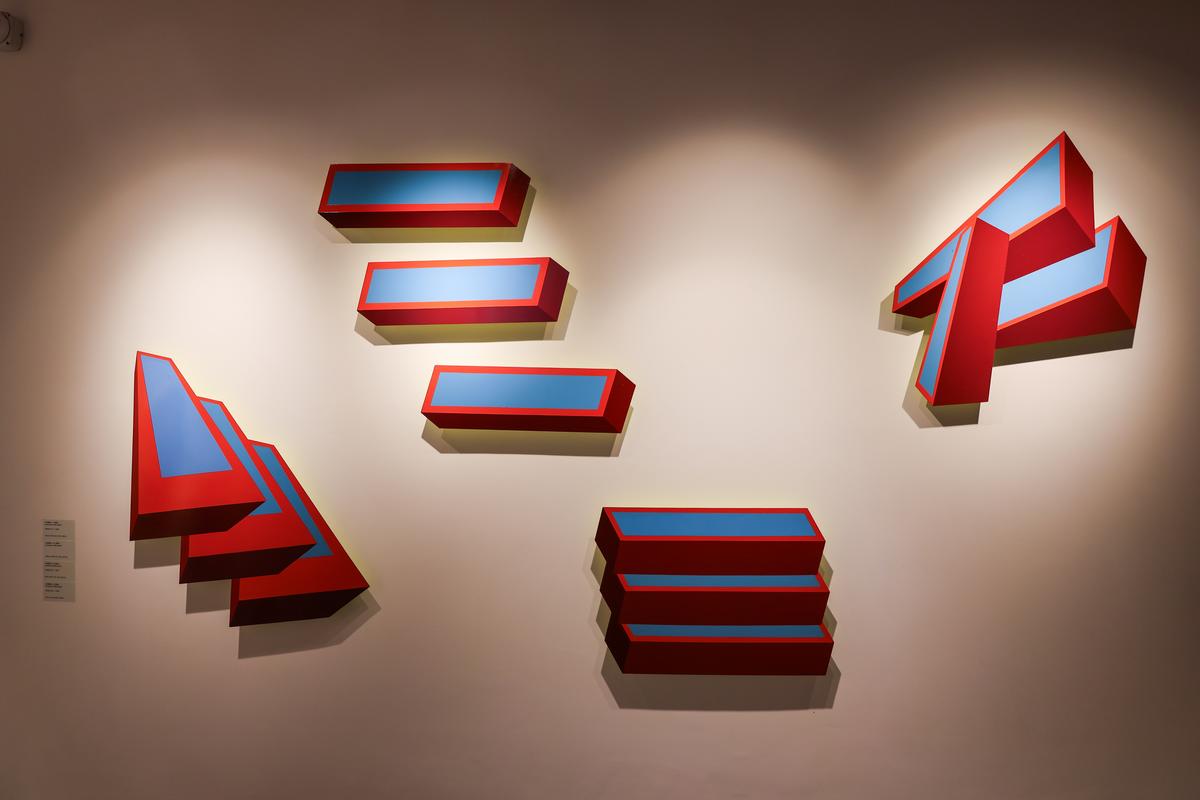
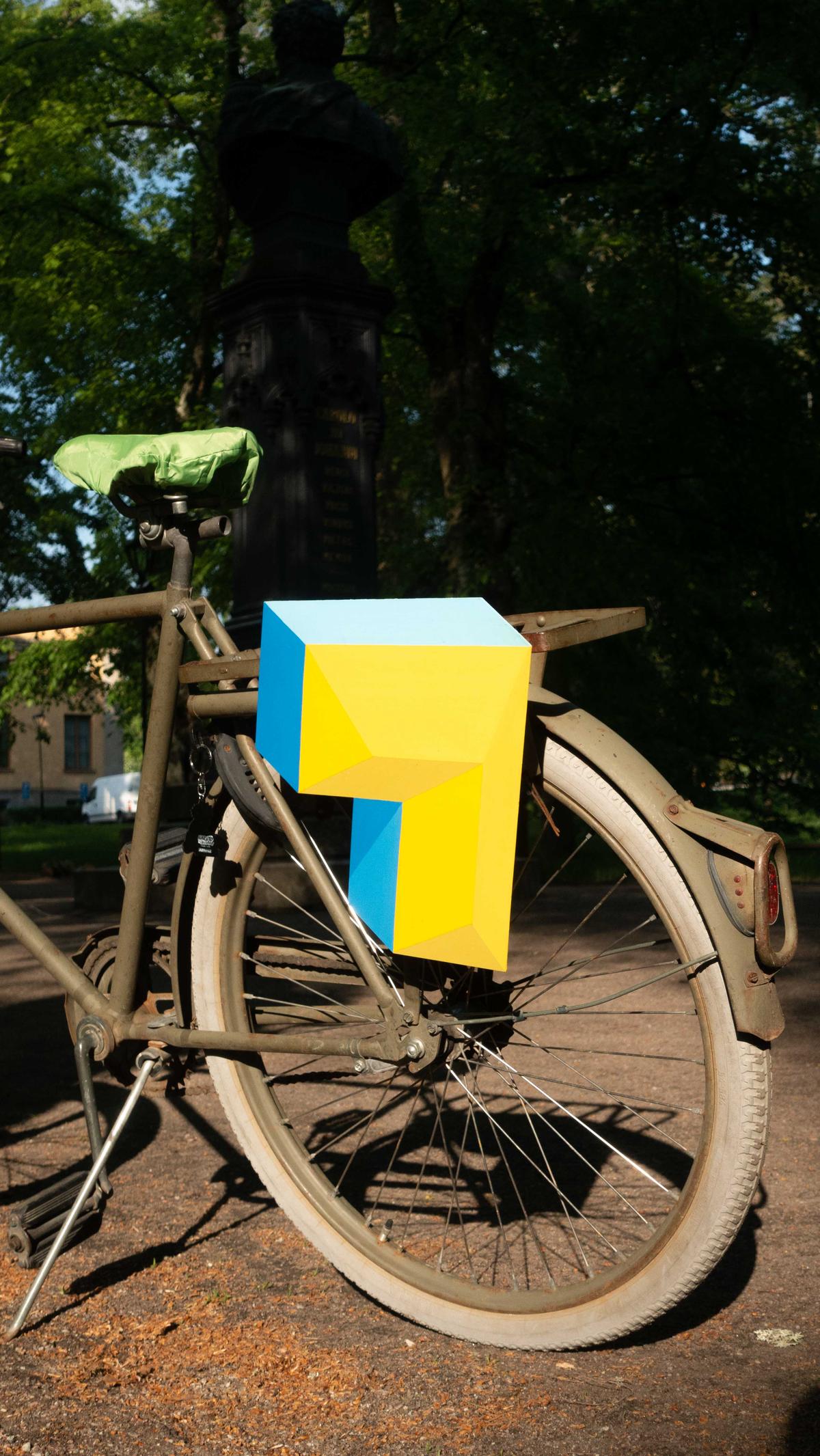
Then there’s Tetris, a series where letterforms appear like falling blocks, half play, half code, perhaps a nod to the video game he loved. “They were made during his time in Uppsala, Sweden, where it was shown,” Malik says. “We don’t know why he called it that. Some of his paintings are untitled; others verge on architectural — concrete-like, almost Brutalist — like letters pushing out into three-dimensional shapes. He kept this part of his practice very private.”

Tetris series (2024)

Tetris series (2024)
| Photo Credit:
Courtesy of the estate of Hanif Kureshi and Wildstyle Gallery

A new node for street art

“Since we came together in 2014, we’ve been able to build a real interest in street art,” says Arjun Bahl, co-founder of St+art India and Gallery XXL. “Now, we want to build a market around it. That means exhibitions, but also a collectibles shop we co-create with artists, and bringing them in for workshops and residencies, so they can test ideas and use the space how they want.”

After Kureshi’s passing, Bahl and his fellow co-founders, Ambrogi and Thanish Thomas, decided to move the gallery from Mumbai to Delhi. “We’re a small, guerrilla-style team, and we depend on each other,” he says. “While having XXL in Mumbai kept it closer to Hanif’s later years in Goa, Delhi has always been home for us. With most of us based here, it made sense to return.”

Hanif Kureshi’s Raaz (2023, UV print on ACP)

Hanif Kureshi’s Raaz (2023, UV print on ACP)
| Photo Credit:
Courtesy of the estate of Hanif Kureshi and Gallery XXL

A short drive from Delhi’s Lodhi Art District, the neighbourhood transformed into India’s first open-air art district under the St+art Foundation, Gallery XXL now extends that legacy. Part studio, part gallery, part meeting ground, the space is a new node for street art, showing works by more than 40 artists from India and abroad, many of them Kureshi’s longtime collaborators. It’s the start of a new chapter in making art, once again, for all.

The show is at XXL till November 30.

The culture writer and editor specialises in reporting on art, design and architecture.

Published – November 20, 2025 12:25 pm IST


Source link

Al Jazeera Al Hamra: Ras Al Khaimah’s abandoned pearling village now attracts history enthusiasts


On the day that we, a group of journalists from India, step into the Al Jazeera Al Hamra Heritage Village in Ras Al Khaimah, students from a local school are exploring the area, getting to know its history. As we get ready to explore the heritage site, our guide pauses to take another call from a school seeking to schedule a visit for another group of students. “We get a lot of enquiries from schools,” she tells us.

For the unversed, Ras Al Khaimah is UAE’s lesser known getaway where visitors can soak in adventure, history and culture at a leisurely pace, unlike the glitz and glamour of Dubai, Abu Dhabi or Sharjah.

Now on the UNESCO World Heritage Cultural Tentative List (a tentative list is a preliminary inventory of a country’s cultural and natural sites that it may want to propose for World Heritage status in future), Al Jazeera Al Hamra is one of the prime attractions for history enthusiasts. Translated from Arabic, Al Jazeera Al Hamra denotes Red Island. This is said to be the last remaining pearling village in the Gulf region, the rest having been demolished since the discovery of oil.

A part of the village’s ruins have been left untouched, as per UNESCO requisites, while other portions have been restored using materials such as coral stones and sandstones similar to the ones originally used by Za’ab tribes to build their homes and souks.

The origins

As we walk through the alleyways filled with powdery dust, our guide shares the story of how the ancient tribes lived in the region, from the 16th Century till the late 1960s, before moving en masse to Abu Dhabi in search of livelihood and an urban lifestyle.

The Al Jazeera Al Hamra settlement was established in the land of Al Qasimi, the ruling dynasty of Ras Al Khaimah. The region, with its convergence of desert, mountains and coastline, was conducive for pearl farming.

How to get there: Ras Al Khaimah has its own international airport, and is also well connected from the Dubai, Abu Dhabi, and Sharjah airports.

Other attractions: Jebel Jais, Al Jazirah Aviation Club, Dhayah Fort, Bassata Desert Camp, Suwaidi Pearl Farm, The RAK museum, Jais Sledder, Al Wadi Natural Reserve, Golf courses, and Bear Grylls Explorers Camp. 

Places to stay: Several resorts dot the 64 kilometre-long beaches. We stayed at The Mövenpick Resort at Al Marjan Island, equipped with over 400 rooms, suites and beach-facing private villas. A floating water park and water sports facilities are added attractions.

The inhabitants

In the once-thriving pearling village, men and women shared multiple responsibilities: as pearl divers, pearl traders, boat builders, cattle farmers, and date farmers. The name red island has its origins from the colour of the sand dunes in the region, when the island was surrounded by a lagoon until the late 1970s before it was filled and connected to the mainland.

The village has a fort with a watch tower, a souk or market area, courtyard houses, and a two-floored mosque, among other structures.

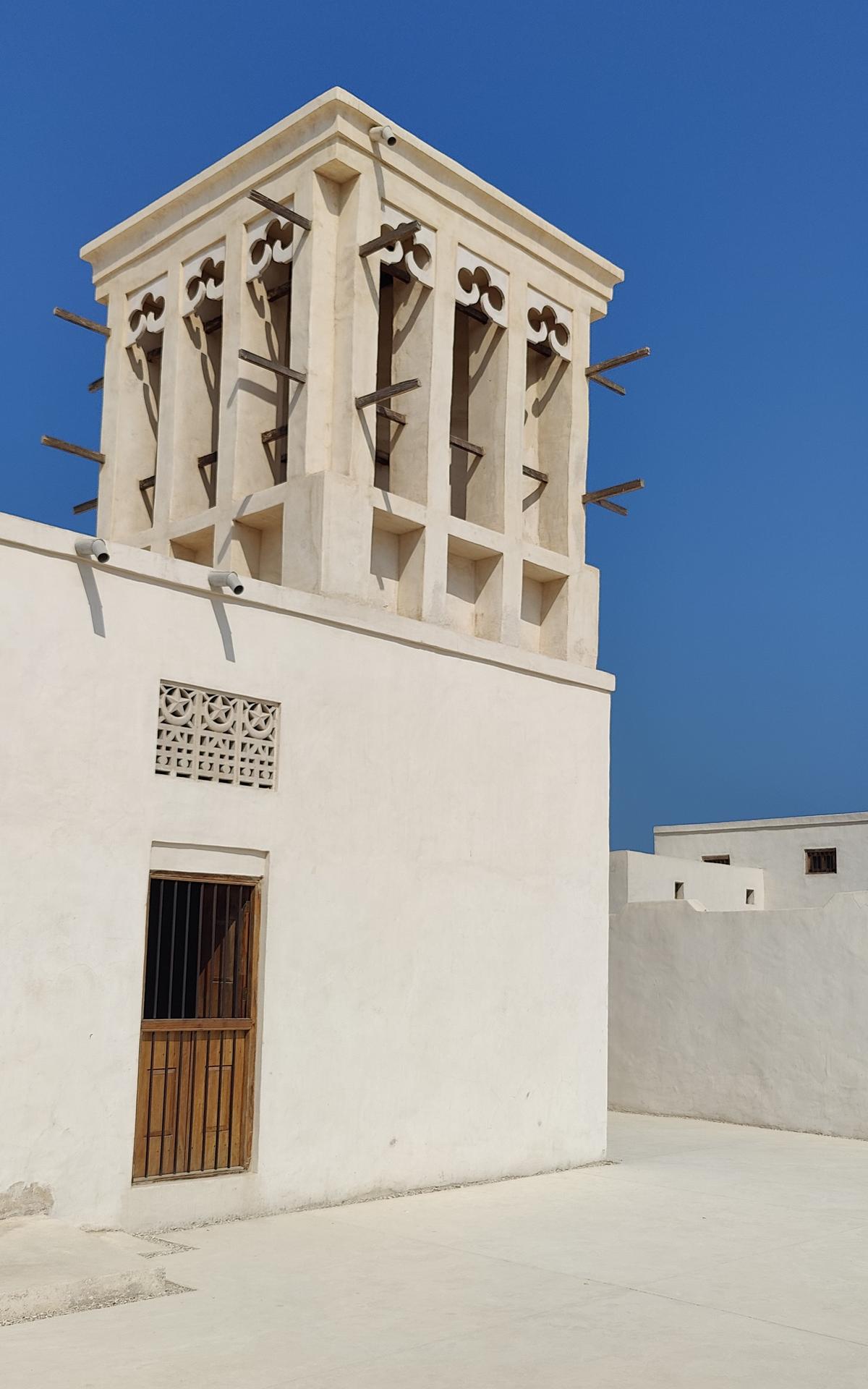
Wind towers built as part of homes allow easy ventilation in the harsh summer months. The summer homes also come with hole-in-the-wall sort of spaces and this porous architectural element facilitated ventilation. The winter homes seem impenetrable, to insulate inmates from the biting desert chill.

“The ancient people knew how to live in tune with Nature and withstand tough weather conditions. The Ras Al Khaimah museum displays several everyday tools used by the inhabitants, including a shell that was used to feed water to infants,” our guide tells us.

Sands of time

In the early 20th Century, this settlement had approximately 500 houses and 2,500 to 3,000 residents. During the hour-long walk through the village, we observe that the village is divided into several quarters to house groups of families. The buildings built using coral stone and beach rock represent the early settlement, while sand brick buildings pertain to the period after 1955.

A closer look at one of the constructions with in-built wind channels

A closer look at one of the constructions with in-built wind channels
| Photo Credit:
Sangeetha Devi

The souk, which now wears a deserted look, was once a bustling trade centre with camels and donkeys being engaged to transport goods from the port to the trading centres.

“The pearl industry witnessed a decline since the early 20th Century as cultured pearls changed the market. Following the discovery of oil in the UAE, by the late 1960s, the village inhabitants moved to Abu Dhabi in hope of better jobs, water and electricity,” adds our guide.

The abandoned village, with its heritage trails, has been conserved and preserved as a reminder of the historical pearl trade. The conservation and restoration work is governed by The UAE Ministry of Energy and Infrastructure and the Department of Antiquities and Museums, Ras Al Khaimah.

(The writer was in Ras Al Khaimah on invitation)

Published – November 20, 2025 11:00 am IST


Source link

Al Jazeera Al Hamra: Ras Al Khaimah’s pearling village now attracts history enthusiasts


On the day that we, a group of journalists from India, step into the Al Jazeera Al Hamra Heritage Village in Ras Al Khaimah, students from a local school are exploring the area, getting to know its history. As we get ready to explore the heritage site, our guide pauses to take another call from a school seeking to schedule a visit for another group of students. “We get a lot of enquiries from schools,” she tells us.

For the unversed, Ras Al Khaimah is UAE’s lesser known getaway where visitors can soak in adventure, history and culture at a leisurely pace, unlike the glitz and glamour of Dubai, Abu Dhabi or Sharjah.

Now on the UNESCO World Heritage Cultural Tentative List (a tentative list is a preliminary inventory of a country’s cultural and natural sites that it may want to propose for World Heritage status in future), Al Jazeera Al Hamra is one of the prime attractions for history enthusiasts. Translated from Arabic, Al Jazeera Al Hamra denotes Red Island. This is said to be the last remaining pearling village in the Gulf region, the rest having been demolished since the discovery of oil.

A part of the village’s ruins have been left untouched, as per UNESCO requisites, while other portions have been restored using materials such as coral stones and sandstones similar to the ones originally used by Za’ab tribes to build their homes and souks.

The origins

As we walk through the alleyways filled with powdery dust, our guide shares the story of how the ancient tribes lived in the region, from the 16th Century till the late 1960s, before moving en masse to Abu Dhabi in search of livelihood and an urban lifestyle.

The Al Jazeera Al Hamra settlement was established in the land of Al Qasimi, the ruling dynasty of Ras Al Khaimah. The region, with its convergence of desert, mountains and coastline, was conducive for pearl farming.

How to get there: Ras Al Khaimah has its own international airport, and is also well connected from the Dubai, Abu Dhabi, and Sharjah airports.

Other attractions: Jebel Jais, Al Jazirah Aviation Club, Dhayah Fort, Bassata Desert Camp, Suwaidi Pearl Farm, The RAK museum, Jais Sledder, Al Wadi Natural Reserve, Golf courses, and Bear Grylls Explorers Camp. 

Places to stay: Several resorts dot the 64 kilometre-long beaches. We stayed at The Mövenpick Resort at Al Marjan Island, equipped with over 400 rooms, suites and beach-facing private villas. A floating water park and water sports facilities are added attractions.

The inhabitants

In the once-thriving pearling village, men and women shared multiple responsibilities: as pearl divers, pearl traders, boat builders, cattle farmers, and date farmers. The name red island has its origins from the colour of the sand dunes in the region, when the island was surrounded by a lagoon until the late 1970s before it was filled and connected to the mainland.

The village has a fort with a watch tower, a souk or market area, courtyard houses, and a two-floored mosque, among other structures.

Wind towers built as part of homes allow easy ventilation in the harsh summer months. The summer homes also come with hole-in-the-wall sort of spaces and this porous architectural element facilitated ventilation. The winter homes seem impenetrable, to insulate inmates from the biting desert chill.

“The ancient people knew how to live in tune with Nature and withstand tough weather conditions. The Ras Al Khaimah museum displays several everyday tools used by the inhabitants, including a shell that was used to feed water to infants,” our guide tells us.

Sands of time

In the early 20th Century, this settlement had approximately 500 houses and 2,500 to 3,000 residents. During the hour-long walk through the village, we observe that the village is divided into several quarters to house groups of families. The buildings built using coral stone and beach rock represent the early settlement, while sand brick buildings pertain to the period after 1955.

A closer look at one of the constructions with in-built wind channels

A closer look at one of the constructions with in-built wind channels
| Photo Credit:
Sangeetha Devi

The souk, which now wears a deserted look, was once a bustling trade centre with camels and donkeys being engaged to transport goods from the port to the trading centres.

“The pearl industry witnessed a decline since the early 20th Century as cultured pearls changed the market. Following the discovery of oil in the UAE, by the late 1960s, the village inhabitants moved to Abu Dhabi in hope of better jobs, water and electricity,” adds our guide.

The abandoned village, with its heritage trails, has been conserved and preserved as a reminder of the historical pearl trade. The conservation and restoration work is governed by The UAE Ministry of Energy and Infrastructure and the Department of Antiquities and Museums, Ras Al Khaimah.

(The writer was in Ras Al Khaimah on invitation)

Published – November 20, 2025 11:00 am IST


Source link