Life & Style

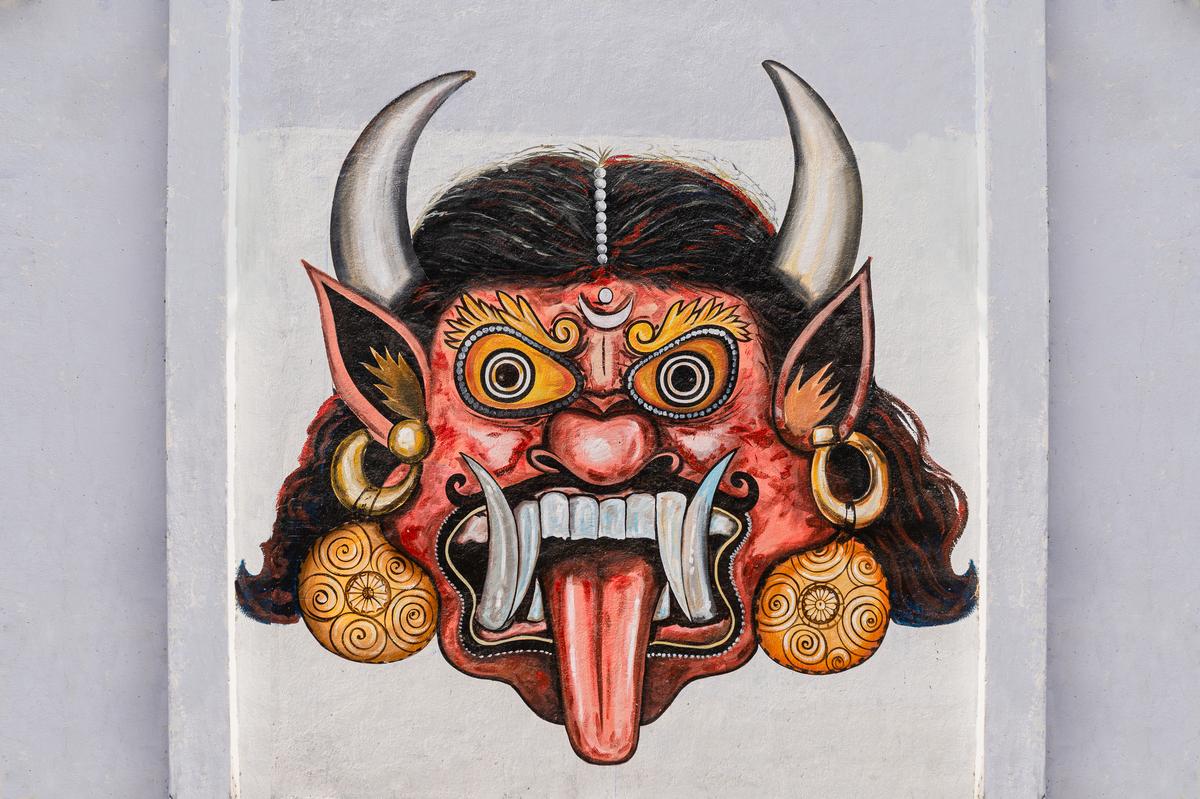
The Hindu’s Lit for Life Unplugged opens with a dialogue on the secret life of the dhristi dolls


A drishti doll from the book Kolli Kannu: Drishti Paintings of Tamil Nadu by Amar Ramesh

A drishti doll from the book Kolli Kannu: Drishti Paintings of Tamil Nadu by Amar Ramesh
| Photo Credit: Amar Ramesh

“Touchwood.” “Kannu pada pogudhu.” “Nazar na lag jaye.

The very idea of protecting nascent beauty from the evil that you may bear in your eye, dates not just back to your grandmother’s tongue. Earliest sightings of these symbols exist in the form of alabaster idols with incised eyes in ancient Mesopotamia. Then there are the gargoyles of Gothic architecture in Europe, and the blue beaded eye from Turkey, promising to protect you from envy and malice.

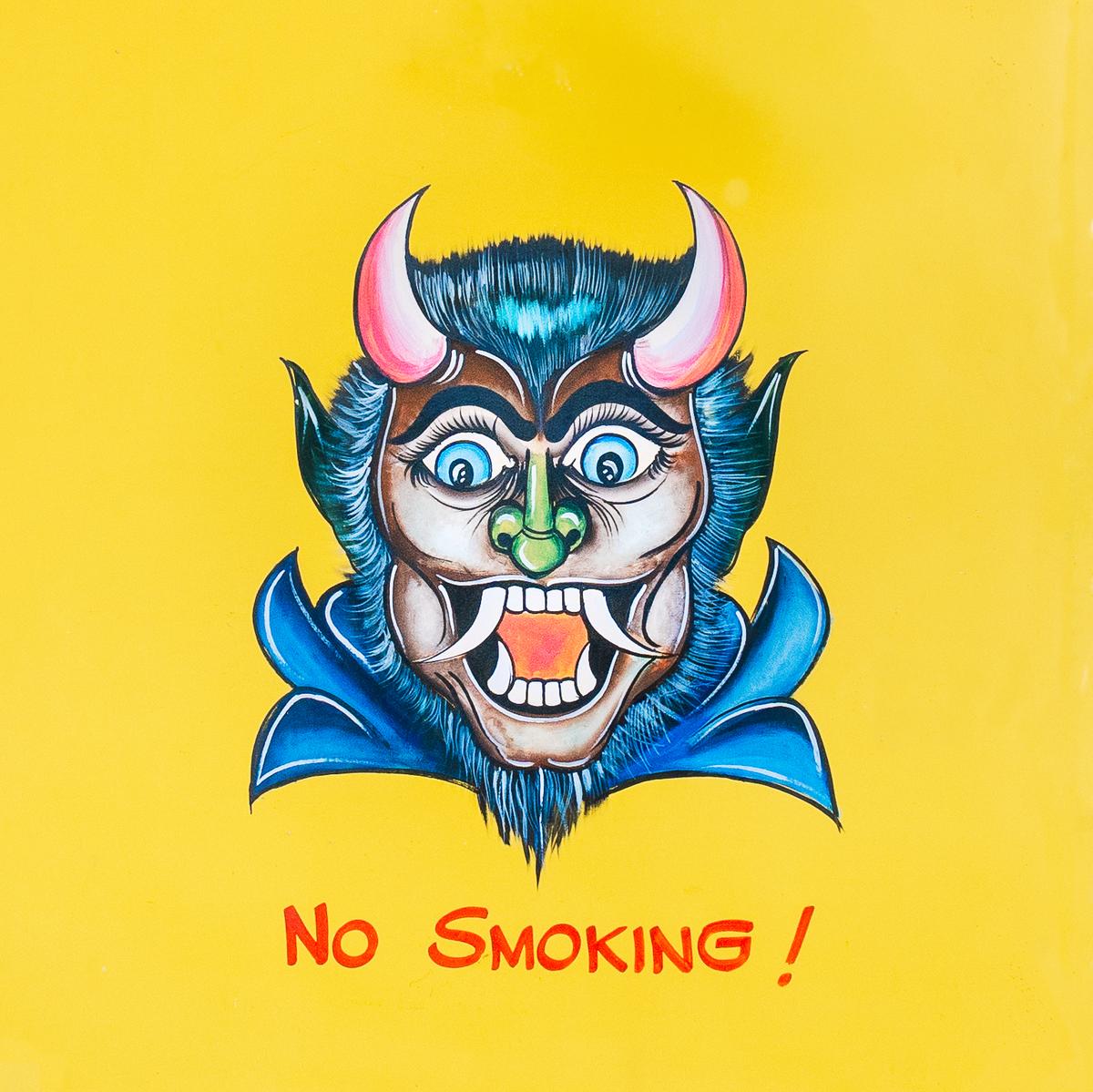
A drishti doll from the book Kolli Kannu: Drishti Paintings of Tamil Nadu by Amar Ramesh

A drishti doll from the book Kolli Kannu: Drishti Paintings of Tamil Nadu by Amar Ramesh
| Photo Credit:
Amar Ramesh

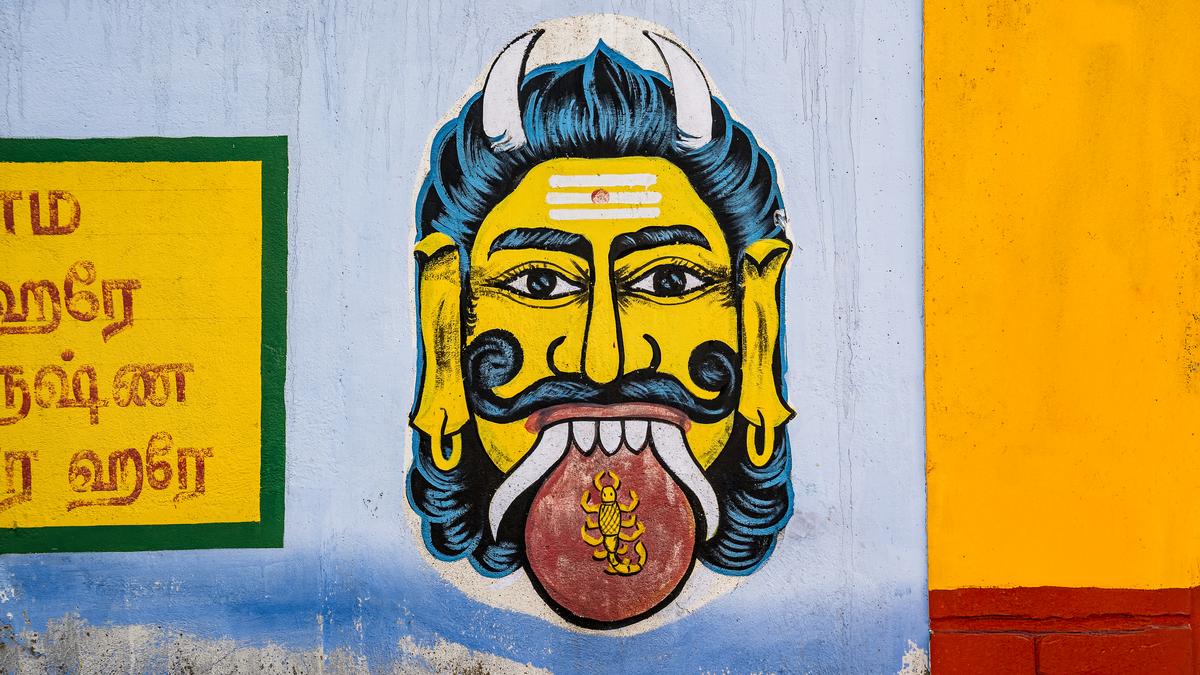
How it came to become a formidable mustachio-ed man in chrome yellow, brandishing a menacing red tongue adorning the walls of Tamil Nadu is a story in itself. This tale will reveal itself in a conversation between Ashvin E Rajagopalan, director, Ashvita’s and Piramal Foundation, and Amar Ramesh, photographer and author of Kolli Kannu: Drishti Paintings of Tamil Nadu on November 28 at MadCo on Cathedral Road.

Part of the The Hindu’s Lit for Life Unplugged, this event borrows from the popular Lectures on Tap movement that began in New York City in 2024. Experts here will speak about an array of interesting subjects, over 40 minutes, followed by a classroom-style free-for-all barrage of questions.

The Hindu’s Lit For Life Unplugged

The Hindu’s Lit For Life Unplugged

Ashvin says, “Nazar’s function is the same as the very word. The objective is to remove the focus from the object of beauty or the self, and shift the focus of the negative energy away from the main subject, object, or person.”

He adds that iconography showcasing drishti can be found in every Kanchipuram stone temple since the 5th Century. Once inspired by the yaazhi, a mythical creature from South Indian mythology that is often depicted in the form of a lion, elephant, and serpent, drishti in this State now looks like a monster. A rakshasan. “This is because the potters of Tamil Nadu, who made terracotta masks and the Ayyannar statues, decided to play around with the form and changed it to look much like a man. The iridescent colours came to be when enamel paints were introduced in 1890,” he adds.

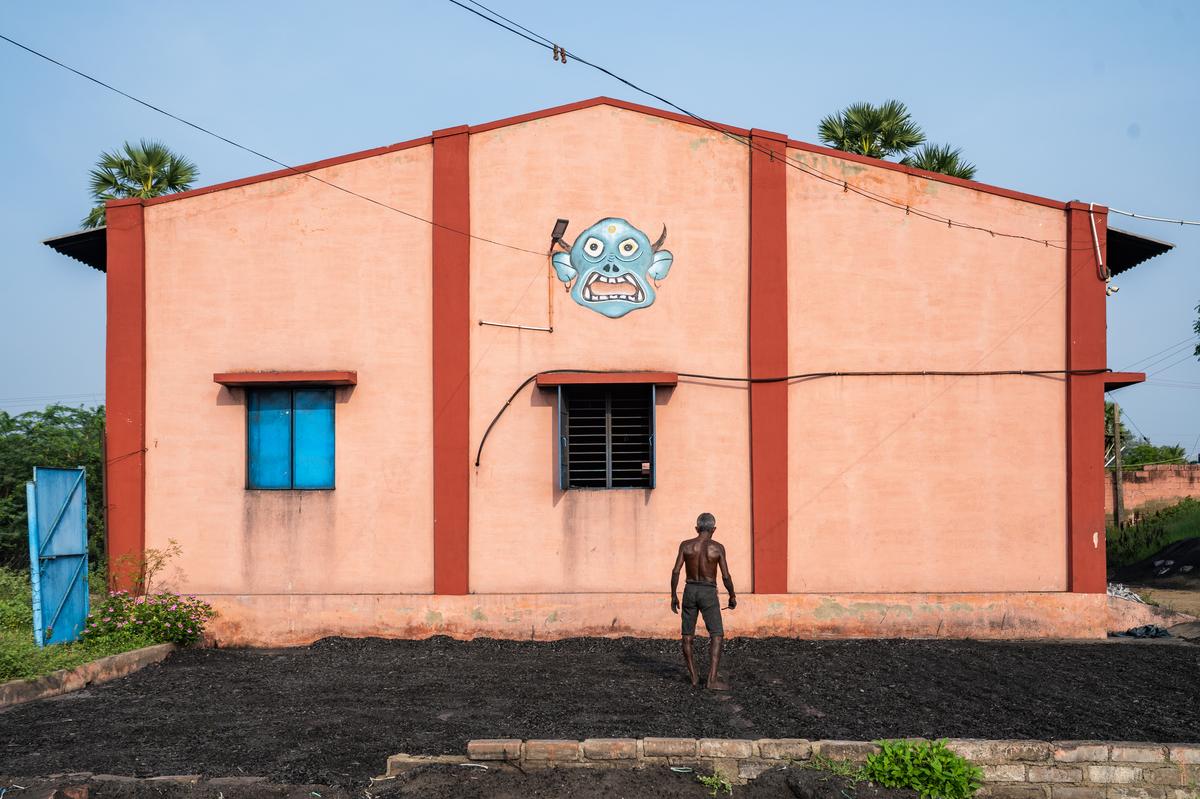
A drishti doll from the book Kolli Kannu: Drishti Paintings of Tamil Nadu by Amar Ramesh

A drishti doll from the book Kolli Kannu: Drishti Paintings of Tamil Nadu by Amar Ramesh
| Photo Credit:
Amar Ramesh

Amar Ramesh says that chance made him begin shooting the images of these drishti dolls back in 2010. “Some had symbols of scorpions, others had images of snakes. Many are based on caste too. The more I captured them, the more I was fascinated,” he says. Amar says that moulds have replaced the painted form of drishti which is why it is essential to preserve it. He also hopes to popularise it in pop culture.

“As die-hard fans of everything kitsch, colourful, and wonderfully weird, we’re thrilled to host this talk at MadCo,” says Santhosh Zachariah Abraham, managing partner, MadCo. He adds, “Amar Ramesh’s book is a riot of drishti bommais — those comically monstrous faces we’ve all seen a thousand times but never really looked at. It’s a reminder that art hides in plain sight. Our bar has always celebrated Tamil flavours through its food and cocktails, so bringing a little culture into the mix feels just right.”

A drishti doll from the book Kolli Kannu: Drishti Paintings of Tamil Nadu by Amar Ramesh

A drishti doll from the book Kolli Kannu: Drishti Paintings of Tamil Nadu by Amar Ramesh
| Photo Credit:
Amar Ramesh

There are many other mystical reasons why drishti takes away from the object of desire and superimposes the negative on the grotesque. Join us, and find out why — this is an event that will definitely keep nazar away.

Lit for Life Unplugged, part of The Hindu’s Lit for Life festival, takes place on November 28 at 6pm. Entry is free — the programming is on us, the drinks are on you. Seats are limited to 50, so please register. DM @madco_chennai to save your spot, and do not ghost us… we’ve got the drishti bommai watching.


Source link

What to look forward to at Design Mumbai 2025


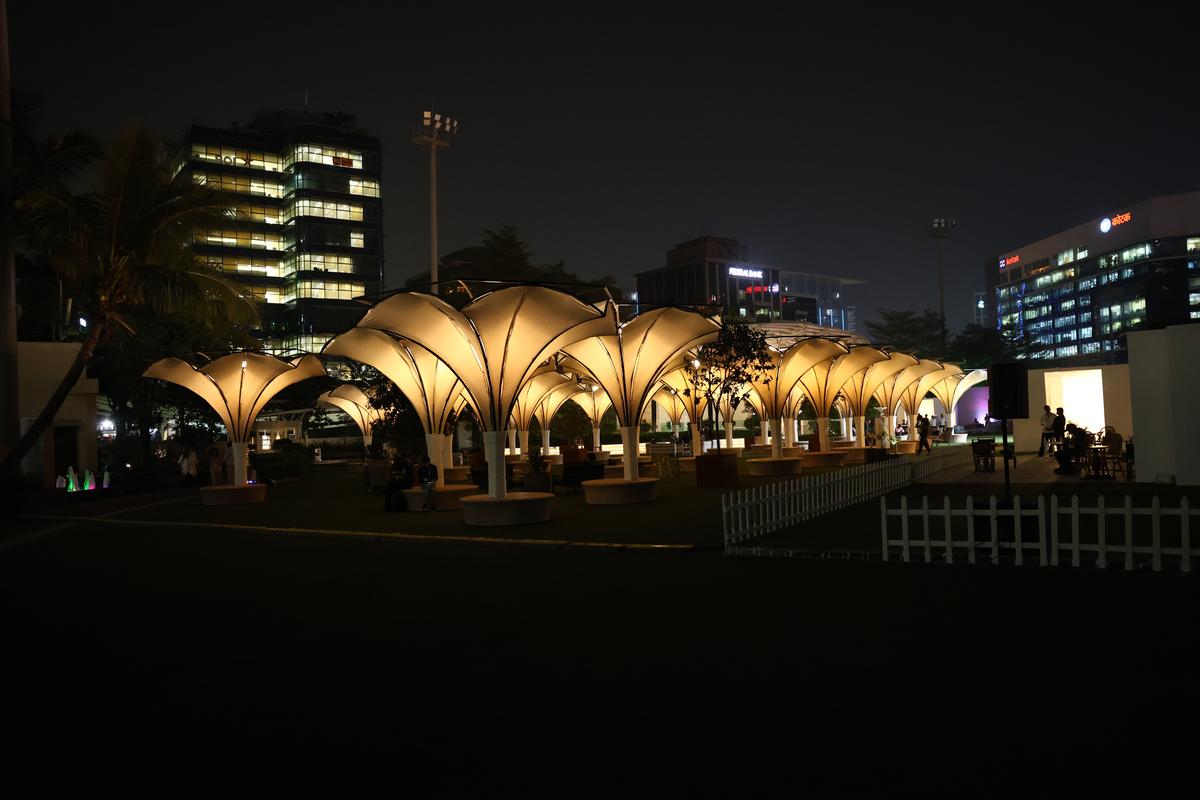
It is a known fact that design can never be linear. The process of creating art is spontaneous, flexible, creative — all at once. A part of this process involves designers experimenting with new materials and innovative solutions, and bringing to the fore such creators is Design Mumbai. The upcoming second edition of the design event — founded in 2024 by Ian Rudge (co-founder of UK’s design event, 100% Design), Michael Dynan (co-founder, Design Shanghai), and designer Piyush Suri — will bring together architects and design experts from India and abroad.

A design by Studio Saar at the 2024 edition of Design Mumbai

A design by Studio Saar at the 2024 edition of Design Mumbai
| Photo Credit:
Special Arrangement

Alongside key exhibits by brands, the event’s itinerary includes the Design Mumbai Exchange talks with expert-led discussions on emerging sustainable and intelligent materials, architecture, design and well-being, climate-responsive workspaces, and how to open up cities to the public, among others. 

Design Mumbai highlights

The entrance tunnel to the show, titled Journey Through India, is designed by Venezuelan artist Juan Gerstl, and features colourful geometric panels of UV-printed aluminium. 

British designer Chris Lefteri will be at the helm of the Smart Materials Lab called Materials! Do Touch!, aimed at encouraging curiosity about and engagement with new and innovative materials. It will focus on three stories: Uplifting Tales from Nature (sponsored by Royal Enfield) will explore natural materials such as intricate networks of mushroom roots and the reinvention of wood; Unrefined Stories will look at the aesthetic of brutalism via grey stone, rough concrete; and Distorted Dreams will draw on themes of artificial intelligence.

The Park Hotels’ on-site cafe designed by Spanish designer Lucas Muñoz Muñoz will be crafted using repurposed materials from the hotel group’s refurbishment projects. 

Hospitality major Soho House will host the second edition of its members’ club pop-up titled The Soho House Lounge. It will feature sculptural artworks by Soho House member and Mumbai-based artist, Vinita Mungi, alongside craft pieces by other local artisans.

“We have talks over each day of the show, tackling exciting, meaningful topics with speakers from India, the UK, Italy, and more,” says Piyush, who is excited about the international brands coming to the show this year. “We are hosting brands from all over the world including The American Hardwood Export Council that will showcase their collection of furniture with Phantom Hands, alongside Korean brand Mycel Inc, Covestro from Germany, LUX Temporis, the French lighting company, Baccarat, Swedish icon String, and Natuzzi, Poltrona Frau, Crassevig, and Ceccotti will represent Italy.”

Spanish designer Lucas Muñoz Muñoz

Spanish designer Lucas Muñoz Muñoz
| Photo Credit:
MICHELE MARGOT

Piyush explains how India has always had “this incredible depth of craft, materiality, and storytelling in design, but what we’ve needed is a global platform where all of that creativity can meet the work that’s happening on an international level”. Hence, events like Design Mumbai are vital because they create that space for the exchange of ideas, techniques, and perspectives, he adds.

Here are our picks of Indian and international debutants at Design Mumbai 2025: 

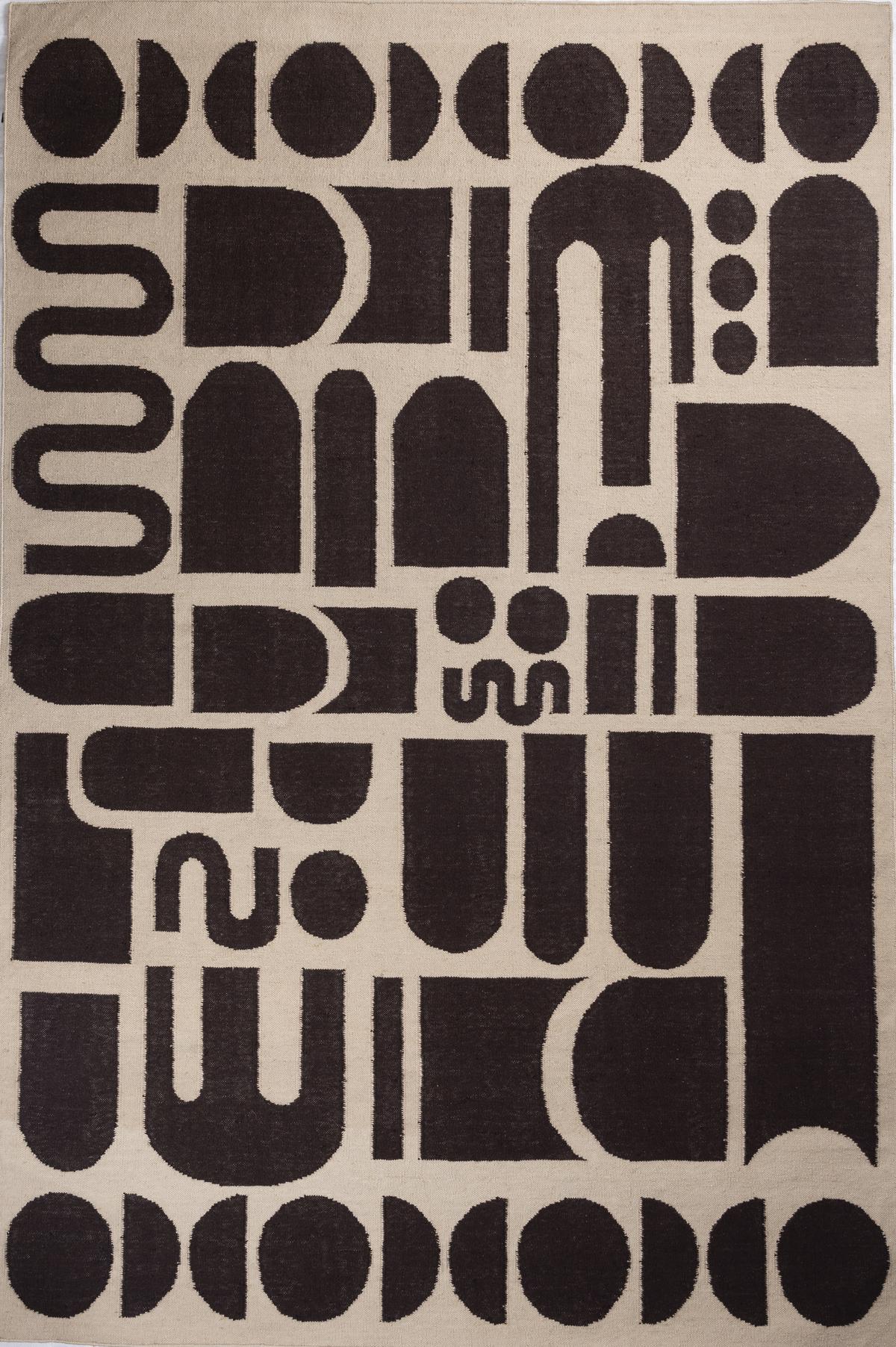
A carpet from the  ‘Bahya’ Collection

A carpet from the ‘Bahya’ Collection
| Photo Credit:
Special Arrangement

Rugs from PET yarn @ Venjara Carpets

A capsule featuring rugs crafted with the brand’s signature hand-tufting process wool, bamboo silk will be the highlight of the Mumbai-based brand’s showcase at the event. “What sets this collection apart is the sculptural finishing. Every rug is hand-carved, featuring curved edges, high and low piles, embossed patterns, and architectural carving,” says Aishaa Nensey, the fourth generation owner of the legacy brand. “It is a deeply personal chapter that captures what I envision for our 1961 brand in the years ahead: a fusion of heritage with a creative twist.”

Also on display will be the recently-launched ‘Bahya’ Collection that features rugs from PET yarn that has been created with recycled plastic bottles. “Engineered for the elements, these rugs can withstand sun, rain, and everyday wear. They are lightweight, durable, and versatile.”

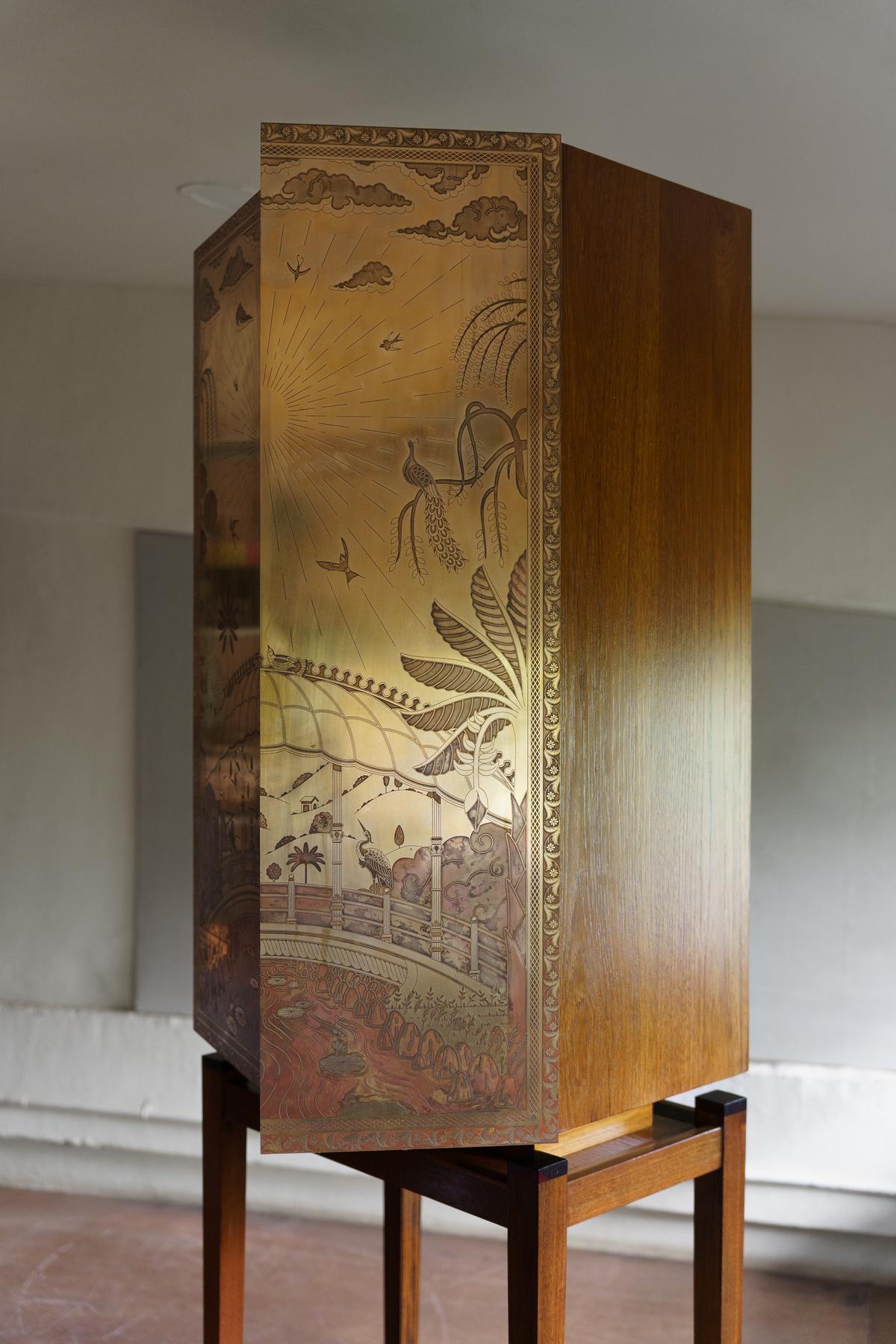
The Divine Light Cabinet

The Divine Light Cabinet
| Photo Credit:
Special Arrangement

Artist collabs @ Chacko

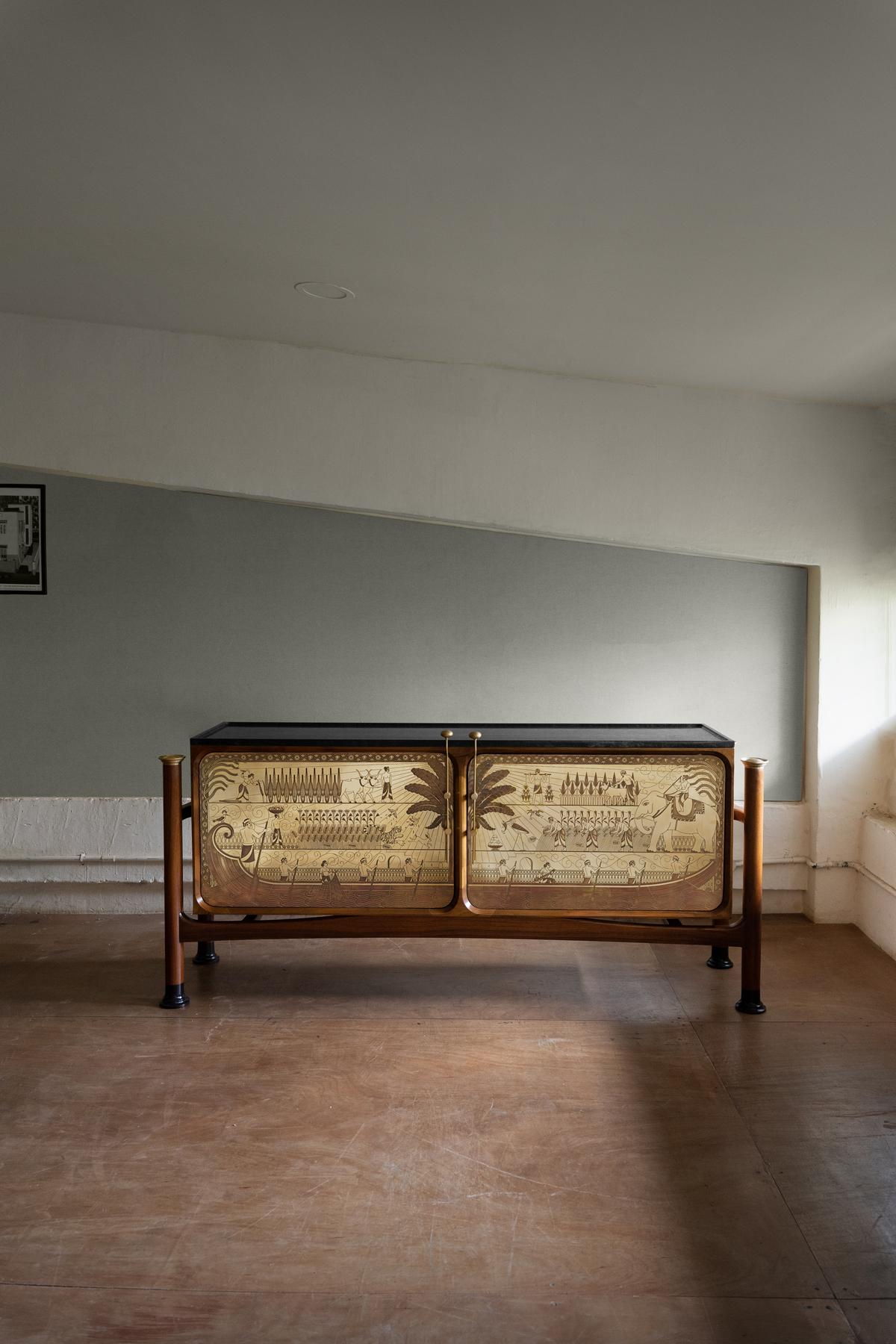
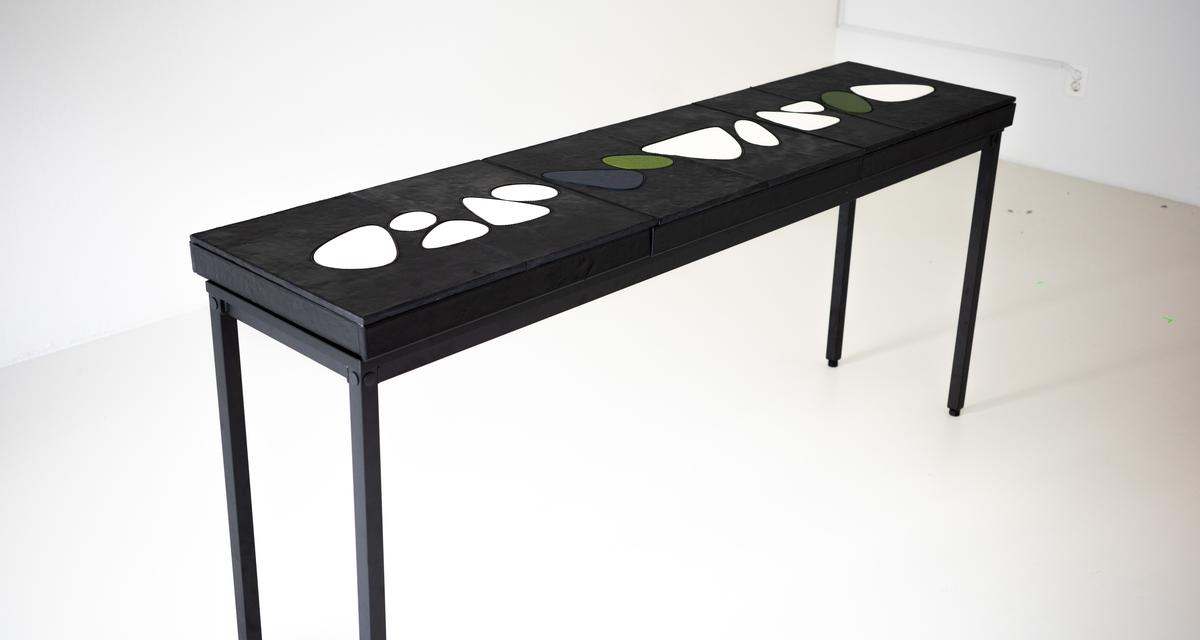
At this Mumbai-based furniture and design studio founded by Vipin Joe, the team will showcase a series of collaborative works created with artists and craft studios. “This format excites us deeply and is something we plan to build upon in the coming months,” says Vipin. He has worked with artist Nikunj Patel of Studio Moebius to create The Native Console and The Divine Light Cabinet — featuring brass-etched doors and ornamental detailing — that he will showcase at the event. “We are also debuting our Art Deco wall mirror titled King of Spades, created in collaboration with Ashwin Mallya, along with a wall-hung precious cabinet developed with Italian artist Gaia Cairo and marquetry by Sampigé & Co. in Mysore.”

 The Native Console

The Native Console
| Photo Credit:
Special Arrangement

Vipin is eager to hear how people respond to the pieces, and to “understand their interpretations, and receive feedback from industry experts”. “We are also looking forward to building new relationships and introducing our studio to architects and designers in the hospitality sector,” says the designer whose upcoming collection will include a three-sided wall mirror, a wall-hung cabinet with intricate marquetry, two brass-etched pieces, and a bench inspired by the historic Port of Muziris, all crafted in reclaimed teak.

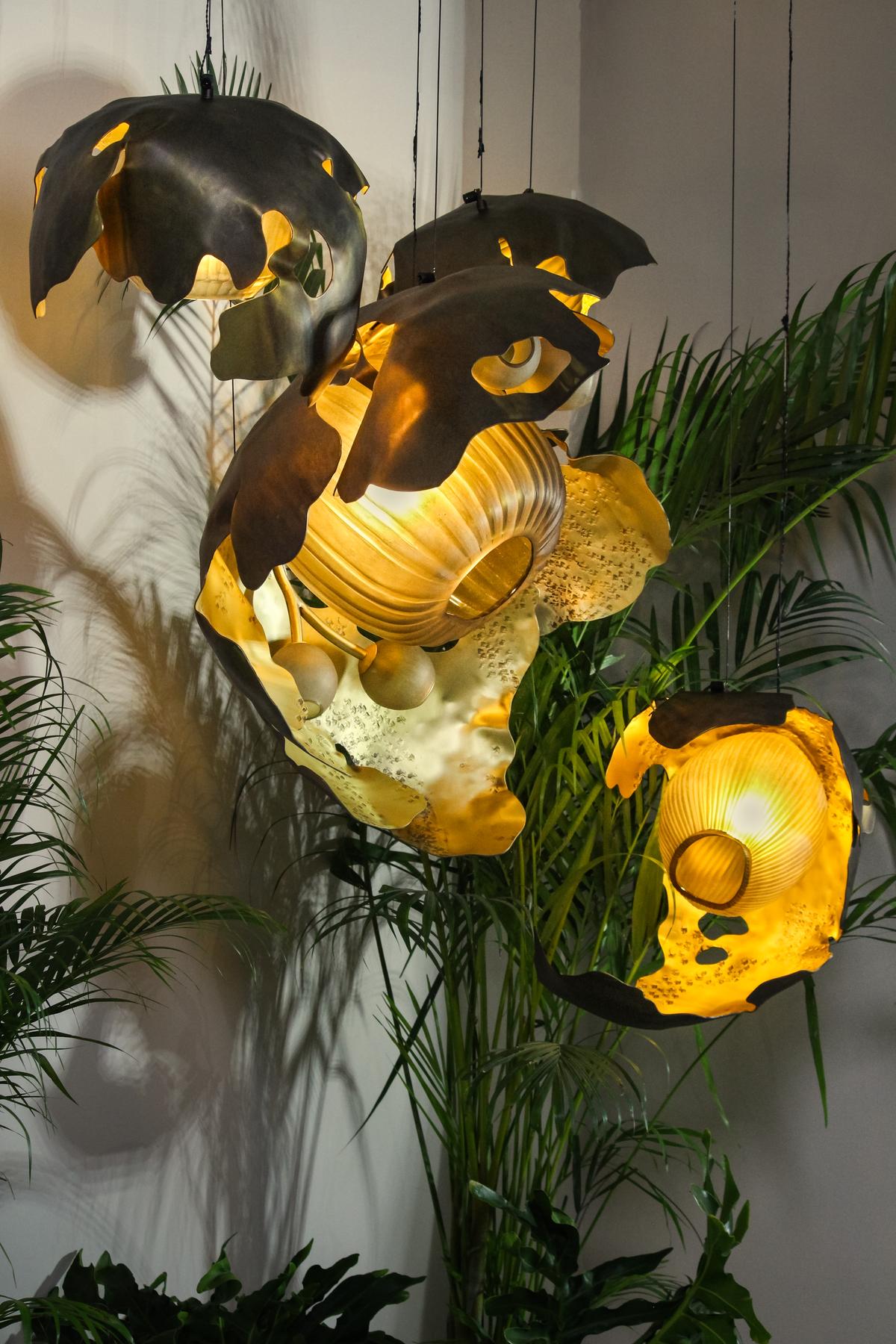
Amod, a cluster lighting installation

Amod, a cluster lighting installation
| Photo Credit:
Special Arrangement

Threads meet metal @ ThreadArte 

Artists Rahul Jain and Gunjan Arora have been creating art out of textile waste and collected threads for several years, and have now included metal to this list. At the design event, the duo of the Delhi-based brand will present Prayaan, a range of sculptural collectibles such as screens/partitions, lighting installations, spatial lights, vases, and planters. Highlights include a brass lighting installation, Avaia, that has been hand-tempered to shape and also has hand carved glass lighting fixtures; a cluster lighting installation called Amod; and Yamal, a set of stainless steel planters. With this showcase, the designer aims at showing that artists “can think practically too and aspire to create conversational forms that can be seen and experienced on a daily basis”.

A product from the Tad Ekam range

A product from the Tad Ekam range
| Photo Credit:
Special Arrangement

Expressions of Nature @ Sarvata

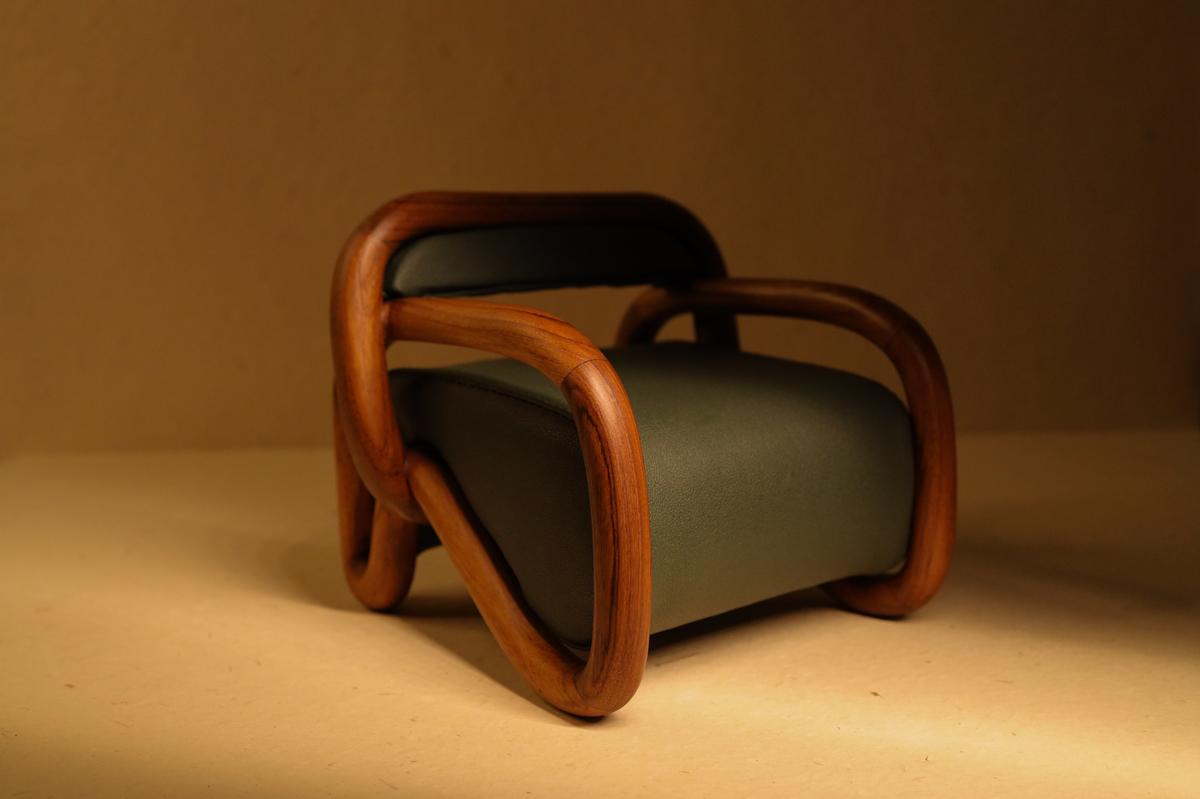
Known for their furniture and home decor that draws from the vedas, this Chandigarh-based brand by Iteesha Agrawal will present Tad Ekam, a range of side tables, arm chairs, coffee tables, console tables, and couches. The collection is inspired by a hymn from the Rig Veda ‘that contemplates the creation of the universe not as a scientific phenomenon, but as a deeply philosophical and spiritual unfolding’. “Designs have been brought to life by craftsmen of Saharanpur, whose ancestors began this 400-year-old legacy when their handcrafted furniture adorned the royal palaces of the Mughal dynasty. Each piece reinterprets the region’s traditional wood-carving techniques through a contemporary lens,” says Iteesha.

She adds that the designs go beyond direct depictions of Nature such as flowers, leaves, and figurines. “We explore its more subtle expressions, like the flow of water. The collection is crafted from MP Teak, a hardwood sourced from the heart of India,” says the designer who will next explore wood inlay crafts from Punjab’s Hoshiarpur and metal carving from Chamba, Himachal Pradesh.

Placyle Sustainable Studio’s portal arc

Placyle Sustainable Studio’s portal arc
| Photo Credit:
Special Arrangement

Recycled core @ Placyle Sustainable Studio

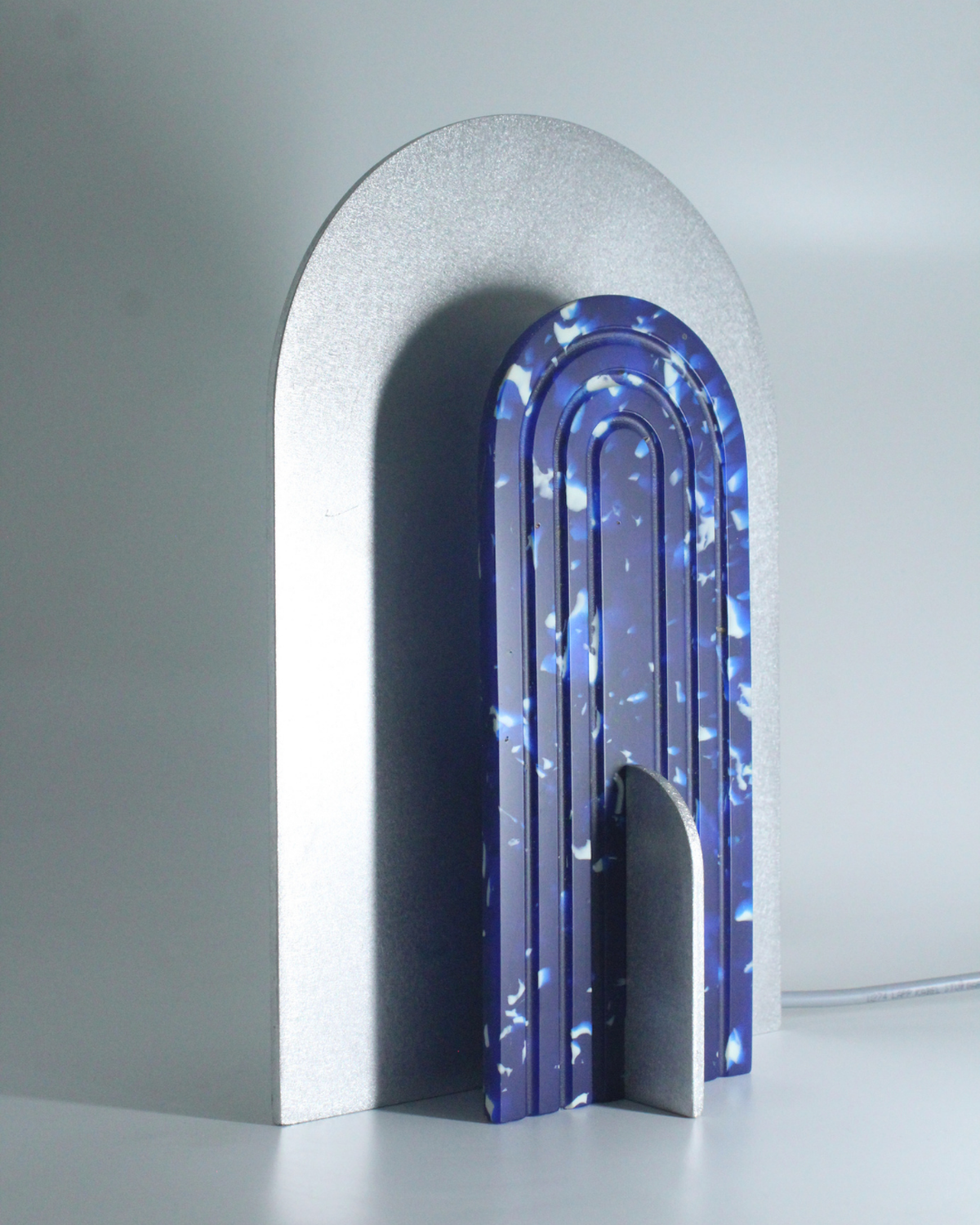
At this design-led initiative from Nashik, co-founder Aliasgar Aboojiwala has been at the helm of transforming post-consumer and industrial plastic waste into outdoor furniture, home décor, and lighting. “We reimagine discarded materials into functional art pieces that blend recycled plastic with natural textures and refined detailing to make sustainability aspirational and beautiful,” he says.

At the event, the team will present The Torii Bench that is inspired by the tranquil form of Japanese shrine gates, and crafted with layered recycled plastic lumbers; The Shark Fin Sling Chair shaped after the silhouette of a shark’s fin, and made with a soft sling fabric; and a three-seater sofa with a matching glass-topped centre table designed using recycled plastic sheets. “The collection is complemented by the Portal Arc Lighting Series: a table lamp and a four-foot floor lamp crafted with curved recycled forms and diffused warm lighting,” says Aliasgar. 

Designs by Lux Temporis

Designs by Lux Temporis
| Photo Credit:
Special Arrangement

INTERNATIONAL DEBUTANTS

Robotics meets design @ Lux Temporis

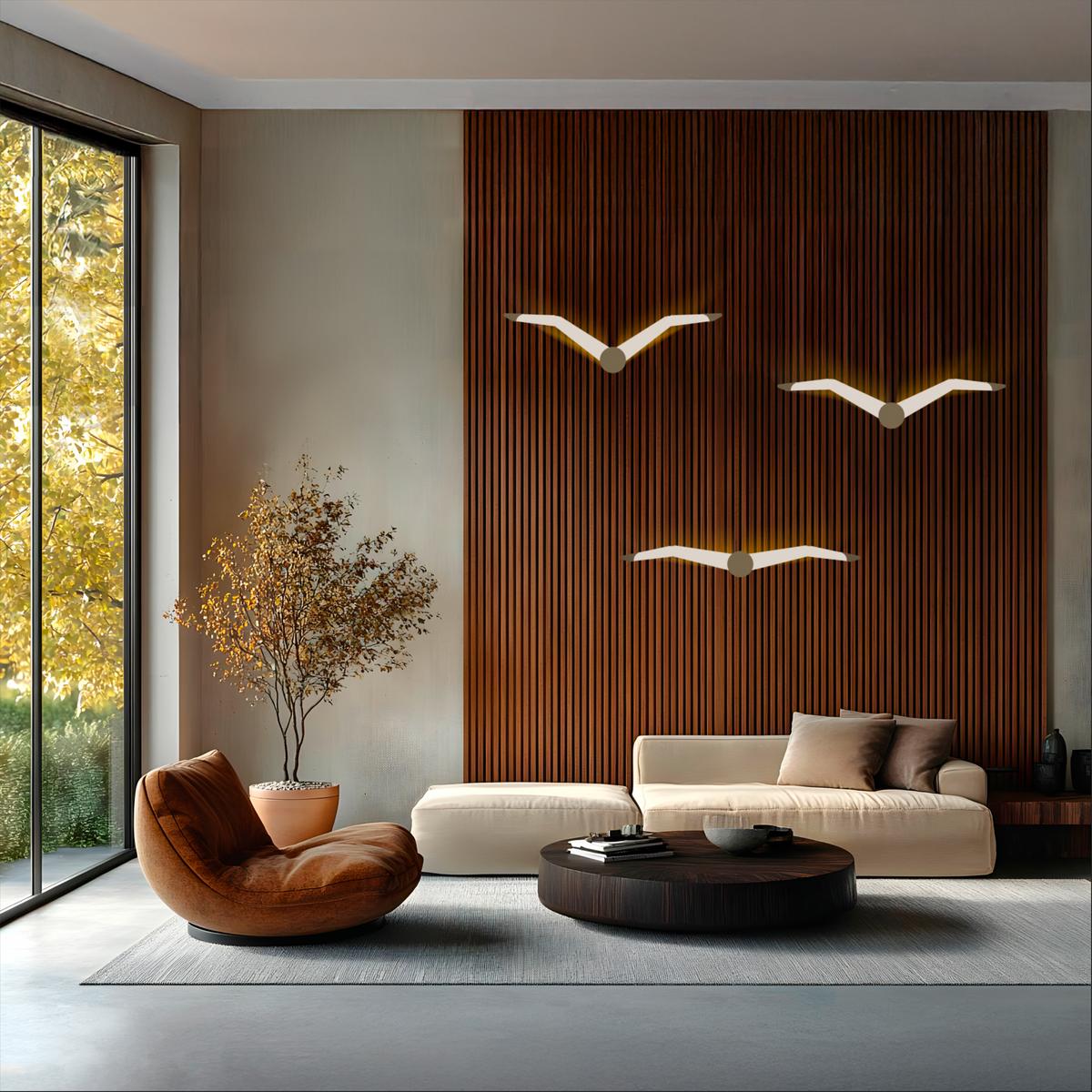
Pia Pijselman brings her love for the sciences, mechanical physics and robotics together at her French design house. “I bring these seemingly opposing worlds into dialogue to create a form of technological poetry that sets matter into motion by designing bio-inspired kinetic light sculptures that bring a sense of life into our interiors,” she says.

A lighting fixture by Lux Temporis

A lighting fixture by Lux Temporis
| Photo Credit:
Special Arrangement

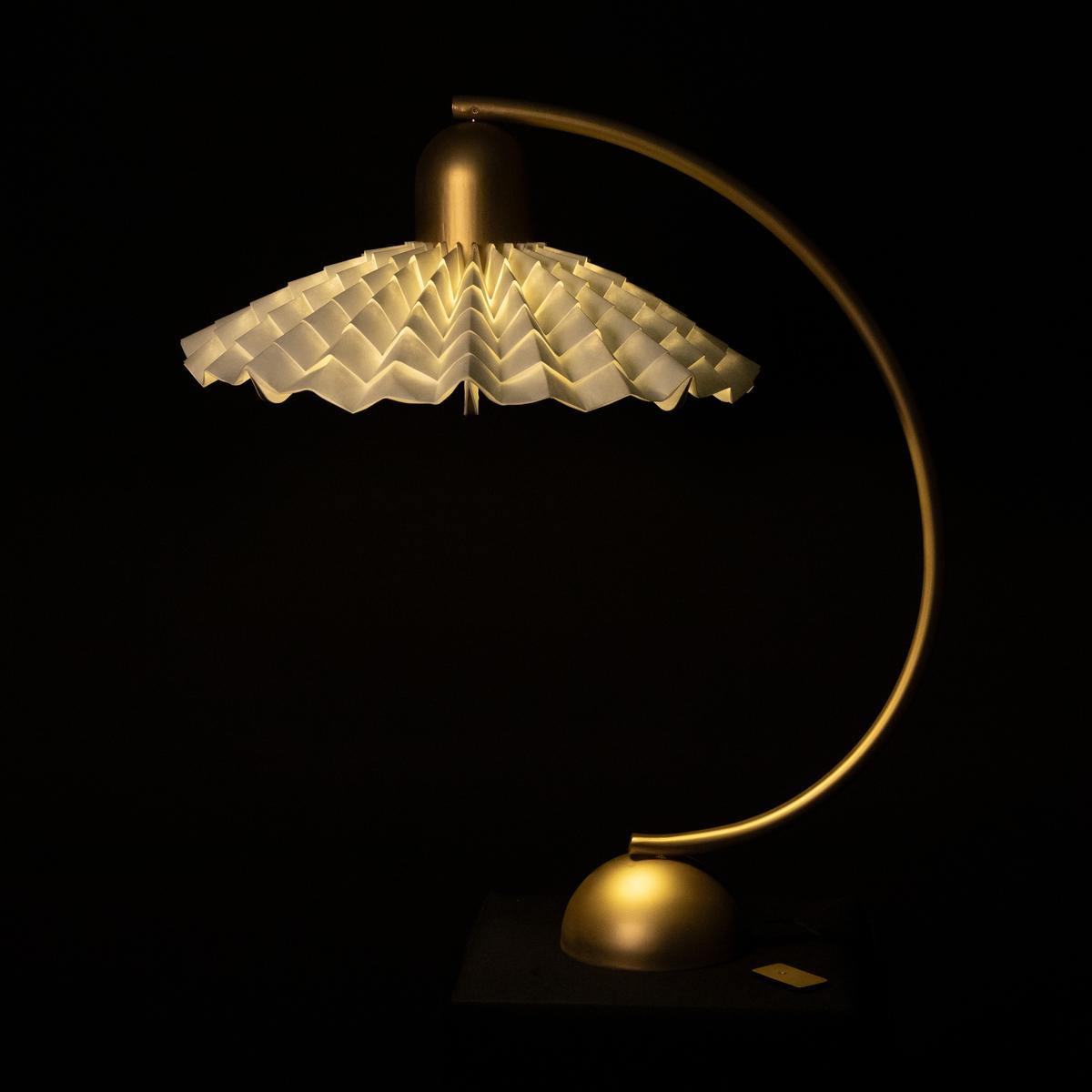
Signature pieces at the event will include their three signature kinetic lighting modules: Aves, that evokes the graceful flight of a bird; NYCTI, inspired by the opening of a flower; and Sabelli, that echoes the delicate emergence of a sea anemone. “Each of these designs are available in various typologies such as desk lamps, floor lamps, etc. We will also exhibit two of our signature pieces: NYCTI Louvre, a solid-wood piece presented at the Musée du Louvre during the French Heritage Days, and Sabelli Reef ‘Jalaja’ crafted with 25 metres of ostrich feathers and ostrich leather sourced from Maison Hermès.”

Following the brand’s pre-launch at the 2025 Milan Design Week, Pia is excited to showcase her creations in India. “We wish to demonstrate that it is possible to imagine a technological future that neither rejects the human hand nor the memory of gesture,” she adds. 

A product by Mycel

A product by Mycel
| Photo Credit:
Special Arrangement

Materials that breathe @ Mycel

Next-generation biomaterials derived from mushroom mycelium are at the core of this Korean white-bio startup’s creations. “By engineering the natural 3D network structure that mycelium forms as it grows, we create Celmure, a premium sheet-type material designed to replace leather, textiles, and certain foam-based applications,” explains Gigi Jung, the brand’s chief strategy officer. 

At Mumbai, the brand will present a sculptural work that highlights the materiality and expressive potential of mycelium. “The piece reflects our design philosophy: the harmony between the organic and geometry by showcasing the natural textures, fibers, and structural forms unique to Celmure,” says Gigi, adding that the piece has been crafted entirely from their in-house developed mycelium sheets. In their work, the brand also incorporates other natural materials such as cotton, jute, banana fibre; and pigments extracted from Ott, a lacquer tree native to Korea.

Through a collection of mycelium and joining techniques that both cover and reveal the exhibition space, visitors will be invited to glide their hands across mycelium-covered tables.

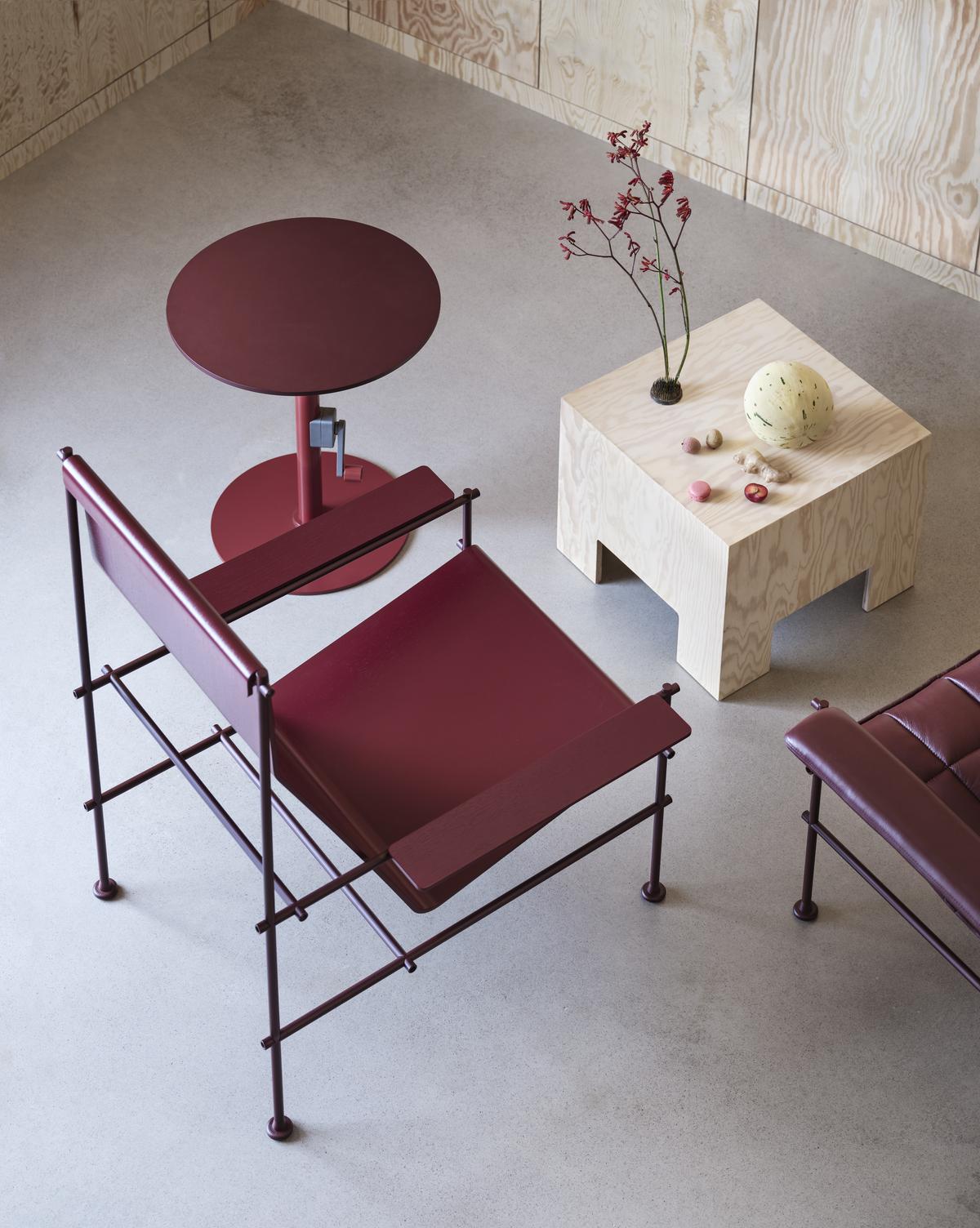
‘Able’ by Blå Station

‘Able’ by Blå Station
| Photo Credit:
MARCUS LAWETT

Recyclable chair @ Blå Station

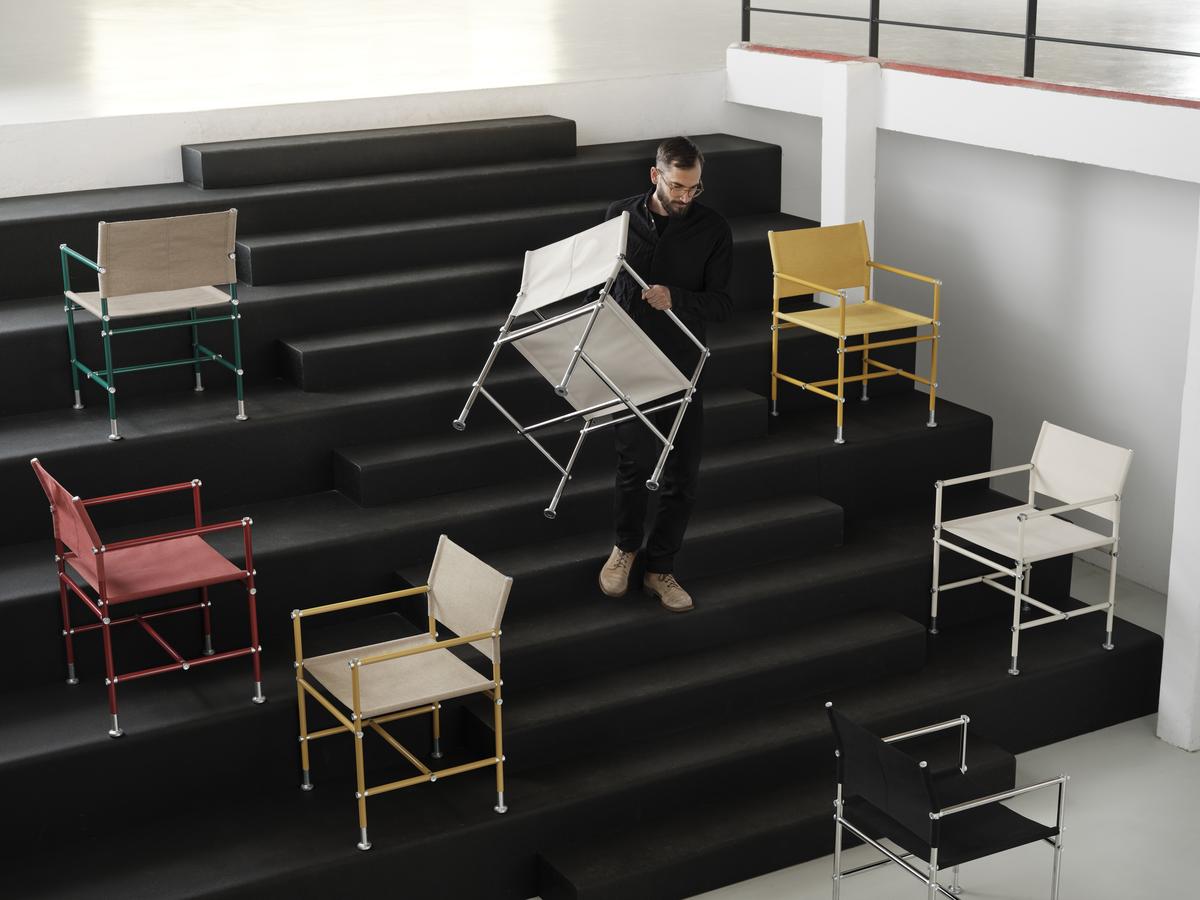
From the Swedish furniture studio, founder Johan Lindau will bring products “that work in the so called ‘third room’ — the room that is a mixture for meeting and work in a more relaxed, but still for an inspiring, creative, and progressive mindset”. These workplaces, he says, have emerged post-pandemic.

Chairs by Blå Station

Chairs by Blå Station
| Photo Credit:
MARCUS LAWETT

He will showcase Able, which he says is “more than a chair”. “We have been addressing issues such as sustainability, durability, and timelessness since we launched in 1986, however, could all questions and demands be addressed in one product? Could one product be sustainable, recyclable, upgradeable, changeable, renewable, dismountable, traceable, serviceable, adaptable, and still lovable?,” says Johan, as he describes the polyfunctional chair that is 100% recyclable. It is crafted with 50% recyclable steel, die-casted zinc, armrests in lacquered or chromed steel tubes, and recycled textiles. 

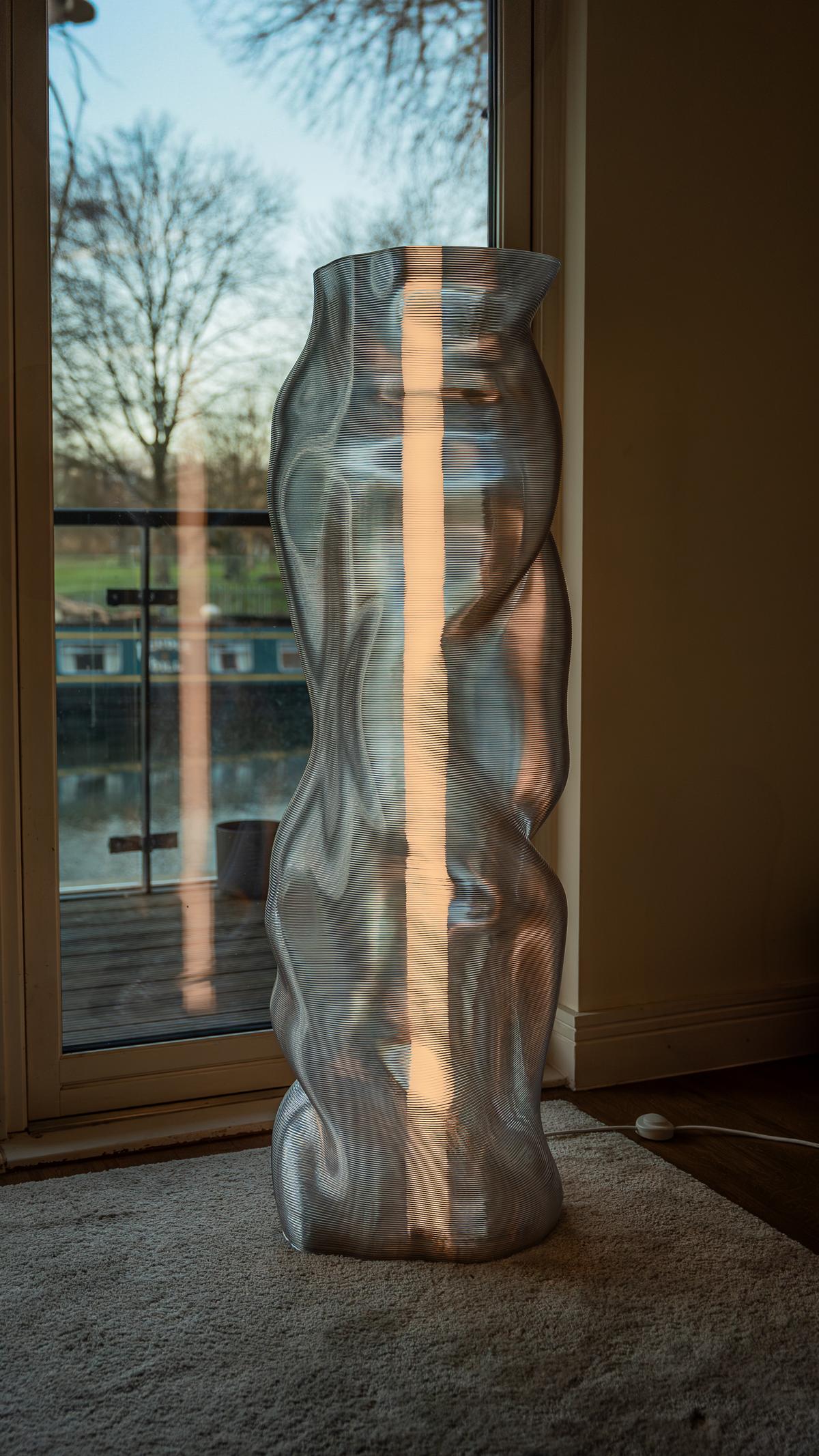
The Wave by Nuflow Designs

The Wave by Nuflow Designs
| Photo Credit:
Special Arrangement

3D printed @ Nuflow Design

“Many of our designs are inspired by natural, sculptural forms,” says Alex James-Salehz, owner- director of the UK-based brand that was launched to “push the boundaries of 3D design”. Their 3D printer was built in-house by Alex’s brother Chris James-Saleh over a year ago. “We source 100% recycled plastic and extrude it at around 200 degrees Celsius. The machine extrudes the hot plastic precisely to our design file. The high digital precision contrasts perfectly with the natural forms of our designs,” says Alex. 

He will be exhibiting a 3D printed dining table inspired by coral, a wood-finished coral coffee table, and their Wave lamp. “The latter is made from a plastic called PET-G and is sourced from 100% post-industrial waste. We processed it further to give it a clear finish. The coral table is made from the same plastic and takes around 18 hours to print,” says Alex, who also works with a bio-plastic which contains recycled saw dust.

Design Mumbai 2025 will be held between November 26 and 29 at Jio World Garden, Mumbai


Source link

Monochrome landscapes and abstract photographs come together in new exhibition


Legendary American photographer Ansel Adams once said, “Landscape photography is the supreme test of the photographer — and often the supreme disappointment.” It is a line that sums up the quiet brutality of the genre, and one that Chennai-based photographer Srinivasan Periathiruvadi relates to immediately. “The challenge with landscape photography is that it requires a lot of patience,” he says. “You have to think about composition, what to include, what to leave out.”

Srinivasan has been photographing the wilderness since 2005 and has shown his work in several solo and group exhibitions. This week, he returns to The Folly, Amethyst with a new body of monochrome landscapes titled Mountains and Mugil, that were shaped over years of travelling through high-altitude terrains in Kashmir and Ladakh. His friend Jayanand Govindaraj will exhibit a series of abstract photograph that explore intentional camera movement alongside.

Srinivasan’s photographs distil mountains, clouds, and light into something almost meditative, inviting viewers to slow down and stay with the silence between forms.

“I chose monochrome because it’s a challenge. Today, millions of colour images are made on phones every minute. Black and white strips all of that away, and it leaves you with only tones, light, and form. I wanted to experiment and see how people respond to that on the walls,” he says. 

A photograph from Mountails & Mugil

A photograph from Mountails & Mugil
| Photo Credit:
Srinivasan Periathiruvadi

On display are 17 monochrome landscapes, all printed by Srinivasan himself — a final step he treats as part of the creative process rather than an afterthought. “For me, capturing, processing and printing are all equally important. A photograph isn’t finished until it’s on paper,” he says. 

Fourteen out of the 17 photographs were shot on a digital achromatic camera — a device that captures photographs only in black and white. “There’s no colour information at all,” he explains. “Most people shoot in colour and convert it later, but this camera records only tones, like the old black-and-white film days. It forces you to think about light very differently.”

If Srinivasan’s images chase stillness, Jayanand’s contribution to the show, leans into movement, abstraction and a little bit of deliberate blur. A photographer since 1962 — long enough, he jokes, “to have shot everything from family birthdays to seven continents’ worth of wildlife”. 

A photograph from Pairs

A photograph from Pairs
| Photo Credit:
Jayanand Govindaraj

For Jayanand, the shift toward abstraction began just before the pandemic, when he encountered the Field of Light installation at Uluru in Australia — acres of illuminated bulbs that he was compelled to photograph without a tripod. “I had to rethink everything,” he says. Back home, he kept experimenting at night, chasing the way plants, shadows, and passing light could dissolve into painterly streaks. What emerged is Pairs — a series of abstract photographs placed side by side, sometimes clearly linked, sometimes barely, nudging viewers to find the conversation between them. 

Though abstraction is his current preoccupation, Jayanand’s instincts were shaped over decades of photographing living subjects. The shift to non-literal imagery did not erase that history; it sharpened it. “Photography isn’t about sharpness or equipment,” he says. “It’s about what you feel when you look at something.” It is a line of thought he returns to often. For him, the point is not technical perfection but emotional resonance.

A photograph from Pairs

A photograph from Pairs
| Photo Credit:
Jayanand Govindaraj

Together, Srinivasan’s monochromes and Jayanand’s abstractions make a good argument for slowing down and looking deeper at landscapes, at light, and at the instinct behind the shutter. In a world saturated with colour and speed, the exhibition makes a simple, almost old-fashioned demand: pause long enough for the image to meet you halfway. 

Mountains and Mugil and Pairs will be on display at The Folly, Amethyst from November 21 to 23, from 10am to 7.30pm. Entry is free.

Published – November 19, 2025 04:01 pm IST


Source link

Bengaluru’s Leon’s arrives in Chennai with its OG smash burger


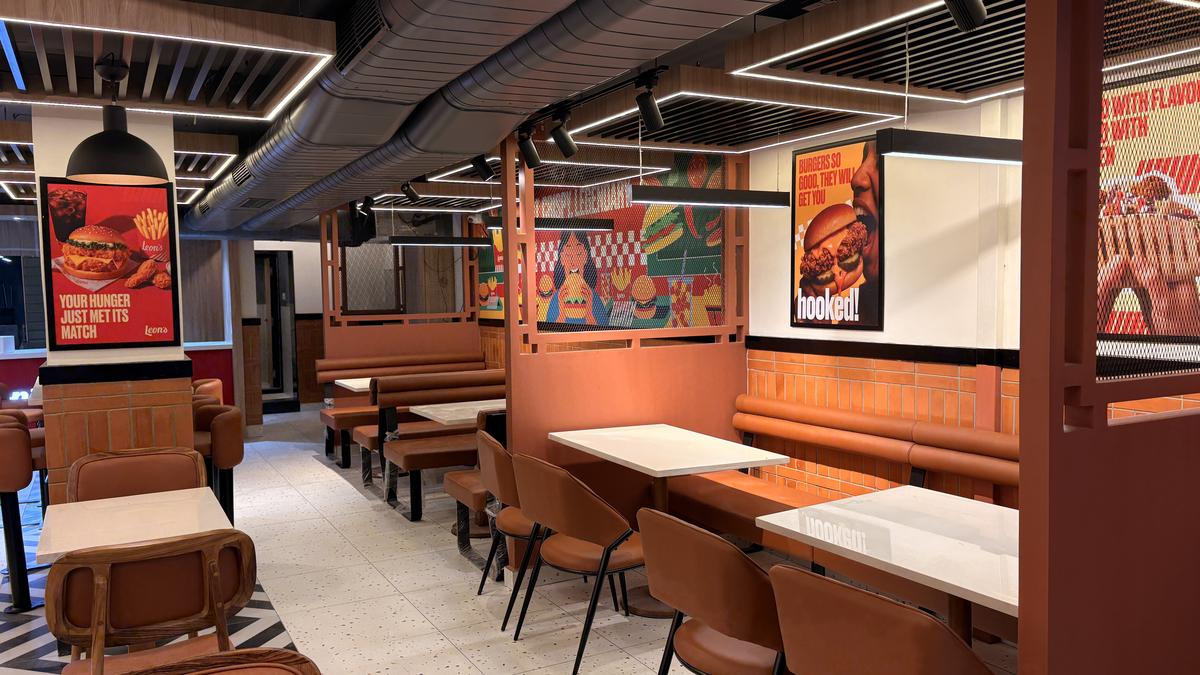
Inside Leon’s Chennai outlet.

Inside Leon’s Chennai outlet.
| Photo Credit: SPECIAL ARRANGEMENT

If you have lived in Bengaluru or passed through it, chances are you have heard of the legend of Leon’s. When it landed in Bengaluru in 2015, it became a go-to for broke college kids and burger purists at a time when the city was still flirting with its gourmet burger scene. Now, the same classic brand has opened its first outlet in Chennai. 

The interiors are very classic Leon’s—casual, unfussy, the kind that screams, “come as you are.” The only addition is the framed Chennai cityscape that informs you that you are still in Tamil Nadu and not magically transported to Bengaluru.  

Surrounded by a very Gen Z crowd (the kind that knows exactly what to order without looking at the menu), we begin our meal with Falafel fries in garlic sauce. It comes piping hot: smashed falafel topped with homemade chilli garlic sauce. The falafel is crunchy enough to reassure you that it was freshly fried. 

All American smash burger.

All American smash burger.
| Photo Credit:
SPECIAL ARRANGEMENT

Next comes the Louisiana chicken burger, a simple, reliable, comforting, the after-college, late evening kind of burger that does not do much to impress with just onion, lettuce, cheese, and a chicken patty. We then order the OG Smash Burger, which comes with a pillowy brioche bun and two smashed chicken patties, caramelised onion, and lots of cheese (dont worry, nobody is judging your slippery burger struggle). With caramelised onion and plenty of cheese, it is hearty, savoury and sweet enough to keep you going.

What is a burger without fries? Here, the burgers come with V- Crispers and an addictive creamy mayo dip. Only if I could reach out and have an unlimited supply of those crispy fries. 

While the menu remains the same, Chennai has its new additions. “Our menu is designed to appeal to Chennai’s love for spice, comfort food, and quality dining. For Chennai, we have also introduced boba lattes,” says the founders.

While I focus on the non-vegetarian side of the menu, my friends jump to the vegetarian side with a veggie supreme burger. Here is where it turns out to be a little dull .

While most burger joints nail the meat, the real test is the vegetarian burgers. Most burger joints opt for a patty that tastes more like a ‘veg cutlet’, and so does Leon’s. The patty is soggy, lacks flavour, and the jalapeño sauce is what rescues it. 

We also order the veg pizza pockets— deep-fried dough stuffed with saucy veggies. Is it indulgent? Absolutely? Should you order it? Only if the cheat day is having a cheat day.

Biriyani bowls

Biriyani bowls
| Photo Credit:
SPECIAL ARRANGEMENT

In 2025, India is hell bent on turning everything into Biriyani. Leon’s also jumps onto the bandwagon with chicken popcorn biriyani, chicken doner biriyani, and paneer popcorn biriyani. Apart from that, the menu also features hot and spicy chicken wings in three different flavours, veg and non-veg pita breads, wraps and salads. The drinks menu is packed with everything from classic mojitos to mango lemonade–though I would suggest the only way you should gulp down a burger is with a side of chilled Coke. 


Leon’s is not fancy, and it does not pretend to be– if you know how to order correctly, it hits the right notes. 

Leon’s is at 4th Avenue, AC Block, Anna Nagar. A meal for two is priced at priced at ₹ 1000.


Source link

Raghava KK returns to Chennai with an abstract exploration of identity, loss, and reinvention


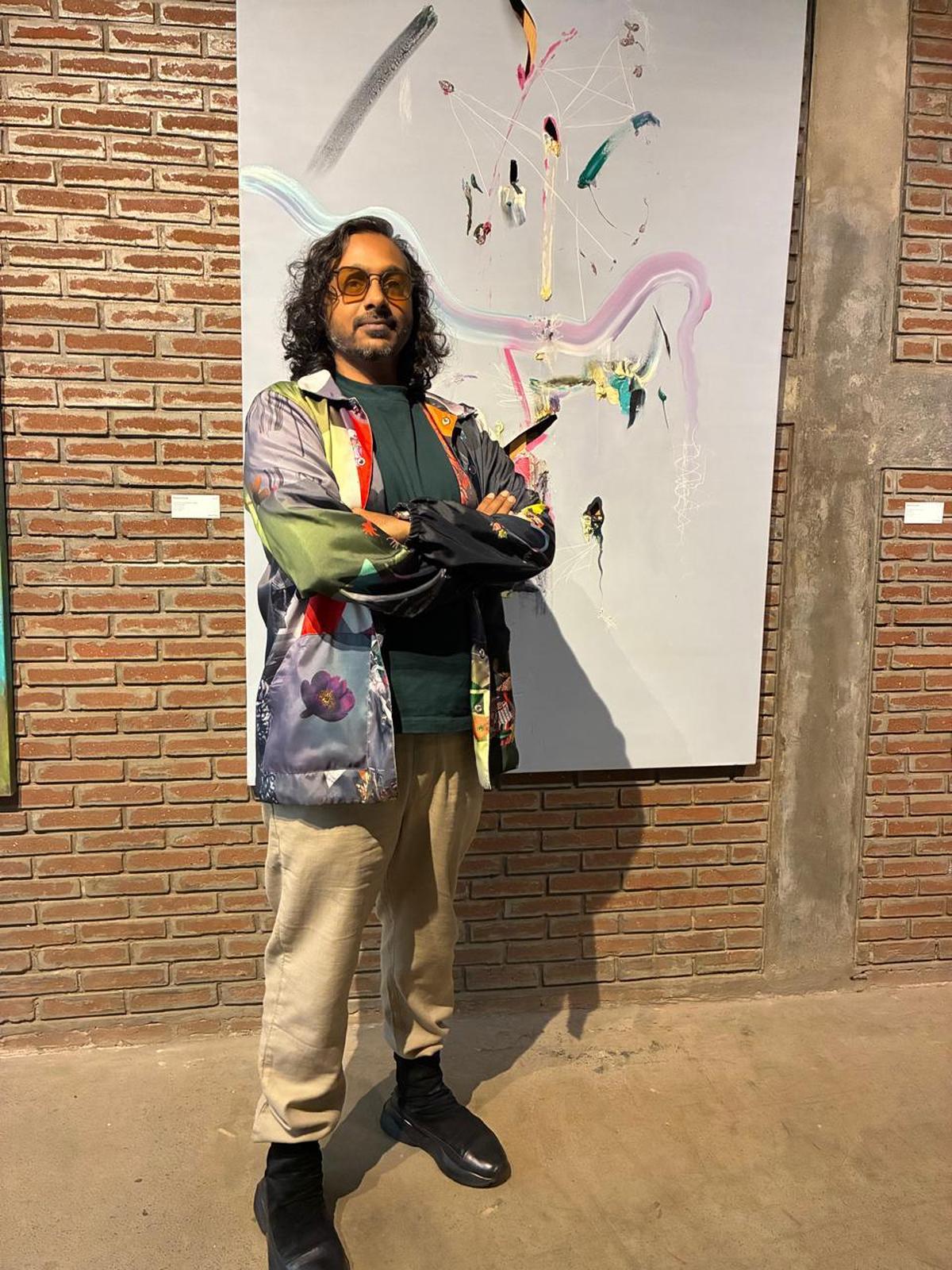
There is a quiet intensity in how artist Raghava KK speaks — part philosopher, part performer, and part painter, unlearning everything he once knew. His latest series, Figuring the Edge, at Ashvita’s, channels that spirit through abstraction. This is a body of work born not from a narrative, but the undoing of it. 

For decades, Raghava has been known as a storyteller who has blurred the boundaries between art and technology, and emotion and intellect. But here, he steps away from the story . “Stories make us what we are,” he says. “Stories are the cause of many innovations and helped homo sapiens master the world; they are also the source of much destruction, so when you hold on to stories very tightly, they break; I want to show what happens when stories break.”

Raghava KK

Raghava KK
| Photo Credit:
SPECIAL ARRANGEMENT

A few years ago, Raghava’s own story broke. After two decades in the US, collaborating across continents, his life collapsed when he went through a divorce. “I was at the top of my game, doing art camps for Oprah Winfrey, Jeff Bezos, then i went through a divorce and suddenly, everything I thought was me, started falling apart,” he says. “So I came back to India, to my mother, trying to make sense of it all.” 

His brother, Karthik Kalyan Raman, a philosopher and economist, was going through a similar reckoning. “He began asking me these questions — when the stories that make you break, who are you?” These questions became the centre of Figuring the Edge— each work beginning as a written inquiry, then a sketch, and then a painting. “I spent four or five days just writing, thinking, sketching. I have made hundreds of sketches before arriving at this. Each artwork is accompanied by a question, and the painting becomes the answer.” 

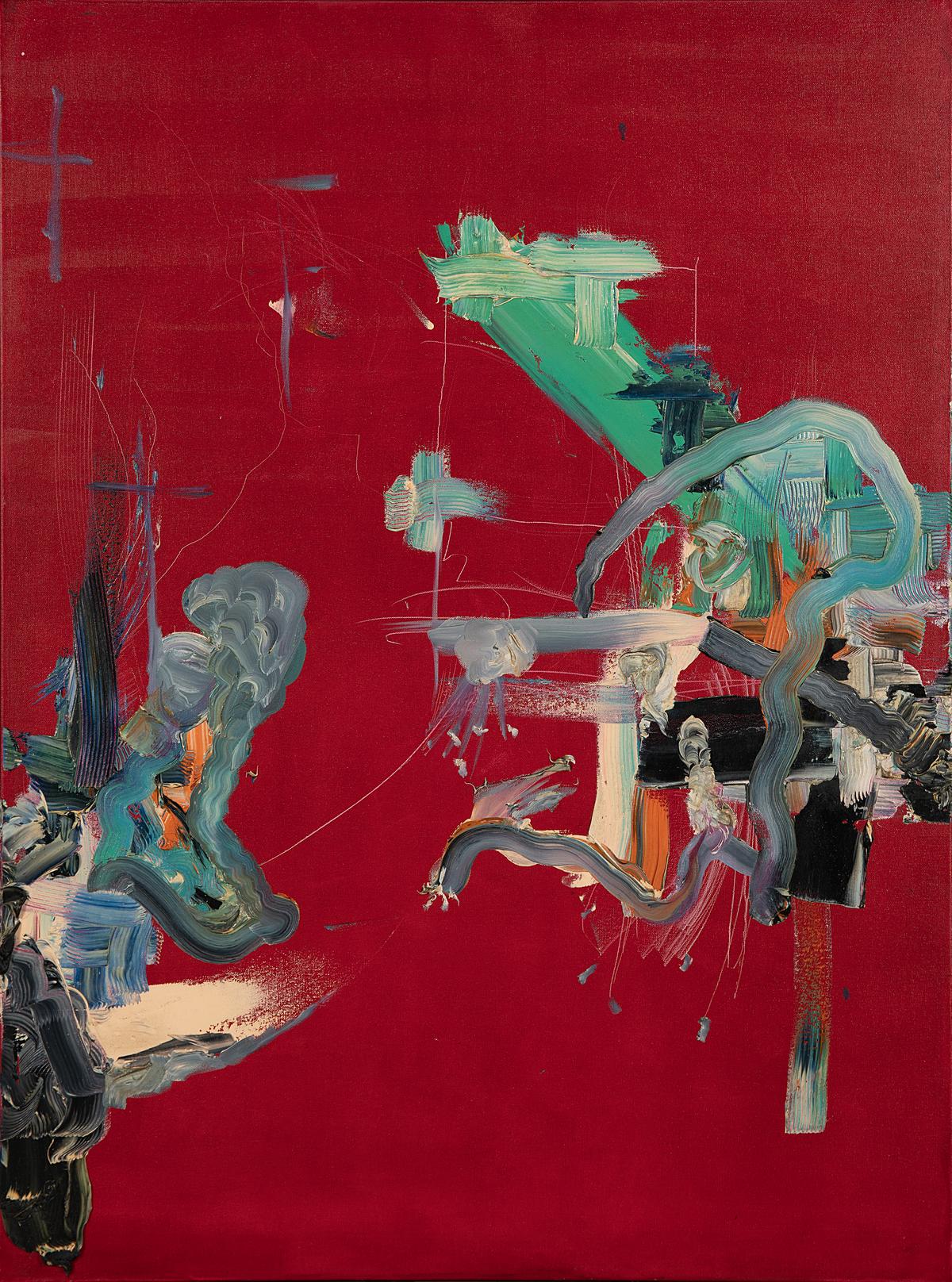
Figuring the Edge by Raghava KK

Figuring the Edge by Raghava KK
| Photo Credit:
SPECIAL ARRANGEMENT

Thick impastos, shifting pigments, and restless strokes shape the artworks on the wall. “I wanted to create something that allowed me to reinvent myself through the process. After 30 years of painting, I felt the need to paint as if I were starting all over again — to break every rule I have set for myself and make something entirely new.”  The ‘edge’ in the series is a stage of being. “While doing this series, I realised that artists are supposed to live on the edge of society, we are never designed for the centre, we are designed to push the boundaries.”    

“The art forms are unphotographable and only reveal themselves when you stand infront of it These paintings ask for time. They reveal themselves slowly, only if you stay with them. That’s why I say my paintings are not images; they are like people. As you move closer, they show you their scratches and flaws. The chaos comes into focus. The nearer you get, you realise it’s all a beautiful kind of mess.,” says Raghava.

Born into a Tamil Hindu family in Bengaluru, raised in a Muslim neighbourhood, and educated in a Catholic school, Raghava’s artistic journey is a multitude of perspectives. “I can play my Christmas carols, sing the azaan, and also do my sandhya vandanam.” His canvases reflect this multiplicity, and each viewer sees something different – a figure, a face or a landscape. 

With Figuring the Edge, the artist returns to the Chennai art scene after two decades. His canvases turn into a site of tension —between body and image, figure and ground. Through his abstract work, Raghava invites the audience to stand on the edge of art itself and reinvent themselves. 

Figuring the Edge, is on at Ashvita’s, Mylapore, till December 15, from 11am to 7pm, Monday to Friday. Entry free. 

Published – November 19, 2025 03:55 pm IST


Source link

Raghava KK returns to Chennai with an abstract exploration of identity, loss, and reinvention


There is a quiet intensity in how artist Raghava KK speaks — part philosopher, part performer, and part painter, unlearning everything he once knew. His latest series, Figuring the Edge, at Ashvita’s, channels that spirit through abstraction. This is a body of work born not from a narrative, but the undoing of it. 

For decades, Raghava has been known as a storyteller who has blurred the boundaries between art and technology, and emotion and intellect. But here, he steps away from the story . “Stories make us what we are,” he says. “Stories are the cause of many innovations and helped homo sapiens master the world; they are also the source of much destruction, so when you hold on to stories very tightly, they break; I want to show what happens when stories break.”

Raghava KK

Raghava KK
| Photo Credit:
SPECIAL ARRANGEMENT

A few years ago, Raghava’s own story broke. After two decades in the US, collaborating across continents, his life collapsed when he went through a divorce. “I was at the top of my game, doing art camps for Oprah Winfrey, Jeff Bezos, then i went through a divorce and suddenly, everything I thought was me, started falling apart,” he says. “So I came back to India, to my mother, trying to make sense of it all.” 

His brother, Karthik Kalyan Raman, a philosopher and economist, was going through a similar reckoning. “He began asking me these questions — when the stories that make you break, who are you?” These questions became the centre of Figuring the Edge— each work beginning as a written inquiry, then a sketch, and then a painting. “I spent four or five days just writing, thinking, sketching. I have made hundreds of sketches before arriving at this. Each artwork is accompanied by a question, and the painting becomes the answer.” 

Figuring the Edge by Raghava KK

Figuring the Edge by Raghava KK
| Photo Credit:
SPECIAL ARRANGEMENT

Thick impastos, shifting pigments, and restless strokes shape the artworks on the wall. “I wanted to create something that allowed me to reinvent myself through the process. After 30 years of painting, I felt the need to paint as if I were starting all over again — to break every rule I have set for myself and make something entirely new.”  The ‘edge’ in the series is a stage of being. “While doing this series, I realised that artists are supposed to live on the edge of society, we are never designed for the centre, we are designed to push the boundaries.”    

“The art forms are unphotographable and only reveal themselves when you stand infront of it These paintings ask for time. They reveal themselves slowly, only if you stay with them. That’s why I say my paintings are not images; they are like people. As you move closer, they show you their scratches and flaws. The chaos comes into focus. The nearer you get, you realise it’s all a beautiful kind of mess.,” says Raghava.

Born into a Tamil Hindu family in Bengaluru, raised in a Muslim neighbourhood, and educated in a Catholic school, Raghava’s artistic journey is a multitude of perspectives. “I can play my Christmas carols, sing the azaan, and also do my sandhya vandanam.” His canvases reflect this multiplicity, and each viewer sees something different – a figure, a face or a landscape. 

With Figuring the Edge, the artist returns to the Chennai art scene after two decades. His canvases turn into a site of tension —between body and image, figure and ground. Through his abstract work, Raghava invites the audience to stand on the edge of art itself and reinvent themselves. 

Figuring the Edge, is on at Ashvita’s, Mylapore, till December 15, from 11am to 7pm, Monday to Friday. Entry free. 

Published – November 19, 2025 03:55 pm IST


Source link

Anamika V’s latest body of works explores what it means to be human in the AI age


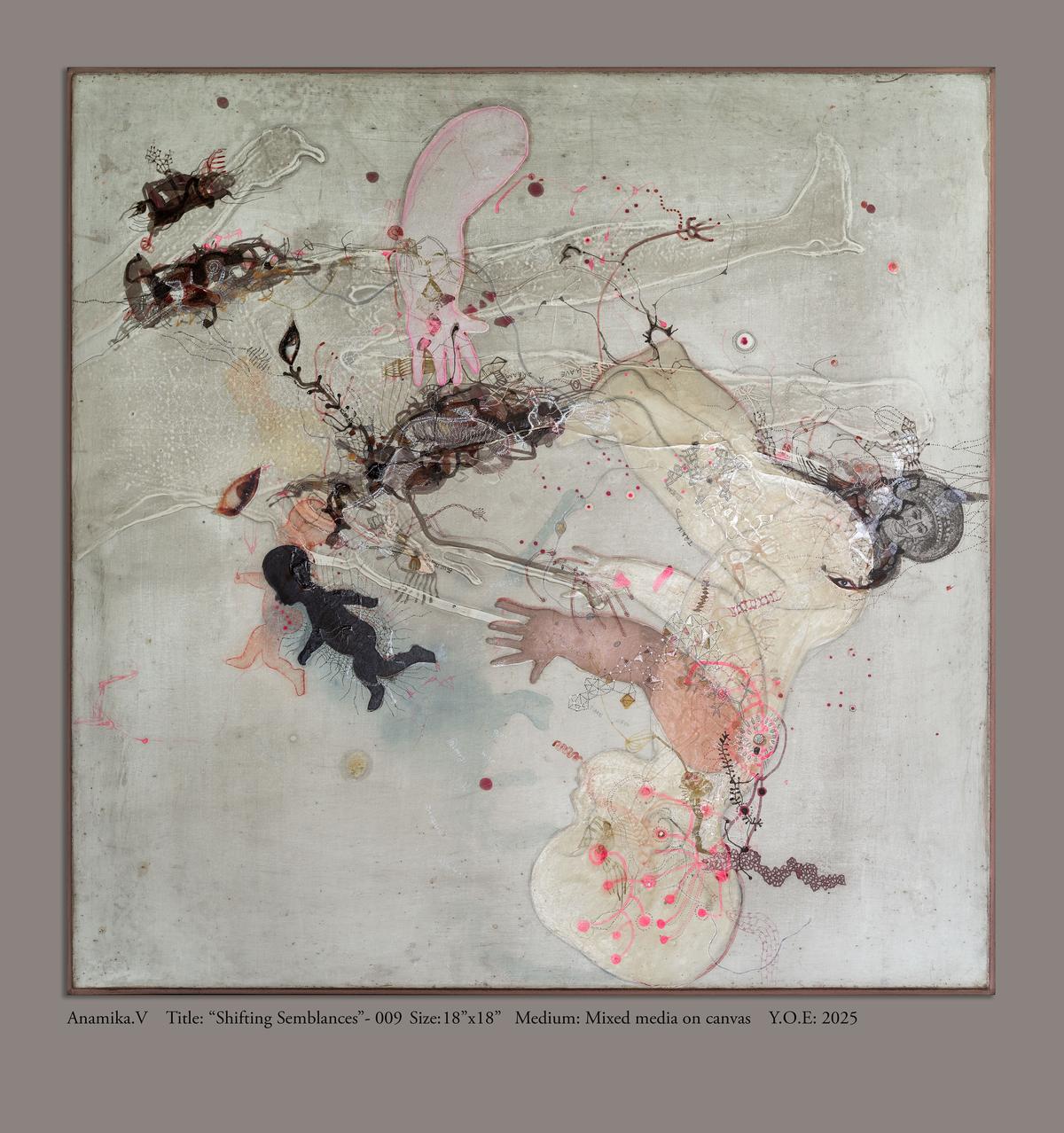
Shifting Semblances by Anamika V

Shifting Semblances by Anamika V
| Photo Credit: SPECIAL ARRANGEMENT

In an age where our screens dominate our lifestyle, artist Anamika V returns with an important reminder of what it means to feel human. Her latest exhibition, I’m Not A Robot, opening on November 21 at Espace, Alliance Française of Madras, delves into the fragile threshold between memory, imagination, technology and lived experiences. Curated by N Ramachandran, the show brings together Anamika’s newest body of mixed media works. 

I’m Not A Robot explores the opportunities and obstacles of the ‘AI’ era, where every one of us is swamped by technology, and where it is leading us – to no man’s land. 

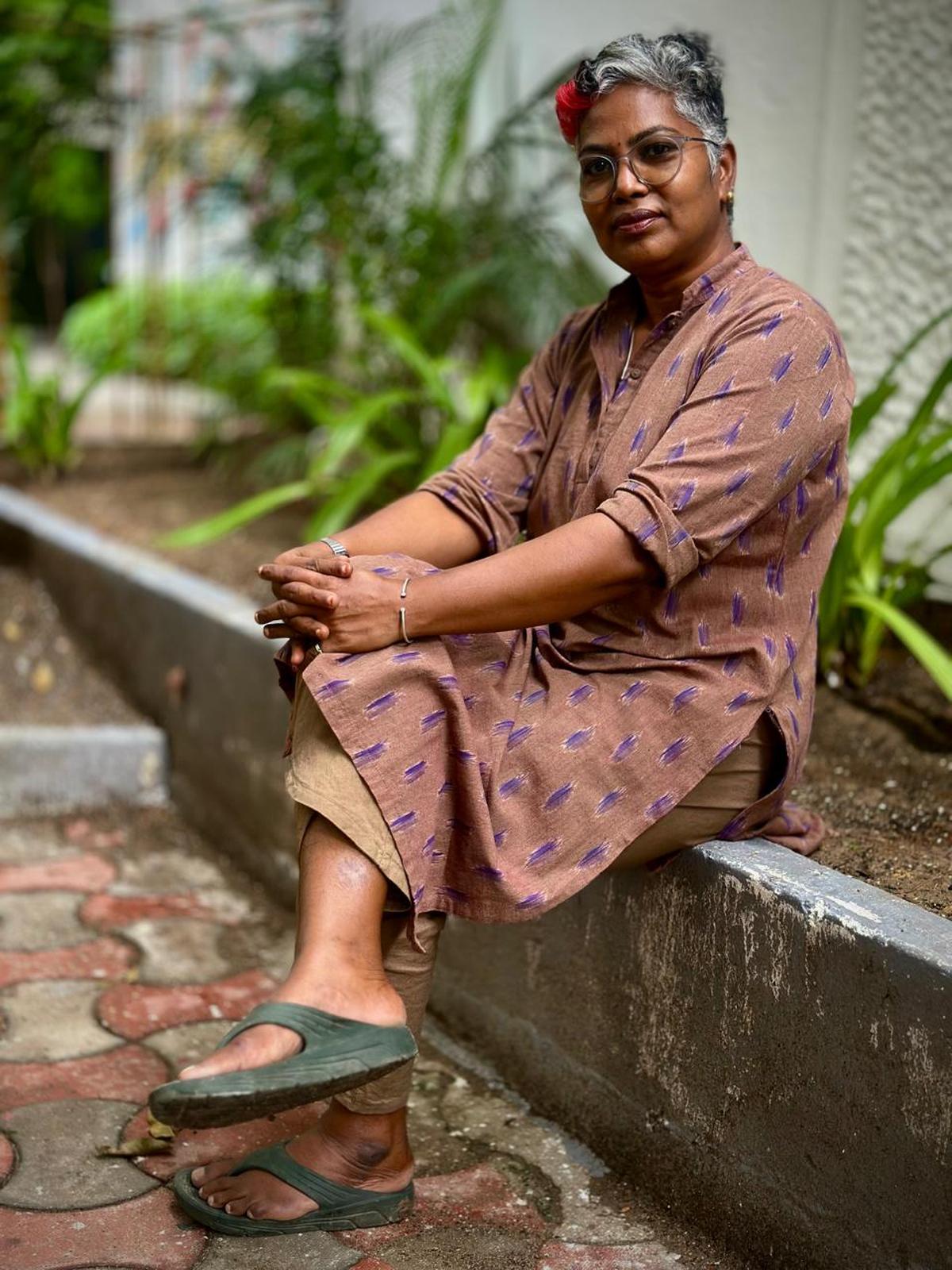
Anamika V

Anamika V
| Photo Credit:
SPECIAL ARRANGEMENT

“For over three decades, since passing out of the College of Arts, Chennai, where I studied painting and printmaking, I have always worked in long, immersive series that span six to eight years. My current body of work, which has evolved over the past several years, comes from observing the technological boom around us. Technology has made our lives efficient and comfortable, but somewhere in this rapid advancement, I feel we are losing something essential,” says Ananmika. 

“Everywhere we go — apps, mass media, the digital world — we are constantly asked, ‘Are you human?’ It is ironic, because these questions are posed by machines, yet the deeper question is one we should be asking ourselves: What makes us human? This thought pushed me into a space of introspection. I began to reflect on psychology, environment, technology, mass media, and the subtle ways they shape and influence us, which ultimately became the influence for this body of work,” she further added. 

Shifting Semblances by Anamika V

Shifting Semblances by Anamika V
| Photo Credit:
SPECIAL ARRANGEMENT

“In an era dominated by AI, smartphones, fibre optics, and an overwhelming flow of information, her work asks a simple, piercing question: “What do all these mean to a child who only wants to play and be normal?” As she has employed mixed media with forms dissected and overflowing with layers like a dream, questioning the existence of humanity … the drawings by the artist intervene in layers and forms, confusing the actual reality we live in,” says Ramachandran, curator of the exhibition.  

From broad strokes to minute dots, the paintings move away from the fixed and familiar toward openness and experimentation. 

I’m Not A Robot will be on display from November 21 to 28. From 10am to 6pm, at Espace, Alliance Française of Madras, Nungambakkam.


Source link

Get ready for some festive cheer with Mellow Circle’s annual Christmas play


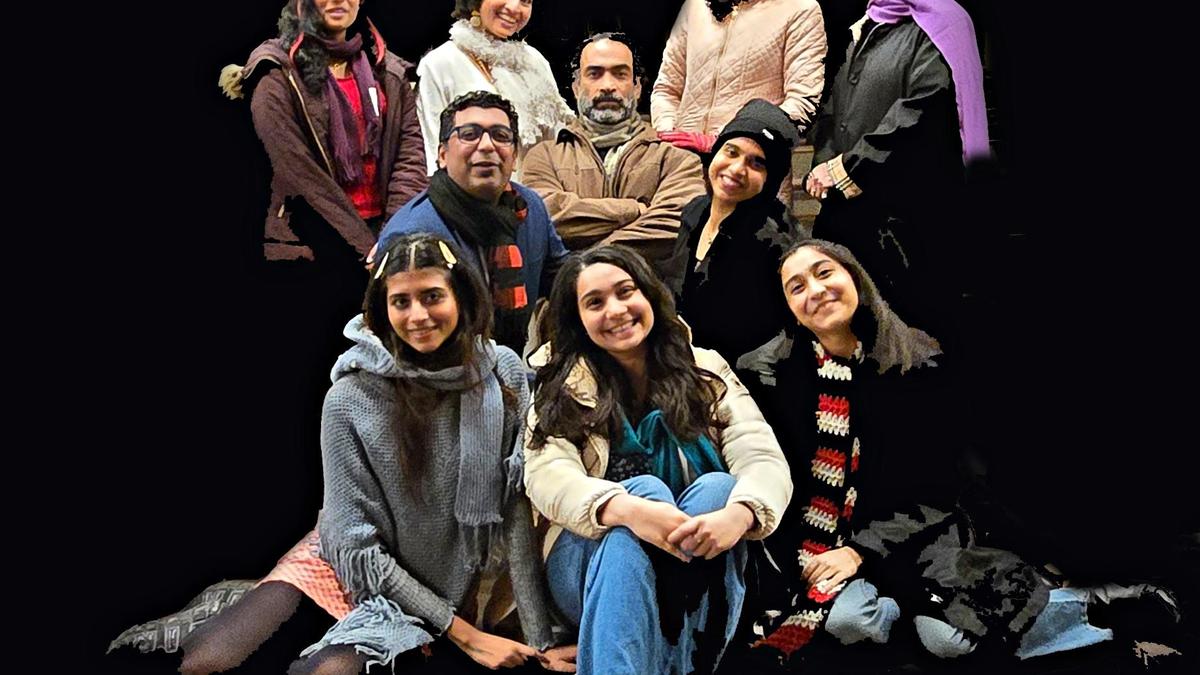
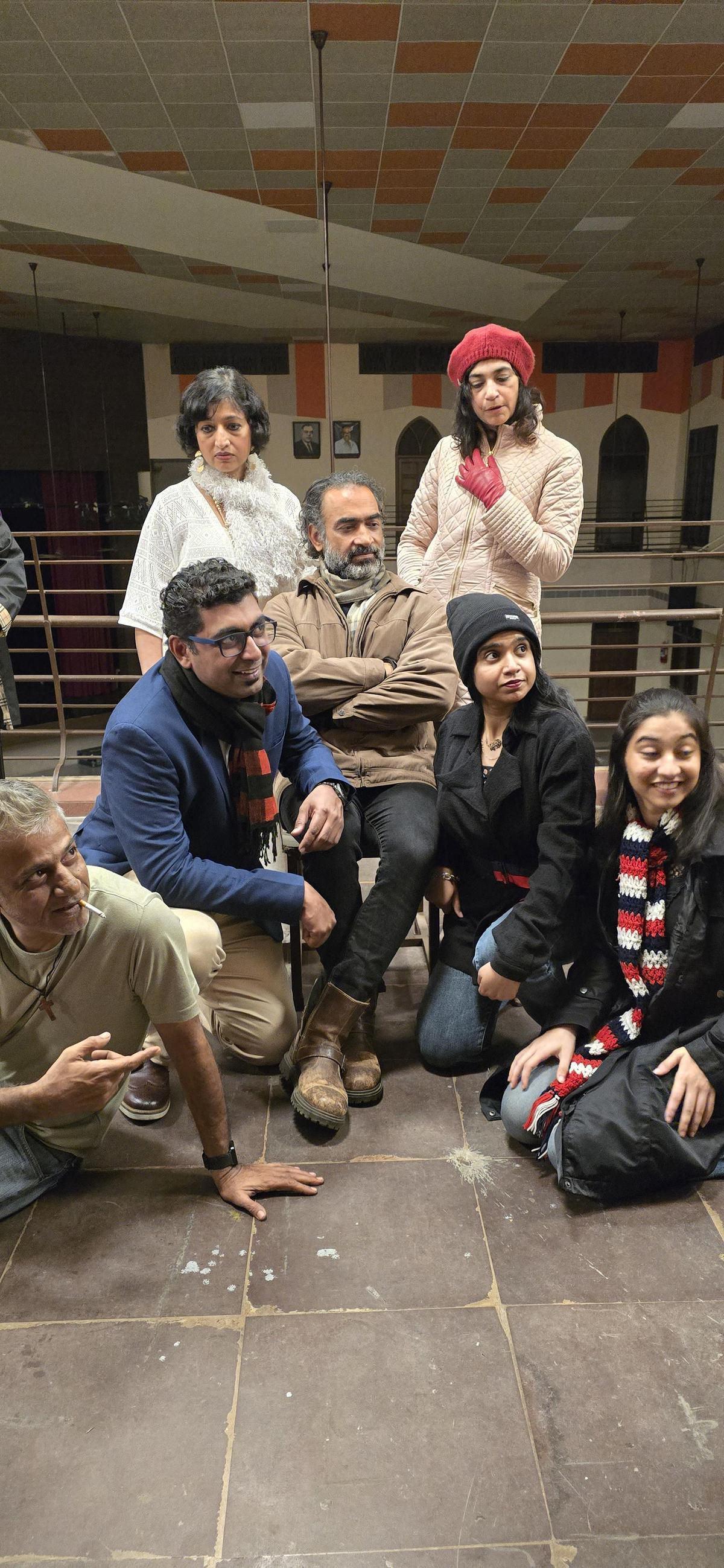
The cast at rehearsal

The cast at rehearsal
| Photo Credit:

From July to September every year, Michael Muthu is a self-confessed Grinch. That is when the search for the annual Mellow Circle Christmas play begins. He goes through various scripts and does not come out of Grinch mode till he finds the perfect one. “We are running out of good plays; there aren’t enough Christmas plays available in the world,” he says, a tinge of worry lacing his tone. This year, they found a play online. “We had to rework it. It required a lot of editing and rewriting, and now we have a play ready,” he adds.

It is titled Trials, Tribulations and Christmas Decorations. The two-hour production revolves around John, who is visited by his daughter Kimberly and her husband. Kimberly wants her father to get into the holiday spirit, and invites people to John’s house to celebrate the festive season. When a blizzard strikes, all of them get snowed in together, leading to heart-warming and comedic exchanges.

John, is the archetypical grinch. But he was not always like this. He used to be a fan of the festive season — his house would shine with lights, decorations, and decked up trees, and his doors were always open to friends and strangers. Circumstances changed him. The play will reveal what led to this, and if he will go back to being the John of yore.

“It’s a feel good story that has a bit of comedy and emotions. It also talks about how people have trials and tribulations and how it’s resolved with the love of companions,” says Michael, who directed the play. The nine-member cast includes Yohan Chacko, Tehzeeb Katari, Roshan Poncha, Anushka Maria, Rohan Philip, Katya Philbert, Larissa Philbert, Arya Saravanan, and Serah Jachin.

No Mellow Circle play is complete without the choir. A 40-voice choir — directed by Roshni Sharon — will present around five beautiful songs of the season. This is Mellow Circle’s 26th Christmas production, with Michael directing at least 21 of those, he says. This year marks a special milestone for Mellow Circle as it launches its new initiative — Prathyasha Home for Destitute Women, a project dedicated to offering shelter, care, and dignity to abandoned and vulnerable women in the community. The proceeds from the musical will go to support the operations of this home.

The shows will be staged at the Museum Theatre, Egmore, at 6.30pm on November 28, 29, and 30. Donor passes are available through Premier Tickets, with denominations of ₹400, ₹750, and ₹1,500 for Friday, and ₹500, ₹1,000, and ₹2,500 for Saturday and Sunday. For details, contact 9841074841 on WhatsApp.


Source link

Katherine Johnson: NASA’s forgotten human computer


Katherine at the Katherine G. Johnson Computational Research Facility.

Katherine at the Katherine G. Johnson Computational Research Facility.
| Photo Credit: David C. Bowman, NASA

At the age of 10, a young African American girl in Virginia, U.S.A., started high school and then went on to graduate from West Virginia State College at 18, earning degrees in mathematics and French. From a small town to being of extreme importance to NASA in the late 20th Century, this is the story of one of the pioneers who broke the ceiling of racial, gender and subject-based discrimination in the field. This is the story of Katherine Johnson.

Who was she?

Katherine Johnson was a mathematician and one of the first African American women to work at the National Advisory Committee for Aeronautics (NACA), which later became NASA. Her groundbreaking calculations helped pave the way for modern space exploration and broke racial and gender barriers in the field of STEM. 

Born in West Virginia, Katherine Johnson was born as Creola Katherine Coleman on August 26, 1918 and grew up with parents who were determined to give their children the best possible education they could. As a young student, Johnson was remarkably good at mathematics and managed to start high school two to three years prior to the usual admission age. At the age of 18, she already had a degree in her hand and went on to become a teacher. In 1939, Katherine accepted an invitation to become one of the first Black students in a graduate programme at West Virginia University as well. 

Her life up close

After graduating, Katherine married fellow educator Jimmie Goble, and together they started a family, leading to her taking a break from her professional life and career. In 1952, she got back to her career, and this was one of the turning points. After the loss of her first husband in 1956, she got married to Jim Johnson in 1959. All while building her extraordinary career in STEM.

The human computer

Katherine was one of the exceptionally talented Black women hired to perform complex calculations required for aeronautics and spaceflight, challenging the racial and gender biases of mid-century America. Katherine’s expertise in analytic geometry quickly set her apart. Some of her most notable accomplishments include calculating the trajectory for Alan Shepard’s 1961 spaceflight, which ensured a safe mission, and later assisting in determining John Glenn’s flight path for his historic orbital mission in 1962.

It is said that Glenn famously insisted on Katherine manually verifying the computer-generated calculations before proceeding, emphasising the trust NASA had in her abilities. Her calculations also helped the Apollo 11 mission, which landed Neil Armstrong and Buzz Aldrin on the moon. 

Katherine excelled not only as a mathematician but also as a teacher and mentor. She tutored students, taught neighbourhood children piano, and continued her advocacy for the education of Black girls and other under-represented groups in mathematics and science. 

Breaking the ceiling

At a time when gender, race and every other detail about a person were often used as reasons for discrimination, Katherine Johnson stands as a testament to what dedication and confidence can bring out. 

Due to her gender and race, Katherine Johnson encountered numerous challenges throughout her career. She repeatedly proved her abilities and refused to accept the status quo.  Although racism and sexism threatened to overshadow her contributions, her integrity and work ethic earned her enduring respect among coworkers. A significant achievement for women in STEM fields, she was the first woman in her division to receive credit as an author on a research report.

Long-term results

In the immediate aftermath of NASA’s significant accomplishments, Katherine and many other women were frequently disregarded, demonstrating both the effects of historical discrimination and the need for continued acknowledgement of marginalised voices. Her contributions gained greater recognition in later years, culminating in the Presidential Medal of Freedom in 2015 and her story being told to millions of people through the book and film adaptation “Hidden Figures”.

After working for NASA for more than thirty years, Katherine Johnson retired in 1986. Her impact went well beyond the field of mathematics. Katherine helped pave the way for generations of women and people of colour in STEM by standing up for her rights to engage, speak up, and receive recognition. On February 24, 2020, she died at the astounding age of 101.


Source link

Fashion label Huemn drops its SS’26 collection in collaboration with the newly launched Tata Sierra


The SS’26 collection showcases traditional embroidery on wool suiting and denim, a one-piece sari and more along with a capsule series of caps, T-shirts and jackets in collaboration with Tata Sierra

Co-founder and designer of clothing brand Huemn, Pranav Kirti Misra uses a poetic metaphor to describe his SS’26 collection that was unveiled in Mumbai on November 15. “Like poet Rainer Maria Rilke said in one of his works, it is not just enough to have memories. One must be able to forget them, until they have turned to blood within us, to resurface as something else. And that is chikankari for me,” he says. 
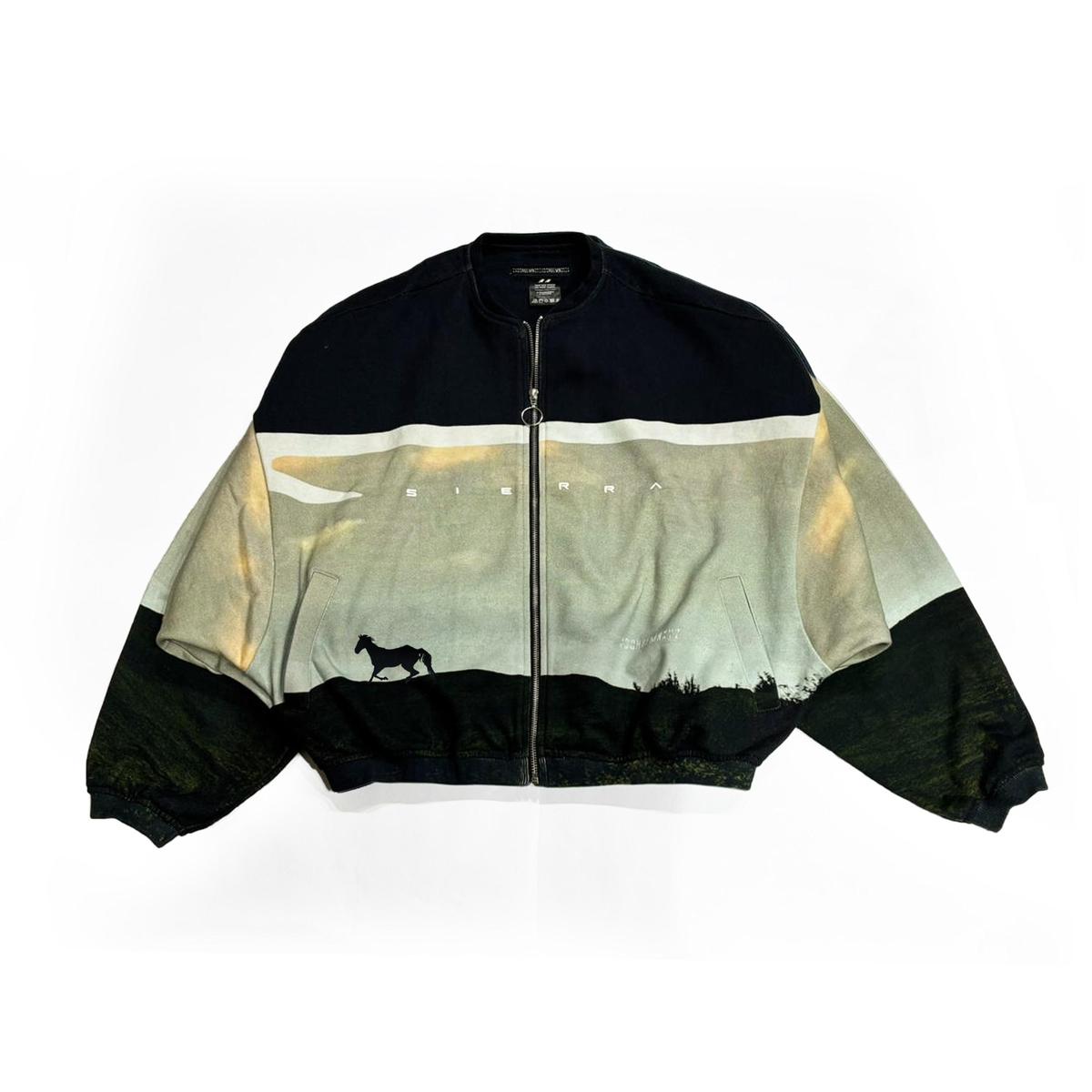
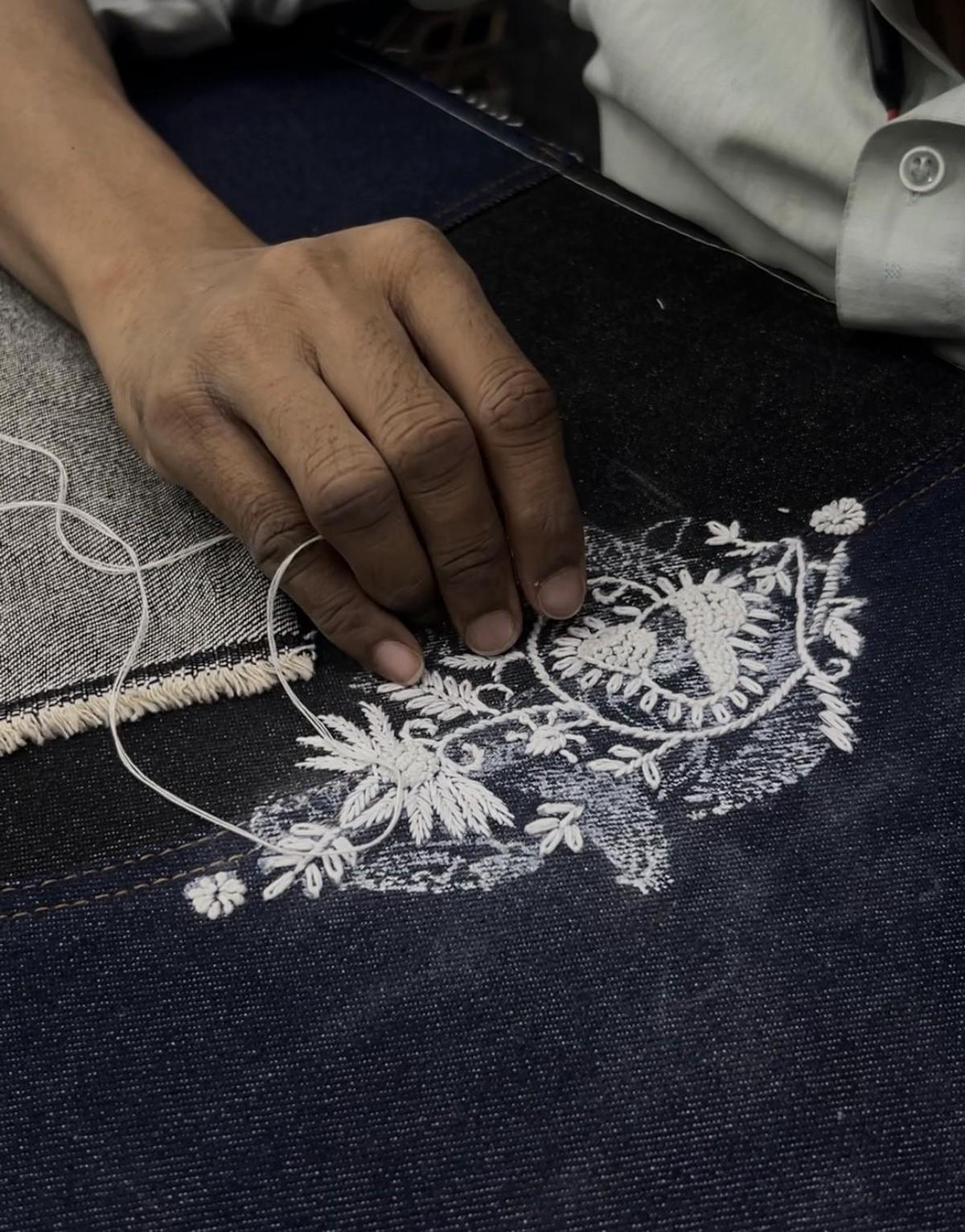
The traditional hand-embroidery makes an appearance in the collection, in intriguing ways that too — on denims and woollen suits. “I am from Lucknow and I have grown up around chikankari. I have seen my mother embroider her saris with precision and pride, and my father wear kurtas with tone-on-tone detail, But somehow, it never appeared in my designs,” he adds.

Chikankari on denim

Chikankari on denim
| Photo Credit:
Special Arrangement

On wool suiting and denim, the same craft behaves differently.  “At first glance, the work looks traditional, and when you look closer, you realise what it is made of. Technically, a thicker, coarser material takes more time to embroider, but the result feels both Indian and global,” says Pranav, whose design aesthetic is propelled by the socio-political and cultural landscape. “So, for me now, it is about syncing with my roots and finding who I am,” he says, over the phone from Mumbai.

Dream team

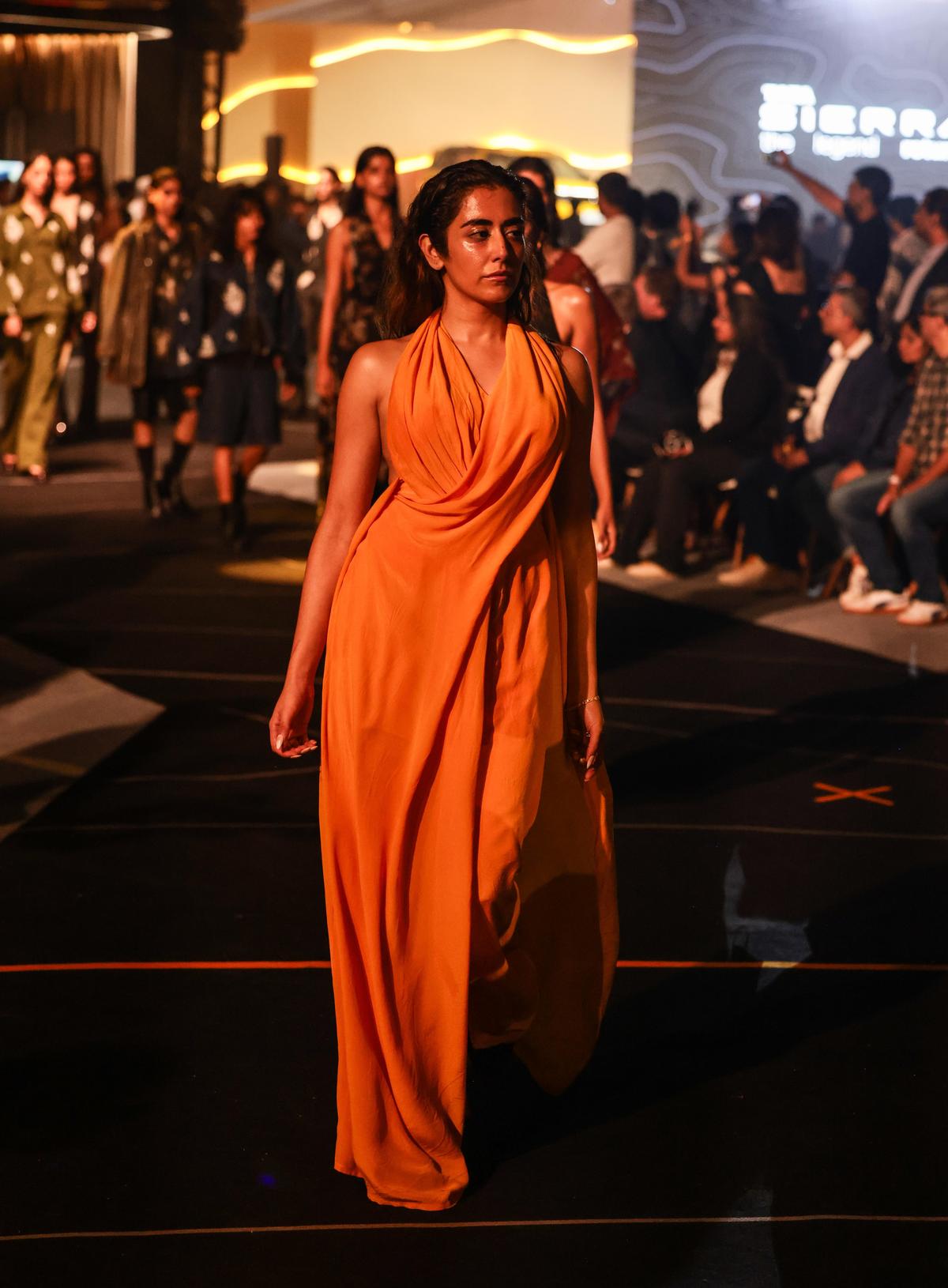
Huemn returned to the runway with its SS’26, collaborating with the new Tata Sierra, at Mukesh Mills, a heritage building in Colaba, reinvented as a performance space. A 300-metre runway cut through the length of the mill and opened out to the sea, adding to the drama. “For many of us, the Tata Sierra is something we grew up seeing on the road. The pieces in this capsule come from the same place of structure, confidence and memory working together.” It took the team about three weeks to put the collection together.

A jacket from the Huemn x Tata Sierra collaboration

A jacket from the Huemn x Tata Sierra collaboration
| Photo Credit:
Special Arrangement

A cap from the Huemn x Tata Sierra collaboration

A cap from the Huemn x Tata Sierra collaboration
| Photo Credit:
Special Arrangement

The limited-edition capsule, with over 100 styles, features a cap, T-shirt and jacket.  The T-shirt features a horse snout, carrying within it a cartographic print of the factory, etched in Sierra’s signature yellow. Layered terrains — forests, oceans and winding roads appear along with the Sierra Nevada peaks.

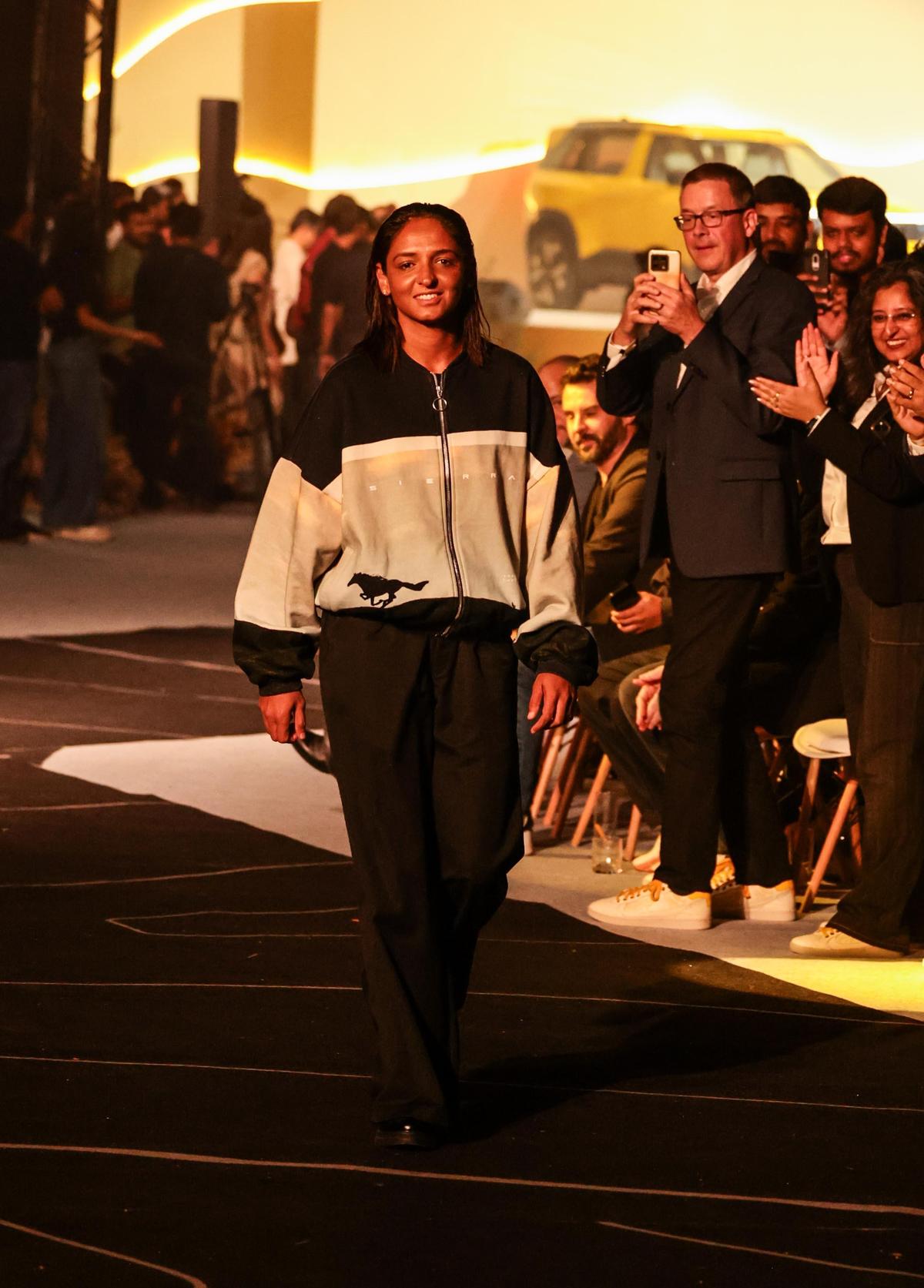
Harmanpreet Kaur, the showstopper

Harmanpreet Kaur, the showstopper
| Photo Credit:
Special Arrangement

Indian women’s cricket team captain Harmanpreet Kaur was the showstopper, who carried the final look curated under the collab — a jacket, showing a horse mid-gallop with the Sierra yellow as the backdrop.

What’s new?

Known for oversized streetwear and textured surfaces, Huemn, which was launched in 2012, has been termed “androgenous”, “luxe” and “streetwear movement” across collections, but with the new season, it moves into deeper precision tailoring, intricate embroidery, and sharper cuts. The spotlight is on sculpted jackets, tailored drapes, and new structure. Apart from chikankari, aari, dabka, zardosi, and French knots also appear through the collection.

“The thing about fashion is that one needs to reinvent time and again. When we started out, we didn’t know anyone in the industry. But we stayed afloat, and far away from being boxed into a particular bracket. We are an artisanal brand, playing freely with contemporary art and aesthetic,” says Pranav. 

The one-piece stitched sari

The one-piece stitched sari
| Photo Credit:
Special Arrangement

After its double-pallu, pre-stitched sari that met with roaring success in 2021, the sari finds a new pattern evolution. “This is a one-piece stitched sari, which can be worn in under 57 seconds. One doesn’t need an entire team around to help wear the sari, because it has completely eliminated the complications,” says Pranav. This sari has done away with the blouse entirely and comes in an edgy silhouette, complete with pockets. Designed for the modern woman, it holds softness and structure together. 

Through its journey Huemn has collaborated with brands and artistes; the last one being with cricketer Shreyas Iyer, resulting in a collection incorporating elements from his personal wardrobe.  

As far as fashion weeks and runways are concerned, Huemn was a regular. But after the pandemic, the brand adopted a different approach. “We didn’t want to look at the runway as an annual obligation. We have a show only when we have something new to say,” says Pranav, who is also a poet, who believes fashion and poetry are his creative tools, the alternating yin and yang that keeps him humble.

“Across 13 years of Huemn, I have seen it transform. I describe it as a progressive sceptic — it is never the same for too long. This is a new chapter. We are a brand built on contrast. There is beauty and death in the same conversation. Pain and joy. Love and betrayal. You see that in silhouettes, textures and prints throughout the collection,” says Pranav.

Published – November 17, 2025 06:48 pm IST


Source link