Life & Style

Maridas Kalloor’s new book decodes the mystery around Devastha Vili, an ancient exorcism ritual


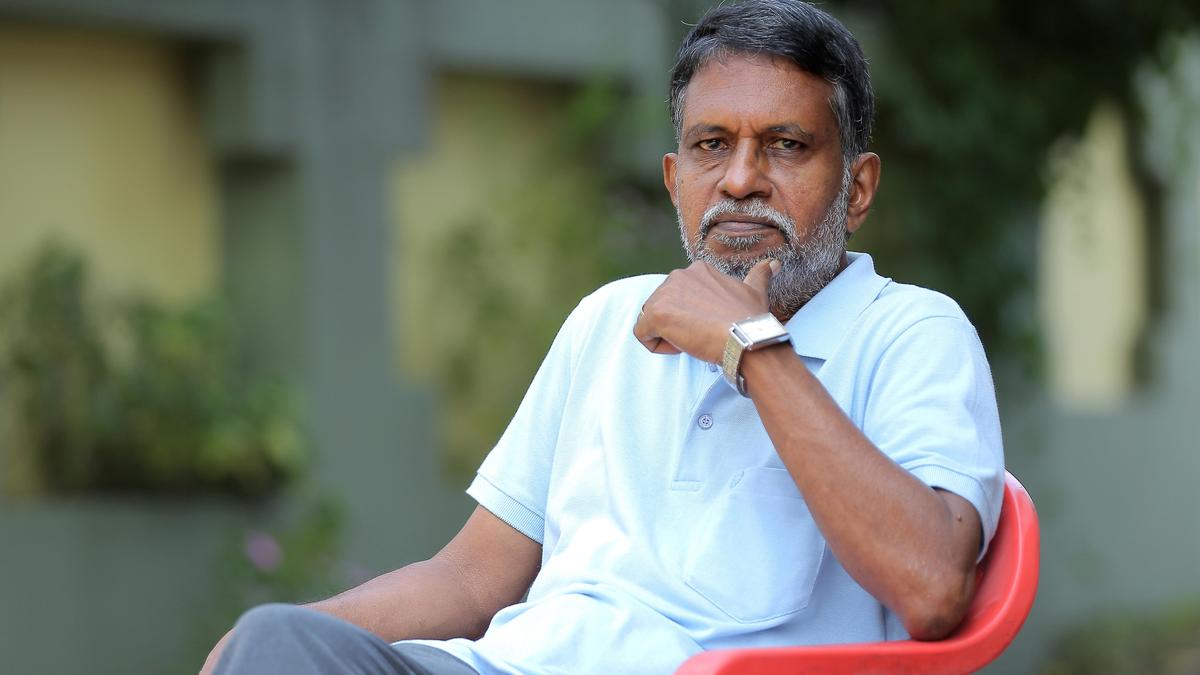
Author Maridasan

Author Maridasan
| Photo Credit: R_K_Nithin

On Mondays, Wednesdays and Fridays during Lent season, the coastal regions of Kochi witness an ancient ritual. A group of believers walk the streets at midnight, carrying a cross, chanting intense verses. The persistent, guttural hymn chanting, known as ‘Devastha Vili’ is believed to exorcise lost or evil spirits. 

The continuation of a centuries-old ritual, the Devastha Vili has an intriguing history, says Maridas Kalloor, whose recent book, Devasth Aroopathilekkulla Vili, is a deep dive into the evolution of the practice. Written in Malayalam, the book explores the ritualistic nature of Devastha and its potential to be brought out of its religious confines. 

The book

The book
| Photo Credit:
Special Arrangement

Fascinated by the unique cultural tapestry of coastal Kochi, the former joint registrar of the Kerala High Court, Maridas spent a year talking to practitioners of Devastha Vili from the region, studied and analysed European religious practices before documenting the traditions surrounding Devastha. 

Believed to have been composed by Roman Catholic missionary Saint Francis Xavier in Portuguese when he came to Kochi’s shores in the 16th century, the Devastha Vili could have been a clever blend of various European lent traditions and ritualistic practices observed in the region, says Maridas. “For the recent converts to Christianity, who were from a background well-entrenched in ritualistic devotion, the use of bells, the holy cross and the loud chanting (in Devastha) would have been easy to relate to and adapt,” says Maridas. 

He draws interesting parallels between traditions such as Fogareus, which is observed during the Holy Week in towns such as Braga and Sardoal in Portugal, where locals dressed in cloaks or dark robes take out a procession in the dead of the night, carrying torches. “Designed as a deliverance for souls in purgatory, the hymns are chanted loudly. The men who perform the Devastha observe a strict fast and the entire process creates a surreal atmosphere — of fear and devotion,” Maridas adds. 

Translations of the Devastha emerged in Tamil and Malayalam. The versions in Malayalam are divided into Valiya Devastha, which uses Sanskritised Malayalam and Cheriya Devastha, which uses Malayalam. 

“The coastal region — extending from Kodungalloor to Kanyakumari is a melting pot of various influences, it has an identity quite unlike any other region,” says Maridas. “For instance, Chavittunadakam, an art form blending European theatrical elements with Kerala martial art, originated in this region. Devastha Vili also has the potential to come out of its purely religious domain and be treated as an artform,” he adds. 

The new Devastha

Maridas has composed 10 Devastha hymns, called Naveena (new) Devaasth, which highlights its performative aspects. “This can be recited on other occasions too and can be performed on stage,” he adds.   

The spirit of the Devastha tradition is rooted in a sense of renewal; taking it out to a public space would draw more people to it and attract the attention it deserves, says Maridas. 

An author with three short story collections and a couple of awards to his credit, Maridas lends his retired life to the joys of writing. He is currently working on a novel, Liberame, written in the Paravur-Kodungallur slang.


Source link

In a city where breathing is a health hazard, the only thing worth inhaling is a good story


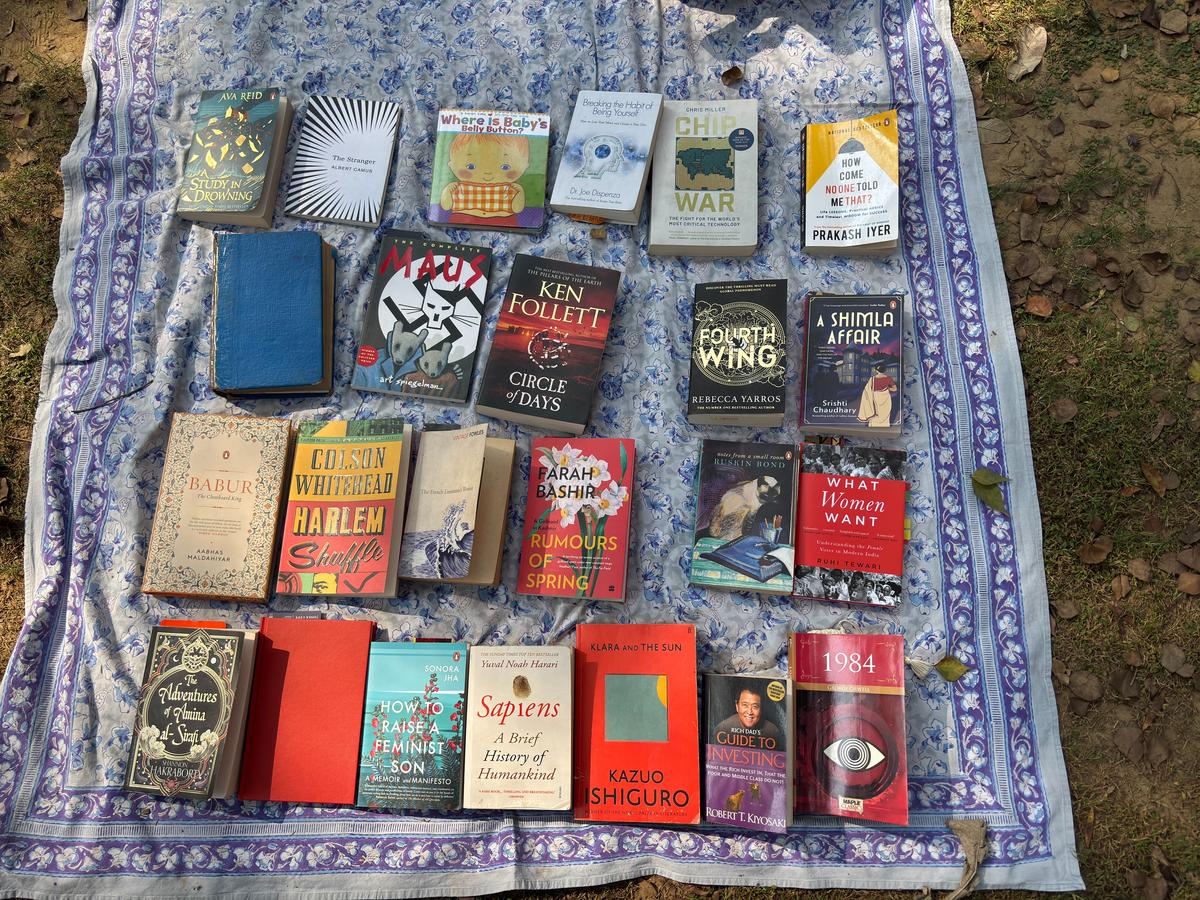
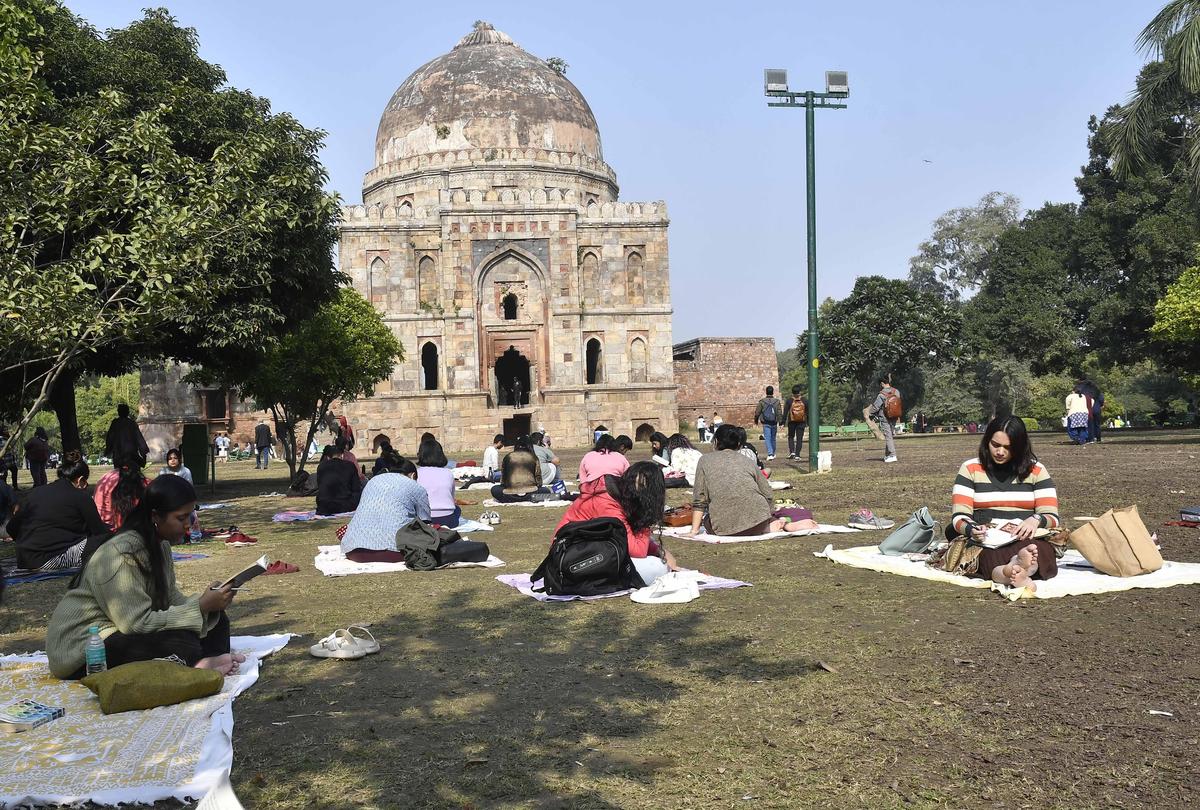
On a Sunday morning in New Delhi’s Lodhi Garden, readers hovered through the fog and filthy air to read on the grass under the winter sun. The air quality index was in the “hazardous” zone, but the readers came anyway, armed with books ranging from investment guides to graphic novels. 

“I saw this on Instagram,” said one passer-by to another, pausing to survey the group reading. “It’s a silent book club.”

This particular silent reading club was organised by Bahrison’s Booksellers: around 150 people signed up to attend the first such session on November 9, eventually drawing around 30 people to read on a patch of grass behind the historic monuments. Titles included works by everyone from George Orwell to Colson Whitehead. 


The reading culture in Delhi has expanded to include silent reading clubs. From Bahrison’s Sunday Reading Club and Lodhi Reads to Deer Park Reads, serious readers have been gathering to read together.

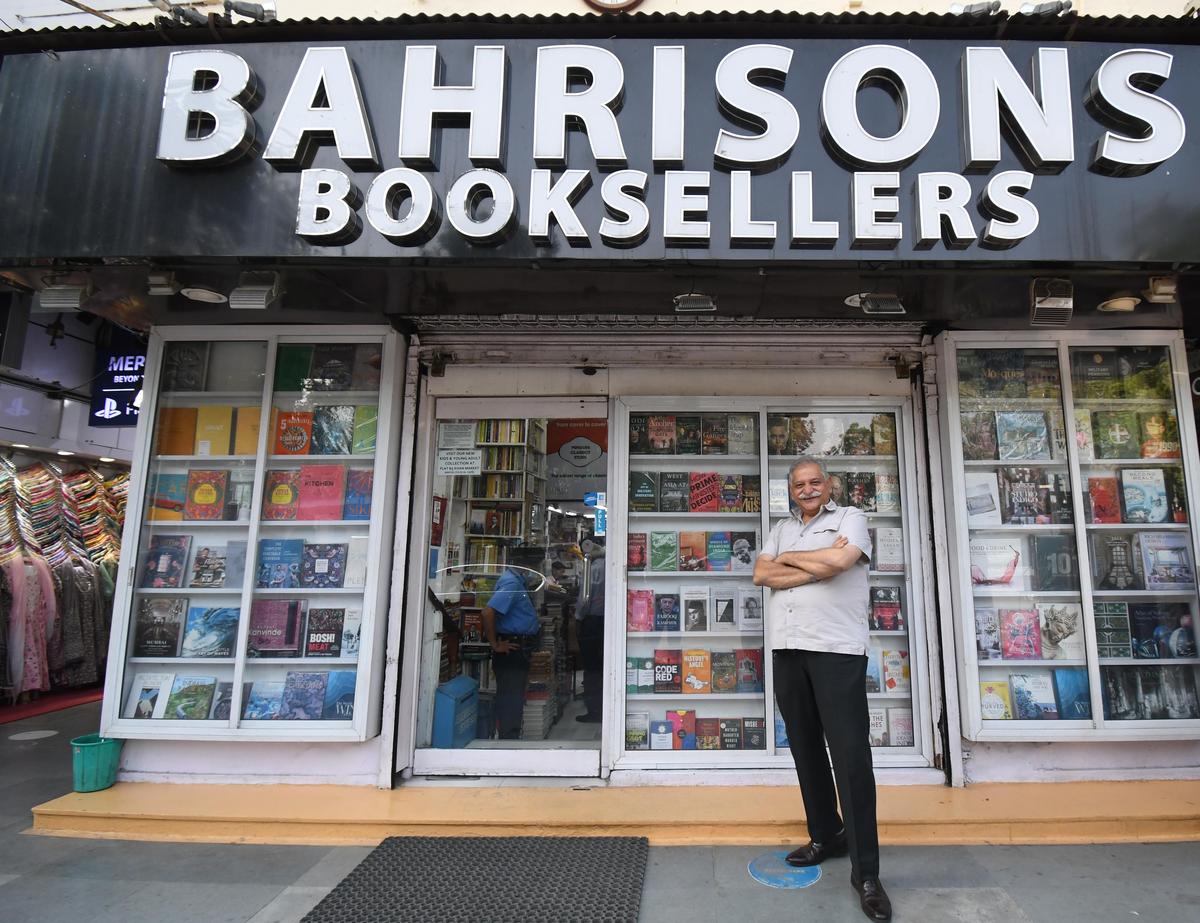
Anuj Bahri Malhotra, owner of Bahrisons Book Store, pose for a picture outside his store in Khan Market

Anuj Bahri Malhotra, owner of Bahrisons Book Store, pose for a picture outside his store in Khan Market
| Photo Credit:
SHASHI SHEKHAR KASHYAP

Creating a sense of community

Avenues like silent book clubs also give readers a chance to build a community around a typically-solo act like reading. 

That is exactly what drew Gursimran Kaur, a 26-year-old pastry chef, to her first meetup. “I’m an introvert, but I like being around people,” she explained.

Parents Aditya and Priyanka Bhojgadhiya turned the club into a family outing — including a baby book for their 15-month-old. 

“After having a child, it’s hard to find the time and calm to read at home,” Aditya said. “This was a wonderful way to reconnect with both Nature and with books, and we want to raise our child with this habit too.”

Sabir Hassan, a 32-year-old UX/UI designer, pointed out that he had been searching for an environment conducive to reading. “ “Reading is a lost art. And the ‘loneliness epidemic,’ as they say, is a thing — this is also a form of community-building,” he says.

This is exactly why one PhD scholar from Kolkata felt a sense of familiarity reading with strangers in Lodhi Garden, an experience he said was helping him connect with the city he had just moved to. A group of four 18-year-old friends from Janki Devi Memorial College also used the book club as a way to spend time together, planning a whole day around it: reading in the park, followed by cafe-hopping. 

“This was a nice change from rotting in bed on Sunday,” laughed Gunjan, who already runs her own book club with her friends which she finds difficult to organise, given everyone’s different commitments and schedules. 

For Sachin Sharoshiya, a 28-year-old dietician and fitness trainer, it was a deliberate act of aspiration and self-care. “I work seven days a week — I thought I should do something that’s just for myself. Fitness is my passion, but I also wanted to improve and grow,” he explained, saying he is not just a “gym bro.” His book of choice was Radhika Agarwal’s Red Flags and Rishtas: A Desi Rom Com — a book he had bought after hearing the club’s organiser Aashna Malhotra’s podcast on the same book. “It was so cool to hear someone discussing a book like that,” he said. Now, surrounded by strangers doing the same quiet thing, he found what he was looking for: “This was very peaceful. I’ll come again next Sunday.”

The performance of reading


Books have always been a symbol of culture and refinement, but social media trends like #BookTok and #Bookstagram have driven a different kind of consumption — many want to be seen with books even if they do not read it. A common grouse surrounding another Delhi bookshop, Faqir Chand Bookstore, is that most visitors would rather take a photo outside their iconic Khan Market storefront rather than buy from them. 

“Social media is changing reading trends and patterns,” observed Aashna Malhotra, a third-generation bookseller-in-training whose family runs Bahrison’s across Delhi and other cities. “Reading or at least being seen with and around books is becoming cool again. Many readers find what to read from social media, which means new authors are being discovered, and old ones rediscovered,” she added. 

Working at Bahrisons and hosting The Reading List podcast brought her closer to serious readers, who would often ask her if the bookstore ran a book club. It is what inspired her to start the gatherings.  

“Finding like-minded people is difficult nowadays, whether you’re young or old. If this is another avenue to do that without pressure or monetary commitment, then why not,” she said. “It’s more encouragement for you to read.”

thered at Lodhi Garden to silently read book together, in New Delhi on Sunday morning

thered at Lodhi Garden to silently read book together, in New Delhi on Sunday morning
| Photo Credit:
SHIV KUMAR PUSHPAKAR

Lodhi Garden as a location on a Sunday morning made sense: walking distance from Bahrison’s flagship store. While another reading community had cancelled their own gathering due to the AQI — however, readers and organisers are not worried about the overlap. 

“The more people reading the better!” said Aashna, who’s planning to also collaborate with existing groups and eventually find indoor spaces to read together when the weather turns. 

Published – November 14, 2025 11:17 am IST


Source link

This exhibition in Delhi captures the artist’s intimate dialogue with colour and freedom


For nearly three decades, Pune-based artist Neena Singh led parallel lives. One followed the structure and discipline of a civil servant, while the other unfolded through colour and texture. It was only in her late 30s that she began painting seriously, teaching herself to translate her feelings into form. What began as a personal refuge has since grown into a deeply intuitive artistic practice, one that balances reflection with expression.

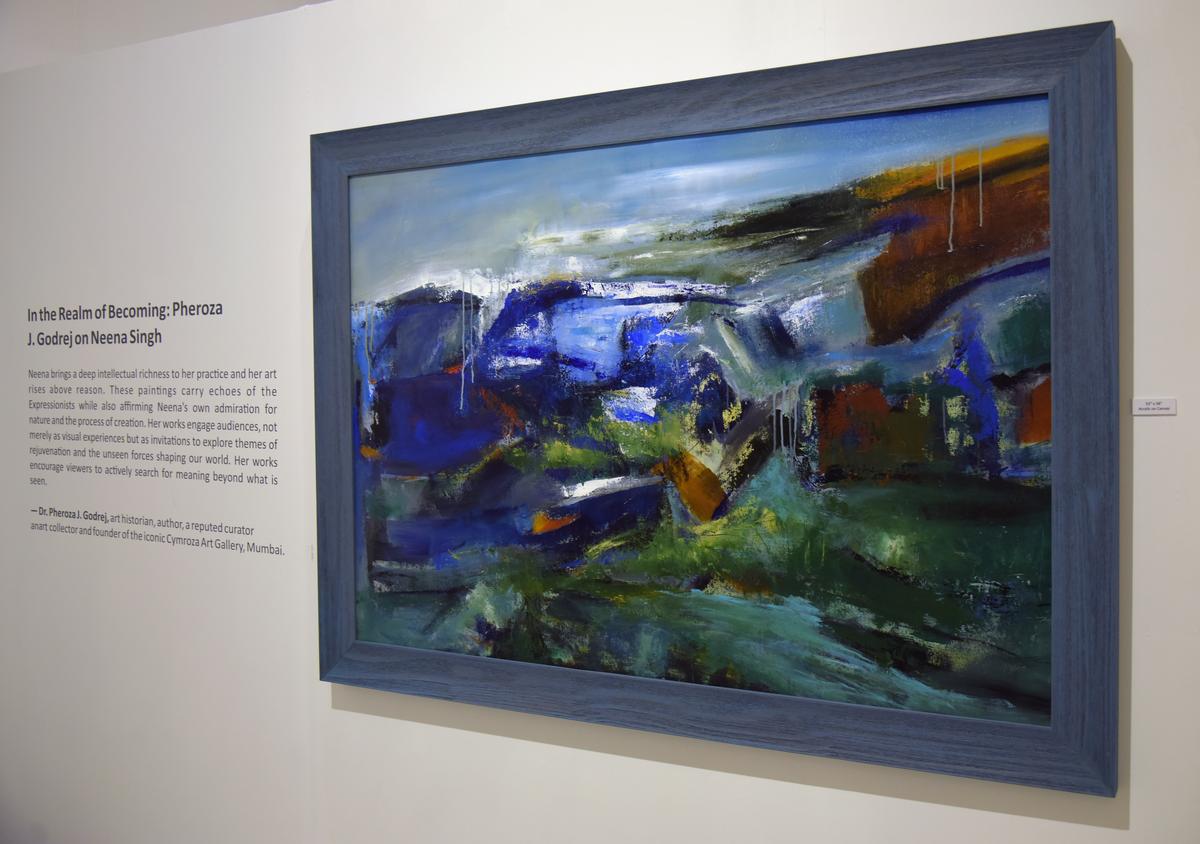
This personal journey now finds expression in her latest exhibition, Echoes of Becoming, at Delhi’s Bikaner House — her first solo in the capital. The show brings together 50 works on canvas and paper, all executed in acrylic, created over the last five years and charting her path of renewal. Curated by artists Aditya Shirke and Rahul Kumar, the exhibition unfolds like an intimate diary of transformation. Each canvas captures moments of emergence and dissolution, as if the artist herself were caught mid-thought, mid-breath, and mid-becoming.

“I came to art because I was exhausted with my thoughts,” Neena shares. “Words were inadequate, which is why painting became a channel.” Her abstractions draw from Nature, not as literal landscapes but as emotional states: the flow of water, the restlessness of wind, or the warmth of light. “Anything from Nature or the landscape serves as a point of departure,” she says. “It’s not about depicting, it’s about expanding that thought.”

Nature, intuition and the language of colour

Neena’s journey as a professional artist began in 2006 with a solo exhibition Serendipity at Mumbai’s iconic Jehangir Art Gallery. Though self-taught, her intellectual curiosity has always shaped her practice. She holds a Master’s and MPhil in Sociology and earned her Doctor of Philosophy from Jawaharlal Nehru University, New Delhi, where her research focussed on linguistic identity and Indian nationalism.

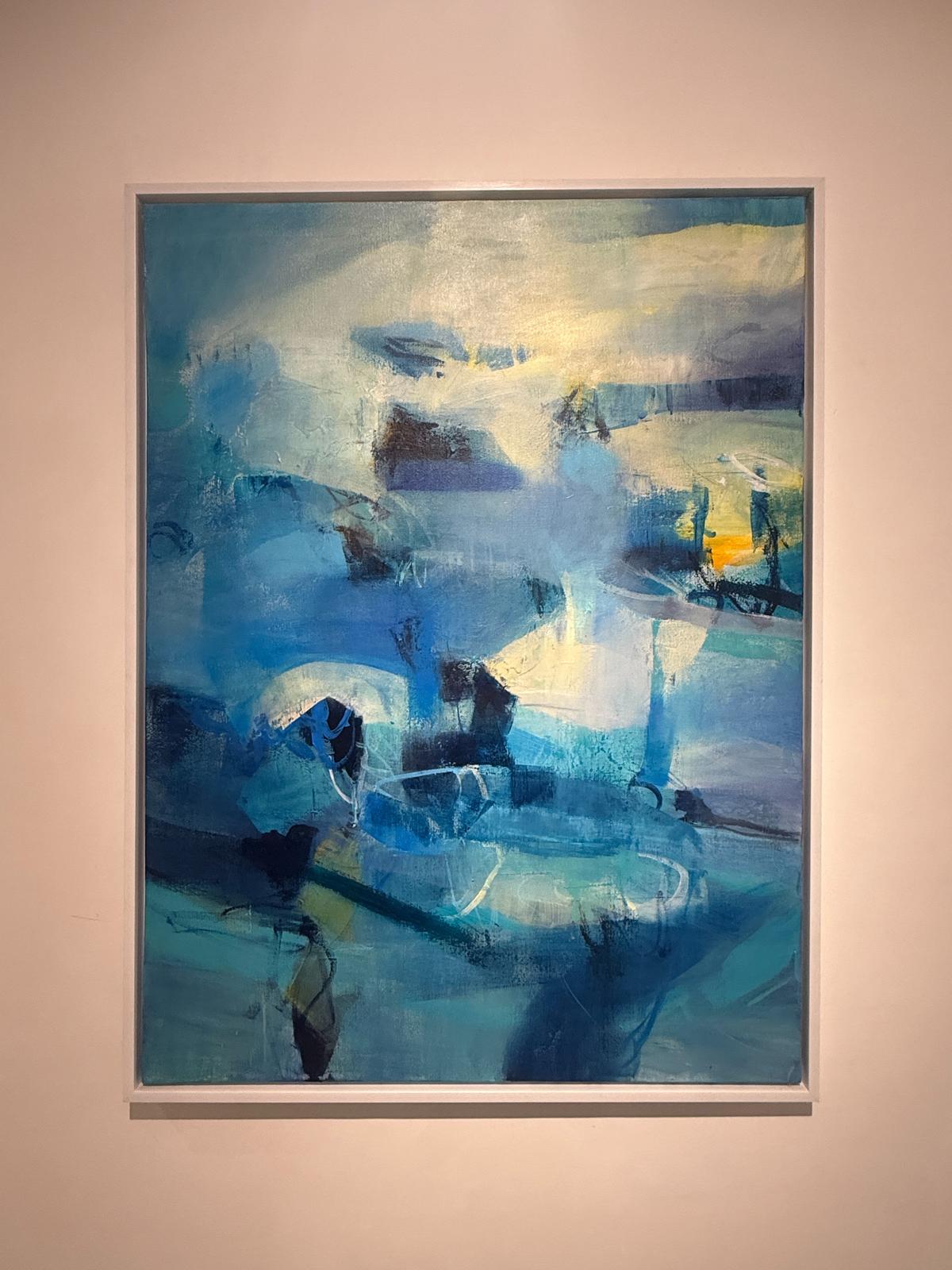
This engagement with ideas of belonging, and expression continues to inform her art, giving her abstractions a sense of meaning that feels both intimate and universal. For Neena, Nature is never mere scenery; it is a state of being. The canvases in Echoes of Becoming reflect this sensibility: soft gradations of blue, gentle golds, and earthy ochres evoke moods more than objects.

While many works shimmer in these bright, expansive tones, there are some pieces from 2023-2024 in greys and blacks, revealing inner turmoil and introspection. Certain paintings from 2020 even carry a photographic quality, capturing fleeting visual impressions with an immediacy that contrasts with her more lyrical abstractions. Yet all of her paintings share an emotional transparency. 

“There’s a sense of unpretentiousness in her work,” notes Aditya. “ The best kind of art is open to interpretation, where the viewer brings their own meaning.”

Her process follows a rhythm of emergence and erasure. She rarely begins with sketches or plans; instead, she approaches a blank surface instinctively, placing marks, splashes, and strokes until something begins to breathe. “It’s a process of building and destroying,” she explains. “Each layer carries both creation and dissolution.”

Neena’s abstractions recall, in spirit, the atmospheric canvases of Turner and the contemplative silences of Gaitonde. The influences of SH Raza’s vibrant geometry and Gaitonde’s meditative restraint are also evident, not as imitation but as inheritance. “I owe many debts to these masters,” Neena reflects. “Their spirit lingers in how I approach colour and stillness.”

Freedom through becoming
Her creative voice is deeply intertwined with her life story. Growing up in small towns across North India, in a time and family where a woman’s choices were often constrained, Neena first discovered freedom in the pages of books, and later, in the act of painting. “Painting was how I broke away from boundaries that felt unfair,” she reflects. “It gave me space to breathe.”

Echoes of Becoming is a meditation on what it means to exist in moments that are never fixed but always in flux. Neena’s paintings dwell in the spaces between thought and feeling, capturing the quiet tension of moments in motion. In them, freedom is not an abstract idea but a lived experience — fragile, luminous, and ever-renewing.

The exhibition is on until November 17 11am to 7pm at Main Art Gallery, Bikaner House, New Delhi

Published – November 14, 2025 11:02 am IST


Source link

The Little Lit Fest 2025 brings stories, song, and imagination back to Chennai


From last year’s Little Lit Fest.

From last year’s Little Lit Fest.
| Photo Credit: SPECIAL ARRANGEMENT

The Little Lit Fest 2025, the international children’s literature festival, returns to Chennai for its second edition this weekend, transforming the Goethe-Institut into a creative world of words and music for young bibliophiles and their families. Organised by the Goethe-Institut/Max Muller Bhavan, the festival seeks to instill a love for reading and storytelling. The three-day event is designed as a creative playground with musical storytelling sessions, film screenings, theatre performances, and a book exhibition. 

The celebrations begin today, with the lighting of the lamp ceremony followed by a screening of Goopi Gawaiyaa Bagha Bajaiyaa, the award-winning animated film directed by Shilpa Ranade.

The event’s lineup includes Tale and Tunes, a musical by actor and storyteller Janaki Sabesh, Just Drums Murali aka S Muralikrishnan, and Varun, followed by the screening of Lassie – Ein neues Abendteuer — a German children’s movie, a book quiz by Abijit Hariharan from Quiz Master Foundation, and a theatrical show of Tulika’s Stories by Chhotu Theatrewalas. There is also a reading by author Zai Whitaker, and a painting session with Vishnavi Giri.

Sunday highlights include a new Gulapati adventure series with creator Ashok Rajagopalan, a panel on writing for children, a singalong led by Krishnaa, Jeeva Raghunath & team, and puppet show called Obedient Tommy by Vincent MCM.

Geetha Vedaraman, cultural coordinator, Goethe-Institut, says, “This year, we have also introduced special sessions that explore empathy and accessibility, like braille and tactile imagery workshops and an exhibition of books, opening up new ways of experiencing stories,” she further added. 

The Little Lit Fest 2025 will be on till November 16 at Goethe-Institut, No. 4 Rutland Gate, 5th Street, Chennai. For more information and the programme schedule follow goethe.de website. Entry free.


Source link

Is Art Mumbai giving the Maximum City a new identity?


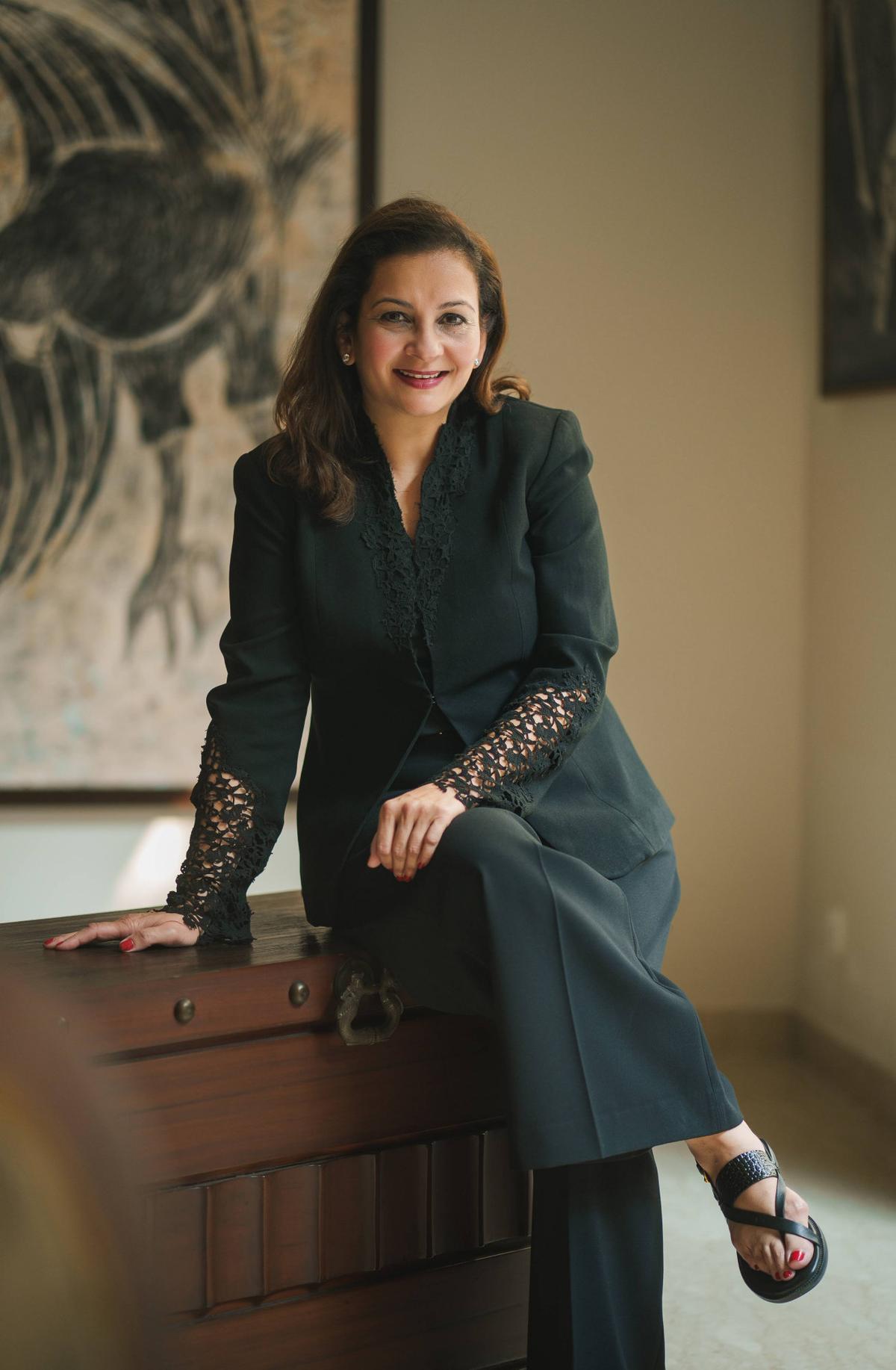
Mumbai was built on energy and motion and imagination,” muses Minal Vazirani, “It is not a city that sits still.” Days before the third edition of Art Mumbai is to open — significantly bigger than last year — its sleep-deprived co-founder sits in the midst of the bustle at Mahalaxmi Racecourse, speaking about the desire to capture the flavour of the city in their three-day art blowout. “I think that sense of restlessness continues to move the city.”

It’s an apt description for Art Mumbai itself: a fair that has grown more than 60% in gallery participation since its debut in 2023, and expects to double its visitor numbers (24,000) from last year. With over 2,000 works, 82 galleries, a star-studded speaker series, a curated sculpture park featuring women artists from the subcontinent (including Adeela Suleman, Shanthamani Muddaiah and Tarini Sethi), parallel exhibitions, walks and performances, and at least two art parties each night, — all after an opening day showcase by designers Abu Jani and Sandeep Khosla — Art Mumbai has stepped it up, moving at supersonic speed. But its evolution also captures a significant moment for India’s financial capital: can a city that never sits still become a place where art takes root?

Mumbai as an art hub has never been an alien notion, says Vazirani, anchored as the city is in a strong market. In fact, she cites an early 2000s study conducted for Saffronart suggesting that the city comprises an estimated 65% of India’s total art market — a staggering figure that speaks to decades of collecting culture. “The Mumbai art market has been strong and steady, but I think Mumbai can be a little understated about things.”

Minal Vazirani

Minal Vazirani

She points to the city’s undeniable artistic legacy: it has the JJ School of Arts, one of India’s oldest art institutions. It was home to the Progressive Artists’ Group, founded in 1947, and a defining chapter in modern art. It is also home to the Bhulabhai Desai Memorial Institute (BDMI), whose influence during the 1960s and 70s has rippled across music and theatre — with stalwarts Ravi Shankar, V S Gaitonde and P L Deshpande in the mix. The BDMI’s footprint is the subject of a speaker session at Art Mumbai 2025. “We also have the Prithvi Theatre, the NCPA, the Royal Opera House, which have been venues and incubators for incredible performers and talent,” Vazirani notes.

The city boasts Art Deco architecture second only to Miami Beach globally, celebrating its centenary this year, and even a galaxy of cultural custodians, such as the architect-collector Sohrabji Kaikushro Bhedwar, whose collection is on view at the Chhatrapati Shivaji Maharaj Vastu Sangrahalaya.

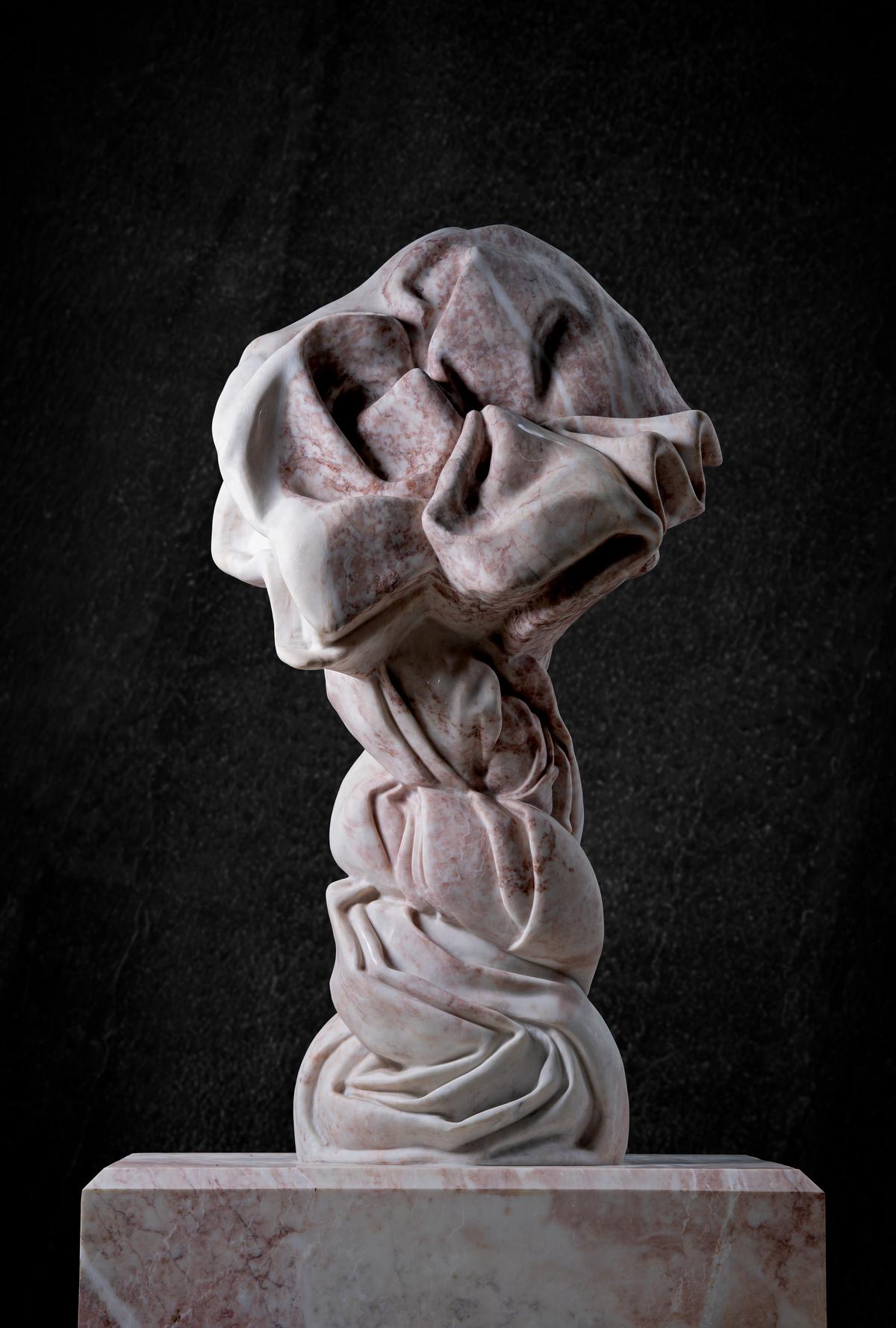
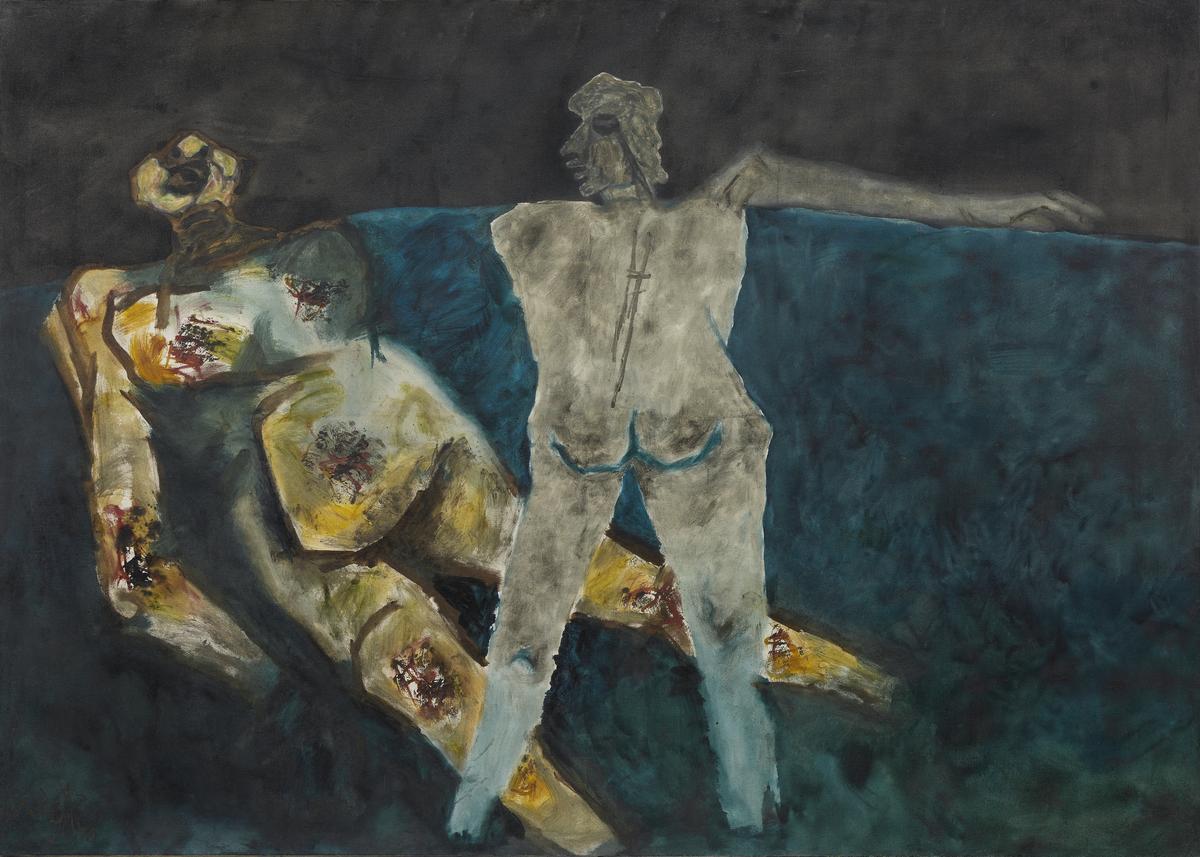
Radhika Khimji’s My torso hovers in a segment broken through

Radhika Khimji’s My torso hovers in a segment broken through

A compounding effect

Fast forward to the 21st century, and the current burst in new galleries (from 47A to Subcontinent to Muziris Contemporary), record-breaking auctions and public-facing programmes such as Mumbai Gallery Weekend and Art & Wonderment’s walks are only augmenting a momentum that had begun to gather in the early- to mid-2000s, when Indian art saw its first big boom.

Yet, perhaps, something was missing — or rather, something needed activating. Enter Art Mumbai, which in its third year has had what Aparajita Jain of Nature Morte calls a “compounding effect”. “A fair is fundamentally about sales, and they’ve done very well on that front,” she says. “It’s becoming a more serious affair but also, around this time, galleries put in that much effort. It becomes an aggregation.”

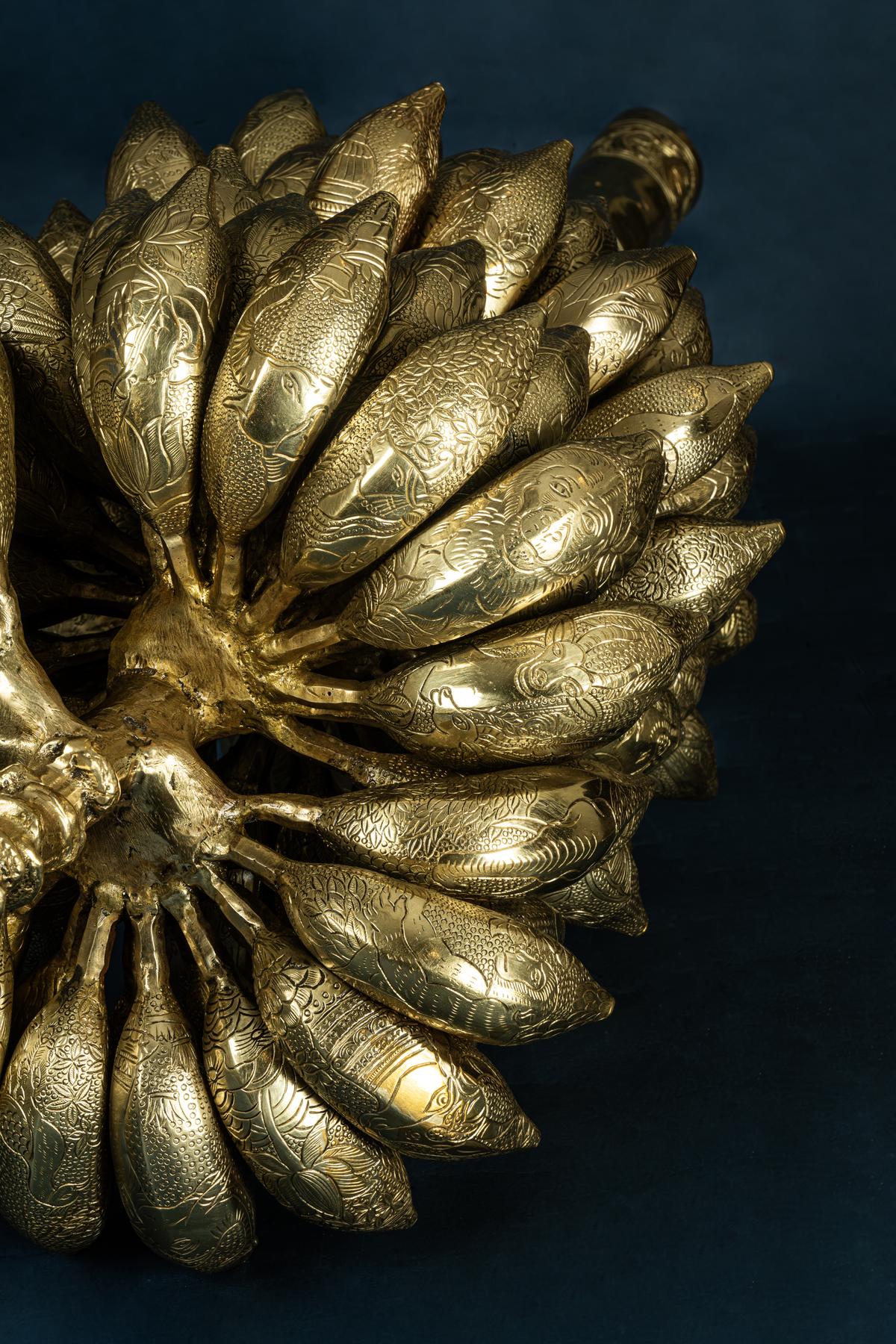
Phaneendra Nath Chaturvedi’s A Throne of a Thousand Wings

Phaneendra Nath Chaturvedi’s A Throne of a Thousand Wings
| Photo Credit:
Raj Salhotra Photogarphy

Indeed, in the last week, much wine has flowed and many cheese platters have circulated as new exhibitions have opened in galleries and museums across the city. Nature Morte is presenting a solo show by museum-celebrated artist Asim Waqif. Tarq’s artist Sameer Kulavoor has an exhibition at the Bhau Daji Lad Museum, curated by the museum director Tasneem Zakaria Mehta; while the anonymous artist Princess Pea reveals her true identity with a new show at Tarq’s Fort gallery.

The National Gallery of Modern Art has opened a Krishen Khanna retrospective, curated by Zehra Jumabhoy and Kajoli Khanna, timed to the fair. There’s also a Tyeb Mehta retrospective opening at the fair before moving to Saffronart gallery for the rest of the month — significant because, as Roobina Karode, director and chief curator of KNMA Delhi, points out, Mehta “drew a lot from the streets and from the everyday of Mumbai, particularly fascinated by the Bandra abattoir he sketched extensively”. Meanwhile, Art Deco Alive! is organising walks, talks and street parties well into the last week of November.

“The city comes alive at this time,” says Prateek Raja of Experimenter. Just last weekend, Raja signalled off the week’s festivities by hosting an Asia Society Trailblazers conversation with the Japanese immersive art behemoth teamLab — gazing into the future of art, immersive, digital and the human experience. As Hena Kapadia of Tarq observes, “ArtMumbai has definitely captured our imagination — you can see this in the breadth of shows and events that are happening this week and next.”

Prateek Priyanka and Raja

Prateek Priyanka and Raja

Collectors from satellite cities

The comparisons to other art capitals are inevitable. The Kochi-Muziris Biennale (KMB), founded in 2012, transformed a historic port city into South Asia’s contemporary art destination by revitalising colonial-era warehouses. Art Basel turned Miami Beach from a seasonal resort into a year-round art hub, spawning the Wynwood and Design District. Raja notes that those large-scale art events changed the landscape because they collaborated with much more agile governments to establish museums and evangelise local communities. 

But Mumbai’s situation differs. “Art Mumbai might not be in the same league as Art Basel or Art Dubai, [but] Mumbai has always been a very important city,” says Jain. “So, while it doesn’t need a tourism push, what a fair like this does is that it brings a new cultural angle to the city.” The city and its galleries are now attracting collectors from satellite cities — Pune, Nashik, Baroda, Raipur, Nagpur — expanding the regional market. “Culture adds a bit of richness to the mix,” she adds.

Aparajita Jain

Aparajita Jain

Yet, there’s a limit to what a temporary event can accomplish. “Look at the Middle East: with all the movements in Abu Dhabi and Saudi Arabia, it is becoming more important. Still, Dubai has had Art Dubai for 20 years now, but its gallery ecosystem is quite weak. It is not an art capital in the way Paris or New York are,” says Raja. It’s not just about that fair. It’s about artists who live there, make it their home.”

Jitish Kallat echoes this. “Mumbai has long had all the right raw materials for art to thrive,” says the artist and curator, whose works are part of the Chemould Prescott Road booth at Art Mumbai. “Besides it has been a muse in countless artworks, poems and films. That said, an art capital grows through the interplay of artists, galleries, institutions and publics. Strengthening public institutions, museums, archives and civic spaces will be key to sustaining this evolution.”

Ashish Anand of DAG adds another requirement: “patrons and collectors whose behaviours evolve in tandem with the market”. He notes that Mumbai and Delhi have successfully bridged generational changes, with mature collectors and institutions coexisting alongside newer platforms and galleries. “When behaviour shifts, infrastructure follows. And when infrastructure is in place, momentum becomes tangible. Mumbai, like New Delhi, is at that inflection point. And India is gaining by becoming an increasingly important driver of art.”

Jengum Gadi’s Untitled (2025, brass sculpture)

Jengum Gadi’s Untitled (2025, brass sculpture)

Mumbaikars take ownership

Delhi is home to a refined art ecosystem, gigantic museums (both recently renovated and under construction), and India’s most enthusiastic living art collector, Kiran Nadar. It’s a circuit that existed before India Art Fair launched in 2008, but also built upon it. Now, you hear of a new boutique art weekend opening in a different corner of the country every month — from the recently concluded Jodhpur Arts Week in October, the brand new IAF EDI+IONS in Hyderabad and Kolkata Art Weekender this month, to the Madras Art Weekend in December and Jaipur Art Week in January next year. There are wonderful spaces, according to Raja, to experiment, collaborate, and meet new buyers and collectors who may not be bothered to venture into the big city.

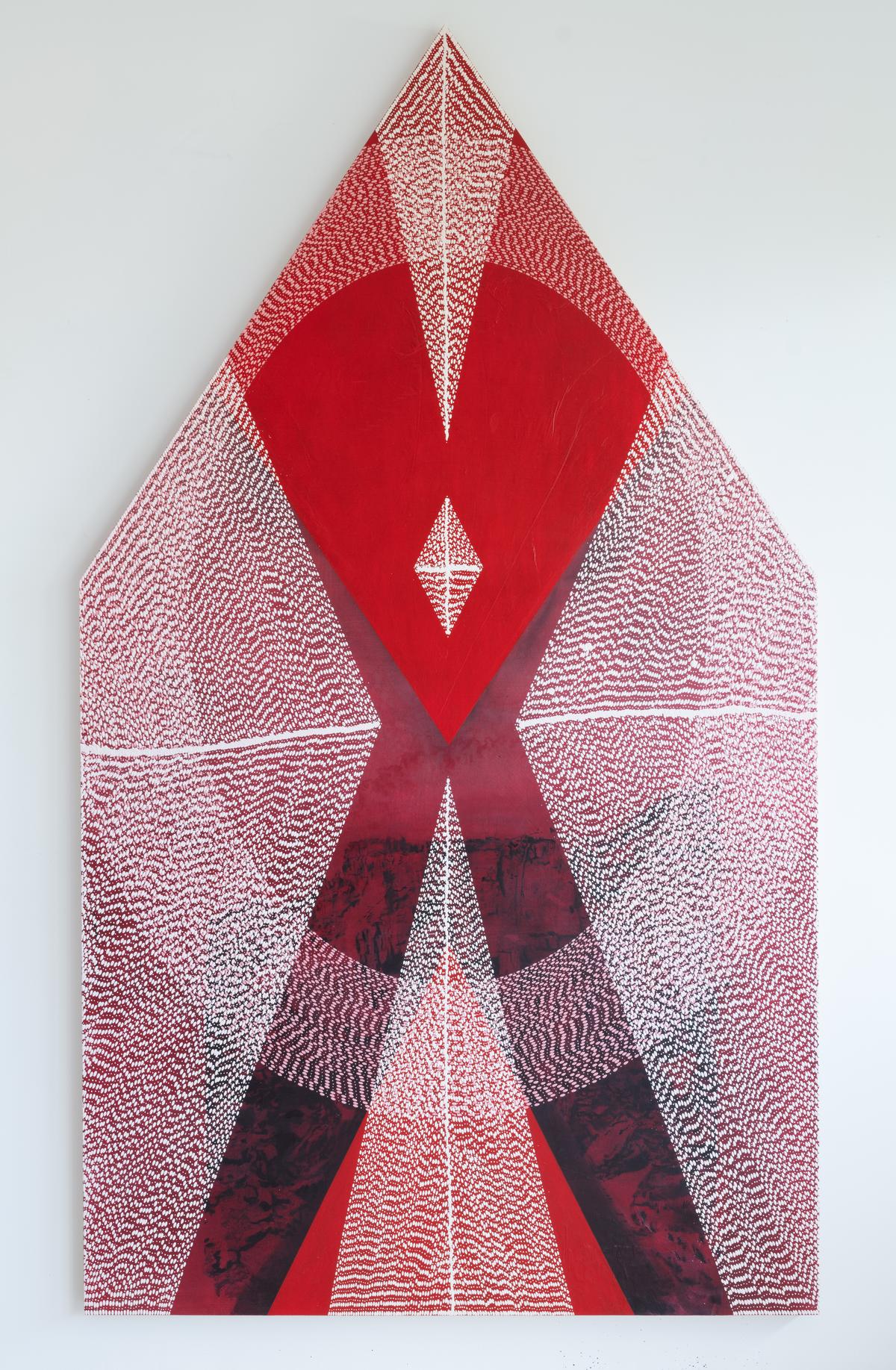
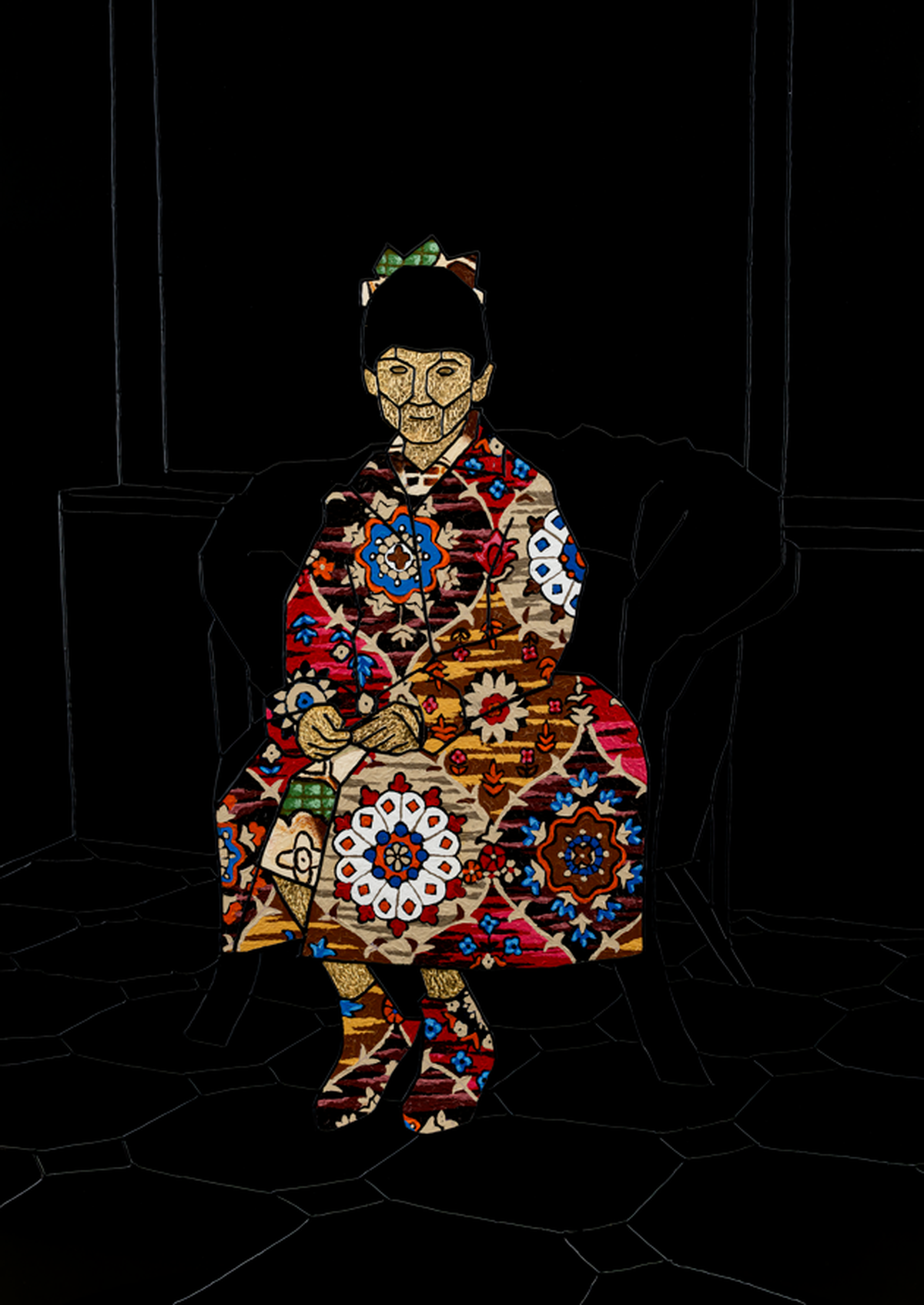
Hetain Patel’s Untitled (2025, mixed media on board)

Hetain Patel’s Untitled (2025, mixed media on board)
| Photo Credit:
Courtesy Chatterjee and Lal

Mumbai, meanwhile, has energy. Vazirani describes visitors who “come in and acquire works” with genuine engagement. “They read, they study, they take notes, they have conversations with people.” The construction boom means “people now have larger apartments that they are looking to fill with art”. The fair, with its convivial atmosphere, becomes a gateway for those who might not think the gallery is for them. “The Tyeb Mehta show, for example, is a museum quality show in an art fair environment, shedding a little of that white cube intimidation and giving visitors across the four days access to a unique and specially curated exhibition.”

Perhaps most tellingly, Mumbaikars feel they have a stake. “Whether they’re affiliated or not, they feel ownership of the fair,” says Vazirani. “Art Mumbai increasingly feels like the coming together of a community and the building of a fellowship among the art fraternity that gathers every November in Mumbai.”

An M.F. Husain artwork

An M.F. Husain artwork
| Photo Credit:
Courtesy DAG

The question of what makes an art capital has preoccupied the art world for decades. According to a 2014 panel at Christie’s London featuring curator Ralph Rugoff and artist Michael Craig-Martin, the foundation must begin with a vibrant artist community — creating what they called a virtuous circle where good artists attract more good artists. Good nightlife, good restaurants and affordable spaces, a certain charm and energy, and crucially according to ArtPapers magazine, a pre-existing predilection for culture that can act, like any good sourdough, as the active “starter”.

“Mumbai has all the trappings of the actual things that a global art city needs,” says Raja. “It has a market, it has a keen audience. It has artists even if the city is continuously pushing them beyond the limits of the city. It has some very important institutions. It has an active gallery scene. The architecture is incredible — it is very difficult to find spaces with this much character in, say, Delhi. So yes, Mumbai will get there. It’s a matter of time and a question of sustainability. And that depends on all of us.”

Art Mumbai, at the Mahalaxmi Racecourse in Mumbai, is on till November 16.

The Mumbai-based independent journalist writes on culture, lifestyle and technology.


Source link

Meet Dr Sreedevi Warrier from Thiruvananthapuram who aced the Ironman 70.3 challenge in Goa


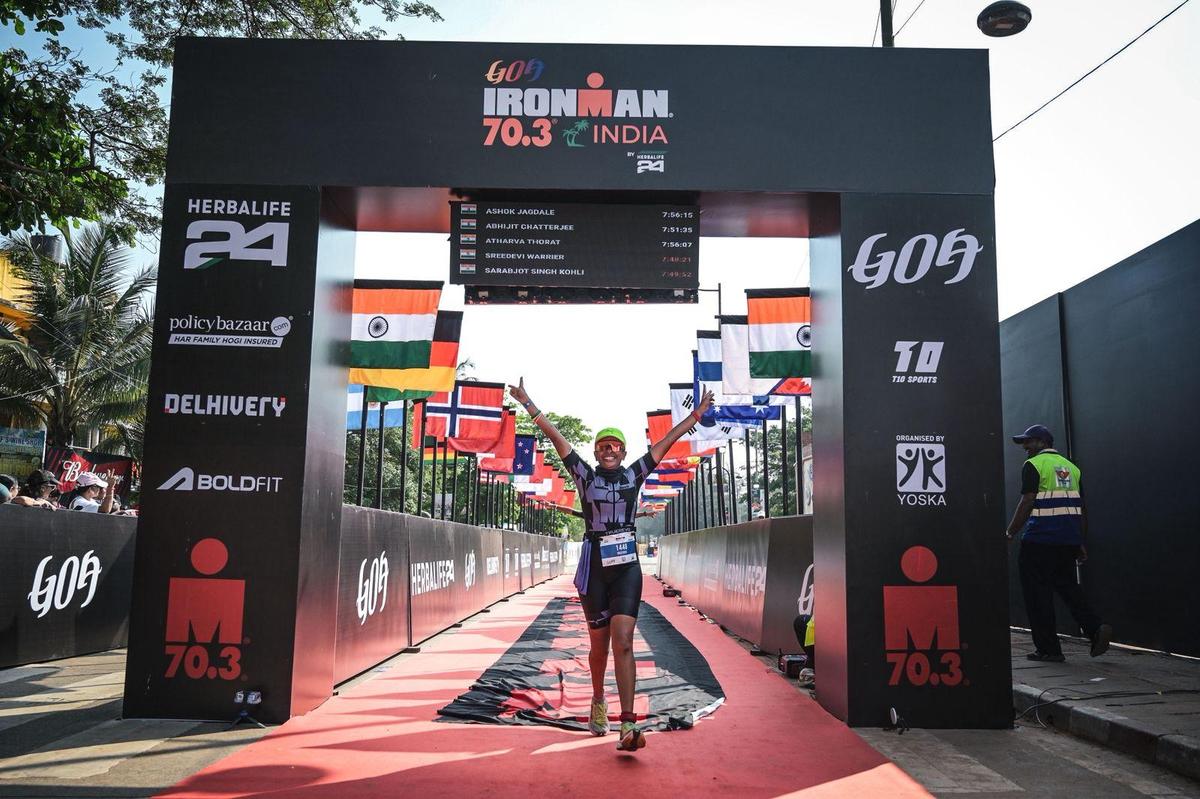
Dr Sreedevi Warrier at Ironman 70.3 triathlon in Goa

Dr Sreedevi Warrier at Ironman 70.3 triathlon in Goa
| Photo Credit: SPECIAL ARRANGEMENT

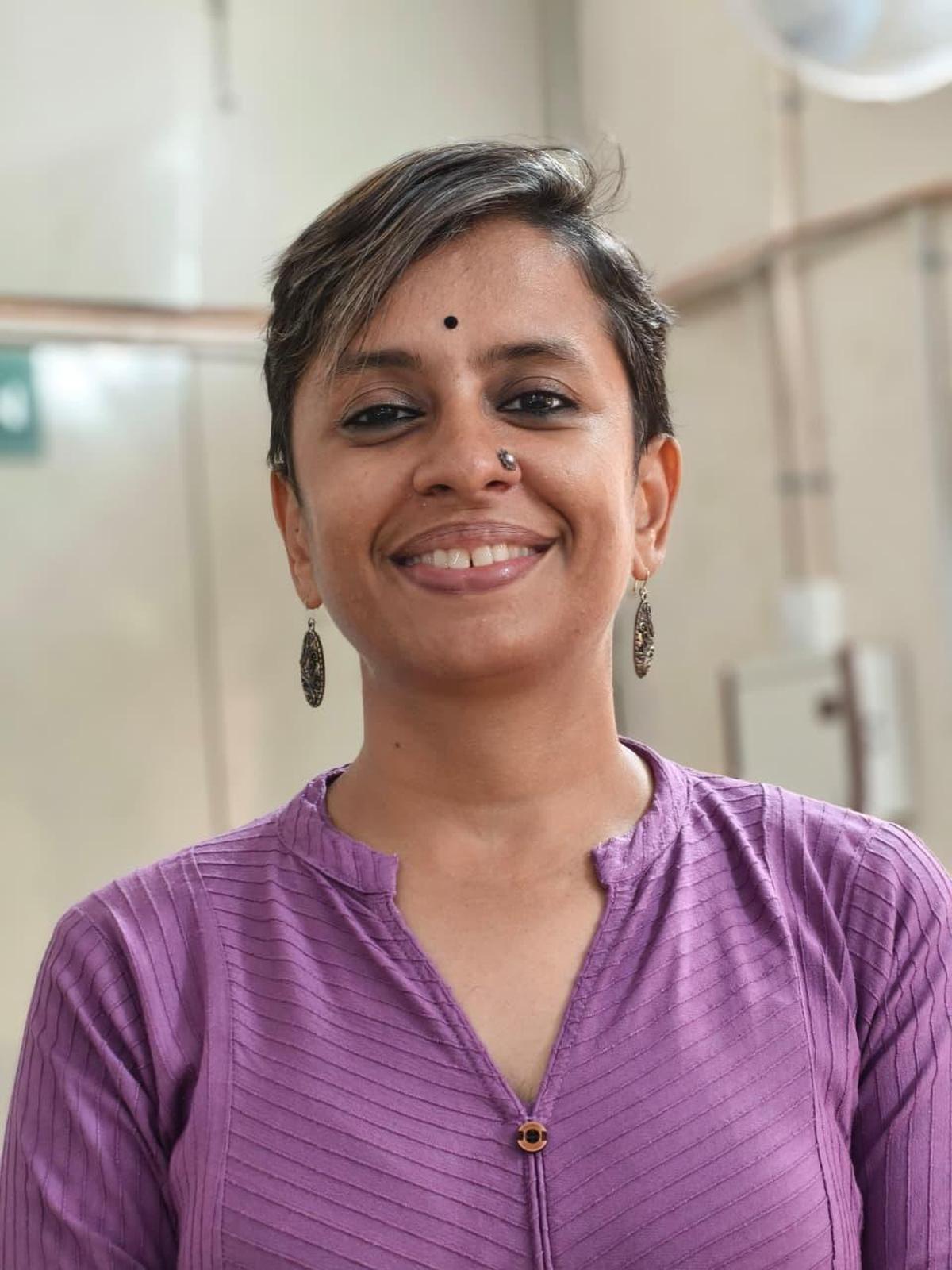
Dr Sreedevi Warrier has been asthmatic since childhood, water has always scared her and by the time she reached her 30s she was on strong medication for severe knee pain. Also, she had her hands full as a palliative care health professional and as a wife and mother of two school-going children.

But two years ago she turned a new leaf and eventually pushed herself to take up a challenge that tested her endurance and will power. And on November 9, she aced Ironman 70.3, a long distance triathlon organised by World Triathlon Corporation in Goa. The event has back-to-back 1.9-kilometre swim, 90-kilometre cycling and 21.1-kilometre run, which has to be completed in eight-and-a-half hours. She finished it in seven hours 48 minutes.

Dr Sreedevi Warrier at Ironman 70.3 triathlon in Goa

Dr Sreedevi Warrier at Ironman 70.3 triathlon in Goa
| Photo Credit:
SPECIAL ARRANGEMENT

“I have not been into any kind of sport until my late 30s. My only physical activity has been learning Kathakali and Mohiniyattam from childhood. As I was nearing my 40s, I felt that I should do something to keep myself active because I was entering perimenopause. I didn’t want to gain weight which would have escalated my knee pain,” says Dr Sreedevi, who heads Education and Skill Building at Pallium India, an NGO providing palliative care across India.

She decided to take up running and started out with strengthening exercises. “I wanted to take part in the 10-kilometre run in Kerala Olympic Marathon. Encouragement and guidance came from Raj Kalady, an experienced runner and cyclist. But the problem was that I could not run even 100 metres because of my asthma. However, I didn’t give up and eventually I completed the run.”

Dr Sreedevi Warrier

Dr Sreedevi Warrier
| Photo Credit:
SPECIAL ARRANGEMENT

Even though she had no plans to continue running after the event that was not meant to be. “When you prepare for such events a discipline sets in. I started enjoying my routine and the quality time I had for myself during the morning run, as I watched the world go by. Surprisingly my knee pain had subsided and my weight was also under control.”

Soon she joined ITEN Runners’ Club, a running community in Thiruvananthapuram. “Although I was a beginner, they took me under their wings. Meeting women of all age groups enthused and encouraged me. The time I spent with them and the conversations we had made a lot of difference in my life and day-to-day activities. I could control my temper and there was more clarity in my thought process and decision making.” After that she took up cycling, an activity she was “crazy about since childhood”. By the sixth ride, she covered 100 kilometres.

By then her eyes was on taking part in Ironman triathlon and swimming was the next stage. “But the catch was that I have always been scared of water. Even in my 30s, I used to carry a bucket and mug to take bath in the pond at my native place because I was frightened to put my head under water.” Nevertheless she joined swimming classes. “I had to get over my fear. So I attended the class regularly and became confident gradually. It took a lot of mental strength and when I had to overcome fear of depths, I did an advanced course in diving.”

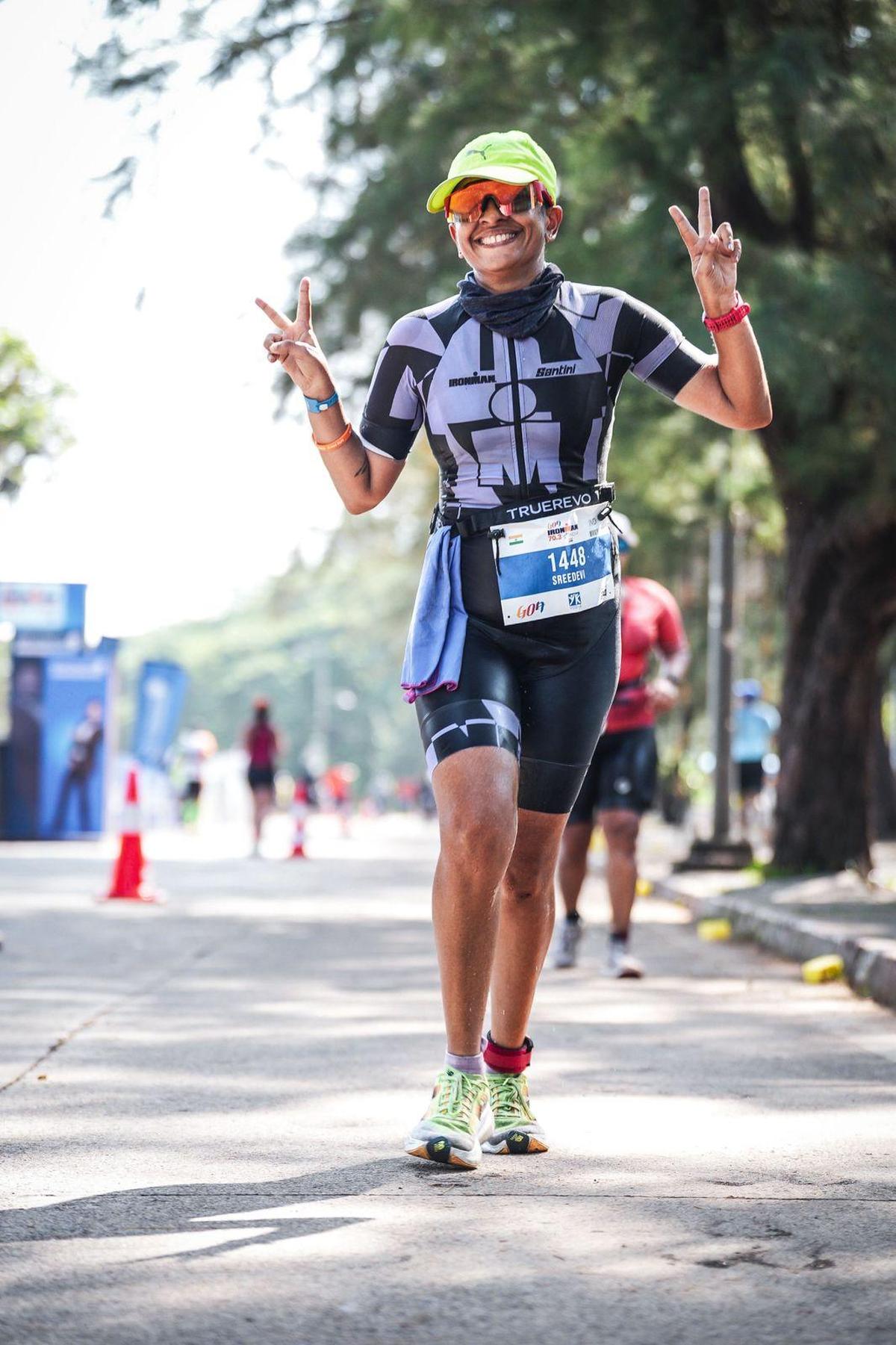
Dr Sreedevi Warrier at Ironman 70.3 in Goa

Dr Sreedevi Warrier at Ironman 70.3 in Goa
| Photo Credit:
SPECIAL ARRANGEMENT

As Ironman had open water swimming, she had to train for that as well. Since the sea is always rough in Thiruvananthapuram, she took classes on Puthuvype beach in Kochi with Dolphin Sea Swimmers club. “I would take the train from Thiruvananthapuram to Ernakulam, swam once and return by the next train.”

She stuck to a routine for eight months, and had intense training in the last two months prior to Ironman. “This meant getting up at four in the morning daily. I had to keep everything ready for my children before my swimming sessions started at 5am, followed by running or cycling. Once I am home, I had only enough time to get ready for my job. Thanks to my routine, my children became self-sufficient. They would get up on their own and manage their schedule. I used to keep notes with instructions if needed.” Sreedevi cannot thank enough her husband and in-laws who stood by her.

Her training used to be interrupted when she had to travel to other States as part of her job. “However, I ensured that I didn’t compromise on running even though I couldn’t swim or cycle during that time.”

Dr Sreedevi Warrier at Ironman 70.3 in Goa

Dr Sreedevi Warrier at Ironman 70.3 in Goa
| Photo Credit:
SPECIAL ARRANGEMENT

She remembers how she went into panic mode on the eve of the big day. “I was worried about so many things. That was when my son sent the photo of the medal I received after my first 10-kilometre run with a message, ‘This is where it all started, remember.’ That’s when I realised how far I have come and decided let me do it for my children. And I did it. Only that at the end of each event, I was so overwhelmed that I broke down! It is also special because as far as I know there are hardly any women from Kerala who completed the triathlon in this age category [40-44].”

What next? “I had taken a break from my dance classes. I will restart it and will be performing Kathakali with my children in January.”


Source link

India Inclusion Summit 2025 celebrates validation of hard work


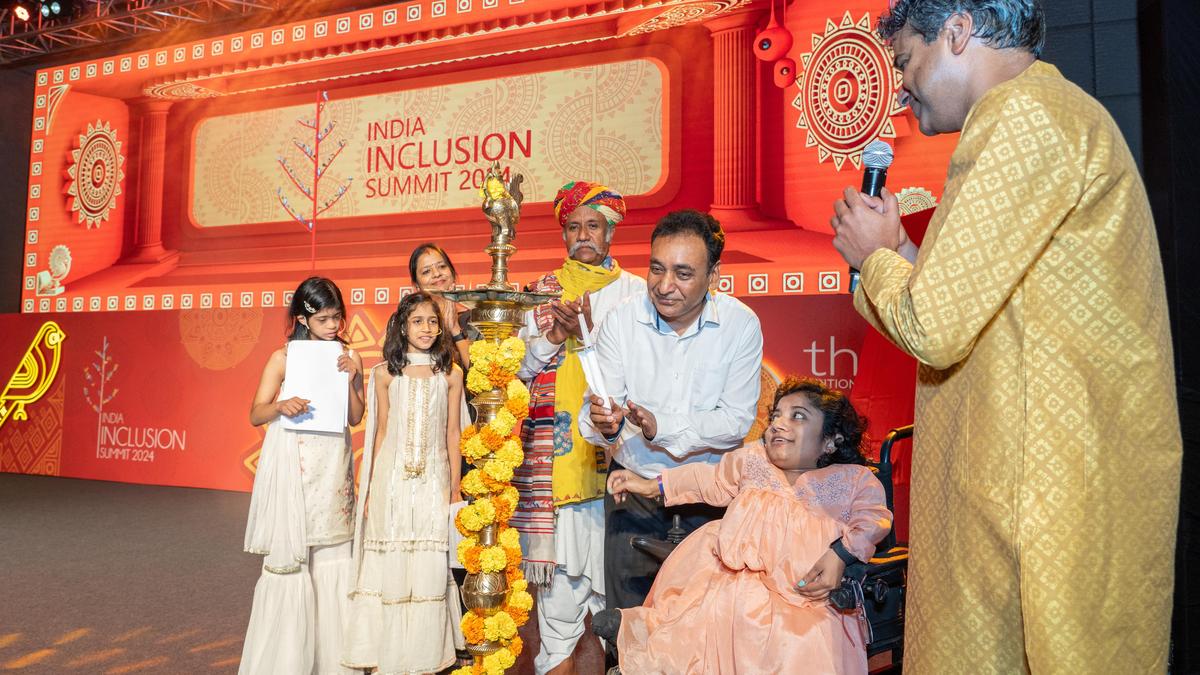
Rajesh Aggarwal, Secretary, Development and Employment of Persons with Disabilities lights the lamp while VR Ferose, IIF founder, holds the mic and disability activist Dhanya Ravi (in the wheelchair) looks on at the inauguration of IIS 2024

Rajesh Aggarwal, Secretary, Development and Employment of Persons with Disabilities lights the lamp while VR Ferose, IIF founder, holds the mic and disability activist Dhanya Ravi (in the wheelchair) looks on at the inauguration of IIS 2024
| Photo Credit: Special Arrangement

The India Inclusion Summit is an annual celebration of disability and is one of the many events conducted by the India Inclusion Foundation. Every year, the summit hosts a riveting range of events that include art and culture as well as inspirational talks and workshops, and is attended by persons with disabilities, their caregivers and well wishers.

This year too, promises to be as stellar as previous editions, with speakers such as Priyank Kharge, Minister for Information Technology, and the lead actors from Sitaare Zameen Par, among others.

According to VR Ferose, founder and chairman of India Inclusion Foundation (IIF), this year is special as many things fell into place “magically”. “Coincidences happen, and somehow the India Inclusion Summit (IIS) attracts the right energy. First, His Holiness the Dalai Lama has written a special message for IIS, which we will be sharing at the event. Getting his blessings means a lot to our volunteers and the entire community.”

IIF founder VR Ferose with His Holiness the Dalai Lama

IIF founder VR Ferose with His Holiness the Dalai Lama
| Photo Credit:
Special Arrangement

“Second, former Chief Justice Chandrachud accepted our invitation to be the chief guest at IIS. He has two foster daughters who are severely disabled and wheelchair users. It will be interesting to hear him speak as his book Why Constitution Matters (2018) covers the issue of disability rights.”

Ferose admits that while it is great that DY Chandrachud and Priyank Kharge, two policy makers, will be a part of IIS, “the third reason that makes this edition special is the fact that four of our core team members have been selected for the National Award this year for their work in the disability sector.”

Pavithra YS, IIF co-founder and managing director of Vindhya e-Infomedia and Richa Bansal, founder of Sarathee, will be receiving the National Award, apart from Inclusion Fellow Dhriti Ranka and Art for Inclusion Fellow Gayatri Gupta.

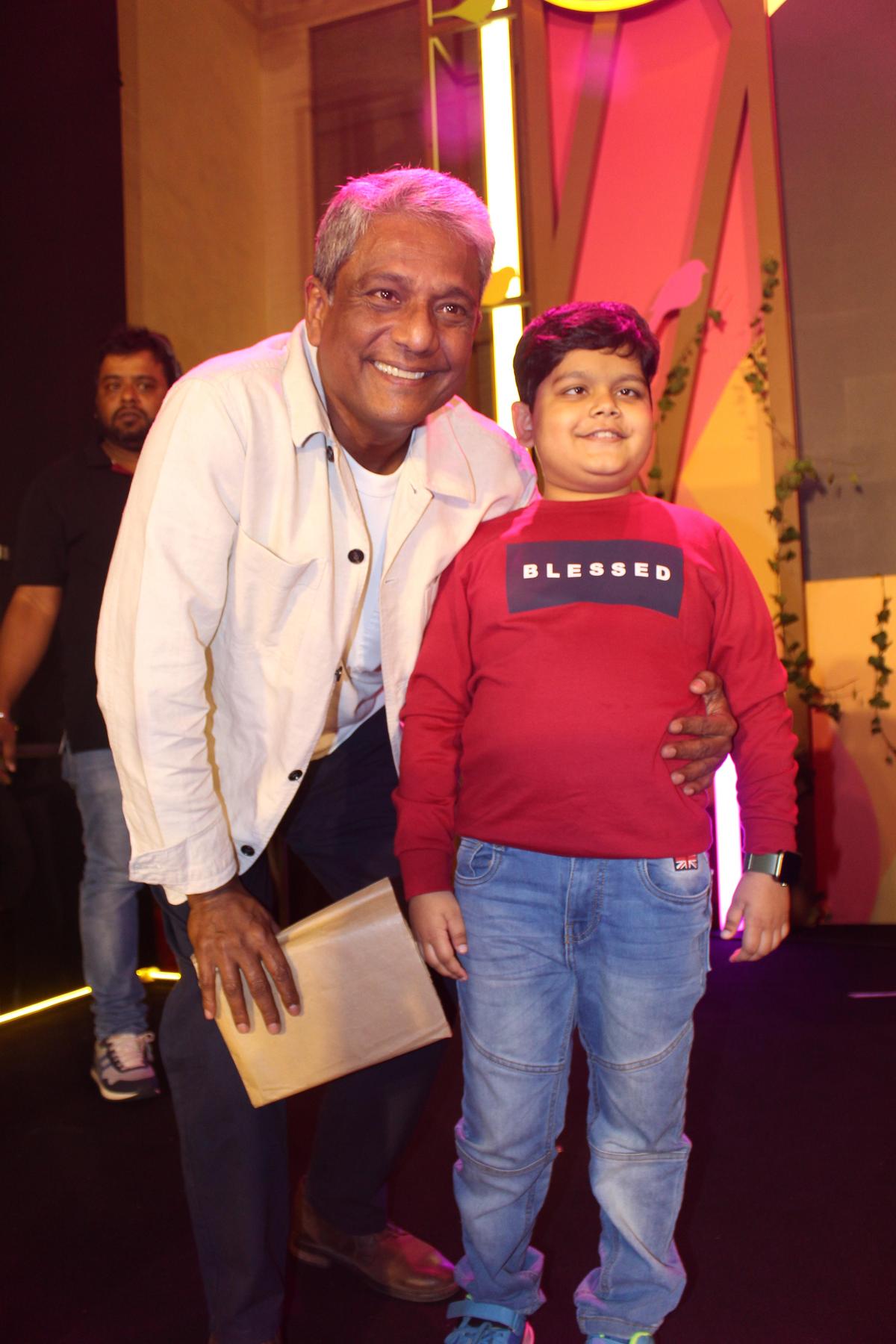
Actor Adil Hussain with Prathamesh Sinha, a 12-year-old with blindness, who emceed at IIS 2023

Actor Adil Hussain with Prathamesh Sinha, a 12-year-old with blindness, who emceed at IIS 2023
| Photo Credit:
Special Arrangement

“Having four people integral to our work recognised at the national level is testimony that what we do matters. That is why this year’s summit is a celebration. While we don’t work for the recognition, when it comes, it is a validation of our work,” he says.

According to Ferose, The Inclusion Fellowship (TIF), where the team supports social entrepreneurs, is their most important initiative. “These are startups involved in solving a problem in the disability space,” he says, adding that TIF will be held on November 14 and 15. Selected Fellows will undergo a two-month hybrid programme that will provide them with personalised mentorship.

The India Inclusion Summit will take place on November 16 at the Radisson Blu, Outer Ring Road, Marathahalli in Bengaluru. Event details available on indiainclusionsummit.com


Source link

New restaurants and menus in Bengaluru this November


NEW IN THE HOOD

Asian forward @ Kai – Bar & Kitchen, MG Road

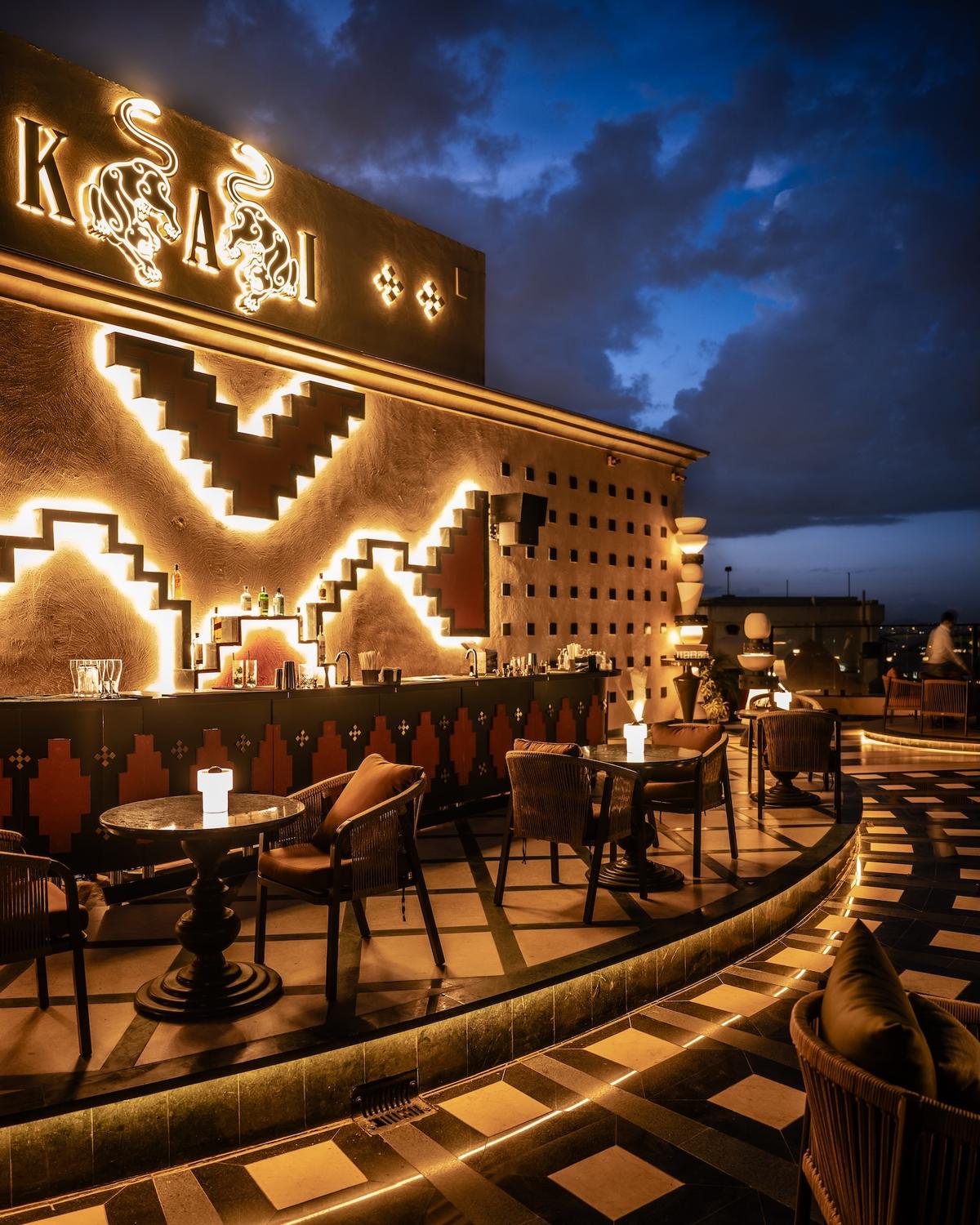
Offering a 360-degree panoramic view of Bengaluru’s historic Army Cantonment is the city’s latest restobar. Perched on the 13th floor, this newly-launched rooftop lounge offers more than just views. Its main bar ceiling’s design draws from peacock feathers, and the floor – camouflaged by ample greenery – is neatly designed to accommodate a private dining zone, semi-outdoor seating, a terrace for sundowners, and intimate skyline seating as well. 

Kai – Bar & Kitchen

Kai – Bar & Kitchen
| Photo Credit:
ARANYA GHOSH

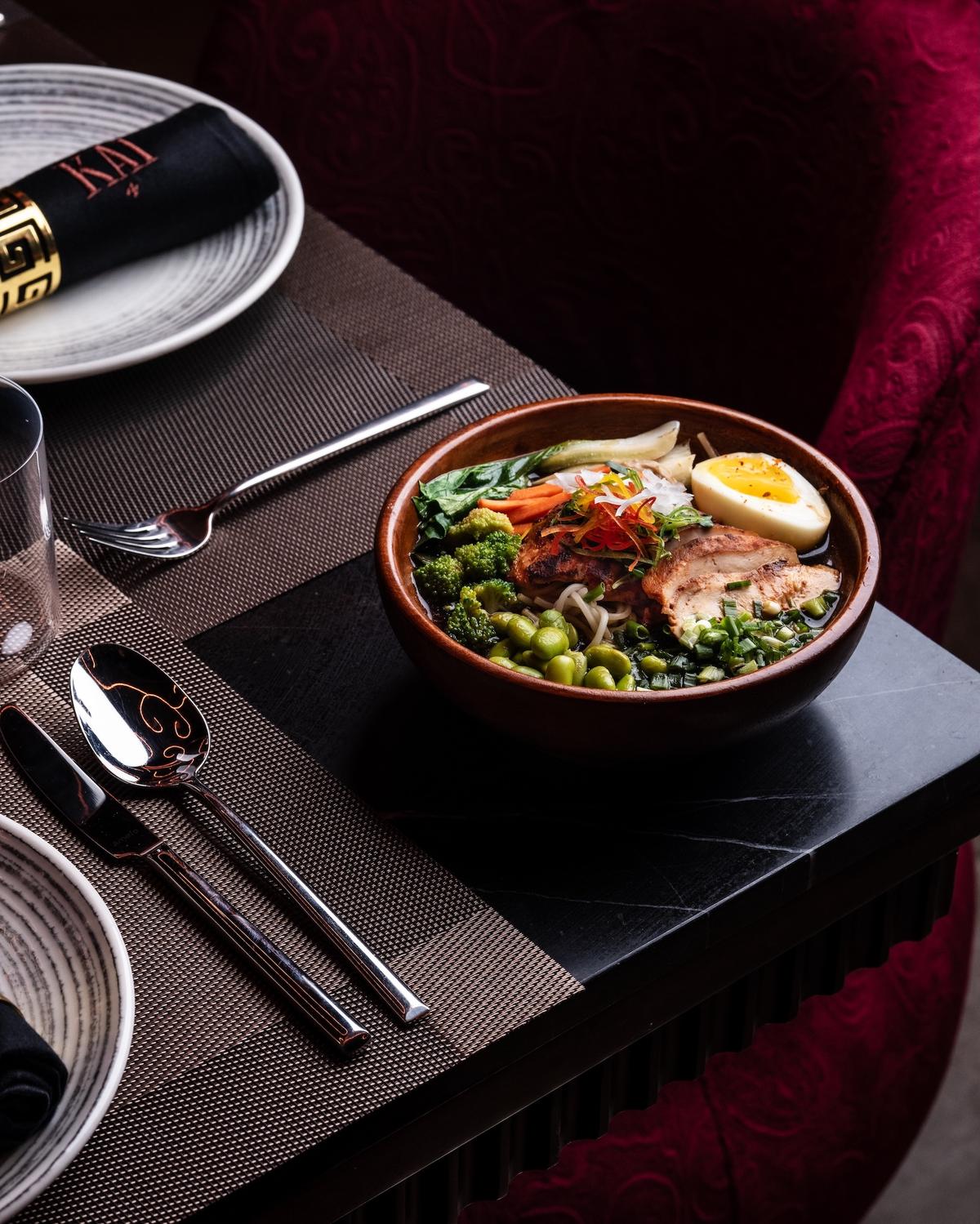
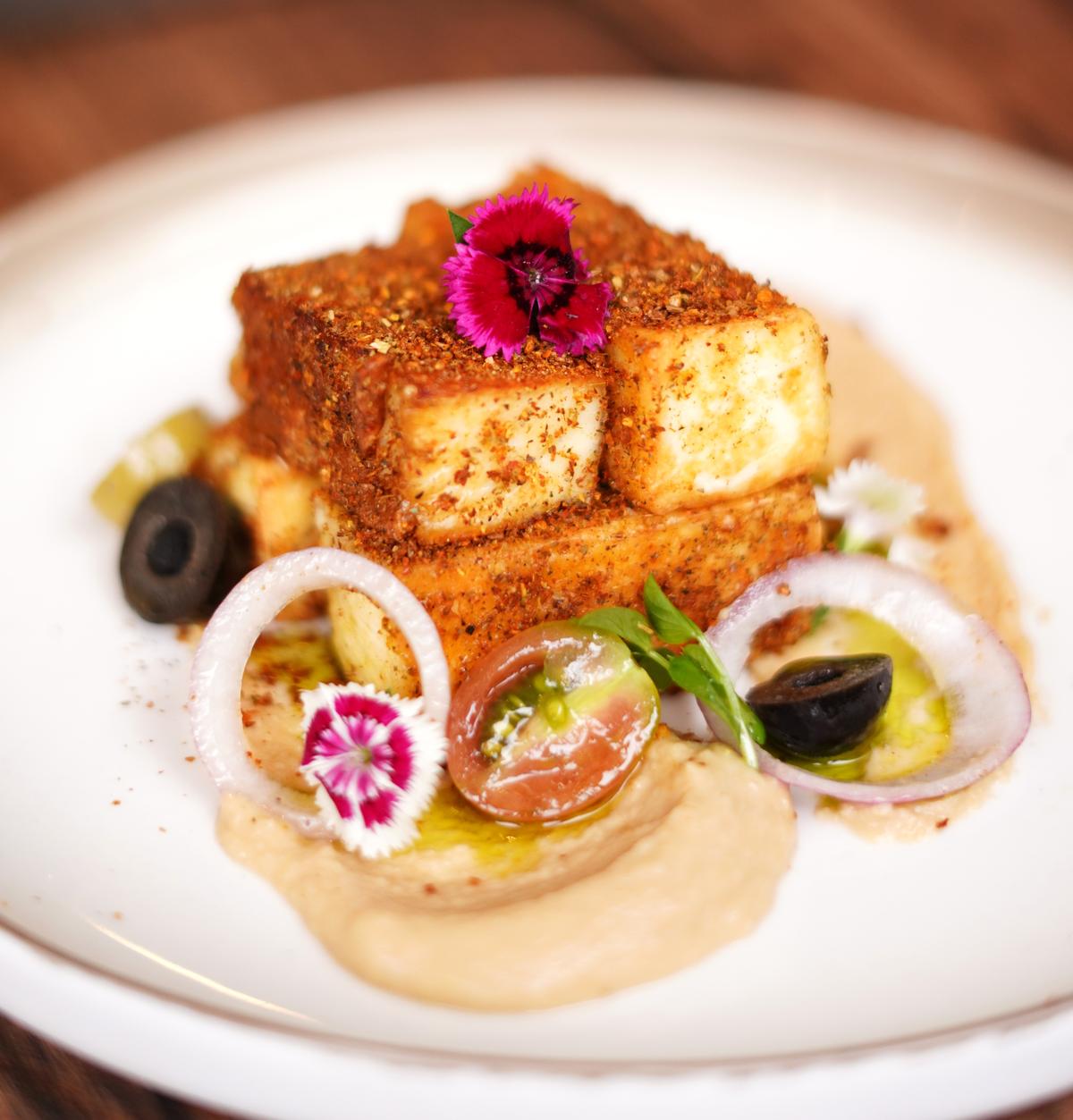
Chef Virendra Singh Chauhan is at the helm of the food, and the menu’s highlights are the Asian offerings. Think melt-in-your-mouth dimsums and comforting ramen bowls perfect for the city’s nippy weather. Other dishes include edamame with Sichuan pepper, Kyoto mushrooms with hot coriander sauce, Spanish gambas al ajillo with Cochin prawns, paneer khurchan tarts, porcini risotto, green Thai curry, slow-cooked laal maas, Malabar seared fish and lamb tagine. End the meal with the classic yuzu and matcha cheesecake and After Dark chocolate pudding, among others. 

A dish at KAI Bar and Kitchen

A dish at KAI Bar and Kitchen
| Photo Credit:
ARANYA GHOSH

The beverage programme headed by Ashish Adhikari features a signature cocktail section with offerings such as a Korai that has smoked vodka with kaffir lime, lemongrass, and matcha; the Kai Negroni with butter-washed rum and coffee-infused vermouth; Hibana; Cape of Good Hope; Penicillin; Pisco Sour; and martinis.

At 13th Floor, Du Parc Trinity, MG Road

CBD’s new outpost at HAL

CBD’s new outpost at HAL
| Photo Credit:
Special Arrangement

Signature cocktails @ CBD – Central Bar District

The second outpost of this gastro-bar known for its signature mixology is now at HAL. Helmed by Ajit GS, Chef Gaurav Raghuvanshi, and Aman Dua, the trio behind Crimson and Clover Hospitality (Flo, Rasai, Cafe Del Sol, Bento Lab), CBD’s new branch is spread across three levels with areas for intimate gatherings, a bar area, and more. 

The menu has Indian food at the core with small plates and mains. Signature dishes include truffle chicken sliders, Korean chilli prawns, smoked ghee roast tacos, charred burrata flatbread. Dishes exclusive to the HAL outlet include tandoori quail, Sindhi aloo tuk, butter chicken puff, medu vada, nadan murgi korma, and jackfruit biryani.

The cocktail section features the likes of Kantara, CBD Gudbad, Revised Rasam, Rain Water, Noon In Doon, among others.

At 124 HAL Road, Old Airport Road, Murugeshpalya

Dishes at Alfresco

Dishes at Alfresco
| Photo Credit:
Special Arrangement

Botanicals and more @ Alfresco

Adding to the city’s many cocktail offerings is Alfresco with community-style cocktails such as the Golden Sangria, with a white wine infusion; Lillet Spritz, a sparkling serve with delicate botanicals; Bubble & Botanicals that is gin-forward; and Grape Escape that reinvents the classic red sangria. Also available are mini-bottle cocktails including Fire & Lime, a spirited take on the Picante; Caffeine & Oak, a take on the Old Fashioned; and the tropical Painkiller.

The indulgent food menu features the bruschetta pomodoro with wine cherry tomatoes, mozzarella, and basil; pinsa bianco al tartufo with truffled mushroom and mascarpone; sushi nachos with crispy wonton, spicy tuna, avocado, and wasabi mayo. Other highlights include Turkish doner kebabs that are served with flatbread and mint, Korean BBQ chicken skewers glazed with gochujang and paired with kimchi, and classic Spanish garlic prawns infused with olive oil, chilli, and parsley.

At The Leela Bhartiya City Bengaluru, Hotel Conventions Residences

Food at Shoyu

Food at Shoyu
| Photo Credit:
Special Arrangement

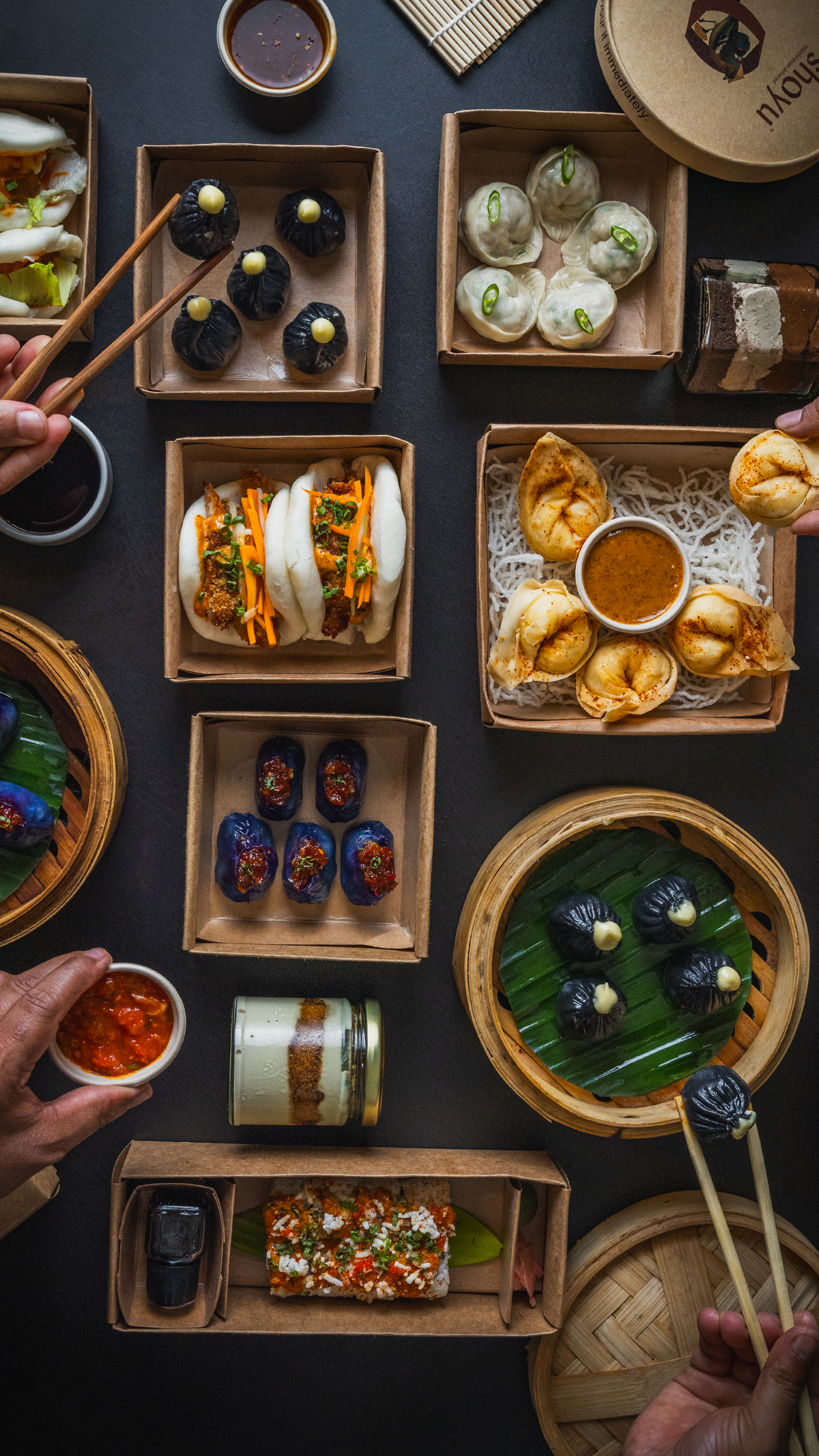
Asia comes home @ Shoyu

After launching in Hyderabad, this Asian label co-founded by actor Naga Chaitanya has arrived in Bengaluru with its first outlet. Shoyu is known for its small plates such as dimsums, sushi, crudo, sashimi, and grilled meats and vegetables. Highlights include the truffle asparagus and avacado sushi rolls and ebi, salmon sushi rolls, charcoal black and white dimsum, Sichuan chicken chilli oil dimsum, to name a few. Mains include chicken pad krapao, Malaysian and Thai curries, kimchi bokkeum bap, Chinese wok fried rice, lo mein noodles, kung pao chicken.

At Teachers Colony, HSR Layout

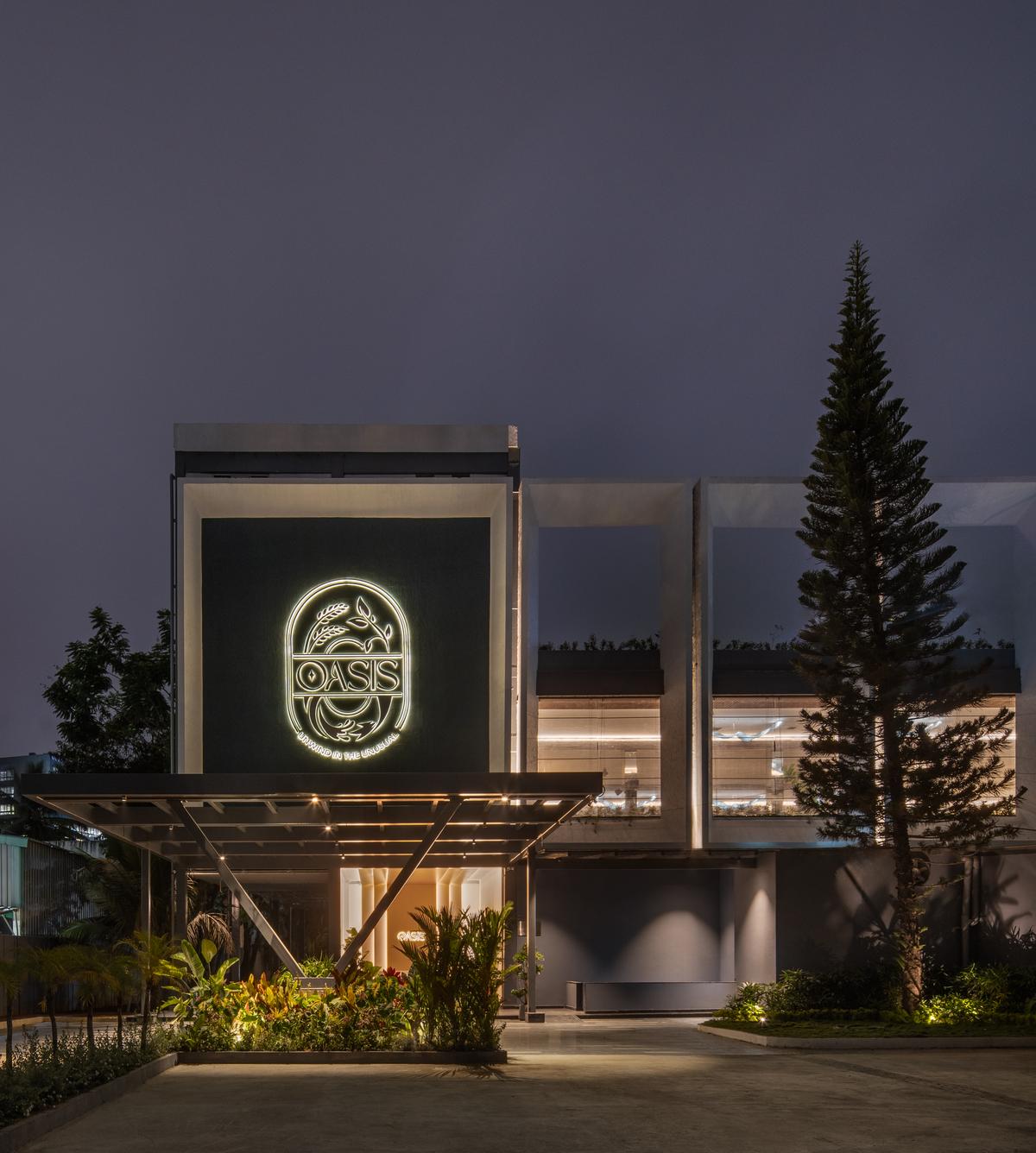
The new outpost of Oasis

The new outpost of Oasis
| Photo Credit:
SHAMANTH PATIL J

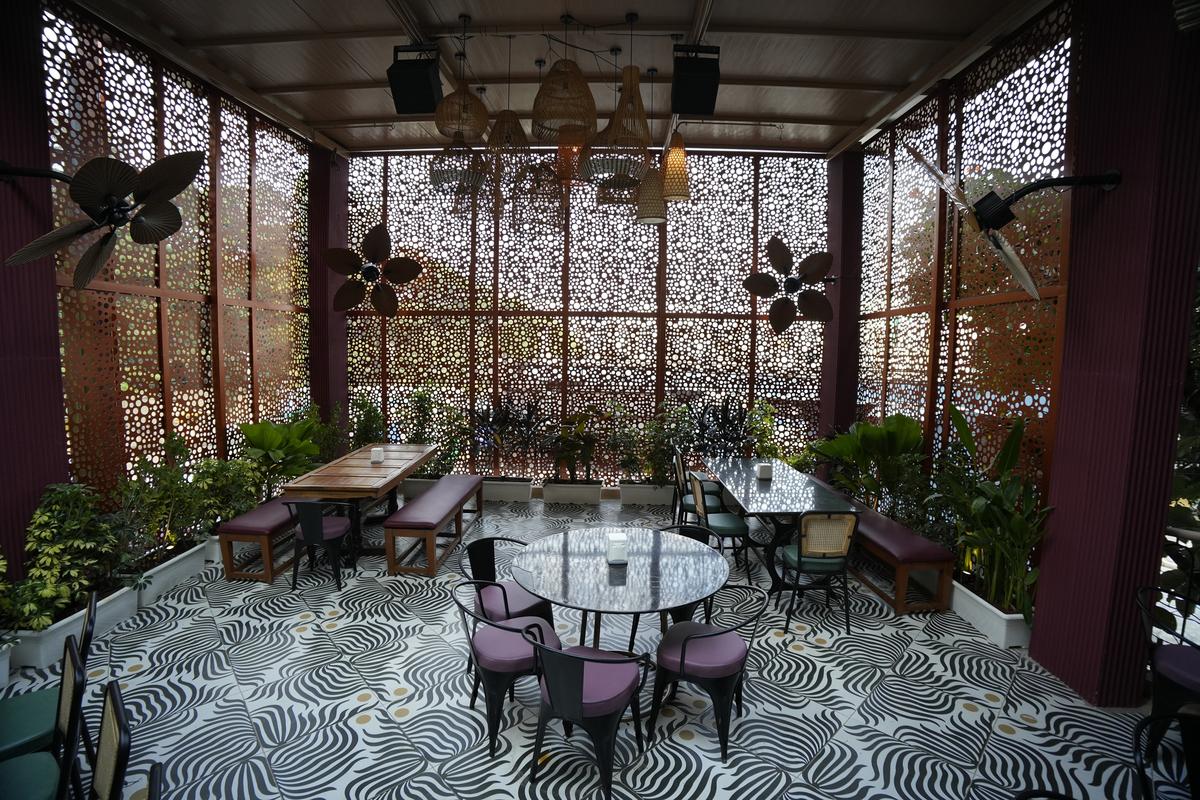
Diners’ sanctuary @ Oasis

Whitefield gets yet another brewery, and this time a massive one that is sprawled across 1,50,000 square feet. While it has a seating capacity of 1,800 guests, the venue also houses two exclusive banqueting spaces that can host over 2,000 people.

The menu features over 250 dishes spanning Mediterranean, Pan-Asian, and Modern Indian cuisines. Highlights include Arcot mutton chops, charcoal chicken dim sum and grilled salmon with lemon butter sauce. The bar programme with 56 curated beverages comprises 20 signature cocktails, 15 classics, shooters, and five premium gin and tonics. Standouts include the Golden Hour, Pistachio Paradise, and Herbal Citrus.

At Whitefield Main Road, Devasandra Industrial Estate Area

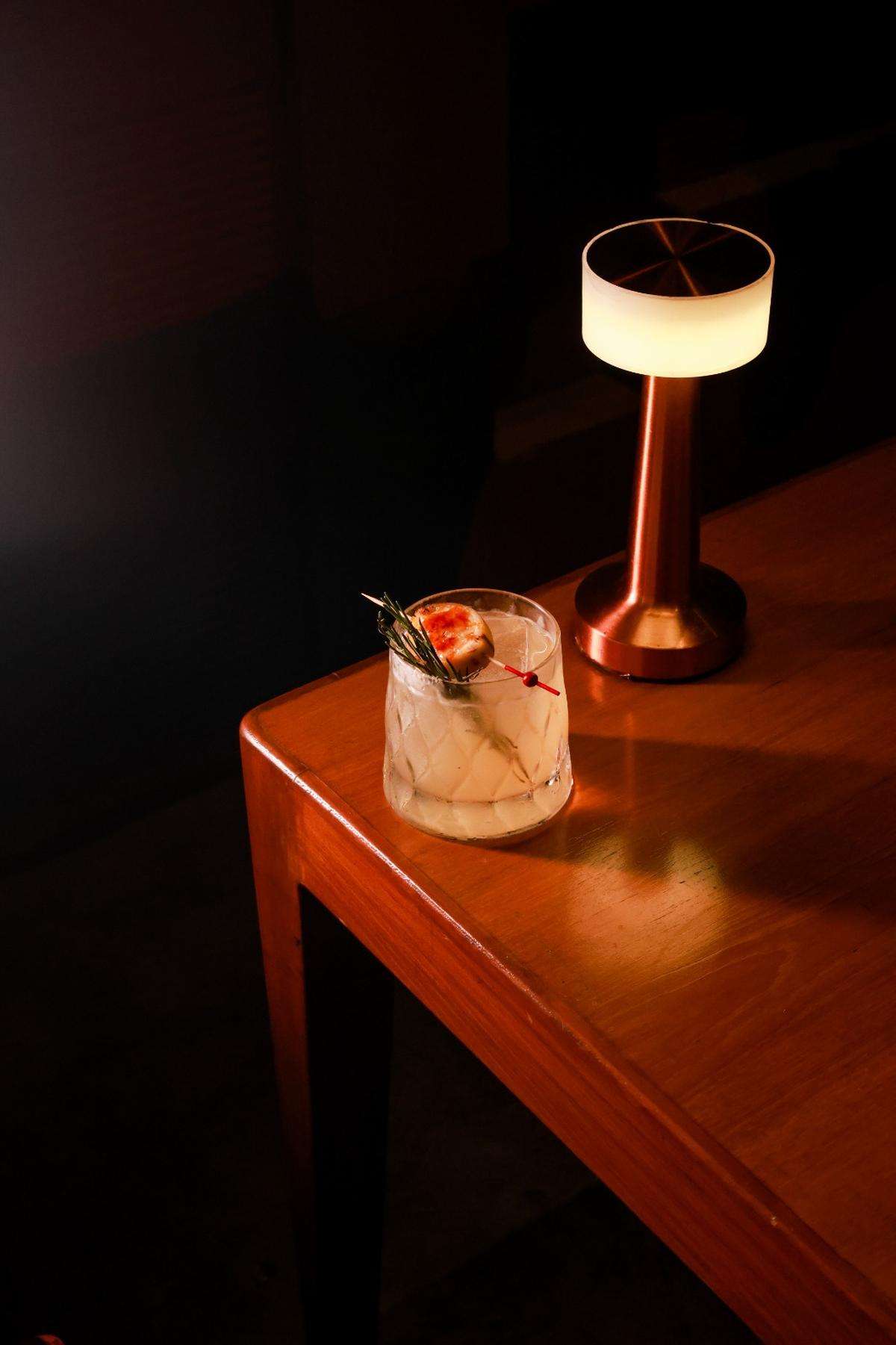
A drink at Eight

A drink at Eight
| Photo Credit:
Special Arrangement

European desserts @ Caspars Bageri

This new cake studio brings European dessert styles to Bengaluru. Specialising in entremets, which are multi-layered French desserts, founder and pastry Chef Jyothi Vijay was trained in Dubai. Caspars is a word that is inspired by her family, while Bageri is the Dutch word for bakery. Each cake is multi-layered and has different textures which are intentionally made, and Jyothi works in small batches to create the flavour-forward cakes.

Desserts at Caspars Bageri

Desserts at Caspars Bageri
| Photo Credit:
Special Arrangement

Some bestsellers are the raspberry crème brulee entremet, the intense chocolate and English toffee entremet, and the salted caramel and milk chocolate entremet. Customers can order through the official website, and even pick up the cakes at the studio. The team is currently working on an experiential set up where people can sit and try the cakes.”

At HAL 2nd Stage, Indiranagar.

NEW MENUS

Straight from Korea @ Eight

Savour the flavours of Korea all through November at this Pan-Asian dining destination in the city. The limited-edition menu spotlights Korea’s vast culinary landscape, including street food and home-style traditions.

Signature creations include dakgaejang (spicy chicken soup), handmade mandu dumplings, bibimbap, tteokbokki, and Korean fried chicken. Desserts include bingsu, shaved ice confection; and Korean congee. Savour these alongside their range of Korean-inspired cocktails: Young-Hee (Rose of Sharon) that blends soju, gin, and elderflower; Yong-ui Nalgae (Dragon’s Wing) with soju, rum, dragon fruit, and blue pea tea; and Chahyang (Oolong Whisky Sour).

All through November at Phoenix Mall of Asia

Shakshuka-style eggs at Circa 11

Shakshuka-style eggs at Circa 11
| Photo Credit:
Special Arrangement

Brekkie @ Circa 11

New on the city’s list of breakfast spots is this coffee house-cocktail bar that has introduced The Breakfast Society, a weekend-only breakfast menu. Diners can expect dishes such as breakfast chicken parm with sugo al pomodoro, mozzarella, poached eggs, and greens; okonomiyaki-style eggs with cabbage slaw, Circa kewpie; shakshuka-style eggs; ricotta pancakes with honey butter and brûléed banana; passion fruit French toast with berry compote, to name a few. Also on the menu are sandwiches, and laffas, Iraqi flatbread.

Then, the drinks. If you fancy a cocktail with your breakfast, choose from Centre Court, Wimbledon that blends pink gin and strawberry cream; Article XI: The Prohibition of Sobriety that turns cold brew into a negroni; Soy Sauce with Vanilla Bean Milk; Orange You Cute?, In the Green of Things, etc. There is also a coffee and smoothie section.

Only on Saturdays and Sundays, from 8:30 am to 11 30 am. At 12th Main Road, Indiranagar

A dish at Seta

A dish at Seta
| Photo Credit:
Special Arrangement

Poolside meal @ Seta

A new Med-Asian menu at this poolside restaurant aims to bring in the feel of dining at a resort. The menu’s highlights include wok tossed mushroom chili hoisin, sweet and sour crispy tofu, Sichuan style smoked pepper chicken, Seta house salad with sesame nectar dressing, lamb puffs, and more.

The bar also features a new cocktail selection that blends Indian and international flavours such as kaffir lime, blue pea, and pandan leaf syrup.

At Hilton Bangalore Embassy GolfLinks, Challaghatta


Source link

Board games find space in Thiruvananthapuram cafes


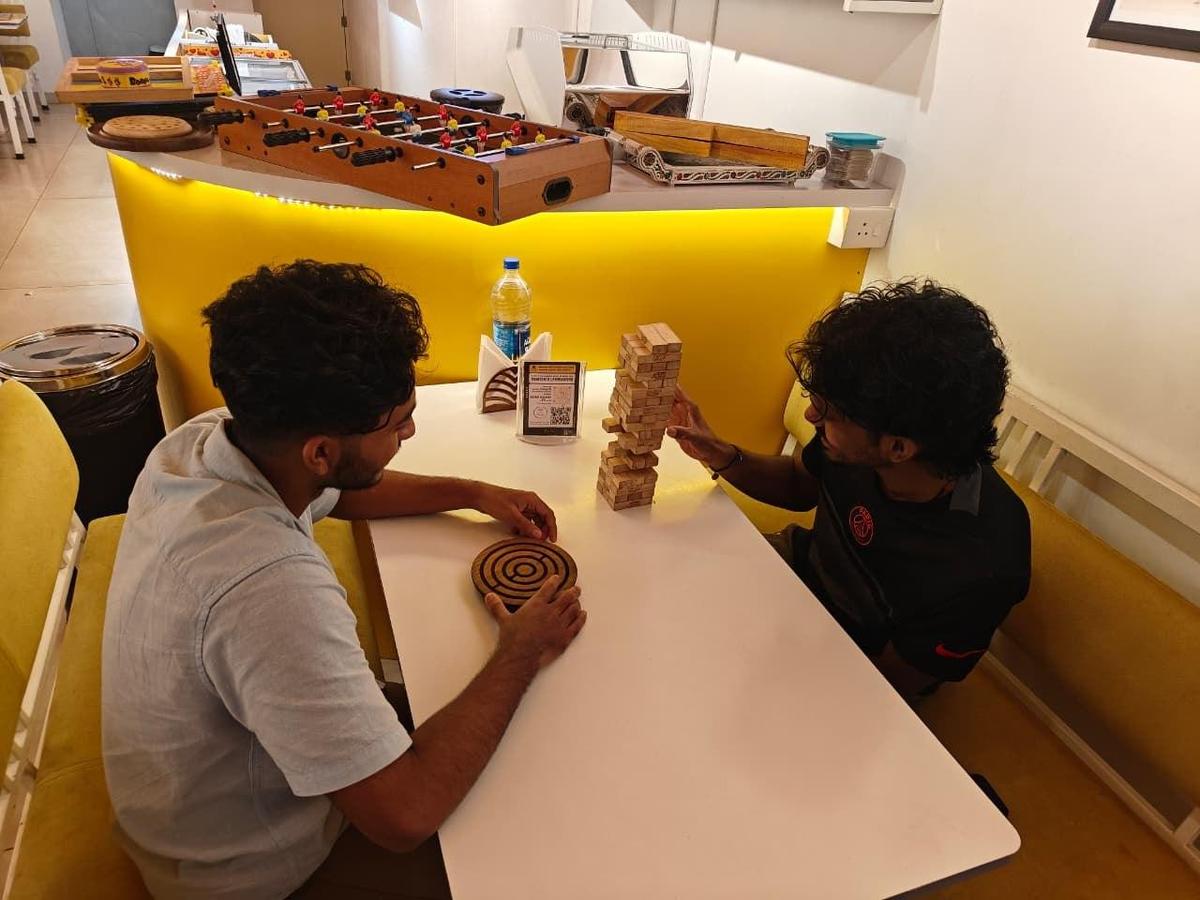
The faint sounds of cards falling, dice rolling, and the occasional chuckle snowballing into laughter set the tone at Eve’s Coffee at Anayara in Thiruvananthapuram. Books, board games, and collectibles are stacked on shelves placed against the walls at this house-turned-coffee shop. Even before placing their orders, customers linger near the collection of games, carefully studying the labels to play as they wait.

When expat Beta Jayakumar founded the coffee shop in 2018, boasting a 150-game collection, as well as books and Mandala colouring kits for customers, it was a first for a cafe in Thiruvananthapuram. The aim was to foster a “coffee shop culture in a tea lovers’ paradise,” encouraging patrons to spend time at his shop instead of immediately leaving after dining, Beta says.
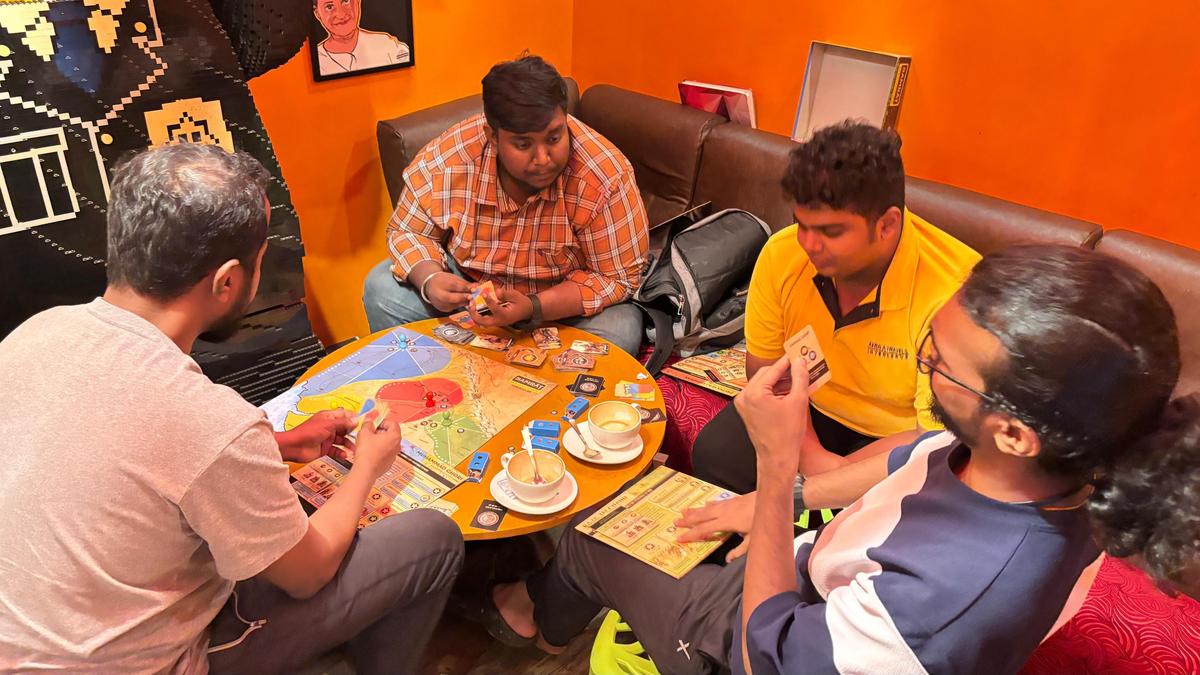
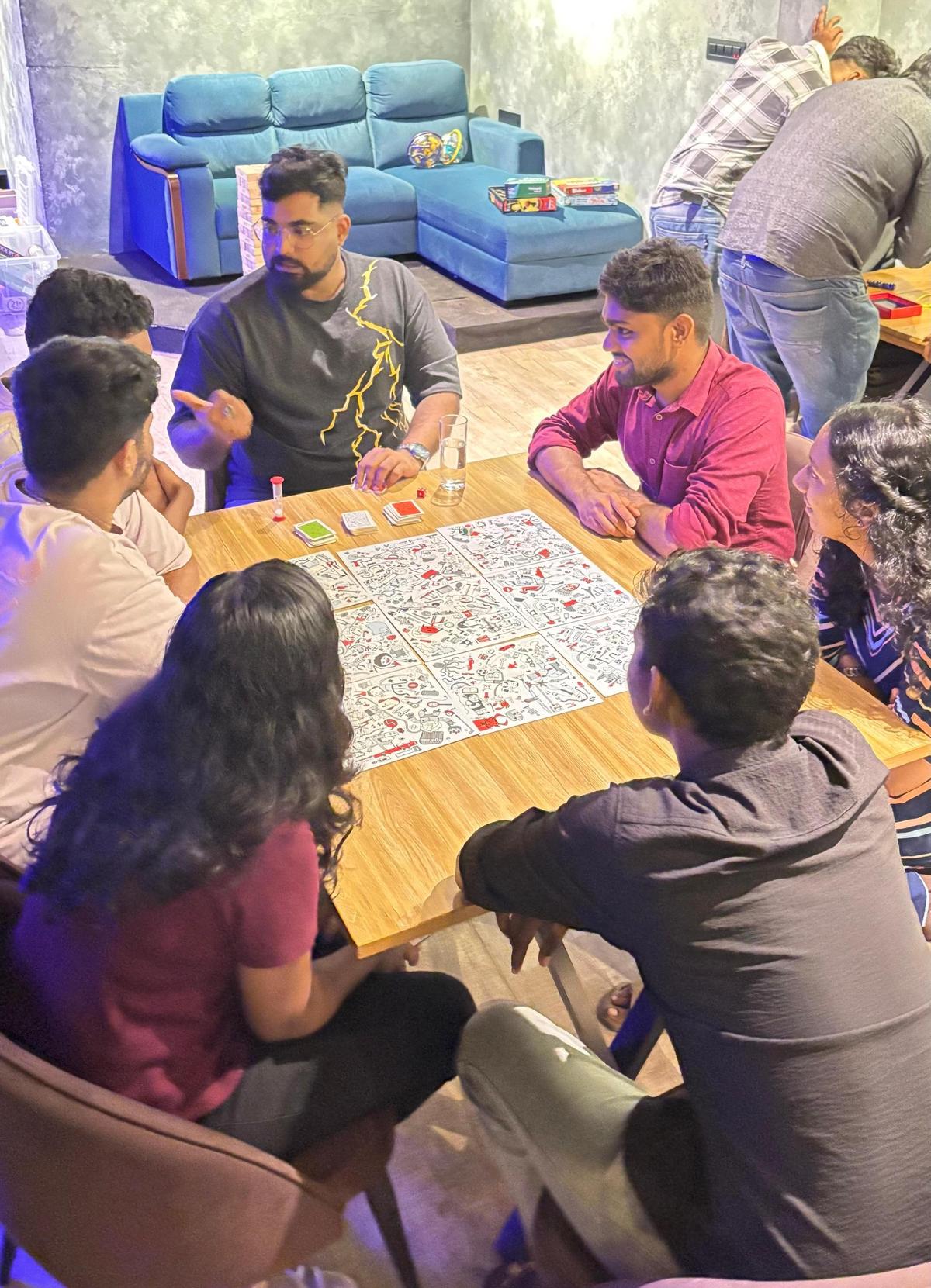
Board games being played at Eve's Coffee

Board games being played at Eve’s Coffee
| Photo Credit:
SPECIAL ARRANGEMENT

Seven years later, board games have now set up camp on dining tables at eateries across the city, keeping guests entertained. Frost & Toast, Malibu Club, Savour Street Cafe, and Cafe Boba Queen belong to this list. Pakida Board Game Cafe, currently relocating from Kazhakkoottam, is also known for board games.

Alan Dominic Mathew, 22, a member of Playfirst Initiative, which organises board games and other events in the city, says, “It is a revitalisation of a culture that has existed for some time now. There used to be chayakkada (tea stall) and cheettukali (playing cards). That moved on to private spaces. Now people come together to a cafe, making it a modern-day chayakkada.

In the case of Roshan Das, co-owner of Malibu Club at Kulathoor, the desire to start his own cafe came from spending time giving BTech tuition at cafes in the city. “I thought if I had a space of my own, I wouldn’t need to take my students elsewhere. It was also at this juncture that I got interested in developing a game room,” says Roshan, who has a collection of nine board games, besides four PlayStation consoles and a home theatre at his space for gamers.

Board games being played at Malibu Club

Board games being played at Malibu Club
| Photo Credit:
SPECIAL ARRANGEMENT

Similarly, for Daksha Raveendranath and her husband, Prem Krishna, their venture Frost & Toast at Nanthancode is a dream come true. The space has around 40 board games, including multiple boards of Snake and Ladder, Ludo, Uno, Foosball, carroms, and pallankuzhi (an indigenous game from Tamil Nadu). “You can see a dice in our logo; it conveys that games are a part of our experience. We wanted our cafe to be a place where people can connect,” says Daksha.

Mukund V, a regular customer at Eve’s and board game enthusiast, says, “Why would you spend time online at a cafe when you can chill with your friends playing games in real life? If there are games at cafes, I play them. And if I am alone and it’s a game which is new to me, I take the opportunity to learn something about it.”

Choice of games

The owners say even though some of them have high-end strategic and logical games in their collection, Jenga, Uno, Ludo, and Snakes and Ladders remain the popular choices. Political strategy board game Shasn, Pandemic, and Catan (a multiplayer game) are also found in the cafes. Deeksha says there are fewer takers for pallankuzhi due to its complexity.

Customers at Frost & Toast

Customers at Frost & Toast
| Photo Credit:
SPECIAL ARRANGEMENT

The collection at Eve’s is the biggest in the city with 700 games which include Monopoly, Camelot, and Cash n Guns, among others.

Savour Street Cafe, Pattom, has a separate basement set in neon lights for playing board games. Terence Paul Alexander, owner of the cafe, says, “We always had the most fun in our childhood playing games like Ludo.”

Boba Queen Cafe, at Pattom, run by Ganesh S and Aswathy L Mohan, has Sudoku and Wordsearches, and puzzles on the table mat itself for people to play while waiting for the order. The eatery has around 10 games in its collection.

The owners say the wait staff are also trained to play games and teach. The cafes, which have slightly complicated games use YouTube videos to guide the customers.

Demography and developing the culture

According to the owners, parents and senior citizens are also enjoying the games even though they thought it would enthuse youngsters only.

“Initially many people above the age of 35 thought they were too old to play the games. This attitude has changed over time. I had the joy of watching three generations coming together playing, fighting, and even lying straight-faced to their family to win,” says Beta.

“When families play these games, the older members feel nostalgic,” says Ganesh of Cafe Boba Queen.

Terence says while families turn up during weekdays, youngsters visit on weekends. “They hang out at the specified play area in the basement for over two hours once they start playing,” says Terence.

“A cafe is not just a place to dine; it is meant for spending time there and chilling. Thiruvananthapuram is slowly picking up on this aspect of cafe culture. It is our duty to let them know about it,” says Terence.

Published – November 13, 2025 11:11 am IST


Source link

Yamaha charts its next chapter: Two launches, two unveils, and a step beyond the niche


While Yamaha has enjoyed consistent success in the premium commuter and 150cc segments, it has long carried an image of being slightly out of reach for the average buyer — aspirational, but not always accessible. With this new mix of launches and EV unveils, the brand appears to be steering toward that elusive middle ground: offering excitement and style, while also addressing broader appeal.

XSR155: Retro with relevance

The XSR155 marks the arrival of Yamaha’s global “Modern Retro Sport” design philosophy in India — a blend of old-school charm with current-day performance. The design pays homage to classic roadsters with its circular LED headlamp, teardrop tank, and a clean rear section, while underneath it all lies familiar modern hardware.

Power comes from a 155cc liquid-cooled, four-valve engine with Variable Valve Actuation, putting out 13.5 kW and 14.2 Nm of torque. It sits on a Deltabox frame, paired with USD forks and a Monocross rear suspension, ensuring that the handling feels sharp and predictable. Dual-channel ABS, traction control, and a 6-speed gearbox with assist and slipper clutch round out the feature list.

It’s clear that Yamaha hasn’t skimped on equipment or engineering. The question is whether this kind of motorcycle — stylish, capable, but premium — can find significant traction beyond enthusiasts and urban buyers. Offered in four colour options with Scrambler and Café Racer accessory packs, the XSR155 is priced at ₹1,49,990 (ex-showroom, Delhi).

FZ-RAVE: A familiar formula, refreshed

FZ-Rave

FZ-Rave
| Photo Credit:
Special Arrangement

If the XSR155 speaks to the heart, the FZ-RAVE feels more grounded in Yamaha’s established success. Built on the solid reputation of the FZ lineup — a mainstay of Yamaha’s Indian portfolio — the RAVE carries forward that DNA while updating the styling and attitude to match younger riders’ expectations.

It’s powered by a 149cc air-cooled single-cylinder engine producing 9.1 kW, with a 5-speed gearbox and the kind of easy going performance that makes it a strong city companion. It’s light at 136 kg, gets front and rear disc brakes with single-channel ABS, and a 13-litre tank for good measure.

Design-wise, the FZ-RAVE adds freshness through a new LED projector headlamp, sculpted tank, and two new colourways — Matte Titan and Metallic Black. The motorcycle does not stray far from Yamaha’s comfort zone, but that might just be the point. It plays to the brand’s strengths — solid reliability, sharp looks, and youthful intent — while aiming to expand the FZ family’s already vast presence on Indian roads. The FZ-RAVE is priced at ₹1,17,218 (ex-showroom, Delhi).

AEROX-E: Yamaha’s first electric leap

Aerox-E

Aerox-E
| Photo Credit:
Special Arrangement

Yamaha’s entry into the EV space begins with a performance-oriented twist — the AEROX-E. Drawing its identity from the petrol-powered Aerox 155, this electric iteration aims to merge sporty design with electric power delivery.

The scooter uses a 9.4 kW motor generating 48 Nm of torque, supported by dual detachable 3 kWh batteries that offer a certified range of 106 km. It comes equipped with three riding modes (Eco, Standard, Power), a Boost mode for stronger bursts of acceleration, and a reverse assist function. Features like a TFT screen, Y-Connect app integration, and LED lighting underline Yamaha’s tech-driven approach.

Although officially unveiled, the AEROX-E is yet to reach showrooms. When it does, it will face a competitive EV market dominated by homegrown players who have built their advantage through affordability and range. Yamaha’s challenge will be translating its premium appeal into everyday practicality — something the brand hasn’t quite cracked yet in the mass segment.

EC-06: A hint of Yamaha’s electric everyday

EC-06

EC-06
| Photo Credit:
Special Arrangement

The EC-06 is a more urban-centric electric scooter, designed for short commutes and daily rides, and perhaps a truer reflection of Yamaha’s eventual EV direction. Built around a clean, minimal design, it is powered by a 4.5 kW motor (6.7 kW peak) with a 4 kWh fixed battery offering a 160 km certified range.

It gets three ride modes, front and rear disc brakes, LED lighting, and a 24.5-litre under-seat storage area that will appeal to practical buyers. Charging takes around nine hours using a standard home socket. Like the AEROX-E, the EC-06 has only been unveiled, with launch details and pricing still awaited.

This scooter feels like Yamaha’s most realistic attempt to meet everyday needs, but whether it can compete against strong domestic brands that already dominate the affordable EV space remains to be seen.

Looking beyond the premium tag

XSR Cafe Racer

XSR Cafe Racer
| Photo Credit:
Special Arrangement

For Yamaha, this was not just a day of product reveals. It was a declaration of direction. The XSR155 and FZ-RAVE reinforce the company’s strengths in design and quality, while the AEROX-E and EC-06 mark its cautious entry into the electric mobility conversation.

Yet, the underlying story is one of transition. Yamaha’s products have always been admired, but often from a distance — they appeal to the heart more than the wallet. The challenge now is to bridge that gap, to take the excitement and engineering precision it’s known for and make it more accessible to the larger Indian audience.

If these new models can achieve that, Yamaha might finally find itself not just as a brand for enthusiasts, but as a household name on every street corner. For now, it’s taken a confident step — but the long road to mass-market success still lies ahead.

Motorscribes, in association with The Hindu, brings you the latest in cars and bikes. Follow them on Instagram

Published – November 13, 2025 10:39 am IST


Source link