Life & Style

From Madras to Madrid: Chennai’s Kreeda traces the origins of the traditional game, dahdi


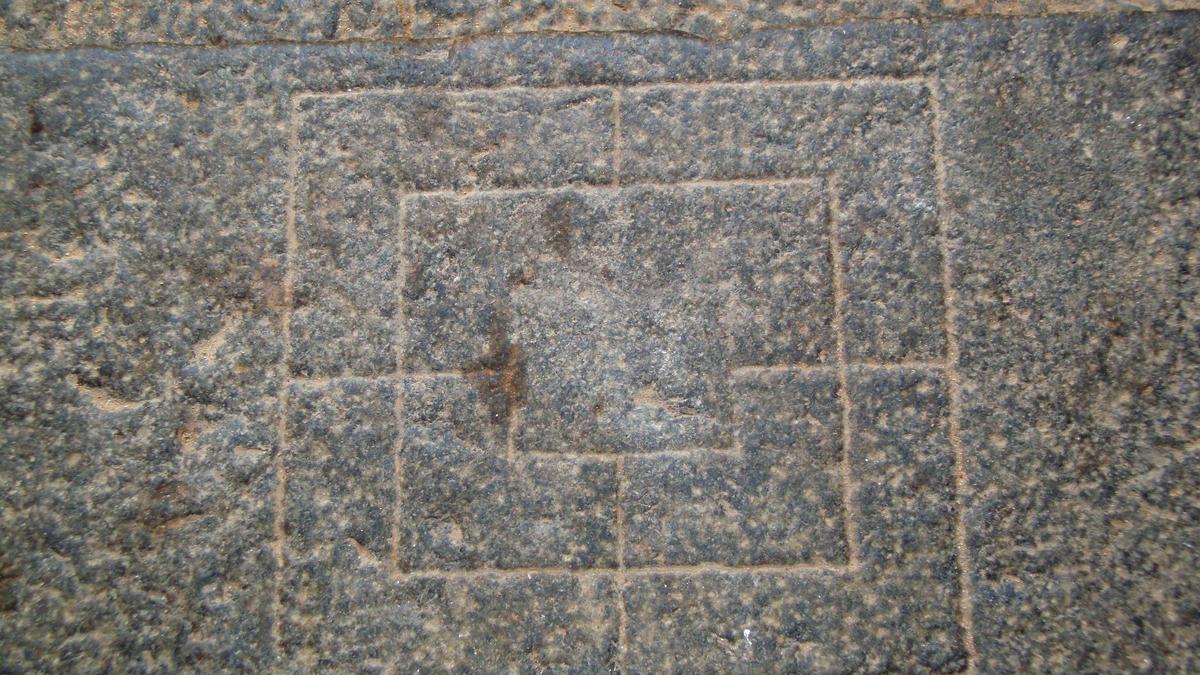
Dahdi at the Agatheeswarar temple in Chennai

Dahdi at the Agatheeswarar temple in Chennai
| Photo Credit: Special Arrangement

For Vinita Sidhartha, the game of dahdi which has three nested squares, is something she refers to, almost fondly, as her ‘problem child’. Walking around her office, she points to posters on the walls, many bearing photos of these squares etched onto the floor at temples, historical monuments and even an excavation site. 

“This particular game can be seen on the floors in so many temples in Tamil Nadu which includes at least 10 temples here in Chennai. I have always been surprised that nobody recognises or remembers this game even though not too far away in the Telugu heartland, it is called dahdi,” she says. 

Her fascination and journey to unearth the history behind this game and its surprising links to Spain has been documented and is on display as Madras to Madrid, an exhibition, at the office of Kreeda, Vinita’s company that has been working for over two decades in researching, developing and reviving traditional games. The dahdi, is also known as nine men’s morris and is a strategy game which involves players placing their nine pieces on the board and forming mills or three pieces in a row to outsmart their opponent.  

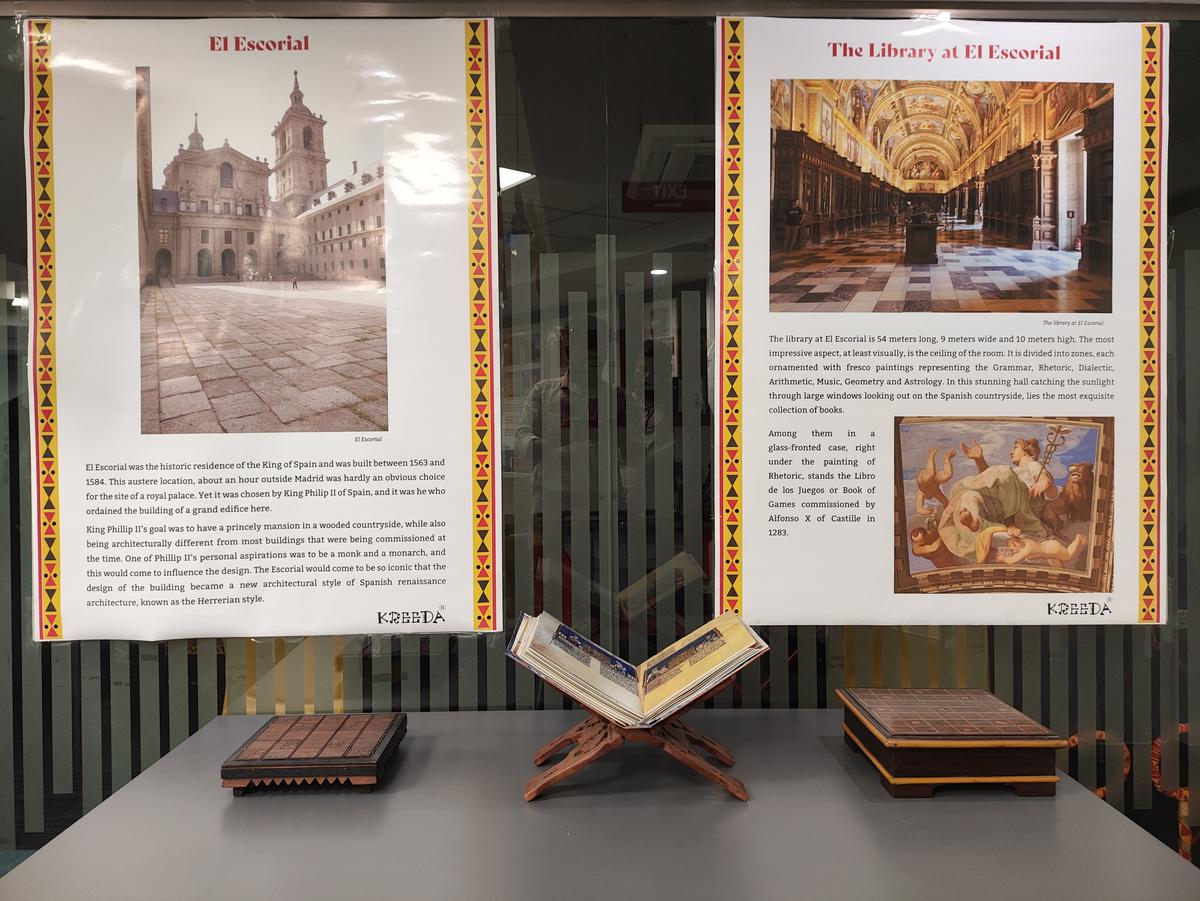
The replica of The Book Of Games displayed at the Madras to Madrid exhibition at the Kreeda office

The replica of The Book Of Games displayed at the Madras to Madrid exhibition at the Kreeda office
| Photo Credit:
Special Arrangement

Vinita says that as she began to document this game found across the country, she began to get a clearer picture of how old it might be. “I found a very interesting style of etching at the Hoysala temples in Karnataka, crawled through shrubs at the JNU campus, Delhi and found the game etched on stone there, and even at the temple unearthed in Salavankuppam post the tsunami in Tamil Nadu,” she said. 

It was a trip to Madrid, however, 5,500 miles away that not only gave her insight into an early documentation of the game, but also an interesting geographical link. Many churches in Spain, she points out, also have the game etched on the floors, much like the temples here. 

“At the Library of the Monastery of El Escorial, near Madrid, I was able to look at the Book of Games commissioned by Alfonso X of Castille in 1283. The book features nine men’s morris, as well as interesting stories about games travelling from India,” she says. 

A sample of the book has also been recreated by Vinita, which is on display as part of the exhibition. 

“Another exciting discovery for me was to see these nested squares carved into stone under the Butterball or the large balancing rock in Mamallapuram. I was barely able to crawl under and take a few pictures of the games etched underneath. Popular legends say that the Butterball has probably been here since the 1100s or 1200s. This gave me some sense of the antiquity of the game in India” she says. 

This journey to unearth the global spread of traditional games, Vinita says, has been an eye-opening one that has left her with many questions, possible answers, and some fascinating insights that she has documented through the exhibition. “I also noticed a game half hidden under the Butterball, a game different from the dahdi. I am already gearing up to hunt for more answers,” she laughs. 

Madras to Madrid will be on display at the Kreeda office till November 30. From 10am to 6pm on weekdays for groups; on weekends by request. Contact 9841748309 or 40091500.


Source link

German journalist Michael Gleich’s photo exhibition in Thiruvananthapuram is a tribute to death and rituals surrounding it


German journalist Michael Gleich’s photo exhibition Silence Alive: the Global Culture of Farewell, currently on at the Napier Museum grounds in Thiruvananthapuram, is an ode to the departed. Remainders of demise, captured on camera, occupy the Bandstand located on the Museum premises.

The exhibition, organised by the Goethe-Zentrum Trivandrum, is a collection of Michael’s works over the past 10 years, travelling to Germany, the USA, Rwanda, Malaysia, Tunisia, Austria, Lebanon, the UK, and India, in pursuit of diverse pictures, icons, symbols, and rituals related to death.

“As a reporter who is sent to a lot of countries, I benefited from the opportunity to visit cemeteries across the world. I have observed that there is an unnecessary sense of taboo surrounding death. It is an integral part of life and a realisation that we don’t live forever,” says Michael.

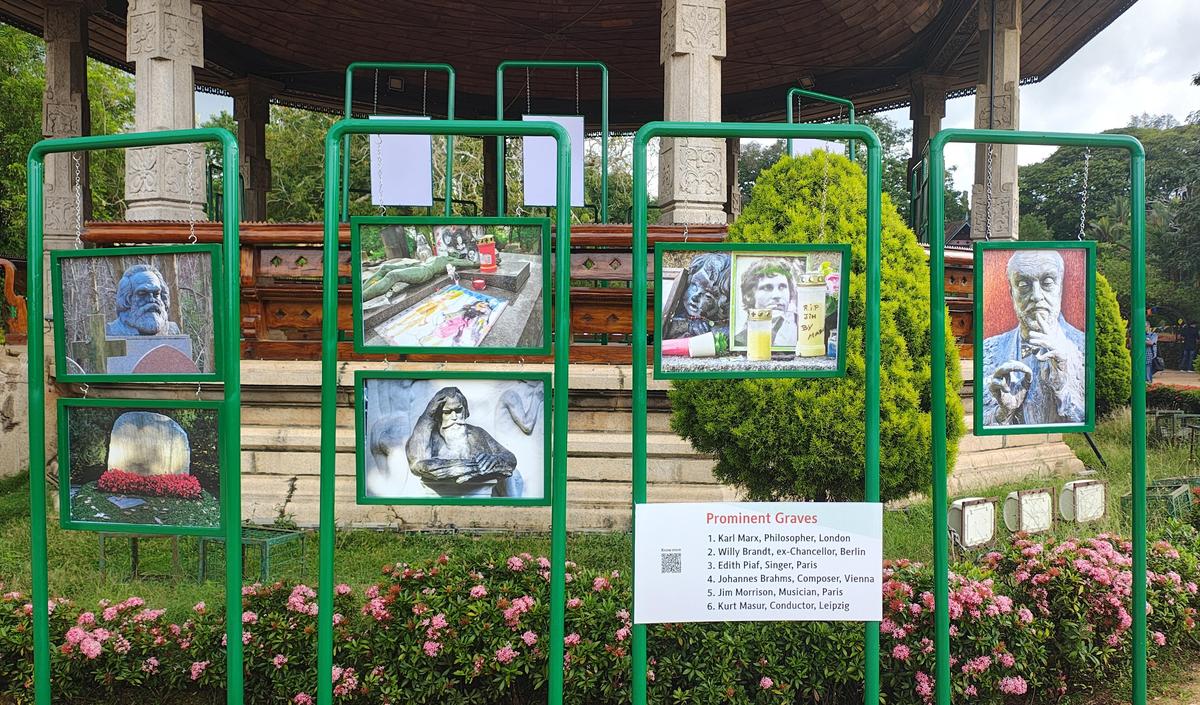
The exhibition showcases photographs of cemeteries, graves, and burial rituals across faiths, including graves of personalities such as philosopher Karl Marx and musician Jim Morrison. Michael also highlights a range of artworks on the graves of artists, writers, singers, and actors.

Photographs of prominent graves at Silence Alive: the Global Culture of Farewell photo exhibition

Photographs of prominent graves at Silence Alive: the Global Culture of Farewell photo exhibition
| Photo Credit:
Nainu Oommen

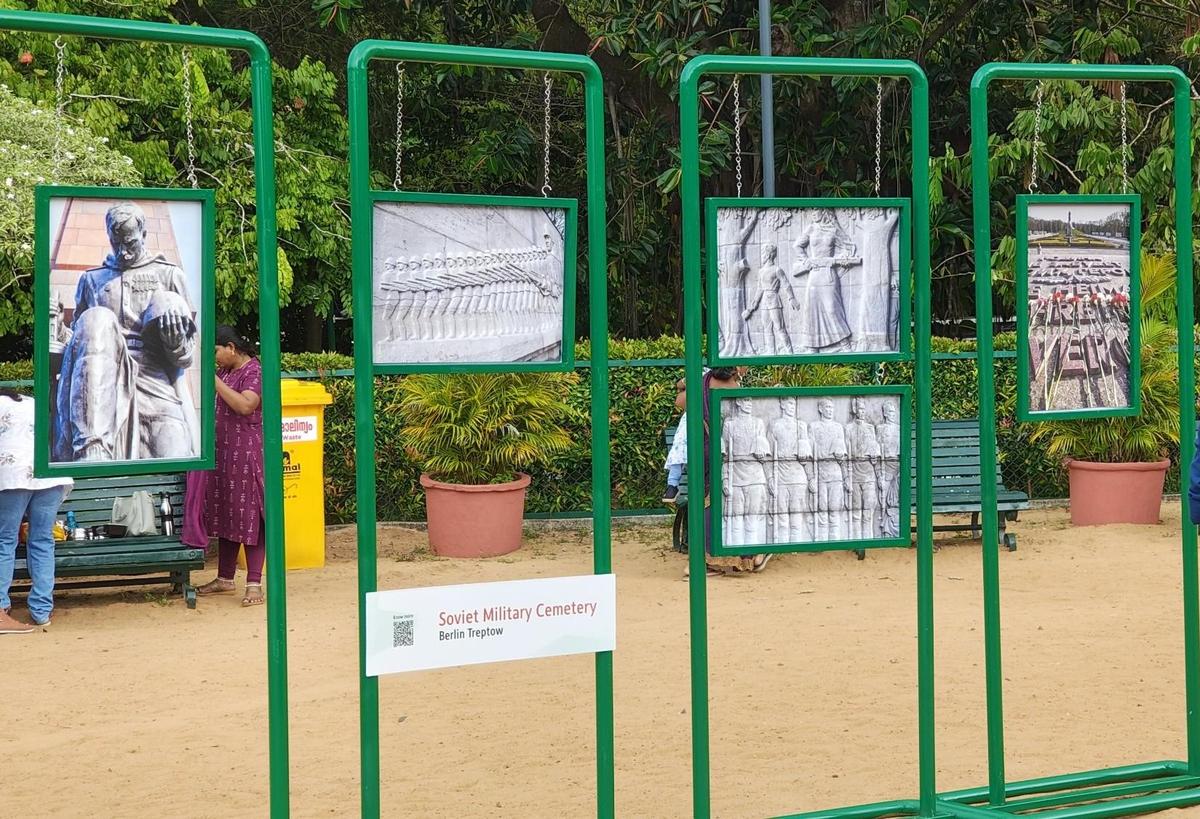
One of the oldest photographs captured by the journalist is that of the Soviet Military Cemetery in Berlin, Germany. Around 3000 Soviet soldiers are buried at the cemetery, says Michael. “The work is an interesting look at how, despite the current strained relationships between Russia and the rest of Europe, we still maintain a dignity for the dead, who are buried there,” he says.

Photographs of the Soviet Military Cemetery in Berlin

Photographs of the Soviet Military Cemetery in Berlin
| Photo Credit:
Nainu Oommen

Another exhibit has photographs of the genocide cemetery in Rwanda, which were taken last year, and of the remains of the victims of the 1994 Rwandan civil war.

Photos of St. Dimitrios Orthodox Cemetery in Beirut, Lebanon, are also exhibited.

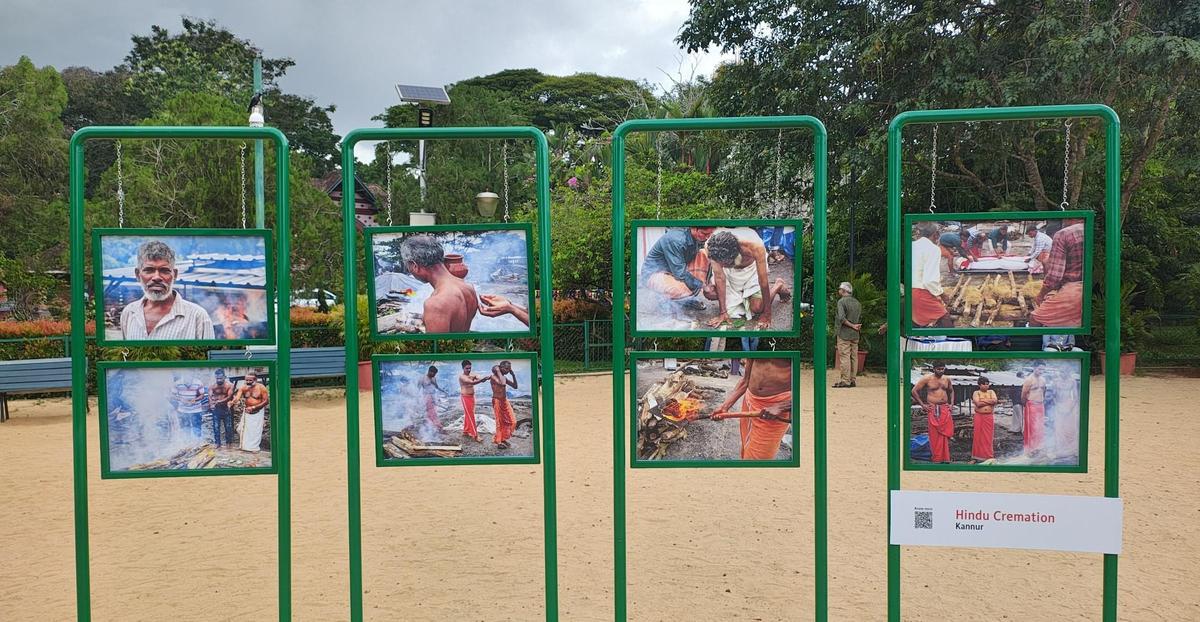
One of the photos that has stayed with the journalist is the open-air cremation in Kannur. “These pictures were taken two weeks ago. According to me, the key aspect of the work is dignity in death.” The series shows a picture of the relatives of the deceased walking around the dead body kept under a pile of firewood. Another photo is of relatives throwing rice at the burning body.

“I had the strongest impression of that cremation in my mind. Over the two days I was there, I got emotionally close to the people. They let me go near the dead body and capture the ritual completely,” says Michael.

Scenes from a Hindu cremation captured by Michael Gleich

Scenes from a Hindu cremation captured by Michael Gleich
| Photo Credit:
Nainu Oommen

One of the works titled Gestures of Farewell, a series on different cemeteries across Germany, portrays sculptures and artwork. A photograph depicts two statues facing each other with a gate in the middle. “This represents the presence of another stage, crossing to the other side with the gate denoting death,” says Michael.

“Societies really suffer if they cannot have funerals for the dead. For instance, in Gaza, we feel collective pain with people buried under the ruins of their own houses. It affects the soul of society when there are no funerals for the dead,” says the journalist.

One of the biggest challenges was finding researching about sites for photographs, says Michael. “It also requires a lot of patience. When you take portraits, people can easily adjust to the outdoor conditions, but while capturing sculptures and graves, it is necessary to find the right light for the picture. Sometimes, I have had to come back in a different season with a different daylight to click the ideal shot.”

The journalist hopes to organise exhibitions in different Goethe centres across the world with the objective of capturing photographs from local burials. “I also want to have printed catalogues with my photos next to long essays about the pictures,” says Michael.

The exhibition is on till November 8 at Napier Museum grounds. Entry is free

Published – November 06, 2025 11:25 am IST


Source link

Takashi Kudo and teamLab: meet the new architects of immersion


Since its founding in 2001 in Tokyo by engineer and technologist Toshiyuki Inoko, teamLab has grown from a small group of friends experimenting with code and light into one of the most renowned collectives of artists working with technology today. Best known for creating large-scale immersive environments — waterfalls that respond to touch, forests that shimmer and fade, fields of light that seem to breathe, and gardens that bloom and dissolve — teamLab’s work evokes the joy of being briefly, blissfully, one with the world.

For years, the art world didn’t quite know what to make of them. Takashi Kudo, teamLab’s Communications Director, recalled the early days in an interview with Asia Society, stating: “As time went on, while we gained a passionate following among young people, we were still ignored by the Japanese art world. Our debut finally came in 2011 at the Kaikai Kiki Gallery in Taipei, thanks to artist Takashi Murakami.”

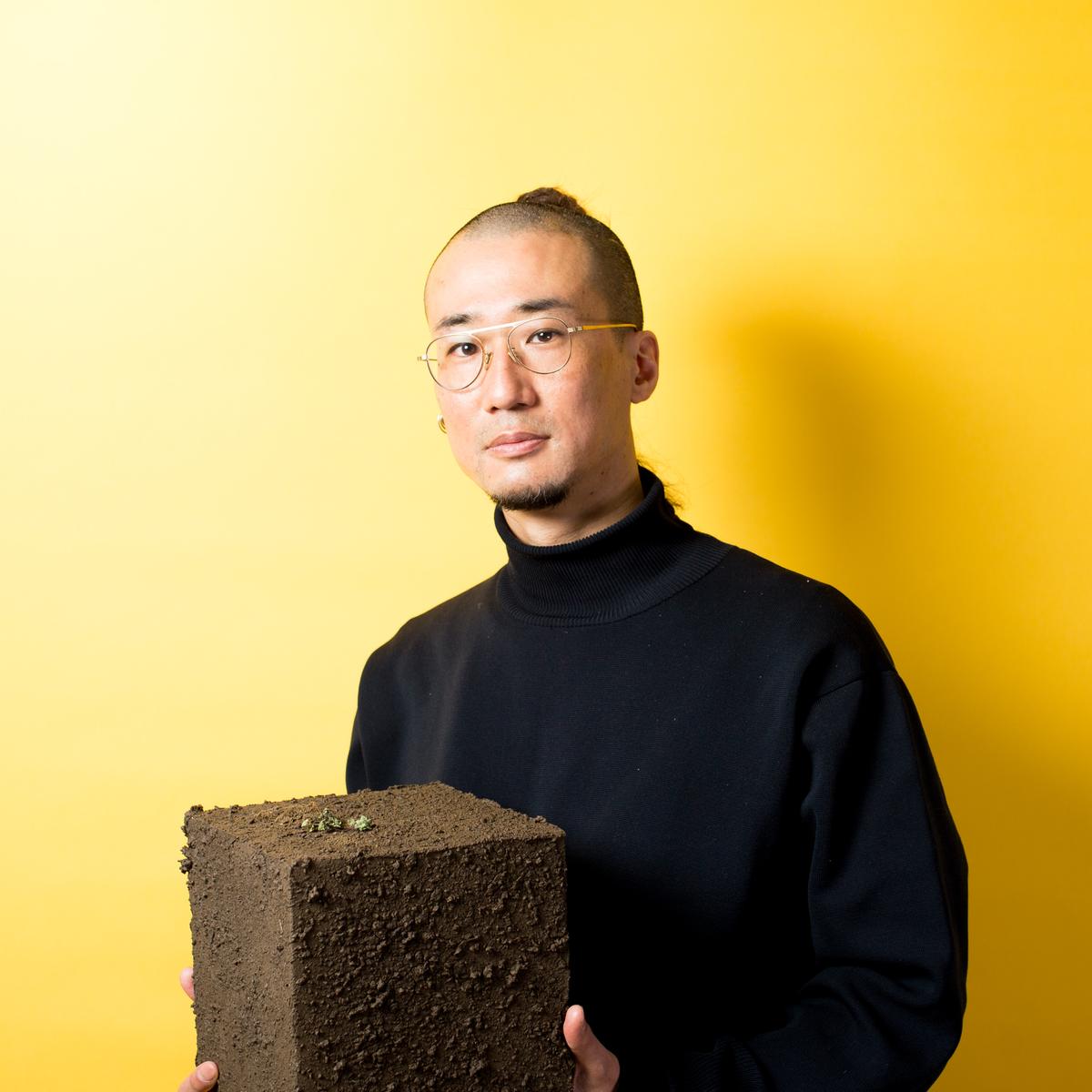
Takashi Kudo, teamLab’s Communications Director

Takashi Kudo, teamLab’s Communications Director
| Photo Credit:
Courtesy teamLab

Since then, teamLab has developed a language entirely its own, creating museums and installations that draw millions worldwide. Among them are teamLab Planets In Tokyo, where visitors walk through water and mirrored gardens, and teamLab Borderless, a “museum without a map” where artworks flow seamlessly across rooms. In San Francisco, teamLab: Continuity extends the Asian Art Museum into a living world of flowers and fish. And in Abu Dhabi, teamLab Phenomena — the collective’s most ambitious project yet — merges architecture, art, and nature into one evolving experience, bringing their vision closer than ever to India.

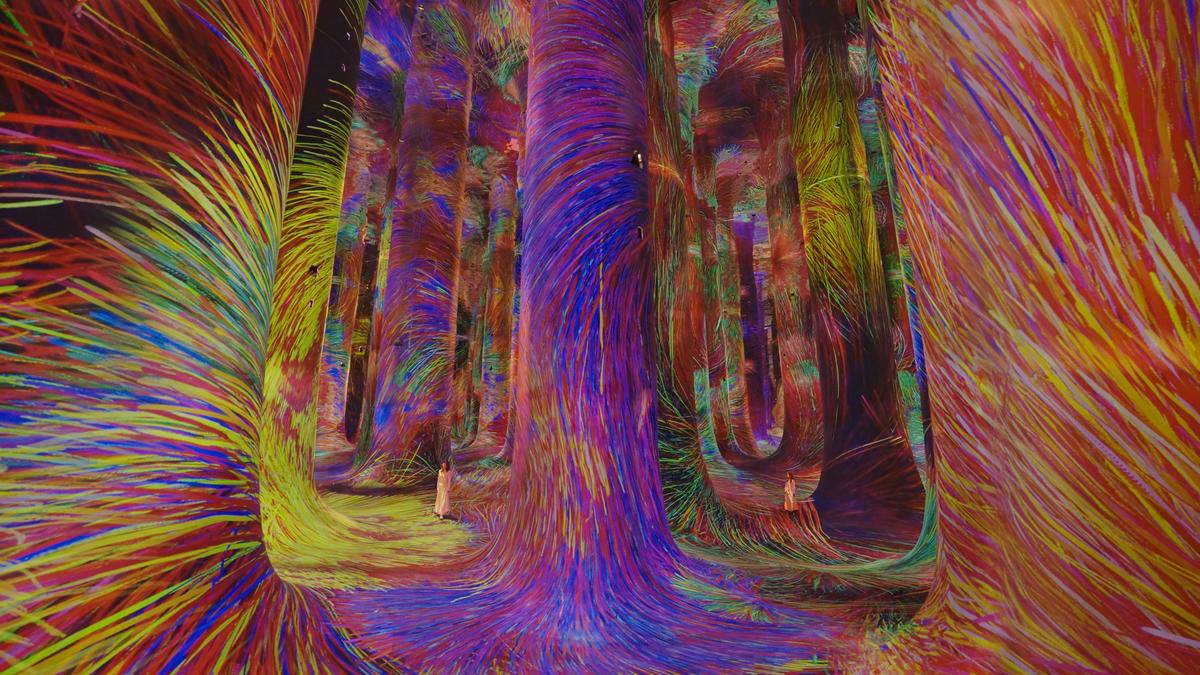
Forest and Spiral of Resonating Lamps

Forest and Spiral of Resonating Lamps
| Photo Credit:
Courtesy teamLab

Kudo will be in Mumbai this month — a few years after the collective won the Asia Society Asia Arts Award in 2017 — for a conversation with the Asia Society India Centre ahead of Art Mumbai. Edited excerpts.

I know when I speak to you, I’m not speaking to one person but to an entire collective. So, who is teamLab?

teamLab is an art collective. The word ‘team’ is important: everything we do is a collaborative process. At our very core, we are always researching, not in an academic sense, but to understand how humans recognise and relate to the world, how people understand their very ‘being’.

Who is part of the collective?

To put it differently, we are like a flock of birds or a school of fish, each member moves independently, but together we create one collective motion. There’s no leader, it’s all organic. Each project attracts the people it needs: software engineers, architects, mathematicians, animators, graphic artists, musicians, writers, coders, and so on. Some people join for fun, some for growth, some for money. Everyone has their reason. At any given time, there are around 200-300 people involved, depending on the project. The collective keeps expanding and evolving.

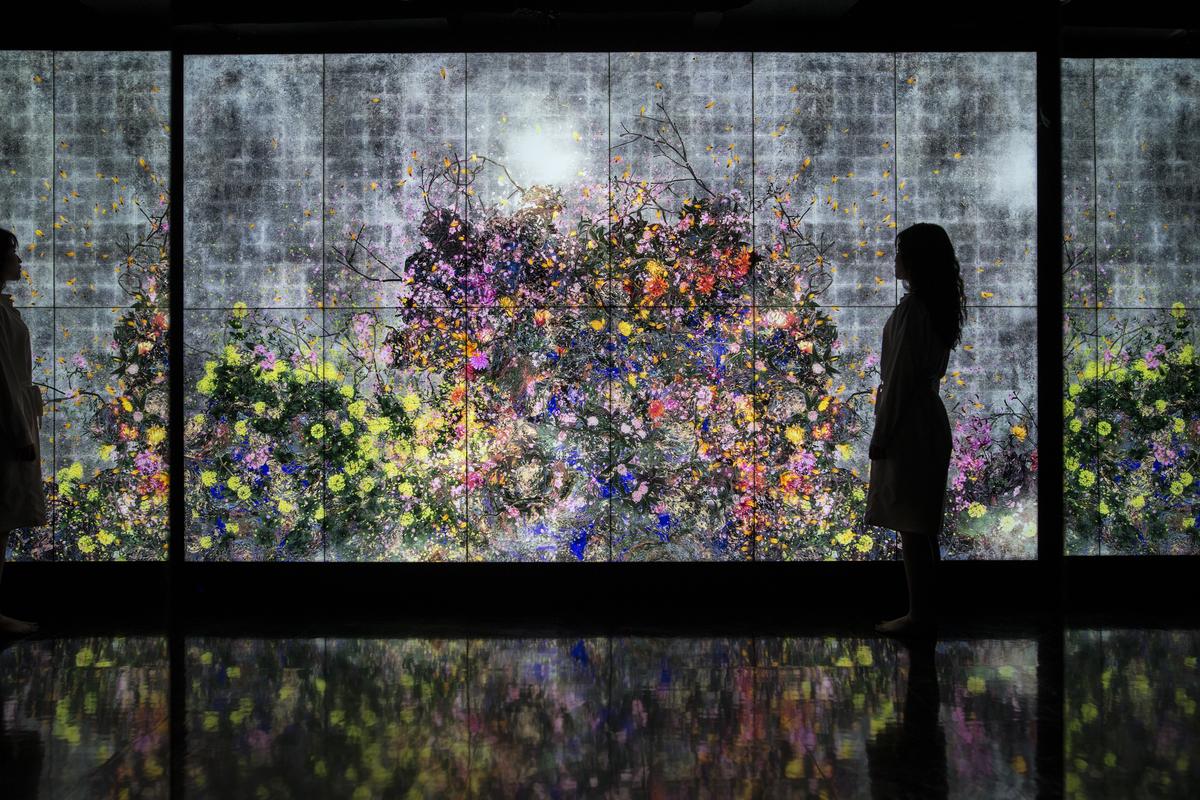
Order in Chaos

Order in Chaos
| Photo Credit:
Courtesy teamLab

Megaliths in the Bath House Ruins

Megaliths in the Bath House Ruins
| Photo Credit:
Courtesy teamLab

Given how much of your work uses technology, is there still an analogue, non-digital side to your process?

Absolutely. The creative process always involves trial and error, prototypes, failures, arguments. Each member approaches the problem from their own expertise. And yes, we argue — in the most human, analogue way. Those arguments are part of our creative process. They make the work stronger.

Your work is often described as “immersive.” Why do you think people today need to step inside something to feel it?

Nature itself is immersive. When you climb a mountain, walk for hours, and finally see the sunrise — that moment of exhaustion and awe — you feel you’re part of the world. Through our installations, we want people to physically feel connected, not just to observe art but to become part of it. Today, most people consume the world through screens. But true understanding is physical, like learning to swim. You can read about it or watch videos, but until you jump into the water, you’ll never know what it means. Art, too, must be entered with the body.

In our installations, people become part of the artwork, like entering a digital garden or forest. The work is alive and changing. That’s not new, it’s a continuation of something ancient. People call it immersive, but to us, that’s just how the world has always been.

Where does technology fit into that relationship between body and world?

Technology is simply a material, like paint or clay once was. For centuries, artists used [all] available tools to express their imagination. Today, our tools are projectors, sensors, and software but technology is not the goal. It’s a medium through which we build experiences that expand our perception of the world.

Continuous Life and Death at the Now of Eternity II

Continuous Life and Death at the Now of Eternity II
| Photo Credit:
Courtesy teamLab

And yet your work moves between galleries, museums, public spaces, including parks. How has your relationship with “the art world” evolved through all this?

When we started, the art world didn’t take us seriously. Over time, that changed. But our belief remains: only art can change how people think and live. Design, law, politics, they provide answers. Art, on the other hand, asks new questions. And when society changes, the old answers stop working. The industrial revolution gave us one set of ‘right answers’. The digital revolution requires new ones. Art helps us find those questions.

And ultimately, while we have to do what we must, to make ends meet and survive, for us, art is not about ownership or names. If our work changes how people think, or how they relate to the world, that’s enough.

Universe of Water Particles in the Tank, Transcending Boundaries

Universe of Water Particles in the Tank, Transcending Boundaries
| Photo Credit:
Courtesy teamLab

Universe of Water Particles in the Tank, Transcending Boundaries

Universe of Water Particles in the Tank, Transcending Boundaries
| Photo Credit:
Courtesy teamLab

You often speak of continuity between humans, nature, and technology. I sense something spiritual in that. How does Buddhism or Japanese philosophy shape this worldview?

We were born in Japan, so those influences are natural. Buddhism, Shintoism, the sense of continuity between things, it’s in our culture. We’re interested in reconstructing what our ancestors expressed, using today’s technologies. Japanese art has always been spatial: think of sliding doors, gardens, the way light moves through space. These forms were influenced by cultures along the Silk Road from India to Persia to Japan. In the 19th and 20th centuries, that kind of art faded because it didn’t fit industrial modernity. But with digital technology, we can bring that sensibility back.

In our installations, people become part of the artwork, like entering a digital garden or forest. The work is alive and changing. That’s not new, it’s a continuation of something ancient. People call it immersive, but to us, that’s just how the world has always been.

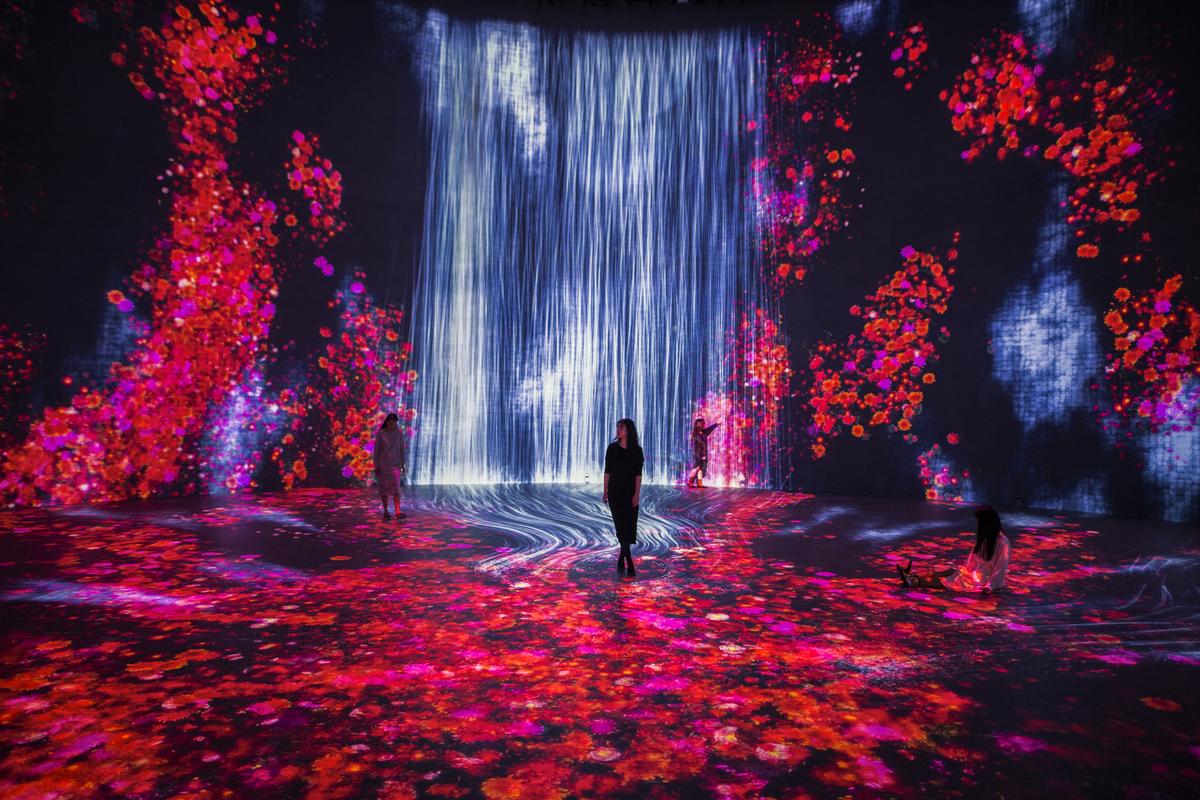
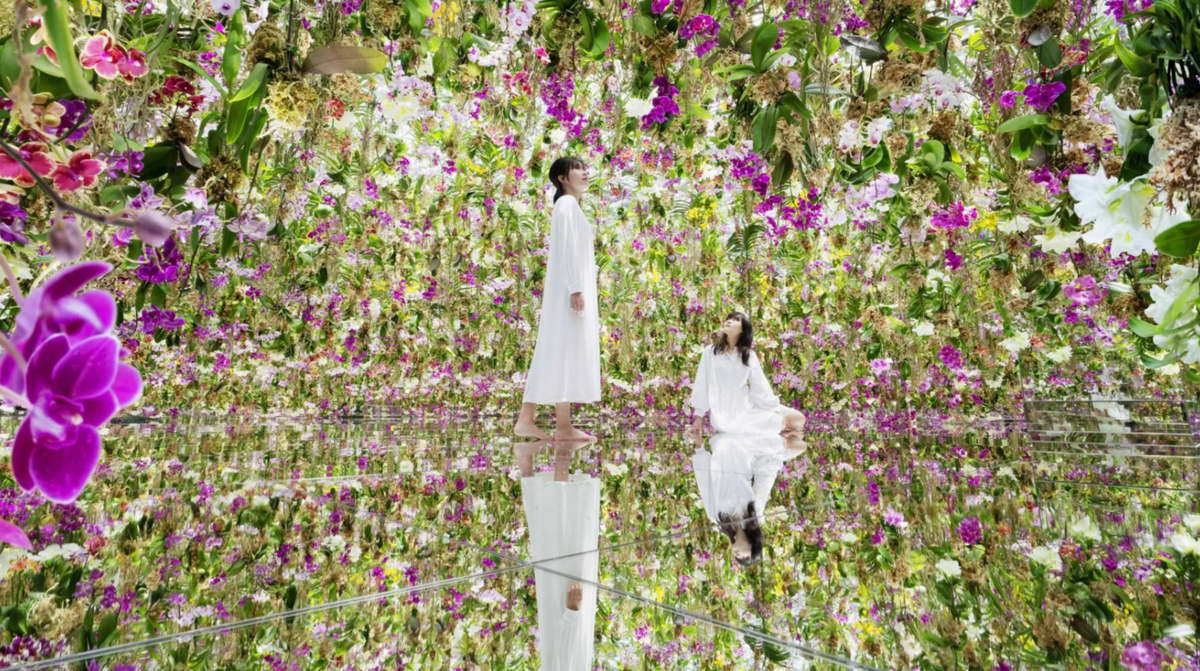
Floating Flower Garden Flowers and I are of the Same Root, the Garden and I are One

Floating Flower Garden Flowers and I are of the Same Root, the Garden and I are One
| Photo Credit:
Courtesy teamLab

The cyclical idea that technology can return us to something ancient feels particularly resonant in India. Before we close, what would you like to say to audiences here?

I’ll tell you one small story. In 1996 or 1997, I was travelling in India, as a university student, living like a backpacker. Every morning, I’d drink juice from a fruit-seller in the market. One morning, I asked for apple juice. He smiled and gave me mango juice instead. I told him again, “No, I want apple juice.” He nodded, said he understood and handed me another mango juice. I was confused but drank it anyway. It was sweet, fresh, and perfect. Later I realised, he wasn’t ignoring me. He understood that the best fruit that morning was mango. He wanted to give me the best thing he could. That moment changed how I think about care, misunderstandings, friendship, and maybe even how I make art.

Takashi Kudo will be in conversation with Prateek Raja, director of Experimenter, as part of the third edition of Asia Society India Centre’s Trailblazers series on November 9, at IF.BE, Mumbai.

The culture writer and editor specialises in reporting on art, design and architecture.


Source link

A guide to fun desserts in Chennai: Try shaved snow, Dubai chocolate ice cream bars, pillow brioche and more


Moutan by Taiwan Maami

In May 2024, Theresa Hu and her husband Kannan Swamy introduced the city to authentic bubble tea through Taiwan Maami, a bubble tea cafe in Palladium mall, Velachery. Now in T Nagar, their new restaurant Moutan has bubble teas of course, but alongside pillow brioche with a dulce de leche crust , shaved snow with crème caramel, and a savoury menu as well, at a more accessible price point. “We were keen to offer the same quality as Taiwan Maami, but at Moutan prices,” says Kannan, of their new venture.
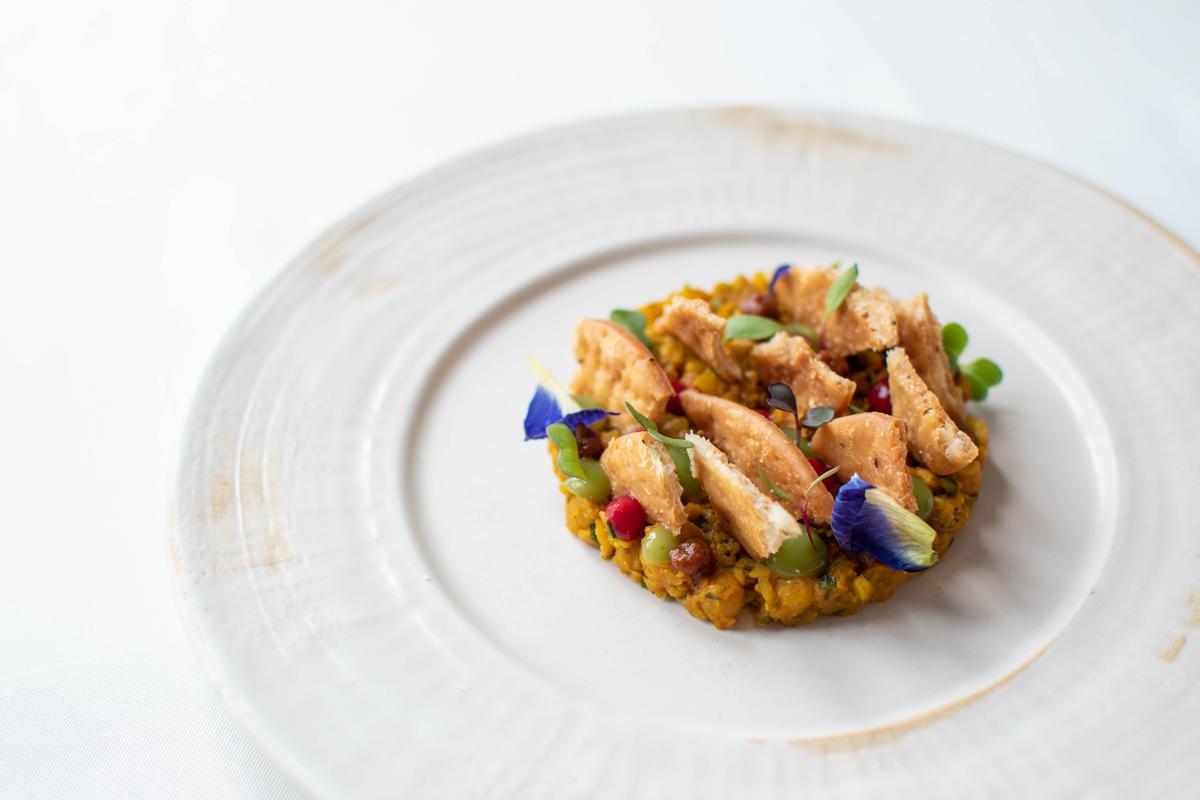
Pillow brioche

Pillow brioche
| Photo Credit:
Special Arrangement

The pillowy-soft brioche comes with a dusting of matcha powder and blueberry compote heaped on top and is just the perfect amount of sweet. From their boba menu, we sample their newest addition, the popping boba which can be added to slush pops of different flavours ranging from jeera masala and lassi, to coconut, lemon and watermelon. Their milk teas include saffron, cinnamon, matcha and the Hong Kong style yuen-yueng milk tea variants and can be ordered with or without their boba, specially imported from Taiwan. 

“Our savoury menu includes simple, street-style Asian foods that pair well with bubble tea and to keep the flavours authentic, we make everything from the chilli oil to the 13-spice mixture in-house,” Theresa says. Their hand-pulled biang biang noodles and the yaki onigiri or crisp Japanese rice balls make for a flavourful savoury relief from sampling their desserts and teas. Finish up your meal with ribbons of milky shaved ice that comes in different flavours including strawberry sherbet, mango coconut and banana chocolate, topped with fresh fruit, or bite-sized mochi in different flavours.

Moutan is at 29, Burkit Road, CIT Nagar East, T Nagar and is open from 12pm to 12am. 

Kueh and Kopi

 Mithila Jayaraj says Kueh and Kopi, a cute and cosy cafe, was her mother Nirmala Devi’s idea and a space for them to explore their Malaysian roots through food. “Kueh means dessert in Malay and there are several Malaysian desserts on the menu as well as other East-Asian sweet treats,” Mithila says, of their menu. We bite into ondeh ondeh, small, sweet glutinous rice balls covered with coconut shavings and a hit of pandan flavour and dig into a spongy pandan tres-leches, which comes drenched in coconut milk and topped with bits of pandan jelly. “People are keen on experimenting and are excited to come and try new flavours. South Indians in particular love coconut and many of them take to pandan positively as well,” Mithila says. 

Ube toast

Ube toast
| Photo Credit:
Special Arrangement

Also on their menu are Milo bingsu (shaved ice), cendol (a chilled coconut milk beverage with homemade pandan jelly, rose jelly, crushed ice and a rich palm sugar syrup from Malaysia), mango cheesecake shaped like a cheese block from the Tom and Jerry cartoons, and crisp buttery toast topped with a generous dollop of purple yam or ube flavoured coconut jam. 

“The Kopi here is the Malaysian white coffee, which has a unique aroma and taste to it. The coffee beans are roasted with margarine, salt and butter, which makes the beans dark and flavourful. Our customers love the iced Kopi, which goes great with desserts,” says Prabhu Mejel, co-founder, Kueh and Kopi. 

Their cafe also has shelves stacked with ramen, a certified hit among their K-culture loving customers along with their Korean cream cheese buns and corn dogs. 

Kueh and Kopi is at 2, Co-Operative Colony Road, Austin Nagar, Alwarpet.  

Scoop Dawg

Chef Shriram Rajendran calls Scoop Dawg, his ice cream brand with the chuckle-worthy name, a ‘frozen-forward’ brand. “We have protein ice creams, yoghurts, popsicles, chocobars, gelatos, sundaes, and everything else that you can think of that is frozen,” he says. On one side of Double Roti in Teynampet, Scoop Dawg’s tubs of ice creams occupy space under bright lights and pops of colours on the walls. “I had done ice creams with The Table, but that was largely something people ordered online,” he says. “With Scoop Dawg, we were keen to have an offline brand catered to Gen Z. Hence the bright colours and the innovative, fun flavours,” he says. 

Taro ice cream at Scoop Dawg

Taro ice cream at Scoop Dawg
| Photo Credit:
Special Arrangement

Scoop Dawg’s bold line-up of flavours includes a pani puri sorbet, zero abv gin and tonic, and Negroni sorbets, ice cream scoops in flavours ranging from burrata to black sesame, and familiar flavours such as milo and caramel popcorn. “We try to be as different as possible with our flavours; which is why even the vanilla is Pollachi vanilla bean, burnt butter and honey,” Shriram says. We sample the Taro bubble tea flavour, a light purple coloured, creamy scoop that allows the flavours of its sweet, starchy main ingredient to shine. This is their most popular flavour, we hear. Giving into the Instagram hype of the viral Dubai chocolate, we also try Scoop Dawg’s Dubai chocolate bars, which make for the perfect ice cream substitute for the actual chocolate bar that brings together chocolate and pistachio. 

“We are keen on experimenting with flavours, and keep switching up and introducing newer flavours, especially for the sorbets according to the season,” Shriram adds. 

Scoop Dawg is at First Street, 4/27, Cenotaph Road, Sri Ram Nagar, Alwarpet, and is open from 11am to 11 pm. 

Amour Ice Cream

Would you eat garlic ice cream? Or even a cold scoop with a subtle green chilli flavour hit? Amour, an ice cream brand from the popular biryani chain Dindigul Ponram aims to introduce diners to ice creams in native flavours. 

Green chilli ice cream

Green chilli ice cream
| Photo Credit:
Special Arrangement

“From gulkhand made of roses from Nilakottai to bananas from Sirumalai, we have several native ingredients that we wished to showcase through our ice creams. This has always been highlighted in our food as well, and it was only natural that we wanted to replicate the same in our ice creams,” says S Mani Ram, from the Ponram family. Stating that his uncle started the ice cream brand in 2014 back in Dindigul, Mani Ram says that they decided to bring it to their Chennai restaurant earlier this year. “There are no synthetic colours, essence, or gelatin. Our flavours include pancake, karupatti, gulkhand, fig and honey, jackfruit, banana, as well as unique flowers such as garlic, green chilli and ginger,” he says.

Made of garlic from Poombarai, and green chillies from Virakkal, Amour’s savoury flavours prove to be a great pick. The sharp, spicy hit of the green chilli ice cream in particular makes for a unique tasting experience. “For diners at the restaurant, we are happy to provide samplers and some families are even enthusiastic to guess what flavours they are trying. The savoury flavours are proving to be a lot more popular than we anticipated,” Mani Ram adds. 

Amour is at Dindigul Ponram, 90/35, 1st Street, Ashok Nagar, and is open from 11am to 11pm. 


Source link

Singer-songwriter Zeba Tommy on winning the Kerala State Awards 2024 for Best Playback Singer


Zeba Tommy

Zeba Tommy
| Photo Credit: SPECIAL ARRANGEMENT

“It is a full circle moment,” says singer-songwriter Zeba Tommy on winning the Kerala State Film Awards 2024 for the best playback singer (female). The singer, 24, who began her journey singing choruses for Gopi Sundar as a teenager, has won the award for the song ‘Aarorum’, composed by him for Am Ah starring Dileesh Pothan.

“’Aarorum’ comes at a crucial stage in the film; so I wanted to make sure I did justice to the song and convey the emotions expressed in the lyrics.”

The artiste says the track is different when compared to the rest of her discography, owing to its low-pitched nature. “This song explored the lower range of my voice,” says the artiste.
The State Award win has come at a time for Zeba when she is fresh from the success of Lokah Chapter 1 : Chandra, in which she sang the English track ‘Queen of the Night’, which was also written by her. “I sing in different languages and genres. The award has come for a melodic Malayalam lullaby, while ‘Queen of the Night’ falls into another genre, exploring the protagonist’s solitude. To have back-to-back success with different genres feels great.”

Zeba Tommy

Zeba Tommy
| Photo Credit:
SPECIAL ARRANGEMENT

Zeba describes the popularity of ‘Queen of the Night’ as “a testament to the Malayali listeners’ taste. This was also the first time that I wrote a song for a movie. When Jakes chettan (composer Jakes Bejoy) asked if I wanted to write the lyrics, I agreed. Then, Dominic Arun [director of Lokah…]briefed me about the movie and sent a few visuals. This made things easier. I put myself in Chandra’s shoes and wrote how she feels,” says Zeba, who has also crooned in Officer on Duty, Phillip’s, Garudan, and Pookkalam.

While she began learning Carnatic music at the age of six, she picked up Western music on her own during her teenage years. She holds grades six and eight in rock and pop, and Western classical music, respectively, from the Trinity College London. “I am a blend of all those schools of music and learning. My listening and experimentation reflect in my music,” says Zeba.

Zeba Tommy

Zeba Tommy
| Photo Credit:
SPECIAL ARRANGEMENT

After finishing her schooling and college in Kochi, she moved to Mumbai to pursue a diploma in music production from The Audio Guys Institute. She stayed back in the city for a few more years. “I love Mumbai. The city has helped me personally and creatively. It is vibrant, chaotic, but has so much character. I got the creative push for my two originals from the city. I have grown as a person as well,” says Zeba.

The stint in Mumbai also earned Zeba a chance to work in Bollywood. In Heeramandi, a period drama series on Netflix directed by Sanjay Leela Bhansali, she has sung the tracks featured in the teasers and trailers of the show.

What lies ahead

While the artiste has earned her singer-songwriter tag, she says it was only recently that she found the confidence to put out her own songs. “I compose my own songs too. I believe the sky is the limit for any artiste. I would love to foray into music composing, arrangement, and production. I would also love to do music for movies in the future.”

Zeba, who is planning the release of her next single titled, ‘Cortados’ on November 15, says, “A few people have reached out to me for playback singing. I am also focusing on releasing my independent music and do shows with my band, Zeba Tommy LIVE.”


Source link

Inside Delhi’s newest cocktail bar, Barbet & Pals


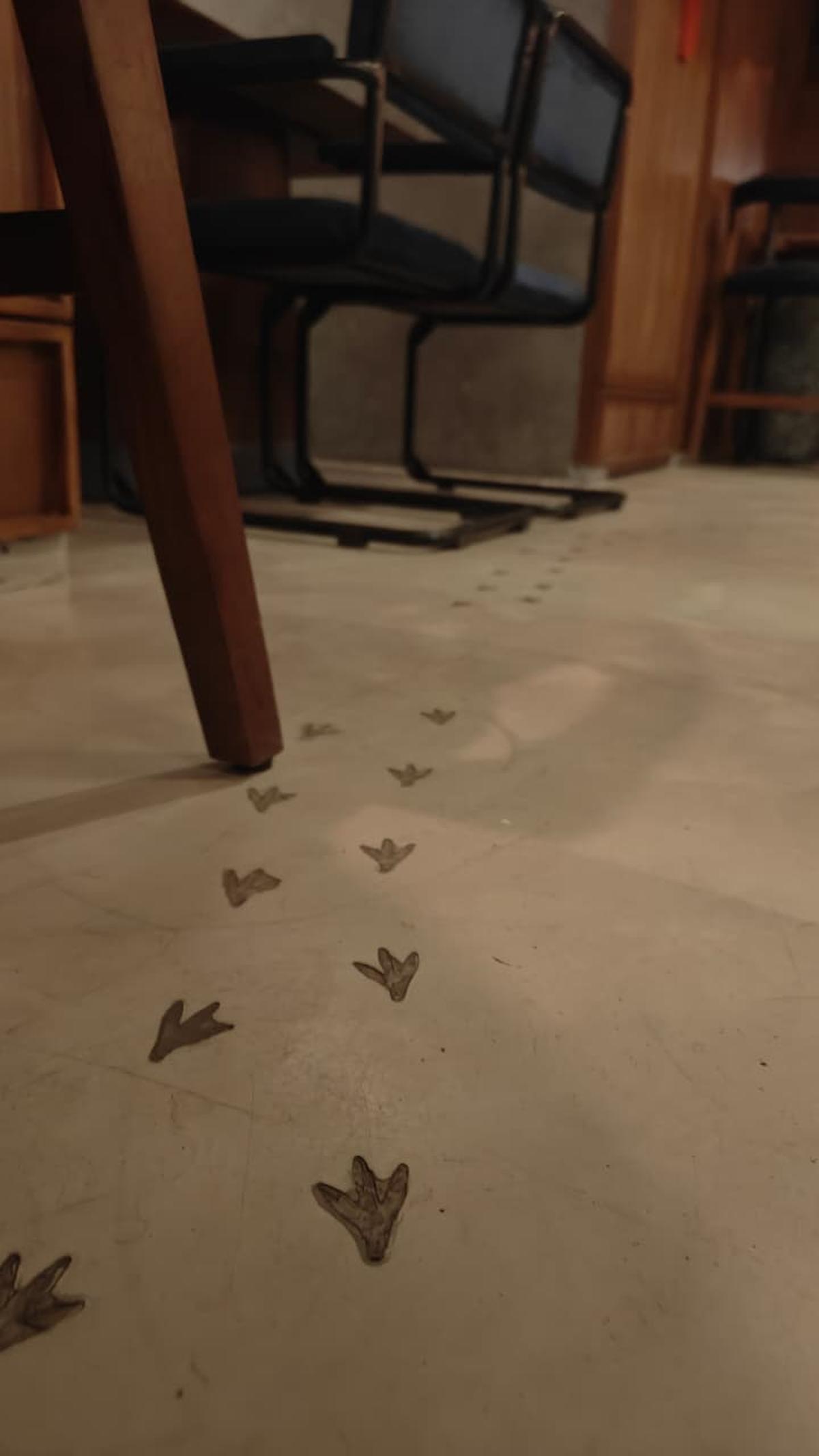
I had already walked past Barbet & Pals dozens of times before they finally opened this week. M-Block Market in Greater Kailash II has been papered with new openings, but this new cocktail bar sits at the quieter, back half of the lane. A bright blue doorway, spare minimalist graffiti of birds, and tiny, anisodactyl footprints across the concrete floor are all the hints you need to know this place is keen on a theme and fond of its own jokes. It is the product of the classic “let’s open a bar together someday” trope that old friends toast over in fond future nostalgia after a long shift or a longer night. Most never get around to it, but co-owners of Delhi’s newest watering-hole, Jeet Rana and Chirag Pal did.

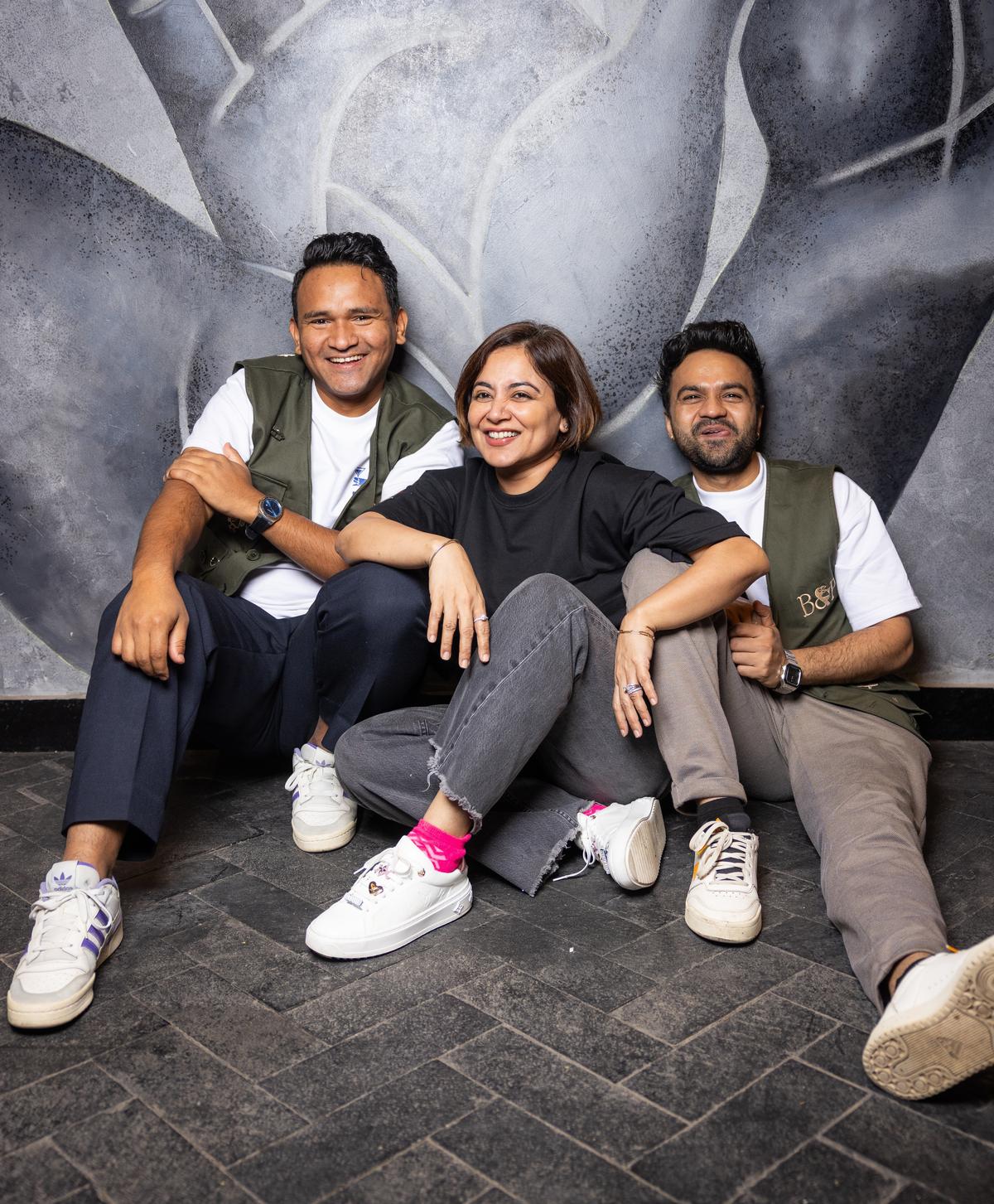
Jeet Rana, Chef Amninder Sandhu, and Chirag Pal

Jeet Rana, Chef Amninder Sandhu, and Chirag Pal
| Photo Credit:
Special Arrangement

They had spent years behind other people’s bars before they finally got around to making their own, over the better part of this year. Jeet had gone from Perch in Delhi to representing India at the largest global bartending, cocktail and hospitality competition, World Class Global in Miami, later becoming the face of Stranger & Sons gin. Chirag had run the bar at the Shangri-La Eros, then moved to Dubai as head mixologist at Five Palm Jumeirah. Between them, they have seen the world from behind the counter enough to know what they wanted their own bar to feel like.

“We were on-site almost every day,” Jeet tells me. “We even sweetened the deal with a bottle of Old Monk once just to get some of the designs right,” he chuckles. The exhaustion of the last seven months seems softened by the pride of having built something with a friend by your side.

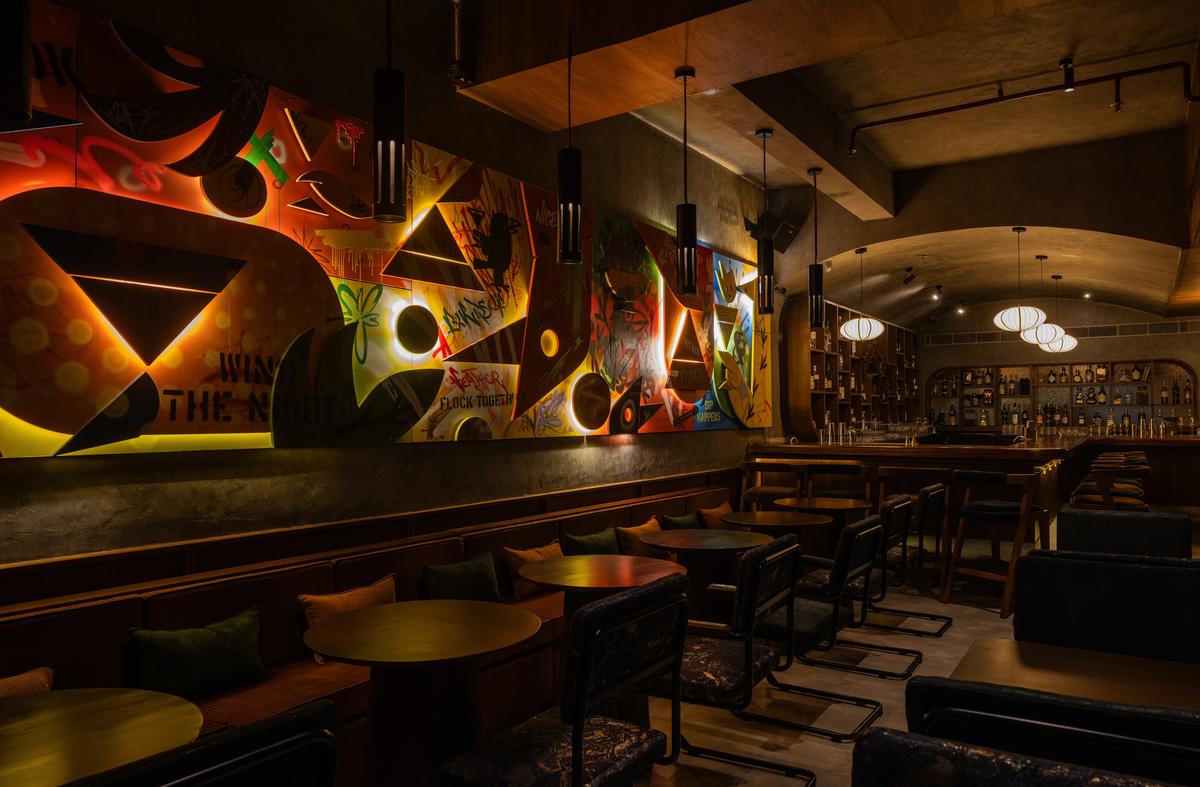
Barbet & Pals, Delhi

Barbet & Pals, Delhi
| Photo Credit:
Special Arrangement

“The name took us a while,” Jeet admits. “Barbet because it’s a Himalayan bird that frequents my hometown in Uttarakhand, and because it has the word ‘bar’ in it. Pals because that’s Chirag’s last name, and also, you know…” He gestures between them. Chirag smiles shyly. “The barbet travels in pairs,” Jeet adds, “and the two of us are rarely seen without the other in sight.” 

The wordplay also feels appropriately personified. Jeet is flamboyant and quick to grin, the sort of showman who thrives on banter. Chirag is more observant, with a measured way of speaking that makes you lean in. Together the lively pair feel like the kind of faces you would want to see at the end of a long day.

Inside it is compact and deliberate. The room seats around 40. Smooth wood and raw brutalist concrete set a firm, warm stage. Bird-themed art and cheeky details punctuate the walls. Staff wear olive green bird-watcher vests as uniform. The whole effect is cosy without being precious. When I point at the little bird prints that hop toward the bar, Jeet chuckles, “If you look at the little skips in its steps, it looks like it’s trying to take flight but keeps falling back down because it’s too drunk.”

They duo has threaded personal memories through the cocktail list, which looks like a messy scrapbook of scribbled ideas. The menu, called The Nest, is split into the pair’s creations. Jeet’s drinks sound playful and loud. Chirag’s feel layered with memories.

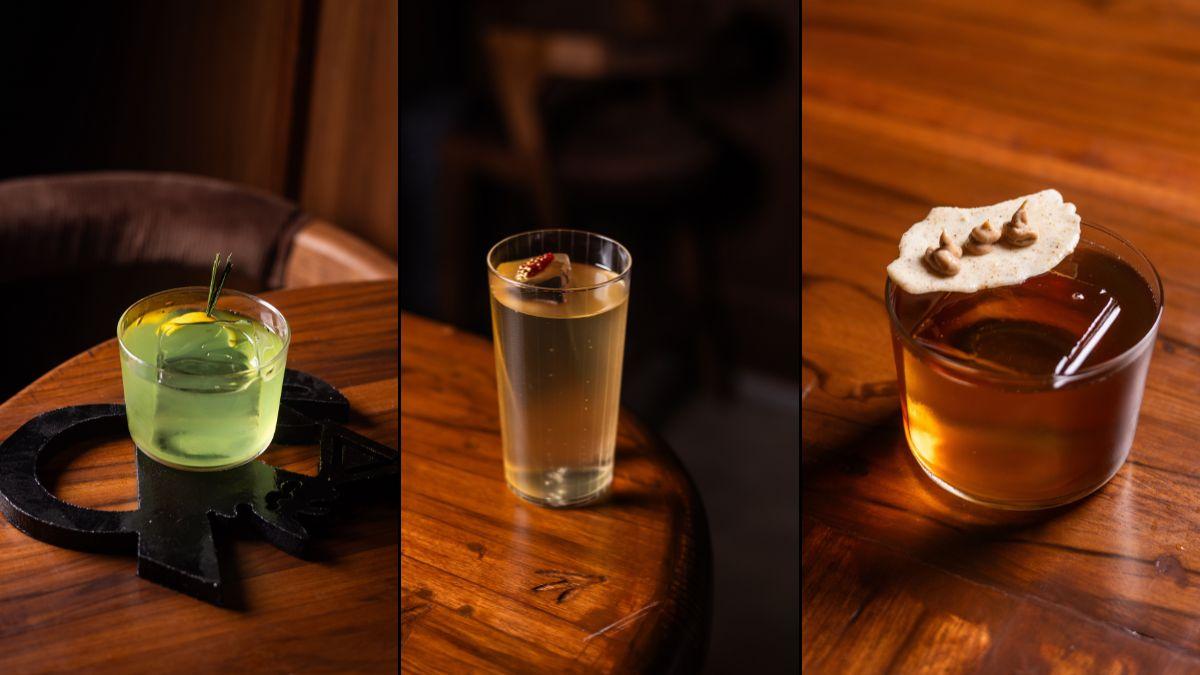
Some of the highlights of the many delicious drinks I inhaled include: the Panache — a savoury and floral single malt sitting under a saffron tincture and kahwa cordial, with the after-effects of a strawberry-and-cheese soda; the Tickle My Pickle — briny fizz of gin and dry vermouth softened by three pickled treats. The Lord — an unexpectedly complex double-banana (dehydrated + ripened) bergamot against a base of blended scotch and dry vermouth; the Cherry On Top — a darker pleasure of gin, black cherry and a coffee-spice cordial; and the Pals Lugdi —  vodka and passionfruit folded around a traditional pahadi fermented rice beer (lugdi) cordial. Chirag recounts his college years in Shimla that birthed this drink. “I was a good boy who thought he had sworn off alcohol until I went to college in IHM Shimla, where my first encounter was with lugdi. It was very strong.” 

(L-R) The Myol, the Pals Lugdi and The Lord

(L-R) The Myol, the Pals Lugdi and The Lord
| Photo Credit:
Special Arrangement

There is also a rotating micro-menu dubbed, Bird’s Eye View, featuring cocktails inspired by the duo’s travels, with the first stop being Kumaon. I tried the earthy green Myol which featured a blanco tequila with a pine-leaf vermouth and a cordial made from mountain herbs; and the smokier Gundryani, that blended a reposado tequila with a smoked root cordial and a rim of local pisyu-loon (salted spice).

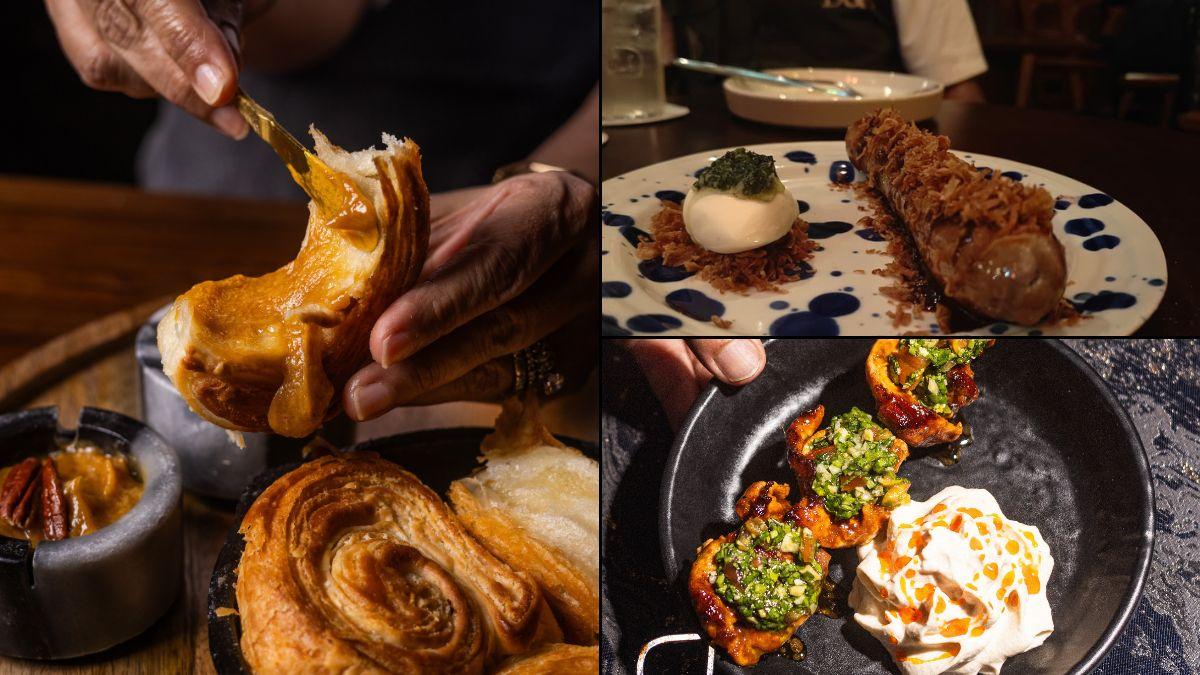
Chef Amninder Sandhu has a light hand with the food menu of little bar nibbles. The gol-gol bread comes warm and pillowy with chilli-fennel butter and a smear of nolen gur. Khichia pappad is crisp and sprinkled with onion and pomagranate and served with raw mango and mulberry chutneys. The Mrs Barbet Chicken is a smoky, burnished tikka with a soft onion foam and a tart desi chimichurri. But the highlights were the cool, fragrant squash gazpacho, served with dollops of burrata and dehydrated sourdough; and the Bar-Brät Naga pork sausage, served with a scoop of strangely thrilling fermented bamboo-shoot ice cream.

(Clockwise from L) The Gol-Gol Bread, the Bar-Brät and the Mrs Barbet

(Clockwise from L) The Gol-Gol Bread, the Bar-Brät and the Mrs Barbet
| Photo Credit:
Special Arrangement

Some of the menu still feels fresh and might require a bit of conceptual tinkering, but in a month or three the edges will smooth. A few of the drinks packed a little too much punch, leaving the finer details of their uncommon ingredients hard to trace, especially for a novice palate like mine. So if you are looking for something more straightforward and familiar, you might be left wanting. For now the unfinished quality is part of the rustic charm and the place is honest about being a work in progress.

Opening a cocktail bar in Delhi right now feels both exciting and absurd. The city is teeming with new concepts, each vying for a distinct aesthetic or a curated nostalgia. Defence Colony features some popular haunts like the vinyl bar Genre, nestled beside the iconic 4S. There are speakeasys like PCO in Vasant Vihar and Somewhere Nowhere right here in GK-2. And of course, the powerhouse Sidecar — two-time winner of “India’s Best Bar” — sits just a few metres away.

This new venture could have easily tried to be slicker or more self-conscious, but it seems to be incorporating the best of all those worlds — the friendly-neighbourhood intimacy of 4S, the experimental precision of Sidecar, and the living-room ease of Genre — yet feels distinct because it has none of the pretense. Jeet and Chirag do not see any of them as competition. “Honestly, we’re all part of the same fraternity,” Jeet says. “We’ve worked with most of these bartenders, travelled with them. We just hope to live up to the standard they’ve set.”

Barbet & Pals does several things at once. It feels like a shrine to the slow work of building a bar that can mean something to its city. It revives ingredients you might not expect to find in a cocktail on this side of the map. But mostly, it just makes room. It’s small enough to brush shoulders with strangers, but big enough to still feel private if you want to be.

Barbet & Pals is at M-Block Market, Greater Kailash-II, Delhi. A meal for two with cocktails is priced at ₹3,000+taxes. For reservations, call 9205645151.

Published – November 05, 2025 05:14 pm IST


Source link

How do autonomous vehicles work?


A Waymo ride, a self-driving car by Waymo LLC, a Google subsidiary.

A Waymo ride, a self-driving car by Waymo LLC, a Google subsidiary.
| Photo Credit: Wikimedia Commons

What in the Bumblebee (yellow Chevrolet Camaro) story is going on with these vehicles? No hands, no feet, not a corporeal human presence needed. Let’s begin our exploration.

Humans and digital technology go way back. Humans and vehicles go even further back. Behold now, this relationship is so at peak that vehicles can handle digital technology smoothly than its master drivers.

Modern romantic

The invention of the autonomous vehicles (AVs) technology marks a pivotal point in the trajectory of the automobile and transport conglomerate. Every new invention in the technological field of vision, especially those that seem utopian into-the-future, are deemed a sophisticated fancy; modern and romantic in nature. Same goes for AVs.
An easier adjective for these vehicles is ‘self-driving’ which is quite apt for how it presents itself. An autonomous vehicle is one that can drive without assistance from the driver. Yet, how do these vehicles “self-drive”? They clearly aren’t advanced robots from Cybertron.

Role number one – Vision

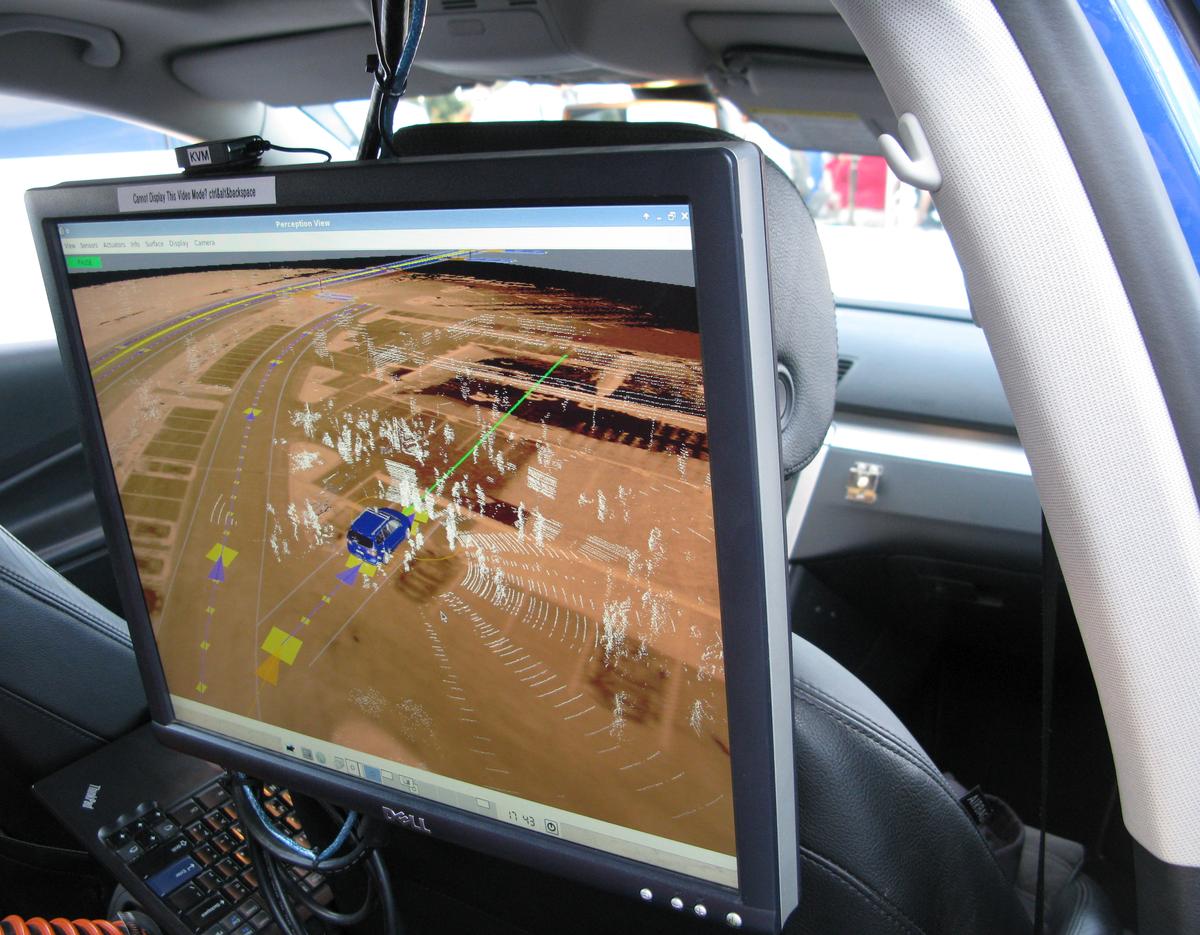
Driverless vehicles work effectively due to the fact that they can see. Sounds like some fantasy come true, doesn’t it? What actually is meant here is that there are many radars and sensors installed within the vehicle that can detect and ‘see’ what’s going on around it. In a Waymo car (a self-driving car by Waymo LLC), there are LiDar sensors which the car heavily depends upon to see. LiDar is essentially light detection and ranging where data collected creates a 3D map of environments for the vehicle. The picture of the Waymo here shows you the roof-mounted LiDar sensors.

Role number two – Monitor

Since an active vehicle means it’s on the move, its environment will change every second. It’s crucial for AVs that they constantly and constantly monitor the data that is fed to them. The cameras, the LiDar sensors, radars – all provide data of what’s happening on the road. Whether someone is crossing the road, if there’s an upcoming speedbreaker, or a high kerb, if there’s a stop sign, and much more. The radars will calculate the distances to all these.

The spinning LiDar on the roof renders real-time 3D images, for example like this one here, of the people all around.

The spinning LiDar on the roof renders real-time 3D images, for example like this one here, of the people all around.
| Photo Credit:
Steve Jurvetson/Flickr

Role number three – Control

The data is processed by the software (artificial intelligence works its hand here) and processors which in turn signals other parts of the vehicle to do the required actions — such as braking, slowing, steering, stopping, etc. The vehicle gathers the most responsibility here — control and action. Artificial intelligence closely works with the sensors and radars in the system to make decisions after perception. Whether the car should brake now or speed up or even overtake; such decisions will be taken by the car.

Then again, it’s not all unicorns and rainbows. Our streets are filled with all sorts of things and oddly, a primary limitation is that these vehicles are not driven by humans and hence lack sentient awareness on the road. The sudden jolts and shocks while riding AVs reveal the many facets that need improvement.

Look Around!

In Seoul, South Korea, driverless buses are fast becoming a popular means of public transport. Their first self-driving shuttle without a driver’s seat, Cheonggye A01, took to the streets for the first time in September.

The US and China are the countries with the most advanced AVs on the streets.

Japan, known for its futurism and being home to world class automobile makers, is actually credited with developing the first semi-autonomous car (1977). At present, many of their top auto manufacturers are consistently having more and improved AVs on the streets.

Netherlands, which has shown the most interest towards adopting autonomous vehicles in Europe, has welcomed its first self-driving bus this year.


Source link

SUPER ASHA: A video game that allows you to experience the lives of ASHA workers


Like many Indian women, Priya Goswami’s mother lived a dual life: balancing her professional obligations with unpaid domestic labour. “My mother is a senior secondary teacher, and I would see her wake up at 5 am every day to finish household chores before she left for her work,” recalls the award-winning filmmaker and feminist tech entrepreneur. It was hard, of course, but Priya, who now shuttles between Hong Kong and India, understands why her mother did it. “For Indian women, financial independence is a political act so that they retain some independence in a patriarchal society,” says the co-founder, creative head and CEO of Mumkin, an AI-based application that enables difficult conversations around gender, culture and society.

The appreciation she gained from watching her mother juggle her many responsibilities drew her to the stories of India’s Accredited Social Health Activists (ASHA), says Priya, who has recently designed an immersive, web-based original game, SUPER ASHA, which highlights the challenges faced by these workers. “When I met some of the ASHA workers, I saw the resilience of the women who brought me up. For me, the ASHA workers’ story is a tribute to my mother and women like my mother who manage impossible hours.”

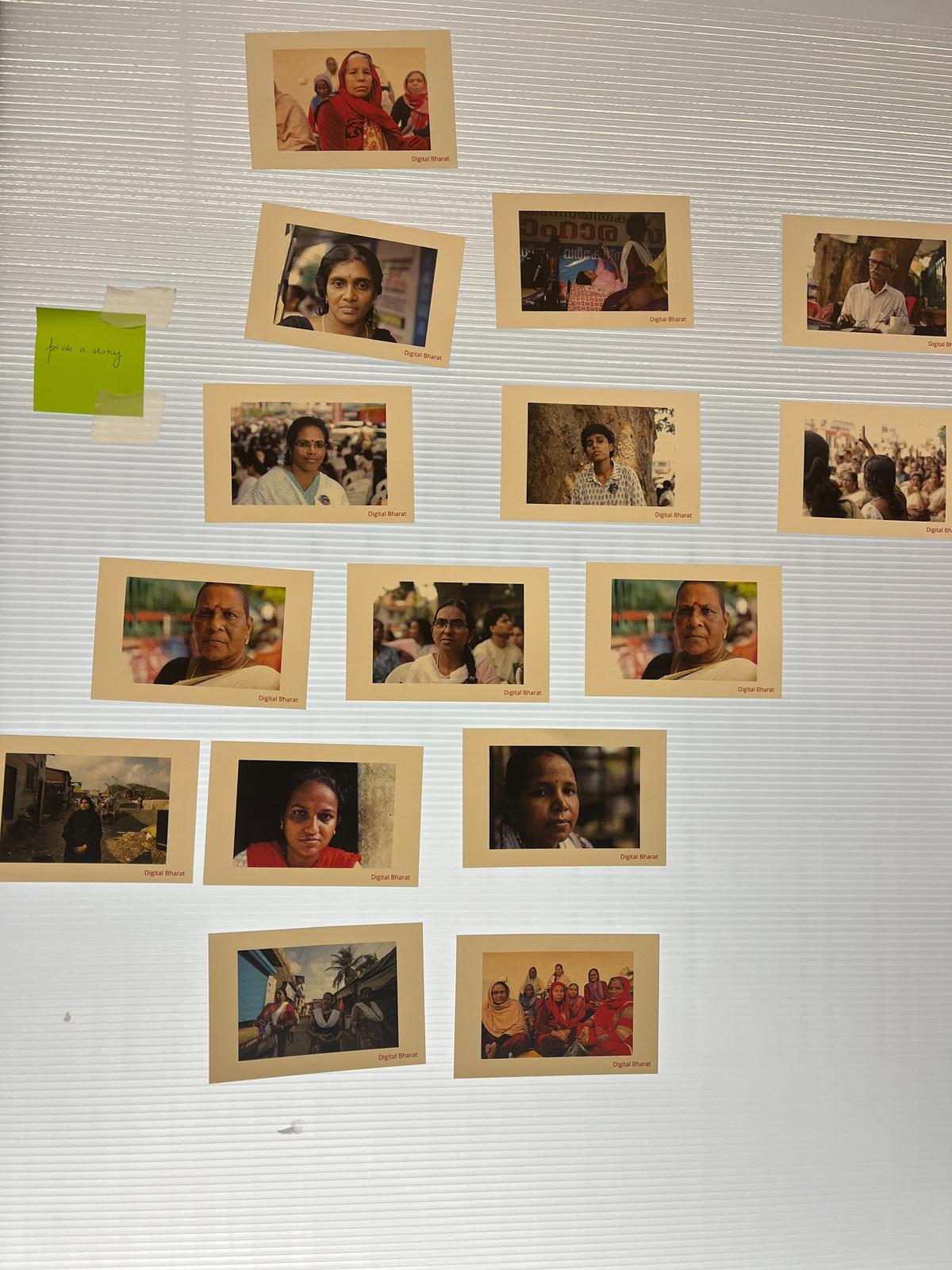
The latest version of SUPER ASHA will be released at the Mozilla Festival in Barcelona as part of her multimedia exhibition titled ‘Digital Bharat’, which will be held between November 7 and 9. This exhibition, which explores the impact of Digital Public Infrastructures (DPIs) on health and livelihood in India via photos, videos and of course, the game, “brings you face-to-face with the lived realities of some of the most marginalised populations in India, community health workers and daily-wage labourers,” says Priya, currently part of an 18-month fellowship programme offered by the Mozilla foundation, which kicked off in September 2024.

As part of the Mozilla Fellowship cohort, which “couples civil society organisations in the Global Majority with public interest technologists across various geographies,” as the foundation’s website describes it, she had the opportunity to focus on stories revolving around the world’s largest invisible workforce: women. “My biggest draw was to be able to go on the ground and highlight some of their stories,” says Priya, who carried out extensive on-ground research during the fellowship and also shot two three-minute-long documentary videos — one on ASHA workers and one on daily-wage labourers — both of which would become part of Digital Bharat. While doing so, “The ASHA workers’ story became an even bigger one for me,” she says, expanding on the series of events which led up to the game.

Priya spoke to ASHA workers from three states for the exhibition

Priya spoke to ASHA workers from three states for the exhibition
| Photo Credit:
Special Arrangement

In October last year, she bumped into Sunita Rani, the general secretary of the Haryana ASHA Workers Union, as well as a couple of other ASHA workers at a gathering held at the Goethe-Institut in Delhi. The meeting made her realise that “these women were not just forming the backbone of India’s healthcare system by providing community health services, but are now gathering and digitising health records of people across India,” explains Priya, pointing out that despite their essential role, they are severely underpaid, earning anywhere between ₹5,500 and ₹10,000 per month and facing constant systemic neglect.

This meeting prompted her to think about several things, she says. “The question of the largest invisible workforce in the world, women, carrying on care labour, is one angle. But another angle is also that they are now doing data labour, and do not have the option of opting out of doing it.” Additionally, this direct on-ground deployment of community health workers, which results in data being collected for a pool or tank, also raises questions about the data itself: how it is being stored, used and regulated, says Priya. “There is no governance, policy-based framework in India. Also, health is specifically a State subject.”

She travelled to Haryana, Maharashtra, and Kerala to meet ASHA workers, understanding the challenges they faced, some of which were very specific to the states in which they lived and worked. One of her most poignant memories of those travels occurred at the recently concluded ASHA worker strike in Kerala in May, where she witnessed a group of LGBTQ youth come in to support these workers. When she went up to talk to these youth, they told her that since ASHA workers were frontline workers, they knew what no one else did. “They told me that if they had to hide their gender from the government survey, the ASHA worker would shield them,” recalls Priya.

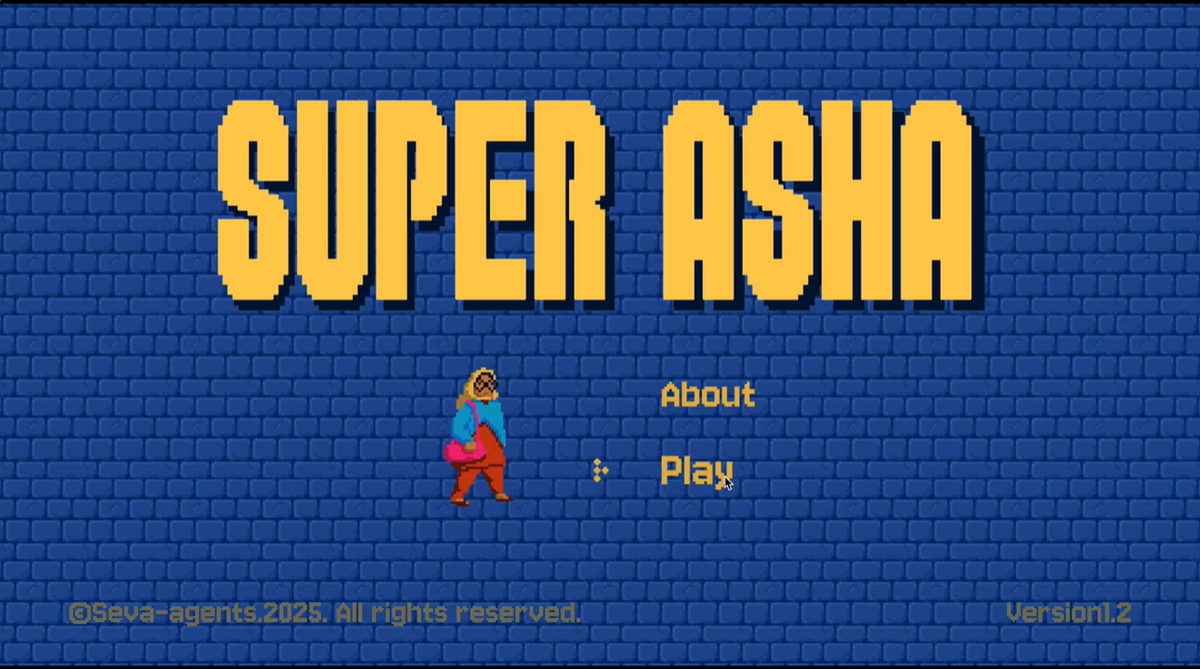
SUPER ASHA was born from a need to create an immersive experience of the lives of regular ASHA workers, essentially putting “people in the shoes of these workers and letting them experience the data and care labour,” she says of the game, which was supported by the Mozilla Foundation and Mumkin. The game, which is divided into time windows, has players become ASHA workers to help them understand how exhausting and complicated the job can be. “The whole idea is that you will be her every hour and experience what she’s supposed to do,” says Priya, who has drawn on “hard-hitting, true stories” gathered from the field to design the game.

A screenshot of the game

A screenshot of the game
| Photo Credit:
Special Arrangement

To design SUPER ASHA, Priya worked with a team of artists, including Ranjitha Rajeevan and Basim Abu NP, “without whom this game would not have been possible. They are gamers, and I am not.” The focus, she says, was to make the simplest game possible; so they designed it based on the popular game Super Mario. “Super Mario has to jump hoops to get to Princess Peach, so let ASHA also do that,” she says. However, as a player goes to higher levels, the settings become more complex, she says, drawing a parallel to ‘Papers, Please’, a puzzle simulation video game “where you play as an immigration officer, where stamping people to enter a border or not is a moral choice,” she says.

The first version of SUPER ASHA was showcased at the eighth annual ACM FAccT conference, held in Athens, Greece, from June 23 to 26, alongside other multimedia artefacts from the Digital Bharat exhibition. A more refined version of the game, SUPER ASHA v1.2, will be launched at the Mozfest Barcelona display. This version “starts at 5am ASHA time and goes on till 3pm.” The game will likely be out in the public domain by November 7, “with any versions from then on be accessible to all,” says Priya, who especially wants to target technologists and policy makers through this game.

“They should be able to play the game and understand the constraints of this job.” Even better, of course, would be this: implementing policy based on the understanding that conducting data labour, such as logging records, changes the nature of care and support ASHAs offer. “The two (care and data labour) should not be carried out by the same human apparatus, the ASHA worker, because care setting is a very different context,” says Priya


Source link

Lucknow earns UNESCO ‘Creative City of Gastronomy’ tag and a new culinary era begins


Lucknow has officially been declared a UNESCO Creative City of Gastronomy during the 43rd Session of the UNESCO General Conference, currently underway in Uzbekistan. The recognition celebrates the city’s centuries-old Awadhi cuisine, its living food traditions, and inclusive cultural heritage.

It is a fitting honour for a city where age-old tunday kebabs are still cooked and eaten much as they were a century ago — the only change being the passing of ladles and appetites from one generation to the next. But beyond the historic lanes of Chowk, a quiet food revolution is taking shape. New restaurants are creating outward-looking dining experiences in the rapidly gentrifying pockets of Gomti Nagar, while others are reinterpreting traditional fare to give diners fresh perspectives on local cuisine.

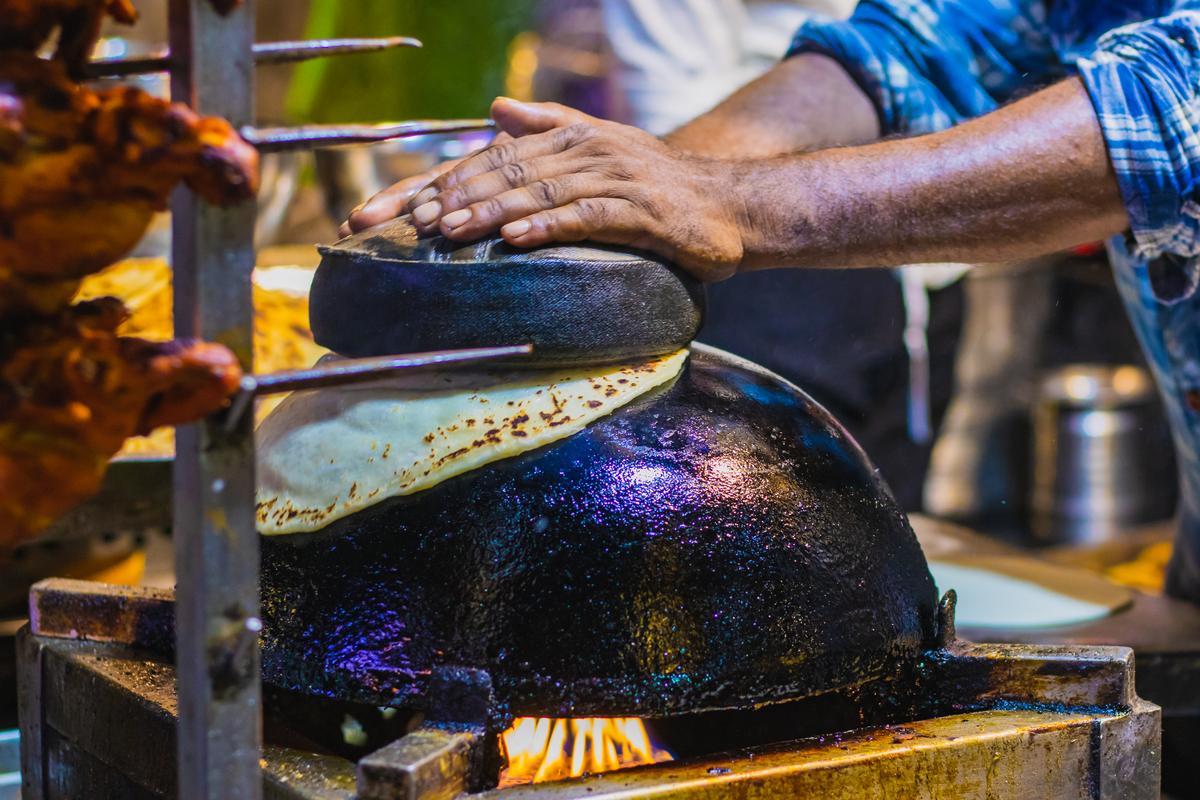
Ulta tawa paratha being cooked in the streets of Lucknow

Ulta tawa paratha being cooked in the streets of Lucknow
| Photo Credit:
Suparna Hazra

Until recently, only those willing to brave the bustle of the old markets could sample its iconic dishes. And while kebabs, nihari, biryani and chaat form the backbone of Lucknow’s UNESCO bid, how these foods are accessed in their original establishments is unlikely to change. Yet, a growing number of Lucknowites now seek easier access to classic bazaar fare — in cleaner surroundings and without the accompanying after-effects. For years, sit-down dining options were limited to staples such as Quality, Royal Café, or Chinese favourites Jone Hing and Chung Fa. Today, diners are looking for a wider range of international flavours that still retain a sense of comfort and familiarity.

A new wave

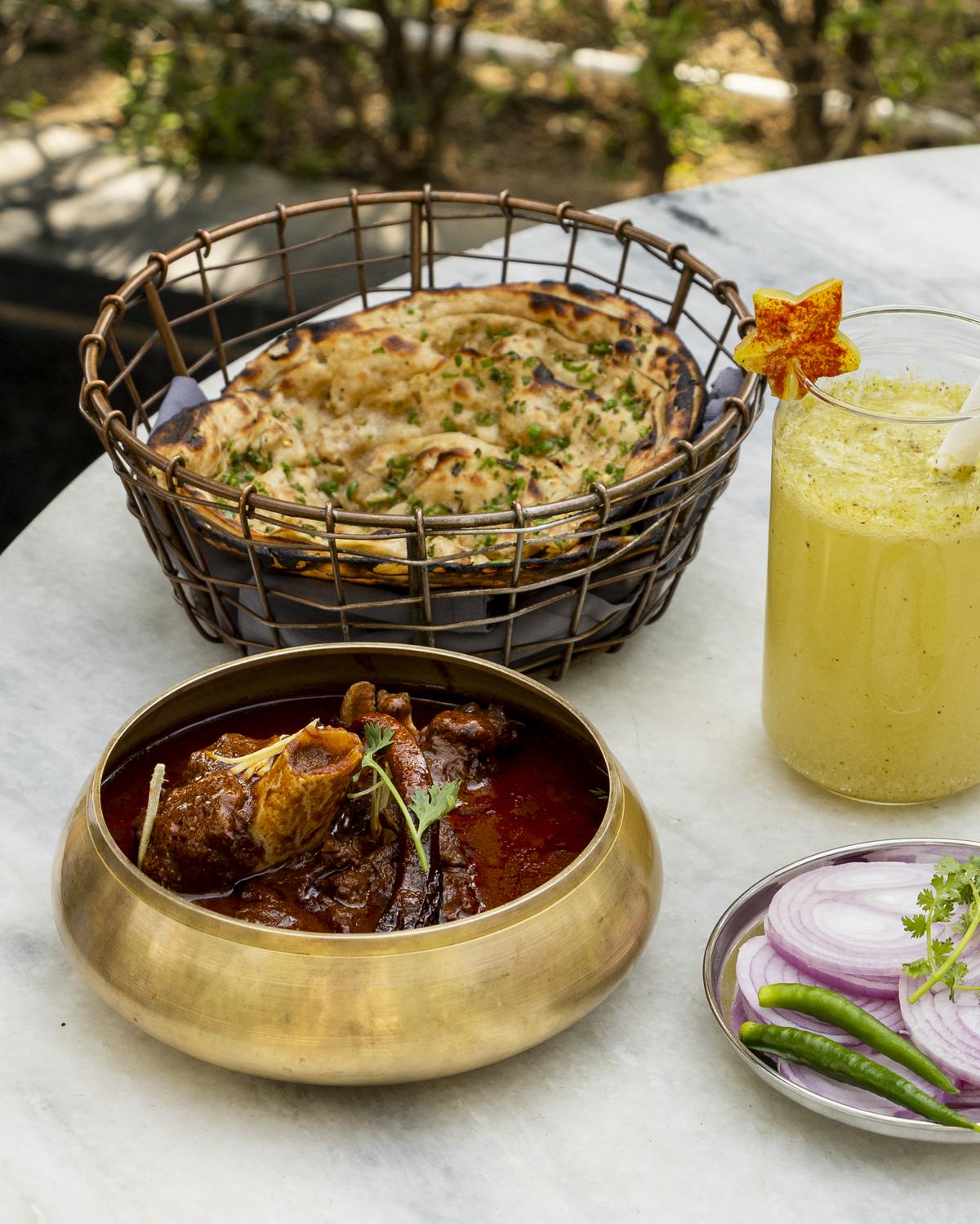
Sassy Canteen, founded in 2019 in Balmiki Nagar and now operating in an expanded space, represents this shift. Run by chefs Himani and Bhaskar, both former five-star hotel chefs, it brings together local and international favourites in a refined setting. Their gilawat and boti kebabs follow traditional recipes but are prepared with the precision of a sushi chef — Bhaskar previously worked at Wasabi by Morimoto at The Taj Mahal Palace, Mumbai. The couple insist their only adaptation to the classics is to make them lighter, so diners can enjoy them without feeling weighed down.

Sassy Canteen’s nihari kulcha

Sassy Canteen’s nihari kulcha
| Photo Credit:
Gunjit Sharma

For Lucknow’s well-travelled residents, legacy dishes such as chicken kali mirch are reimagined — here, served on a Soviet-era-style babka toast. “It’s about comforting new flavours,” says Himani. Sushi has been on the menu from the start, but it took two years to introduce a raw-fish version. Matcha was also gradually incorporated, paired with ice cream and caramelised dry fruits to create a dessert that blends Italian affogato with Kashmiri shufta.

Like Himani and Bhaskar, chef Harsh Misra prefers to ease diners into new ideas rather than overwhelm them. For nearly a decade, he has helped curate menus across Lucknow’s evolving restaurant scene. His current venture, Talllk Espresso Bar and Kitchen, serves ravioli in saffron sauce — a nod to Lucknow’s decadence in a pasta form. His latest menu includes burritos that use a familiar format to introduce new flavours. “People have the spending power and are open to trying new things,” says Harsh. He notes that younger diners often compare dishes against the menu descriptions, taking satisfaction in discovering every detail of the thoughtfully assembled plates. An experimental Awadhi tasting menu, he adds, is on the horizon.

Tradition meets experimentation

Amid this experimentation, some chefs are turning inward — celebrating food traditionally cooked in Lucknow’s homes, long overshadowed by its more famous bazaar dishes.

In 2018, Sheeba Iqbal began hosting curated dinners featuring family recipes in her century-old haveli. She now collaborates with Naimat Khana, a restaurant that champions home-style Awadhi cooking. Her menu — refined over 33 years of cooking for her family — includes yakhni pulao, rayeta-e-badingam made with roasted aubergine and smoked yoghurt, and arvi ka salan (colacasia in sour tomato-tamarind gravy). Here, novelty is replaced by tradition; ingredients and recipes shift with the seasons, in the true Lucknowi way.

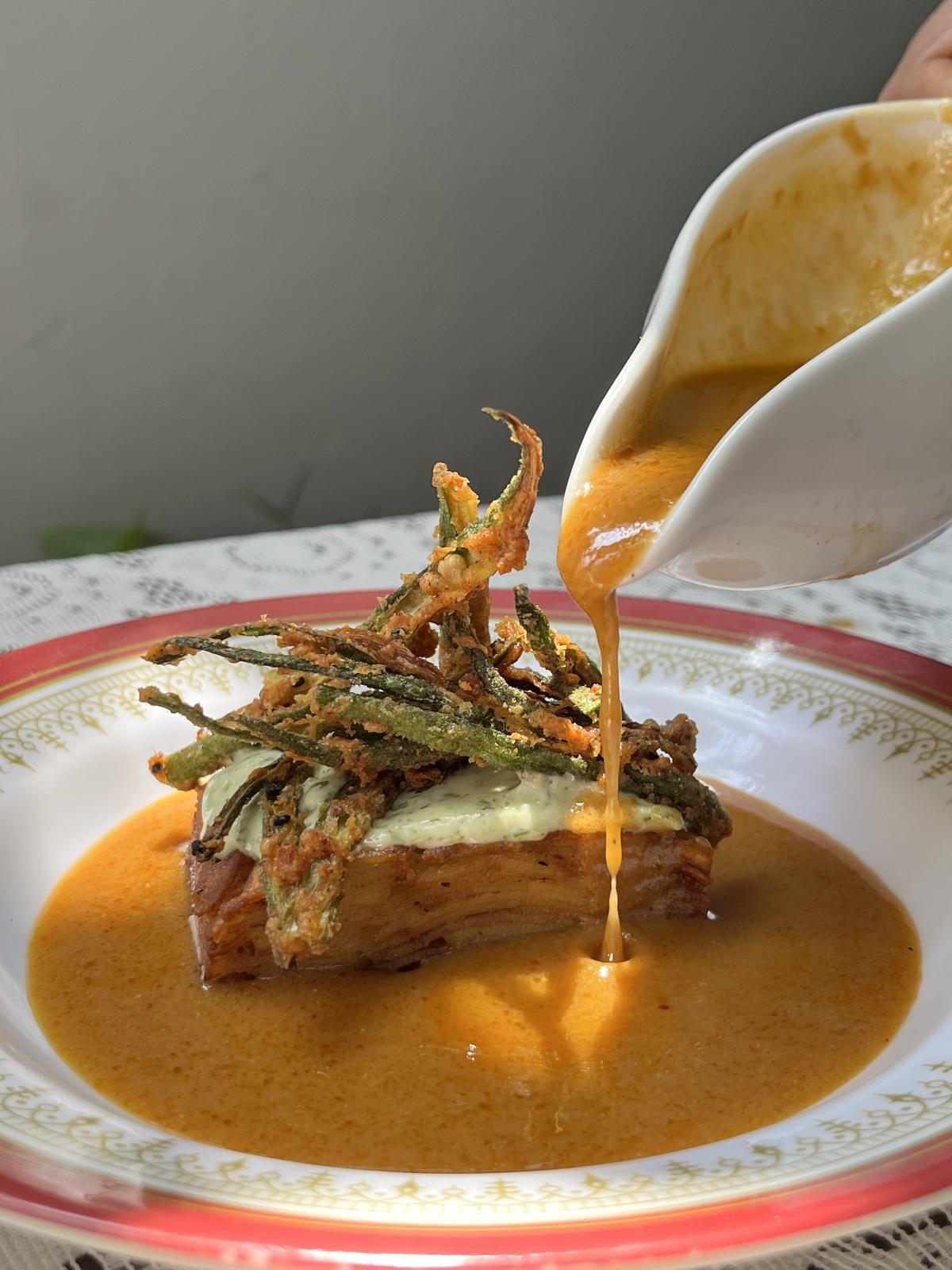
Sabz karari keri wali 

Sabz karari keri wali 
| Photo Credit:
Special arrangement

Sheeba’s food showcases what distinguishes Awadhi from Mughlai cuisine — delicately spiced, seasonal produce cooked in mustard oil, with ghee used to bloom aromas rather than signify indulgence.

“We often associate Lucknow with opulence and excess,” says chef Taiyaba Ali, whose curated Awadhi menus have travelled across Indian cities. “But the Nawabs had refined tastes. There’s restraint in home food — you respect your ingredients.” In Lucknow, her tasting menu was staged at the Mahmudabad House inside the Qaiserbagh Palace complex.

One of chef Taiyaba’s creations

One of chef Taiyaba’s creations
| Photo Credit:
Special arrangement

Chef Taiyaba takes an interpretive, artistic approach to her cooking, using seasonal produce to show how a single dish can vary across communities. Her creations — dal gosht dumplings, winter root salan, and sabz karari keri wali (raw mango with crispy okra) — blend nostalgia, storytelling and experimentation, aiming to familiarise diners with the layered flavours and culinary history of Lucknow. “What I do,” she says, “is food I’d want to eat — food rooted in my identity. The question is, where can I take it next?”

Khasta matar chaat

Khasta matar chaat
| Photo Credit:
Special arrangement

Change in Lucknow, however, is gradual, especially when it comes to food. Experimentation is often met with scepticism. Diners may try new experiences, but they still crave comfort and familiarity. For chefs like Taiyaba, resistance to change remains the biggest challenge. Most agree that tasting menus and small-plate dining are still avant-garde for the city. Yet, with Lucknow’s evolving palate — and now, its UNESCO recognition — it may only be a matter of time before its diners not only embrace but expect to be surprised by what lands on their plates.

Published – November 05, 2025 12:03 pm IST


Source link

Matheran’s popular toy train to roll again from November 6


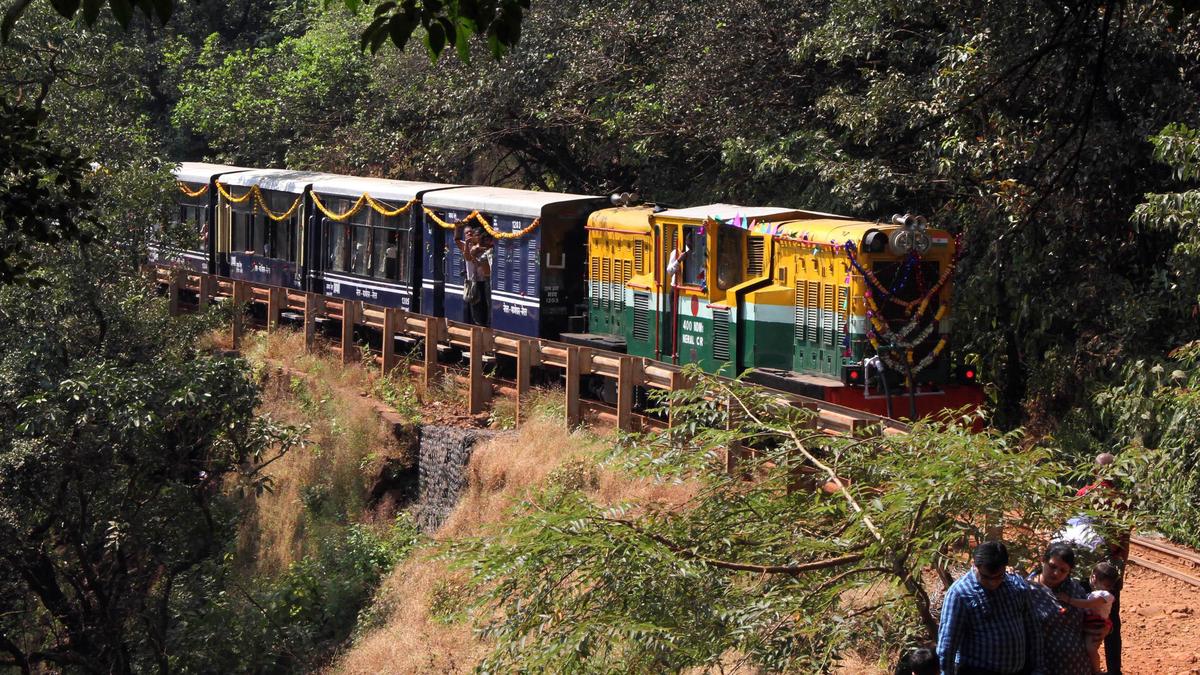
File picture of the toy train on its way to Mathera from Aman lodge near Neral, in Maharashtra

File picture of the toy train on its way to Mathera from Aman lodge near Neral, in Maharashtra
| Photo Credit: Vibhav Birwatkar

The heritage narrow gauge train between the popular Matheran hill station and Neral town in Raigad district near Mumbai is set to resume service from Thursday (November 6, 2025), officials said.

As a precautionary measure, the train services between Neral and Matheran were suspended from June to October, though the shuttle services between Aman Lodge, near the hill station’s entry post, and Dasturi point continued to operate, they said.

Matheran, a small hill station near Mumbai that attracts a large number of tourists, receives heavy rainfall during the monsoon season. As the area has experienced landslides, track damage, and embankment washouts during past monsoons, the narrow-gauge train services are suspended as a precautionary measure.

This year, services on the 21-km Neral-atheran narrow gauge line, which passes through the picturesque ghat section, were suspended from the first week of June.

The services on the Neral-Matheran narrow gauge corridor will resume from November 6. Four services — two each from Neral and Matheran — will be operated daily, the Central Railway said in a release on Tuesday.

Train timings

The first train for Matheran from Neral will depart at 8.50 a.m. and reach its destination at 11.30 a.m. The second train will depart at 10.25 a.m. and reach Matheran at 1.05 p.m. From Matheran, the trains will leave at 2.45 p.m. and 4 p.m. and reach Neral at 5.30 p.m. and 6.40 p.m., respectively, it said.

The four services will be run with a total six coaches, including three second-class and two second-class cum luggage vans. The first services from either side will be run with one Vistadome coach and the second services with one first-class coach, the Central Railway said.

According to the release, six shuttle services will operate in both directions between Matheran and Aman Lodge from Monday to Friday, and eight services on Saturdays and Sundays.

Aman Lodge station is located near Dasturi Point, beyond which motorised vehicles, except ambulances, are not allowed. Therefore, the shuttle services are beneficial for tourists and locals, who would otherwise have to pay a high amount to rickshaw or horse owners to fpr transportation from Dasturi Point to other parts of the hill station.

The Neral-Matheran Light Railway, one of the few heritage mountain railways in India, has completed 118 years, with the first toy train service powered by a steam engine commencing in 1907.

The construction of the 21-km Neral-Matheran railway line began in 1904, and the two-foot gauge line was opened to traffic in 1907.


Source link