Tech

Soviet Venus Lander Kosmos 482 Crashes to Earth After 53 Years in Orbit


The failed Soviet Venus lander Kosmos 482 has finally met its end after a remarkable 53-year journey in Earth orbit. Launched in 1972 under USSR’s Venera programme, the probe re-entered Earth’s atmosphere on May 10 at 2:24 a.m. ET (0624 GMT), with Russia’s space agency Roscosmos confirming its descent over the Indian Ocean, west of Jakarta, Indonesia. Although the debris was thought to have safely splashed down, other international space tracking organisations had pinpointed possible reentry sites as far afield as South Asia and the eastern Pacific, making the final impact location at least somewhat even hours after the event.

Kosmos 482’s Fiery Fall Captured Before Impact, Sparking Concerns Over Space Junk Threat

As per reports by Roscosmos and astronomer Gianluca Masi of the Virtual Telescope Project, the spacecraft was captured in a striking image during one of its final orbits over Rome. In the picture, Kosmos 482 appears as a dashed trail — a result of the probe streaking across a composite of four images. Originally intended to land on Venus, the lander had failed to leave Earth’s orbit due to a launch malfunction, leading it into an elongated Earth-bound trajectory for over five decades. Its descent was guided slowly by atmospheric drag.

The 495-kilogram probe may have remained intact during reentry, as it was engineered to survive Venus’s dense atmosphere. Marco Langbroek, a Dutch satellite tracker, mentioned that if Kosmos 482 had impacted the surface as one piece, it would have had an impact velocity of about 150 mph and the energy of a small to mid-size meteorite. This fall has led to discussion over growing space debris risks.

ESA data shows that, on average, three significant pieces of debris land on Earth daily. With mega constellations like SpaceX’s Starlink and Amazon’s Kuiper set to launch thousands of satellites, experts warn that uncontrolled reentries will likely happen with greater frequency.

ESA officials have pointed out that although the threat to people is low, repeated strikes could become a hazard over time, not just from crashes but also from pollutants that are purged at reentry and may damage the ozone layer or shift climate trends.


For the latest tech news and reviews, follow Gadgets 360 on X, Facebook, WhatsApp, Threads and Google News. For the latest videos on gadgets and tech, subscribe to our YouTube channel. If you want to know everything about top influencers, follow our in-house Who’sThat360 on Instagram and YouTube.


India Smartphone Shipments Fell 6 Percent YoY in Q1 2025, Apple Posts Highest Growth: IDC


Apple Said to be Considering Hiking iPhone Prices


Source link

Dubai, Crypto.com Ink Deal to Process Payments for Government Services via Crypto


Dubai’s Department of Finance (DOF) plans to use cryptocurrencies to process payments for government services in the emirate. In the days to come, residents of Dubai will be able to pay for government services using cryptocurrencies. On Tuesday, May 13, the DOF announced a partnership with Crypto.com, onboarding it as the crypto payment facilitator. Dubai authorities see the move as a significant step towards advancing its digital finance capabilities.

Senior members from the DOF were present during the signing of the MoU with Crypto.com. The development was announced at the sidelines of the ongoing Dubai FinTech Summit. In its announcement, the DOF said Dubai was transitioning into a fully digital economy. The regulators there view cryptocurrencies as a secure and efficient way to complete financial settlements.

“Collaboration between the public and private sectors plays a vital role. Through strategic partnerships, we remain dedicated to establishing a sustainable financial model that empowers individuals and businesses, cementing Dubai’s leadership in financial technology,” said Ahmad Ali Meftah, executive director of the Central Accounts Sector at DOF.

The move aligns with the Dubai Cashless Strategy announced last year, wherein Dubai aims to digitise 90 percent of all transactions. The initiative is expected to add at least AED eight billion (roughly Rs. 18,582 crore) to the economy annually.

“The emirate is strengthening its position by deploying the latest secure financial technology solutions that support its cashless strategy, streamline government transactions, and foster innovation in financial services,” said Abdulla Mohammed Al Basti, secretary general of the executive council of Dubai.

Dubai established a regulatory body, called the Virtual Assets Regulatory Authority (VARA), to oversee the Web3 industry back in March 2022. Owing to the legal clarity around Web3 in Dubai, several crypto firms have flocked to the region to expand their businesses.

Crypto.com, the Singapore-headquartered crypto exchange, for instance, announced its Dubai office in 2022. Now, as part of its deal with the DOF, the exchange plans to deliver the “first comprehensive and holistic government-wide implementation of payment digitisation”.

“We are proud to be selected to support Dubai’s Department of Finance as part of this initiative,” said Eric Anziani, president and COO of Crypto.com.

This, however, is not the first initiative in the UAE that aims to bridge the gap between Web3 and traditional finance.

In February, UAE’s Ministry of Energy and Infrastructure (MoEI) signed an MoU with Shiba Inu to deploy the ShibOS operating system for government activities across the UAE.

Dubai also plans to continue exploring contactless technologies like cryptocurrencies, as well as AI-based solutions.


Source link

MediaTek Helio G200 Chipset With Up to 40 Percent Improved CPU Performance Launched


MediaTek Helio G200 was launched by the chipmaker on Monday as the latest midrange chipset for mobile devices. The Taiwan-based firm says its new processor is aimed at powerful gaming smartphones, with a particular emphasis on social and messaging apps enhancement. It is claimed to deliver more than a 40 percent improvement against competitor alternative platforms when it comes to single-core performance. Despite the change in name, the chip’s specifications remain largely unchanged from the Helio G100 or even its predecessor, the Helio G99, except for higher GPU clock speed, better HDR video quality, and other minor changes.

According to MediaTek, the Helio G200 chipset features a 6nm octa-core architecture with heterogeneous multi-processing. The SoC comprises two Arm Cortex-A76 cores operating at 2.2GHz and six Arm Cortex-A55 cores with a 2.0GHz clock speed. It is complemented by LPDDR4X RAM with a 4266Mbps maximum frequency and UFS 2.2 storage. Although the chipset has the same Arm Mali-G57 MC2 GPU as its processor, it comes with a higher 1.1GHz clock speed.

MediaTek claims that the Helio G200 delivers up to 40 percent better single-core performance and up to 20 percent multi-core performance. It is said to also have 35 percent faster performance on AnTuTu benchmarks. The GPU’s higher clock speed allows it to perform 75 percent faster compared to competitor alternative platforms, while the chip is up to 30 percent more power efficient when gaming.

The processor has been equipped with MediaTek HyperEngine which manages the CPU, GPU, and memory based on power, thermal conditions, and gameplay demands to deliver a smooth gameplay while maintaining power efficiency. The company says it ensures stable framerate and fast network performance by switching between wireless antennas for the best signal. The chip leverages connection concurrency to keep the game online even when a call is received.

Smartphones equipped with the MediaTek Helio G200 chip will be able to support up to 200-megapixel camera sensors, leveraging the built-in triple-core Image Signal Processor (ISP). It supports video capture in up to 2K resolution at 30 frames per second (fps). Its new 12-bit DCG supports higher-quality video HDR capture, while there are also features like hardware dual-camera support and lossless in-sensor zoom, and combined with portrait lenses. MediaTek says it has worked with camera app developers to reduce power consumption by up to 20 percent.

The chip supports on-device displays with a maximum Full HD+ resolution with up to 120Hz refresh rate without requiring additional DSC hardware. Its Display Sync technology is said to boost power efficiency by dynamically adjusting the refresh rate based on usage, resulting in up to 20 percent gains.

For connectivity, the Helio G200 SoC brings a Cat-13 DL modem with support for dual 4G VoLTE, 4X4 MIMO, 256QAM, Bluetooth 5.2, and Wi-Fi 5. It supports satellite systems such as QZSS, Galileo, Beidou, GLONASS, NavIC, and GPS.


Source link

NASA Reveals a Fracture in Huge Cosmic Bone: Everything You Need to Know


X-ray is a very common method that almost every individual is well aware of. However, ever wondered what an X-ray of the Milky Way would look like? Or is that even possible? Well, yes, it is. Recently, NASA’s Chandra X-Ray Observatory has carried out an image of a recent scan, which revealed a fractured bone. As specified in Space.com, the bone-like structure, which was witnessed in the X-ray image, was derived from the radio data obtained by the MeerKAT Radio Array in South Africa and the National Science Foundation’s Very Large Array in New Mexico.

About the Cause of Fracture

According to the data obtained from Chandra’s X-ray, the fracture, also known as the galactic center filament, was caused by the impact from a pulsar. A pulsar is a spinning neutron star that emits radiation constantly at regular intervals. Revealed in Space.com, the scientists are highly skeptical about the speed of the pulsar, during slamming, would have been between one to two million miles per hour.

What is a Galactic Center Filament

Milky Way, undoubtedly, does not consist of bone. However, what looks like a real bone is a Galactic Center Filament, which is an amalgamation of structures crafted by the radio waves interwoven with the magnetic fields, right at the center of the Milky Way.

What did scientists discover?

As conveyed to Space.com, this is one of the brightest and longest galactic center filaments that have been detected so far. The distances of these filaments are 26,000 light-years and 230 light-years long. The bone has been named as G359.13142-0.20005.

The Scientist’s Verdict

Narrated to Space.com, the scientists suggest that the collision with the neutron stars would have dismantled the filament’s magnetic field, which further resulted in the fracture. The scientists are hopeful that the fracture will heal itself.


Source link

Doom: The Dark Ages Leaks Ahead of Launch, Revealing Details on Enemies, UI and More


Doom: The Dark Ages, the upcoming first-person shooter from Bethesda, seems to have leaked early ahead of its release date, revealing spoiler-filled details about menu UI, map, weapons, enemies and more. The leak comes days before the game launches on May 15 across PC, PS5 and Xbox Series S/X. Users who pre-ordered the Premium Edition will be able to access the game from May 13.

Doom: The Dark Ages Leaks

The leak appeared on the Gaming Leaks and Rumours subreddit (spotted by Eurogamer) on May 10, where a user claimed to have received the Collector’s Edition of the game early on May 8.

The reddit user said they finished the game and proceeded to post spoiler-filled images and details from it, including menus and interface, demons and weapons, characters and cutscenes. The leaked screenshots and details contain heavy spoilers for Doom: The Dark Ages.

The leak provides details on collectibles present in the game, crucial plot points, the Bestiary, HUD, difficulty modes and a lot more.

Doom: The Dark Ages Pre-Load, Early Access Times

Around the same time, Bethesda posted a new launch trailer for Doom: The Dark Ages and shared details about the game’s global pre-load and early access times. The game will be available for preloading starting May 11 at midnight UTC. Users who own the Doom: The Dark Ages Premium Edition get early access to the game up to two days before launch starting midnight UTC on May 13.

Meanwhile, reviews of Doom: The Dark Ages are also out, with the game getting positive reception across the board and earning average scores of 86 and 85 on OpenCritic and Metacritic, respectively.

Doom: The Dark Ages serves as a prequel to Doom (2016) and Doom Eternal and drops the iconic Doom Slayer in the middle of medieval war against hell, blending fantasy and sci-fi with the visceral action the series is known for. The game will be released on PC, PS5 and Xbox Series S/X on May 15. The Bethesda title will also be available on Game Pass day one.


Source link

OnePlus Pad 2 Pro Listed on Oppo’s Website Ahead of Launch on May 13


OnePlus Pad 2 Pro is set to launch in China next week. While the company has yet to announce any plans to launch a new high-end tablet, a new model called the OnePlus Pad 2 Pro has been listed on Oppo’s store in China. The listing reveals the RAM and storage configurations of the upcoming tablet. It will be available in two colourways in China. It could be powered by a Snapdragon 8 Elite chip and could be equipped with a 12,140mAh battery.

OnePlus Pad 2 Pro RAM, Storage and Colourways (Expected)

The listing for the OnePlus Pad 2 Pro (via GSMArena) is currently listed on Oppo’s online store in China. It will be available in four RAM and storage configurations — 8GB+256GB, 12GB+256GB, 12GB+512GB, and a top-of-the-line 16GB+512GB. 

The upcoming OnePlus Pad 2 Pro will be available in Deep Sea Blue and Ice Silver colour options (translated from Chinese). The listing gives us a good look at the tablet, which bears a striking resemblance to the Oppo Pad 4 Pro, which was recently launched in China.

If the OnePlus Pad 2 Pro is indeed a rebranded version of the Oppo Pad 4 Pro, it could run on an octa core Snapdragon 8 Elite chip, paired with up to 16GB of RAM. The company could also equip the handset with a 12,140mAh with support for 67W SuperVOOC charging.

Like the Oppo Pad 4 Pro, the upcoming OnePlus Pad 2 Pro is likely to sport a 13.2-inch (2,400×3,392 pixels) LCD screen that refreshes at 144Hz. It could feature a single 13-megapixel rear camera, and an 8-megapixel camera on the front for selfies and video chats.

The listing on Oppo’s website suggests that the OnePlus Pad 2 Pro will be launched in China on May 15. Pricing and availability for the tablet will be announced on the same day. There’s currently no word on whether the tablet will be launched in India and other markets.

Affiliate links may be automatically generated – see our ethics statement for details.


Source link

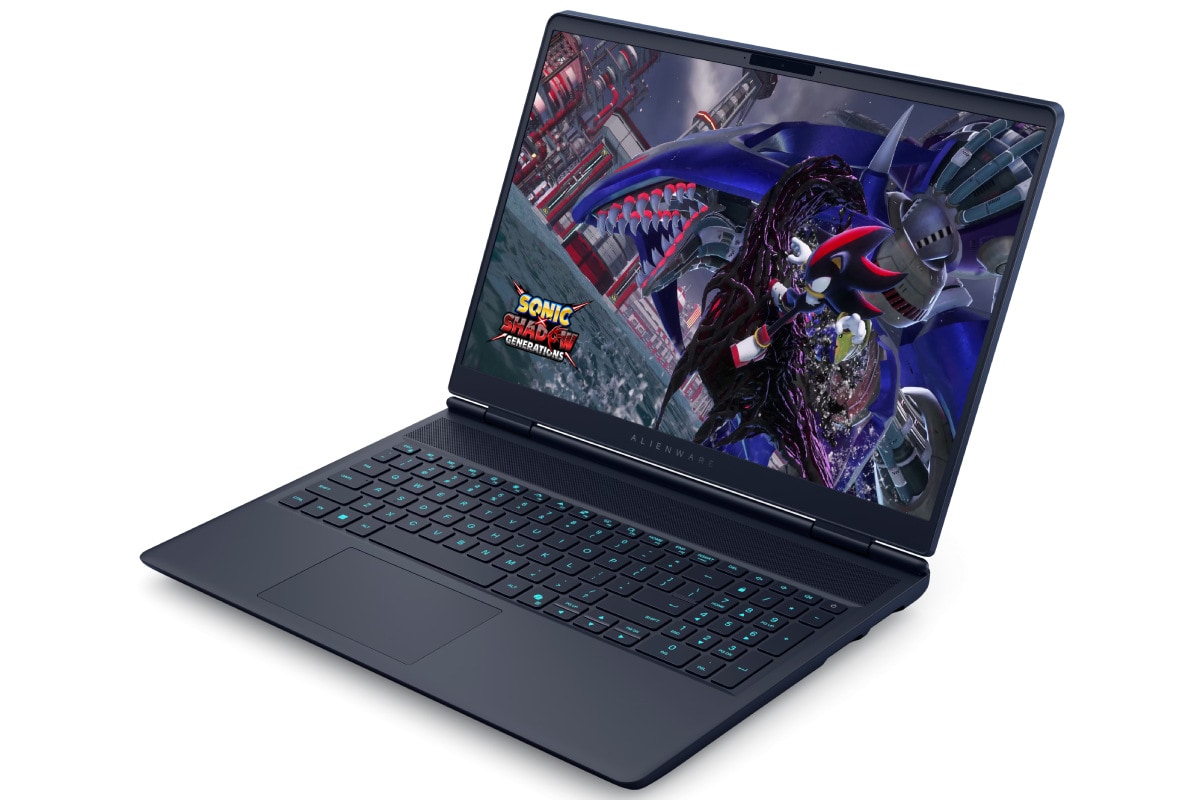
Alienware 16 Aurora, 16X Aurora With Up to Intel Core Ultra 9 CPU, GeForce RTX 5070 GPU Launched


Alienware 16 Aurora and Alienware 16X Aurora were launched by the company on Friday as the latest entry and mid-level laptops from the Dell subsidiary. These laptops sport a more subtle, sober design than other Alienware models. They are equipped with up to Intel Core Ultra 9 processors, up to 64GB of RAM, up to 2TB of SSD storage, and up to Nvidia GeForce RTX 5070 GPUs. They run on Windows 11 out-of-the-box and offer support for Wi-Fi 7 connectivity.

Alienware 16 Aurora, Alienware 16X Aurora Price and Availability

Alienware 16 Aurora pricing starts at $1,149 (roughly Rs. 98,100) while the Alienware 16X Aurora begins at $1,949 (roughly Rs. 1,66,500). Both laptops are available in three variants with better GPUs, and the company will also let customers order customised builds via its website. There’s no word from the company about availability in other regions, including India.

Alienware 16 Aurora, Alienware 16X Aurora Specifications

Both the newly announced Alienware 16 Aurora and Alienware 16X Aurora models sport 16-inch (2,560×1,600 pixels) IPS displays with up to 240Hz refresh rate (120Hz on the 16 Aurora model) and up to 500nits peak brightness. The laptops are equipped with up to a 1080p IR camera with Windows Hello support.

alienware 16x aurora inline Alienware 16X Aurora

Alienware 16X Aurora
Photo Credit: Alienware


The Alienware 16 Aurora is equipped with up to an Intel Core 9 270H processor, while the Alienware 16X Aurora can be configured with up to an Intel Core Ultra 9 CPU. The laptops can be equipped with up to 64GB of RAM and up to Nvidia GeForce RTX 5070 graphics.

The company has equipped these laptops with up to 2TB of NVMe SSD storage. Both models are equipped with two USB 3.2 Gen 1 ports, two USB 3.2 Gen 2 Type-C ports, an HDMI 2.1 port, an RJ45 Ethernet port, and an audio jack. Both models offer support for Wi-Fi 7 and Bluetooth connectivity.

While the Alienware 16 Aurora is available with a 60Wh or a 96Wh battery and measures 356.98×265.43×22.7mm (2.57kg), the Alienware 16X Aurora is only available in a single 96Wh configuration and measures 356.98×265.43×23.80mm (2.66kg). 

For the latest tech news and reviews, follow Gadgets 360 on X, Facebook, WhatsApp, Threads and Google News. For the latest videos on gadgets and tech, subscribe to our YouTube channel. If you want to know everything about top influencers, follow our in-house Who’sThat360 on Instagram and YouTube.


Sony Xperia 1 VII Design, Colour Options Spotted in Leaked Renders; Sony WH-1000XM6 to Debut on May 15


Source link

Sony Xperia 1 VII Design, Colour Options Spotted in Leaked Renders; Sony WH-1000XM6 to Debut on May 15


Sony Xperia 1 VII is expected to launch next week and the company’s next flagship smartphone is likely to arrive with a familiar design, according to leaked renders. The successor to the Xperia 1 VI has been spotted in leaked design renders that indicate it will be available in three colour options. It is expected to be powered by Qualcomm’s top of the line Snapdragon 8 Elite chip, along with 12GB of RAM. Meanwhile, the company has also announced the launch date for the Sony WH-1000XM6.

Sony Xperia 1 VII Design, Colour Options (Expected)

Android Headlines published images showing the upcoming Sony Xperia 1 VII in three colourways. While the company has yet to share any details of the handset, the publication claims that the Xperia 1 VIII will be available in Black, Green, and Purple colour options.

Sony Xperia 1 VII design renders
Photo Credit: Android Headlines


In terms of design, the leaked images suggest that are hardly any major changes on the Sony Xperia 1 VIII. The handset has a tall display with the selfie camera integrated into the top bezel. On the back, there’s a triple rear camera setup that is located in the top left corner, along with a dual LED flash.

According to the publication, the ultrawide and main camera will be at the top of the vertically aligned camera module, followed by the dual LED flash and the periscope telephoto camera. The leaked images indicate that the volume rocker and power button (which doubles as a fingerprint scanner) are located on the right edge of the Sony Xperia 1 VIII.

Meanwhile, leaked marketing materials for the Xperia 1 VIII reveal that the handset will sport a display with Sony’s Bravia technology and feature a Sunlight Mode. The handset will pack a 5,000mAh battery, which is claimed to offer up to two days of battery life.

According to older reports, the Sony Xperia 1 VIII is expected to debut with a Snapdragon 8 Elite SoC from Qualcomm, paired with 12GB of RAM. The handset is expected to run on Android 15 out of the box. The company will announce the handset at its next launch event that is scheduled for May 13.

Sony WH-1000XM6 will be unveiled two days after the launch event for the Sony Xperia 1 VII, the company announced on Friday. The launch event for the Sony WH-1000XM6 will begin at 9am PDT (9:30pm IST) on May 15.

While the company has yet to reveal the design or the specifications of the upcoming Sony WH-1000XM6, recent leaks suggest that it will arrive with a Sony QN3 processor that delivers improved performance in terms of audio quality and active noise cancellation (ANC).

Thankfully, we won’t have to wait long to learn more about the Sony WH-1000XM6. Pricing and availability details, as well as the flagship headphones’ specifications will be revealed when the device is launched next week.


Source link

US FTC Backs DOJ Proposal in Google Search Antitrust Case


The U.S. Federal Trade Commission, the de-facto federal privacy regulator, said on Friday that the U.S. Department of Justice’s proposal to make Alphabet’s Google share search data with competitors includes adequate safeguards to protect users’ privacy.

The proposal is part of a range of measures the DOJ says are necessary to open up the online search market, after ruling in August that the tech titan holds an illegal monopoly.

The Washington judge overseeing the case has seen a flood of input from experts and interest groups for and against the DOJ’s proposals as the trial nears its end this month. The case could fundamentally reshape the internet by potentially unseating Google as the go-to portal for information online.

Increasing competition will put more pressure on Google to improve its privacy practices, the FTC said.

Google has sought to block the DOJ’s data-sharing proposal, which its CEO Sundar Pichai said would give away the company’s intellectual property, in part by arguing that it would harm user privacy.

The FTC said the proposal would appoint a committee to oversee compliance, similar to the agency’s privacy-related settlements.

The DOJ and state attorneys general are also asking the judge to make Google sell off its Chrome browser and cease multi-billion dollar payments to Apple and other companies that set Google as the default search engine on new devices.

Google has said making its agreements non-exclusive, as it has already begun to do, is the right approach.

The DOJ and state attorneys general have expressed concerns that Google could extend its dominance to AI.

AI startup and Google partner Anthropic said in court papers on Friday that requiring Google to give the DOJ advance notice of its proposed AI investments and partnerships would create a “significant disincentive” for Google to invest in smaller AI companies and likely deter such investments altogether.

Google holds a minority stake worth billions of dollars in Anthropic.

Anthropic argued the proposal “would harm, not benefit, AI competition.”

(This story has not been edited by NDTV staff and is auto-generated from a syndicated feed.)


Source link

Samsung Galaxy Z Fold 7 Dimensions Surface Online; Inner Screen Tipped to Feature Slim Bezels


Samsung Galaxy Z Fold 7 is expected to debut in the coming months, and recent reports suggest that it could be the slimmest foldable in the world. A tipster has now leaked the dimensions of the purported Galaxy Z Fold 7, giving us an idea of the shape of the smartphone, which is expected to be wider and taller than its predecessor, the Galaxy Z Fold 6. The next generation Galaxy Z Fold phone is also tipped to sport much slimmer bezels on the inner screen.

Samsung Galaxy Z Fold 7 Dimensions (Expected)

An X (formerly Twitter) post by user Ice Cat on Friday compares the dimensions of the Galaxy Z Fold 7 with the Galaxy Z Fold 6 and the Galaxy Z Fold SE (also known as the Samsung W25 in China). The tipster, who was previously known as Ice Universe, has a strong track record for leaking accurate information, especially related to Samsung devices.

A table posted by the leaker reveals that the Samsung Galaxy Z Fold 7 will measure 158.4×143.1×3.9mm. On the other hand, the dimensions of the Galaxy Z Fold 6 are 153.5×132.6×5.6mm and the Samsung W25 (or Z Fold SE) measures 157.9×132.6×5.6mm.

If the leaked dimensions are accurate, the Samsung Galaxy Z Fold 7 will be both wider and taller than both the Galaxy Z Fold 6 and the Galaxy Z Fold SE. It will also be thinner than both smartphones, when folded and unfolded.

Earlier this week, the tipster claimed that the Galaxy Z Fold 7 would be the slimmest foldable smartphone when it debuts later this year. At the time, it was claimed that the phone would measure 3.9mm when unfolded and 8.9mm when folded. This would make it slimmer than the Oppo Find N5, which measures 4.21mm (unfolded) and 8.93mm (folded).

Another post by the user states that the inner display of the Galaxy Z Fold 7 will have an incredibly thin 1mm bezel. This is a notable improvement over the Galaxy Z Fold 6, which has a 1.9mm bezel. Meanwhile, the clamshell-style Samsung Galaxy Z Flip 7 is tipped to arrive with a 1.2mm bezel on the cover display.

According to previous reports, the Samsung Galaxy Z Fold 7 and Galaxy Z Flip 7 will be launched in July. The Galaxy Z Fold 7 could be equipped with a Snapdragon 8 Elite chip, while the Galaxy Z Flip 7 model culd arrive with an Exynos 2500 SoC. We can expect to learn more about these handsets in the coming weeks.


Source link