Tech

Meta Discussed Buying Perplexity Before Investing in Scale


Meta Platforms held discussions with Artificial Intelligence (AI) search startup Perplexity AI Inc. about a possible takeover before moving ahead with a multibillion-dollar investment in Scale AI, according to people familiar with the matter.

The two companies couldn’t come to an agreement and decided not to pursue the deal, said the people, who asked not to be named as the details of the talks aren’t public. The financial terms under discussion could not be learned. Perplexity recently closed a new round of funding at a $14 billion (roughly Rs. 1,21,438 crore) valuation. 

Meta also attempted to hire Perplexity Chief Executive Officer Aravind Srinivas to join the social media company’s new “superintelligence” team, which is focused on building more powerful AI systems, the people said.

The talks with Meta, which have not previously been reported, highlight Meta CEO Mark Zuckerberg’s willingness to use deals and big hires to catch up in the AI race. The talks took place before Meta finalised a $14.3 billion (roughly Rs. 1,24,052 crore) investment in Scale AI that gives it a 49 percent stake in the data-labeling startup.

Meta and Perplexity didn’t respond to requests for comment.

Founded in 2022, Perplexity has emerged as one of the most prominent startups using generative AI to rethink core internet services. Perplexity is taking on Alphabet Inc.’s Google by offering an AI tool that summarises search results, lists citations for its answers and helps users refine their queries to get the best responses. The startup is also developing an AI-powered web browser.

Frustrated with the pace of Meta’s AI development, Zuckerberg is making a concerted push to poach top AI talent from across the industry with lucrative pay packages. Meta has succeeded in hiring Scale AI’s former CEO Alexandr Wang, as well as top researchers from Google DeepMind and Sesame AI Inc.

Not everyone is jumping to join Meta, however. OpenAI CEO Sam Altman said in a podcast this week that some on his staff had been approached by Meta with offers of $100 million (roughly Rs. 867 crore) signing bonuses and even bigger compensation packages, but had declined to join the company. 

Meta has been in talks with former GitHub CEO Nat Friedman to recruit him to the new team, according to people familiar with the matter. The company has also been working on hiring Daniel Gross, the CEO of Safe Superintelligence, a research lab founded by former OpenAI chief scientist Ilya Sutskever, the person said. 

Meta has also held early discussions for a computing deal in which Safe Superintelligence would use Meta’s data center infrastructure, the person said. Representatives for Safe Superintelligence did not immediately respond to request for comment.

Other Big Tech firms, including Google and Amazon.com, have tried to establish themselves as the backbone of the AI ecosystem by providing chips and cloud computing resources to AI startups. Meta has not gone this route to date.

© 2025 Bloomberg LP

(This story has not been edited by NDTV staff and is auto-generated from a syndicated feed.)


Source link

Google Offers to Tweak Search Results to Promote Rivals, Stave Off EU Antitrust Fine


Alphabet’s Google has proposed more changes to its search results to better showcase rivals in a bid to stave off a possible hefty EU antitrust fine, according to documents seen by Reuters.

Google’s latest proposal came three months after the European Commission charged the US tech giant with favouring its own services such as Google Shopping, Google Hotels and Google Flights over rivals in breach of the Digital Markets Act (DMA).

The landmark DMA sets out a list of dos and don’ts for Big Tech aimed at reining in their power and giving rivals more room to compete and consumers more choices.

Under Google’s new proposal a vertical search service (VSS) selected on objective and non-discriminatory criteria would get its own box at the top of the search page with the same format, information and features as Google’s, the document said.

The box would contain three direct links picked by the VSS, to hotels, airlines, restaurants and transport.

Other VSS, which are specialised search engines within Google, would be ranked below but without a box unless users click on them.

“We do not agree with the (Commission’s) preliminary findings’ position but, on a without prejudice basis, we want to find a workable solution to resolve the present proceedings,” the documents sent by both Google and the Commission to the rivals said.

The rivals will provide feedback at a July 8 meeting called by the Commission. A number of rivals, who did not want to be named ahead of the meeting, told Reuters that the changes still do not go far enough to ensure a level playing field.

© Thomson Reuters 2025

(This story has not been edited by NDTV staff and is auto-generated from a syndicated feed.)


Source link

Apple Sued by Shareholders for Allegedly Overstating AI Progress


Apple was sued on Friday by shareholders in a proposed securities fraud class action that accused it of downplaying how long it needed to integrate advanced artificial intelligence into its Siri voice assistant, hurting iPhone sales and its stock price.

The complaint covers shareholders who suffered potentially hundreds of billions of dollars of losses in the year ending June 9, when Apple introduced several features and aesthetic improvements for its products but kept AI changes modest.

Apple did not immediately respond to requests for comment. CEO Tim Cook, Chief Financial Officer Kevan Parekh and former CFO Luca Maestri are also defendants in the lawsuit filed in San Francisco federal court.

Shareholders led by Eric Tucker said that at its June 2024 Worldwide Developers Conference, Apple led them to believe AI would be a key driver of iPhone 16 devices, when it launched Apple Intelligence to make Siri more powerful and user-friendly.

But they said the Cupertino, California-based company lacked a functional prototype of AI-based Siri features, and could not reasonably believe the features would ever be ready for iPhone 16s.

Shareholders said the truth began to emerge on March 7 when Apple delayed some Siri upgrades to 2026, and continued through this year’s Worldwide Developers Conference on June 9 when Apple’s assessment of its AI progress disappointed analysts.

Apple shares have lost nearly one-fourth of their value since their December 26, 2024 record high, wiping out approximately $900 billion (roughly Rs. 78,04,668 crore) of market value.

The case is Tucker v. Apple Inc et al, US District Court, Northern District of California, No. 25-05197.

© Thomson Reuters 2025

(This story has not been edited by NDTV staff and is auto-generated from a syndicated feed.)


Source link

Samsung Exynos 2500 SoC With Up to 15 Percent Improved CPU Performance, Xclipse 950 GPU Launched


Samsung Exynos 2500 has been silently unveiled as the company’s first chipset to be produced using its 3nm process technology. The new processor is claimed to offer up to 15 percent improved CPU performance and 39 percent faster on-device AI performance when compared with the Exynos 2400 chip. It also supports direct connectivity with Low Earth orbit (LEO) satellites for emergency calls and texts. The South Korean technology conglomerate is expected to launch the Exynos 2500 on the upcoming Galaxy Z Flip 7 at a Galaxy Unpacked event next month.

Samsung Exynos 2500 SoC Availability

Samsung’s website doesn’t mention which device will be the first to debut with the company’s new Exynos 2500 chipset, but it confirms that the new smartphone processor is in mass production. 

Recent reports indicate that the Samsung Galaxy Z Flip 7, which is expected to arrive next month at a Galaxy Unpacked event, will be the first handset to arrive with the Exynos 2500.

Samsung Exynos 2500 SoC Specifications, Features

The new Exynos 2500 SoC is a 10-core CPU (in a tri-cluster, or 1+7+2 arrangement) that is built using Samsung’s 3nm Gate All Around (GAA) process technology and Samsung says the use of fan-out wafer-level packaging (FOWLP) improves heat dissipation and allows the chip to deliver better power efficiency. 

It comprises one Cortex-X5 core (3.3GHz), two Cortex-A725 cores (2.74GHz), five Cortex-A725 cores (2.36 GHz), and two Cortex-A520 cores (1.8GHz). Samsung says that it can deliver up to 15 percent better CPU performance when compared with the Exynos 2400 chip. It supports LPDDR5x RAM and UFS 4.0 storage.

The Xclipse 950 GPU on the Exynos 2500 features AMD’s RDNA 3 architecture, and Samsung says that it delivers up to 28 percent faster frame rates for games with hardware accelerated ray tracing. Meanwhile, the NPU on the Exynos 2500 (with 59 TOPS) offers up to 39 percent better performance when using on-device AI features. 

Smartphones equipped with the Exynos 2500 SoC can support up to a 320-megapixel camera sensor, or two cameras (64-megapixel and 32-megapixel). It also supports up to 8K/ 30fps (10-bit HDR) or 4K/ 120fps video recording. The Exynos 2500 supports up to a 4K display (120Hz) or Quad HD+ display (144Hz).

On the connectivity front, the Exynos 2500 offers support for 5G (up to 12.1Gbps), 4G LTE, Wi-Fi 7, Bluetooth 5.4, and NFC. Devices with this chipset can also be equipped with a USB 3.2 Type-C port. The company previously confirmed that the chip will also enable support for satellite connectivity on compatible handsets.


Source link

Vivo X200 FE With 6,500mAh Battery, MediaTek Dimensity 9300+ SoC Launched: Specifications


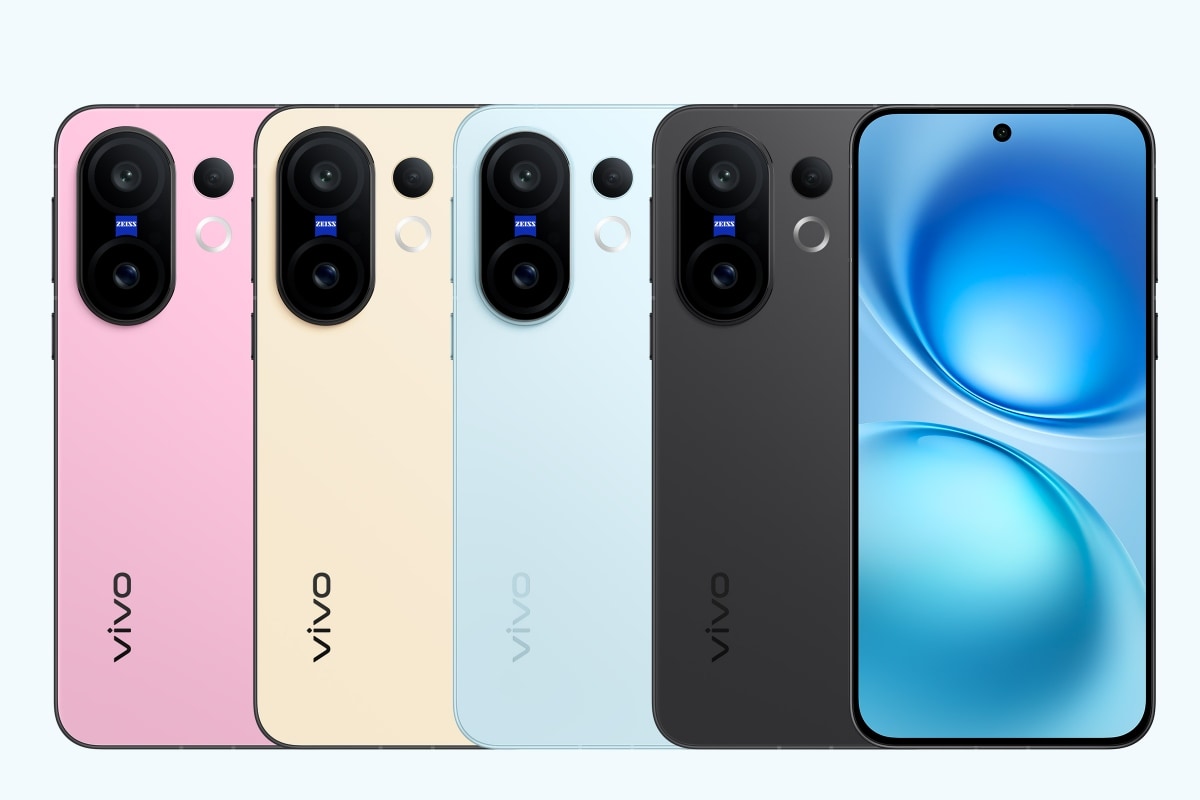
Vivo X200 FE was launched in Taiwan on Monday. The latest Vivo X200 series phone comes in four different colour options and features a Zeiss-tuned triple rear camera unit, headlined by a 50-megapixel primary sensor. The Vivo X200 FE is equipped with a MediaTek Dimensity 9300+ chipset, alongside 12GB RAM and 512GB storage. The Vivo X200 FE features a 6,500mAh battery. It appears to be a rebranded version of the Vivo S30 Pro Mini.

Vivo’s official website in Taiwan now lists the Vivo X200 FE, but it doesn’t mention the pricing and availability details of the new phone. It is listed in Fashion Pink,  Light Honey Yellow, Minimalist Black, and Modern Blue (translated) colour options.

The Vivo X200 FE is confirmed to launch in select global markets in the coming weeks. It will be released in Thailand on July 3, while customers can pre-reserve the handset in Malaysia.

Vivo X200 FE Specifications, Features

The dual-SIM Vivo X200 FE runs on Android 15-based Funtouch OS 15 and features a 6.31-inch 1.5K (1,216×2,640 pixels) AMOLED display with a 120Hz refresh rate and 460ppi pixel density. It runs on an octa core MediaTek Dimensity 9300+ SoC along with 12GB LPDDR5X RAM and up to 512GB UFS 3.1 storage.

For optics, the Vivo X200 FE has a Zeiss-branded triple rear camera unit, comprising a 50-megapixel Zeiss IMX921 main camera, a 50-megapixel telephoto camera and an 8-megapixel ultrawide camera. On the front, it has a 50-megapixel wide-angle camera for selfies and video chats.

The Vivo X200 FE has an IP68+IP69 ratings for dust and water resistance. Connectivity options on the phone include Bluetooth 5.4, GPS, Beidou, Glonass, Galileo, Qzss, A-GPS, Wi-Fi, OTG, GPS, and a USB Type-C port. Sensors onboard are colour temperature sensor, e-compass, distance sensor, gravity sensor, light sensor, gyroscope, infrared remote control, and flicker sensor.

The Vivo X200 FE is backed by a 6500mAh battery with support for 90W fast charging. It measures 150.83×71.76×7.99mm and 186g. The new handset appears to be a rebadged version of the Vivo S30 Pro Mini, which was launched in China last month.

Affiliate links may be automatically generated – see our ethics statement for details.


Source link

Death Stranding 2: On the Beach Review — Ode to a Dying Planet


When Death Stranding came out in 2019, it split players down the middle between those puzzled and frustrated by the sparsity of its design and the ones enamoured by the same pared-back approach to gameplay. Some, expecting a moody, action-adventure game about shooting ghostly creatures, saw Death Stranding as a “walking simulator”. Others knew better than to expect the expected and were left surprised by the game’s stubborn commitment to its identity.

Very few games have that: an identity. Most titles, even the great ones, are firmly rooted in genre substrates — a third-person action-adventure game, an RPG, a shooter. Others are offshoots — a Soulslike, a Roguelike, an immersive sim. But Death Stranding was its own thing. As its creator Hideo Kojima — auteur game designer, industry legend, film buff and the guy who made a bunch of espionage action games about the ethics of artificial intelligence, consequences of war and control of information that presciently predicted the future that we find ourselves living in today — argued: most games were centred around “the stick”, a tool to keep the bad stuff away; Death Stranding was designed around “the rope”, an instrument to bind us together.

And at its core, that was what the game was about: walking around desolate landscapes, making deliveries and connecting scattered colonies of people reeling from an apocalypse. Mere months after the launch of the game, Kojima’s prescience was once again at play as the world went into lockdown, sheltering itself from the Covid-19 pandemic, and Death Stranding’s themes found resonance with the new reality of living locked up at home, away from our friends, scared of an invisible threat outside.

Doom: The Dark Ages Review: Rip and Tear, Medieval Style

With Death Stranding 2: On the Beach, which releases this week on PS5, Kojima has doubled down on his uncompromising vision. Those hoping for DS 2 to embrace a more traditional video game design are likely to be left puzzled and frustrated again. Yes, the game is more open to guns and combat and features an expanded set of tools to facilitate that, so it might appeal a little more to people who like wielding “the stick”. But make no mistake, “rope” aficionados, Death Stranding 2 is still about a guy walking across a continent with an ungodly amount of cargo on his back. It’s the familiar gameplay loop from the first game — picking up orders, managing your inventory and trekking along the best path to your destination — expanded in scale and scope in every single aspect.

Simply put, Death Stranding 2 is bigger and better and bolder. It deepens the themes and ideas introduced in Death Stranding and poses new questions relevant and important to our living reality today. It is wilder, more confounding, less trusting of us as a people than its predecessor — it comes with the tagline “Should we have connected?”. Make what you will of that, but Kojima is clearly concerned with the consequences of a shared global society — of connecting people in a world desperate to tear itself apart. There are important, sombre reflections about the destruction of our environment and the cycles of conflict and violence, near-perfectly balanced by Kojima’s trademark extravagant, earnest and often goofy style that brings levity and humanity to otherworldly and incomprehensive horrors. One moment you’re taking crucial medical equipment and health supplies to a far-off colony of people cut off from resources; the next, you’re literally running to deliver a fresh, hot pizza to a guy living in the mountains in 30 minutes or less.

For all its strengths, Death Stranding 2 also comes with many of the same flaws of the first game. It goes overboard in providing players the tools to take on its many challenges — “You want your delivery runs to be faster? Here are 13 ways to do that.” It wraps its main story into multiple layers of thematic overtures and distractions, not all of which justify their indulgence. And then there are some familiar frustrations related to the gameplay that grate against the serenity of your surroundings in the game. But these missteps remain minor grievances in an otherwise audacious title that still promises — and delivers — an experience like no other in the medium, just like Death Stranding did nearly six years ago.

ds 2 1 DS 2

Death Stranding 2 is still a game about making deliveries above your weight limit
Photo Credit: Sony/ Kojima Productions (Screenshot – Manas Mitul)

Death Stranding 2: On the Beach begins again with Sam Porter Bridges, now living a quiet life with baby Lou after connecting North America in the first game, away from prying eyes of UCA. After a lifetime’s worth of loss, Sam has finally found peace, living with his adopted child in a tucked away shelter close to the Mexican border. But this familial bliss is short-lived. Fragile, who helped Sam in his expedition across the American continent in the first game, finds his hideout and asks him to connect Mexico to the chiral network. Sam takes on the job reluctantly and brings Mexico into the fold, but a horrific tragedy shatters the life he built for himself after the events of the first game. Devastated by a cruel loss and informed by a startling discovery, Sam is given a chance to begin again on another continent.

He’s told of a mysterious structure, a plate gate, that connects Mexico to Australia and is asked to connect the country to the chiral network, as well. Sunken in his grief, Sam agrees to take on the assignment and joins Fragile and couple of new allies on the DHV Magellan, a colossal Metal Gear-style ship that travels through the tar and serves as the base of operations in the game. Fragile is now heading up Drawbridge, a new civilian logistics outfit working to expand the chiral network outside the borders of the UCA. After an intense introduction section set in Mexico, Death Stranding 2 shifts up a gear to reveal its true act: the vast, untamed wilderness of Australia.
DS 2 2 DS 2

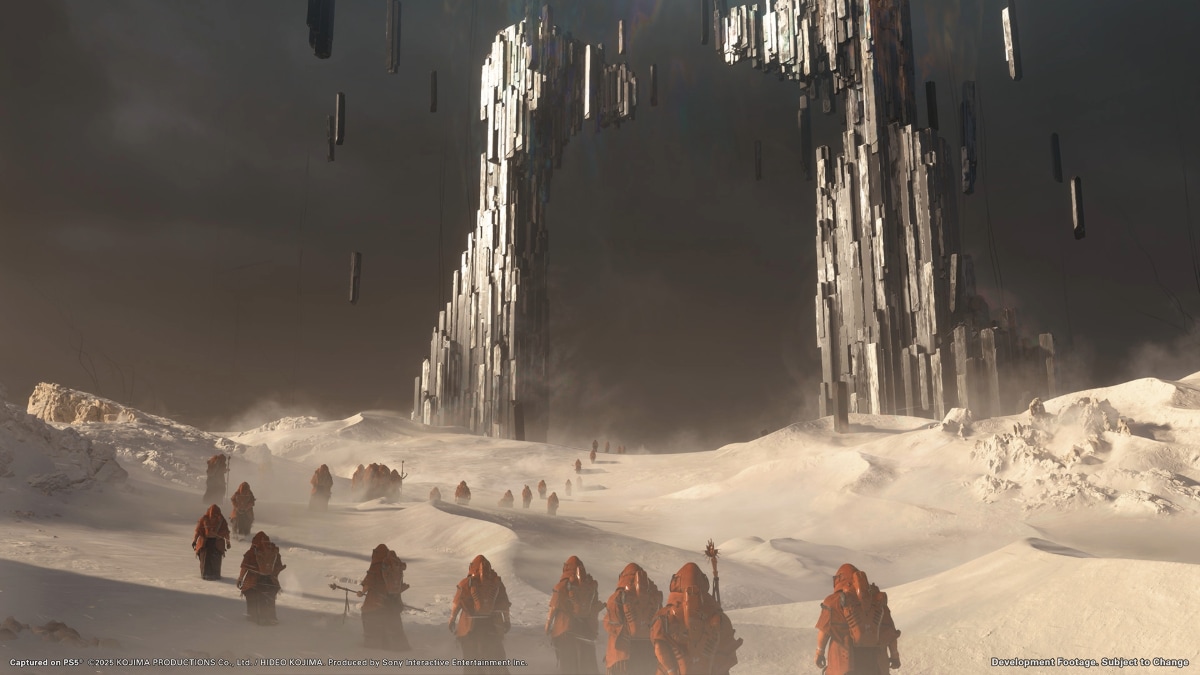
A Plate Gate connects two continents
Photo Credit: Sony/ Kojima Productions

As Sam, you begin your journey on a new continent working for Drawbridge to connect fractured pockets of civilisation. But things aren’t, of course, straightforward. Sam learns that there’s much he doesn’t know about Lou, so he pushes forward with his quest, with new revelations, new allies and a few old foes waiting on his path ahead. Alongside the central pillar of Sam’s story, DS 2 also weaves two alternative narratives — one about strange visions that Sam’s been having and other about the ghostly realm of the dead that reflects various natural disasters from the world of the living, featuring a mysterious military figure, Neil Vana (played by actor Luca Marinelli, a new addition to the cast this time around). There are several other flashbacks and surreal sequences that connect the dots of the larger picture. These disparate narrative threads come together in true Kojima fashion, through astonishing imagery, evocative music and confounding lore to form the unique fabric of DS 2.

And as with other games made by the Metal Gear Solid creator, Death Stranding 2’s story is a sum of its themes and ideas. The big picture, while stunning to behold and often hard to grasp, is not as compelling as what the picture makes the beholder feel. You’re walking around in a dead world, surrounded by dead things, where time is rain and the afterlife is a beach. What does that make you feel? Death Stranding 2 is solemn, sad and silly, and it’s self-aware enough to allow all those parts to exist together in equal visibility.

ds 2 3 ds 2

Death Stranding tells a more personal story about Sam and Lou
Photo Credit: Sony/ Kojima Productions (Screenshot – Manas Mitul)

Just like its predecessor, Death Stranding 2 often belabours the point and flirts with corny sermonising. It also gets stuck in overlapping narratives that often don’t bring meaningful context to the central story. But unlike the first game, it doesn’t drag its feet or dance around its arguments, diving headfirst into the thick of it all instead. And so, the sequel, while much longer than Death Stranding, is paced far better, with its story expanding to compelling crescendos towards the end of each episode. It’s also less esoteric and more emotionally charged, as it is after all telling a more personal story of loss.

Kojima also writes with an unassuming earnestness that presents some of the game’s more complex, high-brow themes in accessible and familiar forms instead of smearing them on you. The invite to swim in the deep end of what he’s trying to say with images, words, music and ultimately gameplay is always open, but the surface of those ideas is seductive in its own right, too. Consequently, Death Stranding 2 becomes an experience unique to each player and their curiosity.

DS 2 4 ds 2

Luca Marinelli plays the mysterious Neil Vana
Photo Credit: Sony/ Kojima Productions (Screenshot – Manas Mitul)

And then there’s a different story told through the game’s unique communal gameplay. It’s a game about making deliveries that also expands into a little more traditional action-adventure territory with enemy encounters involving shooting, stealth and tactical preparation. There are several larger boss fights where combat is the only way forward, but you can largely push through the game without taking on enemies, both living and dead ones. Every mission begins at a delivery terminal, where you pick up a new order to deliver to a shelter and bring it under the range of the chiral network, which allows you to build structures and access structures built by other players online.

There’s a neat little inventory and cargo management sim tucked away within the process of taking on an order. Looking at the map and assessing the terrain you’ll likely cross to get to your destination and the foes you’ll likely encounter on the way helps you decide the equipment you’ll carry along with your designated cargo. You don’t want to be ill-equipped for a treacherous journey, but you also don’t want to be carrying a heavy load on a long trek. I really enjoyed planning the route for each order, too, especially for the long-haul ones. You try to trace a path of least resistance to your destination, crossing over rivers, going around mountains and avoiding an enemy camp. But often, you must take the challenges head-on: deploy a ladder across the raging waters, rappel down a cliffside using a climbing anchor, or pack a tranquiliser sniper to clear a hostile camp from far.

ds 2 5 ds 2

It’s important to prepare for the conditions you’ll face on your journey
Photo Credit: Sony/ Kojima Productions (Screenshot – Manas Mitul)

Each main order comes with an escalation of challenges and tools provided to overcome them. As you slowly establish the chiral network across a region, you’re able to construct larger structures: bridges, watchtowers, timefall shelters, generators, and ziplines that make the trek faster and safer. Once a shelter and its surrounding area is connected to the network, you’re also able to see and utilise structurers built by other players in your server. The Social Strand System, as the game calls its distinct co-operative online experience, is not just foundational to Death Stranding 2’s gameplay — it lives at the emotional core of the game.

Silently, invisibly working alongside other porters to bring the world back from the dark is an experience like no other in the medium. It’s a deeply charitable and rewarding act of labour that takes the idea of player messages from Dark Souls and runs with it. Every ladder you lay down, every anchor you dig in, every bridge you build is helping a whole bunch of other players, all of them strangers going through the same experience as you. And when you encounter a structure built by them or a tool discarded to aid other porters, you’re filled with gratitude. Over time, as you see regions transform with structures, paved roads and an active monorail system, you can’t help but feel like a colony of ants, working away tirelessly to make things easier for everyone.

ds 2 6 ds 2

Structures built by other players make your travels easier
Photo Credit: Sony/ Kojima Productions (Screenshot – Manas Mitul)

This unsigned communal contract is also tied to an ingenious system that reflects modern social media, where you ‘like’ the structures left behind by other players and receive ‘likes’ for your constructions in return, creating a kinship of sorts — a strand that binds two players together. But unlike social media, the exchange never feels transactional. It’s driven by the shared experience of hardship and a collective effort to make it easier for yourself and those who follow in your path. The Social Strand System underpinned the distinct gameplay loop in Death Stranding, and it anchors your efforts in the sequel, as well, telling you that you’re not alone in saving the world.

You slowly spread the network across multiple shelters in a region before journeying to connect the main regional station, which usually culminates in a stunning boss encounter or narrative sequence that unravels the threads of the larger story. Death Stranding 2 excels in marking your slow and deliberate crawl towards completing a region with a climactic flourish that rewards your efforts and resets the board for the next region. And then, you begin again. You experience otherworldly horrors or see inexplicable phenomena, but amidst your confusion you hold on to the clarity of the next order. After all, you’re just the guy who makes deliveries.

ds 2 7 ds 2

Death Stranding 2 features visually striking boss encounters
Photo Credit: Sony/ Kojima Productions (Screenshot – Manas Mitul)

But there is a downside to your growing tool set and the widening scope of… let’s call it public infrastructure. Over time, you accumulate a deep repository of instruments and conveniences that invariably help you on your journey, but also end up somewhat diluting the essence of the game and overwhelming you with excess technology. There are positive aspects to this upgrade process. For instance, you walk a route the first time and later you can contribute to establish paved roads, a monorail system and a network of ziplines to quickly traverse that distance. It’s extremely helpful and shortens your journey time on repeated delivery runs on a route.

But then there are some upgrades that feel wholly unnecessary. At some point in the game, I found myself questioning why exactly did I have access to three different contraptions to facilitate one thing: fast travel. This perhaps could be a commentary on our deepening dependence on technology in real life, but it takes something away from a game essentially about quietly hiking across beautiful environments.

Death Stranding 2 also expands on its predecessor’s light approach to action gameplay. There are more enemy encounters, more types of enemies and more weapons to take them on, alongside a broader set of mechanics for hand-to-hand combat. There are more types of BTs, ghostly creatures that are essentially stranded souls of dead people stuck in the world of the living, too, each requiring slightly different tactics to take on. Watchers can see you, but Gazers sense your presence through sound. You get a new Blood Boomerang this time, that’s particularly effective against BTs and require Sam’s blood to function.

ds 2 8 ds 2

BT encounters are chilling and tense
Photo Credit: Sony/ Kojima Productions

Sam has access to a bigger arsenal this time around, consisting of non-lethal guns, grenades and deployable mines that turn into a mech dog and chase down human targets like bandits and armed survivalists. There’s also a formidable new type of mechanical enemies, called Ghost Mechs, that seem to be powered by a mysterious new technology. Adorned in red metal, these Ghost Mechs serve Higgs, a returning villain from the first game. Shooting mechanics largely remain the same as they were in Death Stranding, but there’s a more tactical bend to encounters.

Approaching a large bandit camp with a set of stealth tools and weapons can evoke the feeling of scouting a camp in Metal Gear Solid 5 and deciding if you’re going to take everyone out or sneak your way to your objective. Just like Kojima promised, most of these encounters are optional and you can utilise your tools to silently get in and get out. And while triggering open combat is rarely very challenging or deadly, it’s always best to keep a quiet profile.

ds 2 9 ds 2

Death Stranding’s combat is more tactical and fluid
Photo Credit: Sony/ Kojima Productions (Screenshot – Manas Mitul)

When not making deliveries and taking on BTs, you get some downtime at the DHV Magellan, your mobile Drawbridge HQ where you take a breather, interact with crew members both new and old and uncover new bits of the story. Fragile, played by actor Lea Seydoux, is back, heading the operation; then there’s Tarman, played by film director George Miller, a geophysicist who pilots the massive ship; Dollman, whose soul resides in a doll, accompanies Sam on his deliveries; Rainy, who has timefall powers; and Tomorrow, played by Elle Fanning, a mysterious young woman from the world of the dead with startling abilties connected to the beach.

All cast members fulfil their roles well and Norman Reedus as Sam is the perfect taciturn observer to events as they unfold — a vessel for players to pour themselves into. The game’s most enjoyable and assured performance comes from the returning Troy Baker as the antagonist Higgs. The terrorist takes on a new avatar in DS 2, juggling whimsical antics and pure evil with menacing ease. While Higgs’ presence is minimal, whenever he does show up, it’s a moment you put the controller down to watch him grab the scene and make it dance to his tune.

ds 2 10 ds 2

The DHV Magellan becomes becomes your base of operations
Photo Credit: Sony/ Kojima Productions (Screenshot – Manas Mitul)

Death Stranding 2 tells its overlapping story through these characters and the distinct social experience of its gameplay. But a picture, as they say, is worth a thousand words. And my word is that true for the game. DS 2 is a visual treat. Its evocative natural environments stir you as make your way across bleak and beautiful landscapes. Just look at the screenshots included! These were all taken on the way to fulfilling a delivery when I had to stop and soak in the vista. Trekking through quiet mountains, exploring the desert on your tri-cruiser and walking alongside a river is a moving experience that informs the apocalyptic setting of the game.

The world of Death Stranding 2 also reflects the devastation of our natural world through forest fires, earthquakes, floods, and endless cycles of conflict. It argues that there are in fact some who do want to watch the world burn. But the game is also constantly serving you reminders that the world is worth saving. It is beautiful and bountiful, and it requires collective action if it must be saved. Death Stranding 2 harbours a conservationist spirit. You can even rescue wild animals unique to the Australian wilderness — kangaroos, possums, emus, Tasmanian devils and koalas — and deliver them to an animal shelter. In its own way, Death Stranding delivers an ode to a dying planet.

Assassin’s Creed Shadows Review: Double-Edged Sword

ds 2 11 ds 2

The visuals in Death Stranding 2 tell a story, too
Photo Credit: Sony/ Kojima Productions (Screenshot – Manas Mitul)

Hideo Kojima has said that he rewrote the script of the sequel from scratch when he experienced the Covid-19 pandemic and saw themes of Death Stranding reflected in the real world. Death Stranding 2: On the Beach is clearly a response to that collective trauma. It is charged with messages and warnings relevant to our real world, even as it weaves science fiction about stranded souls and sheltered lives.

Just like the first game, DS 2 is flawed, convoluted and overripe. It often works against itself, both narratively and mechanically — the story is often too enamoured with its own high concept and the gameplay is not without jank and technical issues. But there’s a genuine creative argument driving every aspect of the game, that might not convince everyone, but it’s enough to make you curious. It’s enough to make you look and engage with ridiculous ideas. They’re far less ridiculous than our reality.


Source link

Tecno Spark Go 2 India Launch Date Set for June 24; Key Features, Colourways Teased


Tecno Spark Go 2 will launch in India soon. The company has also revealed the design and colour options of the upcoming handset. Some key features of the Spark Go 2 have been teased ahead of its debut. The smartphone will be equipped with several AI features, including support for Tecno’s AI assistant Ella and AI-backed environmental noise cancellation for clearer calls. It is expected to succeed the Unisoc T615 chipset-backed Tecno Spark Go 1, which was unveiled last year.

Tecno Spark Go 2 India Launch Date, Specifications

Tecno Spark Go 2 India launch date has been set for June 24, and the handset will be unveiled at 12pm IST, according to a microsite on Flipkart. The handset is teased to come in black, light blue, light gold and white colour options. A vertical pill-shaped camera module is placed in the top left corner of the rear panel. A small, circular LED flash unit is located next to it.

The flat display of the upcoming Tecno Spark Go 2 is seen with slim bezels, a slightly thicker chin and a centre-aligned hole punch cutout at the top. The right edge houses the power and volume buttons. Meanwhile, the SIM card slot is located on the left edge.

The microsite reveals that the Tecno Spark Go 2 will offer support for AI in Indian languages. It will also include Ella, Tecno’s AI assistant. The phone will also support AI-powered noise cancellation, which is expected to reduce unwanted background noise and improve call clarity.

Tecno also claims that the upcoming Spark Go 2 handset will support “no-network communication.” This indicates that the Tecno Spark Go 2 users may be able to make phone calls or send messages without cellular service, but it is best to wait until the phone is unveiled for additional details about this feature.

The current Tecno Spark Go 1 was launched in August 2024, with a Unisoc T615 SoC, a 5,000mAh battery, a 6.67-inch 120Hz HD+ display, a 13-megapixel rear camera and an IP54 dust and splash-resistant build. 

Affiliate links may be automatically generated – see our ethics statement for details.


Source link

Amazon Diagnostics Launched in India, Offers Doorstep Sample Collection in Six Cities


Amazon India on Sunday announced the launch of its diagnostics services in the country. The new Amazon Diagnostics service from the e-commerce giant facilitates the pickup of test samples from a customer’s doorstep. Users can book lab tests, schedule and track appointments, and access digital reports via the Amazon app. The service, which was developed in partnership with Orange Health Labs, has been rolled out in six cities in India.

Amazon Diagnostics Launched in Partnership With Orange Health Labs

The company revealed that its diagnostics service will be available in six cities, including Bengaluru, Delhi, Gurugram, Noida, Mumbai, and Hyderabad. Customers can access Amazon Diagnostics via a dedicated page on the Orange Health Labs website, where they can book lab tests online, schedule and track appointments, and access digital reports.

Amazon says users can book a test and have its delivery partners pick up the samples in under 60 minutes between 6am and 10pm. For routine tests, users can get the digital reports back within six hours. The service his currently available in more than 450 pin codes, and offers over 800 diagnostics tests.

Amazon Diagnostics is an expansion of the company’s medical services in the country. It already offers virtual consultations with doctors via Amazon Clinic and doorstep delivery of prescription medicines via Amazon Pharmacy.

The company also claims that it is integrating an end-to-end experience with features such as real-time slot visibility, map-based address validation, and secure digital report access via the Amazon Health dashboard. Amazon says that it will follow the “stringest data privacy and quality standards,” but hasn’t shared details about these features.

With Amazon Diagnostics, the tech giant has entered India’s $15 billion (roughly Rs. 1.3 lakh crore) diagnostics market, which is largely driven by large corporations and smaller labs primarily as an on-site lab-testing service. At-home diagnostics services have only come up in the last decade, and became popular during the COVID-19 pandemic.

For the latest tech news and reviews, follow Gadgets 360 on X, Facebook, WhatsApp, Threads and Google News. For the latest videos on gadgets and tech, subscribe to our YouTube channel. If you want to know everything about top influencers, follow our in-house Who’sThat360 on Instagram and YouTube.


Honor Magic V5 Teased to Measure 8.8mm Thick; Colours, RAM and Storage Details Revealed


Source link

Honor Magic V5 Teased to Measure 8.8mm Thick; Colours, RAM and Storage Details Revealed


Honor Magic V5 is set to launch early next month. Just days ahead of the official reveal, the Chinese brand has posted official images of the foldable handset, revealing its design and colour options. The company has also confirmed the RAM and storage details of the upcoming foldable. The Honor Magic V5 will feature a slim profile and will be sold in four colour options with up to 16GB of RAM and a maximum 1TB of storage.

Honor Magic V5 Specifications Teased

Honor is teasing the design of the Honor Magic V5 via its Weibo handle and China website. The phone is confirmed to be available in Dawn Gold, Silk Road Dunhuang, Velvet Black, and Warm White (translated from Chinese) colour options. It is listed in 12GB + 256GB, 16GB + 512GB, and 16GB + 1TB RAM and storage options.

The Honor Magic V5 is confirmed to measure 8.8mm in thickness in the folded state, and it is claimed to be the world’s thinnest and lightest foldable smartphone. Honor has not provided details about the weight of the foldable. It is expected to be thinner than the upcoming Vivo X Fold 5, which will measure 9.2mm in thickness when folded.

For comparison, last year’s Magic V3 had a 9.3mm thickness in the folded form. Samsung’s Galaxy Z Fold 7 is rumoured to measure 3.9mm when unfolded and 8.9mm when folded. The Oppo Find N5, which is touted to be the world’s thinnest foldable smartphone, measures 8.93mm in its folded state and 4.21mm when unfolded.

The official renders show the Honor Magic V5 with a circular protruding rear camera island that appears to house three sensors. 

Honor Magic V5 launch is set to take place on July 2 in China. It is expected to come with a Snapdragon 8 Elite chipset and 16GB of RAM. The phone is likely to have an IPX8-rated build and a 6,100mAh battery with 66W wired fast charging support. The handset may get a 6.45-inch LTPO OLED cover screen and an 8-inch 2K inner display.


Source link

Apple Reportedly in Talks to Acquire Perplexity AI to Strengthen Its Artificial Intelligence Efforts


Apple is reportedly considering making a bid to purchase the artificial intelligence (AI) startup Perplexity. As per the report, the Cupertino-based tech giant has internally discussed the possibility of the move to bolster its in-house development of AI models and features. The potential move comes at a time when the company’s development of major features, such as the AI-powered Siri, has suffered several delays and still has no release date in sight. However, if the company does make a move to acquire Perplexity, it will be its costliest acquisition in history.

Apple Reportedly Discussed Acquisition of Perplexity

According to a Bloomberg report, the iPhone maker has internally held discussions about making a bid to purchase Perplexity. Citing unnamed sources with knowledge of the matter, the publication claimed that the possibility of the move was being considered by Adrian Perica, Vice President of Corporate Development at Apple, and the head of mergers and acquisitions.

The internal conversations are said to be at an early stage, and there is no guarantee that these will result in a formal bid. So far, the company has reportedly not reached out to the Perplexity management to inquire about an acquisition.

Bloomberg claimed that if this deal takes place, it could help Apple develop an in-house AI-powered search engine and push forward its trailing AI development. Additionally, developing the search engine will also help the tech giant prepare in case the antitrust case results in an unfavourable verdict and it loses out on the $20 billion (roughly Rs. 1.7 lakh crore) deal.

However, acquiring Perplexity will be a costly and unusual move for Apple. In its entire history, the tech has only ever made three deals that cost a billion dollar or more, a separate Bloomberg report claimed. Among them, the most expensive acquisition deal is said to be Beats. It was purchased for $3 billion (roughly Rs. 26,000 crore) in 2014. In contrast, after its latest funding round, Perplexity is valued at $14 billion (roughly Rs. 1.21 lakh crore).

While the acquisition of Perplexity is reportedly just an idea Apple is toying with, it stands to reason that such a deal will bolster not only the company’s existing AI suite, but can also transform its future devices.


Source link