Jaipur: Rajasthan Royals’ Vaibhav Suryavanshi reacts after his dismissal during the Indian Premier League (IPL) 2025 cricket match between Rajasthan Royals and Gujarat Titans, in Jaipur. (PTI Photo)
Mumbai: A few years ago, the Bihar Cricket Association (BCA) faced an unusual predicament. A 12-year-old boy from Samastipur was emerging as a prodigious talent, but he couldn’t be played in the Bihar U-16 team due to BCCI rules introduced during the Covid era, which required players to be 14 years or older to qualify for the U-16 level. “I saw him for the first time when he was just 11 or 12 at the Gen Next Academy in Patna, where he was training under Manish Ojha, a former Bihar player. Due to the rules, we couldn’t pick him. Interestingly, those rules didn’t restrict him from playing for the U-19s. We approached BCA president Rakesh Tiwary and he told us, ‘If you’re convinced about his talent and future, go ahead and pick him, but just take care of him,’” said Ashok Kumar, head coach of Bihar’s senior team and former coach of the U-19 and U-23 sides. That boy was Vaibhav Suryavanshi, who, at the age of just 14, became the youngest-ever T20 centurion after smashing a 35-ball hundred against Gujarat Titans. “I told Vishnu Vardhan, the match referee at the Vinoo Mankad Trophy (U-19 One-dayers) in Chandigarh, that we had a talented 12-year-old called Vaibhav. Before our first match, against Assam, Vaibhav insisted on playing in the XI. I wanted him to debut against Manipur instead, but he said, ‘I’ll win you the match, sir.’ And he did, scoring 89. That attitude and intent stood out to me. He was different,” Ashok recalled. “Vishnu sent a recording of that innings to India U-19 chief selector S Sharath, who then sent a selector to watch Vaibhav play. Initially, the selector couldn’t believe he was from Bihar! He thought we’d recruited him from Delhi. Vaibhav scored 148 in that match against Haryana, though we fell short chasing 270. He was upset at the loss, but his journey had begun.
A Father’s Pride: How RR, Dravid & Vikram Shaped Vaibhav Suryavanshi
“Vaibhav was then picked for the BCCI’s U-19 Challenger Trophy, then the U-19 Quadrangular, though he didn’t get a game and was disappointed. But eventually, he got his chance in the ‘test’ matches against Australia (Sept 2024). I told him, ‘Whether it’s one-day or test, don’t change your aggressive approach. That’s your biggest strength. If you stop attacking, your game will collapse.’ On his U-19 Test debut, he scored a 58-ball ton, the fastest by an Indian U-19 player,” said Ashok. Who’s that IPL player? At the 2024 ACC U-19 Asia Cup, Suryavanshi scored 76 off 46 balls against the UAE and followed it up with 67 off 36 balls against Sri Lanka in the semifinal. His childhood coach, Manish Ojha, told TOI from Patna, “He was eight when I started coaching him. He’s a god-gifted, natural talent. He loves playing his strokes. I helped him channel that into becoming an attacking batsman. His six-hitting ability is incredible. If he continues like this, I see him playing for India in two years.”
Everything is special about Vaibhav Suryavanshi: Vikram Rathour
Seeing his high backlift, it’s not hard to identify his cricketing idol. “Vaibhav idolises Brian Lara. He attacks like Lara did — regardless of the bowler’s reputation — and his high backlift mirrors Lara’s. All 16 IPL sixes have come against international bowlers,” Jha noted. Incidentally, Vaibhav made his Ranji Trophy debut when he was 12 years old.
At least 14 people were killed in a fire at a hotel in central Kolkata, police said on Tuesday. The incident occurred around 8:15 km at Rituraj Hotel. The fire has been brought under control, Kolkata Police Commissioner Manoj Kumar Verma told reporters.
“14 bodies have been recovered and several people have been rescued. A special team has also been formed for the investigation,” he said.
The cause of the fire is yet to be ascertained.
Union Minister and State BJP President Sukanta Majumdar had earlier urged the state administration to rescue the victims. He had called for “stricter monitoring” of fire safety measures to prevent such tragic incidents in the future.
“I urge the state administration to immediately rescue those affected, ensure their safety, and provide them with necessary medical and humanitarian assistance. Additionally, I appeal for a thorough review and stricter monitoring of fire safety measures to prevent such tragic incidents in the future,” he said in a post on X.
Reacting to the incident, West Bengal Congress president Subhankar Sarkar also slammed the Kolkata Corporation.
“This is a tragic incident. A fire broke out…A lot of people are still stuck in the building. There was no safety or security…I don’t know what the corporation is doing,” Mr Sarkar told ANI.
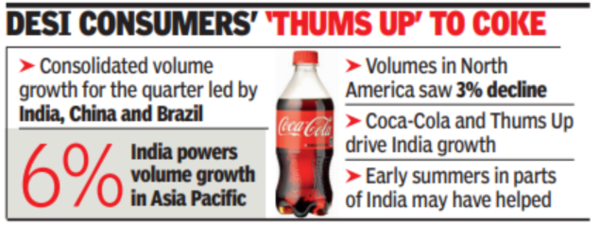
MUMBAI: India, alongside China and Brazil, drove volume growth for American beverage giant Coca-Cola in the March quarter even as the company contended with a weakening consumer sentiment in developed markets like the US, which weighed on its share of volume gains in those regions.The firm’s consolidated volume grew 2% during the quarter. Asia Pacific recorded a 6% volume growth, led by India, while volumes declined by 3% in North America. Coca-Cola reports unit case volume, which factors in the total number of unit cases of beverages sold by the company and its bottling partners. “We saw good momentum in Asia Pacific, driven by a good quarter in India in particular. We saw strong volume growth across our portfolio in India and increased household penetration,” said James Quincey, Chairman and CEO at The Coca-Cola Company during the firm’s earnings call on Tuesday.
The company’s net revenues declined by 2% to $11.1 billion due to currency headwinds and the impact of refranchising bottling operations. “In India, trademark Coca-Cola and Thums Up, a cherished regional brand, are fuelling consumers and contributed to double-digit volume growth for the market in the first quarter,” the company said. Summers arrived early in parts of India this year, helping beverage players. Coca-Cola is betting on its all-weather strategy to power growth amid macro-uncertainty posed by tariffs. “We are not immune to global trade dynamics. The imperative is to make global brands locally relevant,” executives said.The company competes with global rival PepsiCo and regional players like Campa Cola in India. Coca-Cola’s winning strategy for India is to tap into its portfolio of local brands for the market like Thums Up, Maaza and Limca which the company had earlier indicated, gives it enough leverage to fight rivals. “Our portfolio in India is strong if not stronger than just about anywhere in the world because we have the benefit of local brands in our portfolio…the good thing is we have been in business for a long, long time and over that period have built our playbooks as to how to compete, how to win and we are more excited about the prospects for our business in India right now than we have ever been,” CFO John Murphy had said during his trip to India earlier this year.
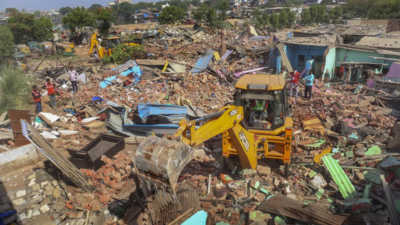
AHMEDABAD: The Gujarat high court on Tuesday refused to stay the demolition drive carried out by the authorities near Chandola Lake, from where the city police rounded up more than 900 persons, suspecting them to be illegal migrants from Bangladesh three days ago. Eighteen residents of the Siyasatnagar locality at Chandola filed a petition on Monday evening and sought urgent intervention by the HC by staying the demolition, which already began. Justice Mauna Bhatt granted them an urgent hearing on Tuesday when the high court was functioning on account of a public holiday. Their counsel, Anand Yagnik, submitted that the petitioners are Indian citizens and lived in this area for nearly 50 years, and they have ample documents to establish their citizenship. The demolition process was opposed on the ground that the residents were not issued any eviction notice as mandated by the Supreme Court order. It was contended that the petitioners are not the owners of the land, but there is also no demarcation and delimitation map under the CRZ notification to indicate that they are occupying the waterbody. Moreover, it was contended that the residents be given the benefit of the Slum Rehabilitation Scheme of the State of Gujarat 2010, as amended in 2013, and they should not be evicted without providing alternative accommodation. It was also contended that the demolition drive was undertaken on the pretext of taking action against illegal Bangladeshi immigrants, but such an action is illegal until a competent authority decides about the citizenship of the suspected people. The state govt opposed the plea by arguing that the land occupied is a notified waterbody, and this kind of unauthorised occupation and construction does not warrant any prior eviction notice. Moreover, it argued that the Chandola locality, according to an intelligence report, is a threat to the security of the state. After hearing the arguments, Justice Mauna Bhatt refused to stay the demolition on the basis of the state govt’s contention that the petitioners reside on the notified land. According to an SC judgement, long-standing occupation does not give any right to the illegal encroacher, Advocate Yagnik said. The HC has kept the petition pending, and further hearing will take place in June.
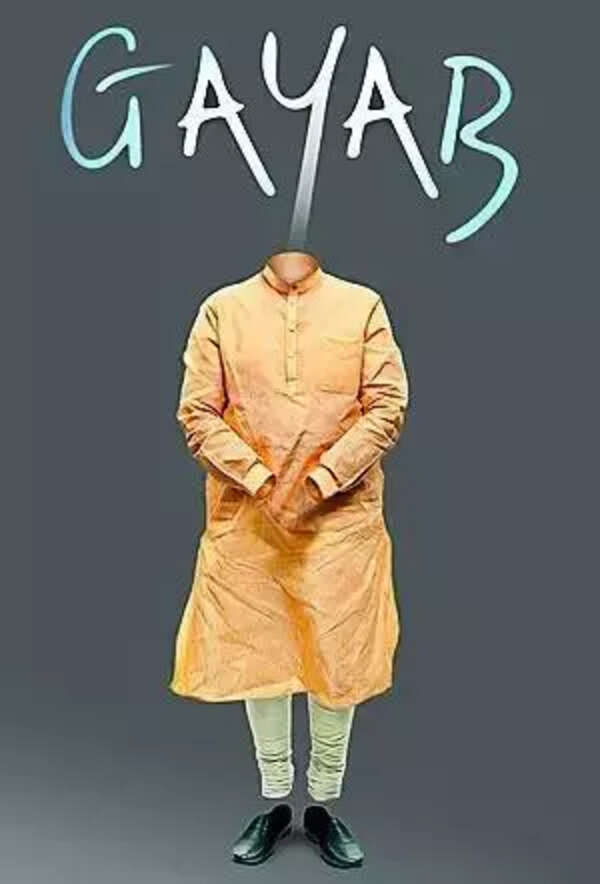
NEW DELHI: Congress’ pictorial post on social media, seemingly portraying PM Modi without his head, caused a furore in BJP. The governing party said the image echoed the Islamist “sar tan se juda” call recently made by a Pakistan diplomat in London, who had mocked Indian diaspora with a throat-slitting gesture. Congress posted the image with “gayab jimmedari ke samay (missing instead of taking responsibility)” as the caption on its X handle by cropping Modi’s head out of what appeared to be an old picture of the PM, with his trademark clothes forming the outline. It did not mention the PM’s name. Congress defended the post through the day, arguing that it did not show anyone’s name or face. However, with the image going viral on social media, the party deleted it in the evening. Significantly, it was only on Monday that the party, alarmed at its netas making controversial remarks like the one debunking the account of kin of Pahalgam victims that terrorists had marked out non-Muslims before killing them, had said only party chief Mallikarjun Kharge and LoP in Lok Sabha Rahul Gandhi represented the party’s stand. BJP spokesperson Gaurav Bhatia said the post once again exposed sincerity of Kharge’s and Rahul’s claim of supporting govt in responding to Pakistan-sponsored terrorism. “This is not an innocent post by Congress. It is a sinister design to weaken the integrity of Bharat,” he told at a presser. “On one hand, PM Modi and Army have taken a vow to destroy the power which has looked at India with an evil eye, while on the other, its the evil of terror demonic power… Pakistan’s thinking and Congress’s thinking,” Bhatia alleged, mocking Congress as “Lashkar-e-Pakistan Congress”. BJP IT dept head Amit Malviya said on X, “Congress leaves little doubt with its use of ‘sar tan se juda’ imagery. This is not a political statement; it is a dog whistle aimed at its Muslim vote-bank and a veiled incitement against the PM.”
Stick to party stand: Congress
Following the controversy over the ‘Gayab’ post, Congress on Tuesday instructed all party netas and workers to stick to the CWC resolution on the Pahalgam attack and said any deviation would be seen as a serious breach of discipline. It is learnt that AICC general secretary KC Venugopal has written to all state units and party functionaries in this regard. Congress also took down the ‘Gayab’ post amid a feeling within the party that BJP’s campaign alleging “sar tan se juda” had undercut the mileage the party had sought to generate through letters to the PM seeking a special session of Parliament on the terror hit. The party was also disappointed that the post, with allegations of being “distasteful”, dented the positive feedback about the party’s stand extending support to the govt over the terror attack. The delayed response in taking down the post was said to be due to the leadership’s late focus on the issue. Earlier, AICC social media chairperson Supriya Shrinate defended the post, with a detailed video of how Modi has been “missing” since the attack.
Pakistan plans to take India to international court over water treaty.
India suspended the Indus Waters Treaty after recent terror attacks.
ICJ and World Bank lack jurisdiction to resolve treaty disputes effectively.
New Delhi:
Pakistan, thirsty for some legal action over New Delhi’s move to place the Indus Waters Treaty in “abeyance”, is planning to take India to international court in a desperate attempt to find some reprieve.
The agreement between the two neighbouring countries, signed in 1960, had lived to see the day through three wars fought in 1965, 1971, and 1999. But outraged over the most-recent terror attack in which dozens of civilian tourists were killed by Pakistan-linked terrorists in Jammu and Kashmir’s Pahalgam, New Delhi swiftly acted by taking stern diplomatic measures to place the water treaty on hold till such time that “Pakistan credibly and irrevocably abjures its support for cross-border terrorism.”
Pakistan, stumped by the move, said that “any attempt to stop or divert the flow of water belonging to Pakistan will be considered as an act of war”.
PAKISTAN’S ‘4-POINT PLAN’
Staring at a water crisis, Pakistan, which is already severely parched, is now ready to run pillar to post to find a solution to bring much-needed respite to tens of millions of its citizens. Aqeel Malik, the Minister of State for Law and Justice, told news agency Reuters late on Monday that Islamabad is working on plans for at least three different legal options, including raising the issue at the World Bank – the treaty’s facilitator.
Islamabad is considering taking action at the Permanent Court of Arbitration or at the International Court of Justice in the Hague where it could allege that India has violated the 1969 Vienna Convention on the Law of Treaties, the minister said. “Legal strategy consultations are almost complete,” Mr Malik said, adding that the decision on which cases to pursue would be made “soon” and would likely include pursuing more than one avenue.
Mr Malik further stated that a fourth diplomatic option that Islamabad was considering was to raise the issue at the United Nations Security Council. “All the options are on the table and we are pursuing all appropriate and competent forums to approach,” he said.
The Indus Waters Treaty basically states that the distribution and use of waters from the Indus River and its tributaries – the Sutlej, Beas, Ravi, Chenab, and Jhelum – would be shared by India and Pakistan. While India would get waters from the Sutlej, Beas, and Ravi; Pakistan would get the waters from Chenab, Jhelum, and Indus. India, being the upper riparian state, technically has rights to the waters of all six rivers, but the agreement allowed Pakistan to get the flow of waters of the ‘western rivers’.
Mr Malik blamed India for ending the Indus Waters Treaty own its own, saying that “The treaty cannot be ended unilaterally”, adding that “there is no such provision within the treaty.”
But Pakistan’s recourse will likely not bear fruit. Here is a look why:
WHY INTERNATIONAL COURT OF JUSTICE CANNOT ARBITRATE
The jurisdiction of the ICJ is based entirely on the consent of States (nations) and not on a universal obligation. States need to declare its acceptance in full or in part, or through declarations of compulsory jurisdiction.
On September 27, 2019, India, which abides by the international rules-based order, had submitted a declaration recognizing the jurisdiction of the Court as “compulsory”. However, in the declaration signed by Dr S Jaishankar, India had listed down 13 exceptions wherein ICJ shall not have jurisdiction over India.
In India’s declaration, Dr Jaishankar stated that “I have the honour to declare, on behalf of the Government of the Republic of India, that they accept, in conformity with paragraph 2 of Article 36 of the Statute of the Court, until such time as notice may be given to terminate such acceptance, as compulsory ipso facto and without special agreement, and on the basis and condition of reciprocity, the jurisdiction of the International Court of Justice over all disputes other than the following”.
Out of the 13 points, point number two reads, ICJ shall not have jurisdiction for “disputes with the government of any State which is or has been a Member of the Commonwealth of Nations”. This means that Pakistan, which is a Commonwealth nation, cannot take India to the ICJ, since its jurisdiction is not valid in the case, thereby making any such attempt by Islamabad null and void.
Similarly, point number five of the same declaration states that ICJ shall not have any jurisdiction in “disputes relating to or connected with facts or situations of hostilities, armed conflicts, individual or collective actions taken in self-defence, resistance to aggression, fulfilment of obligations imposed by international bodies, and other similar or related acts, measures or situations in which India is, has been or may in future be involved, including the measures taken for protection of national security and ensuring national defence.”
For the Permanent Court of Arbitration, a similar consent applies, thereby ruling it out entirely.
WHY WORLD BANK CANNOT INTERVENE
The World Bank also does not have any jurisdiction over the Indus Waters Treaty besides playing the limited role of a mediator or adviser to both parties in the treaty. The World Bank is not a keeper of the treaty, and can only encourage dialogue in times of a disagreement.
In 1960 too, the World Bank had only brokered the Indus Waters Treaty between India and Pakistan as a mediator.
While the global financial body facilitates appointments of neutral experts and chairs of courts of arbitration, it is limited to the role of an appointer of such posts and cannot be responsible for the treaty’s overall management or its enforcement.
Indeed, the World Bank can facilitate a dispute resolution mechanism, but only in the capacity of a neutral adviser, with its non-binding suggestions and recommendations being possibly rejected. Hence the global body cannot be considered a guarantor of the treaty. It can neither enforce it, nor unilaterally determine its interpretation.
Twenty-six people, including a foreign national, were shot dead by terrorists after they were asked to prove their allegiance to Islam. The targeted killings, which were religiously-motivated, have been condemned globally. Kashmiris protested throughout the Union Territory condemning terror and blaming Pakistan for it, while fellow Indians were equally infuriated over the cowardly act.
The attack was claimed by Pakistan-based terror group The Resistance Front – an offshoot of the banned Lashkar-e-Taiba.
Canada Election Results 2025 Highlights: Prime Minister Mark Carney-led Liberal party won Canada’s election on Monday, according to local media projections. The public broadcaster CBC and CTV News both projected the Liberals would form Canada’s next government, but it was not yet clear if they would hold a majority in parliament. Liberals got a fourth consecutive term–a rarity in Canadian politics– after Carney convinced voters that his experience managing economic crises prepared him to confront US President Donald Trump.
The American President’s trade war and threats to annexe Canada, which he renewed in an election day social media post, outraged Canadians and made dealing with the United States a top campaign issue. Carney, 60, who had never held elected office and only replaced Justin Trudeau as prime minister last month, anchored his campaign on an anti-Trump message.
He previously served as central bank governor in both Britain and Canada and persuaded voters that his global financial experience has prepared him to guide Canada through a trade war. Carney has promised to expand overseas trading relations to curb Canada’s reliance on the United States.
Trudeau’s departure was also crucial to the Liberal win, which capped one of the most dramatic turnarounds in Canadian political history.
Unaccompanied Indian minors, often as young as six, are increasingly found at US borders with Mexico and Canada, revealing a troubling trend of families using children to gain asylum.
A disturbing trend has emerged at the US borders with Mexico and Canada, where young Indian children, often no older than six, are being found alone and frightened, without documents or guardians. These children carry a small piece of paper with their parents’ names and contact details, highlighting the growing phenomenon of unaccompanied Indian minors attempting to enter the US illegally.
According to US Customs and Border Protection data, between October 2024 and February 2025, 77 unaccompanied Indian minors were apprehended at the US borders. The majority were found at the southern land border with Mexico, while a significant number crossed from Canada, braving harsh weather conditions, per a Times Of India report. This trend is part of a larger pattern, with 1,656 unaccompanied Indian minors apprehended between 2022 and 2025.
Immigration experts suggest that these children are being used as part of a broader strategy by families to secure residence in the US. In some cases, parents send their children ahead, using their presence as a reason to apply for asylum later. Others claim that the children are sent with groups of adults, only to be abandoned near border checkpoints, where they are picked up by authorities and eventually reunited with their parents.
A person associated with illegal immigration told TOI, that kids act as ‘green cards’ for their parents, who are illegal immigrants, “In most cases, their parents first reach the US illegally and then they send for their children with other illegal immigrants to the US,” he said. “When their children are caught at the borders, they seek refuge for the minors and themselves — which they usually get on humanitarian grounds.”
The use of children in this way has raised concerns about exploitation and human trafficking. Sources indicate that some families in Gujarat have admitted to following this route, with one couple, from Kadi in Mehsana, where the father, a lawyer, shared how he and his wife sent their two-year-old son to join them in the US after moving there illegally in 2019. The child was eventually reunited with his parents after being spotted by US security agency officers near the Texas border.
“All sources of transport were disrupted because of the pandemic. I told my cousin who was travelling to the US (illegally) in 2022 to bring my child there, who had turned five by then. My cousin did as told and left my son at the border near Texas, where he was spotted by a US security agency officer”, the father said.
The trend appears to be particularly prevalent in rural Gujarat, with villages like Jhulasan and Mokasan seeing a noticeable uptick in minors being sent to the US. While US immigration policy shifts may impact this trend, the flow of unaccompanied minors has not stopped, with children continuing to make the perilous journey to the US border, often with nothing but a handwritten note as their only link to family.
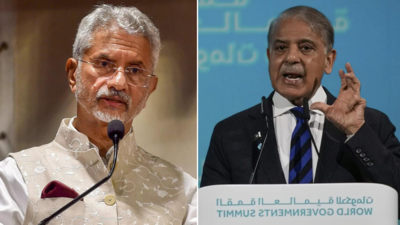
NEW DELHI: UN Secretary General Antonio Guterres spoke to external affairs minister S Jaishankar and Pakistan PM Shehbaz Sharif separately and strongly condemned the Pahalgam terror attack on April 22 that killed 25 Indians and a Nepalese citizen. “In his phone calls, the Secretary General reiterated his strong condemnation of the April 22 terrorist attack that took place in Jammu and Kashmir. The Secretary General noted the importance of pursuing justice and accountability for these attacks through lawful means,” Stéphane Dujarric, spokesman for the secretary-general said. “The Secretary General offered his good offices to support any de-escalation efforts,” Dujarric added. Speaking about the conversation, Jaishankar said that the two leaders “agreed on the importance of accountability”. “Received a call from @UN SG @antonioguterres. Appreciate his unequivocal condemnation of the terrorist attack in Pahalgam. Agreed on the importance of accountability. India is resolved that the perpetrators, planners and backers of this attack are brought to justice,” he said.
‘Counsel India to exercise restraint’
Amid rising tensions between the two nations, Pakistan PM Shehbaz Sharif urged UN chief Antonio Guterres to “counsel India to act responsibly and exercise restraint”. “While underscoring that Pakistan shall defend its sovereignty and territorial integrity with full force in case of any misadventure by India, the Prime Minister encouraged the UN Secretary-General to counsel India to act responsibly and exercise restraint,” Sharif’s office said in a statement, repeating Pakistan’s rejection of India’s allegations. Meanwhile, PM Modi, during a high-level meeting earlier on Tuesday, granted the Indian armed forces full authority to determine the timing, targets, and method of response to the deadly terrorist attack. Emphasizing the government’s firm stance, PM Modi declared that delivering a decisive blow to terrorism remains a national priority.
A young woman has survived after jumping out of a fifth-floor Ahmedabad building to escape fire.
Around 20-25 people have been rescued. Fire engines are on the spot.
Screaming all the way down, the unnamed woman jumped off her apartment balcony in Aatrey Orchid in Indira Bridge area as a fire ripped through the building, showed a video. She was safely caught by people waiting on the ground.
Orange flames leaping out of the building and huge, black plumes of smoke could be seen rising into the sky.
The fire broke out in the air conditioning system of a flat, as per initial reports. It soon spread to the apartment’s ‘C’ and ‘D’ wings.
In another video, a man can be seen lowering a girl on to another balcony where a man is on the edge and catches the little girl and saves her.
A woman, in yet another video, can be seen using a rope to escape the burning building.
The injured have been admitted to a local hospital.