Trending

After Pahalgam: India’s Options – By Shashi Tharoor


A major terrorist attack from across the border has once again plunged our nation into a crisis, provoking nationwide anger. This time it is the cynical murder of 26 tourists in Pahalgam. But we have seen this movie once too often, with antecedents going back to the 1980s and 1990s.

The script is tiresomely familiar: Islamist groups created, armed, trained, and guided from Pakistan, often directed by the ISI, kill innocents in India; Pakistani authorities deny involvement even as groups based on its soil “take credit” for the attacks; the world denounces the crime; India’s response is carefully calibrated so as not to provoke a larger war; and after a period of tension, everyone settles back to business-as-usual. Until it happens again.

This pattern cannot be repeated forever.

Over the past three decades, there have been numerous instances of terrorist attacks in India linked to Pakistan-based terror groups. The Pakistan-based Lashkar-e-Taiba (LeT) stars in most of them, along with the Jaish-e-Mohammed (JeM) and hybrid offshoots calling themselves names like the People’s Anti-Fascist Front (PAFF) and The Resistance Front (TRF), with a guest-artiste appearance for the “Indian Mujahideen”.

The TRF claimed responsibility for Pahalgam, then withdrew the claim in the face of worldwide condemnation. But the denials are disbelieved because of the litany of Pakistani-directed terrorist attacks this century following the Kargil conflict (from May-July 1999 into 2000).

Latest and Breaking News on NDTV

A partial list of just the most significant episodes makes for painful reading:

Chattisinghpora Massacre, 2000

On March 20, 2000, in the village of Chattisinghpora, Anantnag district, Jammu and Kashmir, 15-17 LeT gunmen entered the village and ordered all Sikh men and boys to assemble at the village gurdwara. Thirty-five of them were systematically shot and killed. The massacre occurred on the eve of the then US President Bill Clinton’s visit to India, and was clearly meant to send a signal.

Indian Parliament Attack, 2001

On December 13, 2001, terrorists from JeM and LeT attacked the Indian parliament, resulting in the deaths of 14 people.

Kaluchak Massacre, 2002

On May 14, 2002, near Kaluchak in Jammu and Kashmir, three LeT militants dressed in combat uniforms attacked a Himachal Road Transport Corporation bus traveling from Manali to Jammu, killing seven passengers. They then entered the family quarters of an Indian Army camp and fired indiscriminately, killing 23 people, including 10 children, eight women, and five army personnel. The attack resulted in a total of 31 deaths and 47 injuries.

Akshardham Temple Attack, 2002

On September 24, 2002, LeT attacked a Hindu temple in Gujarat, resulting in over 30 deaths.

Delhi Bombings, 2005

On October 29, 2005, LeT and associated groups triggered multiple bombs across Delhi, killing over 60 people.

Mumbai Train Bombings, 2006

On July 11, 2006, LeT terrorists set off several bombs on local trains, killing over 200 people.

Mumbai Attacks, 2008

On November 26, 2008, 10 members of LeT carried out coordinated shootings and bombings across Mumbai, killing 175 people and injuring over 300. The attack lasted till November 29, when the terrorists were all killed and one, Ajmal Kasab, was captured alive. The attackers were proven to be trained and directed by Pakistani military and intelligence agencies.

German Bakery Bombing, 2010

An LeT terrorist attack on the popular German Bakery in Koregaon Park, Pune, on February 13, 2010 killed 17 people and injured over 60 others. An LeT offshoot calling itself the “Indian Mujahideen” claimed responsibility, even though it was widely assumed to be a front for Pakistan.

Pathankot Airbase Attack, 2016

On January 2-5, 2016, militants from JeM attacked the Pathankot Airbase in Punjab, leading to the deaths of seven Indian security personnel.

Uri Attack, 2016

On September 18, 2016, near the town of Uri in Jammu and Kashmir, four JeM terrorists attacked an Indian Army brigade headquarters. The attackers lobbed 17 grenades in three minutes, causing significant damage. The attack resulted in the deaths of 19 Indian soldiers and injuries to up to 30 others. It was one of the deadliest attacks on Indian security forces in Kashmir in two decades.

Pulwama Attack, 2019

On February 14, 2019, a suicide bomber from JeM targeted a convoy of Indian paramilitary personnel in Pulwama, Jammu and Kashmir, killing 40 jawans.

Latest and Breaking News on NDTV

India’s strategy to respond effectively to such cross-border terrorism has gradually evolved. In 2001, in response to the Indian parliament attack, India mobilised its military forces along the border with Pakistan in a standoff known as Operation Parakram. Although it did not lead to a direct military action, it was a significant show of force. But in 2008, after 26/11, India decided against a military response, focusing instead on diplomatic efforts to isolate Pakistan internationally and on increased counter-terrorism measures within the country.

The 2016 Pathankot attack came within a week of Prime Minister Narendra Modi’s surprise visit to Lahore to attend Pakistani leader Nawaz Sharif’s birthday celebrations and his granddaughter’s wedding. So disbelieving was New Delhi that Pakistan could have reciprocated its friendship in such a manner that the government even invited Pakistan to be associated with the inquiry into the attack. The Pakistani “experts” who came to India went back and claimed that “the Indians had done it to themselves”. That was the last straw.

Hardened by betrayal, India turned its face against any further accommodation with the killer-despatchers across the border. Its responses became tougher: After Pathankot, India conducted a series of counter-terror operations in Jammu and Kashmir and increased security measures at key installations.

After Uri, India carried out surgical strikes across the Line of Control (LoC) on September 29, 2016, targeting militant launchpads in Pakistan-Occupied Kashmir (POK). And after Pulwama, India conducted an airstrike on February 26, 2019, targeting a JeM training camp in Balakot, Pakistan – the first time Indian warplanes penetrated Pakistani airspace since the 1971 war.

What could it do to avenge Pahalgam?

There is no doubt that military retribution will follow. Prime Minister Narendra Modi has made that amply clear to the world. Despite addressing an audience in the Hindi heartland of Bihar, he declared in English – for the benefit of the global audience – that “India will identify, track and punish every terrorist and their backers and we will pursue them to the ends of the Earth,” promising “a punishment bigger than they can imagine.”

The nation demands it, and stands solidly behind the government as it weighs its options to make Pakistan pay for orchestrating the massacre.

It may not be a surgical strike of commandos going behind enemy lines to take out terror nests as was done after Uri. Or a rerun of an aerial attack deep inside Pakistan’s Balakot. And though some military action is inevitable, it will not be purely military.
Latest and Breaking News on NDTV

Ever since the December 2001 terrorist attack on our parliament, the template has been clear. As then-foreign minister Jaswant Singh wrote, the objectives were: to send a message to Pakistan, to contain Islamabad diplomatically, and to defeat terrorism on the ground. To this end, he wrote, the internal challenge “was to carry the nation’s mood, to contain its belligerence, its desire for revenge and retaliation, but to give it a sense of achievement.” The external challenge was “to carry conviction with and thus carry the opinion of the international community.”

Any Indian response to Pahalgam will therefore involve a mix of measures targeting Pakistan, the international community, and domestic public opinion. India’s message must teach Pakistan’s military leadership that their criminal behaviour will exact a heavy price.

The Balakot airstrike let terrorists and their masters know that India has the will to pursue them deep inside Pakistan and would not shy away from using its military might. Defence Minister Rajnath Singh said at the time: “Our approach to terrorism was and will remain a judicious combination of clinical military action and [a] mature and responsible diplomatic outreach.”

Our response to Pahalgam must again be the same. One problem is that the relationship between the two countries is already so bad that there is not much more that India can do of a non-military nature to convey its disapproval of Pakistan.

At the time of Pahalgam, the two countries had no high commissioners in place; a total absence of high-level contacts; diplomatic relations downgraded and respective high commissions downsized; a ban on trade; a freeze on civil society, cultural and sporting contacts; and a shutdown of all usual modes of travel such as bus, train, or flights between the two countries.

To this, India has now added several diplomatic actions, including suspending (“keeping in abeyance”) the 64-year-old the Indus Waters Treaty, scaling down diplomatic missions by expelling more Pakistani diplomats, ending visa services for Pakistani nationals, closing the Attari-Wagah border and ordering Pakistani citizens, including those with Indian relatives and those here for medical treatment, to leave the country.

Yet, the 2021 ceasefire along the LoC was not formally revoked (even though it has already begun to fray, with increased reports of cross-border firing). And the Kartarpur corridor for Sikh pilgrims was not shut. This signals a measured strategy-assertive and resolute but not reckless or impulsive.

Latest and Breaking News on NDTV

Pakistan has responded predictably, by mirroring all these actions, closing airspace to Indian aircraft, and threatening to abandon past treaties, including the Simla Agreement.

Indian security forces have also intensified operations against terrorists in Jammu and Kashmir, demolishing houses linked to terrorists. This crackdown is part of a broader effort to address the threat posed by groups with alleged ties to Pakistan.

What else can be done?

India could conduct surgical strikes across the Line of Control (LoC) targeting militant launch pads in POK. Our air force could target terrorist training camps and infrastructure within Pakistan. A larger air-strike than Balakot is one possibility; targeted missile attacks on the terrorists’ handlers and their bases in Pakistan, another.

While an overt message needs to be sent, covert operations will also have to be enhanced. Key militant leaders and infrastructure within Pakistan cannot be allowed to feel secure.

India must also employ cyber warfare tactics to disrupt militant communications and operations. Though the previous operations involved deploying only the Army and IAF, the Navy’s assets can easily be mobilized and deployed in the northern reaches of the Arabian Sea, in international waters, to pressure Pakistani merchant shipping, leading to higher insurance premiums for trade with that country. Squeezing an economy already in meltdown will hit the Pakistani elite where it hurts.

Diplomatically, New Delhi will rally international support to pressure Pakistan’s military establishment. Promoting sanctions against identified military officials may not be easy, but public exposure of the ISI terror nexus in international forums should isolate Pakistan diplomatically and add to the opprobrium the Pakistani military endured after the Osama Bin Laden episode.

Beyond external responses, India must fortify its domestic security apparatus, particularly in Kashmir. The objective transcends mere deterrence; it encompasses reassurance. Both tourists (who must be encouraged to keep coming) and residents must feel secure.

Latest and Breaking News on NDTV

In the short term, an expanded security footprint may be inevitable. But it should be deployed with sensitivity and concern for the well-being of the ordinary people of Kashmir, most of whom are victims, not accomplices, of the terrorists claiming to be acting in their name.

The successful elections in Jammu and Kashmir marked a significant milestone in restoring democratic legitimacy. This momentum must be sustained. Equally, the contagion of communalism must be firmly curbed. Hate crimes against Kashmiris, or attacks on Indian Muslims, will only serve the terrorists’ aims.

The horror of Pahalgam serves as a stark reminder that the policy of “benign neglect” that India had pursued towards Pakistan will not work indefinitely. We need to be tough in order to both punish and deter transgressions from their side. We need to be decisive enough to prove to the malign men in uniform who run Pakistan that violence in Kashmir will yield them no rewards.

And then – but only then – we need to engage again with those in Pakistan who understand that they have no choice but to learn to live in peace with India.

Sadly, that day is not yet here.

(Shashi Tharoor has been a Member of Parliament from Thiruvananthapuram, Kerala, since 2009. He is a published author and a former diplomat.)

Disclaimer: These are the personal opinions of the author


Source link

Telangana Transfers IAS Officer Who Reshared AI Image In Hyderabad Land Row


Hyderabad:

Senior Indian Administrative Service (IAS) officer Smita Sabharwal, who was recently summoned by the police for reposting an AI-generated Ghibli image on social media regarding the cutting of trees on 400-acre land near Hyderabad Central University, is among 20 officers transferred by the Telangana government on Sunday.

Ms Sabharwal, who had appeared before Cyberabad police a week ago, had questioned the “selective targeting”. The 2001-batch IAS officer had asked if the same action was initiated against 2,000 individuals who reshared the same post.

Ms Sabharwal, currently Special Chief Secretary, Youth Advancement, Tourism & Culture (YAT&C) and Director, Archaeology, has been transferred and posted as Member Secretary, Telangana Finance Commission, a post she was holding before her transfer to YAT&C in November 2024.

As the secretary to the Chief Minister, she was a powerful officer under the previous BRS government. After the Congress came to power, she was transferred out of the Chief Minister’s Office (CMO) and posted as Member Secretary, Telangana Finance Commission.

Jayesh Ranjan, Special Chief Secretary, ITE&C and Sports Department, has been transferred and posted as Special Chief Secretary & CEO, Industry & Investment Cell in the CMO and Smart Proactive Efficient and Effective Delivery (SPEED).

The 1992-batch IAS officer has also been given additional charge of the post of Special Chief Secretary, YAT&C Department and Director, Archaeology.

Sanjay Kumar, Special Chief Secretary, Labour, Employment, Training & Factories (LET&F) Department is transferred and posted as Special Chief Secretary, Industries & Commerce Department and ITE&C and Sports Department.

Dr. Shashank Goel, Director General, Dr MCR HRD Institute, has been transferred and posted as Vice Chairman, Centre for Good Governance. He is also placed in full additional charge of the post of Director General, EPTRI, relieving Ahmad Nadeem from full additional charge.

M. Dana Kishore, previously Principal Secretary of the Municipal Administration and Urban Development (MA&UD) Department, has been posted as Principal Secretary of the Labour, Employment, Training & Factories Department. He has also been placed in full additional charge of Commissioner, Labour; Director, Insurance Medical Services; and Director, Employment & Training.

Dana Kishore will continue in full additional charge of the post of Principal Secretary to the Governor.

Ilambarithi K., who was the Commissioner of the Greater Hyderabad Municipal Corporation (GHMC), has been posted as Secretary, Metropolitan Area & Urban Development Department, which covers the Hyderabad Metropolitan Development Authority (HMDA) limits.

RV Karnan, Director of Health and Family Welfare, will take over as the new Commissioner of the GHMC.

TK Sreedevi, Commissioner and Director of Municipal Administration, has been posted as Secretary in the Municipal Administration Department for areas outside HMDA limits. She will also continue to hold full additional charge as Commissioner and Director of Municipal Administration for municipalities and corporations outside the Outer Ring Road (ORR) area.

EV Narsimha Reddy, Director, School Education, has been posted as Additional CEO, Industry & Investment Cell & SPEED. He is also placed in full additional charge of the post of Managing Director, Musi River Development Corporation Ltd (MRDCL), relieving Dana Kishore.

(Except for the headline, this story has not been edited by NDTV staff and is published from a syndicated feed.)


Source link

Doctor, 25, Goes To Delhi For Exam, Suffers Burn Injuries In Haryana, Dies


A 25-year-old medical graduate, Bhawana Yadav, from Rajasthan preparing for postgraduate medical studies in Delhi suffered severe burn injuries while she was in Hisar. After her mother was informed, she took her daughter to Jaipur, where the young doctor died during treatment on Thursday.

The circumstances surrounding her death are fuzzy.

Gayatri Yadav, her mother, has filed a zero FIR in Jaipur. The same has been forwarded to Hisar Civil Lines Police station for further investigation.

Bhawana Yadav completed her medical studies from Philippines in 2023. She was preparing for the Foreign Medical Graduate Examination, a medical licensing exam in India, compulsory for Indian citizens and OCI (Overseas Citizen of India) cardholders who obtained their MBBS degree abroad.

According to the mother’s complaint, the 25-year-old was attending online classes and travelling to Delhi weekly for tests. On April 21, she was in Delhi for an exam. In Delhi, Bhawana used to stay with her sister, who is preparing for the Civil Services Exam. On April 21 and 22, Bhawana stayed with her sister and appeared for her exams. On April 23, Bhawana called her mother to say she would return by 24th morning, but never did.

On April 24, a man named Umesh Yadav called the medical graduate’s mother to inform her that Bhawana suffered burn injuries and was admitted to Soni Hospital in Haryana’s Hisar.

Soon after, the mother reached Hisar. The hospital was unclear where Bhawana was found or the circumstances leading to her condition. Due to the severity of her injuries, the 25-year-old was later shifted to SMS Hospital in Jaipur, where she died during treatment on the night of April 24.

The mother has claimed that there were sharp weapon injury marks on her daughter’s abdomen. She further alleged that her daughter was stabbed and then set on fire, suggesting she was murdered. Bhawana’s laptop, mobile phone and other valuables are missing, she further claimed.

(With inputs from Himanshu Sain)


Source link

Shashi Tharoor Reacts To Bilawal Bhutto’s “Blood Will Flow” Remark


Thiruvananthapuram:

The nation has been demanding military action against Pakistan after the Pahalgam terror attack, and some visible military response is unavoidable, Congress MP Shashi Tharoor has said as tensions soared between the two countries after the massacre of 26 civilians in Jammu and Kashmir.

Calling it a “long pattern” seen over a quarter century, the former diplomat said that Pakistan always denies responsibility for terror attacks in India despite training and arming terrorists across the border.

“I think it’s very clear that there is a pattern. People are encouraged, trained, armed, and often guided from across the border. Then Pakistan denies all responsibility. Eventually, responsibility is established and proven, including by foreign intelligence agencies,” he told the news agency ANI.

Read: “Anytime, Anywhere”: Indian Navy’s Message With Arabian Sea Warship Visuals

Mr Tharoor pointed out there was retaliation from the Indian side after the 2016 Uri attacks and 2019 Pulwama attacks, and suggested that this time, Pakistan might face a stricter response from India.

“After Uri, the government did a surgical strike across the border, and after Pulwama, there was the Balakot air strike. Today, I think we are going to see more than that. It is clear that while we have a range of options – diplomatic, economic, intelligence sharing, covert, and overt action. Some sort of visible military response is unavoidable,” said the MP from Thiruvananthapuram.

“The nation is demanding it and expecting it. No one knows what it will be, where it will be, or when it will be. But I am convinced there will be some response,” he added.

Mr Tharoor also responded to Pakistan Peoples Party chief Bilawal Bhutto-Zardari’s “blood will flow” remark over India suspending the Indus Water Treaty.  

“This is just inflammatory rhetoric. Pakistanis must understand they simply cannot kill Indians with impunity. We don’t want to do anything to Pakistanis. But if they do something to us, then be prepared for a response. If blood is going to flow, it will flow possibly more on their side than ours,” said Mr Tharoor.

Read: In ‘Mann Ki Baat’, PM Modi’s Big Message Over Pahalgam Attack

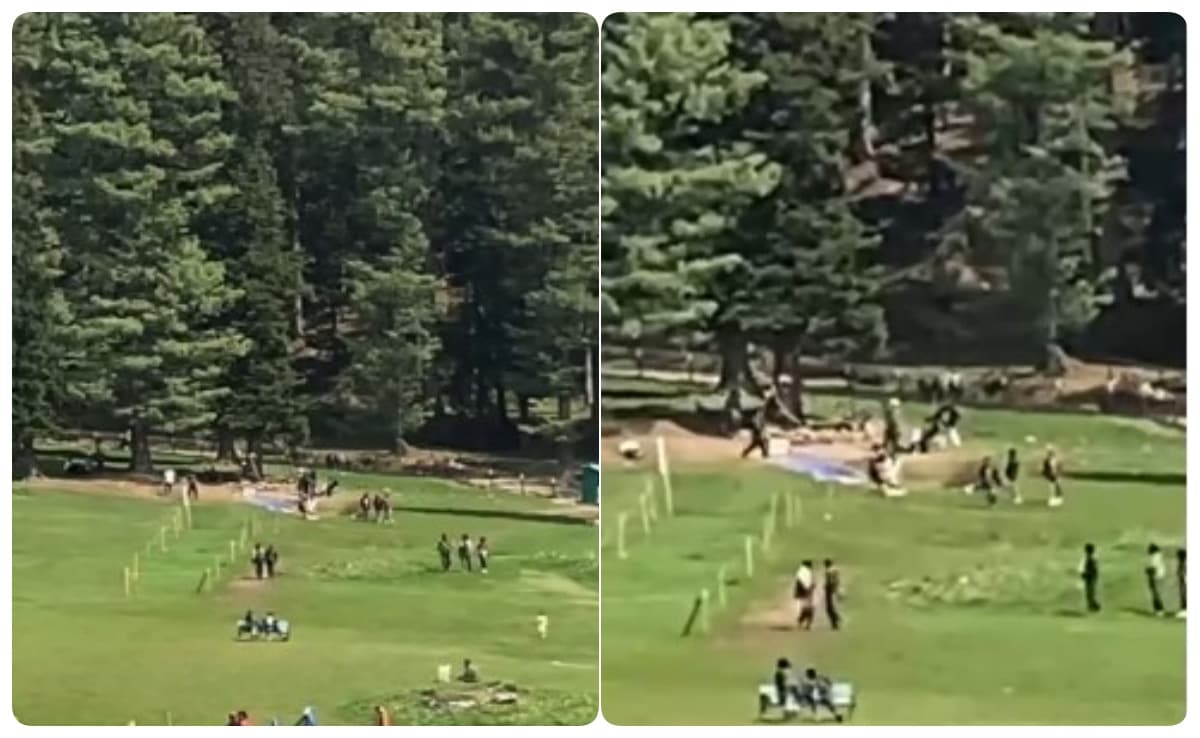
Tuesday’s terror attack in the scenic meadows of Pahalgam, known as Mini Switzerland, was the deadliest since the scrapping of Article 370 in 2019. The role of a terror group linked to the Pakistan-based Lashkar-e-Taiba has emerged after the attack.

India and Pakistan’s relations have soured further with the two countries resorting to retaliatory measures, including the cancellation of visas. Tensions have also soared along the Line of Control, with Pakistan regularly violating the ceasefire.

India has ended the Indus Water Treaty, while Pakistan, which has been repeatedly accused of being a “global epicentre of terrorism”, has suspended all bilateral deals with India, including Simla agreement.


Source link

China Closely Following “Evolving India-Pakistan Situation”: State Media


New Delhi:

China’s Foreign Minister Wang Yi in a phone call with his Pakistani counterpart Mohammad Ishaq Dar on Sunday said his country is closely following the situation between India and Pakistan, China’s state media Global Times said in a report.

Wang told Mr Dar that China supports an impartial investigation into the terror attack in Jammu and Kashmir’s Pahalgam that killed 26 tourists.

China also hopes both sides will exercise restraint, move toward each other, and work to de-escalate tensions, Wang, who is also a member of the Political Bureau of the Communist Party of China Central Committee, said during the phone call.

The Pakistani leader briefed Wang on the latest developments regarding tensions between the two neighbours, following the terror attack.

India has already taken a series of actions against Pakistan, such as suspending the Indus Waters Treaty and banning all Pakistani visas.

Combating terrorism constitutes a shared responsibility of all nations, and China consistently supports Pakistan’s firm counter-terrorism actions, said Wang, according to Global Times.

At least 537 Pakistani nationals left India through the Attari border over the past three days after the deadline for short-term visa holders ended today, an official told news agency ANI.

The National Investigation Agency (NIA) has taken up the Pahalgam terror attack case. NIA officials are at the attack site, a popular tourist spot, which has been sealed off to avoid evidence contamination.

Teams are also questioning eyewitnesses of the April 22 terror attack.


Source link

Vancouver car attack suspect had apologized to crowd before cops arrived in viral video


Vancouver car attack suspect had apologized to crowd before cops arrived in viral video
Vancouver car attack suspect was seen apologizing after killing 9 people.

Though the Vancouver police did not reveal the identity of the 30-year-old suspect who plowed his SUV into a Filipino festival, killing at least nine people, the man’s face has been seen in a video going viral. The man believed to be of Asian-origin, based in the video, apologized to the crowd who detained him until the police arrived to arrest him. In a viral video from the site, the man can be seen saying “sorry”.
He is accused of barrelling his black SUV through the crowd at the Lapu-Lapu Day block party as the celebration was wrapping up around 8 pm local time. “The suspect was known to police in certain circumstances,” Vancouver acting police chief Steve Rai told reporters on Saturday night without elaborating. There is no terror angle and no gang angle, the police confirmed.
Rai said the event had been assessed and monitored for security with stakeholders — including those in charge of garbage trucks used in the past to block streets from traffic. The investigation is ongoing and is being led by the Vancouver police major crime section.
The driver may also have been suffering from mental health issues, the Vancouver Sun said, citing sources.
The man is believed to have made it onto the busy roadway after a few volunteers removed a barrier during clean-up of the festival. In a statement read Sunday morning, Prime Minister Mark Carney said more than 20 people were injured.
Carney said Canadians are heartbroken at what “police are describing as a car-ramming attack” that happened during “an occasion to gather and to celebrate the vibrancy of the Filipino-Canadian community.”
Lapu Lapu Day is named after an Indigenous resistance fighter in the Philippines who fought against Spanish colonization in the 16th century.


Source link

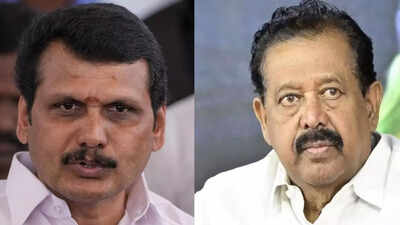
Tamil Nadu ministers Senthil Balaji, K Ponmudy quit MK Stalin’s Cabinet | India News


Tamil Nadu ministers Senthil Balaji, K Ponmudy quit MK Stalin's Cabinet
Senthil Balaji and K Ponmudy (right) / File photos

NEW DELHI: Tamil Nadu ministers Senthil Balaji and K Ponmudy quit the chief minister MK Stalin-led Cabinet on Sunday, reported news agency PTI, citing Raj Bhavan. Governor RN Ravi has accepted the resignation of both the leaders.
SS Sivasankar has been additionally assigned the Electricity portfolio. S Muthusamy will also handle Prohibition and Excise. RS Rajakannappan will now oversee Forests and Khadi and has been appointed as the minister for forests and khadi.
Additionally, the CM Stalin has recommended the induction of T Mano Thangaraj, MLA from Padmanabhapuram assembly Constituency, into the Cabinet.
The swearing-in ceremony for the new minister designate is scheduled for Monday, April 28 at Raj Bhavan, Chennai.
The resignation of the two ministers comes as both the DMK leaders face legal challenges, with the Supreme Court on Thursday agreeing to hear a plea in the cash-for-jobs scam, in which Senthil Balaji is one of the main accused.
The plea has challenged the clubbing of four separate chargesheets – pertaining to corrupt practices in the appointments of assistant engineers, junior tradesmen, conductors and drivers – with an existing case related to the appointment of junior engineers.
On Wednesday, the Madras high court noted that the remarks made by K Ponmudy against Shaivism, Vaishnavism, and women were prima facie hate speech and decided to initiate suo motu proceedings against him in that regard.
“Prima facie, it was evident that his remarks demean the moral worth of sex workers, particularly women, and were calculated to subvert harmony and peace among religious groups and various sects,” the judge said.
The comments, on the face of it, were completely derogatory towards women and deliberately spewed venom and hatred on the two main sects of Hinduism, the judge added. The judge directed the initiation of proceedings as the Tamil Nadu police failed to register an FIR against the minister, as suggested by the high court last week.
According to the court, as per the Supreme Court order, police are mandated to register a case against such hate speech even in the absence of a formal complaint.


Source link

Woman On Air India’s Broken Business Class Seat


New Delhi:

A former official of the government think tank NITI Aayog has complained to Air India about an unpleasant experience while flying business class in an aircraft of the Tata Group-owned airline.

Urvashi Prasad, who says she was a director at the NITI Aayog vice chairman’s office, posted two photos on X showing what she identified as a part of a broken seat.

A rectangular panel had come off the business class seat that she had booked.

“Broken seats in business class in Air India flight AI 2996 Bombay to Delhi… can only hope the rest of the plane is working,” Ms Prasad, the only lateral entrant to work with three successive vice chairpersons at the NITI Aayog, said in the post on X.

Taking note of the post, Air India responded to her saying it will look into the matter.

“Dear Ms Prasad, we’re concerned to note this. Your feedback is important to us, and we’ll make sure it gets addressed promptly,” Air India said.

While passengers have frequently posted complaints against what they claimed were deficiency in Air India services, the airline had also asked the press to restrain from maligning the reputation of the airline without corroborating facts.

Last month, Air India responded to allegations by actor Lisa Ray that the airline did not show empathy for her unwell father as “unfounded”.

Air India said it flies millions of passengers and “such misleading news reports belie the airline’s resolve to customer centricity and empathy.”


Source link

Rishabh Pant Blasted Brutally After Another Flop Show For Lucknow Super Giants: “Any Shame…”


Lucknow Super Giants skipper Rishabh Pant was trolled brutally on social media after yet another disappointing show in the ongoing IPL 2025. During the encounter against Mumbai Indians, Pant managed to score just 4 runs off 2 deliveries before he was dismissed by Will Jacks. Pant scored 106 runs in 9 matches ahead of today’s encounter and his performance earned him a lot of criticism from both fans as well as experts. Pant became the costliest player in the history of IPL auctions after he was bought by LSG for Rs 27 crore but he has not lived up to the price tag. Following yet another flop show, social media blasted him for his lack of runs and even took a jibe over his mammoth price tag.

 Suryakumar Yadav’s belligerent 54 and Ryan Rickelton‘s 58 fired Mumbai Indians to 215/7 in their Indian Premier League contest against Lucknow Super Giants here on Sunday.

Suryakumar continued to plunder runs to become the leading run-scorer in this IPL, crossing the 400-run mark with his third fifty. The India T20 skipper also completed his 4,000 runs in IPL.

Suryakumar’s 28-ball knock, laced with four sixes and as many fours, kept MI on track for a total in excess of 200 even as Tilak Varma (6) and Hardik Pandya (5) fell in quick succession.

The standout stroke during his innings was when Suryakumar went down on his knee to lift Prince Yadav (1/44) over fine leg for a six on a waist-high ball.

LSG’s decision to bowl first anticipating a spin-friendly track under the sun did backfire to some extent on a batting-friendly pitch here, with none of their bowlers able to control stroke-play.

MI’s scoring rate hovered around 10 an over consistently even as it felt they were going through a slowdown in the second half.

Rickelton’s assault in the powerplay fuelled Mumbai’s charge even as they lost the in-form Rohit Sharma early on.

Coming into the match after scoring back-to-back fifties, Rohit (12) welcomed India speedster Mayank Yadav (2/40) — in action after an injury layoff — with two consecutive sixes. But the India captain was undone by a slower delivery.

Mayank pulled Rohit outside off on a 120kmph delivery in the third over, which the batter cut straight into the hands of Prince at third man.

But the early blow had no impact whatsoever as Rickelton stroked his way for an impressive second IPL fifty off 25 balls.

The left-handed South African wicketkeeper-batter hit his strides early in the game, hitting powerfully down the wicket and putting away anything in his range into the stands.

Rickelton forged a second-wicket partnership of 55 runs with Will Jacks (29), setting the foundation for the middle order.

He punished both pace and spin and made the most of the wayward lengths the LSG bowlers bowled at the start of the contest.

Rickelton perished off Digvesh Rathi (1/48) when he made room to hit one over the in-field but top-edged it.

Towards the end, Naman Dhir, who had to change his bat for failing the gauge test, struck 25 off 11 (2x4s, 2x6s), while debutant Corbin Bosch hammered a 10-ball 20 to take MI past the 200-mark. 

(With PTI inputs)

Topics mentioned in this article


Source link

UP Woman Stopped At Attari Border While Trying To Return To Husband In Pak


New Delhi:

An Indian woman was allegedly stopped at the Attari-Wagah border point in Punjab from crossing into Pakistan after the Centre ordered Pakistani nationals to leave in the wake of the Pahalgam terror attack in Jammu and Kashmir.

The woman, Sana, a resident of Uttar Pradesh’s Meerut who is married to a Pakistani citizen, was stopped because she had an Indian passport, while her children, a three-year-old son and a one-year-old daughter, were told to leave as they had Pakistani passports.

The 30-year-old was among the short-term visa holders who were ordered to leave India by Sunday.

Sana, who got married to Bilal, a doctor in Karachi, in 2020, had recently come to her hometown to meet her parents.

Sana said she was told by the officials to leave the country when the Centre issued a notice, asking Pakistani nationals to return after 26 people, mostly tourists, were killed by Pakistan-linked terrorists in Pahalgam on April 22. 

Accompanied by her family members, she then left for the Attari-Wagah border with her children on Friday. She, however, was stopped and told to return to Meerut because of her Indian passport. The officials maintained that the children, who had Pakistani passports, will have to return. 

This put Sana in a quandary. Realising the enormity of the situation, she started crying. Sana and her family saw that there were many other cases like theirs, with children bidding farewell to their mothers and crossing the border alone to their fathers.

“My children can’t stay here and I can’t go there,” she told reporters.

“My husband had also come to the border to receive us,” she said.

The family told the officials at the border about their situation: that the children were too young to be without their mother. The officials sent Sana back to Meerut and asked her to wait for fresh government orders.   

Sana said this was her second trip to India after her marriage, with the first one being about 3 years ago.

Calling for the “strictest” punishment for those behind the Pahalgam attack, she appealed to the government to let her and her children go to Pakistan.

More than 250 Pakistani nationals have left India in the past two days through the Attari-Wagah border point, an official said.

The deadline for the 12 categories of short-term visa holders of the neighbouring nation ends on Sunday. The 12 categories of visas whose holders have to leave India by Sunday are — visa on arrival, business, film, journalist, transit, conference, mountaineering, student, visitor, group tourist, pilgrim and group pilgrim.

The deadline for leaving India for those holding SAARC visas was Saturday. For those carrying medical visas, it is April 29.

(With inputs from Shyam Parmar)


Source link