Trending

‘Fearing Future Without Babies’, Students ‘Race’ Sperm In Los Angeles


Los Angeles:

A commentator yells excitedly as hundreds of spectators stand glued to a video of a racecourse — but the athletes they are rooting for are actually tiny sperm cells.

The unusual sport was invented by 17-year-old high schooler Eric Zhu, who raised over a million dollars to organise the event to call attention to male infertility.

Zhu said he was inspired by social media posts that claim average sperm counts had halved over the past 50 years.

Fearing that “there could be this dystopian future where no one will be able to make babies,” Zhu said he wanted to use the competition to highlight the importance of reproductive health.

Scientists have not reached a consensus on whether humanity has experienced a dramatic drop in sperm count, with studies showing conflicting results.

At the Los Angeles event on Friday night, a man in a lab coat used pipettes to place samples of semen — collected from contestants ahead of time — onto tiny two-millimetre long “tracks.”

The race track was magnified 100 times by a microscope, then filmed by a camera that transferred the image to a 3D animation software before the final video was broadcast to the audience.

“There’s no way to really tell if this is real, but I want to believe it is,” Felix Escobar, a 20-year-old spectator, told AFP.

At the end of the brief race, the loser, 19-year-old University of California student Asher Proeger, was sprayed with a liquid resembling semen.

‘Not Elon Musk’

Zhu’s fears about fertility echo the talking points of many in the burgeoning pro-natalist movement, which include conservative and far-right political figures.

But Zhu distanced himself from the movement.

“I have nothing to do with this, I’m not like an Elon Musk, who wants to repopulate the Earth,” the young entrepreneur told AFP.

Musk, a close ally of US President Donald Trump, has been vocal about his belief that population decline threatens the West and has fathered over a dozen children with multiple women.

Zhu insisted he simply wanted to raise awareness of how sperm quality goes hand in hand with overall health.

“It’s your choice to sleep earlier. It’s your choice to stop doing drugs. It’s your choice to eat healthier, and all these different things have a significant kind of impact on your motility,” Zhu said.

Shanna Swan, a reproductive epidemiologist at Mount Sinai’s Icahn School of Medicine, co-authored a study that found the sperm count decline cited by Zhu.

She said the proliferation of “hormonally active chemicals” in recent years has had a negative impact on human fertility.

But beneath the scientific veneer, the sperm race may seem more like an opportunity for college students to display their adolescent humor and participate in a viral stunt.

Some attendees dressed in costumes, including one resembling male genitals, while the hosts made lewd jokes and roasted the competitors.

A YouTube livestream of the event attracted over 100,000 views.

“I can’t say I learned stuff I didn’t know before,” 22-year-old student and audience member Alberto Avila-Baca told AFP.

(Except for the headline, this story has not been edited by NDTV staff and is published from a syndicated feed.)


Source link

RSS chief Mohan Bhagwat’s subtle endorsement to action against Pakistan


RSS chief Mohan Bhagwat's subtle endorsement to action against Pakistan

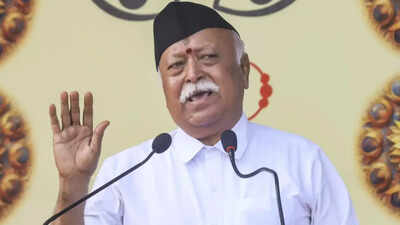
NEW DELHI: Amidst growing clamour for action against Pakistan in the wake of Pahalgam terror killings, RSS chief Mohan Bhagwat on Saturday said that non-violence is ingrained in Indian culture, but taking action against a hostile neighbour is also “Dharma”.
“Non-violence is our (Indians’) basic nature. We never trouble our neighbours. But some people are spoiled, who do not follow their religion. In such a situation, the king must protect the people. For this, killing the oppressors is also his religion. People remember the steps taken by the king to protect the people,” Bhagwat said, in what was seen as a full-throttle support to a strong action against Pakistan, which is being anticipated in the wake of Pak-sponsored terror attack on innocent tourists in Pahalgam.
The RSS chief further said, “I mentioned Ravana in Mumbai because despite everything, his mind was against non-violence. That is why God killed him. It is our religion to teach such hooligans a lesson by not getting killed by them.”
His reference was seen as a direct endorsement of a proactive action against Pakistan, which, a few sources have hinted, could be targeted against the conspirators sitting in Pakistan, who have been consistently encouraging terror activities in India.
Addressing a book release function, he said the principles of non-violence are based on making people embrace this thought.
“Many people embrace these principles wholeheartedly, while others do not do so and continue to foment trouble. In such a situation, the religion states that it not to be vanquished by aggressors is also a part of dharma (duty). Teaching hooligans a lesson is also part of the duty,” the RSS chief said.
Bhagwat stressed the need to understand Sanatan dharma in true sense, saying “religion is not dharma” till it follows the four principles of satya (truth), suchita (purity), karuna (compassion) and tapasya (spiritual discipline)”.
“Whatever goes beyond this is adharma (irreligious),” he said.
Bhagwat said in the present times, religion has been reduced to rituals and eating habits. “We have reduced religion to rituals and eating habits like who should be worshiped in what manner and what one should eat and should not eat. This is a code… not a principle. Religion is a principle,” he said.
The RSS chief said there was a need for Hindu society to understand Hindu religion which would be the best way to present its traditions and culture to the world.
“Nowhere does Hindu scriptures preach untouchability. Nobody is ‘oonch’ or ‘neech’ (high or low). It never says that one work is big and the other is small… If you see oonch-neech, it is adharma. It’s compassionless behaviour ,” he added.
Bhagwat said there can be many religions and each of them can be great for those following them. But, one should follow the path one has chosen and respect that of others.
“Don’t try to change anybody,” he added.
“There is a religion on top of religion. Until we don’t understand this, we do not understand religion. That religion on top of religion is spirituality,” he added.
Speaking at the event, Swami Vigyananand said his book “The Hindu Manifesto” captures the essence of ancient wisdom, reinterpreted for contemporary times.
He said Hindu thought has always addressed the needs of the present while being firmly rooted in timeless principles distilled into powerful sutras by rishis.


Source link

Patriotism must be ‘param dharma’ to defeat terrorism: Piyush Goyal on Pahalgam terror attack


Patriotism must be 'param dharma' to defeat terrorism: Piyush Goyal on Pahalgam terror attack
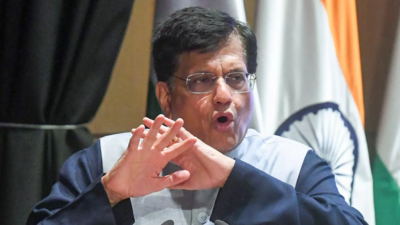
Union minister Piyush Goyal (Pic credit: PTI)

NEW DELHI: Union minister Piyush Goyal on Saturday said that incidents like the recent terror attack in Pahalgam would continue to trouble our country unless all 140 crore Indians adopt patriotism and nationalism as their “param dharma.”
“As long as all 140 crore Indians do not consider patriotism and nationalism as their param dharma, such types of incidents will continue to trouble our country. However, India has enough strength to give a befitting response,” the minister said.
Speaking to reporters, Goyal emphasised that such acts of violence would never break India’s spirit and that the country has enough strength to give a “befitting response” to its enemies.
“These incidents represent the desperate last efforts of those powers. It is an unbearable attack, but we will not spare anyone,” the Union commerce minister said.
Goyal also expressed confidence that the people’s conviction would ensure a quick resumption of tourism in Kashmir and that pilgrims would continue their Amarnath Yatra without fear.
Highlighting India’s success in tackling internal threats, he said, “Just as we are rapidly eliminating naxalism, we will similarly defeat terrorism. India’s strength and determination are unshakable.”
On the issue of Pakistani nationals overstaying their visas, Goyal said the government had already directed them to leave and stressed that no one would be allowed to stay illegally.
“We have already announced and informed them to leave the country. No one will be allowed to stay here illegally.”
“The people of Bharat have the power, courage, and confidence. Tourism will resume soon, pilgrims will continue their Amarnath Yatra, and Kashmir will remain firmly on the path of progress. No one can stop it,” he added.
26 people, mostly tourists, were killed in a terrorist attack at a popular meadow in Pahalgam on April 22. In response, India announced several diplomatic measures against Pakistan, including the suspension of the Indus Water Treaty.


Source link

Another Terrorist’s House Bombed In Crackdown After Pahalgam Terror Attack


An intense raid by authorities, aiming to dismantle terrorist infrastructure, has bombed the house of another suspected terrorist in Jammu and Kashmir, continuing its massive crackdown on terrorists days after the Pahalgam terror attack that killed 26 people. 

Pakistan Occupied Kashmir’s Farooq Ahmad Tadwa’s home in Kalaroos area of Kupwara district in north Kashmir was bombed by authorities, the latest in the houses of terrorists that have been demolished.

Houses of six terrorists or their associates have been demolished in the past 48 hours with officials saying similar action will be taken against others involved in terror activities.

Raids were carried out at more than 60 places on Saturday in Srinagar “to dismantle the terrorist ecosystem”, a J&K Police spokesman said.

They were carried out to seize weapons, documents, digital devices, etc. with the objective of evidence collection and intelligence gathering to detect and deter any conspiratorial or terrorist activity against the security of the nation, said the police.

“This decisive action of J&K Police aims to dismantle the terrorist ecosystem in Jammu and Kashmir by identifying and taking legal action against individuals engaged in such anti-national and criminal activities,” said a police spokesman.

The spokesman said the police remain committed to maintaining peace and security in the city.

“Any individual found furthering the agenda of violence, disruption, or unlawful activities will face strict legal consequences under the law,” the official warned.

The security forces are hunting down terrorist associates and their sympathisers across the length and breadth of the Valley to create deterrence against any Pahalgam-like attacks, said an official. 

Terrorists on Tuesday opened fire at Baisaran, dubbed ‘Mini Switzerland’ and a hit with tourists, in the upper reaches of Pahalgam in Anantnag district, killing 26 people, mostly holidayers from other states.

The incident has spiked India-Pakistan tensions, with Prime Minister Narendra Modi declaring that the killers would be pursued “to the ends of the earth.” 

Authorities blew up the houses of two active terrorists — Aadil Thoker in the Bijbehara area of Anantnag district and Asif Sheikh — in the Tral area of Pulwama district after security forces raided the houses on Thursday night.

While Thoker has been named as one of the three terrorists involved in the gruesome killing of tourists in Pahalgam, Sheikh’s involvement in the attack has also not been ruled out, officials said.

On Saturday, officials said, that four houses of the alleged terrorists were demolished in Pulwama, Shopian, Kupwara and Kulgam districts of south Kashmir on Friday night.

The security forces have also rounded up hundreds of overground workers (OWGs) and their supporters — mostly in four south Kashmir districts — in their bid to track down the terrorists who carried out the attack on Tuesday.


Source link

Playing neutral or free hand to India?: Teasing out Trump’s post-Pahalgam comment


Playing neutral or free hand to India?: Teasing out Trump's post-Pahalgam comment

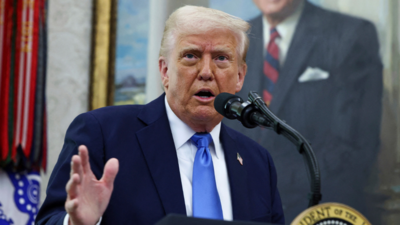
TOI correspondent from Washington: What exactly did US President Donald Trump mean when he said India and Pakistan will “figure it out one way or the other” in the aftermath of the Pahalgam terrorist attack? One reading is that Trump is treading a neutral path, not wishing to take sides in a clash rooted in history, of which he appears to only have a vague idea. Another interpretation: he is giving India a free hand to do what it deems necessary.
At the best of times, the MAGA supremo is not known for his clarity of thought or expression. Mangled syntax, jumbled words, and incomplete sentences, are par for course. Even so, his comments on Friday about the India-Pak situation left analysts scratching their heads, including his references to the fight over Kashmir and tensions on the border “going on for a thousand years or even longer…1500 years.”
This is what Trump said when asked about the tensions: “I am very close to India and I’m very close to Pakistan, and they’ve had that fight for a thousand years in Kashmir. Kashmir has been going on for a thousand years, probably longer than that. That was a bad one (terrorist attack). There have been tensions on that border for 1,500 years. It’s been the same, but I am sure they’ll figure it out one way or the other. I know both leaders. There’s great tension between Pakistan and India, but there always has been.”
The charitable explanation from Trump supporters is that the US President was speaking only figuratively to convey that Hindu-majority India and Muslim Pakistan have been at loggerheads for a long time, viewed through the lens of religion. They have to sort it out between themselves and there is little that the US can do.
Even an online group called United Hindu Council agreed with the reading, noting that Trump was “hinting at a much deeper history — and he’s quite right..he pointed at the centuries-old religious fault lines caused due to Islamist extremism — that have deeply scarred Kashmir’s history and continue to fuel violence today.”
But a more nuanced reading by some experts is that Trump is giving India a free hand to “sort out” Pakistan, a reading that is strengthened when one considers his “I’ll leave Bangladesh to the prime minister (Modi)” remark during the latter’s recent visit to Washington in February when he was asked about the regime change in Dhaka. Previously too he has suggested it is up to India to manage the Pakistan situation.
The “free hand to India” interpretation of Trump’s latest comment is endorsed among others by Christine Fair, a long-time South Asia analyst, whose extensive work on the region includes deep insights into Pakistan’s use of terrorist as an instrument of state policy. “That’s the right message to send even if by accident. Why should the US bail out Pakistan by trying to restrain India? Pakistan has to be taught a lesson…by India,” she noted in a post on X.
Taking a cue from the President, even the State Department, which in the past typically rushed out comments asking both sides to exercise restraint, has remained largely silent. Remarkably, Secretary of State Marco Rubio on Friday posted a photo of a peace treaty engineered by Washington between Congo and Rwanda, even as Trump was fulminating about Russia and Ukraine.
“Big news coming out of Africa, where I am also involved in settling violent wars and conflicts,” Trump boasted though about the Congo-Rwanda treaty, before lamenting, “I don’t know why so many of these events have fallen to me and my Administration, but they have, and we have done an unprecedented job in getting them SETTLED or, putting them in position for PEACE.”
No word though about what Washington had often described in the past as a “nuclear flashpoint,” in recognition of what has long been a Pakistan gambit to invite US intervention. Other than — “they’ll figure it out one way or the other.”


Source link

Pahalgam terror attack: Pakistan launches emergency measures to secure medicine supplies after trade suspension with India


Pahalgam terror attack: Pakistan launches emergency measures to secure medicine supplies after trade suspension with India
This is a representational AI image (Pic credit: Lexica)

Pakistani health authorities have initiated emergency measures to secure pharmaceutical supplies following the suspension of trade ties with India, Geo News reported on Saturday.
The move comes after Islamabad on Thursday suspended all trade with New Delhi in response to India’s decision to suspend the Indus Waters Treaty following the Pahalgam terrorist attack.
The Drug Regulatory Authority of Pakistan (DRAP) confirmed that although no formal notification has been issued regarding the ban’s impact on the pharmaceutical sector, contingency plans are already in place.
“Following the 2019 crisis, we had started preparing for such contingencies. We are now actively looking at alternative avenues to meet our pharmaceutical needs,” a senior DRAP official was quoted as saying.
Pakistan currently relies on India for 30 per cent to 40 per cent of its pharmaceutical raw materials, including Active Pharmaceutical Ingredients (APIs) and advanced therapeutic products. To avoid disruptions, DRAP is exploring alternative sources in China, Russia, and several European countries.
The agency is particularly focused on ensuring the availability of essential medical supplies such as anti-rabies vaccines, anti-snake venom, cancer therapies, and monoclonal antibodies.
Despite DRAP’s preparedness, health experts have warned that a shortage of vital medicines could occur if immediate steps are not taken.
Meanwhile, a delegation from the Pakistan Pharmaceutical Manufacturers Association (PPMA) met officials in Islamabad on Thursday, urging the government to exempt the pharmaceutical sector from the trade ban.
“We had meetings with DRAP and Ministry of Commerce officials to discuss the suspension of trade ties. We urged them to exempt the pharmaceutical sector from the ban, as there are many life-saving products whose raw materials come exclusively from India,” said PPMA Chairman Tauqeer-ul-Haq.
The delegation also approached the special investment facilitation council (SIFC), arguing that health-related trade should be protected to safeguard patients’ lives.


Source link

Punjab Kings’ Rs 4.2 Crore Star Glenn Maxwell Roasted Brutally After Another IPL Flop Show: “Don’t Remember…”


Glenn Maxwell against Kolkata Knight Riders in IPL 2025© BCCI


Punjab Kings all-rounder Glenn Maxwell‘s abysmal form continued in the IPL 2025 as he was dismissed for just 7 against Kolkata Knight Riders on Saturday. Maxwell, who was bought in the mega auction for Rs 4.2 crore, returned to the playing XI after two matches but he was dismissed cheaply by KKR spinner Varun Chakravarthy. Before this match, Maxwell scored just 41 runs in the competition leading to a lot of criticism from both fans as well as experts. On Saturday, Maxwell made a tentative start to his innings and although he did slam a boundary, the Australian international was clean bowled on the very next boundary. Former India batter Suresh Raina was not happy and delivered a brutal verdict on the struggling star.

“I don’t remember the last time Glenn Maxwell made runs for the team, he has got too many chances.”

Young Priyansh Arya and Prabhsimran Singh smashed half-centuries and shared a 120-run opening-wicket stand as Punjab Kings scored a challenging 201 for 4 against hosts Kolkata Knight Riders in an IPL match on Saturday.

Opting to bat first, PBKS were off to a flying start with Priyansh, who had hit the fourth joint-fastest IPL ton earlier this season, made 69 off 35 balls while Prabhsimran made 83 off 49 balls as the KKR bowlers toiled without success till the 12th over.

Vaibhav Arora (2/34), Varun Chakravarthy (1/39) and Andre Russell (1/27) were the wicket-takers for KKR.

Earlier, PBKS made two changes, bringing in Glenn Maxwell and Azmatullah Omarzai in place of Marcus Stoinis and Xavier Bartlett.

KKR also made two changes, replacing Moeen Ali and Ramandeep Singh with Rovman Powell and Chetan Sakariya.

(With PTI inputs)

Topics mentioned in this article


Source link

Iran President condemns Pahalgam attack in call with PM Modi, says ‘no justification for such acts of terror’ | India News


Iran President condemns Pahalgam attack in call with PM Modi, says 'no justification for such acts of terror'

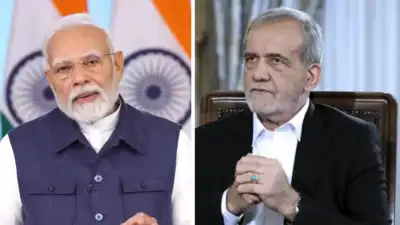
NEW DELHI: Iran President Masoud Pezeshkian on Saturday called Prime Minister Narendra Modi and strongly condemned the Pahalgam terror attack, offering condolences to the victims, saying there is “no justification for such acts of terror.”
“President Masoud Pezeshkian of Iran called PM Narendra Modi and strongly condemned the terror attack in the Indian Union Territory of Jammu & Kashmir and conveyed his condolences for the victims,” Ministry of External Affairs spokesperson Randhir Jaiswal said in a post on X.
During their conversation, both heads of state agreed that “no justification for such acts of terror.”
“Both leaders agreed that there could be no justification for such acts of terror, and all those who believe in humanity must stand together in the fight against terrorism,” the MEA stated.
PM Modi further expressed the outrage and “anguish of the people of India and their resolve to deal with those behind the terror attack and their supporters, firmly and decisively.”
The terrorist strike at Baisaran meadow in Pahalgam on April 22, that claimed 26 innocent lives is one of the deadliest in the Valley since the 2019 Pulwama strike in which 40 CRPF jawans were killed.
The Prime Minister also expressed his “condolences for the loss of lives in the explosion” in Bandar Abbas port in southern Iran and wished a “speedy recovery to the injured”, the MEA said.
Earlier, a massive explosion and fire at a port in southern Iran, reportedly linked to a shipment of missile propellant chemicals, killed five people and injured over 700.


Source link

Pakistan Scrambles To Secure Drug Supplies After India Trade Halt: Report


Islamabad:

Pakistani health authorities have initiated “emergency preparedness” measures to secure pharmaceutical supplies in response to the suspension of trade ties with India, according to a media report on Saturday.

In response to the India’s decision to suspend the Indus Water Treaty following the Pahalgam attack, Islamabad on Thursday suspended all trade with New Delhi among other moves.

Geo News reported that India trade halt triggered “urgent measures to secure” pharmaceutical needs in Pakistan and health authorities have initiated “emergency preparedness” measures to secure the supplies.

The Drug Regulatory Authority of Pakistan (DRAP) has confirmed that while there has been no formal notification regarding the ban’s impact on the pharmaceutical sector, contingency plans are already in place, it said.

“Following the 2019 crisis, we had started preparing for such contingencies. We are now actively looking at alternative avenues to meet our pharmaceutical needs,” the report quoted a senior DRAP official as saying.

Currently, Pakistan relies on India for 30% to 40% of its pharmaceutical raw materials, including Active Pharmaceutical Ingredients (API) and various advanced therapeutic products.

With this supply chain distributed, DRAP is seeking alternative sources from China, Russia, and several European countries.

The agency aims to ensure the continuous availability of essential medical supplies, including anti-rabies vaccines, anti-snake venom, cancer therapies, monoclonal antibodies, and other critical biological products.

While DRAP’s preparedness offers some reassurance, industry insiders and health experts have warned of a looming challenge if immediate action is not taken to manage the fallout of the trade suspension.

“Pakistan imports some 30%-40% of its pharmaceutical raw material from India. We also import finished products, most importantly, anti-cancer therapies, biological products, vaccines, and sera, especially anti-rabies vaccine and anti-snake venom from India,” a senior official from the Ministry of National Health Services, Regulations and Coordination said, requesting anonymity.

The Ministry of Health has yet to receive an official directive clarifying the status of pharmaceutical imports, despite the government’s blanket announcement suspending all trade with India.

The pharmaceutical sector fears that disruption in the supply chain could lead to critical shortages.

The situation is further complicated by the existence of a robust black market, where unregistered and unapproved medicines are smuggled into Pakistan through Afghanistan, Iran, Dubai, and even across the eastern border, the report said.

While these channels fill gaps left by legal imports, they offer no guarantee of quality or consistent supply.

A delegation of pharmaceutical industry leaders travelled to Islamabad on Thursday to appeal for an exemption from the trade ban.

“We had meetings with DRAP and Ministry of Commerce officials to discuss the suspension of trade ties. We urged them to exempt the pharmaceutical sector from the ban, as there are many life-saving products whose raw materials come exclusively from India,” said Tauqeer-ul-Haq, Chairman of the Pakistan Pharmaceutical Manufacturers Association (PPMA).

The PPMA delegation also approached the Special Investment Facilitation Council (SIFC), arguing that pharmaceutical and health-related trade must be excluded from the ban to protect patients’ lives.

However, some experts see the current crisis as a wake-up call for long-term investment in local production of APIs, vaccines, and biologicals.

“This crisis could be a turning point for Pakistan,” said Zafar Iqbal, a senior public health expert.

Terrorists opened fire in Jammu and Kashmir’s Pahalgam on Tuesday, killing 26 people, mostly tourists, in the deadliest attack in the Valley since the Pulwama strike in 2019. The Resistance Front (TRF), a proxy of the banned Pakistan-based Lashkar-e-Taiba (LeT), claimed responsibility for the attack.

(Except for the headline, this story has not been edited by NDTV staff and is published from a syndicated feed.)


Source link

Mohan Bhagwat After J&K Attack


New Delhi:

In a veiled message after the Pahalgam terror attacks in which 26 people were killed, RSS chief Mohan Bhagwat has said non-violence is India’s religion and a key part of its values, but so is teaching a lesson to “oppressors and hooligans”. 

Speaking at an event to mark the release of the book ‘The Hindu Manifesto’ in New Delhi on Saturday, Mr Bhagwat also gave the example of Ravan and said he was killed not to harm him but for his own good. 

“We never harm or disrespect our neighbours but if someone is bent on being evil, what is the cure? The king’s duty is to protect the people and he will do his duty. The Gita teaches non-violence, but the teaching is to ensure that Arjun fights and kills… because he was confronted with people whose development could only be done this way,” Mr Bhagwat said in Hindi. 

“Non-violence is our nature, a key value,” Mr Bhagwat said, asserting, “our non-violence is to change people and make them non-violent too. Some people will change, seeing our example, but others will not… they won’t change no matter what you do and cause disorder in the world. So what will you do?”

The RSS chief then cited the example of Ravan and said he was a devotee of Lord Shiva who had knowledge of the Vedas and knew how to govern very well. 

“He (Ravan) had all the qualities required to be a good person. But the body and intelligence he accepted did not allow the good qualities in. So, if he wanted to be good, the only option was to end that body and intelligence. So, God killed him. That killing is not violence, it’s still non-violence,” Mr Bhagwat said.  

Degrees Of Punishment

“Non-violence is our religion, but not getting beaten by oppressors and teaching hooligans a lesson is also our religion. In Western thought, these two things can’t go together because the thought that you should assess whether your enemy is good or not does not exist… We see it, though, and punish some a little, others a lot and still others none at all to reform them. But those that cannot be reformed are sent, for their own good. to places where they need to be sent to get basic material,” he added. 

Speaking at an event in Mumbai on Friday, the RSS chief had also said that the current fight is between ‘dharma’ (righteousness) and ‘adharma’ (unrighteousness), rather than just a conflict between sects and religions. 

Referring to the Pahalgam attack, he said, “The fanatics who killed people by asking about their religion, Hindus would never do this. That is why the country should be strong,” he had said.


Source link