Royal Challengers Bengaluru’s Virat Kohli plays a shot during the IPL match against Rajasthan Royals. (PTI Photo)
NEW DELHI: Virat Kohli continues to dazzle in the IPL 2025 season, smashing his fifth half-century as Royal Challengers Bengaluru (RCB) edged out Rajasthan Royals by 11 runs at the M Chinnaswamy Stadium on Thursday. Kohli’s 42-ball 70 powered RCB to 205/5 – a total their bowlers successfully defended, securing the team’s sixth win of the season and lifting them to third in the points table. Now playing his 18th season – all for RCB – the 36-year-old is second in the Orange Cap race with 392 runs at an average of 65.33 and a strike rate of 144.11. But beyond the numbers, it’s Kohli’s mindset that continues to inspire. Go Beyond The Boundary with our YouTube channel. SUBSCRIBE NOW! RCB mentor and batting coach Dinesh Karthik was effusive in his praise. “Virat Kohli, what do you tell about him? There’s a loss for words purely because of the hunger that he has,” Karthik said in a video shared by the franchise. “It’s one thing to play IPL for 18 years, but it’s a different thing to be consistent for 18 years.” Who’s that IPL player? Karthik revealed Kohli’s deep reflection after RCB’s early home games. “He told me, ‘Probably could have thought a little better,’ and he knows a lot of people turn up just to watch him bat.”
Poll
Is Virat Kohli still the best batsman in IPL history?
“The way he adapts, understands situations… I’m too small a person to even speak about it. He’s an absolute champion,” Karthik added.
Sachin Tendulkar at 52: Power, Pride, and a Nation’s Pulse
With Kohli leading the way, RCB’s playoff push looks strong, while RR’s hopes have faded after their seventh loss in nine matches.
The Home Ministry has asked states to identify and deport all Pakistan nationals n their jurisdiction, sources told NDTV Friday, adding Home Minister Amit Shah had spoken to all chief ministers.
On Wednesday India said it had cancelled all visas for Pak nationals as part of a five-step diplomatic counter-offensive following the terror attack in Jammu and Kashmir’s Pahalgam.
India has said it has proof Pakistan was involved in the planning and execution of the attack. On Thursday senior foreign diplomats from the United States, the United Kingdom, Italy, France, Germany, Russia, and China were shown this proof by Foreign Secretary Vikram Misri.
India has also suspended the Indus Waters Treaty, or IWT, a key water-sharing deal governing usage of the Indus River and its five tributaries – the Beas, Chenab, Jhelum, Ravi, and Sutlej.
Pak’s Response
Pakistan reacted with a suite of similar measures and also declared suspension of the IWT “an act of war”. In retaliation, Islamabad said it was suspending the Simla Agreement.
Pakistan has also closed its airspace to Indian-owned or operated flights or airlines.
Twenty-six people, including civilians and tourists, were killed in the attack Tuesday afternoon at Baisaran Valley in Pahalgam. Disturbing visuals of the attack shared on social media showed the terrorists – of whom there were five, armed with automatic weapons – shooting only men.
In one visual a terrorist sneered at a woman to “go tell (Prime Minister) Modi”.
The Pahalgam attack was the worst on Indian soil since February 2019, when 40 CRPF personnel were killed in J&K’s Pulwama by banned terror group Jaish-e-Mohammed.
An offshoot of the Lashkar-e-Taiba, another Pak-based banned terror group, has claimed responsibility for the attack carried out by at least three terrorists. All three are on the run despite a massive manhunt.
At an event in Bihar he switched from Hindi to English to say, “From the soil of Bihar, I am telling the world that India will identify and punish every terrorist, and those behind them.”
Mr Modi has vowed vengeance against all those responsible and said his government will not let the terrorists’ evil agenda succeed. Defence Minister Rajnath Singh echoed that call at a Delhi event, thundering, “We won’t only punish the monsters who carried out this act of brutality and barbarianism, we will also reach those who hid behind a curtain to carry out this conspiracy.”
At the meeting opposition parties asked some pointed questions, including the absence of security forces in Baisaran – the tourist meadow near Pahalgam where the attack took place. The government said the area is secured before June’s Amarnath Yatra, which is when route is officially opened.
NDTV is now available on WhatsApp channels. Click on the link to get all the latest updates from NDTV on your chat.
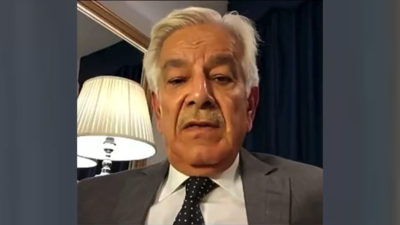
Pakistan’s defence minister admitted to doing “dirty work” for the US and the West when asked whether Islamabad has a history of funding and backing terror groups.
Khwaja M Asif was speaking to British news network Sky News. During the interview, the minister was asked, “Do you admit, sir, that Pakistan has had a long history of backing and supporting and training and funding these terrorist organizations?” To which the Pakistani minister said, “We have been doing this dirty work for the US for the past three decades, including the West and the United Kingdom.”
However, he was quick to call it a “mistake” and said Pakistan “suffered because of that.” He added that Pakistan’s track record would have been “unimpeachable” had Islamabad not joined the West during the Soviet-Afghan war and the US-led war against the Taliban after 9/11.
The Pakistan minister’s admission of doing “dirty work” by backing terrorists for the US and West comes in the wake of the Pahalgam terror attack in which 26 innocent civilians were shot dead at a picnic spot in Baisaran valley.
Pakistan supported the United States in the Soviet-Afghan war by training and harbouring armed militants to fight the Soviets. The proxy war between the US and the Soviets gave Pakistan an important role because of its porous border with Afghanistan. The war ended with the Soviet withdrawal from Afghanistan and a civil war, which saw the Taliban at the helm for almost a decade until the 2001 World Trade Centre attacks shook the world.
Osama Bin Laden’s al-Qaeda was given shelter by the Taliban in Afghanistan. On September 11, 2001, the terror group carried out the biggest attack on American soil, killing 2,996 people. The United States launched a full-scale invasion of Afghanistan, and again, Pakistan was at the centre of operations to back the US-led forces in uprooting the Taliban.
Pakistan, which has backed, funded and trained terrorists on its soil against India, is again accused of supporting the attackers who killed the civilians in Pahalgam. ‘The Resistance Front’ (TRF), an offshoot of one of India’s most-wanted terrorists, Hafiz Saeed-led Lashkar-e-Taiba, has claimed responsibility for the attack.
Sources told NDTV that the attack was carried out by a hardened group affiliated with the proscribed Lashkar-e-Taiba (LeT) terror organisation, comprising mostly foreign terrorists, with support from local militants, overground workers from the Valley and under the control of 26/11 attacks mastermind and Lashkar chief Hafiz Saeed.
According to sources, the group has been active in Kashmir for a long time. Security agencies believe it has been behind several high-profile attacks across the region, including in Sonamarg, Boota Pathri, and Ganderbal.
In October 2024, four individuals, including two Indian Army personnel, were killed in a terror attack at Boota Pathri. In the same month, Sonamarg witnessed a deadly assault on tunnel construction workers in which six labourers and a doctor were gunned down. Hashim Musa, one of the main accused in the Pahalgam massacre, is believed to be a suspect in this attack.
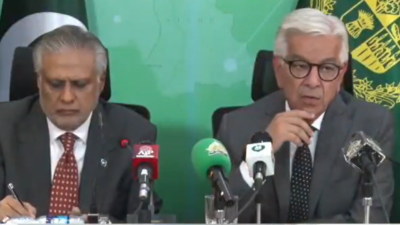
NEW DELHI: Following India’s firm diplomatic response to the heinous Pahalgam terror attack, Pakistan resorted to issuing threats on Thursday, warning India against any “misadventure.” This comes after India implemented several stringent measures against Pakistan for its role in the attack that claimed 26 innocent lives. Pakistan’s deputy Prime Minister Ishaq Dar made provocative statements during a press conference, claiming their army was “ready for any challenges.” “If there is any challenge to Pakistan in any context, then our army is ready for it. And no one should remain under this misconception — a fitting and immediate response will be given,” Dar said. “Whatever actions they have taken, we have responded to each and every one of them. And beyond that, we have immediately closed our airspace for Indian-owned and Indian-operated airlines. If anyone tries any misadventure, then they have already tried that in the past. The outcome they faced then — what they will face next will be even worse,” he added. Pakistan defence minister Khawaja went one step ahead and said, “If even one of our citizens has been martyred in an Indian attack, we will make them pay through their noses.” India’s robust response included summoning Pakistan’s top diplomat, Saad Ahmad Warraich, and declaring their military diplomats persona non grata. India noted evidence of cross-border linkages in the attack and said the assault came “in the wake of the successful holding of elections in the Union Territory and its steady progress towards economic growth and development.” As part of its response, India suspended the 1960 Indus Water Treaty, shut the Integrated Check Post at Attari with immediate effect, and halted Pakistani access to travel under the SAARC Visa Exemption Scheme (SVES). The government also suspended all kinds of visas for Pakistani nationals and asked them to leave the country by April 27. However, medical visas will be valid for an additional two days and will stand revoked on April 29. “In continuation of the decisions made by the Cabinet Committee on Security (CCS) in the wake of the Pahalgam terror attack, the Government of India has decided to suspend visa services to Pakistani nationals with immediate effect,” the Ministry of External Affairs said. Meanwhile, in a show of India’s military prowess, the Navy’s guided missile destroyer INS Surat successfully tested a medium-range surface-to-air missile with an approximate range of 70 km. The Indian Air Force (IAF) also executed ‘Exercise Aakraman,’ a comprehensive operational drill across the central sector, featuring its premier fighter aircraft, including the Rafale jets. “In what marks the most devastating terrorist incident since the revocation of Article 370 in 2019, 26 tourists lost their lives, and several others were wounded on April 22. The attack unfolded at Baisaran Meadow, a popular tourist destination situated 7 kilometers from the Pahalgam resort town. The assault occurred at around 1.30pm while tourists were enjoying the scenic meadow, known for its snow-capped mountains and pine forests. Despite robust security measures, including multiple checkpoints and armed patrols in the area, the terrorists managed to breach the security cordon and carry out the attack in this otherwise peaceful tourist destination.
‘We’ve been doing dirty work for US for 3 decades’: Pakistan defence minister on support for terror groups
Pakistan’s defence minister made a striking admission regarding their involvement with terrorist groups, stating “We have been doing this dirty work for United States for 3 decades,” when questioned about Pakistan’s role. During a widely circulated interview with Sky News presenter Yalda Hakim, she directly questioned him about Pakistan’s historical involvement in supporting terrorist organisations. Khwaja Asif responded by acknowledging, “We have been doing this dirty work for the United States for about 3 decades… and the west, including Britain…That was a mistake, and we suffered for that, and that is why you are saying this to me. If we had not joined the war against the Soviet Union and later on the war after 9/11, Pakistan’s track record was unimpeachable.” In the same interview, the defence minister issued a concerning statement about the possibility of full-scale conflict with India. After the Pahalgam attack claiming 26 lives, the government implemented several diplomatic responses, including shutting down the Attari ICP, cancelling the SVES for Pakistani nationals with a 40-hour departure notice, and reducing diplomatic staff at both High Commissions. The government also suspended the 1960 Indus Waters Treaty following the Pahalgam incident. Prime Minister Narendra Modi has pledged severe consequences for both the attackers and conspirators. He emphasised that the time had arrived to eliminate remaining terrorist strongholds, stating that 140 crore Indians’ determination would defeat the perpetrators of terror.
Meta has announced layoffs within its Reality Labs division, specifically impacting teams in Oculus Studios, the unit responsible for developing apps and games for Meta’s Quest VR headsets. Among the affected projects is Supernatural, a popular VR fitness app that Meta acquired in 2023.
Meta layoffs: Restructuring for efficiency
Meta stated that the layoffs are part of a broader effort to streamline operations and focus on future mixed reality experiences. While the exact number of employees affected remains undisclosed, the company emphasized that the changes aim to help Oculus Studios work more efficiently while continuing to deliver engaging content for users. “These changes are meant to help Studios work more efficiently on future mixed reality experiences for our growing audience,” a Meta spokesperson told Reuters.
Meta layoffs: Impact on Supernatural
For Supernatural users, the layoffs mean a reduction in the number of new workout releases per week. However, Meta assured users that existing workouts will now be available at multiple skill levels, enhancing accessibility. The app’s coaches, who lead the workouts, will not be impacted by the restructuring. This move comes as Meta faces mounting pressure to reduce costs in its Reality Labs division, which reported a $5 billion operating loss in the last quarter of 2024. The layoffs also precede Meta’s upcoming earnings report, where the company is expected to face scrutiny over its investments in the metaverse.
The Supreme Court on Friday warned Rahul Gandhi against making adverse remarks about freedom fighters as it stayed a trial court summons over remarks about VD Savarkar.
A bench of Justice Dipankar Datta and Justice Manmohan warned the Congress leader from making further derogatory remarks against Savarkar, noting he is “worshipped” in Maharashtra.
Mr Gandhi will face consequences if he persists, the court said, “We won’t allow any statements against our freedom fighters. Next, someone will say Mahatma Gandhi was a ‘servant to the British’.”
“Does your client know Gandhi also used ‘your faithful servant’ while addressing the Viceroy? Does your client know his grandmother, when she was Prime Minister, sent a letter praising the gentleman?”
In further strong comments, the court also said, “They gave us freedom and you treat them like this…” and labelled Mr Gandhi’s earlier comment on Savarkar “irresponsible”.
“Let’s not make irresponsible statements on freedom fighters… you (Congress leader Abhishek Singhvi, appearing for Mr Gandhi) made a good point on law and are entitled to a stay.”
Mr Gandhi was also told the court will take suo motu cognisance of further comments.
The court, however, did stay criminal proceedings over a case filed in Uttar Pradesh by a Nripendra Pandey. The complainant alleged Mr Gandhi had “intentionally” insulted VD Savarkar.
The court also issued notices to Mr Pandey and the UP government to respond to Rahul Gandhi’s plea to quash the complaint. Mr Gandhi approached the top court to challenge an Allahabad High Court order refusing to quash summons issued by the trial court.
The case stems from November 2022 comments in Maharashtra’s Akola during Bharat Jodo Yatra.
The BJP has pounced quickly on the court’s rebuke to Mr Gandhi, declaring the stay on summons was not a reprieve. “It is not a reprieve… it is an advice for him. The way he keeps insulting Veer Savarkar, he will not be forgiven if he continues to do it,” the BJP’s Syed Shahnawaz Hussain told reporters.
VIDEO | “It is not a reprieve, but an advise for him. The way he keeps insulting Veer Savarkar, he will not be forgiven if he continues to do it,” says BJP leader Syed Shahnawaz Hussain (@ShahnawazBJP) on Supreme Court pulling up Congress MP Rahul Gandhi over his remarks on… pic.twitter.com/36oUgKrIgh
In all of this, the Congress leader was not in court to hear the rebuke; he was in Jammu and Kashmir’s Anantnag district to meet those injured in Tuesday’s terror attack in Pahalgam.
He is also expected to meet delegations from local businesses affected by the rush of scared tourists looking to leave J&K after the attack that killed 26 people, mostly civilians.
The attack has been claimed by The Resistance Front, an offshoot of banned Pakistan-based terrorist group Lashkar-e-Taiba. Five gunmen involved have been identified and a manhunt is on.
Uttar Pradesh Madhyamik Shiksha Parishad (UPMSP) Board Result 2025 Class 10, 12: The Uttar Pradesh Madhyamik Shiksha Parishad (UPMSP) has announced the results for the 2025 Class 10 and 12 exams. Over 54 lakh students appeared for the board exams this year. The results are available on the official UPMSP websites – upmsp.edu.in and upresults.nic.in – as well as on the NDTV special page at ndtv.com/education/results. For the first time, the results are also accessible on DigiLocker at results.digilocker.gov.in. The pass percentage for Class 10 stands at 90.11%, while for Class 12, it is 81.15%.
A total of 25,56,992 students appeared for the High School (Class 10) exams, while 25,77,733 students took the Intermediate (Class 12) exams in 2025. The exams were conducted from February 24 to March 12 at 8,140 centres across Uttar Pradesh.
A pitch-perfect Pratik Gandhi performance underwires the intrinsic authenticity of Ananth Narayan Mahadevan’s Phule. But more than anything else, it is the abiding pertinence of the film’s theme that sets it apart from anything that Bollywood has delivered, or is likely to produce, this year.
Phule has its share of dramatic flourishes, but it lets nothing deflect it from its resolve to bring to the big screen an essential story that is still as relevant as ever, notwithstanding a card at the end of the film (obviously at the behest of those with the power to decide what we can and cannot watch), proclaiming that the caste system is a thing of the past.
Employing unflashy but largely effective plotting devices, the film written by Mahadevan and Muazzam Beg highlights the iniquities of the caste system and the titular 19th-century social reformer’s pioneering and painstaking fight to uproot customs and practices designed to trap the underprivileged in poverty, illiteracy, and powerlessness.
Some of the film’s flashpoints are elaborately staged for the camera. A few others are either only spelt out in lines of dialogue or dealt with in passing. One thing that Phule does not do is lay much store by the conventions of commercial Hindi cinema, an obvious strength that might not instantly endear it to those who are seeking more conventional entertainment.
It is the end of the 19th century. Poona, which on the screen looks more like rural than urban, is in the grip of the Bubonic plague. An ageing Savitribai Phule (Patralekhaa), wife and lifelong indefatigable associate of the now-deceased Jyotirao Phule (Pratik Gandhi), rushes to a medical camp to attend to an infected patient at great risk to her own life.
The crisis is severe but it is no more unnerving than the ones that she and her husband encountered as they went about their mission to uplift women, Dalits, and farmers. The film succeeds for the most part to capture the enormity of the task that the couple sets themselves.
In its depiction of a period of great turmoil and a couple’s concerted efforts to mitigate the sufferings of those deprived of access to social and political rights, Phule does not get ahead of itself although the temptations to do that are many and obvious.
Phule does not convey rage as much as it expresses shock and outrage. The guardians of the caste system stand in the way of the two intrepid social activists but the film makes it a point not to construct the battle in the manner of an outright good-versus-evil confrontation. The balance that underpins the film stands it in good stead.
Phule bears tell-tale signs of the modifications imposed upon it by the Central Board of Film Certification. None is as apparent as the muting (which, of course, is akin to mutilation) of the caste references in 14-year-old Mukta Salve’s pioneering essay that is regarded as the first specimen of Dalit writing in Marathi.
But a handful of crucial scenes—notably one in which cow dung is hurled at Savitribai by Brahmin boys and a face-off between Jyotirao and Pune’s upper caste men over the shadow that he casts in their path—are very much a part of the film.
The actors, even those that would, in formulaic cinema parlance, be designated as the bad guys (priests, scholars, and other orthodox elders who oppose the education of girls and other social and religious reforms), are allowed to largely underplay their parts.
A Hindi biopic that does not resort to distortions and selective tweaking and heightening of recorded fact is, if nothing else, a whiff of fresh air. Phule captures a time and place where those who possessed power-the British rulers, the upper caste gentry, and the religious leaders did as they wished, unmindful of the plight of the people they oppressed.
One might fault Phule for cramming too much into its 130 minutes but there can be no denying that the film stays true to its purpose. It brings to the screen for the first time ever for a pan-Indian audience the life and times of two social reformers who laid the ground for the Dalit rights movement.
It follows the events leading up to the founding of the Satyashodhak Samaj (Truth-Seekers’ Society) in Pune in 1873 to address social conditions that gave undue powers to the upper caste elite and undermined the well-being of the masses.
Firm in its historicity, the screenplay extracts every bit of drama that it can from a narrative without going overboard with it.
Phule is as much about Jyotiba, whose life changes because of the Protestant education he receives, his exposure to Thomas Paine’s Rights of Man, among other books, an unhappy encounter at the wedding of a Brahmin friend (this incident is mentioned, not shown), and the disagreements he has with his father Govindrao (Vinay Pathak), as it is about Savitribai, a child bride home-schooled by her husband to a point where she is ready to be trained as a teacher herself.
Savitribai’s quick evolution is paralleled by that of her closest associate Fatima Sheikh (Akshaya Gurav), a Muslim girl educated at home by her brother Usman Sheikh (Jayesh More). None of the principal characters in the film is a figment of the imagination but some of the situations that they find themselves in are often amped up for effect.
The script focuses on the many storms that the Phules weathered as they went about their urgent mission to weed out evil practices like untouchability, child marriage, and oppression of Hindu widows, and promote education for all.
Having been subjected to a flurry of bloated and shrill period dramas aimed at peddling slanted narratives of convenience, discerning Hindi movie audiences should find the factual fidelity of Phule both refreshing and surprising.
Phule tells an inspiring tale but it is not the sort of crowd-pleasing movie that could inveigle those who watch and enjoy Chhaava and Tanhaji. It is strictly for those who can separate grain from cinematic chaff.
Phule has many strengths beyond the performances and the craft that has gone into its making (unflashy and to the point, cinematographer Sunita Radia and editor Raunak Phadnis do their jobs to perfection, but nothing compares with what Pratik Gandhi brings to the project. He is the heart and soul of the film and overshadows everything, and everyone else.
Patralekhaa serves as the ideal foil. Phule has notable supporting performances by Vinay Pathak as Jyotirao’s conservative father, Sushil Pandey as the reformer’s tetchy elder brother, Darsheel Safary as the couple’s adopted son Yashwant and Joy Sengupta as a vocal Brahmin leader.
Watch Phule not only because it has something to say but also because of the way it says it—with restraint and integrity.
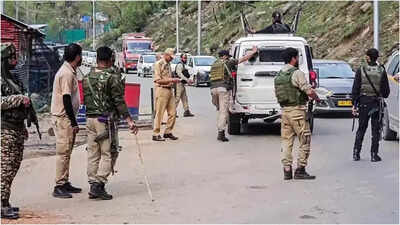
NEW DELHI: A Lashkar-e-Taliba (LeT) associate, identified as Altaf Lalli, was eliminated by security forces in an ongoing operation in Bandipora district, Jammu and Kashmir, officials confirmed on Friday. During the exchange of fire in the Kulnar area of Ajas, two police personnel sustained gunshot injuries. They were immediately transported to a nearby medical facility for treatment, and their condition is reported to be stable. The operation commenced after security forces received specific intelligence about terrorist presence in the area, which led to the subsequent confrontation. “On 25 Apr 2025, based on specific intelligence input regarding presence of terrorists, a Joint Search Operation was launched by #IndianArmy and @JmuKmrPolice in general area Kolnar Ajas, Bandipora. Contact was established and firefight ensued. Operation is in progress.” Chinar Corps of the Indian Army wrote on X. The Indian Army is on a high alert, launching several search operations to neutralise the terrorists following the attack in Pahalgam on April 22, in which 26 people were killed. The attack took place in Baisaran Valley, a popular tourist spot near Pahalgam, where a group of visitors had arrived earlier on Tuesday. This is considered the most devastating terrorist incident since the revocation of Article 370 in 2019. According to survivors, 6 foreign terrorists dressed in Army fatigues, identified their victims by faith, asking them to tell their names and recite Islamic verses before spraying bullets on them from close range.