Trending

‘This is not how you treat freedom fighters’: SC pulls up Rahul Gandhi over remarks on Veer Savarkar


'This is not how you treat freedom fighters': SC pulls up Rahul Gandhi over remarks on Veer Savarkar
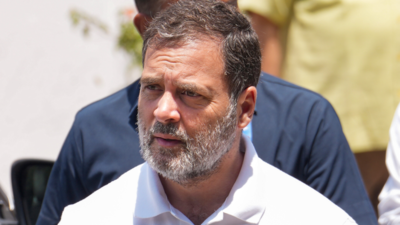
File photo of Rahul Gandhi

NEW DELHI: The Supreme Court on Friday stayed the Allahabad high court order refusing to quash summons to Congress leader Rahul Gandhi in connection with the defamation case concerning his remarks about Veer Savarkar.
During the hearing, the apex court issued a stern reminder to the leader of opposition stating that Savarkar is revered in Maharashtra and warned of consequences for making disparaging remarks about freedom fighters.
The court, notably, referenced historical context, pointing out that Rahul Gandhi’s grandmother, former Prime Minister Indira Gandhi, had written a letter praising Savarkar.
“Does your client know that his grandmother, when she was the Prime Minister, also sent a letter to the praising the gentleman. So, let’s not make irresponsible statements about freedom fighters,” the Supreme Court asked senior advocate Abhishek Manu Singhvi, appearing for Rahul.
“This is not how you treat freedom fighters when you don’t know anything about the history and geography of the country,” the apex court said.
The court also drew a parallel to Mahatma Gandhi’s correspondence during the British era, where he used the phrase “your faithful servant.”
The case stems from Gandhi’s controversial statements about Savarkar during a Bharat Jodo Yatra rally in Maharashtra’s Akola district on November 17, 2022.
Advocate Nripendra Pandey subsequently filed a defamation complaint, contending that Gandhi’s remarks were deliberately intended to defame Savarkar.


Source link

Medha Patkar Arrested: Non-Bailable Warrant Issued in Defamation Case | Delhi News


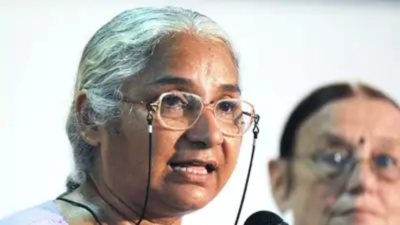
Medha Patkar arrested in Delhi LG defamation case after court issues non-bailable warrant

NEW DELHI: Delhi Police on Friday arrested social activist Medha Patkar in connection with a defamation case filed by Lieutenant Governor VK Saxena in 2001. A senior police officer confirmed the development.
A Delhi court on Wednesday issued a non-bailable warrant against activist Medha Patkar, observing that she was deliberately flouting its sentencing order to submit probation bonds and Rs 1 lakh as a fine in a defamation case.
On Wednesday, Patkar was to appear in court, furnish the probation bonds, and deposit the fine amount. The judge observed that Patkar’s plea seeking adjournment was “frivolous,” “mischievous,” and filed with the intent to “hoodwink” the court.
He warned Patkar that if she failed to comply with the terms of the sentencing, the court would be “constrained to reconsider the benevolent sentence and alter the order on the sentence.”
KEY HIGHLIGHTS:

  • Delhi Police arrested activist Medha Patkar on Friday in connection with a 2001 defamation case filed by Lieutenant Governor VK Saxena.
  • A Delhi court had issued a non-bailable warrant on Wednesday, stating that Patkar was deliberately flouting its sentencing order by not submitting probation bonds and a fine of Rs 1 lakh.
  • The court rejected her plea for adjournment, calling it “frivolous” and “mischievous,” and warned that the lenient sentence could be reconsidered if she failed to comply.


Source link

In Pahalgam terror attack, one Adil drew blood, another shed it saving others | Srinagar News


In Pahalgam terror attack, one Adil drew blood, another shed it saving others

NEW DELHI: In the aftermath of the Pahalgam terror attack that killed 26 people, two men sharing the name ‘Adil Hussain‘ have emerged at the centre of contrasting narratives.
One, Adil Hussain Thokar, is a wanted Lashkar-e-Taiba operative accused of helping execute the brutal assault.
The other, Syed Adil Hussain Shah, a humble pony handler from a nearby village, is being hailed as a hero who may have died trying to stop the attackers.
As security forces hunt for the masterminds, Shah’s family and community are mourning a young man remembered for his quiet bravery.
LeT’s Adil Hussain Thokar: From Pakistan training to orchestrating terror in Pahalgam
Adil Hussain Thokar, a Lashkar-e-Taiba (LeT) operative believed to be involved in the Pahalgam terror attack, had allegedly travelled to Pakistan legally in 2018 via the Attari-Wagah border, where officials say he received arms training before slipping back into Jammu and Kashmir last year.
According to intelligence sources, Thokar played a key logistical role in the April 22 attack, acting as a guide and providing local support to the Pakistani terrorists who ambushed tourists in the Baisaran meadow near Pahalgam.
Security forces, while conducting search operations for Thokar and another LeT member Asif Sheikh, reported that explosives planted inside the homes they raided detonated, destroying the structures. No immediate casualties from the blast were confirmed.
Authorities have announced a reward of Rs 20 lakh each for information leading to the arrest of three LeT militants: Adil Hussain Thokar, Ali Bhai, and Hashim Musa. All three are suspected of orchestrating the attack, which left 26 civilians dead.
Eyewitnesses described chaos as heavily armed gunmen emerged from surrounding forests and opened fire on unsuspecting visitors.
Local pony handler Adil Hussain Shah remembered as braveheart
While one Adil is on the run, another, Syed Adil Hussain Shah, was laid to rest on Wednesday in the village of Hapat Nar, roughly 20 km from the site of the attack. A daily-wage pony handler in his 30s, Shah was the only local civilian killed in the shooting and is being remembered as a possible hero who may have tried to shield tourists from the gunfire.
Survivors recounted how Shah attempted to wrestle a rifle from one of the terrorists during the carnage at Baisaran. Though he didn’t survive, many believe his actions may have prevented more deaths. Former chief minister Omar Abdullah attended the funeral and called on the government to support Shah’s family.
“He tried to stop the attack. We’ve heard he was targeted after he tried to snatch a terrorist’s rifle. I’ve come here to assure the family that the government will stand by them and help in every way possible,” Abdullah said.
Shah is survived by his father Syed Haider Hussain Shah, mother Bibi Jaan, and sisters. His family said he had been working tirelessly to save money for his sisters’ weddings. “We didn’t know anything until the evening. My younger son Nowshad said Adil wasn’t answering his phone. Later, we were told he was among the dead,” Haider recalled, still in disbelief.
While locals honour Shah’s bravery, some security officials have urged caution. “We’ve heard the accounts, but the exact sequence of events is still being verified,” said a senior security officer familiar with the ongoing investigation.


Source link

Google tells remote employees to start working from office 3 days a week or leave: ‘”As we’ve said before …’, says memo


Google tells remote employees to start working from office 3 days a week or leave: ‘"As we've said before …’, says memo

Google is requiring some of its remote employees to return to the office three days a week or risk losing their jobs, marking a significant shift in the company’s work policies years after the pandemic began.
According to CNBC, several units within Google have notified remote workers that their positions will be at risk if they don’t adopt a hybrid work schedule. Some employees previously approved for remote work are being told to relocate within 50 miles of an office or accept voluntary exit packages.
“As we’ve said before, in-person collaboration is an important part of how we innovate and solve complex problems,” a Google spokesperson told CNBC, noting that decisions are being made at the team level rather than as a company-wide policy.
Remote employees in Google Technical Services must switch to a hybrid schedule or accept a voluntary exit package. The company is offering a one-time paid relocation expense for workers to move within 50 miles of an office.
Human resources staff, known internally as People Operations, face similar ultimatums. Those living within 50 miles of an office must choose hybrid work by June or have their roles eliminated, internal memos reveal. Only remote HR employees living more than 50 miles from an office can maintain their current arrangements.

Google co-founder Sergey Brin pushing for even more office time

The return-to-office push comes after Google co-founder Sergey Brin has taken an even stricter stance on office attendance. In February, he urged AI workers to be in the office “at least every weekday,” stating that “60 hours a week is the sweet spot of productivity,” according to internal documents.
Brin emphasized that Google needs to “turbocharge” its efforts to keep pace with AI competition, which “has accelerated immensely.” He criticized employees who “put in the bare minimum to get by,” calling them “not only unproductive but also highly demoralizing to everyone else.”
Google is not the only company in the Silicon Valley pushing employees to show up at the office. The shift is happening across the tech industry as companies reverse pandemic-era remote work policies. Amazon now requires workers to be in the office five days a week, while Meta and most other tech giants maintain a three-day hybrid schedule, consistent with Google’s current official policy.


Source link

Class 10, 12 Result To Be Out Shortly, Direct Link To Check


Uttar Pradesh Madhyamik Shiksha Parishad (UPMSP) Board Result 2025 Class 10, 12: The Uttar Pradesh Madhyamik Shiksha Parishad (UPMSP) is all set to release the Class 10 and 12 results for 2025 today at 12:30 pm. Over 50 lakh students are eagerly awaiting the outcome. Once released, the results will be available on the board’s official websites – upmsp.edu.in and upresults.nic.in. Additionally, the results will also be accessible on the NDTV special page – ndtv.com/education/results – launched to provide students with a hassle-free experience during this crucial time. UPMSP has also announced that, for the first time, the results will be available on DigiLocker, results.digilocker.gov.in.

A total of 25,56,992 students appeared for the High School (Class 10) exams, while 25,77,733 students took the Intermediate (Class 12) exams in 2025. The exams were conducted from February 24 to March 12 at 8,140 centres across Uttar Pradesh.

Direct Link to check UP Board Class 10th Result | UP Board Class 12th Result

Last year, girls outperformed boys, and the trend is expected to continue this year as well. The overall pass percentage in 2024 was 89.55%.

How To Check Results On NDTV Special Page:

  • Visit the NDTV Education portal at ndtv.com/education/results.
  • Navigate to the “Results” section.
  • Click on the link for “Uttar Pradesh Board Class 10 Exam Results 2025” or “Uttar Pradesh Board Class 12 Exam Results 2025,” as applicable.
  • Enter your roll number and other required details.
  • Click on the “Submit” button.
  • Your result will appear on the screen.
  • Download your digital scorecard or marksheet for future reference.

Here Are The LIVE Updates on UP Board Results:


Source link

Sensex Falls Over 1,000 Points Amid Tensions Over Pahalgam Terror Attack


Mumbai:

Indian equity markets are trading in the red as tensions soar between India and Pakistan over the Pahalgam terror attack in Kashmir. Sensex, the 30-share BSE benchmark, has crashed over 1,000 points and is now trading below the 79,000-mark. Nifty, the NSE index of 50 shares, fell below 24,000 points.

The markets went up in early trade, driven by a global rally and fund inflows, but the momentum got lost thereafter, and it gave up the initial gains.

The markets are also upset by unimpressive March quarter earnings by Axis Bank, the third-largest private sector bank of the country. The bank’s shares have fallen 4.65% after reporting a decline in quarterly profit from Rs 7,130 crore in the year-ago period to Rs 7,117 crore.

Besides Axis Bank, major laggards include Bajaj Finance, Bajaj Finserv, Tata Motors, and Tech Mahindra. On the gaining side are TCS, Infosys, Reliance, HCL Tech, HDFC Bank, and ICICI Bank.

At least 26 civilians were massacred by terrorists in a tourist hotspot known as ‘Mini Switzerland’, leading to both countries pulling out their diplomatic staff and suspending visas issued to the other nation’s citizens. (Follow live updates here)

The latest flare-up at the Line of Control was speculative firing by Pakistani troops, which is being seen as an attempt to provoke the Indian side. Indian troops retaliated effectively against the firing from multiple Pakistani posts.

As Indian equities braced for the impact, global equities, including the Asian markets, were charting in the positive territory. South Korea’s Kospi index, Tokyo’s Nikkei 225, Hong Kong’s Hang Seng, and Shanghai SSE Composite were all in green.

Similar trends were seen in US equities, too. Last evening, Nasdaq Composite closed 2.74 per cent higher. S&P 500 jumped over 2 per cent and Dow Jones Industrial Average surged 1.23 per cent.


Source link

Lashkar Chief Hafiz Saeed’s Role Revealed In Pahalgam Terror Attack


New Delhi:

The terrorist attack in Baisaran valley near Pahalgam, which ended in 26 people dying, has brought a long-active terror module operating in Jammu and Kashmir to the forefront. This terror attack, one of the deadliest since the scrapping of Article 370 in 2019, has triggered high-level diplomatic and security responses from the government against Pakistan, which has been accused of harbouring the handlers and backers of this terrorist group. 

The attack was carried out by a hardened group affiliated with the proscribed Lashkar-e-Taiba (LeT) terror organisation, comprising mostly foreign terrorists, with support from local militants, overground workers from the Valley and under the control of 26/11 attacks mastermind and Lashkar chief Hafiz Saeed.

The Module’s Past Operations

According to sources, this particular module has been active in the Kashmir Valley for a long time. Security agencies believe it has been behind several high-profile attacks across the region, including in Sonamarg, Boota Pathri, and Ganderbal. In October 2024, four individuals, including two Indian Army personnel, were killed in a terror strike at Boota Pathri. That same month, Sonamarg witnessed a deadly assault on tunnel construction workers in which six labourers and a doctor were gunned down.  Hashim Musa, one of the main accused in the Pahalgam massacre, is believed to a suspect in this attack.

Junaid Ahmed Bhatt

Junaid Ahmed Bhatt

Following the Sonamarg massacre, a key figure in the module, Junaid Ahmed Bhatt, an A+ category Lashkar terrorist from Kulgam, was neutralised in an encounter in Dachigam in December 2024. Other members of the group managed to escape, dispersing into nearby forested regions. After a major attack, these terrorists typically go underground, hiding in dense forest hideouts until receiving fresh orders from their handlers in Pakistan.

Links to Lashkar Leadership

The module is reportedly controlled directly by Lashkar chief Hafiz Saeed and his deputy Saifullah, both believed to be operating from Pakistan. Indian intelligence agencies maintain that the module receives not only ideological but also logistical and tactical guidance from Pakistan’s military and its intelligence agency, the Inter-Services Intelligence (ISI).

The group’s composition includes a majority of foreign fighters, but several locals and overground workers from Kashmir are embedded within it, providing support and cover. 

The Pahalgam Attack

In the Pahalgam attack, terrorists struck at three separate locations within the Baisaran valley. According to police sources, five people were killed together at one location, two were shot dead in an open field, and others were targeted near a fencing structure around the valley. Those who managed to jump over the fencing and flee were spared. Survivors have said that the attackers even engaged them in brief conversations before opening fire.

The Jammu and Kashmir Police on Thursday released sketches of three suspects linked to the Pahalgam attack. Two are Pakistani nationals: Hashim Musa alias Suleman and Ali Bhai alias Talha. The third, Abdul Hussain Thokar, is a resident of Anantnag in Kashmir. The police have announced a cash reward of Rs 20 lakh for credible information leading to their capture.

Security forces also uncovered a hideout used by the module in nearby forests on Thursday.

Diplomatic Fallout

On Wednesday, the Cabinet Committee on Security (CCS), chaired by Prime Minister Narendra Modi, convened for an emergency meeting. The committee, including Home Minister Amit Shah, Defence Minister Rajnath Singh, External Affairs Minister S Jaishankar, National Security Adviser Ajit Doval, and senior military and intelligence officials, announced a suite of retaliatory measures.

Both India and Pakistan will reduce their diplomatic missions’ staff strength from 55 to 30 effective May 1. All military, naval, and air defence personnel at the Pakistani High Commission in New Delhi have been declared persona non grata and must leave India within a week. Indian advisors in Islamabad will also be withdrawn.

The SAARC Visa Exemption Scheme has been suspended for Pakistani nationals, with all existing visas revoked. Pakistani citizens in India under this scheme must exit the country within 48 hours. The Attari-Wagah land border crossing has been closed indefinitely. Pakistanis currently in India have until May 1 to return.

India has suspended the Indus Waters Treaty of 1960.

Massive protests erupted outside the Pakistan High Commission in Delhi’s diplomatic quarter of Chanakyapuri on Thursday. Security forces were deployed in strength to control the swelling crowds. Across Jammu and Kashmir and several other Indian states, demonstrations were held condemning the attack.


Source link

Two Contrasting Adils Of Pahalgam Tragedy


New Delhi:

In the meadows of Baisaran near Jammu and Kashmir’s Pahalgam, two men named Adil found themselves on opposite sides of a tragedy. One picked up a gun and joined the ranks of the Lashkar-e-Taiba (LeT) terror group. The other, armed with nothing but abundant courage, died trying to protect tourists from terrorists’ bullets.

This is the story of terrorist Adil Hussain Thoker and Pahalgam pony ride operator Syed Adil Hussain Shah.

The attack in Pahalgam on Tuesday afternoon left 25 Indians and one Nepali national dead. It was one of the deadliest terror attacks on civilians in the region in recent years. According to eyewitnesses, heavily armed terrorists emerged from the pine forests and opened fire on unarmed tourists. Panic ensued as hundreds scrambled to escape.

Among the victims was 28-year-old Syed Adil Hussain Shah, who worked as a pony guide, ferrying visitors through the mountainous terrain of Pahalgam. When the gunfire began, Adil, his family’s only breadwinner, did not flee. Instead, he tried to help tourists take cover and even attempted to wrest a gun from an attacker. He was shot multiple times, with bullets piercing his chest and throat.

Family In Mourning

Adil’s father, Hyder Shah, later described him as a “martyr” who sacrificed himself for others.

“We got to know around 6 pm that my son and cousin were in a hospital. People who went looking for him informed me about the incident,” Mr Shah said.

Adil’s mother was inconsolable. “He left in the morning for work. He went up there and never returned. He tried to save others but lost his own life. He used to earn for me, for this house. My husband is sick, we are old. Adil brought us medicines. He used to earn 300 rupees a day. We’d buy rice in the evening and eat together. He was my eldest. Now, who will bring food? Who will bring medicines?” she said.

His younger sister, Ravisa, spoke of how he had planned to take the next day off.

“That day, he said he was not feeling very well and would come home early to take a day off the next day. But he lost his life. We don’t know who killed him. We are told that he tried to snatch the gun when he was shot. Three bullets hit his chest, and one hit his throat,” Ravisa said.

The funeral was attended by hundreds, including Jammu and Kashmir Chief Minister Omar Abdullah, who promised government support for the grieving family. “He tried to stop the attack. He tried to snatch a gun. He was targeted for it. We will ensure his family is taken care of,” Mr Abdullah said.

The Other Adil

While one Adil lost his life protecting others, another, Adil Hussain Thoker, has been named by police as one of the three main suspects behind the attack. Along with two Pakistani nationals, Hashim Musa alias Suleman and Ali Bhai alias Talha Bhai, Adil Thoker is believed to have played a key role in planning and executing the massacre.

According to reports, Adil Thoker is originally from Gurre village in Bijbehara which is around 50 km south of Srinagar. He had crossed over to Pakistan in 2018, but returned to the Valley last year, allegedly working as a local guide for LeT’s foreign fighters.

The Jammu and Kashmir Police have released sketches of the three suspects and announced a reward of Rs 20 lakh for credible information leading to their capture. Security forces have launched an extensive manhunt across Anantnag and Pahalgam to track them down.

Earlier today, Thoker’s house, along with that of Asif Sheikh, another accused in the Pahalgam terrorist attack, were destroyed in separate blasts

Government Response

The government has vowed a strong response to the attack. On Wednesday, in a series of decisive non-military actions, India suspended the Indus Water Treaty, a key water-sharing agreement with Pakistan. It shut down the Attari-Wagah border, halting trade and transit and revoked visas of all Pakistani nationals in India. Those in the country have been given 72 hours to leave.

Security forces have intensified counter-terror operations across Jammu and Kashmir. Senior officials have warned of a crackdown on terrorist networks and their local supporters.


Source link

Apple’s China exodus: All US iPhones to be made in India by 2025


Apple’s China exodus: All US iPhones to be made in India by 2025
Apple will increasingly prioritize iPhones from the India supply chain for its US customers.

Apple is planning to shift the assembly of all iPhones sold in the United States to India by next year, a Financial Times report said on Friday- a bold move fueled by President Donald Trump’s renewed tariff threats on Chinese imports.
The plan is part of a broader strategy to diversify Apple’s supply chain away from China, which still dominates most of the tech giant’s manufacturing infrastructure. If successful, this shift would see over 60 million iPhones produced annually in India by 2026 – doubling current output, the FT report said.
Why it matters
The US is Apple’s most important market. In 2024, it accounted for roughly 28% of the company’s global iPhone shipments, according to IDC. Moving the production of US-bound iPhones out of China not only helps Apple dodge steep tariffs but also reduces long-term geopolitical risk tied to US-China relations.
More immediately, the pivot is a reaction to Trump’s “reciprocal tariff” agenda. His administration slapped China with tariffs that once hit as high as 145% and still include a 20% duty on smartphones. Though some electronics like phones were recently exempted, that relief appears temporary. Trump has also floated new levies aimed at semiconductor-heavy products, potentially impacting Apple’s entire device line.
Zoom in
In the fiscal year ending March 2025, Apple assembled $22 billion worth of iPhones in India – a 60% year-over-year increase, according to a Bloomberg report. About 20% of the world’s iPhones now come from India, a figure poised to grow rapidly.
Most of this production takes place at Foxconn’s sprawling campus in Tamil Nadu, along with Tata Electronics, which acquired Wistron’s operations and now also oversees Pegatron’s production. This marks a turning point for Apple’s manufacturing strategy, which had remained largely centered in China for nearly two decades.
India’s government, under Prime Minister Narendra Modi, is helping pave the way. Apple is tapping into production-linked incentives and may benefit from new $2.7 billion subsidy plans aimed at boosting electronics manufacturing and semiconductors.
The big picture
Apple’s urgency stems from a trade shock in early 2024, when Trump’s tariffs knocked $700 billion off the company’s market value. In response, Apple began exporting Indian-assembled iPhones to the US – a move designed to beat the tariff clock, the FT report said.
Still, challenges remain. While assembly is the final stage in the iPhone production process, Apple is still heavily reliant on Chinese suppliers for components, the FT report added. Experts say shifting the entire supply chain could take years. Bloomberg Intelligence estimates that moving just 10% of Apple’s production out of China could take up to eight years.
The shift also counters Trump’s own call for companies to “bring jobs home.” Analysts say the US lacks the labor force and infrastructure to support large-scale iPhone assembly, making India a more viable alternative.
What they’re saying
“We believe this is going to be an important move for Apple to be able to maintain its growth and momentum,” Daniel Newman, CEO of the Futurum Group, told the Financial Times. “We are seeing in real time how a company with these resources is moving at relative light speed to address the tariff risk.”
Apple declined to comment for the FT report.
Between the lines
The iPhone maker’s pivot also aligns with broader supply chain reshuffling across the tech industry. The pandemic exposed the fragility of China-dependent manufacturing, especially during Covid-era lockdowns at Apple’s largest Chinese plant. Now, geopolitical risk is compounding that concern.
To get ahead of potential supply disruptions, Apple shipped 57.9 million iPhones in Q1 2025 — a 10% jump from the same period last year — as it raced to build inventory in the US before tariffs could take effect, IDC reported.
Consumers also noticed: Apple Stores saw a spike in demand this spring, as shoppers rushed to buy iPhones before potential price hikes kicked in.
What’s next
Apple is set to report earnings next week. Analysts expect the company to field tough questions about the financial impact of tariffs, India’s role in the company’s long-term strategy, and whether production goals for 2025 are realistic.
While Apple’s transition won’t fully sever its ties with China, the message is clear: The iPhone’s future – at least in the US – will increasingly be ‘Made in India’.
(With inputs from agencies)


Source link

What A Owaisi Said On India Suspending Indus Treaty After Pahalgam Attack


New Delhi:

After participating in the all-party meeting called by the government in the wake of the Pahalgam terror attack, All India Majlis-e-Ittehadul Muslimeen (AIMIM) chief Asaduddin Owaisi called for stringent action against Pakistan and appreciated the suspension of the Indus Waters Treaty.

He lauded the decisions taken by the Cabinet Committee on Security on Wednesday.

“It is very good that the Indus Water Treaty has been suspended, but where will we keep the water?… We will support whatever decision the central government takes… This is not a political issue,” he said.

“The central government can take action against the nation that shelters the terrorist groups. The international law also permits us to do an air and naval blockade in self-defence against Pakistan and impose sanctions on Pakistan on arms sales. Why was the CRPF not deployed at the Baisaran meadow?… Why did the quick reaction team take one hour to reach there, and they shot people by asking their religion,” he asked.

He said “false propaganda” against the Kashmiris and Kashmiri students should be stopped…

“I condemn the way the terrorists killed people by asking about their religion…,” he said.

Union Minister and BJP National President JP Nadda, Union Minister Kiren Rijiju, External Affairs Minister S Jaishankar, Congress President, Congress MP and Lok Sabha Leader of the Opposition (LoP) Rahul Gandhi were among other prominent leaders who attended today’s meeting.

Terrorists attacked tourists at Baisaran meadow in Pahalgam on Tuesday, killing 25 Indian nationals and one Nepali citizen while leaving several others injured, in one of the deadliest attacks in the valley since the 2019 Pulwama strike in which 40 CRPF jawans were killed.

Following the attack, India has taken strong countermeasures against Pakistan for its support of cross-border terrorism.

(Except for the headline, this story has not been edited by NDTV staff and is published from a syndicated feed.)


Source link