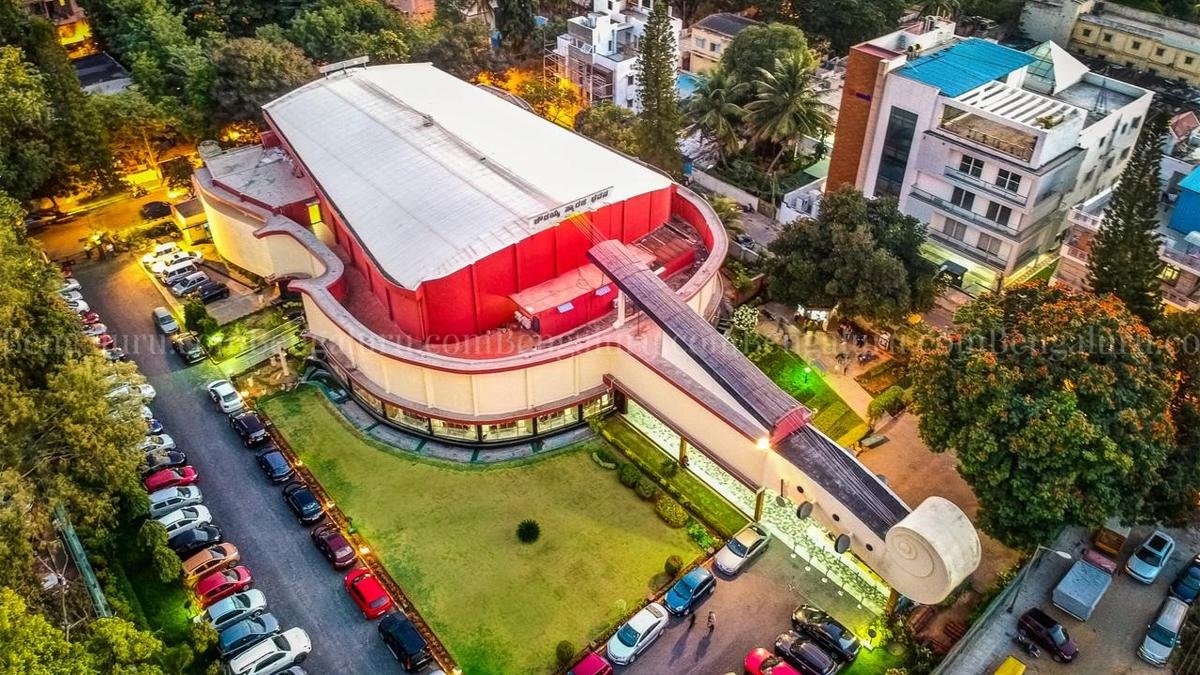
Bengaluru is a city that has evolved with time, and yet, an aspect that remains constant is its vibrant cultural scene. One landmark that stands tall as a beacon of art, culture and music is Chowdiah Memorial Hall (CMH) in Malleshwaram. A building whose iconic architecture was and still is, way ahead of its time, CMH was designed over 50 years ago. This violin-shaped edifice was constructed as a tribute to violinist of renown Tirumakudalu Chowdiah and is still considered to be one of the finest examples of mimetic architecture in the world.
Pioneering design
It was music aficionado KK Murthy, former chairman of the Bangalore Development Authority (BDA) and the first President of the city’s Academy of Music, who came up with the idea of building a memorial to Pitil Chowdiah (Pitil is Kannada for violin) as Tirumakudalu Chowdiah was affectionately called.
Chowdiah played a seven-stringed violin instead of the traditional four-stringed one. Murthy approached a famous Bengaluru architect, Siddalaghatta Narasimha Moorthy (or SN Moorthy as he was popularly called) to design and build the structure.
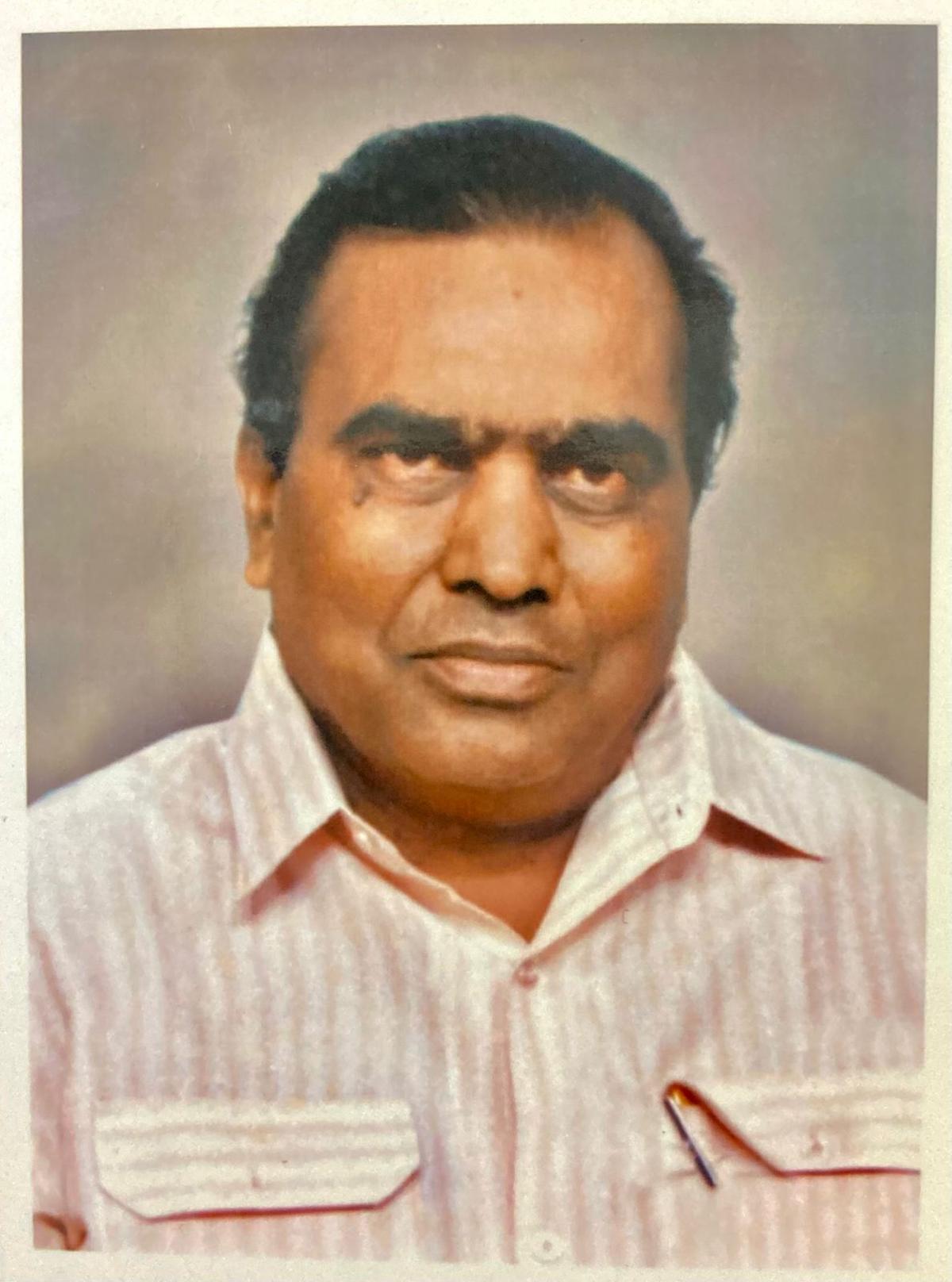
Architect SN Moorthy
| Photo Credit:
Special Arrangement
“My father was already well known in the city, having designed several theatres such as Kaveri and Abhinay, factories like the Bangalore Breweries Factory and the Modern Bakery in Peenya as well as residences of famous personalities such as AV Meiyappan Chettiar of AVM Productions and Hinduja House in Sadashivnagar,” says NM Spoorthy, architect and son of SN Moorthy. “It was he who proposed building the structure in the shape of a seven-stringed violin as an ultimate ode to the maestro.”
Spoorthy adds that the sheer size and scale of the structure remains the highlight of the auditorium considering it was envisaged over 50 years ago. The construction of CMH started after the foundation stone was laid by the then-President of India VV Giri and D Devraj Urs, the then chief-minister of Karnataka in 1974.
“It was the only auditorium in the country with a 1,100 seating capacity specifically designed to host cultural events in the 1980s. My father was a stickler for perfection and detail, and daily carried a violin to the site to ensure every curve and line was perfectly replicated. The building is scaled on an actual violin in the ratio of 1:100,” says Spoorthy.
Moorthy was known for spearheading innovative ideas such as installing the city’s first escalator at Abhinay Theatre, introducing ergonomics in design and giving prominence to green areas and landscaping. When it came to CMH, he introduced several nuances into the design.
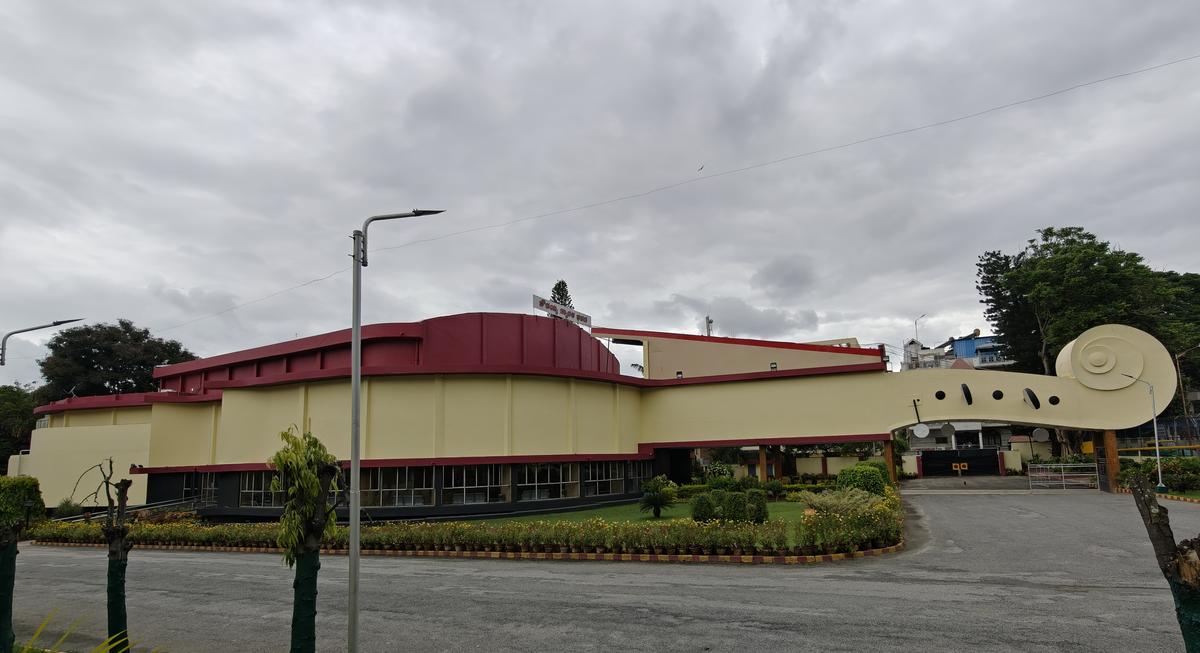
A detailed view of the bow on Chowdiah Memorial Hall. Photo MURALI KUMAR K / The Hindu #ShotonOneplus
“The Plaster of Paris ceiling in the common areas have musical notes that were in keeping with the ethos of the building. He also introduced water bodies at the plinth level to give the structure a surreal, floating visual effect from vantage points. While designing the seating, he was particular that there should be enough leg room for the audience to sit comfortably while enjoying the music,” says Spoorthy.
Challenges galore
Given its complex shape, several challenges cropped up during the building phase. “The main issue was designing the bow and it was fabricated in mild steel on the site itself; it is a massive 140 feet in length. Introducing seven strings on to the structure was another task and my father would not hesitate to bring it down and rebuild it if he was not satisfied with the finish,” adds Spoorthy.
The seven strings were crafted out of heavy gauge and were procured from the main KEB office to ensure it did not rust or warp due to the vagaries of the weather.
Unfading memories
This mega project was a memorable one even for SN Moorthy’s wife, CT Lalitha Moorthy, who handled the administrative works of her husband’s office. “It took hundreds of drawings before CMH came to life. During those days we used natural sunlight and ammonia to get blue prints. But we had to be really watchful to avoid over exposure or under exposure. Many a time I have burnt my fingers using the ammonia,” recollects the octogenarian.
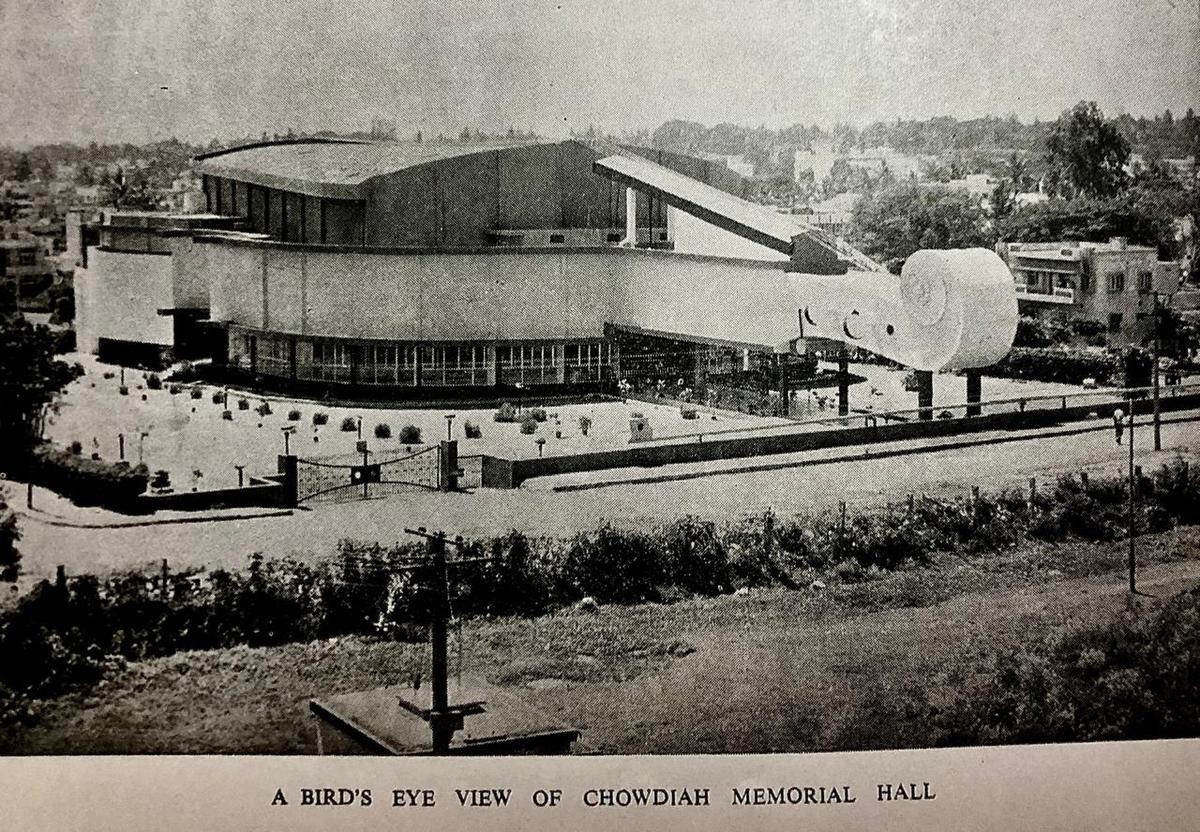
The making of Chowdiah Memorial Hall
| Photo Credit:
Special Arrangement
She fondly remembers accompanying Moorthy to Binny Mills to purchase curtains for the hall. “He chose Spanish gold and navy blue satin material and they were stitched on my sewing machine at our Kumara Park home. But soon the fabric became too voluminous and we had to move it to the site itself,” says the 87-year old who recalls how the 3D model of CMH designed for the inauguration was brought to the site atop a taxi.
CMH was inaugurated in 1980 by the then Governor of Karnataka, Govind Narain. Since then, it has staged several eminent performers such as ML Vasantha Kumari, Ustad Amjad Ali Khan, L Subramaniam, Girish Karnad, Hema Malini, SP Balasubramaniam and numerous foreign artistes. Given its ground breaking design, CMH is a great case study that holds key lessons for many architects today.
“The acoustics of the auditorium are among the best even today and the design offers invaluable lessons that extend far beyond academics and text books,” says Shilpa Spoorthy, architect and wife of NM Spoorthy.
Published – May 23, 2025 06:39 pm IST