When we think of creation myths in our country, we usually jump to the big Sanskrit stories: Brahma sitting on a lotus, Vishnu sleeping on the serpent, Shiva dancing the cosmos into being. But India is not just Vedas and Puranas. India is also Bhil, Gond, Santhal, Khasi, Banjara, Dhangar, Koli, Toda, Rabari, Munda, Nicobarese, and Lepcha. Each of these communities has its own memory of how the world began.
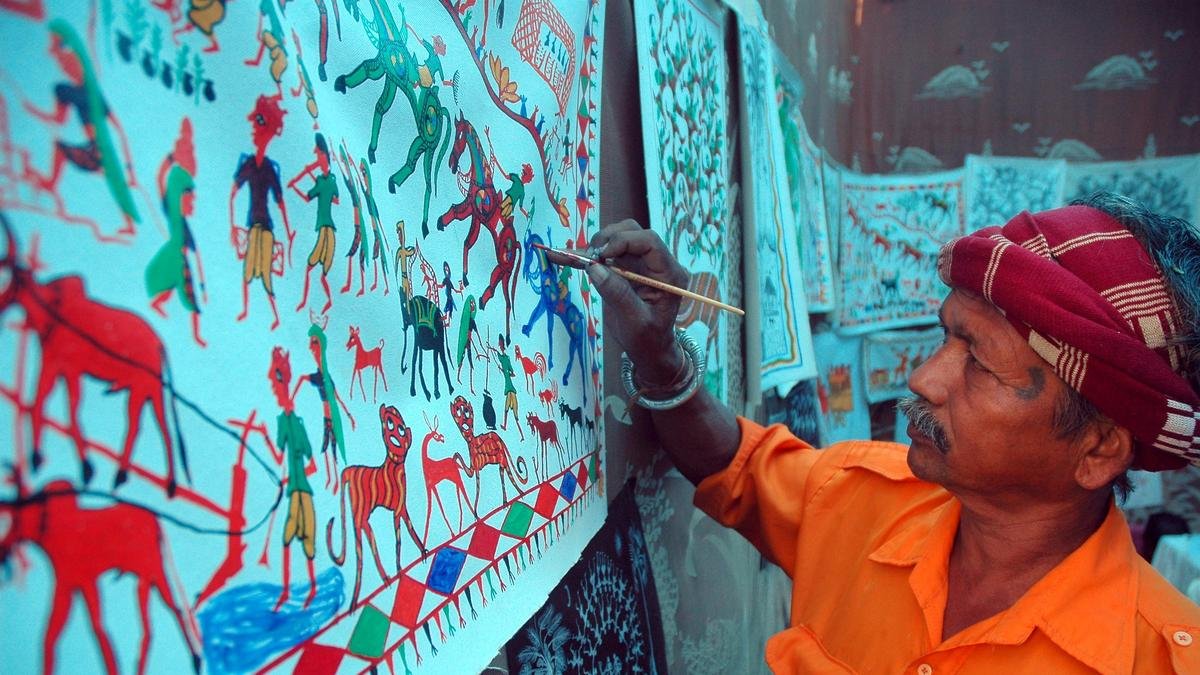
For Bhils of western India, the world began when their deity Babo Pithora dived into the primordial ocean and brought up mud. From this mud came earth. Babo and Rani Kajal decorated the earth like a painted wall, filling it with colour and life. To this day, Bhil homes carry pithora paintings — ritual murals that recreate that first moment of creation. Creation, here, is art. God is a painter.
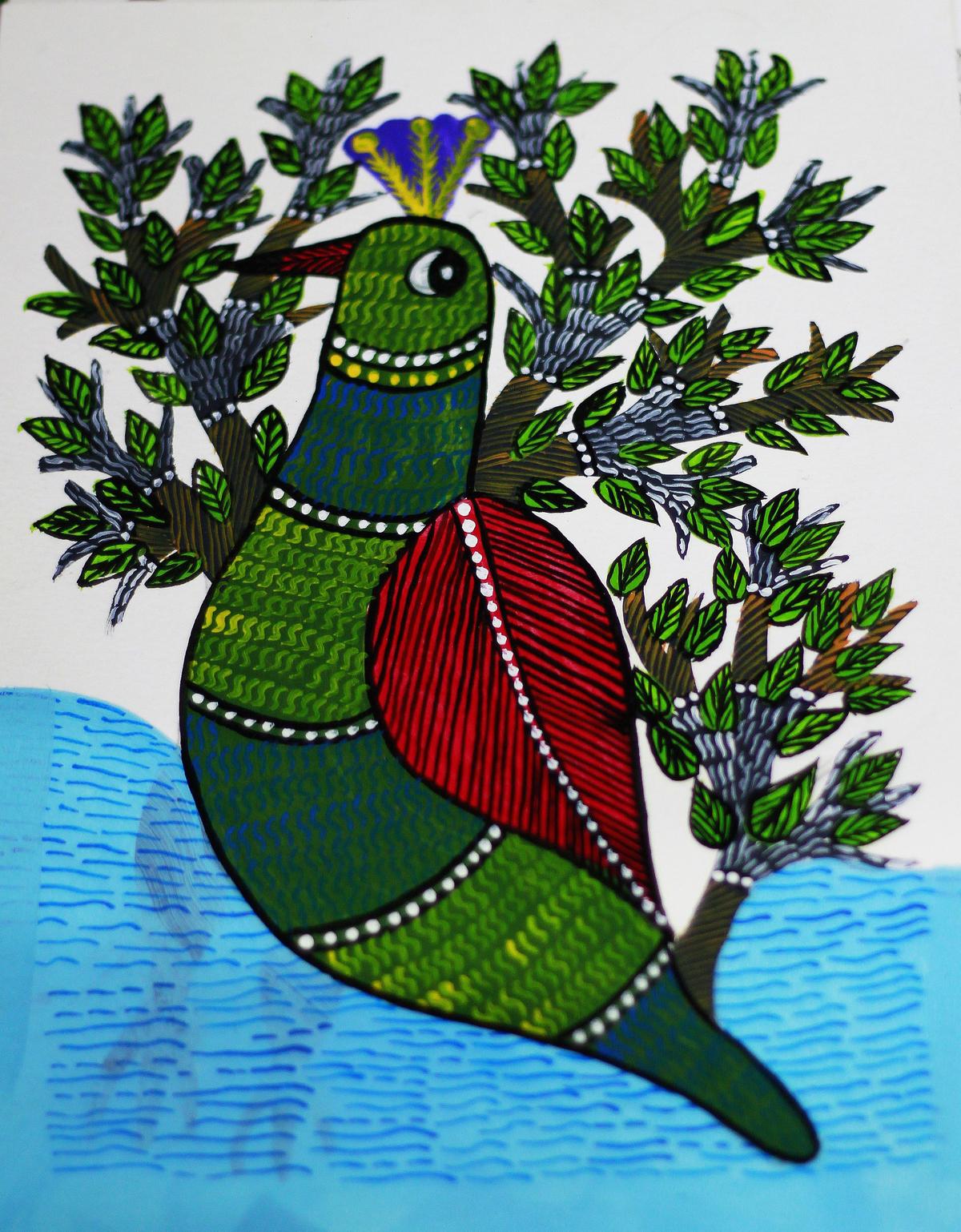
The Gonds say that Bhagavan, the great creator, sent an earthworm to bring up mud from beneath the waters. Then came Lingo, the first bard, who sang the world into culture. In this myth, creation is not complete until someone sings. Music and ritual finish what mud and water begin. It is a reminder that civilisation is not just built but also performed.
Gond art
Of family, loss, livelihood
The Santhals of Jharkhand speak of Thakur Jiu, who placed the first couple, Pilchu Haram and Pilchu Budhi, on a hilltop when the world was still water and sky. A goose brought up mud, land formed, and the couple’s many children populated the earth. The Santhal myth is intimate, domestic, with a clear ancestral tree. It is less about gods and more about parents and children — a family story.
The Khasis of Meghalaya imagine that once all humans lived in heaven, descending to earth by a cosmic tree. But one day, the tree was cut down. The path to heaven was lost forever. The myth explains not only how the world was made, but why we feel separated from the divine. Creation is not just a beginning — it is a loss.

The Banjaras tell of Sevalal Maharaj, who asked for land when the world was covered with water. A fish or turtle brought up the mud that became earth. Sevalal then taught the Banjaras how to trade, roam, and cook. Here, creation is tied to livelihood. The point of the myth is not just to explain the earth, but to explain why Banjaras are forever on the move.
Born from fish eggs and for buffaloes
The Dhangars, shepherds of Maharashtra, imagine that when the earth was barren, God first made sheep, then a man to herd them, then a woman to share his work. Their seven sons became the seven Dhangar clans. Creation here is pastoral. The world becomes meaningful only when there are flocks and shepherds to tend them.
The Kolis of the west coast say they were born from fish eggs. The ocean mother gave them legs so they could live on land, but their heart would always belong to the sea. For the Todas of the Nilgiris, the buffalo came before man. Humans were created just to care for the buffalo and offer its milk in ritual. For the Rabaris of Kutch, Parvati shaped the camel from desert clay and asked Shiva to give it life. The Rabaris came next, to guide the camel across the desert sands.
Each myth reflects its geography. Sea myths make us children of the ocean. Mountain myths make us keepers of buffalo. Desert myths make us guardians of camels. River myths, like those of the Mundas, speak of Singbonga, who sent birds to fetch earth from the cosmic sea so that rivers, forests, and humans could appear.
In the Nicobarese tale, a giant crab lifts the land out of the ocean, and humans are made from the soft inner wood of the first tree. The Lepchas of Sikkim say Kanchenjunga was the first mountain, and its melting snow made the first river, whose clay was used to fashion humans.

Respect for ecology
These myths are not just about cosmology, they are about ecology. They teach us to respect the sea, the forest, the mountain, the desert, the river. They locate human identity in relation to animals — fish, birds, buffalo, camels — and in relation to work, such as painting, singing, herding, trading.
In Brahmanical myths, the world is often created for the sake of yajna, sacrifice. In tribal myths, the world is created for the sake of relationships: with nature, with animals, with each other.
In these many beginnings, we find not one truth but many truths. And perhaps that is the real gift of India — that creation is not a single Big Bang, but a thousand small songs, each sung in a different tongue, each rooted in a different soil, each pointing to a different way of being human.
Devdutt Pattanaik is the author of 50 books on mythology, art and culture.
Published – February 12, 2026 02:50 pm IST