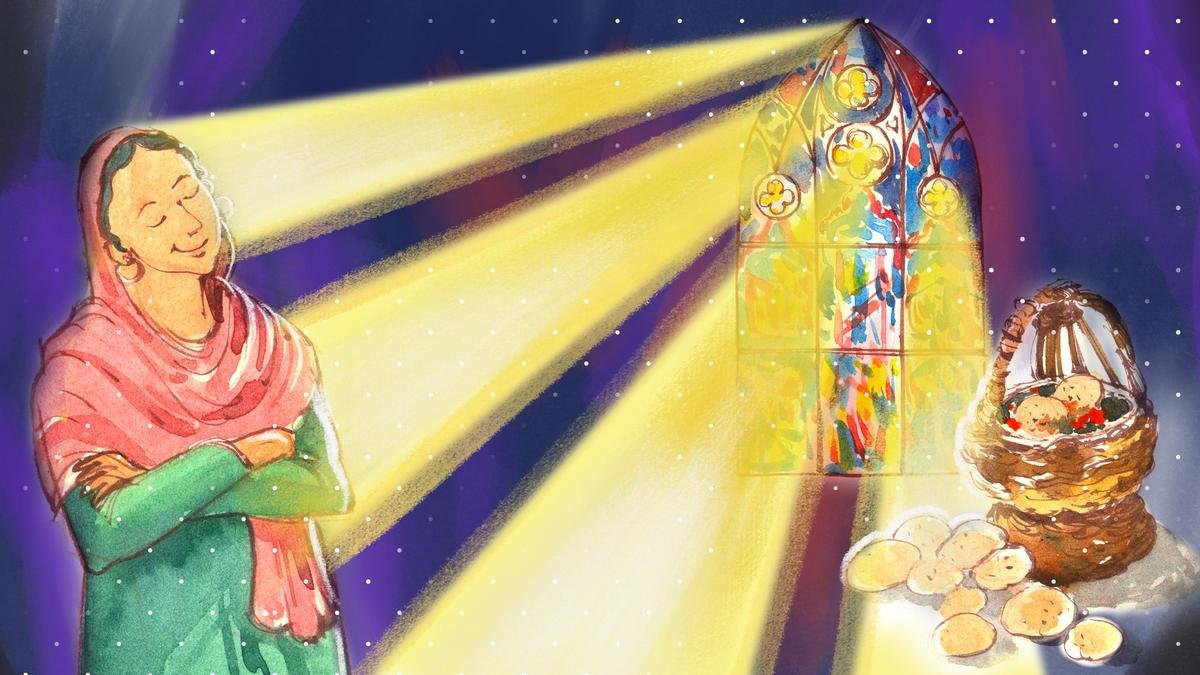
On the third day of chillai kalaan (a period of extreme cold weather that starts on December 21 and lasts 40 days), while everything outside lay buried under a heavy blanket of snow, we all sat in Phuphee’s kitchen trying to hold on to the warmth emanating from the daan (a mud oven). It was my first winter in Kashmir after having spent many years in England.
We were sitting in Phuphee’s kitchen talking amongst ourselves about nothing and everything. Though the topics were harmless enough, one could feel a mild irritation in everyone’s tone, which often presents itself in the late afternoon coinciding with a drop in everyone’s blood sugar.
During chillai kalaan, Phuphee never let the fire in the daan go out. She often woke up in the middle of the night to feed wood and kindling into its hungry mouth. Detecting the rise of temperatures in the kitchen, Phuphee got up, rustled up some potatoes and started roasting them in the kangri (a portable heater made of an earthenware pot inside a wicker basket).
She made a hollow in the middle of the kangri, placed the potatoes inside, covered them with the burning embers and ash, and left them to roast until they were done. She then pulled them out with her bare hands, broke them into two, salted them a little and handed them to us. Once everyone was satiated, they all dispersed for prayers. I was still sitting by the daan raking the embers. She came and sat next to me.
‘Kya daleel myoan gaash? Tche kyazi loatiy? [What’s the matter, light of my eyes? Why do you seem low?],’ she said, gently rubbing my head.

Since I had arrived from England in the late summer and started at the new school, I had found the adjustment challenging. Everything was different. It felt loud and harsh, especially school. I missed my school in England, but most of all I missed my friends.
One day I had a very difficult conversation with a teacher, who couldn’t comprehend why I hadn’t caught up with the new curriculum. She decided the best way to get me to learn faster was to tell me in front of the whole class that I would amount to nothing. I wept bitterly and asked to be excused. I ran out of class, and when I finally came to a stop I found myself in front of the chapel.
The school was a missionary school run by nuns. The chapel was for their use, but the students were allowed to use it, too. I went in and it was very quiet. I walked to the front where there was a pulpit on one side and a statue of Mary on the other. In the middle there was Jesus, on the cross.
I was not a Christian, but I felt reverence and a strange feeling of peace descended over me. It was the first time since starting school that I had felt this calm, and not wanting to let go of this feeling, I sat down on one of the benches at the side. After some time another girl came in. I watched her intently as she walked to the front, dipped her fingers into a bowl and sprinkled water on her head and then sat down.
The next day during break time, I went back. I walked in, sat on the side and after a little while I left. It was a moment of calm in a day that felt overwhelming. Those few minutes in the chapel every day helped me cope.
One day I casually mentioned it to my cousins who went to the boys missionary school. They were shocked. How could I do something so grave? They proceeded to tell me how it was a terrible sin and that on the day of judgement I would be boiled and roasted like a potato in the deep fires of hell. Though I didn’t pay attention to everything they said, I started wondering whether there was any truth in it. I was 15 at the time and though I had never been a deeply religious person, I certainly didn’t want to be turned into fries.
Phuphee sat there listening patiently. She said it was an important question and she would speak to her best friend, Maetonji (a nun who was the matron of a local maternity hospital). I felt relieved that she had not laughed it off. The next day, Phuphee asked me to come to her room. She was roasting potatoes again in the kangri.

She said she had spoken to Maetonji earlier that day and they had both come to the conclusion that I would not be roasted or grilled, and would be safe from god’s wrath. She explained that though sometimes people got a bit confused between gods, in this particular case, there was some overlap in beliefs and that should be enough to see me through.
I was relieved but a small thought niggled away at me. Was it an act of betrayal to find peace with someone else’s god?
‘Myoan jaan [my life], what you have to remember is that sometimes God sends us our answers through channels we least expect from. You know Maetonji is a Christian and a nun. I am a Muslim and clearly not a nun. We are close friends. We are similar in many ways but different, too. There is only one universal fact that you must remember: that we are all potatoes, some boiled, some roasted. Differently cooked but still potatoes,’ she said, a little smile playing on her lips as she got up to get ready for her prayers.
At the door she stopped again and said, ‘A hungry person needs food and a troubled person needs peace. Do you think god, any god for that matter, would be offended by what nourishes the soul of his follower?’
With those words, she washed away any unease that still lingered in my heart and, for the first time since being there, I devoured the potatoes she had left on my plate, to my stomach’s and heart’s content.
Saba Mahjoor, a Kashmiri living in England, spends her scant free time contemplating life’s vagaries.
Published – December 26, 2025 12:01 pm IST