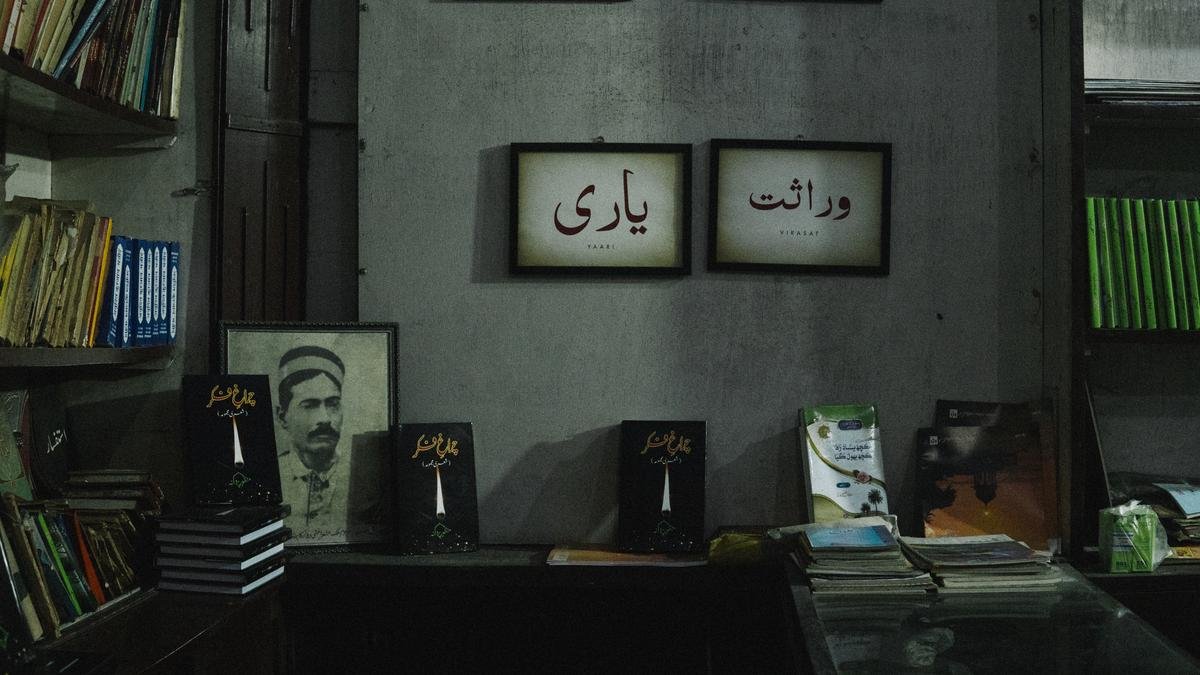
It is while flipping through the yellowed pages of an old feedback register at Danish Mahal that I spot Manzoor Parwana. Seated quietly in his chair, sipping a glass of tea, the 77-year-old retired officer from Lucknow’s Agriculture Department exudes calm dedication, seemingly inseparable from the ancient walls around him.
Down the narrow, bustling lanes of Aminabad, in the heart of Lucknow, Danish Mahal is an Urdu bookstore that has long been a sanctuary for poets, scholars, writers, and thinkers. It occupies the ground floor of a multi-purpose structure, with a simple verandah acting as a buffer from the lively street. Many argue that calling it merely a bookstore understates its value. It’s better seen as a maqam-e-hikmat (place of wisdom), tarbiyat-gah (centre for nurturing), and taleem-gah (institution of learning).
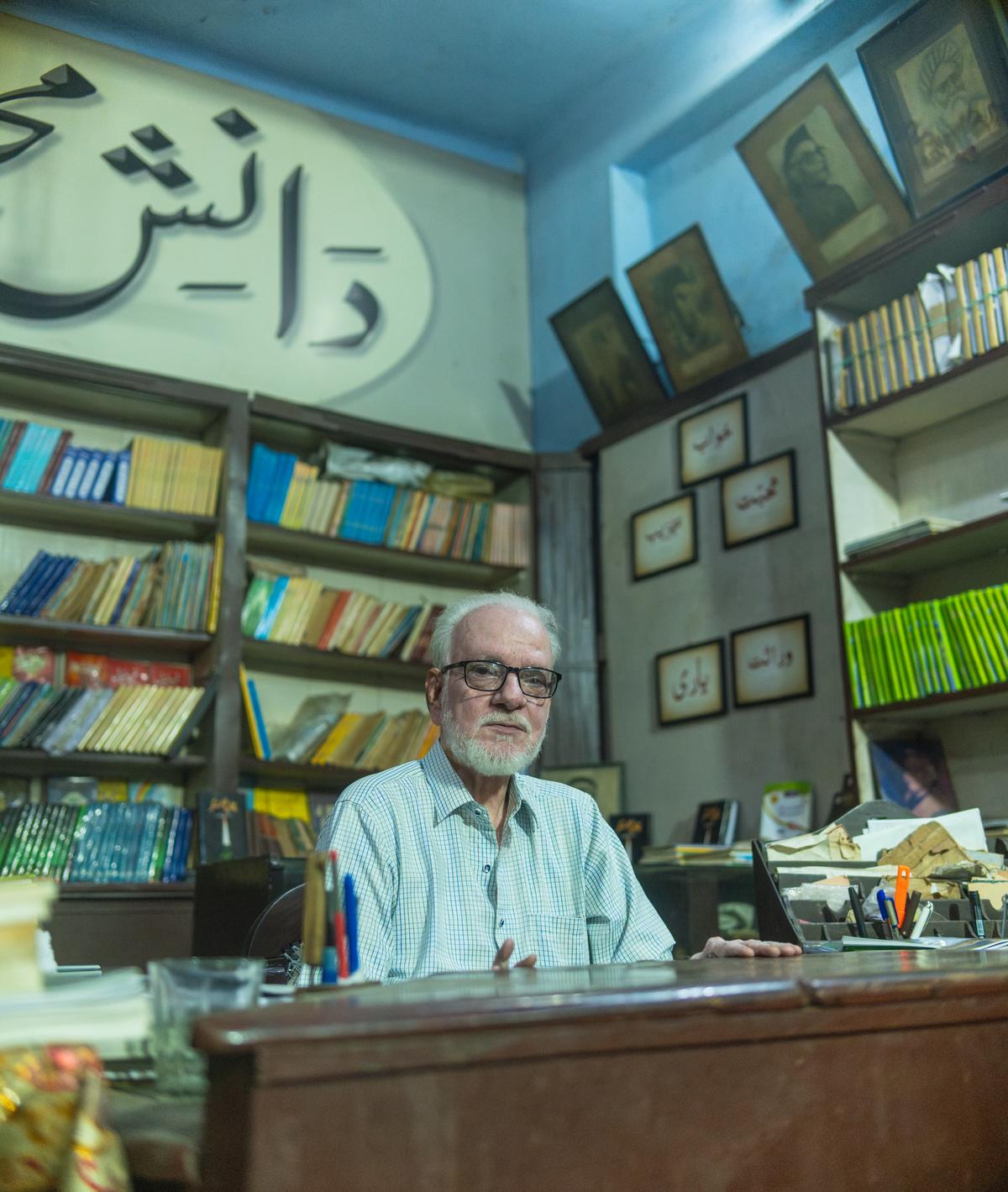
Manzoor Parwan
| Photo Credit:
Monis Khan
Parwana has been coming to Danish Mahal for over two decades; it’s a part of his daily routine now. Over the years, the bookstore has welcomed countless visitors, and not all of them Muslim. Lovers of Urdu writing and poetry, such as author Himanshu Bajpai and poet Abhishek Shukla return again and again. “Urdu was widely spoken across India during the British rule, transcending religious and regional boundaries. The misconception that it is exclusive to Muslims is rooted in colonial-era divisions and does not reflect its true heritage.”
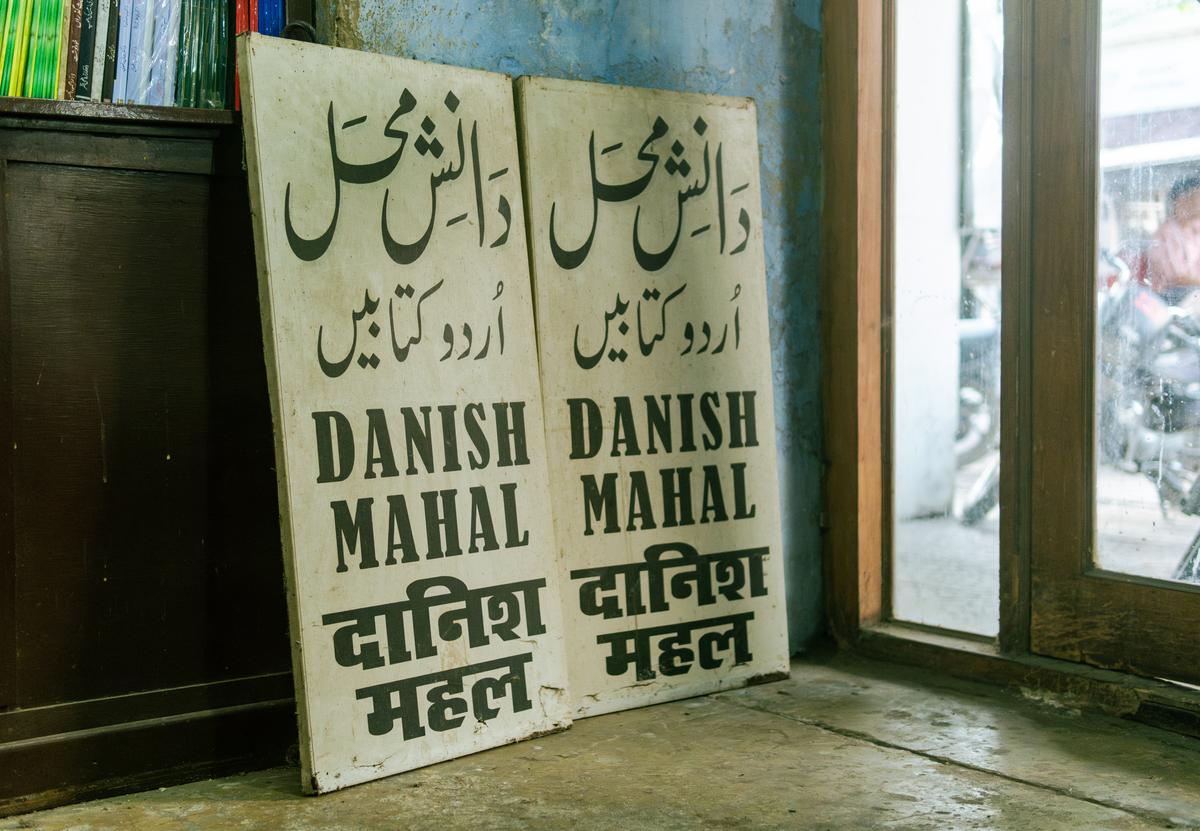
Danish Mahal’s entrance
| Photo Credit:
Monis Khan

Protecting its legacy
Established in 1939 — as an outlet of Maktaba, the Urdu publishing house, before it separated — Danish Mahal was envisioned as a welcoming haven for enthusiasts of the language. Here, under the warm glow of lamps and the musk of vintage volumes, literary luminaries such as Maulvi Abdul Haq (revered as the Father of Urdu), Islamic scholar Abdul Majid Daryabadi, Urdu professor Syed Ehtesham Hussain, and poets Josh Malihabadi and Munawwar Rana gathered to converse about the beauty of the language.
Many even paused to write their reflections in that very register. “We used to engage in deeply nuanced literary conversations. But over time, that vibrancy faded. Now, we lack such voices…most of them have passed away,” Parwana laments.

“It saddens us to witness Urdu’s decline from school syllabi to street signs. Yet, amidst these changes, Danish Mahal stands resilient in safeguarding the city’s rich literary heritage. Despite numerous challenges, it remains a sanctuary for Urdu enthusiasts, offering a diverse collection of literature and a space for learning and reflection.”Mohd Haroon RasheedEditor of Urdu daily Avadhnama, who describes the store as “wahid idara” (the only institution) for literary Urdu books
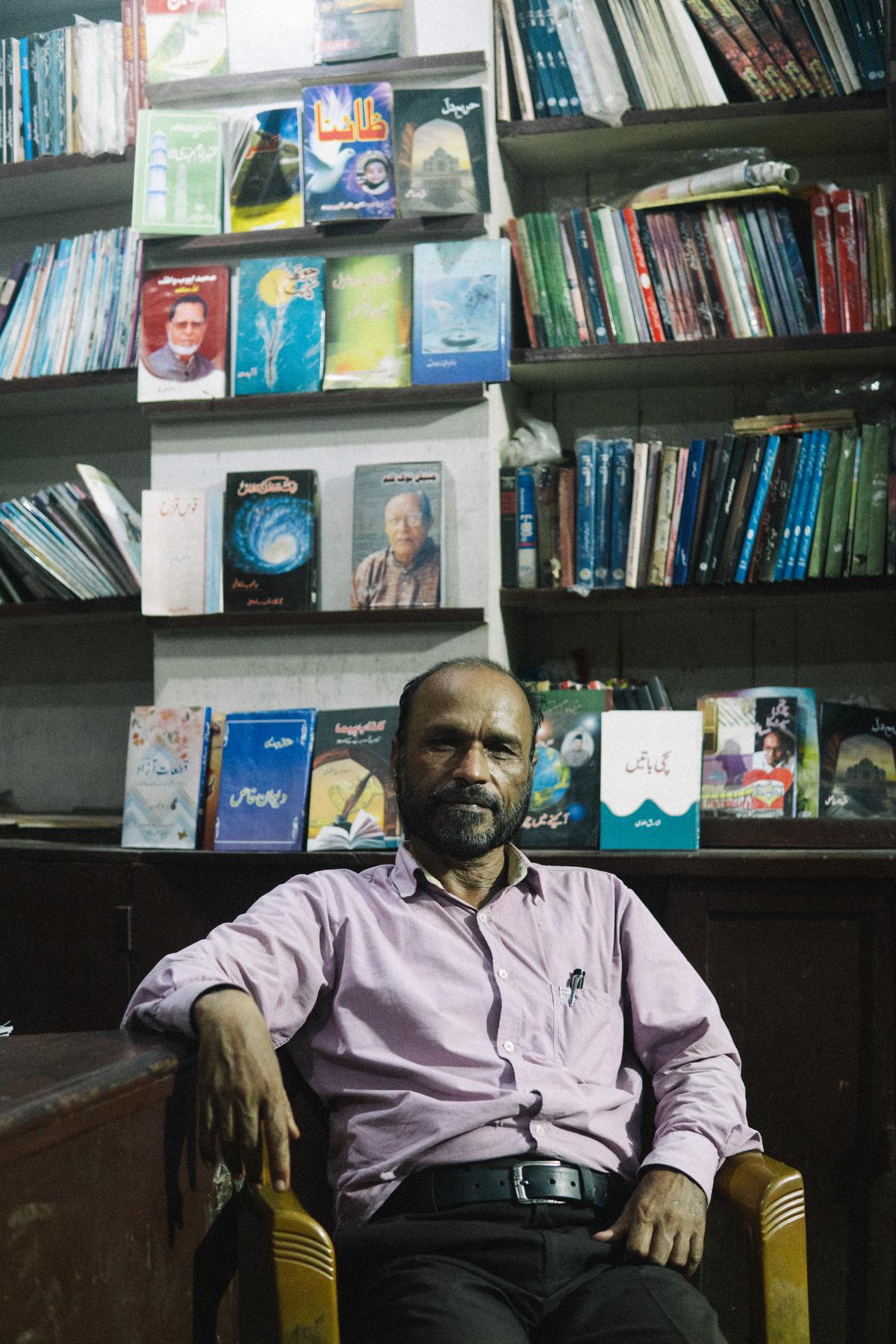
Mohd Haroon Rasheed
| Photo Credit:
Monis Khan
Naeem Ahmed, 55, is the fourth-generation owner of the bookstore. “I feel that as Urdu fades from our streets, signboards, and school curriculum, Danish Mahalstands firm, playing a vital role in preserving Lucknow’s Urdu heritage,” he says. Yet, the signs of decline are unmistakable. Danish Mahal is seeing a steady dip in book purchases and readership. Colleges and universities, which used to place regular orders, have largely stopped doing so. “Buying power has decreased significantly. Institutions such as the Uttar Pradesh Urdu Academy offer discounts to consumers, yet never extend them to independent bookstores like ours, making it difficult for us to sustain operations,” says Ahmed.
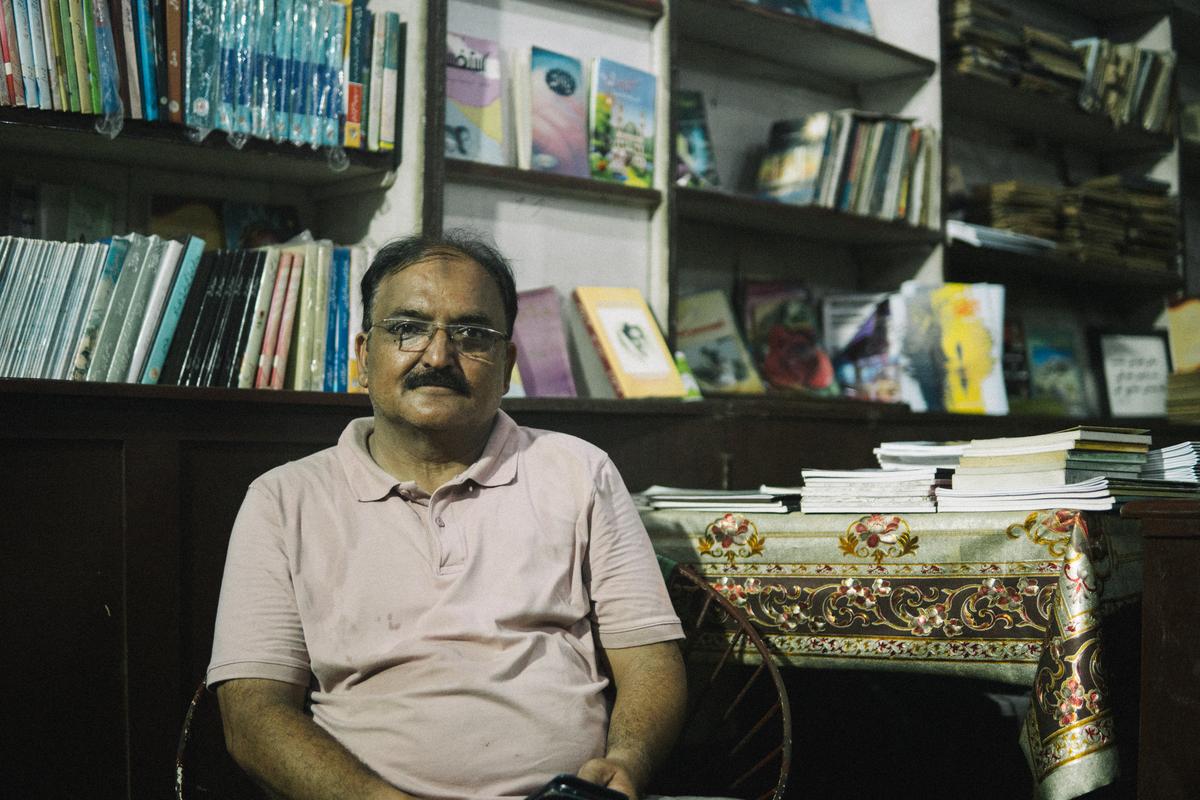
Owner Naeem Ahmed
| Photo Credit:
Monis Khan
Several neighbouring bookstores in Aminabad have shut down. “Danish Mahal survives because of devoted readers, writers, and Urdu lovers. I’m determined [to keep it going], though staying open is hard,” he says. The bookstore hasn’t organised a formal literary event since its heyday, but Ahmed is keen to change that. “We aim to restore the bookshop, revive literary meet-ups, and invite Urdu-language musicians and artists so Danish Mahal becomes a lively, creative space. We’ll also enhance our social media presence to showcase the Urdu classics.” A move that will find fans among its regulars. “The bookstore stands as a rare living link to the city’s rich Urdu-adab heritage,” says Parwana, adding that preserving the literary landmark is essential.
Mohammad Zafar, 60, a retired insurance professional from Faizabad, is another regular. “If I’m visiting relatives in Lucknow, a trip to Danish Mahal is non-negotiable,” he says. “I used to drop by every two or three months to pick up books and magazines, but now that they take [online] orders, it’s much easier for book lovers like me.”
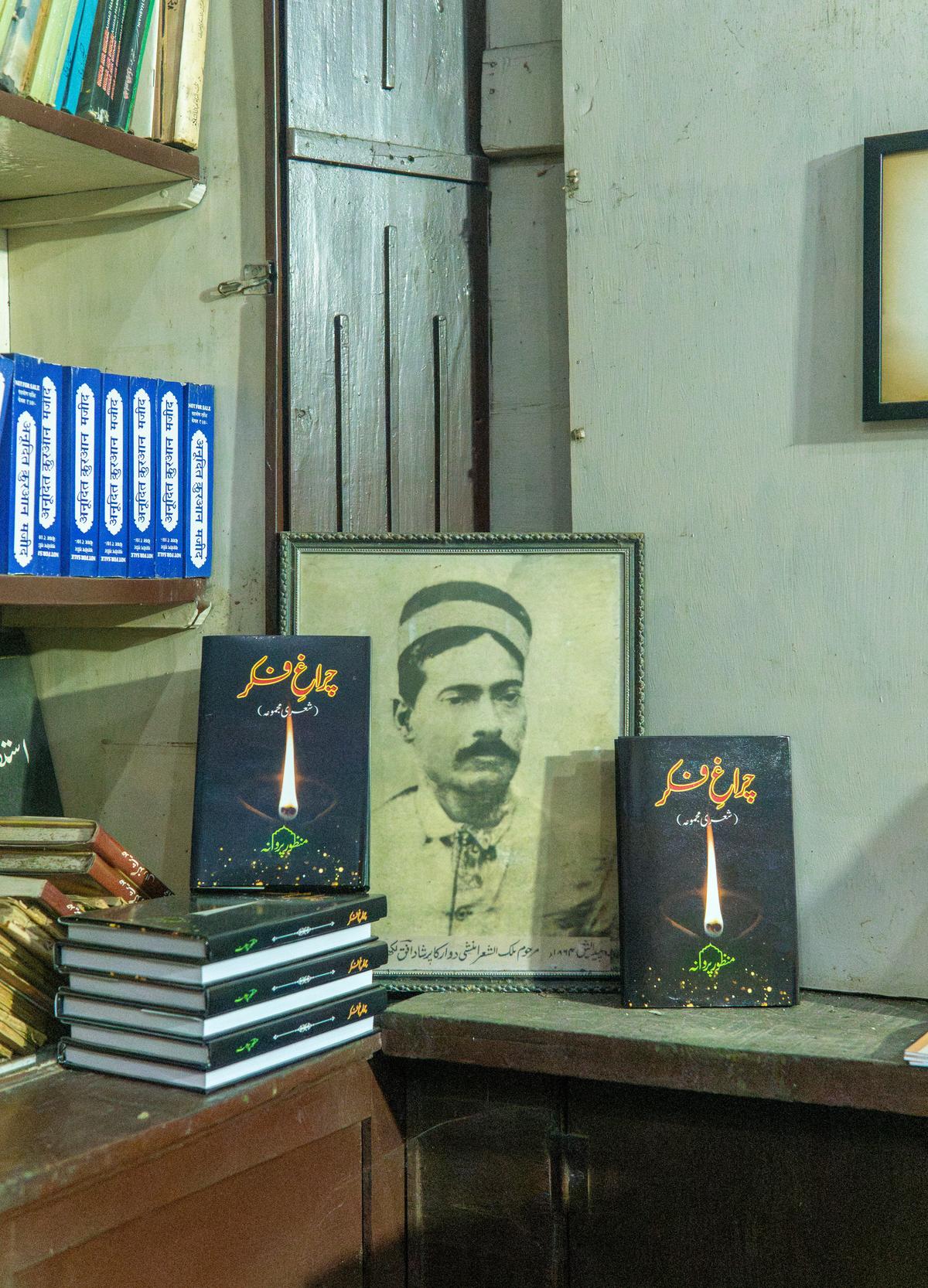
Memorabilia at Danish Mahal
| Photo Credit:
Monis Khan
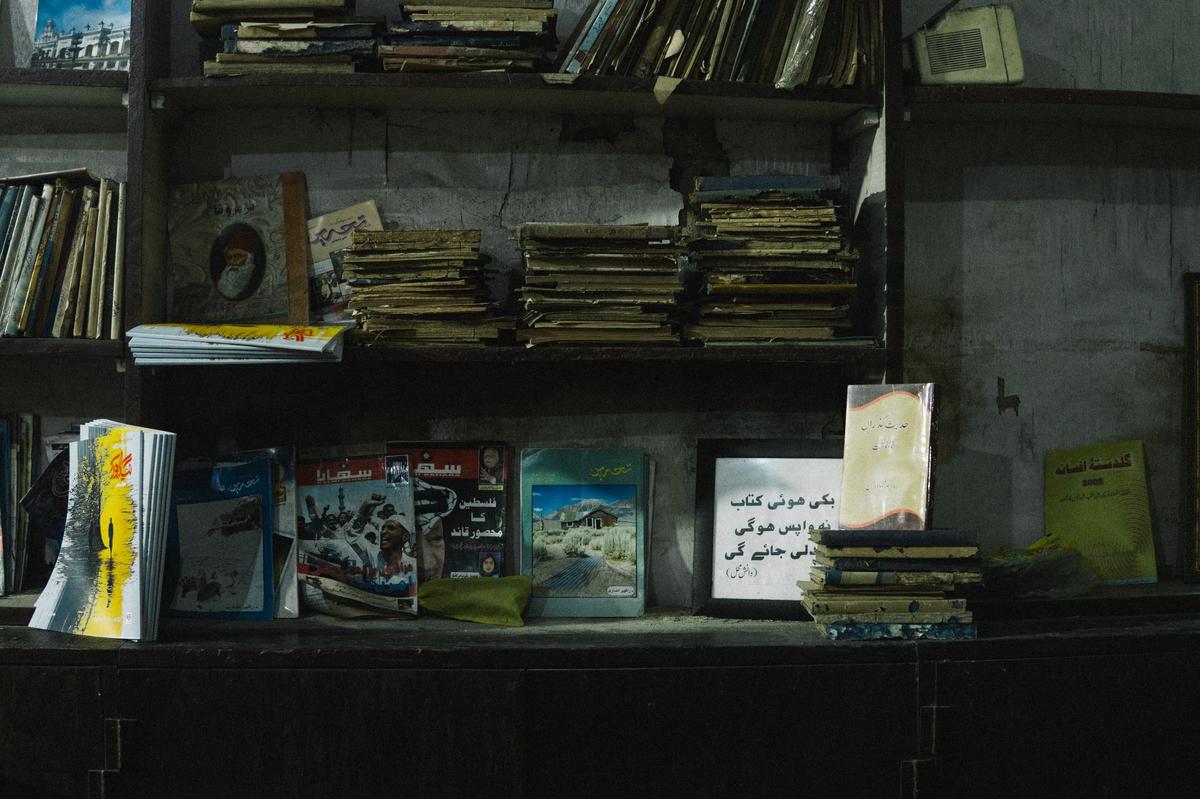
Generations of book lovers
Youngsters are not immune to the charm of this place. Faiz Yunus Majzoob, a 27-year-old pursuing his master’s at Lucknow University, recalls his first visit in 2012. “It was to find an Ibn-e-Safi [Pakistani fiction writer] Urdu novel that I couldn’t find elsewhere. From then, Danish Mahal has called me back. I often end up crouched in a corner, utterly lost in a book.”
For many young people, however, its aesthetic appeal is the main draw. “My generation seems to lack the patience for reading, and treat bookstores more as social media props,” states Majzoob. “Take Faqir Chand [the family-run bookstore] in Delhi’s Khan Market. It’s less a place to browse books than a hotspot for Instagram selfies.” That said, he says some do visit, “especially to pick up [Pakistani poet] Jaun Eliya’s poetry, which gives me hope”.
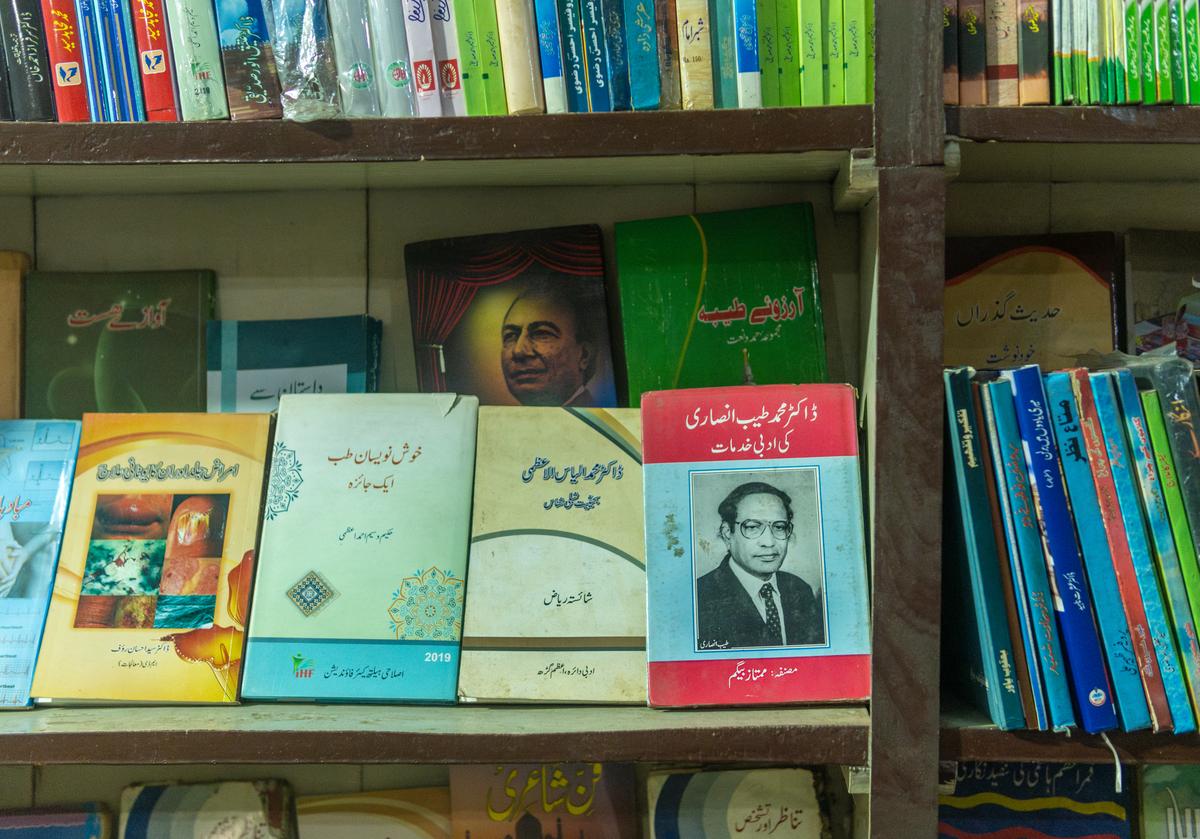
Urdu books at Danish Mahal
| Photo Credit:
Monis Khan
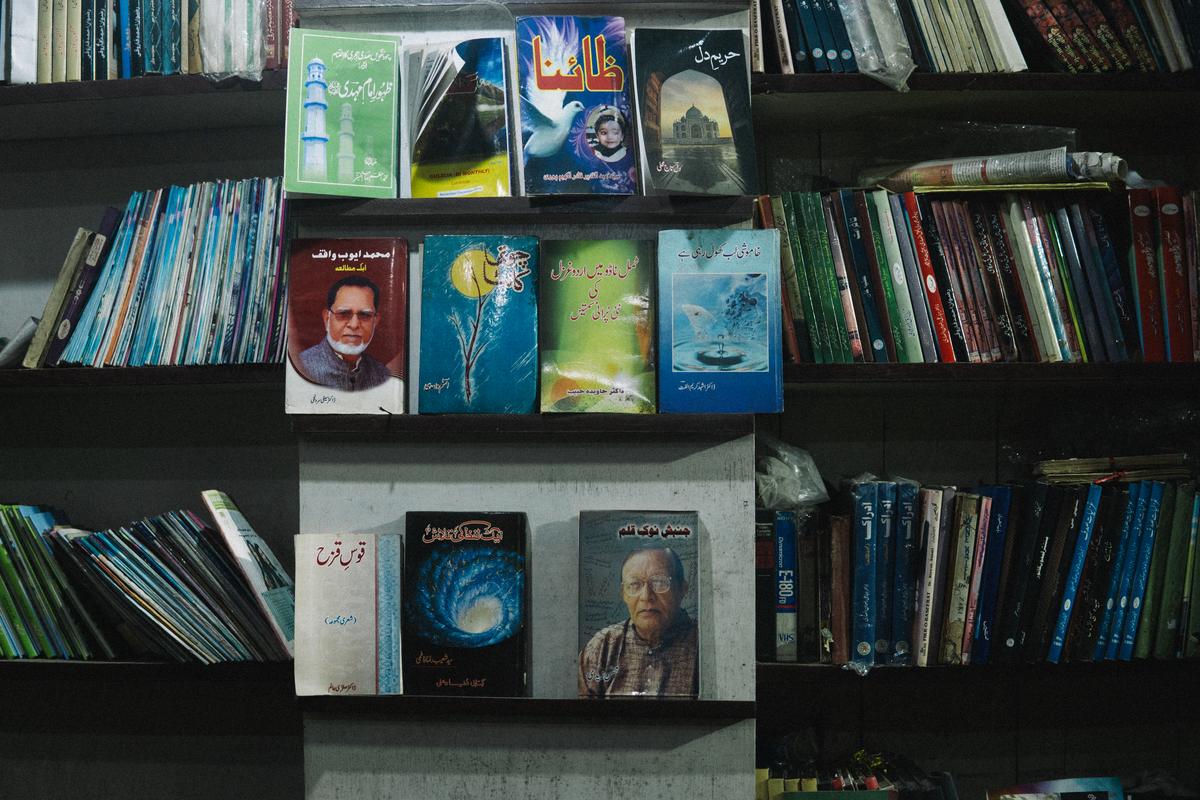
To Reshma Parveen, head of the Urdu department at Khun Khun Ji Girls PG College, Danish Mahal is a tarbiyat-gah (centre for nurturing). She believes that “while challenges persist, the enduring passion for Urdu will ensure its survival”, leading it to continue as a vital institution of knowledge, literature, and language.
She recalls a serendipitous meeting at the store years ago. “I had been searching for a book on [Urdu poet] Mir Taqi Mir for my research, but it was unavailable in the market. Then, I met short story writer and journalist Abid Suhail Sahab at Danish Mahal. He told me, ‘I have the book… you can have it.’ I visited his home in Aliganj [about 8 km from Danish Mahal] to collect it, and the warmth he showed left a lasting impression. To this day, that beautiful volume [written by Urdu writer and philanthropist Maqbool Ahmad Lari] remains on my bookshelf,” Parveen says. She and others cherish the countless connections forged through Danish Mahal where “simply asking for a book might lead to you forming deep, enduring bonds”.
The writer is an independent journalist based in Lucknow.
Published – November 07, 2025 07:07 am IST