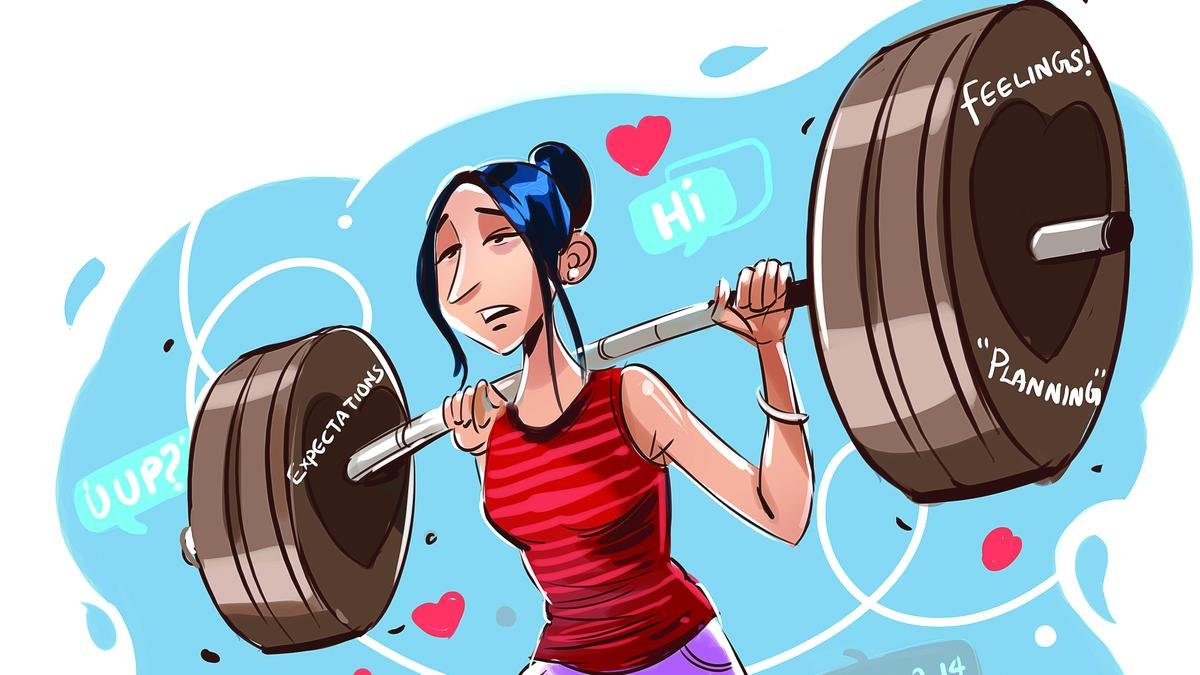
I was sitting with a friend recently — one of those late-evening, chai catch-ups — when she said something that stayed with me. “I think I’d rather be alone than be someone’s emotional admin again,” she sighed, stirring her cup like it had personally offended her. It was one of those remarks that sinks quietly into your chest. And the more I thought about it, the more I realised I had heard variations of the same sentiment from several people in the past month. Different stories, different cities, but the same soft exhaustion: dating has started to feel like a second shift.
Of course, this is not a strictly men-are-the-problem narrative, because that would not be true. I have met men who are more emotionally articulate, responsible, and domestically competent than some of the women I know. I have also met women who prefer outsourcing every logistical and emotional task to the men they date. As a friend put it last week, “It’s not a gender problem anymore — it’s an adulthood problem. Some people grow up. Some outsource it.” That line has been playing on loop in my head.
Emotional deadlifting
And since we are being honest, I am not writing this from a place of detached superiority. I have had a full Florence Nightingale era myself — the phase where I believed I could love men into becoming their better selves. I was the pillow, the therapist, the cheerleader, the emotional laundromat. None of this was asked of me. I simply arrived pre-conditioned for the job, offering five-star care at relationships that barely met the hygiene standards of an OYO. I seemed to attract damaged men like I was running a discount on emotional availability. Beautiful, complicated men with heartbreak stitched into their bones. Men who adored being held but struggled to hold back; who loved being understood but rarely understood in return.
Somewhere in this pattern, a quiet realisation crept up on me: I was not getting the same softness, care, or instinctive emotional generosity that I was pouring in. So I shifted my philosophy of dating. At the moment, I am on something of a hiatus — spiritually and socially — and it feels good. I want a fuss-free relationship with men, something light and breathable. I want to date around, have a small rotation, a neat little Rolodex of five men I enjoy speaking to and seeing when I please. After years of emotional deadlifting, I believe I have earned the right to prioritise ease.
This sense of gentle recalibration is not unique to me. Many women — and a fair number of men — are quietly rethinking their emotional capacity. I know men who are exhausted from being the only ones planning, initiating, regulating, and holding. Women who say their former partners left every emotional responsibility to them, right down to deciding when to have the hard conversations. One of them told me, half amused, half exhausted, “I don’t want to date someone whose idea of emotional availability is sending ‘u up?’ at 11 pm.” Meanwhile, some women are pushing back against the dynamic they watched their mothers and grandmothers inhabit — the unacknowledged, endless caretaking that swallowed their identities.
Layers of complexity
Queer relationships are not exempted from these patterns either. Many gay men go through what psychologists call “delayed adolescence” (I would know!), especially if they came out later in life or grew up suppressing core parts of themselves. This often results in one partner becoming the executive-functioning headquarters of the relationship while the other dances between charm and avoidance. A friend said recently, “I can date a man who’s complicated. I just can’t date a man who’s avoidant and complicated,” and every queer person in the room nodded like they had lived that line personally.
The generational layer is perhaps the most revealing. I once asked my mother if marriage ever felt fulfilling for her, or if it was always work. She told me they were taught to be the anchor, always. Even on days when she did not want to show up, guilt dragged her into performance. When my father was emotionally absent or simply unavailable, she absorbed the slack without complaint. She admitted there were days she wanted to scream at the weight of mothering a grown man along with children, but she swallowed that frustration because she did not want us to ever feel like burdens. “I had to pick up the slack where your father failed,” she said quietly, “That was just the expectation.”
And maybe that is what so many of us are resisting — not men, not relationships, but that template. That inherited blueprint of silent sacrifice.
So here we are, all of us — straight, queer, men, women — trying to choose ease over effort, reciprocity over resentment, peace over depletion. People aren’t walking away from relationships out of cynicism. They are walking towards something softer: friendships that feel nourishing, homes that feel calm, connections that do not demand emotional heavy lifting.
In the end, it is not a war between men and women. It is a quiet rebellion against depletion. And finally, gratefully, peace is beginning to win.
A fortnightly guide to love in the age of bare minimum
Published – December 05, 2025 05:08 pm IST