When I first interviewed Pinakin Patel for a magazine profile almost two decades ago, he had already left Mumbai for Alibaug, back then a sleepy, rural landscape where few from the big city ventured. Electricity was patchy, so was Internet connectivity. Back then, Pinakin was considered an iconoclast (“I’m always 10 or 20 years ahead of my times,” he quips). Today he’s considered a visionary, prescient enough to see a future where urban Indians want a slice of village life.
This ability to foresee what will come has shaped the self-trained architect, interior designer, fashion designer, art collector, and all-around aesthete’s prolific career. It’s no wonder then that the 70-year old is now the subject of an exhibition marking 50 years of his practice.
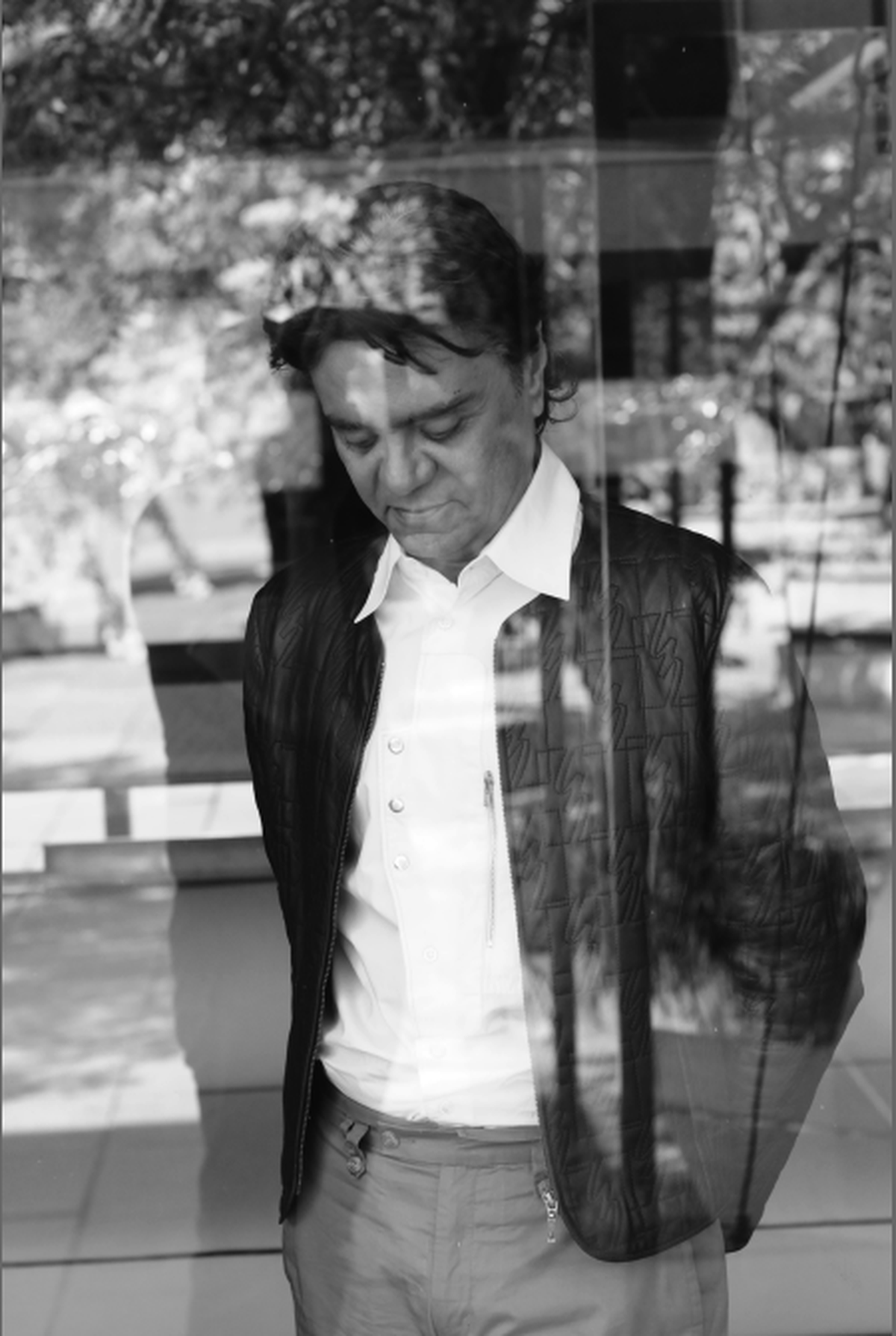
All-around aesthete Pinakin Patel
Titled The Turning Point, the exhibition is an expansive survey of Pinakin’s work, curated by Pavitra Rajaram, creative director of Nilaaya Anthology, and her Mumbai-based team. It is the first time an interior designer has been accorded a retrospective of this nature. “I feel like I’m getting married again,” he laughs. “The engagement is over, now comes the main event.”
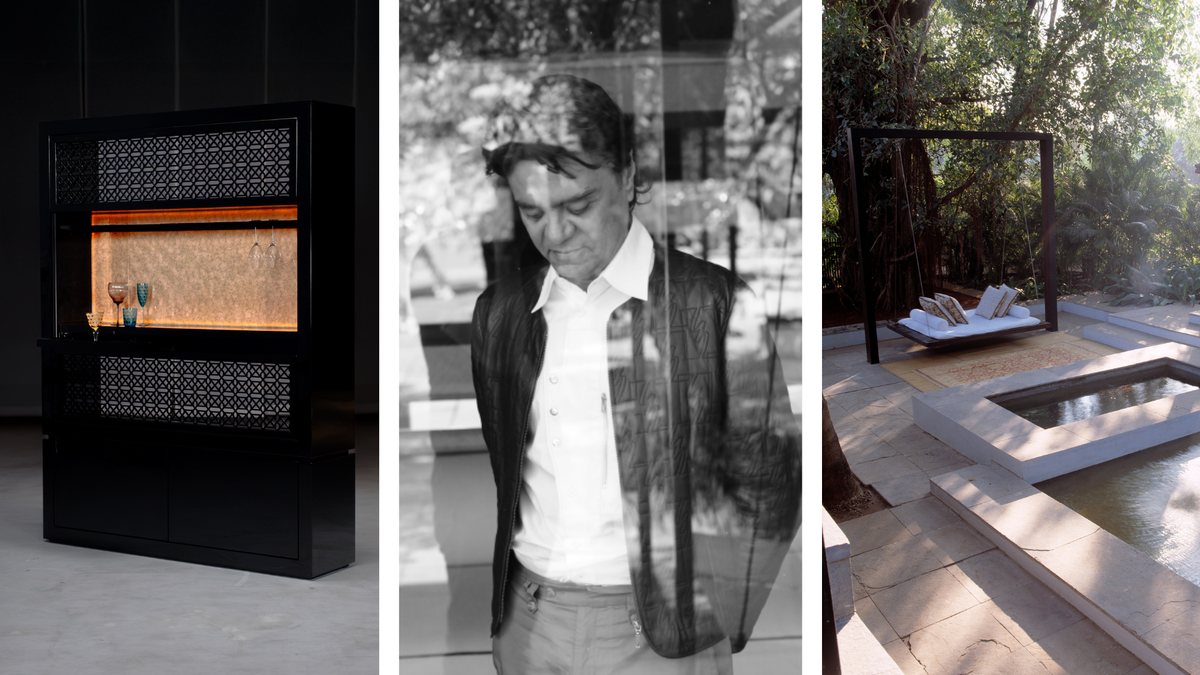
The show features 11 signature designs, including the Jhoola Bed, Brahmaputra Dining Table, and Jali Bar, alongside 19 decorative objects and artworks from Pinakin’s personal collection. “Pinakin’s work has shaped design in India for over five decades, and this retrospective was conceived as a tribute to that enduring legacy,” says Rajaram. “His ability to seamlessly blend tradition with modernity, along with his deep connection to materials and nature, and the way his philosophy of living has influenced his design — the why informing the what — makes his journey one we wanted to share.”
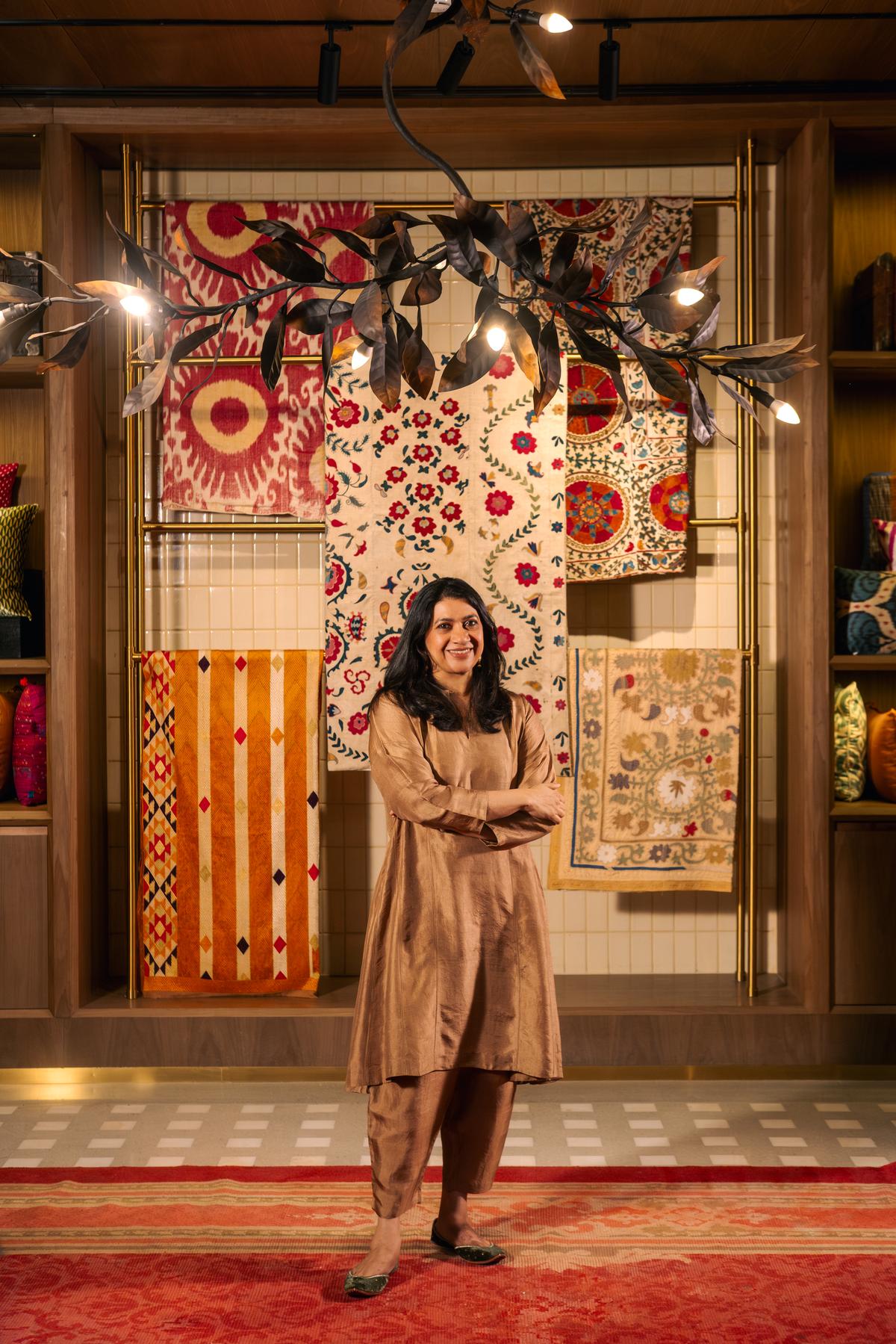
Pavitra Rajaram, creative director of Nilaaya Anthology
| Photo Credit:
Aditya Sinha
It also includes works by the late Dashrath Patel — artist, designer, and mentor to Pinakin — who played a key role in founding the National Institute of Design. A limited-edition book and a short film will follow in the coming months, and select works will be auctioned by Mumbai auction house Pundoles at the end of March.
‘A student in every field I entered’
On a sunny morning in his 7,000 sq.ft. central Mumbai home, Pinakin sits amid art, antiquities, and books accumulated over decades. Reflecting on the retrospective, he admits he was “genuinely surprised”. Having volunteered for years at institutions such as the National Gallery of Modern Art (NGMA) and other nonprofits, he assumed any such recognition would come from a museum or government body. Instead, the initiative came from the private sector — a shift he finds telling.
“The world has changed,” he says. “Cultural responsibility has moved. Governments come and go. Corporates, at least the good ones, know what they want and how to do it.” He points out that over a hundred people are involved in the exhibition, working with notable efficiency. “It’s actually delightful.”
Across five decades, one constant has been Pinakin’s refusal to see himself as an expert. With no formal training in design, curiosity has always mattered more than mastery. “I was a student in every field I entered,” he says. Trained initially as a chemist to join the family business, he pivoted in 1984 when he opened Et Cetera, a shop selling curios and crafts. “I didn’t know what more I would add to it, hence the name,” he says. At the time, India had no organised lifestyle retail. The shop became his classroom.

The Jhoola Bed, one of Pinakin’s signature designs
| Photo Credit:
Aditya Sinha
It was there that a client, Shailaja Jhangiani, asked if he did interiors. “I didn’t even know what interior design meant,” he admits, declining the job. She left her card anyway. Around the same time, architect Kiran Patki began sourcing accessories from him for ITC hotel projects, including ITC Windsor Manor and Bukhara. In an era before easy access to suppliers, Pinakin travelled across India’s craft centres, sourcing antique copper and brass vessels discarded as stainless steel and glass cookware gained popularity. “All those bartans you see at Bukhara, I sourced them,” he says.
Buoyed by this experience, he returned to Jhangiani, who gave him a copy of a magazine which featured the American fashion designer Bill Blass’ home and asked him to recreate it. “Imitation is how you learn,” he says. “The danger is getting stuck there.”
Master of all
Architecture followed just as unexpectedly. While working on interiors for industrialist Rahul Bajaj’s family in Pune, Pinakin suggested hiring an architect. Bajaj refused. “You do it,” he said. That 1987 commission became Pinakin’s first architectural project. Since then, he has designed homes for clients including Radhe Shyam Agarwal, co-founder of Emami Group; the Bhartias, the industrialist family from Delhi; Harsh and Sanjiv Goenka (of RPG and RSPG Groups, respectively); the Nopany industrialist family, and actor Shabana Azmi and lyricist-screenwriter Javed Akhtar. He has also built institutions such as the Kolkata Centre for Creativity.
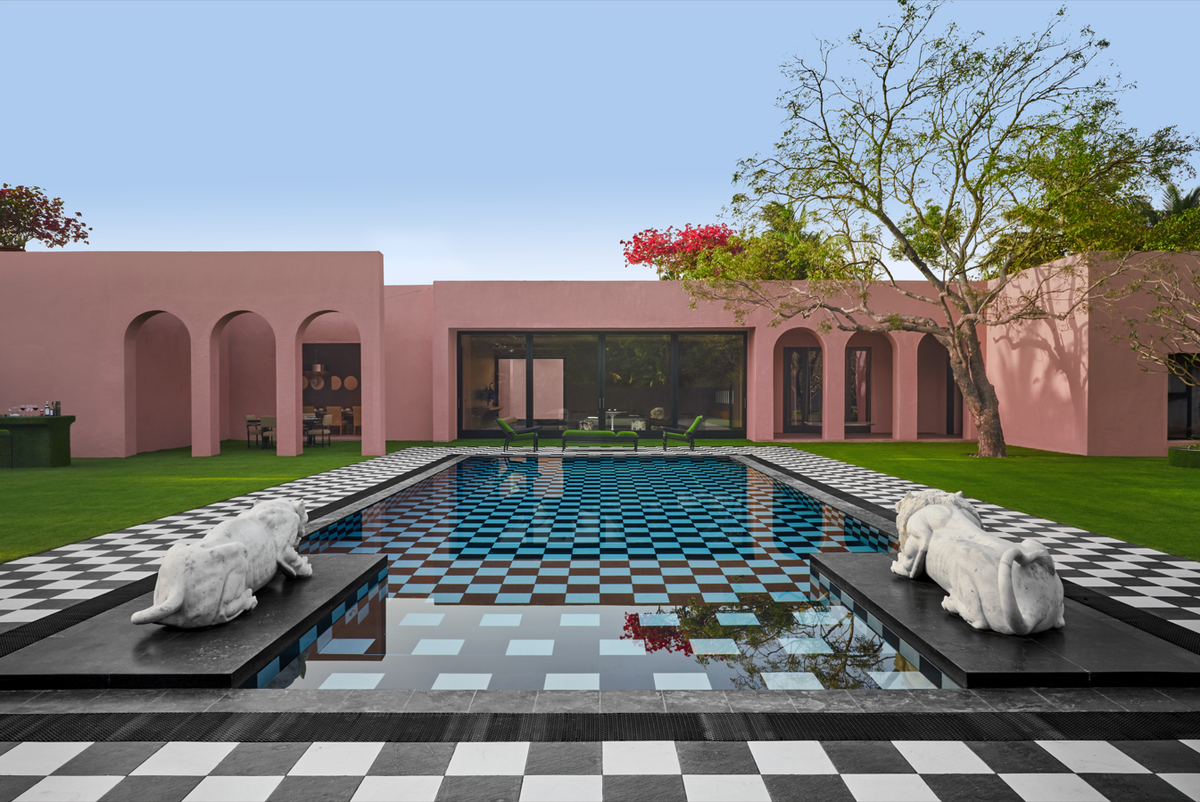
The minimalist Prive Villa in Alibaug
| Photo Credit:
Ashish Sahi
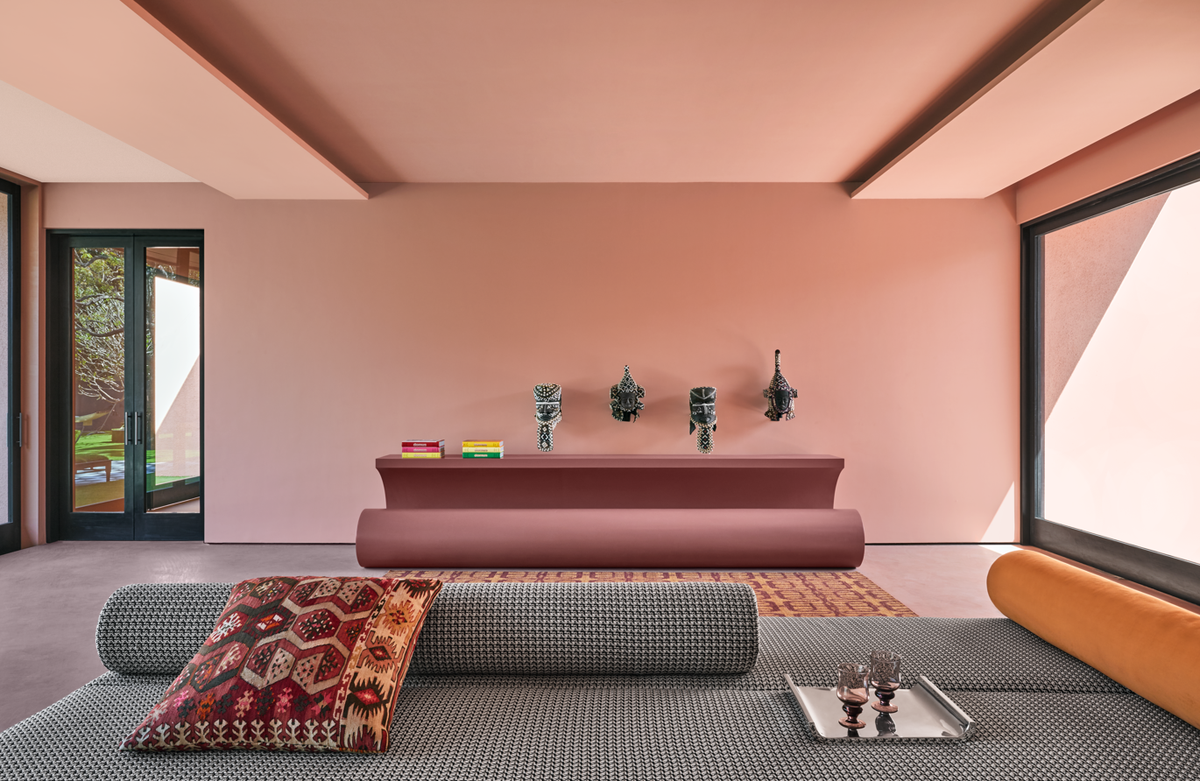
The art-filled luxury villa is designed by Pinakin Patel
| Photo Credit:
Ashish Sahi
Across disciplines — retail, interiors, architecture, fashion — Pinakin’s defining trait has been reinvention. “I enter a discipline, learn intensely, and then I leave,” he says. When he moved into fashion, he taught himself garment cutting using YouTube tutorials. What drives him is a search for beauty, not just in objects, but in lifestyles and nature.
A formative influence was his mentor Dashrath Patel, a Padma Shri and Padma Bhushan awardee. Pinakin believes Dashrath never received proper recognition and recalls years spent trying, unsuccessfully, to secure institutional acknowledgment for his work — appointments with institutions and meetings with corporates, all ending in polite refusal. Dashrath remained unfazed. “Time is a continuous affair,” he would say. “In another lifetime, I will become famous.”
The lesson stayed with Pinakin. “Nobody makes you famous,” he says. “You have to plan for it.” Markets reward predictability, he believes, but both Dashrath and Pinakin resisted being boxed in. “Every decade, I reinvented myself,” he says. “I respond to what’s happening around me.” Sustainability, for instance, never felt like a trend to him. “Climate was going to revolt,” he says. “It was obvious.”
Sanctuary in Alibaug
The boldest decision of his life came in 1999, when he left Mumbai for Alibaug. Professionally, everything was going well — money, visibility, press. “I was in a sweet spot,” he says. “And I was miserable.” City life, clients, even his friends irritated him. Alongside this ran a philosophical shift — from a search for beauty to a search for sublimity, influenced by Advaita thought. “I wanted to find a higher joy,” he says. “So I could stop critiquing everything around me.”
The move was instinctive, and risky. Pinakin credits his wife, Dolly (Hima), a talented gardener (she co-founded the well-known south Mumbai nursery Bageecha and is the magician behind the greenery in their Alibaug house) for making it possible. “She’s been the anchor,” he says. “Without her, I’d have gone off the rocker.”
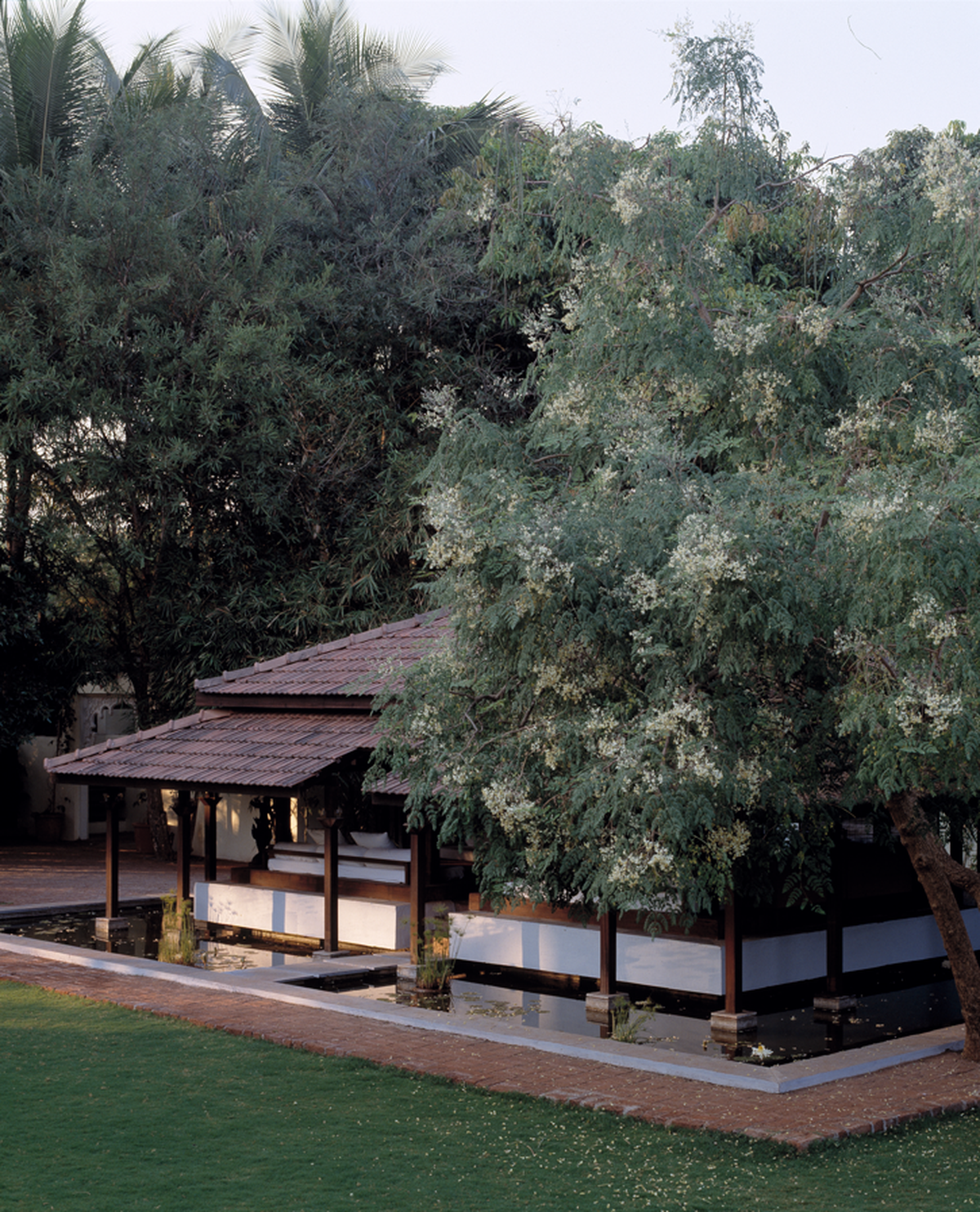
Pinakin Patel’s Alibaug house
Today, the couple live on a three-acre Alibaug property lush with water lily ponds, butterfly gardens, and dense foliage that buffers the now-busy road nearby. The house holds around 70 artworks and antiques; Pinakin admits, with characteristic nonchalance, to placing an M.F. Husain painting outdoors under a chikoo tree. In total, he owns nearly 1,000 artworks. Next door is Pinakin Studio, a retail and exhibition space employing around 80 people, mostly local and informally trained. “People come from all over India to buy furniture and objects,” he says.
For Pinakin, the upcoming retrospective is not a culmination. “I don’t see a straight line, I see movement,” he says. Looking ahead, he says his calling card will read ‘Pinakin Patel, Facilitator.’ “I want to be the platform through which designers can display their talent,” he explains. “Come to Pinakin Studio with your ideas, and we’ll make them here.” It is, fittingly, yet another reinvention.
The Turning Point opens on January 18 at Nilaaya Anthology and is on till March.
The writer is a Mumbai-based journalist and author.