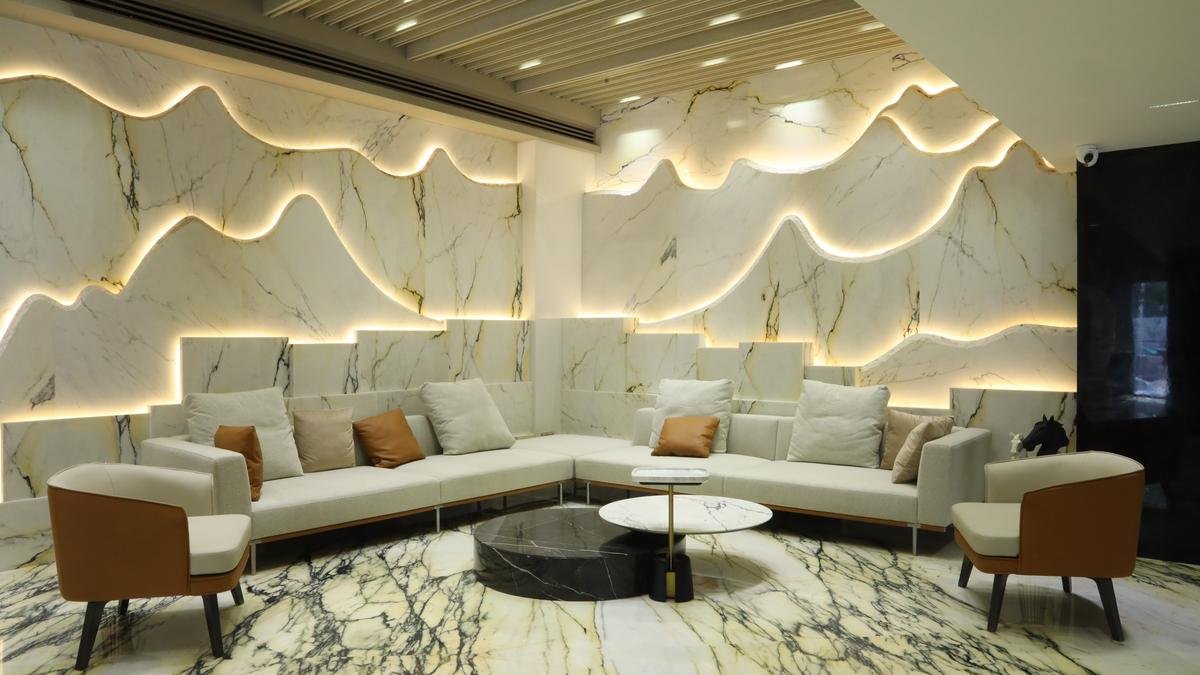
Designing a space normally involves balancing form and function.
But many a time, architects push boundaries of creativity to incorporate elements of surprise and intrigue. This is the point where art and architecture blend to create focal points that not only enhance visual appeal but also elevate emotional experience. Think ornate staircases, elaborate ceiling patterns or even magnificent pieces of art that blend seamlessly into a space.
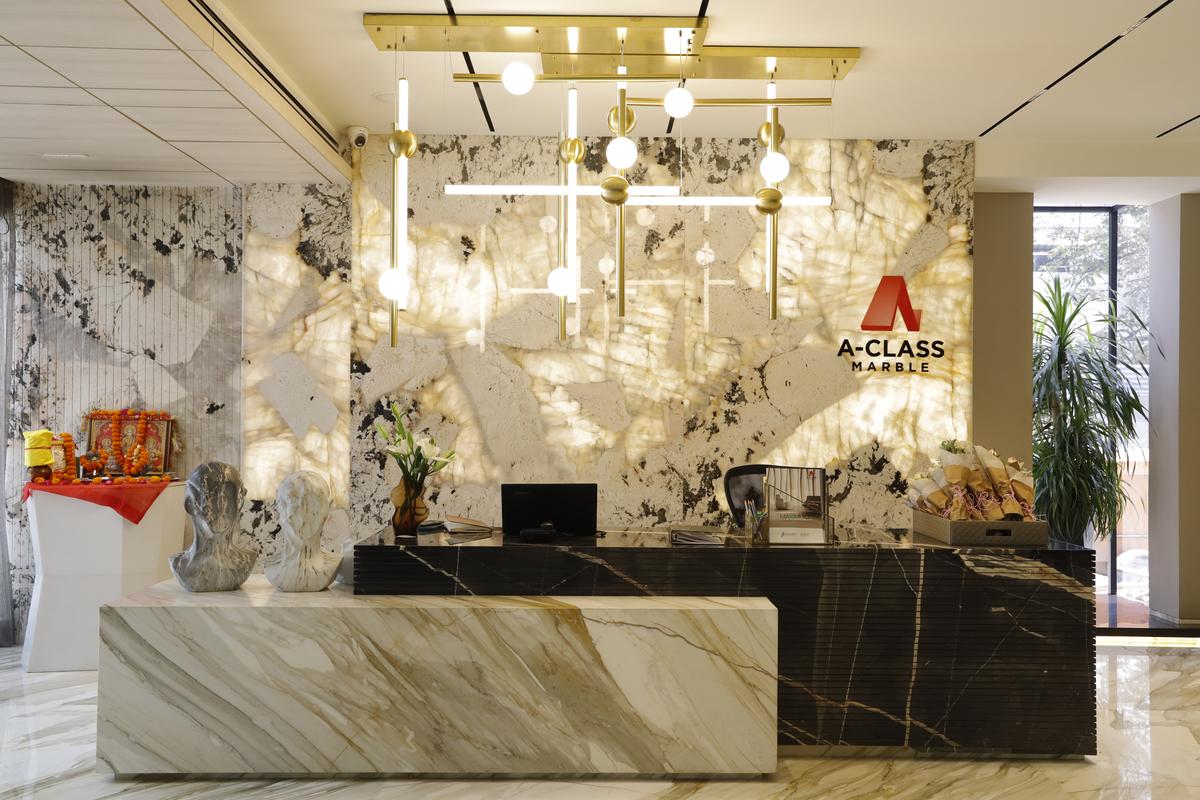
A striking dialogue between light and stone at every turn.
| Photo Credit:
A Class Marble
“Sculptural interior design moves beyond neutral, generic spaces to create interiors that carry meaning, emotion and memory. By shaping space and form within otherwise nondescript structures, sculptural interiors foster a deeper emotional connection with their users,” says Amit Aurora, partner, groupDCA, a design firm in Kolkata.
He adds that the growing relevance lies in its ability to evoke feeling, honour cultural narratives, and create memorable spaces, while remaining inherently functional.
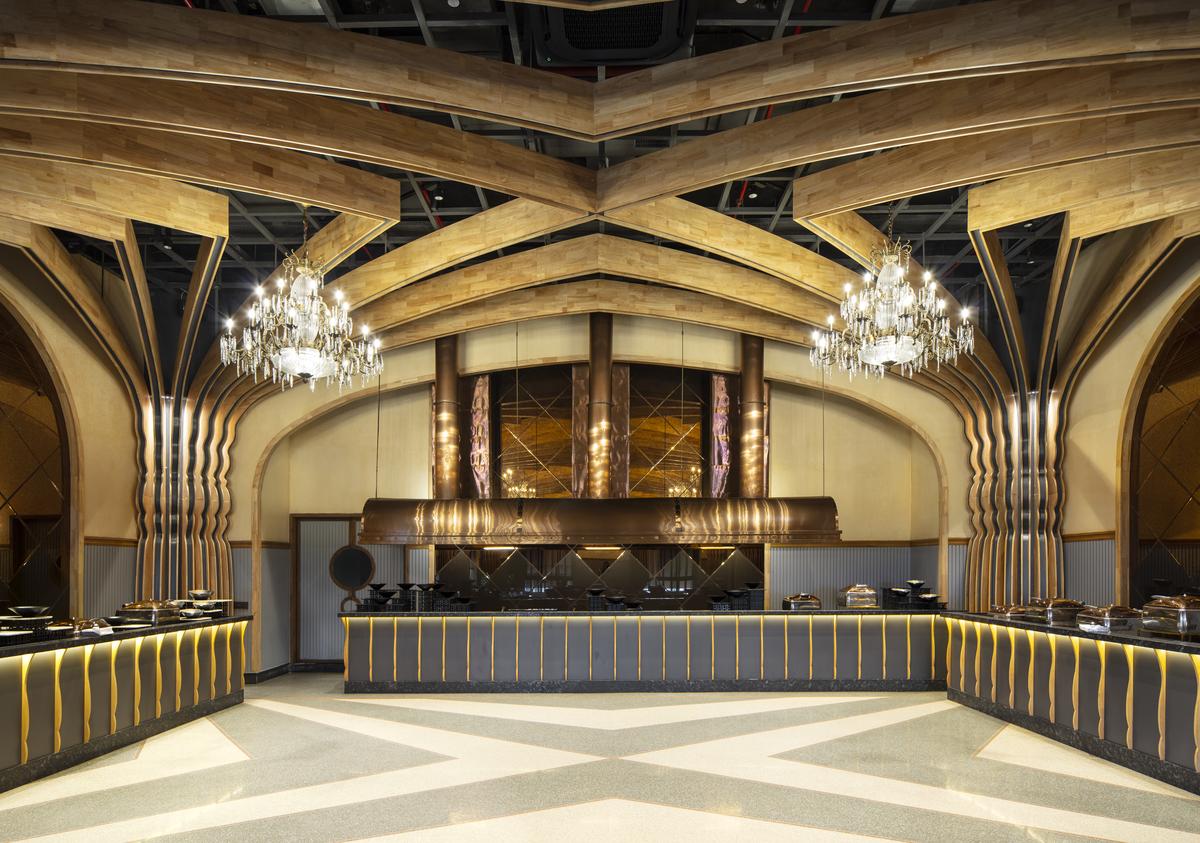
The interiors boast a warm and earthy colour palette that complements the space.
Sculptural interior design is an approach where form, shape and material guide the spatial narrative.
Form in focus
The key elements of sculptural interior design lie in how a space is shaped and experienced in three dimensions. Form and volume take priority, with furniture and architectural elements designed as strong, intentional shapes. In marble-centric sculptural interiors, form takes precedence over ornamentation.
Challenges & risks
The impact of such elements on the overall structure and its stability needs to be thoroughly studied. Balancing innovation with structural feasibility and functionality requires careful planning and execution.
The complexity of sculptural interiors lies as much in execution as in design. Forms such as cross-vaulted ceilings and intricately profiled columns demand a high level of precision in fabrication and installation, particularly when they must maintain consistency across a large spatial volume. However, these challenges are addressed long before construction begins.
Use of certain materials involves multiple challenges. For example, brass being a relatively soft metal, brass demands precision during bending to achieve the intended curves without compromising structural stability. Integrating electrical conduits within these curved brass forms for the lighting elements complicates the fabrication and installation process.
Before introducing sculptural elements, it is important to understand how the inhabitants move through and use the space daily. “Sculptural design must emerge from function and lifestyle rather than aesthetics alone. Scale, circulation, light, and the relationship between levels play a crucial role in determining where such elements are best suited. These interventions work particularly well in transitional and communal spaces — staircases, double-height areas, entrance volumes or common zones,” says Veeram Shah, Principal Architect, Design Ni Dukaan, located in Ahmedabad.
Meaningful interventions
Further, it is always essential to establish clear relevance and intent. “These elements should never feel forced; they must respond meaningfully to the needs of the space and the people who use it. Longevity is equally important. Sculptural interventions should be conceived of as enduring architectural features rather than temporary or trend-driven gestures,” adds Aurora.
Here is a look at four distinct projects where sculptural elements take centrestage.
Nishtara Banquet Hall, groupDCA, Kolkata
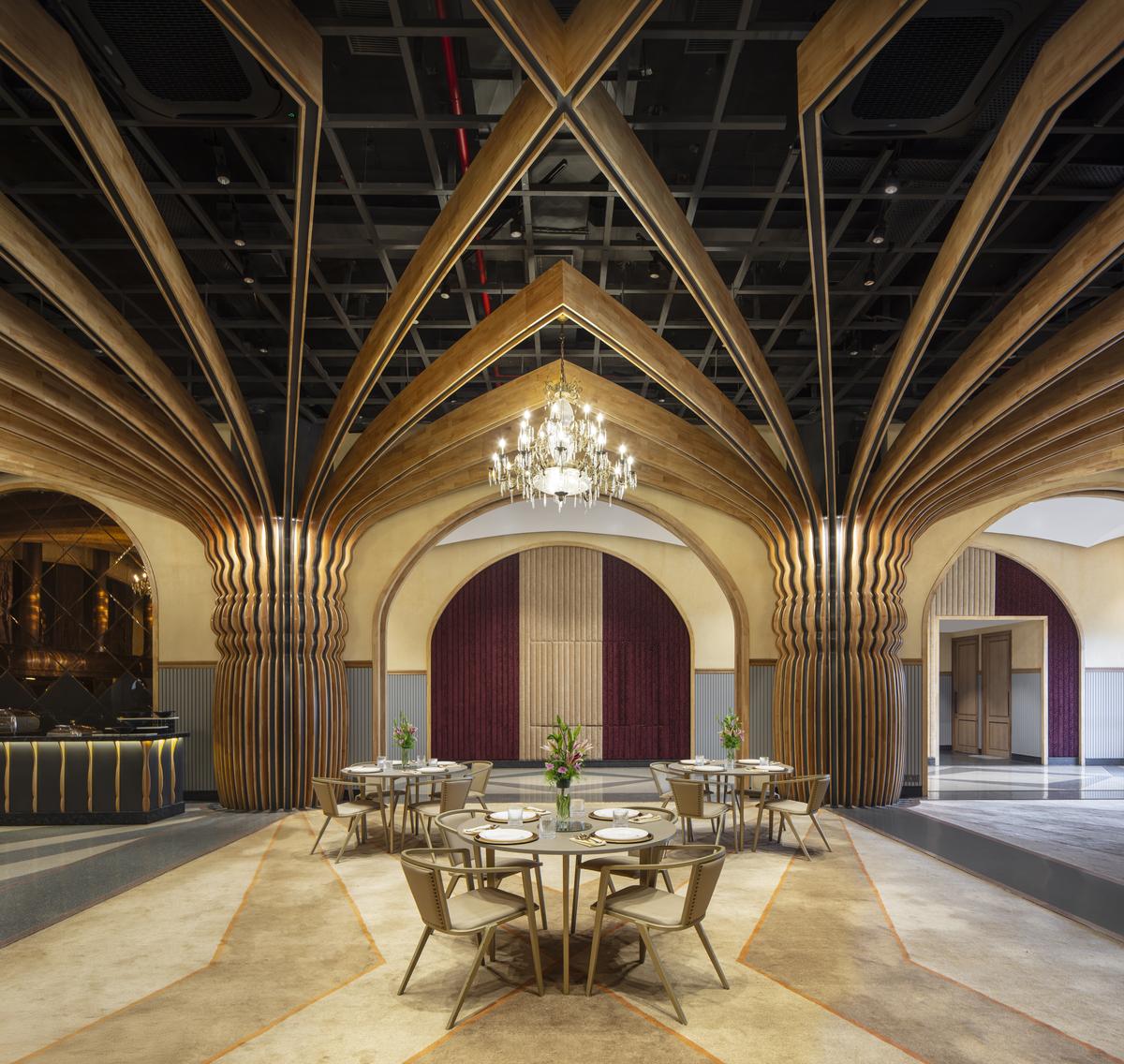
The design of Nishtara Banquet Hall, Kolkata, is defined by a series of sculptural elements that reinterpret Kolkata’s historical vocabulary within a contemporary hospitality setting. Cross-vaulted ceilings form the most dominant spatial gesture, instantly lending the hall a sense of scale and gravitas. These ceilings are supported by intricately detailed columns that draw from temple architecture as well as Gothic and Romanesque influences associated with Kolkata’s identity as one of India’s first European cities. Bespoke chandeliers act as focal sculptural elements within the space.
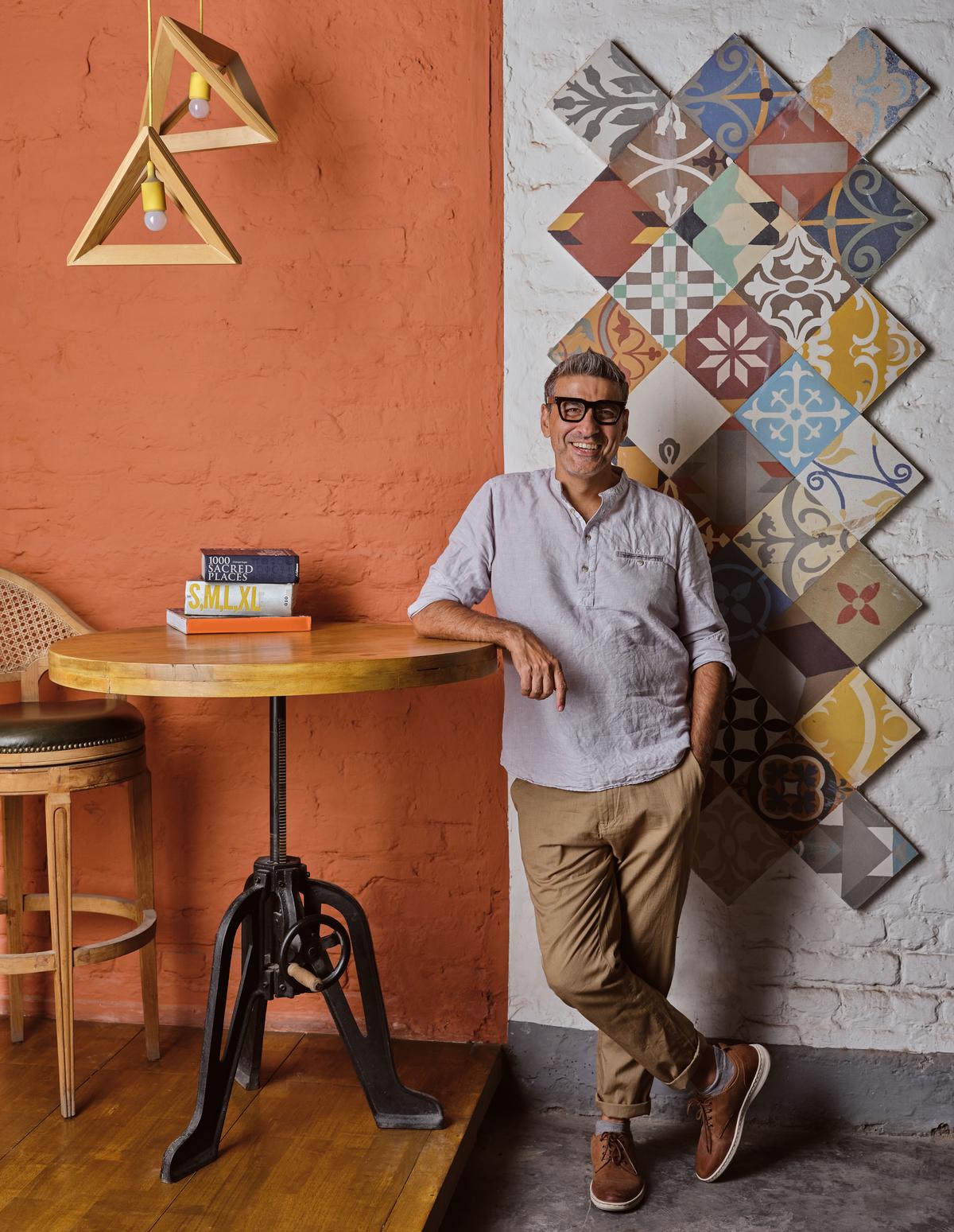
Amit Aurora
The terrazzo flooring mirrors the geometry and rhythm of the ceilings above, creating a continuous dialogue between horizontal and vertical planes. Together, ceilings, columns, chandeliers, and patterned flooring shape a cohesive spatial experience that balances monumentality with warmth,” adds Aurora. The material palette in this 6,568 sq.ft. space combines traditional references with contemporary fabrication techniques. Rubberwood boards have been used extensively to form the profiles of the cross-vaulted ceilings and columns, allowing for detailed articulation and continuity across the space. These elements are produced using CNC machining for precision, followed by hand-finished detailing to retain a crafted quality.
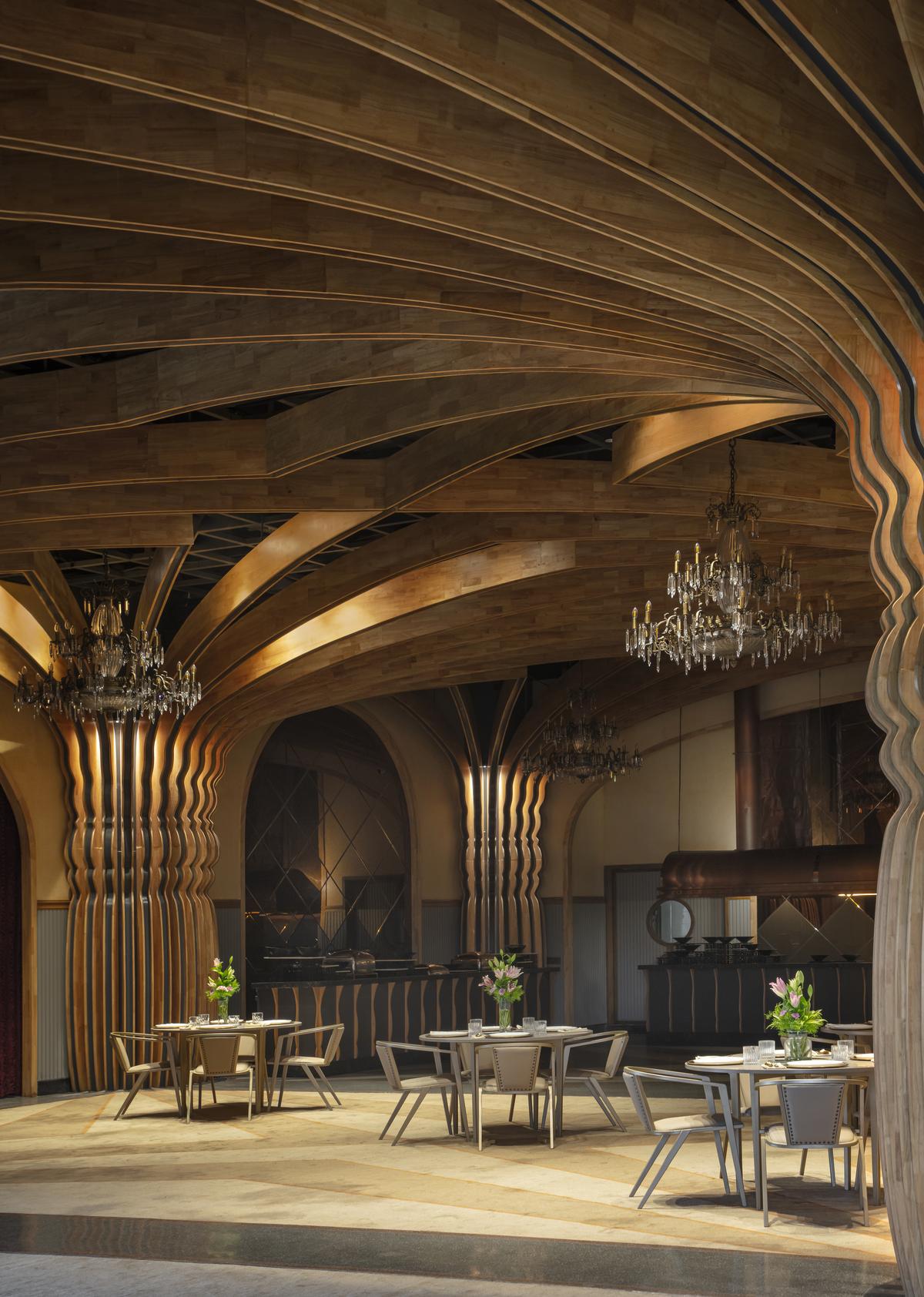
“By combining cultural storytelling, precise fabrication, handcrafted detailing and thoughtful planning, the design offers a banquet space that is both experiential and practical. It is rooted in Kolkata’s heritage yet fully aligned with contemporary hospitality needs,” adds Aurora.
A-Class Marble Office, Theme Design Studio, New Delhi
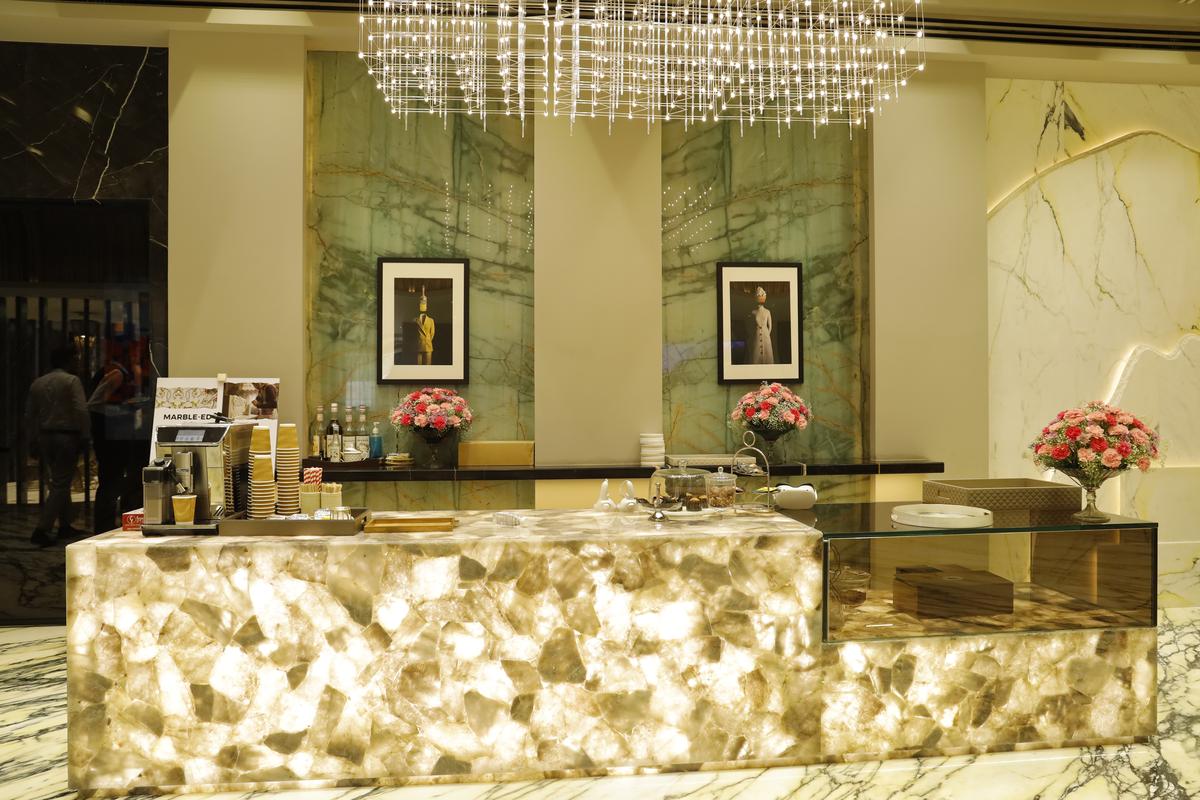
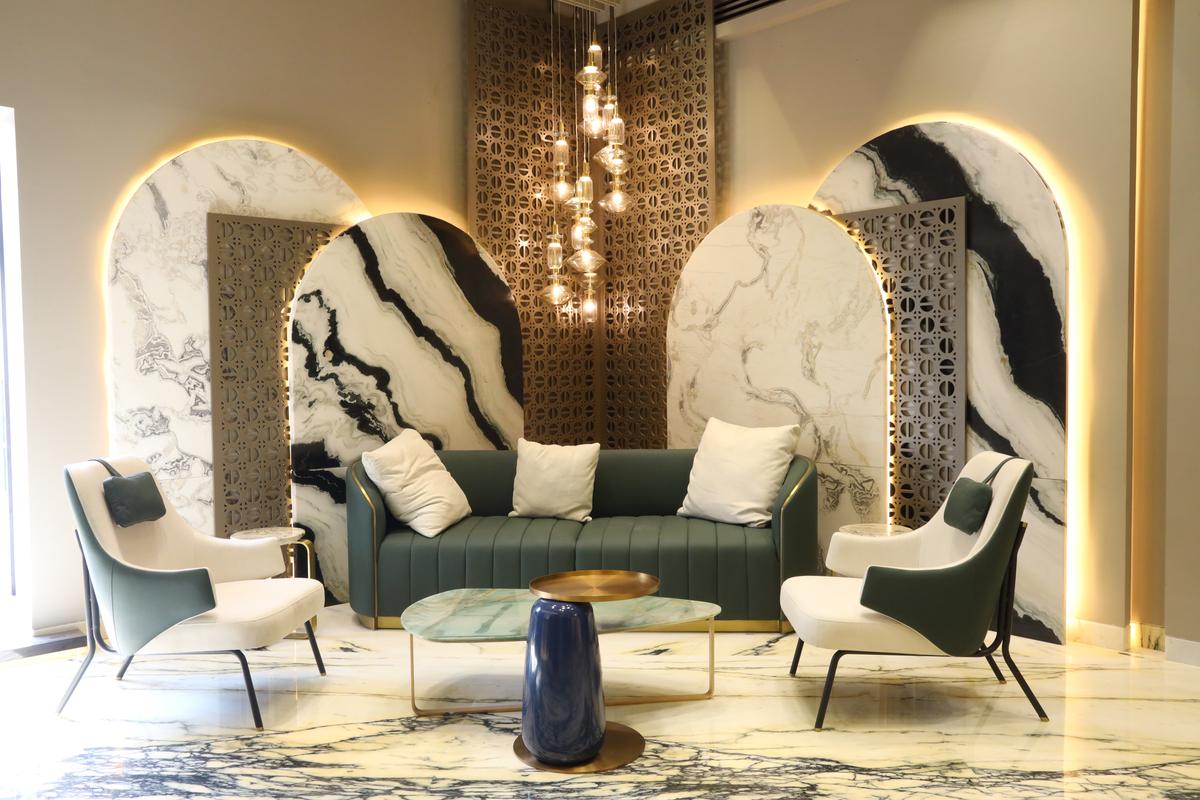
A clear expression of sculptural interior design is evident in the 1,20,000 sq.ft. A-Class Marble Delhi office, where marble is shaped and detailed to create depth and spatial character. Rather than functioning solely as flat cladding, the stone is articulated through curved wall profiles, arched compositions, and a sculpted 3D effect surface that lends the interiors a sense of movement.
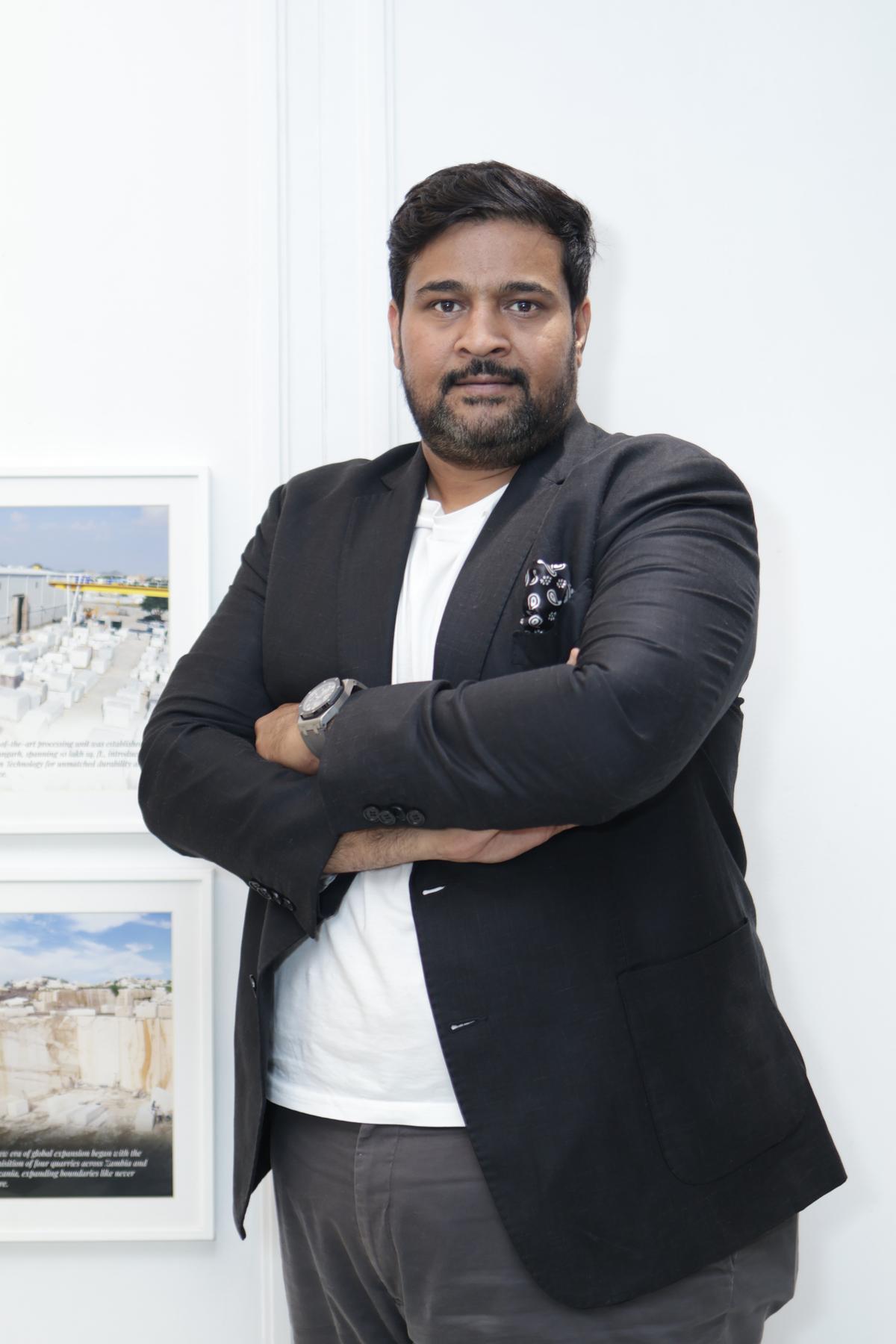
Rajesh Bhandari
“Grand facades transform walls and surfaces into immersive, sculptural backdrops that feel both refined and experiential. In other parts of the office, backlit sculptural elements have been crafted from onyx, a naturally translucent material. This ensures a striking dialogue between light and stone at every turn,” says Rajesh Bhandari, director of A-Class Marble, located in New Delhi.
Among its collection of sculptures, the office is also home to Antarshila, the inner stone, a hand-carved marble sculpture crafted from Statuario Gold marble. Conceived as a freestanding installation within the office, the sculpture explores the dialogue between mass and movement through flowing forms and carved voids, realised using traditional stone-carving techniques interpreted through a contemporary lens.
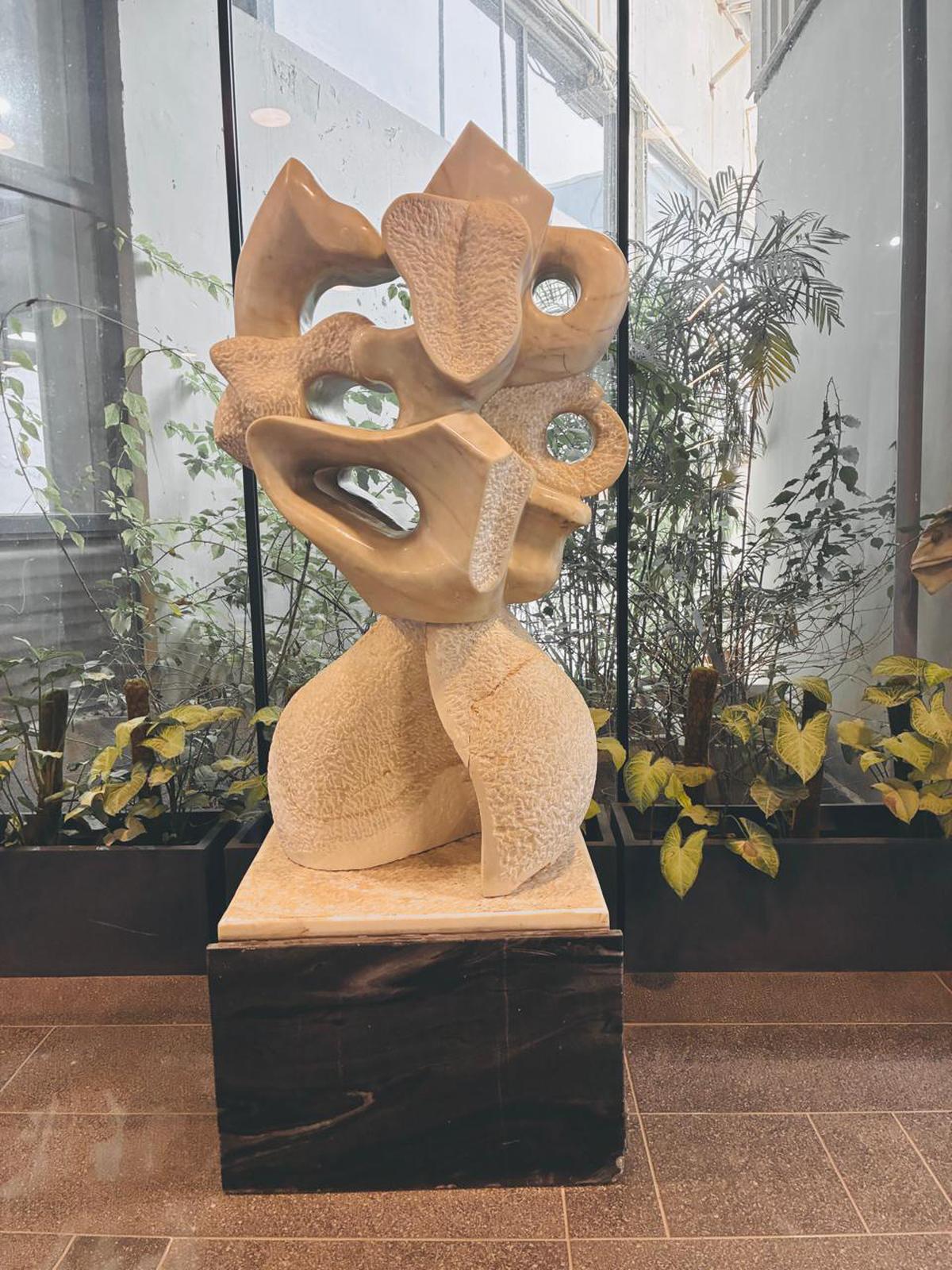
“A nuanced interplay of finishes and textures — ranging from softly honed, tactile surfaces to smoother, light-reflective planes — adds depth and dimension to the form. It also accentuates the marble’s natural veining and encourages moments of pause, reflection, and connection within the space,” adds Bhandari.
Terracotta house, Design ni Dukaan, Ahmedabad
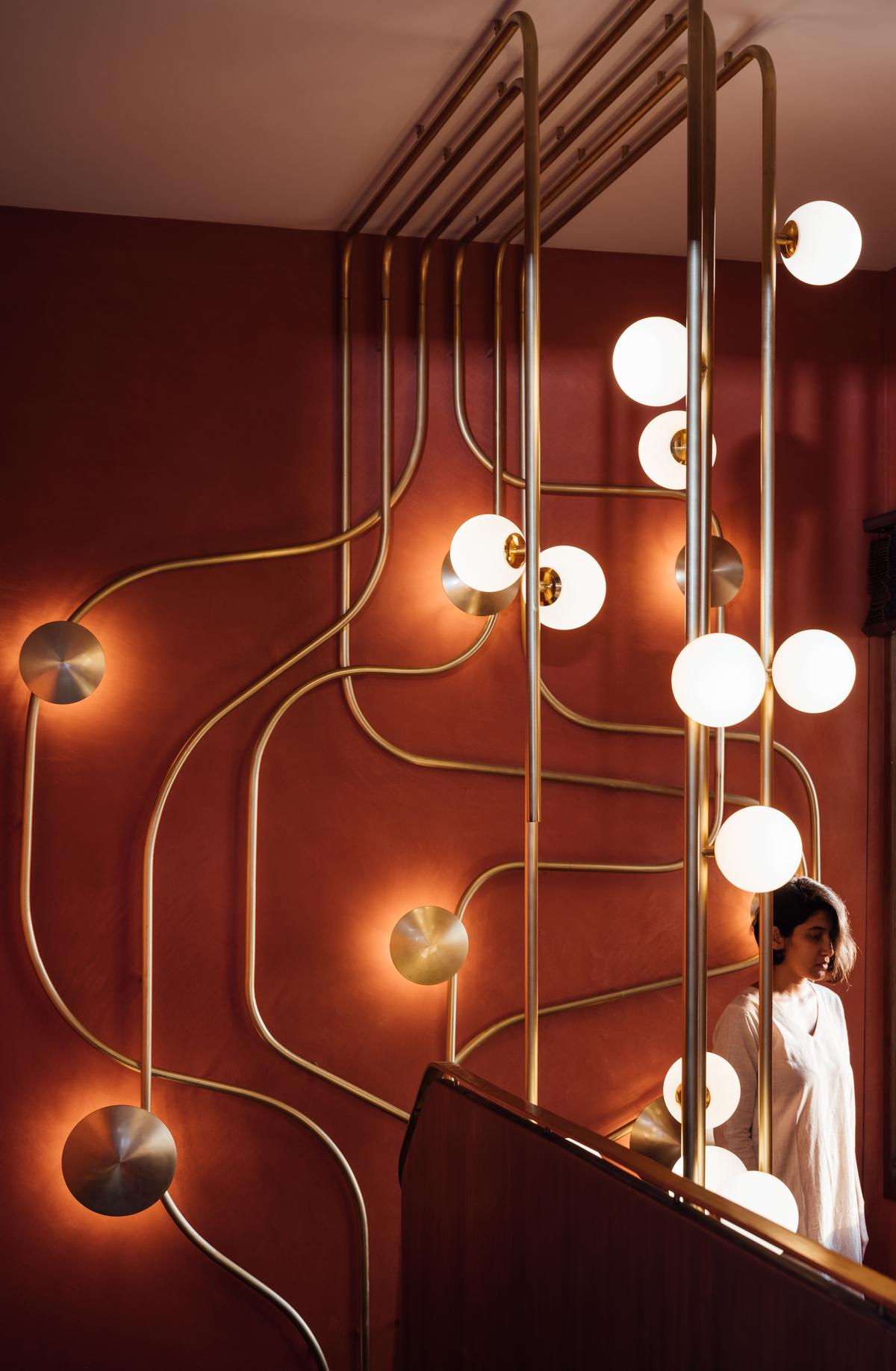
This 9,600 sq.ft. house in Ahmedabad is a lesson in seamless integration of movement, art, and materiality. One of the most significant visual chunks in the house is the staircase which creates a dynamic choreography between the different elements in the space. The curved staircase creates a transition between levels and leads to the mandir on the first level.

Veeam Shah
Another principal feature is the chandelier and the mural. The lighting fixture is integrated with the mural that has been installed on the wall. “We took inspiration from various iterations of Burle Marx’s art. The mandir, staircase and chandelier together created a strong narrative bringing the whole space together,” adds Shah.
The project explores a carefully curated material palette centred on wood and brass. Brass is employed in multiple forms, ranging from sculptural elements to lighting fixtures and even the smallest detail of a handle. It serves as a unifying thread that visually and experientially binds the spaces together.
An additional defining element is the use of terracotta, a colour that became so integral to the design language that it ultimately inspired the project’s name.
Why is it trending?
Sculptural interiors are trending because they transform spaces into sensory experiences where architecture itself becomes the artwork. They introduce depth, emotion and identity into otherwise neutral frameworks, allowing materials such as marble to take on bold, artistic forms that create a strong visual impact. In these spaces, walls and ceilings are no longer passive boundaries but expressive gestures, making everyday living feel quietly theatrical. Yet the goal is not drama for its own sake; sculptural interiors become meaningful when they respond to the needs of the space and create an experience that remains relevant and enduring over time.
The Bengaluru-based freelance writer is passionate about all things design, travel, food, art and culture.