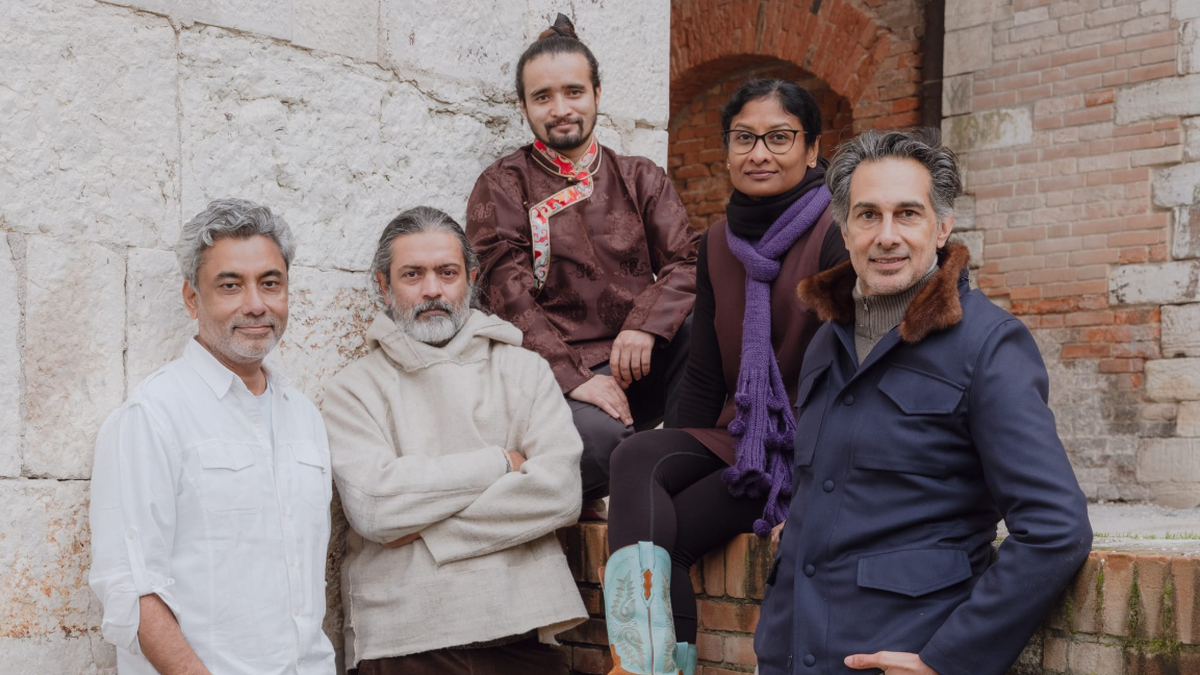
It’s been seven years since India had a national pavilion at the Venice Biennale. Last week, at the India Art Fair in New Delhi, the Ministry of Culture announced its return — sharing the artists and theme for the country’s official pavilion at the 61st Venice Biennale.
While the Biennale’s overarching theme is In Minor Keys, India’s pavilion is titled Geographies of Distance: Remembering Home and is curated by Amin Jaffer, the Indian-origin curator whose career includes senior roles at the Victoria and Albert Museum in London and Christie’s. Currently based in Venice, Jaffer is also Director of the Al Thani Collection, with artworks spanning the ancient world to the present.
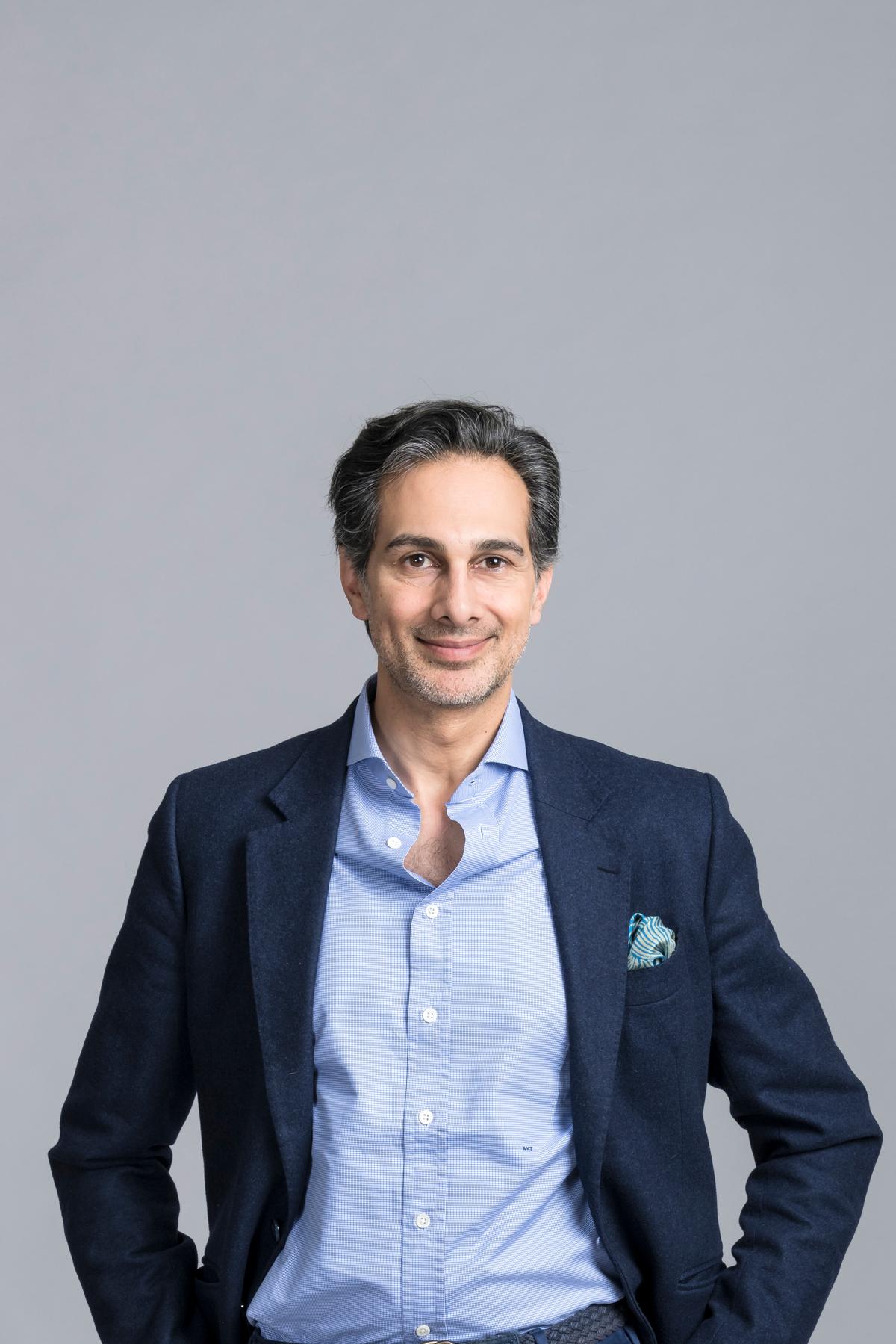
Curator Amin Jaffer
The pavilion will feature works by five India-based artists — Alwar Balasubramaniam, Sumakshi Singh, Ranjani Shettar, Asim Waqif, and Skarma Sonam Tashi — connected through their sustained engagement with materials. “My initial proposal followed the single-artist model typical of Venice, but the Ministry felt that India’s diversity called for a multi-artist project,” says Jaffer. “I expanded the proposal, selecting artists whose messages were consistent so that visitors would come away with a clear voice.” The practices of the five artists collectively reflect on ideas of home, memory, and transformation.
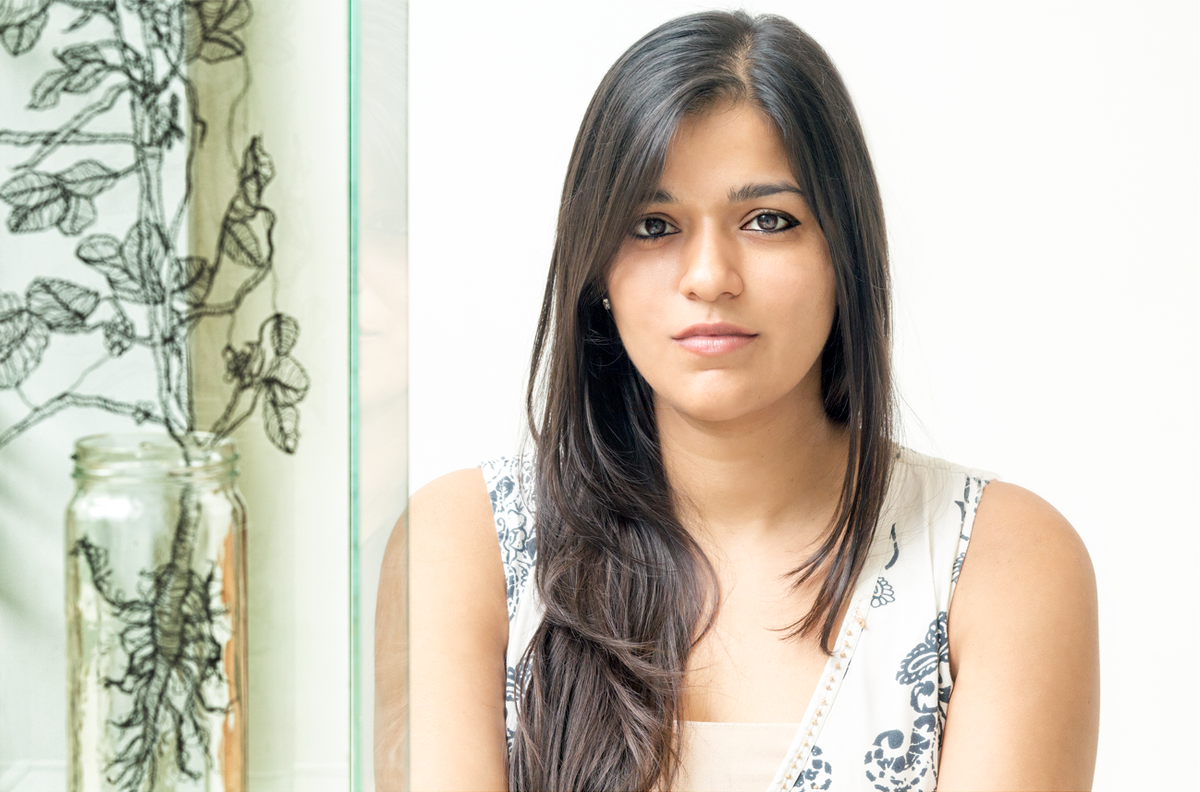
India’s fifth artist, Sumakshi Singh
| Photo Credit:
Sunder Ramu
Cosmopolitan and erudite, Jaffer’s curatorial work includes exhibitions in West Asia, including the landmark Islamic Biennale in Saudi Arabia last year. A frequent visitor to India, he is deeply entrenched in the county’s contemporary art community, with friends across various cities. During India Art Fair, to which he was returning after almost a decade, he was a ubiquitous presence at parties and events, from Sangita and Tarini Jindal’s soiree to the Asia Society’s Game Changer Awards.
India’s pavilion is supported by the Nita Mukesh Ambani Cultural Centre (NMACC) and Serendipity Arts Foundation. I spoke to Jaffer — a picture of poise in a sleeveless black bundi over a long sleeve shirt, despite having rushed across town from art collector Kiran Nadar’s lunch — about his curation and what it will communicate to an international audience. Edited excerpts:

What was the impetus behind India’s decision to return to the Venice Biennale with a dedicated pavilion?
About a year and a half ago, I was approached by NMACC to advise on a project for Venice, and I suggested that rather than doing a standalone one, it would be important to support an Indian government initiative. When we approached the government, we learned that the Ministry of Culture had already decided to have a national pavilion.
The Ministry invited me to make an artistic proposal [they had also solicited proposals from other curators]. My initial proposal followed the single-artist model typical of Venice, but the Ministry felt that India’s diversity called for a multi-artist project. I expanded the proposal, selecting artists whose messages were consistent so that visitors would come away with a clear voice. After discussions, the project was selected in October.
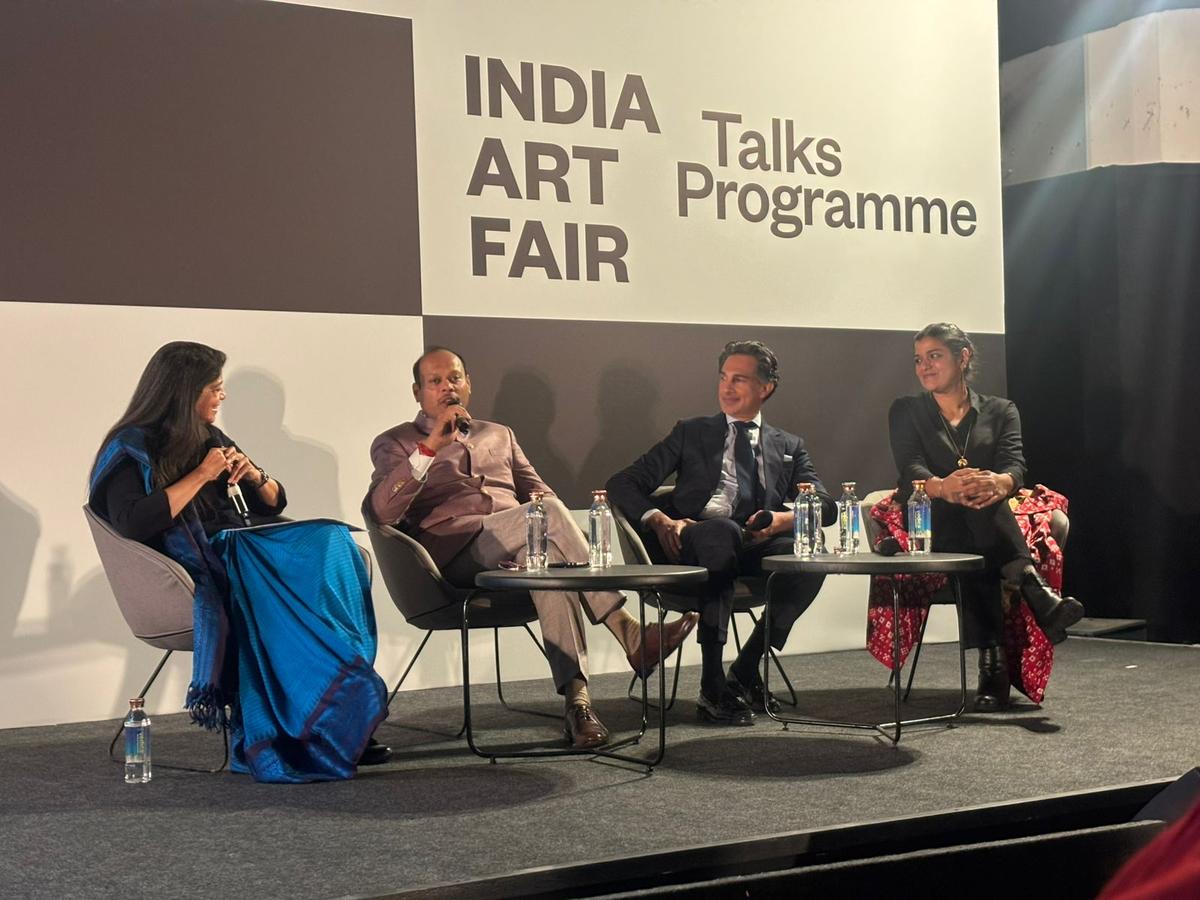
(L-R) Kamini Sawhney, board member of CIMAM, with Ministry of Culture Secretary Vivek Aggarwal, curator Amin Jaffer, and artist Sumakshi Singh
| Photo Credit:
Special arrangement
What was the core curatorial idea guiding this pavilion?
Each national pavilion is a different project. The pavilion is meant to reflect the overall theme of the Biennale, which this does very concertedly. The 2019 pavilion was about Gandhiji; this pavilion is rather different. It’s a message and a story that is applicable and representative of India, but not unique to India.
The notion of home, change, continuity is one that’s been of academic interest to me since the beginning of my education. The very first article I published was on continuity and identity in the Ismaili community, which is my community — I wrote that when I was 19. Many of my projects, like Furniture from British India, were about the recreation of domestic life and how western presence changed it… so the question of defining home has been consistent through my career. I’m a member of the Indian diaspora — I feel very Indian, but I was born in Rwanda, my mother comes from Kenya, and I’ve spent a lot of time in North America and Europe.
I thought of the project as very autobiographical. I grew up in two family houses, my mother’s and father’s. Both are now not lived in. They’ll both be demolished eventually. The idea of the erasure of the past, physical changes, memory, future, these are the things that have been playing in my mind. It’s a theme that’s very prevalent in art today, the question of where we belong.

“What is remarkable about Indians is that they retain their sense of Indianness. So many people say to me, you’ve been six generations in Africa. How come you feel so Indian? I’m not unique in this. Indians retain this deep attachment to their core values, to the sense of family, to language, to food, to dress. The pavilion, as envisioned by me, needed to reflect this. The materiality and practice is Indian. The vision of the world is a contemporary. ”Amin JafferCurator, India Pavilion, Venice Biennale 2026
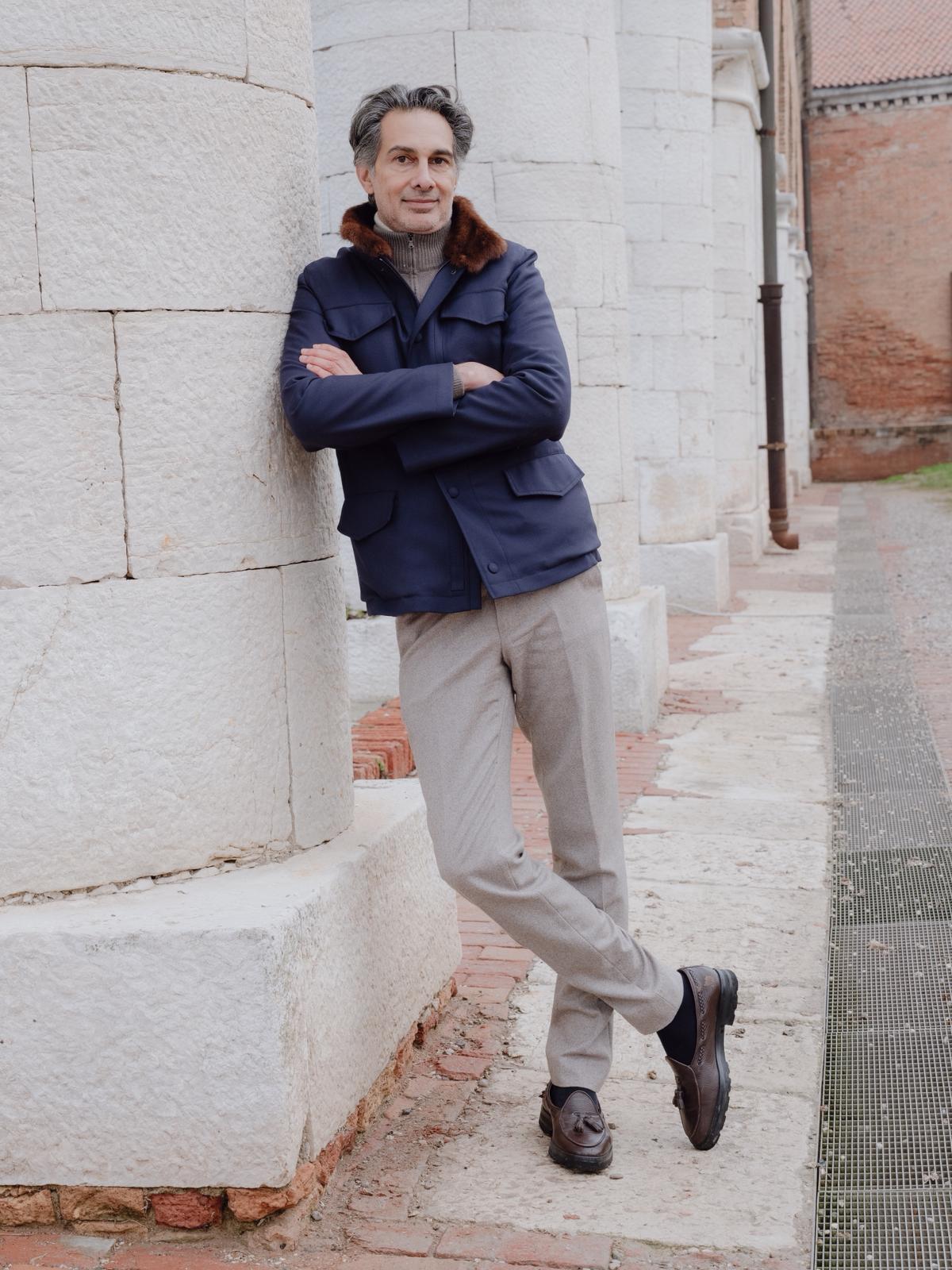
Amin Jaffer
| Photo Credit:
Joe Habben
What is the theme ‘In Minor Keys’?
On the piano keyboard, the major keys are triumphant, dominant, strong, and the minor keys are elegiac, introspective, delicate. When creating a project in minor keys, I felt, we have to look at minor materials. They should not have technology, complex metal, and overpowering technologies. We should be using materials that are fragile, ephemeral, that have a sense of organic origin about them.
My particular mission was to ensure that our artists work with materials that are part of Indian civilisation. We should use techniques associated with our culture. Bala, working with terracotta, for example — terracotta sculpture goes back to the beginnings of Indian civilisation. Sumakshi working with thread; it’s the basis of the Indian economy and a part of the independence movement. Ranjani works with traditional techniques coming out of Karnataka to make flowers. The giving of flowers, the garlanding of somebody, is closely tied to our culture. Asim with bamboo, a material that’s part of our civilisation, but also a material used in scaffolding and the building tradition in India. Conceptually, this is what the project is about.
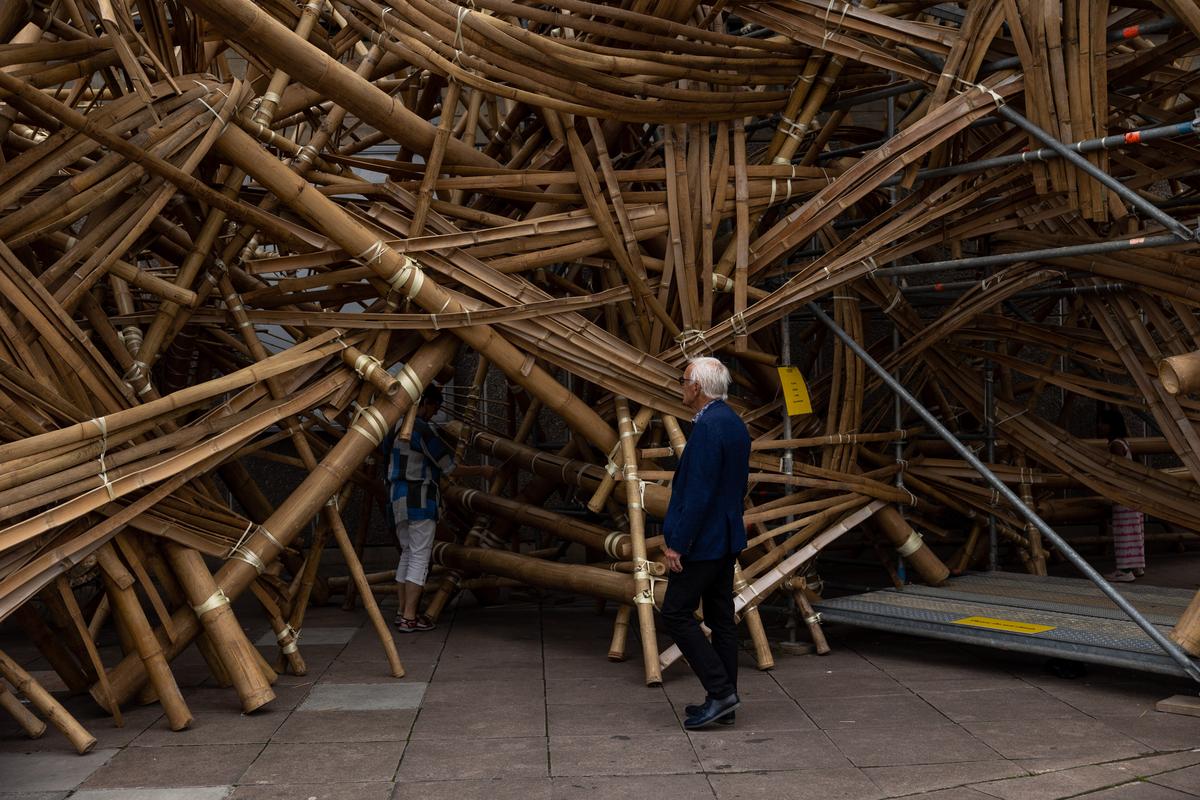
Asim Waqif’s art installation, Venu, in London. It is designed with 610 poles and 700 strips of bamboo tied together and supported by an industrial metal skeleton.
| Photo Credit:
Getty Images
What aspects of India did you most want this pavilion to communicate to an international audience?
We want to have a pavilion that means something to everyone who walks through the door. This is why I chose a theme that is particular to India, but is universal. What’s important is that India be well positioned in an important pavilion, by artists who reflect the originality and integrity of art practice in the country today.
In India, there is a rapid rate of change in physical space… Old ways of living are replaced by new, old architecture by new. India has 15 million new people every year. There are new townships, cities, neighbourhoods. India is today the fourth largest economy in the world. Could the CEO of Chanel been an Indian 40 years ago? We’ve seen a complete transformation in the identity of Indians and the way Indians are seen around the world.

Do you see this pavilion as a form of soft power?
Every Biennale pavilion is an expression of soft power. While using indigenous materials and techniques, we should produce a project that’s forward looking and contemporary in its vision. We are people who are very rooted in our civilisation. We’re forward looking, we absorb opportunities, we’re very quick learners. There were communities of Indians in Mediterranean ports in Roman times.
What is remarkable about Indians is that they retain their sense of Indianness. So many people say to me, you’ve been six generations in Africa. How come you feel so Indian? I’m not unique in this. Indians retain this deep attachment to their core values, to the sense of family, to language, to food, to dress. The pavilion, as envisioned by me, needed to reflect this. The materiality and practice is Indian. The vision of the world is contemporary.
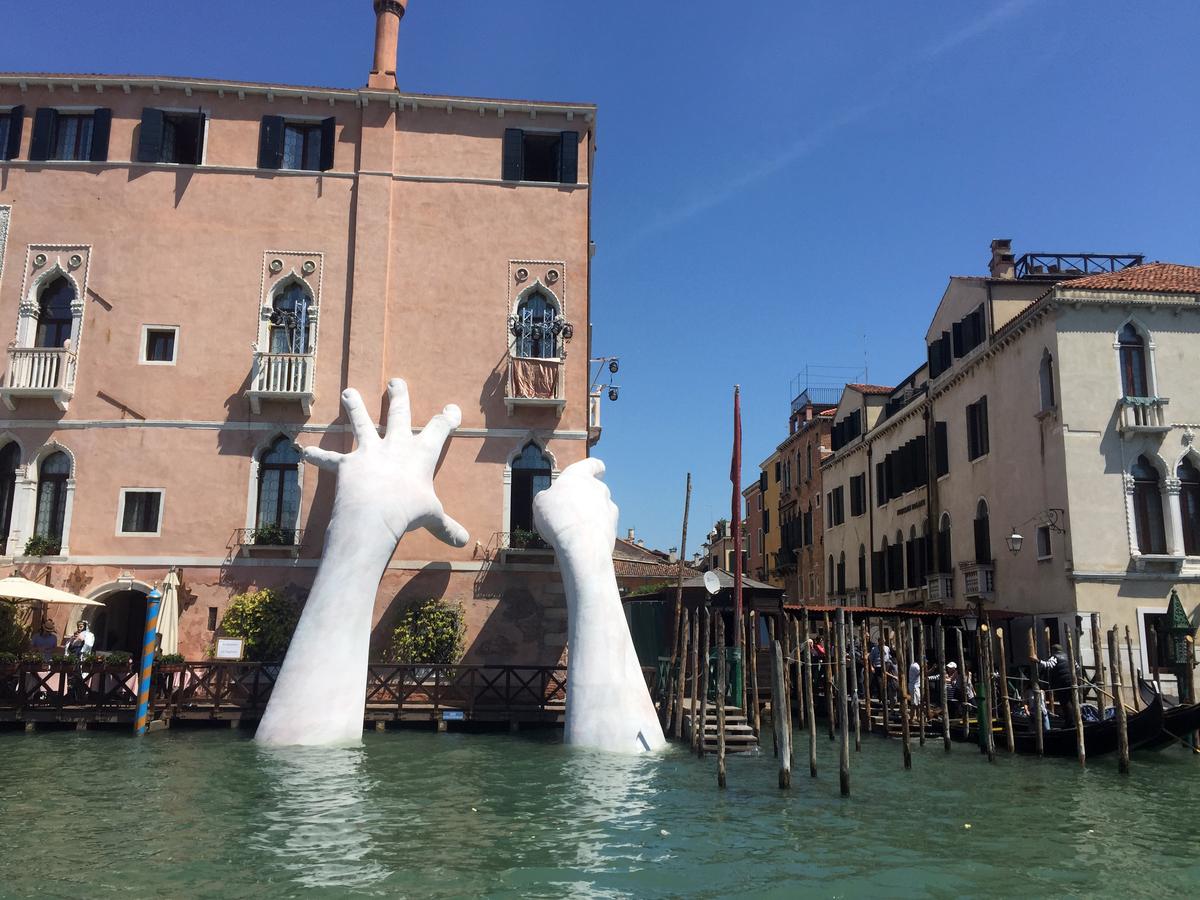
The sculpture Support by Italian artist Lorenzo Quinn at an earlier edition of the Venice Biennale
| Photo Credit:
Getty Images
Since the pavilion’s announcement, there has been some discussion about whether someone based in India might have been better suited to curate it.
Living in Venice for many years, I dreamed that I would be involved with an India pavilion. It’s something I’ve discussed over the years with curators, with Biennale authorities, with successive friends who’ve worked in an official capacity in the Indian government. It is a sense of great personal achievement, pride, national pride. I’m 100% genetically Indian. I eat Indian food. I listen to Indian music. I celebrate Indian things. I have an OCI status, but I’m an international person. I would say more and more that’s the case of Indians today. You talk to anyone in India, they have a brother in Los Angeles or sister in Chicago. I don’t think that creative vision, sentiment, artistic expression are defined by geographic boundary.
This is a public-private partnership. How do you balance the various stakeholders?
A project like this shouldn’t be directed by one person. It’s consensual decision making. I’ve been doing it all my life. When I started at the V&A in London, everything was decided by groups. Here, we have a steering committee, which represents all the key partners and different cultural institutions in India. Everybody comments, people have the right to disagree. We have a WhatsApp group, and Zoom meetings. It’s a public project, and it’s important that everything is analysed and discussed and approved together. It’s a true reflection of India.
Geographies of Distance will run at the Venice Biennale from May 9 to November 22.
The writer is a Mumbai-based journalist and author.