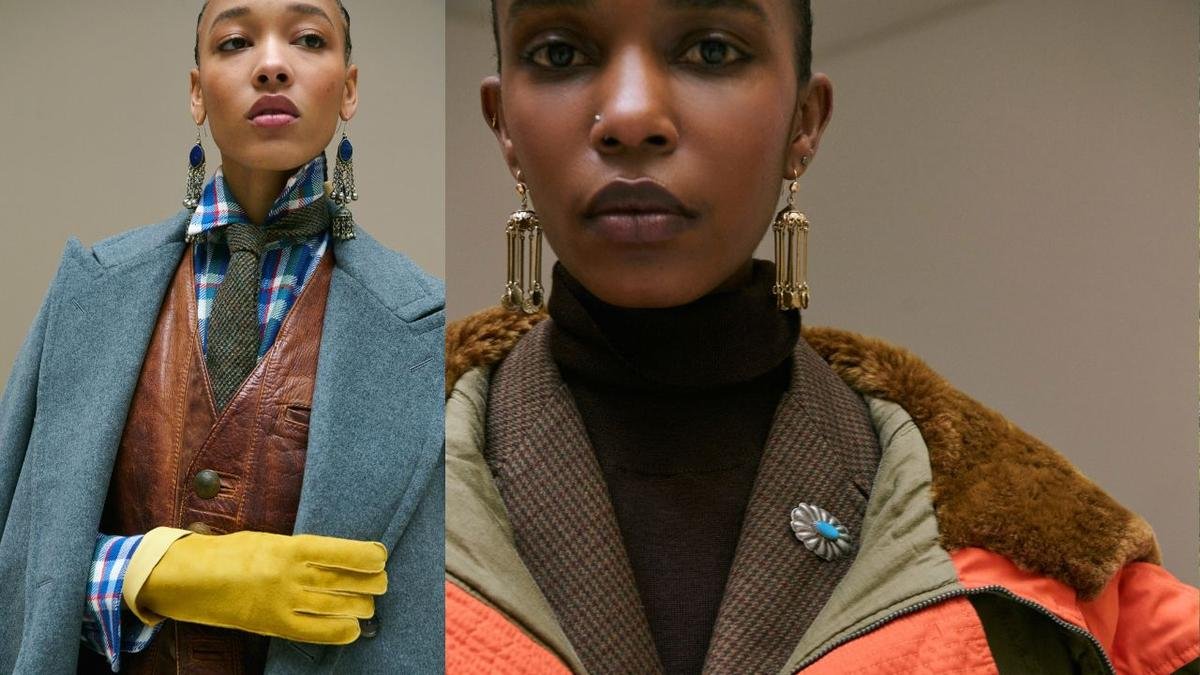
Ralph Lauren was in the line of fire at the Paris Fashion Week held between March 2 and March 10 after models sashayed down the runway sporting jhumka-style earrings from its Polo Ralph Lauren Fall Winter 26-27 women’s collection . The luxury brand described the earpieces as “vintage accessories”, without making any reference to their South Asian origin. As expected, the jhumkas elicited a fusillade of comments and debates across social media platforms. Many viewers and critics were quick to point out their glaring similarity to jewellery that has been part of subcontinent heritage for centuries.

Polo Ralph Lauren Fall Winter 26-27 women’s collection
| Photo Credit:
Special arrangement
The bell-shaped earrings, from silver domes to exaggerated beaded drops, were paired with rodeo-inspired pieces featuring equestrian elements like fringe suede jacket, patch pocket denims and saddlery bags.
Across all its Instagram posts, the brand wrote, “Featuring vintage accessories and select pieces crafted by Native American designers Neil Zarama, Jimmy Begay, and TÓPA as part of Ralph Lauren’s Authentic Makers and Artist in Residence programs.” In one of its Instagram posts, the caption read, “Select looks are styled with authentic vintage accessories.”
History of jhumkas
According to caratlane.com and other fine jewellery websites, jhumkas originated in India around 300BC, initially synonymous with temple deities and dancers . A synonym for femininity, they evolved from South Indian temple jewellery. The earliest jhumkas, found in Chola temple sculptures in South India, were crafted from gold and were later popularised by temple dancers.
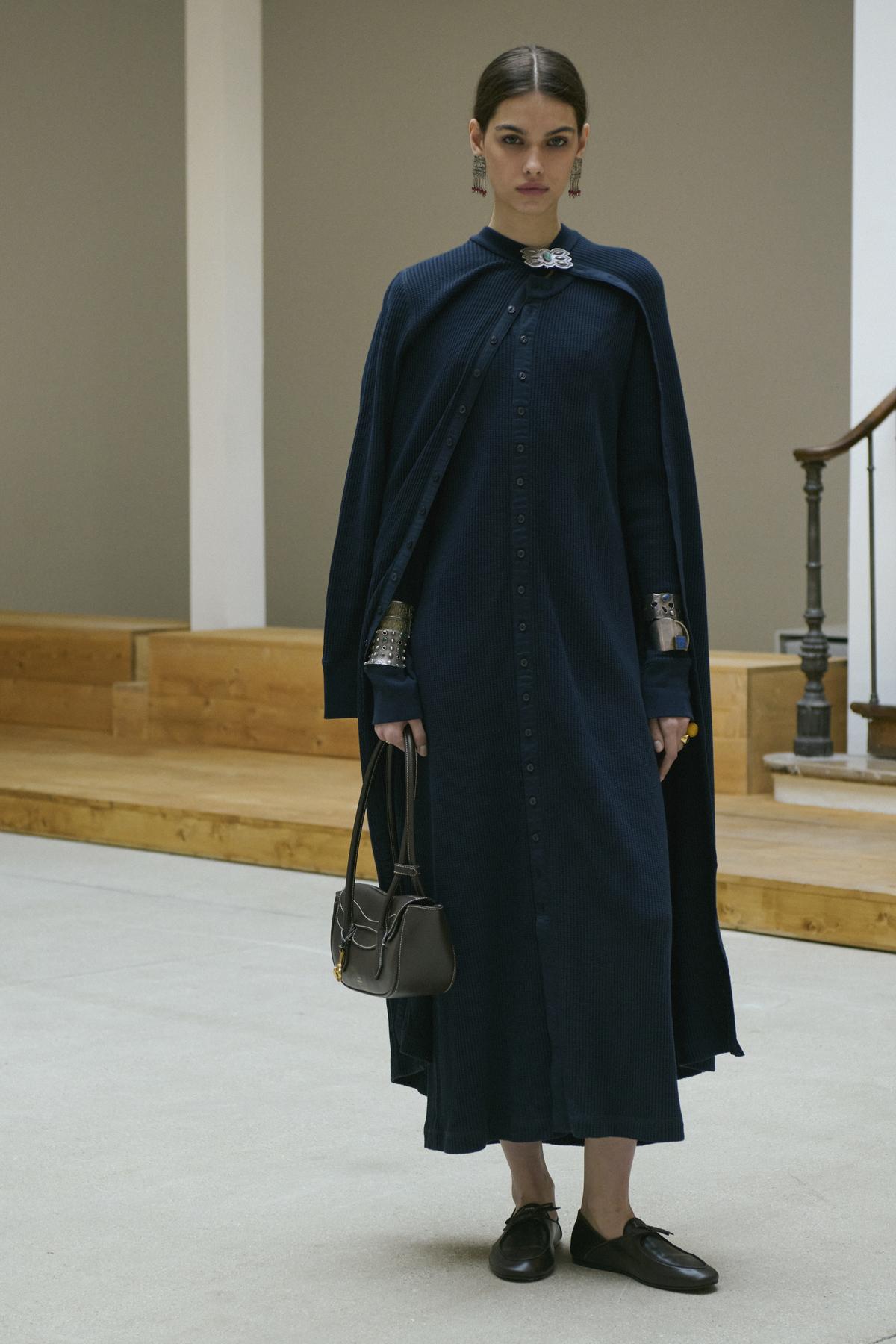
Polo Ralph Lauren Fall Winter 26-27 women’s collection
| Photo Credit:
Special arrangement
Later on, from 1526-1857, the Mughals reimagined the design with pearls and diamonds. Back in the day, some jhumkas required four ear piercings. In the 20th Century, Western influences, including styles from Cartier, modernised the jhumka.
Global appeal
In the 1920s, Cartier adapted the jhumka design, lending it a more Western, elevated look. In the 1990s, Fred Leighton crafted chandelier or dangling earrings described as a westernised, two-dimensional version of the traditional 3D jhumka. LA-based jeweller Sophie Buhai unveiled “$850 ‘Nadia’ earrings” inspired by traditional Indian artistry.
Also worth mentioning are luxury brands such as Jean Paul Gaultier, Hermès, and Yves Saint Laurent which have historically drawn from various global, traditional, and ethnic jewellery styles, including forms similar to jhumkas.
.
Nitin Goenka, founder, Goenka India, a diamantaire and jeweller, shares, “While global fashion often draws inspiration from diverse cultures, it is important that such influences are acknowledged with sensitivity and proper historical context. Presenting jhumkas merely as ‘vintage accessories’ risks overlooking their deep cultural, religious, and historical significance. Recognising their origins not only honours the craftsmanship and traditions of South Asian artisans but also encourages a more respectful and informed dialogue within the fashion industry about cultural heritage and inspiration.”
Absence of credit
Nitin believes that jhumkas are not merely a stylistic motif but a deeply rooted element of Indian jewellery heritage, with historical references tracing back to temple art and classical ornamentation. “When an object so strongly associated with a particular cultural identity is presented without context or attribution, it raises valid concerns about cultural acknowledgment and representation. In a globalised fashion landscape where cross-cultural inspiration is inevitable, the issue is not the act of borrowing itself but the absence of credit. Recognising the Indian origins of jhumkas would not diminish the creativity of reinterpretation; rather, it would demonstrate respect for the rich heritage that have defined this form of jewellery for centuries,” he adds.

Prerna Rajpal, founder & CEO, Amaris
| Photo Credit:
Special arrangement
Prerna Rajpal, founder and CEO of fine jewellery brand Amaris shares, “The issue isn’t that a western brand has drawn inspiration from jhumkas; cross-cultural borrowing in jewellery has existed for centuries. The real concern here is erasure through rebranding,” she says, adding, “When a brand like Ralph Lauren presents the same form as a generic ‘vintage bell earring,’ it detaches the design from its cultural lineage,” she adds.
Fashion and jewellery constantly reinterpret global forms, and that exchange is part of how design evolves. “But when the origin of a design is clear and culturally specific, acknowledging that origin is both respectful and intellectually honest. Recognition doesn’t limit creativity, it actually enriches the narrative around the piece,” says Prerna.

Siddhartha Totuka, director, PC Totuka & Sons
| Photo Credit:
Special arrangement
Siddhartha Totuka, director, PC Totuka & Sons, a fine jewellery brand, shares, “Borrowing across cultures is how design has always moved through the world. The issue isn’t inspiration. It’s silence. When something rooted in a particular people and place is lifted without a glance backward, something gets lost not legally, perhaps, but in terms of integrity. To name where something comes from is to acknowledge the hands that made it and carried it forward across generations. In a moment when cultural identity is no longer a peripheral conversation, that acknowledgement isn’t a footnote.”
Published – March 12, 2026 12:58 pm IST