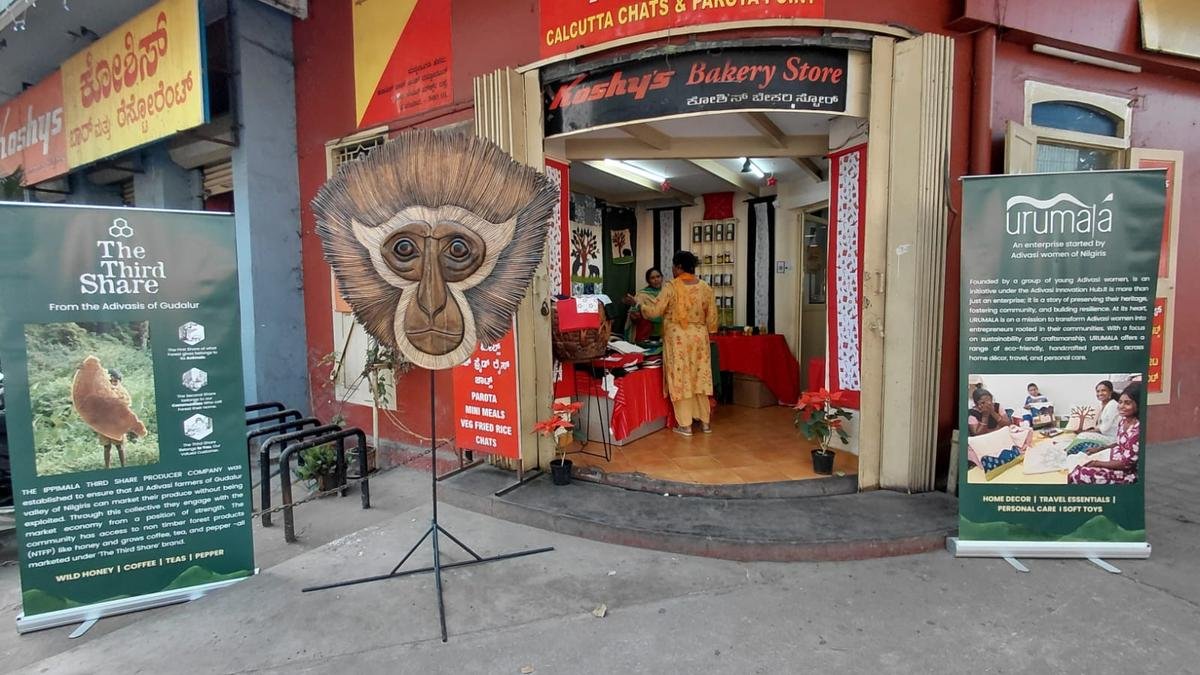
The first thing my eyes land on at the small Christmas stall at Koshy’s, St Mark’s Road, is a wall hanging in appliqué depicting a tree with a bird and a beehive amid its branches, while a pair of bears patiently wait in the grass below.
“This wall hanging represents the Third Share story, drawn from a philosophy that the Kattunayakan (a group of Indigenous people in the Western Ghats ) have been following from time immemorial,” says Don Antony Sebastian, business development manager at the Ippimala Third Share Producer Company, an Adivasi-owned enterprise supported by the Gudalur-based Action for Community Organisation Rehabilitation (ACCORD), whose products are being displayed at the stall.
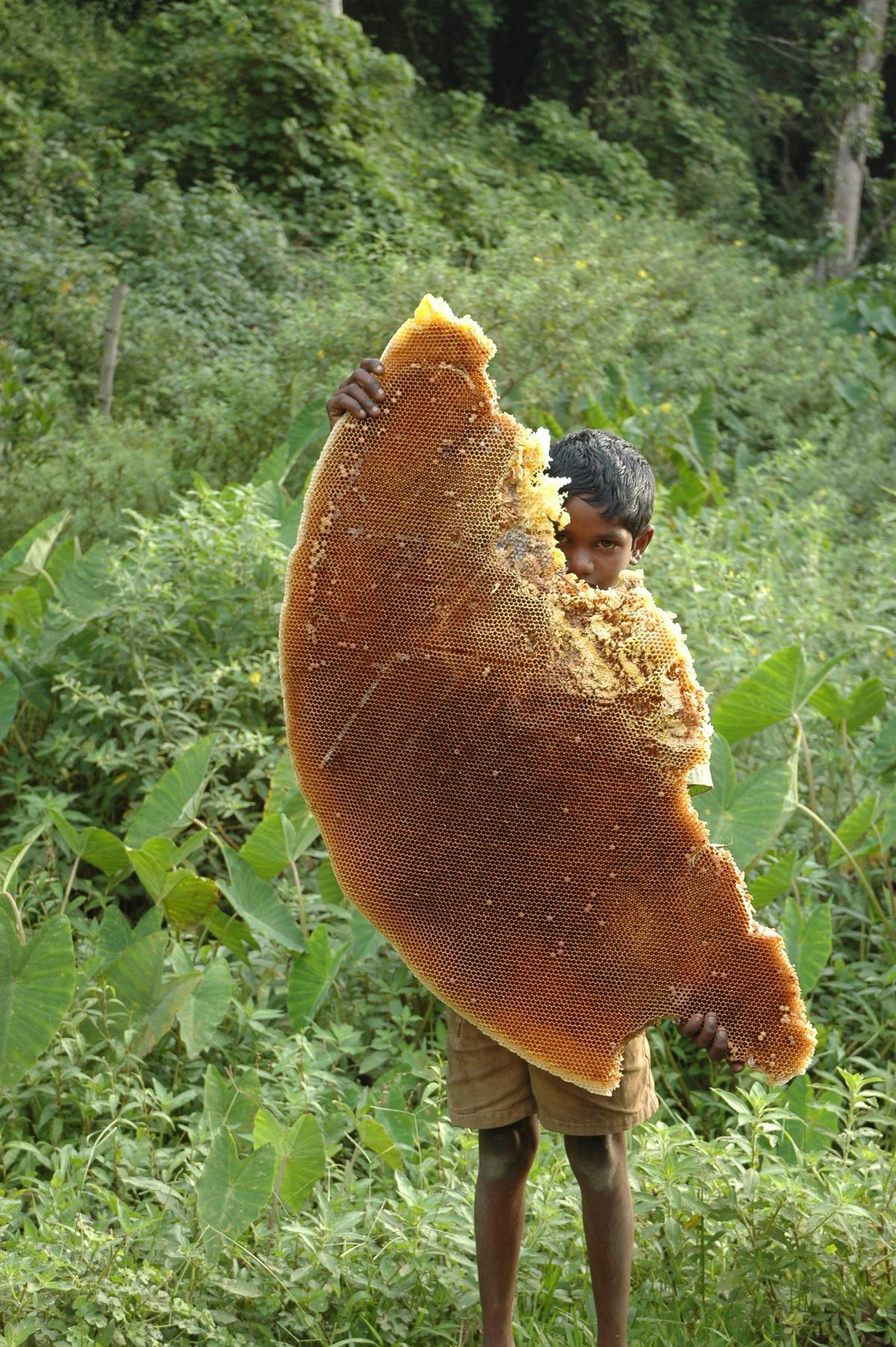
A boy holds a honey comb
| Photo Credit:
Special Arrangement
According to him, the Kattunayakans, a Particularly Vulnerable Tribal Group (PVTG), are known to be expert honey gatherers. They follow a set of practices when collecting honey. Not only do they seek permission from the trees before climbing and apologise to the bees whose hive they extract honey from, but they also have a pact with the bears who inhabit the region. When they come down, they squeeze the honey into their jars, then leave the beeswax on the forest floor for the bears before returning to their villages, where they share the honey with their community.
“The first share of everything that the forest gives goes back to the forest and its animals, the second share is for the people who depend on them, and only the third share can be sold,” explains Don.
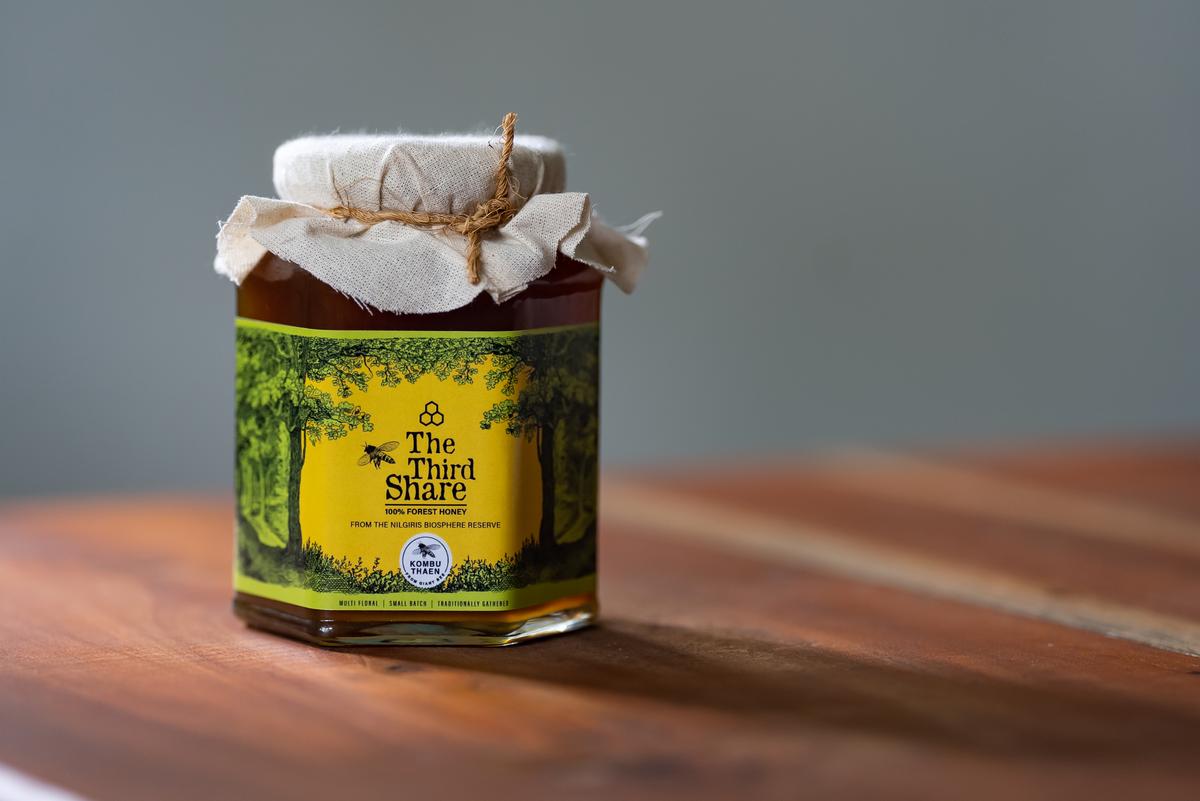
A bottle of wild honey
| Photo Credit:
Special Arrangement
Their customs seem antithetical to the market-driven economic philosophy that relies on resource exploitation. “It says that no matter how much money you have, you can’t take everything from nature,” says Stan Thekaekara, the co-founder of ACCORD, which began in 1986 as a land rights movement for the four tribes—the Paniyas, Kattunayakans, Bettakurumbas, and Mullukurumbas—who live in the Gudalur valley.
“Once we got the land back, we helped them plant tea on the land because that was the mainstream economy of the area,” he says, pointing out that this move was a game-changer for these people.
“It broke their dependence on local landowners, gave them an independent income, allowed them to start sending their children to school, access modern healthcare and so on.”
The Ippimala Third Share Producer Company and another initiative, Urumala, which produces artisanal products, including the wall hanging inspired by the Kattunayakan philosophy, emerged from a specific need a few years ago.
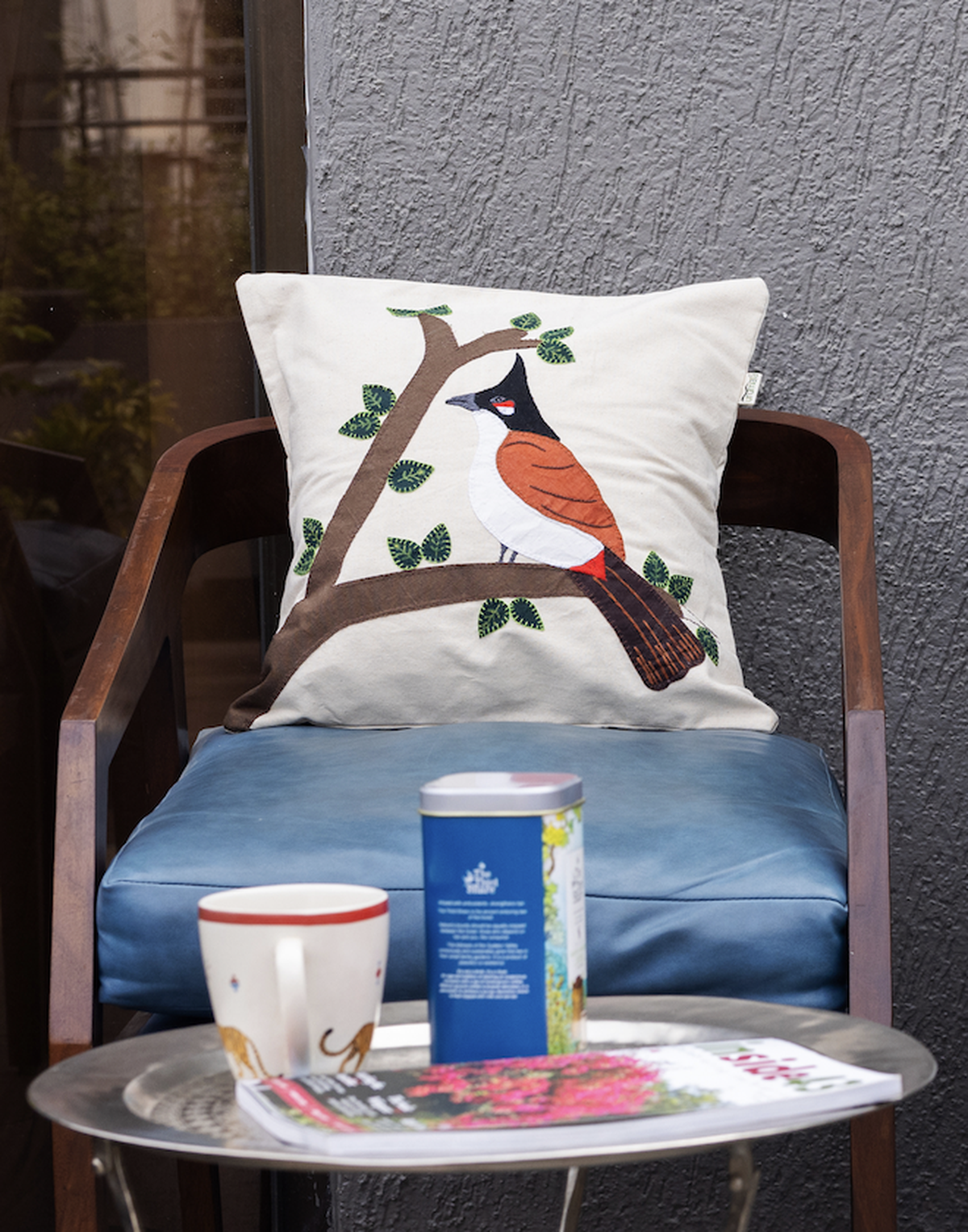
Urumala produces a variety of artisanal products, including home decor and travel kits
| Photo Credit:
Special Arrangement
“Now that the younger generation has gone to school, the land is not enough for them. They need more employment opportunities,” says Stan, pointing out that when these young people tried to work in cities such as Coimbatore, Bengaluru and Chennai, “they invariably returned in a few months because they didn’t like being away from their community. So, our challenge was to create economic opportunities for the current generation.”
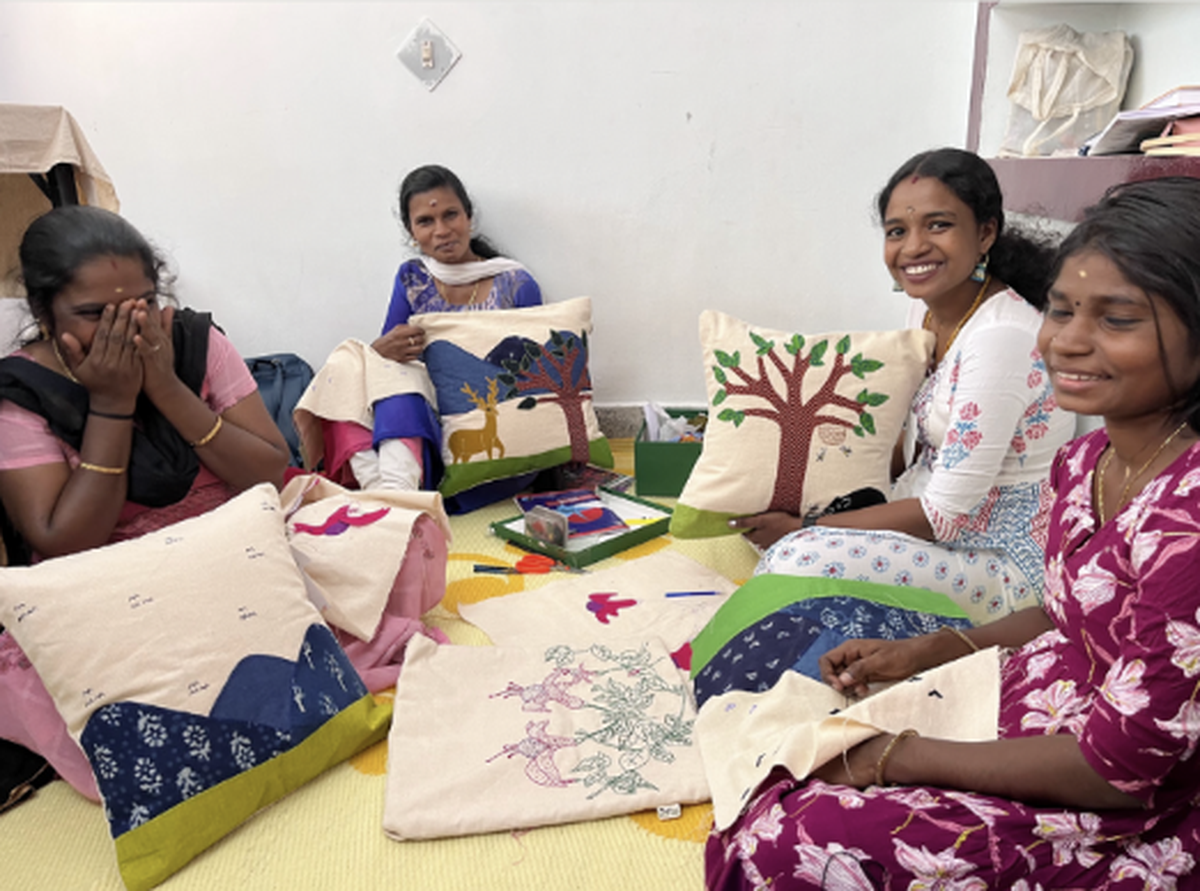
Thanks to Urumala, nearly 50 tribal women have been empowered
| Photo Credit:
Special Arrangement
After multiple discussions with many of these young people, the Adivasi Innovation Hub (AIH), an incubator for Adivasi microenterprises, was established in 2021. “The first enterprise we set up under the Adivasi Innovation Hub, later that same year, was Urumala, with a group of 10 young women working on a single product: reusable sanitary cloth pads.
“Now we have a range of products in home decor, travel accessories and so on, and it has grown from 10 to 50 women,” says Stan. The Ippimala Third Share Producer Company, on the other hand, was registered in February this year to better manage the sale of Adivasi products such as pepper, tea, coffee, and honey.
“Right now, we have 26- 27 producer groups, coming from around 750 families, who are all shareholders in this company,” Stan says, explaining that the board of the company is entirely made up of Adivasis. “We provide management, marketing and design support,” says Stan, adding that it was also essential to create a brand identity for these products.
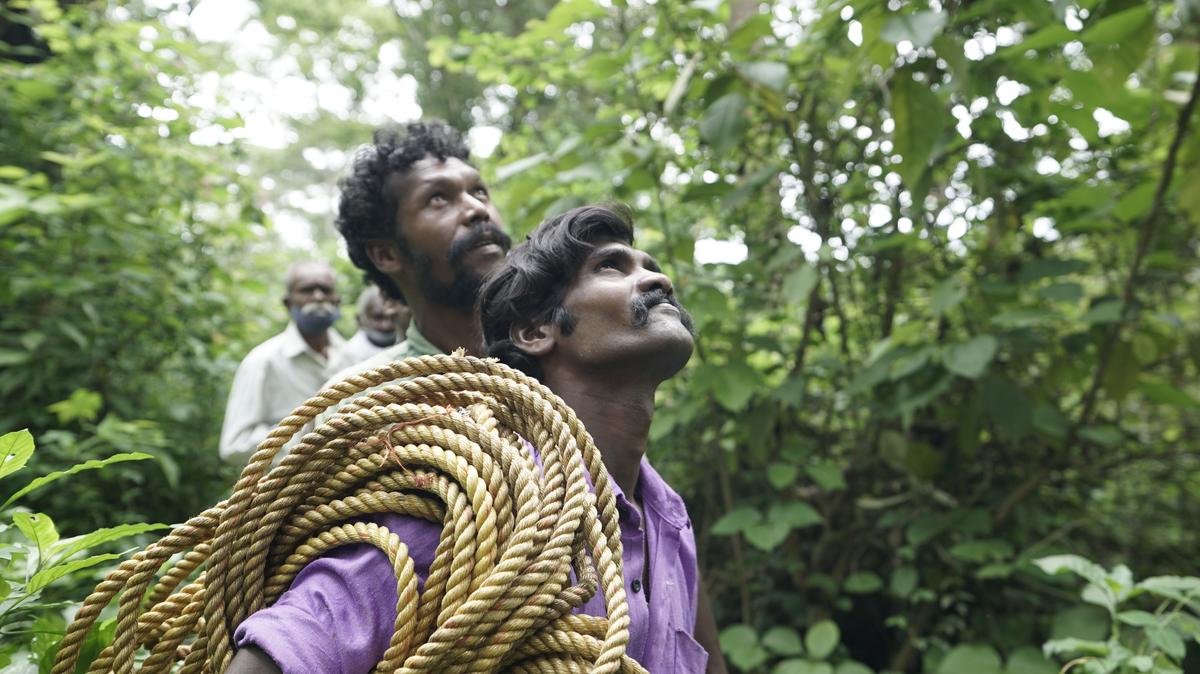
The Kattunayakans, a Particularly Vulnerable Tribal Group (PVTG), are known to be expert honey gatherers
| Photo Credit:
Special Arrangement
The stall at Koshy’s is filled with specially curated Christmas hampers of Third Share products, as well as nature-themed artisanal products from Urumala, including a reindeer. It also has products from their partner organisations, The Real Elephant Collective (TREC) and The Elephant People, such as elegantly designed memory cards and art prints, as well as handicrafts made from invasive plants.
Stan is grateful for the space and logistical support offered by his good friend Prem Koshy, “who was the first person to sell our honey, when Koshy had a general store.” He says that the Christmas stall, “from the heart of the forest to the centre of the city,” highlights how young Adivasis from this generation are creating their own space in the market economy. “What we are positioning is that the Adivasis of Gudalur are entering the market through all these different initiatives.”
KT Subramani, a Mullukurumba who is part of ACCORD’s co-founding team, reiterates the importance of these initiatives to the community using the example of Urumala. Subramani says that since all the women who are part of it were working in plantations, where “work is seasonal, and the earnings are minimal.”
Learning how to design products and use sewing machines has greatly empowered them, he argues. “They have picked up skills and are able to go to cities to showcase their work at exhibitions, have started saving money, learning to drive, and have even bought scooters.”
The Christmas stall will be held at Koshy’s, St Mark’s Road, until January 4, between 11 am and 7 pm.