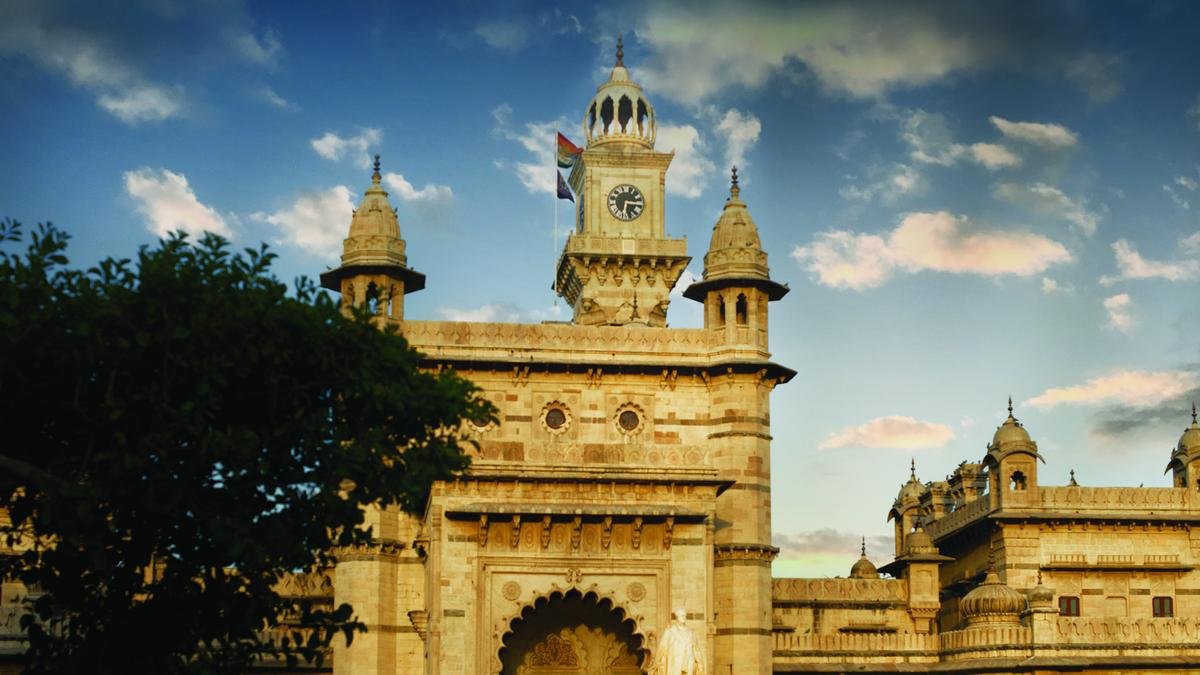
It is post-dinner time in Mayo College, Ajmer, and we are here in November: the time of balding trees, retreating bees — a winter with a mind of its own. If you enter the school from the main gate, you will hear the faint hum of clarinets, punctuated by the bugle. If you are lucky, the winds, blowing from the Aravallis, will carry stray tunes from a cymbal that has been hit too hard.
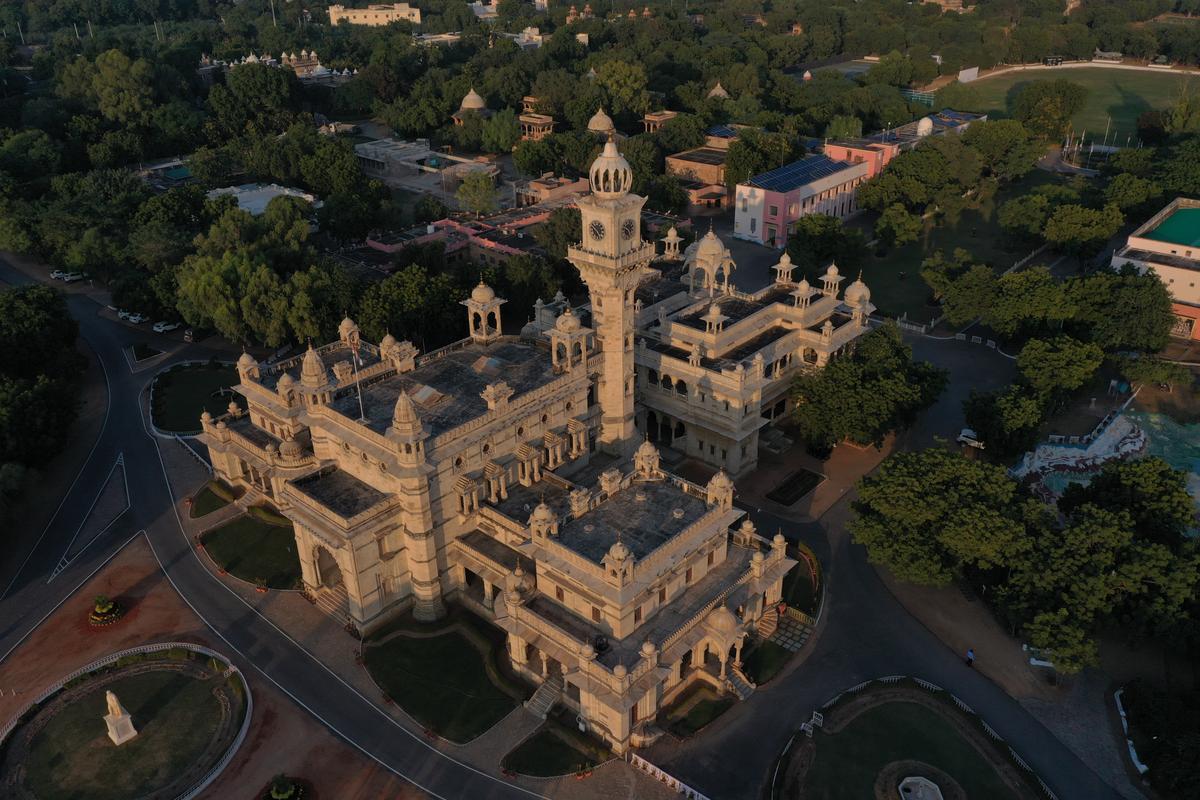
Aerial shot of Mayo College in Ajmer
| Photo Credit:
Special arrangement
It is only when you are truly inside — past the domineering statue of Lord Mayo, past the pigeons and cuckoos sleeping in the eaves, beyond the Mughal garden, moving along the classrooms — that you reach the source of the sound at the Music School. The campus stretches further than the eye can see, almost 200 acres, depending on how you measure it. If it were daytime, you would have peacocks cutting your path, dancing on the rooftops in the evenings.
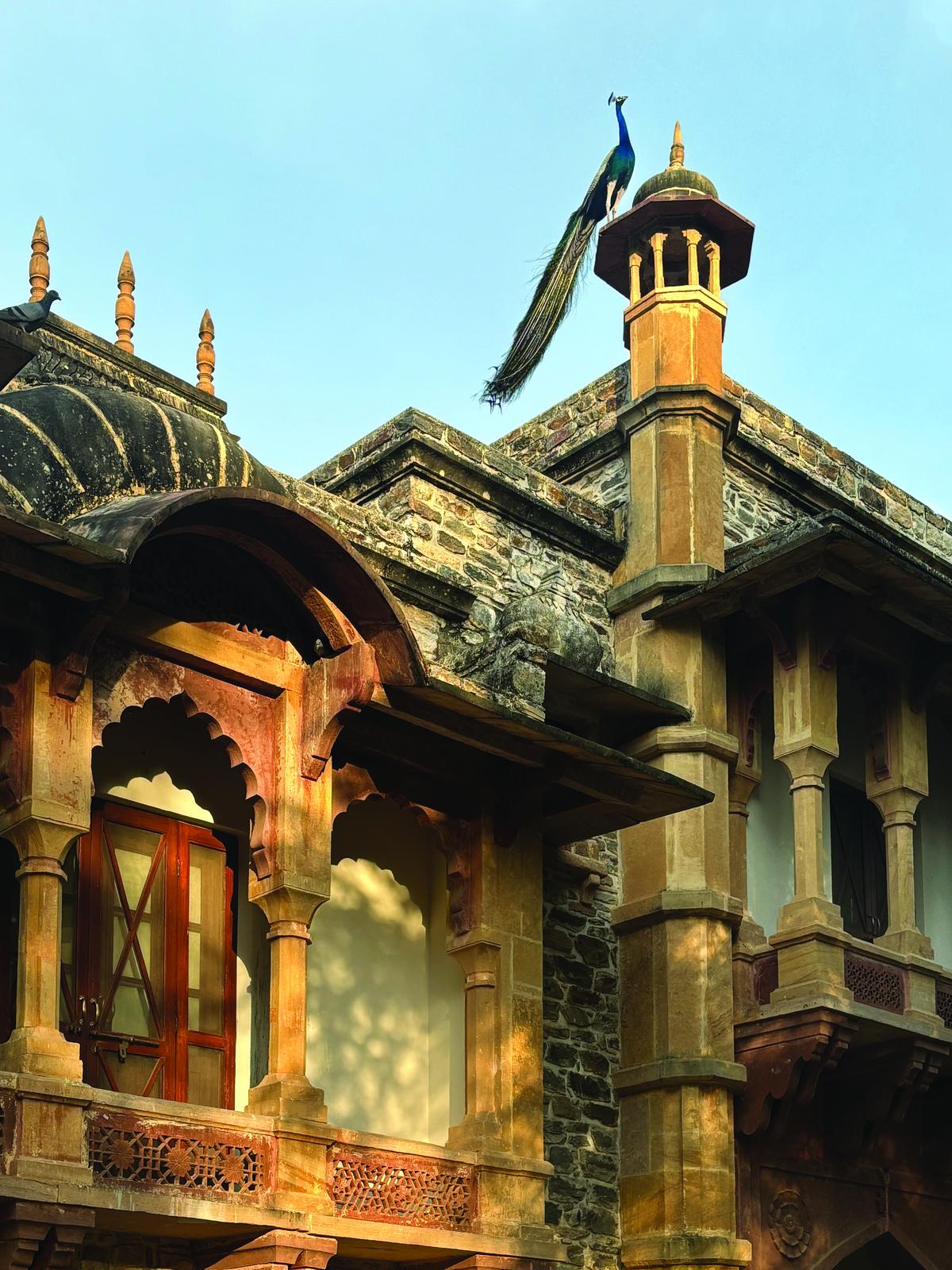
At Mayo, you would have peacocks cutting your path, dancing on the rooftops in the evenings
| Photo Credit:
Special arrangement
“The first time I visited Mayo to drop by a sibling, and saw the grand, main building perched on top of a slope, it struck me as an intimidating figure,” says Rudra Shreeram, from the batch of 2008, who now leads DCM Shriram, a business conglomerate. “I simply wondered: How can this be a school? In December 2002, when my father’s batch had come back for their silver jubilee reunion, I attended the prize giving ceremony. To witness its grandeur, everyone in the safas, all the colours: it set a clear picture in my young mind that this is where I was destined to go.”
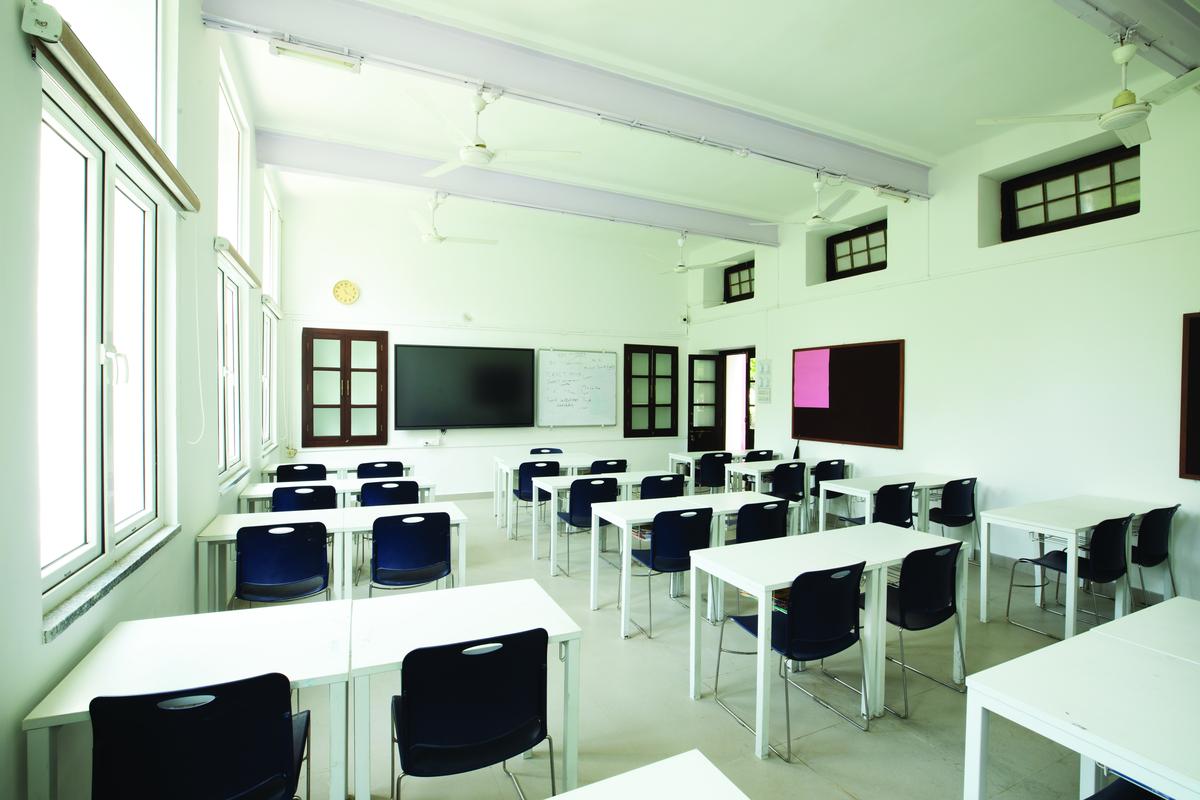
The classrooms at Mayo College
| Photo Credit:
Special arrangement
We are less than a week away from the same annual prize giving ceremony that awed Rudra. At night, the silence is broken by endless, exhaustive preparations — the 500-member student music band, other boys rehearsing Peter Shaffer’s iconic play The Royal Hunt of the Sun, the polo team practising for their match against Harvard. This year, the stakes are high. It is the institution’s 150th anniversary, to be held from November 27 to 29. In the past, chief guests for the ceremony have ranged from Dr Rajendra Prasad and Indira Gandhi to Peter Ustinov and LK Advani. This year, it will be Nandan Nilekani, co-founder, Infosys.

The polo team of Mayo College practising for its match against Harvard
| Photo Credit:
Special arrangement
How does an institution survive for more than a century without losing its values? It is a question that is all the more important in the context of an educational institution. As the chairman of the board and president of the Old Boys’ Society, Colonel Bhawani Singh puts it: “Over the years, we have been having more and more women in the faculty, nearly more than 50%. For the first time in history, we have our first woman vice-principal, Priyanka Bhattacharya. Of course, there are many more examples, but it’s these conscious choices that uphold an institution.”
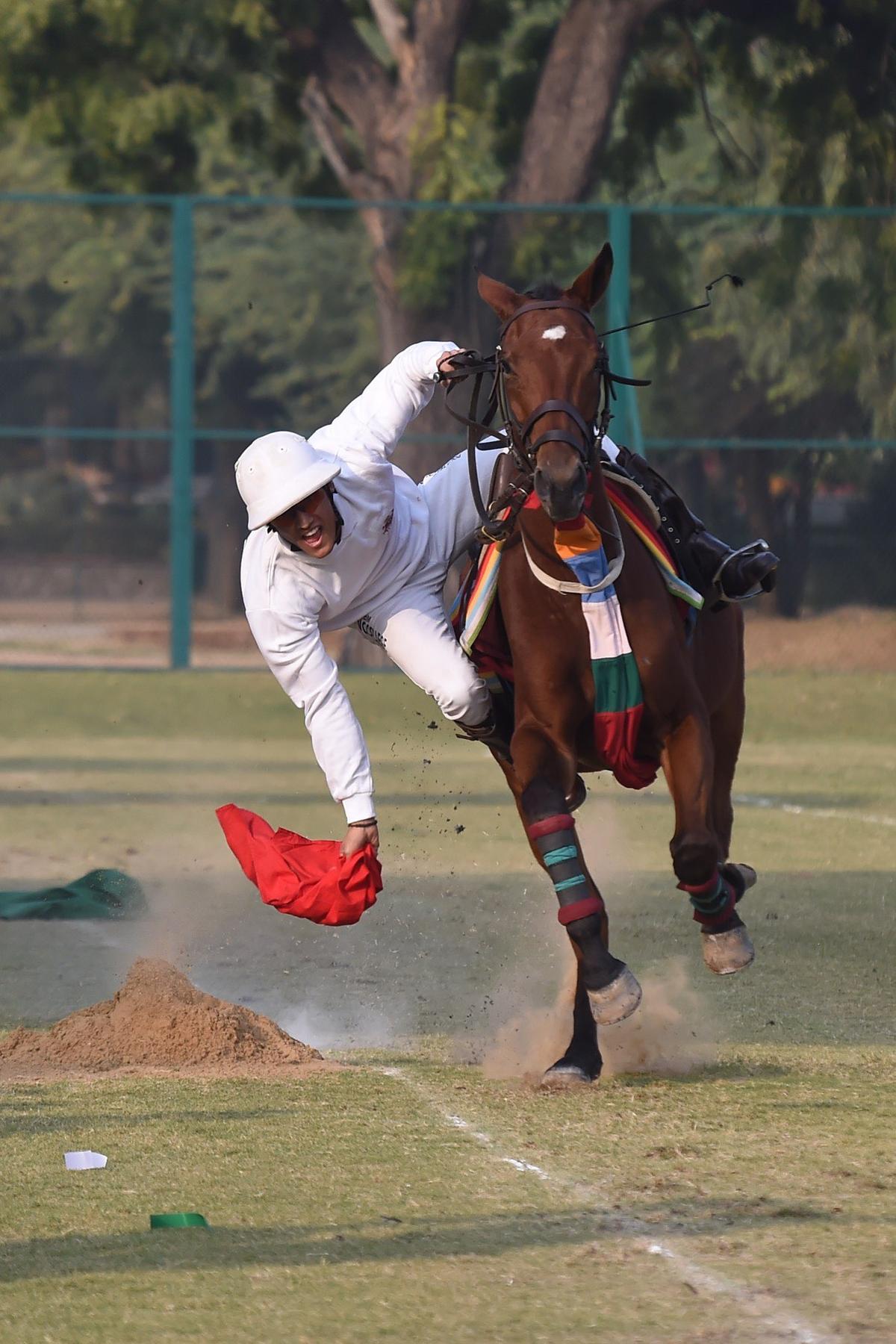
The polo team of Mayo College practising for its match against Harvard
| Photo Credit:
Special arrangement
I joined Mayo College less than three months ago as a teacher and witnessed this very negotiation between the past and present, the slow dance of honouring legacy without stretching so far backwards that the future goes out of sight. The other day, a seventh grader on his way to a temple ceremony in a yellow safa ran up to me to tell me how much he loved William Golding’s The Lord of the Flies. “It’s so figurative, sir,” he said, out of breath with all the running. “How does Mr Golding say so many things without really saying much? Is the book an example of figurative writing? Or, better still, just good writing?”
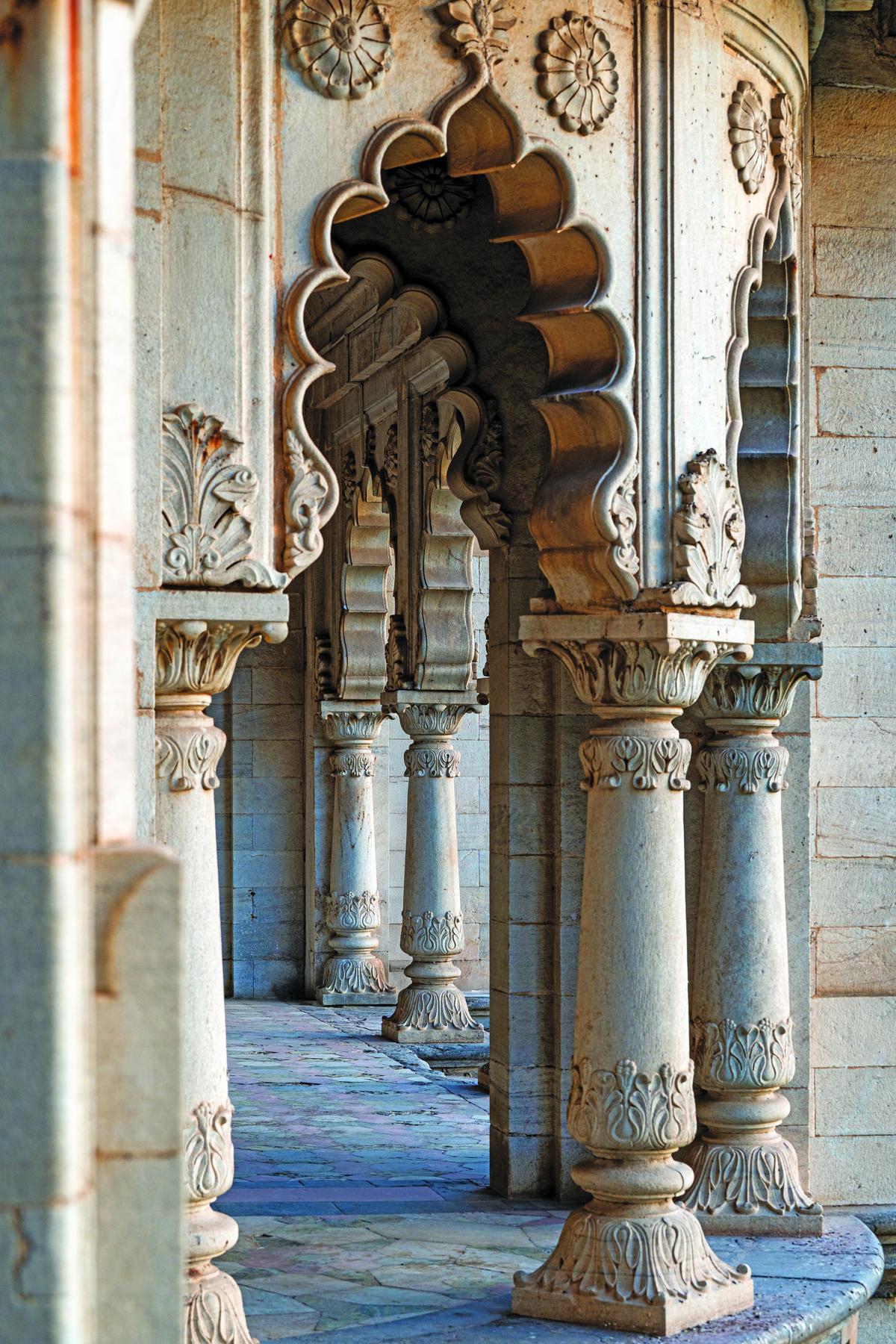
A portion of the old building dating back to 1875
| Photo Credit:
Special arrangement
A little boy, dressed traditionally, trying to make sense of Golding’s layered prose that cauterises our myths of goodness, our faith in rules, and the quiet violence we pretend not to see: That, to me, is the essence of Mayo College in the New World Order. The principal, Saurav Sinha, who took the reins only recently, is conscious of being sensitive to it. “While being summoned to the principal’s office is still a scary thought to the students, at the same time, you may notice me sharing a laugh with the boys, often teasing them too. That is a change from not only 30 years ago but even five years ago,” he says.
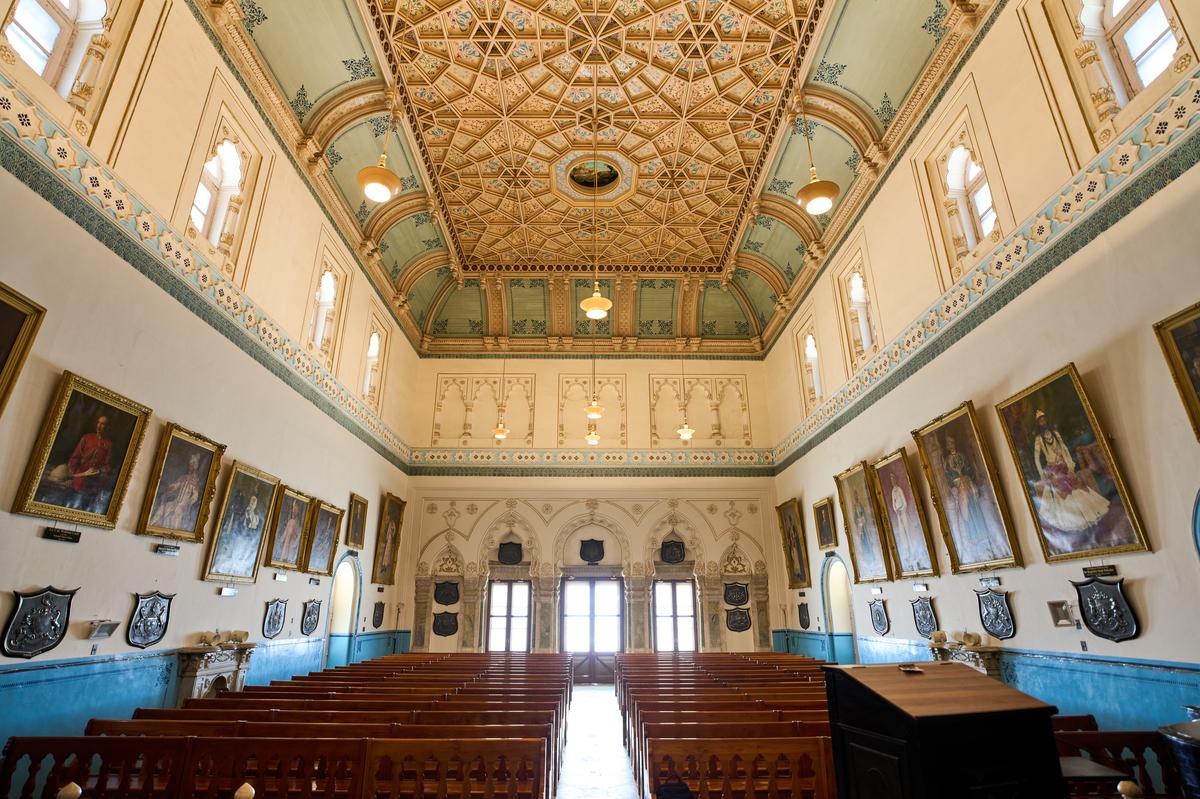
Assembly hall at Mayo College
| Photo Credit:
Special arrangement
The other day, a group of around 10 boys from the board classes were walking on the campus after their study preparation. Most of the other students had gone home, but these students remained because they had a single paper left. They just knocked on Sinha’s door, a mansion built in 1910, festooned with dahlias and climbing ivy. “I gave them some cold coffee, and we ended up playing PlayStation for a while. Of course, most of them beat me in football, and they were very happy about it. But that’s the point — the role has changed from a dictator to a father figure. You know you can’t cross a certain line with him, but there can be no doubt about the affection, either.”
A common home
More than half a century ago, Jaswant Singh, who graduated from Mayo College in 1985 and now leads a manufacturing business, remembers when the principal of the school, passed away in the middle of his tenure in 1982. The vice principal took over briefly, and a new principal was appointed much later. “Things never stopped; the school was never affected. The same held during COVID times as well. There was no room to slack,” he says.

Ceiling of the assembly hall
| Photo Credit:
Special arrangement
Through the alumni network Old Boys, like Jaswant and Rudra, continue to be associated: funding new projects, rallying support for ambitious buildings on the campus, coming together for a social cause, and advocating for the school where it matters. Now, as a businessman, Singh still notices the way those Mayo years help him navigate the real world: Resilience, self-independence, but also not being so independent that one loses the sense of community.
“We had these cycling trips that would last three days, doing everything on your own, cooking your food, cycling to the next stop and then cycling some 70 kilometres back to Ajmer. I can never forget that trip. I remember getting a sore back because none of us had ever cycled for that long. The bonds I created with the four other friends on that trip are still alive,” he recounts. Only three days back, he had a long video call with one of them from the United States — catching up about life, what they missed about that time.

Mayo College has educated princes and kings, Olympians and filmmakers, politicians and actors
| Photo Credit:
Special arrangement
Education, then, was never limited to the classroom. It is this sense of home, of always learning and forming friendships that were not transactional or superficial but one that held your hands through all the crests or troughs of life, that is the bedrock of the Mayo experience. It is the same sentiment that Col. Singh felt when he travelled across the country and the world this year, when different batches of Mayo held events celebrating the 150th anniversary. “As clichéd as it sounds, family is how I’d describe Mayo. It is moving the way people connect and how familial the bonds are between former staff members. On graduation day, parents tell me how their sons were weeping, and they were weeping with them because a nine-year journey came to an end.”
What keeps a school standing for 150 years, then? While ceremony and nostalgia anchor us, give the students and staff a warm superstructure, it all boils down to care. The people who care enough to go the extra mile, do the work when no one’s looking, the students who analyse themselves critically. Mayo endures because its past is held lightly, its present questioned often, and its students trusted with real responsibility.
The celebrations ahead
A Harvard–Mayo College polo match will headline sports prize giving, with two games planned, one against current students and one against alumni, at Mayo’s Polo Pavilion
A Paresh Maity painting will lead the art auction, with all proceeds earmarked for the school
Sonu Nigam will perform a 90-minute concert, expected to draw an audience of about 6,000 people
The senior school play, The Royal Hunt of the Sun, will be staged with Saif Ali Khan and Kareena Kapoor attending as guests of honour
A Vintage Car Rally will feature 25 Old Boys’ cars doing daily rounds of the campus, complemented by a heritage fashion show by Ritwik Khanna’s Rkive City using archival school textiles.