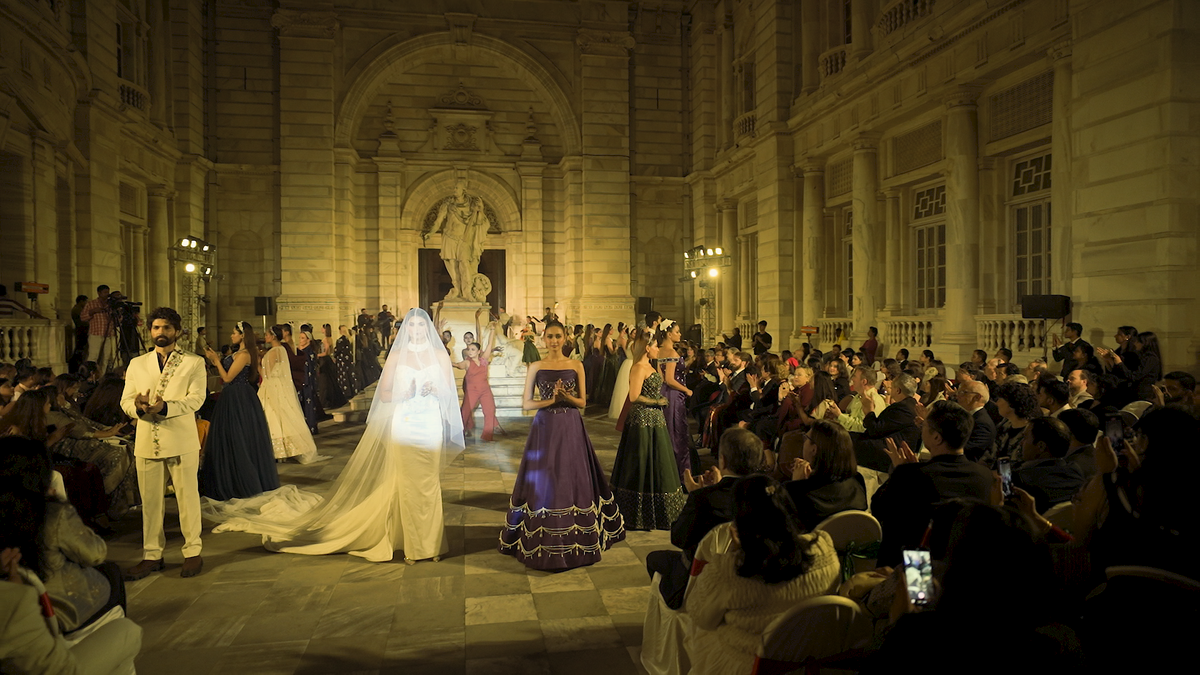
The 16-foot Angel of Victory atop Kolkata’s Victoria Memorial, a wind vane and lightning arrester, turns with the might of the breeze. But on November 17, she seemed to swivel with intention. As if summoning the winds of Renaissance Florence, the angel presided over an evening where Italian art, music, and dance drifted seamlessly into contemporary Indian aesthetics in the Eastern Quadrangle of the Victoria Memorial Hall in Kolkata.
In collaboration with the Consulate General of Italy and the Ministry of Culture, Government of India, the evening brought to the fore designer Rohan Pariyar’s interpretations of 15th and 16th-Century aesthetics from the Italian Renaissance, with a particular nod to the couture worn by the women of Florence’s influential Medici family. Titled “I Medici”, the 45-minute showcase presented 35 ensembles, each crafted in Rohan’s Kolkata atelier and meticulously embroidered with over 2,000 hours of zardozi and cutdana work by a design team from the city.
Rohan explains, “The 35 handcrafted ensembles pay homage to the influential women of the Medici dynasty — Lucrezia, Contessina, Clarice, Caterina, Bianca, Maria and others. The garments trace a woman’s life: from marriage and early adulthood to old age, and even to the rituals of death. Botticelli and Da Vinci’s paintings have also inspired me deeply. ”
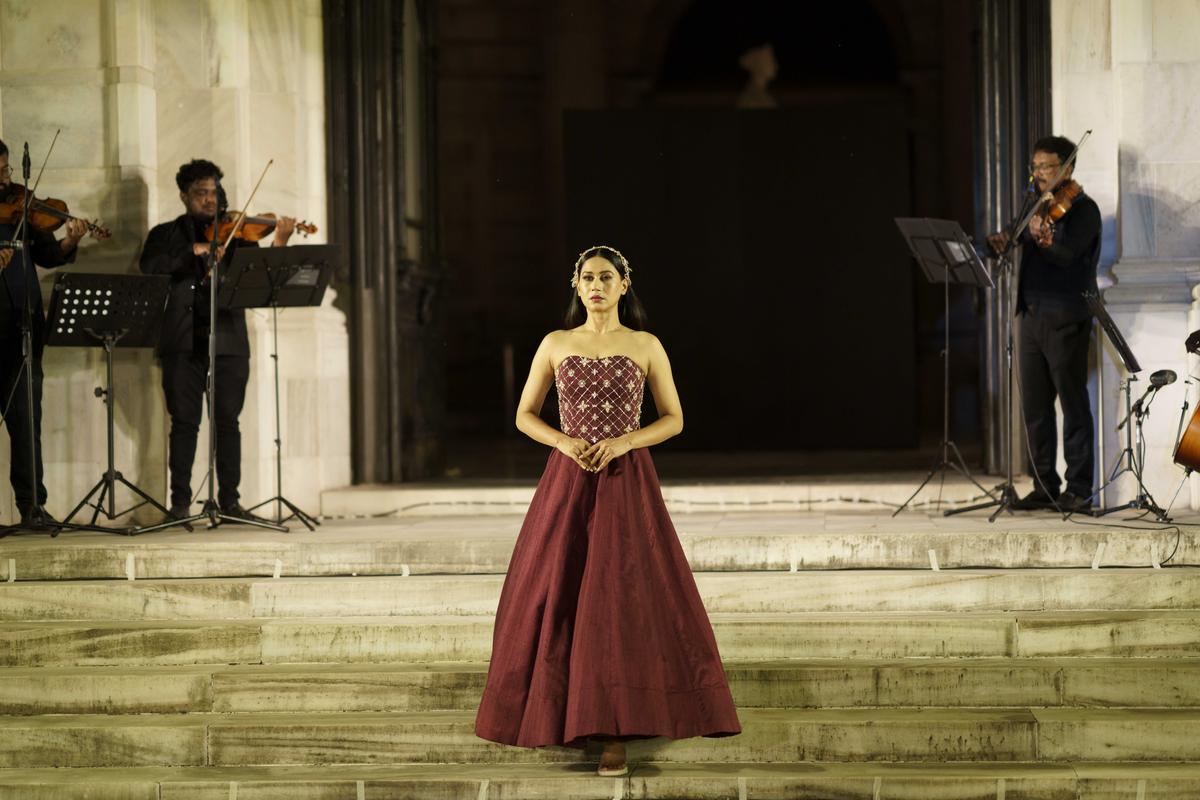
The show was a nod to the couture worn by the women of Florence’s influential Medici family.
| Photo Credit:
SPECIAL ARRANGEMENT
Directed by Rohan himself, and Kuntanil Das, choreographed by Pinky Kenworthy and Sudarshan Chakraborty, and styled by Abhijit Chanda, the performance used the Quadrangle’s archways and colonnades as its primary set. Members of the Calcutta School of Music’s string orchestra played compositions by iconic Italian composers Arcangelo Corelli, Domenico Scarlatti and Antonio Vivaldi. As the music wafted through the air, Sapphire Dance Company’s performance created a dialogue between sound and structure.
But the evening ultimately belonged to its setting. Victoria Memorial’s Indo-Saracenic architecture, its soaring dome, chhatris, arches, long colonnades, intricate jali work, Italian statues and Gothic-inspired porticos were emblematic of the night’s intent: a seamless blend of Indian and European aesthetics — Italian in particular. The staging allowed the monument to hold the narrative, with the clothing giving textural accents.
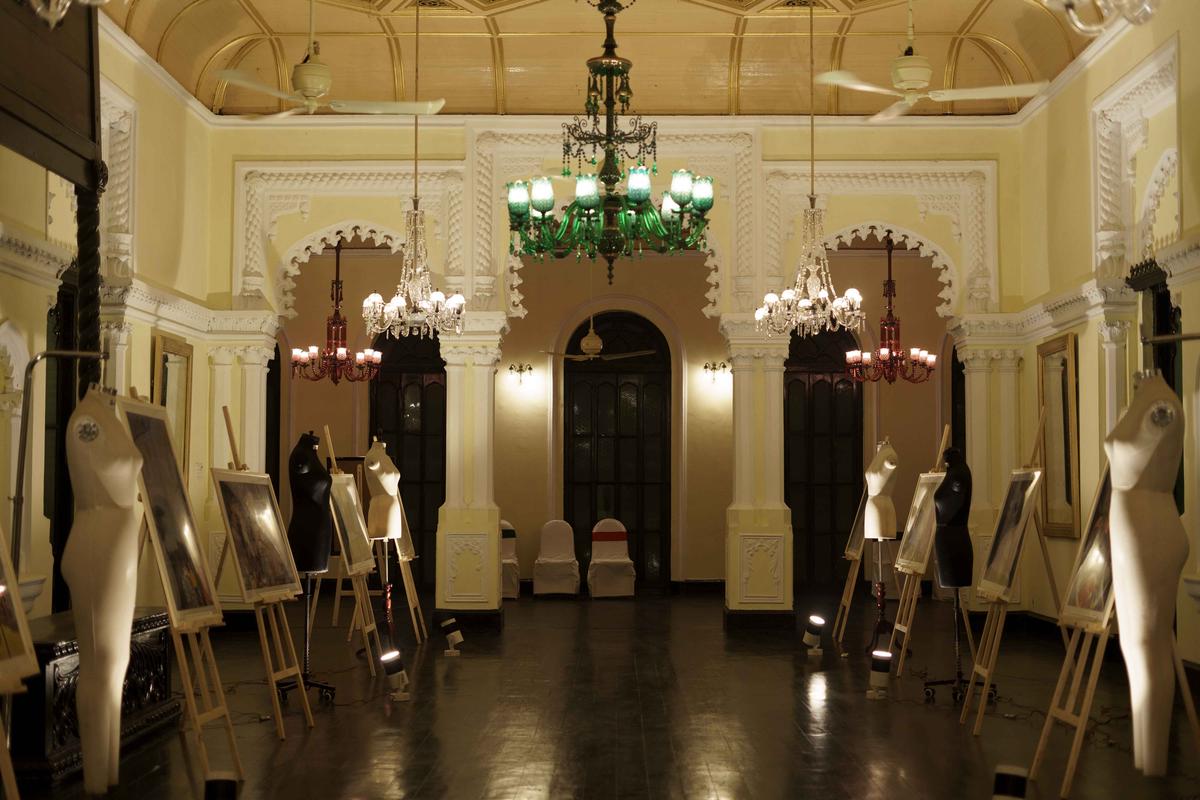
Pieces on display at Burdwan palace.
| Photo Credit:
SPECIAL ARRANGEMENT
After the performance, guests were ushered into Burdwan Palace in Alipore for a Renaissance-themed reception curated by Taj Bengal in association with Gormei, a culinary curation platform known for creating gastronomic experiences by collaborating with chefs and restaurants. The menu drew from Bartolomeo Scappi’s L’Opera (1570), recognised as the first illustrated cookbook from the Renaissance era.
Under the yellow lights of Belgian chandeliers and framed by the palace’s tall French windows, Rohan’s creations stood on display like artefacts from the past.
A fashion photo exhibition by ANSA, Italy’s national news agency lined the rooms, and live Italian music filled the corners.
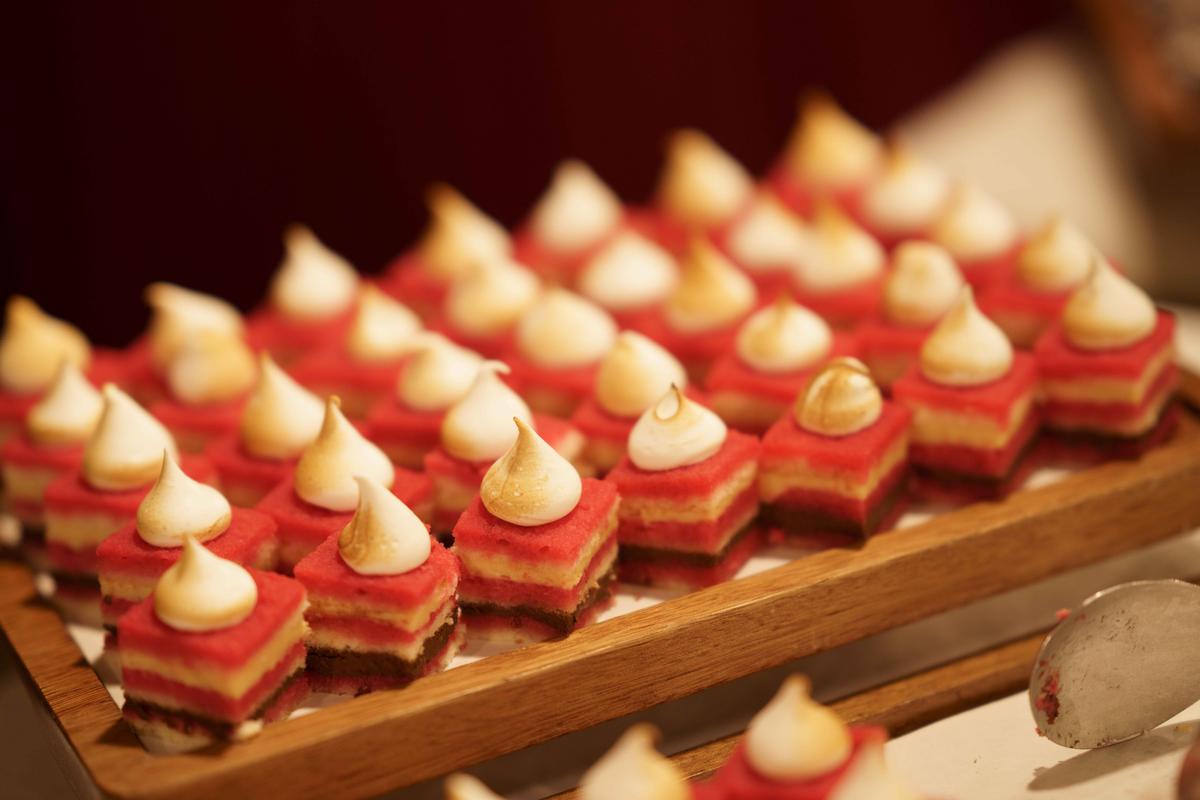
The food menu also featured traditional Italian desserts.
| Photo Credit:
SPECIAL ARRANGEMENT
Guests moved through live counters where chefs prepared hot plates of gnocchi and handmade pasta. Glasses of white and red wine from the bar were paired with sweet marzipan morsels, chicken cacciatore, rosemary prawns, pumpkin and spinach tarts, saffron parmesan arrancini and herb-crusted fish. Dessert was a spread of Gelo d’Arancia—a soft orange pudding and the classic zuppa inglese — sponge cake topped with creamy custard and Italian liquor. The menu carried forward the Renaissance inspired flavours of the evening.
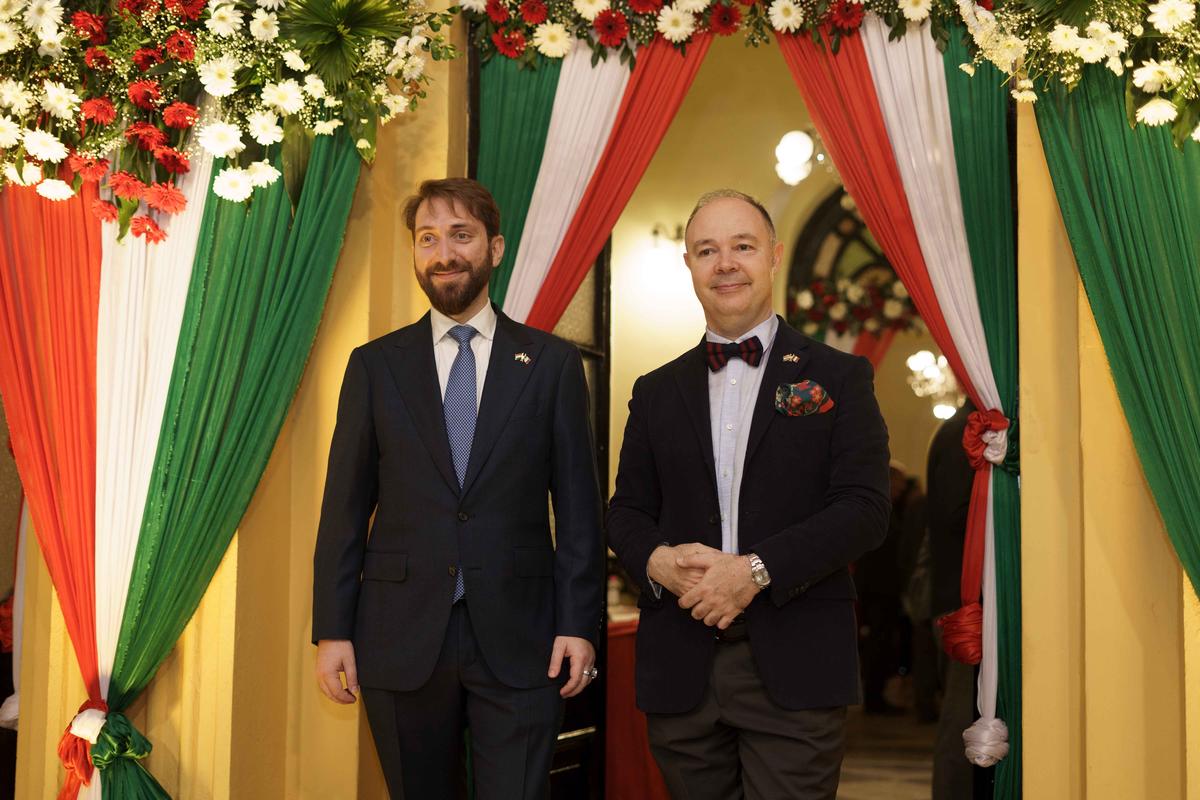
Italian Consul General Riccardo Dalla Costa in Kolkata with Diplomat Daniel Panfilo.
| Photo Credit:
SPECIAL ARRANGEMENT
The night, however, was as much about diplomacy as it was about design. Italian Consul General Riccardo Dalla Costa said that the event upheld Italy’s artistic and cultural renaissance, which has defined the shared legacy of India and Italy.
Be it the compelling glow of soft gold on Victoria’s Makrana marbles or the ballroom between the stucco columns of the Burdwan Palace, the designs shimmered in the timeless afterglow of a civilisation’s dream that had for one evening slipped into the dreamscape of the City of Joy.
Published – November 21, 2025 03:42 pm IST