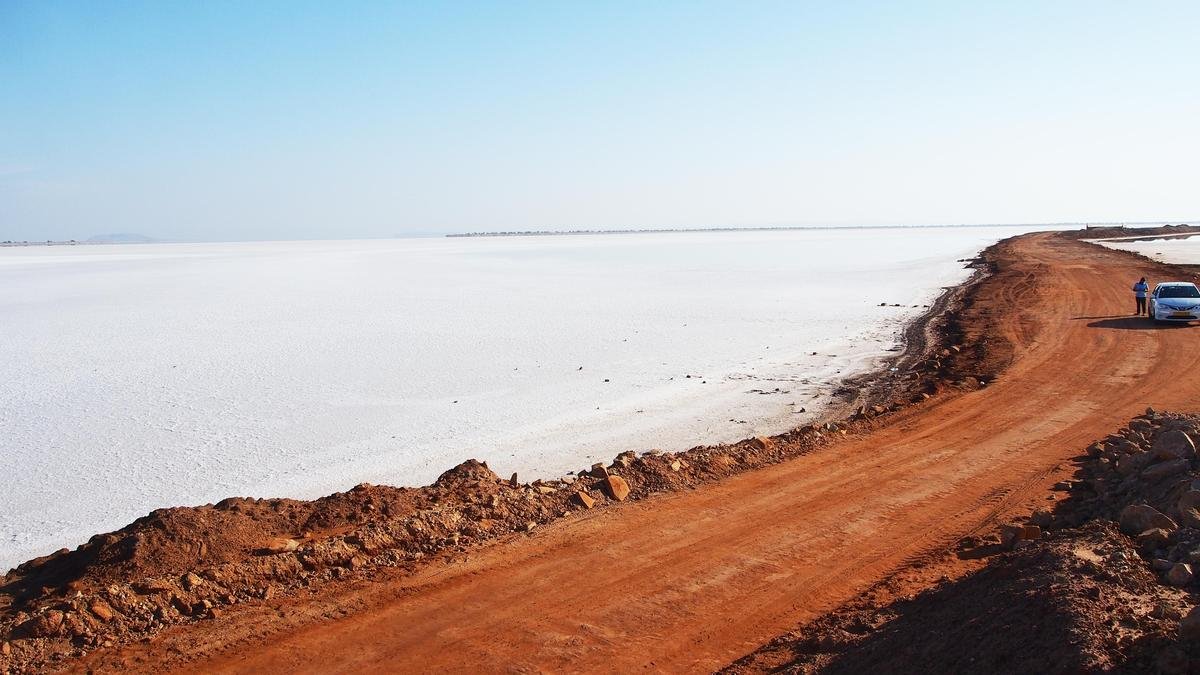
The Rann of Kutch is a salt marsh in the Thar desert, bordering Pakistan. Located in the Kutch district of Gujarat, and is 7,500 km2 , making it one of the largest salt marshes in the world. With a size that big, it is divided into two sub areas: The Great Rann and the Little Rann.
A salty formation
Nature has its own special way of creating things, no matter how strange they may seem. And that’s just how this marsh was formed.
Earlier, it was a shallow part of the Arabian Sea, which eventually became a salt-filled basin due to tectonic upliftment that eventually disconnected it from the Sea.
Every rainy season, the water from the sea and rivers (like the Luni river, Thar desert’s largest river) would fill up the basin. That’s also where the salt comes from. Intense heat in the desert would further evaporate the water, leaving salty deposits behind. This repeated filling and drying up of the basin over millions of years is what led to the formation of Rann of Kutch.
The many colours of the Rann
With each passing season, the Rann of Kutch changes drastically. Monsoons from July to October bring about rains that turn it into a shallow sea. Dry weather, like in winters (November – February), evaporates the water leaving behind sparkling salt crusts perfect for festivals like Rann Utsav. Summers from March to June are the same, only difference between the scorching heat.
The area also sees extreme weather conditions, getting extremely cold as snow during winters. Summers see extreme heat with temperatures soaring over 40℃. If you would like to visit, we would recommend the winters, as in spite of the biting cold, the view is rather beautiful and the salt underneath your shoes will feel crisp and fresh.
Life in salt
In spite of the harsh climates and less than favourable vegetation, the Rann supports diverse life and gets visits from migratory birds. Flamingoes, pelicans, and cranes are common visitors to the wetlands of the Kutch during winters.
As for the native fauna, birds like the cream coloured courser, MacQueen’s bustard and various species of pelicans are a part of the ecosystem. Animals include desert foxes, wolves, and wild asses — which are particularly seen in the Little Rann of Kutch.
The Rann of Kutch Wildlife Sanctuary is the largest Ramsar site (wetlands preserved under the Ramsar Convention of 1971) in Bandi district, Sindh, Pakistan. Here, bird species such as common teal, shell duck, mallard, pochard, flamingo and pelican are found in the habitat. Striped hyenas are also part of this unique biodiversity. The flora mostly sees dry, thorny shrubs, considering it is a desert area.
Another such sanctuary is the Indian Wild Ass Sanctuary, which is situated in the Little Rann of Kutch. It was established under the Wildlife Protection Act of 1972, as one of the last bastions for the endangered Indian wild ass, also called the khur or the godhkhur in the Gujarati language.
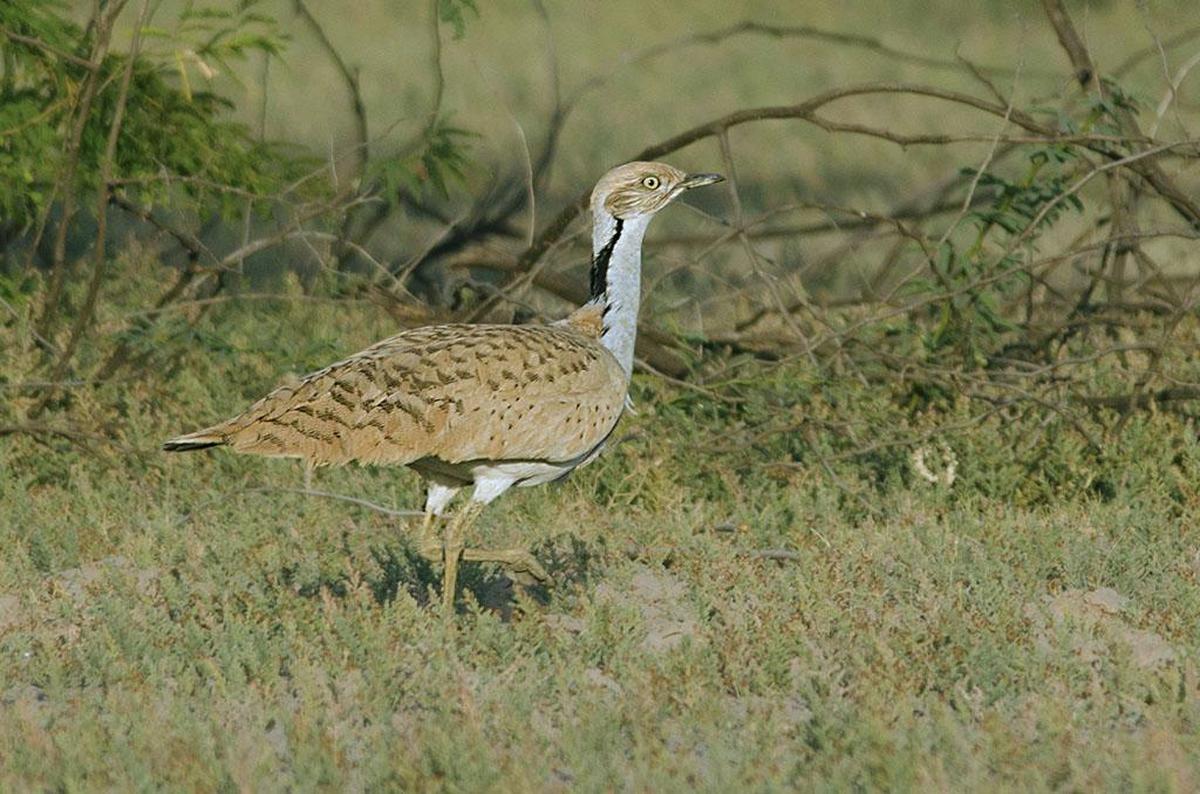
MacQueen’s bustard in the Greater Rann of Kutch.
| Photo Credit:
WIKIMEDIA COMMONS
And it’s not just plants and animals, people are able to make a life here too. Communities like the Agariyas who are salt farmers by profession make a living by the Rann. The community also sees nomadic pastoral groups like Maldharis, and various other ethnic groups such as Rabaris, Meghwals, and Harijans. People make a livelihood here by farming salt, involving in pastoralism, and making handicrafts.
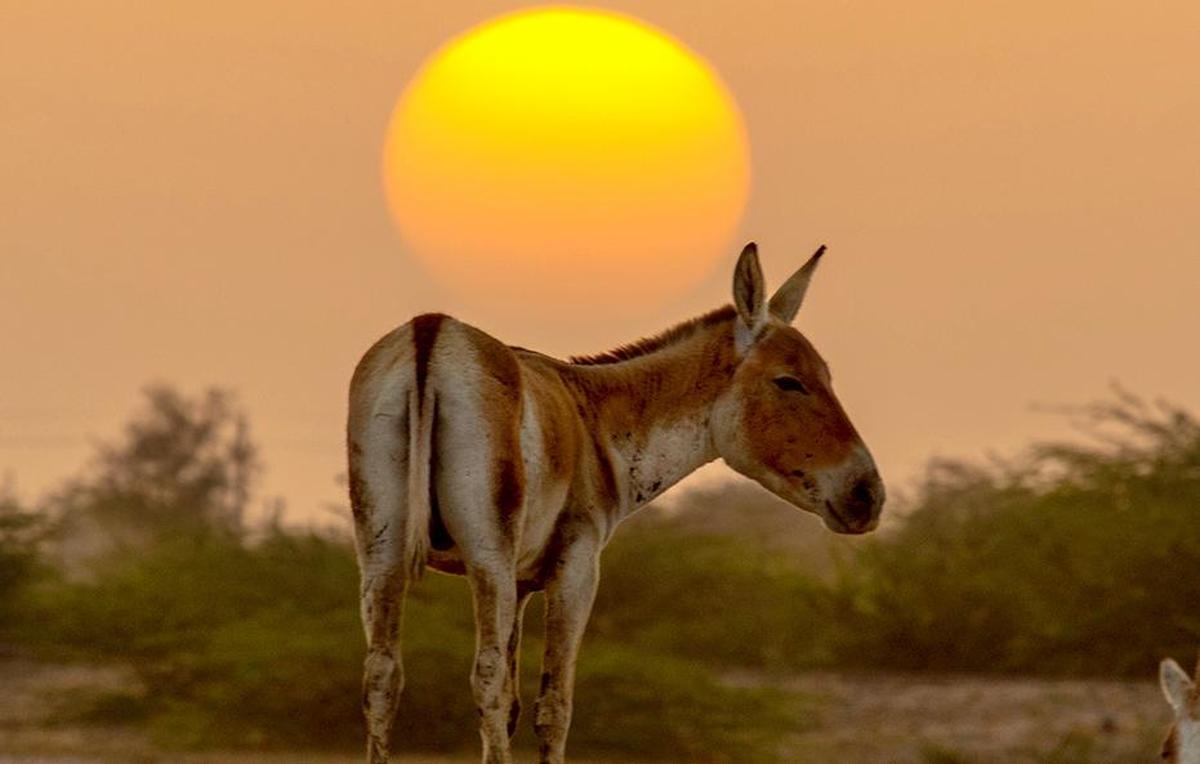
Indian Wild Ass enjoying sunset time with calf and family at Little Rann of Kutch.
| Photo Credit:
Getty Images/iStockphoto
The white gold of Gujarat
With all the salt in the Rann, it’s no surprise when you learn that Gujarat produces the majority of the country’s salt, measuring up to about 75% to 80% of the total output, with figures even reaching 87%! The salt is produced under intense heat, and hardcore manual labour.
Salt was so precious here, that at one point, the British made attempts to control or ban local salt production.
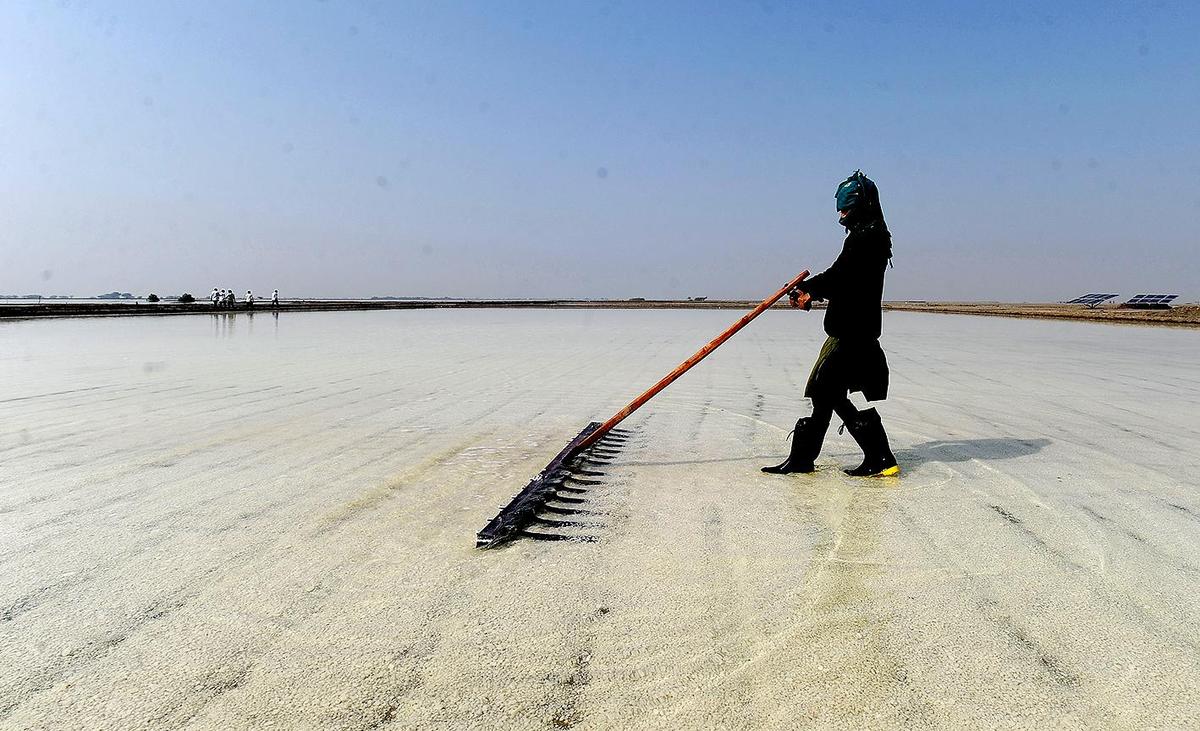
A Salt Farmer busy in her Salt farm at Little Rann of Kutch.
| Photo Credit:
VIJAY SONEJI/THE HINDU
Quake zone
Don’t let the beauty of the salt desert faze you. As stunning as it is, it is a seismically active zone. In other words, it is very prone to earthquakes. These earthquakes also contribute to the already drastically changing landscape. The 1819 earthquake is a tragic example of how dangerous a zone it is. The magnitude was said to have been between 7.7 and 8.2 on the Richter scale, killed over 1,500 people, and even triggered a tsunami that flooded the area.
The infamous 2001 Bhuj earthquake also led to soil liquefaction (weakening of the soil in response to an applied stress) in the Rann.
‘Rann’-ing trade
Little do you know, the Rann also has a fascinating history in trade, dating back to the Indus Valley Civilisation. Its lagoons functioned like a maritime zone, helping connect inland settlements to overseas trade in the Arabian Sea. It is also said that there were ports connecting to other districts like Dholavira and Lothal, facilitating trade both inland and overseas. Maritime trade here began to flourish even more as trade expanded in the western Indian Ocean.
It is still a popular trade route today, with modern infrastructure making it an even stronger hotspot.
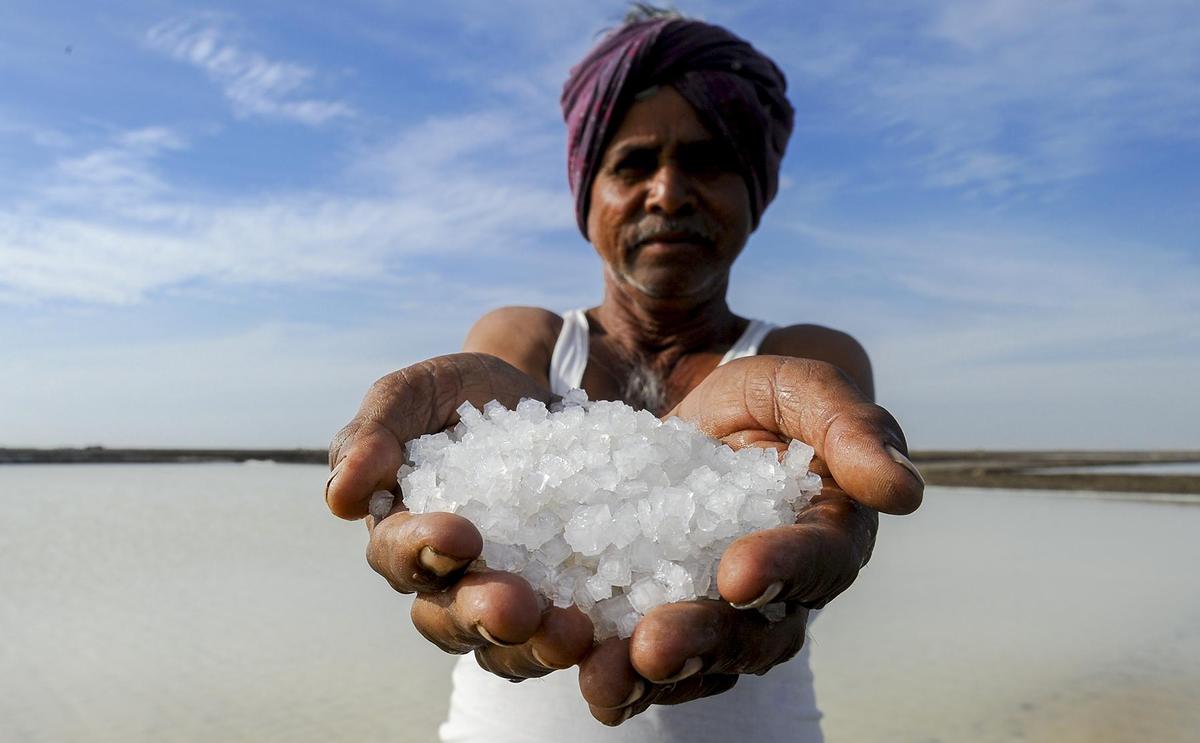
A traditional salt pan farmer showing crystallised salt. People make a living here on salt farming.
| Photo Credit:
THE HINDU
Environmental concerns
But amid all this saline glory, lie some valid environmental concerns including habitat loss, industrial and agricultural pollution, and climate change. Overextraction of salt can often lead to damaging the quality of land as it increases its salt content. Expansion of salt pans affect habitats severely, causing bird collisions and impacting movement patterns of mammals.
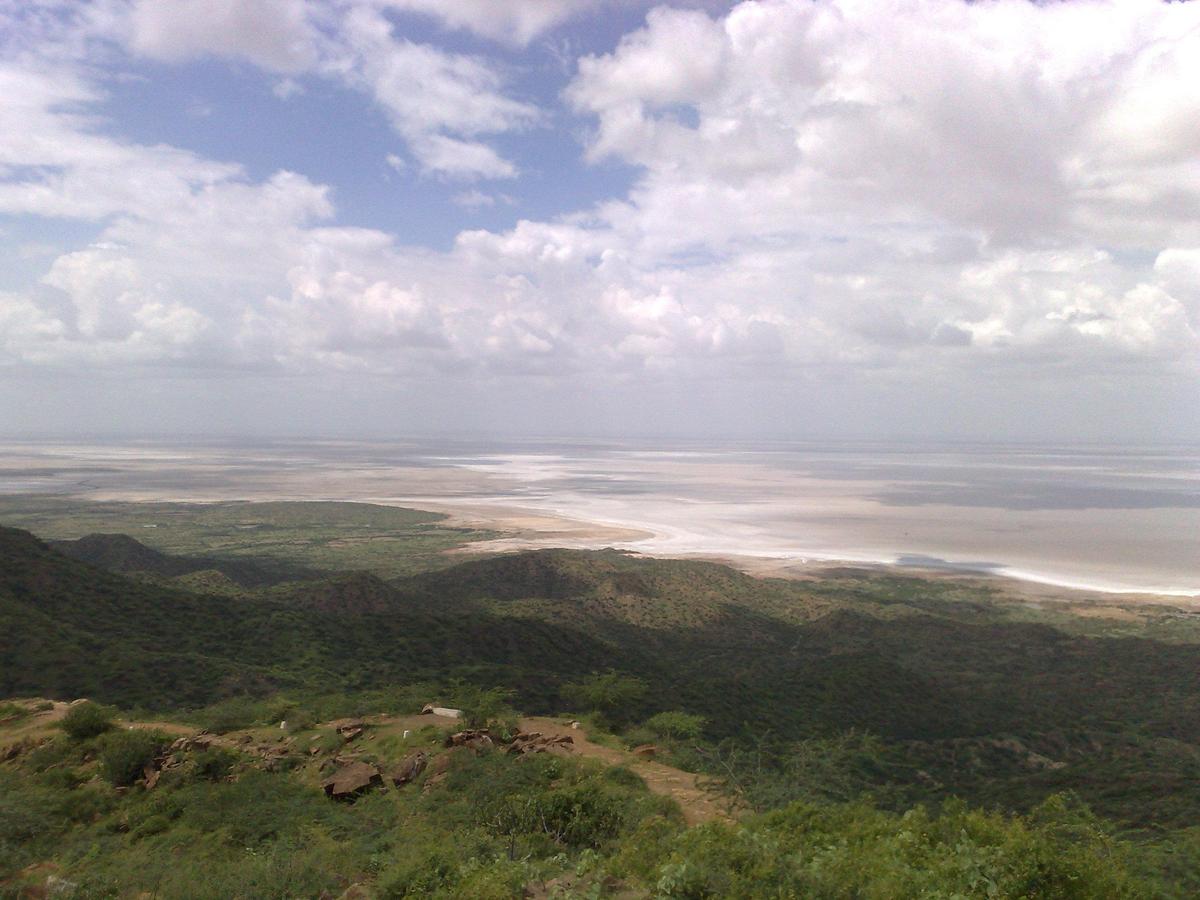
White salt desert at Rann of Kutch
| Photo Credit:
WIKIMEDIA COMMONS
All in all, the Rann is not just a white desert, it is a living landscape shaped by water, heat, and time. It is a marshland that has history and science written in it. If you ever visit Kutch in Gujarat and happen to see the Rann, you’ll know just how beautiful and unique nature’s balance is.
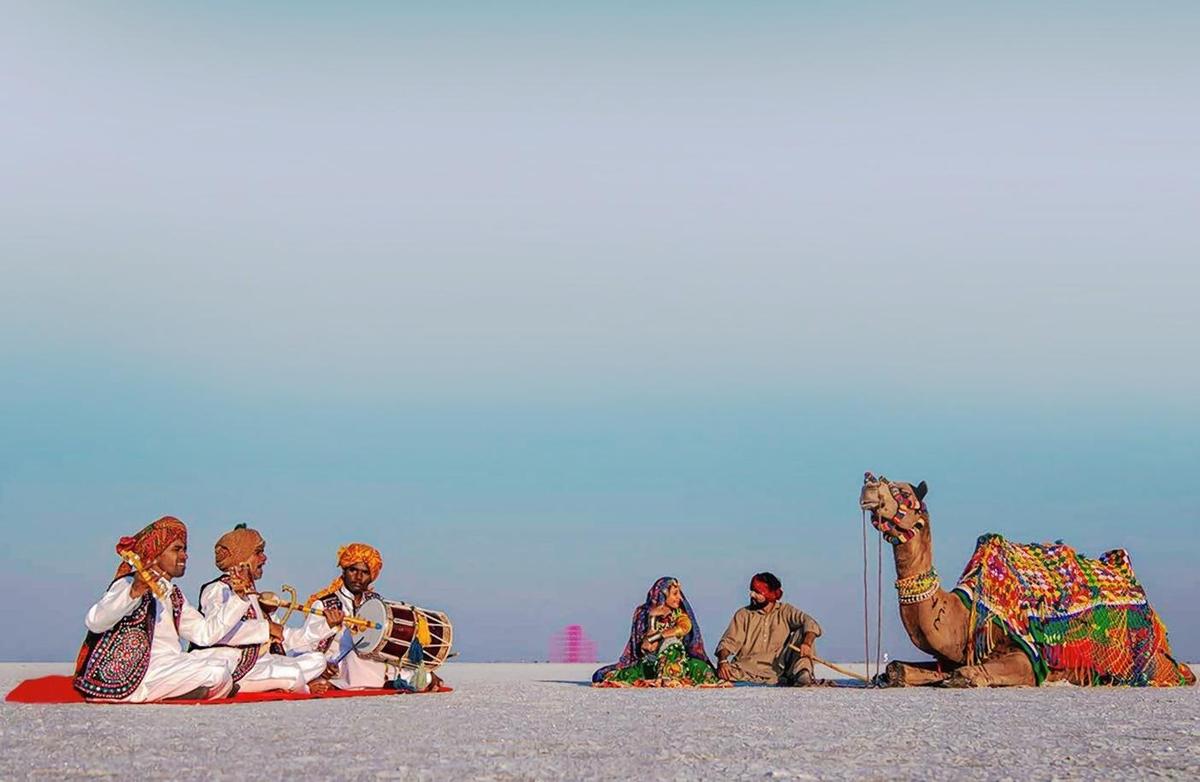
A scene from Rann Utsav.
| Photo Credit:
SPECIAL ARRANGEMENT
RANN UTSAV
A yearly event called the Rann Utsav takes place at the Rann. This year, it is happening from 23rd November 2025 to 20th February 2026. The event brings together folk musicians, dancers, and artisans for a three month-long cultural festival, showcasing the state’s rich heritage. You can also shop for handicrafts and clothes featuring mirror work, Banhani sarees, Rogan art, and leather footwear. And if you’re feeling adventurous, there are opportunities for biking and camel rides.