At the House of Mahendra Doshi’s Wadala showroom, a 43-foot mural takes up an entire wall. In tones of sepia and gold, it picks out different chairs, regions, and architectural styles to illustrate India’s seating design lineage — setting the tone for its new exhibition, A History of India through Chairs. “I wanted to show how cultural context and history shaped chairs,” explains Vivek Gandhi, who conceptualised the exhibition in Mumbai, which has been curated by his father Anand Gandhi and uncle Chiki Doshi.
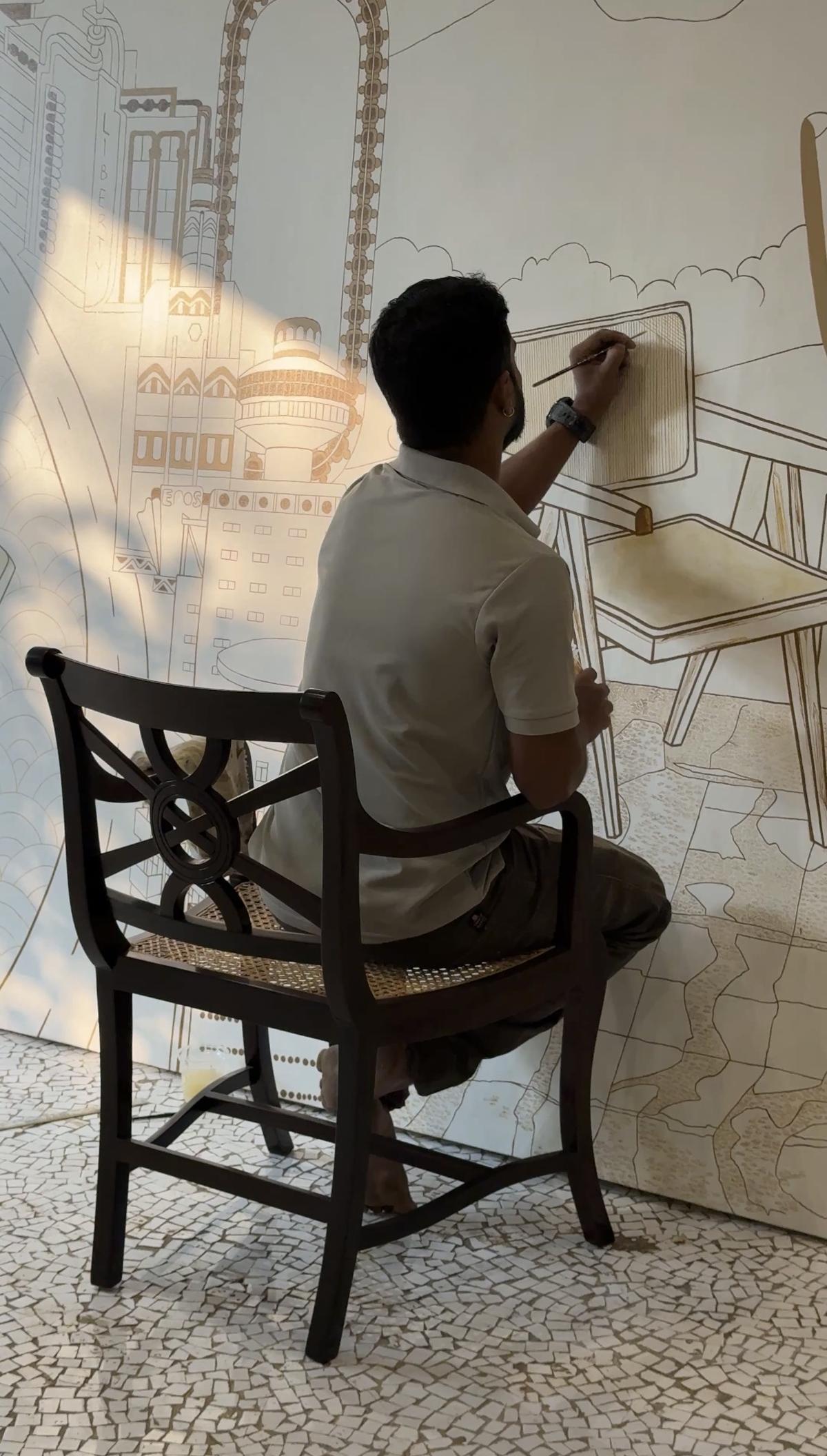
The 43-foot mural taking shape
| Photo Credit:
Vivek Gandhi
“In the mural, we depict how pre-colonial seating had low khatts [cots], jhulas [swings], and low khursis for royal baithaks [gatherings]. Then, the Portuguese introduced elevated seating, ornate Bishop’s chairs and the cadeira do avô [grandfather chair or armchair],” he adds. “The Dutch brought the burgomaster [a 17th-19th century teak chair with a circular cane seat, six legs, and a carved back], and the English their planter chairs [with a deep seat and sloping back].”
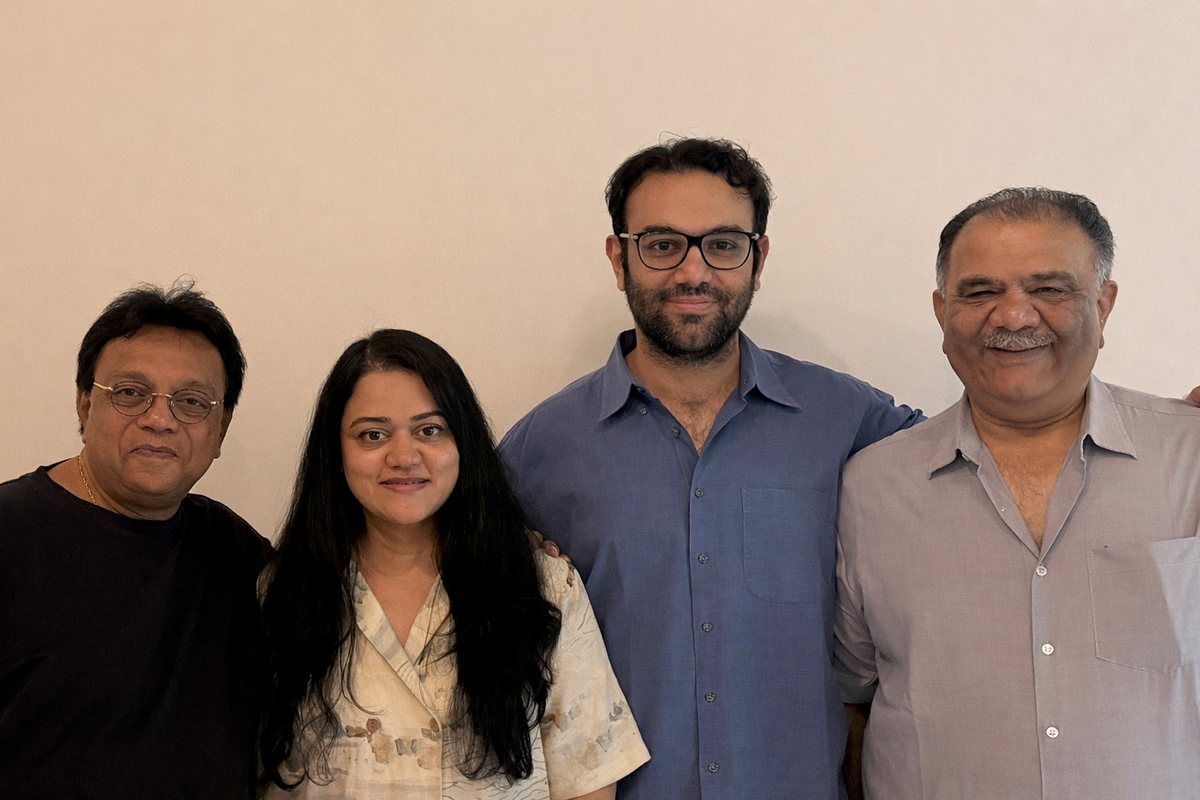
(L-R) Chiki Doshi, Surpiya Gandhi, Vivek Gandhi, and Anand Gandhi
| Photo Credit:
Special arrangement
A collection of 50 years
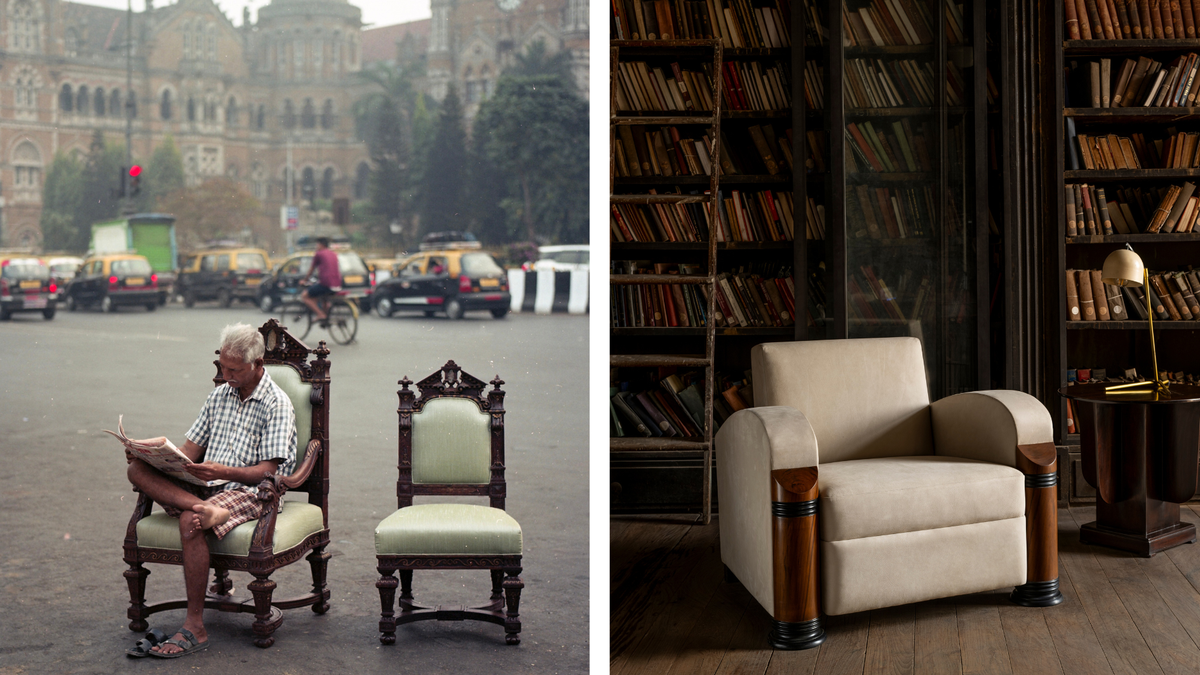
The House, with the country’s largest curation of antiques, objets d’art and collectibles, knows its chairs. Their collection, started by Mahendra Doshi 52 years ago (and added to later by the family), has over 3,000 chairs — collected from across Gujarat, Goa, Rajasthan, Kerala, West Bengal, among other locations. It also includes pre- and post-Independence models such as the streamlined Art Deco chair, the Jeanneret chair, and modern avatars that embrace Indian maximalism and European minimalism alternatively. Choosing just 250 was a challenging exercise.
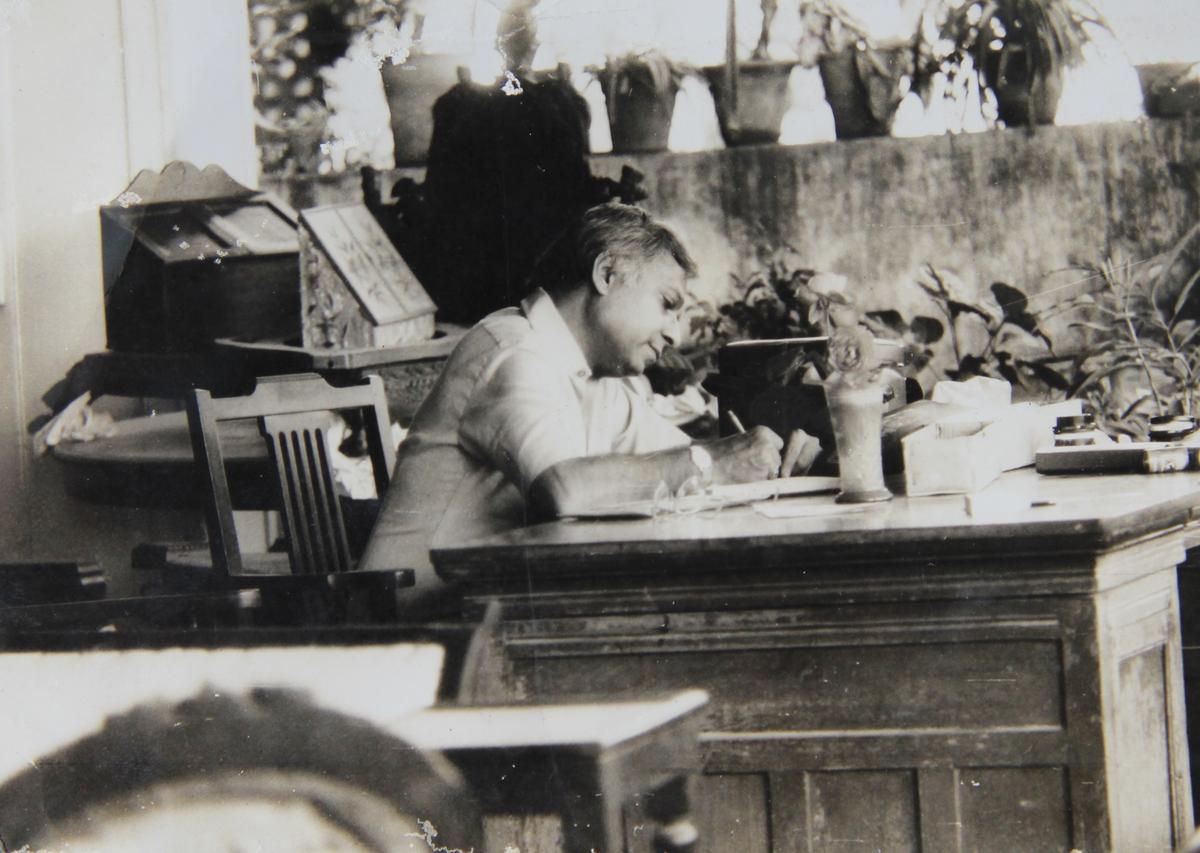
Mahendra Doshi
| Photo Credit:
Special arrangement
“When I was going through the warehouses, I found a teak chair covered in plastic. It was one that dad [Anand Gandhi] had bought 30 years ago at an estate sale in Gujarat. It was covered in ceramic moti work [beadwork], but it was in bad shape,” recalls Vivek. “No one does this handwork anymore, and it took us over three months to find a collective in Bhavnagar that works with beads that are barely a millimetre in size. A 78-year-old Ba [honorific for an elderly Gujarati woman] was able to do the most complicated part of recladding the chair. The restoration took close to eight months.”
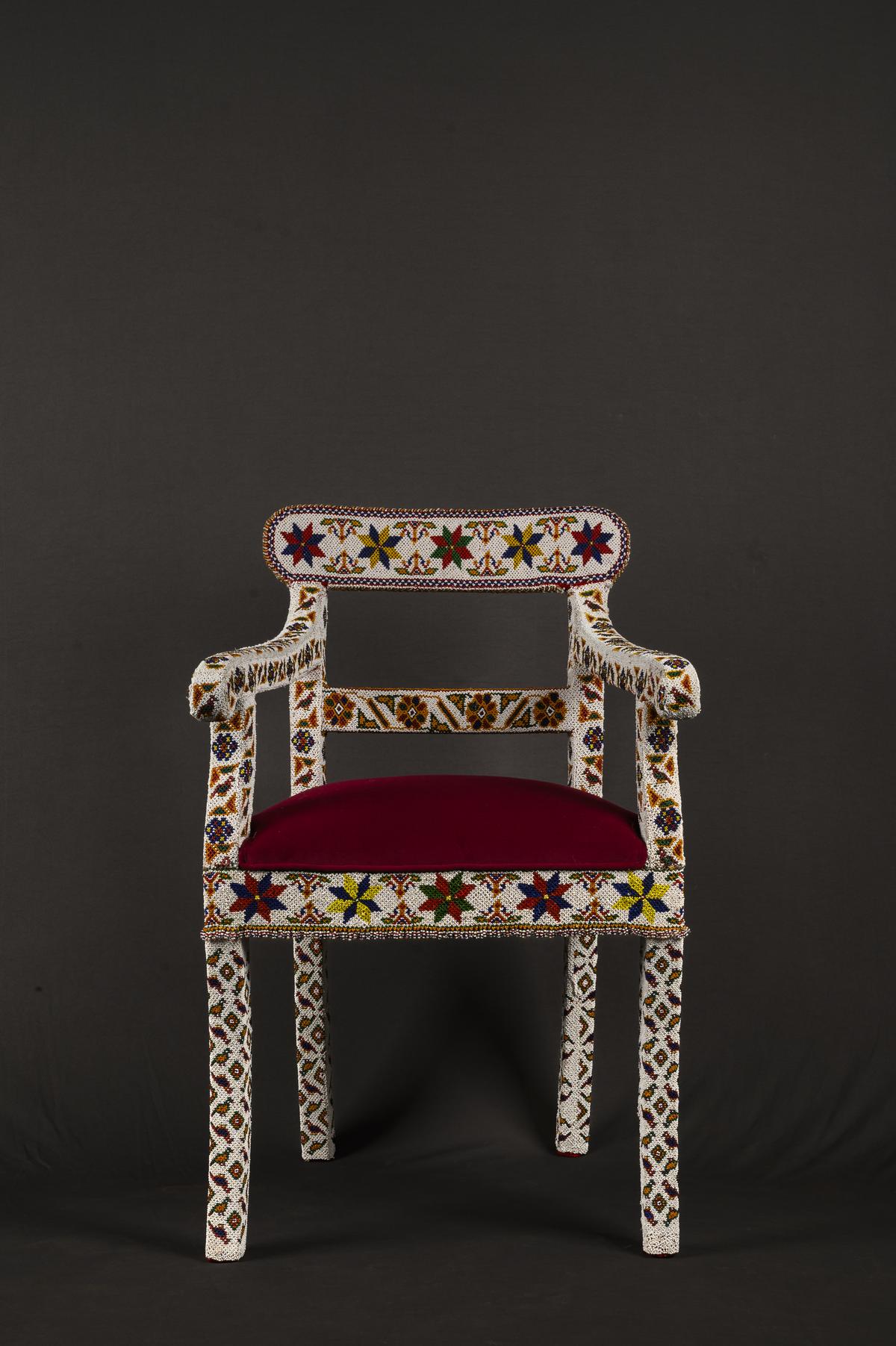
The Durbar chair with moti work from Kathiawad
| Photo Credit:
Vivek Gandhi
Seats of power and provenance
The chairs are presented chronologically: indigenous pre-colonial, Portuguese colonial, Dutch colonial, English colonial, French colonial, Indo-Saracenic, the Arts and Crafts movement, Art Deco, Mid-century Modern, and Contemporary. Acquired from estate sales, private parties and dealers, they present India’s story at the intersection of craft and history.
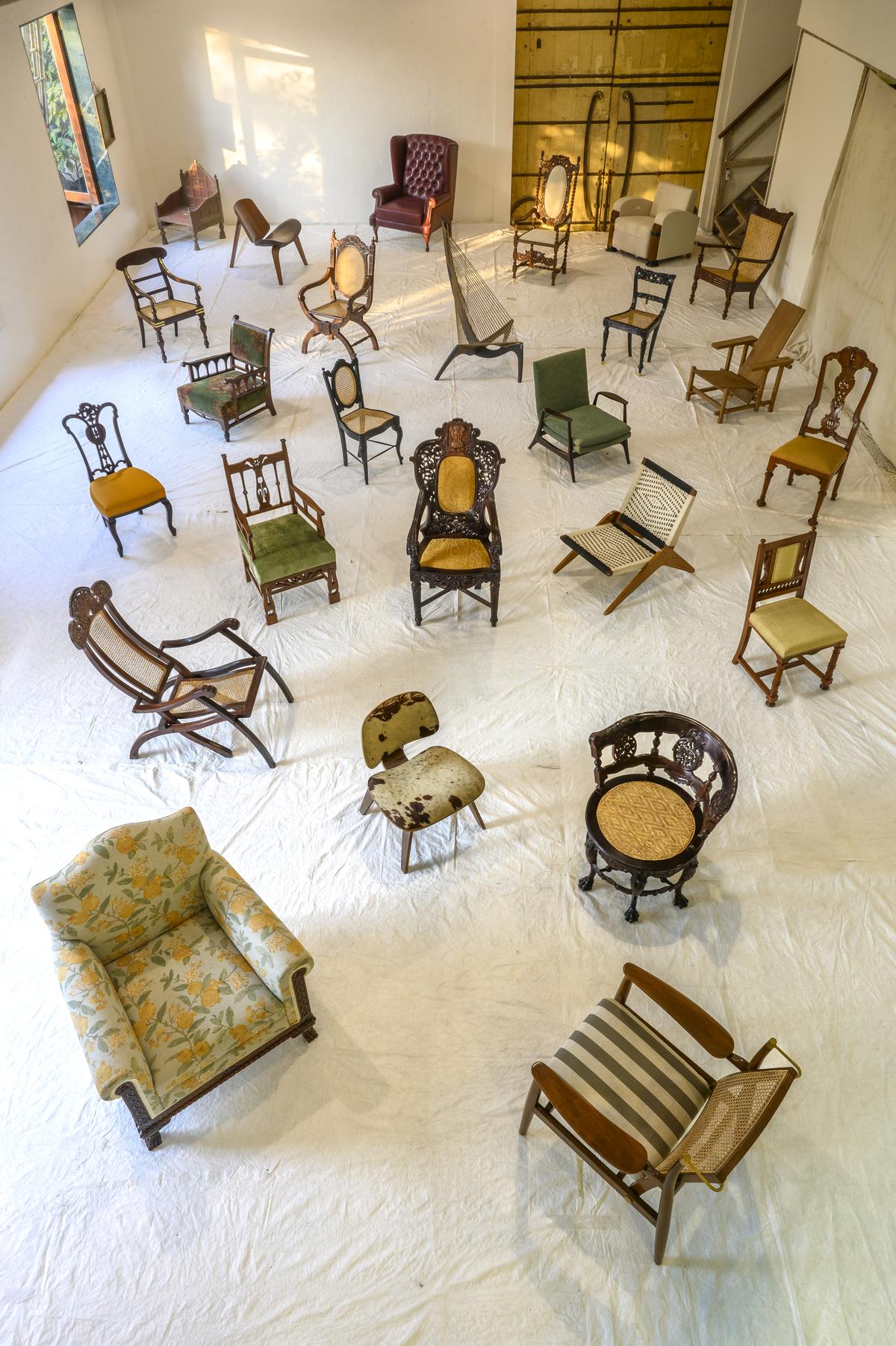
A History of India through Chairs
| Photo Credit:
Vivek Gandhi
“While low stools in pre-colonial times were just seats, raised chairs became more popular with the arrival of the Portuguese and Dutch,” says Chiki, adding that “a high chair evokes power”. The materials speak of provenance, too: both through local use and trade routes. For instance, Goan and Dutch chairs were fashioned from rosewood, abundantly used across the east (with its Dutch ports at Pulicat in Tamil Nadu and Masulipatnam in Andhra Pradesh) and west (with Goa as a Portuguese colony). In Gujarat, however, teak wood has been used since pre-colonial times. Chairs from the late 18th century include a bajot (used by priests during rituals), a handpainted doli (palanquin), and a khursi with a brass-clad backrest and equine detailing.
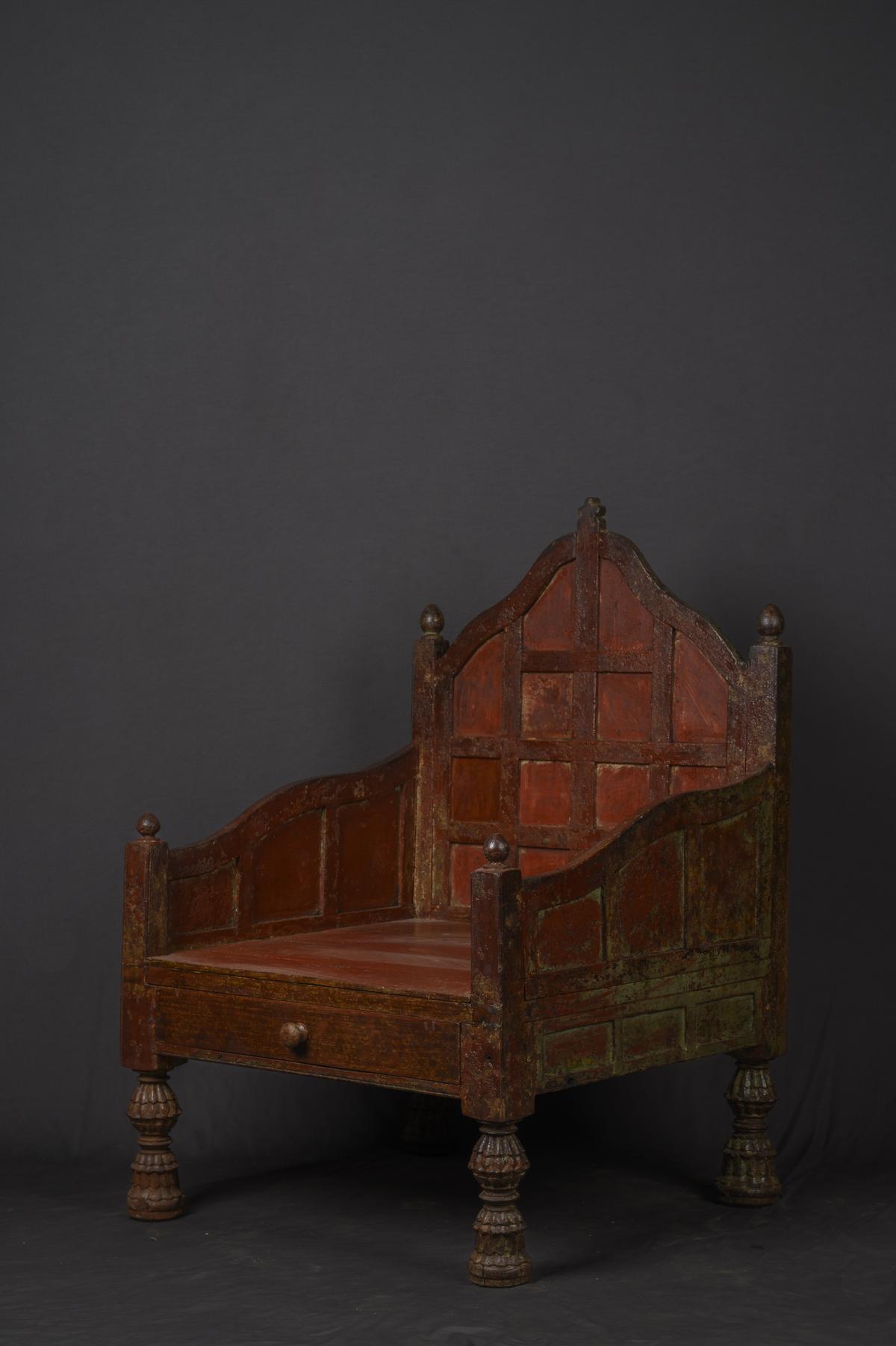
Bajot used by priests
| Photo Credit:
Vivek Gandhi
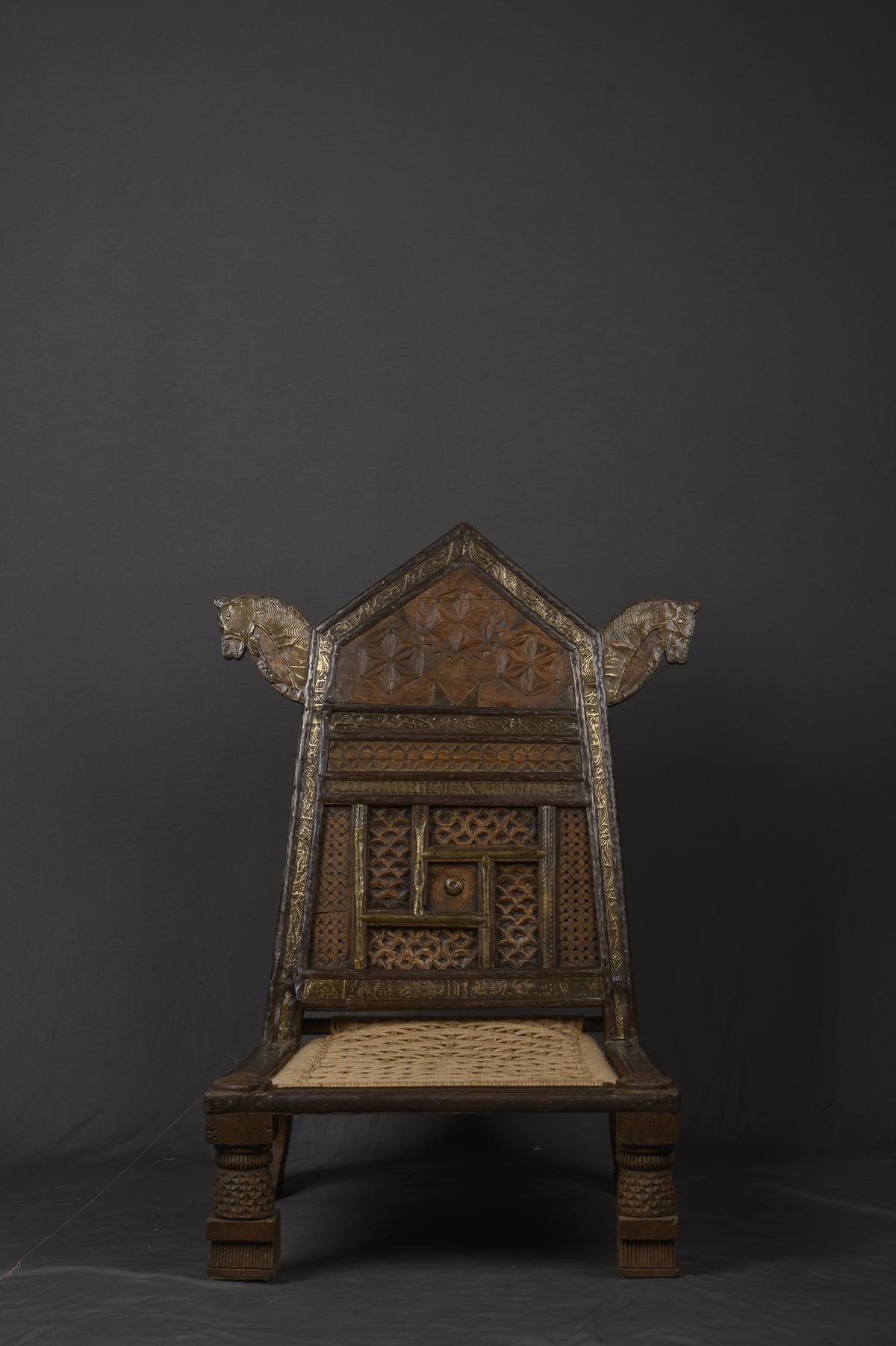
A low khursi
| Photo Credit:
Vivek Gandhi
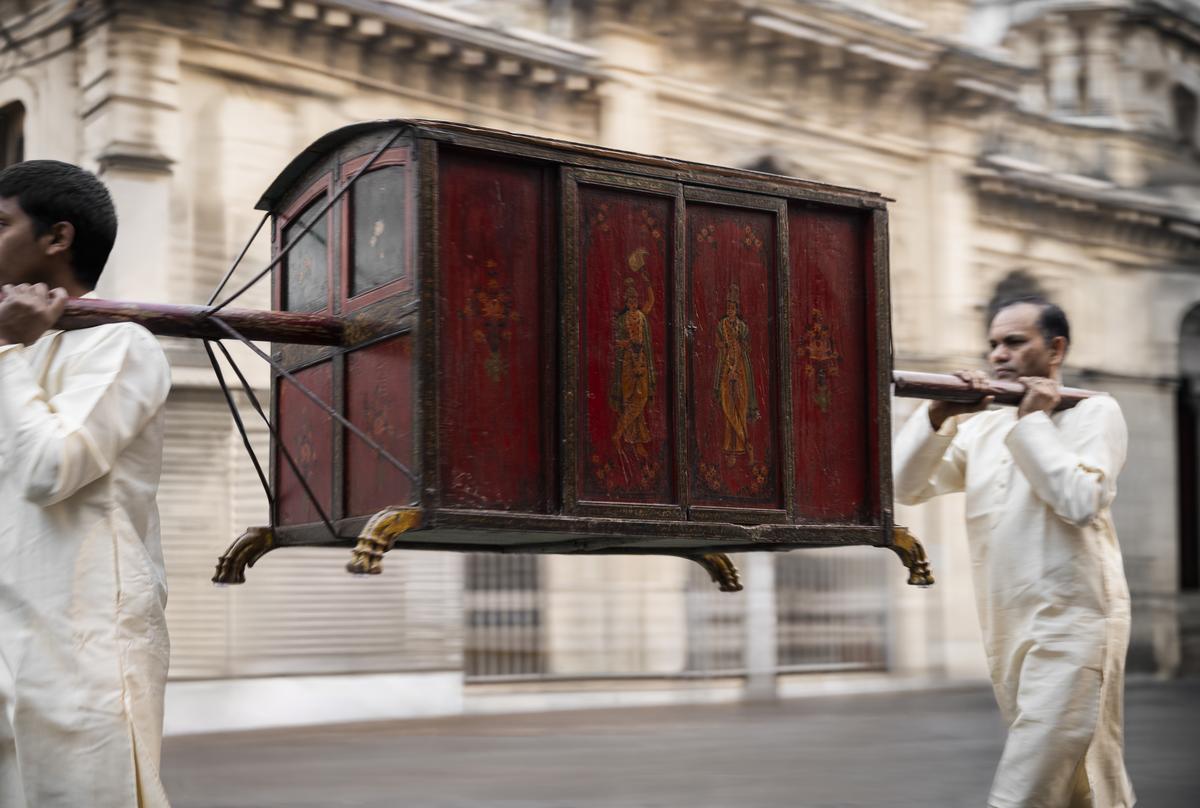
Gujarati doli handpainted with vegetable dye
| Photo Credit:
Hashim Badani
From royal to Rococo
The curation also shows how the scope for ornamentation offered Indian craftspeople an opportunity during colonial times to add their own stamp to the designs. An Indo-Portuguese Bishop’s chair from the late 18th century has an Ashoka emblem at the top. “On closer inspection, we found that only the emblem is in teak; the carved chair is made with rosewood. We surmise the emblem was added later when the chair was repurposed by an Indian craftsman for a court or government office post-independence,” observes Anand.
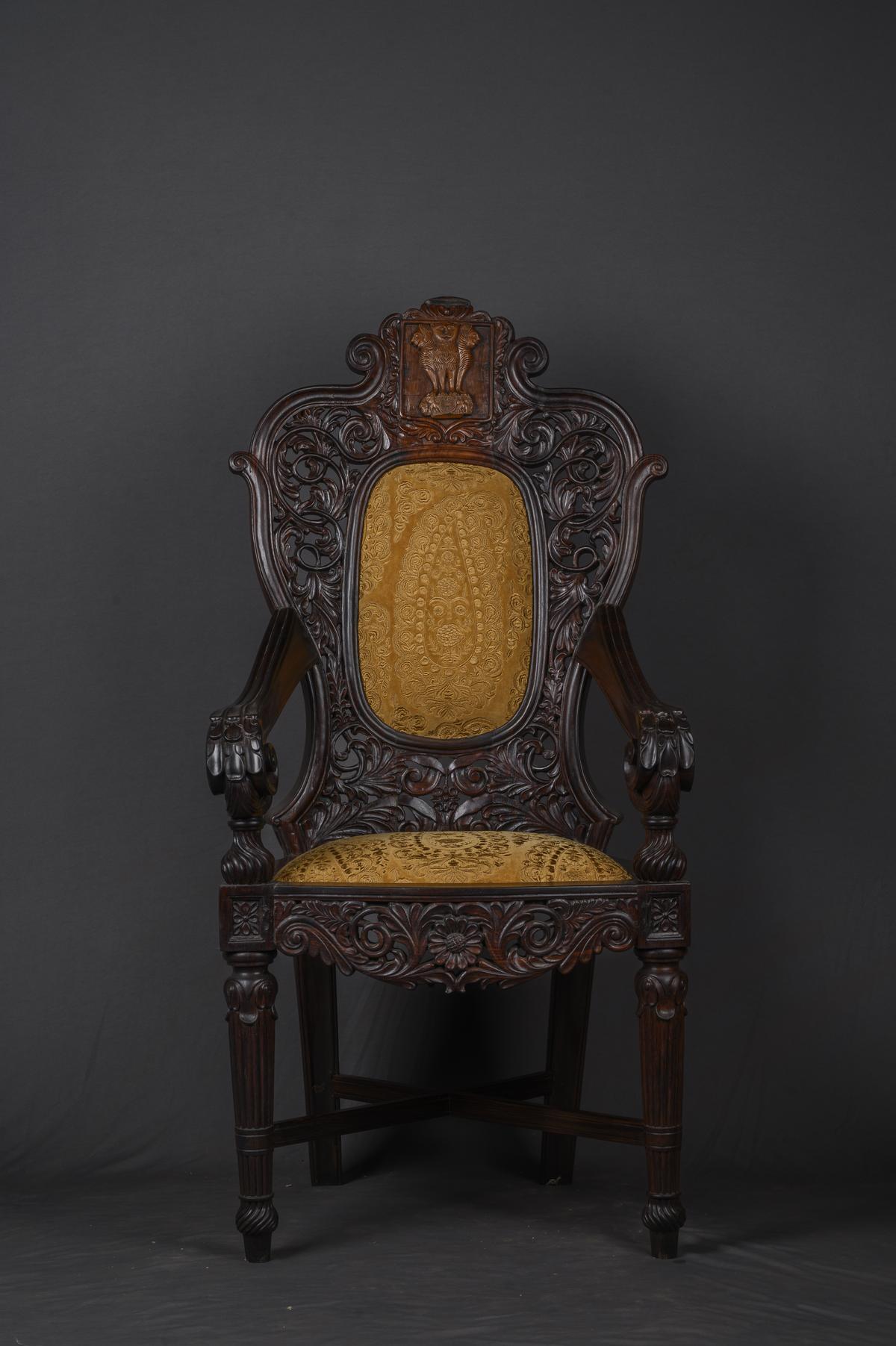
Indo-Portuguese Bishop’s chair with an Ashoka emblem
| Photo Credit:
Vivek Gandhi
A rosewood chair made for Raj Sahib Mansinhji II Ranmalsinhji, the Raja of Dhrangadhra (circa 1893), bears the name of the carpenter on the back, a rare stamp of a maker. “It’s also one of the few chairs with a date on it [in our collection]. Usually, we arrive at the timeline of the chairs by looking at the time period of the design practised,” says Vivek.
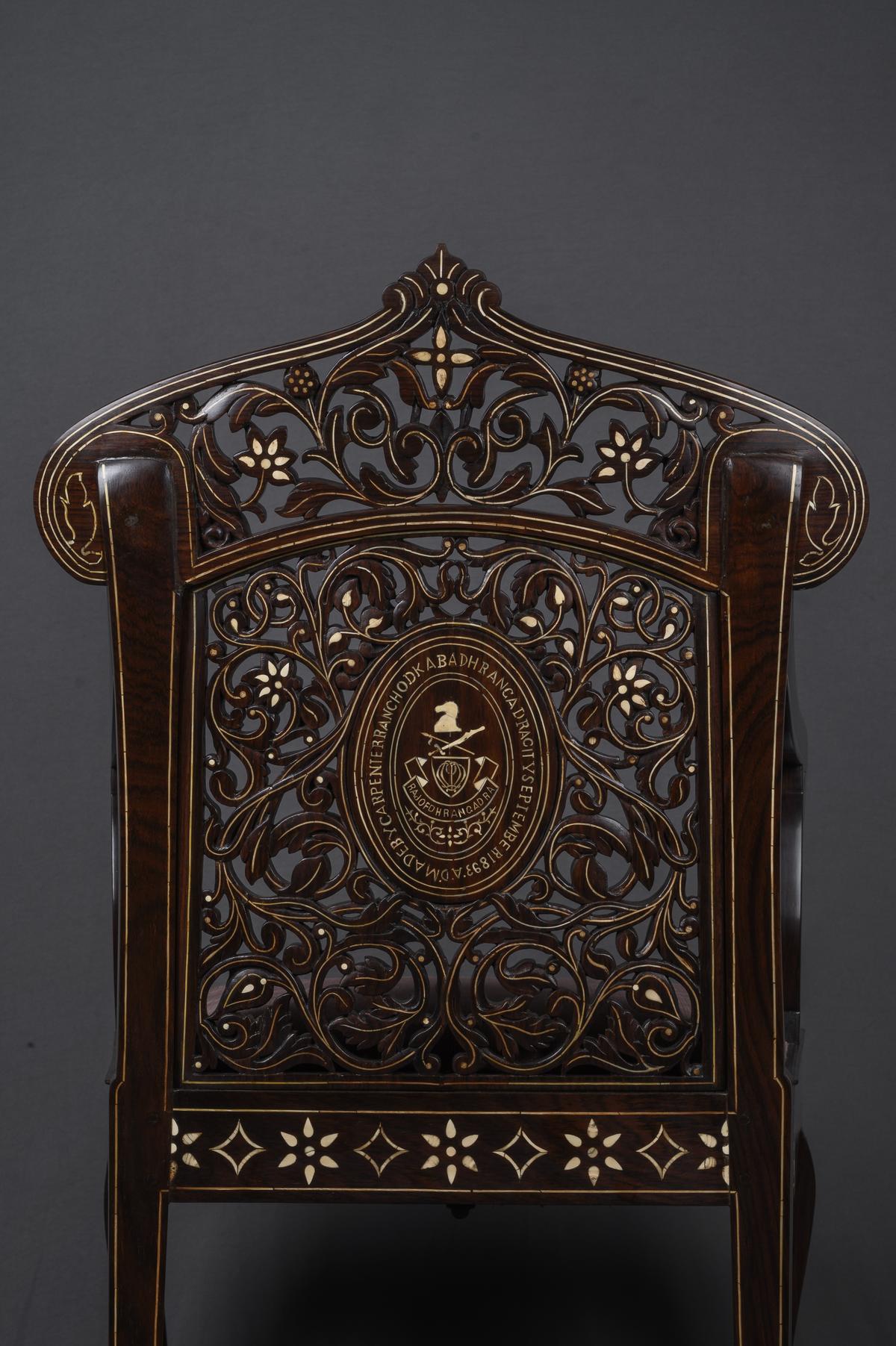
Durbar Hall chair from the Raj of Dhrangadhra
| Photo Credit:
Vivek Gandhi
Then, there’s a French Rococo dining chair with an ochre seat that evokes the Chippendale style (with flowing curves and decorative fretwork), a style popular among elites in Kolkata in the 18th century. A pair of Indo-Saracenic chairs from the 19th century are rich with raw silk upholstery and a mirror on the backrest. A rosewood Anglo-Indian throne chair from the same period has zardozi work on its burgundy upholstery and “was most probably made for a British official”, says Vivek. There’s also the Red and Blue Chair by Dutch furniture designer Gerrit Rietveld. With this lounge chair designed in 1917, Rietveld stripped the traditional armchair of its volume and emphasised functionality.
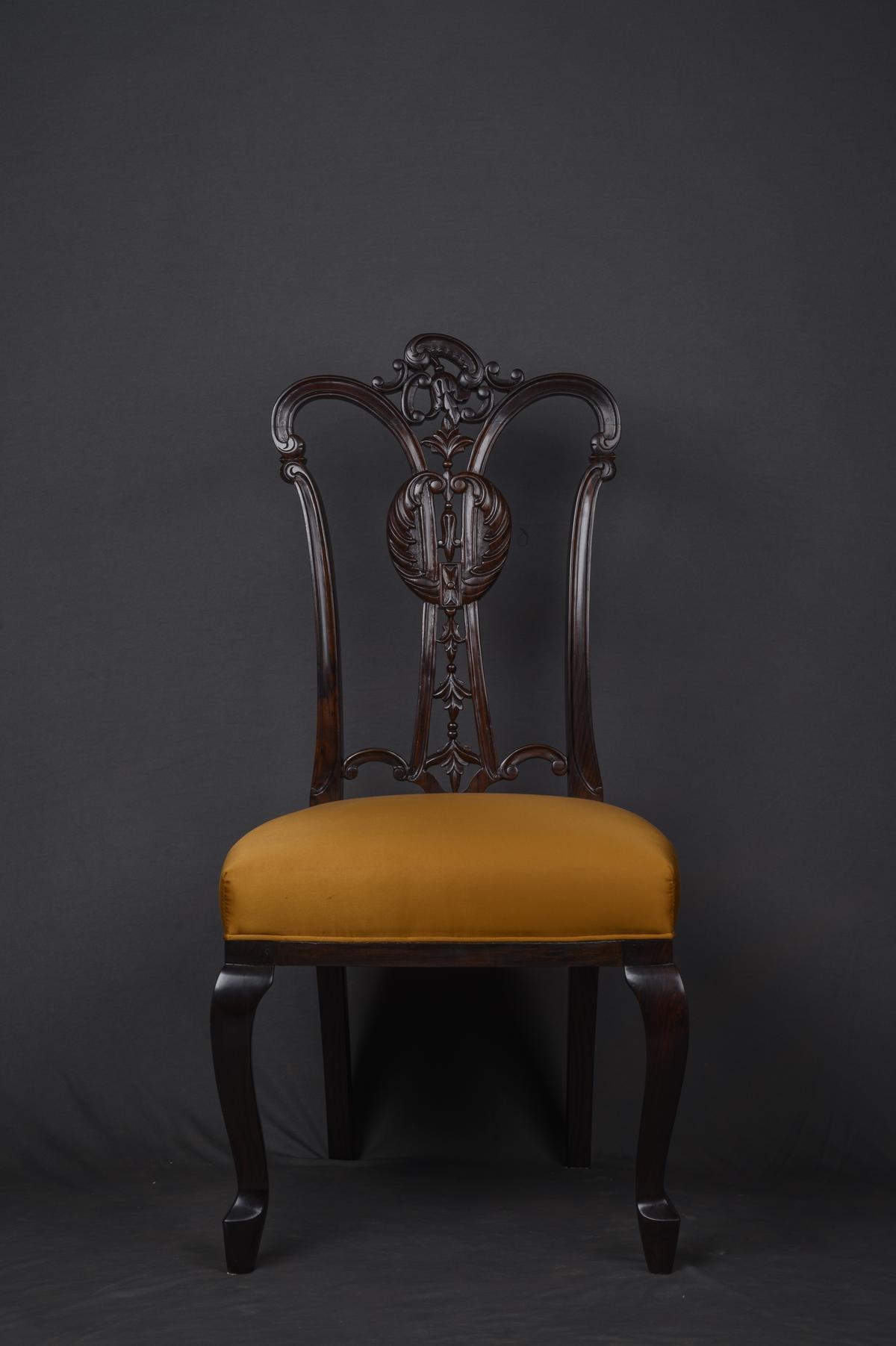
French Rococo dining chair
| Photo Credit:
Vivek Gandhi
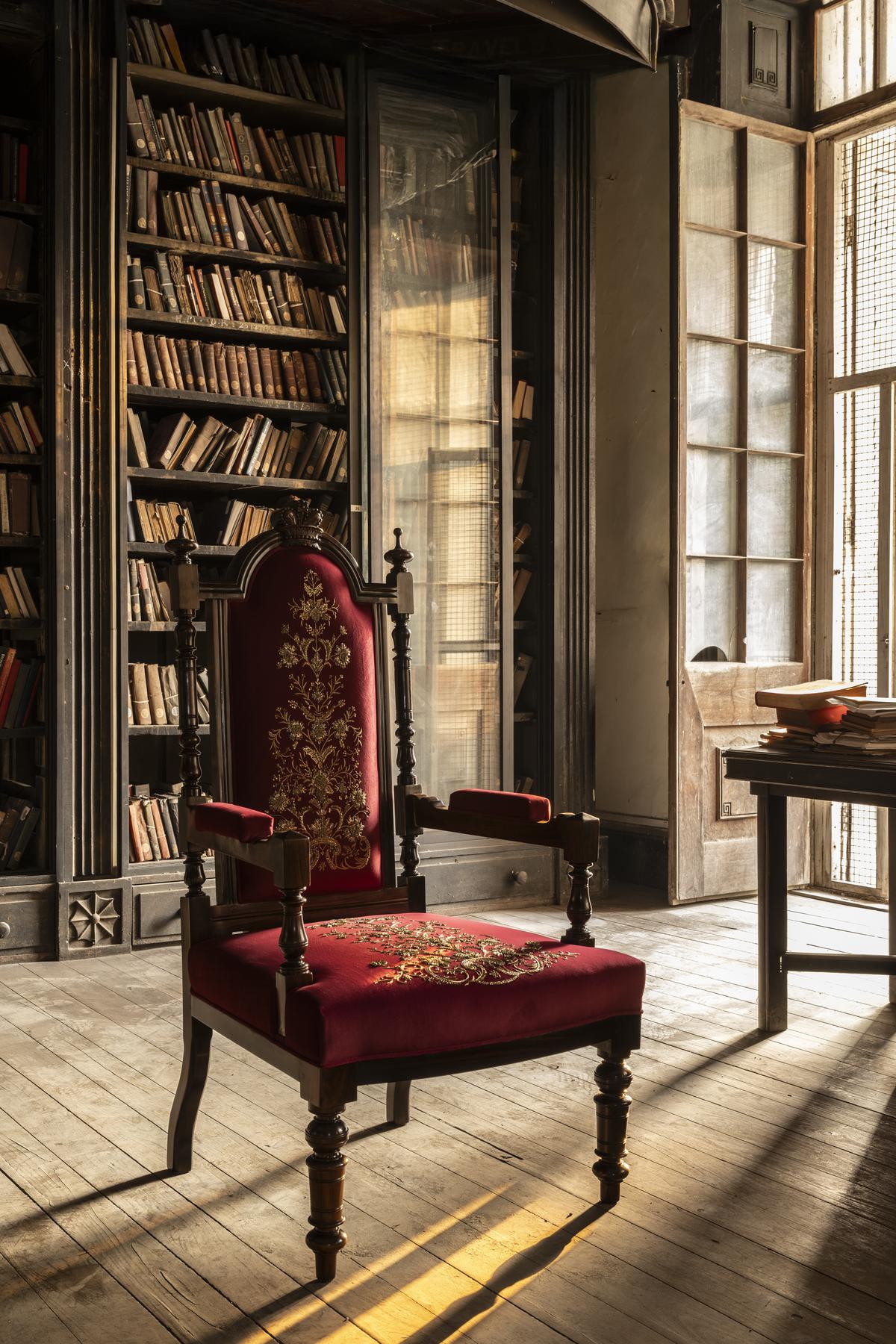
Anglo Indian throne chair with a crown and zardosi work
| Photo Credit:
Hashim Badani
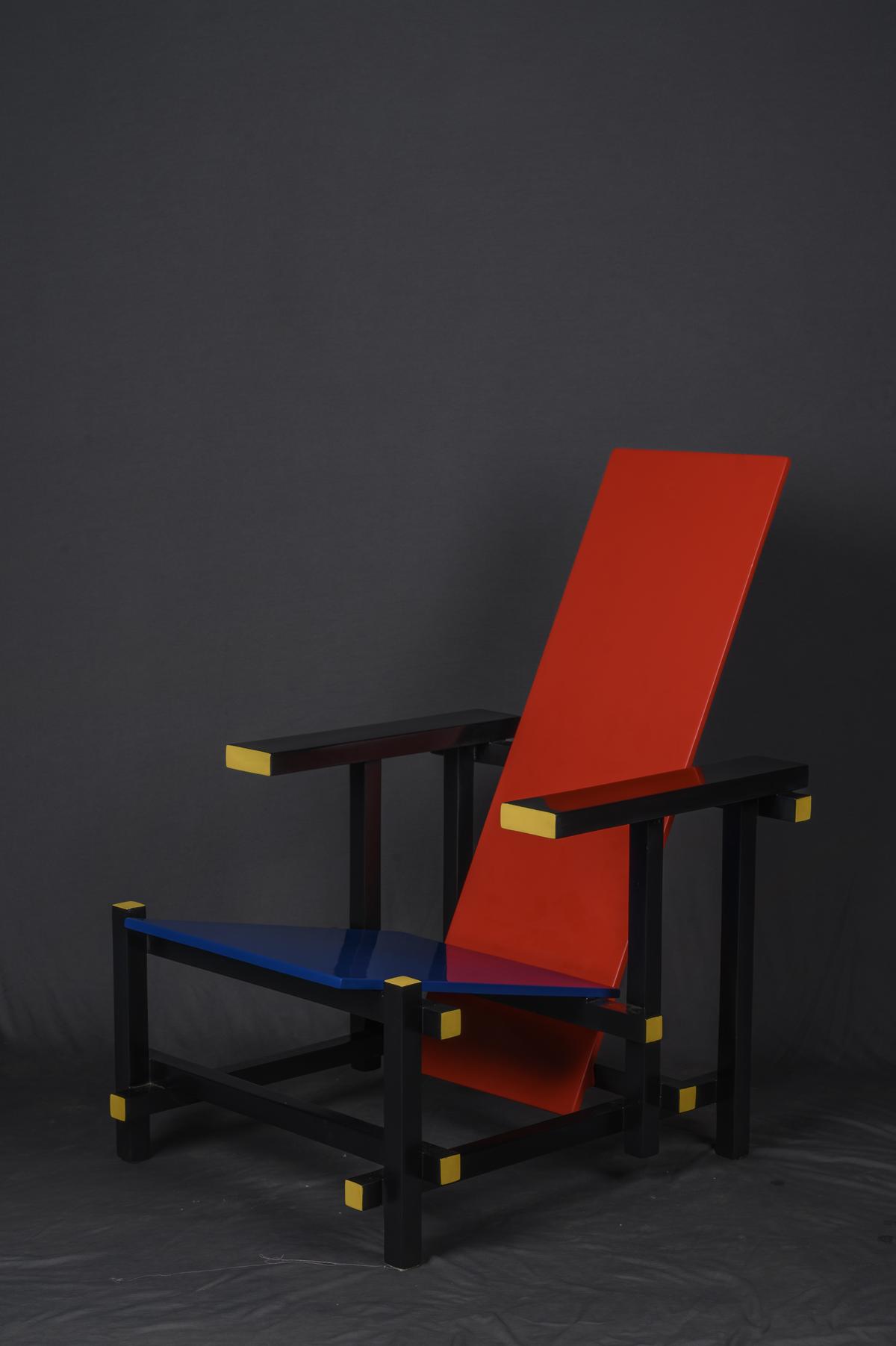
The Red and Blue Chair by Gerrit Rietveld
| Photo Credit:
Vivek Gandhi
For Chiki, however, the Art Deco chairs hold a special place, as it was a movement that coincided with a young independent India creating its own design syntax. “The Deco movement in Bombay [from the 1930s onwards] was so big that the architecture was not just on Marine Drive. It was in the bylanes of Dadar, Matunga, on theatres, shops and buildings. And the geometric furniture that came with it was a respite from all the Gothic carved furniture that everyone was used to.”
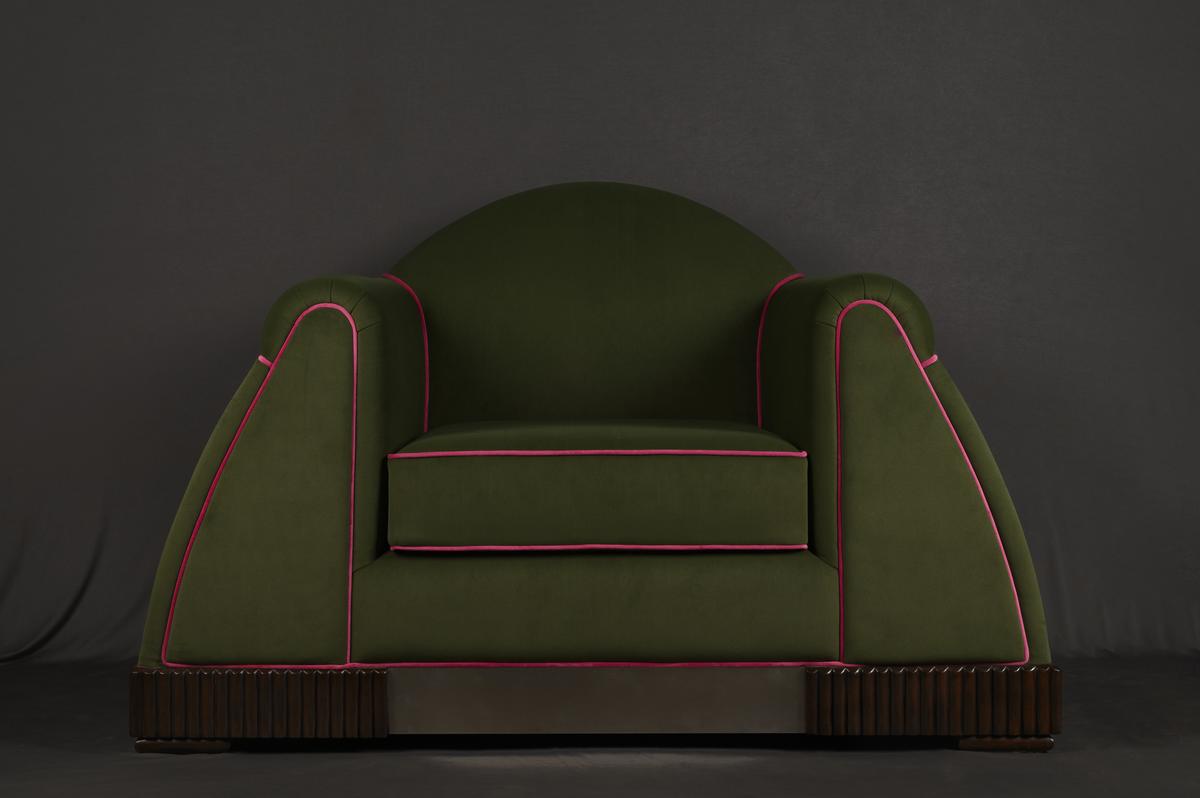
Art Deco lounge chair
| Photo Credit:
Vivek Gandhi
To visitors and collectors, the organizers have a request: linger, engage with the history, culture and context, and notice the restoration. Anand’s daughter Surpiya, who is behind the exhibition design, says, “There was luxury in terms of raw material, but there is something to be said about craftsmanship. And the restoration was done with painstaking detail [keeping this in mind].”
A History of India through Chairs is on from February 28 to March 8 at Mahendra Doshi, Mumbai.
The freelance writer is based in Chennai.
Published – February 27, 2026 07:27 am IST