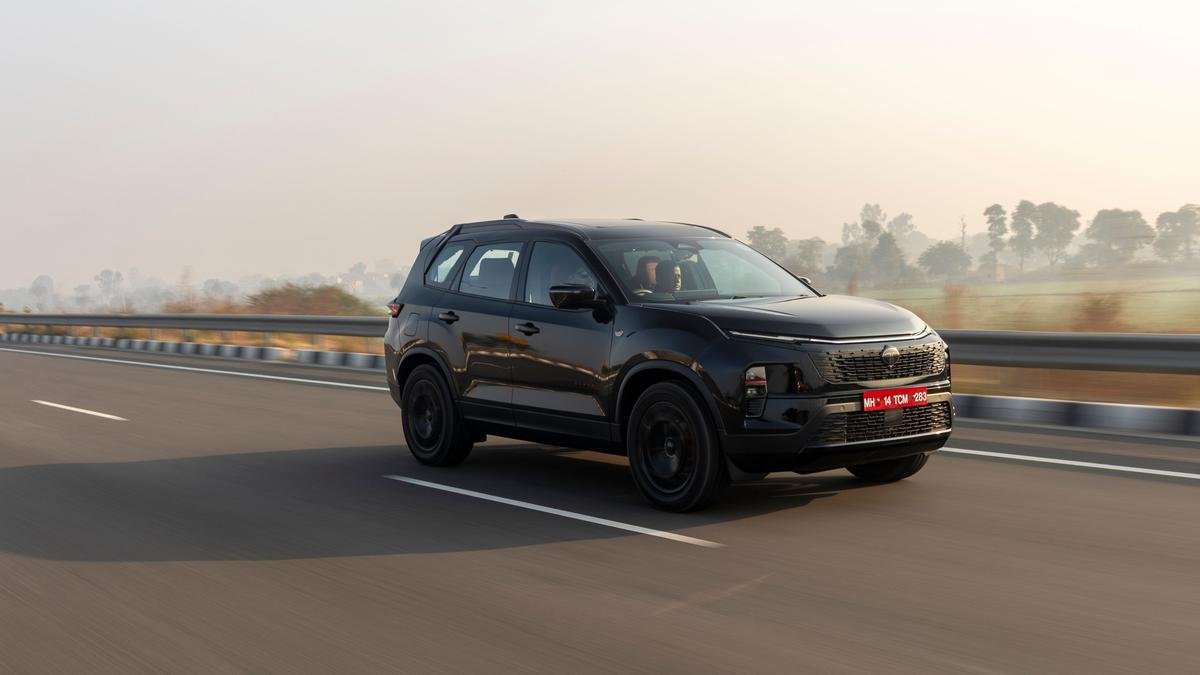
For years, the Tata Harrier and Safari have been closely associated with diesel power. They became default choices for buyers seeking strong road presence, torque-rich performance and that unmistakable “big SUV” feel. Introducing petrol engines into this equation was always going to be a delicate move. Get it wrong, and the SUVs risk feeling underwhelming. Get it right, and Tata could open the door to an entirely new audience. With the arrival of the Hyperion petrol variants, it is clear Tata has leaned firmly towards the latter.
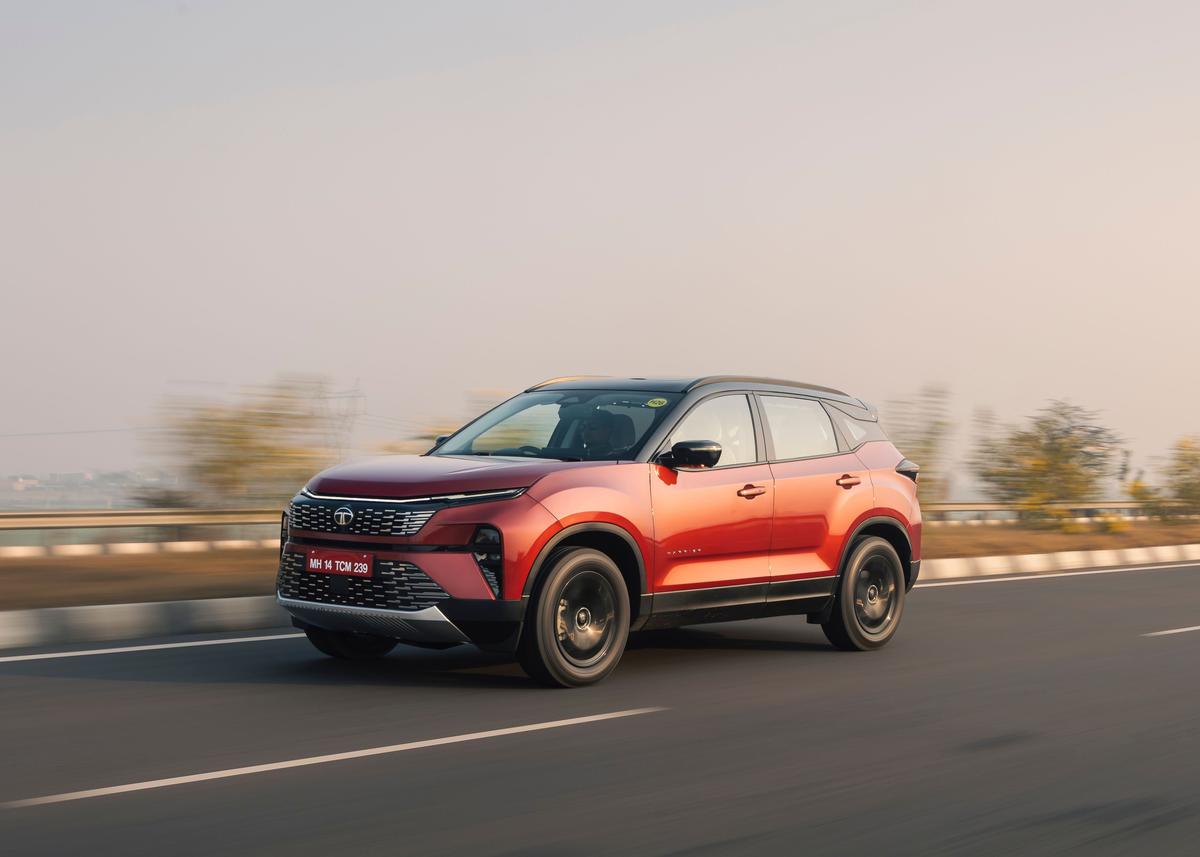
Harrier petrol handling city traffic effortlessly, highlighting its agile steering and composed ride quality.
| Photo Credit:
Special Arrangement
At the core of both SUVs is the new 1.5-litre Hyperion turbo-petrol engine. It is a four-cylinder, direct-injection unit producing 170 PS at 5,000 rpm and 280 Nm of torque available across a wide 1,750–3,500 rpm band. On paper, the numbers appear respectable rather than extraordinary, particularly for SUVs of this size. But driving them tells a different story. This is a case where calibration, torque spread and real-world tuning matter far more than displacement alone — and Tata has clearly invested heavily in getting that balance right.
The first thing that stands out is refinement. The Hyperion engine feels notably smooth, aided by a stiffened engine block, advanced acoustic insulation and careful NVH management. Vibrations at idle are well suppressed, and even when pushed harder, the engine note remains controlled and mature. In urban conditions, this refinement becomes a genuine advantage. Both the Harrier and Safari feel easy to live with, masking their size well in traffic. Throttle response is progressive, not abrupt, and the initial pick-up is strong enough to make quick gaps without feeling jumpy or nervous.
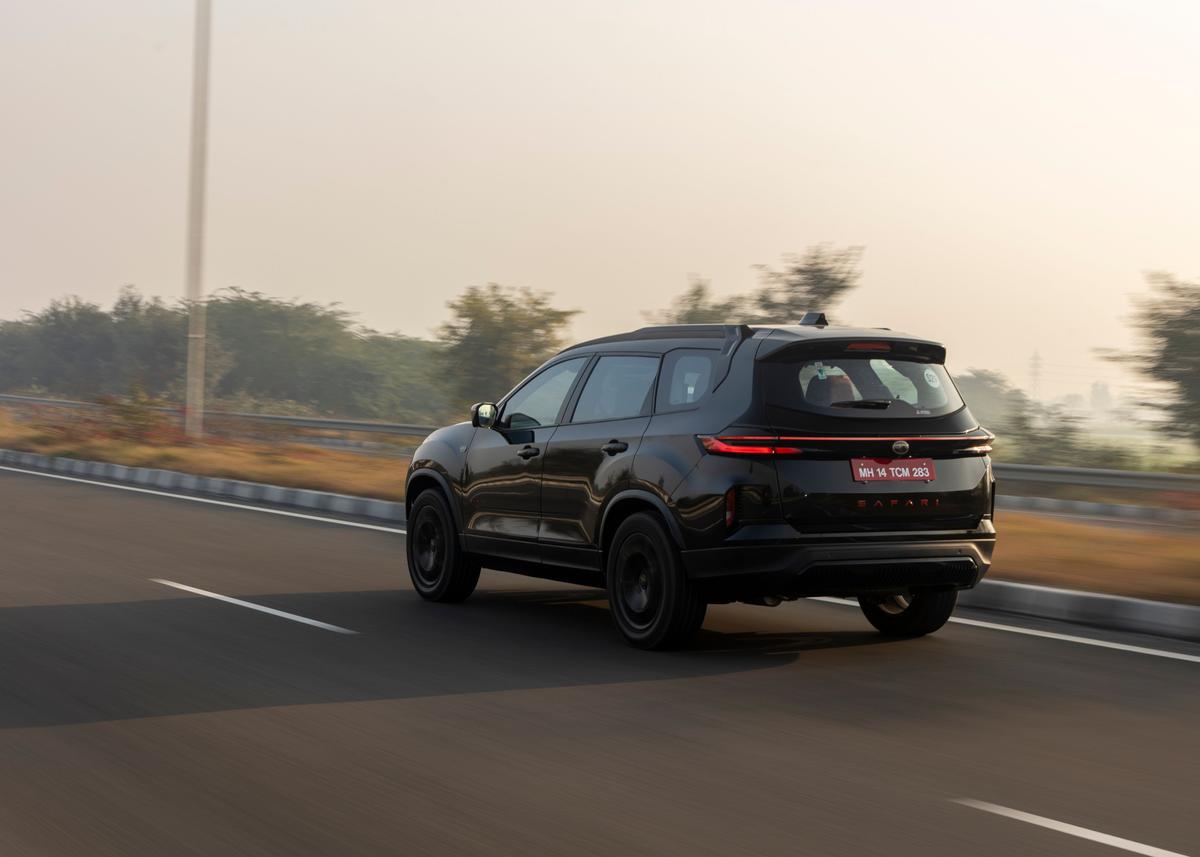
Advanced safety and tech features in the Safari petrol, including Level 2+ ADAS and a 36.9 cm Harman Neo QLED infotainment system.
| Photo Credit:
Special Arrangement
As speeds build, the engine’s character reveals itself more clearly. The low-end response is good, but it is the mid-range where the Hyperion truly shines. There is a strong, sustained surge of torque that makes highway driving effortless. Overtakes require little planning, and the SUVs hold cruising speeds comfortably without the engine sounding stressed. Despite being just 1.5 litres, the motor never feels out of its depth. That is largely down to the broad torque band and Tata’s decision to prioritise linear power delivery over dramatic top-end theatrics.
This linearity defines the overall driving experience. Power builds smoothly and predictably, inspiring confidence rather than excitement—and that is exactly what buyers in this segment tend to seek. There is no sudden spike, no sense of the turbo arriving too late or too aggressively. Instead, the engine works with the vehicle, not against it. Tata’s AI- and ML-based engine management systems, including smart shift and launch assist functions, subtly contribute to this seamless feel, particularly in varying driving conditions.
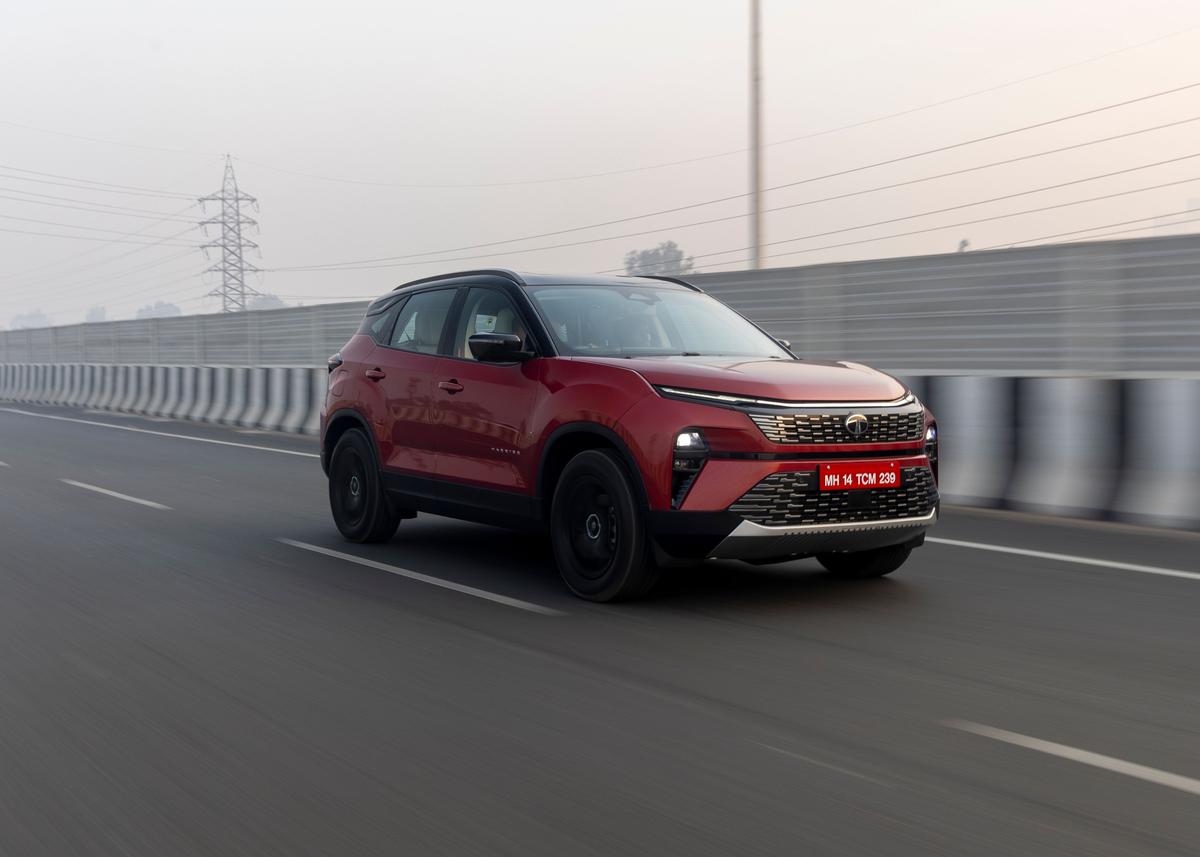
The 1.5-litre Hyperion turbo-petrol engine delivers smooth, linear power for urban and highway driving in the Harrier.
| Photo Credit:
Special Arrangement
An often-overlooked benefit of the petrol variants is the reduction in weight. Compared to their diesel counterparts, both the Harrier and Safari shed close to 80 kg, and the effect is noticeable from behind the wheel. Steering responses feel a touch lighter, and the front end feels less burdened, especially during quick direction changes or tight urban manoeuvres. It does not transform these SUVs into sporty machines, but it does make them feel more agile and cooperative in everyday driving.
Ride quality remains one of the Harrier and Safari’s strongest attributes, and the petrol variants do nothing to dilute that strength. Built on Tata’s OMEGARC platform, derived from Land Rover’s D8 architecture, both SUVs continue to offer a composed, planted ride. Broken roads are dispatched with ease, high-speed stability is reassuring, and body control is well judged for vehicles of this size. There are genuinely no faults to point out when it comes to overall driving dynamics — everything feels cohesive and well resolved.
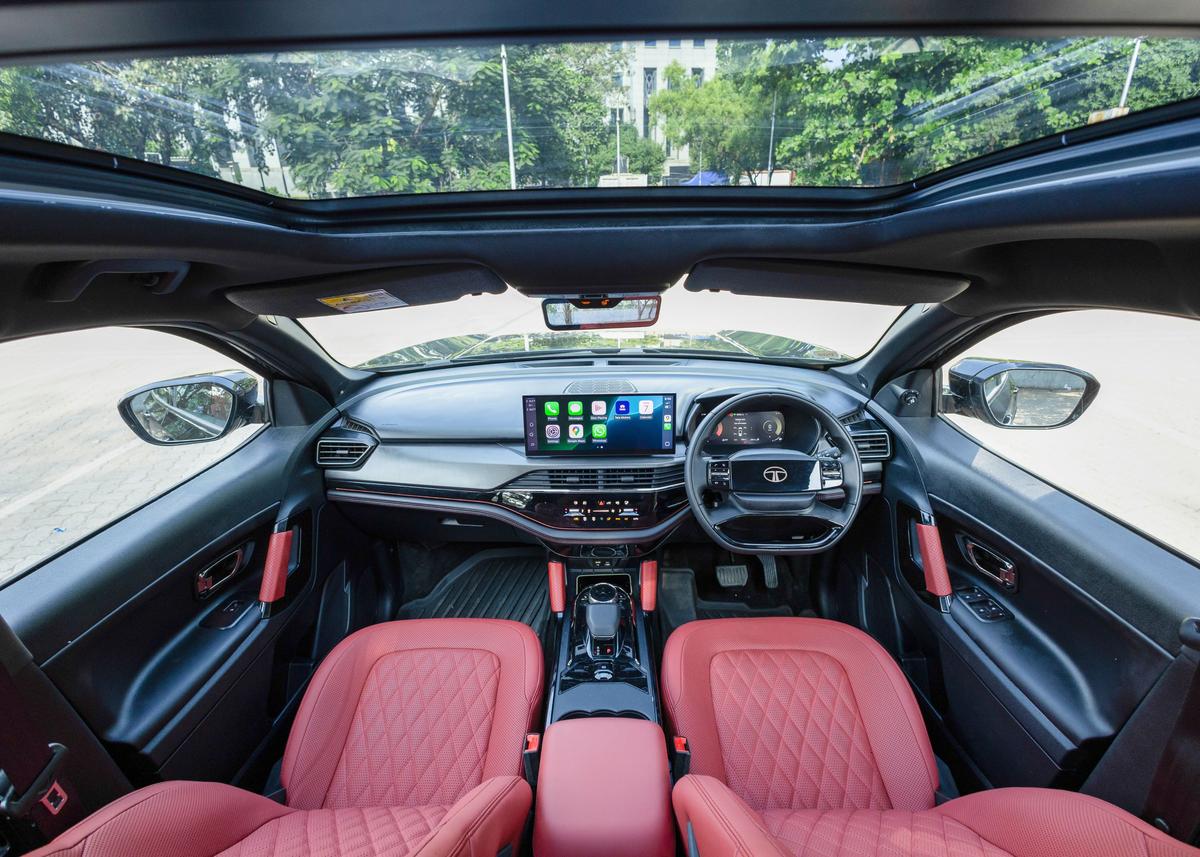
Tata Safari petrol interior with rich, dramatic cabin colours and spacious seating for families.
| Photo Credit:
Special Arrangement
Beyond the mechanicals, Tata has ensured that the petrol variants feel special through feature differentiation. Both SUVs get the brand’s flagship 36.9 cm Harman infotainment system with Samsung Neo QLED technology — currently unmatched in the segment for clarity and visual impact. Paired with a JBL audio system tuned for Dolby Atmos, the in-cabin experience feels genuinely premium, bordering on indulgent. Add to this connected car tech via iRA 2.0, Alexa Home-to-Car integration, built-in navigation, and a voice-operated panoramic sunroof, and it is clear Tata is targeting buyers who value technology as much as physical presence.
The interiors further underline this intent. The Harrier’s lighter, more contemporary cabin themes contrast well with the Safari’s richer, more dramatic colour palettes and larger wheels. Both feel solidly built, spacious and thoughtfully laid out. The Safari, in particular, continues to stand out as a family SUV, with excellent second-row comfort and a usable third row—something few rivals manage convincingly.
Safety remains a non-negotiable strength. Both the Harrier and Safari petrol variants carry a 5-star Bharat NCAP rating and come equipped with Level 2+ ADAS, offering features such as adaptive cruise control, lane keep assist, autonomous emergency braking and blind-spot monitoring. These systems are well integrated and reinforce the sense that these SUVs are engineered for modern Indian conditions, not just marketing brochures.
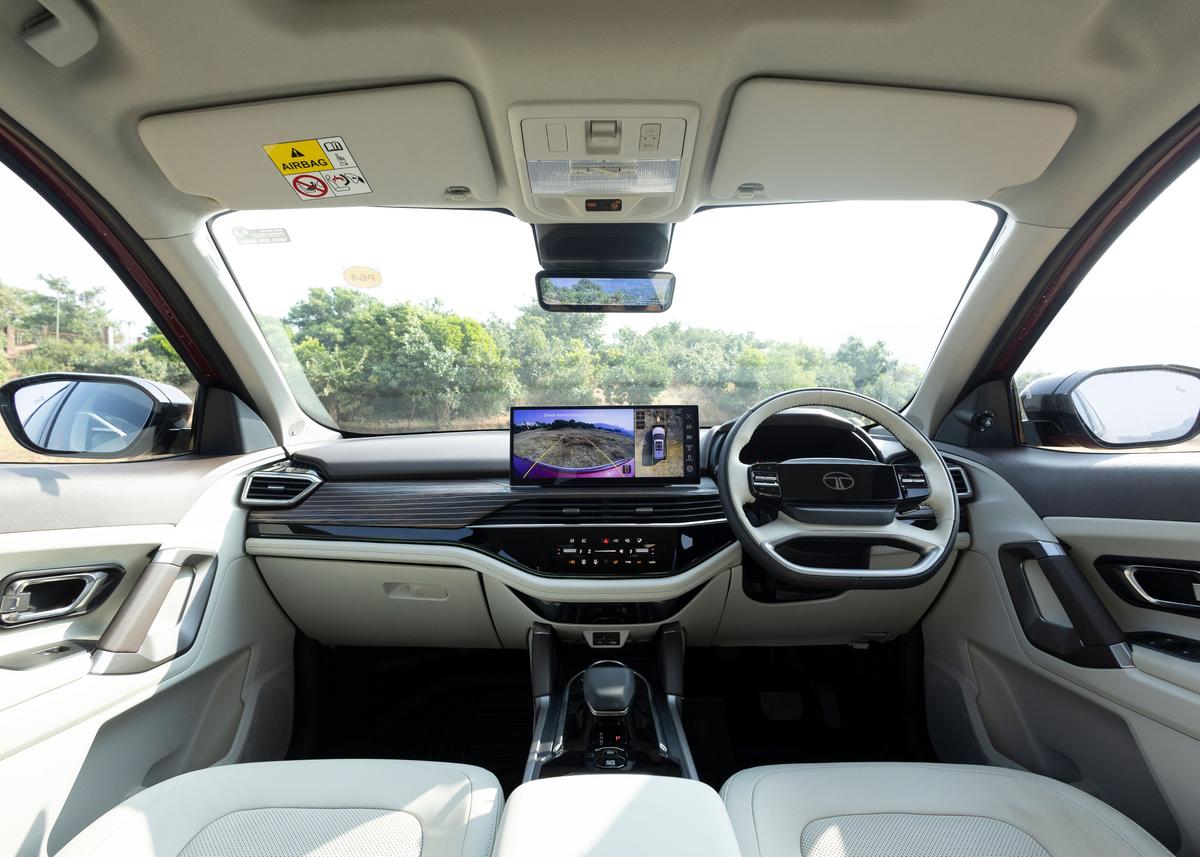
Tata Harrier petrol variant showcasing its contemporary cabin with lighter interior themes and modern technology.
| Photo Credit:
Special Arrangement
That said, even well-rounded packages have room for improvement. One notable omission is the lack of one-touch up and down functionality for the driver’s window. In SUVs that otherwise feel premium and technologically advanced, this feels unnecessary and slightly out of character. It is a small detail, but one that stands out precisely because everything else feels so carefully considered.
Viewed as a whole, the petrol-powered Tata Harrier and Safari are not intended to replace their diesel siblings—they complement them. They offer a quieter, smoother and more refined alternative for buyers whose driving is largely urban or highway-focused, without sacrificing presence, comfort or confidence. The Hyperion engine, despite its modest displacement, proves to be a strong match for these SUVs, delivering a peppy yet polished driving experience that feels thoroughly engineered rather than compromised.
In the final analysis, Tata has succeeded in expanding the Harrier and Safari’s appeal without diluting their core identity. The petrol variants feel complete, competent and convincingly premium—an evolution that speaks not loudly, but with quiet authority.
Tata Harrier Petrol Expected Starting Price: INR 13.50 lakh
Tata Safari Petrol Expected Starting Price: INR 14.50 lakh
Motorscribes, in association with The Hindu, brings you the latest in cars and bikes. Follow them on Instagram on @motorscribes
Published – January 08, 2026 03:09 pm IST