There’s a line in the 2014 movie The Monuments Men that goes: “They’d tell us that with this many people dying, who cares about art. They’re wrong… You can wipe out a generation of people. You can burn their homes to the ground and somehow, they’ll still come back. But if you destroy their achievements and their history, then it’s like they never existed.”
During World War II, a specialised Allied unit of over 345 experts from 13 nations rescued over 5 million art and cultural masterpieces stolen or hidden by the Nazis. We need another group of Monuments Men now. In Iran.
The Golestan Palace, Tehran’s royal citadel, is — or was — one of the most exquisite groups of buildings in the world. Before it was damaged by debris following a recent U.S.-Israel airstrike, the UNESCO World Heritage Site was a repository of art and culture built by some of the richest rulers in the world. Among its treasures were the Takht-e-Marmar (Throne of Marble); Talar-e Aineh (Mirror Hall); Talar-e Almas (Diamond Hall), known its stained glass windows and display of Qajar-era paintings and statues; Abyaz Palace, which showcased traditional Iranian costumes and folk art; and much more.
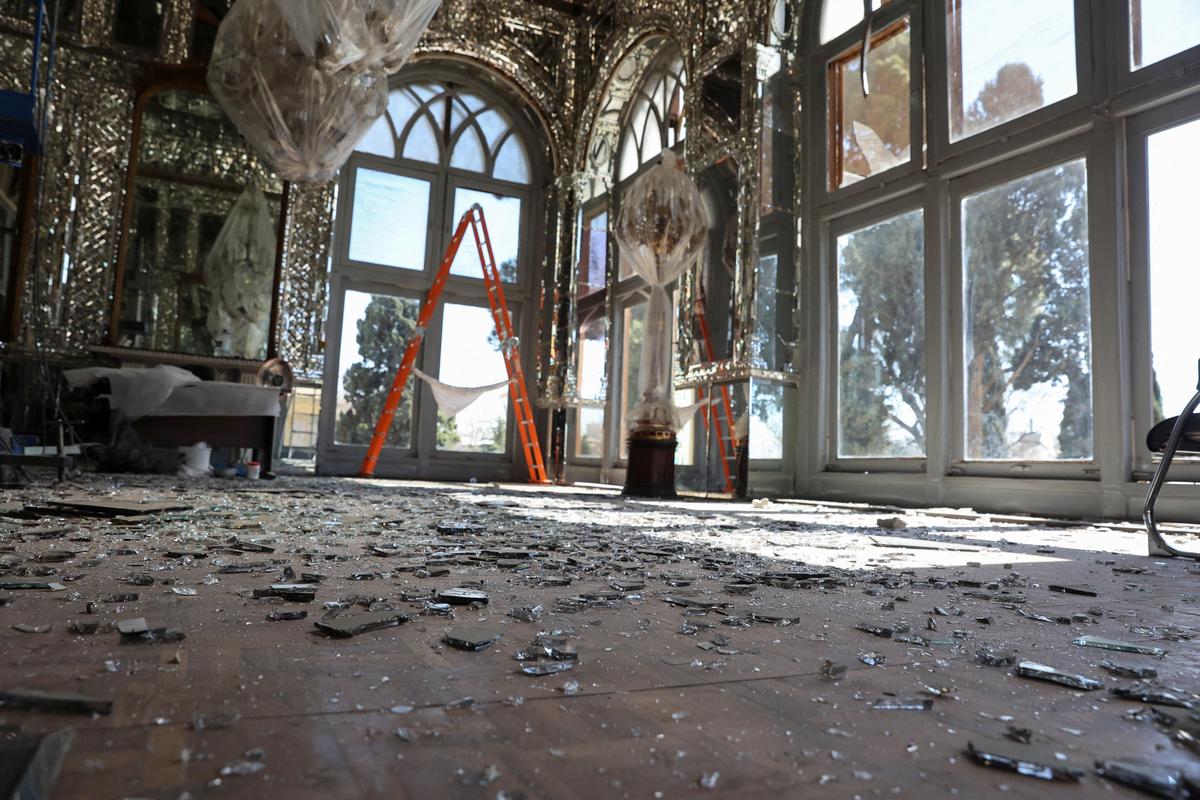
Debris at the Golestan Palace after it was damaged in an Israeli-U.S. airstrike
| Photo Credit:
Reuters
“Indian visitors feel an immediate sense of familiarity when they walk through Golestan Palace,” says art historian Shagufta Siddhi, who also offers art- and archaeology-focused tours through her foundation Ganga Jamuni. “It provides a glimpse of the refined Persian culture that was central to Mughal court life. In addition to the design language — of opulent mirrored halls, decorative tile work, painted niches and ceilings, and the formal gardens — the setting and the scale of the palace feels familiar. Like stepping into a parallel chapter of the same artistic story.”
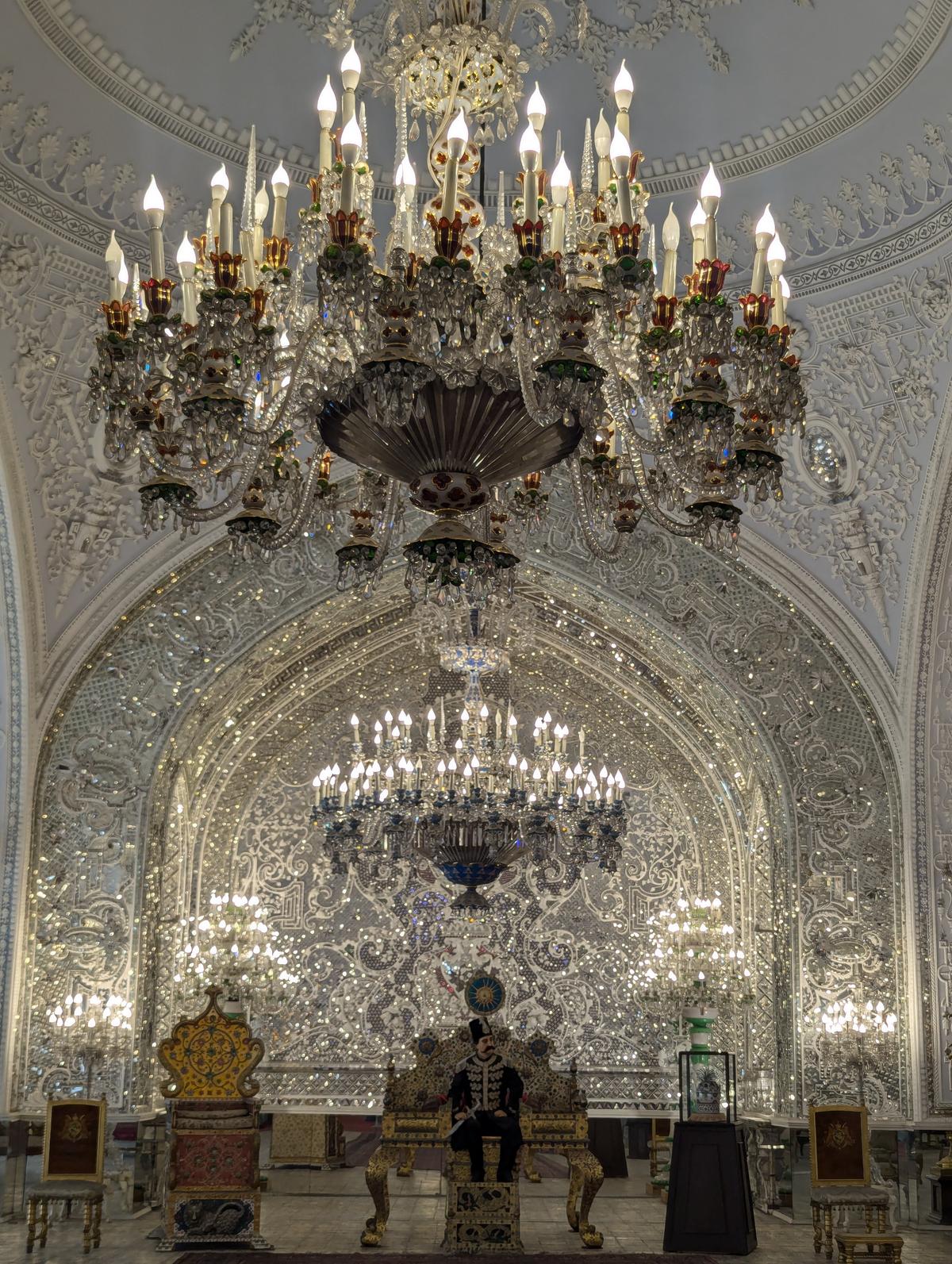
One of the richly decorated halls in Golestan Palace
| Photo Credit:
WikiCommons
Now, the Takht-e-Marmar and Talar-e Aineh, and possibly the Talar-e-Salam (a lavishly decorated reception hall) and Abyaz Palace, have been damaged.
A rare album
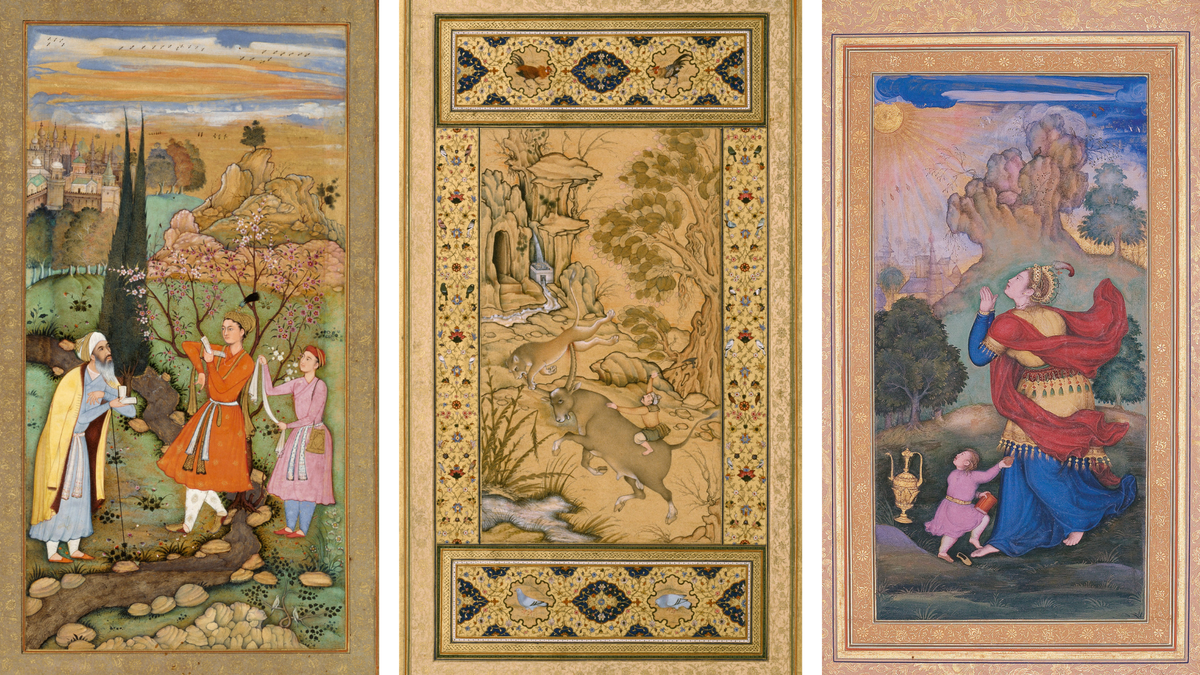
Within Golestan Palace lies one of India’s most important treasures, the Muraqqa-e Gulshan (Flower Garden Album), possibly one of the most important albums of 11th-17th century paintings, drawings, calligraphy, and engravings by Mughal, Persian, Deccani, Turkish, and European artists.
According to an inscription by 17th-century poet Kalim Kashani, it was compiled for emperor Shah Jahan in 1636, from paintings and calligraphy that were not incorporated into the Muraqqa-e Golestān (Album of Paradise, which is also believed to be at the palace) — a larger, but similar, album made between 1599-1609 for emperor Jahangir, when he was still governor of Allahabad.
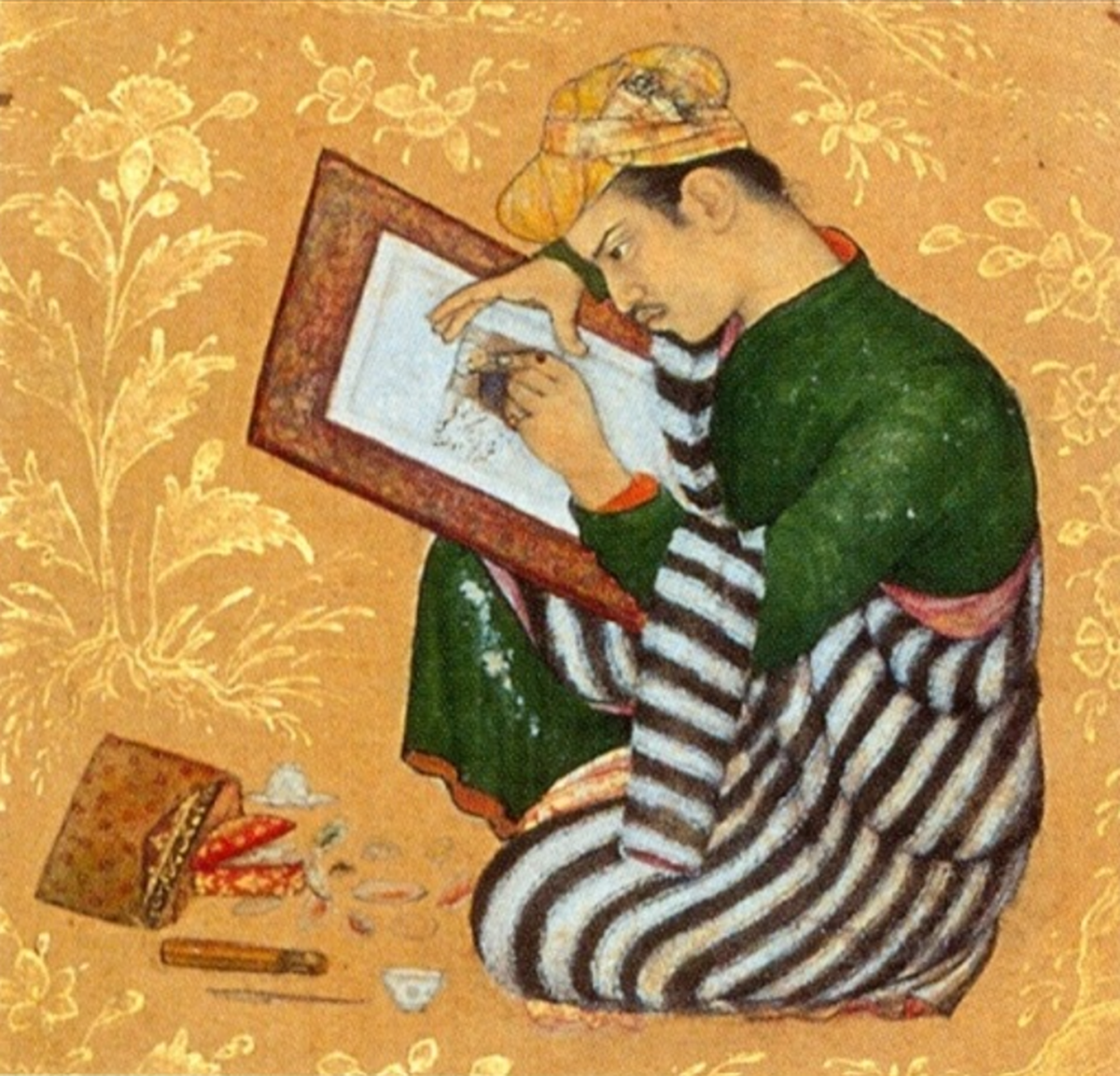
Portrait of Mughal miniature painter Abu’l Hasan by artist Muhammad Daulat, from the Gulshan Album (c. 1610) at Golestan Palace Library, Tehran
| Photo Credit:
WikiCommons
Iranian scholar Moḥammad Moḥiṭ Ṭabāṭabāʾi estimated that the Gulshan Album took nine years to complete at an estimated cost of ₹1.2 lakh in those days. Richly decorated with gold paint, it brought together the loose leaves of Persian calligraphy and samples of works by artists such as miniature painters Āqā Mirak; illustrations from unfinished manuscripts such as the Shahnameh (epic poem by Persian post Ferdowsi); and reproductions of original works by Mughal court painters such as Basawan and Ustad Mansur.
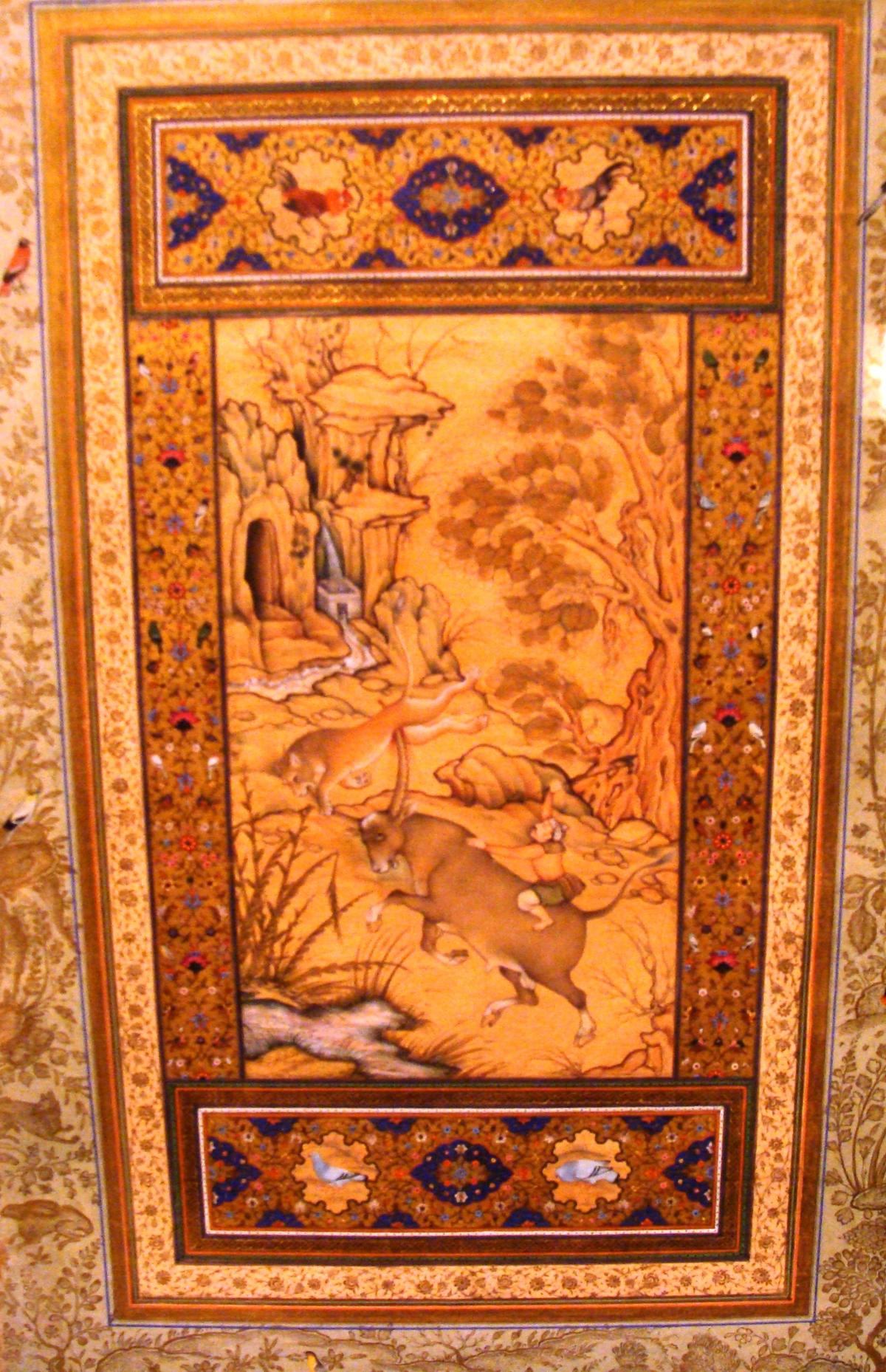
Folio from Gulshan Album
| Photo Credit:
WikiCommons
The most unusual feature of the album is the inclusion of scenes depicting Christian subjects, such as Jesus, the Virgin Mary, saints, and the apostles. While some are original European etchings brought by the Portuguese Jesuits who travelled to Akbar and Jahangir’s courts, others are reproductions made in the imperial atelier and incorporated Indian elements. This synthesis of high-quality art, lavish decoration, and diverse international influences makes the Gulshan Album exquisite and rare.
Down a circuitous route
Historians are unsure how the two albums reached Tehran, but they were seen in the possession of Qajar crown prince Naser al-Din Shah in 1847. One theory surmises that they may have been carried away by Iranian conqueror Nadir Shah when he looted Delhi between 1739-1741, along with other treasures such as the Peacock Throne and the Kohinoor diamond.
Naser al-Din Shah Qajar, the fourth Shah (1848-1896), is said to have kept one album in the Royal Library, and the other in a library in his private quarters. He later had them bound in a single volume.
Over time, folios from it appeared across the Global North. A set of about 25 made their way to the Staatsbibliothek, the Berlin state library, via Heinrich Karl Brugsch, a German Egyptologist who accompanied the Prussian embassy to Persia in 1860. Two rare folios are in the Náprstek Museum in Prague. More are to be found in places such as Chester Beatty Library in Dublin, Los Angeles County Museum of Art, and Musée Guimet in Paris.
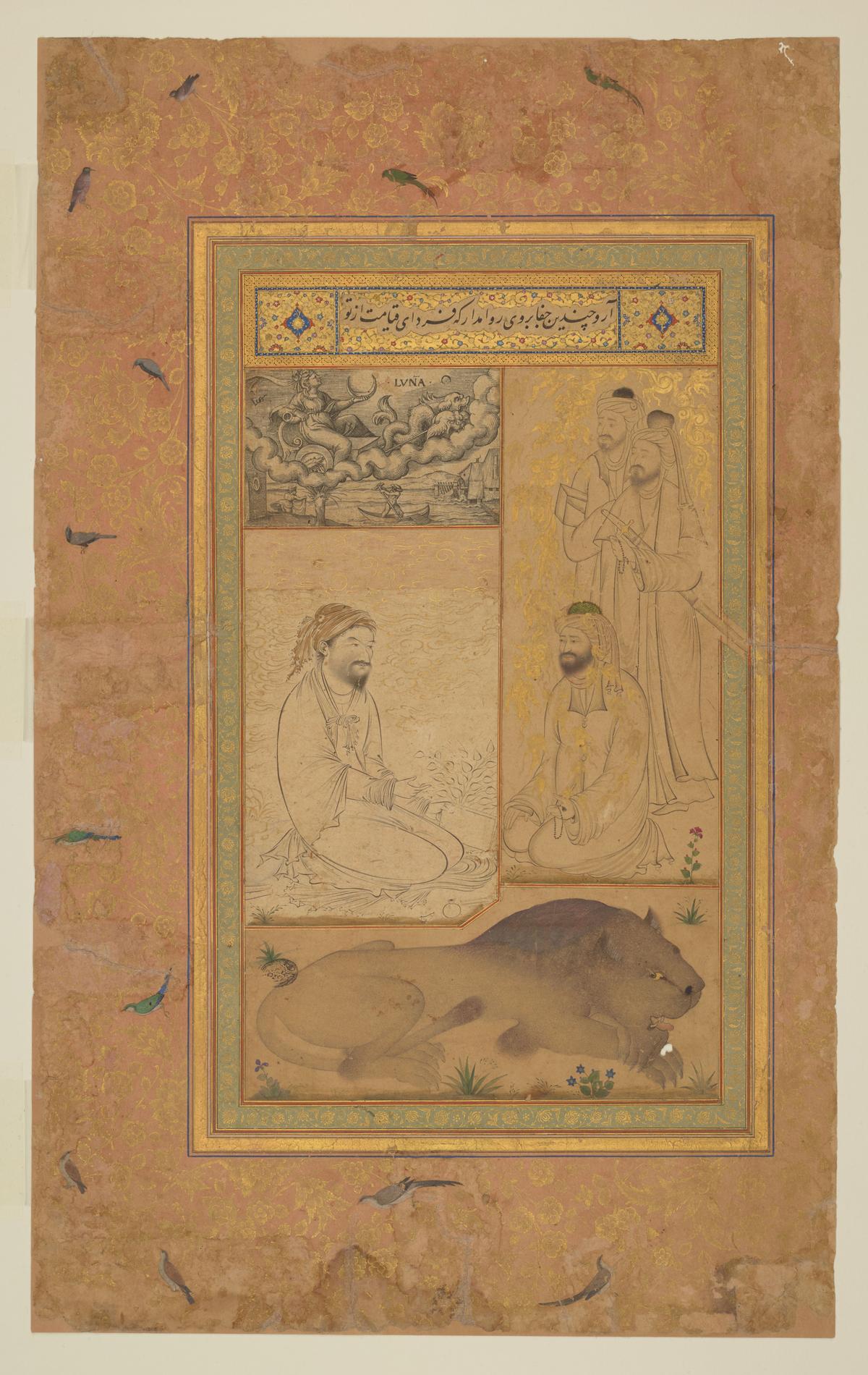
A folio from the Gulshan Album at Chester Beatty Library
| Photo Credit:
WikiCommons
Threat of blood antiquities
Even though Iranian authorities have confirmed that fragile items were packed away or moved to vaults prior to the strikes, the damage to the palace — and the ensuing confusion — could allow for further fragmentation of the Gulshan Album, 90 to 92 folios of which are kept there.
Reza Salehi Amiri, Iran’s Minister of Cultural Heritage, Tourism and Handicrafts, has appealed to UNESCO to dispatch an expert delegation, since parts of the Grand Bazaar, one of the pillars of Tehran’s historic fabric, have also been damaged. A UNESCO delegation could, perhaps, help ensure that the album stays intact, too.
“The lavish Golestan Palace is a masterpiece of the Qajar era, embodying the successful integration of earlier Persian crafts and architecture with western influences,” a UNESCO spokesperson tells the Magazine. “Safeguarding a country’s heritage during crises and conflicts is essential because the destruction of cultural sites fuels violence, hatred, and vengeance, and weakens the foundations of peace needed for future reconciliation.”
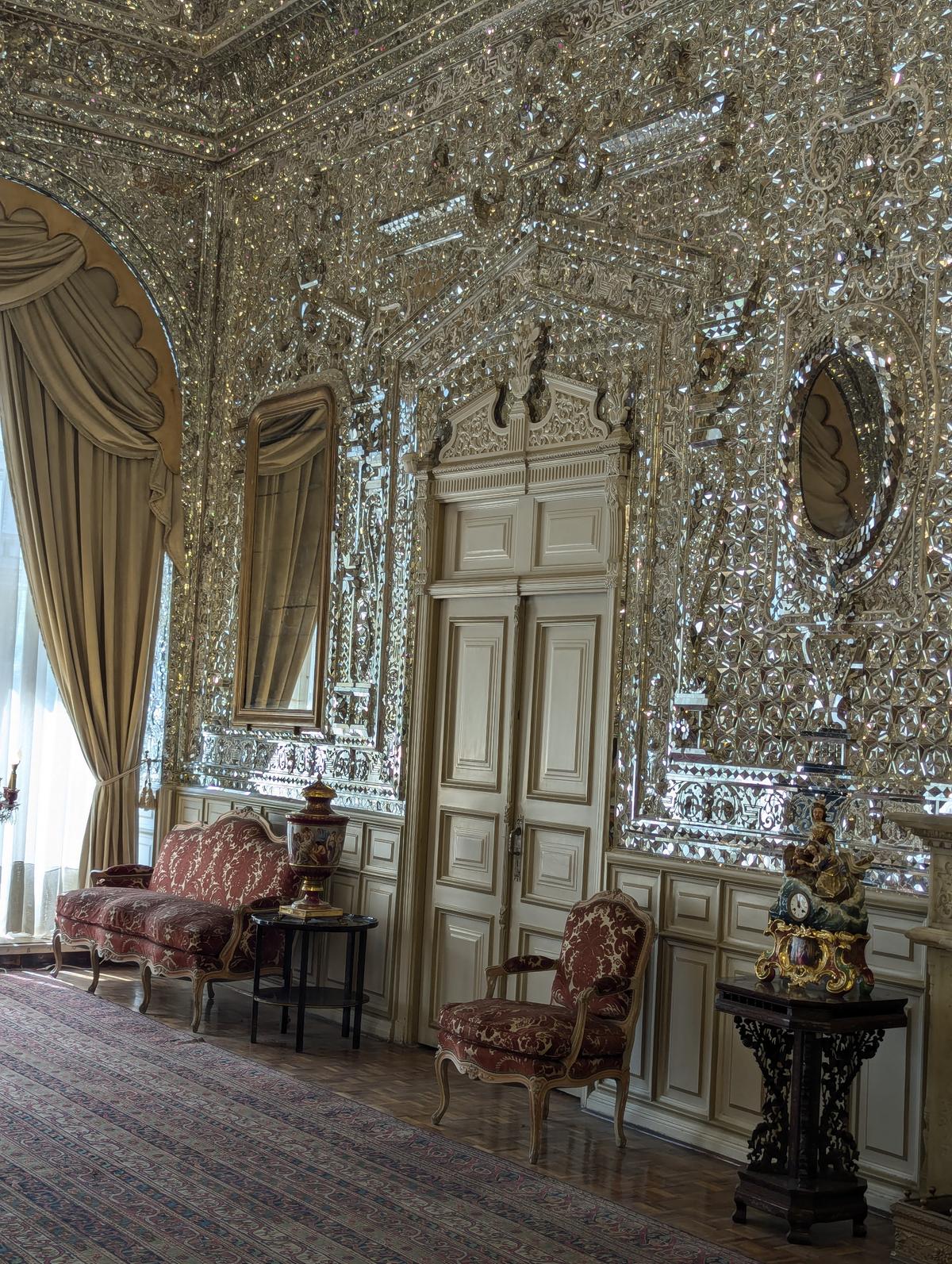
A room at Golestan Palace
| Photo Credit:
WikiCommons
The Gulshan Album has already seen a history of violence. Given that art and cultural artefacts from countries such as Syria, Afghanistan, Yemen, and Libya have been trafficked by armed groups engaging in the sale of ‘blood antiquities’ — artefacts looted from areas of conflict — it’s time India steps in to keep it safe. Otherwise, we will spot folios being sold in auctions or making their way into more museums in the Global North.
The writer is an expert on South Asian art and culture.
Published – March 06, 2026 05:57 pm IST